
Read Jun 2026. Reminded me of the brilliant biography I read of Mina Loy


". . . another 'site' of the exhibition."
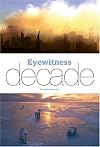
From Amazon:
ormat: Hardcover Verified Purchase
The decade or year in photos is an old standby in the publishing biz. Who remembers the yearly photo specials Life Magazine published after the weekly folded in the early seventies. I always thought the format slightly flawed because photos were frequently used that weren't particularly inspiring but had to be included because they recorded a newsworthy event. Fortunately the criteria for inclusion in these pages is simple: is it a great photo.
When the Guardian was redesigned in 2005 the centre spread was devoted to a stunning photo. The ones in the book for the years before that have been selected on the basis that they would have been included in the centre Eyewitness spreads. Roger Tooth, photo editor for the daily, explains the criteria for inclusion: the photo must be able to be blown up to twenty-four inches wide without any loss of quality; it must have plenty of detail; everything had to be in sharp focus and finally it could be a news or slice-of-life image.
Each year of the decade gets about eleven photos, either as whole spreads or as landscape on a page and fortunately, unlike the daily with its 100 screen these photos are printed with 175 screen on a good matt art paper and incidentally the Honk Kong printer C&C Offset should be congratulated on perfect binding: every photo that goes across a spread butts together perfectly.
Virtually every photo is an eyeball grabber, whether a news shot like the pulling down of show more Saddam Hussein's statue in 2003 in Baghdad or the totally non-newsworthy event of the partial demolition of a house that belonged to a trailer-park owner by a resident who had a grudge against him. One thing I really like about the contents, there are virtually no celebrities included. I would say that most photos have been taken outside in the environment in cities or the countryside.
If you are a news or documentary photographer or just want to see stunning photos of what's happening in the world I think this is an impressive book. It might be worthwhile checking round the net because I bought my copy (nearly new) at a very impressive low price. show less
ormat: Hardcover Verified Purchase
The decade or year in photos is an old standby in the publishing biz. Who remembers the yearly photo specials Life Magazine published after the weekly folded in the early seventies. I always thought the format slightly flawed because photos were frequently used that weren't particularly inspiring but had to be included because they recorded a newsworthy event. Fortunately the criteria for inclusion in these pages is simple: is it a great photo.
When the Guardian was redesigned in 2005 the centre spread was devoted to a stunning photo. The ones in the book for the years before that have been selected on the basis that they would have been included in the centre Eyewitness spreads. Roger Tooth, photo editor for the daily, explains the criteria for inclusion: the photo must be able to be blown up to twenty-four inches wide without any loss of quality; it must have plenty of detail; everything had to be in sharp focus and finally it could be a news or slice-of-life image.
Each year of the decade gets about eleven photos, either as whole spreads or as landscape on a page and fortunately, unlike the daily with its 100 screen these photos are printed with 175 screen on a good matt art paper and incidentally the Honk Kong printer C&C Offset should be congratulated on perfect binding: every photo that goes across a spread butts together perfectly.
Virtually every photo is an eyeball grabber, whether a news shot like the pulling down of show more Saddam Hussein's statue in 2003 in Baghdad or the totally non-newsworthy event of the partial demolition of a house that belonged to a trailer-park owner by a resident who had a grudge against him. One thing I really like about the contents, there are virtually no celebrities included. I would say that most photos have been taken outside in the environment in cities or the countryside.
If you are a news or documentary photographer or just want to see stunning photos of what's happening in the world I think this is an impressive book. It might be worthwhile checking round the net because I bought my copy (nearly new) at a very impressive low price. show less
Someone else's review
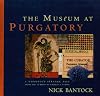
According to Nick Bantock, Purgatory is a place that “takes a meditative, non-partisan view of reality…thanks to its geographical placement, midway between the earthly community and the region presided over by the Utopian States (those provinces that lay emphasis on recuperation) and the Dystopian States (whose dictum forcibly discourages indulgence and foppery) (viii). Upon arrival in Bantock’s Purgatory, the newly deceased “are faced with the fundamental questions of self-worth” (viii). “Assessing oneself after death is a matter of measuring the information acquired during life” (ix). “In order to travel on from Purgatory, a spectral being must come to terms with those conflicting elements not dealt with previously. No god-like external judge is going to decide the being’s destination” (ix). Through the assemblage of objects collected during life, a person reviews his or her life before moving on.
This may all sound quite strange, and it absolutely will become one of the strangest books you will read -- until your next Bantock. All his novels involve mysterious characters, strange and bizarre stories, and almost all with ambiguous endings. The books are beautifully illustrated with collages, photos, drawings, paintings, and a myriad variety of visual arts. Reading Nick Bantock takes one into the bizarre world of his imagination with invented names, places, professions, and objects.
This got me thinking of my ideal heaven: a small show more room, two easy chairs, a radio with innumerable stations, each of which plays only one kind of music (no commercials of any kind), with a display panel showing the artist and title. My stations would be classical, opera, Ella Fitzgerald, et al, New Age, and movie sound tracks. The room would have a soft ambient light that reached into every corner. The walls would all be lined with bookshelves -- everyone I ever read – and one special shelf would be empty. When my thoughts turned to authors I liked, the rest of their books would magically appear. Coffee, hot tea, or iced tea would appear upon the presence of thirst. A door would appear when I wanted a walk on the beach, in the woods, at a zoo, or a museum. Ahhhh, that would be paradise.
I originally discovered Bantock back in the 80s with his Griffin and Sabine trilogy. These books contained letters (inside envelopes pasted to the page) and postcards between the titular characters. The drawings and stamps on the post cards and letters enchant endlessly. His books are hard to find, but worth the effort. 5 stars
--Jim, 5/16/09 ( )
vote | flag rmckeown | May 16, 2009 | show less
According to Nick Bantock, Purgatory is a place that “takes a meditative, non-partisan view of reality…thanks to its geographical placement, midway between the earthly community and the region presided over by the Utopian States (those provinces that lay emphasis on recuperation) and the Dystopian States (whose dictum forcibly discourages indulgence and foppery) (viii). Upon arrival in Bantock’s Purgatory, the newly deceased “are faced with the fundamental questions of self-worth” (viii). “Assessing oneself after death is a matter of measuring the information acquired during life” (ix). “In order to travel on from Purgatory, a spectral being must come to terms with those conflicting elements not dealt with previously. No god-like external judge is going to decide the being’s destination” (ix). Through the assemblage of objects collected during life, a person reviews his or her life before moving on.
This may all sound quite strange, and it absolutely will become one of the strangest books you will read -- until your next Bantock. All his novels involve mysterious characters, strange and bizarre stories, and almost all with ambiguous endings. The books are beautifully illustrated with collages, photos, drawings, paintings, and a myriad variety of visual arts. Reading Nick Bantock takes one into the bizarre world of his imagination with invented names, places, professions, and objects.
This got me thinking of my ideal heaven: a small show more room, two easy chairs, a radio with innumerable stations, each of which plays only one kind of music (no commercials of any kind), with a display panel showing the artist and title. My stations would be classical, opera, Ella Fitzgerald, et al, New Age, and movie sound tracks. The room would have a soft ambient light that reached into every corner. The walls would all be lined with bookshelves -- everyone I ever read – and one special shelf would be empty. When my thoughts turned to authors I liked, the rest of their books would magically appear. Coffee, hot tea, or iced tea would appear upon the presence of thirst. A door would appear when I wanted a walk on the beach, in the woods, at a zoo, or a museum. Ahhhh, that would be paradise.
I originally discovered Bantock back in the 80s with his Griffin and Sabine trilogy. These books contained letters (inside envelopes pasted to the page) and postcards between the titular characters. The drawings and stamps on the post cards and letters enchant endlessly. His books are hard to find, but worth the effort. 5 stars
--Jim, 5/16/09 ( )
vote | flag rmckeown | May 16, 2009 | show less

From Amazon :This gorgeous volume offers the most complete overview in print of the oeuvre of Niki de Saint Phalle, one of the most influential and popular artists of the postwar period. The French-American artist was educated according to the social codes of upper-class New York society, but boldly rejected the expectations of her family to instead choose a career in art. Moving to Paris in the 1960s, she befriended the Nouveau Realiste artists Martial Raysse, Daniel Spoerri and Jean Tinguely, creating her famous "Shooting Paintings," the "Nanas" (brightly chromatic biomorphic sculptures of female archetypes), as well as experimental films, decors and costumes for ballet productions and collaborations with Tinguely, Robert Rauschenberg and others. Saint Phalle was adept at using the media to consolidate her public image, and soon became an icon of the 1960s art scene, attaining a broad cultural profile that was furthered by her numerous public art projects, including the Tarot Garden in Tuscany and the Stravinsky Fountain in Paris. This superbly produced publication-which features a die-cut cover through which Saint Phalle peers, aiming her gun-presents her works in all media, along with ephemera and archival photographs documenting her rich career and life.Niki de Saint Phalle (1930-2002) was born near Paris and moved to the US in 1933. During her teen years Saint Phalle was a fashion model and appeared on the cover of "Life" in 1949 and, three years later, on the cover show more of "French Vogue." At 18 Saint Phalle eloped with author Harry Mathews and moved to Cambridge, Massachusetts, and later to Paris, where she exhibited at the Alexander Iolas Gallery. In 1971 Saint Phalle married Jean Tinguely, and throughout that decade created the public sculptures and parks for which she became celebrated. Saint Phalle died of emphysema in California in May 2002. show less
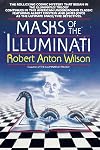
Sir John Babcock attempts to penetrate the world of the Illuminati. Features James Joyce (and Wakean prose) as well as Albert Einstein and Alastair Crowley.
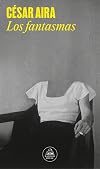
Bought for Melissa to quote from for her essay - Spring 2015
Bought in Greenwich Village Nov 2015 to celebrate seeing The Nose at the NY MET in 2014
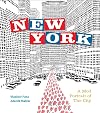
A present to me and Jenny from Melissa in 2015 after her successful stay in NY.
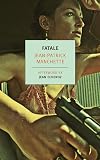
Aimee, a professional killer moves to Bleville (Doughville). She penetrates the upper class society and plans a coup. But her attraction to Baron Jules, a madman, undermines her hard persona and she fails. A roman noir, originally published by Gallimard this translation is published by NYRB.

A short howto guide to creating your own community media lab using parts found in the garbage. Includes tips on how to talk about media and technology and how to provide technical support in ways that empower and respect media lab visitors of all skill levels and abilities. The book is designed like a very short graphic novel, with drawings of people talking; their words explain the "what" and "why" of open access community technology projects.
Licensed under the Creative Commons Attribution-Share Alike 2.0 UK: England & Wales License, which allows readers to copy, distribute, display and perform the work, and to make derivative works - if they give proper attribution and clear license info, and share alike (must use similar license if you remix and distribute resulting works).
Shirari Industries rated it
Recommends it for: geeks, activists, anarchists, people who like computers
Recommended to Shirari by: James Wallbank (author)
Shelves: education, unexpectedly-amazing
I found this book tremendously inspiring and challenging, and hope that others who are interested in technology and communities give it a read. It's an accessible and engaging short howto to making technology more accessible to people regardless of class and abilities. It helped me to see the importance of embracing free and open-source software, and the huge potential of dumpster diving and recycling for meeting people's technology needs economically and in an environmentally sustainable way. It also helped me show more understand that the key to empowering tech users is not detailed instructions, but rather, to serve as a facilitator of their interaction with technology as they learn how to educate themselves and solve their own problems - basically, teaching others the value of the DIY ethic. show less
Licensed under the Creative Commons Attribution-Share Alike 2.0 UK: England & Wales License, which allows readers to copy, distribute, display and perform the work, and to make derivative works - if they give proper attribution and clear license info, and share alike (must use similar license if you remix and distribute resulting works).
Shirari Industries rated it
Recommends it for: geeks, activists, anarchists, people who like computers
Recommended to Shirari by: James Wallbank (author)
Shelves: education, unexpectedly-amazing
I found this book tremendously inspiring and challenging, and hope that others who are interested in technology and communities give it a read. It's an accessible and engaging short howto to making technology more accessible to people regardless of class and abilities. It helped me to see the importance of embracing free and open-source software, and the huge potential of dumpster diving and recycling for meeting people's technology needs economically and in an environmentally sustainable way. It also helped me show more understand that the key to empowering tech users is not detailed instructions, but rather, to serve as a facilitator of their interaction with technology as they learn how to educate themselves and solve their own problems - basically, teaching others the value of the DIY ethic. show less

Third series contains only Bringing Up Father; 46 four panel strips.
Each one is a beautifully balanced line work creation, which frames and makes into a tableau another of Jiggs' small battles for survival. Makes the same point as Certeau's Ordinary Lives only twice as elegantly and with deep humour. Unlike other family life strips each character has a depth and strength; we may laugh at Maggie but we understand her, and as Mcmanus on occasion reminds us, she has a heart of gold.
I love this strip - one of the greatest humour strips of all time.
Each one is a beautifully balanced line work creation, which frames and makes into a tableau another of Jiggs' small battles for survival. Makes the same point as Certeau's Ordinary Lives only twice as elegantly and with deep humour. Unlike other family life strips each character has a depth and strength; we may laugh at Maggie but we understand her, and as Mcmanus on occasion reminds us, she has a heart of gold.
I love this strip - one of the greatest humour strips of all time.