Yankee Bookseller Being the Reminiscences of Charles E. Goodspeed with many illustrations by Charles E. Goodspeed

A prominent New England bookseller with a long successful track record, Goodspeed has written a detailed memoir of his career being as a bookseller. He has written a lot of anecdotes, but unlike other bookman, the punchline of most of them is either uninteresting, unfulfilling, or makes the reader wonder what was the point of the story. Another negative has to do with describing the unbelievable lengths he went to make sure the reader knows he is honest and forthright. Who is going to offer to refund of a large purchase for a sale made six years ago just because the customer claims he found a library stamp on one of the interior pages? His favorite books seem to have been selected in the 19th century instead of the mid-twentieth. Goodspeed is not afraid to wander off into dead-end tangents. However, his descriptions of the many people who tried to steal his profits from the sale of the 'Tamerlane' is priceless and right on.

Several years ago I read a Repairman Jack novel and really enjoyed it, finding the character different and the plot interesting. Recently, I've read three more trying to find that magic again. I have been unable to do so. The plot is an unsatisfying mishmash and the characters either one dimensional and/or juvenile. i don't plan to read another.

Gettysburg from very different viewpoints. Fremantle is a fairly typical British, guest of the staff. Does not take a direct role and really does not describe direct action. Even Pickett's charge is told from the reactions of General Lee to his interactions after the battle, it was 'his fault', etc. The charge was not described in any detail. Haskell account from a low ranking Union officer is very detailed, almost excruciatingly so. Everything has a Victorian floridity and exaggeration "the Army of the Potomac was quite mad with joy" and "in all these battles that I belieed in the hands of God" "...I am always ready to go where duty calls, no matter how great the danger". According to Haskell, he pretty much saved the Union, sparking a rally at the most critical time. The Offical Record does mention Haskell, but presents a very different persecptive.
There is something about Larsen's writing that makes me want to know what is going to happen next. Far fetched plots and unlikely characters not withstanding, this book and all his other books are a pleasure to read.

This is a chronological anthology starting in 1923 with a story by Tod Robbins and ending with a 2007 offering by Lorenzo Carcaterra. The tales are uniformly dark, but, unfortunately, not uniformly excellent. After two readings, there are still a couple stories that I didn't see the point of and a few that I thought were mediocre. Overall, of course, the book is well worth digging into.

Very consistent collection of noir tales, without evoking as strong a sense of place as 'Brooklyn Noir', for example. Montana has not, at this point of course, developed as rich and nuanced a literary history as other areas. There is certainly a lot more to this state than I got a sense of driving from Yellowstone to Glacier National Park.
Another above average collection of bleak, black or, in other words, noir tales. These stories capture the sensibilities, or lack thereof, of Brooklyn.
Narratives of the American Revolution As Told by a Young Sailor, A Homesick Surgeon, a French Volunteer, and a German General's Wife by Hugh F. Rankin
A very mixed bag of diaries and memoirs. The sailor proved to be the most interesting, for his insights regarding American privateers and the contemporary motivations to go to sea. The surgeon seemed more focused on getting time off and/or complaining about conditions than giving the reader details about medical practices. De Pontgibaud treated Washington in his diary as nothing short of a god, but he did give us some pertinent descriptions of battles and maneuvers as attached to various forces. His detailed entiries on the treason of Arnold and Major Andree show a close involvement at the time. The Barones filled her diary with descriptions of her family and the other generals and the various Tories with which they were staying than a useful history of the period. Even here presence during Burgoyne's surrender at Saratoga is mentioned only tangentially.
This expansive narrative covers a lot of ground from St. Louis to Monterey and many points in between. This wide coverage is also the narrative's biggest weakness, with only a very general map at the frontispiece, it is impossible to know half the time where he is or what he is doing there. The half-baked or, at best, colloquial descriptions of geographic features including mountain ranges, rivers and even oceans leads to a lot of confusion. There are a lot of bear attacks described in detail and a basic feeling that the organizations he associates with never make any money, fail to stay together and/or do not fulfill any promises. The value in this adventure narrative is its recounting of the difficulties in exploring areas without infrastucture. As Zenas points out, they left the United States past St. Louis.
Solid if not outstanding issue with articles on women who wrote noir incognito, an obscure set designer, Martin Obzina, Sam Fuller's anglo-asian noirs and the conjectured birth of the noir sequel. The pivotal study this time was by Muller on some reasons why 'It's a Wonderful Life' should be considered a noir. The reviews of new noir was somewhat perplexing as most of the movies I have a hard time even considering noirs. Finally a reaching study of McBain'ss 'King's Ransom and Kurasawa's 'High and Low'.
This novel was very disappointing!. I have enjoyed the Millennium Series until now. The plot is at once flat and convoluted. Svala is over the top, while Salander seems to have no special capabilities. Even Blomkvist is not only uninspiring, but actually seems stupid. I would like to forget this one and wonder why I even finished it.
Uneven, but brutally ironic, as is typical for Winslow. "Life can be viewed as a series of collisions." The tension buildup seen in his longer works is lessoned, of course, but I enjoyed the focus of this offering.
As usual, diverse offering, including the old Scholastic Book Club and others, Penzler's re-issues of classic bibliomysteries, the decoding of unreadable texts, Palm-leaf manuscripts and Matisse's late career adventure, 'Jazz'. There is a page on Harvey's 'De Motu Cordis', some Egyptian rarities, an informative coverage of some modern European bookbinders, and an article on 'The Society of Illustrators'. The photographic alternative to drawing and painting in picture books, lots of auction news, a Chicana printmaker's archive and collecting modern fiction on the Iraq war.

This is an informative memoir regarding gold mining in the Rocky Mountains, which has been, understandingly a relatively undercovered episode, as no gold of significance was mined in this area. The journey and hardships suffered by Young and his fellow travelers are minutely detailed, as are the methods used to extract gold without drilling. An informative, albeit, unexciting memoir. This is another Lakeside Press edition, of pleasing size, binding and typography. the volume has a lengthy historical introduction and two decent maps.
another re-read of an old Dunning. The best parts for me were the descriptions of the California book fair and an amazing collection of common with uncommon signatures. The murder mystery was long-winded, as I often find them, the solution was clever. The limited time savant son and the mysterious purveyors of bogus books stretch the suspension of disbelief a little bit. We he talks about his store and book values and points, I really enjoy his writing. When Dunning does mysteries and murders, not so much.
Shotguns and Stagecoaches. The Brave Men Who Rode For Wells Fargo in the Wild West by John Boessenecker
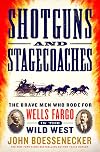
I picked up this book because I was curious as to the real fate of the shotgun people which you always see as the first killed when the stagecoach is robbed in all the tv westerns. A separate chapter is devoted to each famous lawmen, known as shotgun messengers, so there is a lot of repetition as each messenger had run-ins with different, but similar acting, criminals. over the years most of the action switches from coaches to trains, but with similar results. The law breakers are apprehended and given wildly different sentences. Nothing new there either. Most of these guys worked at the job for many years, some moving away from immediate danger and some living well into the twentieth century.

from Eddie's diary, with some heavy ghost-writing by Driggs, including his embellishment of some key incidents. Included are a note from Lakeside and an historical perspective regarding WWI. I am impressed with this small format, the paper quality, and the easily read typography of the Lakeside Edition. Fortunately, I have many more to read. The diary was repetitive but informative.
I just now am realizing that this issue is about 33 years old. I am looking at an ad for an Avalon Hill game, Guadalcanal, right now. This issue concentrates on the Battle for Quadacanal, but also has coverage of submarine warfare in March of 1943, the ordeal of Leningrad, hiding downed American pilots in France, an attack on the Enterprise aircraft carrier and delayed plans of Germany, Italy and Japan to attack the U.S. mainland. A very solid issue for a history magazine that no longer exists.
When people would tell me that they picked up a magazine mainly to look at the ads and the photographs, I would say that I was above that approach. With this magazine, though, the ads and the photos are exactly what attracts me. This issue shows me another source for Stickley and a carpet company that specializes in Arts & Crafts oriental rugs. Besides, there is a photo of a magnificent mission table clock.
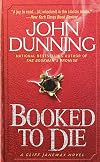
This is the first, and most successful of Dunning's Janeway book. I remember a main plot point hinging on the fact that the appraisal didn't make any sense. How could a collection with nothing but book clubs be worth killing for? We don't find out unitl the last page that the library Rita appraised was the book club one and not the incredible one filled with fabulous first editions. On rereading, I find the Rita M. character unreal with unrealistic motivations and actions. For instance, why sleep with Janeway after resisting for so long? Janeway's switch from being a detective to a full time book dealer a bit abrupt. The description of Sean Buckley as a dealer who knew what he was doing, but priced his books intentionally low to give great bargains to his customers so they would be eager to return comes surprisingly close, I would like to think, to the way I ran my shop.
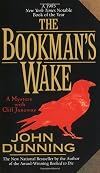
I decided to try Dunning again after many years, just to see if there is still anything attractive here. Dunning's strength is displayed when Janeway and Eleanor go shopping in bookstores and thrift shops and they are able to use their knowledge points and recent history to make off with some incredible bargains. Knowledge is power, as they say. His weakness is the faux dramatic buildup toward the end of the novel and the anti-climax when Gaston turns out to be the villain. Janeway's methods seems disjointed and reactive rather than organized and skillfully planned. Putting aside the real life drama of Doves and its famous typeface losing itself in the Thames, it is hard to believe that there could be this much drama over a series of private press books. As a bookdealer, it is still easy to enjoy this book overall.
Howell covers the demise of 'Firsts' magazine and that through an arrangement with Kathryn that Fine Books plans to merge Firsts readers into the magazine. (Will I eventually see something extensions on Fine Books to make up for what I lost on Firsts?) A new column was added to the magazine in this issue, 'Modern Firsts'. Basbanes discusses working with Moser on a new version of Gilgamesh with Moser illustrations. Markham's third book on conversations with the antiquarian book trade is welcomed, but mostly British dealers. Exhibitions on the Declartion of Independence and mail art are planned. The crazy prices for fantasy art, especially Frazetta warrants a whole page. There is thorough article on the self-published of the Cold War era. A colorful interlude on collecting the world's fair memorabilia and the raw photojournalism of Jun Fujita is pictured. Three modern fiction writers to collect now are highlighted by Firsts magazine writer Peter Coveney. In 'Beyond the Basics' a Tibetan Library is highlighted. The rest is a collector's guide, which I usually don't mention due to its limited usefulness.
These three outings are typical diverse coverage of auctions and museum exhibitions. An Asian Fine Art Sale, a library of polar exploration and Nordic history and coverage on a Rackham, Santa Claus mystery. This is followed by Einstein correspondence setting an auction record, which seems to happen quite often at big-name auctions, Charlie Brown Christmas production art and Marianne Faithfull's Diaries. In January the Rare Book School's summer 2026 course schedule is revealed in detail, an exhibition at the Eric Carle Museum on photography in children's books is announced, and highlights are shown from the Heritage tv and movie tie-ins comic auction. Finally, we find that new celebrations are planned to mark 40 years of 'Poems on the Underground'.
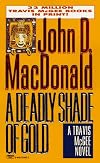
Over the years I have read many Travis McGee novels and enjoyed his escapades from the boat he lives on in South Florida. This effort is different as he leaves his boat to find out who murdered his friend. Not even half-way through this book, I began to find the events contrived, the plot tedious and the characters boring. I was expecting much more and now I will have to read some of his other novels and maybe reread some to prove that MacDonald usually writes better than this. We will see.
The plot is average, the writing is average and. on the surface, the outcome is what most people hope for, the good-guy got his vengeance. It's when you realize that basis of all the actions of this company this 'Corps Justice' is based, not on law, but on what the council running the company feels is the 'right thing'. This is maybe a little too much above the law, vigilante even for me. I have decided not to read any more of C. G. Cooper's work.
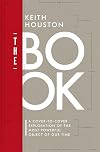
This is really a clever approach to a comprehensive study of the book, starting with an overall description of a book and then presenting all the parts in detail, the page, the text, the illustrations, the form and the colophon. Each area is handled with professional rigor, especially the exploration of Gutenberg and explanations of the intricate illustration techniques such as aquatint and photogravure. Overall, a satisfying book, particularly, as it seems to come from Houstons' general background, almost journalistic.
The third series of interviews with the booksellers of Britain just came out recently, but, in perusing my library, I had forgotten that I had the original reprinted by Oak Knoll Press in paper back in 2007. I reread these 50 interviews, woven into a narrative, sometimes skillfully, by Markham, primarily a journalist. The output is uneven, of course, with pithy revelations, deprecating humor and some real insights into the trade. Peter Eaton, in the first interview woke me up with this comment. "Neither of us likes customers. They're a bloody nuisance." Bill Fletcher is quick to point out. "Helen Hanff glamorised everything. That's her prerogative. But I know Charing Cross Road and Marks & Co. intimately , and the book just doesn't ring true." The book, with careful reading, delivers many of these gems.
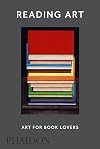
This small book is a treat for those of us who enjoy images of books in portraits and still life. Just two things stop this gathering from being excellent. Its size limits the effectiveness of its appeal and two, the inexplicable absence of the work of William Harnett, the pronounced expert in trompe l'oeil and books in still life with photographic realism.

This book was disappointing. It started off with great promise, but quickly evolved into the title character, Lew Archer, stumbling from one worthless encounter to another, with suspects being hounded by senseless and repetitive questioning. Not much deduction here, but a lot of chance observation and dull witted elimination. I did get through it, but I had to force myself to get to the ending.
Dictionary of Literary Biography Volume 170: British Literary Booktrade, 1475-1700 by Joel and James K. Bracken Silver, editors
Over 45 period British bookmen, printers, publishers, booksellers, stationers, etc. important enough to be included in this distinguished series for the years 1475-1700. Of course just British, so no Italians, Germans or French, but we do get coverage of Caxton and Wynkyn de Worde, John Day, Moxon, Royston, and Stansby among many others. This is invaluable biographical and bibliographical information for any study of the history of the book during the Renaissance, Elizabethan, Jacobean and Baroque periods. Some essays are more cogently organized than others and some are greatly hampered by a dearth of available information on their subjects.