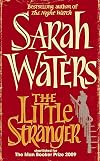
This book scared the bejesus out of me. Being something of a wuss, that might not be saying a great deal about its scariness, but I thought Waters managed brilliantly to balance the creaking genre floorboards, a very evocative depiction of crumbling English aristocracy and a disturbingly twisted, multi-layered romance in one post-Freudian package. Its flawed, annoying, fascinating characters, particularly our dubious narrator, held my attention to the very last page. A page which contained a rather brilliant way to end the story with its ambiguously creepy form of closure. A great story.
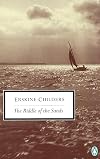
A well written but, to my decidedly un-nautical eyes, a rather uneventful adventureless story. Whilst our dashing and stiff upper lipped heroes were vividly portrayed I found the villains of the piece blurring into one fiendish, Teutonically bearded mass. The plot does seem to rest on one wildly implausible coincidence and sadly, having finished the book a week ago, the denouement escapes my recall. I expected a little more daring do and a little less kedging the erm... sou'westly bowsprit?
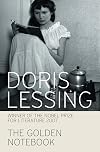
Like having a depressed, middle class friend sitting in their new conservatory and rambling on at you for hours about how awful they think their life is, 576 pages in the company of Anna Wulf was about 500 too many. On the one hand I wanted to be empathetic and not denigrate her personal unhappiness but on the other was the irrepressible desire to shout "Arrrggg!!!, just cheer the hell up". Whilst there is undoubtedly good writing here and striking characterisation (were men really this obnoxious in the 1950s?) my sympathy and interest rapidly dribbled away. Despite it's vast length I found its world too claustrophobically narrow. The supporting cast of indolent, disaffected communists and intellectuals began to grate early on as the working classes and black Africans hovered in the background trying not to get into the way of all that profound misery. I'm afraid I had to make my excuses and leave early.

A first foray into the world of Iain Banks for me and, whilst the story gripped and the language sparkled, by the end I was just a little disappointed. It seemed to me that the novel couldn't decide whether it was a family saga, a murder mystery or a tartan clad bildungsroman, and while all these elements were enjoyable and well written, they never quite gelled into a completely satisfying novel. I think I would have enjoyed hearing less from Prentice and more from Kenneth, exploding Granny McHoan, Fergus and Uncle Rory. And for a novel that toys interestingly with the line between fiction and reality I was expecting more ambiguity by the end as opposed to the rather conventional conclusion that Banks delivers. I'd also gripe that the female characters remained vague and a touch lifeless and that the plot rests on an excessively massive coincidence.
But I'm moaning too much about a book which kept me entertained and made me think for all of its 400 odd pages.
But I'm moaning too much about a book which kept me entertained and made me think for all of its 400 odd pages.
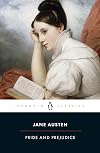
Having now had three bashes at 'getting' Austen, it's time for me and Jane to admit we don't see eye to eye and go our separate ways. The writing may be the epitome of eloquence, the nuances of character exquisite, the depiction of Georgian high society subtlety satirical; but any novel that gets half way through with a plot high of someone catching a cold is going to leave me clawing at my face out of sheer boredom.
Outside of Elizabeth, Darcy and Mr. Bennet I thought the parade of wealthy socialites was indistinct, one dimensional or both. The rarefied atmosphere was stiflingly claustrophobic and indolent. Are we supposed to laugh at Mrs. Bennet when the novel, as I found it, upholds her rather grotesque world view? It left me desperately wishing for some revolutionary window smashing, a minor riot or a hanging, anything to inject some excitement into proceedings. But then hangings and riots aren't really what Austen is for. Unfortunately.
Outside of Elizabeth, Darcy and Mr. Bennet I thought the parade of wealthy socialites was indistinct, one dimensional or both. The rarefied atmosphere was stiflingly claustrophobic and indolent. Are we supposed to laugh at Mrs. Bennet when the novel, as I found it, upholds her rather grotesque world view? It left me desperately wishing for some revolutionary window smashing, a minor riot or a hanging, anything to inject some excitement into proceedings. But then hangings and riots aren't really what Austen is for. Unfortunately.
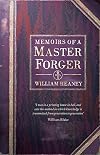
Sorry to say, but I was rather disappointed with this. I found the characters either bland, under developed or unlikeable. The plot felt like three or four disparate short stories uncomfortably glued together with neither demons nor forgery playing much of a part in any of them. Rather than the tale of nefarious supernatural activities I was expecting I got something that felt like a mid-life crisis with a dash of middle aged male wish fulfilment sprinkled on top. Nice cover, though...
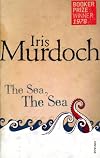
How can a book manage to be hysterical, banal and tedious all at the same time? That life, or indeed Charles Arrowby, can be all of these things may have been the point but it didn't make for pleasant reading. The apparent philosophical profundity was lost on me as I was hoping the sea monster would put in a re-appearance and maul the insipid, irritating and unappealing characters to death. Sadly it didn't and the infuriatingly repetitious plot, complete with Charles Arrowby's Cooking for Theatrical Hermits, meandered on and on all the way to page 511. Where a postscript cruelly adds another 27 pages, just when I thought I'd made it to the end, the end. However, the lentil and chipolata stew did sound delightful.
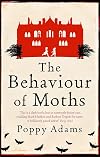
I enjoyed this page turning read which didn't outstay its welcome, but it perhaps left a few too many loose ends at the conclusion. The restricted view of the first person narrator kept the atmosphere strange and confused - ultimately a bit too confused for me, to be honest. Due to the mysteries surrounding Virginia and her suspect storytelling I was expecting a big twist at the end - She's a ghost! She's been programmed to kill the President of the Royal Entomological Society! She's really a giant moth! Which, granted, would all have been awful ways to end the book but nevertheless it left me feeling a bit nonplussed and wanting a few more answers. But then again this did make me want to go back and try to fill in the gaps, which is the sign of a good story.
Also, being somewhat scientifically illiterate I like a bit of science in fiction to make the hard stuff palatable and so appreciated the bits about lepidoptery. Although the three plot points concerning the moths did seem to fizzle out with no resolution. But maybe the moth equivalent of Moby Dick was not what Poppy Adams was aiming for.
Also, being somewhat scientifically illiterate I like a bit of science in fiction to make the hard stuff palatable and so appreciated the bits about lepidoptery. Although the three plot points concerning the moths did seem to fizzle out with no resolution. But maybe the moth equivalent of Moby Dick was not what Poppy Adams was aiming for.