
Amarisa's Cooking Pot hits home for me personally; it moves from a mother's quiet, dignified survival to an unflinching look inside radicalized rage, and mirrors the themes I return to again and again in my own work: motherhood, resilience, and making visible what the world would rather not see. Zamorano writes with real craft and no easy comfort. Reading this felt like going home as it sits naturally within the Solter Universe. Live Authentically and Create Magic!!
 This review was written for LibraryThing Early Reviewers.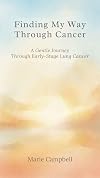
A Review of Finding My Way Through Cancer by Marie Campbell
I picked up this book at a hard moment. My aunt was just about to pass the five-year mark cancer-free, that milestone we're all taught to hold our breath for, only to be told that her most recent scan that it isn't clear anymore. So she (I’d say we, but somehow….it’s not we, despite our love and what we’d give….this has always been her battle and we are permanently “benched,” watching her from the sidelines) are starting the fight all over again.
I wasn't sure what I needed when I opened this book, only that I needed something.
What I found was exactly that: something.
Marie Campbell wrote this at 82, in the middle of her own early-stage lung cancer diagnosis and treatment, and it shows in the best way. There's no distance between her and the reader. She walks you through the PET scan, the biopsy, the agonizing wait between "it might be Stage 2" and the relief of "it's actually Stage 1A," and she never smooths over how frightening the unknown was, even as someone who felt completely well the entire time. That detail….how ordinary and symptom-free her days were before and often during treatment….struck me hardest. It's a quiet reminder of why the follow-up scans matter so much, and why news like my aunt's can arrive with no warning at all.
What makes this book valuable for me right now isn't just Marie's story, though her warmth carries the whole thing. It's the practical scaffolding around it: the show more glossary that translates medical language into plain English, the list of questions to bring to appointments, the resource list for support organizations across several countries. These are the things you don't think to ask for until you're sitting in a waiting room with a head full of static, and having them gathered in one gentle place is a genuine gift.
The chapter on being a support person hit especially close to home. Marie writes about her son Stuart taking notes, asking the questions she couldn't find in the moment, simply saying "whatever it is, we'll deal with it." That's the role I'm stepping back into with my aunt, and reading it named so plainly, without sentimentality, helped me feel less alone in it before I've even had to do it again.
This isn't a medical textbook, and Marie never pretends it is. It's a hand reaching across the page, from someone who has been in the room with the fear and the waiting and the small, disproportionate joy of good news. For anyone newly diagnosed, or anyone watching someone they love go through this a second time, it offers something rare: honesty without despair, and hope that doesn't ask you to pretend everything is fine when it isn't yet.
I'm grateful this book found me when it did. I think it will find its way to exactly the people who need it. show less
I picked up this book at a hard moment. My aunt was just about to pass the five-year mark cancer-free, that milestone we're all taught to hold our breath for, only to be told that her most recent scan that it isn't clear anymore. So she (I’d say we, but somehow….it’s not we, despite our love and what we’d give….this has always been her battle and we are permanently “benched,” watching her from the sidelines) are starting the fight all over again.
I wasn't sure what I needed when I opened this book, only that I needed something.
What I found was exactly that: something.
Marie Campbell wrote this at 82, in the middle of her own early-stage lung cancer diagnosis and treatment, and it shows in the best way. There's no distance between her and the reader. She walks you through the PET scan, the biopsy, the agonizing wait between "it might be Stage 2" and the relief of "it's actually Stage 1A," and she never smooths over how frightening the unknown was, even as someone who felt completely well the entire time. That detail….how ordinary and symptom-free her days were before and often during treatment….struck me hardest. It's a quiet reminder of why the follow-up scans matter so much, and why news like my aunt's can arrive with no warning at all.
What makes this book valuable for me right now isn't just Marie's story, though her warmth carries the whole thing. It's the practical scaffolding around it: the show more glossary that translates medical language into plain English, the list of questions to bring to appointments, the resource list for support organizations across several countries. These are the things you don't think to ask for until you're sitting in a waiting room with a head full of static, and having them gathered in one gentle place is a genuine gift.
The chapter on being a support person hit especially close to home. Marie writes about her son Stuart taking notes, asking the questions she couldn't find in the moment, simply saying "whatever it is, we'll deal with it." That's the role I'm stepping back into with my aunt, and reading it named so plainly, without sentimentality, helped me feel less alone in it before I've even had to do it again.
This isn't a medical textbook, and Marie never pretends it is. It's a hand reaching across the page, from someone who has been in the room with the fear and the waiting and the small, disproportionate joy of good news. For anyone newly diagnosed, or anyone watching someone they love go through this a second time, it offers something rare: honesty without despair, and hope that doesn't ask you to pretend everything is fine when it isn't yet.
I'm grateful this book found me when it did. I think it will find its way to exactly the people who need it. show less
This review was written for LibraryThing Early Reviewers.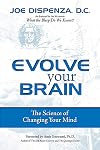
This book took me several months (which is unusual), but that is only because there is so much to digest and fully incorporate into oneself that it must be read in tiny increments....it is worth it though, if you are able to honestly look directly at yourself, your behaviors....your patterns....and then put in the work to change what needs to be updated!