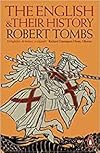
After reading Pepys diaries I wanted to know more about the background of English history in the 1600s, so I picked up this one volume history of England. Excellent decision, it turned out to be. Really coming to understand the ebbs and flows of English history is so helpful - it connects one's understanding of the country that is part of every Australian's heritage. Understanding how much religious zealotry the Puritans surfaced in England during the Civil War, as well as the supercilious attitude of monarchs such as Charles the first and second, helps me to more deeply appreciate how the 1688 Glorious Revolution got us onto a new path to the modern Western, liberal world, a world where you didn't cry 'Thou shalt break them with a rod of iron' as you rode into religious war, or where you didn't just cancel parliament because you thought you as the big man in the palace knew best. In the twenty first century with things like the Salman Rushdie affair on the one hand and Trump's stating that he is really only beholden to his own moral judgement in his actions as President, such study of 1600s English history is not irrelevant to the present moment.
With a deeply learned, yet not dull or pedantic, guide such as Tombs, this history is an enjoyable read. I'm glad that 2026 was the year I read comprehensive histories of England and Australia, the two countries that I am a product of. If you don't know your history, the collective story of your culture, you are not a fully show more formed member of your society. And your story should celebrate its high points as well as its low points, without duplicity or delusion, and this book and the other Australian history do this. show less
With a deeply learned, yet not dull or pedantic, guide such as Tombs, this history is an enjoyable read. I'm glad that 2026 was the year I read comprehensive histories of England and Australia, the two countries that I am a product of. If you don't know your history, the collective story of your culture, you are not a fully show more formed member of your society. And your story should celebrate its high points as well as its low points, without duplicity or delusion, and this book and the other Australian history do this. show less
Australia: A History: by the former Prime Minister Tony Abbott with a foreword by Geoffrey Blainey: From convict colony to great democracy by Tony Abbott
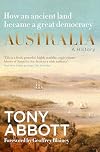
Why don't teenagers learn this history at school? I barely knew who Philips was before reading this book. I don't respect the authors views on climate change and some elements of his politics, but he has produced a readable and comprehensive history of Australia and for that I am very grateful. It is important that Australians know their history and are proud of some of what their forebears have accomplished.
Abbott is a Christian and a free market lover. These two sources of bias in his judgements occasionally rise to the surface. In my view Western civilisation climbed out of the stew of religiosity at the start of the 1700s in England to some extent, and I don't think Abbott fully understands this point (he praises the pluralistic attitude towards religious tolerance of the early British colony but he doesn't fully comprehend how the arc towards secular rationality was also slowly taking shape). But these points don't negate the volume of this book. We don't have another recent well researched one volume history of Australia that is boldly positive about our achievements as well as honest about our failings as a nation. That makes this book very valuable. It is crucial to understand Aboriginal and environmental history more than this book facilitates, but for that you can read other books such as my own Stepping Off: Rewilding and Belonging in the South West (2017). Both Abbott's and my own perspectives are worth having, and in combination help us to grasp the truth of show more this country. show less
Abbott is a Christian and a free market lover. These two sources of bias in his judgements occasionally rise to the surface. In my view Western civilisation climbed out of the stew of religiosity at the start of the 1700s in England to some extent, and I don't think Abbott fully understands this point (he praises the pluralistic attitude towards religious tolerance of the early British colony but he doesn't fully comprehend how the arc towards secular rationality was also slowly taking shape). But these points don't negate the volume of this book. We don't have another recent well researched one volume history of Australia that is boldly positive about our achievements as well as honest about our failings as a nation. That makes this book very valuable. It is crucial to understand Aboriginal and environmental history more than this book facilitates, but for that you can read other books such as my own Stepping Off: Rewilding and Belonging in the South West (2017). Both Abbott's and my own perspectives are worth having, and in combination help us to grasp the truth of show more this country. show less
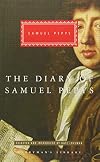
Wouldn't it be interesting if you could travel back in time and magically be privy to the silent reflections of an upper middle class gentleman in the London of the 1660s? Well thanks to Pepys' diaries you can. I listened to the 2003 Naxos Recordings audiobook narrated by Michael Maloney. A perfect reading and interspersed with appropriate bits of baroque music. I have an interest in the architecture of that era - Hawksmoor and Wren for example - and could visualise some of what Pepys was seeing as he made his way around Restoration London. He was a pretty money loving and sexually promiscuous man, and his dealings with powerful people make me think of the sleaze of famous figures in the news in the twenty first century.
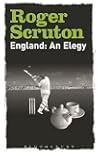
A personal statement on a country, England, that observes national character as it developed over centuries, and then laments its passing at the end of the twentieth century. I agree with Scruton that the BBC of the seventies was still a neutral and authoritative voice of reason, and now it has been debased and is a flimsy simulcrum of its old self. There was and is a lot to love about England and English culture and this book pays homage to those qualities and things. I disagreed with his placing as religion as a sine qua non for national identity (makes me think of Hindu thug talk in India), and he should have written a bit more about the damage that the opulence of English country houses did to those who slaved in them or were dispossessed by them (read Oliver Goldswmith's The Deserted Village rather than reading modern critics on this), but in general I appreciated his understanding of the moral ideal of the English gentleman. I found his description of the best aspect of English culture accurate in many ways. He makes a stand for those things I love at a time when they are slinking into the shadows.
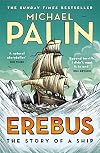
Palin shows that you can write the biography of a ship as a vehicle to reveal an exciting period in polar exploration and British confidence and curiosity. James Ross's time in Tasmania is an important part of the book, which is of interest for an Australian audience. Treading the boards of Erebus in the first few decades of the nineteenth century makes the reader feel that the world is still full of mystery and adventure. The Ancient Mariner by Coleridge is a poem that seems written in the memory of the fated ship Erebus: With sloping masts and dipping prow,
As who pursued with yell and blow
Still treads the shadow of his foe,
And forward bends his head,
The ship drove fast, loud roared the blast,
And southward aye we fled.
As who pursued with yell and blow
Still treads the shadow of his foe,
And forward bends his head,
The ship drove fast, loud roared the blast,
And southward aye we fled.
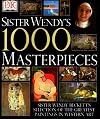
Wendy Beckett was a Catholic nun and an art historian. She became famous to the world as 'Sister Wendy' through a series of tv documentaries where she wanders around art galleries and discusses some of her favourite art works. Her insights are presented simply and with humane grace and understanding. Old masters that on first glance don't seem to speak to me have, after analysis from Siter Wendy, opened up insights into the human heart or the wider world that I would never have expected.
A highly articulate English gentleman with a great sense of humour. Good company and plenty of laughs. I actually think this autobiography is better than his fictional creations (although I admit that I do not have a comprehensive knowledge of them).
I am happy that life still has the ability to introduce me to writers of literary prose who have the stature of a classic. It took me many years to read Charles Lamb and I can say that he is one of the greatest essayists of the English language. Whimsical and wondering and greatly entertaining.
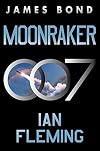
If you were to try to create a portrait of what 'Englishness' looks like you could include this novel. This was written in 1955 and shows a very different England to what you will find today if you visit. The scenes from London clubland are perfect insights into another world of stately architecture and gentlemanly bonhomie, a world that is gone 70 years later. The villain of the novel is a plutocrat who launches rockets, so perhaps one aspect of the novel isn't out of date. And the usual Fleming ability to hold the narrative taut with suspense, page after page, is a pleasure.
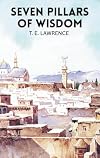
The best way to consume this is to listen to Jim Norton's reading of it on Naxos Recordings (1994).

An ode to English architecture, art and the countryside. A soldier recovers from the trauma of combat and the trenches while working on uncovering a medieval painting in a country church. He is slowly imbricated into the stichings of local community and the networks of the village. Human contact and concern, and the soft shapes and sounds of old England seen from his belfy windows bring him back into the human fold. A simple and satisfying novel, and gets close to the soul of England.
We Will Not Be Saved: A memoir of hope and resistance in the Amazon rainforest (Reese Witherspoon's Book Club Pick) by Nemonte Nenquimo
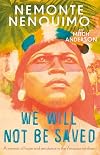
I can't call this book a great literary work, but I do think its worth paying attention to. An indigenous woman from the Amazon basin who speaks up for her culture and her forest home with fire in her belly. Her voice moves me profoundly.
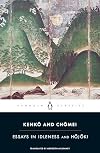
I listened to Hojoki by Chomei as read by the famous classical Japanese actor Togo Igawa (Naxos recordings, 2008) and was hooked immediately. It is nice to discover such gems you have never heard about in the world of literature and straight away know you have found a classic. This was written in the thirteent centry in Japan, but it is a presaging of the world of Thoreau in Walden - retreat to a small hut in the countryside and find peace in simplicity.
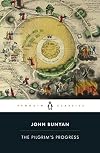
I'm not a Christian and this is essentially Christian propaganda. Why then do I appreciate this work? I listened to the masterful reading by actor David Shaw-Parker (Naxos Recordings, 2013) and savoured the stately seventeenth century English prose, that's why. It is the same reason why certain passages in the King James bible are fragments of prose that should be experienced by all speakers and lovers of good English.
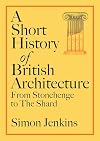
I'm really enjoyed this good humored wander through the ages of church, civic and residential architecture. As I read I stopped and watched a 'Smarthistory' video on an English cathedral on Youtube - it is important to see the buildings referred to as you go along rather than just read about them. The book shares my disinterest in much of the dullness that has taken the name architecture from the middle of the twentieth century onwards, so is of more use if you are interested in earlier periods of design.
Travels with a Donkey in the Cévennes (Warbler Classics Annotated Edition) by Robert Louis Stevenson
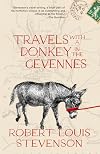
Adventure in the mountains of central east France in a time when the was still the odd wolf, no cars on the roads, and when a dark night meant stumbling in the blackness. Stevenson's usual weightless and yet dignified prose style leads the way.
The Greatest of All Plagues: How Economic Inequality Shaped Political Thought from Plato to Marx by David Lay Williams
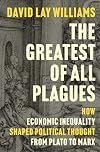
In 2025 economic inequality is on the way up in the Anglophone West. Take the time to learn from the thinkers of past centuries on what is wrong with a widening gulf between the wealthy and the rest.
I love this volume if for only introducing me to the prose of Charles Lamb. An excellent bedside volume of wise and witty words to elevate your mind.
Some interesting science on the soundscapes of the planet and how they affect us humans, and how some nonhuman beings interact with them. I sometimes found the turn of phrase a bit too casual - as if he was writing a blog rather than a book - but the content still makes this a book that I find significant and important, especially for someone like myself with a prior interest in the power of sound to alter our lives.
One of my favourite large format books of art and photography for all time. The jusxtaposition of old masters with modern painting or sculpture or black and white photography works brilliantly. This would be expensive to buy but worth owning.
It is rare for me to read a work of literature and spontaneously laugh out loud once every few pages - Amis's sense of the absurd has that affect on the reader. And thank god we have people, like both Amis senior and junior, whose powers of observation and sense of mischief combined with powers of expression in English prose can let us laugh at the world.
(The Woman in White (Penguin Clothbound Classics)) [By: Collins, Wilkie] [Oct, 2009] by Wilkie Collins
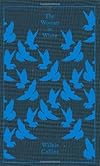
Ian Holm's reading of this novel, set to a leisurely 80 percent of full speed in my playback, was my accompaniment to many walks under the moon along the banks of the Swan River.
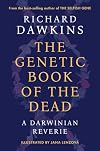
Every now and again I find it enjoyable to tour the lineaments of biological evolution. Few people are able to take you through these wonders as well as Richard Dawkins. Take the the time to go on what will probably be Dawkins' final book length tour of the story of life.
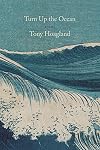
A posthumous gift from easily one of America's finest poets of the last twenty years.
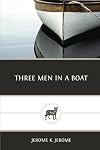
Why is this a classic work of literature? Because it captures an ebullient good cheer and radiates it forevermore. Because it is close to the soul of England - alone with the novels of Wodehouse. Because it will always be there to help you to smile and sally forth after you have been lifted up as a fortunate reader.
Out of Africa (Penguin Essentials) by Karen Blixen (7-Apr-2011) Mass Market Paperback by Karen Blixen
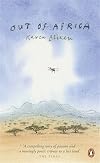
I have been to Nairobi - in 2017 - and this book enabled me to glimpse the world of that region a century earlier, long before the traffic jams and urban sprawl took hold. The world of the farm the author owned is beautifully described, conjuring up a different Africa, one that is a kind of pastoral idyll with its roots in a tribal world much older than the pastoral idylls of the West.
New Cold Wars: China's Rise, Russia's Invasion, and America's Struggle to Defend the West by David E. Sanger

2024 is a time of enormous geopolitical tensions around the world, and particularly between the West and Russia and China. You would do well to know what is going on, because what is going on is actual history with a capital H. In steps David Sanger and his new book 'New Cold Wars'. It is a gripping and detailed portrait of our times - far more useful and revealing than reading the newspaper reports on these issues.
An intelligent and jargon free tour through the history of Western art. Reading this book for the first time I am reminded of how important it is to know our common Western culture, which is in part a history of paintings, buildings and sculptures which have meaning and beauty as they come to us across the centuries. I almost feel it is a duty to have some knowledge of Western civilisation in this sense if you want to call yourself an educated citizen and heir to the Western tradition. Most people seem content to take photos of their dinner and post them on Instagram, and for those people in this way remaining forever naive of our great artistic, architectural and literary traditions, our common culture of Western civilisation, I feel sad. They don't know what they are missing out on. More than that with fewer people having an acquaintance with this common historical culture, society's points of reference are impoverished, our conversations are hollowed out, and civilisation in this country ebbs and gutters like a candle flickering low. You can read this book for nothing if you get it out from a public library, but it enriches you in ways different and perhaps deeper than owning a new BMW and the latest smartphone. Of course as well as reading books like this it is ideal to spend some time wandering around places like Florence, Rome, Athens and Amsterdam and their galleries and museums (and yes, that requires more money, but it still doesn't require you to be rich if you show more do it in the right way).
And after you have read this, watch the full series made for BBC, Civilisation, with Kenneth Clarke talking to camera like an adult and you will further flesh out the story this book narrates so limpidly. show less
And after you have read this, watch the full series made for BBC, Civilisation, with Kenneth Clarke talking to camera like an adult and you will further flesh out the story this book narrates so limpidly. show less
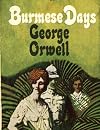
I read Paul Theroux's 2024 novel Burma Sahib which dramatizes Orwell's time as a young man in Burma, and this lead me to pick up Orwell's own roman a clef novel where the protagonist is pretty clearly Orwell in disguise. I implore you to not bother reading Theroux's derivative concoction, and go straight to the original. Orwell is funnier than Theroux (perhaps the British sense of humour trumping American earnestness), and a few times I actually laughed out loud reading Orwell's novel. He is also more concise and authentic in his descriptions of the seasons and fine grained details of colonial club lounges, tennis or shooting and other facets of the world he himself lived in (unlike Theroux who imagined himself into that world from a distant point in the future). The protagonist of the novel is John Flory, a young man who has lived in Burma for his twenties and dealt with his loneliness by having a dog, a Burmese mistress, and reading lots in the evening. He is appalled by the racisim and bluster of many of the whites in the small town in northern Burma where he works as a timber merchant. But he is also appalled by some of the local Burmese he meets. His one true friend is an Indian doctor. This is another difference with the Theroux book - Orwell calls a spade a spade if he encounters cruelty and venality, regardless of which ethnicity the person exhibiting it has, which in Theroux the whites are generally the villains. The ending of Orwell's novel dissapointed me - it show more is squalid and rushed (although I won't tell you what happens in case you want to read the book). I enjoyed the novel for its reminder of what life is like as an expat living and working in Asia - of course this world is unqiue as it is the early twentieth century, with instituionalised racism in which 'natives' do the menial work and the British administrate. But I empathised with Flory's loneliness - I have sometimes felt marooned in a society where those around me don't care deeply about literature, philosophy, art and other finer aspects of civilisation. Lonely in not being able to talk with friends about these things in a rich and stimulating conversational manner. I empathised with Flory's feeling that many of those around him are not deeply interested in the cultures, arts, and ways of life of the people of south-east Asia. I empathised with Flory in feeling that the women he has courted in life have often not been particularly interested in the reflections on life you find in great books. Having said all of that Floy is an anti-hero - he is a coward at key moments in the novel. On the other hand he does show some bravery, and aren't we all amalgams of the good and the bad, the resolute and the lazy, the righteous and the expedient? Orwell gives us an engaging trip into the world of the British raj in Burma in 1934, and apart from the finale, I enjoyed the journey. show less

Bruce Chatwin didn't actually spend much time out of his four or five decades on earth in Australia - so he is no expert on Australia and its cultures and landscapes. On the other hand his few weeks in and around Alice Springs in the early 1980s brushing with traditional Australians in the desert and recording a journalistic slice of their life does give him an insight in Aboriginal Australia I don't have myself as an Australian. I think this comes from Chatwin's immense confidence and sense of purpose as a travel writer. And that sense of confidence and purpose is something all of us writer's should try to have more of - life is whistling by and if we don't stand up from our desks right now and go and stride into our interests on the ground then history will pass us by. Thanks for this reminder Bruce.
But this book is of value to me more for its thoughts on nomadism. A large slab of the book is basically his 'commonplace book', his literary scrapbook, for fragments of writing, his own and others, that adumbrate why and how we humans are fundamentally restless and travel loving as a species. He recalls chatting with a nomad in the deserts of Sudan, and then quotes something about Cain and Abel from the bible, then gives us a bit of a letter by Flaubert. It is compelling stuff - for the same reason his best work is. He conjures the romance of travel through glimpses and images and mutterings, in the way only a mystically propelled and slightly misanthropic aesthete like show more himself could do. show less
But this book is of value to me more for its thoughts on nomadism. A large slab of the book is basically his 'commonplace book', his literary scrapbook, for fragments of writing, his own and others, that adumbrate why and how we humans are fundamentally restless and travel loving as a species. He recalls chatting with a nomad in the deserts of Sudan, and then quotes something about Cain and Abel from the bible, then gives us a bit of a letter by Flaubert. It is compelling stuff - for the same reason his best work is. He conjures the romance of travel through glimpses and images and mutterings, in the way only a mystically propelled and slightly misanthropic aesthete like show more himself could do. show less