A rare did-not-finish for me -- gave up about halfway through. The cynical portrayal of all the female characters did me in. For those who liked Dorothy Dunnett but thought there was too much Philippa Somerville (ie. no-one, ever)
I didn't know this was book 3 in a series when I picked it up! and if I had known I probably would have put it back. I think the story would have made a little more sense if I'd read the previous two, and the characters weren't particularly well-drawn, perhaps characterisation had all happened earlier too. The plot was a bit weird, and plenty of loose ends weren't tied up, so I expect they will be explored later in the series, but I won't be sticking around to find out.
I'd previously enjoyed 'Bitter Greens' by the same author so I was excited to pick up this new book, but in the end, I found it all a bit...well grim (sorry). Mild spoilers follow.
'The Wild Girl' tells the story of Dortchen Wild, who grows up and falls in love with Wilhelm Grimm who lives next door. She tells him many of the stories for his collection of folk tales (which he writes with his brother, Jakob). However, Dortchen has to come to terms with what we would consider the post-traumatic stress disorder she suffers after abuse from her father.
A few things stopped me from enjoying this book. Firstly, the characters are very one-dimensional, the best example of this is Dortchen's five sisters. On the back of the book it says 'The pretty one, the musical one, the clever one, the helpful one, the young one... And then there was the Wild one'. This is taken to extremes in the book, as whenever something helpful needs doing, the helpful one does it, and whenever there's a ball to dress up for, the pretty one does it, and so on. Apart from Dortchen, nobody did anything beyond the confines of their stereotype, and so nobody came alive in this book.
Secondly, the book is set at the time of rapid Napoleonic expansion. We know this because every five pages or so, one character will turn to another and say "What's happening with Napoleon now?", "Well, he's just won a battle at such-and-such". Events from the history of the period happen around the characters, but even the really show more awful things that happen to Dortchen's brother Rudolf don't seem to have any lasting effect.
Thirdly, this book should come with a trigger warning for the graphic abuse suffered by Dortchen at the hands of her father. The author explains in the afterword that this explains Dortchen's story 'All-kinds-of-fur', but it did take up most of the middle third of the book and made for rather grim reading. See Robin McKinley's 'Deerskin' (a retelling of 'All-kinds-of-fur') for a much better handling of a similar subject.
Fourthly, one of the difficulties inherent in weaving a fictional story around real-life events is that real-life often isn't plotted very tightly, and this book suffers from some long lags in the middle while we're just waiting for Dortchen to do things. There's a whole great stretch of it where all she does is sneak out, kiss Wilhelm, get caught by her father, get beaten, get locked in the house, repeat.
All in all this book was ok, but not as good as 'Bitter Greens', which I'd recommend instead. show less
'The Wild Girl' tells the story of Dortchen Wild, who grows up and falls in love with Wilhelm Grimm who lives next door. She tells him many of the stories for his collection of folk tales (which he writes with his brother, Jakob). However, Dortchen has to come to terms with what we would consider the post-traumatic stress disorder she suffers after abuse from her father.
A few things stopped me from enjoying this book. Firstly, the characters are very one-dimensional, the best example of this is Dortchen's five sisters. On the back of the book it says 'The pretty one, the musical one, the clever one, the helpful one, the young one... And then there was the Wild one'. This is taken to extremes in the book, as whenever something helpful needs doing, the helpful one does it, and whenever there's a ball to dress up for, the pretty one does it, and so on. Apart from Dortchen, nobody did anything beyond the confines of their stereotype, and so nobody came alive in this book.
Secondly, the book is set at the time of rapid Napoleonic expansion. We know this because every five pages or so, one character will turn to another and say "What's happening with Napoleon now?", "Well, he's just won a battle at such-and-such". Events from the history of the period happen around the characters, but even the really show more awful things that happen to Dortchen's brother Rudolf don't seem to have any lasting effect.
Thirdly, this book should come with a trigger warning for the graphic abuse suffered by Dortchen at the hands of her father. The author explains in the afterword that this explains Dortchen's story 'All-kinds-of-fur', but it did take up most of the middle third of the book and made for rather grim reading. See Robin McKinley's 'Deerskin' (a retelling of 'All-kinds-of-fur') for a much better handling of a similar subject.
Fourthly, one of the difficulties inherent in weaving a fictional story around real-life events is that real-life often isn't plotted very tightly, and this book suffers from some long lags in the middle while we're just waiting for Dortchen to do things. There's a whole great stretch of it where all she does is sneak out, kiss Wilhelm, get caught by her father, get beaten, get locked in the house, repeat.
All in all this book was ok, but not as good as 'Bitter Greens', which I'd recommend instead. show less
I finally made it to the end! After being totally absorbed in Nicholas's life for two months, 8 books, 6000 pages, the ending left me bereft. And of course the first thing I wanted to do, after that humongous twist, was go and read the whole thing from the beginning, and I've had to wean myself off gently. Everything was so real, and I feel like I've lived through 20 years of history. 'The Spring of the Ram' and 'Scales of Gold' were my favourites -- Nicholas goes to some exotic location and outwits people. Anything set in Scotland rather dragged (which made most of Gemini rather a slog, to be honest).
I'm forcing myself to take a month off, before I start the Lymond Chronicles.
I'm forcing myself to take a month off, before I start the Lymond Chronicles.
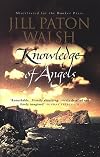
It's funny how sometimes you end up reading two books back to back that turn out to be about the same thing, and in my case that 'thing' is the dramatic shift from Medieval to Renaissance Europe. 'Knowledge of Angels' isn't technically a historical novel -- it's set on an island 'somewhat like Mallorca, but not Mallorca, at a time somewhat like 1450, but not 1450'. I have to say this note at the beginning won me over almost immediately, and gives the whole novel the air of a fable. The island in question, that isn't Mallorca, is a richly imagined medieval Mediterranean society, with olive groves and wine, and fishermen sleeping in the sun, and whitewashed churches, and simple peasant folk. Everything is disrupted by two, perhaps three, outsiders, firstly, a castaway called Palinor who comes from a more enlightened society where one may believe what they like, and who personally declares himself an atheist, and secondly an orphan girl, Amara, raised by wolves. And the Inquisition -- once that turns up from Rome you know you're in trouble!
The best parts of this book are the philosophical debates at the centre between Palinor and the island's most eminent religious teacher Beneditx, and between them, as Palinor, an engineer, slowly fixes fountains and machinery to make life easier for the working peasants. I found Amara's story a little harder to fix on to but I enjoyed her among the nuns -- a proper cat among the pigeons! This is a novel of ideas rather than characters or show more setting and yet both shine, I can tell they'll stay with me for a long while.
This is the second of my Santathing presents this year, and I'm so grateful, I'm really glad I've read this book. show less
The best parts of this book are the philosophical debates at the centre between Palinor and the island's most eminent religious teacher Beneditx, and between them, as Palinor, an engineer, slowly fixes fountains and machinery to make life easier for the working peasants. I found Amara's story a little harder to fix on to but I enjoyed her among the nuns -- a proper cat among the pigeons! This is a novel of ideas rather than characters or show more setting and yet both shine, I can tell they'll stay with me for a long while.
This is the second of my Santathing presents this year, and I'm so grateful, I'm really glad I've read this book. show less

Dorothy Dunnett is really testing her readers now! How much can you enjoy a book when you like the main character less and less? Turns out, quite a lot :) I started this book pro-Nicholas and anti-Gelis, and by the end I was a lot more pro-Gelis, and, while not exactly anti-Nicholas, I felt like he had to make some amends, just like everyone else! The ending was great, I didn't see Gelis's revelation coming, but I kind of guessed that Nicholas would be on top of it.
This was the first time I got the sense that Dunnet is hurling Nicholas around Europe to have him witness significant events of the period, but that said, I really loved the Iceland bits, more than anything that happened in Scotland, I just wished they were more of the book.
I've already started 'Caprice and Rondo'. I haven't enjoyed the last two books as much as the four before them, but I'm desperate to find out what's been going on all this time, so I'm ploughing on! I hope the form picks up a bit, though.
This was the first time I got the sense that Dunnet is hurling Nicholas around Europe to have him witness significant events of the period, but that said, I really loved the Iceland bits, more than anything that happened in Scotland, I just wished they were more of the book.
I've already started 'Caprice and Rondo'. I haven't enjoyed the last two books as much as the four before them, but I'm desperate to find out what's been going on all this time, so I'm ploughing on! I hope the form picks up a bit, though.
Mild spoilers:
I enjoyed reading this book, but it was a little unsatisfying in the end. I still had so many questions about what was going on when the book ended, most notably about the evil witch aunts -- the author did a really good job of building up the suspense and the weirdness, which then didn't go anywhere. But overall, the narrators voice was strong and charming, and really kept you hooked in, and the sense of time and place was very vivid and excellently done.
Initially I was annoyed at all the Science Fiction book references, as I'd read so few of them (really only Ursula LeGuin and half of the Chronicles of Amber), and worried which plot points I was missing by not having read a myriad of other books. However, in the end I let those bits wash over me, and what shone through was a very real sense of an isolated teenage girl I clearly remember being myself, who has just read a Science Fiction book which forced her to view the world in a completely new way. And while she is basking in this revelation she wants everyone she knows to read the book too, so that they can understand and maybe also have her amazing transformative experience. And the other people say 'Oh, I don't read Science Fiction, I only like things that are true'. Ouch.
I enjoyed reading this book, but it was a little unsatisfying in the end. I still had so many questions about what was going on when the book ended, most notably about the evil witch aunts -- the author did a really good job of building up the suspense and the weirdness, which then didn't go anywhere. But overall, the narrators voice was strong and charming, and really kept you hooked in, and the sense of time and place was very vivid and excellently done.
Initially I was annoyed at all the Science Fiction book references, as I'd read so few of them (really only Ursula LeGuin and half of the Chronicles of Amber), and worried which plot points I was missing by not having read a myriad of other books. However, in the end I let those bits wash over me, and what shone through was a very real sense of an isolated teenage girl I clearly remember being myself, who has just read a Science Fiction book which forced her to view the world in a completely new way. And while she is basking in this revelation she wants everyone she knows to read the book too, so that they can understand and maybe also have her amazing transformative experience. And the other people say 'Oh, I don't read Science Fiction, I only like things that are true'. Ouch.
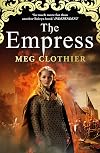
I loved this book, with its Byzantine setting (always a winner for me since reading Stella Duffy's Theodora books and 'Sailing to Sarantium' by Guy Gavriel Kay), its independent heroine who isn't afraid to get her hands dirty, and compelling, epic plot covering some years. It's always impressive when an author manages to tell a real historical story, with real historical characters (no chickening out and making the heroine a maid of the empress here!) without sounding like they're copying large swathes of history from Wikipedia. I really cared about Agnes as a character, and every so often I would remember she really existed and be amazed all over again! The plot is great, with a good amount of court intrigue -- again, it's not easy to shape real events into a coherent story so I really appreciate it done well.
I didn't realise that this book was set at around the same time as 'The Girl King' which I also really liked, and my gradual realisation that there were characters that overlapped was perhaps slower than it should have been! (But it was nice to see them).
For me, the best historical fiction opens your eyes to a piece of history you knew nothing about, and after reading this (and 'The Girl King') I am fascinated by Byzantium, Georgia, the Crusades, the relationship with a Western Europe, and would love to read more, so it succeeds on that level. This book is an excellent companion to the Theodora books by Stella Duffy (although set 500 years later), they're written show more in a similar style so if you liked those you'll probably like this too. show less
I didn't realise that this book was set at around the same time as 'The Girl King' which I also really liked, and my gradual realisation that there were characters that overlapped was perhaps slower than it should have been! (But it was nice to see them).
For me, the best historical fiction opens your eyes to a piece of history you knew nothing about, and after reading this (and 'The Girl King') I am fascinated by Byzantium, Georgia, the Crusades, the relationship with a Western Europe, and would love to read more, so it succeeds on that level. This book is an excellent companion to the Theodora books by Stella Duffy (although set 500 years later), they're written show more in a similar style so if you liked those you'll probably like this too. show less
This was my second Rumer Godden book, after China Court, and I would have enjoyed it a lot more if it hadn't been so similar to the first. Predictably, the things like I liked and disliked about China Court were repeated here. I really enjoyed the 'fugue' structure and the writing. Again, I thought the contemporary character (in this case Grizel) was underdeveloped and her submission to a masterful man (which all happened rather quickly in this book) made me deeply uncomfortable.
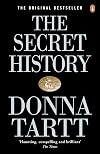
Just when I thought I knew where this book was heading it surprised me. I was expecting something like 'The Prime of Miss Jean Brodie', or 'Special Topics in Calamity Physics' but this just had so much more depth, and the plot revolved less around the students' relationship with their teacher than the relationships with each other and dangerous results of such isolation. There's a real skill at work when an author manages to make the reader complicit in an act usually so morally abhorrent.
The weak link for me was the character of Julian Morrow. The protagonist and the other students profess to love him and even look upon him as a father figure, but this is all told, not shown -- he hardly appears except to be erudite and mysterious.
Between this and Pamela Dean's 'Tam Lin', what does everyone have against Classics Majors??
The weak link for me was the character of Julian Morrow. The protagonist and the other students profess to love him and even look upon him as a father figure, but this is all told, not shown -- he hardly appears except to be erudite and mysterious.
Between this and Pamela Dean's 'Tam Lin', what does everyone have against Classics Majors??
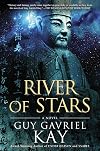
I couldn't wait to read this book, and it didn't disappoint. Kay is at home in his Chinese setting, and I love learning about real history from him this way. It always amazes me just how much of his stories really happened! The story hooked me in as usual, and although the characters weren't as compelling as in some of his other books, they were still a sufficiently interesting cast.
That said, his habit of foreshadowing literally everything that is going to happen in the book is starting to really annoy me. It seems like every three pages there's a sentence along the lines of "but that was not, in fact, how it turned out. How strange it is that the course of history can be changed by such a small thing", again and again and again. I get it! Any halfway intelligent reader will be able to appreciate when a plot turns on a slight coincidence, without neon signs pointing you at it. As a device I think it can be effective, but only if it isn't overused.
I'll go back and read Under Heaven now, as it's been a couple of years since I read it. The plots of Kay's books are so complicated it's hard to remember what happened, and I suspect these two books will blur into one otherwise.
That said, his habit of foreshadowing literally everything that is going to happen in the book is starting to really annoy me. It seems like every three pages there's a sentence along the lines of "but that was not, in fact, how it turned out. How strange it is that the course of history can be changed by such a small thing", again and again and again. I get it! Any halfway intelligent reader will be able to appreciate when a plot turns on a slight coincidence, without neon signs pointing you at it. As a device I think it can be effective, but only if it isn't overused.
I'll go back and read Under Heaven now, as it's been a couple of years since I read it. The plots of Kay's books are so complicated it's hard to remember what happened, and I suspect these two books will blur into one otherwise.
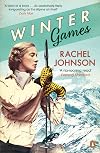
I was disappointed in this book, which I disliked more and more as I read it. There are two parallel stories, one set in 1936 where young English girls hang out with Nazis in Bavaria, and another set in 2006 where a granddaughter wants to find out what happened to her grandmother (the protagonist of the historical sections).
The modern day story especially is exclusively populated by deeply unpleasant characters -- and even the main protagonist, Francie, is self-absorbed and horrible, with no real personality. The author wants us to sneer at the extravagance of rich people, while at the same time describing all their possessions and houses in loving detail. Thus we end up with twaddle like "it was as if giving away more of other people's money made them [bankers, brokers and fund managers] feel better about having helped themselves to so much of it. Their largesse extended to their trophy wives -- gym bunnies nibbling on a crumb of gluten-free pecan brownie between Pilates and their child's tennis lesson -- or their nubile girlfriends." What a depressing picture of humanity, or perhaps just North London, where all these horrible people (Francie, her boring advertising husband, her odious boss, her snarky best friend...) live.
The 1930s sections were better, except the protagonist Daphne isn't very dynamic, she just lets things happen around her while staring gormlessly. Frustratingly, I could tell there was a really interesting story about debutante English girls and their show more families enjoying Nazi Germany before the war, and their subsequent guilt after the war, but it didn't come to life here. And such a story doesn't need an unwanted pregnancy subplot.
The cover is nice. show less
The modern day story especially is exclusively populated by deeply unpleasant characters -- and even the main protagonist, Francie, is self-absorbed and horrible, with no real personality. The author wants us to sneer at the extravagance of rich people, while at the same time describing all their possessions and houses in loving detail. Thus we end up with twaddle like "it was as if giving away more of other people's money made them [bankers, brokers and fund managers] feel better about having helped themselves to so much of it. Their largesse extended to their trophy wives -- gym bunnies nibbling on a crumb of gluten-free pecan brownie between Pilates and their child's tennis lesson -- or their nubile girlfriends." What a depressing picture of humanity, or perhaps just North London, where all these horrible people (Francie, her boring advertising husband, her odious boss, her snarky best friend...) live.
The 1930s sections were better, except the protagonist Daphne isn't very dynamic, she just lets things happen around her while staring gormlessly. Frustratingly, I could tell there was a really interesting story about debutante English girls and their show more families enjoying Nazi Germany before the war, and their subsequent guilt after the war, but it didn't come to life here. And such a story doesn't need an unwanted pregnancy subplot.
The cover is nice. show less
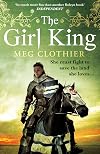
This is the tomboy princess book. You know the one -- personally I'm pretty sure I've read this book about 15 times, just with the names and setting changed. There's a princess, except she's not a *typical* princess because she likes riding horses and fighting and stuff, and she perhaps has a sister, who is more beautiful and more typically princess-y. Because of this, she's secretly her father's favourite, whereas her mother/nurse is on at her to be more ladylike. She encounters growing pains, as she tries to reconcile what she wants to do with becoming more womanly (growing breasts) and men finding her attractive, as well as pushing the limits of what women are allowed to do in their society. However, her courage and abilities win through in the end, perhaps while fighting a war. Her name is perhaps Romilly, or Aravis, or Merida, or Meliara, or Aerin, or Lissar, or Ani, or Jenica, or in this case Tamar.
Except this one is all true, and these is what saves it from being lumped with all the rest (look, I like a good tomboy princess book as much as anyone, but we can't pretend they aren't incredibly formulaic). In the 12th Century AD, Queen Tamar ruled over a Golden age of Georgian history and she is idealised there even now. She was the first woman to rule Georgia and despite the initial reluctance to let her rule, by the end of her reign, her lands covered pretty much the entire Caucasus region. I was amazed once I'd finished the book to discover how many of the events show more really happened. Just like the best of historical fiction, the story made me want to find out more about Tamar the Queen, and more about that region in medieval times, to put Tamar's story into context.
A lovely introduction to a really interesting woman. show less
Except this one is all true, and these is what saves it from being lumped with all the rest (look, I like a good tomboy princess book as much as anyone, but we can't pretend they aren't incredibly formulaic). In the 12th Century AD, Queen Tamar ruled over a Golden age of Georgian history and she is idealised there even now. She was the first woman to rule Georgia and despite the initial reluctance to let her rule, by the end of her reign, her lands covered pretty much the entire Caucasus region. I was amazed once I'd finished the book to discover how many of the events show more really happened. Just like the best of historical fiction, the story made me want to find out more about Tamar the Queen, and more about that region in medieval times, to put Tamar's story into context.
A lovely introduction to a really interesting woman. show less
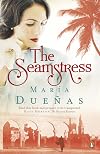
I nearly gave up on the book quite near the beginning, but I'm glad I didn't -- it picks up rapidly. Sira spends the first few chapters running away to Morocco with her obviously awful manipulative boyfriend, and the book only really gets good once he leaves her with nothing and she starts having to live for herself. I was quite happy reading about Sira's life in Morocco but it was once she returned to Madrid as a spy for the SOE that the story takes a more a exciting turn which kept me gripped until the end.
Once finished I enjoyed reading about which characters were fictional and which were real -- I knew nothing about the setting so everything was new to me. Sometimes some of the characters, especially the politicians, got a bit confused in my head, and I found the lengthy expositions about the politicians and their backgrounds and allegiances interrupted the flow of the story a bit.
Overall, well worth ploughing through the slow start.
Once finished I enjoyed reading about which characters were fictional and which were real -- I knew nothing about the setting so everything was new to me. Sometimes some of the characters, especially the politicians, got a bit confused in my head, and I found the lengthy expositions about the politicians and their backgrounds and allegiances interrupted the flow of the story a bit.
Overall, well worth ploughing through the slow start.

Hilariously, this Daisy Dalrymple is set in a folly. On a cliff. It's literally a sheer folly! It's funny because it's a pun! Oh my aching sides :)

A quick and easy, but ultimately unsatisfying, read. The action switches between the Sultan's harem in Constantinople in 1599, where captive English slave girl Celia is trying to negotiate her way around the palace politics, and the modern day, where tedious Elizabeth, a history student (who isn't overly bothered about using *facts* in her thesis, relying instead on her 'intuition'... -- save us) is trying to get over a laughably 2 dimensional villainous ex by finding out about Celia. Obviously it wouldn't make a very good story if Elizabeth found out what happened all at once, so there are ever more contrived ways for her to find out the next bit of the story. The bits about Islamic astronomy were interesting, but overall the descriptions of Constantinople weren't rich or engaging enough to make up for the pedestrian plot.
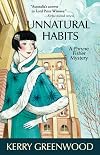
I picked this up on a whim as it was recently released while I was on holiday in Australia and it looked like an Australian Daisy Dalrymple (1920s flapper detective, which it basically is). I hadn't read any of the previous 18 books in the series, and there's quite a lot for the uninitiated reader to pick up, what with Phryne's household and various acquaintances and their complex relationships that rely on previous adventures.
Phryne herself is infuriating, she can do anything, everyone around her is in her thrall, and when she comes across problems or obstacles in her investigation she either waves a hand and declares "I'll pay" so it all gets sorted out, or she slips somebody a convenient coin/note. She has, by this point in the series, everything -- a wonderful house, with perfect servants, an exotic yet sensitive Chinese lover, perfectly behaved adopted children -- honestly, you want to hate her. She is incredibly rich somehow, and yet a socialist with very progressive views, who inexplicably loathes the middle classes. We also learn that she is brave, courageous, strong, a scarily violent lover (seriously, what was the covering her lover in cuts and scratches all about? It sounded terrifying), who hates injustice and can fix anything through sheer force of will. The author also persists in telling us which particular bubble bath scent she uses at every different opportunity.
The plot was silly and a bit offensive (selling blonde girls to middle-Eastern brothels, as show more if it's somehow worse because they're blonde), with some hilarious exposition about how wonderful a women's commune would be, along the way. There were also far too many shoehorned feminist diatribes (too much even for me, and usually I'll lap it up!), and an anti-climactic ending.
The only thing I will say in its favour is that I know these sorts of series usually start off better and can get into a bit of a rut, so probably the earlier books aren't that bad. I won't be trying any of them out though. show less
Phryne herself is infuriating, she can do anything, everyone around her is in her thrall, and when she comes across problems or obstacles in her investigation she either waves a hand and declares "I'll pay" so it all gets sorted out, or she slips somebody a convenient coin/note. She has, by this point in the series, everything -- a wonderful house, with perfect servants, an exotic yet sensitive Chinese lover, perfectly behaved adopted children -- honestly, you want to hate her. She is incredibly rich somehow, and yet a socialist with very progressive views, who inexplicably loathes the middle classes. We also learn that she is brave, courageous, strong, a scarily violent lover (seriously, what was the covering her lover in cuts and scratches all about? It sounded terrifying), who hates injustice and can fix anything through sheer force of will. The author also persists in telling us which particular bubble bath scent she uses at every different opportunity.
The plot was silly and a bit offensive (selling blonde girls to middle-Eastern brothels, as show more if it's somehow worse because they're blonde), with some hilarious exposition about how wonderful a women's commune would be, along the way. There were also far too many shoehorned feminist diatribes (too much even for me, and usually I'll lap it up!), and an anti-climactic ending.
The only thing I will say in its favour is that I know these sorts of series usually start off better and can get into a bit of a rut, so probably the earlier books aren't that bad. I won't be trying any of them out though. show less
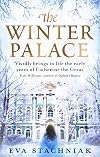
(Mild spoilers): I was looking forward to this a lot, but in the end it left me cold. Ostensibly a historical novel about Catherine the Great, you never really learnt anything about Catherine's character, motives or feelings, since she's always hiding her true intentions. Moreover, you never felt that the main character, Varvara, was in all that much peril, and the big twist/betrayal at the end was laughably mundane. A fantastic sense of setting and place would have made up for this, but there wasn't one.
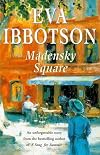
I really really loved this book. I found it by chance in a charity shop, and bought it because I'd enjoyed the other adult romances by this author. However, while her other books were sweet romances with almost identical plots and far-too-perfect heroines (those have been republished for teenagers, and this one hasn't, and I can see why), this one had real depth. I loved Susanna, and her observations on life and those around her. There's a lot of love in this book, and hardly any of it is conventional, which I liked a lot. Susanna's guilt about giving up her daughter leaves a thread of real poignancy through the whole story, which perfectly counterbalances the more saccharine stuff going on around her. I also liked the way that both Susanna and Alice were grateful for the love that they had, whilst living their lives for themselves the rest of the time. Mostly, however, it made me want to move to Vienna in 1912 and waltz around in beautiful dresses! Knowing that all these lives are headed towards catastrophe in WWI (this is hinted at a bit in the book, but not expanded) only adds to the sorrow.
I enjoyed this book much more as I got into it, but it was somewhat of a slog at the beginning. The plot is basically 'the quest for the holy grail' (so far, so Dan Brown), but once you get over that there was a lot to enjoy here. I particularly liked learning about the history and culture of the Languedoc and the crusade that happened there, something I knew nothing about before. The pacing is a little odd.

I picked this book because I like learning about different historical periods through fiction, and I wasn't disappointed with this. It is fascinating to imagine another time when there were two types of humans, and imagine their differences and how they would interact with each other. I especially liked the demonstrations of Ayla's inductive reasoning, considered magic by the shaman, and the contrast between Ayla's memory and the Clan's telepathic joint memory (I didn't know how to treat this, it doesn't seem like it could be true, so I accepted it like I can accept magical realism). I thought 'failing to adapt to change' was an interesting but over-simplified reason for Neanderthal decline, and actually contradicted in the novel, as eventually all the members of the clan except Broud accept Ayla's differences. I also thought that some of the characters were really well drawn, and Creb, Iza and Brun in particular were really well rounded with interesting passages where they questioned their own beliefs.
However... To be honest I found the plot quite pedestrian, and obviously set up for the five sequels. The pacing was a bit odd as well, sometimes a whole year could go by in the space of a paragraph, which was quite jolting for the reader. Also, I'm used to reading books where no word is out of place, and you have to read all the descriptive bits because they will be important later even if just in a symbolic way, so in this one I was trying to remember everything Iza said show more about each of the plants in case they became important... and eventually I had to give up. It felt like the author had done a lot of research into the Ice Age period, and wanted to get lots of it in to prove it had been useful - I prefer it when authors use research to colour their world and make it realistic, but don't force it down your throat.
Ayla herself is annoyingly good at everything, there's one part where she saves a drowning girl, learns how to make tools and learns how to hunt in hardly any time at all. Even her 'faults' are qualities that a modern reader will identify with, like not being submissive to men. And her ultra-modern attitudes are a bit unrealistic, we are supposed to have thousands of years of history between her and us. And Broud is a one-dimensional brutish villain, making the story somewhat predictable.
I am undecided about reading the sequels. Several commenters have warned against then so I'll probably only give them a try if I feel like immersing myself in the Ice Age setting again, I find myself caring very little what happens to Ayla. show less
However... To be honest I found the plot quite pedestrian, and obviously set up for the five sequels. The pacing was a bit odd as well, sometimes a whole year could go by in the space of a paragraph, which was quite jolting for the reader. Also, I'm used to reading books where no word is out of place, and you have to read all the descriptive bits because they will be important later even if just in a symbolic way, so in this one I was trying to remember everything Iza said show more about each of the plants in case they became important... and eventually I had to give up. It felt like the author had done a lot of research into the Ice Age period, and wanted to get lots of it in to prove it had been useful - I prefer it when authors use research to colour their world and make it realistic, but don't force it down your throat.
Ayla herself is annoyingly good at everything, there's one part where she saves a drowning girl, learns how to make tools and learns how to hunt in hardly any time at all. Even her 'faults' are qualities that a modern reader will identify with, like not being submissive to men. And her ultra-modern attitudes are a bit unrealistic, we are supposed to have thousands of years of history between her and us. And Broud is a one-dimensional brutish villain, making the story somewhat predictable.
I am undecided about reading the sequels. Several commenters have warned against then so I'll probably only give them a try if I feel like immersing myself in the Ice Age setting again, I find myself caring very little what happens to Ayla. show less
I bought this on a whim before a long journey and whilst it kept me interested, at the end it left me rather flat. The story had some interesting ideas in a genre that can feel all too samey, and I enjoyed the plot even if it was based on running around a castle. However, the characters were a bit disappointing, especially the mortal ones, and in particular Scimina, who never gets enough screen time for the reader to believe she's that evil, but on the other hand she doesn't seem to have anything more to her personality than 'evil'. However, the characters of the gods were better drawn, and I liked Sieh especially. Overall I enjoyed reading it, but I probably won't bother with the sequel.

I had been looking forward to Bitterblue, having really enjoyed both Graceling and Fire, but felt this one came up short. The mysteries and intrigue kept me reading on but the ending was a bit lame, and I didn't feel it was so well written as the others either. I found the reappearance of Katsa a bit odd, obviously we only see her from Bitterblue's point of view now, but it's like she's finished as a character, with no development left except alternately loving Po or getting upset with him, and I wanted more from her. I also thought that Po acted as a sort of 'magical-fix-everything' for Bitterblue - if she's in trouble she just has to call for him, which means you never believe she's in that much peril - I would have enjoyed seeing her fix more stuff herself. Overall, this was distinctly average - read Graceling and Fire but stop there.

There has been a lot of hype surrounding this book, so I picked it up with some trepidation, cynically assuming I would find it a bit predictable. I needn't have worried - I enjoyed it immensely. Admittedly the plot is a little shaky and the late Victorian setting doesn't quite ring true - the characters are a bit too modern in their speech and attitudes. But I found myself ignoring this and being drawn into the beautiful writing and the lovely magical setting. The circus itself is the real star here, so well described that you feel yourself itching to go (I predict a lot of fanfic), and makes up for the slighter descriptions of the characters themselves. I also loved the constant subversion of common fantasy tropes - don't assume you know where this book is going as it will usually do something else instead - which were both clever and funny. Just an enjoyable read, and I'm looking forward to reading more by this author.
I was really enjoying this book, all the characters, the interweaving plots and the debate about the conflict of marriage and career, and then I got to the end. Now I can't think about the book without the crushing sense of disappointment hitting me when I think about my favourite character just seeming to give up. It's a capricious way of judging a book I know, but I can't help it.
I bought this just after finishing 'A visit from the goon squad' and I was just as impressed. Basically three individual stories are tangentially connected, nevertheless each one gripped me in different ways. Older Charlotte is an ex-model who has reconstructive facial surgery after an accident and becomes desperate when none of her old acquaintances recognise her - desperate enough to sign up to a truly invasive Internet scheme. This was my favourite strand even though Charlotte herself isn't very likeable. Younger Charlotte is restless in her teenage life and has an affair with an older man to try and quell her restlessness - I thought that this Charlotte was drawn really well and was an entirely believable, if unusual, teenager. Finally there's the middle eastern terrorist who plans to bring down America from the inside, but ends up being sucked further and further in.
This book was written in 2001, before 9/11 and before so much of our lives began to be lived online. As a result it feels alternately naive and prescient. The character of the terrorist is less believable now in a post 9/11 world but he is sympathetically drawn and his journey is comically bleak at the end. Similarly the 'real-life' Internet experiment that Charlotte takes part in is all too familiar now - the only detail strange to us is how much money she gets paid for sharing her life online.
Not only is Jennifer Egan a brilliant writer who manages that rare combination of readable and well-crafted show more prose, she seems to have predicted the future. 10 years on, this still feels like a book that is of our time and well worth a read today. show less
This book was written in 2001, before 9/11 and before so much of our lives began to be lived online. As a result it feels alternately naive and prescient. The character of the terrorist is less believable now in a post 9/11 world but he is sympathetically drawn and his journey is comically bleak at the end. Similarly the 'real-life' Internet experiment that Charlotte takes part in is all too familiar now - the only detail strange to us is how much money she gets paid for sharing her life online.
Not only is Jennifer Egan a brilliant writer who manages that rare combination of readable and well-crafted show more prose, she seems to have predicted the future. 10 years on, this still feels like a book that is of our time and well worth a read today. show less
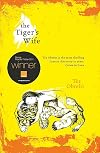
I really loved this book, much more than I thought I would. It is set in the Balkans, and the protagonist Natalia, a young doctor, is coming to terms with the death of her grandfather in the aftermath of the war. He seems to have had a large influence on her life - not only was he a doctor but he took her to see tigers (which he loved) and told her folk stories.
The folk stories, and especially the malicious gossip masquerading as myth, mix beautifully with the difficult reality of living through the Balkan conflict. I loved how the ethnic disputes of the region are more alluded to than laboured: the book is far more concerned with the fate of the zoo animals than that of the country as a whole, which gives a feeling of innocent immediacy. There are some big themes here, mainly to do with death and what happens when you die, where again the fantastical grates awkwardly with the mundane duties of the doctors. But mainly this is a satisfying and suspenseful story, well told, with lovely prose and details. A worthy winner of the Orange Prize.
The folk stories, and especially the malicious gossip masquerading as myth, mix beautifully with the difficult reality of living through the Balkan conflict. I loved how the ethnic disputes of the region are more alluded to than laboured: the book is far more concerned with the fate of the zoo animals than that of the country as a whole, which gives a feeling of innocent immediacy. There are some big themes here, mainly to do with death and what happens when you die, where again the fantastical grates awkwardly with the mundane duties of the doctors. But mainly this is a satisfying and suspenseful story, well told, with lovely prose and details. A worthy winner of the Orange Prize.

Theodora was a 7th century Byzantine empress who began life as an actress and prostitute, and Stella Duffy has woven a story around what we know of her life. There's always a danger with this type of book that it contains far too much historical exposition and not enough plot, but in this case I'd say the balance is spot on. The descriptions of Byzantium are vivid and engrossing, but the characters are really well drawn too. In particular, you're always rooting for Theodora, even if you don't like her sometimes.
I really loved this book, and raced through it, wanting to see how the ending would resolve, and I wasn't disappointed. In fact, the only thing I didn't like was the tagline: 'Actress, Empress, Whore'. It sounds a bit silly to me, like it's trying to shock you, whereas I felt the point of the novel was that Theordora was never ashamed of who she was, but I suppose it's designed to intrigue someone enough so that they'd pick it up in a shop.
The book has inspired me to read more about this setting and time period, which is under-represented in fiction, and which I found fascinating, and more about Theodora herself, who was very much ahead of her time.
I really loved this book, and raced through it, wanting to see how the ending would resolve, and I wasn't disappointed. In fact, the only thing I didn't like was the tagline: 'Actress, Empress, Whore'. It sounds a bit silly to me, like it's trying to shock you, whereas I felt the point of the novel was that Theordora was never ashamed of who she was, but I suppose it's designed to intrigue someone enough so that they'd pick it up in a shop.
The book has inspired me to read more about this setting and time period, which is under-represented in fiction, and which I found fascinating, and more about Theodora herself, who was very much ahead of her time.

There were a few things wrong with this book but I really enjoyed it anyway. It reminded me a lot of the Dark is Rising series, but set in the south of France. I also enjoyed reading about the history Provence and would like to read more. Really fun :)

I liked the writing, and a couple of the characters, but the plot resolution involved about six too many coincidences to be at all realistic, and the couples resolved themselves a bit too quickly and neatly. I suspect this is supposed to be a clever pastiche of a comic opera, but I didn't get it.