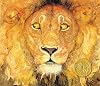
Pinkney, Jerry. The Lion and the Mouse. New York: Brown Books for Young Readers, 2009
Characters: Lion, Mouse, Poacher
Setting: Africa
Theme: Fable
Genre: Young children
Summary: This is story about compassion and friendship. The setting is set in Africa and tells a tale of a lion that catches a small mouse. The lion decides to let the mouse go, seeing how cowering and fearful the mouse was. The lion then goes on his own way and the mouse does the same. Later in their journey, the lion finds himself snagged in a poacher’s trap. The mouse that the lion let live earlier comes to his rescue and frees the lion from the poacher’s trap.
Awards: 2010 Caldecott Medal
Audience: Young children
Curriculum: Literature, art
Personal Response: The illustrations in this book are very vivid and retell the Aesop fables very effectively. This story can teach children about befriending people you may not have a lot in common with. The pictures in this book tell the story itself, with little to no words and describe the results of having a compassionate heart. Children may not think too much into this so when showing this book to young children, you should narrate it in a way that will help them realize the important message the book is trying to convey.
Characters: Lion, Mouse, Poacher
Setting: Africa
Theme: Fable
Genre: Young children
Summary: This is story about compassion and friendship. The setting is set in Africa and tells a tale of a lion that catches a small mouse. The lion decides to let the mouse go, seeing how cowering and fearful the mouse was. The lion then goes on his own way and the mouse does the same. Later in their journey, the lion finds himself snagged in a poacher’s trap. The mouse that the lion let live earlier comes to his rescue and frees the lion from the poacher’s trap.
Awards: 2010 Caldecott Medal
Audience: Young children
Curriculum: Literature, art
Personal Response: The illustrations in this book are very vivid and retell the Aesop fables very effectively. This story can teach children about befriending people you may not have a lot in common with. The pictures in this book tell the story itself, with little to no words and describe the results of having a compassionate heart. Children may not think too much into this so when showing this book to young children, you should narrate it in a way that will help them realize the important message the book is trying to convey.
Dahl, Roald. Matilda. New York: Puffin Publishing, 2004.
Characters: Matilda, Mr. and Mrs. Wormwood, Jennifer Honey, Miss Trunchbull.
Setting: Metropolitan
Theme: Hero
Genre: Young children
Golden Quote: “I’m right and you’re wrong, I’m big and you’re small, and there’s nothing you can do about it.”
Summary: Matilda is a young and extremely intelligent girl living in a home with her parents. Her parents are not the most caring people in the world, in fact, they can be downright ugly. Matilda uses her smarts to outwit them and play pranks on them for their poor behavior. When Matilda goes to school, she develops a very close relationship to her teacher Miss Honey. Miss Honey and Matilda develop a strong bond with one another, because Miss Honey encourages Matilda to continue studying hard and tells Matilda the she will try to convince her parents and the headmistress Miss Trunchbull to allow Matilda to advance grades. The headmistress treats Matilda very poorly and in a conversation with Miss Honey, Matilda finds out that Miss Honey is actually the headmistress’s niece. When Matilda finds this out, she also finds out that she has telekinetic powers and she uses this power to scare the head mistress into returning to Miss Honey what is truly hers. In the end, you see Matilda’s growth and she does get to skip grades. Her parents flee from prosecution due to her father’s shady business dealings. They agree to leave Matilda with Miss Honey, who will take care of show more her.
Audience: Young children.
Curriculum: English, literature and leisure reading.
Personal Response: Matilda is a book that will keep children turning the page, wondering what sort of antics she will be up to next. Her pranks and tricks that she plays on her parents are funny and the way that she uses her telekinetic powers are very creative. This is a great book which teaches children even if they are in a bad situation, if they keep a positive outlook, good things will happen. show less
Characters: Matilda, Mr. and Mrs. Wormwood, Jennifer Honey, Miss Trunchbull.
Setting: Metropolitan
Theme: Hero
Genre: Young children
Golden Quote: “I’m right and you’re wrong, I’m big and you’re small, and there’s nothing you can do about it.”
Summary: Matilda is a young and extremely intelligent girl living in a home with her parents. Her parents are not the most caring people in the world, in fact, they can be downright ugly. Matilda uses her smarts to outwit them and play pranks on them for their poor behavior. When Matilda goes to school, she develops a very close relationship to her teacher Miss Honey. Miss Honey and Matilda develop a strong bond with one another, because Miss Honey encourages Matilda to continue studying hard and tells Matilda the she will try to convince her parents and the headmistress Miss Trunchbull to allow Matilda to advance grades. The headmistress treats Matilda very poorly and in a conversation with Miss Honey, Matilda finds out that Miss Honey is actually the headmistress’s niece. When Matilda finds this out, she also finds out that she has telekinetic powers and she uses this power to scare the head mistress into returning to Miss Honey what is truly hers. In the end, you see Matilda’s growth and she does get to skip grades. Her parents flee from prosecution due to her father’s shady business dealings. They agree to leave Matilda with Miss Honey, who will take care of show more her.
Audience: Young children.
Curriculum: English, literature and leisure reading.
Personal Response: Matilda is a book that will keep children turning the page, wondering what sort of antics she will be up to next. Her pranks and tricks that she plays on her parents are funny and the way that she uses her telekinetic powers are very creative. This is a great book which teaches children even if they are in a bad situation, if they keep a positive outlook, good things will happen. show less
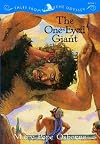
Osborne, Mary Pope. The One Eyed Giant (Odyssey)
Characters: Odysseus, Helen, Polyphemus, Aeolus, Agamemon
Setting: Ancient Greece
Theme: Myth
Genre: Young children
Golden Quote: “Weeping will not save us”
Summary: Odysseus is sent to war to fight against the Trojan’s and bring back home Helen of Troy. On his journey home, after many years of fighting in the Trojan War, Odysseus and his men must face many challenges and monsters before the reach the shores of his homeland. The one eyed giant, Polyphemus, stands in Odysseus’s way and he must overcome this giant if he has any hopes of seeing his wife, Penelope, and his son, Telemachus, again. Because Odysseus has been gone for so long, his family believes that he is dead. Odysseus refuses to lay down his arms against any monster and is determined to get back to this family.
Audience: 10 year old and above.
Curriculum: Greek mythology.
Personal Response: This is the first book in a series of six and it is a great first book to draw children who are interested in Greek mythology, heroes and action. This book contains all these characteristics and more. The Odyssey can be an overwhelming read, but with the way that Osborn breaks it down, it makes for an easy read and she condenses the stories in order to keep the attention of the readers. I would highly recommend this book for young boys, especially those are just starting to read for leisure.
Characters: Odysseus, Helen, Polyphemus, Aeolus, Agamemon
Setting: Ancient Greece
Theme: Myth
Genre: Young children
Golden Quote: “Weeping will not save us”
Summary: Odysseus is sent to war to fight against the Trojan’s and bring back home Helen of Troy. On his journey home, after many years of fighting in the Trojan War, Odysseus and his men must face many challenges and monsters before the reach the shores of his homeland. The one eyed giant, Polyphemus, stands in Odysseus’s way and he must overcome this giant if he has any hopes of seeing his wife, Penelope, and his son, Telemachus, again. Because Odysseus has been gone for so long, his family believes that he is dead. Odysseus refuses to lay down his arms against any monster and is determined to get back to this family.
Audience: 10 year old and above.
Curriculum: Greek mythology.
Personal Response: This is the first book in a series of six and it is a great first book to draw children who are interested in Greek mythology, heroes and action. This book contains all these characteristics and more. The Odyssey can be an overwhelming read, but with the way that Osborn breaks it down, it makes for an easy read and she condenses the stories in order to keep the attention of the readers. I would highly recommend this book for young boys, especially those are just starting to read for leisure.
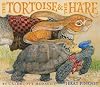
Steven, Janet. The Tortoise and the Hare: An Aesop Fable. New York: Holiday House Publishing, 1985.
Characters: Tortoise, Hare
Setting: Open fields, forest, outdoors.
Theme: Fable
Genre: Young children
Golden Quote: “Beaten in a race? By whom? Not you, surely! I bet there is nobody in the world that can win against me, I’m so speedy. Now, why don’t you try”
Summary: In this fable, the Hare is a very self-confident, conceited character that mocks everyone else. He believes that there is no one in the world that is better than him at speed, especially not a tortoise. The Hare tricks himself into thinking that he could go and have a nap then a snack followed by another nap and still beat the Tortoise. He was wrong, and the persistence of the tortoise even though he was moving at a snail’s pace, beat the Hare.
Audience: Young children.
Curriculum: Literature, acceptable social behavior.
Personal Response: This is another great fable that has strong values that can be taught to younger children. It teaches them about determination, persistence and to be humble. The Hare in this story tricks himself into believing that no matter what he does, he will always come out on top. The story could be dissected even further by older teens to see the personification of the Hare and the Tortoise and the symbolism behind the vegetables and naps that the hare takes. This is great story for all ages especially for older children who can take a deeper look into the meaning of the fable.
Characters: Tortoise, Hare
Setting: Open fields, forest, outdoors.
Theme: Fable
Genre: Young children
Golden Quote: “Beaten in a race? By whom? Not you, surely! I bet there is nobody in the world that can win against me, I’m so speedy. Now, why don’t you try”
Summary: In this fable, the Hare is a very self-confident, conceited character that mocks everyone else. He believes that there is no one in the world that is better than him at speed, especially not a tortoise. The Hare tricks himself into thinking that he could go and have a nap then a snack followed by another nap and still beat the Tortoise. He was wrong, and the persistence of the tortoise even though he was moving at a snail’s pace, beat the Hare.
Audience: Young children.
Curriculum: Literature, acceptable social behavior.
Personal Response: This is another great fable that has strong values that can be taught to younger children. It teaches them about determination, persistence and to be humble. The Hare in this story tricks himself into believing that no matter what he does, he will always come out on top. The story could be dissected even further by older teens to see the personification of the Hare and the Tortoise and the symbolism behind the vegetables and naps that the hare takes. This is great story for all ages especially for older children who can take a deeper look into the meaning of the fable.
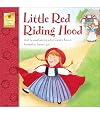
Ransom, Candice. Little Red Riding Hood. Ohio: Brighter Minds Children’s Publishing, 2005.
Characters: Little Red, Grandma, Wolf
Setting: Forest, outdoors.
Theme: Fable
Genre: Young Readers
Golden Quote: Wolf, “You know, my dear, it isn’t safe for a little girl to walk through these woods alone.”
Summary: Red Riding Hood is going through the forest to go to visit her sick grandma. One the way to her grandma’s house she encounters a wolf that warns her about the risks and dangers of traveling through the woods by herself. She tells the wolf that she is familiar with the woods and she has been here before. The wolf beats Red Riding Hood to her Grandma’s house and eats her. He then dresses up as her grandma it hopes of tricking Red Riding Hood and eating her as well. However, when Red Riding Hood arrives at her grandma’s house she recognizes the wolf and out smarts him.
Audience: Young children
Curriculum: Literature, acceptable social behavior.
Personal Response: The story about Little Red Riding Hood is a classic fable that teaches kids the dangers about lying and being caught. It is somewhat of a darker tale if you think about it, but the aspect of the grandmother passing is not focused on. The focus is on the wolf and how he deceives people. This is a great way to teach children about trickery and deception and the dangers that can result from it. I highly recommend this book to young children, and there are a variety of variations that does not have the show more grandmother being eaten. show less
Characters: Little Red, Grandma, Wolf
Setting: Forest, outdoors.
Theme: Fable
Genre: Young Readers
Golden Quote: Wolf, “You know, my dear, it isn’t safe for a little girl to walk through these woods alone.”
Summary: Red Riding Hood is going through the forest to go to visit her sick grandma. One the way to her grandma’s house she encounters a wolf that warns her about the risks and dangers of traveling through the woods by herself. She tells the wolf that she is familiar with the woods and she has been here before. The wolf beats Red Riding Hood to her Grandma’s house and eats her. He then dresses up as her grandma it hopes of tricking Red Riding Hood and eating her as well. However, when Red Riding Hood arrives at her grandma’s house she recognizes the wolf and out smarts him.
Audience: Young children
Curriculum: Literature, acceptable social behavior.
Personal Response: The story about Little Red Riding Hood is a classic fable that teaches kids the dangers about lying and being caught. It is somewhat of a darker tale if you think about it, but the aspect of the grandmother passing is not focused on. The focus is on the wolf and how he deceives people. This is a great way to teach children about trickery and deception and the dangers that can result from it. I highly recommend this book to young children, and there are a variety of variations that does not have the show more grandmother being eaten. show less
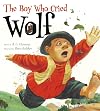
Hennessy, B.G. The Boy Who Cried Wolf. Simon & Schuster Books for Young Readers, 2006.
Characters: Shepherd, boy, sheep, wolf
Setting: Rural farmland
Theme: Fable
Genre: Young Readers
Golden Quote: “Nothing ever happens here” shepherd.
Summary: This is a fable about a boy that tricks the shepherd and the town’s folk by crying out wolf. The boy does this many times, thinking to himself how funny it is to see the shepherd and the town’s folk come running. However, his antics are short lived because when he finally does see a wolf, no one comes to help because he has tricked them one too many times and he has lost his credibility.
Audience: Young children and above.
Curriculum: Literature, and acceptable social behavior.
Personal Response: This book has always been a favorite, since it has such a strong message. The message is about tricking people and its repercussions. The story is part of a bigger message, meaning that you should not deceive people or lie, because if you are labeled as one, your credibility has been compromised. This story can be told to kids as well as young adults, since we all need a reminder sometimes.
Characters: Shepherd, boy, sheep, wolf
Setting: Rural farmland
Theme: Fable
Genre: Young Readers
Golden Quote: “Nothing ever happens here” shepherd.
Summary: This is a fable about a boy that tricks the shepherd and the town’s folk by crying out wolf. The boy does this many times, thinking to himself how funny it is to see the shepherd and the town’s folk come running. However, his antics are short lived because when he finally does see a wolf, no one comes to help because he has tricked them one too many times and he has lost his credibility.
Audience: Young children and above.
Curriculum: Literature, and acceptable social behavior.
Personal Response: This book has always been a favorite, since it has such a strong message. The message is about tricking people and its repercussions. The story is part of a bigger message, meaning that you should not deceive people or lie, because if you are labeled as one, your credibility has been compromised. This story can be told to kids as well as young adults, since we all need a reminder sometimes.
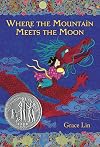
Lin, Grace. Where the Mountain Meets the Moon. Brown Books for Young Readers, 2011.
Characters: Minli, Jade Dragon, Magistrate Tiger, Old Man and the Moon
Setting: Rural China
Theme: Folklore
Genre: Young readers
Golden Quote: “If you make happy those that are near, those that are far will come.
Summary: Minli grows up in a poor family where her parents work hard and they try their best to raise their social status. This is difficult since they spend most of their days tending to the rice fields. Minli’s father, Ba, tells her stories about how the Old Man and the Moon can help change a family’s fortune. Her mom is displeased with these stories because she believes that Minli needs to work hard to change their family’s fortune, not to believe folklore that her father tells her. Minli embarks on a journey to the mountain where she learns about different peoples fortunes along the way. As she travel she encounters different folklore creatures and they each tell their own story as well.
Awards: Newberry Honor
Audience: Young Children
Curriculum: Literature, folklore.
Personal Response: This is a beautifully written book that can be read to young children. It contains a lot of Chinese folklore and important characters to the culture. I personally enjoyed how with each creature that Minli encountered, the creature would tell her about their lives, essentially their folktale. This book would also be great for children over the age of 12 since they can read it on their own and show more would be able to interpret the stories and their meanings. Overall, this book is extremely descriptive and has a very strong Asian undertone that would be good to introduce children to Asian folklore. show less
Characters: Minli, Jade Dragon, Magistrate Tiger, Old Man and the Moon
Setting: Rural China
Theme: Folklore
Genre: Young readers
Golden Quote: “If you make happy those that are near, those that are far will come.
Summary: Minli grows up in a poor family where her parents work hard and they try their best to raise their social status. This is difficult since they spend most of their days tending to the rice fields. Minli’s father, Ba, tells her stories about how the Old Man and the Moon can help change a family’s fortune. Her mom is displeased with these stories because she believes that Minli needs to work hard to change their family’s fortune, not to believe folklore that her father tells her. Minli embarks on a journey to the mountain where she learns about different peoples fortunes along the way. As she travel she encounters different folklore creatures and they each tell their own story as well.
Awards: Newberry Honor
Audience: Young Children
Curriculum: Literature, folklore.
Personal Response: This is a beautifully written book that can be read to young children. It contains a lot of Chinese folklore and important characters to the culture. I personally enjoyed how with each creature that Minli encountered, the creature would tell her about their lives, essentially their folktale. This book would also be great for children over the age of 12 since they can read it on their own and show more would be able to interpret the stories and their meanings. Overall, this book is extremely descriptive and has a very strong Asian undertone that would be good to introduce children to Asian folklore. show less
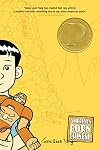
Yang, Gene Luen. American Born Chinese. New York: First Second, 2006.
Characters: Monkey King, Jin Wang, Suzy Nakamura, Wei-Chen Sun.
Setting: San Francisco, Heaven, Flower-Fruit Mountain, Oliphant High School.
Theme: Coming of age, self-acceptance, heritage, cultural
Genre: Diverse Population
Golden Quote: “Come on. Let’s leave Bucktooth alone so he can enjoy Lassie.”
Summary: This book consists of three stories being told simultaneously which all ties together at the end. The first story is based on the myth of the Chinese Monkey King, a monkey who studies and masters the art of Kung Fu to reach immortality. The Monkey King refuses to accept that after mastering Kung Fu and attaining immortality that other’s still only see him as a monkey. He does everything in his power to fight this perception of him, until he finally realizes that he is in fact a monkey and is proud of it. The second story is about a boy named Jin Wang, and his experience growing up as an Asian American in San Francisco. His story tells the prejudice and stereotypes he faces on a daily bases at his school. He befriends another student, Wei-Chen, who is from Taiwan and together they face the racial stereotypes together. Jin Wang falls in love with an Caucasian girl and is told that they two could not be together, because of Jin Wang’s skin color. The third story deals with the Monkey King actually descending from Flower-Fruit Mountain and entering Jin Wang’s reality. The two stories tie together show more once the Monkey King reveals that he sent his son, Wei-Chen, to earth to learn and serve the humans. In the end, the story teaches self-acceptance and being proud of who and where you come from.
Awards: National Book Award. Michael L. Printz Award for Excellence in Young Adult Literature.
Audience: Young Adult, sixth grade and above.
Curriculum: History, Chinese-American Experience.
Personal Response: The story is very well thought out and the graphic novel layout makes it a very engaging and visually pleasing read. The story is embedded with Asian cultural values and explains to the reader’s different aspects of Asian culture. I personally enjoyed how the book ties in two different stories with similar morals and values to paint a big picture for the readers. The conversations between the characters are very natural and the author does not feel a need to hold back the bluntness that teenagers possess. Growing up as an Asian-American, I see this story as very realistic and the experiences that the characters go through hit very close to home. This would be a great book to introduce other student’s to the experience of Asian-American’s. show less
Characters: Monkey King, Jin Wang, Suzy Nakamura, Wei-Chen Sun.
Setting: San Francisco, Heaven, Flower-Fruit Mountain, Oliphant High School.
Theme: Coming of age, self-acceptance, heritage, cultural
Genre: Diverse Population
Golden Quote: “Come on. Let’s leave Bucktooth alone so he can enjoy Lassie.”
Summary: This book consists of three stories being told simultaneously which all ties together at the end. The first story is based on the myth of the Chinese Monkey King, a monkey who studies and masters the art of Kung Fu to reach immortality. The Monkey King refuses to accept that after mastering Kung Fu and attaining immortality that other’s still only see him as a monkey. He does everything in his power to fight this perception of him, until he finally realizes that he is in fact a monkey and is proud of it. The second story is about a boy named Jin Wang, and his experience growing up as an Asian American in San Francisco. His story tells the prejudice and stereotypes he faces on a daily bases at his school. He befriends another student, Wei-Chen, who is from Taiwan and together they face the racial stereotypes together. Jin Wang falls in love with an Caucasian girl and is told that they two could not be together, because of Jin Wang’s skin color. The third story deals with the Monkey King actually descending from Flower-Fruit Mountain and entering Jin Wang’s reality. The two stories tie together show more once the Monkey King reveals that he sent his son, Wei-Chen, to earth to learn and serve the humans. In the end, the story teaches self-acceptance and being proud of who and where you come from.
Awards: National Book Award. Michael L. Printz Award for Excellence in Young Adult Literature.
Audience: Young Adult, sixth grade and above.
Curriculum: History, Chinese-American Experience.
Personal Response: The story is very well thought out and the graphic novel layout makes it a very engaging and visually pleasing read. The story is embedded with Asian cultural values and explains to the reader’s different aspects of Asian culture. I personally enjoyed how the book ties in two different stories with similar morals and values to paint a big picture for the readers. The conversations between the characters are very natural and the author does not feel a need to hold back the bluntness that teenagers possess. Growing up as an Asian-American, I see this story as very realistic and the experiences that the characters go through hit very close to home. This would be a great book to introduce other student’s to the experience of Asian-American’s. show less
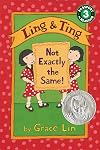
Lin, Grace. Ling and Ting: Not Exactly the Same!
Characters: Ling, Ting
Setting: Their home and school.
Theme: Cultural
Genre: Multi-cultural children’s book
Golden Quote: "Ling and Ting are twins. They have the same brown eyes. They have the same pink cheeks. They have the same happy smiles. People see them and they say, 'You two are exactly the same!' "
Summary: Ling and Ting are Asian twins that look exactly the same that is until Ting sneezes during a haircut and allows the readers to differentiate between the two. As the story goes on, we see that Ling and Ting are anything but the same. The make dumplings differently, one prefers to use chopsticks while the other prefers to use forks and spoons. Ling and Ting may share a similar look, but they have very different personalities.
Audience: Elementary
Curriculum: Culture and history
Personal Response: This is a very cute story about two sisters and their personal development. They may look similar but as they grow and find their own identities, we can see the only similarity they share happens to be their looks. This is a great book to introduce students to different cultures and the emphasis that even though people may look different they are all similar in some way or another. I would use this book with kids in elementary school to help promote acceptance and to promote learning of different cultures.
Characters: Ling, Ting
Setting: Their home and school.
Theme: Cultural
Genre: Multi-cultural children’s book
Golden Quote: "Ling and Ting are twins. They have the same brown eyes. They have the same pink cheeks. They have the same happy smiles. People see them and they say, 'You two are exactly the same!' "
Summary: Ling and Ting are Asian twins that look exactly the same that is until Ting sneezes during a haircut and allows the readers to differentiate between the two. As the story goes on, we see that Ling and Ting are anything but the same. The make dumplings differently, one prefers to use chopsticks while the other prefers to use forks and spoons. Ling and Ting may share a similar look, but they have very different personalities.
Audience: Elementary
Curriculum: Culture and history
Personal Response: This is a very cute story about two sisters and their personal development. They may look similar but as they grow and find their own identities, we can see the only similarity they share happens to be their looks. This is a great book to introduce students to different cultures and the emphasis that even though people may look different they are all similar in some way or another. I would use this book with kids in elementary school to help promote acceptance and to promote learning of different cultures.
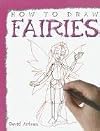
Antram, David. How To Draw Fairies. New York: Power Kids Press, 2012.
Characters: Fairies
Setting: N/A
Theme: Art
Genre: How to books
Summary: In this book individuals are given step by step training and advice on how to draw fairies. The book is filled with drawings and these drawings are accompanied with a short paragraph that describes the step that is being demonstrated. The drawings start off in black and white and by the final step, color is added. In addition to steps on drawing fairies, there are also step by step instructions on how to draw things related to fairies, such as mushrooms, wands and various fruits.
Audience: Elementary and above.
Curriculum: Art
Personal Response: This is a great starting book for individuals interested in drawing in general. The book is titled “How to Draw Fairies” but it demonstrates the basic of how to draw human-like characters. The instructions are very easy to follow and it is also helpful that each step is described in detail and often times a reason is provided on why the step needs to be done before proceeding onto the next step. One thing that I saw that was distracting to the book was that not all the drawings were done in black and white. The overlapping of colors made it difficult to recognize what step the author was trying to demonstrate. Overall, this would be a great book to give to students to introduce to them the basics of drawing human-like characters.
Characters: Fairies
Setting: N/A
Theme: Art
Genre: How to books
Summary: In this book individuals are given step by step training and advice on how to draw fairies. The book is filled with drawings and these drawings are accompanied with a short paragraph that describes the step that is being demonstrated. The drawings start off in black and white and by the final step, color is added. In addition to steps on drawing fairies, there are also step by step instructions on how to draw things related to fairies, such as mushrooms, wands and various fruits.
Audience: Elementary and above.
Curriculum: Art
Personal Response: This is a great starting book for individuals interested in drawing in general. The book is titled “How to Draw Fairies” but it demonstrates the basic of how to draw human-like characters. The instructions are very easy to follow and it is also helpful that each step is described in detail and often times a reason is provided on why the step needs to be done before proceeding onto the next step. One thing that I saw that was distracting to the book was that not all the drawings were done in black and white. The overlapping of colors made it difficult to recognize what step the author was trying to demonstrate. Overall, this would be a great book to give to students to introduce to them the basics of drawing human-like characters.
Ball, Jacqueline ed., The Universe (Discovery Channel School Science). Milwaukee, Wisconsin: Gareth Stevens Publishing, 2004.
Characters: This book does not involve characters, but it does have planets, moons and stars.
Setting: The known universe.
Theme: Space, science and astrology.
Genre: Middle school science series.
Summary: This book is part of a series that covers topics that deals with science in space. It contains facts about the universe, such as star charts, planet charts, and theories on how the universe was formed. The book contains multiple activities that the students can participate in to get a better understanding of the workings of the universe. The book is also filled with actual photographs taken from telescopes and gives tips to students on how to better observe the stars.
Audience: Middle school students.
Curriculum: Science.
Personal Response: This book is a great series and has a lot of useful information for students looking to learn more about the universe. One of the biggest advantages of this book is that it includes activities for students to do to see how things around their household can have similar effects in regards to things in space. Almost every excerpt from the book contains at least one activity for students to do and this can be very engaging for students who enjoy working with their hands. I think this is one of the first steps on showing students how to execute experiments and also provides great activities that will promote their show more interest in science. show less
Characters: This book does not involve characters, but it does have planets, moons and stars.
Setting: The known universe.
Theme: Space, science and astrology.
Genre: Middle school science series.
Summary: This book is part of a series that covers topics that deals with science in space. It contains facts about the universe, such as star charts, planet charts, and theories on how the universe was formed. The book contains multiple activities that the students can participate in to get a better understanding of the workings of the universe. The book is also filled with actual photographs taken from telescopes and gives tips to students on how to better observe the stars.
Audience: Middle school students.
Curriculum: Science.
Personal Response: This book is a great series and has a lot of useful information for students looking to learn more about the universe. One of the biggest advantages of this book is that it includes activities for students to do to see how things around their household can have similar effects in regards to things in space. Almost every excerpt from the book contains at least one activity for students to do and this can be very engaging for students who enjoy working with their hands. I think this is one of the first steps on showing students how to execute experiments and also provides great activities that will promote their show more interest in science. show less
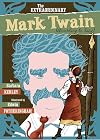
Kerley, Barbara. The Extraordinary Mark Twain (According to Susy). New York: Scholastic Inc., 2010.
Characters: Mark Twain
Setting: Mark Twain’s story from birth to death.
Theme: Family, growing up, life accomplishments.
Genre: Children’s biography
Golden Quote: “This is a frank biographer and an honest one; she uses no sandpaper on me.”
Summary: This is a biography of Mark Twain, told with excerpts from his daughter Susy’s diary. The biography depicts Mark Twain in a different light suggesting that Mark Twain was not always a carefree easy going individual, as many depict him to be. The biography is filled with little unknown facts about Mark Twain describing his not so fine qualities. The biography is filled with colorful pictures and follows a two page layout for each paragraph and is accompanied by a journal insert from the actual diary of his daughter Susy. The journal excerpts have been taken directly from his daughter’s diaries and the spelling and punctuation remain uncorrected. This is a look into Mark Twain’s life, through the account of someone who actually lived with him.
Audience: Elementary school
Curriculum: Biographies, people, history and writing.
Personal Response: This biography is very well illustrated, written and it has the bonus of including excerpts from Susy’s diary. Susy paid close attention to her dad’s behaviors and made sure that she recorded his good traits along with his bad traits. She started writing the biography secretly and show more was able to observe her dad without his notice for quite some time. I really enjoyed how the biographer included a small excerpt from Susy’s diary on every page, allowing the reader’s to read her exact words and also showing them how she went about observing and studying her father. The book is filled with color illustrations from top to bottom and engages the reader from the first page to the last. Included in the book is a bibliography, a section with the author’s note and also a brief excerpt of Susy describing why she was studying her father and what she hoped to accomplish. This is a great book to introduce children to biographies and the structure a biography follows. show less
Characters: Mark Twain
Setting: Mark Twain’s story from birth to death.
Theme: Family, growing up, life accomplishments.
Genre: Children’s biography
Golden Quote: “This is a frank biographer and an honest one; she uses no sandpaper on me.”
Summary: This is a biography of Mark Twain, told with excerpts from his daughter Susy’s diary. The biography depicts Mark Twain in a different light suggesting that Mark Twain was not always a carefree easy going individual, as many depict him to be. The biography is filled with little unknown facts about Mark Twain describing his not so fine qualities. The biography is filled with colorful pictures and follows a two page layout for each paragraph and is accompanied by a journal insert from the actual diary of his daughter Susy. The journal excerpts have been taken directly from his daughter’s diaries and the spelling and punctuation remain uncorrected. This is a look into Mark Twain’s life, through the account of someone who actually lived with him.
Audience: Elementary school
Curriculum: Biographies, people, history and writing.
Personal Response: This biography is very well illustrated, written and it has the bonus of including excerpts from Susy’s diary. Susy paid close attention to her dad’s behaviors and made sure that she recorded his good traits along with his bad traits. She started writing the biography secretly and show more was able to observe her dad without his notice for quite some time. I really enjoyed how the biographer included a small excerpt from Susy’s diary on every page, allowing the reader’s to read her exact words and also showing them how she went about observing and studying her father. The book is filled with color illustrations from top to bottom and engages the reader from the first page to the last. Included in the book is a bibliography, a section with the author’s note and also a brief excerpt of Susy describing why she was studying her father and what she hoped to accomplish. This is a great book to introduce children to biographies and the structure a biography follows. show less
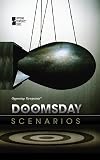
Berlatsky, Noah. Doomsday Scenarios (Opposing Viewpoints). New York: Greenhaven Press, 2011.
Characters: There are no single characters but there are a variety of different situations
Setting: Doomsday scenarios.
Theme: Post-apocalyptic, worst case scenarios.
Genre: High school hi-low.
Summary: This is a book about opposing point of views based on an apocalyptic or post-apocalyptic situation. There is a compilation of excerpts from multiple individuals who are well versed in the field. The interesting thing about this book is that it provides a pro and a con point of view, without imposing the reader to make a stance. It allows the readers to read different arguments of what type of doomsday scenarios could and could not occur. These scenarios range from an economic downfall to the actual human beings causing a doomsday scenario.
Audience: High school reluctant readers.
Curriculum: History, civic, politics, religion.
Personal Response: This is a very interesting book that allows the readers to read short excerpts of other people’s opinions on doomsday scenarios. The reader does not have to read the entire book to gain a point of view and it does not force the reader to develop one, in regards to doomsday scenarios. As a result of the way the opinions are compiled, readers can simply pick the book up, look through the index and decide which topics they are interested in exploring. The book also makes a great reference book because the ideas represented in the book are cited show more and taken from other books. One of the main drawing points for reluctant readers is the subject matter. Doomsday scenarios seem to be popular among younger students and this book could possibly draw in reluctant readers since it is an interesting subject matter and it is considerably an easier read. show less
Characters: There are no single characters but there are a variety of different situations
Setting: Doomsday scenarios.
Theme: Post-apocalyptic, worst case scenarios.
Genre: High school hi-low.
Summary: This is a book about opposing point of views based on an apocalyptic or post-apocalyptic situation. There is a compilation of excerpts from multiple individuals who are well versed in the field. The interesting thing about this book is that it provides a pro and a con point of view, without imposing the reader to make a stance. It allows the readers to read different arguments of what type of doomsday scenarios could and could not occur. These scenarios range from an economic downfall to the actual human beings causing a doomsday scenario.
Audience: High school reluctant readers.
Curriculum: History, civic, politics, religion.
Personal Response: This is a very interesting book that allows the readers to read short excerpts of other people’s opinions on doomsday scenarios. The reader does not have to read the entire book to gain a point of view and it does not force the reader to develop one, in regards to doomsday scenarios. As a result of the way the opinions are compiled, readers can simply pick the book up, look through the index and decide which topics they are interested in exploring. The book also makes a great reference book because the ideas represented in the book are cited show more and taken from other books. One of the main drawing points for reluctant readers is the subject matter. Doomsday scenarios seem to be popular among younger students and this book could possibly draw in reluctant readers since it is an interesting subject matter and it is considerably an easier read. show less
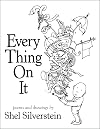
Silverstein, Shel. Every Thing On It. New York: HarperCollins Children’s Books, 2011.
Characters: The characters vary from kids to figments of their imagination.
Setting: Setting varies from rooms, houses, to forests.
Theme: Growing up, imagination, family.
Genre: Children’s Poetry Anthology
Golden Quote: “This means victory, This means peace, It also means, Two hamburgers please.”
Summary: This is a collection of poems by Shel Silverstein that have not been published until now. The book covers all aspects from nature to self-reflection and is written in a manner that allows young readers to visualize the words the author has used to describe different situations. Each poem is accompanied with a single drawing that Shel Silverstein has designed and gives the readers a chance to use their imagination to come up with representations of the poems themselves.
Audience: Elementary school and up.
Curriculum: Poetry, art, written expressions.
Personal Response: The poems in this collective piece are very similar to the ones that have been published in Silverstein’s other books, “Where the Sidewalk Ends” and “A Light in the Attic”. The poems are simple in nature but are very insightful and provide the children with an introduction into poetry. One thing that I really enjoyed about this particular book is that it contains an illustration to represent each poem. This not only allows the reader to see why the illustration is accompanied with the poem but it also allows show more the reader to come up with their own illustrations to interpret the poems. Overall, I think this is a wonderful book for children’s to become accustomed to poetry. show less
Characters: The characters vary from kids to figments of their imagination.
Setting: Setting varies from rooms, houses, to forests.
Theme: Growing up, imagination, family.
Genre: Children’s Poetry Anthology
Golden Quote: “This means victory, This means peace, It also means, Two hamburgers please.”
Summary: This is a collection of poems by Shel Silverstein that have not been published until now. The book covers all aspects from nature to self-reflection and is written in a manner that allows young readers to visualize the words the author has used to describe different situations. Each poem is accompanied with a single drawing that Shel Silverstein has designed and gives the readers a chance to use their imagination to come up with representations of the poems themselves.
Audience: Elementary school and up.
Curriculum: Poetry, art, written expressions.
Personal Response: The poems in this collective piece are very similar to the ones that have been published in Silverstein’s other books, “Where the Sidewalk Ends” and “A Light in the Attic”. The poems are simple in nature but are very insightful and provide the children with an introduction into poetry. One thing that I really enjoyed about this particular book is that it contains an illustration to represent each poem. This not only allows the reader to see why the illustration is accompanied with the poem but it also allows show more the reader to come up with their own illustrations to interpret the poems. Overall, I think this is a wonderful book for children’s to become accustomed to poetry. show less
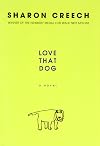
Creech, Sharon. Love That Dog. New York: HarperCollins Publishers. 2001.
Characters: Jack, Miss Stretchberry, Jack’s dog.
Setting: School and Jack’s home.
Theme: Creative writing, self-expression.
Genre: Book in verse.
Golden Quote: “Love that dog, like a bird loves to fly.”
Summary: Jack is young boy that is encouraged to complete poetry assignments from his teacher, Miss Stretchberry. He does not think he can write poetry and he feels as though the only people who write poetry are girls. Slowly with each assignment, Jack realizes that he does have a knack for writing and his poems have to deal with his feelings for his dog. As Jack becomes more comfortable with writing poetry, he allows his teacher to put his poems up for display around the classroom. One of the most moving poems has to deal with Jack’s dog being hit by a car, and the way he feels as he realizes what has actually happened. This is a very moving story about a boy who loves his dog and his ability to express that love through poems. There are also some high moments such as when Jack is able to meet his idol, poet Walter Dean Myers.
Audience: Middle School
Curriculum: Creative writing, poetry introduction and self-expression.
Personal Response: This is a wonderful book that captures the feelings of a boy for his dog. The author’s writing style is writing the book in 5 verses while being able to occasionally break that traditional 5 verse structure. This can be found in the part of the book where Jack show more describes his dog, with the words being scattered around to form a shape of a dog. I really enjoyed that vivid descriptions of the books and the tones that the book sets really draws that reader into the mindset of Jack. One thing I would like to recognize about this book is that it is great for young males who do not believe that they can write or express themselves through poetry. This would be a wonderful book to introduce to students about the basics of writing in verse. show less
Characters: Jack, Miss Stretchberry, Jack’s dog.
Setting: School and Jack’s home.
Theme: Creative writing, self-expression.
Genre: Book in verse.
Golden Quote: “Love that dog, like a bird loves to fly.”
Summary: Jack is young boy that is encouraged to complete poetry assignments from his teacher, Miss Stretchberry. He does not think he can write poetry and he feels as though the only people who write poetry are girls. Slowly with each assignment, Jack realizes that he does have a knack for writing and his poems have to deal with his feelings for his dog. As Jack becomes more comfortable with writing poetry, he allows his teacher to put his poems up for display around the classroom. One of the most moving poems has to deal with Jack’s dog being hit by a car, and the way he feels as he realizes what has actually happened. This is a very moving story about a boy who loves his dog and his ability to express that love through poems. There are also some high moments such as when Jack is able to meet his idol, poet Walter Dean Myers.
Audience: Middle School
Curriculum: Creative writing, poetry introduction and self-expression.
Personal Response: This is a wonderful book that captures the feelings of a boy for his dog. The author’s writing style is writing the book in 5 verses while being able to occasionally break that traditional 5 verse structure. This can be found in the part of the book where Jack show more describes his dog, with the words being scattered around to form a shape of a dog. I really enjoyed that vivid descriptions of the books and the tones that the book sets really draws that reader into the mindset of Jack. One thing I would like to recognize about this book is that it is great for young males who do not believe that they can write or express themselves through poetry. This would be a wonderful book to introduce to students about the basics of writing in verse. show less
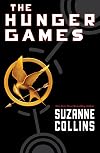
Collins, Suzanne. The Hunger Games. New York: Scholastic Press. 2008.
Characters: Katniss, Prim, Peeta, Gale, Haymitch, Effie, Cinna, Rue.
Setting: The Arena, District 12.
Theme: Survival, love, family, war.
Genre: Science Fiction
Golden Quote: “In school, they tell us the Capitol was built in a place once called the Rockies. District 12 was a region known as Appalachia.
Summary: Katniss Everdeen is a girl in her 17th year of life who is about to have her world turned upside down. Katniss lives in a post-apocalyptic world where the twelve districts in which they live are controlled ultimately by the Capitol. The twelve districts each have their own specialty and are responsible for the well-being of the Capitol. These districts live in poverty, with barely enough to eat and barely enough to survive. Each year, the Capitol holds a tournament where Tributes from each of the 12 districts are chosen to fight to death, to bring their district honor and to remind the people of the atrocities they faced before the Capitol took control of their lives. Katniss is picked as District 12’s tribute along with a boy she knows, Peeta. They are placed in the arena against the tributes of the other 11 districts in a fight to the death. Katniss is burdened by the idea that if she wants to survive, she will eventually have to kill Peeta, who she grows more found of with each passing minute. Eventually, Katniss is able to force the Capitol to allow her and Peeta to both live, declaring them show more the victors of the Hunger Games.
Audience: Highschool
Curriculum: Science Fiction, leisure reading.
Personal Response: Reading the “Hunger Games”, I noticed similarities between this particular story and the book “The Lord of the Flies” which I always found fascinating. The book can be very descriptive regarding the violent fight scenes and death scenes, but I believe this engages the readers more effectively since it depicts more accurately what the characters are actually feeling and seeing. The book is well written, compared to books that target young adults, such as “Twilight” and the book also makes putting it down very difficult. The situations that the characters face and the speedy requirement of them growing up allows the readers to vicariously experience what it would be like to live in such a society. Since the “Hunger Games” can be a bit more violent and has to deal with war themes, I believe that more male readers would be drawn towards it, similar to how “Lord of the Flies” appeal to young boys. This could be a great book for both teenage boys and teenage girls to have a book talk about, since it has themes that would interest both genders. show less
Characters: Katniss, Prim, Peeta, Gale, Haymitch, Effie, Cinna, Rue.
Setting: The Arena, District 12.
Theme: Survival, love, family, war.
Genre: Science Fiction
Golden Quote: “In school, they tell us the Capitol was built in a place once called the Rockies. District 12 was a region known as Appalachia.
Summary: Katniss Everdeen is a girl in her 17th year of life who is about to have her world turned upside down. Katniss lives in a post-apocalyptic world where the twelve districts in which they live are controlled ultimately by the Capitol. The twelve districts each have their own specialty and are responsible for the well-being of the Capitol. These districts live in poverty, with barely enough to eat and barely enough to survive. Each year, the Capitol holds a tournament where Tributes from each of the 12 districts are chosen to fight to death, to bring their district honor and to remind the people of the atrocities they faced before the Capitol took control of their lives. Katniss is picked as District 12’s tribute along with a boy she knows, Peeta. They are placed in the arena against the tributes of the other 11 districts in a fight to the death. Katniss is burdened by the idea that if she wants to survive, she will eventually have to kill Peeta, who she grows more found of with each passing minute. Eventually, Katniss is able to force the Capitol to allow her and Peeta to both live, declaring them show more the victors of the Hunger Games.
Audience: Highschool
Curriculum: Science Fiction, leisure reading.
Personal Response: Reading the “Hunger Games”, I noticed similarities between this particular story and the book “The Lord of the Flies” which I always found fascinating. The book can be very descriptive regarding the violent fight scenes and death scenes, but I believe this engages the readers more effectively since it depicts more accurately what the characters are actually feeling and seeing. The book is well written, compared to books that target young adults, such as “Twilight” and the book also makes putting it down very difficult. The situations that the characters face and the speedy requirement of them growing up allows the readers to vicariously experience what it would be like to live in such a society. Since the “Hunger Games” can be a bit more violent and has to deal with war themes, I believe that more male readers would be drawn towards it, similar to how “Lord of the Flies” appeal to young boys. This could be a great book for both teenage boys and teenage girls to have a book talk about, since it has themes that would interest both genders. show less
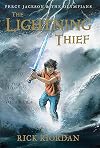
Riordan, Rick. The Lightning Thief. New York: Disney Hyperion Books, 2006.
Characters: Percy Jackson, Grover, Annabeth, Zeus, Hades, Ares, Poseidon, Luke.
Setting: New York, Camp Half-Blood
Theme: Identity, family, Greek mythology.
Genre: Fantasy
Golden Quote: “Being a half-blood is dangerous. It’s scary. Most of the time, it gets you killed in painful, nasty ways.
Summary: Percy Jackson is young 6th grader who finds out that his is half human and half god. His father is Poseidon, the god of the sea. Percy is taken to camp Half-Blood where he meets other kids his age, who are also half-blooded. The camp provides Percy and his friend with a safe environment, free from the attacks of monsters that prey on half-blooded kids. During his time at camp, he finds out that Zeus lost his master bolt, and Zeus blames Poseidon. In order to help protect his father and feeling the need to go on a quest himself, he and his friends, Grover and Annabeth try to track down the whereabouts of the master bolt. During their journey, they encounter a variety of different monsters and gods that tests the children’s courage, strength and wit. Percy eventually finds out who originally took the master bolt, and who that person works for and decides that he is not ready to take on the responsibilities of being a half-blood. Percy decides that he will stay in a normal school for his 7th grade year, as opposed to staying with other half-blood children.
Audience: Elementary school and above.
Curriculum: show more Leisure reading, introduction of Greek Mythology.
Personal Response: The book is excellently written and the descriptions of the surroundings and monsters that Percy and his friend’s encounters are very vivid. The story was very well thought out and the idea of what happens to kids who are part human and part god definitely raises the reader’s curiosity. The story is very engaging and it keeps you guessing on who stole Zeus’s master bolt as more clues are revealed. In this sense, the book can be classified as fantasy, with some mystery aspects as well. I believe that this would be a great book to introduce to 5th graders, especially boys to the joys of reading for leisure. show less
Characters: Percy Jackson, Grover, Annabeth, Zeus, Hades, Ares, Poseidon, Luke.
Setting: New York, Camp Half-Blood
Theme: Identity, family, Greek mythology.
Genre: Fantasy
Golden Quote: “Being a half-blood is dangerous. It’s scary. Most of the time, it gets you killed in painful, nasty ways.
Summary: Percy Jackson is young 6th grader who finds out that his is half human and half god. His father is Poseidon, the god of the sea. Percy is taken to camp Half-Blood where he meets other kids his age, who are also half-blooded. The camp provides Percy and his friend with a safe environment, free from the attacks of monsters that prey on half-blooded kids. During his time at camp, he finds out that Zeus lost his master bolt, and Zeus blames Poseidon. In order to help protect his father and feeling the need to go on a quest himself, he and his friends, Grover and Annabeth try to track down the whereabouts of the master bolt. During their journey, they encounter a variety of different monsters and gods that tests the children’s courage, strength and wit. Percy eventually finds out who originally took the master bolt, and who that person works for and decides that he is not ready to take on the responsibilities of being a half-blood. Percy decides that he will stay in a normal school for his 7th grade year, as opposed to staying with other half-blood children.
Audience: Elementary school and above.
Curriculum: show more Leisure reading, introduction of Greek Mythology.
Personal Response: The book is excellently written and the descriptions of the surroundings and monsters that Percy and his friend’s encounters are very vivid. The story was very well thought out and the idea of what happens to kids who are part human and part god definitely raises the reader’s curiosity. The story is very engaging and it keeps you guessing on who stole Zeus’s master bolt as more clues are revealed. In this sense, the book can be classified as fantasy, with some mystery aspects as well. I believe that this would be a great book to introduce to 5th graders, especially boys to the joys of reading for leisure. show less
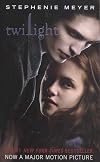
Meyer, Stephenie. Twilight (The Twilight Saga, Book 1). New York: Little, Brown and Company, 2008.
Characters: Bella Swan, Edward Cullen, Jacob Black, Alice Cullen, Carlisle Cullen, Esme Cullen, Emmett Cullen, Rosalie Cullen, Jasper Cullen.
Setting: Forks, Washington
Theme: Love, romance and family.
Genre: Young adult, fantasy, romance.
Golden Quote: “I’d never given much thought to how I would die – though I’d had reason enough in the last few months”
Summary: Twilight is a story about a young girl who falls in love with a dashingly good looking boy at her high school. His name is Edward and he has been admired by many girls in his school, but it is not until Bella’s arrival that he shows any interest in her. The character’s conflict revolves around how they can be together, since Edward is a vampire and Bella is human. Edward decides that Bella is the girl he wants to spend eternity with and he is willing to protect her at all costs. The two struggle to find a common ground where they can be together without the vampire community preying on her while Edward struggles to keep Bella in her human form.
Audience: High School
Curriculum: Romance
Personal Response: The Twilight series contains everything a young high school student would want to read about. They are going to school and they struggle with balancing school work, after school clubs and maintaining their social significance among their peers. Aside from the problem of Bella being human and Edward being a show more vampire, the themes and obstacles these high school kids face are common amongst all high school teens. They are looking to fit into a hierarchy of the “in” crowd. The book keeps the reader wondering what kind of obstacles the characters will face next, and how the characters will deal with those obstacles. The situations that they are placed in can go either way usually, so this keeps you on your toes. My number one critique regarding this book is the writing style. The language and the way Stephenie Meyer describes her characters and the scenes are very elementary. While reading the book, I felt as though I was reading a book a high school student wrote. However, the poor writing can be overlooked by the very creative story. Overall I enjoyed reading the book and the story was excellent even though the book leaves you wanting more from the writing style. show less
Characters: Bella Swan, Edward Cullen, Jacob Black, Alice Cullen, Carlisle Cullen, Esme Cullen, Emmett Cullen, Rosalie Cullen, Jasper Cullen.
Setting: Forks, Washington
Theme: Love, romance and family.
Genre: Young adult, fantasy, romance.
Golden Quote: “I’d never given much thought to how I would die – though I’d had reason enough in the last few months”
Summary: Twilight is a story about a young girl who falls in love with a dashingly good looking boy at her high school. His name is Edward and he has been admired by many girls in his school, but it is not until Bella’s arrival that he shows any interest in her. The character’s conflict revolves around how they can be together, since Edward is a vampire and Bella is human. Edward decides that Bella is the girl he wants to spend eternity with and he is willing to protect her at all costs. The two struggle to find a common ground where they can be together without the vampire community preying on her while Edward struggles to keep Bella in her human form.
Audience: High School
Curriculum: Romance
Personal Response: The Twilight series contains everything a young high school student would want to read about. They are going to school and they struggle with balancing school work, after school clubs and maintaining their social significance among their peers. Aside from the problem of Bella being human and Edward being a show more vampire, the themes and obstacles these high school kids face are common amongst all high school teens. They are looking to fit into a hierarchy of the “in” crowd. The book keeps the reader wondering what kind of obstacles the characters will face next, and how the characters will deal with those obstacles. The situations that they are placed in can go either way usually, so this keeps you on your toes. My number one critique regarding this book is the writing style. The language and the way Stephenie Meyer describes her characters and the scenes are very elementary. While reading the book, I felt as though I was reading a book a high school student wrote. However, the poor writing can be overlooked by the very creative story. Overall I enjoyed reading the book and the story was excellent even though the book leaves you wanting more from the writing style. show less
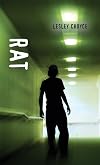
Choyce, Lesley. Rat. Canada, Orca Book Publishers, 2012.
Characters: Colin, Emily, Amanda, Marissa, Craig, Liam, Jerome, Mr. Miller
Setting: Lower income inner-city high school
Theme: Speaking out, drugs, violence
Genre: Young adult realistic fiction
Golden Quote: “You want me to be your mole? Your spy? Your snitch?”
Summary: A story of a very troubling looking at America’s youth and their social behaviors as technology grows. The story is about an out casted individual who is picked on for being different and the actions committed against him for standing up to bullies. The student’s at Colin’s high school are all afraid to speak out against the crimes being committed in their school because they are afraid of the repercussions. Colin stands up to Craig and Liam when they are bullying an elderly man. As a result of this, Craig and Liam post up pictures on the internet of Colin in the nude. When Colin finds this out, he is not too concerned because he knows the picture are a lie, but he soon finds out that these two cyber bullies have been doing this to girls at his school, if they refused to do what Craig and Liam wanted. Colin decides to blow the whistle on this and as a result is referred to as “the rat”. Colin decides to stop speaking out because of the bullying and harassment he receives at his school. This results in one of his fellow classmate’s death when he remained silent about information he knew regarding an incident at his high school.
Audience: 7th show more grade and up
Curriculum: Cyber-bullying, digital citizenship
Personal Response: This was a very difficult book to read because the story about Colin hits very close to home. Children and teens nowadays have an enormous amount of power at their fingertips, to spread whatever rumor or images they would like. This story tells the struggles and some of the repercussions someone who would stand up to a cyber-bully might face. At one point in Colin’s story, he decides to embrace the title of the “rat” and decides that he will talk to his vice principal, Mr. Williams, and the police to let them know exactly what is happening. Colin struggles throughout the story to decide whether to break the “code of silence” amongst his classmates. The moment that Colin realized that because he stayed quite about events he knew, a classmate ended losing his life. Colin then decides to not stay silent any longer. This is a great book for younger teens to read because it gives them examples of effective ways of combating cyber-bullying. It also shows the teens, in a very realistic manner, what the consequences could be in keeping your silence. Cyber-bullying is a very big topic today and with this book, it can help guide kids and show them what the repercussions are in leaving bullying or cyber-bullying in the dark.
Note: There are some offensive words in book as well as situations that have to deal with drugs and violence. This would be a great book to give to your teen or family member, but I would find it difficult to be available through the school library, at least in regards to middle schools. show less
Characters: Colin, Emily, Amanda, Marissa, Craig, Liam, Jerome, Mr. Miller
Setting: Lower income inner-city high school
Theme: Speaking out, drugs, violence
Genre: Young adult realistic fiction
Golden Quote: “You want me to be your mole? Your spy? Your snitch?”
Summary: A story of a very troubling looking at America’s youth and their social behaviors as technology grows. The story is about an out casted individual who is picked on for being different and the actions committed against him for standing up to bullies. The student’s at Colin’s high school are all afraid to speak out against the crimes being committed in their school because they are afraid of the repercussions. Colin stands up to Craig and Liam when they are bullying an elderly man. As a result of this, Craig and Liam post up pictures on the internet of Colin in the nude. When Colin finds this out, he is not too concerned because he knows the picture are a lie, but he soon finds out that these two cyber bullies have been doing this to girls at his school, if they refused to do what Craig and Liam wanted. Colin decides to blow the whistle on this and as a result is referred to as “the rat”. Colin decides to stop speaking out because of the bullying and harassment he receives at his school. This results in one of his fellow classmate’s death when he remained silent about information he knew regarding an incident at his high school.
Audience: 7th show more grade and up
Curriculum: Cyber-bullying, digital citizenship
Personal Response: This was a very difficult book to read because the story about Colin hits very close to home. Children and teens nowadays have an enormous amount of power at their fingertips, to spread whatever rumor or images they would like. This story tells the struggles and some of the repercussions someone who would stand up to a cyber-bully might face. At one point in Colin’s story, he decides to embrace the title of the “rat” and decides that he will talk to his vice principal, Mr. Williams, and the police to let them know exactly what is happening. Colin struggles throughout the story to decide whether to break the “code of silence” amongst his classmates. The moment that Colin realized that because he stayed quite about events he knew, a classmate ended losing his life. Colin then decides to not stay silent any longer. This is a great book for younger teens to read because it gives them examples of effective ways of combating cyber-bullying. It also shows the teens, in a very realistic manner, what the consequences could be in keeping your silence. Cyber-bullying is a very big topic today and with this book, it can help guide kids and show them what the repercussions are in leaving bullying or cyber-bullying in the dark.
Note: There are some offensive words in book as well as situations that have to deal with drugs and violence. This would be a great book to give to your teen or family member, but I would find it difficult to be available through the school library, at least in regards to middle schools. show less
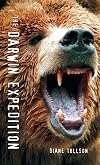
Tullson, Diane. The Darwin Expedition. Canada, Orca Book Publishers, 2007
Characters: Tej, Liam
Setting: Canadian wilderness
Theme: Survival, Adventure, friendship.
Genre: Young Adult Fiction
Golden Quote: “I don’t know, Liam. Looks like you’re going to win the Darwin Award-you’re dying young and stupid before you can pass along your genes.”
Summary: Liam and his best friend Tej are taking a road trip from their town of Tremblay to go snowboarding in Whistler. They are both seniors in high school and Tej will be going off to college in the states while Liam decided to stay in Tremblay. There is some bitterness from Tej that Liam will not be leaving the town to follow Tej. Tej is extremely smart, but he lacks social skills and street smarts, while Liam is the popular and average student. During their trip to Whistler, Tej decides to take the logging roads and ends up flipping his truck with Liam in it. Tej then decides that they can hike their way through the cross-country to meet up with the main highway. Liam trusts his friend, because for as long as he has known Tej, Tej has never expressed any doubt in his decisions. Halfway into their second day in the wilderness, the boys encounter a bear. Tej assures Liam that the bear is just curios and will not charge at them. By the end of the third day, they realize the bear has been stalking them. They run through the forest quickly to find the highway. The bear has brought its yearling cubs and flanks Tej and Liam. The show more boys have to slide down a slippery mountain of granite and during their slide, Tej breaks his leg. Tej, in a moment of clarity, tells Liam that this entire time they have been hiking, he had no idea where they were going. Liam decides that it is best for Tej to stay put while he runs through the forest to get help. Eventually Liam finds someone and leads the rescue party back to Tej who was still alive.
Audience: 7th – 9th Grade
Curriculum: Hisotry, biology, science, geography.
Personal Response: The book is well written and the story keeps the reader guessing what the outcome of the story will be. On several occasions, the two main characters have direct encounters with the grizzly bears where their decisions would result in life or death. The title is appropriately named, because throughout the story the two boys bicker at one another, suggesting that only the strongest between them two will survive. The story also has a lot of real life tips and shows the reader real life survival situations and what the best action to take would be. It is a very informative read. The one thing I really enjoyed about the two characters was their bond. It shows exactly how two high school friends would talk and act with one another. This book would be great for a history, geography or even biology class since all these topics are covered in the story. show less
Characters: Tej, Liam
Setting: Canadian wilderness
Theme: Survival, Adventure, friendship.
Genre: Young Adult Fiction
Golden Quote: “I don’t know, Liam. Looks like you’re going to win the Darwin Award-you’re dying young and stupid before you can pass along your genes.”
Summary: Liam and his best friend Tej are taking a road trip from their town of Tremblay to go snowboarding in Whistler. They are both seniors in high school and Tej will be going off to college in the states while Liam decided to stay in Tremblay. There is some bitterness from Tej that Liam will not be leaving the town to follow Tej. Tej is extremely smart, but he lacks social skills and street smarts, while Liam is the popular and average student. During their trip to Whistler, Tej decides to take the logging roads and ends up flipping his truck with Liam in it. Tej then decides that they can hike their way through the cross-country to meet up with the main highway. Liam trusts his friend, because for as long as he has known Tej, Tej has never expressed any doubt in his decisions. Halfway into their second day in the wilderness, the boys encounter a bear. Tej assures Liam that the bear is just curios and will not charge at them. By the end of the third day, they realize the bear has been stalking them. They run through the forest quickly to find the highway. The bear has brought its yearling cubs and flanks Tej and Liam. The show more boys have to slide down a slippery mountain of granite and during their slide, Tej breaks his leg. Tej, in a moment of clarity, tells Liam that this entire time they have been hiking, he had no idea where they were going. Liam decides that it is best for Tej to stay put while he runs through the forest to get help. Eventually Liam finds someone and leads the rescue party back to Tej who was still alive.
Audience: 7th – 9th Grade
Curriculum: Hisotry, biology, science, geography.
Personal Response: The book is well written and the story keeps the reader guessing what the outcome of the story will be. On several occasions, the two main characters have direct encounters with the grizzly bears where their decisions would result in life or death. The title is appropriately named, because throughout the story the two boys bicker at one another, suggesting that only the strongest between them two will survive. The story also has a lot of real life tips and shows the reader real life survival situations and what the best action to take would be. It is a very informative read. The one thing I really enjoyed about the two characters was their bond. It shows exactly how two high school friends would talk and act with one another. This book would be great for a history, geography or even biology class since all these topics are covered in the story. show less
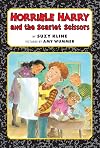
Kline, Suzy. Horrible Harry and the Scarlet Scissors. New York: New York, Penguin Young Readers Group, 2012
Characters: Harry, Doug, Mary
Setting: South School Elementary, snow region
Theme: Friendship, art, different point of views
Genre: Children’s humorous realistic fiction
Golden Quote: “There is still something missing”
Summary: This chapter book is about three friends in a fifth grade class being introduced to art and an art teacher. The story is told through Doug’s perspective since he enjoys writing stories about his friend. Harry is a care free fifth grader whom most classmates see him as eccentric and boarder line annoying. Mary is a very competitive girl who knows exactly what she wants. The new art teacher, Mrs. Matalata is attempting to introduce the fifth graders to art and tells them that “beauty is in the eye of the beholder” To promote the new art program at South School Elementary, the local news station has decided to host an art competition where one poster will be featured on their news program. The accounts in this book discuss how the students come to a decision on what they would like to draw and it also describes the struggles the students went through to complete their poster. At the end of the competition Harry is determined to be the winner and Mary throws a tantrum. She is so upset that she takes a pair of scarlet colored scissors and stabs two holes in Harry’s poster. In the end, Harry forgives her and the two end up becoming good show more friends.
Audience: 3rd to 4th Grade
Curriculum: Art, friendship, forgiveness
Personal Response: The story is written in a way that the reader feels as though these events could take place in their own school. As a result of this, the book can provide a very engaging environment for the young readers. The story is very moralistic, hitting a few key concepts: friendship, art, forgiveness and having a positive outlook. Harry is a very care free and optimistic individual, while Mary is an uptight know-it-all. However, when Mary pokes holes in Harry’s work due to her jealousy, Harry simply uses those holes to incorporate it into his poster. Mary expresses how sorry she is for her shameful action, but Harry understands that she did it in the heat of the moment, and as Mary grows, she will be able to control those outbursts better. This is a perfect book to show kids that even though someone could ruin something you have worked very hard on, if you keep an optimistic view, you could turn that to work toward your own benefit. I especially like that the author shows that two people who did not like one another and have gone through some rough and hurtful experiences can still be friends. show less
Characters: Harry, Doug, Mary
Setting: South School Elementary, snow region
Theme: Friendship, art, different point of views
Genre: Children’s humorous realistic fiction
Golden Quote: “There is still something missing”
Summary: This chapter book is about three friends in a fifth grade class being introduced to art and an art teacher. The story is told through Doug’s perspective since he enjoys writing stories about his friend. Harry is a care free fifth grader whom most classmates see him as eccentric and boarder line annoying. Mary is a very competitive girl who knows exactly what she wants. The new art teacher, Mrs. Matalata is attempting to introduce the fifth graders to art and tells them that “beauty is in the eye of the beholder” To promote the new art program at South School Elementary, the local news station has decided to host an art competition where one poster will be featured on their news program. The accounts in this book discuss how the students come to a decision on what they would like to draw and it also describes the struggles the students went through to complete their poster. At the end of the competition Harry is determined to be the winner and Mary throws a tantrum. She is so upset that she takes a pair of scarlet colored scissors and stabs two holes in Harry’s poster. In the end, Harry forgives her and the two end up becoming good show more friends.
Audience: 3rd to 4th Grade
Curriculum: Art, friendship, forgiveness
Personal Response: The story is written in a way that the reader feels as though these events could take place in their own school. As a result of this, the book can provide a very engaging environment for the young readers. The story is very moralistic, hitting a few key concepts: friendship, art, forgiveness and having a positive outlook. Harry is a very care free and optimistic individual, while Mary is an uptight know-it-all. However, when Mary pokes holes in Harry’s work due to her jealousy, Harry simply uses those holes to incorporate it into his poster. Mary expresses how sorry she is for her shameful action, but Harry understands that she did it in the heat of the moment, and as Mary grows, she will be able to control those outbursts better. This is a perfect book to show kids that even though someone could ruin something you have worked very hard on, if you keep an optimistic view, you could turn that to work toward your own benefit. I especially like that the author shows that two people who did not like one another and have gone through some rough and hurtful experiences can still be friends. show less
Tingle, Tim. Crossing Bok Chitto: A Choctaw Tale of Friendship & Freedom. Texas: El Paso, Cinco Puntos Press, 2006.
Characters: Slaves, Choctaw Native Americans, Martha Tom, Lil’ Mo.
Setting: Bok Chitto River
Theme: Family, friendship, Native Americans, slaves
Genre: Children’s Historical Fiction
Golden Quote: “We are bound for the Promised Land”
Summary: This is a story about a Choctaw Native American girl befriended a slave boy named Lil’ Mo. There unlike friendship developed one day when Martha Tom decided to cross the Bok Chitto River to look for fresh berries. She came across a plantation where the slaves were holding their Sunday service. Martha Tom enjoyed the stories being told at Sunday service as she was eavesdropping through the bush. When Lil’ Mo’s father spotted Martha in the bush, he requested that Lil’ Mo take her back across the river where she would be safe. During their walk back, Lil’ Mo explained to Martha that the river is what separates the slave from the free Promise Land. Martha continued to come to visit Lil’ Mo and listen to the stories from the Bible until one day Lil’ Mo told Martha that his mother was sold off at a slave auction. Martha suggests that Lil’ Mo tell his family to cross the Bok Chitto to stay with them in the Promise Land. On that night, Lil’ Mo and his family made it to the river with the slave hunters chasing in back of them. Martha came with her Choctaw family and helped Lil’ Mo and his family cross show more safely.
Audience: 3rd grade and above
Curriculum ties: Social Studies, Slavery
Personal response: This is a very powerful tale of an unlikely friendship. Martha and Lil’ Mo became friends and their friendship grew stronger with every meeting. It is a great story based on the Choctaw Native Americans and one that is told to this day. It allows children to learn about the hardships people faced during these times while not be too overwhelming that they would not be able to understand what was happening. I really enjoyed the illustrations and the story itself shows the children that a group of people with similar goals from different backgrounds can still understand one anothers struggles and can help one another out. I think this book would be a great way to introduce Native Americans and their significance in American history. show less
Characters: Slaves, Choctaw Native Americans, Martha Tom, Lil’ Mo.
Setting: Bok Chitto River
Theme: Family, friendship, Native Americans, slaves
Genre: Children’s Historical Fiction
Golden Quote: “We are bound for the Promised Land”
Summary: This is a story about a Choctaw Native American girl befriended a slave boy named Lil’ Mo. There unlike friendship developed one day when Martha Tom decided to cross the Bok Chitto River to look for fresh berries. She came across a plantation where the slaves were holding their Sunday service. Martha Tom enjoyed the stories being told at Sunday service as she was eavesdropping through the bush. When Lil’ Mo’s father spotted Martha in the bush, he requested that Lil’ Mo take her back across the river where she would be safe. During their walk back, Lil’ Mo explained to Martha that the river is what separates the slave from the free Promise Land. Martha continued to come to visit Lil’ Mo and listen to the stories from the Bible until one day Lil’ Mo told Martha that his mother was sold off at a slave auction. Martha suggests that Lil’ Mo tell his family to cross the Bok Chitto to stay with them in the Promise Land. On that night, Lil’ Mo and his family made it to the river with the slave hunters chasing in back of them. Martha came with her Choctaw family and helped Lil’ Mo and his family cross show more safely.
Audience: 3rd grade and above
Curriculum ties: Social Studies, Slavery
Personal response: This is a very powerful tale of an unlikely friendship. Martha and Lil’ Mo became friends and their friendship grew stronger with every meeting. It is a great story based on the Choctaw Native Americans and one that is told to this day. It allows children to learn about the hardships people faced during these times while not be too overwhelming that they would not be able to understand what was happening. I really enjoyed the illustrations and the story itself shows the children that a group of people with similar goals from different backgrounds can still understand one anothers struggles and can help one another out. I think this book would be a great way to introduce Native Americans and their significance in American history. show less
Myers, Walter Dean. Fallen Angels. New York: Scholastic Printing, 2008.
Character: Richie Perry, Peewee, Lobel, Johnson, Brunner, Viet Cong
Setting: Vietnam War
Theme: Coming of age, war, social equality
Genre: Historical Fiction
Golden Quote:
Summary: This is a story told through the eyes of young man, Richie Perry, who joins the fight against the Viet Cong in the Vietnam War. He does not join the fight because he has a stance on a particular issue instead it has to do more with his economic status. He had aspirations to attend college but instead is sent across the world to fight in the trenches. The story is extremely graphic and there is not sugar coating the devastation of war and its affects. During his time in the trenches, he discuss the fear of encountering the Viet Cong and the boredom that comes with sitting around and waiting for engage. During these missions, he notices that black soldiers are given more dangerous mission and begins to question why that is. Pewee and Perry go on a variety of missions and witness the casualties of war first hand. They climax of the story comes with Perry and Pewee are sent on patrol by helicopter and encounter some Viet Cong soldiers. They need to fight for their lives and have to hide from the enemy before making it safely back to camp. During this trip back to camp, Pewee is injured and leaves the reader wondering if he will make it back. The story is very graphic and very insightful, since it brings the violence of war directly show more to the readers.
Audience: High School
Curriculum ties: Vietnam War, global issues.
Personal response: The book is told through Perry’s point of view and the scenes of war described in the book are very gruesome. At one point, one of their friends in their platoon strays from the marching path and steps on a land mine and is killed instantly. Perry and Pewee use one another for emotional support, to help themselves get through their service time. Some social issues are addressed in the book such as African Americans being given more dangerous missions, making it seem as though they were expendable. It also conjures up feelings of fear and survival very effectively, such as the instance where Pewee and Perry find themselves face to face with a Viet Cong. They have to decide immediately whether to kill him or let him go and the repercussions that will follow. They decide to take the Viet Cong’s life in fear of him disclosing their hiding location. This is a great book for individual’s interested in war, but due to the graphic content, it may not be appropriate for everyone. show less
Character: Richie Perry, Peewee, Lobel, Johnson, Brunner, Viet Cong
Setting: Vietnam War
Theme: Coming of age, war, social equality
Genre: Historical Fiction
Golden Quote:
Summary: This is a story told through the eyes of young man, Richie Perry, who joins the fight against the Viet Cong in the Vietnam War. He does not join the fight because he has a stance on a particular issue instead it has to do more with his economic status. He had aspirations to attend college but instead is sent across the world to fight in the trenches. The story is extremely graphic and there is not sugar coating the devastation of war and its affects. During his time in the trenches, he discuss the fear of encountering the Viet Cong and the boredom that comes with sitting around and waiting for engage. During these missions, he notices that black soldiers are given more dangerous mission and begins to question why that is. Pewee and Perry go on a variety of missions and witness the casualties of war first hand. They climax of the story comes with Perry and Pewee are sent on patrol by helicopter and encounter some Viet Cong soldiers. They need to fight for their lives and have to hide from the enemy before making it safely back to camp. During this trip back to camp, Pewee is injured and leaves the reader wondering if he will make it back. The story is very graphic and very insightful, since it brings the violence of war directly show more to the readers.
Audience: High School
Curriculum ties: Vietnam War, global issues.
Personal response: The book is told through Perry’s point of view and the scenes of war described in the book are very gruesome. At one point, one of their friends in their platoon strays from the marching path and steps on a land mine and is killed instantly. Perry and Pewee use one another for emotional support, to help themselves get through their service time. Some social issues are addressed in the book such as African Americans being given more dangerous missions, making it seem as though they were expendable. It also conjures up feelings of fear and survival very effectively, such as the instance where Pewee and Perry find themselves face to face with a Viet Cong. They have to decide immediately whether to kill him or let him go and the repercussions that will follow. They decide to take the Viet Cong’s life in fear of him disclosing their hiding location. This is a great book for individual’s interested in war, but due to the graphic content, it may not be appropriate for everyone. show less
Stork, Francisco X., Marcelo In The Real World. New York: Arthur A. Levine Books, 2009.
Characters: Marcelo, Jasmine, Arturo
Setting: Boston and rural Vermont
Theme: Special Needs
Genre: High School Realistic
Golden Quote: “Is not seeing any ugly parts in myself an ugly part? Is not wanting to forgive someone's ugly parts an ugly part in oneself?"
Summary: This is a moving story about Marcelo, an individual that does not fit the description of someone with Autism or Asperger’s. Marcelo is 17 and has been attending a special school since he was a young individual. He is extremely interested in religion and the meaning of life. He strikes a deal with his father to work at his father’s law firm for a summer in return he would be able to choose to stay at his special school as opposed to finishing his senior year in a public school. Marcelo struggles to read peoples facial expressions and is unable to effectively interpret people’s oral responses. Marcelo’s father believes that having him work in the “real world” will be beneficial for him and help him develop lifelong skills. Marcelo is apprehensive of any new situation and this story describes those struggles through his narrative. It gives a person insight into how people with AS or Asperger’s interpret every day social encounters and it allows a very brief view of how people with AS think. At the end of the story Marcelo has discovered that he is his own person and he can do whatever he puts his mind too. These show more attributes may never have been developed if he did not take a chance at trying to function in the “real world”
Audience: High School
Curriculum ties: Special Needs, coming of age.
Personal response: I really enjoyed this story because it is told through Marcelo’s point of view. It allows the reader to enjoy the story and realize how differently Marcelo’s mind process information. I really enjoyed how Marcelo is incredibly knowledgeable but he is unsure how to express this knowledge since he has trouble communicating it. On top of all these struggles, Marcelo discovers that he is becoming a man and the choices he makes will directly affect him. The author does a great job to provide insight into some of the thought process a person with AS or Asperger’s goes through. The story seems to start off only dealing with some very simple issues and it slowly develops into a conflict between Marcelo, his morals and his father. He questions his belief in God and trusts that the choice he makes is the will of his God. It is not overly religious, but it does have some very strong religious references. Overall, I believe that this book is great for individuals in high school to see how different people can be and how similar they can be at the same time. show less
Characters: Marcelo, Jasmine, Arturo
Setting: Boston and rural Vermont
Theme: Special Needs
Genre: High School Realistic
Golden Quote: “Is not seeing any ugly parts in myself an ugly part? Is not wanting to forgive someone's ugly parts an ugly part in oneself?"
Summary: This is a moving story about Marcelo, an individual that does not fit the description of someone with Autism or Asperger’s. Marcelo is 17 and has been attending a special school since he was a young individual. He is extremely interested in religion and the meaning of life. He strikes a deal with his father to work at his father’s law firm for a summer in return he would be able to choose to stay at his special school as opposed to finishing his senior year in a public school. Marcelo struggles to read peoples facial expressions and is unable to effectively interpret people’s oral responses. Marcelo’s father believes that having him work in the “real world” will be beneficial for him and help him develop lifelong skills. Marcelo is apprehensive of any new situation and this story describes those struggles through his narrative. It gives a person insight into how people with AS or Asperger’s interpret every day social encounters and it allows a very brief view of how people with AS think. At the end of the story Marcelo has discovered that he is his own person and he can do whatever he puts his mind too. These show more attributes may never have been developed if he did not take a chance at trying to function in the “real world”
Audience: High School
Curriculum ties: Special Needs, coming of age.
Personal response: I really enjoyed this story because it is told through Marcelo’s point of view. It allows the reader to enjoy the story and realize how differently Marcelo’s mind process information. I really enjoyed how Marcelo is incredibly knowledgeable but he is unsure how to express this knowledge since he has trouble communicating it. On top of all these struggles, Marcelo discovers that he is becoming a man and the choices he makes will directly affect him. The author does a great job to provide insight into some of the thought process a person with AS or Asperger’s goes through. The story seems to start off only dealing with some very simple issues and it slowly develops into a conflict between Marcelo, his morals and his father. He questions his belief in God and trusts that the choice he makes is the will of his God. It is not overly religious, but it does have some very strong religious references. Overall, I believe that this book is great for individuals in high school to see how different people can be and how similar they can be at the same time. show less
Meyer, Stephenie and Young Kim, illustrator. Twilight: The Graphic Novel Vol. 1. New York: Hachette Book Group, 2010.
Characters: Bella Swan, Edward Cullen, Jacob Black, Alice Cullen, Carlisle Cullen, Esme Cullen, Emmett Cullen, Rosalie Cullen, Jasper Cullen.
Setting: Forks, Washington
Theme: Love, romance and family.
Genre: Young adult, fantasy, romance.
Golden Quote: “I’d never given much thought to how I would die – though I’d had eason enough in the last few months”
Summary: Bella is a teenage girl in high school when she decides to move from the sunny state of Arizona, where she lived with her mother, to Forks, Washington to spend more time with her father. She is unable to make any friends at first and feels like an outcast that is until she meets Edward Cullen. Edward is a dashingly pale, good look boy in her class that all the other girls drool over but it seems as though no one is good enough for anyone in the Cullen family. As they become closer, Bella realizes that Edward is unlike the other kids at her school and he has a dark secret he is hiding. Once she discovers his secret, it is up to her to decide whether or not they could be together and how they will overcome any unforeseen obstacles.
Audience: Young Adult
Curriculum ties: Leisure reading.
Personal Response: I really enjoyed the “Twilight” series and picking up this graphic novel version is just as pleasant. The illustrations mainly in black and white and are incredibly detailed and. However, show more Young Kim does add color every now and then to emphasize the importance of the story and particular frames. It makes the graphic novel burst off the page. Her depiction of emotion throughout the novel is flawless, even without the text you are able to move frame by frame and infer what is happening. The text bubbles are placed traditionally around the frame, which makes reading the novel feel very natural. My favorite characteristic about this graphic novel is that it follows the book exactly while providing illustrations that are different from the movie. This graphic novel is a great work of art and can be encouraging for audiences to visualize this story differently. show less
Characters: Bella Swan, Edward Cullen, Jacob Black, Alice Cullen, Carlisle Cullen, Esme Cullen, Emmett Cullen, Rosalie Cullen, Jasper Cullen.
Setting: Forks, Washington
Theme: Love, romance and family.
Genre: Young adult, fantasy, romance.
Golden Quote: “I’d never given much thought to how I would die – though I’d had eason enough in the last few months”
Summary: Bella is a teenage girl in high school when she decides to move from the sunny state of Arizona, where she lived with her mother, to Forks, Washington to spend more time with her father. She is unable to make any friends at first and feels like an outcast that is until she meets Edward Cullen. Edward is a dashingly pale, good look boy in her class that all the other girls drool over but it seems as though no one is good enough for anyone in the Cullen family. As they become closer, Bella realizes that Edward is unlike the other kids at her school and he has a dark secret he is hiding. Once she discovers his secret, it is up to her to decide whether or not they could be together and how they will overcome any unforeseen obstacles.
Audience: Young Adult
Curriculum ties: Leisure reading.
Personal Response: I really enjoyed the “Twilight” series and picking up this graphic novel version is just as pleasant. The illustrations mainly in black and white and are incredibly detailed and. However, show more Young Kim does add color every now and then to emphasize the importance of the story and particular frames. It makes the graphic novel burst off the page. Her depiction of emotion throughout the novel is flawless, even without the text you are able to move frame by frame and infer what is happening. The text bubbles are placed traditionally around the frame, which makes reading the novel feel very natural. My favorite characteristic about this graphic novel is that it follows the book exactly while providing illustrations that are different from the movie. This graphic novel is a great work of art and can be encouraging for audiences to visualize this story differently. show less
Bertrand, Diane G. and Howard, Pauline R. illustrator. Family, Familia. Texas: Pinata Books, 1999.
Characters: Daniel Gonzalez and the Gonzalez family.
Setting: San Antonio, Texas at a public park.
Theme: Family
Genre: Young Fiction, foreign (Spanish) language.
Golden Quote: “Nuestros abuelos produjeron seis hijos y ellos tuvieron hijos y nietos. No debemos olivdar que todos venimos del mismo tronco, que somos ramas de un arbol fuerte: Viva la familia Gonzalez”
Summary: Daniel is a young boy that lives in Kingsville, Texas. His father informs him that during the summer they will be traveling to San Antonio, Texas for a family reunion. Daniel is not too thrilled about the idea and he believes that there will only be a few old people there that he will not know. When he gets to San Antonio, he realizes just how big his family really was. There were so many kids and adults there and Daniel ended up befriending one of his cousins. The family reunion opened up Daniel’s eyes and showed him how important family really is.
Audience: 3rd grade.
Curriculum ties: This book could be used to introduce a foreign language and can also be used on younger audience to show the importance of family.
Personal response: The book contains both English and Spanish text, placing the English text on the top page while having the Spanish text on the bottom of the page. The illustrations are very descriptive and tell the story without the reader having to read the actual text. One of the things I show more found fascinating about the illustrations was how the artist depicted members of the Gonzalez family. If Benito Gonzalez was your great-grandfather, you wore a red name tag otherwise your tag was white. The illustrations showed the different ways people can look even though they share the same grandfather. This story has a very strong emphasis placed on family, whether you know them or not. Overall, if the English text was not part of this book, just by the descriptive illustrations, you would know the story the author was trying to tell anyways. show less
Characters: Daniel Gonzalez and the Gonzalez family.
Setting: San Antonio, Texas at a public park.
Theme: Family
Genre: Young Fiction, foreign (Spanish) language.
Golden Quote: “Nuestros abuelos produjeron seis hijos y ellos tuvieron hijos y nietos. No debemos olivdar que todos venimos del mismo tronco, que somos ramas de un arbol fuerte: Viva la familia Gonzalez”
Summary: Daniel is a young boy that lives in Kingsville, Texas. His father informs him that during the summer they will be traveling to San Antonio, Texas for a family reunion. Daniel is not too thrilled about the idea and he believes that there will only be a few old people there that he will not know. When he gets to San Antonio, he realizes just how big his family really was. There were so many kids and adults there and Daniel ended up befriending one of his cousins. The family reunion opened up Daniel’s eyes and showed him how important family really is.
Audience: 3rd grade.
Curriculum ties: This book could be used to introduce a foreign language and can also be used on younger audience to show the importance of family.
Personal response: The book contains both English and Spanish text, placing the English text on the top page while having the Spanish text on the bottom of the page. The illustrations are very descriptive and tell the story without the reader having to read the actual text. One of the things I show more found fascinating about the illustrations was how the artist depicted members of the Gonzalez family. If Benito Gonzalez was your great-grandfather, you wore a red name tag otherwise your tag was white. The illustrations showed the different ways people can look even though they share the same grandfather. This story has a very strong emphasis placed on family, whether you know them or not. Overall, if the English text was not part of this book, just by the descriptive illustrations, you would know the story the author was trying to tell anyways. show less
Yolen, Jane. Owl Moon. New York: Philomel Books, 1987.
Characters: A young girl, her father and a Great Owl.
Setting: The forest around their home.
Theme: Patience and courage.
Genre: Children’s illustrated book.
Golden quote: “When you go owling…”
Summary: The young girl is old enough now that her dad takes her out to the woods to go “owling”, which is to search for an owl to observe. She follows her dad in the snow, at time struggling to keep up. She is very observant and knows that it is hard for her to keep up because her legs are shorter than her dad’s and therefore for each step he takes, she has to take double that. Her dad tells her that most important rule to follow when you go “owling” is to be silent. After a few missed encounters, they finally are able to see one. She is so happy that she wanted to express it through words, but she recalled that she had to remain silent.
Audience: Sixth grade and above
Curriculum ties: Patience and family relationships.
Awards: Caldecott Medal
Personal response: This is a very sweet story about a young girl and her father. The young girl holds her dad in such high regards and mimics his every action. She is amazed about how her dad is able to make owl hoots to attract owls and you can sense a sense of pride in her. The language in this book is very descriptive, to the point where pictures are not needed at all. The author uses metaphors and similes to describe the color of the snow, the darkness of the forest and it show more really does paint a mental image for the reader. If I were reading this story to children, I would ask them to close their eyes and imagine what the author is describing before having them look at the actual illustrations. The illustrator is also very creative by using the blank white pages as a backdrop for snow. This makes the water colors used to illustrate objects pop right out while giving the reader a sense of what it is like being in a dark snow filled forest. This is a great descriptive book for children who are transitioning from more picture books to books with more words and less pictures. show less
Characters: A young girl, her father and a Great Owl.
Setting: The forest around their home.
Theme: Patience and courage.
Genre: Children’s illustrated book.
Golden quote: “When you go owling…”
Summary: The young girl is old enough now that her dad takes her out to the woods to go “owling”, which is to search for an owl to observe. She follows her dad in the snow, at time struggling to keep up. She is very observant and knows that it is hard for her to keep up because her legs are shorter than her dad’s and therefore for each step he takes, she has to take double that. Her dad tells her that most important rule to follow when you go “owling” is to be silent. After a few missed encounters, they finally are able to see one. She is so happy that she wanted to express it through words, but she recalled that she had to remain silent.
Audience: Sixth grade and above
Curriculum ties: Patience and family relationships.
Awards: Caldecott Medal
Personal response: This is a very sweet story about a young girl and her father. The young girl holds her dad in such high regards and mimics his every action. She is amazed about how her dad is able to make owl hoots to attract owls and you can sense a sense of pride in her. The language in this book is very descriptive, to the point where pictures are not needed at all. The author uses metaphors and similes to describe the color of the snow, the darkness of the forest and it show more really does paint a mental image for the reader. If I were reading this story to children, I would ask them to close their eyes and imagine what the author is describing before having them look at the actual illustrations. The illustrator is also very creative by using the blank white pages as a backdrop for snow. This makes the water colors used to illustrate objects pop right out while giving the reader a sense of what it is like being in a dark snow filled forest. This is a great descriptive book for children who are transitioning from more picture books to books with more words and less pictures. show less
Berger, Carin. Forever Friends. New York: Harper Collins Publishers, 2010.
Character: A little blue bird and a brown bunny.
Setting: The story is set in the forest and goes through the four seasons.
Theme: Friendship and the rewards of patience.
Genre: Children’s illustrated book.
Golden quote: “Now I must fly south, said the bird. But I promise, come spring, I’ll be back.”
Summary: This story is about a blue bird that lives in a tree befriending a brown bunny that lives in a log below. The two play together throughout the forest and throughout the seasons. When winter comes, the bird has to migrate south and the bunny is left alone. The bird and the bunny miss each other equally and when spring came, they were reunited. The played with each other like nothing ever changed.
Audience: Preschool
Curriculum ties: It teaches friendship and that if someone says they are coming back, they will.
Personal response: This is a very cute story about to unlike friends. The bird and the bunny display what it means to be friends and how friends play with one another. The illustrations in the book are very unique, since the illustrator used construction paper along with some other methods to create the pictures. The colors in the book relates to whichever season the story happens to be in, so winter was a dark blue while spring consisted of bright yellows. I really like how the author named out the months of winter to show a sense of time for the kids. This allows the kids to see how show more long the bunny and the blue bird had to wait before being reunited. The ending was very clever too, since it stated that the two were friends forever, making the readers think about how the two friends would be separated again come winter. It shows that real friendships will last no matter what obstacles or length of time the friends are separated. show less
Character: A little blue bird and a brown bunny.
Setting: The story is set in the forest and goes through the four seasons.
Theme: Friendship and the rewards of patience.
Genre: Children’s illustrated book.
Golden quote: “Now I must fly south, said the bird. But I promise, come spring, I’ll be back.”
Summary: This story is about a blue bird that lives in a tree befriending a brown bunny that lives in a log below. The two play together throughout the forest and throughout the seasons. When winter comes, the bird has to migrate south and the bunny is left alone. The bird and the bunny miss each other equally and when spring came, they were reunited. The played with each other like nothing ever changed.
Audience: Preschool
Curriculum ties: It teaches friendship and that if someone says they are coming back, they will.
Personal response: This is a very cute story about to unlike friends. The bird and the bunny display what it means to be friends and how friends play with one another. The illustrations in the book are very unique, since the illustrator used construction paper along with some other methods to create the pictures. The colors in the book relates to whichever season the story happens to be in, so winter was a dark blue while spring consisted of bright yellows. I really like how the author named out the months of winter to show a sense of time for the kids. This allows the kids to see how show more long the bunny and the blue bird had to wait before being reunited. The ending was very clever too, since it stated that the two were friends forever, making the readers think about how the two friends would be separated again come winter. It shows that real friendships will last no matter what obstacles or length of time the friends are separated. show less
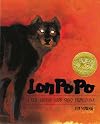
Young, Ed. Lon Po Po: A Red-Riding Hood Story From China. New York: Philomel Books, 1989.
Character: Three sisters: Shang, Tao and Paotze. One big bad wolf.
Setting: Rural China
Theme: Perception, deception and wit.
Genre: Fiction, children’s picture book.
Golden quote: “The old wolf held Tao. “Good child, you are so plump.” He embraced Paotze. “Good child, you have grown to be so sweet.”
Summary: This is a story of little red riding hood told from as a Chinese tale. Instead of the wolf going to grandma’s house, the wolf disguises himself as grandma and comes into the home of these three young girls. When the eldest girl realizes that the wolf was not their Po Po (grandmother) she alerts the other two and comes up with a plan to rid themselves of the wolf. They tell the wolf that the gingko tree outside their home has nuts that are magical and describes the nuts to the wolf as being soft like the skin of a baby. The wolf could not resist and asks the little girls to help bring him up to the tree in a basket. The girls asks the wolf to sit in the basket but each time he gets pulled up, the girls drop him. Each time he is dropped, another sister would offer her strength to help pull him up until finally, the third sister helps and they drop the wolf at such a height that it kills him.
Audience: Third grade and above.
Curriculum ties: World History (China), Chinese art.
Awards: Caldecott Medal
Personal response: I really enjoyed this spin on the tale of “Little Red show more Riding Hood” because the author adapts the story to tell it from a Chinese perspective. The illustrations in here also reflect the setting of the story. The illustrations are done in a Chinese style and add layer of depth to the story, helping it seem more realistic. The three sisters in the book each have their own personalities and the author really takes the time to develop a climatic point where their personalities aide in the defeat of the wolf. This climatic point came when the wolf is killed. I was taken by surprised that the author actually killed the wolf instead of having it run away or escaping in some other manner. As a result of this, I would read this to third graders and above, in hopes that their understanding of death is greater than their younger counterparts. show less
Character: Three sisters: Shang, Tao and Paotze. One big bad wolf.
Setting: Rural China
Theme: Perception, deception and wit.
Genre: Fiction, children’s picture book.
Golden quote: “The old wolf held Tao. “Good child, you are so plump.” He embraced Paotze. “Good child, you have grown to be so sweet.”
Summary: This is a story of little red riding hood told from as a Chinese tale. Instead of the wolf going to grandma’s house, the wolf disguises himself as grandma and comes into the home of these three young girls. When the eldest girl realizes that the wolf was not their Po Po (grandmother) she alerts the other two and comes up with a plan to rid themselves of the wolf. They tell the wolf that the gingko tree outside their home has nuts that are magical and describes the nuts to the wolf as being soft like the skin of a baby. The wolf could not resist and asks the little girls to help bring him up to the tree in a basket. The girls asks the wolf to sit in the basket but each time he gets pulled up, the girls drop him. Each time he is dropped, another sister would offer her strength to help pull him up until finally, the third sister helps and they drop the wolf at such a height that it kills him.
Audience: Third grade and above.
Curriculum ties: World History (China), Chinese art.
Awards: Caldecott Medal
Personal response: I really enjoyed this spin on the tale of “Little Red show more Riding Hood” because the author adapts the story to tell it from a Chinese perspective. The illustrations in here also reflect the setting of the story. The illustrations are done in a Chinese style and add layer of depth to the story, helping it seem more realistic. The three sisters in the book each have their own personalities and the author really takes the time to develop a climatic point where their personalities aide in the defeat of the wolf. This climatic point came when the wolf is killed. I was taken by surprised that the author actually killed the wolf instead of having it run away or escaping in some other manner. As a result of this, I would read this to third graders and above, in hopes that their understanding of death is greater than their younger counterparts. show less
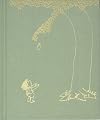
Silverstein, Shel. The Giving Tree. United States: Harper & Row Publishers, 1964.
Character: A boy and an apple tree.
Setting: The forest where the tree lives.
Theme: Growing up and the gift of giving and receiving love in return.
Genre: Fiction, children’s picture book.
Golden quote: “And the tree was happy”
Summary: This is a story about a boy that loved a tree, but not as much as the love the tree had for him. As a child, the boy did not ask the tree for anything, he just wanted to play with the tree and enjoy the tree’s company. However, as he gets older, the boy starts to “need” and want more and more things in his life. He looks to the tree to provide him with everything he wanted. The tree sacrificed herself by giving him her apple, her branches, and eventually her trunk. The boy revisits the tree throughout his life, but only when he wanted something from the tree. Eventually, the boy is an old man and no longer needs anything from the tree, just some company.
Audience: Preschool and above.
Curriculum ties: Teaches kids the joy of giving, and also teaches them about love and greed.
Personal response: This is a great book for children and adults of all ages. The story is one about selflessness and acts of love. As I read the story, I felt that the relationship between the boy and the tree as he was young would not change however, as he became older, he started to show that he was more selfish. The story was very moving because this tree, which only wanted the show more boy to be happy so that she would feel happy, sacrificed everything she had so that she could make the boy happy. Her love knew no bounds and whatever the boy asked for he received. My favorite part of the story is the ending, when the boy comes back as an old man and asks the tree for nothing, just simply her company. It raised the idea in my head that as we become older, we actually become more like the kids we once were. In this sense, the story comes full circle. The themes in this book are a wonderful set of values to teach to our young children. show less
Character: A boy and an apple tree.
Setting: The forest where the tree lives.
Theme: Growing up and the gift of giving and receiving love in return.
Genre: Fiction, children’s picture book.
Golden quote: “And the tree was happy”
Summary: This is a story about a boy that loved a tree, but not as much as the love the tree had for him. As a child, the boy did not ask the tree for anything, he just wanted to play with the tree and enjoy the tree’s company. However, as he gets older, the boy starts to “need” and want more and more things in his life. He looks to the tree to provide him with everything he wanted. The tree sacrificed herself by giving him her apple, her branches, and eventually her trunk. The boy revisits the tree throughout his life, but only when he wanted something from the tree. Eventually, the boy is an old man and no longer needs anything from the tree, just some company.
Audience: Preschool and above.
Curriculum ties: Teaches kids the joy of giving, and also teaches them about love and greed.
Personal response: This is a great book for children and adults of all ages. The story is one about selflessness and acts of love. As I read the story, I felt that the relationship between the boy and the tree as he was young would not change however, as he became older, he started to show that he was more selfish. The story was very moving because this tree, which only wanted the show more boy to be happy so that she would feel happy, sacrificed everything she had so that she could make the boy happy. Her love knew no bounds and whatever the boy asked for he received. My favorite part of the story is the ending, when the boy comes back as an old man and asks the tree for nothing, just simply her company. It raised the idea in my head that as we become older, we actually become more like the kids we once were. In this sense, the story comes full circle. The themes in this book are a wonderful set of values to teach to our young children. show less