Such a pleasure reading Roth's fluid prose -- so fluid and assured that it could begin to dull your critical attention. It's like you could forget you were there. Yet the ideas he tends to have an audacity that keep you from being too comfortably lulled. By contrast, other authors seem to tread with such great care -- advancing cautiously sentence by sentence, not wanting to disturb what's come before. Roth makes aggressive moves but with no trace of recklessness, as if through some kind of perfect balance of effort and intuition.
Inventive use of language! Beautiful, humorous, apt metaphors that unfurl in layers of declarative clauses, unleashing some sort of previously unknown virtuosic matter-of-fact wildness.

Autobiographical novel set in Paris music halls of the early 1900s. The vagabonde / wanderer protagonist moves toward social acceptance and romantic love for a while, only to reject the compromises an easy life offers, favoring instead a rigid self-honesty, an obscure sort of dignity that may be vanity, and perhaps, eventually, artistic engagement as a writer. The plot is almost the precise reverse of the conventional novel where loners find cover in the end, or die. Here, Colette creates a character still and always in the thick of it, lost yet grounded in her own emotional world, staring down everything with clear eyes.
Brilliant philosophical novel! -- Has something in common with Vonnegut's Galapagos -- both novels narrate a set of human failings that lead evolution down a non-human path to some sort of (arguably) utopian finale.
Michel and Bruno are two opposing sorts of "particles" which collide in the genius of Michel to create a new philosophy of harmony and love.
Michel and Bruno are two opposing sorts of "particles" which collide in the genius of Michel to create a new philosophy of harmony and love.

A sense of dread, strangeness, or the uncanny emerges through careful attention to often banal, but never boring, detail.
The persona that Miranda July inhabits reveals a rare combination of openness and self-investigation. She appears not inclined to hide anything from the world, nor from the lens of her own critique, out of a sense of honesty and duty. Her method is intuitive yet also radically open to self-criticism. One admires in her the ability to take the decisions her life is founded on, and that comprise her art, back to first principles. In that respect, her work is profoundly ethical.
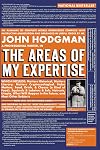
To me, surprisingly reminiscent of Calvino and Perec -- Hodgman shares those authors' devotion to cataloging the absurd or magical details of life, as well as the imagination needed to fabricate them.
Writers, take note of Hodgman's "failed palindromes," and please do not use them!
Writers, take note of Hodgman's "failed palindromes," and please do not use them!
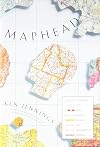
Makes a pretty convincing case for being a "maphead" -- maps, and the study of geography, are extremely interesting as handled by Jennings. Leave it to a trivia whiz to know exactly which arcane (and not so arcane) information will be most fascinating.
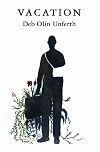
The novel offers that incredibly satisfying form of narrative arc in which characters' paths converge and diverge in unexpected ways, here across a thematically unified landscape of isolation, of "following from a distance," of wilderness. Meditative yet punchy prose explores the depressions and strange drives of stranded individuals. Witty introspective descriptions and dialogue.
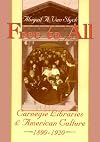
Well-researched explication of the Carnegie library program in the US, including copious illustrations and floor plans of libraries. Appreciated the author's treatment of various library issues in urban and rural contexts. Van Slyck proposes the interesting thesis that the classicism in library design during the early 20th century was generated, in part, by the need of the field of architecture to establish itself as a viable profession, with designs that it was possible to measure the success of in concrete terms. Classical architecture offered a range of measurable design elements, which could be standardized and taught.