
A beautiful and atmospheric debut from Jess Kidd, ‘Himself’ tells the story of Mahoney, an orphan who returns to Mulderigg, the village where he was born, in order to find out what happened to his young mother. Aided by a cantankerous, but wonderfully devilish old former actress, along with a few other misfits from the village (and some of the local ghosts), Mahoney starts to wade through the lies that the bitter residents of Mulderigg have woven around the story of his mother’s disappearance.
Strewn throughout with dark humour, magic realism, a few sad moments (but many touching ones too), and a cast of believable characters (and numerous wigs!) Jess Kidd has created a story that frankly, I didn’t want to end. I look forward to more writing from her!
Strewn throughout with dark humour, magic realism, a few sad moments (but many touching ones too), and a cast of believable characters (and numerous wigs!) Jess Kidd has created a story that frankly, I didn’t want to end. I look forward to more writing from her!
Raymond Gunt works in TV. Not a particularly glamorous job, as a B Unit cameraman, but he likes to pretend he is much more than that. In fact, Raymond is the most obnoxious, arrogant, cruel and hateful man you would never want to meet. His narcissistic ex-wife gets him a job on an American reality TV show, on an island in the Pacific, which he thinks will be a doddle - film lots of hip and attractive young people, whilst soaking up the sun himself and watching them suffer. All Raymond has to do is find himself an assistant (who outshines Raymond in every way possible, and is one of the funniest characters in the book), get on a flight, film young people eating bugs, and get paid a whacking great amount of money for doing as little as he can possibly get away with.
Since Raymond is an utterly horrible human being, you know (and hope) it will not go well. And it doesn't. At every possible turn Raymond runs afoul of the law, his colleagues, his ex-wife, the US military, and the natives of every country he sets foot in. As Lemony Snickett would say, Raymond runs into a series of unfortunate events, many of his own doing, a few coincidences, and one or two foul plots against him from an ever decreasing circle of friends.
There are some hilarious moments in this book, and I laughed aloud at some of the things that befell Raymond. At first you think that Coupland is a little off with his interpretation of modern day culture, reality TV and celebrity, as some of the things that show more happen are unrealistic and downright bizarre. However, once you carry on reading you do realise that he has captured the essence of the desperation that success and fame brings out in people. This book does contain a lot of sexual references/innuendo, foul language and aggression - so no different from a late night reality TV show to be honest! show less
Since Raymond is an utterly horrible human being, you know (and hope) it will not go well. And it doesn't. At every possible turn Raymond runs afoul of the law, his colleagues, his ex-wife, the US military, and the natives of every country he sets foot in. As Lemony Snickett would say, Raymond runs into a series of unfortunate events, many of his own doing, a few coincidences, and one or two foul plots against him from an ever decreasing circle of friends.
There are some hilarious moments in this book, and I laughed aloud at some of the things that befell Raymond. At first you think that Coupland is a little off with his interpretation of modern day culture, reality TV and celebrity, as some of the things that show more happen are unrealistic and downright bizarre. However, once you carry on reading you do realise that he has captured the essence of the desperation that success and fame brings out in people. This book does contain a lot of sexual references/innuendo, foul language and aggression - so no different from a late night reality TV show to be honest! show less
An interesting little book on how to fold paper and card into may different styles. Not an origami book, but with illustrations that are as simple enough to follow as some basic origami. There are no instructions at all, but the illustrations are realtively simple and explanatory.
I like.
I like.
I really enjoyed looking through the illustrations in this book, and although there are absolutely no instructions to explain how to make anything, I found the majority of the illustrations good enough to use as instruction.
I also just found it fascinating that there are so many designs for something as simple as a box/packaging, which is why I enjoyed looking through it. Sometimes it's the really basic, simple things that give you pleasure!
I also just found it fascinating that there are so many designs for something as simple as a box/packaging, which is why I enjoyed looking through it. Sometimes it's the really basic, simple things that give you pleasure!
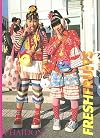
I love Japanese culture and especially Japanese takes on fashion, so was looking forward to this, the second of the 'Fruits' books, but this one dissappointed me - it's not as good as the first one (Fruits) or the dedicated Gothic & Lolita book. I think the best photo's all went into the first book.
But, since we are all individuals and have an eye for things we like/dislike, this is just my opinion on the fashion shown throughout this particular book - others may really like what they see!
But, since we are all individuals and have an eye for things we like/dislike, this is just my opinion on the fashion shown throughout this particular book - others may really like what they see!
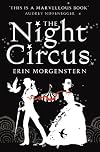
What an amazing book, I thoroughly enjoyed every page! There are some good reviews on here so I won't try to outdo them only to add to them and say that this book is wonderful, a great storyline with fascinating characters and even more fascinating magic. If only it were all real!
As someone mentioned, there has been talk of a film deal already, which would be amazing, as Morgenstern's descriptions of the cirucs, it's magic and illusions are so detailed that imagining them all added to the enjoyment of reading this book, and all I could think about was what it would look like if it were made into a film. Unfortunately, alot of CGI would be neccessary which would still not do it justice!
Anyway, back to the book. Just read it! Then read it again!
As someone mentioned, there has been talk of a film deal already, which would be amazing, as Morgenstern's descriptions of the cirucs, it's magic and illusions are so detailed that imagining them all added to the enjoyment of reading this book, and all I could think about was what it would look like if it were made into a film. Unfortunately, alot of CGI would be neccessary which would still not do it justice!
Anyway, back to the book. Just read it! Then read it again!

This quirky novel is a great read, about a young girl growing up in the seventies and her relationship with her family. Told from the point of view of the girl, Elly, the first part of the novel is when she was younger, about 12 years old, then the second part is when she is in her thirties. The relationships between Elly and her brother are central to the novel, and also her parents, best friend Jenny, and a random assortment of hilarious characters who stay at her parents' B&B as the years go by.
There are some very funny moments throughout the novel, and some incredibly touching ones too, that everyone will no doubt be able to relate to and feel their own pain from. The humour is quirky and alternative, but also very innocent in the first part of the novel. There were a few moments that I thought 'yeah ok, as if!' but once you get further along and realise the impact of these moments and how they are used to explain something, they do
make sense.
All in all, a very enjoyable read that had me giggling at the humour and *almost* crying at the sad parts. Highly recommended!
There are some very funny moments throughout the novel, and some incredibly touching ones too, that everyone will no doubt be able to relate to and feel their own pain from. The humour is quirky and alternative, but also very innocent in the first part of the novel. There were a few moments that I thought 'yeah ok, as if!' but once you get further along and realise the impact of these moments and how they are used to explain something, they do
make sense.
All in all, a very enjoyable read that had me giggling at the humour and *almost* crying at the sad parts. Highly recommended!
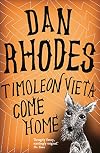
I read this book after a work colleague recommended it, and after reading another Dan Rhodes novel (Little Hands clapping). My colleague raved about the book, which I unfortunately found very disappointing.
In the opening chapters I was angered and infuriated with the British ex-pat Cockroft and the awful vile character of the Bosnian, who Cockroft let walk allover him and eventually cow-towed to and abandoned his dog Timoleon Vieta, in order to keep the Bosnian at his house. I found Cockrofts obession about not wanting to be alone very ironic, since he had a loving dog who would give him unconditional love, whereas his constant lovers did not. And after all that, he still abandoned him. Perhaps it was because I am a dog lover myself, but I found his behaviour towards not only the dog, but in pandering to the Bosnian really rather pathetic. I had no sympathy for either of these characters or what happened to them - I cared more about the dog, which is presumably Rhodes' intent.
The second part of the book tells many shorter stories about people who have come into contact, even in a very small way, with Timoleon Vieta, and how this may, or may not, have affected their lives or the lives of those around them. By the end though, when the dog was nearly home, I knew what was going to happen, and found this quite predictable and disappointing. I understand that the ending was written to shock and upset, but to me it was obvious. I only wished the Bosian could have gotten his show more come-uppance.
An interesting, but disappointing read. show less
In the opening chapters I was angered and infuriated with the British ex-pat Cockroft and the awful vile character of the Bosnian, who Cockroft let walk allover him and eventually cow-towed to and abandoned his dog Timoleon Vieta, in order to keep the Bosnian at his house. I found Cockrofts obession about not wanting to be alone very ironic, since he had a loving dog who would give him unconditional love, whereas his constant lovers did not. And after all that, he still abandoned him. Perhaps it was because I am a dog lover myself, but I found his behaviour towards not only the dog, but in pandering to the Bosnian really rather pathetic. I had no sympathy for either of these characters or what happened to them - I cared more about the dog, which is presumably Rhodes' intent.
The second part of the book tells many shorter stories about people who have come into contact, even in a very small way, with Timoleon Vieta, and how this may, or may not, have affected their lives or the lives of those around them. By the end though, when the dog was nearly home, I knew what was going to happen, and found this quite predictable and disappointing. I understand that the ending was written to shock and upset, but to me it was obvious. I only wished the Bosian could have gotten his show more come-uppance.
An interesting, but disappointing read. show less
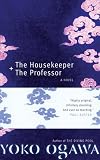
This is a beautiful little book about the relationship between a professor who has lost his memory, and his housekeeper and her young son. The professor is a math genius, and the text is littered with maths allegories, statistics, and even workings out, but these in no way take anything away from the book, I think they add to it instead. The housekeeper finds herself more and more interested in maths as the story goes on, and how it becomes a part of everyday life. Her soon, nicknamed Root by the professor, becomes as enarmoured by the professor as his mother is, maybe even more so than her.
There are a few things that I felt were left unexplained, especially the significance of the formula the professor shows to his sister-in-law as a reason to keep his housekeeper on. I expected the housekeeper to maybe find this out towards the end of the book, or maybe it was left unexplained so that readers may take the plunge and try and find out themselves.
All in all a great book, it only took me a couple of evenings to read.
There are a few things that I felt were left unexplained, especially the significance of the formula the professor shows to his sister-in-law as a reason to keep his housekeeper on. I expected the housekeeper to maybe find this out towards the end of the book, or maybe it was left unexplained so that readers may take the plunge and try and find out themselves.
All in all a great book, it only took me a couple of evenings to read.
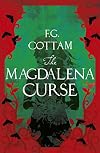
I enjoyed The Magdalena Curse thoroughly, it was a great tale of sinister witchcraft, curses, posession and a father's unconditional love for his son. I was a little disappointed by the end though, it seemed as if Cottam had just run out of steam and couldn't think of a suitable explanation.
I also was disappointed that he didn't explain thoroughly who or what exactly Mrs. Mallory was, what the magic was that kept her alive and the reason for the wolf being a familiar in witch-lore. There is a small explanation (well, Elizabeth's take on Mrs. Mallory's condition) at the end which proves to be correct, but it just wasnt enough for me to have a sinister being explained away in just a couple of sentences and an ending in just a few paragraphs.
All that aside though, the premise was fantastic and I can't wait to read more of Cottam's work.
I also was disappointed that he didn't explain thoroughly who or what exactly Mrs. Mallory was, what the magic was that kept her alive and the reason for the wolf being a familiar in witch-lore. There is a small explanation (well, Elizabeth's take on Mrs. Mallory's condition) at the end which proves to be correct, but it just wasnt enough for me to have a sinister being explained away in just a couple of sentences and an ending in just a few paragraphs.
All that aside though, the premise was fantastic and I can't wait to read more of Cottam's work.
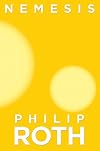
I thoroughly enjoyed this book, it was well written and a touching, but devastating story about the reaction of a young man, Bucky, to a sweeping polio epidemic that befalls many of his young charges at the playground he is caretaker for.
Bucky's character and his repsonses to the epidemic are explored throughout the book, as he experiences and reacts to the mounting pressure and anxiety of such an epidemic, which becomes the focus of life in Newark towards the end of the Second World War.
I found this book easy to read and Roth tells a wonderful story of human anxiety and fear, which tends to be a theme running through many of his works.
Bucky's character and his repsonses to the epidemic are explored throughout the book, as he experiences and reacts to the mounting pressure and anxiety of such an epidemic, which becomes the focus of life in Newark towards the end of the Second World War.
I found this book easy to read and Roth tells a wonderful story of human anxiety and fear, which tends to be a theme running through many of his works.

This new book by Jonathan Stroud totally lives up to expectations, and is just as funny as the previous three Bartimaeus books, it had me laughing out aloud at the most inopportune moments!
Without trying to give away the plot, the story is great, without confusing sub-plots, and basically involves Bartimaeus helping his summoner procure a ring of great power. All sorts of hijinks occur, as usual when Bartimaeus is around, and mix in a little violence (not too gratuitous!), lots of magic, and some hilarious moments and lines, and what you have is an alltogether entertaining read.
You don't need to have read any of the previous Bartimaeus books, since this book is a prequel, so it doesn't matter what knowledge you have, although I did find myself thinking back to the previous books and descriptions of djinni, demons etc. which did help a little. Since I have read the other books, I cannot say for sure whether some of the descriptions/footnotes etc of Bartimaeus and the magic used are compelete enough to give a new reader enough understanding. However, if you read this book before the others, you will hopefully enjoy it so much that you will go out and read them anyway!
The footnotes are particularly entertaining, and don't really detract from reading the main text, in fact I think they are there specifically to lure the reader away from the main text, if only for a few seconds, with really quite hilarious comments that make you enjoy the book even more.
Without trying to give away the plot, the story is great, without confusing sub-plots, and basically involves Bartimaeus helping his summoner procure a ring of great power. All sorts of hijinks occur, as usual when Bartimaeus is around, and mix in a little violence (not too gratuitous!), lots of magic, and some hilarious moments and lines, and what you have is an alltogether entertaining read.
You don't need to have read any of the previous Bartimaeus books, since this book is a prequel, so it doesn't matter what knowledge you have, although I did find myself thinking back to the previous books and descriptions of djinni, demons etc. which did help a little. Since I have read the other books, I cannot say for sure whether some of the descriptions/footnotes etc of Bartimaeus and the magic used are compelete enough to give a new reader enough understanding. However, if you read this book before the others, you will hopefully enjoy it so much that you will go out and read them anyway!
The footnotes are particularly entertaining, and don't really detract from reading the main text, in fact I think they are there specifically to lure the reader away from the main text, if only for a few seconds, with really quite hilarious comments that make you enjoy the book even more.
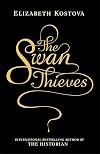
I enjoyed The Historian, so expected a similarly good read from The Swan Thieves, which I have to say lived up to my expectations. I am posting this review though after finishing the book an hour ago, so my opinion of the book may change over time! I really enjoyed this book, it only took me a couple of days to read it, but I can understand and agree with many of the other reviews on here.
I found a few of the main characters to be slightly annoying though, especially Robert Oliver who I found to be a completely selfish, self-centered pig of a man (although I suppose the point of his being a tortured artist was why he was portrayed as such), who should never have married the beautiful woman, his wife Kate, who features prominently in the book. I found the treatment of so called confidential personal histories by Andrew Marlow laughable at times, who seemed to have no integrity and respect for his line of work, in his own obsessive pursuit of the story behind Oliver's attack on the painting 'Leda' and subsequent incarceration at the psychiatric hosptial where Dr. Marlow worked.
When Kostova introduced certain characters through the correspondence between Beatrice and olivier, I put the pieces together quite early on and was correct in my thinking that...... well, I don't want to give the ending away! I agree with others on here though, that the ending was cobbled together and concluded in a few short chapters, although since I had figured it out anyway I wasn't too show more disappointed, and was actually still quite touched/shocked to read the ending, and what I knew to be true anyway, which for me is a sign of a book that was still captivating to the end. show less
I found a few of the main characters to be slightly annoying though, especially Robert Oliver who I found to be a completely selfish, self-centered pig of a man (although I suppose the point of his being a tortured artist was why he was portrayed as such), who should never have married the beautiful woman, his wife Kate, who features prominently in the book. I found the treatment of so called confidential personal histories by Andrew Marlow laughable at times, who seemed to have no integrity and respect for his line of work, in his own obsessive pursuit of the story behind Oliver's attack on the painting 'Leda' and subsequent incarceration at the psychiatric hosptial where Dr. Marlow worked.
When Kostova introduced certain characters through the correspondence between Beatrice and olivier, I put the pieces together quite early on and was correct in my thinking that...... well, I don't want to give the ending away! I agree with others on here though, that the ending was cobbled together and concluded in a few short chapters, although since I had figured it out anyway I wasn't too show more disappointed, and was actually still quite touched/shocked to read the ending, and what I knew to be true anyway, which for me is a sign of a book that was still captivating to the end. show less

I really enjoyed this book, there were some very touching and laugh out loud moments, but also some very awkward moments that make you cringe a little. The characters, although very kooky and quirky, were quite believable, and reminded me so much of a combination of a number of characters from other books/films/tv shows.
I found myself having a love/not-quite-hate relationship with some of the three/four main characters. Min, the mother is hospitalised after another mental breakdown, and her sister Hattie returns from Paris to take care of Min's two children, Logan and Thebes - the latter being the most wonderful, kooky and extremely bizarre but cute little sister.
Each character has their own quirks and personal issues, that work their way to the surface during the course of a road trip that Hatties takes them on in order to track down the childrens' absent father. You can't help but think these issues are all the result of their relationship with Min.
I would love to see this made into a film. It has been compared to Little Miss Sunshine (which I haven't seen but know the basic story of) but would be totally different in content and character. The only let down was the ending, it just seemed to end abruptly and leave you wondering what happens to Min after finding out she discharged herself form hospital.
All in all, I enjoyed the book, the characters and especially the dialogue. Will no doubt read again, and lend out to those I think will like it.
I found myself having a love/not-quite-hate relationship with some of the three/four main characters. Min, the mother is hospitalised after another mental breakdown, and her sister Hattie returns from Paris to take care of Min's two children, Logan and Thebes - the latter being the most wonderful, kooky and extremely bizarre but cute little sister.
Each character has their own quirks and personal issues, that work their way to the surface during the course of a road trip that Hatties takes them on in order to track down the childrens' absent father. You can't help but think these issues are all the result of their relationship with Min.
I would love to see this made into a film. It has been compared to Little Miss Sunshine (which I haven't seen but know the basic story of) but would be totally different in content and character. The only let down was the ending, it just seemed to end abruptly and leave you wondering what happens to Min after finding out she discharged herself form hospital.
All in all, I enjoyed the book, the characters and especially the dialogue. Will no doubt read again, and lend out to those I think will like it.

I was really looking forward to reading this book, I haven't read a ghost story for a very long time. The setting is perfect and the premise made for what I hoped would be a good read.
However, after finishing the book, I was a little disappointed. The storyline is interesting and very believable, but Paver just didn't make enough of the ghost/haunting for my liking. There was so much potential for it to be a very frightening tale, especially since it is set in a country where the characters are almost always in complete darkness.
Paver has created a good ghost story which is more psychological than 'in your face' ghosts appearing all the time, and it is told from the point of view of one of the characters through his diary entries, but for me it just wasn't as good as I thought it could be.
It is out in October 2010, and whilst I haven't given it a great rating, it is worth reading, even if only for the descriptions of the country the story is set in, and the (small amount) of information about myths and legends, which Paver could have elaborated on and used to activate the readers' imagination a little more.
However, after finishing the book, I was a little disappointed. The storyline is interesting and very believable, but Paver just didn't make enough of the ghost/haunting for my liking. There was so much potential for it to be a very frightening tale, especially since it is set in a country where the characters are almost always in complete darkness.
Paver has created a good ghost story which is more psychological than 'in your face' ghosts appearing all the time, and it is told from the point of view of one of the characters through his diary entries, but for me it just wasn't as good as I thought it could be.
It is out in October 2010, and whilst I haven't given it a great rating, it is worth reading, even if only for the descriptions of the country the story is set in, and the (small amount) of information about myths and legends, which Paver could have elaborated on and used to activate the readers' imagination a little more.
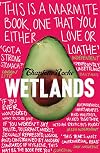
I enjoyed this book, but also hated it at the same time - hence the 2.5 star review! I'm sure once you've read it you'll understand where I'm coming from.
I'd never heard of this book until a few months ago, then loaned it from my local library. As others have said before me, the explicit descriptions of sex acts, bodily functions etc aren't really anything new, depending on what you've already read, watched, experienced etc. but how you perceive them is of course dependent on how open-minded, strong-stomached you are! I was shocked at some of the descriptions, and I thought I was pretty open-minded, especially when it comes to sex!
In terms of the actual story and characters, I really thought Helen was, to be perfectly honest, a complete idiot, very selfish, very strange and, please mind my language, an utter bitch. I couln't sympathise with her at all, and wished ill things on her, although given her perversion and obsession with sexual parts, and espeically hygeine, I think the kind of things I wished on her she would have gotten off on!
I believe Charlotte Roche (using descriptions of sexual acts, intimate parts, hygeine, and then the injuries Helen suffers and then consequently, inflicts on herself) intended to get under the readers skin in such a way that you cannot help but imagine doing these things to yourself, and not just be shocked/impressed at the range of disgusting things an 18 year old girl is capalbe of! I know I certainly could not stop thinking about some show more of the things, way past after they had happened, as they really got to me. And as for the ending - very disappointing and also quite stupidly far-fetched. It seemed to me that Roche had lost her thread and couldn't really think of an ending. I don't think trying to see Helen 'happy' worked for me, as I didn't think she deserved to be.
I wasn't shocked by this book, but more disturbed by it and was also slightly embarrassed whilst reading it, as, as others may also feel, Roche inflicts things on you in those pages that most people would never think of, admit to, do to themselves/others. That's why I gave it 2.5 stars, as I feel a love/hate relationship towards it. show less
I'd never heard of this book until a few months ago, then loaned it from my local library. As others have said before me, the explicit descriptions of sex acts, bodily functions etc aren't really anything new, depending on what you've already read, watched, experienced etc. but how you perceive them is of course dependent on how open-minded, strong-stomached you are! I was shocked at some of the descriptions, and I thought I was pretty open-minded, especially when it comes to sex!
In terms of the actual story and characters, I really thought Helen was, to be perfectly honest, a complete idiot, very selfish, very strange and, please mind my language, an utter bitch. I couln't sympathise with her at all, and wished ill things on her, although given her perversion and obsession with sexual parts, and espeically hygeine, I think the kind of things I wished on her she would have gotten off on!
I believe Charlotte Roche (using descriptions of sexual acts, intimate parts, hygeine, and then the injuries Helen suffers and then consequently, inflicts on herself) intended to get under the readers skin in such a way that you cannot help but imagine doing these things to yourself, and not just be shocked/impressed at the range of disgusting things an 18 year old girl is capalbe of! I know I certainly could not stop thinking about some show more of the things, way past after they had happened, as they really got to me. And as for the ending - very disappointing and also quite stupidly far-fetched. It seemed to me that Roche had lost her thread and couldn't really think of an ending. I don't think trying to see Helen 'happy' worked for me, as I didn't think she deserved to be.
I wasn't shocked by this book, but more disturbed by it and was also slightly embarrassed whilst reading it, as, as others may also feel, Roche inflicts things on you in those pages that most people would never think of, admit to, do to themselves/others. That's why I gave it 2.5 stars, as I feel a love/hate relationship towards it. show less
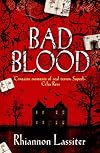
I didn't know what to expect from this book, but I thought it was very good. Social issues about families, divorce and separation are dealt with in a story about a family holiday to the Lake District. The book is set in the present but has a fairytale quality to it, as there are 'magic' books, scary dolls and 'living' trees/ woods. A great read for teens but also adults who may want something less 'intense' to read, although at times I was actually a little frightened! (Not telling you how old I am, but I'm not a teenager!)

I loved this book, and although I did think it was a little too long, and after reading some of the reviews here, I could understand why readers both loved, disliked or didn't even finish the book. It did take me a while to read the first chapter (but I was on holiday in Vegas at the time, so there were many other distractions!) as the text was quite small, and the author does go into alot of detail, describing the most mundane things.
However, I carried on through the next couple of chapters, immediately liking the Cardinal, and then when I got home off my holiday I really cracked on with it and couldn't put it down. Unlike others, I enjoyed the way that a chapter was dedicated to each character, and that when you found out what they had all been up to you could piece things together and fathom out why certain things had happened to each character, due to the actions of another.
As soon as I finished this book I investigated when the sequel, 'The Dark Volume', was released, and was in luck as it was being released within a couple of weeks. I immediately bought it (in hardback too, although more expensive, I had to have it!) and it took me just over a day to read.
I have since read the first (and second) book again, and enjoyed it just as much. When I was reading it for the first time, I couldn't help but imagine the book as a film and who would be in it, what the sets and costumes would be like, although due to the length and weaving of plots, I think the viewer would be show more quite confused.
All in all, I really enjoyed this book, it is 'my kind of book', although I do understand why others wouldn't like it. Like others, I bought the book due to the look of the cover and the intriguing title, and it is one of my most favourite impulse, Waterstones 3 for 2, buys! show less
However, I carried on through the next couple of chapters, immediately liking the Cardinal, and then when I got home off my holiday I really cracked on with it and couldn't put it down. Unlike others, I enjoyed the way that a chapter was dedicated to each character, and that when you found out what they had all been up to you could piece things together and fathom out why certain things had happened to each character, due to the actions of another.
As soon as I finished this book I investigated when the sequel, 'The Dark Volume', was released, and was in luck as it was being released within a couple of weeks. I immediately bought it (in hardback too, although more expensive, I had to have it!) and it took me just over a day to read.
I have since read the first (and second) book again, and enjoyed it just as much. When I was reading it for the first time, I couldn't help but imagine the book as a film and who would be in it, what the sets and costumes would be like, although due to the length and weaving of plots, I think the viewer would be show more quite confused.
All in all, I really enjoyed this book, it is 'my kind of book', although I do understand why others wouldn't like it. Like others, I bought the book due to the look of the cover and the intriguing title, and it is one of my most favourite impulse, Waterstones 3 for 2, buys! show less

I loved this book, and bought it purely from reading the back of the jacket. I really enjoyed the way Pearl uses fact and then combines that with a great murder mystery, and I was even tempted to read Dante's 'Inferno' after finishing this book.
There are some really gruesome scenes, which just goes to show that even before the advent of film and tv, Dante was able to give readers of 'The Inferno' a pretty nasty vision of hell.
All in all a great read, kept me enthraled for hours (only took me a couple of days to read) and have read it again since, and will most probably do so again.
There are some really gruesome scenes, which just goes to show that even before the advent of film and tv, Dante was able to give readers of 'The Inferno' a pretty nasty vision of hell.
All in all a great read, kept me enthraled for hours (only took me a couple of days to read) and have read it again since, and will most probably do so again.
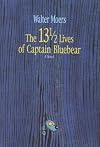
I love, love, love this book, it is hilarious. I borrowed it from work (I am a uni librarian) on the recommendation of a colleague. When I first looked at the monster of a book that it is, I was a little bit put off, but since it was catalogued in our children's/ teen fiction section, knew I must give it a go.
Each life is a spearate chapter, and Moers describes everything in a way that can make you cry with tears of laugher, or find yourself being frightened along with Bluebear. Some of the illustrations are brilliant, and help you to imagine some of the events and things that Bluebear experiences.
The chapters are very long, but some pages are taken up with the large bold text filling half the page, and the illustrations as well.
There are some hilarious moments in this book, especially whilst Bluebear is studying with the professor (I especially liked his inventions - the bike with square wheels for travelling up and down stairs, and the explanation of why there are black holes in the universe).
Well worth the read, please persevere if you are daunted by the size of it.
Each life is a spearate chapter, and Moers describes everything in a way that can make you cry with tears of laugher, or find yourself being frightened along with Bluebear. Some of the illustrations are brilliant, and help you to imagine some of the events and things that Bluebear experiences.
The chapters are very long, but some pages are taken up with the large bold text filling half the page, and the illustrations as well.
There are some hilarious moments in this book, especially whilst Bluebear is studying with the professor (I especially liked his inventions - the bike with square wheels for travelling up and down stairs, and the explanation of why there are black holes in the universe).
Well worth the read, please persevere if you are daunted by the size of it.