
Amazon Book Description :: The double-edged sword modern science wields has excited controversy for years, and there is no end to the debate in sight. The genetic engineering that may one day cure cancer could also deprive the human race of its very individuality. Chemicals like DDT, which have increased food production the world over--saving millions from starvation--have also seriously polluted our environment. And most notoriously, the nuclear technology that provides us with cheap and efficient energy also fuels the horrifying weaponry of Armageddon. Such contradictions have prompted Nobel Prize-winning scientist Max F. Perutz to ask quite simply "Is science necessary?"
Throughout this provocative collection of essays--a unique blend of history, criticism, philosophy, and memoir--Perutz answers his question with a resounding "yes." Ranging from the title piece, where he examines the crucial role science has played in every aspect of modern life, to striking portraits of such great scientists as Alexander Fleming, Ernest Rutherford, Max Planck, and Chaim Weizmann, Perutz's essays demonstrate how "the survival of nature and of civilization" depends upon an intelligent and scrupulous application of science, and an understanding--by all of us--of its basic ways and means. Some of the most compelling essays are of a personal nature. "Enemy Alien" tells the troubling story of Perutz's deportation from England as a German national during the Second World War. He provides show more fascinating insights into the secret military projects he worked on after the war, the most interesting of which a futuristic attempt to convert icebergs into aircraft carriers. And throughout Perutz writes of the excitement of discovery--whether of a revolutionary new medicine like penicillin or of theories such as quantum physics that forever changed the way we look at the world.
Far from being "a soulless hermit toiling away at abstruse problems that he cannot explain except in incomprehensible gibberish," the scientist, as Perutz presents him, is as impassioned as the artist, and it is from his creative energies that the most important advances in science emerge. Moving, humorous, clearly written, and, above all, enlightening, these essays help readers become aware not only of the indispensable function of science in today's world, but of the very nature of scientific inquiry itself. show less
Throughout this provocative collection of essays--a unique blend of history, criticism, philosophy, and memoir--Perutz answers his question with a resounding "yes." Ranging from the title piece, where he examines the crucial role science has played in every aspect of modern life, to striking portraits of such great scientists as Alexander Fleming, Ernest Rutherford, Max Planck, and Chaim Weizmann, Perutz's essays demonstrate how "the survival of nature and of civilization" depends upon an intelligent and scrupulous application of science, and an understanding--by all of us--of its basic ways and means. Some of the most compelling essays are of a personal nature. "Enemy Alien" tells the troubling story of Perutz's deportation from England as a German national during the Second World War. He provides show more fascinating insights into the secret military projects he worked on after the war, the most interesting of which a futuristic attempt to convert icebergs into aircraft carriers. And throughout Perutz writes of the excitement of discovery--whether of a revolutionary new medicine like penicillin or of theories such as quantum physics that forever changed the way we look at the world.
Far from being "a soulless hermit toiling away at abstruse problems that he cannot explain except in incomprehensible gibberish," the scientist, as Perutz presents him, is as impassioned as the artist, and it is from his creative energies that the most important advances in science emerge. Moving, humorous, clearly written, and, above all, enlightening, these essays help readers become aware not only of the indispensable function of science in today's world, but of the very nature of scientific inquiry itself. show less
Amazon Book Description :: A storehouse of practical writing tips, written in a lively, conversational style. Readers lean to develop a “writer's sense”: the book demonstrates that writing is really applied psychology since it is essentially the art of creating desired effects. Provides an explanation of what effects are desirable and how to create them. An exceptional book that works successfully on several levels simultaneously. Provides new insight into: how to generate interesting ideas and get them down on paper; how to write a critical analysis; how to write a crisp opener; how to invigorate a banal style; how to punctuate with confidence; how to handle various conventions, and much more. For anyone who needs a reference guide on writing.
Amazon :: The Unraveling of Scientism, a companion to Joseph Margolis’s Reinventing Pragmatism, follows the thread of American analytic philosophy through the second half of the twentieth century, the period of its greatest influence and activity. Margolis finds that the distinctive features of analytic philosophy were effectively altered, at about mid-century, most pointedly by W. V. Quine. Surprisingly, this was a time of declining conceptual invention and originality among the leading strands of philosophy—pragmatism, logical positivism and the unity of science program, and the principal continental European movements.
The Unraveling of Scientism centers on the primary commitment of analytic philosophy through the twentieth century to what Margolis calls "scientism"—the conviction that an unyielding reductionism, applied universally but in an exemplary way in the sciences, can provide a convincing account of the most important philosophical puzzles of the human world, those centered on the nature of the objective world, our knowledge of reality, language, and human existence. Margolis examines the principal puzzles that the analytic movement has addressed and argues that in recent years its claims have been effectively stalemated, perhaps even defeated.
The Unraveling of Scientism centers on the primary commitment of analytic philosophy through the twentieth century to what Margolis calls "scientism"—the conviction that an unyielding reductionism, applied universally but in an exemplary way in the sciences, can provide a convincing account of the most important philosophical puzzles of the human world, those centered on the nature of the objective world, our knowledge of reality, language, and human existence. Margolis examines the principal puzzles that the analytic movement has addressed and argues that in recent years its claims have been effectively stalemated, perhaps even defeated.

Amazon :: The notion that our society, its education system and its intellectual life, is characterized by a split between two cultures--the arts or humanities on one hand, and the sciences on the other--has a long history. The reissue of The Two Cultures and its successor piece, A Second Look (in which Snow responded to the controversy four years later) has a new introduction by Stefan Collini, charting the history and context of the debate, its implications and its afterlife.
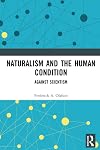
from Amazon :: Naturalism and the Human Condition is a compelling account of why naturalism, or the "scientific world-view" cannot provide a full account of who and what we are as human beings. Drawing on sources including Heidegger, Merleau-Ponty, Husserl and Sartre, Olafson exposes the limits of naturalism and stresses the importance of serious philosophical investigation of human nature.
An Affair of State: The Investigation, Impeachment, and Trial of President Clinton by Richard A. Posner

A book on Pres. Clinton impeachment process. Posner's political position is hard to define though he is generally considered as a judge of conservative mind. He is pragmatist, liberitarian, and a proponent of law and economics movement.