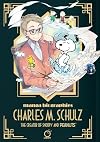
Thank you to Yuzuru Kuki, the editor, publisher, and NetGalley for this advanced reader copy!
“No problem is so big or so complicated that it can’t be run away from!” - Linus
It is no secret to those in my social circle that I love Peanuts—especially Snoopy (Schroder is a close second), of course. And yet, I am ashamed to admit that I didn’t know much about Schulz prior to receiving this ARC of “Manga Biographies: Charles M. Schulz - The Creator of Snoopy and Peanuts.” I was pleasantly surprised to find that I was learning and being entertained—a feat that only so many can accomplish!
The art style is cute, and keeps the original style of Schulz’ art of the ‘Lil’ Kids’ and ‘Peanuts.’ I liked how expressive the characters were; I could feel all of Schulz’ triumphs, grief, and pain. I learned more about a series that I adore so much. Even the pacing felt appropriate, running through since birth to his untimely death. However, I was looking for more towards the end of the book, like an epilogue of sorts.
I’m still left wondering that if Schulz didn’t want anyone to pick up Peanuts, how is it that I’m collecting new strips every Sunday and saving them? I know money talks and Schulz isn’t here to enforce his decisions, but I also know that Peanuts makes people happy all over the world. Knowing what I know now about Schulz, I believe he’d treasure that above any dollar amount.
“No problem is so big or so complicated that it can’t be run away from!” - Linus
It is no secret to those in my social circle that I love Peanuts—especially Snoopy (Schroder is a close second), of course. And yet, I am ashamed to admit that I didn’t know much about Schulz prior to receiving this ARC of “Manga Biographies: Charles M. Schulz - The Creator of Snoopy and Peanuts.” I was pleasantly surprised to find that I was learning and being entertained—a feat that only so many can accomplish!
The art style is cute, and keeps the original style of Schulz’ art of the ‘Lil’ Kids’ and ‘Peanuts.’ I liked how expressive the characters were; I could feel all of Schulz’ triumphs, grief, and pain. I learned more about a series that I adore so much. Even the pacing felt appropriate, running through since birth to his untimely death. However, I was looking for more towards the end of the book, like an epilogue of sorts.
I’m still left wondering that if Schulz didn’t want anyone to pick up Peanuts, how is it that I’m collecting new strips every Sunday and saving them? I know money talks and Schulz isn’t here to enforce his decisions, but I also know that Peanuts makes people happy all over the world. Knowing what I know now about Schulz, I believe he’d treasure that above any dollar amount.
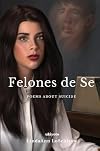
Thank you to LindaAnn LoSchiavo, the editor, publisher, and LibraryThing for this advanced reader copy! I also offer my condolences to LoSchiavo, who lost her brother to suicide in 1977, rest in peace forever.
Felones de se: a person who ends their own life or who dies from the effects of having committed an unlawful, malicious act. (Merriam-Webster Dictionary Online).
Drawing upon unfortunately real-life events, LoSchiavo offers six poems about suicide, all of which leave its readers feeling an unsettling, awkward feeling in their hearts. You’ll find an invitation to watch as real people make irreversible decisions, all for their own, varying reasons. LoSchiavo will entice you to reflect on the American dream, familial love, and the texts that ended a young man’s life.
Poetry is often personal, but LoSchiavo’s poetry is deeply intimate. The reader is still held at a distance in some poems, such as “Suicide Odyssey.” But overall, the reader is taken on a short journey through each person’s life and death. LoSchiavo uses free-verse form to tell her stories. There is some attempt on non-conventional structure (indenting stanzas between long-form paragraphs), but I did not see this as making any positive or negative addition to the reading experience. Perhaps it was to add variety to the visuality of the poems.
My personal favorite poems in this collection are “The Bridge Crossing” and “Suicide Odyssey.” As someone who has two sisters, the former poem show more instilled a momentary question in me—what would I do if my sisters, bound together by duct tape, leaped to their death? I can’t imagine—and I hope never—knowing the answer to that question. “Suicide Odyssey” reads like, well, The Odyssey. It reads as an epic, drawing upon images of Sirens and Mariners who are historically intertwined as victor and victim. The case that is being referenced here though, and by extension the poem, raises a question: can the victor also be the victim?
I recommend this poetry book to readers that like free-verse poetry, those who want to ask themselves philosophical questions about life, and anyone who wishes to reflect on the mortality of humans. I would also like to briefly mention the art made by Erin Caldwell—it is equal parts beautiful and harrowing, a difficult combination that comes easy to Caldwell. show less
Felones de se: a person who ends their own life or who dies from the effects of having committed an unlawful, malicious act. (Merriam-Webster Dictionary Online).
Drawing upon unfortunately real-life events, LoSchiavo offers six poems about suicide, all of which leave its readers feeling an unsettling, awkward feeling in their hearts. You’ll find an invitation to watch as real people make irreversible decisions, all for their own, varying reasons. LoSchiavo will entice you to reflect on the American dream, familial love, and the texts that ended a young man’s life.
Poetry is often personal, but LoSchiavo’s poetry is deeply intimate. The reader is still held at a distance in some poems, such as “Suicide Odyssey.” But overall, the reader is taken on a short journey through each person’s life and death. LoSchiavo uses free-verse form to tell her stories. There is some attempt on non-conventional structure (indenting stanzas between long-form paragraphs), but I did not see this as making any positive or negative addition to the reading experience. Perhaps it was to add variety to the visuality of the poems.
My personal favorite poems in this collection are “The Bridge Crossing” and “Suicide Odyssey.” As someone who has two sisters, the former poem show more instilled a momentary question in me—what would I do if my sisters, bound together by duct tape, leaped to their death? I can’t imagine—and I hope never—knowing the answer to that question. “Suicide Odyssey” reads like, well, The Odyssey. It reads as an epic, drawing upon images of Sirens and Mariners who are historically intertwined as victor and victim. The case that is being referenced here though, and by extension the poem, raises a question: can the victor also be the victim?
I recommend this poetry book to readers that like free-verse poetry, those who want to ask themselves philosophical questions about life, and anyone who wishes to reflect on the mortality of humans. I would also like to briefly mention the art made by Erin Caldwell—it is equal parts beautiful and harrowing, a difficult combination that comes easy to Caldwell. show less
 This review was written for LibraryThing Early Reviewers.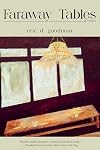
Eric D. Goodman's poetry book titled "Faraway Tables" has a somber and self-aware tone that draws the reader in, but does not necessarily keep them. It took me a while to finish this book. To be honest, I wasn't as engaged as I had hoped to be. Goodman has great ideas and themes for his poems, but the skeleton lacks "muscle," so to say. But, there IS enjoyment here! I personally liked "Barefoot," "Control," and "Renovate" the most. That is where Goodman's prose shines.
I recommend this poetry book for those who enjoy Goodman's previous works, of course, as well as those who are interested in reading long-form and vocabulary-heavy poetry.
I recommend this poetry book for those who enjoy Goodman's previous works, of course, as well as those who are interested in reading long-form and vocabulary-heavy poetry.
This review was written for LibraryThing Early Reviewers.
Thank you to LibraryThing, Harbor Lane Books, and Freya Sharp for this ARC!
Given that this is a deeply personal piece from the author, I hesitate to give this a rating.
So…this falls flat for me. Sadly, I think it lacks, for lack of a better term, creativity—format-wise, that is! Sharp utilizes the Tumblr-esque poetry format style of “no punctuation” and all the poems are one long sentence broken up into smaller pieces. Otherwise, a very quick read. Also — Sharp does not provide a trigger warning (purposefully), so tread carefully.
Lovely cover too, and I applaud Sharp for sharing these poems with us. I hope the experience has been healing!
Given that this is a deeply personal piece from the author, I hesitate to give this a rating.
So…this falls flat for me. Sadly, I think it lacks, for lack of a better term, creativity—format-wise, that is! Sharp utilizes the Tumblr-esque poetry format style of “no punctuation” and all the poems are one long sentence broken up into smaller pieces. Otherwise, a very quick read. Also — Sharp does not provide a trigger warning (purposefully), so tread carefully.
Lovely cover too, and I applaud Sharp for sharing these poems with us. I hope the experience has been healing!
This review was written for LibraryThing Early Reviewers.
Thank you to LibraryThing, the author, and publisher for sending me this advanced copy!
So. This is a free-verse poetry book that has an overarching theme of sadness, despair, and break-ups. Most of the poems that mentioned "Her" felt redundant, and could use more lyrical-style writing. But, that's the thing - this is free-verse poetry, however I find it difficult to delineate the difference between the two.
The poems I liked the most were "coward, I" and "I, Sisyphus." These two in particular spoke to me because they felt the most self-expressive out of all of them. Huss has a good grasp on language, punctuation, but I also would have liked to see variation in text style (for example, descending words, etc.). I believe that would have helped me overlooked redundancies in some of the poems.
Overall, Huss did a good job with this free-verse poetry book. Self-expression is a good landmark for this type of poetry, and while Huss hits that mark a few times, I think readers would prefer more objectivity to subjectivity.
2/5.
So. This is a free-verse poetry book that has an overarching theme of sadness, despair, and break-ups. Most of the poems that mentioned "Her" felt redundant, and could use more lyrical-style writing. But, that's the thing - this is free-verse poetry, however I find it difficult to delineate the difference between the two.
The poems I liked the most were "coward, I" and "I, Sisyphus." These two in particular spoke to me because they felt the most self-expressive out of all of them. Huss has a good grasp on language, punctuation, but I also would have liked to see variation in text style (for example, descending words, etc.). I believe that would have helped me overlooked redundancies in some of the poems.
Overall, Huss did a good job with this free-verse poetry book. Self-expression is a good landmark for this type of poetry, and while Huss hits that mark a few times, I think readers would prefer more objectivity to subjectivity.
2/5.
This review was written for LibraryThing Early Reviewers.
Thank you to LibraryThing, the author, and publisher for sending me this advanced copy!
One of your typical poetry books—not said in a negative way BTW! It is an easy read, thanks to descriptive prose that allows the reader to be immersed not just “physically” but emotionally as well. Some poems resonated with me, and I liked this collection.
3/5
One of your typical poetry books—not said in a negative way BTW! It is an easy read, thanks to descriptive prose that allows the reader to be immersed not just “physically” but emotionally as well. Some poems resonated with me, and I liked this collection.
3/5
This review was written for LibraryThing Early Reviewers.
“The simplest way to identify with another being is still to eat it.” — Claude Lévi-Strauss
* Spoiler Free
Joy Sorman’s Tenderloin is a macabre piece of literature depicting a young butcher who’s cravings for meat cloud his every waking thought. Readers be warned: as you can imagine, there are countless detailed descriptions of chain massacres in slaughterhouses and killing and carving domesticated animals. However, Sorman denounces this and advocates for camaraderie with animals, with some sprinkling of Upton Sinclair’s The Jungle.
My score: 3.5/5
Pim is an interesting protagonist. He is somewhat of a crybaby, but learns to be a butcher with obsessive precision. When Pim is not working in cold rooms or watching cows graze fields, he is taking his obsessions home—mapping out the flanks, ribs, and haunches of women who come home with him. To be a butcher, to Pim, is to be one of madness and ecstasy. Moving from character, I noticed some interweaving of concepts, such as masculinity, ethnicity, hunger, and the ethics of eating meat.
“Pim is off-center, a man who doesn’t play the leading role in his own play, who occupies the back seat in this existence that’s his all the same. Meat has the starring role.” — page 128
Overall, I found this novel to be above average and I recommend it for anyone who enjoyed reading Tender Is The Flesh by Augustina Bazterrica and The Jungle by Upton Sinclair.
Thank you to LibraryThing for this advanced copy!
* Spoiler Free
Joy Sorman’s Tenderloin is a macabre piece of literature depicting a young butcher who’s cravings for meat cloud his every waking thought. Readers be warned: as you can imagine, there are countless detailed descriptions of chain massacres in slaughterhouses and killing and carving domesticated animals. However, Sorman denounces this and advocates for camaraderie with animals, with some sprinkling of Upton Sinclair’s The Jungle.
My score: 3.5/5
Pim is an interesting protagonist. He is somewhat of a crybaby, but learns to be a butcher with obsessive precision. When Pim is not working in cold rooms or watching cows graze fields, he is taking his obsessions home—mapping out the flanks, ribs, and haunches of women who come home with him. To be a butcher, to Pim, is to be one of madness and ecstasy. Moving from character, I noticed some interweaving of concepts, such as masculinity, ethnicity, hunger, and the ethics of eating meat.
“Pim is off-center, a man who doesn’t play the leading role in his own play, who occupies the back seat in this existence that’s his all the same. Meat has the starring role.” — page 128
Overall, I found this novel to be above average and I recommend it for anyone who enjoyed reading Tender Is The Flesh by Augustina Bazterrica and The Jungle by Upton Sinclair.
Thank you to LibraryThing for this advanced copy!
This review was written for LibraryThing Early Reviewers.