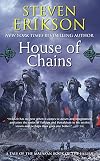
I read this book while I was in Cleveland for Christmas and I have to say it was, possibly, my favorite book in the series. The overall pacing and the events in general just really appealed to me. Add in to the fact that one of my favorite characters, Kalam, got to be a bad-ass and how could I not like this book?
Erikson doesn't give you a lot of time to breath in stories. There is always something important happening or preparing to happen. You can skim over some of the descriptive fluff if that's your style but don't skim for more than a paragraph or two lest you miss the opening to a great confluence of peoples or events that set the stage for even greater moments.
So far in the three books we have met the forces of the Malazan Empire, the people of Pale (who fought the Malazan's), the people of Darujhistan (who also opposed the Malazan encroachment), Caladan Brood's armies, the Tiste Andii and Anadomer Rake, a couple Jaghut's, K'Chain Che'Maille, the army of the apocolypse in Raraku, a single Toblaki (some other race), the Pannion Domin's forces, the tribal Barghast, insect like Moranth, Gods, Ascendants, and quite a bit more. It can be a bit overwhelming at times but, at the same time, it all ends up making sense. So if you start to feel intimdated by the sheer scope of the novels stick with it - I don't think you'll regret it.
So far in the three books we have met the forces of the Malazan Empire, the people of Pale (who fought the Malazan's), the people of Darujhistan (who also opposed the Malazan encroachment), Caladan Brood's armies, the Tiste Andii and Anadomer Rake, a couple Jaghut's, K'Chain Che'Maille, the army of the apocolypse in Raraku, a single Toblaki (some other race), the Pannion Domin's forces, the tribal Barghast, insect like Moranth, Gods, Ascendants, and quite a bit more. It can be a bit overwhelming at times but, at the same time, it all ends up making sense. So if you start to feel intimdated by the sheer scope of the novels stick with it - I don't think you'll regret it.
This book also spans a huge chunk of time by starting with a story from ages past when Scabadari (leader of the Tiste Edur) and Silchas Ruin (the leader of the Tiste Andii) fought in a huge battle up to the more present day war between the Edur and the Leterii along with the ever present involvement of the Crippled God. If there is one thing you can say about Erikson it is that he isn't afraid of scope.
This story also offered me my frist glimpse of the Crimson Guard. In a world populated with an endless amount of total badasses the Crimson Guard seems like they fit in perfectly. That little taste is enough for me to want to read more about them and I will, eventually, once I get into Erikson's partner's books - The Novels of the Malazan Empire authored by Ian Esslemont.
Thus, even though this book started off a little slow by the end Erikson had won me over again.
This story also offered me my frist glimpse of the Crimson Guard. In a world populated with an endless amount of total badasses the Crimson Guard seems like they fit in perfectly. That little taste is enough for me to want to read more about them and I will, eventually, once I get into Erikson's partner's books - The Novels of the Malazan Empire authored by Ian Esslemont.
Thus, even though this book started off a little slow by the end Erikson had won me over again.
There are some highlights in the book that suggest the world could be so much more interesting. The magic system of the plainsmen has a weakness against Iron but we don't really know what the source of the magic is (beyond a frog that can cause hallucinations). The Specks to the far west also show some interesting promise as does the magic of the mysterious "tree lady" that Nevare encounters in a frog induced hallucination. However, none of that is ever really developed during Shaman's Crossing. Instead Hobb keeps hinting at them with frustratingly similar passages over and over again.
had been told that he loved to leave little hints about the future, bits of foreshadowing and what not, all over the place but I didn't really appreciate that until this book because this was the first time those connections were actually being made.
While Erikson still doesn't do much in terms of direct descriptions of people or places he does manage to subtly give you a lot of details on various characters and nations. In fact, I could easily see myself reading books that just focused on certain groups such as the tribes of the Toblaki or the Moranth. He has hinted at so much about these people that it would be cool to really dig into their cultures and histories.
At the moment I have my hands full just reading what he is writing. It isn't hard reading but I'm way behind in the series and have to catch up. Plus I really want to know what happens with Karsa and how his early actions in this novel will effect later episodes in the epic about Gods and the Malazan Empire.
While Erikson still doesn't do much in terms of direct descriptions of people or places he does manage to subtly give you a lot of details on various characters and nations. In fact, I could easily see myself reading books that just focused on certain groups such as the tribes of the Toblaki or the Moranth. He has hinted at so much about these people that it would be cool to really dig into their cultures and histories.
At the moment I have my hands full just reading what he is writing. It isn't hard reading but I'm way behind in the series and have to catch up. Plus I really want to know what happens with Karsa and how his early actions in this novel will effect later episodes in the epic about Gods and the Malazan Empire.
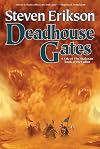
I really enjoyed Deadhouse Gates even though at times it was a little slow. It, along with the third book, Memories of Ice, serve as a great bridge into the later books. I highly recommend it
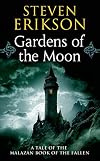
Quite frankly I really enjoyed the book. I was warned it was one of the slower books in the series and that it took a few hundred pages to get into it but almost from the first paragraph I was digging the story. There were at least 7 characters I really liked; Whiskeyjack - the bridgeburner (combat engineer type group) Sergeant with a lot of secrets, Sorry - the fisher girl after her encounter with the Gods, Tattersail - a female mage with more power than she realizes, Fiddler - a sapper (demolitions guy) with the bridge burners, Kruppe - the stereotypical pudgy happy guy who is more than he appears, Crokus - a thief who takes chances, and Rallick Nom an assassin with a higher purpose. Plus there were a bunch of other characters who were each believable and interesting in their own way.
Erikson walks a fine line between story telling and chaos but he manages to stay firmly entrenched in story telling throughout the book plus he promises you far more in terms of the world and the people who inhabit it in the books to come.
Erikson walks a fine line between story telling and chaos but he manages to stay firmly entrenched in story telling throughout the book plus he promises you far more in terms of the world and the people who inhabit it in the books to come.
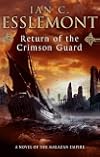
If you like the more bad-ass characters that just wade through a crowd in destruction mode then there is plenty of that for you in this book as well. Some of them, such as Ho, are subtly so, but others; such as Rell, Urko, Braven Tooth, Temp, and Traveller are all in your face ass kickers. Sadly, Esslemont doesn't really describe combat in as compelling of a way as Erikson. Most of the one-on-one combat sequences seem to be missing a level of detail and the descriptions, at time, become a little muddled. On the flip side, when the larger engagements happen Esslemont shines in capturing the tension and drama of a battlefield.
Overall this was an enjoyable story but, mainly because I don't feel vested in any of the characters yet, I didn't get into it as much as I have the more recent Erikson novels. Fortunately, Esslemont has set the stage for some far reaching story lines that should prove to be quite interesting.
Overall this was an enjoyable story but, mainly because I don't feel vested in any of the characters yet, I didn't get into it as much as I have the more recent Erikson novels. Fortunately, Esslemont has set the stage for some far reaching story lines that should prove to be quite interesting.
Even if you aren't a geek, if you have any interest in treasure hunting type stories or WWII based historical fiction this would be a good novel to pick up.
The Devil in the White City: Murder, Magic & Madness and the Fair that Changed America (Illinois) by Erik Larson
Some say that truth is stranger than fiction; while I don't know about that I can say that at times, such as in the reading of The Devil in the White City, truth is more compelling that fiction. Thanks to Hollywood and the crazy killers found throughout the history of fictional thrillers it is easy to be jaded when your presented with a smooth talking pharmacist who preys on young women. It is easy to not be horrified until you remember the story is real.
One thing I can say is that Esselmont does a good job of capturing the feel of Malaz that Erikson has already created. I didn't really feel like I was reading someone else's work (even if the word potshards doesn't appear once in this book). As far as a collaborative work goes "Night of Knives" is a winner.

Sea of Silver Light is the concluding chapter in the Otherland saga and I have to say it wasn't as good as the first three books in the series. I still enjoyed it but something about the way it ended just seemed kind of hollow and lacking to me. I don't want to spoil the storyline so I won't say anything more about that. What I will say though is that the Otherland series is great as a whole. The story is cool and shows a very believable not too distant vision of our world, the net's place in it, and how our lives will be permeated by the incredible levels of access to information we may all have someday.
Even though this was my least favorite book in the series it was still an entertaining jaunt through the world of Malaz. It just failed to live up to my preconceptions on what should have taken place and when. Thus it is hard for me to fault the novel too much in a final grade.
I'm not sure how many books are going to be in this series but the first promises a great tale in the end. I believe the story was started as a community driven one at the Shadowmarch website. However, I didn't hear about the book until I bumped into it at the store. If you like fantasy then you will like this book; so go get it.
I am inclined to say that I like book 11 as much as any other (if not more so) in the series. It was fantastically exciting, full of surprises (and not-surprises) interesting twists, and plenty of evidence the Tarmon Gai'don (the last battle between dark and light) is rapidly approaching. It is also strong evidence that the series is finally ending. The series will end with book 12 (sadly, not written by R.J. who passed away last year). I still can't wait for that to be released. My only major gripe about this installment, as always, is the cover art by Darryl K Sweet. I can't stand his manner of drawing people.
Overall the story is quite good. It explores quite a few deeper issues by having Fitz be introspective, examines the value of a variety of relationships, delves into intrigue and deceit, and even brings in some of my favorite characters from the earlier books. If you are a fan of sci-fi/fantasy and you haven't had a chance to, I suggest you check out the Tawny Man trilogy and the Assassin Series by Robin Hobb.
I really liked this form of presentation and found myself really curious about Kvothe and the other patrons of his inn. Most importantly I am very interested in what we haven't learned yet about Kvothe's life before he became an inn keeper and I eagerly await the second book
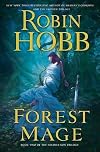
Even with all the negative I found with this book it was better than Shamans Crossing. Nevare didn't whine quite as much and I got to meet 2 more interesting characters that I actually liked (his "love" interest, Amzil, and a scout, Buel Hitch). By the end he is finally forced to make a decision about his own life instead of constantly living his live as the Good God or his father want him to. Of course it could be said he still didn't make the choice and that the "magic" made it for him.
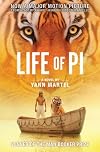
inished up the book, Life of Pi, last week and overall I really enjoyed it. The story is about a young boy whose family decides to emigrate from India to Canada. The family owned a zoo in India and because they were travelling with some of the animals that they sold to zoos in North America they travel on a cargo ship.
Initially the voyage is uneventful, but eventually it sinks and the main character, Pi, barely manages to escape to a life boat. At the same time that Pi finds his refuge a large bengal tiger finds safety in the same boat. A few other animals make it to the boat as well but with the tiger on board the dinghys crew quickly shrinks back to two, Pi and the Tiger. The rest of the book is about the voyage and survival of both Pi and the Tiger.
The entire voyage is quite remarkable and seems fairly unbelievable - much like the stories of religion. I only mention this parallel because as it turns out Pi is also a very spiritual boy who considers himself Hindu, Muslim, and Christian. While that trifecta may seem like a strange combination Pi's logic makes it all seem entirely reasonable. One of the marketing blurbs for the book says "..a story that will make you believe in God.." I don't know if the spiritual message is that strong but, at a minimum it does get you thinking. Something that few books have managed to do to me in a long time.
The book is pretty short, written in the first person (generally), and overall was an excellent tale. I give it a thumbs up
Initially the voyage is uneventful, but eventually it sinks and the main character, Pi, barely manages to escape to a life boat. At the same time that Pi finds his refuge a large bengal tiger finds safety in the same boat. A few other animals make it to the boat as well but with the tiger on board the dinghys crew quickly shrinks back to two, Pi and the Tiger. The rest of the book is about the voyage and survival of both Pi and the Tiger.
The entire voyage is quite remarkable and seems fairly unbelievable - much like the stories of religion. I only mention this parallel because as it turns out Pi is also a very spiritual boy who considers himself Hindu, Muslim, and Christian. While that trifecta may seem like a strange combination Pi's logic makes it all seem entirely reasonable. One of the marketing blurbs for the book says "..a story that will make you believe in God.." I don't know if the spiritual message is that strong but, at a minimum it does get you thinking. Something that few books have managed to do to me in a long time.
The book is pretty short, written in the first person (generally), and overall was an excellent tale. I give it a thumbs up
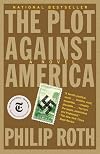
The book is pretty short (416 easy pages in the trade paperback) and the characters are all very believable. The scariest part of the book is the fact that it all seems like it could happen at any time, even today, if the wrong people had power; and perhaps, if your a Muslim in America you may feel it is already happening.
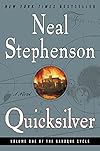
pically never quit on a book, and I didn't quit on this one either. However, I will probably quit on the series. Heck there are two or three more books in this cycle and I don't think I could handle being lectured to for another 2-3 thousand pages. I hear his first work, Snow Crash, is really good but of course this comes from the same folks who love the Baroque Cycle. I just don't get it.
This book takes place in present day London and for that reason alone I got a kick out of it because I happened to be in London as I read it. I hadn't been in London since I was five so it was kind of cool to see bits and pieces of London by day and then read about Saul and King rat exploring those very same locales, albeit from a far different perspective, at night. In fact, at one point, as I was reading in my hotel room on High Holborn, Saul and King Rat ran right past my window in the book (page 98). That was pretty cool.
Eragon is about a boy that finds an Egg and a whole lot more! Considering Eragon is written by a teenager the story isn't too bad; a bit simplistic but overall a fun read that flys right past you almost as quickly as the Dragon, Eragon, grows. I borrowed the book from a friend and never got around to reading the others in the series. I am glad I didn't buy it as I don't think it was worth the price of a used paperback let alone a hardback.
Overall, the story flowed along nicely. It was almost like I had just discovered Jordan's work again. I actually stayed up late and kept reading until I was done; something I haven't done since book 3 or 4. The next chapter, Knife of Dreams (Wheel of Time, Book 11), had the same effect on me. If you haven't read any of the Jordan series before I suggest you be careful before you do. Obviously (since we are waiting on book 12, not counting New Spring), the series is LONG. Not only that but each book is LONG. So reading the series is a commitment. Personally, I think it is a worthwhile commitment - but it is a commitment nonetheless.
This novel is about the rare slave owners of pre civil war America who were themselves black. While the concept of the book is highly unique, overall I wasn't thrilled with the style. However, the concept alone kept me at it and I enjoyed the tale. If nothing else it made me want to research this small tidbit of history to see if there is any validity to it. While the book was slow going due to time constraints I'm glad I stuck with it. The later half of the book improves on the first.
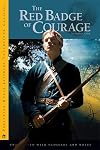
This novel is basically about a young man who goes to war. Written by an author who had never experienced war but believed he could write a better war novel than was currently available. If history is any indication - he did as the book is a classic (which is why I read it).
I enjoyed this tale! I would definately recommend it. I don't want to talk too much about what our protagonist goes through so will keep this review very brief.
The writing style was pretty fluid and the story was very easy to read. However, keep in mind I'm not reading these books with a critical eye instead I'm just trying to enjoy the story that is being told. I would say Crane did some deep soul searching to get a grip on how his character should handle his first, and subsequent, encounters with actual battle. However, at the same time it seems clear, based on some of the events in the book, that he had no real idea of what life as a solider is like. For a guy who had never seen war though he did a great job.
I enjoyed this tale! I would definately recommend it. I don't want to talk too much about what our protagonist goes through so will keep this review very brief.
The writing style was pretty fluid and the story was very easy to read. However, keep in mind I'm not reading these books with a critical eye instead I'm just trying to enjoy the story that is being told. I would say Crane did some deep soul searching to get a grip on how his character should handle his first, and subsequent, encounters with actual battle. However, at the same time it seems clear, based on some of the events in the book, that he had no real idea of what life as a solider is like. For a guy who had never seen war though he did a great job.
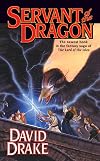
Servant of the Dragon is the third book in the Lord of the Isles series by David Drake and I am currently reading it. So far it is pretty good - with the same kind of elements found in the prior books. Huge problems are discovered and then solved with suprising ease. However, both Sharina and Cashel have both found themselves in interesting lands with difficult problems to solve so I hold out extra hope for this book.
One of Drakes best traits in these series is his inventive characters and cultures and this book so far has introduced me to at least two new ones. The Dragon's and a Bird guy, Dalar, whose name I can't remember at the moment. Finally, Drake also has a cool habit of allying suprising characters such as demons with the heros. It tends to set any preconceived notion you might have about the term demon on it's ear when one suddenly starts helping to save the world - even if it is for a selfish reason and not a noble one.
Well I finished the book and so far it was my favorite in the series. Each of the characters went on completely different patters in their quests and amazingly all ended up in the center of the same big problem. You don't really have to read the other books in the series to follow what is going on in this book; but I still recommend reading the whole series. However, if you don't have the time for all three books - just skip to this one.
One of Drakes best traits in these series is his inventive characters and cultures and this book so far has introduced me to at least two new ones. The Dragon's and a Bird guy, Dalar, whose name I can't remember at the moment. Finally, Drake also has a cool habit of allying suprising characters such as demons with the heros. It tends to set any preconceived notion you might have about the term demon on it's ear when one suddenly starts helping to save the world - even if it is for a selfish reason and not a noble one.
Well I finished the book and so far it was my favorite in the series. Each of the characters went on completely different patters in their quests and amazingly all ended up in the center of the same big problem. You don't really have to read the other books in the series to follow what is going on in this book; but I still recommend reading the whole series. However, if you don't have the time for all three books - just skip to this one.
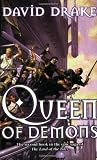
Queen of Demons the second installment in the Lord of the Isles series continues on with the same troupe of likable characters; and, much like the first book, has a few characters that play vital roles for this book only then disappear. However, the plot in this book is even weaker than in the first and major events slide by a bit too easilly. Overall, I found this book less enjoyable than the first. However, I have already bought the next couple books in the series so I will continue to read. At least I still like the principal characters or else I would probably just sell the books on eBay without another thought.
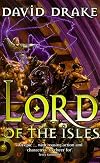
Overall, Lord of the Isles was a fun read. The characters are all pretty likable and the world they live in is a bit different than your normal fantasy fare. However, the way the story goes the confluence of so many seemingly important people in one small little hamlet is pretty inexplicable. Perhaps the fates have as much to do with the characters placement as it did with my stumbling upon the book in a bargin bin a couple years ago. Either way it's an enjoyable and simple read and one I recommend if you're looking for some light fantasy.
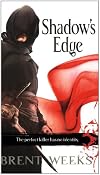
In "Shadow's Edge" Azoth has fully assumed the role of Kylar Stern (a name which weakly references the fact that Kylar is close to Killer) however he attempts to reject his life as a wetboy to find peace and happiness with his love Elene and moving to a new city.
Kylar gets bored with his life as a medieval pharmacist pretty quickly and begins to take some nightly jaunts through his new home town; and, in the process, he finds himself delivering justice and retribution in his alter ego the Night Angel. Eventually, Kylar's thirst for his true calling and his domestic bliss come to loggerheads - specifically once Kylar discovers his best friend, Logan, isn't actually dead.
Kylar then beings his quest to save Logan and his hometown from the domination of the Godking. Unbeknownst to Kylar his old wetboy nemesis Vi is hot on his trail and she has stolen two of the most valuable things Kylar has; his adoptive daughter and his wedding earrings - earrings that are bestowed with powerful magic.
Overall, this tale is just as easy to read as the first "The Way of the Shadow" but it isn't as fulfilling. It's a nice light read that flows wonderfully but there are no real surprises and I found myself getting bored with most of the characters.
Kylar gets bored with his life as a medieval pharmacist pretty quickly and begins to take some nightly jaunts through his new home town; and, in the process, he finds himself delivering justice and retribution in his alter ego the Night Angel. Eventually, Kylar's thirst for his true calling and his domestic bliss come to loggerheads - specifically once Kylar discovers his best friend, Logan, isn't actually dead.
Kylar then beings his quest to save Logan and his hometown from the domination of the Godking. Unbeknownst to Kylar his old wetboy nemesis Vi is hot on his trail and she has stolen two of the most valuable things Kylar has; his adoptive daughter and his wedding earrings - earrings that are bestowed with powerful magic.
Overall, this tale is just as easy to read as the first "The Way of the Shadow" but it isn't as fulfilling. It's a nice light read that flows wonderfully but there are no real surprises and I found myself getting bored with most of the characters.