Babel by Gill James

Set in the future, at first one might think it was science fiction, but from what I read it is more of a romance novel. I have to admit, though, that I didn't finish it. I didn't find characters, story, or style compelling.
 This review was written for LibraryThing Early Reviewers.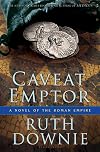
A doctor turned investigator in Hadrian's Britain investigates the murder of a tax collector. It's a decent story with likeable characters. If you pick it up, you'll probably want to finish it, but it won't keep you up into the wee hours. Many short chapters means its never difficult to find a place to stop reading for the night.
This review was written for LibraryThing Early Reviewers.
I think Kimbriel may be redeemable as an author. This occurs to me because my impression from reading the first two chapters (couldn't force myself to read more than that) is that she is not a very good writer. However, she does not rely excessively on the narrative voice, describing the story and its characters rather than revealing character through the telling of the story -- a fault which seems to be common to bad writers.
The book failed to interest me due to the slovenliness of the expression and the superficiality of the characters. They are good looking types off to have adventures, essentially American television and movie fare.
I am not a connoisseur of fine literature, and do enjoy casual fiction, but even in the junk food genre I enjoy most, medieval murder mysteries, interesting characters are essential. I will even suffer a weak plot, an excess of predictability, or being beaten over the head with a bucket of red herrings, as long as the characters are interesting. Even if I liked the genre of romance/scifi, I believe I would find this book disappointing.
I would like to see Kimbriel tackle something with interesting characters, especially after having read George Orwell's "Politics and the English Language" ( http://www.mtholyoke.edu/acad/intrel/orwell46.htm ). That should be required reading in every high school. While Orwell is not targeting fiction writers, his essay might be summarized as saying "Care about expression and put some thought into it. Don't show more be lazy." This is challenging for the fiction writer, for how do you have your characters sound natural without resorting to cliche or mind ossifying everyday idiom? Can they sound fresh yet not freakish? I think it can be achieved with some effort. Perhaps Kimbriel will achieve this someday. show less
The book failed to interest me due to the slovenliness of the expression and the superficiality of the characters. They are good looking types off to have adventures, essentially American television and movie fare.
I am not a connoisseur of fine literature, and do enjoy casual fiction, but even in the junk food genre I enjoy most, medieval murder mysteries, interesting characters are essential. I will even suffer a weak plot, an excess of predictability, or being beaten over the head with a bucket of red herrings, as long as the characters are interesting. Even if I liked the genre of romance/scifi, I believe I would find this book disappointing.
I would like to see Kimbriel tackle something with interesting characters, especially after having read George Orwell's "Politics and the English Language" ( http://www.mtholyoke.edu/acad/intrel/orwell46.htm ). That should be required reading in every high school. While Orwell is not targeting fiction writers, his essay might be summarized as saying "Care about expression and put some thought into it. Don't show more be lazy." This is challenging for the fiction writer, for how do you have your characters sound natural without resorting to cliche or mind ossifying everyday idiom? Can they sound fresh yet not freakish? I think it can be achieved with some effort. Perhaps Kimbriel will achieve this someday. show less
This review was written for LibraryThing Early Reviewers.
In a fictive universe where God is real, is deus ex machina just a plot device, or the logical consequence of the power of faith? A Christian may find the ending of this book more satisfying than a non-Christian. All works of fiction require a degree of suspension of disbelief, but some may find it easier to believe in munchkins for a time, than in a religion they've taken a position on. From the first page the non-Christian would be well advised to extend their suspension of disbelief to the religion if they want to give the book a fair shake. However, even if you manage this, you may not be impressed, for reasons covered by other reviewers here.
This review was written for LibraryThing Early Reviewers.
Excellent followup to Daemon -- themes established there are developed expertly to suggest how technology may be the saviour of human society. A refreshing twist on the sci-fi theme of technology being the bad guy. In this book the bad guys are the bad guys, and the tech not only has the potential to defeat them, but to enrich life for everyone on the planet.
The only problem is, the bad guys have tech too! In the end it's about the people and what they choose. Can the people rule? Not if the corporatocracy has its way.
If you were a little disappointed with the wind up of Daemon, don't cheat yourself out of the payoff by skipping the exciting conclusion.
The only problem is, the bad guys have tech too! In the end it's about the people and what they choose. Can the people rule? Not if the corporatocracy has its way.
If you were a little disappointed with the wind up of Daemon, don't cheat yourself out of the payoff by skipping the exciting conclusion.
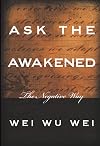
Neti,neti, wu wu! It's all void, but not void as a void in space, but... you'll just have to read it. Buddhism has been criticized by some for being nihilistic, I suspect precisely because of negative sounding terms, even the title of this book! But Wei Wu Wei manages to elucidate this approach in a way which makes clear that it has nothing to do with annihilation.
Whether or not you comprehend it fully is another question, since he is attempting what he knows to be a very difficult thing -- pointing at a non-dualistic nature with a highly subject/object oriented language. He points out in several places that past enlightened masters avoided this approach with their students, but since they're no longer around, this is necessary.
If you have access to an enlightened teacher, you don't need to read this book. Otherwise, check it out. If in places it seems as opaque as the most puzzling of koans, well, that's what koans are for. Not an easy read, but well worth the effort.
Whether or not you comprehend it fully is another question, since he is attempting what he knows to be a very difficult thing -- pointing at a non-dualistic nature with a highly subject/object oriented language. He points out in several places that past enlightened masters avoided this approach with their students, but since they're no longer around, this is necessary.
If you have access to an enlightened teacher, you don't need to read this book. Otherwise, check it out. If in places it seems as opaque as the most puzzling of koans, well, that's what koans are for. Not an easy read, but well worth the effort.
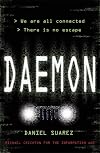
I give Daemon four stars out of five for being a brilliantly conceived, if not perfectly executed first novel (parts near the end drop down to a more ‘hope they make an action/adventure film out this’ level). It is speculative fiction, but the speculation is so well founded in the world as it exists now – technologically, socially, economically, politically – that it does almost read as prophecy. The chief thing to tell oneself if one doesn’t care for the prophecy is that no one could be smart enough to create a narrow AI that sophisticated. Because if such a thing were possible, if such a distributed daemon could be written for a wired world full of brilliant disenfranchised young people fully prepared to follow a dead guy’s virtual ghost who not only understands their world but is a product of it… well, there might be some changes around here.
Daemon is a rollicking good, action packed story that respects your intelligence most of the time. A real treat, I highly recommend it.
Daemon is a rollicking good, action packed story that respects your intelligence most of the time. A real treat, I highly recommend it.
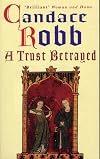
Thumbs up for effacina's review below. I would have given it 2 1/2 stars, but I'm not sure how one does halves using this interface. Robb doesn't rise above the level of competence as a writer on this one, which is in stark contrast to her brilliant writing of the Owen Archer series. There she makes us care about her characters and their fates, whereas in A Trust Betrayed one feels like one is just killing time in the company of not terribly interesting characters in a tense yet strangely unexciting environment. This author can do, and has done, much better.
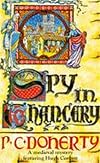
I believe this is the second worst medieval murder mystery I've read (or half read, since I couldn't go on punishing myself). It reads like a first draft that was dashed off in two weeks with no love from a competent editor. The edition I have is the first American edition, but it was published previously in the UK, so the number of spelling mistakes and typos only add to the impression of something knocked off and rushed out to be forgotten with no care on the part of any concerned.
It is one of those books one reads and wonder how in the world it ever got published. There is a fresh abuse of the English language every few pages. In one instance, the hero comments on the 'sexual prowess' of two other male characters, when the author really means 'sexual appetite'. The main character has no way of knowing the relative prowess the two gentlemen in question, unless there is some back story I am happily missing. And that's just one of many possible examples.
A truly awful read.
It is one of those books one reads and wonder how in the world it ever got published. There is a fresh abuse of the English language every few pages. In one instance, the hero comments on the 'sexual prowess' of two other male characters, when the author really means 'sexual appetite'. The main character has no way of knowing the relative prowess the two gentlemen in question, unless there is some back story I am happily missing. And that's just one of many possible examples.
A truly awful read.
Money For Content and Your Clicks For Free: Turning Web Sites, Blogs, and Podcasts Into Cash by JD Frazer

Check out my review at http://backofthebook.ca/2009/11/09/what-would-jesus-do-if-he-were-on-a-website-a... . In brief, the book is based on the experience of the author as a successful web cartoonist. If you don't already have a popular site, this book may not be very useful. That said, if you're a fan of the User Friendly web comic, you might find it interesting to read about the business behind it.
Perhaps we should be grateful that it isn't really about how to make money quick on the web. That seems to involve creating those sites that are nothing but ads. The book gets three stars for what it's not, as well as for being an interesting backstage look at the business of User Friendly.
Perhaps we should be grateful that it isn't really about how to make money quick on the web. That seems to involve creating those sites that are nothing but ads. The book gets three stars for what it's not, as well as for being an interesting backstage look at the business of User Friendly.
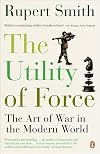
With the invention of the nuclear bomb, industrial warfare as it was known came to an end. But the thinking behind the use of military force remained mired in conceptions of industrial warfare. Today, General Rupert Smith compellingly argues, nations need to be concerned much more with what he calls 'war amongst the people'. The Evening Standard's blurb on the front cover compares Smith to Clausewitz and Sun Tsu, and to those you can add an element of Machiavelli as well. In war amongst the people the relationship between oneself and the people and one's enemies and the people are crucial. The prince must tread carefully and depend much more on intelligence than bombs.
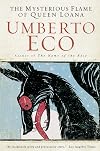
I actually didn't manage to finish this, something of a disappointment with regard to an author of this caliber. But being a book largely about a man going through things in an attic, it has all the suspense and interest of attending a relative's slide show. I think in casting this material in the form of a novel, Eco really missed the boat. What it needs to be is an interactive web site where people can sort through the attic's contents themselves according to their own interests -- viewing pictures, reading stories, and listening to audio clips.
A thumbs up to FicusFan for an insightful review. If you think it would be fun to superimpose bad old detective fiction on even badder and older imperial Rome, you might enjoy this. I don't regret the time spent, but I won't be reading more in the series.
Back when the world was new, in the early 1970s or thereabouts, I read an odd, little fundamentalist Christian comic booklet. In it an old man tried to convince a young man to accept fundamentalist (or literalist, to use another term) Christianity. But the young man had a slightly older friend who derided literalist Christianity in favour of a more 'modern' take, one where if you just obeyed the ten commandments and the golden rule, you could basically disregard the rest, since "our most modern accredited, theologians" admit that the Bible is a human product and thus flawed and full of contradictions. The young man accepted his older friend's interpretation.
After their car was struck by a train, the young man and his friend found themselves in hell. The young man was understandably upset and turned on his friend claiming it was his fault they were in this mess. However, his friend was actually a demon who peeled off his human mask and corrected him saying, "No, little buddy, I wasn't wrong! You were wrong! You didn't accept Jesus Christ as your own lord and personal saviour!"
How pleased I was to discover that this splendidly representative artifact of fundamentalist (or literalist) Christianity was not only still in print, but that the entire thing is available for free online at the Chick Publications web site.
I hadn't thought of that old comic for years, until I was reminded of it recently reading Randy Davila's The Gnostic Mystery. About half way through it occurred show more to me that it could very well end with the character of Chloe ripping off her human mask and saying to the character of Jack "Haw, haw, you allowed me to lure you off the straight and narrow literalist path and through the mists of Gnosticism and the mystery religions into the fires of damnation! Bwa ha ha ha ha ha!"
As it turns out, Chloe is not a demon. But The Gnostic Mystery is very much a comic book, or at least the text from one. The characters are two dimensional and serve primarily to allow the author to expound on his ideas about the origins of Christianity. This is especially true of the character of Professor King, a stock, patronizing, university professor character who exists for no other purpose at all but to expound these theories.
This is not necessarily a bad thing. It is as it stands, since this comic book is trying to pass itself off as a novel, but were it to be illustrated it would be something of a cross between a Chick tract and one of those 'Introducing ... ' books that used to be titled '... for Beginners' but had to change their name to avoid conflict with an American publisher using the same series title.
In its current form, the audience for this is pretty much limited to young adults who haven't given this area of study much attention, especially if they have a traditional Christian background. Older readers may be more demanding, and anyone who has an interest in Gnosticism and the early church will likely find the material somewhat shallow.
But just about everyone likes those 'Introducing ...' or 'For beginners' books. And the shtick value of Chick tracts makes them entertaining, even for people very much opposed to fundamentalist Christianity. If you've got the text of a comic book, why not actually make it one? As a novel it rates about 3 out of 10 if that, but as a comic it could be a 7.5 or higher depending on the illustrations. show less
After their car was struck by a train, the young man and his friend found themselves in hell. The young man was understandably upset and turned on his friend claiming it was his fault they were in this mess. However, his friend was actually a demon who peeled off his human mask and corrected him saying, "No, little buddy, I wasn't wrong! You were wrong! You didn't accept Jesus Christ as your own lord and personal saviour!"
How pleased I was to discover that this splendidly representative artifact of fundamentalist (or literalist) Christianity was not only still in print, but that the entire thing is available for free online at the Chick Publications web site.
I hadn't thought of that old comic for years, until I was reminded of it recently reading Randy Davila's The Gnostic Mystery. About half way through it occurred show more to me that it could very well end with the character of Chloe ripping off her human mask and saying to the character of Jack "Haw, haw, you allowed me to lure you off the straight and narrow literalist path and through the mists of Gnosticism and the mystery religions into the fires of damnation! Bwa ha ha ha ha ha!"
As it turns out, Chloe is not a demon. But The Gnostic Mystery is very much a comic book, or at least the text from one. The characters are two dimensional and serve primarily to allow the author to expound on his ideas about the origins of Christianity. This is especially true of the character of Professor King, a stock, patronizing, university professor character who exists for no other purpose at all but to expound these theories.
This is not necessarily a bad thing. It is as it stands, since this comic book is trying to pass itself off as a novel, but were it to be illustrated it would be something of a cross between a Chick tract and one of those 'Introducing ... ' books that used to be titled '... for Beginners' but had to change their name to avoid conflict with an American publisher using the same series title.
In its current form, the audience for this is pretty much limited to young adults who haven't given this area of study much attention, especially if they have a traditional Christian background. Older readers may be more demanding, and anyone who has an interest in Gnosticism and the early church will likely find the material somewhat shallow.
But just about everyone likes those 'Introducing ...' or 'For beginners' books. And the shtick value of Chick tracts makes them entertaining, even for people very much opposed to fundamentalist Christianity. If you've got the text of a comic book, why not actually make it one? As a novel it rates about 3 out of 10 if that, but as a comic it could be a 7.5 or higher depending on the illustrations. show less
This review was written for LibraryThing Early Reviewers.
Mediocre medieval murder mystery with characters that lack depth. One is attracted to the genre by the likes of Ellis Peters, sadly only to discover that most of it is like this. If you're looking for something to restore your faith, this isn't it.
The Places that Scare You: A Guide to Fearlessness in Difficult Times (Shambhala Classics) by Pema Chödrön
The title is potentially a bit misleading. This is essentially a general introduction to Pema Chodron's style of Buddhism which she learned from her teacher Chogyam Trungpa. She has a lovely literary voice and it is a very nice introduction, but if, based on the title, you were looking for something with a specific focus on dealing with fear, you may be disappointed.
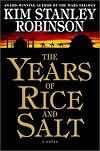
Round and round and round we go, from this life to another through the bardo. I suspect those who believe in reincarnation may enjoy this book more than those who don't, for whom the whole reincarnation thing is just a literary device to allow the author to follow an alternate history down through the centuries using the same characters. Some of my favorite bits were in the bardo with regard to the characters' experience of "Oh no! Not again!". Funny on a simply comic level, but also inviting deeper reflection on the question of just what are the mistakes the characters make in their lives again and again that keep them so stubbornly stuck in the eternal cycle of birth and death. Ultimately they represent us, and their mistakes are ours.
Alchemy: An Introduction to the Symbolism and the Psychology (Studies in Jungian Psychology) by Marie-Louise von Franz
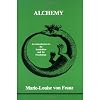
If you find Jung's own writing on alchemy a bit dense, check out Marie-Louise Von Franz on the subject. She does a better job than the old man himself at explaining the importance of alchemy to analytical psychology.
Saxo Grammaticus: The History of the Danes, Books I-IX: I. English Text; II. Commentary (Bks.1-9) by Saxo Grammaticus
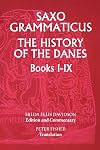
This is not an exciting read, but has a couple of things to recommend it. The first is that there isn't a lot of material on the Norse people from close to the time itself, so we'll take whatever we can get, warts and all. Second, it contains the original material upon which Shakespeare based his play [Hamlet].

Vidal's extreme antipathy towards Christianity appears to have softened somewhat since Julian as he here presents St. Paul as a loveable operator who is keeper of the holy rolodex and master of the followup letter. Read this and you may not be able to read Paul's letters in the New Testament in quite the same way again. While there's a lot going on with regard to time travel, networks wanting broadcast rights to the crucifixion, and visits from an astrally traveling Shirley McLain, it's the portrait of Paul and his uneasy relationship with Timothy, the narrator, that really make this book memorable.