In the Hurricane's Eye: The Genius of George Washington and the Victory at Yorktown (The American Revolution Series) by Nathaniel Philbrick
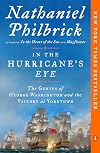
I learned much from this book, especially the role of the Spanish and French in ending the American Revolution. It explores the uneven relationship of Washington and the French and what he had to do to convince them to properly blockade the Chesapeake.
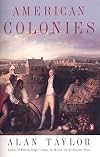
One of the best surveys of Colonial American history I've ever read. The scope is comprehensive and sweeping and it is easy to read. Our book group read it in conjunction with Guns, Germs, and Steel, which is a good accompaniment.
Franklin's autobiography brings up many common themes with Lincoln's life. It is about a self-educated man who iteratively builds on his experiences and draws out wisdom and accomplishment.
I've read a lot of CS Lewis, and he never fails to challenge me. The Screwtape Letters describes evil in the world, and how inexorably it slips into our lives.
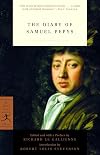
This is a must read for anyone interested in 17th century England and its place in the world. Though Pepys was at the center of power, he barely mentions America; England was too busy with the French, Dutch, and Spanish. Pepys is blunt and revealing; really fascinating.
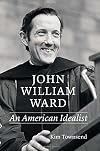
This is an insightful analysis of a troubled man in troubled times. Townsend's description of Ward's struggle to separate himself as an individual from his role as President of Amherst is particularly helpful. This is a must-read for any Amherst graduate in the 1970's, or any liberal art graduate from the same era.

This is the definitive history of Dorset, Vermont. Zephine Humphrey delves into the families and traditions of the town, and spares no descriptions of social tensions over the years. So much of the history of the town is still evident in the roads and mountains and cemetery; this book is worth the time.
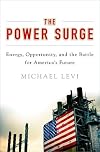
I had to work to get through this book, but found it immensely valuable. The author discusses the pros and cons of different types of energy and injects some realism into the debate over renewable and traditional sources of energy. I had to read and re-read every chapter.

World War Z is a cheesy book written for TV and lousy movies. Almost nothing in it captured my imagination and I couldn't wait to finish it.
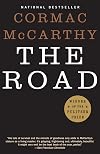
Despite a wide range of opinions on The Road, I liked it. The relationship between the man and his son was primal and touching. Though the book is dark, it ends with a burst of hope.
For Adam's Sake is a well-written and fascinating study of life, social class and especially slavery in Colonial New England. It was recommended by the Northshire Bookstore in Manchester Vermont; I am pleased to have read it.
A fascinating book on selected topicsin 1861 leading to the Civil War. It covers many topics about which I had read in passing, so I learned a lot.
The author presents a fascinating perspective on the sources of the unrest in Salem; deep-rooted fears of Indian attacks. King Philip's War had ended just fifteen years before and Indian raids continued in Maine for years afterwards. Many of the Salem accusers were transplants from Maine who had suffered Wabenaki terror.
King Philip's War: Colonial Expansion, Native Resistance, and the End of Indian Sovereignty (Witness to History) by Daniel R. Mandell
This is an outstanding short survey of King Philip's War. The author covers all the right points in an engaging way. I read it straight through, but felt the book could benefit from some better editing.
Higher Education?: How Colleges Are Wasting Our Money and Failing Our Kids---and What We Can Do About It by Andrew Hacker
This is a good book to read selectively. While Hacker makes some strong points -- especially about big time college sports -- he jumps around and does not substantiate many of his points fully.
This book was most interesting because Assiante contrasts the struggles with his son with his success as coach of Trinity College. At the same time as he is recruiting around the world for leading squash talent and building a dynasty, his own son battles drugs and life on the streets. We enjoy squash in our family and have followed the enormous success of Trinity College in the sport.
Bradley loses me with his anti-TR rant. In many places the scholarship is shallow. I learned two important facts, however: 1) about the intense anti-Philipino American racism and 2) that the Delanos made their fortune through the opium trade in China. I could not wait to finish this book.
The Skipper of the Clipper: The Story of the Mueller Electric Company and Its Founder by Ralph Mueller Electric Company) Mueller
Ralph Mueller writes a folksy history of the Mueller Electric Company and his family. It makes for great Cleveland reading.

The Sculpture Center was started by David E. Davis, a prominent Cleveland sculptor. His studio, the Sculpture Center and Artists Archives of the Western Reserve shared a large building on Euclid Avenue near 123rd Street. The building, I believe, housed a stonecutting business for Lake View Cemetery, which is nearby.
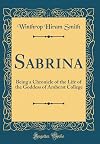
This book is a follow on to the Max Shoop book on Sabrina written in 1910. The Smith version of 1921 mentions some great Amherst graduates, including Ferdinand Q. Blanchard, who went on to become a great Congregationalist minister and leader.
This early book on the statue on the Amherst campus foretells the humor and hijinx that have surrounded Sabrina for over one hundred years. I'm reasonably sure some of the passion about Sabrina has been lost in the last thirty years, but this book is amusing to read nonetheless.
Yet With a Steady Beat: The African American Struggle for Recognition in the Episcopal Church by Harold T. Lewis
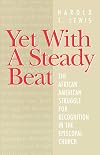
Much of the Episcopal Church's history is wrapped in its treatment of race and African Americans. This book describes the history of the Church from a distinct and important perspective.
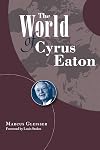
Cyrus Eaton was one of Cleveland's most successful and controversial men. He was a pioneer in US-Soviet relations through his Pugwash Conferences. One forgets how many national leaders came out of Cleveland in the first fifty years of the twentieth century.

Roane offers some great tips on getting off one's duff and meeting and greeting. This book is perfect reading for anyone in any profession who wants to build business and contacts.
This set of books is as important for the photographs as for the content. My sense is that Cleveland men paid to have their biographies included, so the value is diminished somewhat. There are several copies of this set around Cleveland, but none as well restored as these copies.
Stanley King was one of Amherst's greatest graduates, serving as President of the College and a major benefactor. He turns out to have been a find writer as well, penning two books, one on the history of the Amherst endowment and the other on the history of the College.
Captive Histories: English, French, And Native Narratives of the 1704 Deerfield Raid (Native Americans of the Northeast) by Evan Haefeli
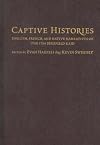
This book builds on other histories of the 1704 raid on Deerfield. The captivity narrative of young Stephen Williams, the son of John Williams, is especially poignant.
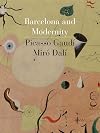
This is a summary of an exhibition that came to Cleveland in 2006. There's an enormous amount of overlap between Picasso, Gaudi, Miro and Dali I just never recognized before.

John Anderson was a cheerful guy and a great supporter of University School in Cleveland. He founded the Tower Society, the main fund-raising effort at the school. I enjoyed reading this book -- surprisingly good!