
Andrew Hacker (1929–2026)
Author of Two Nations: Black and White, Separate, Hostile, Unequal
About the Author
Andrew Hacker is a professor of political science at Queens College in New York City. He is a frequent contributor to The New York Review of Books, Time, and Fortune, among other periodicals. Mr. Hacker lives in New York City
Works by Andrew Hacker
Higher Education?: How Colleges Are Wasting Our Money and Failing Our Kids---and What We Can Do About It (2010) 144 copies, 3 reviews
Associated Works
The Federalist Papers (Selections) (1995) — Introduction, some editions; Editor, some editions — 6 copies, 1 review
Tagged
Common Knowledge
- Birthdate
- 1929
- Date of death
- 2026-04-21
- Gender
- male
- Education
- Amherst College
University of Oxford
University of Michigan
Princeton University - Occupations
- professor
- Organizations
- Cornell University
Queens College - Nationality
- USA
- Associated Place (for map)
- USA
Members
Reviews
Higher Education?: How Colleges Are Wasting Our Money and Failing Our Kids---and What We Can Do About It by Andrew Hacker

I'm a big fan of Claudia Dreifus--she is a wonderful and insightful writer. And I'm glad to have read this book, which is a well-researched and sobering examination of the state of higher education in the U.S. today. Dreifus and her co-author Andrew Hacker have asked whether the cost to attend college has exceeded its value, not only in terms of economic payback, but also in terms of teaching a given student anything at all.
Their research into the ways that Academia has protected its own show more interests, at a terrible cost to students, reminded me starkly of the health care crisis, another system that has run amuck and has become prohibitively expensive for almost all of us. This book drives home the ways that any self-policing, self-governing group of "experts," however much it wants to make good choices, will end up making self-serving choices instead.
I'm a little dismayed at the level of polemics--it seems that no one anywhere is getting a good education--but I really feel the basic arguments are sound and the book is well worth your time to read, especially if you are about to apply to college, or to send your child to one. show less
Their research into the ways that Academia has protected its own show more interests, at a terrible cost to students, reminded me starkly of the health care crisis, another system that has run amuck and has become prohibitively expensive for almost all of us. This book drives home the ways that any self-policing, self-governing group of "experts," however much it wants to make good choices, will end up making self-serving choices instead.
I'm a little dismayed at the level of polemics--it seems that no one anywhere is getting a good education--but I really feel the basic arguments are sound and the book is well worth your time to read, especially if you are about to apply to college, or to send your child to one. show less
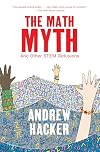
A good analysis of why "more math will fix our country" is a myth and actually hurts people academically and psychologically. I understand the need to learn some higher level math such as algebra but requiring four years just to get into college and then requiring more hurts the country financially and economically and intellectually. Creativity is stifled.
When you're basically told if you can't do calculus then you are too stupid to exist or that the only way you can succeed as a woman is show more to go into math and science even if you don't like either field, we're hurting ourselves. (Yes, I was told that as a woman the only way society and men would take me seriously would be to major in math, physics, or engineering and I was pushed to go into those fields. I heard that so much growing up. I tried to major in engineering but the math kept me from succeeding. Beginning Physics but was entirely Calculus based and while I had already had Calculus AP in high school, I could not do the math. I dropped the class and the major. I majored in Anthropology and was so much happier.) show less
When you're basically told if you can't do calculus then you are too stupid to exist or that the only way you can succeed as a woman is show more to go into math and science even if you don't like either field, we're hurting ourselves. (Yes, I was told that as a woman the only way society and men would take me seriously would be to major in math, physics, or engineering and I was pushed to go into those fields. I heard that so much growing up. I tried to major in engineering but the math kept me from succeeding. Beginning Physics but was entirely Calculus based and while I had already had Calculus AP in high school, I could not do the math. I dropped the class and the major. I majored in Anthropology and was so much happier.) show less

My initial inclination was to counter-argue that it doesn't matter if one never uses mathematics such as trinomial factoring ever again because it's the "learning how to think analytically" that counts. But after some reflection I think the author has a point even though he's criticizing just one of a hundred problems with our obsession with a one-size-fits-all approach to education. Yes, we should do our best to prepare future thinkers, and, yes, this must include a broad understanding of show more abstract concepts such as mathematics. But surely we can do better than an across-the-board litmus test. I'm not advocating for more coddling, but for more options. The world is growing in complexity and specializations are required. School should reflect this.
One strike against the book: Mr. Hacker knows how to stoke the "fear of math" fire. He relies on this tactic too often to get his point across. show less
One strike against the book: Mr. Hacker knows how to stoke the "fear of math" fire. He relies on this tactic too often to get his point across. show less
This book began so poorly that I decided to read the chapters in reverse order, in case there could be found something better later on.
The last chapter is called "Numeracy 101" and it is not all bad. It describes some parts of a course the author taught which had the aim of showing that basic arithmetic was enough to address interesting, real problems. Some of his ideas are ok, and I'll address them by topic.
* Making a decimal division of the day, and making a decimal division of the year.
He show more starts by asking the question what is 27% of a day in hours, minutes, and seconds. The answer is found to be 6 hours, 28 minutes, and 48 seconds. The computation is straightforward, but it is not surprising that some of his students had problems w/ it, it is not something one does very often. Then he talks about practical means of dividing days into ten uniform divisions (decimal hours) and each of these decimal hours into ten uniform divisions (decimal minutes), and so forth. He adds the question of the feasibility of the ten day week, which is a different question, because a week does not divide any other usual measure of time. He also covers the idea of making the year containing 10 months of roughly equal size. Under the this system, as he points out, it would be a lot easier to answer his earlier question. Oddly, he does not in fact pose or answer that question, but instead asks a different, and actually easier question: how many decimal hours are there in 27% of a decimal week? The answer is 27. But the original question was to give 27% of a day and the answer to the original question would be 2 hours, 70 minutes, and 0 seconds. I've actually written an entire software library that deals with different bases: https://github.com/mulkieran/justbases, so I could claim to be an expert on this rather tricky topic, and I think that some of his students would have struggled with the original question under the decimal system, as well. He then asks whether it would be possible to divide the year into decimal days. The answer is an obvious "yes", but these "days" would not correspond at all to our physical days, and so would be inconvenient. He says "no", due to the inconvenience. The exercise is pleasantly thought provoking but leaves one wondering why anyone dealing in percentages of days would ever want to convert into the corresponding number of hours minutes and seconds, anyway. It's hard for me to imagine any circumstance where that would be useful. It also makes me remember that the notion of the hour as a uniform division of the day is not the only one; there was a period in some places when the length of the daylight hours differed from the length of the night-time hours, because the time between sunrise and sunset was divided into 12 equal hours, and also between sunset and sunrise. There are only two days a year where those times are equal, so in this arrangement, the duration of the hours are also tied to a physical behavior of the earth, much like the duration of the days. On page 187 there is a misleading and irrelevant footnote that lumps in classifications of numbers like rational, irrational, and imaginary with amicable, which is a classification of pairs of numbers that have a particular relationship. Some competent editor should just take that out.
* Finding the area of an irregularly shaped region on a map.
The choice here was West Virginia, which is indeed irregular. The method is a perfectly good form of numerical integration. It's a nice exercise, because it should demonstrate that the finer the divisions of the map that you make, the more precise is your answer. A good exercise for children or college students.
* The practice of gerrymandering by political parties.
Hacker begins by asking a question that can be posed with simple arithmetic. In a particular election, in the state of Pennsylvania, the percentage of votes cast for Democratic candidates for congress exceeded the percentage of votes cast for Republican candidates by a few points. Yet the percentage of Democratic candidates elected was significantly fewer than the percentage of Republican candidates elected; the Republican candidates secured over 70% of the seats. How can this outcome be explained? The answer, of course, is that the voting algorithm used is not one that ensures that outcome; the important point is that the votes are tallied up within congressional districts, and the individual districts do not have the same composition of voters as the whole state. Note, though, that if every district had the same composition as the state then the Democrats would have won every district. A different criterion on which a voting system could be judged is the question of what proportion of voters managed to elect the person they voted for, i.e., how many got what they wanted? it might be that the results look pretty good by this criterion, I hadn't checked. So, the topic is interesting, but also it is not clear what the point that Hacker was trying to get across was. Some of his numbers seem to be just wrong, as well as not really useful. He says that winning Democrats averaged 271,970 votes, but actually they averaged about 235,000. This number is not nearly as interesting as a number which compares that amount to the number their rivals received. While the political parties are very important now, when the constitution was drawn up they were not supposed to exist, so this question wouldn't have even made sense.
* Empirically determining the value of pi
By getting a circular thing and measuring it. My hot tip here is that string stretches, twine, steel cable, thread, would probably all have been better choices. But this is a valid exercise...although it might have been nice to do it on a few different sized circles, and see if things turned out terribly different. Of course, when some computer calculates pi to the nth digit, it is not finding a really big circular thing and measuring it very precisely...
* Showing that using pi to calculate the volume of a cylinder really works
Simple exercise involving pouring fluid into a soup can and then transferring to a rectangular box with a more obvious volume.
* Using Benford's law to catch tax cheats
Ok.
* Using statistics to compare people and countries
This sort of stuff is so context-free as to be useless.
* The scales on charts effect how they are interpreted
Very true, and worth pointing out once more.
Summary of Chapter:
The important point is that Hacker made the effort to get students to use simple arithmetic to comprehend their world a little bit. That is good. But only about 50% of the examples he presents in his book are really all that compelling. And the gerrymandering one asserts that the results he sees must arise from deliberate gerrymandering. That is not actually obvious, the results could arise from random factors and a better statistical analysis would actually be useful here. Of course the Republicans did their best to gerrymander, but did they actually do better than random chance might have done for them? We can't tell.
Note: In the 2016 general election, Clinton received a slight majority of the popular vote, but Trump won the election. Is this proof that the boundaries of the states have been ably gerrymandered by the Republican party. Not exactly. show less
The last chapter is called "Numeracy 101" and it is not all bad. It describes some parts of a course the author taught which had the aim of showing that basic arithmetic was enough to address interesting, real problems. Some of his ideas are ok, and I'll address them by topic.
* Making a decimal division of the day, and making a decimal division of the year.
He show more starts by asking the question what is 27% of a day in hours, minutes, and seconds. The answer is found to be 6 hours, 28 minutes, and 48 seconds. The computation is straightforward, but it is not surprising that some of his students had problems w/ it, it is not something one does very often. Then he talks about practical means of dividing days into ten uniform divisions (decimal hours) and each of these decimal hours into ten uniform divisions (decimal minutes), and so forth. He adds the question of the feasibility of the ten day week, which is a different question, because a week does not divide any other usual measure of time. He also covers the idea of making the year containing 10 months of roughly equal size. Under the this system, as he points out, it would be a lot easier to answer his earlier question. Oddly, he does not in fact pose or answer that question, but instead asks a different, and actually easier question: how many decimal hours are there in 27% of a decimal week? The answer is 27. But the original question was to give 27% of a day and the answer to the original question would be 2 hours, 70 minutes, and 0 seconds. I've actually written an entire software library that deals with different bases: https://github.com/mulkieran/justbases, so I could claim to be an expert on this rather tricky topic, and I think that some of his students would have struggled with the original question under the decimal system, as well. He then asks whether it would be possible to divide the year into decimal days. The answer is an obvious "yes", but these "days" would not correspond at all to our physical days, and so would be inconvenient. He says "no", due to the inconvenience. The exercise is pleasantly thought provoking but leaves one wondering why anyone dealing in percentages of days would ever want to convert into the corresponding number of hours minutes and seconds, anyway. It's hard for me to imagine any circumstance where that would be useful. It also makes me remember that the notion of the hour as a uniform division of the day is not the only one; there was a period in some places when the length of the daylight hours differed from the length of the night-time hours, because the time between sunrise and sunset was divided into 12 equal hours, and also between sunset and sunrise. There are only two days a year where those times are equal, so in this arrangement, the duration of the hours are also tied to a physical behavior of the earth, much like the duration of the days. On page 187 there is a misleading and irrelevant footnote that lumps in classifications of numbers like rational, irrational, and imaginary with amicable, which is a classification of pairs of numbers that have a particular relationship. Some competent editor should just take that out.
* Finding the area of an irregularly shaped region on a map.
The choice here was West Virginia, which is indeed irregular. The method is a perfectly good form of numerical integration. It's a nice exercise, because it should demonstrate that the finer the divisions of the map that you make, the more precise is your answer. A good exercise for children or college students.
* The practice of gerrymandering by political parties.
Hacker begins by asking a question that can be posed with simple arithmetic. In a particular election, in the state of Pennsylvania, the percentage of votes cast for Democratic candidates for congress exceeded the percentage of votes cast for Republican candidates by a few points. Yet the percentage of Democratic candidates elected was significantly fewer than the percentage of Republican candidates elected; the Republican candidates secured over 70% of the seats. How can this outcome be explained? The answer, of course, is that the voting algorithm used is not one that ensures that outcome; the important point is that the votes are tallied up within congressional districts, and the individual districts do not have the same composition of voters as the whole state. Note, though, that if every district had the same composition as the state then the Democrats would have won every district. A different criterion on which a voting system could be judged is the question of what proportion of voters managed to elect the person they voted for, i.e., how many got what they wanted? it might be that the results look pretty good by this criterion, I hadn't checked. So, the topic is interesting, but also it is not clear what the point that Hacker was trying to get across was. Some of his numbers seem to be just wrong, as well as not really useful. He says that winning Democrats averaged 271,970 votes, but actually they averaged about 235,000. This number is not nearly as interesting as a number which compares that amount to the number their rivals received. While the political parties are very important now, when the constitution was drawn up they were not supposed to exist, so this question wouldn't have even made sense.
* Empirically determining the value of pi
By getting a circular thing and measuring it. My hot tip here is that string stretches, twine, steel cable, thread, would probably all have been better choices. But this is a valid exercise...although it might have been nice to do it on a few different sized circles, and see if things turned out terribly different. Of course, when some computer calculates pi to the nth digit, it is not finding a really big circular thing and measuring it very precisely...
* Showing that using pi to calculate the volume of a cylinder really works
Simple exercise involving pouring fluid into a soup can and then transferring to a rectangular box with a more obvious volume.
* Using Benford's law to catch tax cheats
Ok.
* Using statistics to compare people and countries
This sort of stuff is so context-free as to be useless.
* The scales on charts effect how they are interpreted
Very true, and worth pointing out once more.
Summary of Chapter:
The important point is that Hacker made the effort to get students to use simple arithmetic to comprehend their world a little bit. That is good. But only about 50% of the examples he presents in his book are really all that compelling. And the gerrymandering one asserts that the results he sees must arise from deliberate gerrymandering. That is not actually obvious, the results could arise from random factors and a better statistical analysis would actually be useful here. Of course the Republicans did their best to gerrymander, but did they actually do better than random chance might have done for them? We can't tell.
Note: In the 2016 general election, Clinton received a slight majority of the popular vote, but Trump won the election. Is this proof that the boundaries of the states have been ably gerrymandered by the Republican party. Not exactly. show less
Lists
Awards

You May Also Like


Associated Authors
Statistics
- Works
- 18
- Also by
- 5
- Members
- 862
- Popularity
- #29,693
- Rating
- 4.1
- Reviews
- 12
- ISBNs
- 35
- Languages
- 2
- Favorited
- 2