

Robert H. Frank
Author of The Economic Naturalist: In Search of Explanations for Everyday Enigmas
About the Author
Robert H. Frank is the H. J. Louis Professor of Management and Professor of Economics, emeritus, at Cornell University's Johnson Graduate School of Management. He has been an Economic View columnist for the New York Times since 2005. His many books include Success and Luck (Princeton). Twitter show more @econnaturalist show less
Works by Robert H. Frank
The Economic Naturalist: In Search of Explanations for Everyday Enigmas (2007) 781 copies, 19 reviews
The Winner-Take-All Society: Why the Few at the Top Get So Much More Than the Rest of Us (1995) 230 copies, 4 reviews
The Economic Naturalist's Field Guide: Common Sense Principles for Troubled Times (2009) 52 copies, 1 review
The Return of The Economic Naturalist: How Economics Helps Make Sense of Your World (2009) 41 copies
Associated Works
Tagged
Common Knowledge
- Legal name
- Frank, Robert Harris
- Birthdate
- 1945-01-02
- Gender
- male
- Education
- Coral Gables High School, Coral Gables, Florida, USA
Georgia Institute of Technology
University of California, Berkeley - Occupations
- professor of economics
- Organizations
- Cornell University (Johnson Graduate School of Management)
- Awards and honors
- Apple Distinguished Teaching Award
Leontief Prize - Nationality
- USA
- Birthplace
- Coral Gables, Florida, USA
- Places of residence
- Coral Gables, Florida, USA
California, USA - Associated Place (for map)
- USA
Members
Reviews
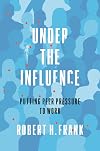
This book is about how strongly other people's behaviour shapes our own, and why this is key for public policy. The author moves clearly and steadily from core research findings in behavioural lab and field experiments to historical episodes where societies reach then tipping points when a given behaviour flips rapidly from frowned upon to widely accepted, or the converse (think indoor smoking or sexual revolution). The key of these tipping points lies in behavioural contagion: as long as we show more don't observe a given behaviour, we tend to think that it is scarce, even if it is in fact widespread but concealed. Once we recognize the true extent of the behaviour, we change our own (and our acceptance of it) accordingly. At the level of a society, such changes can be extremely fast.
This, the author argues, should be a prime topic for public policy. As he repeatedly argues, there is solid evidence that being in contact with more smokers increases significantly one's odds to start smoking (and regretting it). The damage thus caused by the sheer presence of other smokers actually dwarfs the damage due to second-hand smoke. The book documents several other issues of this kind before culminating with what the author calls *the mother of all cognitive illusions*.
In a nutshell, it is the idea that higher taxes on the affluent will make them worse off. In the face of it, it is a no-brainer: more taxes means less money to spend on what I want. The trick lies in the fact that above a certain threshold (that a majority of households do reach in rich countries), we are driven willy-nilly to consuming position goods, that is good that do not provide us with much higher benefits than cheaper ones, but do improve our standings or prospects relative to others. Housing is a prime example. McMansions from the top lead people across a broad range of revenue to aspire to larger dwellings (which are more expensive to maintain and less environmentally friendly). It is often difficult to escape this: even if you recognize that some neighbourhoods are way overprices, you may still want to buy a house there because schools are better. So do other households, leading to a damaging bidding war that profits only to house sellers. In this example, a tax on house prices whose proceeds would go to funding better schools everywhere would have the effect of leaving everyone better off: it would cool down bidding wars, and decrease price differences between neighbourhoods. At a society level, a steeply progressive and comprehensive income tax would have the same effect: the richest would still drive luxury cars, a bit less overpriced, and there would be much more money for infrastructures and public services, leaving everyone better off.
The core argument is not new in itself: people have long pointed at how wasteful keeping up with the Joneses can be(ancient writers already nailed it). What is interesting here is that the author does not link this behaviour with some fundamental flaw of human nature, such as greed or envy, but on rational motives: we are influenced by the behaviour of others because of build-in reactions that allowed our species to survive without claws, furs or fast legs. Even in modern societies, such behaviours are not bugs, they are features that enable social interactions.
Compared to other popular books in the field, starting with *Nudge*, this book is a change of pace. Where most books deal with narrowly-defined issues and carefully crafted experiments, this one deals with society-wide issues, and equally far-ranging policies. It thus provides an answer to the (in my opinion unfair) idea that behavioural insights are limited to small-scale issues and unfit for the big challenges of our age. show less
This, the author argues, should be a prime topic for public policy. As he repeatedly argues, there is solid evidence that being in contact with more smokers increases significantly one's odds to start smoking (and regretting it). The damage thus caused by the sheer presence of other smokers actually dwarfs the damage due to second-hand smoke. The book documents several other issues of this kind before culminating with what the author calls *the mother of all cognitive illusions*.
In a nutshell, it is the idea that higher taxes on the affluent will make them worse off. In the face of it, it is a no-brainer: more taxes means less money to spend on what I want. The trick lies in the fact that above a certain threshold (that a majority of households do reach in rich countries), we are driven willy-nilly to consuming position goods, that is good that do not provide us with much higher benefits than cheaper ones, but do improve our standings or prospects relative to others. Housing is a prime example. McMansions from the top lead people across a broad range of revenue to aspire to larger dwellings (which are more expensive to maintain and less environmentally friendly). It is often difficult to escape this: even if you recognize that some neighbourhoods are way overprices, you may still want to buy a house there because schools are better. So do other households, leading to a damaging bidding war that profits only to house sellers. In this example, a tax on house prices whose proceeds would go to funding better schools everywhere would have the effect of leaving everyone better off: it would cool down bidding wars, and decrease price differences between neighbourhoods. At a society level, a steeply progressive and comprehensive income tax would have the same effect: the richest would still drive luxury cars, a bit less overpriced, and there would be much more money for infrastructures and public services, leaving everyone better off.
The core argument is not new in itself: people have long pointed at how wasteful keeping up with the Joneses can be(ancient writers already nailed it). What is interesting here is that the author does not link this behaviour with some fundamental flaw of human nature, such as greed or envy, but on rational motives: we are influenced by the behaviour of others because of build-in reactions that allowed our species to survive without claws, furs or fast legs. Even in modern societies, such behaviours are not bugs, they are features that enable social interactions.
Compared to other popular books in the field, starting with *Nudge*, this book is a change of pace. Where most books deal with narrowly-defined issues and carefully crafted experiments, this one deals with society-wide issues, and equally far-ranging policies. It thus provides an answer to the (in my opinion unfair) idea that behavioural insights are limited to small-scale issues and unfit for the big challenges of our age. show less
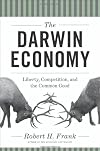
Robert H. Frank é professor de economia em Yale com diversos livros publicados. Nesse ensaio ele compara as descobertas de Darwin sobre seleção natural com as teorias de livre mercado. É sabido que Darwin leu Adam Smith e que foi influenciado pelas ideias de livre mercado, e, como o próprio autor comenta, incluir Darwin no modelo econômico é também incluir Adam Smith. O que poderia ser uma apologia ao livre mercado e a desregulamentação, o livro busca outro caminho quase oposto. show more Darwin percebeu que em diversas situações uma espécie se estabelece com características não ótimas. Os cervos (que estão na capa do livro) são um exemplo, pois desenvolvem chifres que muitas vezes são um problema no dia a dia desses animais, pelo peso, dificuldade de locomoção dentro de matas mais fechadas, e desequilíbrio na corrida. Os pavões são outro exemplo com seu rabo imenso que prejudica a agilidade dessas aves. Ambos são fruto de um processo de seletividade baseado na posição relativa de um indivíduo da espécie com relação aos demais para aumentar suas chances de conquistar uma parceira. Essa característica é muito efetiva para perpetuar seu padrão genético. O autor propõe que seria mais efetivo para todos da espécie se os pavões ou os cervos tivessem suas caudas ou galhadas, respectivamente, reduzidas à metade. Pois se manteriam as posições relativas dos indivíduos e portanto suas chances de acasalamento, porém melhorando a mobilidade e agilidade de todos. No mundo humano o exemplo é dado com o uso do capacete pelos jogadores de hóquei. Nesse esporte o uso de capacete diminui a visão periférica do atleta dando uma vantagem àqueles que não usam, porém também, aumentando o risco de uma lesão. Alguns atletas aceitam correr o risco, e isso força os demais a também terem que não usar capacete para se manterem competitivos. No final, se ninguém usar capacete a vantagem comparativa do não uso é elimidada enquanto o risco permanece. Por isso a liga de hóquei obriga o uso de capacete, igualando os atletas numa situação de menos risco. Analogamente as regras de segurança aplicadas pelas associações de corridas de carros trazem o mesmo princípio. Esses acordos que evitam uma corrida de exposição crescente ao risco é trazido para o mundo da economia, mostrando que as regulamentações e os impostos podem ser usados da mesma forma. O autor é especialmente a favor de impostos progressivos ponderando que eles são mais efetivos que regulamentações. Nesse ponto o livro toma um rumo um pouco diferente onde divaga sobre modelos de arbitragem quando há conflito de interesses entre as partes. E mostra, baseado num artigo de Coase, que teoricamente se poderia chegar a acordos baseado nos valores que cada parte atribui ao seu lado da causa. O autor discorre também sobre poder aquisitivo e capacidade de pagar por algo que pode causar um problema (externalidade negativa) ao resto da sociedade e como se pode usar os impostos para desestimular esses comportamentos. Apesar de algumas falácias (principalmente no início do livro) por conta de generalizações erradas, o texto traz novas perspectivas sobre um tema que é praticamente um tabú para economistas Liberais, mostrando o papel importante do governo em diversas situações. O livro todo por sinal é um diálogo com os liberais, comparando onde diferem as posições do autor em relação aos seguidores de Adam Smith e Von Mises. Recomendo a leitura por proporcionar uma visão menos maniqueísta do sistema de livre mercado, e tentar discutir em termos práticos e objetivos formas de resolver os problemas que esse sistema pode trazer. Para os liberais que vão provavelmente rebater os pontos apresentados, serve pelo menos para trazer novos argumentos e novas discussões para a mesa. show less
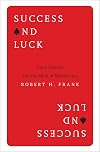
This was two totally separate books barely hinged together. Part of it is: luck plays a very important role in success. The other part is: what we really need is a progressive consumption tax, to rein in wasteful spending that people only engage in because everyone else is doing it. I finished it, including the appendix that answers FAQ on the progressive consumption tax, and suddenly remembered, "Wait, the title of this is SUCCESS AND LUCK, what happened to that topic again?"
The loose show more hinge is that when people realize and acknowledge how big a role luck has played in their success, they become more generous and willing to accept more public spending... hence, we can push the progressive consumption tax, which we need for these other reasons. Get it? It's loose.
I didn't learn much from the success & luck part - I've already read Malcolm Gladwell. One takeaway is how depressing and non-motivating it is to acknowledge the role of luck; so from a mood perspective, we're best adopting the following attitude: all my PAST success was due to luck, but all my FUTURE success will be due to effort.
I do want to note that the guy has got a wonderful skill at spinning his own attitude, based on this personal information he shared: he was an adoptee, and discovered in adulthood that the family that relinquished him was quite well-to-do, coming from old money. And he is THANKFUL, because if he'd grown up with a trust fund, he wouldn't have made the effort to achieve any of the things that he ended up doing. That's really something, being so grateful to have been given up for adoption into more needy circumstances than you would have otherwise. Whatever, if it works for you, great! show less
The loose show more hinge is that when people realize and acknowledge how big a role luck has played in their success, they become more generous and willing to accept more public spending... hence, we can push the progressive consumption tax, which we need for these other reasons. Get it? It's loose.
I didn't learn much from the success & luck part - I've already read Malcolm Gladwell. One takeaway is how depressing and non-motivating it is to acknowledge the role of luck; so from a mood perspective, we're best adopting the following attitude: all my PAST success was due to luck, but all my FUTURE success will be due to effort.
I do want to note that the guy has got a wonderful skill at spinning his own attitude, based on this personal information he shared: he was an adoptee, and discovered in adulthood that the family that relinquished him was quite well-to-do, coming from old money. And he is THANKFUL, because if he'd grown up with a trust fund, he wouldn't have made the effort to achieve any of the things that he ended up doing. That's really something, being so grateful to have been given up for adoption into more needy circumstances than you would have otherwise. Whatever, if it works for you, great! show less
The Winner-Take-All Society: Why the Few at the Top Get So Much More Than the Rest of Us by Robert H. Frank
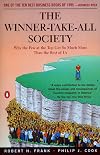
A thought-provoking book that goes steadily downhill: The first half to 2/3 of this book makes some very good points that have escaped most of the popular discussions of economic issues. The authors point out, persuasively in my opinion, that certain industries and professions have "winner-take-all" characteristics that pervert the usual reward/punishment consequences of free-market economic policies.
The markets for which the authors have the strongest evidence of "winner take all" show more characteristics are presented earliest. As the book goes on, however, it falls into the same pattern of thousands of books before it: the authors have made one important and interesting observation, and they proceed to claim that virtually everything in the world that they disapprove of can be accounted for by this one observation. They assume, without plausible evidence, that the declines in education and popular culture are the direct consequence of winner-take-all markets. In a couple of cases they even admit that the evidence for winner-take-all characteristics in a particular industry or occupation is scanty or even nonexistent. But that doesn't prevent them from offering further arguments and policy recommendations based on the assumption that every one of these markets is dominated by winner-take-all distortions.
By the end of this book, where the authors make policy recommendations, they come close to leaving reality behind. They make these recommendations based on the assumptions that the **entire economy** is dominated by winner-take-all characteristics - a proposition for which they offer no evidence whatever. It is hard to escape the impression that their goal in writing this book was to justify a more socialistic economic policy on the part of the government, rather than to evenhandedly examine and explain an important issue.
In short: read the first of half of this book, because it makes a lot of worthwhile points and observations. Read most of the rest if you're retired or have a lot of free time. Skip the last chapter, with their policy recommendations. show less
The markets for which the authors have the strongest evidence of "winner take all" show more characteristics are presented earliest. As the book goes on, however, it falls into the same pattern of thousands of books before it: the authors have made one important and interesting observation, and they proceed to claim that virtually everything in the world that they disapprove of can be accounted for by this one observation. They assume, without plausible evidence, that the declines in education and popular culture are the direct consequence of winner-take-all markets. In a couple of cases they even admit that the evidence for winner-take-all characteristics in a particular industry or occupation is scanty or even nonexistent. But that doesn't prevent them from offering further arguments and policy recommendations based on the assumption that every one of these markets is dominated by winner-take-all distortions.
By the end of this book, where the authors make policy recommendations, they come close to leaving reality behind. They make these recommendations based on the assumptions that the **entire economy** is dominated by winner-take-all characteristics - a proposition for which they offer no evidence whatever. It is hard to escape the impression that their goal in writing this book was to justify a more socialistic economic policy on the part of the government, rather than to evenhandedly examine and explain an important issue.
In short: read the first of half of this book, because it makes a lot of worthwhile points and observations. Read most of the rest if you're retired or have a lot of free time. Skip the last chapter, with their policy recommendations. show less
Lists
Awards


You May Also Like


Associated Authors
Statistics
- Works
- 28
- Also by
- 1
- Members
- 2,476
- Popularity
- #10,355
- Rating
- 3.3
- Reviews
- 42
- ISBNs
- 265
- Languages
- 12
- Favorited
- 1