

George A. Akerlof
Author of Animal Spirits: How Human Psychology Drives the Economy, and Why It Matters for Global Capitalism
About the Author
George Arthur Akerlof is an American economist and Koshland Professor of Economics at the University of California, Berkeley. Akerlof received his Bachelor's degree from Yale University in 1962, and his Ph.D. from MIT in 1966, and has taught at the London School of Economics. Akerlof won the 2001 show more Nobel Prize in Economics (shared with Michael Spence and Joseph E. Stiglitz). and is perhaps best known for his article, "The Market for Lemons: Quality Uncertainty and the Market Mechanism", published in Quarterly Journal of Economics in 1970. Akerlof's authored book titles include: An Economic Theorist's Book of Tales (Cambridge University Press, 1984), Explorations in Pragmatic Economics (Oxford University Press, 2005), and Animal Spirits: How Human Psychology Drives the Economy, and Why It Matters for Global Capitalism (Princeton University Press, 2009). (Bowker Author Biography) show less
Image credit: Photograph by Yan Chi Vinci Chow
Works by George A. Akerlof
Animal Spirits: How Human Psychology Drives the Economy, and Why It Matters for Global Capitalism (2009) 788 copies, 10 reviews
Identity Economics: How Our Identities Shape Our Work, Wages, and Well-Being (2010) 142 copies, 4 reviews
Spirite animale 1 copy
Tagged
Common Knowledge
- Canonical name
- Akerlof, George A.
- Legal name
- Akerlof, George Arthur
- Birthdate
- 1940-06-17
- Gender
- male
- Education
- Massachusetts Institute of Technology
Yale University
Lawrenceville School - Occupations
- economist
university professor (Georgetown) - Awards and honors
- Nobel Prize (Economics, 2001)
- Relationships
- Yellen, Janet (wife)
- Nationality
- USA
- Birthplace
- New Haven, Connecticut, USA
- Associated Place (for map)
- Connecticut, USA
Members
Reviews
Another Phine Mess
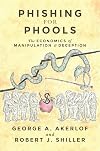
It seems that the capitalist world is divided into two kinds of people: phishers and phools. Those who phish look for leverage and advantage and milk it; the phools pay for it, even when they don’t need to, don’t want to, and can’t afford to. The result is financial crises, on the national level, the local level and the individual level. And it never stops. We buy too much, we buy the wrong things, and we overpay all the time. Shiller and Akerlof say the very first show more phool was Eve. The serpent phished her into taking something she did not want, did not need, and which she knew in advance she should not take. The cost was going to be too high. So it has been ever since, whether it’s cable bundles or junk bonds.
There’s a lot going on in this little book. It ranges from individual (struggling) bill payers to government lobbyists, drug marketing and financial services. It is of necessity cursory, and therefore incomplete. In the chapter on credit cards, which treats both merchants and consumers as phools, spending $150 billion annually for the privilege, the authors neglect the fact that to use cash is even worse. While true that credit card users tip more and spend more freely, it is also true stores price in the cost of credit cards and the premiums they give to holders. So paying cash means paying more than we should, making us even bigger phools. Similarly the War on Cancer assumes cancer is internally sourced, making it difficult if not impossible to overcome. That’s because the focus is on treatment. But even the UN says 75% of cancers today are environmental, not genetic; they can be prevented. We can reduce cancer by a whopping 75% by not polluting ourselves, our food, our air, water and soil. The phoolish analysis is leading us to the pill phishers.
“Government is the problem” is a phish for phools, the authors say. It is not only taken out of a very specific context, it diverts attention from the scammers to the government agencies that protect us from the scammers, be they financial, consumer, chemical or environmental. This is diversion and diversion is the number one tool of phishing. The book is an entertaining litany of blatant and subtle examples. Caveat emptor is still the order of the day.
The last word should go to Robert Benchley, who also said the world is divided into two kinds of people: those who divide the world into two kinds of people, and those who don’t.
David Wineberg show less
It seems that the capitalist world is divided into two kinds of people: phishers and phools. Those who phish look for leverage and advantage and milk it; the phools pay for it, even when they don’t need to, don’t want to, and can’t afford to. The result is financial crises, on the national level, the local level and the individual level. And it never stops. We buy too much, we buy the wrong things, and we overpay all the time. Shiller and Akerlof say the very first show more phool was Eve. The serpent phished her into taking something she did not want, did not need, and which she knew in advance she should not take. The cost was going to be too high. So it has been ever since, whether it’s cable bundles or junk bonds.
There’s a lot going on in this little book. It ranges from individual (struggling) bill payers to government lobbyists, drug marketing and financial services. It is of necessity cursory, and therefore incomplete. In the chapter on credit cards, which treats both merchants and consumers as phools, spending $150 billion annually for the privilege, the authors neglect the fact that to use cash is even worse. While true that credit card users tip more and spend more freely, it is also true stores price in the cost of credit cards and the premiums they give to holders. So paying cash means paying more than we should, making us even bigger phools. Similarly the War on Cancer assumes cancer is internally sourced, making it difficult if not impossible to overcome. That’s because the focus is on treatment. But even the UN says 75% of cancers today are environmental, not genetic; they can be prevented. We can reduce cancer by a whopping 75% by not polluting ourselves, our food, our air, water and soil. The phoolish analysis is leading us to the pill phishers.
“Government is the problem” is a phish for phools, the authors say. It is not only taken out of a very specific context, it diverts attention from the scammers to the government agencies that protect us from the scammers, be they financial, consumer, chemical or environmental. This is diversion and diversion is the number one tool of phishing. The book is an entertaining litany of blatant and subtle examples. Caveat emptor is still the order of the day.
The last word should go to Robert Benchley, who also said the world is divided into two kinds of people: those who divide the world into two kinds of people, and those who don’t.
David Wineberg show less
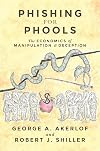
Disappointing- merely an overview of important consumer exploitation issues across a wide range of corporate endeavor. You will want to seek out more in depth books on each of the subjects covered here. Essentially an index of ills generated by unregulated corporate greed. This serves as an appetizer, you will be left hungry for more.
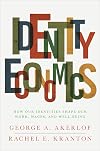
This was a quick read with some important ideas. The core idea is that we can integrate identity into standard economic models by formalizing identities as sets of social norms and assigning costs and benefits for both following and not following those norms.
Let's expand on that. Following the authors, we define identities as sets of norms that people generally expect others to follow. These can be the usual identity categories like gender or race. They can also encompass identities such as show more whether or not an employee has an "insider" or "outsider" identity -- that is, do they see their job as just a job or as part of their personal identity. People decide which norms apply to them by observing others. This is necessary even if one does not want to conform to the norms -- because not following norms generally imposes costs which are important to understand.
Norms and identity as a general category are neither good nor bad. In this model, what makes an identity good or bad is the cost of nonconformance. Although the authors do not go into it (that I remember), in this model I would define as stereotype as sets of norms that are applied to people who would prefer not to be held accountable to those norms (especially, but not only, when those norms make inaccurate factual claims in addition to normative claims).
To formalize the notion of the costs and benefits of identity, the author apply a four step process:
1. Associate individuals with social categories.
2. Specify prevailing norms for these categories.
3. Posit individual gains and loses from different decisions given particular identities and norms.
4. Combine these with other forms of economic analysis to determine what people will do.
Note that this is a descriptive process, not a prescriptive process. Thus, these steps are not about attempting to define and enforce norms. They are about describing the categories and norms that exist in the world and influence people's behaviors.
That's the model. The rest of the book applies the model to a number of case studies including organizational identities, student association with education, gender, and race.
The authors also spend time discussing why this is a useful extension to the economic model, especially given that many of the case studies have "well, duh" sort of conclusions. E.g., people who identify with an organization will be more honest with the resources of that organization or people who work in counterstereotypical professions will experience negative costs, including discrimination or harassment from those who want to maintain the existing norms.
But that "well, duh" is kind of the whole point. These conclusions seem obvious because they're such an important part of how the world works. Other economic models -- including other types of non-strictly-monetary utility such as those deriving from taste, imperfect information, or cognitive biases -- don't predict these obvious outcomes. The authors do not claim that identity is the only or even the dominant form of utility if most decisions. As step 4 of the process says, "Combine [identity factors] with other forms of economic analysis to determine what people will do." However, identity based norms have an influence on our lives, and if we want our economic models to be useful tools for society, we need to take them into account. show less
Let's expand on that. Following the authors, we define identities as sets of norms that people generally expect others to follow. These can be the usual identity categories like gender or race. They can also encompass identities such as show more whether or not an employee has an "insider" or "outsider" identity -- that is, do they see their job as just a job or as part of their personal identity. People decide which norms apply to them by observing others. This is necessary even if one does not want to conform to the norms -- because not following norms generally imposes costs which are important to understand.
Norms and identity as a general category are neither good nor bad. In this model, what makes an identity good or bad is the cost of nonconformance. Although the authors do not go into it (that I remember), in this model I would define as stereotype as sets of norms that are applied to people who would prefer not to be held accountable to those norms (especially, but not only, when those norms make inaccurate factual claims in addition to normative claims).
To formalize the notion of the costs and benefits of identity, the author apply a four step process:
1. Associate individuals with social categories.
2. Specify prevailing norms for these categories.
3. Posit individual gains and loses from different decisions given particular identities and norms.
4. Combine these with other forms of economic analysis to determine what people will do.
Note that this is a descriptive process, not a prescriptive process. Thus, these steps are not about attempting to define and enforce norms. They are about describing the categories and norms that exist in the world and influence people's behaviors.
That's the model. The rest of the book applies the model to a number of case studies including organizational identities, student association with education, gender, and race.
The authors also spend time discussing why this is a useful extension to the economic model, especially given that many of the case studies have "well, duh" sort of conclusions. E.g., people who identify with an organization will be more honest with the resources of that organization or people who work in counterstereotypical professions will experience negative costs, including discrimination or harassment from those who want to maintain the existing norms.
But that "well, duh" is kind of the whole point. These conclusions seem obvious because they're such an important part of how the world works. Other economic models -- including other types of non-strictly-monetary utility such as those deriving from taste, imperfect information, or cognitive biases -- don't predict these obvious outcomes. The authors do not claim that identity is the only or even the dominant form of utility if most decisions. As step 4 of the process says, "Combine [identity factors] with other forms of economic analysis to determine what people will do." However, identity based norms have an influence on our lives, and if we want our economic models to be useful tools for society, we need to take them into account. show less
Animal Spirits: How Human Psychology Drives the Economy, and Why It Matters for Global Capitalism by George A. Akerlof
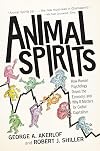
In [b:The General Theory|303615|The General Theory of Employment, Interest, and Money|John Maynard Keynes|https://d.gr-assets.com/books/1415594896s/303615.jpg|1711698], [a:John Maynard Keynes|159357|John Maynard Keynes|https://d.gr-assets.com/authors/1244623131p2/159357.jpg] wrote that the switches between optimism and pessimism which drive rises/falls in investment spending which, in turn, cause rises/falls in output, were driven by '"animal spirits". This was always one of the weaker show more points of Keynes' analysis, essentially a big shrug of the shoulders, removing any notion of economic actors rational responses to changing circumstances. This book is simply a longer restatement of that argument. People are crazy, so the authors say, their behaviour is irrational and, in the Keynesian way, this can cause economies to crash and stay crashed. Only the wise hand of government on economic the tiller can save us.
This leaves several questions unanswered. Why do people make the same mistake over and over? There is no learning in the model. Why is empirical evidence used so sparingly? In cases such as 1929 and 2008-2009, there were identifiable, proximate causes for people's actions which we can turn to without invoking "animal spirits". Why is it assumed that the politicians who will save us from our irrationality are any more rational than we are?
Psychology in economics is a fascinating and emerging field, but you'd never know it from this shallow and reductive book. show less
This leaves several questions unanswered. Why do people make the same mistake over and over? There is no learning in the model. Why is empirical evidence used so sparingly? In cases such as 1929 and 2008-2009, there were identifiable, proximate causes for people's actions which we can turn to without invoking "animal spirits". Why is it assumed that the politicians who will save us from our irrationality are any more rational than we are?
Psychology in economics is a fascinating and emerging field, but you'd never know it from this shallow and reductive book. show less
Lists
Awards


You May Also Like


Associated Authors
Statistics
- Works
- 23
- Members
- 1,371
- Popularity
- #18,760
- Rating
- 3.4
- Reviews
- 23
- ISBNs
- 78
- Languages
- 10
- Favorited
- 1