
Robert J. Shiller
Author of Irrational Exuberance
About the Author
Robert J. Shiller is the Stanley B. Resor Professor of Economics at Yale University. Also the author of the award-winning "Macro Markets" as well as "Market Volatility", he lives in New Haven, Connecticut. (Bowker Author Biography)
Image credit: 07.10 總統接見2013年諾貝爾經濟學獎得主席勒(Robert J. Shiller)及「亞洲不動產學會」暨「世界華人不動產學會」2017年國際聯合學術研討會代表,席勒也針對相關政策提出建言 By w:en:Presidential Office Building, Taiwan - https://www.flickr.com/photos/presidentialoffice/35023272993/, CC BY 2.0, https://commons.wikimedia.org/w/index.php?curid=66113571
Works by Robert J. Shiller
Animal Spirits: How Human Psychology Drives the Economy, and Why It Matters for Global Capitalism (2009) 789 copies, 10 reviews
Phishing for Phools: The Economics of Manipulation and Deception (2015) — Author — 349 copies, 7 reviews
Narrative Economics: How Stories Go Viral and Drive Major Economic Events (2019) 254 copies, 4 reviews
The Subprime Solution: How Today's Global Financial Crisis Happened, and What to Do about It (2008) 188 copies, 2 reviews
The Report of the Twentieth Century Fund Task Force on Market Speculation and Corporate Governance (1992) 7 copies, 1 review
Tagged
Common Knowledge
- Canonical name
- Shiller, Robert J.
- Legal name
- Shiller, Robert James
- Birthdate
- 1946-03-29
- Gender
- male
- Education
- University of Michigan
Massachusetts Institute of Technology - Occupations
- economist
professor - Organizations
- Yale University
- Awards and honors
- Nobel Prize (Economics, 2013)
- Nationality
- USA
- Associated Place (for map)
- USA
Members
Reviews
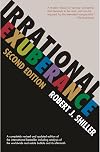
I had to rush through the last third of ‘Irrational Exuberance’ as it was due back at the library today. This also means I don’t have it in front of me, so must rely on my vague recollections to compose a review. Consider that a disclaimer.
It is important to note that I read the second edition of the book, published in 2005. The first edition, published in 2000, warned of a potential bubble in stock market prices. Lo, there was. This edition warns of a bubble in real estate prices. Two show more for two! That said, Shiller merely warns of the dangers of mortgage over-lending, based on over-optimism about the future. He does not go into the multiplying factor of mortgage-backed securities, collateralised debt obligations, and other financial instruments, which precipitated the massive financial contagion of 2007 onwards. Interestingly, though, there is a disclaimer in the front of the book stating that he is (or was) associated with a company selling securities of some description. In any event, he deserves credit for identifying a house price bubble, even without considering its associated problems.
The thesis of this book is essentially behavioural economics writ macro. This is unusual, as most books I’ve come across in behavioural economics focus on individuals and small groups, rather than seeking to multiply up the effects to the economy as a whole. Shiller touches on why this is the case - the pervasiveness of the efficient free market hypothesis. Most macroeconomics simply assumes that any irrationalities at the micro level even themselves out, ensuring that macro-scale distortions do not occur. Shiller marshalls a variety of theory and evidence to counter this assertion. This ranges from behavioural microeconomic findings (which in my view only demonstrate the behaviour of undergraduate students, the usual experimental subjects used) to statistical analysis of stock market movements over the last 150 years, with a sprinkling of anecdotes on the way.
To be honest, I didn’t really need convincing of the central idea that frames ‘Irrational Exuberance’. All the macroeconomics I’ve ever been taught based on efficient free markets seemed highly dubious at the time and has ever since. Shiller’s most crucial (and simplest) assertion is that investors do not make independent decisions. (This is one of the most idiotic assumptions of neoclassical economics.) Instead, they observe and react to each other’s behaviour. In some ways, this could be considered part and parcel of rational information-gathering, but Shiller notes that it is fraught with irrationalities. A key example is the mental short-cut of assuming that if something has happened recently, it is more likely. This ties into the tendency to assume that the future will be much like the present, or akin to some ‘anchoring fact’. Tied into all this is the (sometimes reasonable) assumption that if a large number of people think the same thing then it must be correct. Then there’s the often-inaccurate barrage of soundbites provided by the media. Add to that the incredible human power of rationalisation and the sheer tedious complexity of financial markets.
I think Shiller argues his case well, but doesn’t devote nearly enough time and space to the implications. A few policy proscriptions are suggested in the conclusion, although not in detail. I would have also liked more on the moral hazard side of things, which of course leads neatly into the antecedents of the financial crisis; mis-selling of financial products, excessive complexity making valuation impossible, and a bubble based on hysteria about profit opportunities. It’s still a good book, though, and would do well to be read with [b:Freefall: America, Free Markets, and the Sinking of the World Economy|6581449|Freefall America, Free Markets, and the Sinking of the World Economy|Joseph E. Stiglitz|https://images.gr-assets.com/books/1348431624s/6581449.jpg|6774891] by Joseph Stiglitz, which covers some subsequent implications of Shiller’s theories. show less
It is important to note that I read the second edition of the book, published in 2005. The first edition, published in 2000, warned of a potential bubble in stock market prices. Lo, there was. This edition warns of a bubble in real estate prices. Two show more for two! That said, Shiller merely warns of the dangers of mortgage over-lending, based on over-optimism about the future. He does not go into the multiplying factor of mortgage-backed securities, collateralised debt obligations, and other financial instruments, which precipitated the massive financial contagion of 2007 onwards. Interestingly, though, there is a disclaimer in the front of the book stating that he is (or was) associated with a company selling securities of some description. In any event, he deserves credit for identifying a house price bubble, even without considering its associated problems.
The thesis of this book is essentially behavioural economics writ macro. This is unusual, as most books I’ve come across in behavioural economics focus on individuals and small groups, rather than seeking to multiply up the effects to the economy as a whole. Shiller touches on why this is the case - the pervasiveness of the efficient free market hypothesis. Most macroeconomics simply assumes that any irrationalities at the micro level even themselves out, ensuring that macro-scale distortions do not occur. Shiller marshalls a variety of theory and evidence to counter this assertion. This ranges from behavioural microeconomic findings (which in my view only demonstrate the behaviour of undergraduate students, the usual experimental subjects used) to statistical analysis of stock market movements over the last 150 years, with a sprinkling of anecdotes on the way.
To be honest, I didn’t really need convincing of the central idea that frames ‘Irrational Exuberance’. All the macroeconomics I’ve ever been taught based on efficient free markets seemed highly dubious at the time and has ever since. Shiller’s most crucial (and simplest) assertion is that investors do not make independent decisions. (This is one of the most idiotic assumptions of neoclassical economics.) Instead, they observe and react to each other’s behaviour. In some ways, this could be considered part and parcel of rational information-gathering, but Shiller notes that it is fraught with irrationalities. A key example is the mental short-cut of assuming that if something has happened recently, it is more likely. This ties into the tendency to assume that the future will be much like the present, or akin to some ‘anchoring fact’. Tied into all this is the (sometimes reasonable) assumption that if a large number of people think the same thing then it must be correct. Then there’s the often-inaccurate barrage of soundbites provided by the media. Add to that the incredible human power of rationalisation and the sheer tedious complexity of financial markets.
I think Shiller argues his case well, but doesn’t devote nearly enough time and space to the implications. A few policy proscriptions are suggested in the conclusion, although not in detail. I would have also liked more on the moral hazard side of things, which of course leads neatly into the antecedents of the financial crisis; mis-selling of financial products, excessive complexity making valuation impossible, and a bubble based on hysteria about profit opportunities. It’s still a good book, though, and would do well to be read with [b:Freefall: America, Free Markets, and the Sinking of the World Economy|6581449|Freefall America, Free Markets, and the Sinking of the World Economy|Joseph E. Stiglitz|https://images.gr-assets.com/books/1348431624s/6581449.jpg|6774891] by Joseph Stiglitz, which covers some subsequent implications of Shiller’s theories. show less
An excellent inbetween book. Not too academic and dry but also not too simplistic. The most complete treatment of bubbles I've read.
Shiller is a great empiricist, and tests out efficient markets hypothesis through various econometric tests and survey data. Shiller actually asks investors through extensive survey data to see what their motivations and logic is, a pretty simple but radical move from assuming them to be rationally calculating agents. Through this data Shiller shows how show more irrational, and self contradicting investment behavior can be. Additionally, Shiller does alot of searches through news and media in order to see if the news portion of efficient markets theory holds i.e. is there actually news that explains price movements? To my knowledge both of these attempts at gathering data are novel (and in hindsight) obvious.
An interesting take on speculative bubbles. Shiller shows (at least to my satisfaction) that 1) Bubbles in asset prices do exist and 2) We should look beyond pure financial theory to explain the behavior of bubbles. Shiller explores possible explanations for increases in asset price, and shows that at least, there is no real rational basis for certain increases in prices (looking at population growth, construction price and interest rates do not explain the housing prices for example), and that certain implications of efficient markets are violated. In particular, he could not find any news to explain large price movements, and that stock prices are too volatile compared to dividends growth (an apparent violation of the Gordon discount model).
Shiller then goes on to suggest some possible explanations for the behavior of bubbles. He argues many factors, a combination of social, psychological and cultural factors. He goes in length about feedback loops, herd behavior, word of mouth contagion, and the role of media in drawing attention to issues. Shiller discusses how certain vivid stories (in particular "new era" theories) can capture the imagination of investors and unmoor asset prices. Shiller also describes how irrational enthusiasm, mixed in with a convincing story can overwhelm quantitative fact and forecasts driving self-creating bubbles. Sometimes investors, encouraged by the raise in prices, jealous of others "success" and with a gambler's high can pile on into markets. Shiller also surveys behavioral economics, in particular anchoring, and overconfidence in their roles in bubbles. This section actually seems a bit weak to me, Shiller seems to be throwing everything at the wall to see what sticks, and some of these explanations (while I believe happen to be true) are difficult if not impossible to falsify.
Ultimately, Shiller suggests improving markets by broadening participation, encouraging opinion leaders to educate investors and reducing short constraints (for example creating markets to allow investors to short asset prices such as housing easily). An enjoyable (if somewhat technical at points) read overall. show less
Shiller is a great empiricist, and tests out efficient markets hypothesis through various econometric tests and survey data. Shiller actually asks investors through extensive survey data to see what their motivations and logic is, a pretty simple but radical move from assuming them to be rationally calculating agents. Through this data Shiller shows how show more irrational, and self contradicting investment behavior can be. Additionally, Shiller does alot of searches through news and media in order to see if the news portion of efficient markets theory holds i.e. is there actually news that explains price movements? To my knowledge both of these attempts at gathering data are novel (and in hindsight) obvious.
An interesting take on speculative bubbles. Shiller shows (at least to my satisfaction) that 1) Bubbles in asset prices do exist and 2) We should look beyond pure financial theory to explain the behavior of bubbles. Shiller explores possible explanations for increases in asset price, and shows that at least, there is no real rational basis for certain increases in prices (looking at population growth, construction price and interest rates do not explain the housing prices for example), and that certain implications of efficient markets are violated. In particular, he could not find any news to explain large price movements, and that stock prices are too volatile compared to dividends growth (an apparent violation of the Gordon discount model).
Shiller then goes on to suggest some possible explanations for the behavior of bubbles. He argues many factors, a combination of social, psychological and cultural factors. He goes in length about feedback loops, herd behavior, word of mouth contagion, and the role of media in drawing attention to issues. Shiller discusses how certain vivid stories (in particular "new era" theories) can capture the imagination of investors and unmoor asset prices. Shiller also describes how irrational enthusiasm, mixed in with a convincing story can overwhelm quantitative fact and forecasts driving self-creating bubbles. Sometimes investors, encouraged by the raise in prices, jealous of others "success" and with a gambler's high can pile on into markets. Shiller also surveys behavioral economics, in particular anchoring, and overconfidence in their roles in bubbles. This section actually seems a bit weak to me, Shiller seems to be throwing everything at the wall to see what sticks, and some of these explanations (while I believe happen to be true) are difficult if not impossible to falsify.
Ultimately, Shiller suggests improving markets by broadening participation, encouraging opinion leaders to educate investors and reducing short constraints (for example creating markets to allow investors to short asset prices such as housing easily). An enjoyable (if somewhat technical at points) read overall. show less
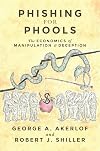
Another Phine Mess
It seems that the capitalist world is divided into two kinds of people: phishers and phools. Those who phish look for leverage and advantage and milk it; the phools pay for it, even when they don’t need to, don’t want to, and can’t afford to. The result is financial crises, on the national level, the local level and the individual level. And it never stops. We buy too much, we buy the wrong things, and we overpay all the time. Shiller and Akerlof say the very first show more phool was Eve. The serpent phished her into taking something she did not want, did not need, and which she knew in advance she should not take. The cost was going to be too high. So it has been ever since, whether it’s cable bundles or junk bonds.
There’s a lot going on in this little book. It ranges from individual (struggling) bill payers to government lobbyists, drug marketing and financial services. It is of necessity cursory, and therefore incomplete. In the chapter on credit cards, which treats both merchants and consumers as phools, spending $150 billion annually for the privilege, the authors neglect the fact that to use cash is even worse. While true that credit card users tip more and spend more freely, it is also true stores price in the cost of credit cards and the premiums they give to holders. So paying cash means paying more than we should, making us even bigger phools. Similarly the War on Cancer assumes cancer is internally sourced, making it difficult if not impossible to overcome. That’s because the focus is on treatment. But even the UN says 75% of cancers today are environmental, not genetic; they can be prevented. We can reduce cancer by a whopping 75% by not polluting ourselves, our food, our air, water and soil. The phoolish analysis is leading us to the pill phishers.
“Government is the problem” is a phish for phools, the authors say. It is not only taken out of a very specific context, it diverts attention from the scammers to the government agencies that protect us from the scammers, be they financial, consumer, chemical or environmental. This is diversion and diversion is the number one tool of phishing. The book is an entertaining litany of blatant and subtle examples. Caveat emptor is still the order of the day.
The last word should go to Robert Benchley, who also said the world is divided into two kinds of people: those who divide the world into two kinds of people, and those who don’t.
David Wineberg show less
It seems that the capitalist world is divided into two kinds of people: phishers and phools. Those who phish look for leverage and advantage and milk it; the phools pay for it, even when they don’t need to, don’t want to, and can’t afford to. The result is financial crises, on the national level, the local level and the individual level. And it never stops. We buy too much, we buy the wrong things, and we overpay all the time. Shiller and Akerlof say the very first show more phool was Eve. The serpent phished her into taking something she did not want, did not need, and which she knew in advance she should not take. The cost was going to be too high. So it has been ever since, whether it’s cable bundles or junk bonds.
There’s a lot going on in this little book. It ranges from individual (struggling) bill payers to government lobbyists, drug marketing and financial services. It is of necessity cursory, and therefore incomplete. In the chapter on credit cards, which treats both merchants and consumers as phools, spending $150 billion annually for the privilege, the authors neglect the fact that to use cash is even worse. While true that credit card users tip more and spend more freely, it is also true stores price in the cost of credit cards and the premiums they give to holders. So paying cash means paying more than we should, making us even bigger phools. Similarly the War on Cancer assumes cancer is internally sourced, making it difficult if not impossible to overcome. That’s because the focus is on treatment. But even the UN says 75% of cancers today are environmental, not genetic; they can be prevented. We can reduce cancer by a whopping 75% by not polluting ourselves, our food, our air, water and soil. The phoolish analysis is leading us to the pill phishers.
“Government is the problem” is a phish for phools, the authors say. It is not only taken out of a very specific context, it diverts attention from the scammers to the government agencies that protect us from the scammers, be they financial, consumer, chemical or environmental. This is diversion and diversion is the number one tool of phishing. The book is an entertaining litany of blatant and subtle examples. Caveat emptor is still the order of the day.
The last word should go to Robert Benchley, who also said the world is divided into two kinds of people: those who divide the world into two kinds of people, and those who don’t.
David Wineberg show less
Disappointing- merely an overview of important consumer exploitation issues across a wide range of corporate endeavor. You will want to seek out more in depth books on each of the subjects covered here. Essentially an index of ills generated by unregulated corporate greed. This serves as an appetizer, you will be left hungry for more.
Lists
Awards


You May Also Like


Associated Authors
Statistics
- Works
- 14
- Members
- 3,080
- Popularity
- #8,286
- Rating
- 3.6
- Reviews
- 44
- ISBNs
- 138
- Languages
- 11
- Favorited
- 1