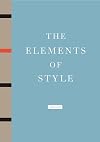
Here is the classic manual of style, written for use in the United States. No doubt most of you have not only heard of this book but have used it, and perhaps you're wondering why I think it's urgent to inform you of its importance. The Elements of Style is a classic, it's true, and among people who enjoy writing or who have been made to learn to write it needs no introduction.
But this particular edition is gracefully enhanced with paintings by the talented children's book author and illustrator Maira Kalman. Kalman's paintings bring Strunk & White's usage examples to life in unexpected ways. For example: "Overly, muchly, thusly" (page 110, an ostentatious lighthouse) "Bread and butter was all she served" (page 20, a nurse and two children sitting down to a meal, with some lovely modern paintings in the background), "None of us is perfect" (page 19, a room full of people).
If you still need convincing that this is a great idea, take a peek at some of Kalman's earlier triumphs -- these include Stay Up Late, with words (from the song) by David Byrne (New York, N.Y., U.S.A. : Viking Kestrel, 1987) and Chicken Soup, Boots (New York, N.Y. : Penguin Books, c1993), a fanciful exploration of the world of the jobs that adults have. You can look at illustrations from many of Kalman's books at her website [http://www.mairakalman.com/].
But this particular edition is gracefully enhanced with paintings by the talented children's book author and illustrator Maira Kalman. Kalman's paintings bring Strunk & White's usage examples to life in unexpected ways. For example: "Overly, muchly, thusly" (page 110, an ostentatious lighthouse) "Bread and butter was all she served" (page 20, a nurse and two children sitting down to a meal, with some lovely modern paintings in the background), "None of us is perfect" (page 19, a room full of people).
If you still need convincing that this is a great idea, take a peek at some of Kalman's earlier triumphs -- these include Stay Up Late, with words (from the song) by David Byrne (New York, N.Y., U.S.A. : Viking Kestrel, 1987) and Chicken Soup, Boots (New York, N.Y. : Penguin Books, c1993), a fanciful exploration of the world of the jobs that adults have. You can look at illustrations from many of Kalman's books at her website [http://www.mairakalman.com/].
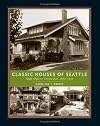
If you are interested in the minutiae of U.S. domestic architecture, with careful discussions of questions like the difference between the four square and the craftsman house, this book is for you. It focuses on the houses (mostly the fancy ones) of one city, Seattle, and discusses them by period and architectural style, from Victorian to modern. There are hundreds of beautiful black and white photographs (mostly exteriors), detailed descriptions of specific notable houses, and an excellent chapter on researching your own house's history. The book's appendices provide a house locating tool (by neighborhood and by chapter), a map of Seattle neighborhoods, a glossary, an index, and a very solid bibliography.
Despite all this, the book has somehow raised my hackles slightly. Maybe it's just the competitive crankiness that comes from living in and loving the lesser-celebrated of two cities which are much compared, but when I look at the (mostly) grand houses described in this book and consider where they might be located, I think of Portland and not Seattle. In my mind, Seattle's housing is best characterized by vast and now-dingy tracts of as-small-as-possible houses, with no dining rooms and no basements, erected in haste to contain wartime workers and the many other folks who streamed into the city in the 1940s and 1950s (Seattle's population grew by 190,000 people in that time!).
But nothing smacks of small-minded provincialism more than a tendency to deride other cities show more as a way of championing my own, so I shall quit before I walk any further down that road.
I will leave you with this: Classic Houses of Seattle is a lovely picture book, useful for anyone interested in 20th century domestic architecture. It provides substantive and interesting information supplemental to its illustrations. But it focuses too much on the highfalutin and the expensive -- the book has no substantive discussion of those as-small-as-possible houses with no basements, though I would argue that they, also, are classic Seattle. However, the pictures are still pretty, the supplemental matter and how-to-research information are still invaluable, and Classic Houses does provide a nice, if slanted, introduction to a portion of Seattle's material history. show less
Despite all this, the book has somehow raised my hackles slightly. Maybe it's just the competitive crankiness that comes from living in and loving the lesser-celebrated of two cities which are much compared, but when I look at the (mostly) grand houses described in this book and consider where they might be located, I think of Portland and not Seattle. In my mind, Seattle's housing is best characterized by vast and now-dingy tracts of as-small-as-possible houses, with no dining rooms and no basements, erected in haste to contain wartime workers and the many other folks who streamed into the city in the 1940s and 1950s (Seattle's population grew by 190,000 people in that time!).
But nothing smacks of small-minded provincialism more than a tendency to deride other cities show more as a way of championing my own, so I shall quit before I walk any further down that road.
I will leave you with this: Classic Houses of Seattle is a lovely picture book, useful for anyone interested in 20th century domestic architecture. It provides substantive and interesting information supplemental to its illustrations. But it focuses too much on the highfalutin and the expensive -- the book has no substantive discussion of those as-small-as-possible houses with no basements, though I would argue that they, also, are classic Seattle. However, the pictures are still pretty, the supplemental matter and how-to-research information are still invaluable, and Classic Houses does provide a nice, if slanted, introduction to a portion of Seattle's material history. show less
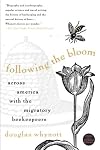
I've had a bit of a fascination with bees lately (you may have noticed this if you've been reading this booklist carefully), and this book is one of the more compelling I've found on the subject.
Migratory beekeepers truck their hives from Florida or California north in the summers, to the blueberry fields in Maine, the clover fields in North Dakota, and other places where pollination assistance is welcome and where bees will make wonderful honey. Then in the winter they travel south again, combining the work of pollinating crops with that of producing honey and wax. Whynott spent a few years following these beekeepers on their journeys, talking to them about bees, about their lives, their work, and their thoughts about bees and honey and politics and whatever else came up.
He tells the story of his travels in a journalistic style, with side notes about various bee-related subjects, such as federal honey subsidies (chapters 19, 20, and 21), the concept of "bee space" (the room bees leave between combs, chapter 5), how bees collect pollen and communicate where it is to other bees (chapters 10, 27, 39, 41, and 43). But Whynott's stories are mostly of individual beekeepers, the operation and histories of their mostly family-run businesses, and the political and social context within which they work. It is really a book about people and their connection to the work of tending bees.
Following the Bloom is easy to read -- the everyday exploits of real, specific people are show more interesting, and the bits of practical information about bees, beekeeping, farming, and the honey industry are folded so smoothly into the beekeepers' stories that I was surprised to feel quite a bit smarter (bee-wise) when I was finished reading the book.
There is no index, but the text is followed by a useful bibliography. show less
Migratory beekeepers truck their hives from Florida or California north in the summers, to the blueberry fields in Maine, the clover fields in North Dakota, and other places where pollination assistance is welcome and where bees will make wonderful honey. Then in the winter they travel south again, combining the work of pollinating crops with that of producing honey and wax. Whynott spent a few years following these beekeepers on their journeys, talking to them about bees, about their lives, their work, and their thoughts about bees and honey and politics and whatever else came up.
He tells the story of his travels in a journalistic style, with side notes about various bee-related subjects, such as federal honey subsidies (chapters 19, 20, and 21), the concept of "bee space" (the room bees leave between combs, chapter 5), how bees collect pollen and communicate where it is to other bees (chapters 10, 27, 39, 41, and 43). But Whynott's stories are mostly of individual beekeepers, the operation and histories of their mostly family-run businesses, and the political and social context within which they work. It is really a book about people and their connection to the work of tending bees.
Following the Bloom is easy to read -- the everyday exploits of real, specific people are show more interesting, and the bits of practical information about bees, beekeeping, farming, and the honey industry are folded so smoothly into the beekeepers' stories that I was surprised to feel quite a bit smarter (bee-wise) when I was finished reading the book.
There is no index, but the text is followed by a useful bibliography. show less
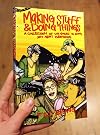
This is, just as the title indicates, a book chock full of instructions. How-tos are reprinted in facsimile from dozens of zines, including helpful illustrations and amusing side comments. The book is divided into topical sections covering activism, self-education, self-publishing, fun, arts & crafts, clothing, "creative troublemaking" (stencils, wheatpasting, and puppets), outdoorsy stuff, gardening, food & drink, travel, health & body, pet care, recycling, repairs, household stuff, and transportation. At the end is a section of pieces on the philosophy of DIY, a list of author contact information, and a very competent index.
Some of my favorites are: I made my own soymilk (p. 119), unstink your socks (p. 69), typewriter ribbons (p. 174), the DIY punk rock cat diet (p. 173), tips for staying fit on the road (p. 122), and how to do basic electrical wiring (p. 205).
Some of my favorites are: I made my own soymilk (p. 119), unstink your socks (p. 69), typewriter ribbons (p. 174), the DIY punk rock cat diet (p. 173), tips for staying fit on the road (p. 122), and how to do basic electrical wiring (p. 205).
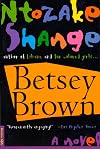
Bestey Brown is the oldest daughter in a socially aware and relatively privileged African American family in 1960s St. Louis. The novel focuses on Betsey's family life, her path into adolescence, and her and her family's experience of life during the introduction of school desegregation in their city.
Betsey takes her place in the world from the foundation of her family -- Betsey's parents and grandmother have each instilled in her generation a variety of different kinds of faith in the essential glory of their ethnic history. In the Brown household, being Black is something to be proud of, and the achievements and experiments of Africans and members of the African diaspora are daily acknowledged, explored, and celebrated. For example, Betsey's father wakes the family up each morning with the beat of a conga drum and a quick question for each child about African, Caribbean, or African American history, current events, or culture:
"Betsey, what's the most standard of blues forms?"
"Twelve-bar blues, Daddy."
"Charlie, who invented the banjo?"
"Africans who called it a banjar, Uncle Greer."
"Sharon, what is the name of the President of Ghana?"
"Um. . . Nkrumah, I think."
"Thinking's not good enough, a Negro has got to know. Besides, it's Kwame Nkrumah. Margot, where is Trinidad?"
"Off the coast of Venezuela, but it's English-speaking."
This embracing of Blackness as something to be take pride in and familiar with doesn't happen without conflict, though. Betsey's parents have many show more differences of opinion, about lofty concerns (how to actively live out a commitment to equality without endangering the safety of their children), and everyday things (when is jazz a great art form, and when is it low-class "jungle music"?)
And, even though Betsey's family is a place of strength for its members, the introduction of school integration in St. Louis tests that strength. All the children are bussed to faraway schools, and the family is under greater than average pressure as the grownups consider history, progress, and the state of the race; while each child deals with the stress of additional travel, isolation, and the anxieties of trying to learn among all those unfriendly white people.
Betsey Brown is not a tragedy, or a thriller. There's tension and conflict, anxiety and reconciliation -- plenty of high emotion. But essentially it is a sensitive novel about a child who is ready to begin becoming a woman, and the circumstances of her life.
I first read the book when it was relatively new, and I was a teenager myself. That first reading was the famous magical experience that literature is often advertised as providing -- it drew me into a world I would never experience in my own life, it challenged my way of thinking, and gave me the opportunity to have emotions specific to the experience of reading the book. Betsey Brown reads just as true to me now as it did twenty years ago, and it is well worth your time. I would especially recommend sharing the book with any 10-15 year olds you know who are looking for some interesting leisure reading. show less
Betsey takes her place in the world from the foundation of her family -- Betsey's parents and grandmother have each instilled in her generation a variety of different kinds of faith in the essential glory of their ethnic history. In the Brown household, being Black is something to be proud of, and the achievements and experiments of Africans and members of the African diaspora are daily acknowledged, explored, and celebrated. For example, Betsey's father wakes the family up each morning with the beat of a conga drum and a quick question for each child about African, Caribbean, or African American history, current events, or culture:
"Betsey, what's the most standard of blues forms?"
"Twelve-bar blues, Daddy."
"Charlie, who invented the banjo?"
"Africans who called it a banjar, Uncle Greer."
"Sharon, what is the name of the President of Ghana?"
"Um. . . Nkrumah, I think."
"Thinking's not good enough, a Negro has got to know. Besides, it's Kwame Nkrumah. Margot, where is Trinidad?"
"Off the coast of Venezuela, but it's English-speaking."
This embracing of Blackness as something to be take pride in and familiar with doesn't happen without conflict, though. Betsey's parents have many show more differences of opinion, about lofty concerns (how to actively live out a commitment to equality without endangering the safety of their children), and everyday things (when is jazz a great art form, and when is it low-class "jungle music"?)
And, even though Betsey's family is a place of strength for its members, the introduction of school integration in St. Louis tests that strength. All the children are bussed to faraway schools, and the family is under greater than average pressure as the grownups consider history, progress, and the state of the race; while each child deals with the stress of additional travel, isolation, and the anxieties of trying to learn among all those unfriendly white people.
Betsey Brown is not a tragedy, or a thriller. There's tension and conflict, anxiety and reconciliation -- plenty of high emotion. But essentially it is a sensitive novel about a child who is ready to begin becoming a woman, and the circumstances of her life.
I first read the book when it was relatively new, and I was a teenager myself. That first reading was the famous magical experience that literature is often advertised as providing -- it drew me into a world I would never experience in my own life, it challenged my way of thinking, and gave me the opportunity to have emotions specific to the experience of reading the book. Betsey Brown reads just as true to me now as it did twenty years ago, and it is well worth your time. I would especially recommend sharing the book with any 10-15 year olds you know who are looking for some interesting leisure reading. show less

Sometimes I think in themes, especially when it comes to literature. I imagine some of this is just part of my personality, as I have always liked lists and enjoyed putting things in groups with other things they seem to be like. It also seems likely that my work as a librarian encourages this kind of thinking -- librarians are called upon to help people find a book that's like the one they just finished, we create booklists on defined subjects, we sort and classify the materials in our library collections -- and, of course, we think about all of these things, we dwell on how people use resources, the architectures inherent in information as it comes to us, and many other philosophical aspects of the work that we do.
Well, Greenfinger is a book that, to me, falls into a category. It is a novel about more or less regular people who find themselves turning into heroes, crusaders, people who cannot sit by and let things happen -- all because they notice and cannot ignore the sheer evil of a profit-driven international corporation. Such stories are almost always thrillers, but they fall into different genre categories -- mystery, adventure, romance -- and can be told in different media -- fiction, comics, film, etc.
In Greenfinger's first two chapters, the basics of the tale are laid out -- Costa Rica's land reform laws allow, in theory, for people who have farmed their land for a certain number of years to claim formal legal title to it. A giant multinational corporation is show more angling to control the world's food supply through politics, brute force, and the commodification of science. Politicians are subject to pressure from big money. The United Nations straddles the tightrope between toadying to the powerful and serving the interests of the world's people and environment.
The story is told from different points of view -- some in the third person and describing the activities of various evil characters, or characters who are somewhat morally neutral -- and some in the first person in the voice of Esther Somers, who is mother to baby Zena, wife to a lower level U.N. official, and who is far smarter than anyone else in the book. Esther kicks ass, in fact.
A prolonged scene near the end of the book shows us Esther, with small Zena strapped to her back in a Snugli, running long-distance through the Costa Rican jungle, pursued by a very fit and rather psychopathic ex-SAS killer-for-hire. Everyone who has previously been on her side is either dead or completely unavailable, and so Esther runs, she climbs, she waits patiently, she outwits, and rather than merely surviving, she and Zena can be said to win, without apologies, in the end.
(The farmers, the environment, and the world's hungry do not win -- though I don't mean to spoil the plot for you.) show less
Well, Greenfinger is a book that, to me, falls into a category. It is a novel about more or less regular people who find themselves turning into heroes, crusaders, people who cannot sit by and let things happen -- all because they notice and cannot ignore the sheer evil of a profit-driven international corporation. Such stories are almost always thrillers, but they fall into different genre categories -- mystery, adventure, romance -- and can be told in different media -- fiction, comics, film, etc.
In Greenfinger's first two chapters, the basics of the tale are laid out -- Costa Rica's land reform laws allow, in theory, for people who have farmed their land for a certain number of years to claim formal legal title to it. A giant multinational corporation is show more angling to control the world's food supply through politics, brute force, and the commodification of science. Politicians are subject to pressure from big money. The United Nations straddles the tightrope between toadying to the powerful and serving the interests of the world's people and environment.
The story is told from different points of view -- some in the third person and describing the activities of various evil characters, or characters who are somewhat morally neutral -- and some in the first person in the voice of Esther Somers, who is mother to baby Zena, wife to a lower level U.N. official, and who is far smarter than anyone else in the book. Esther kicks ass, in fact.
A prolonged scene near the end of the book shows us Esther, with small Zena strapped to her back in a Snugli, running long-distance through the Costa Rican jungle, pursued by a very fit and rather psychopathic ex-SAS killer-for-hire. Everyone who has previously been on her side is either dead or completely unavailable, and so Esther runs, she climbs, she waits patiently, she outwits, and rather than merely surviving, she and Zena can be said to win, without apologies, in the end.
(The farmers, the environment, and the world's hungry do not win -- though I don't mean to spoil the plot for you.) show less
World shores and beaches : a descriptive and historical guide to 50 coastal treasures by Mary Ellen Snodgrass
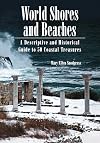
World Shores and Beaches is a reference guide to coastal areas around the world. This book has that thrilling quality of all great reference books: when World Shores and Beaches is the book you need, nothing else will do. Wondering about the archaeological work that has been done in Acapulco? Interested in the mythology of Kaho'Olawe, Hawai'i? Fascinated by pearl diving in Dubai? Urgent for a quick fix of info about the state of the natural environment in Phuket, Thailand? Go no further, this book can help.
World Shores and Beaches gives a terse but eloquent description of the mythology, history, archeology, and ecology of the beaches described, together with information about current coastal activities, and contact information for groups and individuals who involved in tending or protecting each area. A short bibliography follows each entry, and the main text is followed by a glossary, a general bibliography, an appendix of books & films that provide information on beaches and shores, and a very thorough index.
Snodgrass has written countless other fascinating reference works, including the Encyclopedia of Kitchen History (New York : Fitzroy Dearborn, c2004), World Epidemics : A Cultural Chronology of Disease From Prehistory to the Era of SARS (Jefferson, N.C. : McFarland & Co., c2003), and An Illustrated Dictionary of Little-Known Words From Literary Classics (Santa Barbara, Calif. : ABC-CLIO, c1995). The breadth of her work makes it seem like she'd be a fascinating show more dinner companion, don't you think? show less
World Shores and Beaches gives a terse but eloquent description of the mythology, history, archeology, and ecology of the beaches described, together with information about current coastal activities, and contact information for groups and individuals who involved in tending or protecting each area. A short bibliography follows each entry, and the main text is followed by a glossary, a general bibliography, an appendix of books & films that provide information on beaches and shores, and a very thorough index.
Snodgrass has written countless other fascinating reference works, including the Encyclopedia of Kitchen History (New York : Fitzroy Dearborn, c2004), World Epidemics : A Cultural Chronology of Disease From Prehistory to the Era of SARS (Jefferson, N.C. : McFarland & Co., c2003), and An Illustrated Dictionary of Little-Known Words From Literary Classics (Santa Barbara, Calif. : ABC-CLIO, c1995). The breadth of her work makes it seem like she'd be a fascinating show more dinner companion, don't you think? show less
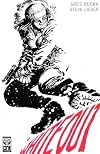
Carrie Stetko is a United States Marshall in Antarctica, where it's kind of like you're nowhere because there aren't exactly any nations, but then also of course it's somewhere and there you are. The Antarctica of this comic is a disturbing place -- it's frozen and treeless, and the social order and cultural norms of the place are twisted by the cold and people's odd and often unhealthy reasons for being there.
As a marshall, Stetko has little authority but is responsible for investigating whatever weirdness comes up (a murder, in this story), and there's plenty of intrigue to go around. Russians, Brits, scientific researchers, military personnel, and lots and lots and lots of snow and ice and bitter chill wind. Whiteout is something like a police procedural, except there is almost nothing like a procedure available to Stetko. It's something like a spy novel, except Stetko no more concerned with CIA type stuff than your average cop. Maybe what Whiteout is most like is a classic hard boiled detective novel, with tough dialogue and lots of fighting but still a good amount of clever detective stuff. Whatever category it belongs in, the story is gripping and I highly recommend it.
Whiteout is continued in:
Whiteout : melt / written by Greg Rucka ; illustrated & lettered by Steve Lieber... (Portland, OR : Oni Press, c2000).
As a marshall, Stetko has little authority but is responsible for investigating whatever weirdness comes up (a murder, in this story), and there's plenty of intrigue to go around. Russians, Brits, scientific researchers, military personnel, and lots and lots and lots of snow and ice and bitter chill wind. Whiteout is something like a police procedural, except there is almost nothing like a procedure available to Stetko. It's something like a spy novel, except Stetko no more concerned with CIA type stuff than your average cop. Maybe what Whiteout is most like is a classic hard boiled detective novel, with tough dialogue and lots of fighting but still a good amount of clever detective stuff. Whatever category it belongs in, the story is gripping and I highly recommend it.
Whiteout is continued in:
Whiteout : melt / written by Greg Rucka ; illustrated & lettered by Steve Lieber... (Portland, OR : Oni Press, c2000).
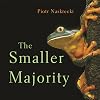
Again I have been lulled into reviewing a book simply because of its lovely photographs. The Smaller Majority provides a visual introduction to some of our planet's smaller forms of life -- large enough to be photographed with a standard camera, but smaller than a human finger. Naskrecki's photographs are in full, bursting color, accompanied by sensible captions which note where each photograph was taken. The text is intelligent, providing a brief introduction to each of the different classes of creatures and then a shorter discussion of many of the species pictured.
The Smaller Majority is largely taken up with illustrations and descriptions of insects, but there are also worms, frogs, lizards, and spiders in its pages. Some real wonders are presented -- the caecilian, for example, an amphibian which is the dead spit of an earthworm, despite its having a complete skeleton and no true tail (pages 46-47). Another gem is the section of surprisingly beautiful photographs of small insects that have been killed by infestations of fungus (pages 136-37).
The book has three main sections, delineated with helpful colored tabs at the bottom of each page. Most of the book has green tabs, indicating tropical humid forests, but there are shorter sections describing the smaller life forms of savannas (orange) and deserts (gray). The main text is followed by several appendices, including one about photography, a list of resources (organizations and books), and an index to species.
The Smaller Majority is largely taken up with illustrations and descriptions of insects, but there are also worms, frogs, lizards, and spiders in its pages. Some real wonders are presented -- the caecilian, for example, an amphibian which is the dead spit of an earthworm, despite its having a complete skeleton and no true tail (pages 46-47). Another gem is the section of surprisingly beautiful photographs of small insects that have been killed by infestations of fungus (pages 136-37).
The book has three main sections, delineated with helpful colored tabs at the bottom of each page. Most of the book has green tabs, indicating tropical humid forests, but there are shorter sections describing the smaller life forms of savannas (orange) and deserts (gray). The main text is followed by several appendices, including one about photography, a list of resources (organizations and books), and an index to species.
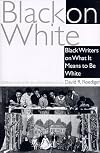
A collection of short classics on the narrow but interesting topic of just what is it with these white people anyway. The book provides a nice introduction to the work of a great number of excellent African American writers, so it is a good starting place for anyone interested in beginning a journey into African American thought and literature.
Read this book, and if you find, for example, that you like Derrick Bell's essay on whiteness as property, well, then you can look a bit further and read his books on the history of the civil rights movements, gospel choirs, or Brown v. Board of Education. Or, if you've only read Toni Morrison's fiction, you may enjoy beginning to explore her other work with the excerpt from her book Playing in the Dark.
But even if Black on White weren't a good place to begin exploring literature, it would be worth your time, and here's why: the idea of race has largely been defined and explicated by the people who have the most opportunity for expression: white people. An analysis of what whiteness is, what it means, how it works, and what it's for -- but one conceived and written by Black people -- is bound to be fresh and interesting.
So, if you think racism and the idea of race definitions are wrong, or even if you aren't angry about it, but you do think it's a bit silly, then take a few hours to consider what Black people have to say about whiteness.
(Unfortunately, Black on White has no index or other supplemental endmatter.)
Read this book, and if you find, for example, that you like Derrick Bell's essay on whiteness as property, well, then you can look a bit further and read his books on the history of the civil rights movements, gospel choirs, or Brown v. Board of Education. Or, if you've only read Toni Morrison's fiction, you may enjoy beginning to explore her other work with the excerpt from her book Playing in the Dark.
But even if Black on White weren't a good place to begin exploring literature, it would be worth your time, and here's why: the idea of race has largely been defined and explicated by the people who have the most opportunity for expression: white people. An analysis of what whiteness is, what it means, how it works, and what it's for -- but one conceived and written by Black people -- is bound to be fresh and interesting.
So, if you think racism and the idea of race definitions are wrong, or even if you aren't angry about it, but you do think it's a bit silly, then take a few hours to consider what Black people have to say about whiteness.
(Unfortunately, Black on White has no index or other supplemental endmatter.)