This book seems not to have been copy-edited or proofread - it's pretty bad in places.
As for content, this is a fascinating topic but this is not the book to read to learn about the topic. Much better is Tim McDaniels Agony of the Russian Idea even though it is 25 years old.
Given the importance of the topic and events of the past decade (and year) related to Russia and Putin's ideology, let's hope that a solidly researched and argued book comes out soon. This is not that.
As for content, this is a fascinating topic but this is not the book to read to learn about the topic. Much better is Tim McDaniels Agony of the Russian Idea even though it is 25 years old.
Given the importance of the topic and events of the past decade (and year) related to Russia and Putin's ideology, let's hope that a solidly researched and argued book comes out soon. This is not that.
Great book, short, skewers all kinds of cyclists, but overall far from being a snob he's a cycling enthusiast and supporter, asking only that people get out on their bikes! You might feel uncomfortable if your identity is totally wrapped up in an expensive and/or ridiculously large motor vehicle...
should be required reading for all students of political science
Lots of interesting details on pirates and pirate life, but forces these historical details into what he claims is an economic framework -- in fact an ideological framework, very free market conservative view -- that he claims is the only way to understand pirates... This tendentious approach really is ham-fisted and undermines what could have been a much more interesting book.
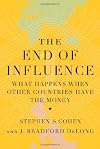
Disappointing. The blurbs start out with "the end of the neoliberal dream," but by the end of the book you get the impression that Cohen and Delong are mourning that death. They seem to believe that the neoliberal agenda and prescription is in fact best for the world, that US economic policies were undertaken for the common good of the entire world, and the US imposition of its own neoliberal policies on the rest of the world was a good thing. But on the other hand they do point out that countries that had very interventionist policies did have rapid rates of growth, and there are hints here and there of a different way of seeing things, so there's almost a schizophrenic feel at times.
On the other hand, this book does do a great job explaining the current crisis and why, going forward, states are no longer going to be adhering to the neoliberal dream.
On the other hand, this book does do a great job explaining the current crisis and why, going forward, states are no longer going to be adhering to the neoliberal dream.
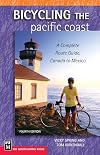
A friend and I used this book June 2009 to cycle from San Francisco to Oceanside, overall it's great, good directions, a bit confusing and distances sometimes a bit off but a great resource for this ride.
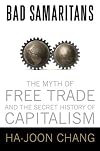
Finally, some facts and empirics on globalization, trade and development. This is a book I wish I'd read when I took my economics and international trade courses. Chang shows that the neo-liberal free-trade agenda is based on assumptions and beliefs that in fact do not reflect reality. He shows in detail how those countries that did improve their relative position and are now economically developed - the US, UK, Finland, Japan, South Korea - and those developing countries that are doing the best - including China - are those that ignore the neoliberal strictures. All these countries practiced some forms of protectionism, none of them followed the neo-liberal line. Chang makes a good argument that following neoliberalism is the surest way to remain underdeveloped and poor. Chang is not against trade, and shows how it does help countries develop. He's just against the neoliberal version because it prevents development.
This book should be required reading for anyone interested in international trade. It won't change the mind of the true believers - who seem to see neoliberalism as some religious faith - but for most people it'll be an interesting and much needed addition to our understanding of trade and development.
This book should be required reading for anyone interested in international trade. It won't change the mind of the true believers - who seem to see neoliberalism as some religious faith - but for most people it'll be an interesting and much needed addition to our understanding of trade and development.

Scary stuff, and almost unbelievable, but it's all documented in black and white. Goldberg does an excellent job showing how this tiny radical minority has already wielded enormous influence in the Republican Party and the Bush administration. It's like a paranoid fascist nation within the nation, impervious to facts and reason. Yikes. Goldberg ends by arguing that there is no compromise or negotiating with these folks. They need to be defeated, plain and simple. Amen to that.

Stylistically unlike any of Carey's other novels, this one can be a bit confusing, but I think that's the point. Sort of told from the perspective of 7 year old Che, it captures the confusion and anxieties of late 60s early 70s fugitive radicals, combined with the experience of early 70s hippies commune living in rural Australia. It took a bit for me to get into it, but since I love Carey I kept going and it was well worth it.
The Great Derangement : A terrifying true story of war, politics, and religion at the twilight of the American empire by Matt Taibbi
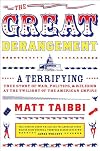
If you love Taibbi's writing -- and I do -- you'll really like this book. Infiltrating John Hagee's church in Texas, hanging out with 9-11 Truthers, giving us the real story of what happens on Capitol Hill -- Taibbi brings all these threads together in a convincing though not overly structured way. His point: the mainstream political and media establishment have lost so much credibility among the US population that many are led to such fringe movements as the ones he discusses. He ends on an uncharacteristically hopeful note. Well worth the read!
This book looked to be promising, and there are indeed some quite interesting bits. But Mead has produced what is in effect a triumphalist, cheerleading text that repeats the propaganda line of US nationalism: the US system is the best in the world, others have to get used to it, and criticism of it is due to hatred. (To be fair, he includes the Brits as authors of this awesome "maritime system" as well. )
What's especially strange about this book is that Mead knows a lot, and he should know better. He has a wide knowledge of history, including the histories of other places besides the US and UK. And he shows that he understands the different perspectives on the US/UK system, and the experiences of others in the face of this system. But he nevertheless returns to the propaganda line. This actually makes this worse than if he'd shown himself to be totally ignorant.
While parts of Mead's theses are interesting, if you want a serious and objective look at these issues you'll have to look elsewhere. If on the other hand you're looking for a feel-good US nationalistic view of the world, this is the text for you.
What's especially strange about this book is that Mead knows a lot, and he should know better. He has a wide knowledge of history, including the histories of other places besides the US and UK. And he shows that he understands the different perspectives on the US/UK system, and the experiences of others in the face of this system. But he nevertheless returns to the propaganda line. This actually makes this worse than if he'd shown himself to be totally ignorant.
While parts of Mead's theses are interesting, if you want a serious and objective look at these issues you'll have to look elsewhere. If on the other hand you're looking for a feel-good US nationalistic view of the world, this is the text for you.
This book is an extremely well written and well-researched piece of work that helps to understand why the Bushies do things that seem so stupid. It's not that they're stupid. It's that they are in the grip of a Good vs. Evil worldview that justifies any action at all in the service of "Good" and that demonizes any opposition as part of an Evil grouping. Thus Democrats and Republicans who oppose the Bush decimation of civil liberties become part of the side of Evil. And that same decimation is championed as an ultimate good.
Greenwald's got a great book here, I'd strongly recommend it to anyone interested in trying to understand what's going on in the US these days and for the past six years.
Greenwald's got a great book here, I'd strongly recommend it to anyone interested in trying to understand what's going on in the US these days and for the past six years.
Having read a few of Mitchell's later novels, I was looking forward to reading this one, his first. And I wasn't disappointed. I love the different styles and povs in each chapter, and how they are interconnected. I also loved the bits that detached from realism. All in all a great read.
Excellent analysis of how "war on terror" is a choice by political and media elites to explain and describe particular events in ways that actually increase fear as well as actual terrorism.
Fascinating book showing how grammatical complexity evolves through creation and destruction, starting with just basic action and object words. Great section on Semitic verb templates.
Describes the rise of Charlemagne, his relations with the Abbasid Empire based in Baghdad and the Byzantine in Constantinople. Written in non-academic style, more as historical novel stylistically, at a quite general level. Some interesting points but more analysis would have made it more interesting. It's a quick read though.
The Jesus Machine : How James Dobson, Focus on the Family, and evangelical America are winning the culture war by Dan Gilgoff
A much needed and interesting insight into James Dobson, de facto leader of the "Christian" right, this book traces Dobson's rise as well as the broader development of religious right influence and outright control over the Republican Party. Gilgoff's writing is very reportorial and non-judgemental, and he's probably right that no one at Dobson's outfit would be offended by the book. (They were offended by the book's title.)
One thing I found a bit troubling was Gilgoff's implicit assumption that the Democrats need to "get religion" in order to win elections. In fact, perhaps they need to communicate common interests that exist between secular Americans and religious Americans, but "becoming religious" is not the right way to go; as he points out, it abandons the Constitution's proviso that there be no religious test for political office. Given the fact that Gilgoff cites, that secular Americans are the fastest growing demographic -- especially among young people -- it's clear that part of the reason for the politics of fear, manipulation, and outright deception on the right is that their constituencies are becoming smaller and smaller proportion of the voting public.
Gilgoff seems optimistic that the evangelicals will potentially shift to the Democrats if they (evangelicals) continue to focus on issues like poverty and human rights. I'd say that the Dems should be open to working with anyone who'll help them with their agenda of helping the least-advantaged parts of our show more society. But the Democrats shouldn't sell their "soul" for a few votes. They don't need to do that in order to win elections. They just need to stand up and speak clearly and forthrightly about the values that the Democratic party stands for. show less
One thing I found a bit troubling was Gilgoff's implicit assumption that the Democrats need to "get religion" in order to win elections. In fact, perhaps they need to communicate common interests that exist between secular Americans and religious Americans, but "becoming religious" is not the right way to go; as he points out, it abandons the Constitution's proviso that there be no religious test for political office. Given the fact that Gilgoff cites, that secular Americans are the fastest growing demographic -- especially among young people -- it's clear that part of the reason for the politics of fear, manipulation, and outright deception on the right is that their constituencies are becoming smaller and smaller proportion of the voting public.
Gilgoff seems optimistic that the evangelicals will potentially shift to the Democrats if they (evangelicals) continue to focus on issues like poverty and human rights. I'd say that the Dems should be open to working with anyone who'll help them with their agenda of helping the least-advantaged parts of our show more society. But the Democrats shouldn't sell their "soul" for a few votes. They don't need to do that in order to win elections. They just need to stand up and speak clearly and forthrightly about the values that the Democratic party stands for. show less
This book had the potential to be very interesting, and there are some interesting observations on how Harry Potter series reflects trends in wider British and US society. But overall it wasn't as interesting as I thought it would be, no earthshattering observations or analyses. I got it cheap as a remaindered book so I'm not too upset about having bought it.
The Lost German Slave Girl: The Extraordinary True Story of Sally Miller and Her Fight for Freedom in Old New Orlea by John Bailey
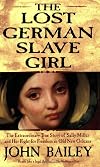
Fascinating look at the construction of race, and of whiteness, in 19c Louisiana. Also a bit of a mystery story, we're left hanging until the very end.
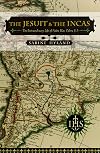
Valera is a fascinating guy, and the topic of the book has a lot of potential. Unfortunately I was disappointed. Part of the problem is the style; I am used to reading academic histories, but this one is not as well written as it could be. The information in the book is really interesting, but it is laid out in a way that again detracts from the story. I think this was originally a dissertation; it's too bad the editors didn't ask for a complete rewrite.
All of that said, the story is incredibly compelling; I learned a lot about the Jesuits and about Inca culture and religion, as well as the interaction between Incas and Spanish conquerors. Valera's attempts to ground his missionary work by taking Inca religion seriously is fascinating, as is the fact that this mestizo was expelled from Peru by the Jesuit order because of his methods. Despite the points I make above, it's overall well worth reading if these are topics that interest you.
All of that said, the story is incredibly compelling; I learned a lot about the Jesuits and about Inca culture and religion, as well as the interaction between Incas and Spanish conquerors. Valera's attempts to ground his missionary work by taking Inca religion seriously is fascinating, as is the fact that this mestizo was expelled from Peru by the Jesuit order because of his methods. Despite the points I make above, it's overall well worth reading if these are topics that interest you.
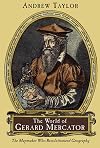
Fascinating not only for its portrait of Mercator, but for describing the context in which he was living, between the medieval and modern worlds, between theocracy and scientific rationalism. I would have liked to read more about the processes involved in coming up with his projection, as well as more on the controversies that projection has spawned -- though there is good reason to use the Mercator projection in narrowly technical terms, the cultural and political significance of it is also fascinating. Overall though, well worth the $6 I spent (it was on sale), and a well-written, quick but interesting read.
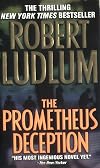
Boy was Ludlum prescient on this one! Terrorists are hitting hard all over. And so the demand for greater security is really taking off too. And guess who's benefiting? Not to give anything away, but while the details may differ, I think Ludlum's thriller is a great description of the Bush gang's modus operandi.
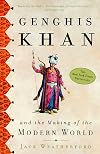
After reading this book I realized how much I didn't know about world history. I also realized that much of what I learned about European and Russian history was in fact propaganda. Of course by now we shoud expect this, but I have to admit to being surprised.
This book, drawing on long-lost primary source documents, as well as on other documents that have been underutilized, draws a fascinating picture of the empire of the Mongols, one that belies the images of barbarity, mindless violence and atrocities. In fact, Weatherford does a good job showing that in many ways the Mongols were well ahead of their time when it came to ruling.
Did the Mongols commit atrocities? Well, yes, but no more than European leaders and armies of that time period. And unlike the Europeans, the Mongols didn't impose their religion onto the populations they conquered.
Fascinating as well is Weatherford's description of the Mongol attempts to establish ties with Europe, at a time the Europeans were ignorant of the great empire to their east. Also interesting was the key role of the Mongols in the establishment of a united Chinese state. Finally, I remember the maps of what's now Russia and Central Asia with the words "Golden Horde" superimposed on large areas. Turns out the "Golden Horde" was the name of one branch of Genghis Khan's family (the "Golden" family"), and horde means order.
This book contains countless and fascinating examples of debunking what we learned about history. It's also a great show more read. Highly recommended! show less
This book, drawing on long-lost primary source documents, as well as on other documents that have been underutilized, draws a fascinating picture of the empire of the Mongols, one that belies the images of barbarity, mindless violence and atrocities. In fact, Weatherford does a good job showing that in many ways the Mongols were well ahead of their time when it came to ruling.
Did the Mongols commit atrocities? Well, yes, but no more than European leaders and armies of that time period. And unlike the Europeans, the Mongols didn't impose their religion onto the populations they conquered.
Fascinating as well is Weatherford's description of the Mongol attempts to establish ties with Europe, at a time the Europeans were ignorant of the great empire to their east. Also interesting was the key role of the Mongols in the establishment of a united Chinese state. Finally, I remember the maps of what's now Russia and Central Asia with the words "Golden Horde" superimposed on large areas. Turns out the "Golden Horde" was the name of one branch of Genghis Khan's family (the "Golden" family"), and horde means order.
This book contains countless and fascinating examples of debunking what we learned about history. It's also a great show more read. Highly recommended! show less

I have to say I was disappointed in this book. The topic and approach of the author is great, but the analysis I found to be rather superficial. The author also plays down the active role that political forces on the right in the US have played historically in hyping threats. The chapters on the history of attitudes towards safety of children, and the current hysteria over child safety, is one of his targets. Stearns also points to what I find obvious: the effect of many of the measures supposedly taken to make us safer actually makes us more afraid.
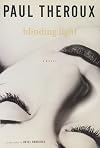
This is my third Theroux book (others I've read: Mosquito Coast, At Play in the Fields) and it's a different kind of book than the others. There are some overlaps: American goes to amazonian jungle, mystical drug experience with shaman. But it's a much more internal, introspective and psychological book than the others, focused on the main character -- Slade, a writer -- from an internal point of view.
The book starts out with scenes of Slade, a travel writer who, through the popularity of his best-selling book and related lines of "adventure" clothing and accessories, is experiencing a hell of his own devising. Theroux's sketches of Slade's fellow travellers are so on-target that I had to laugh out loud a number of times. But Theroux then veers off into other territory.
The parallels in the book between the main character (Slade) and Bill Clinton are revealing. The lie that is at the heart of Slade's recent best-seller comes back to haunt him, in more ways than one.
In this book, as in his others, Theroux proves a master of subtle description. As he is describing people and places they vividly come alive. His descriptions of Manfred, the German journalist/ethnobotanist, are especially sharp, and I can only imagine that Theroux has known people like Manfred in close quarters.
I have to say I enjoyed the other books more, though this one was compelling and I had a hard time putting it down.
The book starts out with scenes of Slade, a travel writer who, through the popularity of his best-selling book and related lines of "adventure" clothing and accessories, is experiencing a hell of his own devising. Theroux's sketches of Slade's fellow travellers are so on-target that I had to laugh out loud a number of times. But Theroux then veers off into other territory.
The parallels in the book between the main character (Slade) and Bill Clinton are revealing. The lie that is at the heart of Slade's recent best-seller comes back to haunt him, in more ways than one.
In this book, as in his others, Theroux proves a master of subtle description. As he is describing people and places they vividly come alive. His descriptions of Manfred, the German journalist/ethnobotanist, are especially sharp, and I can only imagine that Theroux has known people like Manfred in close quarters.
I have to say I enjoyed the other books more, though this one was compelling and I had a hard time putting it down.
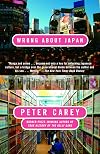
This is a great little book about dads and sons, travel, and our desire to exoticize other places, in this case Japan. Carey does a great job showing his own desire to see things through the exoticizing lense, and admitting he's wrong. He also captures very nicely traveling with a 12 year old.
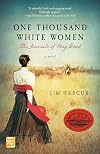
The premise of this book is an actual historical event: in an attempt to ensure peaceful relations with white America, the Cheyenne chief requests 1000 white women to become wives of his men. Though from the Cheyenne perspective this was a step to assimilation -- kids take on the tribal identities of their moms -- from the white US perspective it was unacceptable. But what if the proposal had been accepted? That's the starting point of the book.
The writer has done an amazing amount of research and really gives you a perspective that is very different from the way most people in the US think about these issues. It becomes very clear that the "Indian Wars" were ethnic cleansing and genocide, no more and no less, and while that is no surprise to many of us, Fergus does a good job of giving us an inside perspective.
Not being an expert on that period of history or on Native American culture or history, I have no idea how faithful to reality the book is in terms of Cheyenne culture, though it seems to take that culture on its own terms. I'd love to read a review of this book by someone from the Cheyenne nation. That said, it is clearly written from the perspective of a white woman. It shows an alternative vision of what could have been if the culture of greed and genocide had not dominated white American policies and culture...
The writer has done an amazing amount of research and really gives you a perspective that is very different from the way most people in the US think about these issues. It becomes very clear that the "Indian Wars" were ethnic cleansing and genocide, no more and no less, and while that is no surprise to many of us, Fergus does a good job of giving us an inside perspective.
Not being an expert on that period of history or on Native American culture or history, I have no idea how faithful to reality the book is in terms of Cheyenne culture, though it seems to take that culture on its own terms. I'd love to read a review of this book by someone from the Cheyenne nation. That said, it is clearly written from the perspective of a white woman. It shows an alternative vision of what could have been if the culture of greed and genocide had not dominated white American policies and culture...
Fascinating history of major languages going back to the earliest written records in the Middle East, South Asia, East Asia, Europe, and the Americas. Ostler attempts to explain why some languages succeed and others don't, in terms of increasing number of speakers and spreading into new territories. The explanations are somewhat convincing but very uneven. Sometimes he seems to be rushing just to cover stuff, in particular the chapter on European languages other than English. And while he knows his languages, the interpretation of history is perhaps a bit spotty, especially as we get to the 20th century. That said, this was a good read. I learned a lot about non-European languages and their spread, as well as about the process of the spread of Germanic and Romance languages in Europe.

I read this book a long time ago, and just came across it again as I was entering it into my LT catalogue. I loved this book, it was absolutely fascinating and thought-provoking: the story of a 17th century New England woman who settles in Mughal India, told through the researches of a descendant 300 years later. In fact I have another copy of it somewhere in the house (though I may have loaned it to someone, since it was an extra one). Anyway, I'm adding this to my list of books to re-read.