To talk about someone clearly less important than Jesus, I’ve heard Christians before talk about Bob Dylan—‘serve somebody’—but it’s always, before, been in this very dishonest way. That is, they always make it sound like Dylan was trying to turn you into a Republican! I guess that’s all religion can be, right! But Brian McLaren makes it clear that it’s not Caesar that is Lord, not worldly authority, not national authority, yes, not *American* authority! Which is very true to the Dylan song he references, which says that all people must decide to “serve somebody”, *regardless of their class*. That *could* be a Republican message—at least I sure bloody *hope* it could be!—but it’s certainly not *exclusively* a Republican message.... not a registered trademark.
Anyway McLaren is a great guy; he’s very humble, which isn’t what you expect from religious people, or even intellectuals of any kind—or people in general, when you come right down to the ugly truth, right. McLaren is very conscious of the enormity of his task and the limitations of his resources, which makes him a lot easier to trust. I don’t know if I’m equally dependent upon the Lord, although my conscious mind in a moment of calm shudders at the imagined possibility that I might not be. I am far more confident of grace than I am of myself; people all work at something, whoever they are, but when you try to work for God, what you “get back” is always more of a gift than show more anything else, since there’s no.... having control, I guess, or anything like that.
But I drift. McLaren’s a great guy. There’s a reason why people go to him for book reviews/blurbs. He’s like Papa Haydn for his own little subculture. show less
Anyway McLaren is a great guy; he’s very humble, which isn’t what you expect from religious people, or even intellectuals of any kind—or people in general, when you come right down to the ugly truth, right. McLaren is very conscious of the enormity of his task and the limitations of his resources, which makes him a lot easier to trust. I don’t know if I’m equally dependent upon the Lord, although my conscious mind in a moment of calm shudders at the imagined possibility that I might not be. I am far more confident of grace than I am of myself; people all work at something, whoever they are, but when you try to work for God, what you “get back” is always more of a gift than show more anything else, since there’s no.... having control, I guess, or anything like that.
But I drift. McLaren’s a great guy. There’s a reason why people go to him for book reviews/blurbs. He’s like Papa Haydn for his own little subculture. show less
This is a great book, and it really is about Africa. The author had enough selflessness to let it be about the land, and not about himself personally. Personality is fine, of course, but it’s thin food if it’s all you have. Really this is a great moral book.

I used to hate the BCP, like I was pretending, but now I just think that the creeds and collects and such are just easier to remember than some of the more involved Psalms. (The Psalms are in there too, as they obviously should be.) And I think, now, that sometimes it’s better to let the right thing change you, rather than to, unnecessarily, change it.... It’s not bad.

Rachel and I aren’t always very similar, although I’m not going to put my tortured attempts to describe and contrast us in the review proper. (I really can’t describe it well.) All I’ll say is that from reading this book and my own experiences and from the general observation of surroundings and things that happen in our own lifetimes and such, I would say that I think that most Millennials go through a phase of passionately hating the church, even if they eventually return to it. (And with some exceptions, it’s probably indifference rather than passionate hatred that is a better indicator of long-term alienation. But even people who have a controlled affect probably go through periods of passionate distaste.) The form of this rejection should not be assumed to be the same or even that similar in all individuals.

I liked this book better than I thought I would, in that I was nervous, but found him to say many good things as well as a few bad things.
.... Not absolutely everything that anybody could force themselves to be suspicious of is bad, just certain things. (Maybe one day I’ll make that sound a whole lot more clever, ha.)
.... Not absolutely everything that anybody could force themselves to be suspicious of is bad, just certain things. (Maybe one day I’ll make that sound a whole lot more clever, ha.)
This is a great example of why I don’t assign number ratings to books.
I mean, he’s excessively fearful of conformity; he talks about Luther the way that I talk about Emerson.... Nobody seems to talk smack about Emerson, so I’m not worried about him. And anyway, he was a veneer of respectability and manliness (which I don’t much like anyway, the manly type) over a sewer of self-concern and self-glorying. Luther would have ranted about the devil the way I’m ranting now and lacked charity the way I lack it now, but at least he would have understood. But I digress.
Christ said to make disciples in every nation, (maybe not setting up empire in order to do it, right), but I don’t think that every nation stands in equal need, despite the fact that a universal message should be universally available. But Hinduism and Taoism and most of the Asian religions, at least in their most pure forms—and who knows what impure forms of Christianity would look like to a Muslim missionary— are the higher religions of mankind, and not less developed than Catholicism and Calvinism. They’re not like the sex cults of paganism, which magnify sex-violence and diminish the poor, and from which Europe and Africa have stood in such need of saving.... Paganism is the stuff of desire, but I would have had far less love in me had the gospel of Jesus Christ not restrained, with my co-operation, my desire.
[It’s not unique; nothing really is. But it’s rare. It’s not the show more default....
Agnes Wickfield: This Christmas I want to remember the birth of our Savior so that I can have a new birth of gratitude and hope, so that I can cultivate a more perfect charity and be more like Christ, a help to God and my neighbor.
*beat*
Dora Spenlow: I hope it snows.]
So Huxley gets some things right and some wrong. “Everyone should be perfect if I’m going to let them on Team Perennial, so Calvin is out because he’s a murderer like David, and anyway the Bible is rot because people like it too much.” Nirvana shirts, only ten dollars, right.
“And we really all need the higher life, and we should quit persecuting each other, especially because of the pettiness that’s in it.” How to add to that, right.
.... Huxley is a little too cerebral, in that he thinks he’s going to say just the right thing and give everybody exactly what they deserve, you know. I don’t think I could do that. I fuck up my reviews all the time. So who’s Huxley? I mean, don’t you have to reach out into the darkness, and accept that you’ll see the outlines but not the whole thing? It’s the heart that does it; a mental production is a very mixed bag.
*British accent* ‘So that’s why I don’t do no bloody number ratings, love.’ show less
I mean, he’s excessively fearful of conformity; he talks about Luther the way that I talk about Emerson.... Nobody seems to talk smack about Emerson, so I’m not worried about him. And anyway, he was a veneer of respectability and manliness (which I don’t much like anyway, the manly type) over a sewer of self-concern and self-glorying. Luther would have ranted about the devil the way I’m ranting now and lacked charity the way I lack it now, but at least he would have understood. But I digress.
Christ said to make disciples in every nation, (maybe not setting up empire in order to do it, right), but I don’t think that every nation stands in equal need, despite the fact that a universal message should be universally available. But Hinduism and Taoism and most of the Asian religions, at least in their most pure forms—and who knows what impure forms of Christianity would look like to a Muslim missionary— are the higher religions of mankind, and not less developed than Catholicism and Calvinism. They’re not like the sex cults of paganism, which magnify sex-violence and diminish the poor, and from which Europe and Africa have stood in such need of saving.... Paganism is the stuff of desire, but I would have had far less love in me had the gospel of Jesus Christ not restrained, with my co-operation, my desire.
[It’s not unique; nothing really is. But it’s rare. It’s not the show more default....
Agnes Wickfield: This Christmas I want to remember the birth of our Savior so that I can have a new birth of gratitude and hope, so that I can cultivate a more perfect charity and be more like Christ, a help to God and my neighbor.
*beat*
Dora Spenlow: I hope it snows.]
So Huxley gets some things right and some wrong. “Everyone should be perfect if I’m going to let them on Team Perennial, so Calvin is out because he’s a murderer like David, and anyway the Bible is rot because people like it too much.” Nirvana shirts, only ten dollars, right.
“And we really all need the higher life, and we should quit persecuting each other, especially because of the pettiness that’s in it.” How to add to that, right.
.... Huxley is a little too cerebral, in that he thinks he’s going to say just the right thing and give everybody exactly what they deserve, you know. I don’t think I could do that. I fuck up my reviews all the time. So who’s Huxley? I mean, don’t you have to reach out into the darkness, and accept that you’ll see the outlines but not the whole thing? It’s the heart that does it; a mental production is a very mixed bag.
*British accent* ‘So that’s why I don’t do no bloody number ratings, love.’ show less

It has verisimilitude, so I’ll try not to wrangle; I’ll just say this: the book is called “The Doctrines of Grace”, and that is good, and it is properly so called for as long as the grace of God is what’s most important. Then, it is a doctrine of God. But if the depravity of “man” (if you will) is most important, then it is more like *the doctrines of depravity*, which is a great misfortune. But, again.
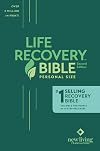
I like the NLT translation; it’s less formal than the NIV, which means I usually like it better.
I also like the Arterburn/Stoop recovery notes. I worked through the 12-step recovery devotional, and after I was done with that I watched the twelve (free) videos on the tyndalebibles site as a refresher. (There are also two other recovery devotionals built into it, and all the regular chapter-and-verse, or book-wide and verse-specific I guess, commentary, from a Christian counseling perspective.)
So all in all I find it a highly worthy offering.
I also like the Arterburn/Stoop recovery notes. I worked through the 12-step recovery devotional, and after I was done with that I watched the twelve (free) videos on the tyndalebibles site as a refresher. (There are also two other recovery devotionals built into it, and all the regular chapter-and-verse, or book-wide and verse-specific I guess, commentary, from a Christian counseling perspective.)
So all in all I find it a highly worthy offering.
The Diversity Delusion: How Race and Gender Pandering Corrupt the University and Undermine Our Culture by Heather Mac Donald
I think my writing is fascinating; if you’re curious, it’s in the Comments section. But here’s the clipped version. I was at work today, washing dishes, not really listening to the chefs’ banter. Then one of them turns to the other and replies, “Because you’re an asshole, and I’m not.” It was funnier not knowing the context, because when you trash talk like that, it doesn’t really matter who you are or what you’re talking about. (Indeed, sooner or later, you’ll translate it to everybody in your life you’re sufficiently close to.) And so we come to politics. You look at the target, and whatever they do wrong deserves the greatest consideration, and whatever they do right deserves zero consideration. (“Shut up, college students *are* like that! No, they don’t study; they don’t even drink: they just attack people, like animals.”) It’s like listening to a lawyer, or an advertiser, talk. It doesn’t matter what they say, you’re never impressed by their *judgment*. (And being of service is more important than making a name for yourself.)
Executive summary: A superficial-at-best interest in the classics and moral traditions, and an obsession with trashin’ the liberals.
........................
Maybe I can carefully approach the subject more directly.
The more she struggled and thrashed and lashed out against the idea that there is bias in contemporary society, the deeper she digs herself into the hole. From reading this book I was *more show more deeply* impressed with the important truth that denied bias is pervasive.
.........................
Beneath the mask of anger, she’s probably a little disoriented. “You mean it’s not easy to live in a world distorted by prejudice? You mean my kids don’t look at the world the way my parents did?”
............................
I should probably say that many conservatives don’t brood about the whole thing like she does; most of them probably still just don’t want to look bad, you know, and go at it like that. Which isn’t an endorsement of mine, you know.
..................................
Perhaps the center-point of conservatism, at least as it exists for many people, is ‘distrust of the children’; the liberal counterpart should be obvious. It’s just not always as abandoned to rage as it is here.
...................................
What a disaster it would be to have someone like this ‘on your side’.
..................................
On Cornel West’s Twitter he page says he likes the black Church, progressive politics, and jazz. I like the same sort of things: liberal theology and Christian culture. I suppose we’ve all had times when we’ve felt like the bureaucrats are trying to make us follow unnecessary rules. “And it will lead to our bloody downfall!” Well, we don’t all believe *that*, but.
.................................
“And now that I’m done beating you up because after 250 pages my arm is tired, maybe now you’ll finally respect me.”
.................................
I do not see the appeal of this way of thinking. show less
Executive summary: A superficial-at-best interest in the classics and moral traditions, and an obsession with trashin’ the liberals.
........................
Maybe I can carefully approach the subject more directly.
The more she struggled and thrashed and lashed out against the idea that there is bias in contemporary society, the deeper she digs herself into the hole. From reading this book I was *more show more deeply* impressed with the important truth that denied bias is pervasive.
.........................
Beneath the mask of anger, she’s probably a little disoriented. “You mean it’s not easy to live in a world distorted by prejudice? You mean my kids don’t look at the world the way my parents did?”
............................
I should probably say that many conservatives don’t brood about the whole thing like she does; most of them probably still just don’t want to look bad, you know, and go at it like that. Which isn’t an endorsement of mine, you know.
..................................
Perhaps the center-point of conservatism, at least as it exists for many people, is ‘distrust of the children’; the liberal counterpart should be obvious. It’s just not always as abandoned to rage as it is here.
...................................
What a disaster it would be to have someone like this ‘on your side’.
..................................
On Cornel West’s Twitter he page says he likes the black Church, progressive politics, and jazz. I like the same sort of things: liberal theology and Christian culture. I suppose we’ve all had times when we’ve felt like the bureaucrats are trying to make us follow unnecessary rules. “And it will lead to our bloody downfall!” Well, we don’t all believe *that*, but.
.................................
“And now that I’m done beating you up because after 250 pages my arm is tired, maybe now you’ll finally respect me.”
.................................
I do not see the appeal of this way of thinking. show less
N.B. Technically this entry is the KJV Bible, but this review is really just for the “plain”, no-notes, Bible-in-general Bible.
My opinion of the Bible has gradually grown over time, and I’ve been surprised that as I’ve put more weight on it, it has had no trouble holding the weight. God is faithful, not begrudging me the scriptures even after I for years, hypnotized by Pharisees and false witnesses, first did my best to discard and thrust it from my sight as quickly and as thoroughly as possible, and then later began only slowly to take it up, with much trepidation, qualification and suspicion.
I don’t only read the Bible; I don’t even only read spiritual books. I do read a few explicitly non-Christian books, and many secular books, some of them good, although I am getting to the point where most of them, especially the ones I go through now, are Christian—and to tell the truth the more “normal” sort of secular books are beginning to strike me as undesirably un-Christian. Difference is endlessly fascinating, but vanity is endlessly tiresome, and shouldn’t really be so fascinating at all. But “this madness called Jesus” works. The Bible works. This doesn’t mean a book has to unnecessarily flaunt its biblicism with lots of quotes or be *obviously* biblical, although many of them do have many quotes from scripture.
It doesn’t bother me anymore. Before when I tried to review the Bible here I sounded like a Jung—as great as that is, show more right—albeit one recently changed from something worse. This, I suppose, has been my piecemeal conversion. (“Off with his head!” No, rather say, ‘Let there be now no condemnation.’). I don’t need to try to take a few paragraphs, anymore, to catalog the types of biblical literature and rate them based on how devotional they are, to explain why I like Job better than the Song of Songs, and on and on about myself and my opinions, right.
My little opinions, my little self.
*sighs* But where to begin.
So, basically, although I’m not trying to tell you about what to think about different communities—and I do think that healthy religion usually has community, which is one of the reasons why we can’t just get new religions out of whole cloth in a day— I have begun to think about the Bible as actually being sui generis (‘of its own kind’ or category). I plan on reading “Middlemarch” again, but I wouldn’t memorize “Middlemarch”. The average novelist working today probably wouldn’t memorize their work if it came to that or having it perish. God knows I wouldn’t try to memorize this crap I write, or even keep it up after awhile, half the time. I’m not saying never read a novel again, because God does care about details, and about people. But “Middlemarch” and “War and Peace” and so on aren’t meant to be memorized. The Bible is different, and I have begun beginning to memorize a few Psalms, and I can’t even begin to tell you the gift it is to yourself—see me, I’m a corrupt modern, too!— to begin to pray the Psalms.
And that I will leave you with; pray the Psalms, if anything I say has any merit. show less
My opinion of the Bible has gradually grown over time, and I’ve been surprised that as I’ve put more weight on it, it has had no trouble holding the weight. God is faithful, not begrudging me the scriptures even after I for years, hypnotized by Pharisees and false witnesses, first did my best to discard and thrust it from my sight as quickly and as thoroughly as possible, and then later began only slowly to take it up, with much trepidation, qualification and suspicion.
I don’t only read the Bible; I don’t even only read spiritual books. I do read a few explicitly non-Christian books, and many secular books, some of them good, although I am getting to the point where most of them, especially the ones I go through now, are Christian—and to tell the truth the more “normal” sort of secular books are beginning to strike me as undesirably un-Christian. Difference is endlessly fascinating, but vanity is endlessly tiresome, and shouldn’t really be so fascinating at all. But “this madness called Jesus” works. The Bible works. This doesn’t mean a book has to unnecessarily flaunt its biblicism with lots of quotes or be *obviously* biblical, although many of them do have many quotes from scripture.
It doesn’t bother me anymore. Before when I tried to review the Bible here I sounded like a Jung—as great as that is, show more right—albeit one recently changed from something worse. This, I suppose, has been my piecemeal conversion. (“Off with his head!” No, rather say, ‘Let there be now no condemnation.’). I don’t need to try to take a few paragraphs, anymore, to catalog the types of biblical literature and rate them based on how devotional they are, to explain why I like Job better than the Song of Songs, and on and on about myself and my opinions, right.
My little opinions, my little self.
*sighs* But where to begin.
So, basically, although I’m not trying to tell you about what to think about different communities—and I do think that healthy religion usually has community, which is one of the reasons why we can’t just get new religions out of whole cloth in a day— I have begun to think about the Bible as actually being sui generis (‘of its own kind’ or category). I plan on reading “Middlemarch” again, but I wouldn’t memorize “Middlemarch”. The average novelist working today probably wouldn’t memorize their work if it came to that or having it perish. God knows I wouldn’t try to memorize this crap I write, or even keep it up after awhile, half the time. I’m not saying never read a novel again, because God does care about details, and about people. But “Middlemarch” and “War and Peace” and so on aren’t meant to be memorized. The Bible is different, and I have begun beginning to memorize a few Psalms, and I can’t even begin to tell you the gift it is to yourself—see me, I’m a corrupt modern, too!— to begin to pray the Psalms.
And that I will leave you with; pray the Psalms, if anything I say has any merit. show less

Solidly competent.
I missed the whole idea of the well-being of the nation being tied to the moral health of the ruler. “Something rotten”, of course, but a brief reading misses a lot. “Something's bad? Why is it bad?.... Well, something's always bad in a play.”
I also seriously mis-understood the Hamlet/Laertes foil-set-up; Laertes isn’t “the good kid”, he’s just the *extrovert*.... And although I grasped that the ghost alone doesn’t prove anything, I didn’t understand that this was clear to many other people—even Hamlet, who never understood anything until he was damn well ready.
I missed the whole idea of the well-being of the nation being tied to the moral health of the ruler. “Something rotten”, of course, but a brief reading misses a lot. “Something's bad? Why is it bad?.... Well, something's always bad in a play.”
I also seriously mis-understood the Hamlet/Laertes foil-set-up; Laertes isn’t “the good kid”, he’s just the *extrovert*.... And although I grasped that the ghost alone doesn’t prove anything, I didn’t understand that this was clear to many other people—even Hamlet, who never understood anything until he was damn well ready.
When I first read it I was struck by how much of it I thought was nonsense; basically, as a religious liberal instead of a secular conservative, I was at odds with his ideas about conscience. Basically, “Do justice, love mercy, and walk humbly with your God”, sounds a lot sexier to me than, “I want to be *free*, to spend *all* of *my money*, however the hell *I* want.”
*shrugs* Maybe that’s unfair.
[“Well, I just like Emerson!” *starts beating him with a hardcover copy of /Jesus Calling/* “Well, I just like Jesus!” *laughing* In the name of the Father, *hits*, the Son, *hits*, and the Holy Spirit, *hits*, do justice, *hits*, love mercy *hits*, and walk humbly with your God *hits several times, then throws the book at him* *falls down laughing* *beat* “Hey, why are the cops here?”
.... You see what I do for you? *laughs* I make myself look like a fool, a-ha! Seriously, though, one of the things I’ve learned is that you can’t force someone to do something for the right reason. Doesn’t matter if it’s religion or chemistry.]
But anyway, moving forward it did have a more positive influence than that, and did help me understand and like conservatives more. I think it was Virginia Woolf who said something about how if you really understand someone, you end up liking them.
Basically, American conservatives like the Constitution the way that liberals like blacks.
*shrugs* Different dreams, right.
*shrugs* Maybe that’s unfair.
[“Well, I just like Emerson!” *starts beating him with a hardcover copy of /Jesus Calling/* “Well, I just like Jesus!” *laughing* In the name of the Father, *hits*, the Son, *hits*, and the Holy Spirit, *hits*, do justice, *hits*, love mercy *hits*, and walk humbly with your God *hits several times, then throws the book at him* *falls down laughing* *beat* “Hey, why are the cops here?”
.... You see what I do for you? *laughs* I make myself look like a fool, a-ha! Seriously, though, one of the things I’ve learned is that you can’t force someone to do something for the right reason. Doesn’t matter if it’s religion or chemistry.]
But anyway, moving forward it did have a more positive influence than that, and did help me understand and like conservatives more. I think it was Virginia Woolf who said something about how if you really understand someone, you end up liking them.
Basically, American conservatives like the Constitution the way that liberals like blacks.
*shrugs* Different dreams, right.

He refuses to lay down exacting quasi-religious rules of diet (to foist on friends, relations, and women everywhere!); he explains principles of good, healthy eating, and explains that this is central to our health.
Surely that’s bad enough, lol.
Surely that’s bad enough, lol.

I remember when I first encountered the twelve steps, (e.g. ‘became willing to make amends’), I thought that it didn’t apply to me because I didn’t use alcohol.
*insert pithy saying here, then transition* Recommended.
.........................
The Twelve Steps are great, and are obviously the foundation of much derivative literature. The Twelve Traditions I was expecting to be less useful since I’m not actually an A.A., but I was wrong. They’re really great. We could all use some more humility and step-work in group affairs.
*insert pithy saying here, then transition* Recommended.
.........................
The Twelve Steps are great, and are obviously the foundation of much derivative literature. The Twelve Traditions I was expecting to be less useful since I’m not actually an A.A., but I was wrong. They’re really great. We could all use some more humility and step-work in group affairs.
There’s no polite way to describe this book, and some that are too polite. A hard-ass Victorian would hate it thoroughly, and many a critic will just pat themselves on the back like, Look at me reading a book. In general people refuse to look from the crime looking out, instead of the police or the press looking in, which means it runs against the grain, in some ways, although in others it’s deeply dyed in ordinariness. It’s like the opposite of the news, in other words.
It’s familiarity turned into a crime, without the external voice telling them what they’re like. The first-person aspect of it is central to the way that the whole thing is presented.
The errors that lead to crime are so gradual and commonplace that much of it is simple and easy to read. You hate your mom; you pick a bad boyfriend. You cultivate the veneer; you by turns idolize and burn with jealousy towards those not in the same prison as you. You don’t see anything wrong, do you?
At the same time, in the end it’s not about looking away from the mirror.
.......................
“The day I’m working towards wasn’t so very long ago. I’m about to tell how it went so everyone will know. I’d like to think it won’t happen again. Once is enough for the whole earth. It shouldn’t recur and if I tell about the day, step by step, people can understand certain warning signs. Then nothing like it will take place again, not ever. I imagine, when I’m sitting here, that I’m ringing a bell, show more and someone will hear, but to tell the truth, I also know that it isn’t very often that people change their ways. Still, I have to ring the bell, keep it sounding.” (p. 253/294 nook edition).
I think a lot of people would either see this as fluffy dross (“your life’s not important enough to write about”), or, indeed, as a caramelized treat for the mind (“oh, so I reached the end, great”); I’m slightly distressed and greatly mystified by this.
I think that it’s about halfway between a comedy and the Holocaust, you know.
It’s like a sci-fi action flick, except nothing physically improbable happens, and you’re spared the balletic glitter of how rich you are, and the subsequent coming-down alienation realization that, indeed, you are not.
In other words, it’s the opposite. “There’s nothing either good or bad, but thinking makes it so. To me it is a prison.”
To me it is a prison.... and to her. show less
It’s familiarity turned into a crime, without the external voice telling them what they’re like. The first-person aspect of it is central to the way that the whole thing is presented.
The errors that lead to crime are so gradual and commonplace that much of it is simple and easy to read. You hate your mom; you pick a bad boyfriend. You cultivate the veneer; you by turns idolize and burn with jealousy towards those not in the same prison as you. You don’t see anything wrong, do you?
At the same time, in the end it’s not about looking away from the mirror.
.......................
“The day I’m working towards wasn’t so very long ago. I’m about to tell how it went so everyone will know. I’d like to think it won’t happen again. Once is enough for the whole earth. It shouldn’t recur and if I tell about the day, step by step, people can understand certain warning signs. Then nothing like it will take place again, not ever. I imagine, when I’m sitting here, that I’m ringing a bell, show more and someone will hear, but to tell the truth, I also know that it isn’t very often that people change their ways. Still, I have to ring the bell, keep it sounding.” (p. 253/294 nook edition).
I think a lot of people would either see this as fluffy dross (“your life’s not important enough to write about”), or, indeed, as a caramelized treat for the mind (“oh, so I reached the end, great”); I’m slightly distressed and greatly mystified by this.
I think that it’s about halfway between a comedy and the Holocaust, you know.
It’s like a sci-fi action flick, except nothing physically improbable happens, and you’re spared the balletic glitter of how rich you are, and the subsequent coming-down alienation realization that, indeed, you are not.
In other words, it’s the opposite. “There’s nothing either good or bad, but thinking makes it so. To me it is a prison.”
To me it is a prison.... and to her. show less
It’s a decent book overall. The first time I read it The List seemed very reference-y and difficult, but it’s the most enduring part of the book for me; it’s the ultimate in personal responsibility.
The whole radical responsibility thing is more than enough to turn away the average denizen of this society, (you mean it’s not Hitler’s fault? But what about the youngsters?), and not a few people who say they like the book discard most of its ideas whenever they become relevant.
Filed under human behavior. Kids on the jungle gym. “Mommy, that one’s different! Make them conform, Mommy!” Oh no wait that’s when you’re thirty. When you’re little you just run at the bastard!
Of course, I’m not sure that what they used to call self-love is the answer to all your problems, even if stewing in self-loathing and self name-calling is not.
Don’t hate yourself, at least.
.... I’m sure it sounds like candy-floss to some people, but she’s assuming that you’re too irresponsible not to blame blame blame, criticize criticize criticize, and not even realize you’re doing it, (“Mommy I don’t have time to help you peel carrots; I have to build a time-machine so I can kill Hitler when he was still a young person! So would you and Daddy stop ruining my life! It’s bad enough when you stopped me from doing my algebra homework yesterday morning—if I had good parents I’d have a girlfriend-slave too!”), and that you’ll skim the contents, ignoring 98%, show more before going back to one of those linger-on-the-corpses cop dramas where killing people is essentially the only way of advancing the plot. Which you don’t really need; what you need are corpses and ads; fear/anger and greed.
So there’s eating candy floss, and there’s eating carpet cleaner. Don’t criticize, don’t hate yourself.
“But you criticize.” I delete books I don’t like; I don’t criticize them.
*sunglasses* And I’m funny. show less
The whole radical responsibility thing is more than enough to turn away the average denizen of this society, (you mean it’s not Hitler’s fault? But what about the youngsters?), and not a few people who say they like the book discard most of its ideas whenever they become relevant.
Filed under human behavior. Kids on the jungle gym. “Mommy, that one’s different! Make them conform, Mommy!” Oh no wait that’s when you’re thirty. When you’re little you just run at the bastard!
Of course, I’m not sure that what they used to call self-love is the answer to all your problems, even if stewing in self-loathing and self name-calling is not.
Don’t hate yourself, at least.
.... I’m sure it sounds like candy-floss to some people, but she’s assuming that you’re too irresponsible not to blame blame blame, criticize criticize criticize, and not even realize you’re doing it, (“Mommy I don’t have time to help you peel carrots; I have to build a time-machine so I can kill Hitler when he was still a young person! So would you and Daddy stop ruining my life! It’s bad enough when you stopped me from doing my algebra homework yesterday morning—if I had good parents I’d have a girlfriend-slave too!”), and that you’ll skim the contents, ignoring 98%, show more before going back to one of those linger-on-the-corpses cop dramas where killing people is essentially the only way of advancing the plot. Which you don’t really need; what you need are corpses and ads; fear/anger and greed.
So there’s eating candy floss, and there’s eating carpet cleaner. Don’t criticize, don’t hate yourself.
“But you criticize.” I delete books I don’t like; I don’t criticize them.
*sunglasses* And I’m funny. show less
A modern woman reads her Victorian ancestor as she confronts her mother’s cancer, and her own.
I’m on a more biblical path now, so I thought I’d re-evaluate what I think of the book.
Basically, now I want to memorize the Psalms, so that’s going to interfere with the desire I once had to read all of Dyer & Chopra, at least once.
Stereotypical TV General: *upset* There isn’t. Time.
As to its value, if I can say after going over it once, well, of course I don’t know if his stages of God-consciousness are the best possible, or, more to the point, if assuming that his outline has merit, whether he prepared the dish like a Gordon Ramsay or a teenager or something in-between.
But I will say this: it’s better than watching TV. TV at its best is harmless, but.
When it comes down to ultimate things, that’s when you really become either proud or wise, and I don’t think that you have to clone me to advance.
And, you know, (affirmations) and meditation and other forms of new age study and repetition are a better primer for memorization study than.... sci-fi comedies.
“The giant squids are overcoming the earth! E gad!”
Bless and do not curse.
Basically, now I want to memorize the Psalms, so that’s going to interfere with the desire I once had to read all of Dyer & Chopra, at least once.
Stereotypical TV General: *upset* There isn’t. Time.
As to its value, if I can say after going over it once, well, of course I don’t know if his stages of God-consciousness are the best possible, or, more to the point, if assuming that his outline has merit, whether he prepared the dish like a Gordon Ramsay or a teenager or something in-between.
But I will say this: it’s better than watching TV. TV at its best is harmless, but.
When it comes down to ultimate things, that’s when you really become either proud or wise, and I don’t think that you have to clone me to advance.
And, you know, (affirmations) and meditation and other forms of new age study and repetition are a better primer for memorization study than.... sci-fi comedies.
“The giant squids are overcoming the earth! E gad!”
Bless and do not curse.

I. The theme of not wanting to be tyrannized over begins in the beginning.
II. I’m sorry if I’m toppling the apple cart, but Helen Burns is the best character in the whole book.
If the church pews were filled with Helen Burns people, and if intellectuals/introverts were like Helen Burns, oh my, the joy!
III. You say hello; I say goodbye. ^^
It’s cute.
IV. St. John Rivers is a flawed guy, although it’s not worth spitting blood over, and indeed Jane doesn’t. He was too worried about making a name for himself, but actually the thing that Jane did that brought her the most merit was probably teaching those poor girls for little in return.
You just can’t bully people into earning merit.
V. We make lovers into idols, so it’s easy to imagine that it’s somehow Jane punishing Rochester, but really it’s an act of God.
And the lovers experienced their reunion as an act of grace.
II. I’m sorry if I’m toppling the apple cart, but Helen Burns is the best character in the whole book.
If the church pews were filled with Helen Burns people, and if intellectuals/introverts were like Helen Burns, oh my, the joy!
III. You say hello; I say goodbye. ^^
It’s cute.
IV. St. John Rivers is a flawed guy, although it’s not worth spitting blood over, and indeed Jane doesn’t. He was too worried about making a name for himself, but actually the thing that Jane did that brought her the most merit was probably teaching those poor girls for little in return.
You just can’t bully people into earning merit.
V. We make lovers into idols, so it’s easy to imagine that it’s somehow Jane punishing Rochester, but really it’s an act of God.
And the lovers experienced their reunion as an act of grace.

If you think that everything before 1975 is bad—with that layer of, ‘God is the non-existent force of hatred and foolishness’— and you’re interested in schizophrenia, then this is the book for you.
It’s not really about schizophrenia though; it’s about anger. How is it that Freud can be automatically wrong about everything, even though we too believe in expressing anger until it somehow goes away? I don’t know, but just ask the scientist of seething anger. He’ll be sure to know.
I know that if you pick up this book you probably share lots of his assumptions so you’ll tune out what I’m saying, but in a way that’s the funniest thing of all. Isn’t assuming that you can’t solve your problems (except maybe by buying something) and dedicating yourself to watching TV something that the plebs do?
Edit: And I do read a lot of secular psychology; most of them don’t think it’s their business to be bitter, to return evil for evil like a true politician, etc.
.... He really has a gift, you know. History inevitably gets better, but started getting worse in 1900; before 1975, we didn’t value the family; academic 60s radicals weren’t intellectual enough, and certainly weren’t loyal enough to the radical left. (Which explains why they weren’t the perfect Superman type.) Gotta send those fools to Siberia, where they belong.
I know I probably sound angry. Makes you sound stupid, don’t you think?
It’s not really about schizophrenia though; it’s about anger. How is it that Freud can be automatically wrong about everything, even though we too believe in expressing anger until it somehow goes away? I don’t know, but just ask the scientist of seething anger. He’ll be sure to know.
I know that if you pick up this book you probably share lots of his assumptions so you’ll tune out what I’m saying, but in a way that’s the funniest thing of all. Isn’t assuming that you can’t solve your problems (except maybe by buying something) and dedicating yourself to watching TV something that the plebs do?
Edit: And I do read a lot of secular psychology; most of them don’t think it’s their business to be bitter, to return evil for evil like a true politician, etc.
.... He really has a gift, you know. History inevitably gets better, but started getting worse in 1900; before 1975, we didn’t value the family; academic 60s radicals weren’t intellectual enough, and certainly weren’t loyal enough to the radical left. (Which explains why they weren’t the perfect Superman type.) Gotta send those fools to Siberia, where they belong.
I know I probably sound angry. Makes you sound stupid, don’t you think?

It’s mostly centrist, albeit in a post-Victorian (1959) kind of a way. He does have opinions, of course, but it’s not really an Orthodox polemic. It tends that way, just enough to be perceived, but mostly it’s just a useful popular introduction to someone without any formal background in the subject.
....................
One doesn’t know how Greek one is, until one studies the Jews.
........................
Something more than your own little pleasures.
.... Because it’s not for nothing.
....................
One doesn’t know how Greek one is, until one studies the Jews.
........................
Something more than your own little pleasures.
.... Because it’s not for nothing.
I think I’m beginning to understand the unity of the book; the first time I spread them out over so much time that the chapters, which are so like short stories that I started to think of them almost in that way.
No, but Billy Littleford is Julian McGann, Betsey Littleford is Evelyn Lynn Madison Demont. (Jan Sokol is Rodrigo, Shelly is Suzanne White.)
I think it’s great. It’s the Old Brain gone wild. [The irrational brain. The dreamer.]
No, but Billy Littleford is Julian McGann, Betsey Littleford is Evelyn Lynn Madison Demont. (Jan Sokol is Rodrigo, Shelly is Suzanne White.)
I think it’s great. It’s the Old Brain gone wild. [The irrational brain. The dreamer.]
“What is your name besides Burns?”
“Helen.”
I think that eventually even the devils will be converted, something that has been good to me, for many are those who are like devils, and it does not do to hate them. It certainly does not make one like Christ.
...........................
I’m not technically or intellectually exclusionary, but I also need the reminder that God loves people who treat people like crap. “When I am the winter, You are the fire, that burns.”
............................
The description of heaven is haunting; I know of no other word for it. ‘Tis a beauty worth seeing for those who think it all candy-floss dross.
It is almost a terrible beauty; perhaps our training is the very turning of learning to see it as good.
.... People think heaven is like being rich, you know. “I could get expensive ice cream that doesn’t kill me and live in an expensive house that would put me far, far away from fucked-up people.” The gospel doesn’t call us far, far away from fucked-up people.
“Helen.”
I think that eventually even the devils will be converted, something that has been good to me, for many are those who are like devils, and it does not do to hate them. It certainly does not make one like Christ.
...........................
I’m not technically or intellectually exclusionary, but I also need the reminder that God loves people who treat people like crap. “When I am the winter, You are the fire, that burns.”
............................
The description of heaven is haunting; I know of no other word for it. ‘Tis a beauty worth seeing for those who think it all candy-floss dross.
It is almost a terrible beauty; perhaps our training is the very turning of learning to see it as good.
.... People think heaven is like being rich, you know. “I could get expensive ice cream that doesn’t kill me and live in an expensive house that would put me far, far away from fucked-up people.” The gospel doesn’t call us far, far away from fucked-up people.
I like how Haidt respects conservative ideas even when he implicitly doesn’t share them, sometimes very daringly; I’m not a conservative, but that’s the kind of liberal I want to be; I want to be, like him, the person who believes what’s true, and not the one who makes an exception if the other person is too conservative or whatever. (*)
..................
There’s a lot; that’s just what mattered most to me. It’s not really a book that you summarize.
......................
(*) “A good place to look for wisdom, therefore, is where you least expect to find it: in the minds of your opponents.”
Isn’t it amazing that an atheist could get Jesus so right, while we in the church often get him so wrong? [‘I tell you this, in Israel I have not found such faith.’]
..................
There’s a lot; that’s just what mattered most to me. It’s not really a book that you summarize.
......................
(*) “A good place to look for wisdom, therefore, is where you least expect to find it: in the minds of your opponents.”
Isn’t it amazing that an atheist could get Jesus so right, while we in the church often get him so wrong? [‘I tell you this, in Israel I have not found such faith.’]
The 25 Biblical Laws of Success: Powerful Principles to Transform Your Career And Business by William Douglas
It’s an interesting little book that includes insights from Brazilian, American, and biblical culture. Originally published in Portuguese, I think the authors may have translated it themselves, as a number of English-language sources are in the notes, with no indication that they were read in translation. Drawing on everything from Napoleon Hill and Nelson Rodrigues to Proverbs and Paul, the authors are also, incidentally, Protestant, breaking down some more stereotypical walls separating North and Latin America.
Most of which is just the external sort of commentary, I’m aware, but I also don’t think it was a strictly recommend-it-to-your-business-friends business book.
.... The book’s principal flaw is probably its excessively numerous short chapters; possibly a few longer ones might have organized the material better. Distinguishing “anger against wealth” and “covetousness and jealousy” to the point of putting a chapter break between them was probably excessive.
But I quibble. Since I already agreed, there is little of great merit for me to say.
Most of which is just the external sort of commentary, I’m aware, but I also don’t think it was a strictly recommend-it-to-your-business-friends business book.
.... The book’s principal flaw is probably its excessively numerous short chapters; possibly a few longer ones might have organized the material better. Distinguishing “anger against wealth” and “covetousness and jealousy” to the point of putting a chapter break between them was probably excessive.
But I quibble. Since I already agreed, there is little of great merit for me to say.
It’s very neutral writing; it’s also not like reading about the murder-suicides of the kings of England. Actually, at first I thought of it as being centrist because it’s so secular and not about cultivating the Buddha garden, or even ad-writing, ‘Come! Eat the food!’ It’s very neutral. But then that’s when it hit me. It makes China normal for Westerners. It’s a totally non-Western cast in a Eurocentric world. It’s center-left, not that that makes it better or worse, but I understand the attraction now. And reading about somebody betraying his first love has a certain reality to it, does it not?
“Blessed is the one who does not.... join in with the mockers.” [KJV: “sit in the seat of the scornful”]. Psalms 1:1
That way, I don’t have to feel sad.
Anyway, I don’t feel like you have to complete all of the prayers perfectly; I started feeling satisfied after I got a response after doing the first exercise for a couple of hours....
I am not a music critic.
But it’s a good book.
...................
That first exercise was done with the Hebrew names of God, but the way.
The book does a great job with integrating nature spirits and angelic realms, that sort of thing.
And there’s lots of common sense. Friendship, even with spirits, doesn’t solve everything if it’s a substitute for your own life; don’t get angry all the time and then be surprised that you contact a crappy spirit, etc.
The technical knowledge is always integrated into common sense; I call that wisdom.
That way, I don’t have to feel sad.
Anyway, I don’t feel like you have to complete all of the prayers perfectly; I started feeling satisfied after I got a response after doing the first exercise for a couple of hours....
I am not a music critic.
But it’s a good book.
...................
That first exercise was done with the Hebrew names of God, but the way.
The book does a great job with integrating nature spirits and angelic realms, that sort of thing.
And there’s lots of common sense. Friendship, even with spirits, doesn’t solve everything if it’s a substitute for your own life; don’t get angry all the time and then be surprised that you contact a crappy spirit, etc.
The technical knowledge is always integrated into common sense; I call that wisdom.
Review in progress
I find that the ideas in this book are no longer my own, although for this reason I suddenly have something to say about them.
I’d like to see how the argument would play out in biblical language, you know, just because I really want to see that boot that Orwell talks about stomping on a human face forever, right.
Here goes:
Part I would be like “The Promise” or something like that. Verse: (Genesis 15:1), “Some time later, the Lord spoke to Abram in a vision and said to him, ‘Do not be afraid, Abram, for I will protect you, and your reward will be great.’”
For Chapter 1, since he’s introducing enlightenment and everything and talking about climbing up to higher levels of consciousness, (e.g., serve humanity, be yourself, etc.), I’d use some Messiah prophecy: “Nothing will hurt or destroy in all my holy mountain, for as the waters fill the sea, so the earth will be filled with people who know the Lord.” (Isaiah 11:9).
Chapter 2 is about choosing between higher awareness and illusions, (e.g., the “you are your body” illusion), so I’d link it with the choice between life and death, in Deuteronomy 30:15– “See, I set before you today life and prosperity, death and destruction.” Chapter 3, about common lies—e.g., “more is better”— is similar, and is a bit like John 8:44– “.... when (the devil) lies, he speaks his native language, for he is a liar and the father of lies.” Obviously the original scrubs clean any show more mention of the devil. (More cool: “Fear is a liar.” Zach Williams. [Christian songwriter]).
Part II I would call “Prayer”, and the line would be: “Elijah was a human as we are, and yet when he prayed earnestly that no rain would fall, none fell for three and a half years!” (James 5:17).
(review continues)
.... There are many parallels with Christian teaching, although I wouldn’t really call it a Christian book. The main difference would probably be that there is here no aim to have a personal attachment to Jesus, e.g. as in “Jesus Calling”. show less
I find that the ideas in this book are no longer my own, although for this reason I suddenly have something to say about them.
I’d like to see how the argument would play out in biblical language, you know, just because I really want to see that boot that Orwell talks about stomping on a human face forever, right.
Here goes:
Part I would be like “The Promise” or something like that. Verse: (Genesis 15:1), “Some time later, the Lord spoke to Abram in a vision and said to him, ‘Do not be afraid, Abram, for I will protect you, and your reward will be great.’”
For Chapter 1, since he’s introducing enlightenment and everything and talking about climbing up to higher levels of consciousness, (e.g., serve humanity, be yourself, etc.), I’d use some Messiah prophecy: “Nothing will hurt or destroy in all my holy mountain, for as the waters fill the sea, so the earth will be filled with people who know the Lord.” (Isaiah 11:9).
Chapter 2 is about choosing between higher awareness and illusions, (e.g., the “you are your body” illusion), so I’d link it with the choice between life and death, in Deuteronomy 30:15– “See, I set before you today life and prosperity, death and destruction.” Chapter 3, about common lies—e.g., “more is better”— is similar, and is a bit like John 8:44– “.... when (the devil) lies, he speaks his native language, for he is a liar and the father of lies.” Obviously the original scrubs clean any show more mention of the devil. (More cool: “Fear is a liar.” Zach Williams. [Christian songwriter]).
Part II I would call “Prayer”, and the line would be: “Elijah was a human as we are, and yet when he prayed earnestly that no rain would fall, none fell for three and a half years!” (James 5:17).
(review continues)
.... There are many parallels with Christian teaching, although I wouldn’t really call it a Christian book. The main difference would probably be that there is here no aim to have a personal attachment to Jesus, e.g. as in “Jesus Calling”. show less
It’s a good book; I plan on re-reading it. Very true to life, very true.