So, Varoufakis raises interesting points about the ways technology giants extract profits, but the core claim that this represents a new system which has "killed" or is "killing" capitalism just isn't convincing. A number of Marxist authors have written way more in-depth critiques of his thesis from different angles, but basically: capitalism has gone through several different historical phases, and has often incorporated aspects that appear feudal-like or which diverge from the "classical" model of factory production. Even Marx's original analysis addressed phenomena like rent, debt, speculation, unfree labor, enclosure, dispossession by force, monopoly, etc, and subsequent upheavals and transformations of the global economy have prompted more and deeper analysis on these topics (as well as a lot of debate!). While the reshaping of the world by tech giants today is absolutely huge and worth analyzing, the claim that capitalism being overthrown (as opposed to restructured yet again) is unwarranted. I wish that Varoufakis hadn't chosen this hill to die on, because a lot of his observations about the digital economy are interesting, thought-provoking, and important without stretching them to fit his thesis.
Note: The first part of this review makes general comments about approaching Capital Volume 1, and second part is about the 2024 Reitter translation, which I highly recommend.
What do you say about Capital? It's Capital. I think Paul North, one of the translators on this edition, put it well when he said: "Capital is still the best can-opener for the sealed container that is the capital system, the best telephoto lens for viewing the market society we live in as if from a distance." It's not an easy read. The early chapters in particular can feel like a slog. But Marx has a voice that kept me awake through the lecture. He's insightful, sarcastic, precise, and vivid in his anger at the suffering he chronicles.
Should you read Capital? I think this depends on what you want to learn. If you aren't yet familiar with Marxist thought, you might want to get some modern context first before diving in. Marxism is not just the work of a single person anymore, but an entire political and theoretical tradition spanning more than 150 years of historical upheavals and debate. There are also plenty of authors who can get you started with the basics of Marxist economics if Capital itself seems intimidating-- in the same way that you don't have to directly read Newton or Einstein to learn introductory physics, there is no shame in starting with a good modern primer, or reading them side-by-side. Hadas Thier's book A People's Guide to Capitalism: An Introduction to Marxist Economics is show more probably what I'd recommend.
But if you are interested in understanding Marxism deeply, you will eventually want to tackle Capital. And when you do, I absolutely recommend reading Reitter & North's translation. It is by far the most readable English-language edition. The translators have taken great care with their vocabulary, selecting terms and grammar structures that are best for actual comprehension. Be aware that this will create a few terminological mismatches with other Marxist writing– but in my opinion, this is almost universally worth it. For example, what Reitter translates as "original accumulation" is called "primitive accumulation" elsewhere. But "original" is just a better choice, and makes the argument much easier to follow.
So read on, comrades, and don't forget that this is a book for action, not just thought. In Marx's own words: "Philosophers have hitherto only interpreted the world in various ways; the point is to change it." show less
What do you say about Capital? It's Capital. I think Paul North, one of the translators on this edition, put it well when he said: "Capital is still the best can-opener for the sealed container that is the capital system, the best telephoto lens for viewing the market society we live in as if from a distance." It's not an easy read. The early chapters in particular can feel like a slog. But Marx has a voice that kept me awake through the lecture. He's insightful, sarcastic, precise, and vivid in his anger at the suffering he chronicles.
Should you read Capital? I think this depends on what you want to learn. If you aren't yet familiar with Marxist thought, you might want to get some modern context first before diving in. Marxism is not just the work of a single person anymore, but an entire political and theoretical tradition spanning more than 150 years of historical upheavals and debate. There are also plenty of authors who can get you started with the basics of Marxist economics if Capital itself seems intimidating-- in the same way that you don't have to directly read Newton or Einstein to learn introductory physics, there is no shame in starting with a good modern primer, or reading them side-by-side. Hadas Thier's book A People's Guide to Capitalism: An Introduction to Marxist Economics is show more probably what I'd recommend.
But if you are interested in understanding Marxism deeply, you will eventually want to tackle Capital. And when you do, I absolutely recommend reading Reitter & North's translation. It is by far the most readable English-language edition. The translators have taken great care with their vocabulary, selecting terms and grammar structures that are best for actual comprehension. Be aware that this will create a few terminological mismatches with other Marxist writing– but in my opinion, this is almost universally worth it. For example, what Reitter translates as "original accumulation" is called "primitive accumulation" elsewhere. But "original" is just a better choice, and makes the argument much easier to follow.
So read on, comrades, and don't forget that this is a book for action, not just thought. In Marx's own words: "Philosophers have hitherto only interpreted the world in various ways; the point is to change it." show less
Despite already agreeing with many of the basic premises of the book and the angle of inquiry (understanding the rise of women's oppression in tandem with the rise of class society and through an analysis of labor), I found it a frustrating read. There were a number of logical leaps that seemed circular and/or not well grounded, particularly when the authors argue that oppression had its roots in the sexual division of labor but then give vague and conflicting explanations of where that original sexual division of labor came from.
This was/is interesting as a counter to the kind of queer studies that exists in academic writing and on college campuses, and an attempt to pull in the direction of materialism, but it doesn't really escape from the academic bubble.

God, I really *wanted* to love this. But it just didn't live up to the bold premise. The stronger entries were mostly descriptive, demonstrating how gender and labor intertwine in the lives of working-class trans people. The weaker entries were typically the more theoretical/strategic ones, which is a shame because that is exactly where the most work is needed. In the end very little actually stuck with me from any of the essays, and my main sense is one of mild annoyance that some future more impactful work on the subject will have to pick a different title.
It's fine, to be clear! I think it could get some people interested in Marxist politics from a trans perspective, which would be great! But it is simply not what I was hoping for when I saw the title.
It's fine, to be clear! I think it could get some people interested in Marxist politics from a trans perspective, which would be great! But it is simply not what I was hoping for when I saw the title.
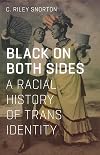
I probably had my hopes too high when I picked this book up. The case studies are interesting and important and I appreciate the work done to collect them, but the analytical approach linking them together mostly just made me tired. I often felt like I was reading a symbolic analysis of an art film *portraying* the history described, instead of a historical analysis.
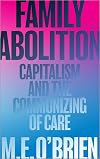
Over all strong, with some flaws. The title is a bit misleading; a lot of the book is a historical study, tracing the history of how the labor movement took up the "family wage" idea and how that interacted with gender/family ideology. I read this around the same time as I read "The Wages of Whiteness" and felt like they followed sort of similar paths of inquiry on race (Roediger) and gender (O'Brien). The author does use a Marxist lens, although I felt like I was getting some residual anarchist vibes at times.
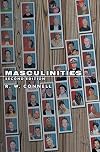
Foundational work on masculinity with strong attention to class. It seems like class is understood here primarily as social stratification, with just a few references to Marx filtered through a (mostly not very enlightening) discussion of psychoanalysis, so that part is a bit weak. But the demonstration that masculinity ideology and men's self-concept is structured by their material conditions and class position shines through the text, breaking down the idea of a universal or transhistorical masculine ideal. The author's frank and thoughtful approach and the intimacy of the interviews is also a strength.
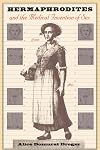
Historical study with a ton of case studies. Depicts the medical oppression of intersex people with frankness and detailed context. Examines how doctors "treated" people who couldn't be easily categorized into a given sex, and demonstrates that the basis on which they made their classification decisions was a lot less solid and a lot more socially determined than they would like to claim as men of science.

Interesting investigation of the extreme male domination of warfare. Its obvious weakness is that it does little to interrogate the two concepts at its core (war and gender). But its strength is the methodical structure of the work, laying out different hypotheses and evaluating each one in terms of available evidence.
Gay New York: Gender, Urban Culture, and the Making of the Gay Male World, 1890-1940 by George Chauncey
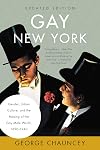
It's probably been more than 15 years since I read this, so my recollection is hazy at best, but I remember that it made a huge impact on me for its vivid portrayal of a modern urban world structured by gender distinctions far more than distinctions of sexual practice--- where "normal" men could and did have sex with people who would at least partially be categorized as men today, but were distinguished by their feminine presentations. The shift to the gay/straight divide that we know today was a tectonic shift for these communities.

It's a reader, so it goes all over the place, but that's the point. While I'm not personally a big fan of the media analysis pieces, there are some much more interesting historical examples and psychological studies (on non-trans people and how they think about gender), as well as some generally important foundational essays on trans politics. I did read it cover to cover because I'm a weirdo like that, but it's really fine to pick and choose the sections you find useful and treat it as a reference text.
Love's Next Meeting: The Forgotten History of Homosexuality and the Left in American Culture by Aaron Lecklider
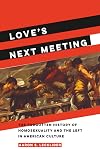
Excellent book, equal parts fun and serious, just like the cultural movements it chronicles. It's a political/cultural history of homosexuality and the American left-- *not* a book about political theory, but still very important for queer socialists today. I found the section on the red scare / lavender scare, and the simultaneous expulsion of gays from communist organizations and vice versa under state pressure, to be particularly enlightening. It helps explain the depressing split between left/Marxist politics and queer politics that dominated for several decades in the US (another major factor being Stalinism, of course, which is touched on but not a major focus of the book).
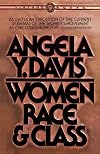
A classic for a reason, don't skip it. Indispensable Marxist study covering slavery, the abolition movement, and early women's rights movements. Also makes important points about the 'wages for housework" movement and common white feminist assumptions about the confinement of women to the domestic sphere.

Solid, readable primer on gay/queer politics in Marxist perspectives. Includes both theory and history, with a decently international perspective. It's been a while now since I read this so my review lacks specificity, but I re-read one of the earlier sections recently and was impressed by how much the author packs into the relatively short introduction.
Black Feminist Thought: Knowledge, Consciousness, and the Politics of Empowerment (Routledge Classics) by Patricia Hill Collins

Wide-ranging study that gets into material conditions / working conditions, political attacks, and cultural stereotypes impacting Black women, as well as the tactics and philosophical perspectives they have developed for struggle. The author intentionally does not name the political and theoretical approaches that she draws from (aside from Black feminism, obviously), but there is a lot here for Marxist feminists to consider, particularly in the chapter on work and family.
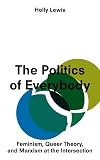
This book holds a special place in my heart as one of the first texts that introduced my early-transition self to Marxist thought. It's particularly useful in that it provides an accessible introduction to Marxism for people more familiar with queer theory, and an accessible introduction to queer issues & theory for Marxists. Much of the book is spent arguing that queer struggle and class struggle are not at odds and in fact should be drawn together-- a thesis which is (hopefully) less controversial on the left ten years later, but still important! I did feel like the end of the book, which attempts to chart a course forward toward Marxist queer perspectives and strategies, was rather weak. But that's hardly a unique problem with queer Marxist literature, unfortunately.

Fascinating history focusing on ideas about bodily sex (both learned and lay) in Western history. The main thesis is-- roughly-- that there was a shift between thinking of women as a lesser/inferior version of men, to thinking of women as fundamentally, essentially different but "complementary" to men. The causal analysis of why this shift occurred is a bit weak, but the documentation of it is lively and engaging.