
This book was not particularly enjoyable, but it is still a book that I wish everyone to have read.
It is important because of its topic - modern society that we live in, uncontesting and blind to its faults and alternatives - the commercialization of our lives and the capitalist religion to which we sell our souls, for he who owns your time owns your life, as they say.
In everyone at some point a mad flame of rebellious hope may flicker and spark a daydream or fantasy of a successful rebellion against our money-faith, along with a utopic vision of a socialist, or at least care-free world. But this is quickly extinguished when reality sets in and we ignominiously admit defeat to The System and forfeit our fates to the demands of society. This book is an imagining of a person, perhaps Orwell himself in his youthful experiments at poverty, who actually takes action and attempts to live life according to these moralistic principles. It is the story of the man we all could have been, or at least the man we would have been had we dared to play out our fantasies.
Everyone should read this book, because it may spark such thoughts in those to whom such thoughts would never have normally occurred. And as our protagonists painfully learn, one cannot live sanely in an insane world. It is only through mass concern that any meaningful change may come about, and if this book was read in high schools everywhere, perhaps we'd have less Enrons and banker-crises, and more corporate show more community-aid projects.
It's an important book. It alleviates the ignorance most of us have towards poverty. It reminds us that although we may have found some sort of comfort in our lives, this is not how we should be living. It reminds us that our cosy corporate jobs have an actual impact on society, and that selling product and making a profit may look good in your accounts and to your shareholders, but you might be ultimately 'rankling the public consciousness like a poisoned arrow' to squeeze out the last pennies you can from the more oblivious victims of marketing, as in the hilarious bit about "pedic perspiration".
In the end, it reminds us all that in another world, we could have actually been those writers or poets or artists that we would have loved to be. Or that we may have been able to achieve those dreams that we have all forsaken when the bills came at us rankling our dreams. show less
It is important because of its topic - modern society that we live in, uncontesting and blind to its faults and alternatives - the commercialization of our lives and the capitalist religion to which we sell our souls, for he who owns your time owns your life, as they say.
In everyone at some point a mad flame of rebellious hope may flicker and spark a daydream or fantasy of a successful rebellion against our money-faith, along with a utopic vision of a socialist, or at least care-free world. But this is quickly extinguished when reality sets in and we ignominiously admit defeat to The System and forfeit our fates to the demands of society. This book is an imagining of a person, perhaps Orwell himself in his youthful experiments at poverty, who actually takes action and attempts to live life according to these moralistic principles. It is the story of the man we all could have been, or at least the man we would have been had we dared to play out our fantasies.
Everyone should read this book, because it may spark such thoughts in those to whom such thoughts would never have normally occurred. And as our protagonists painfully learn, one cannot live sanely in an insane world. It is only through mass concern that any meaningful change may come about, and if this book was read in high schools everywhere, perhaps we'd have less Enrons and banker-crises, and more corporate show more community-aid projects.
It's an important book. It alleviates the ignorance most of us have towards poverty. It reminds us that although we may have found some sort of comfort in our lives, this is not how we should be living. It reminds us that our cosy corporate jobs have an actual impact on society, and that selling product and making a profit may look good in your accounts and to your shareholders, but you might be ultimately 'rankling the public consciousness like a poisoned arrow' to squeeze out the last pennies you can from the more oblivious victims of marketing, as in the hilarious bit about "pedic perspiration".
In the end, it reminds us all that in another world, we could have actually been those writers or poets or artists that we would have loved to be. Or that we may have been able to achieve those dreams that we have all forsaken when the bills came at us rankling our dreams. show less
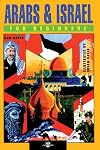
I remember first reading this book many many years ago.
After reading it I ended up taking several courses in Political Science and Middle East history at university, and have read all of the classic academic works from Noam Chomsky and Norman Finkelstein to Edward Said, Israel Shahak, Charles Smith and Ilan Pappe.
I now know my Middle East history back and forth, and have spent years researching and reading on this topic.
This book is an absolutely excellent introduction onto the subject. Easy to read and fast. I'd recommend it for ALL interested people with little knowledge of the Arab-Israeli conflict and Israeli history. It is the perfect stepping stone onto larger more academic works.
The only fault in this book is that the writing is slightly emotionally loaded, which isn't 'proper' for an academic or scholarly work. But that does not take away from the facts that this book is replete with, and it achieves its objective to be a beginner's run-through of the history of the area from ancient times to present, and that is why I give it 5 stars.
After reading it I ended up taking several courses in Political Science and Middle East history at university, and have read all of the classic academic works from Noam Chomsky and Norman Finkelstein to Edward Said, Israel Shahak, Charles Smith and Ilan Pappe.
I now know my Middle East history back and forth, and have spent years researching and reading on this topic.
This book is an absolutely excellent introduction onto the subject. Easy to read and fast. I'd recommend it for ALL interested people with little knowledge of the Arab-Israeli conflict and Israeli history. It is the perfect stepping stone onto larger more academic works.
The only fault in this book is that the writing is slightly emotionally loaded, which isn't 'proper' for an academic or scholarly work. But that does not take away from the facts that this book is replete with, and it achieves its objective to be a beginner's run-through of the history of the area from ancient times to present, and that is why I give it 5 stars.
Excellent book! Well researched into the history of sustainable architecture in the US, from the first solar house in the 40s to the oil crisis in the 70s. Covers all the attempts that were made by architects like Michael Reynolds, David Wright, Malcolm Wells, Andy Davis, and many many others.

The Manifesto itself, is a profound and masterful work.
What undoes this book, however, is the pitiful introduction by A.J.P Taylor. This introduction, unlike Marx's work, is an unimportant quibble of its time (1967). He rails on and on for 47 pages (longer than the manifesto itself!) about how 2 buddies from Germany managed to fool millions of people into believing their crazy deluded message, and how these two lads, working completely and always alone, utterly misunderstood history and economics and sociology down to the core. The work itself is a classic simply because millions of people have been deluded into worshipping it, but the men themselves were self-obsessed and narcissistic and thought themselves gods among men, when in fact they were poor economists, and even poorer historians.
A.J.P. Taylor wrote this in 1967, and one cannot understand why on earth such an introduction could be commissioned or approved to accompany the Manifesto. I can only imagine what the public opinion of communism must have been like at the time - fear and loathing of the USSR alongside complete and total faith in capitalism. In an amusing passage, Taylor takes a break from criticizing Marx to "disprove" his critique of capitalism in the light of modern history, arguing that capitalism has proven itself after the little hiccup of the '30s. Well, it's 2011, and today economists like Nouriel Roubini are questioning capitalism altogether and the world is mired in collective contemplation on show more how to save the world economy. It seems that despite all of Taylor's fluff, Marx and Engels turned out to be far more timeless thinkers than he was.
Read the Manifesto, just don't read this version. It is nothing more than publishers wanting to make more pennies by pawning Marx's writings off with fluff-filler as an addendum. show less
What undoes this book, however, is the pitiful introduction by A.J.P Taylor. This introduction, unlike Marx's work, is an unimportant quibble of its time (1967). He rails on and on for 47 pages (longer than the manifesto itself!) about how 2 buddies from Germany managed to fool millions of people into believing their crazy deluded message, and how these two lads, working completely and always alone, utterly misunderstood history and economics and sociology down to the core. The work itself is a classic simply because millions of people have been deluded into worshipping it, but the men themselves were self-obsessed and narcissistic and thought themselves gods among men, when in fact they were poor economists, and even poorer historians.
A.J.P. Taylor wrote this in 1967, and one cannot understand why on earth such an introduction could be commissioned or approved to accompany the Manifesto. I can only imagine what the public opinion of communism must have been like at the time - fear and loathing of the USSR alongside complete and total faith in capitalism. In an amusing passage, Taylor takes a break from criticizing Marx to "disprove" his critique of capitalism in the light of modern history, arguing that capitalism has proven itself after the little hiccup of the '30s. Well, it's 2011, and today economists like Nouriel Roubini are questioning capitalism altogether and the world is mired in collective contemplation on show more how to save the world economy. It seems that despite all of Taylor's fluff, Marx and Engels turned out to be far more timeless thinkers than he was.
Read the Manifesto, just don't read this version. It is nothing more than publishers wanting to make more pennies by pawning Marx's writings off with fluff-filler as an addendum. show less
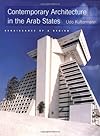
This book is, without a doubt, a seminal work on Middle Eastern architecture.
Its focus, fortunately, is not on the plethora of Western companies and architects doing work in the Middle East (although it does mention these), but on local architects that are mostly unknown in the West, despite years of amazing work.
The names include Hassan Fathy, Mohamed Saleh Makiya, Rasem Badran, Rifat Chadirji, Abdel-Wahed El-Wakil, Kamal El-Kafrawi, and many others.
He also covers the many excellent buildings designed by Western architects who have shown a sensitivity to the locale.
What I found most impressive about the book is Kultermann's focus on local traditions and the cultures that spawned them, as well as his disdain for the international architecture that has no connection to the past or to the people it is designed for.
For someone with little knowledge of the architectural traditions of the Middle East, this is an invaluable introduction.
For Arab architects looking for inspiration from their predecessors, this book contains many projects and images as creative fodder.
It is rare when reading a book to feel as if the author has spent years in research, and still has a burning passion for the topic he is writing about.
The only drawback of this book is that it is from 1999, and I think a new edition with an extra chapter or two on the myriad of recent projects in the Gulf states, with Kultermann's unique perspective, is in order.
Sadly, I think that he would be devastated at the show more current state of architectural projects in the Middle East, which is why every prospecting client should read this book before they begin a project. show less
Its focus, fortunately, is not on the plethora of Western companies and architects doing work in the Middle East (although it does mention these), but on local architects that are mostly unknown in the West, despite years of amazing work.
The names include Hassan Fathy, Mohamed Saleh Makiya, Rasem Badran, Rifat Chadirji, Abdel-Wahed El-Wakil, Kamal El-Kafrawi, and many others.
He also covers the many excellent buildings designed by Western architects who have shown a sensitivity to the locale.
What I found most impressive about the book is Kultermann's focus on local traditions and the cultures that spawned them, as well as his disdain for the international architecture that has no connection to the past or to the people it is designed for.
For someone with little knowledge of the architectural traditions of the Middle East, this is an invaluable introduction.
For Arab architects looking for inspiration from their predecessors, this book contains many projects and images as creative fodder.
It is rare when reading a book to feel as if the author has spent years in research, and still has a burning passion for the topic he is writing about.
The only drawback of this book is that it is from 1999, and I think a new edition with an extra chapter or two on the myriad of recent projects in the Gulf states, with Kultermann's unique perspective, is in order.
Sadly, I think that he would be devastated at the show more current state of architectural projects in the Middle East, which is why every prospecting client should read this book before they begin a project. show less
The Bible, the quran and science: The Holy Scriptures examined in the light of modern knowledge by Maurice Bucaille
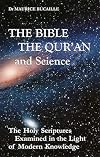
Dr. Bucaille's book is an extremely important one. Not so much for his interpretations of the Quran, but more so because of his criticisms and reflections on the Bible.
His research is meticulous, that cannot be denied. He learnt Arabic for the sole purpose of examining the Quran, and his research into the Bible is thorough. It is clear that he knows his Biblical history. Also, he quotes many theologians, including the Vatican Council.
His conclusions are that the Bible contains historical errors that have largely been ignored for centuries, as well as some contradictions. Mainly his criticisms are towards the contradictory genealogies of Jesus given in the Bible, as well as the statements on the flood of Noah. Bucaille then delves into the history of the Old Testament, as well as into the authors of the Gospels.
He concludes that the Old Testament went through centuries of oral tradition and repetition, where it picked up embellishments along the way, and lost its original veracity. He also finds that the Gospels were written long after the death of Jesus, and that the Gospel authors plagiarized from each other.
The second half of the book consists of his interpretations on specific verses from the Quran. He provides scientific data to back up his statements, but at the end of the day, a scientist sees science just as others will interpret the verses in their own ways. However, he does make an important statement with this book, which he repeats often and is the clear show more purpose for writing the book: that the Bible has outright falsehoods within it, whereas he was unable to find similarly glaring inconsistencies in the Quran. He is of the opinion of St. Augustine, that God could not teach man things that do not correspond to reality.
Whether or not his interpretations of the Quran are correct, I cannot say. But what I can say, is that the kernel of the book does not lie in these interpretations, but in his conclusions, where he makes a powerful statement. show less
His research is meticulous, that cannot be denied. He learnt Arabic for the sole purpose of examining the Quran, and his research into the Bible is thorough. It is clear that he knows his Biblical history. Also, he quotes many theologians, including the Vatican Council.
His conclusions are that the Bible contains historical errors that have largely been ignored for centuries, as well as some contradictions. Mainly his criticisms are towards the contradictory genealogies of Jesus given in the Bible, as well as the statements on the flood of Noah. Bucaille then delves into the history of the Old Testament, as well as into the authors of the Gospels.
He concludes that the Old Testament went through centuries of oral tradition and repetition, where it picked up embellishments along the way, and lost its original veracity. He also finds that the Gospels were written long after the death of Jesus, and that the Gospel authors plagiarized from each other.
The second half of the book consists of his interpretations on specific verses from the Quran. He provides scientific data to back up his statements, but at the end of the day, a scientist sees science just as others will interpret the verses in their own ways. However, he does make an important statement with this book, which he repeats often and is the clear show more purpose for writing the book: that the Bible has outright falsehoods within it, whereas he was unable to find similarly glaring inconsistencies in the Quran. He is of the opinion of St. Augustine, that God could not teach man things that do not correspond to reality.
Whether or not his interpretations of the Quran are correct, I cannot say. But what I can say, is that the kernel of the book does not lie in these interpretations, but in his conclusions, where he makes a powerful statement. show less
Fateful Triangle, Updated Edition: The United States, Israel, and the Palestinians (South End Press Classics Series) by Noam Chomsky
After reading several of Chomsky's books, I have more and more respect for this author and thinker. He is a meticulous historian and political analyst, and his critics should read his works before attacking him.
This book is a compendium of facts, figures, quotes, and analysis that comprise the truth behind the complicated politics of the Middle East. Chomsky is an honorable follower to the likes of Orwell, and cuts through all the media campaigns, falsehoods, lies, and general misinformation pertaining to the Middle East and its conflicts.
The book is a tough read, and is more like a disgorgement of information from a mind that has researched the topic at hand for years with meticulous effort. Around half of the book follows general Israeli policy and politics, as well as Palestinian politics and American foreign policy. The other half is about these policies as they pertain to the 1982 Israeli invasion of Lebanon, and Chomsky knows his stuff, there is no doubt about that. Every claim, every statement, every quote, and every fact is scrupulously cited. He is not in the business of convincing or converting, he is distinctly in the business of telling the truth the best he can.
As for the people who question why they should read this book, as much of it is about an old war, and old politics?
My answer is because it is important. Without this knowledge how can you possibly have an opinion regarding the on goings in the Middle East? These facts and the figures in the political show more scene were the same as they are now. To understand the conflicts, you must give this book a read. I cannot recommend it highly enough. This book should be required reading in all of the West.
A+ show less
This book is a compendium of facts, figures, quotes, and analysis that comprise the truth behind the complicated politics of the Middle East. Chomsky is an honorable follower to the likes of Orwell, and cuts through all the media campaigns, falsehoods, lies, and general misinformation pertaining to the Middle East and its conflicts.
The book is a tough read, and is more like a disgorgement of information from a mind that has researched the topic at hand for years with meticulous effort. Around half of the book follows general Israeli policy and politics, as well as Palestinian politics and American foreign policy. The other half is about these policies as they pertain to the 1982 Israeli invasion of Lebanon, and Chomsky knows his stuff, there is no doubt about that. Every claim, every statement, every quote, and every fact is scrupulously cited. He is not in the business of convincing or converting, he is distinctly in the business of telling the truth the best he can.
As for the people who question why they should read this book, as much of it is about an old war, and old politics?
My answer is because it is important. Without this knowledge how can you possibly have an opinion regarding the on goings in the Middle East? These facts and the figures in the political show more scene were the same as they are now. To understand the conflicts, you must give this book a read. I cannot recommend it highly enough. This book should be required reading in all of the West.
A+ show less
Excellent book! Well researched into the history of sustainable architecture in the US, from the first solar house in the 40s to the oil crisis in the 70s. Covers all the attempts that were made by architects like Michael Reynolds, David Wright, Malcolm Wells, Andy Davis, and many many others.
This was an excellent, well researched book. It was full of history, which added context to the discussion of the dialects, and despite being a speaker, I found it full of new information. Personally, I enjoyed most the parts on the mass bedouin migrations to Egypt and the Maghreb, the story of the Banu Hilal and the Banu Sulaym, and the great amount of information on Bedouin migrations, which help explain how certain characteristics spread.
A basic knowledge of Arabic is definitely required, or it will be a tedious book to complete, and I would also say that a knowledge of linguistics would also be helpful, as the book is filled with linguistic terminology such as dipthongs, verbo-nominal compounds, infinitives, suffixes, subjunctives, etc. It would have been useful to have a glossary at the end.
The only drawback of the book is that all of the Arabic is transliterated into English. I would have found the book much easier if the words had been left in Arabic. For the next edition, I would recommend keeping the words in Arabic, and adding footnotes to the bottom of the page with the English transliterations for those who need them.
All in all, an excellent non-Arab study into the language.
A-
A basic knowledge of Arabic is definitely required, or it will be a tedious book to complete, and I would also say that a knowledge of linguistics would also be helpful, as the book is filled with linguistic terminology such as dipthongs, verbo-nominal compounds, infinitives, suffixes, subjunctives, etc. It would have been useful to have a glossary at the end.
The only drawback of the book is that all of the Arabic is transliterated into English. I would have found the book much easier if the words had been left in Arabic. For the next edition, I would recommend keeping the words in Arabic, and adding footnotes to the bottom of the page with the English transliterations for those who need them.
All in all, an excellent non-Arab study into the language.
A-

I read the Bantam classic edition. It's 200 pages long, with only 60 being the actual story, and the rest being essays and critical analysis. I have to say that the analysis made me respect the novella so much more. When you read something casually you don't pick up on repetitions and elements, but the critical analysis opened my eyes to the repition of 3 occurring in the book, as well as the possible religious or devil connotations, etc etc.
Kafka did not intend this to be a story of a man who turned into a beetle. He had much more in mind while he wrote it and so if you pick this one up, try to find a copy with analysis, it'll make you appreciate it so much more.
Kafka did not intend this to be a story of a man who turned into a beetle. He had much more in mind while he wrote it and so if you pick this one up, try to find a copy with analysis, it'll make you appreciate it so much more.
To be quite frank, I did not enjoy this book.
Not only did I not like the way it's written, but I didn't like what I was reading either.
Firstly, his research is impeccable, but it was so hard to know who anybody was in this book, he just pops up random characters left and right, and he'll just casually mention cousins and neighbours and you are expected to remember them all.
I think it's because he spent so long researching the stuff that he just has everybody memorized, but for a reader remembering casual friends and stuff like that by last name when they haven't been mentioned for 150 pages is hard.
He also mentions Orwell's father's death as an afterthought.
He has chapters about the most mundane stuff, and he mentions Orwell's father being sick many times.
But then he changes the subject and you are wondering whatever happened to his father.
Then you read another 20 pages and he mentions it while talking about something else.
Furthermore, after reading nearly 500 pages on this man's life, you begin to view the book as written for the purpose of revealing his dark nature.
Orwell's eccentricity and lack of social tact are basically what the book is about.
The back of the book jacket reads, "Taylor's magisterial assessment cuts through Orwell's iconic status to reveal a bitter critic who concealed a profound totalitarian streak and whose progress through the literary world of the 30s and 40s was characterized by the myths he built around himself."
Taylor writes the book to show more convince us that Orwell was a creepy poor man with an unhappy marriage, a womanizer and pitifully helpless father.
Then you remember the magisterial books that the man produced, and you realize that nothing in this portrayal of the man gives any indication of greatness or of the material he ended up producing.
The sole convincing argument was that 1984 was so gloomy because of the tortuous state the author himself was in when he wrote it.
I would give it 2 stars if I felt that the research was poor, but the author does display his knowledge of Orwell's works several times.
Towards the end he even mentions a few specific scenes and passages from the 1984 that appeared in Orwell's earlier writing. He has clearly pored over the hordes of work Orwell produced.
Pros:
Very well researched.
The photographs included are a great help in visualizing the people in his life.
Cons:
Disjointed, disorganized, haphazard writing. More than once he is making an argument, only to digress and be sidetracked for several pages. Then he continues his argument out of the blue and you are reminded, "Ah, that's what he was talking about."
Seems to write for the purpose of debunking Orwell's mythological status, which would be fine, but it makes for a very poor first read into the man's life.
So, if you are not an Orwell fan, and would like to read a dissertation on the man's darker side, then this book is for you.
However, if you are looking for your first biography on the man who produced utter genius like 1984 and Animal Farm, then I would suggest you start with something else.
B- show less
Not only did I not like the way it's written, but I didn't like what I was reading either.
Firstly, his research is impeccable, but it was so hard to know who anybody was in this book, he just pops up random characters left and right, and he'll just casually mention cousins and neighbours and you are expected to remember them all.
I think it's because he spent so long researching the stuff that he just has everybody memorized, but for a reader remembering casual friends and stuff like that by last name when they haven't been mentioned for 150 pages is hard.
He also mentions Orwell's father's death as an afterthought.
He has chapters about the most mundane stuff, and he mentions Orwell's father being sick many times.
But then he changes the subject and you are wondering whatever happened to his father.
Then you read another 20 pages and he mentions it while talking about something else.
Furthermore, after reading nearly 500 pages on this man's life, you begin to view the book as written for the purpose of revealing his dark nature.
Orwell's eccentricity and lack of social tact are basically what the book is about.
The back of the book jacket reads, "Taylor's magisterial assessment cuts through Orwell's iconic status to reveal a bitter critic who concealed a profound totalitarian streak and whose progress through the literary world of the 30s and 40s was characterized by the myths he built around himself."
Taylor writes the book to show more convince us that Orwell was a creepy poor man with an unhappy marriage, a womanizer and pitifully helpless father.
Then you remember the magisterial books that the man produced, and you realize that nothing in this portrayal of the man gives any indication of greatness or of the material he ended up producing.
The sole convincing argument was that 1984 was so gloomy because of the tortuous state the author himself was in when he wrote it.
I would give it 2 stars if I felt that the research was poor, but the author does display his knowledge of Orwell's works several times.
Towards the end he even mentions a few specific scenes and passages from the 1984 that appeared in Orwell's earlier writing. He has clearly pored over the hordes of work Orwell produced.
Pros:
Very well researched.
The photographs included are a great help in visualizing the people in his life.
Cons:
Disjointed, disorganized, haphazard writing. More than once he is making an argument, only to digress and be sidetracked for several pages. Then he continues his argument out of the blue and you are reminded, "Ah, that's what he was talking about."
Seems to write for the purpose of debunking Orwell's mythological status, which would be fine, but it makes for a very poor first read into the man's life.
So, if you are not an Orwell fan, and would like to read a dissertation on the man's darker side, then this book is for you.
However, if you are looking for your first biography on the man who produced utter genius like 1984 and Animal Farm, then I would suggest you start with something else.
B- show less
I love Aalto's work, but this book was just dry.
I give it 3.5 only because it's meant to be an inexpensive introduction to Aalto's work, and it is inexpensive..but the writing is just dry. You really get nothing from the articles about the buildings..but it is a nice intro to the architect's life and it does showcase a few of his best works...albeit in a dry manner..
If you aren't really interested in his work, this is perfect for you.
But if you want a decent look into some of his buildings and materials and philosophy, then your going to have to splurge a little
I give it 3.5 only because it's meant to be an inexpensive introduction to Aalto's work, and it is inexpensive..but the writing is just dry. You really get nothing from the articles about the buildings..but it is a nice intro to the architect's life and it does showcase a few of his best works...albeit in a dry manner..
If you aren't really interested in his work, this is perfect for you.
But if you want a decent look into some of his buildings and materials and philosophy, then your going to have to splurge a little
A Peace to End All Peace: The Fall of the Ottoman Empire and the Creation of the Modern Middle East by David Fromkin
The last 2 chapters were disappointing.
In the last one he makes a quick 10 page conclusion of everything that I thought was just poor;
I have a feeling he had a deadline to meet and those last 10 pages he regurgitated the night before it was due.
All in all,
it was interesting, but very, very dense. I would say university history class level.
I would say that I know more now on the history than I did before, but there was such a huge mass of information that you really need to stick to this book and not stop for too long or you'll just forget everything.
Despite the poor conclusion, he did say something interesting there:
Basically he said that the current system was never meant for Arabia.
The Europeans had concurred the world, and the last place to concur was the Middle East.
They had concurred America, north and south,
Australia, New Zealand, east Asia, Africa...
Everything was colonized by them.
They believed in this secular nation-state, which worked in Europe, but had never been introduced to the Middle East.
First Islam conquered the whole area, and
then the ottomans took over for 700 years.
Also, the fact that all the leaders were put in place by the English and French meant that the local people had no faith in their politicians, and didn't understand their borders.
For example, the Saudi-Jordanian border is the site of where Ibn Saud tried to invade what is now Jordan,
but Jordan had king Abdullah, put in place by the English, so the English sent airplanes and tanks and show more armored vehicles and massacred Ibn Saud's bedouins.
They did this to save face. They could not have their puppet being killed or crushed. It would simply make the Brits look weak.
The site of that battle became the border of Jordan and Saudi Arabia:
hence the names, Kingdom of Saudi Arabia, and the Hashemite Kingdom of Jordan.
Basically 2 local dynastic tribal leaders tried to adapt to this European idea of nation-states and took their areas of control and turned them into countries.
So basically what I think he was trying to say in his conclusion was that that form of government was never meant for the Middle East and won't last long.
He was saying that the Europeans underestimated the only unifying factor in Arabia, which was Islam.
They would never have believed that a bunch of wahhabi bedouins could invade the hejaz, or that the muslim brotherhood would be so strong today, or the Afghani mujahedeen, or the shia revolution in Iran...
He also said that it was like Europe in the 5th century
the roman empire crumbled and then Europe spent 1000 years warring against each other trying to find a comfortable solution, and it evolved this idea of secular nation states.
Anyway, I came off with the feeling that the English and the French screwed up everything, and have the blood of millions of deaths on their hands, and that the countries that exist today are sad jokes.
The whole area was part of Greater
Syria for 2 weeks. All the Arabs there united under 1 government right in between Egypt and Iran.
And I think that's how it should end one day.
So to summarize:
Pros:
Good book.
Dense
Well researched
Cons:
As one reviewer mentioned, too euro-centric for a book about the Middle-East.
The part on Ibn Saud taking the Hejaz and naming himself king, for example, was about 2 pages long!
Also, he seems to quickly mention things that were of utmost importance, such as Ibn Saud collecting vast amounts of money from the British. He does not connect the dots here, because what this means is that Ibn Saud would have had little money to pay his troops and to buy weapons if the British had not payed him off as handsomely as they did, and hence, the world would not know a Wahhabi Saudi Kingdom in control of Islam's two holiest cities. And that, is something worth a chapter or two. show less
In the last one he makes a quick 10 page conclusion of everything that I thought was just poor;
I have a feeling he had a deadline to meet and those last 10 pages he regurgitated the night before it was due.
All in all,
it was interesting, but very, very dense. I would say university history class level.
I would say that I know more now on the history than I did before, but there was such a huge mass of information that you really need to stick to this book and not stop for too long or you'll just forget everything.
Despite the poor conclusion, he did say something interesting there:
Basically he said that the current system was never meant for Arabia.
The Europeans had concurred the world, and the last place to concur was the Middle East.
They had concurred America, north and south,
Australia, New Zealand, east Asia, Africa...
Everything was colonized by them.
They believed in this secular nation-state, which worked in Europe, but had never been introduced to the Middle East.
First Islam conquered the whole area, and
then the ottomans took over for 700 years.
Also, the fact that all the leaders were put in place by the English and French meant that the local people had no faith in their politicians, and didn't understand their borders.
For example, the Saudi-Jordanian border is the site of where Ibn Saud tried to invade what is now Jordan,
but Jordan had king Abdullah, put in place by the English, so the English sent airplanes and tanks and show more armored vehicles and massacred Ibn Saud's bedouins.
They did this to save face. They could not have their puppet being killed or crushed. It would simply make the Brits look weak.
The site of that battle became the border of Jordan and Saudi Arabia:
hence the names, Kingdom of Saudi Arabia, and the Hashemite Kingdom of Jordan.
Basically 2 local dynastic tribal leaders tried to adapt to this European idea of nation-states and took their areas of control and turned them into countries.
So basically what I think he was trying to say in his conclusion was that that form of government was never meant for the Middle East and won't last long.
He was saying that the Europeans underestimated the only unifying factor in Arabia, which was Islam.
They would never have believed that a bunch of wahhabi bedouins could invade the hejaz, or that the muslim brotherhood would be so strong today, or the Afghani mujahedeen, or the shia revolution in Iran...
He also said that it was like Europe in the 5th century
the roman empire crumbled and then Europe spent 1000 years warring against each other trying to find a comfortable solution, and it evolved this idea of secular nation states.
Anyway, I came off with the feeling that the English and the French screwed up everything, and have the blood of millions of deaths on their hands, and that the countries that exist today are sad jokes.
The whole area was part of Greater
Syria for 2 weeks. All the Arabs there united under 1 government right in between Egypt and Iran.
And I think that's how it should end one day.
So to summarize:
Pros:
Good book.
Dense
Well researched
Cons:
As one reviewer mentioned, too euro-centric for a book about the Middle-East.
The part on Ibn Saud taking the Hejaz and naming himself king, for example, was about 2 pages long!
Also, he seems to quickly mention things that were of utmost importance, such as Ibn Saud collecting vast amounts of money from the British. He does not connect the dots here, because what this means is that Ibn Saud would have had little money to pay his troops and to buy weapons if the British had not payed him off as handsomely as they did, and hence, the world would not know a Wahhabi Saudi Kingdom in control of Islam's two holiest cities. And that, is something worth a chapter or two. show less