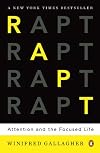
I checked this book out of the library because I've been advised to "meditate" as part of a way to lower my blood pressure. After reading several books, mostly by people from Eastern cultures, I realized that mindfulness is another way of describing paying attention. How much of your time is spent thinking of what comes next or what happened before? Mindfulness, attention, is the art of living right now. But this book also addresses what, right now, you pay attention to. If you are with your spouse are you paying attention to the real person or some habit you find annoying? While you drive, do you notice the view, the flowers in someone's yard, the contrails in the sky, the mountains on the horizon? Or are you thinking about how much you paid for gas when you last stopped, or what you need to pick up for your dinner?
I think we miss a lot in this life by always thinking about something else!
I think we miss a lot in this life by always thinking about something else!

In this wonderful, evocative story, Stephen goes to Tamuri to recuperate from a serious illness at his grandfather's beach house. He has left his mother and sister at home in Hong Kong; left his college in Canton, along with his best friend; and his father remains in Kobe, where he lives and conducts his business--and other matters that impact the family.
Stephen arrives an immature college student yearning for company. He longs for company and conversation and is disconcerted by the isolation and the retic ence of the cottage caretaker, Matsuko. Eventually, they become friends who share a long-time secret that brings another important friend into Stephen's life. And Stephen also finds romance on the beach.
But the Japanese invasion of China affects this idyllic recovery period and brings Stephen maturity and insight as more is revealed to him than he ever expected to find in a sleepy vacation place on the shore.
Stephen arrives an immature college student yearning for company. He longs for company and conversation and is disconcerted by the isolation and the retic ence of the cottage caretaker, Matsuko. Eventually, they become friends who share a long-time secret that brings another important friend into Stephen's life. And Stephen also finds romance on the beach.
But the Japanese invasion of China affects this idyllic recovery period and brings Stephen maturity and insight as more is revealed to him than he ever expected to find in a sleepy vacation place on the shore.

I read this book several years ago and for a good long while, it had returned to my thoughts. Reading it again, I found timely a timely political theme.
This is the story of two delegations called to a neutral setting to debate their religious positions as they relate to the influence of the Church on government. The erudite English monk, William, instructs his young acolyte on the separate paths of spirituality and government as the arguments--punctuated by a series of mysterious deaths--rage unseemly among men of holy calling.
As scenes portray illicitly charged prisoners interrogated by an inquisitor who presumes guilt unless innocence is proven, and accepts the threat and practice of torture as a normal tool of investigation; the monumental pride of principals convinced of the superiority of their rule and the inferiority of the ruled; the intolerance of opposing factions; and the disastrous consequences of secrecy--I understand why this book, first read as a finely crafted mystery, began to speak to me again during the administration of George W. Bush.
This is the story of two delegations called to a neutral setting to debate their religious positions as they relate to the influence of the Church on government. The erudite English monk, William, instructs his young acolyte on the separate paths of spirituality and government as the arguments--punctuated by a series of mysterious deaths--rage unseemly among men of holy calling.
As scenes portray illicitly charged prisoners interrogated by an inquisitor who presumes guilt unless innocence is proven, and accepts the threat and practice of torture as a normal tool of investigation; the monumental pride of principals convinced of the superiority of their rule and the inferiority of the ruled; the intolerance of opposing factions; and the disastrous consequences of secrecy--I understand why this book, first read as a finely crafted mystery, began to speak to me again during the administration of George W. Bush.

I understand the impetus behind Ms. Vincent's experiment--when I was 20 I used to be really curious about what men said and did when women weren't around. But I got over it. I think because I found out that I liked them better when they were behaving in a civilized manner as functional adult people. This aspect of male behavior degenerates considerably in the absence of women.
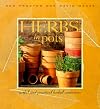
I love this book because it gives valuable information, is entertainingly written, stays right on point throughout, and I love herbs. I read it through my local library, but plan to buy it because container gardening is better for many reasons, in my opinion, (see Bountiful Container by McGee and Stuckey) than in-ground growing.
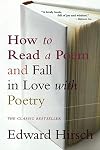
This book might have said what it said in half the words. Poetry, I guess, means not having to abridge your temptation to gush; and dry brevity might not be the way to address poetry; but could we strike a happy medium? I felt somewhat like Mr. Hirsch's editor had a word count he had to meet.
Did I learn anything about poetry? Not especially. But I did find a thoroughly delightful poem I'd never seen before about Geoffry the Complete Cat and for this I am ever grateful to Mr. Hirsch and forgive him his wordiness.
Did I learn anything about poetry? Not especially. But I did find a thoroughly delightful poem I'd never seen before about Geoffry the Complete Cat and for this I am ever grateful to Mr. Hirsch and forgive him his wordiness.