
Story about a young German who is taken to a labor camp in Russia as "wiedergutmachung". Life in the camp is horrible, people die, there's constant hunger. Mueller wrote the book after talking to someone who had actually been in such a camp. If the person hadn't died before Mueller wrote the book, they would have written it together.
It's a fascinating novel, very well written. It reads like poetry (I read it in German, I don't know if the same is true for translations). I'll say it again: it's very well written.
It's a fascinating novel, very well written. It reads like poetry (I read it in German, I don't know if the same is true for translations). I'll say it again: it's very well written.
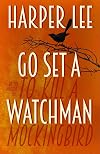
When I first read about "Go set a watchman" I thought "no, don't do that. Harper Lee wrote her book in To kill a mocking bird, don't spoil that by publishing a mediocre novel that 50 years ago, publishers didn't find worth while.
I read Go set a watchman.
Now I see why they didn't want to publish this in the '50's. It's a lot more subtle than To kill a mocking bird. It's a lot better, from a literary point of view. It's not about race, it's about a daughter and a father, the daughter discovering the life of her own, away from the shadow of her father. The south, racism, it's just context. But the role racism in the south plays in this novel would have made the book unacceptable in the '50's, I guess. So they made Lee write To kill a mocking bird, which is not as well written as the new novel, but at least has a story that would resound in the '50's society.
"Go set a watchman" is better than "To kill a mocking bird". But the former needed the latter to get published.
I read Go set a watchman.
Now I see why they didn't want to publish this in the '50's. It's a lot more subtle than To kill a mocking bird. It's a lot better, from a literary point of view. It's not about race, it's about a daughter and a father, the daughter discovering the life of her own, away from the shadow of her father. The south, racism, it's just context. But the role racism in the south plays in this novel would have made the book unacceptable in the '50's, I guess. So they made Lee write To kill a mocking bird, which is not as well written as the new novel, but at least has a story that would resound in the '50's society.
"Go set a watchman" is better than "To kill a mocking bird". But the former needed the latter to get published.
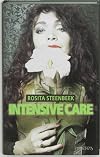
Rosita Steenbeek heeft in 2001, na de dood van haar vader, Jan Steenbeek, een zwaar auto-ongeluk gehad, samen met haar moeder. Ze hebben maanden in het ziekenhuis gelegen, samen. Deze roman gaat daarover. Bewonderenswaardig hoe iemand een hele roman kan schrijven over alleen maar zes maanden in het ziekenhuis liggen. Ik heb het in één avond uitgelezen.
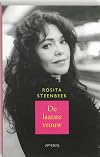
(Deels) autobiografische roman van een vrouw die naar Italië verhuist, op Sicilië een oudere minnaar opdoet, en in Rome relaties krijgt met een bekende filmregisseur en een oude schrijver. Ze huppelt tussen die drie heen en weer, twijfelend over haar gevoelens, totdat de schrijver overlijdt en de relatie met de regisseur daarmee ook lijkt te eindigen. Over de derde, een Siciliaanse psychiater, schrijft ze later Siciliaans Testament.
Het kan persoonlijk zijn, ik herkende veel in de roman. Dingen over relaties, leeftijdverschillen, minnaars op afstand, minnaars in (nog) vreemde landen.
Ik waardeer het boek vanwege het verhaal, de gevoelens, de sfeer. En dat terwijl ik normaal romans alleen beoordeel op de literaire kwaliteit en de schrijfstijl.
Het kan persoonlijk zijn, ik herkende veel in de roman. Dingen over relaties, leeftijdverschillen, minnaars op afstand, minnaars in (nog) vreemde landen.
Ik waardeer het boek vanwege het verhaal, de gevoelens, de sfeer. En dat terwijl ik normaal romans alleen beoordeel op de literaire kwaliteit en de schrijfstijl.
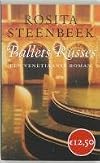
Steenbeek woont al heel lang deels in Rome, deels in Amsterdam. Ze kent Italie, ze kent ook Venetië, en heeft met Ballets Russes een roman geschreven die een goed sfeerbeeld geeft van het leven in Venetië.
De hoofdpersoon Salvo is verliefd in een al dan niet geëindigde relatie, worstelt daarmee, maakt kennis met een 80-jarige Russisiche balletdanseres die goed bevriend is geweest (relatie gehad?) met Strawinski. Ook Joseph Brodsky komt aan bod, en anderen die in Venetië hebben gewoond of er zijn geweest.
Steenbeek heeft een eigen stijl van schrijven, een enkele keer mist een zin een aansluiting, maar wel prettig om te lezen.
De hoofdpersoon Salvo is verliefd in een al dan niet geëindigde relatie, worstelt daarmee, maakt kennis met een 80-jarige Russisiche balletdanseres die goed bevriend is geweest (relatie gehad?) met Strawinski. Ook Joseph Brodsky komt aan bod, en anderen die in Venetië hebben gewoond of er zijn geweest.
Steenbeek heeft een eigen stijl van schrijven, een enkele keer mist een zin een aansluiting, maar wel prettig om te lezen.
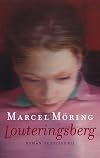
Second, apparently, in a trilogy, starting with "Dis". I loved both of them, Louteringsberg in particular. It's a master piece, can't wait for part 3.
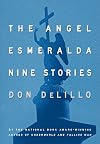
The story "the angel Esmeralda" is a story that's also part of Underworld. I bought it, but I was disappointed, I had already read it, twice. And like it. But I would have appreciated if someone had told me that it's part of Underworld.

The whole book is about the protagonist Eric Packer being driven through town, through traffic jams, mostly standing still, while inviting people into his limo, talking to his ex wife through the side window while she is stuck in traffic in the opposite direction. A very remarkable novel. Despite the fact that the action seems to be boring, once you read you an't stop. Delillo has a very convincing style of writing, the reading itself makes the novel fun to read. After you read this, read Underworld.

This is a fictional correspondence between the author and La Marquise de Mertreux, the female protagonist of Les Liaisons Dangereuses. The Marquise at the end of Laclos' book flees to Holland, where Haasse is reminded of her when she is taking a walk through the Daal and Berg neighborhood. Daal Berg in French translates to Valmont, the name of the male protagonist in Les Liaisons. Haasse imagines the Marquise stayed in a house there, reading contemporary novels, getting in touch with Betje Wolff and Aagje Deken, the authors of "Sara Burgerhart", who lived in the same era.
The book is about female protagonists, "good" and "bad", in world literature, and about why these are considered good or bad.
After reading this novel, I now want to read Les Liasons Dangereuses, and Moll Flanders by Daniel Defoe, both discussed extensively by Haasse. Also "Medea", by Euripides, but I am afraid my ancient Greek is not good enough for that.
The book is about female protagonists, "good" and "bad", in world literature, and about why these are considered good or bad.
After reading this novel, I now want to read Les Liasons Dangereuses, and Moll Flanders by Daniel Defoe, both discussed extensively by Haasse. Also "Medea", by Euripides, but I am afraid my ancient Greek is not good enough for that.
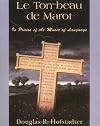
I found the book a little disappointing. After reading GEB and hearing people praise Le Ton Beau, I had expected more of it. Hofstadter is arrogant about his mastering of foreign languages. If his mastery of languages is as he says it is, he's a genius.
There are of course brilliant concepts in this book. One example is his questioning of translations. If a work has been translated, what do you read, what do you appreciate? Is it the original writer who gets the credit, although this writer has written none of the language you read? Or is it the translator, who contributed almost nothing to the ideas in the book? Tough question.
Every other chapter is about various translations of a beautiful poem by Marot. Hofstadter asked all his friends and relatives to provide one or more translations, which all turn out to be very different. Unfortunately, of the examples he gives almost half are his own. I think it would have been more interesting to provide translations of different translators, for every person providing the best translation they have provided.
There are of course brilliant concepts in this book. One example is his questioning of translations. If a work has been translated, what do you read, what do you appreciate? Is it the original writer who gets the credit, although this writer has written none of the language you read? Or is it the translator, who contributed almost nothing to the ideas in the book? Tough question.
Every other chapter is about various translations of a beautiful poem by Marot. Hofstadter asked all his friends and relatives to provide one or more translations, which all turn out to be very different. Unfortunately, of the examples he gives almost half are his own. I think it would have been more interesting to provide translations of different translators, for every person providing the best translation they have provided.
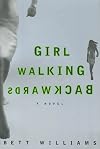
Story about a girl exploring herself. She has a boy friend who isn't really her boy friend, she's exploring lesbian love, she's exploring friendship because she's never really had friends, while her mom is a luny who takes her to cult trainings. In the end, she's back where she started but at least she now knows what life is about.
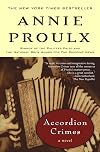
This is a great book, though I consider "Postcards" to be Proulx' best. Accordion Crimes is about a little green accordion, made by a peasant in Italy who immigrates in America and brings his green accordion. After he dies, it goes to another immigrant, and another. The title of the book refers to the violent deaths of some of the green accordion's owners. The novel really is a collection of short stories, the only thing that the stories have in common is the green accordion and the fact that most of the stories are about accordion players or would-be players. Although this novel is not about Wyoming, it's still the same type of stories. The Shipping News really is the only novel/stories that Proulx wrote that are really different there.
The end of the novel is funny. It's a really sad ending, but at the same time it's a very happy ending.
The end of the novel is funny. It's a really sad ending, but at the same time it's a very happy ending.

Kafka said "a book must be an ice-axe to break the seas frozen inside our soul." This book is an ice-axe. It's about "modern women", in the fifties, and about their relationships with men, and lack thereof. Also, it's about the communist party, and ambigous feelings towards it. On the one hand, the main characters are attracted to the CP, otoh, they know what's happening in Russia and they are appalled by it. These feelings are similar to what lefty students felt in the seventies.
Lessing writes about two women, friends, sharing a house. One, Anna, has written a succesful novel and is writing stories, one of which is about two women, friends, sharing a house. One of these, Ella, has written a novel. So it's a novel in a novel in a novel. I wouldn't be surprised if the character in Ella's novel also wrote a novel, etc.
If you read the novel carefully, you get to see the similarities and the differences between the Anna story and the Ella story. I take it that you can retrieve some of the Doris story - i.e. the autobiographic component of the novel - by applying the Ella-Anna relationship to the Anna-Doris relationship. But that's just my theory.
Anyway, although the book was written in 1962, it's certainly worthwhile. I don't think that the next generations of readers will recognize the context and the themes, so it may become less popular in the future.
Lessing writes about two women, friends, sharing a house. One, Anna, has written a succesful novel and is writing stories, one of which is about two women, friends, sharing a house. One of these, Ella, has written a novel. So it's a novel in a novel in a novel. I wouldn't be surprised if the character in Ella's novel also wrote a novel, etc.
If you read the novel carefully, you get to see the similarities and the differences between the Anna story and the Ella story. I take it that you can retrieve some of the Doris story - i.e. the autobiographic component of the novel - by applying the Ella-Anna relationship to the Anna-Doris relationship. But that's just my theory.
Anyway, although the book was written in 1962, it's certainly worthwhile. I don't think that the next generations of readers will recognize the context and the themes, so it may become less popular in the future.

Superb plot - as usual - in a very good book. Read this after you read "Marte Jacobs", which was published in 2007.
The lass chapter adds considerably to the book, it kind of adds a layer to the plot.
The lass chapter adds considerably to the book, it kind of adds a layer to the plot.

Krabbé not only has a very good writing style, he always puts a lot of effort in createing a superb plot. The Vanishing is a great example, Marte Jacobs has a plot that is more complex, and even better. The cover text says that it's about two friends, a writer and a poet, in love with one girl, but that's too shallow a description. It's really about a poet who is in love and who kind of loses his girlfriend, but not quite. You have to read it to understand. I'm not sure it's available in English yet, but it should, it's definitely a master piece.
What's nice is that the plot kind of extends to another book of Krabbé's, "Kathy's daughter", written in 2002. You should read "Marte Jacobs" first, then "Kathy's Daughter". The latter gives you some clues about the former.
What's nice is that the plot kind of extends to another book of Krabbé's, "Kathy's daughter", written in 2002. You should read "Marte Jacobs" first, then "Kathy's Daughter". The latter gives you some clues about the former.

Michael K is a gardener in civil war South Africa. He's not very bright, but seems to be happy as a gardener. His mom gets fired, Michael is about to get fired, and they decide to go back to the countryside where his mom was born. They can't get a permit to travel, they can't travel by train, so Michael puts his mom in a wheelbarrow and starts walking. In Stellenbosch, mom dies, leaving Michal alone with his wheelbarrow and her ashes. He decides to go to Prince Albert, the village where his mother was born, to at least bring her back. But he's afraid of people, he doesn't eat for days or even weeks, and doesn't manage.
It's hard to identify with Michael, because every time you think he found a place where at least he can recover, he walks out of it, back into solitude and hunger. He's a simpleton, with only one thing on his mind: freedom. He'd rather not eat than depend on others. I'm not sure that this is the message Coetzee wants to give us, but that's the message I got from the book.
Before this book, I read "A severed head" by Iris Murdoch, which also is a book about a person you don't identify with because he's irrational and making decisions "normal" people wouldn't make. It's hard to believe in coincidence, reading two such books in one week.
It's hard to identify with Michael, because every time you think he found a place where at least he can recover, he walks out of it, back into solitude and hunger. He's a simpleton, with only one thing on his mind: freedom. He'd rather not eat than depend on others. I'm not sure that this is the message Coetzee wants to give us, but that's the message I got from the book.
Before this book, I read "A severed head" by Iris Murdoch, which also is a book about a person you don't identify with because he's irrational and making decisions "normal" people wouldn't make. It's hard to believe in coincidence, reading two such books in one week.

"The house by the Mosk" by Kader Abdolah. Abdolah isn't done with his past, yet, this is his second party autobiographic novel. There's a lot of similarities with his previous novel, "my fathers notebook". House by the mosk describes a history of an extended family living in a house next to the mosk they "own", one brother is the imam, another brother is the merchand who is like governing the city. But the shah is expanding modern society against the will of most people, and not being aware of the role islam plays in Persia. The shah could have done a so much better job by incorporating old Persian culture in his reign, as well as parts of moderate islam.
The shah is chased, Khomeini comes, and terror starts. Unfortunately, a happy ending isn't possible because the islam radicals are still in power in Iran. The end of the novel is "kind of" happy. And very sad.
I wonder how many of these novels Abdolah will have to write before being able to write fiction, to write the novels I think he can write and will write, but he can't because his head is still full of anger, of sadness, of grief for his lost homeland.
The writing style of this novel is typical for Abdolah. The sentences are short and powerful. In some way, it reminds me of Frank Marinus Arion, but more powerful, and better, much better. I suspect that Abdolah's writing style is influenced by the fact that he learned Dutch only years ago, as an immigrant and refugee in the Netherlands. Most immigrants should be show more happy to be able to write a more or less ok letter in Dutch after a few years, but Abdolah writes prize winning novels, it's amazing.
I admire Abdolah, I admire his writing style, I admire his stories, and I'm looking forward to the novels he will write in the next few years, and especially to the first full novel that is not about Iran because then we'll know that finally, he'll have learned to cope with his past. I will certainly read every novel he'll write soon as it comes out. show less
The shah is chased, Khomeini comes, and terror starts. Unfortunately, a happy ending isn't possible because the islam radicals are still in power in Iran. The end of the novel is "kind of" happy. And very sad.
I wonder how many of these novels Abdolah will have to write before being able to write fiction, to write the novels I think he can write and will write, but he can't because his head is still full of anger, of sadness, of grief for his lost homeland.
The writing style of this novel is typical for Abdolah. The sentences are short and powerful. In some way, it reminds me of Frank Marinus Arion, but more powerful, and better, much better. I suspect that Abdolah's writing style is influenced by the fact that he learned Dutch only years ago, as an immigrant and refugee in the Netherlands. Most immigrants should be show more happy to be able to write a more or less ok letter in Dutch after a few years, but Abdolah writes prize winning novels, it's amazing.
I admire Abdolah, I admire his writing style, I admire his stories, and I'm looking forward to the novels he will write in the next few years, and especially to the first full novel that is not about Iran because then we'll know that finally, he'll have learned to cope with his past. I will certainly read every novel he'll write soon as it comes out. show less

This is a strange story. It is a love story, or not. When reading, I came to think that it's a surrealist story. Then, I started to think that the main character is mentally ill and the whole story is not really happening, it's just his twisted view of the world and the people around him. Then, after finishing it, I'm not sure.
It's a great book, well written, sometimes I skipped a few lines (I'm not very patient when reading a novel), but in general it's fun to read. What's interesting is that I found it very difficult to identify with the main character; the book is written from the character's perspective, normally I find it easy to identify, but here the man's decisions and actions are so different from what a person would do, I found it hard to identify. Still, this makes the book more interesting, I suppose.
This is the first book by Murdoch I've read, I'll have to read more in order to find out if this style is typical for her.
It's a great book, well written, sometimes I skipped a few lines (I'm not very patient when reading a novel), but in general it's fun to read. What's interesting is that I found it very difficult to identify with the main character; the book is written from the character's perspective, normally I find it easy to identify, but here the man's decisions and actions are so different from what a person would do, I found it hard to identify. Still, this makes the book more interesting, I suppose.
This is the first book by Murdoch I've read, I'll have to read more in order to find out if this style is typical for her.

Stories, fun stories, but I don't like stories, so I haven't read the book beyond the first two stories.

The best book in Dutch literature ever. A novel about a young boy growing up in a world full of hypocrisy which doesn't appreciate his open and honest curiosity. I named my son after Woutertje Pieterse.
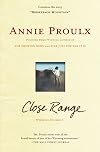
This book contains the story "Brokeback Mountain". It also contains, as the first story, "The half skinned steer" that was the best short story of 1998 (Garrison Keillor) and the best short story of the century (John Updike).
I haven't seen the film "Brokeback Mountain", but I doubt it's as good as the story. The story, I like.
I haven't seen the film "Brokeback Mountain", but I doubt it's as good as the story. The story, I like.
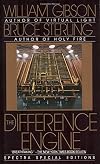
19th century London is plagued by an environmental disaster in which London is covered in a stinking fog. Riots follow, disaster is about to happen.
The main characters in this book are real characters like Ada Lovelace, Lord Byron, Charles Babbage. But the odd thing is that they are completely different characters and play different roles compared to their real lives. Karl Marx starts a commune in the Bronx, Lord Friedrich Engels supports him with money, Benjamin Disraeli is a journalist, Lord Byron is the prime minister.
The Luddites have opposed the industrial revolution but they have utterly failed. The industrial revolution, based on huge mechanical computers (miles of spinning wheels and punch cards) are "progress", run by the Radical Party.
In all this, paleontologist Ned Mallory discovers the brontosaur, gets it to London, and gets involved in an espionage affair. He and his brothers finally play a key rol in restoring order and restoring the Radical Party to power. Or does he? His contact, spy Laurence Oliphant, has to travel to Paris to prevent major damage to France. The French computer has been damaged by a malicious set of punch cards (read: malicious software).
In the end, you have to figure how it all ends, or doesn't end, by reading memo's and letters and personal accounts from various characters. There's lots of open ends, or are there?
The main characters in this book are real characters like Ada Lovelace, Lord Byron, Charles Babbage. But the odd thing is that they are completely different characters and play different roles compared to their real lives. Karl Marx starts a commune in the Bronx, Lord Friedrich Engels supports him with money, Benjamin Disraeli is a journalist, Lord Byron is the prime minister.
The Luddites have opposed the industrial revolution but they have utterly failed. The industrial revolution, based on huge mechanical computers (miles of spinning wheels and punch cards) are "progress", run by the Radical Party.
In all this, paleontologist Ned Mallory discovers the brontosaur, gets it to London, and gets involved in an espionage affair. He and his brothers finally play a key rol in restoring order and restoring the Radical Party to power. Or does he? His contact, spy Laurence Oliphant, has to travel to Paris to prevent major damage to France. The French computer has been damaged by a malicious set of punch cards (read: malicious software).
In the end, you have to figure how it all ends, or doesn't end, by reading memo's and letters and personal accounts from various characters. There's lots of open ends, or are there?
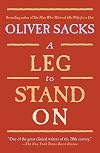
An account of Sacks's quadriceps being torn off, and his subsequent losing the whole leg. That is, he's not aware of the leg and he doesn't remember that he ever had one. To his doctors, this is new, but he finds that most other patients in similar conditions experience "forgetting" the part of their body that is hurt, cast in chalk, or otherwise immobilized. His writing down the experience makes suergeons aware of the issue, and hopefully today a patient gets more help in how to "find back" their "lost" limb.
Sacks tore of his quadriceps while fleeing for a bull on a mountain he was climbing, or rather, walking. I'd say a bull won't hurt you if you stumble upon it while it is laying down, and you don't scare it. I suppose there was no reason for Sacks to run away in the first place. I'm sorry for his injuries, but I'm glad he did run away because it gave us this magnificent book :-)
Sacks tore of his quadriceps while fleeing for a bull on a mountain he was climbing, or rather, walking. I'd say a bull won't hurt you if you stumble upon it while it is laying down, and you don't scare it. I suppose there was no reason for Sacks to run away in the first place. I'm sorry for his injuries, but I'm glad he did run away because it gave us this magnificent book :-)
I read this book in school, I don't remember a lot of it. Must read it again, I suppose a lot of memories will come back to me.
This is by far the best howto book on snowboarding that I've seen. I took up snowboarding in 1997. I took classes in Austria, from an instructor that turned out not to be a good instructor (I think he really was a skier). I did have fun, and a black tail bone, but after 7 days of snowboarding I still wasn't doing ok at all. The summer after, I read "the illustrated guide". The book pointed out to me tha basic things about snowboarding, like "put your weight on your front foot", "always go on an edge, never go flat", "don't bend over, but rather bend your knees". Basic stuff the instructor failed to tell me about. The year after we went to Switzerland twice, and I got good at snowboarding. I decided to take my next classes when I stopped getting new ideas from the guide, but so far I haven't taken classes.
Brilliant book!
Brilliant book!
Traveling in time is not possible. If it were, we would know because we'd see numerous travelers from the future pay us a visit. No matter how distant the future time traveling is invented, we'd still see the travelers. We don't see any, so traveling in time (other than one second per second) is not possible.
In a novel, the concept of traveling in time provides unique possibilities for laying out a plot and a story. Of course, you have to take care of (or ignore) some essential troubles you get when you allow time travel. For one thing, you can't have your characters change their future. What if they change their future in a way that they don't exist? if they don't exist, they couldn't have changed their future, so they would exist. In "Back to the future", Michael J Fox realizes this, so he corrects his mistake.
The Time Traveler's Wife is about a person who travels in time, or rather about his wife, Clare. The traveler, Henry, doesn't travel voluntarily, nor does he have control over it. He actually doesn't want to do it, because there's a chance he'd materialize in another time on a railroad track two seconds before the train will pass. When he travels in time, he also travels in space.
The "plot", as far as there is one, becomes relevant after you've read three quarters of the book. By that time, you know that Henry is never older than 43, when he appears out of nothing, or rather, out of another time. Also, he speaks and thinks about how he might die. Finally, a few show more episodes from the beginning of the book turn out to provide clues to how he'll finally die.
The novel is not perfect. But then, what is? On one page, Clare doesn't like Henry's choice of music, like the Eagles. Near the end of the book, the Eagles are Clare's choice of music, which Henry hates.
A friend, Gomez, is aware of the time traveling - not many people are, btw. At some point, it is suggested that he'll play an important role in the future of either Henry or Clare, but that doesn't realy materialize. I don't know if Niffenegger did that on purpose. I've seen the same in "Underworld", by Don Delillo. A lot of threads are developed, which are than gradually lost or abandoned. I guess that's a feature in modern literature: challenge the reader to imagine a follow up to these half developed threads.
What bothered me is the predictability of some of the things that happen. At one point, there's a cage in the museum where Henry works, it's built into the structure, there's no entry or exit, nobody knows what it's for. Instantly, the reader knows what it's for. You know that at some point, Henry will show up in this cage, trapped until he goes back to "real time". Henry does get into the cage. I would have preferred the cage to be there but Henry not getting into it.
The story develops really well, throughout the novel. Niffenegger doesn't need to provide explicit clues, as the story itself provides them in a natural way. As in most novels, writing the end has probably been the most difficult part. In this case, it works out really well, although it does get a little melancholy. Fortunately, for a time traveler, the end doesn't necessarily need to be the end.... show less
In a novel, the concept of traveling in time provides unique possibilities for laying out a plot and a story. Of course, you have to take care of (or ignore) some essential troubles you get when you allow time travel. For one thing, you can't have your characters change their future. What if they change their future in a way that they don't exist? if they don't exist, they couldn't have changed their future, so they would exist. In "Back to the future", Michael J Fox realizes this, so he corrects his mistake.
The Time Traveler's Wife is about a person who travels in time, or rather about his wife, Clare. The traveler, Henry, doesn't travel voluntarily, nor does he have control over it. He actually doesn't want to do it, because there's a chance he'd materialize in another time on a railroad track two seconds before the train will pass. When he travels in time, he also travels in space.
The "plot", as far as there is one, becomes relevant after you've read three quarters of the book. By that time, you know that Henry is never older than 43, when he appears out of nothing, or rather, out of another time. Also, he speaks and thinks about how he might die. Finally, a few show more episodes from the beginning of the book turn out to provide clues to how he'll finally die.
The novel is not perfect. But then, what is? On one page, Clare doesn't like Henry's choice of music, like the Eagles. Near the end of the book, the Eagles are Clare's choice of music, which Henry hates.
A friend, Gomez, is aware of the time traveling - not many people are, btw. At some point, it is suggested that he'll play an important role in the future of either Henry or Clare, but that doesn't realy materialize. I don't know if Niffenegger did that on purpose. I've seen the same in "Underworld", by Don Delillo. A lot of threads are developed, which are than gradually lost or abandoned. I guess that's a feature in modern literature: challenge the reader to imagine a follow up to these half developed threads.
What bothered me is the predictability of some of the things that happen. At one point, there's a cage in the museum where Henry works, it's built into the structure, there's no entry or exit, nobody knows what it's for. Instantly, the reader knows what it's for. You know that at some point, Henry will show up in this cage, trapped until he goes back to "real time". Henry does get into the cage. I would have preferred the cage to be there but Henry not getting into it.
The story develops really well, throughout the novel. Niffenegger doesn't need to provide explicit clues, as the story itself provides them in a natural way. As in most novels, writing the end has probably been the most difficult part. In this case, it works out really well, although it does get a little melancholy. Fortunately, for a time traveler, the end doesn't necessarily need to be the end.... show less

Dit boek is een goed handboek voor de beginnende bridger die de principes van bridge kent, de belangrijkste conventies kent en nu verder wil.
Het geeft een goed overzicht van conventies in Acol, maar het is geschreven voor 2000, het is gebaseerd op een veel oudere versie, dus veel moderne conventies en aanpak staat er niet in. De Biedermeijer boekjes zijn wat dat betreft handiger, maar minder compleet.
Het geeft een goed overzicht van conventies in Acol, maar het is geschreven voor 2000, het is gebaseerd op een veel oudere versie, dus veel moderne conventies en aanpak staat er niet in. De Biedermeijer boekjes zijn wat dat betreft handiger, maar minder compleet.
Jun 30, 2007Dutch
Dis by Marcel Moring

Een heel goed boek. Het begint met een anekdote uit de tweede wereldoorlog, en de rest van het boek is een vervolg op die anekdote. Het verhaal gaat over een aantal mensen. De hoofdpersoon is degene uit de anekdote, de anderen zijn familie (een deel van de famieligeschiedenis wordt beschreven) en een deel is aanhang, of aanhang van de aanhang.
Wat er in het begin van het boek in de oorlog gebeurt bepaalt het leven van de hoofdpersoon Jakob Noach, zoals waarschijnlijk voor veel mensen de oorlog een deel van hun leven heeft bepaald.
Ik denk dat er wel een en ander in het boek autobiografisch is, maar niet de hoofdpersoon.
Wat er in het begin van het boek in de oorlog gebeurt bepaalt het leven van de hoofdpersoon Jakob Noach, zoals waarschijnlijk voor veel mensen de oorlog een deel van hun leven heeft bepaald.
Ik denk dat er wel een en ander in het boek autobiografisch is, maar niet de hoofdpersoon.

Dit is niet een goed geschreven boek. Ben er na 20 bladzijden maar mee gestopt.
De schrijfstijl is tante Betje-achtig, alsof het een basisschool opstel is, althans op vele plekken. Op andere momenten is het wel leesbaar. Maar als de schrijfstijl irriteert, dan leg ik het boek weg. Ik kan dus niet vertellen waar het boek over gaat, want zover ben ik niet gekomen :-)
De schrijfstijl is tante Betje-achtig, alsof het een basisschool opstel is, althans op vele plekken. Op andere momenten is het wel leesbaar. Maar als de schrijfstijl irriteert, dan leg ik het boek weg. Ik kan dus niet vertellen waar het boek over gaat, want zover ben ik niet gekomen :-)
Jun 17, 2007Dutch
This book is well written - if it were an 8th grade essay. It's full of cliche's. Plots are predictable, weak. Don't buy this book. The book was "boekenweekgeschenk" in 2006. That means that if you bought a book in 2006, the store would give you a free copy of this novel. Normally, they choose reputable authors who write well, I was flabbergasted when I found out that this guy actually wrote the "boekenweekgeschenk" in 2006.
It can't be his education, because he went to the same grammar school ("Stedelijk Gymnasium Haarlem") as I did, two years after me :-)
I suppose his being an actor in some cheap soap series removed his art skills.
Dit boek, bestaande uit twee verhalen, leest als een basisschool opstel. Clichematige zinnen, simpel taalgebruik, voorspelbare wendingen. De plots van beide verhalen zijn voorspelbaar en zwak, en al honderd maal eerder gebruikt. Dat de plot van het eerste verhaal een dubbele bodem heeft doet daar niets aan af, ook die dubbele bodem is te zwak en cliche om interessant te zijn.
Slecht boek dus! Belachelijk dat het het boekenweekgeschenk in 2006 is geweest.
It can't be his education, because he went to the same grammar school ("Stedelijk Gymnasium Haarlem") as I did, two years after me :-)
I suppose his being an actor in some cheap soap series removed his art skills.
Dit boek, bestaande uit twee verhalen, leest als een basisschool opstel. Clichematige zinnen, simpel taalgebruik, voorspelbare wendingen. De plots van beide verhalen zijn voorspelbaar en zwak, en al honderd maal eerder gebruikt. Dat de plot van het eerste verhaal een dubbele bodem heeft doet daar niets aan af, ook die dubbele bodem is te zwak en cliche om interessant te zijn.
Slecht boek dus! Belachelijk dat het het boekenweekgeschenk in 2006 is geweest.