This Is Not A Blog: Lola Reads, Naked Boys Dance
Talk Exotic Male Dancers Who LibraryThing
This group has been archived. Find out more.
Join LibraryThing to post.
2LolaWalser

A house and its head

A heritage and its history

The present and the past
All by Ivy Compton-Burnett, a marvel of oddity, a true original. I became curious about her after reading that she was one of Edward Gorey's main inspirations, collected the above titles over several years and only got to reading them last week--flying through all three in two days.
They are written practically entirely in dialogue. Sentences of exposition amount to fewer than a dozen per book. This must be the most difficult way of writing a novel, because nothing--NOTHING--is tougher to write than good dialogue. And who's speaking? Parents, children, servants of the Victorian or Edwardian age (those of you who know Gorey are invited to picture his strangely sinister silent tales suddenly sounded). Most of the time they speak obliquely, glancing meanings, ironies, outright sarcasms, inviting utmost concentration from the reader (but you will never concentrate more gratefully). Much of the time they sound strange, uttering strings of rhetorical questions with the innocence of toddlers. The doings are trivial until they become astonishingly threatening. You start cowering in advance, frightened at what this or that character will merely say next. No twist is too pulp-fictiony, no tragedy too Greek.
All three books above are similar like semi-inbred cousins; A house and its head and A heritage and its history have practically the same plot. And apparently she wrote more than a dozen novels. I'm thinking there is a theme to Ivy Compton-Burnett, a mysterious and very complicated structure, of which these novels are uncanny variations. So I want to collect 'em all. I want to read them all.
3LolaWalser
A cell of Compton-Burnett's writing, ripped at random from the tissue of A house and its head:
" 'Father must go his own way', said Mr. Bode. 'He would have been a great deal by himself. You will be able to feel he is not that.'
'He was left by himself', said Florence.
'Yes, Mrs. Smollett', said Dulcia.
'So that is why I should be doing my own work', said Grant. 'I thought that speech a little sinister.'
'You will have great opportunities for other people. I envy you for that', said Miss Burtenshaw, so accustomed to the character she bore, that she accorded it to herself.
'I do not envy them. No', said Dulcia, shuddering.
'Well, it can't be helped', said Alexander. 'It doesn't do to make too much of it.'
'It could have been helped', said Florence; 'but perhaps there was no cause for it to be.'
'Well, there is no need to behave as if one of us were dead, instead of going to be married.'
'One of us is dead', said Sybil, bursting into tears. 'And it has been forgotten.'"
...so accustomed to the character she bore, that she accorded it to herself.
She keeps doing this: surreptitiously slipping in wedges that upset everything you were likely thinking about the character just a sentence ahead.
She reminded me subtly of Firbank, as if being a distant relation.
" 'Father must go his own way', said Mr. Bode. 'He would have been a great deal by himself. You will be able to feel he is not that.'
'He was left by himself', said Florence.
'Yes, Mrs. Smollett', said Dulcia.
'So that is why I should be doing my own work', said Grant. 'I thought that speech a little sinister.'
'You will have great opportunities for other people. I envy you for that', said Miss Burtenshaw, so accustomed to the character she bore, that she accorded it to herself.
'I do not envy them. No', said Dulcia, shuddering.
'Well, it can't be helped', said Alexander. 'It doesn't do to make too much of it.'
'It could have been helped', said Florence; 'but perhaps there was no cause for it to be.'
'Well, there is no need to behave as if one of us were dead, instead of going to be married.'
'One of us is dead', said Sybil, bursting into tears. 'And it has been forgotten.'"
...so accustomed to the character she bore, that she accorded it to herself.
She keeps doing this: surreptitiously slipping in wedges that upset everything you were likely thinking about the character just a sentence ahead.
She reminded me subtly of Firbank, as if being a distant relation.
4absurdeist
OMG (as in, Oh. My. God!) Lola dahlink, I just found your exquisite reading thread, and I'm excited beyond hyperbole!
"Nothing is harder to write than good dialogue" -- ain't that the truth.
All three books above are similar like semi-inbred cousins
Oh thank you for that! I've got your thread starred, as I only peek in this ... this ... really weird group about once a month. What's so strange is that the group's creator has this ominous, red fonted message on their page: "This member has been suspended". I do hope that by posting here, you're not at risk of being suspended.
Looking forward immeasurably ... and I won't say a word to no one ... Let them find you on their own ...
"Nothing is harder to write than good dialogue" -- ain't that the truth.
All three books above are similar like semi-inbred cousins
Oh thank you for that! I've got your thread starred, as I only peek in this ... this ... really weird group about once a month. What's so strange is that the group's creator has this ominous, red fonted message on their page: "This member has been suspended". I do hope that by posting here, you're not at risk of being suspended.
Looking forward immeasurably ... and I won't say a word to no one ... Let them find you on their own ...
5QuentinTom
Awesome dahlink!
Lola, a great thread. We need to get Por over here, I'm sure Ivy Compton Burnett is on his list of favourite authors somewhere.
said Miss Burtenshaw, so accustomed to the character she bore, that she accorded it to herself.
I loved that too. Wisdom.
Meanwhile, I feel sure that Zsa zsa and her exotic male instructors will be appreciated here.
http://www.youtube.com/watch?v=uovn_hPpKqA
"Massage me a little more, boy."
Zsa Zsa writes great dialogue.
Lola, a great thread. We need to get Por over here, I'm sure Ivy Compton Burnett is on his list of favourite authors somewhere.
said Miss Burtenshaw, so accustomed to the character she bore, that she accorded it to herself.
I loved that too. Wisdom.
Meanwhile, I feel sure that Zsa zsa and her exotic male instructors will be appreciated here.
http://www.youtube.com/watch?v=uovn_hPpKqA
"Massage me a little more, boy."
Zsa Zsa writes great dialogue.
6urania1
Lola,
No fair to hang out here. I love Ivy Compton-Burnett. She is so wickedly and ghoulishly witty.
No fair to hang out here. I love Ivy Compton-Burnett. She is so wickedly and ghoulishly witty.
8LolaWalser
Enrique, indubitably I'll see you in the clinker one of these days. Dibs on the top bunk.
Murr, Zsa Zsa is a dead ringer for (one of my) uncles' second Hungarian wife (his second wife, and his second Hungarian). Makes me feel three years old again, in awe of The Beehive.
"Ghoulishly witty"--amen! Urania, you think I should move my thread? I think it deserves obscurity--Compton-Burnett is about as hot and au courant as I'm likely to go. Expect reports on stuff like Estonian logging almanacs from 1859-1860 and insect life in the estuaries of Eurasian middle-sized rivers. The Salon is simply too grand and lively for such fare.
Murr, Zsa Zsa is a dead ringer for (one of my) uncles' second Hungarian wife (his second wife, and his second Hungarian). Makes me feel three years old again, in awe of The Beehive.
"Ghoulishly witty"--amen! Urania, you think I should move my thread? I think it deserves obscurity--Compton-Burnett is about as hot and au courant as I'm likely to go. Expect reports on stuff like Estonian logging almanacs from 1859-1860 and insect life in the estuaries of Eurasian middle-sized rivers. The Salon is simply too grand and lively for such fare.
9LolaWalser

Don Quijote de la Mancha
Third time read, first time in Spanish. I still feel about it as I did at fourteen--rockin' good show!!! Now, why did Cervantes kill Quijote in the end? a) because he couldn't continue adventuring forever b) because Quijote lost his illusion, and therefore couldn't go adventuring again c) because Cervantes couldn't bear all the fanfic his creation excited, and formally stamped out his creature with the authority only he would ever have?
A bunch of quick reads not from my library:

Deadheads by Reginald Hill, a Dalziel and Pascoe mystery, only the second time I read Hill. People are falling over themselves--dead--to accommodate the needs and ambitions of a certain rose-loving creep.

Dusty answer by Rosamond Lehmann
Disliked it. I associate it vaguely with the golden period of Bloomsbury (Lehmann's brother John worked with the Woolfs on Hogarth Press), and it was a hit in its time. To me it read like the usual overwrought "romance" tripe--except there are no weddings or much happiness in general in the end. I don't understand what made it so popular.

The bookshop by Penelope Fitzgerald
Now this was good, in the way of an excellent tea (rather than a six-course dinner). The heroine wants to sell books, but does anyone want to buy them, in the hamlet where she lives? Local gentry is divided on the issue, with the old squire for, the grand lady against. Contains child labour, and horse dentistry. Accomplished style with panache, undercurrent of sad humour. I wouldn't mind meeting with Ms. Fitzgerald again...
10LolaWalser
Two from my library:

Karnak cafe by Naguib Mahfouz
My first Mahfouz. I always feel cheated when I read Arabs in English--it's a pity not to be able to comment on the sound and the rhythm. Plotwise, it's a series of encounters in a cafe between the narrator, the cafe's owner (an ex-dancer and narrator's age-peer), a bunch of old people, and a bunch of young people, to whom life still happens, mainly in the form of intermittent jailings, interrogations, and intimidation. The narrator observes the people, especially the youngsters, with a bold intimacy that may look as sheer nosiness, but is really a very Eastern attitude of concern and affection toward anything and anyone young. Anyway, apart from reminding me of Egypt a bit, I have no cosmic reason to welcome (or diswelcome) reading this book.

Girls, visions and everything by Sarah Schulman
I've been shifting hills of books around my apartment, trying in vain to make it seem as if they all can fit. They can't. So, in ever-increasing panic, I've taken to grabbing books at random, reading them--either to save the contents before I ditch them, or to convince myself ditching them won't hurt like cutting my leg off with a lady razor--likewise at random. Sarah Schulman made me forget my panic for a while. If you ever wondered what was it like to be a young under-employed, artistically ambitious lesbian Dona Juanita in New York's Lower East Side circa 1982, this is the book for you. Can replace two feet of socio-anthro-phenomenological studies. Can give you ideas for anti-shows of anti-art. Can make your {12*%^@HgjjjKLQ} become very very {POKIO!^35!*88&} and cause {*@GTYSfrtyev} to {*&JDBJhdbbsccc215$@3}.

Karnak cafe by Naguib Mahfouz
My first Mahfouz. I always feel cheated when I read Arabs in English--it's a pity not to be able to comment on the sound and the rhythm. Plotwise, it's a series of encounters in a cafe between the narrator, the cafe's owner (an ex-dancer and narrator's age-peer), a bunch of old people, and a bunch of young people, to whom life still happens, mainly in the form of intermittent jailings, interrogations, and intimidation. The narrator observes the people, especially the youngsters, with a bold intimacy that may look as sheer nosiness, but is really a very Eastern attitude of concern and affection toward anything and anyone young. Anyway, apart from reminding me of Egypt a bit, I have no cosmic reason to welcome (or diswelcome) reading this book.

Girls, visions and everything by Sarah Schulman
I've been shifting hills of books around my apartment, trying in vain to make it seem as if they all can fit. They can't. So, in ever-increasing panic, I've taken to grabbing books at random, reading them--either to save the contents before I ditch them, or to convince myself ditching them won't hurt like cutting my leg off with a lady razor--likewise at random. Sarah Schulman made me forget my panic for a while. If you ever wondered what was it like to be a young under-employed, artistically ambitious lesbian Dona Juanita in New York's Lower East Side circa 1982, this is the book for you. Can replace two feet of socio-anthro-phenomenological studies. Can give you ideas for anti-shows of anti-art. Can make your {12*%^@HgjjjKLQ} become very very {POKIO!^35!*88&} and cause {*@GTYSfrtyev} to {*&JDBJhdbbsccc215$@3}.
11theaelizabet
Hope you don't mind another lurker... I felt the same way about Ms Fitzgerald. The Bookshop was my first, then I read the Golden Child, which was her first and was written to entertain her husband who was dying at the time. I've yet to read more, though I think I have them all. Never heard of Rosamond Lehman, though I read a short memoir by her brother, mainly about his time at Hogarth Press.
Three times with Don Quixote, once in Spanish? I'm not worthy.
Three times with Don Quixote, once in Spanish? I'm not worthy.
12LolaWalser
Hi, Elizabeth, no, no, everyone's most welcome--it's just that I've never done this before (posted about my reading--or even wrote about my reading)--and to tell you the truth I can't imagine why anyone would care, especially in a place pullulating with truly interesting readers writing so well.
Well, Quijote was once in school, happily (I was one of those sad children who could never have enough reading assignments), once some ten years later, for the purposes of consolation (yes it consoles me), once now because three years ago I finally bought it in Spanish. Incidentally, some archaicisms and then-current-fashion related wordplay aside, the language of Cervantes flows wonderfully clear and easy, if you're contemplating it.
Oh, which reminds me. I did not read Vargas Llosa's intro in the book. Must do so.
Well, Quijote was once in school, happily (I was one of those sad children who could never have enough reading assignments), once some ten years later, for the purposes of consolation (yes it consoles me), once now because three years ago I finally bought it in Spanish. Incidentally, some archaicisms and then-current-fashion related wordplay aside, the language of Cervantes flows wonderfully clear and easy, if you're contemplating it.
Oh, which reminds me. I did not read Vargas Llosa's intro in the book. Must do so.
13zenomax
James Lees Milne knew ICB from personal experience. I seem to remember him mentioning in particular her 'old fashioned clipped english' speaking style - and he wrote this in the 1940s...!
His early diaires are very very good by the way.
His early diaires are very very good by the way.
14citygirl
FWIW, I think your reading is very interesting indeed. I believe yours is one of my "interesting libraries." But I gotta ask, where are the naked men? Books are cool and all, but I really tuned in for objectification of pretty boys.
Oh, and can I have a translation of "Can make your {12*%^@HgjjjKLQ} become very very {POKIO!^35!*88&} and cause {*@GTYSfrtyev} to {*&JDBJhdbbsccc215$@3}"? I think I'd like to read that book.
And I like your pithy descriptions as well.
Oh, and can I have a translation of "Can make your {12*%^@HgjjjKLQ} become very very {POKIO!^35!*88&} and cause {*@GTYSfrtyev} to {*&JDBJhdbbsccc215$@3}"? I think I'd like to read that book.
And I like your pithy descriptions as well.
15LolaWalser
I bet that cat spirited away my nude entourage--AGAIN. Or else they escaped this infernal weather--I can't believe that the older I get, the farther north I move.
The translation, according to my code book, goes something like this: "Can make your fur become very very orange and cause antique frigidaires to burst into tears". Most odd, if you ask me, even odder that you should want to read it, but far be it from me to judge!
Ah yes, pithiness. The trouble is multifold--for the past ten years or so, I've been logging some horrendous several hundreds of annual reads. I don't skim--I have that OCD tic where if you missed an adverb on page twelve, you MUST go back from page four hundred and twelve and read it, even if your brain supplied it quite nicely. This mania does not translate into iron-cast memory, alas, nor into lengthy reviews--usually.
The truth is that I'm used to mulling over books in my own head and nowhere else, whereas one can get so much more from talking with people. So, the pithiness is theoretically infinitely expandable. Until it turns into its antithesis and eats the universe!
The translation, according to my code book, goes something like this: "Can make your fur become very very orange and cause antique frigidaires to burst into tears". Most odd, if you ask me, even odder that you should want to read it, but far be it from me to judge!
Ah yes, pithiness. The trouble is multifold--for the past ten years or so, I've been logging some horrendous several hundreds of annual reads. I don't skim--I have that OCD tic where if you missed an adverb on page twelve, you MUST go back from page four hundred and twelve and read it, even if your brain supplied it quite nicely. This mania does not translate into iron-cast memory, alas, nor into lengthy reviews--usually.
The truth is that I'm used to mulling over books in my own head and nowhere else, whereas one can get so much more from talking with people. So, the pithiness is theoretically infinitely expandable. Until it turns into its antithesis and eats the universe!
16Makifat
Jesus, Lola. Could you make it any harder to find?
I shall hold my tongue and avert my eyes.
I shall hold my tongue and avert my eyes.
19absurdeist
8> Okay, you can be on top. Reminds me of that scene in Big. I should locate it for you on YouTube.
9> I completely concur on The Bookshop: A Novel. I reviewed it last year here. Need to read more of Fitzgerald too.
9> I completely concur on The Bookshop: A Novel. I reviewed it last year here. Need to read more of Fitzgerald too.
20QuentinTom
it is very dark in here. And very quiet. Is it the quiet before the storm, the darkest hour before day?
A small pussy trembles.
where is everyone?
A small pussy trembles.
where is everyone?
21LolaWalser
Hey!
One lone kittycat! And where are my Naked Boys? Pedro, Pablo? Escaped back to shake-shake-shake the maracas around Ava Gardner in The Night of the Iguana?!
Who can blame them...

Le Prince Coqueluche. Son histoire interessante et celle de son compagnon Moustafa by Edouard Ourliac.
Ourliac, the interwebs tell me, was a "minor romantic" friendly with Nerval, Houssaye and Gautier before dying at 35 in 1848. Even in that short lifetime he managed to make big literary promises AND go through a major spiritual conversion, skeptic to Catholic. Prince Coqueluche is a charming children's tale from the skeptical period, judging by its sly irreverence, anti-authoritarianism, Enlightenment values and nary a mention of things godly. It's a short and sweet parallel Bildungsroman of a horrendously spoiled princeling and a modest peasant lad.
My facsimile edition of the original, from a French book club (Le Club français du livre, 1963) came with gorgeous 19th century vignettes, bound in lilac, with an ochre medallion on the cover--I want more books like this.

Entretiens avec Professeur Y by Celine.
I don't wish to waste too many words on this. After the war Celine had trouble getting people to "know" him. Succinctly, he was like unto a big steaming pile of particularly smelly shit. Gaston Gallimard nevertheless picked him up, but gingerly, cautioning prudence and toning down the hatreds, vis-a-vis Jews especially. So this short book is Celine's most subdued, and also emptiest. He complains, he whinges, he froths at the mouth, as usual, at people, readers of trash, the movies, his fate, the publishers--and none of it is the least interesting.
DO NOT read this first as a newcomer to Celine. Chances are you'll dislike him no matter what you read, but his masterpieces at least make clear why and how he influenced modern literature.

La jalousie by Alain Robbe-Grillet
I'm reading all of Robbe-Grillets in my library (part of my desperate "read or ditch" campaign).
Robbe-Grillet is the most famous exponent (and creator) of the "nouveau roman", the objective novel, the phenomenological novel, all surface, zero psychology. I love experimentation, it keeps one on ones toes, aerobicises the brain, expands horizons, and is often just darn fun. It is good that there should be people who invent new ways of writing. It is good there are books in which a description of a stain on the wall, made by quashing a millipede, recurs ten times or more. However, it is also good that all books are not like this.
The only important thing about La jalousie is HOW it is written. Who the characters are, where they are, do, or say, matters not a bit. It's actually set in an African colonial town, but it could be an Inuit igloo for all the import of the circumstances. I see the English title is "Jealousy"--as right as it is wrong. La jalousie in French is jealousy but it is also a window covering, a Venetian blind. The action in the book is observed through such a blind. And perhaps it is observed with the feelings of jealousy--this is entirely up to us to decide, as far as I can see.
I came away from reading this book feeling refreshed and eager to look at things. But not terribly eager to read nothing but nouveau roman, I must admit.
One lone kittycat! And where are my Naked Boys? Pedro, Pablo? Escaped back to shake-shake-shake the maracas around Ava Gardner in The Night of the Iguana?!
Who can blame them...

Le Prince Coqueluche. Son histoire interessante et celle de son compagnon Moustafa by Edouard Ourliac.
Ourliac, the interwebs tell me, was a "minor romantic" friendly with Nerval, Houssaye and Gautier before dying at 35 in 1848. Even in that short lifetime he managed to make big literary promises AND go through a major spiritual conversion, skeptic to Catholic. Prince Coqueluche is a charming children's tale from the skeptical period, judging by its sly irreverence, anti-authoritarianism, Enlightenment values and nary a mention of things godly. It's a short and sweet parallel Bildungsroman of a horrendously spoiled princeling and a modest peasant lad.
My facsimile edition of the original, from a French book club (Le Club français du livre, 1963) came with gorgeous 19th century vignettes, bound in lilac, with an ochre medallion on the cover--I want more books like this.

Entretiens avec Professeur Y by Celine.
I don't wish to waste too many words on this. After the war Celine had trouble getting people to "know" him. Succinctly, he was like unto a big steaming pile of particularly smelly shit. Gaston Gallimard nevertheless picked him up, but gingerly, cautioning prudence and toning down the hatreds, vis-a-vis Jews especially. So this short book is Celine's most subdued, and also emptiest. He complains, he whinges, he froths at the mouth, as usual, at people, readers of trash, the movies, his fate, the publishers--and none of it is the least interesting.
DO NOT read this first as a newcomer to Celine. Chances are you'll dislike him no matter what you read, but his masterpieces at least make clear why and how he influenced modern literature.

La jalousie by Alain Robbe-Grillet
I'm reading all of Robbe-Grillets in my library (part of my desperate "read or ditch" campaign).
Robbe-Grillet is the most famous exponent (and creator) of the "nouveau roman", the objective novel, the phenomenological novel, all surface, zero psychology. I love experimentation, it keeps one on ones toes, aerobicises the brain, expands horizons, and is often just darn fun. It is good that there should be people who invent new ways of writing. It is good there are books in which a description of a stain on the wall, made by quashing a millipede, recurs ten times or more. However, it is also good that all books are not like this.
The only important thing about La jalousie is HOW it is written. Who the characters are, where they are, do, or say, matters not a bit. It's actually set in an African colonial town, but it could be an Inuit igloo for all the import of the circumstances. I see the English title is "Jealousy"--as right as it is wrong. La jalousie in French is jealousy but it is also a window covering, a Venetian blind. The action in the book is observed through such a blind. And perhaps it is observed with the feelings of jealousy--this is entirely up to us to decide, as far as I can see.
I came away from reading this book feeling refreshed and eager to look at things. But not terribly eager to read nothing but nouveau roman, I must admit.
22Makifat
part of my desperate "read or ditch" campaign
Oh, God. Just the thought of that makes me feel faint.....
Oh, God. Just the thought of that makes me feel faint.....
23LolaWalser
Yes, it is to weep, rend your garments, and beat the heaving bosom, but the laws of physics are inexorable--pretty soon I or the books will burst through the windows onto the street.

A book of five rings by Miyamoto Musashi
I read this following a re-watch of Inagaki's Samurai Trilogy, based on life and legend of a seventeenth century swordsman--and painter--and poet--and sculptor--and martial arts innovator--in short, there was nothing Musashi couldn't do. The thing I love about him is his thinking out of the box. In his very first duel supposedly with swords, at thirteen, he managed to beat the opponent to death--with a staff. So much for rules set in stone and dreary fighting manuals. He may have been an excellent swordsman, but it looks to me as if he profited repeatedly from exactly such willingness to grab any weapon and hit anyhow that hurts. "But, but, but, you CAN'T use a swallowtail hit attacking from the left when the sun is on the right on the Day of the Lantern--ooog, I'm dead!"
The book lays out five fighting "strategies" based on the four elements and the Void: theory useless without show, so I was more interested in the examples of Musashi's art and poetry. My copy bears a disgusting blurb likening Harvard MBAs to the samurai. If only Wall Street had a single head, and I had a hammer...
--------------------------------

The Whig interpretation of history by Herbert Butterfield.
I have a vague notion of Whigs and Tories being the English version of the US Reps and Dems, so was expecting a slanderous attack or some such on specific politics or politicians... But no. To Butterfield, a Whig interpretation is one based on assumption of progress, of betterment, of a hierarchical ladder of values in which modern trumps archaic by virtue of greater knowledge, enlightenment, freedom etc. So, do not assume that human history is progressing from "bad to good" and do not judge the past by the standards of the present. The broader the history, the more likely it is we'll be deceived by the illusion of progress, therefore, better to keep it micro, complex, rich in detail.
--------------------------


I'm always reading something on or in the general neighbourhood of the French revolution. I reread Diderot's Le neveu de Rameau on occasion of acquiring a new copy, and finished Lefebvre's history of the French revolution. Diderot is coffeehouse-talky, on genius, music, the education of young ladies... Lefebvre is strictly for people who already know their Jacobins, Girondins, Montagnards, sansculottes, intransigents, royalists, absolutists, Vendeans, chouans, terrorists White and Blue, thermidorians, and other species of revolutionaries and counter-revolutionaries; then it's the best blow-by-blow account of the one and only GREAT revolution in the world (so far). It may surprise you too to learn that it was all done by committees. The guillotine is sexy, but not a hundredth of the story. Paperwork, paperwork. Who will sing the paperwork.

A book of five rings by Miyamoto Musashi
I read this following a re-watch of Inagaki's Samurai Trilogy, based on life and legend of a seventeenth century swordsman--and painter--and poet--and sculptor--and martial arts innovator--in short, there was nothing Musashi couldn't do. The thing I love about him is his thinking out of the box. In his very first duel supposedly with swords, at thirteen, he managed to beat the opponent to death--with a staff. So much for rules set in stone and dreary fighting manuals. He may have been an excellent swordsman, but it looks to me as if he profited repeatedly from exactly such willingness to grab any weapon and hit anyhow that hurts. "But, but, but, you CAN'T use a swallowtail hit attacking from the left when the sun is on the right on the Day of the Lantern--ooog, I'm dead!"
The book lays out five fighting "strategies" based on the four elements and the Void: theory useless without show, so I was more interested in the examples of Musashi's art and poetry. My copy bears a disgusting blurb likening Harvard MBAs to the samurai. If only Wall Street had a single head, and I had a hammer...
--------------------------------

The Whig interpretation of history by Herbert Butterfield.
I have a vague notion of Whigs and Tories being the English version of the US Reps and Dems, so was expecting a slanderous attack or some such on specific politics or politicians... But no. To Butterfield, a Whig interpretation is one based on assumption of progress, of betterment, of a hierarchical ladder of values in which modern trumps archaic by virtue of greater knowledge, enlightenment, freedom etc. So, do not assume that human history is progressing from "bad to good" and do not judge the past by the standards of the present. The broader the history, the more likely it is we'll be deceived by the illusion of progress, therefore, better to keep it micro, complex, rich in detail.
--------------------------


I'm always reading something on or in the general neighbourhood of the French revolution. I reread Diderot's Le neveu de Rameau on occasion of acquiring a new copy, and finished Lefebvre's history of the French revolution. Diderot is coffeehouse-talky, on genius, music, the education of young ladies... Lefebvre is strictly for people who already know their Jacobins, Girondins, Montagnards, sansculottes, intransigents, royalists, absolutists, Vendeans, chouans, terrorists White and Blue, thermidorians, and other species of revolutionaries and counter-revolutionaries; then it's the best blow-by-blow account of the one and only GREAT revolution in the world (so far). It may surprise you too to learn that it was all done by committees. The guillotine is sexy, but not a hundredth of the story. Paperwork, paperwork. Who will sing the paperwork.
24QuentinTom
Fabulous reading on your thread.
You have forgotten the Third Law of Library Physics, however:
3. Get a bigger house.
lola, luscious, can you say a bit more about Celine? I have journey to the end of night on my TBR and have heard so many mixed things about him, not least from you.
Love the Musashi review.
http://www.youtube.com/watch?v=WhbCEi_Aac4
and some exotic male dancers for you. Sorry to have kept them so long.
http://www.youtube.com/watch?v=djJb5iSL0Do
You have forgotten the Third Law of Library Physics, however:
3. Get a bigger house.
lola, luscious, can you say a bit more about Celine? I have journey to the end of night on my TBR and have heard so many mixed things about him, not least from you.
Love the Musashi review.
http://www.youtube.com/watch?v=WhbCEi_Aac4
and some exotic male dancers for you. Sorry to have kept them so long.
http://www.youtube.com/watch?v=djJb5iSL0Do
26QuentinTom
lol
27LolaWalser
Quid dubitas, amice Roberte?!
Oh, Murr, don't make me contemplate a move to Asia next... aaack, too late, too late, am contemplating, am contemplating....!!!
Céline: there must be a ton of learned commentary available surpassing by far my observations, so from a strictly personal perspective... His best is remarkable for freshness and vigour. Especially to someone used to 19th century conventions and idiom, Céline must sound like a voice (roaring) from another planet. Mind you, his style was shocking, not the content (libertins, Sade, Lautréamont, decadents, dadaists, surrealists blew the bar on the latter out of this galaxy). To me he sounds most like a proto-Beat (or maybe the Beats took after him): colloquial, loud, street-wise, anti-capitalist, vagabondage-ready. His humour is black, his politics shit, and he may have been clinically insane. (I say this based purely on reading HIM, not biographies etc.--that is, maybe someone somewhere actually knows whether he was mad.)
Now, the discussion of his political tracts, Naziphilia and post-WWII contortions typically drowns out concerns literary--as perhaps it should, perhaps it's inevitable... but, if such things don't a priori put you off, you should just read the Journey. It's a trip.
Oh, Murr, don't make me contemplate a move to Asia next... aaack, too late, too late, am contemplating, am contemplating....!!!
Céline: there must be a ton of learned commentary available surpassing by far my observations, so from a strictly personal perspective... His best is remarkable for freshness and vigour. Especially to someone used to 19th century conventions and idiom, Céline must sound like a voice (roaring) from another planet. Mind you, his style was shocking, not the content (libertins, Sade, Lautréamont, decadents, dadaists, surrealists blew the bar on the latter out of this galaxy). To me he sounds most like a proto-Beat (or maybe the Beats took after him): colloquial, loud, street-wise, anti-capitalist, vagabondage-ready. His humour is black, his politics shit, and he may have been clinically insane. (I say this based purely on reading HIM, not biographies etc.--that is, maybe someone somewhere actually knows whether he was mad.)
Now, the discussion of his political tracts, Naziphilia and post-WWII contortions typically drowns out concerns literary--as perhaps it should, perhaps it's inevitable... but, if such things don't a priori put you off, you should just read the Journey. It's a trip.
28Makifat
To me he sounds most like a proto-Beat (or maybe the Beats took after him):colloquial, loud, street-wise, anti-capitalist, vagabondage-ready.
Probably no coincidence that the most popular editions of his work have been published by New Directions, the same publishing house that popularized Henry Miller, Delmore Schwartz, William Carlos Williams and other such proto-Beats back in the fifties.
Probably no coincidence that the most popular editions of his work have been published by New Directions, the same publishing house that popularized Henry Miller, Delmore Schwartz, William Carlos Williams and other such proto-Beats back in the fifties.
29LolaWalser
Rilly.
Interesting. Which brings up the question of reading Céline in English. Murr (et al.) I have no clue how he reads in English. I mean, his unmistakable "crazy-dude-shouting-on-the-street-corner" quality probably crosses over, but it must be a pain to reconstruct argot into Anglot.
Which also reminds me that Entretiens avec Professeur Y sound like nothing so much as an Internet rant. One more point for Céline's everlastingness...
Interesting. Which brings up the question of reading Céline in English. Murr (et al.) I have no clue how he reads in English. I mean, his unmistakable "crazy-dude-shouting-on-the-street-corner" quality probably crosses over, but it must be a pain to reconstruct argot into Anglot.
Which also reminds me that Entretiens avec Professeur Y sound like nothing so much as an Internet rant. One more point for Céline's everlastingness...
30Makifat
his unmistakable "crazy-dude-shouting-on-the-street-corner" quality probably crosses over
Yeah, that's pretty much a universal, to which anyone who frequents the "Pro and Con (Religion)" group can attest.
Oops, can I get flagged for insinuation?
Yeah, that's pretty much a universal, to which anyone who frequents the "Pro and Con (Religion)" group can attest.
Oops, can I get flagged for insinuation?
31LolaWalser
Not in my thread, you can't!
32absurdeist
Lola on Celine: Celine 101:
Succinctly, he was like unto a big steaming pile of particularly smelly shit.
http://www.librarything.com/work/67902/reviews/43894559
Celine = shit; shit = Celine. Makes sense, because "Celine eats shit," and you are what you eat after all, as the saying goes.
Succinctly, he was like unto a big steaming pile of particularly smelly shit.
http://www.librarything.com/work/67902/reviews/43894559
Celine = shit; shit = Celine. Makes sense, because "Celine eats shit," and you are what you eat after all, as the saying goes.
33absurdeist
Lola, have you voted yet for Andrew Stancek's (polutropos') story "The Magician" in Bartleby Snope's Feb. competition? If not, please do so. And you too, maki!
http://www.bartlebysnopes.com/stories.htm
http://www.bartlebysnopes.com/stories.htm
34QuentinTom
this thread is far too quiet.
we need more exotic male dancers, I think.
http://www.youtube.com/watch?v=YEmRoYV8vMs&feature=relmfu
we need more exotic male dancers, I think.
http://www.youtube.com/watch?v=YEmRoYV8vMs&feature=relmfu
36LolaWalser
Okay, as Freeque dug up a "review" of mine of Céline, I ought to mention that I don't consider my "reviews" "reviews"--I wouldn't commission them from me, nor would I pay myself for them. Some, like the Céline bit above, are more properly called "reactions". And most, including the Céline bit above, look no further at an audience than the one encompassed by the square footage of my own skin. They are written and posted because I want to remember a given detail and make it reachable by a single click on the profile page (easier than opening the catalogue and searching for the book and the attached private comment, say), or because I, as above, reacted irrepressibly in the moment. The fact that the "reviews" are public is irrelevant to me (I'd certainly choose to make them private if I could) until someone brings them up to scrutiny--that's when I start feeling obliged to pay attention to everything that's missing from them.
And that's also when I start to fret and feel bored. For instance, although I do metaphorically think of Céline as a human-shaped sack of shit, the formula Céline = shit doesn't exhaust my thinking on him and his books. So I feel obliged to mention that, but as I don't find my thinking on him important nor interesting, I feel unobliged to expound. I know what I think, but why should you? Life is short! Read a good book!
#33
Read and voted ages ago, must everything be SAID? Can't you just FEEL the love? :)
#34
You're putting naughty thoughts in my head, cat! Again!
And that's also when I start to fret and feel bored. For instance, although I do metaphorically think of Céline as a human-shaped sack of shit, the formula Céline = shit doesn't exhaust my thinking on him and his books. So I feel obliged to mention that, but as I don't find my thinking on him important nor interesting, I feel unobliged to expound. I know what I think, but why should you? Life is short! Read a good book!
#33
Read and voted ages ago, must everything be SAID? Can't you just FEEL the love? :)
#34
You're putting naughty thoughts in my head, cat! Again!
37LolaWalser
I am eighteen books behind in this thread. What's the use?
38QuentinTom
oh now come on woman, get a grip. I for one find the slightest scrap thrown from the table of your reading to be a feast of insight and revelation. the kind of off the cuff reaction to books is just what I find so interesting. Written to the moment, as Tom Paulin says.
at least give us a list and two sentences.
please, pretty please?
more boys?
at least give us a list and two sentences.
please, pretty please?
more boys?
39LolaWalser
Leaving the Feher book for the discussion on Dostoevsky.

Le Mystère de la chambre jaune by Gaston Leroux
The first of the Rouletabille books by the author of The Phantom in the Opera, and one of the classics of the locked-room mystery. If you like the outrageous complications and rococo convolutions of, say, John Dickson Carr, Leroux will seem almost linear. If not, he's hard to take, what with abundant illogic, forced conclusions, and deus ex machina events. I've been watching old Rouletabille films (a childhood staple) and bethought me that I had never read the books--a bit too late to make up for that now. Oh well.

Napoli silenzio e grida by Carlo Bernari
Bernari was a post-WWII leftist Italian writer and journalist whose best known work is Tre operai (Three workers). This is a collection of essays on Naples, some autobiographical, some literary--I single out those on the Neapolitan song, and a couple of poets from the seventeenth century, Giulio Cesare Cortese and Felippo Sgruttendio. Like many with Northern Italian connections, I have always been intrigued by Italy's South; there are more books with the Neapolitan theme coming up in the future.


Les Fées de la mer by Alphonse Karr and Trésor des Fèves et Fleurs des Pois - Le Génie Bonhomme by Charles Nodier both belong to the "Merveilles" subseries of the Club français du livre, and both are as lovely and elegant and spicy as the previous book by Ourliac. In addition to being a great writer (and "introducer" of South Slavic mythology and folklore to France), Nodier was a bibliophile-to-bibliomaniac book collector. I am now on mission to collect his bibliophile writings, and, wherever I can find them, nice editions of his creepy crawly stories, like, for instance:

Infernaliana: Anecdotes, petits romans, nouvelles et contes sur les revenans, les spectres, les démons et les vampires by Charles Nodier
In the meantime, I give thanks for Project Gutenberg for the words, at least. Infernaliana is truly interesting and truly horrific (but note that I speak as a horror wimp and scaredy-cat); the power lies in the brevity of the entries and attendant matter-of-factness of the tone--there's none of the bloviation and contrived, overwritten make-fear of the classic Gothic novels.

Le Mystère de la chambre jaune by Gaston Leroux
The first of the Rouletabille books by the author of The Phantom in the Opera, and one of the classics of the locked-room mystery. If you like the outrageous complications and rococo convolutions of, say, John Dickson Carr, Leroux will seem almost linear. If not, he's hard to take, what with abundant illogic, forced conclusions, and deus ex machina events. I've been watching old Rouletabille films (a childhood staple) and bethought me that I had never read the books--a bit too late to make up for that now. Oh well.

Napoli silenzio e grida by Carlo Bernari
Bernari was a post-WWII leftist Italian writer and journalist whose best known work is Tre operai (Three workers). This is a collection of essays on Naples, some autobiographical, some literary--I single out those on the Neapolitan song, and a couple of poets from the seventeenth century, Giulio Cesare Cortese and Felippo Sgruttendio. Like many with Northern Italian connections, I have always been intrigued by Italy's South; there are more books with the Neapolitan theme coming up in the future.


Les Fées de la mer by Alphonse Karr and Trésor des Fèves et Fleurs des Pois - Le Génie Bonhomme by Charles Nodier both belong to the "Merveilles" subseries of the Club français du livre, and both are as lovely and elegant and spicy as the previous book by Ourliac. In addition to being a great writer (and "introducer" of South Slavic mythology and folklore to France), Nodier was a bibliophile-to-bibliomaniac book collector. I am now on mission to collect his bibliophile writings, and, wherever I can find them, nice editions of his creepy crawly stories, like, for instance:

Infernaliana: Anecdotes, petits romans, nouvelles et contes sur les revenans, les spectres, les démons et les vampires by Charles Nodier
In the meantime, I give thanks for Project Gutenberg for the words, at least. Infernaliana is truly interesting and truly horrific (but note that I speak as a horror wimp and scaredy-cat); the power lies in the brevity of the entries and attendant matter-of-factness of the tone--there's none of the bloviation and contrived, overwritten make-fear of the classic Gothic novels.
40LolaWalser
#38
Aww!
(Must fatten up cat, must fatten up cat...)
As if all the other obsessions weren't enough, I recently developed another one: a mad desire to collect precious little candy-like Insel-Bücherei books published by Insel Verlag since 1912. To COLLECT THEM ALL. What happened? I've been seeing them around all my life, even owned some. But it was seeing almost 1300 of them stacked on top of each other that really did it.
They are hardcover (although some titles are paralelly issued in paperback or leather), almost always bound in patterned paper, with the older ones (up to the 1990s?) with hand-affixed title and spine medallions. Authors and themes range widely. Since the first attack of the obsession I've read
 ..
..  ..
..  ..
..  ..
..
1. about Franz Marc's expressionist animal studies
2. aristocratic hunting herons with falcons, as depicted in Johann Tischbein's contemporary paintings (the herons were captured, ringed and released, with some birds reportedly found bearing as many as seven rings)
3. Hugo von Hoffmansthal's beautiful Der Kaiser und die Hexe, a symbolist dramolet in verses in which "the emperor" suffers an existentialist crisis
4. the recent re-dscovery and revival of John Elsas, Meine Bilder werden immer wilder : 33 Blätter mit Versen und Zeichnungen, who died in 1935, after gaining a modicum of recognition for his late-bloomer art--a retired merchant and stock market trader, he took up drawing in his seventies, bedridden with illness--there's only a German Wiki entry, but you can see some of his verse-accompanied pictures
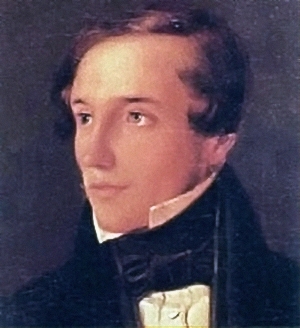
5. a compilation of Dukatenbilder by Heinrich Hoffmann, the famous creator of Struwwelpeter. Ducats were precious golden coins, often given as presents, and Hoffmann used to glue his to paper as faces of the figures he drew and gave with accompanying poems to his family members and friends for Christmas, birthdays etc. After the giftees took the coins he would fill in the empty spots with drawn features.
Other things about Hoffmann: he was kind and humane, one of the first to treat mental patients (he was a psychiatrist) with gentle regard and respect--he and his family lived in the same institution he had built for the patients. He loved kids and actually understood them. After marriage he added his wife's last name to his own.
And, he was a looker!
Aww!
(Must fatten up cat, must fatten up cat...)
As if all the other obsessions weren't enough, I recently developed another one: a mad desire to collect precious little candy-like Insel-Bücherei books published by Insel Verlag since 1912. To COLLECT THEM ALL. What happened? I've been seeing them around all my life, even owned some. But it was seeing almost 1300 of them stacked on top of each other that really did it.
They are hardcover (although some titles are paralelly issued in paperback or leather), almost always bound in patterned paper, with the older ones (up to the 1990s?) with hand-affixed title and spine medallions. Authors and themes range widely. Since the first attack of the obsession I've read
 ..
..  ..
..  ..
..  ..
..
1. about Franz Marc's expressionist animal studies
2. aristocratic hunting herons with falcons, as depicted in Johann Tischbein's contemporary paintings (the herons were captured, ringed and released, with some birds reportedly found bearing as many as seven rings)
3. Hugo von Hoffmansthal's beautiful Der Kaiser und die Hexe, a symbolist dramolet in verses in which "the emperor" suffers an existentialist crisis
4. the recent re-dscovery and revival of John Elsas, Meine Bilder werden immer wilder : 33 Blätter mit Versen und Zeichnungen, who died in 1935, after gaining a modicum of recognition for his late-bloomer art--a retired merchant and stock market trader, he took up drawing in his seventies, bedridden with illness--there's only a German Wiki entry, but you can see some of his verse-accompanied pictures
5. a compilation of Dukatenbilder by Heinrich Hoffmann, the famous creator of Struwwelpeter. Ducats were precious golden coins, often given as presents, and Hoffmann used to glue his to paper as faces of the figures he drew and gave with accompanying poems to his family members and friends for Christmas, birthdays etc. After the giftees took the coins he would fill in the empty spots with drawn features.
Other things about Hoffmann: he was kind and humane, one of the first to treat mental patients (he was a psychiatrist) with gentle regard and respect--he and his family lived in the same institution he had built for the patients. He loved kids and actually understood them. After marriage he added his wife's last name to his own.
And, he was a looker!
42QuentinTom
*sighs with pleasure*
This is the only sane place on LT at the moment. Is it National Stupid Month over there or something?
This is the only sane place on LT at the moment. Is it National Stupid Month over there or something?
43QuentinTom
I love the insel Bucherie books, after checking out the link, Lola! how fabulous! I love Elsas!
I also had Struwwelpeter when I was a child. this book exercised a huge influence on Auden, as well, as you can see in Auden's poems such 'Victor', and 'Ms Gee'.
I wonder how many kids have been terrorised by the thought of the scissor man...
I also had Struwwelpeter when I was a child. this book exercised a huge influence on Auden, as well, as you can see in Auden's poems such 'Victor', and 'Ms Gee'.
I wonder how many kids have been terrorised by the thought of the scissor man...
44LolaWalser

En Route by Joris-Karl Huysmans
In Là-bas Durtal the hero had some serious debauched fun--the usual orgy-going, adultery, dabbling in Satanism etc. that the bourgeois everywhere indulge in on weekends and holidays with their servants, pets and children. In En route we find him with a major spiritual hangover, heebie jeebies, self-disgust, and en route to **cue cat hacking** God. Huysmans was an elegant writer and even the most insipid Catholic "feeling" couldn't kill off his language, but unfortunately the book does suffer from this sea change in author's focus and devotion (from the arts to religion). The plot is minimal--Durtal, sodden with guilt and antsy with angst, wanders from one Parisian church to the next muttering to himself at length about Gregorian chant, a bevvy of saints, the Middle Ages, and how much better everything was then. There is one flash of the old Huysmans when an attack of piety in a church is cut short by the kneeling nuns' behinds rising temptingly right in front of Durtal, which reminds him of one Florence and her particular tastes in lovemaking, which ruins the saintly mood for the day. The agony of sensuality etc. Next he gets a reference to a Cistercian monastery which accommodates temporary guests, spends ten days among the smelly silent Trappists, getting up early and regulating his diet; then he returns to Paris, somewhat becalmed--or is he?! (Ha, rest assured, he is--see further pious sequels, La cathedrale and L'oblat.) The cast also is minimal, a couple of Fathers who prod Durtal and support him, but mainly we're inside Durtal's hagiography-reading, rosary-counting, converted, boring-ass head.
Abbé Mugnier, a friend and chronicler of the literary life of the era, supposedly noted, after finishing Là-bas, that Huysmans could proceed from there only either to hell or to the cross. Damn, I wish he'd picked hell.

Satan in Goray by Isaac Bashevis Singer
The place is a Jewish village in Poland, the time is of the false Messiah Sabbatei Zevi, the storytelling's great. We never encounter Zevi himself, we're never told what his teachings are, all we hear are the rumours, and see wretchedness and superstition, despair and hunger for deliverance work alone to delude the people into believing the time is come, next day in Jerusalem. The next day everyone's a bit or a lot worse off, the food and rituals unattended, the goods dispersed, the jobs neglected, the village prophetess dead, and the Cossacks are still somewhere close by, sharpening knives for the next pogrom.

All About H.Hatterr by G. V. Desani
I fear I won't do justice to this book because I didn't have the stamina to read it with the concentration and see-through necessary. I am one of the dull creatures who are more likely to be tripped by style than by ideas (physical chemistry is relaxing, Stephen King isn't), and Desani's voice in this book, while probably invigorating to some, sounds so much like relentless, monotonous shouting to me that I kept finding I'd lost the narrative thread--like, for the fifth time on a single page. And yet, while I couldn't reconstruct from start to finish a single adventure that H. Hatterr, a semi-Indian, semi-European, semi-intellectual, semi-citizen, semi-husband, semi-person, ridiculously and catastrophically undergoes, I'm certain this is a great book. And here is why, a quote complete, from p.37 in my Penguin edition:
"And, if I am in your way, in your Street, in this earth of majesty, this other Eden, this demi-paradise, this precious stone set in the silver sea, this blessed plot, this earth, this England, among this happy breed of men, and wouldn't avaunt, trudge, be gone: and if, by the Bard o' Avon (Henry the VIII), sir, I desire you to do me right and justice, for I am a most poor man and a stranger, having here no judge indifferent, nor no more assurance of equal friendship and proceeding: it is not because I wish to be in your way, not because this folio has any piety, poise, or worth: not because I seek a clown's abandon, nor, I swear, the rewards of a mountebank, truly: not because I crave the gain of an unmerited prize, or wealth, or riches, or honour, or more, or less: but, because, by the Lord God of hosts, the Holy, who made you of the happy breed and me of the stricken, He alone knowing the aught of making mortal things, I am lonely!"
45QuentinTom
That's going straight on the TBF list. Wow! fabulous prose. I can see how that would be distracting.
la bas sounds fun, but the other stuff. well.
la bas sounds fun, but the other stuff. well.
46LolaWalser
Hatterr is a linguistic carnival, a parodic tour de force, written, as the author says, in "rigmarole English". (I think you'll like it, Murr.) I only wish I could remember what HAPPENED.
47QuentinTom
well, maybe that' s the point: what happened is the language?
48LolaWalser
Language absolutely happened, but the points, I think, are various.
Desani was having some wicked satirical fun (we're talking 1945-50s here) with the colonial overlords' culture, pretensions and prejudices, with the European tradition, and even with his "own" people--in fact, he made fun of Europe by reflecting its grimaces back at it using an array of Indian characters, and very cleverly done that was.
But I got lost in his game. That "I am lonely!" was my beacon, the stunning cry of the heart I kept waiting to hear again--only I couldn't unbury from under the mountain of jest that strain of wry, sincere feeling again.
I should mention the structure: we follow Hatterr as he meets seven sages from seven Indian cities (one is an All-India sage, actually), they give him a piece of advice, he proceeds to demonstrate how silly and/or right it is, in some nightmarish fashion.
Here's more language for you, in the perfumy-est Mysterious East mode:
"'O mother!' he discourses, not sparing my feelings, and sobbing in the interim, 'O begetter! O woman! O sufferer of the pangs of child-birth! O jewel! the soles of her feet as enticing as a mango blossom! As spice of Madras! Her speech sweet, as the dates of Arabi! Her voice caaressing, as the touch of the Chameli flower! A sweetheart-wife, her abdomen endowed her by no other than the goddess Sachi! Forehead by Shakuntala! Buttocks by Ahilya! Navel by Mandodari! Legs by Kadambari! Belly by Madhavi! Nipples by Rambha! Teeth by Hidamba! Chin by Chitrangada! Nose by Sita! Insides by Urvashi! Veins by Devaki! Elbows by Savitri! Tongue by Gargi! Head by Kunti! Bones by Madari! Divine, immortal heroines all! Mana by Radha, Shakti, Parvati, the Mother of the gods! O the smiter-of-hearts! O the fay! A sweetheart-wife, a sweetheart-wife, blessed with an angels-envied bosom, as seductive as a lake of honey! Ah, the clinging sweetness of her lips!'"
Desani was having some wicked satirical fun (we're talking 1945-50s here) with the colonial overlords' culture, pretensions and prejudices, with the European tradition, and even with his "own" people--in fact, he made fun of Europe by reflecting its grimaces back at it using an array of Indian characters, and very cleverly done that was.
But I got lost in his game. That "I am lonely!" was my beacon, the stunning cry of the heart I kept waiting to hear again--only I couldn't unbury from under the mountain of jest that strain of wry, sincere feeling again.
I should mention the structure: we follow Hatterr as he meets seven sages from seven Indian cities (one is an All-India sage, actually), they give him a piece of advice, he proceeds to demonstrate how silly and/or right it is, in some nightmarish fashion.
Here's more language for you, in the perfumy-est Mysterious East mode:
"'O mother!' he discourses, not sparing my feelings, and sobbing in the interim, 'O begetter! O woman! O sufferer of the pangs of child-birth! O jewel! the soles of her feet as enticing as a mango blossom! As spice of Madras! Her speech sweet, as the dates of Arabi! Her voice caaressing, as the touch of the Chameli flower! A sweetheart-wife, her abdomen endowed her by no other than the goddess Sachi! Forehead by Shakuntala! Buttocks by Ahilya! Navel by Mandodari! Legs by Kadambari! Belly by Madhavi! Nipples by Rambha! Teeth by Hidamba! Chin by Chitrangada! Nose by Sita! Insides by Urvashi! Veins by Devaki! Elbows by Savitri! Tongue by Gargi! Head by Kunti! Bones by Madari! Divine, immortal heroines all! Mana by Radha, Shakti, Parvati, the Mother of the gods! O the smiter-of-hearts! O the fay! A sweetheart-wife, a sweetheart-wife, blessed with an angels-envied bosom, as seductive as a lake of honey! Ah, the clinging sweetness of her lips!'"
49QuentinTom
fabulous. I love it.
50QuentinTom
fabulous. I love it.

