This topic is currently marked as "dormant"—the last message is more than 90 days old. You can revive it by posting a reply.
1tros
Thinking about some of my favorite writers, I'd call them seminally important because they influenced much of the rest of lit.:
Leo Perutz, Beckett, Kobo Abe, Nabokov.
Any other seminal writers who influenced 20th c. lit?
Leo Perutz, Beckett, Kobo Abe, Nabokov.
Any other seminal writers who influenced 20th c. lit?
2Makifat
Of the top of my head, Kafka and Joyce would have to be on the list as huge influences. Would Beckett even be Beckett without Joyce? I suspect that it would be impossible to overestimate Kafka's influence. And Borges must have had a tremendous influence on Latin American literature.
In the States, I think the influence of Pynchon and Robert Coover (even though Coover is clearly not as well known) has been pretty heavy, as has that of J.D. Salinger and Philip Roth.
Salinger and Roth aren't necessarily my favorites, but we are talking about influence, and I think they had their share of it.
In poetry, there's Lorca, but I think you'd have to go pre-20th century to Rimbaud and Baudelaire and even Whitman to get to the root of much 20th century poetry. Couldn't have Hart Crane without Whitman.
The web of "influence" is a fascinating - and highly debateable - subject. What we get down to is who were the writer's writers? They may not always be the most common names.
In the States, I think the influence of Pynchon and Robert Coover (even though Coover is clearly not as well known) has been pretty heavy, as has that of J.D. Salinger and Philip Roth.
Salinger and Roth aren't necessarily my favorites, but we are talking about influence, and I think they had their share of it.
In poetry, there's Lorca, but I think you'd have to go pre-20th century to Rimbaud and Baudelaire and even Whitman to get to the root of much 20th century poetry. Couldn't have Hart Crane without Whitman.
The web of "influence" is a fascinating - and highly debateable - subject. What we get down to is who were the writer's writers? They may not always be the most common names.
3soniaandree
It's all very subjective, as I would call 'seminal' authors who would have proved controversial and influential in their writings, pushing the boundaries of established novel rules beyond the form of the novel but also allowing greater freedom of expression -there are some I find highly controversial but essential: Marquis de Sade (it's not all about sadistic sex, you know - his debates about the form of the novel are very enlightening and would have proved controversial in their own rights), Henry Miller, William Blake, Lewis Carroll (the child as the equal of adults), Tolkien (as in linguistics/creation of language and mythology), Emile Zola (his ultra-realism/naturalism was linked to his far-left political links), Sartre and his existentialism, Roland Barthes (philosopher)...plenty more, I guess.
5tros
Maybe "influence" is misleading. Sonia and Maki said it better than I did.
"pushing the boundaries of established novel rules beyond the form of the novel but also allowing greater freedom of expression", exactly. Or as Maki says "writer's writers". Probablyhave to add Camus.
"pushing the boundaries of established novel rules beyond the form of the novel but also allowing greater freedom of expression", exactly. Or as Maki says "writer's writers". Probablyhave to add Camus.
6Randy_Hierodule
Anything but the task at hand! List : Robert Musil, Witold Gombrowicz, Herman Broch, Kawabata Yasunari, William Faulkner, Virginia Woolf, W. B. Yeats, T. S. Eliot, Malcolm Lowry, Andre Breton, Antonin Artaud, Octavio Paz, Thomas Mann, Henry James.
7Nicole_VanK
Off the top of my head I would add Ionesco and Brecht.
8Randy_Hierodule
and Giuseppe di Lampedusa and Italo Svevo.
And a few whose books may or may not be milestones or masterpieces, but yield strange and/or spiritual pleasures: Walter de la Mare, Denton Welch, Ronald Firbank.
And a few whose books may or may not be milestones or masterpieces, but yield strange and/or spiritual pleasures: Walter de la Mare, Denton Welch, Ronald Firbank.
10soniaandree
Silone, Mishima, Salman Rushdie, Omar Khayyam (spelling?)...
11absurdeist
Marcel Proust
12QuentinTom
Dorothy Richardson, the inventor of the stream of Consciousness, huge influence on Woolf, Joyce and all those who came after.
13tros
In the intro to Uncanny Stories, it mentions that "in 1918, Sinclair published a review of Dorothy Richardson in which she employed the term "stream of consciousness" for the first time".
Sinclair also uses SOC effectively in her stories.
Sinclair also uses SOC effectively in her stories.
14Existanai
In tracing the very precarious lines of influence one must ultimately revert to the the problem of a canon, and in raising such a delicate if occasionally hackneyed question one invites all sorts of methodological quagmires, not to mention the aesthetic, sociological, and political - to say the very least - quandaries that beset every contemporary academic attempt at honest, comprehensive criticism. I am chagrined to note, for instance, that one of the most widely read, politically committed and successful French writers of the post-war era has been left out - Gérard de Villiers. Choosing only one representative masterpiece from his vast oeuvre of 171 works (and counting) is a daunting enough task, but to actually sift through the labyrinthine corpus in French with its multitudinous references to a whole panoply of pressing issues and mundane dilemmas that define the post-colonial European scene, in order to establish the breadth of his legacy, would perhaps require a group of scholars the likes of which are uncommon, even improbable; and I am not even considering the question of his radical breaks with the classical language of novels and the refreshingly unapologetic, uncensored sexual exploration coursing through his works. Let me pick just a single title, so far released in two parts, that I believe, despite lacking the requisite expertise, to be his magnum opus - unquestionably one that has helped to establish his considerable reputation.
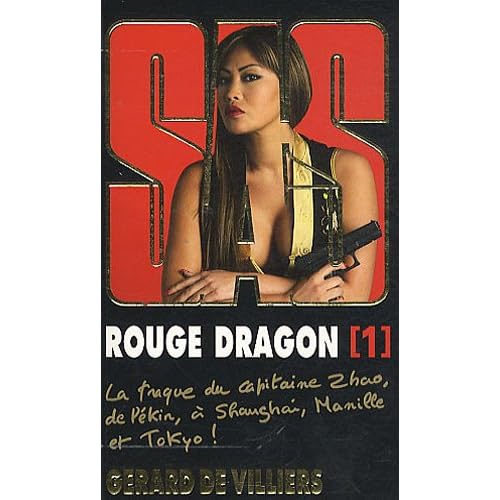
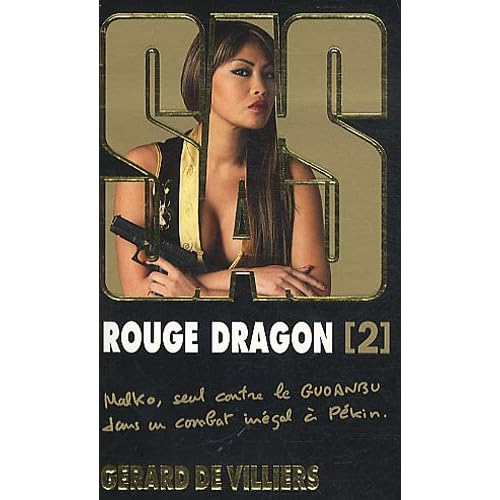
It is a pity, once again, these works, as yet untranslated on account of the unrefined demotic tastes of the Anglophone sphere, have not found the audience abroad that they deserve. It is perhaps too self-evident to mention that the dearth of exposure to such authentic, challenging and undoubtedly cosmopolitan books as Villiers pens is partly responsible for the dire state of education and apathetic political engagement outside the Continent today. Let us hope that such a major writer and others of his neglected ilk find, at some point, honorific positions in that bright constellation of sparkling names where they have always belonged.
It is a pity, once again, these works, as yet untranslated on account of the unrefined demotic tastes of the Anglophone sphere, have not found the audience abroad that they deserve. It is perhaps too self-evident to mention that the dearth of exposure to such authentic, challenging and undoubtedly cosmopolitan books as Villiers pens is partly responsible for the dire state of education and apathetic political engagement outside the Continent today. Let us hope that such a major writer and others of his neglected ilk find, at some point, honorific positions in that bright constellation of sparkling names where they have always belonged.
15QuentinTom
Heeeeeeeeeeear heeeeeeeeeeeeeear.
16Makifat
14
Wonderful, reading your exquisite plea for Villiers (who?? how could I have missed him?!), and then scrolling down to the titles themselves.
Masterfully done!
Wonderful, reading your exquisite plea for Villiers (who?? how could I have missed him?!), and then scrolling down to the titles themselves.
Masterfully done!
17Existanai
Thank you (both) ! :)
Maybe I went a little overboard - wanted to elicit a few more chuckles.
For the curious, the various Villiers book covers are a delight, an unrestrained exercise in adolescent fantasy - a vast range of buxom ladies from all over the world, wearing just enough to make passers-by squirm - and there are a sufficient number of titles to plaster a whole mechanic's garage with; I'm not sure why, but this combination of abundance and variety makes me laugh.
Maybe I went a little overboard - wanted to elicit a few more chuckles.
For the curious, the various Villiers book covers are a delight, an unrestrained exercise in adolescent fantasy - a vast range of buxom ladies from all over the world, wearing just enough to make passers-by squirm - and there are a sufficient number of titles to plaster a whole mechanic's garage with; I'm not sure why, but this combination of abundance and variety makes me laugh.
18Randy_Hierodule
oh...yeah
19soniaandree
re. Villiers
Yes, although I note that this was a favourite read of BOTH my elder brothers, rather than mine. I stopped at San Antonio (in the same vein - language is more than colourful, but it is pure comedy gold).
Yes, although I note that this was a favourite read of BOTH my elder brothers, rather than mine. I stopped at San Antonio (in the same vein - language is more than colourful, but it is pure comedy gold).
20tros
Jeeze, that thread went to hell fast!
E, you're interpreting "seminal" a little too literally.
;-)
E, you're interpreting "seminal" a little too literally.
;-)
21LolaWalser
Dostoevsky, Nietzsche, Eastern mysticism, classical Chinese poetry...
22Makifat
What's interesting for me is just how complex the web of influence can be. It is a very thick, very busy web. I received my copy of The Grin of the Gargoyle last night and, after perusing it a while, noted that The Romance of Reynard the Fox wasn't included, probably because it is so readily available. Of course, this sent me to have a look at crafty Reynard, which in turn put me in mind of Malpertuis, which inevitably led to Poe. And yet this is all the tip of the iceberg: thinking about influence is like contemplating an Escher print. And that's the fun of it.
Thinking of influence can lead one down some surprising avenues. (See Borges, "Kafka and His Precursors".)
Thinking of influence can lead one down some surprising avenues. (See Borges, "Kafka and His Precursors".)
23absurdeist
14> I nearly soiled my slacks with that satirical post of yours last night. You completely had me ... until I saw the book covers ... and even then, I must confess, there were lingering doubts because you were so dry in your expert analysis and deadpan academia-mocking!
Maki, I like your inclusion of Coover as a 20th century influence a lot. I plan on finally reading The Public Burning later this summer. I would add his contemporary, John Barth, as well, even if only because of his huge stylistic influence on both Richard Powers and David Foster Wallace, who have both influenced yet another generation of young guns and are, in fact, still influential.
I'm not much in to Gertrude Stein, but her influence on postmodernism ranks with Joyce's, imo.
I'd also add those Oulipo experimentalists, namely Georges Perec and Italo Calvino -- huge impact on the postmodernists who followed.
Maki, I like your inclusion of Coover as a 20th century influence a lot. I plan on finally reading The Public Burning later this summer. I would add his contemporary, John Barth, as well, even if only because of his huge stylistic influence on both Richard Powers and David Foster Wallace, who have both influenced yet another generation of young guns and are, in fact, still influential.
I'm not much in to Gertrude Stein, but her influence on postmodernism ranks with Joyce's, imo.
I'd also add those Oulipo experimentalists, namely Georges Perec and Italo Calvino -- huge impact on the postmodernists who followed.
24Existanai
Thanks again for the responses (glad I soiled someone's pants, EF - also aiming for some spilt drinks) but to take the topic "seriously", tros (if you'll permit me a little grandstanding, I'm sure a few others saw this coming) the most obvious objection to the framing of the question is that it's way too early to make any kind of considered judgement, and even if it weren't, it means little, almost nothing - there are hordes of "essential" 19th century writers and critics who exercised enormous influence on their peers and immediate successors but who are probably best known now for being a reference in someone else's work (Sainte-Beuve would probably go unheard of today if it were not for Proust's rebuttal, for instance.) The more I discover, the more personal an enterprise the exploration of lit becomes, the less I care about influences, lists and canons; and who knows how many of our favourite 20th century writers are going to be erased by the simplifications of popular historiography? Already most of the 20th century Nobel laureates are unread or unknown; even people popular in the 60s are barely recognized today. Of course, I know this is a harmless and fun topic and I'm not criticizing anyone or anything here in particular. (Most here are already familiar with these complaints.) I just find this talk of fame and influence overdone to the point of being untenable, a problem compounded by the casual conflation of vague terms like "greatness", "influence", etc. Musil, for instance, is a "great" writer, and one of my favourites, but whom or how many did he really "influence"? I can't think of a legion of writers using his particular ideas (which are usually more philosophical than literary) or trying to exploit his particular style. On the flip side, there are writers one might consider highly influential - in breaking a former cultural taboo, say - but whom one would not consider "great" in quite the same vein.
I know, abstention is relativism taken to an extreme, a case of playing it safe, and if canons truly mean nothing, then making a personal list of major writers should equally well mean nothing and raise no hackles. But the formulation of influence and canons is always, as a theorist might point out, cultural-ideological (I hear groans in the aisles.) I mean, I'm glad that enough people have read and appreciated and preserved and passed on the work of Flaubert and the like, without whom us hopelessly ignorant pop-saturated plebs would never get an education and begin to realize there was more than the suffocating smallness of our lives and our views, but I feel after a certain point that a list or a canon too is asphyxiating, a 'corseting', and it is absolutely the wrong way to go about any sophisticated grasp of the way in which both literature and history unfold - which is to say, without any kind of previously established ultimate set of values or patterns or predictable mechanisms at work, but lots and lots of minor, competing sets of values, patterns, and predictable behaviour at work. As kids we are taught that people are remembered because they did something valuable. The subsequent deduction is that there is some kind of equation between what is remembered, what is sold, what is advertised and some eternal, unchanging notion of utility, significance, etc. - accomplishment and productivity lead to "greatness", memorialization, and so on; value or greatness is recognizable to many if not all; and if you can appreciate it, you too are elevated to the sidelines of this lofty arena where the fancy chums hang about. The reality is that we no longer hang around in the cafes of 20th century European capitals making pronouncements on worth and reputation; we are aware of the possibility of numerous parallel histories that barely intersect with each other, and while minor equations between achievement or mastery and recognition are possible and constantly in use, there are no overarching theories or sets that allow us to convincingly group or square off those equations with one another. And that's just one aspect of it. Lists tend to brush aside the most valuable aspect of reading, which is the full-on confrontation with an undiscovered world, and careful criticism takes it to a quantum level - a literary effect works sometimes this way, sometimes the other way, and it depends on who's observing, how, when; the same observer might even find the cat to be alive and dead at the same time, so to speak. And you could also argue that all of the above is a simplification, which ignores ambition and agency.
(...I would rather be lectured about volcanic rocks too...)
I know, abstention is relativism taken to an extreme, a case of playing it safe, and if canons truly mean nothing, then making a personal list of major writers should equally well mean nothing and raise no hackles. But the formulation of influence and canons is always, as a theorist might point out, cultural-ideological (I hear groans in the aisles.) I mean, I'm glad that enough people have read and appreciated and preserved and passed on the work of Flaubert and the like, without whom us hopelessly ignorant pop-saturated plebs would never get an education and begin to realize there was more than the suffocating smallness of our lives and our views, but I feel after a certain point that a list or a canon too is asphyxiating, a 'corseting', and it is absolutely the wrong way to go about any sophisticated grasp of the way in which both literature and history unfold - which is to say, without any kind of previously established ultimate set of values or patterns or predictable mechanisms at work, but lots and lots of minor, competing sets of values, patterns, and predictable behaviour at work. As kids we are taught that people are remembered because they did something valuable. The subsequent deduction is that there is some kind of equation between what is remembered, what is sold, what is advertised and some eternal, unchanging notion of utility, significance, etc. - accomplishment and productivity lead to "greatness", memorialization, and so on; value or greatness is recognizable to many if not all; and if you can appreciate it, you too are elevated to the sidelines of this lofty arena where the fancy chums hang about. The reality is that we no longer hang around in the cafes of 20th century European capitals making pronouncements on worth and reputation; we are aware of the possibility of numerous parallel histories that barely intersect with each other, and while minor equations between achievement or mastery and recognition are possible and constantly in use, there are no overarching theories or sets that allow us to convincingly group or square off those equations with one another. And that's just one aspect of it. Lists tend to brush aside the most valuable aspect of reading, which is the full-on confrontation with an undiscovered world, and careful criticism takes it to a quantum level - a literary effect works sometimes this way, sometimes the other way, and it depends on who's observing, how, when; the same observer might even find the cat to be alive and dead at the same time, so to speak. And you could also argue that all of the above is a simplification, which ignores ambition and agency.
(...I would rather be lectured about volcanic rocks too...)
25RMRM
Existanai: I agree completely (and mean no disrespect to others here), but i know from the nigglingly embarrassed feelings I have about my last post that i'd better expand upon this message when I'm not so exhausted. I have some really good points to make that back you up, however. Tomorrow! (I love this site so much - i have to force myself to go to sleep).
26Makifat
24
I suppose what I appreciate about the web of influence I spoke of earlier is its ability to take one beyond the accepted canon. We can cut our teeth on Joyce or Proust, but from there we can proceed forward and backwards, finding writers we had never known existed, but which quickly become favorites. This, for me, is the value of tracing those elusive threads of "influence".
But I do agree that, ultimately, the making of lists is rather futile, as sooner or later everyone seems to end up on the list. And any list of "favorite" authors I make today will most likely be amended and rearranged within a day or a week.
I suppose what I appreciate about the web of influence I spoke of earlier is its ability to take one beyond the accepted canon. We can cut our teeth on Joyce or Proust, but from there we can proceed forward and backwards, finding writers we had never known existed, but which quickly become favorites. This, for me, is the value of tracing those elusive threads of "influence".
But I do agree that, ultimately, the making of lists is rather futile, as sooner or later everyone seems to end up on the list. And any list of "favorite" authors I make today will most likely be amended and rearranged within a day or a week.
27Makifat
Well, here I go with my reductio ad absurdum.
If if had to get it down to the ONE seminal influence for 20th century literature, remaining fully aware that such a beast does not exist, my money would be on...........Dostoyevsky.
If if had to get it down to the ONE seminal influence for 20th century literature, remaining fully aware that such a beast does not exist, my money would be on...........Dostoyevsky.
28Existanai
RMRM, I don't see your last post - was it deleted?
Maki, I didn't mean any criticism of what you wrote above (I posted my general thoughts in reply to tros' charge that I was shooting down the thread, and in any case you know by now I just love how the dimensions of a soapbox fit my shoes.) I do get your point - I also enjoy making associations and tracing the genealogy of a text, genre or style, which can take a person all over the map (historical, geographical, literary.)
I think the value of a list is primarily educational - the catalogue of a publisher serves the same function as an introductory list or canon, after all, and the pleasure of making associations is educational too (I couldn't possibly have collected so much without referring to such pre-established lists.) And compiling lists can be interesting because of all the underlying complex questions - why is so and so a major writer? It's a much more difficult question to answer comprehensively, without help, than a pat put-down of list-making would suggest; but it does sooner or later bring us back to the near-impossibility of trying to make fundamentally incoherent things play well together.
I guess I am both bothered and fascinated by the question of "seminal" writers. What bothers me is the appropriation of an amusing intellectual game for, say, the leisure columns of newspapers, and the adoption of a pseudo-academic template for the question and for some of the responses generated. And the exploitation of these ventures by publisher's marketing machines - Modern Library makes no apology for naming its list of popular English language titles "100 Best Novels". This has convinced no small number of readers the list is an authoritative guide. The default nature of such lists is jarring when you consider they will remain totally irrelevant to most of the population, including the cultures the works originated in. Hence, my rather tedious kvetching. I enjoy going over the writers that have meant the most to me as much as the next person, but I shy away from categorizing my experiences because the initial satisfaction is deceptive; the more I begin to recall, the more perplexing it all becomes, and this confusion - which is the most fascinating aspect of the lists - is left out of popular debates.
And the fascination, as above, stems from the difficulty of defining these things - trying to track or quantify influence across languages is worthwhile, but daunting - as are all the related issues. Why do writers get transmitted at different "speeds" to different cultures, how much of a role does translation have, how do you measure the effects of influence, to what extent does local politics hamper or aid the popularity of a work, and where do you draw the line between popularity and literary worth, if such distinctions can or should exist? What makes a general list authoritative, and what sort of mythical creature is this 'ideal' reader that both gives life to a text and decades later is also receptive to it? No context was ever static, but a lot has changed since the initial continuum in which some classic works were born. Even if the reading culture of today may boast a larger number, it is a very different type of readership from the average 19th century European household where the importance of novels and the acquisition of 'culture' began to take shape. Why do a few works survive this transition, while others don't? I'm not trying to ruin all enthusiasm for the exchange of names, the happy recollections of great books, but the consideration of these other factors adds a provocative dimension to the ways in which I think about literary experiences.
Maki, I didn't mean any criticism of what you wrote above (I posted my general thoughts in reply to tros' charge that I was shooting down the thread, and in any case you know by now I just love how the dimensions of a soapbox fit my shoes.) I do get your point - I also enjoy making associations and tracing the genealogy of a text, genre or style, which can take a person all over the map (historical, geographical, literary.)
I think the value of a list is primarily educational - the catalogue of a publisher serves the same function as an introductory list or canon, after all, and the pleasure of making associations is educational too (I couldn't possibly have collected so much without referring to such pre-established lists.) And compiling lists can be interesting because of all the underlying complex questions - why is so and so a major writer? It's a much more difficult question to answer comprehensively, without help, than a pat put-down of list-making would suggest; but it does sooner or later bring us back to the near-impossibility of trying to make fundamentally incoherent things play well together.
I guess I am both bothered and fascinated by the question of "seminal" writers. What bothers me is the appropriation of an amusing intellectual game for, say, the leisure columns of newspapers, and the adoption of a pseudo-academic template for the question and for some of the responses generated. And the exploitation of these ventures by publisher's marketing machines - Modern Library makes no apology for naming its list of popular English language titles "100 Best Novels". This has convinced no small number of readers the list is an authoritative guide. The default nature of such lists is jarring when you consider they will remain totally irrelevant to most of the population, including the cultures the works originated in. Hence, my rather tedious kvetching. I enjoy going over the writers that have meant the most to me as much as the next person, but I shy away from categorizing my experiences because the initial satisfaction is deceptive; the more I begin to recall, the more perplexing it all becomes, and this confusion - which is the most fascinating aspect of the lists - is left out of popular debates.
And the fascination, as above, stems from the difficulty of defining these things - trying to track or quantify influence across languages is worthwhile, but daunting - as are all the related issues. Why do writers get transmitted at different "speeds" to different cultures, how much of a role does translation have, how do you measure the effects of influence, to what extent does local politics hamper or aid the popularity of a work, and where do you draw the line between popularity and literary worth, if such distinctions can or should exist? What makes a general list authoritative, and what sort of mythical creature is this 'ideal' reader that both gives life to a text and decades later is also receptive to it? No context was ever static, but a lot has changed since the initial continuum in which some classic works were born. Even if the reading culture of today may boast a larger number, it is a very different type of readership from the average 19th century European household where the importance of novels and the acquisition of 'culture' began to take shape. Why do a few works survive this transition, while others don't? I'm not trying to ruin all enthusiasm for the exchange of names, the happy recollections of great books, but the consideration of these other factors adds a provocative dimension to the ways in which I think about literary experiences.
30RMRM
No, it wasn't deleted - just incoherent! (It was late). It’s still there on my screen, and it says that I agree completely with your point (points – SO many good points!) but of course I completely agree with you as well Makifat! This is a very complex subject (I think), so my head is working on a very long reply. I'll have it in an hour or so!
31RMRM
Okay, it looks as if I’m going to have to answer this in installments (thank you so much for allowing me to assume that you will be patient (and hopefully enjoy the process) while I tie all this together!). Here’s Point Part number One: Once I took a class on The Philosophy of Art, and one day the instructor quite mercilessly assigned us a four page paper on the single question: “What is art?” Twelve pages later I realized I had to be content with the argument that is that art is – well, it a) moves us in some way or another (it doesn’t matter which way), b) it’s memorable, c) it moves an unspecific but notable amount of people, but d) was the clincher (I feel very strongly about this) that there has to be some personal attachment/affection involved (and e) awe-inspiration helps – a lot). But d) I think is what it all boils down to is love (call me crazy – my instructor did ((it’s okay, we were friends)). Anyway, “love” is the key. Just like the question “If no one saw the bear doing whatever it did, did it really do whatever it did?”, “is a work of art (or literature, or music ((or embroidery, or blahblahblah) really art if no one loves it?” Okay, that feels like about an eighth (perhaps a twelfth) of my point, but I have to find my cell phone (I’ve spent the vast majority of my life being conditioned to the fact that a telephone is attached to a WALL, thank you. AUGH!), and then find my dear child. I’ll be back.
32Existanai
RMRM, I just went back to Heidegger's The Origin of the Work of Art last night - worth a discussion.
But I feel like I just killed Tros' well-intentioned thread while trying to salvage it. My tiresome prefatory rehash of all the familiar objections to 'influence' reminded me of this funny video of Žižek on belief - I suppose I'm more invested in the question of influence than others, and thus condemned to always circling around it instead of answering the damn question and moving on. :)
But I feel like I just killed Tros' well-intentioned thread while trying to salvage it. My tiresome prefatory rehash of all the familiar objections to 'influence' reminded me of this funny video of Žižek on belief - I suppose I'm more invested in the question of influence than others, and thus condemned to always circling around it instead of answering the damn question and moving on. :)
33LolaWalser
I see nothing controversial in asking* who or what influenced a closed set of writers: let's say, 20th century European, or 18th century French, or 15th century Japanese etc. Obviously, if we leave it open-ended (who's going to prove the MOST influential 20th century writer of them all?) we can speculate but never know.
*Answers may very well be controversial, and never complete.
But saying that Lautréamont was seminal & ovular for nigh every modernist 20th century movement is pretty unexceptional.
I suppose I'm more invested in the question of influence than others
Really, why is that? Curious squirrels must know.
*Answers may very well be controversial, and never complete.
But saying that Lautréamont was seminal & ovular for nigh every modernist 20th century movement is pretty unexceptional.
I suppose I'm more invested in the question of influence than others
Really, why is that? Curious squirrels must know.
34QuentinTom
>27 Makifat: Ah Makif, I would agree. It seems that every writer post Dostoevsky has had to deal with his huge presence in one way or another.
but who was the seminal influence on Dostoevsky?
but who was the seminal influence on Dostoevsky?
35Existanai
#33 I see nothing controversial in asking who or what influenced a closed set of writers: let's say, 20th century European, or 18th century French, or 15th century Japanese etc.
No disagreement there - but your examples are specific, whereas '20th century' is not enough of a closed set. As I tried to say above, there are strands of influence running through all literature (I'm not denying that Dostoevsky or Kafka are influential) but, obviously, when you expand the scope of the question to the whole of the 20th century, regardless of geography or other qualifications, these various strands cannot be consistently, meaningfully combined together, so 'influence' becomes less reliable as a concept.
No disagreement there - but your examples are specific, whereas '20th century' is not enough of a closed set. As I tried to say above, there are strands of influence running through all literature (I'm not denying that Dostoevsky or Kafka are influential) but, obviously, when you expand the scope of the question to the whole of the 20th century, regardless of geography or other qualifications, these various strands cannot be consistently, meaningfully combined together, so 'influence' becomes less reliable as a concept.
36RMRM
...So anyway, there’s the influence a work has on other writers/artists/embroiderers/blahblahblahs (anyone, really – actors, soccer players…), and there’s the influence the work has on its admirers. (Okay, this is only the second fraction of this response, so hang with me for a while) – I remember being unable not to exclaim during this paper that – (okay, you guys can NOT assume I’m a goob because I’m admitting to you that I used this example (the Gateway Arch – DO NOOOOOT LAAAAAAUGH = I’M NOT DONE WITH MY POOOIIIINT!!! In fact, I’ll prove I’m not a goob by stating that although the Gateway Arch is admittedly important to me in the love-realm, but it’s not something I’m as covetous of as, oh, certain Klimts or reliquaries or Celtic brooches I’ve seen, or by no means am I as covetous of it as ANY of these scale models of the Vatican I saw at the MMA one time ((forgive me – my ex-husband’s family is a cluster of over-educated snobs from Santa Monica, and they were rather chagrined at their OWN ASSUMPTIONS of who his wahf frim Saynte Leeewis was as a person for many years into our marriage (you know – Californians can be quite convinced that California is home to the only civilized beings on earth – and in many ways it’s true, but there are exceptions – and I’m ONE OF THEM for *****’s sake (((you know – you may have suspected that your own mother-in-law’s quietly-condescending attitude toward you is in fact fueled by a very well-veiled CAULDRON of jealousy, and I’d say that chances are 99% in favor of your being correct. At any rate, I’m obviously not completely healed from my marriage-experience, but I do try to share it in a entertaining ways that help other people feel acknowledged about their own smoldering thoughts about their own mothers-in-law - wait - mother-in-laws))) so anyway, I remember in the paper not being able to not to conclude that the Arch is the penultimate answer to the question: “What is art?” And although it surely isn’t the definition of seminal (it’s modeled after a gate, after all, and of course all the Roman Arches were seminal to IT, and there were Golden Arches before it existed, but) it influences its visitors, and the citizens who drive by the thing over and over and who leave and come home again and are welcomed home by the behemoth thing and it takes your breath away and you ride UP the LEG of the thing, and when you’re a kid in St. Louis you have to watch that utterly fascinating and very tense movie about how it was constructed every year and before you know it you have the whole movie memorized, and I’m not sure that Giotto or even Ghirlandaio have imbued so many with so much awe and – well, affection (well, who's to say, really? But if I give that niggling argument too much credence it just shuts down my whole argument - just pretend that argument doesn't exist, okay?). Anyway, there is an ENORMOUS amount of affection generated by the Arch – you feel it when you’re on the grounds, and you feel it in every conversation you have about it, don’t you? So SOMEWHAT more conclusively: I assert that the value of a work of art (literature, music, embroidery, etc) directly corresponds with the amount of love it generates – although this is only 50% of the truth (well, PART of the truth – I don’t know how MUCH of the truth it is, but the point’s diametrical opposite point is true too – which is – dada is important, Robert Mapplethorpe is important – so, similarly, I think, your point Existanai is important and can coexist with – and DOES coexist perfectly, in my opinion (although I certainly can’t speak for Tros) with Tros’. I shall hereafter contain the subsequent fractions of this response to the realm of literature only, and adhere more closely to the question of how writers have influenced other WRITERS (but I swear at some point yesterday all this tied together in my mind – I just have to remember how) and Lola, my favorite new phrase is: “Curious squirrels must know”.
37QuentinTom
I shall hereafter contain the subsequent fractions of this response to the realm of literature only, and adhere more closely to the question of how writers have influenced other WRITERS.
We must be grateful for small mercies, I suppose.
We must be grateful for small mercies, I suppose.
39LolaWalser
'20th century' is not enough of a closed set.
Why? It's over.
Why? It's over.
41LolaWalser
:))), LOL, hahahaha!
42SilentInAWay
Californians can be quite convinced that California is home to the only civilized beings on earth
Wait...you mean it's not??
Wait...you mean it's not??
43Existanai
Maki does have a point - lots of 20th century authors are still alive, but besides that, how many of the "seminal writers" in this group are we aware of? For that matter, how many truly notable English or French or German writers from the 70s can we name without consulting a reference? Although the shape of early 20th century European literature is more or less stable and quite familiar, we're still in the midst of discovering famous non-European writers from the same period, not to mention the plethora of names from the post-war period - so "20th century" is not enough of a closed set because 1) we aren't far enough from it to put things in perspective 2) we're not sure what the 'right' perspective would be (lots of authors are notable because they're representative of something, not because they are interesting) 3) we don't even know everything that's in the set.
44soniaandree
re. California as centre of the world
Salvador Dali thought the train station in Perpignan (which he designed) was the centre of the world. Go figure.
I suppose that the centre of the world is what we call 'home', in a way, but in my residency/travels in various countries, I have found that I am no longer considered as being from one place or belonging to another - too much travelling makes you a citizen of the world, I guess, but you do not belong anywhere anymore, which is a pity. Travel changes you. I can say I originate from somewhere, but this becomes devoid of meaning, the further I go. I'll have to settle sometime, by fear of finding myself in a perpetual international limbo - I am moving to another region in September, so this isn't over yet.
Salvador Dali thought the train station in Perpignan (which he designed) was the centre of the world. Go figure.
I suppose that the centre of the world is what we call 'home', in a way, but in my residency/travels in various countries, I have found that I am no longer considered as being from one place or belonging to another - too much travelling makes you a citizen of the world, I guess, but you do not belong anywhere anymore, which is a pity. Travel changes you. I can say I originate from somewhere, but this becomes devoid of meaning, the further I go. I'll have to settle sometime, by fear of finding myself in a perpetual international limbo - I am moving to another region in September, so this isn't over yet.
45LolaWalser
#43
I didn't think it needed spelling out: as one of Dubya's immortal sages said, there are known and unknown unknowns. The former we can perhaps begin to fill in, the latter we can only acknowledge as a possibility, pending further discovery. Meanwhile, if I ask you to list your favourite French authors, I may reasonably expect that you will draw from the closed set of those you know, however you, I, or both define "knowledge". Because I'm reasonable and expect you are too. If I meant "each and every person who ever wrote a word of French, published or not, anonymous or not"--now that would be unreasonable, wouldn't it. So that's not what I mean, and that's not what I'd expect any reasonable person to expect I'm meaning.
I can perfectly well treat "the 20th century" as a closed set, and you can choose to regard it as an open one, and yet another person could demarcate it with fewer or more decades and so on, but it's sheer pedantry to pretend we can't have any sort of meaningful conversation about the influences or whathaveyou of a given collection of authors. It's merely a question of agreeing on the criteria of choice.
#44
May we know where?
I didn't think it needed spelling out: as one of Dubya's immortal sages said, there are known and unknown unknowns. The former we can perhaps begin to fill in, the latter we can only acknowledge as a possibility, pending further discovery. Meanwhile, if I ask you to list your favourite French authors, I may reasonably expect that you will draw from the closed set of those you know, however you, I, or both define "knowledge". Because I'm reasonable and expect you are too. If I meant "each and every person who ever wrote a word of French, published or not, anonymous or not"--now that would be unreasonable, wouldn't it. So that's not what I mean, and that's not what I'd expect any reasonable person to expect I'm meaning.
I can perfectly well treat "the 20th century" as a closed set, and you can choose to regard it as an open one, and yet another person could demarcate it with fewer or more decades and so on, but it's sheer pedantry to pretend we can't have any sort of meaningful conversation about the influences or whathaveyou of a given collection of authors. It's merely a question of agreeing on the criteria of choice.
#44
May we know where?
46Existanai
#45 I admit it would be pedantic if I denied the possibility of "any sort of meaningful conversation" - but, assuming I wasn't too opaque, too long-winded (which I might very well have been) and that you'd read what I'd posted, you would notice that I didn't really go that far. I specifically mentioned that I am not trying to deny certain major names have been influential, but beyond this, the question has little meaning for me, and to the extent that it is meaningful for others, it is bracketed within a lot of other qualifications and assumptions mentioned above, and that, when the question is considered carefully even within such a bracketing, its utility begins to disintegrate. For instance, and repeating myself here, even if we look at the names mentioned above, we can dispute how many of them are truly "seminal", meaning, giving birth to a lot of other works or movements - were Kobo Abe or Vladimir Nabokov really influential, or were they just notable in their own way? I am not trying to prevent others from having the discussion, if that's how it sounds. Tros suggested I'd shot down the thread with my little parody, so I explained why I wasn't taking the question "seriously".
47marietherese
Ignoring everything but the original question (not because the tangential arguments aren't interesting but simply because I have neither the time nor the energy to properly debate them) I offer some names I haven't seen mentioned above but all of whom had a considerable amount of influence on other writers and might be considered to have expanded or augmented form or content in their respective literatures:
Djuna Barnes
H.D. (It's been amazing to me just how frequently H.D and her poems come up in other poet's reminiscences of the Imagist movement. While Pound's name often comes up in regard to publishing, business pursuits and literary infights, H.D.'s actual poems and language are mentioned.)
John Dos Passos
Raymond Queneau (I can haz Oulipo?)
William Carlos Williams
Kenneth Rexroth (nearly every bad late 20th century love poem written in English that you've ever read probably owes a little something to Rexroth)
Ted Hughes (ditto above but substitute nature and myth for love)
Kyoka Izumi
Tanizaki Junichiro
Akutagawa Ryunosuke (these last three are no brainers for 20th and 21st century Japanese "literary" literature and have significance for genre literature as well. Somebody else already mentioned Kawabata above-he's more of a pure lit thing but enormously important.)
Miguel de Unamuno (Unamuno was born in the middle of the nineteenth century but didn't write his most revolutionary and influential works until the after the first decade of the 20th. It's pretty difficult to imagine the course of 20th century Spanish and Latin American literature without him and works like Niebla)
Luigi Pirandello (again, an author born in the 19th century, most of whose great works were written in the first decades of the 20th)
Samuel Beckett (really, this hardly needs noting it's so obvious)
And with Beckett I'll close because, well, some of the writers coming to mind now are so blatantly obvious and uncontroversial (we could all point out dozens of other authors influenced by them) that there doesn't seem much point in going on.
Djuna Barnes
H.D. (It's been amazing to me just how frequently H.D and her poems come up in other poet's reminiscences of the Imagist movement. While Pound's name often comes up in regard to publishing, business pursuits and literary infights, H.D.'s actual poems and language are mentioned.)
John Dos Passos
Raymond Queneau (I can haz Oulipo?)
William Carlos Williams
Kenneth Rexroth (nearly every bad late 20th century love poem written in English that you've ever read probably owes a little something to Rexroth)
Ted Hughes (ditto above but substitute nature and myth for love)
Kyoka Izumi
Tanizaki Junichiro
Akutagawa Ryunosuke (these last three are no brainers for 20th and 21st century Japanese "literary" literature and have significance for genre literature as well. Somebody else already mentioned Kawabata above-he's more of a pure lit thing but enormously important.)
Miguel de Unamuno (Unamuno was born in the middle of the nineteenth century but didn't write his most revolutionary and influential works until the after the first decade of the 20th. It's pretty difficult to imagine the course of 20th century Spanish and Latin American literature without him and works like Niebla)
Luigi Pirandello (again, an author born in the 19th century, most of whose great works were written in the first decades of the 20th)
Samuel Beckett (really, this hardly needs noting it's so obvious)
And with Beckett I'll close because, well, some of the writers coming to mind now are so blatantly obvious and uncontroversial (we could all point out dozens of other authors influenced by them) that there doesn't seem much point in going on.
48marietherese
For an example of a "writer's writer", one of those who had a relatively small realm of influence on a select few, I'd nominate Pío Baroja. Both Dos Passos and Hemingway greatly admired Baroja and claimed to be influenced by him and he definitely influenced a number of Latin American writers.
49LolaWalser
were Kobo Abe or Vladimir Nabokov really influential, or were they just notable in their own way?
How many people claim them as influences? How many people have read them and still do? How many books reflect it? I'd start with that if I wanted an answer to that question. Incidentally, I've just begun a book, Mascara by Ariel Dorfman, blatantly in thrall to Teshigahara's and Abe's movie, The man without a face. As for Nabokov, I'd say his fame is a rough measure of his influence. People are changed by reading in so many ways, just discovering there exist language, style, writing gift like that can be "influential".
marietherese,
Pirandello--right! Major light. I think someone above already mentioned Beckett. Baroja opens up the question of local influences, writers hugely important for national literatures, relatively unknown globally.
How many people claim them as influences? How many people have read them and still do? How many books reflect it? I'd start with that if I wanted an answer to that question. Incidentally, I've just begun a book, Mascara by Ariel Dorfman, blatantly in thrall to Teshigahara's and Abe's movie, The man without a face. As for Nabokov, I'd say his fame is a rough measure of his influence. People are changed by reading in so many ways, just discovering there exist language, style, writing gift like that can be "influential".
marietherese,
Pirandello--right! Major light. I think someone above already mentioned Beckett. Baroja opens up the question of local influences, writers hugely important for national literatures, relatively unknown globally.
50DavidX
A semenal twentieth century writer:
Jean Genet
Sartre once called Genet the greatest author of the twentieth century, much to Camus' chagrin.
Nineteenth century writers that influenced twentieth century writers:
Dostoevsky and ... BALZAC, of course.
34. Who was the seminal influence on Dostoevsky? Was it Balzac?
Jean Genet
Sartre once called Genet the greatest author of the twentieth century, much to Camus' chagrin.
Nineteenth century writers that influenced twentieth century writers:
Dostoevsky and ... BALZAC, of course.
34. Who was the seminal influence on Dostoevsky? Was it Balzac?
51dcozy
Dickens looms large as an influence on Dostoevsky. From Dostoevsky's Diary of a Writer: "We understand Dickens in Russia, I am convinced, almost as well as the English, and maybe even all the subtleties; maybe even we love him no less than his own countrymen; and yet how typical, distinctive, and national Dickens is."
52marietherese
#49 I think someone above already mentioned Beckett.
Lola, you're right! It was tros in the very first post. Oops! Sorry tros!
DavidX, Genet is a good choice. While I don't agree with Sartre's judgment (I find it more than a bit hyperbolic), Genet was certainly an important writer and very influential (maybe even more influential in lit crit and theory than among fiction writers-he's certainly almost inescapable in queer theory).
Lola, you're right! It was tros in the very first post. Oops! Sorry tros!
DavidX, Genet is a good choice. While I don't agree with Sartre's judgment (I find it more than a bit hyperbolic), Genet was certainly an important writer and very influential (maybe even more influential in lit crit and theory than among fiction writers-he's certainly almost inescapable in queer theory).
53QuentinTom
Davushka, and Dcozy:
In terms of literature, Balzac and Hoffmann were the earliest 'enthusiasms' of his youth. He wrote about these two authors in the earliest letters to his brother. It's a good bet to say that these two were his seminal influences.
He had a huge regard for Dickens: Pickwick and the bible were the only books he had with him in prison. And he also revered Hugo. But these two were later influences in his life.
In terms of his thought, Fourier was a first influence, and then the Slavophiles.
Dostoevsky consciously borrowed other low genres in his writing: the feuilleton, the boulevard novel, the crime novel, fusing them all together.
In terms of literature, Balzac and Hoffmann were the earliest 'enthusiasms' of his youth. He wrote about these two authors in the earliest letters to his brother. It's a good bet to say that these two were his seminal influences.
He had a huge regard for Dickens: Pickwick and the bible were the only books he had with him in prison. And he also revered Hugo. But these two were later influences in his life.
In terms of his thought, Fourier was a first influence, and then the Slavophiles.
Dostoevsky consciously borrowed other low genres in his writing: the feuilleton, the boulevard novel, the crime novel, fusing them all together.
54soniaandree
Interestingly, I have been re-reading Lautréamont and Alfred Jarry, the latter being deeply influenced by the first one, in the surrealist artistic movement.
55dcozy
From the memoirs of one of Dostoevsky's daughters: "My father, who forgot the second name of his wife and the face of his sweetheart, remembered the names of all the characters from Dickens's and Walter Scott novels. . . . "
I lifted that from: http://www.victorianweb.org/authors/dickens/gredina.html
I lifted that from: http://www.victorianweb.org/authors/dickens/gredina.html
56LolaWalser
#55
Reminds me of something Mauriac said once, about how often (and how much) we are probably influenced by the "humble writers of our youth"--work that often may be trash, or at least distinctly inferior and certainly different to the work they "influenced" (in quote marks because the process of "influencing" is so ambiguous).
Reminds me of something Mauriac said once, about how often (and how much) we are probably influenced by the "humble writers of our youth"--work that often may be trash, or at least distinctly inferior and certainly different to the work they "influenced" (in quote marks because the process of "influencing" is so ambiguous).
57DavidX
I think it is safe to say that Walter Scott, Balzac, Dickens and Dostoevsky were all key players in the development of the modern novel. Scott developed and popularized, indeed almost invented, the modern novel form. After reading Scott; Balzac, Dickens and Dostoevsky saw the novel's potential as a means of social commentary and sought to use it to stimulate social reform. Hoffman is a key infuence with regard to the psychological aspect of the novel that Dostoevsky developed to a level unsurpassed previously and perhaps even since.
58dcozy
DavidX hits the nail on the head. I think because I absorbed unstated, and probably unjustified prejudices against his work--it's not much read these days, is it?--I have to confess that, though I've devoured Dostoevsky and Dickens, I've never read Scott. Where should I begin? And how about Scott's poetry?
59LolaWalser
#58
I think there was quite a bit of discussion of Scott in the Folio Society group, David. I read a few of his novels as a kid, and frankly, I don't think I could or would pick him up now. Incidentally, I just saw Hesperus Press published Thackeray's Rebecca and Rowena--you may want to look it up if you get to reading Ivanhoe!
I think there was quite a bit of discussion of Scott in the Folio Society group, David. I read a few of his novels as a kid, and frankly, I don't think I could or would pick him up now. Incidentally, I just saw Hesperus Press published Thackeray's Rebecca and Rowena--you may want to look it up if you get to reading Ivanhoe!
60DavidX
I read a few Walter Scott novels as a kid too. I liked Quentin Durward better than Ivanhoe at the time. More swashbuckling action. I probably will not be reading any more Walter Scott novels any time soon either. But his influence is certainly worth noting. It's also worth mentioning that Ivanhoe was remarkably prosemitic for it's time.
The Thackery looks fun. I just love Hesperus Press books. They're so cute. I have them all lined up together on the shelf. I'll definitely put Rebecca and Rowena on my shopping list.
Currently I'm lost in Balzac's Lost Illusions and I'm feeling disillusioned.
The Thackery looks fun. I just love Hesperus Press books. They're so cute. I have them all lined up together on the shelf. I'll definitely put Rebecca and Rowena on my shopping list.
Currently I'm lost in Balzac's Lost Illusions and I'm feeling disillusioned.
61LolaWalser
A nous deux maintenant!, or whatever it was Rastignac shouted in the general direction of Paris... Silly no doubt, but as a kid I had an idea that RASkolnikov was Dostoevsky's extension of RAStignac, that feisty self-making young man.
62DavidX
Not silly at all. You must have been a very precocious child.
Now I'm going to go weep bitter tears for Lucien de Rubempré for the rest of the afternoon.
Now I'm going to go weep bitter tears for Lucien de Rubempré for the rest of the afternoon.
63LolaWalser
#62
Consequences of growing up in a time/place without distractions of the TV and temptations of age-targeted entertainment, rather than natural gift, I'm afraid! "Books" were taken for granted to mean grand old classics and serious belles lettres--everything else was inadmissible (and pretty much unobtainable) pulp.
What about Stendhal's Julien Sorel, wasn't he Rastignac-ish too? Were his ambitions less flamboyant (I can picture Rastignac singing "New York, New York"), but actually deeper, focussed more narrowly, on sheer political power?
It's been ages since I read The red and the black. Probably not since school, actually.
Consequences of growing up in a time/place without distractions of the TV and temptations of age-targeted entertainment, rather than natural gift, I'm afraid! "Books" were taken for granted to mean grand old classics and serious belles lettres--everything else was inadmissible (and pretty much unobtainable) pulp.
What about Stendhal's Julien Sorel, wasn't he Rastignac-ish too? Were his ambitions less flamboyant (I can picture Rastignac singing "New York, New York"), but actually deeper, focussed more narrowly, on sheer political power?
It's been ages since I read The red and the black. Probably not since school, actually.
64DavidX
Now that you mention it, there is a resemblance between Rastignac and Julien Sorel. I've always had a thing for Fabrizio del Dongo myself.
65soniaandree
French people always loved romantic and ambitious provincials! :-)
66LolaWalser
The dreams of provincials make the world go 'round!
67dcozy
Actually, what got me thinking I should give Walter Scott a try are some remarks of Robert Kelly's in a 2008 Best Books of the Year piece. He wrote:
"Walter Scott, The Antiquary. Peter Lamborn Wilson, who’s always loved Scott’s novels, and I who did not, kept quarreling about Scott, until I got tired of my old opinions and started reading anew. The Antiquary and Guy Mannering turn out to be wonderful, quick-witted, slow-drawn out, richly written. Scott knows more than we expect, about souls and spirits, not just swords and inheritances. He gets tired of his plot and jumps ahead – I love that."
http://www.readysteadybook.com/BOTY.aspx?page=boty2008#robert
If someone like Kelly says there's something there in Walter Scott, then I get interested, particularly when among the other writers he mentions are folks like Peter Nádas, Javier Marías, and Jack Spicer.
"Walter Scott, The Antiquary. Peter Lamborn Wilson, who’s always loved Scott’s novels, and I who did not, kept quarreling about Scott, until I got tired of my old opinions and started reading anew. The Antiquary and Guy Mannering turn out to be wonderful, quick-witted, slow-drawn out, richly written. Scott knows more than we expect, about souls and spirits, not just swords and inheritances. He gets tired of his plot and jumps ahead – I love that."
http://www.readysteadybook.com/BOTY.aspx?page=boty2008#robert
If someone like Kelly says there's something there in Walter Scott, then I get interested, particularly when among the other writers he mentions are folks like Peter Nádas, Javier Marías, and Jack Spicer.
68DavidX
Balzac himself said that he learned how to write from reading Walter Scott. I am retracting my previous statement that I will probably not be reading more of his work any time soon. I have not read The Antiquary or Guy Mannering. I have added them to my need to read sometime in the near future list.
Re: Stendhal
I prefer Fabrizio del Dongo to Julien Sorel. I think that's because I'm much more romantic than ambitious. What do you think? Fabrizio or Julien? The Red and the Black or The Charterhouse of Parma?
66. The dreams of provincials make the world go 'round!
Thank heaven. I thought it was money that made the world go round. I feel somewhat less disillussioned now.
Beyond the influence of authors. The machinization and commercialization of printing and publishing changed literature profoundly in the nineteenth century. I keep wondering what the ebook will do to literature.
Re: Stendhal
I prefer Fabrizio del Dongo to Julien Sorel. I think that's because I'm much more romantic than ambitious. What do you think? Fabrizio or Julien? The Red and the Black or The Charterhouse of Parma?
66. The dreams of provincials make the world go 'round!
Thank heaven. I thought it was money that made the world go round. I feel somewhat less disillussioned now.
Beyond the influence of authors. The machinization and commercialization of printing and publishing changed literature profoundly in the nineteenth century. I keep wondering what the ebook will do to literature.
69marietherese
I'm team del Dongo, myself. I find Julien Sorel antipathetic and have since I first encountered him as a teen. But I loved Fabrizio from the first moment I laid eyes on him and 'The Charterhouse of Parma' remains my favourite work by Stendhal.
As for Scott-I am not a fan. I read him as a teen and was distinctly less than impressed (much preferring the Samuel Richardson, Oliver Goldsmith, Washington Irving, Nathaniel Hawthorne, Fanny Burney and Jane Austen I was reading at the same time*). I then read him again as an adult and, while admitting his importance as a influence on the 19th century novel and particularly on historical fiction in general, I find him to be a rather poor writer, lacking in grace and style and woefully inadequate when it comes to dialogue. For me, he's an historical curiousity, important for the scholar but not an essential author for the general reader in any way. He's honestly just not good enough to bother with in a world that includes so many remarkable writers and so many extraordinary books.
*To tell the truth, I actually found even Sabatini a better read than Scott. Better pacing, better dialogue and boatloads more fun. Of course, there never would have been a Sabatini without Scott...so that does give the older writer a rather unbeatable point in his favour.
As for Scott-I am not a fan. I read him as a teen and was distinctly less than impressed (much preferring the Samuel Richardson, Oliver Goldsmith, Washington Irving, Nathaniel Hawthorne, Fanny Burney and Jane Austen I was reading at the same time*). I then read him again as an adult and, while admitting his importance as a influence on the 19th century novel and particularly on historical fiction in general, I find him to be a rather poor writer, lacking in grace and style and woefully inadequate when it comes to dialogue. For me, he's an historical curiousity, important for the scholar but not an essential author for the general reader in any way. He's honestly just not good enough to bother with in a world that includes so many remarkable writers and so many extraordinary books.
*To tell the truth, I actually found even Sabatini a better read than Scott. Better pacing, better dialogue and boatloads more fun. Of course, there never would have been a Sabatini without Scott...so that does give the older writer a rather unbeatable point in his favour.
70DavidX
You have put Scott in the proper perspective I think. His successors are much more interesting and entertaining to read.
I LOVE Sabatini. Especially Scaramouche!
P.S. I have also always had a big crush on Fabrizio. Julien is a jerk. Go Team del Dongo!
I LOVE Sabatini. Especially Scaramouche!
P.S. I have also always had a big crush on Fabrizio. Julien is a jerk. Go Team del Dongo!
71LolaWalser
Once upon a time I read lots of Balzac (some I had to--I believe we had at least six of his novels in school), but nowadays he'd bore me silly, I'm afraid. A few years back I picked up Physiologie du mariage; unreadable. But I've been meaning to give one more read to my old fave, La peau de chagrin, just to see whether he's really and truly buried for me.
Speaking of influences in general, I recommend to all and sundry the Paris Review interviews for many interesting tidbits on the topic--I just finished the first series, from 1957, edited by Malcolm Cowley. Even people I've never read (Robert Penn Warren, Nelson Algren...) or heard of (Frank O'Connor) sound interesting when they are discussing how they write etc.
Paris Review interviews
Speaking of influences in general, I recommend to all and sundry the Paris Review interviews for many interesting tidbits on the topic--I just finished the first series, from 1957, edited by Malcolm Cowley. Even people I've never read (Robert Penn Warren, Nelson Algren...) or heard of (Frank O'Connor) sound interesting when they are discussing how they write etc.
Paris Review interviews
72SilentInAWay
Once upon a time I read lots of Balzac...but nowadays he'd bore me silly
I read a good chunk of La Comédie humaine in my twenties, and I've always been hoping to get back to it. My main deterrant has been that my 16-volume set of the complete works was printed in the late 19th century and I can't read these volumes without little pieces of leather coming off the spine (the leather--onto which is stamped the author and title--was applied on top of the clothbound cover). I already can't read the titles of one or two of the four volumes that I finished...
Of course, Lola, your insistence that these books would bore you almost inspires me to drop what I'm currently reading and pick up the Comédie where I left off...
(*ah, my negative muse!*)
I read a good chunk of La Comédie humaine in my twenties, and I've always been hoping to get back to it. My main deterrant has been that my 16-volume set of the complete works was printed in the late 19th century and I can't read these volumes without little pieces of leather coming off the spine (the leather--onto which is stamped the author and title--was applied on top of the clothbound cover). I already can't read the titles of one or two of the four volumes that I finished...
Of course, Lola, your insistence that these books would bore you almost inspires me to drop what I'm currently reading and pick up the Comédie where I left off...
(*ah, my negative muse!*)
73SilentInAWay
Oh!! -- I used to subscribe to the Paris Review just for the interviews!!!
(Funny, that--most men say that about Playboy)
(Funny, that--most men say that about Playboy)
74AsYouKnow_Bob
I admit it - I used to subscribe to the Paris Review just for the centerfolds.
75DavidX
Balzac had never been married when he wrote Physiologie du mariage. His ideas about marriage were considered naive and unrealistic even by his contemporaries.
Balzac never married until finally betrothing the love of his life, Madame Hanska, just a few months before he died. The Letters of Balzac to Madame Hanska are very interesting and often very beautiful. Their correspondence began when Madame Hanksa wrote an anonymous letter reproaching Balzac for the negative portayal of women in La peau de chagrin. She was quite a lady. She even suggested the idea of the Comedie Humaine to Balzac in one of her letters. Madame Hanska it seems was Balzac's greatest influence.
La peau de chagrin is a masterpiece. I would highly recommend Le Chef-d’œuvre inconnu and Sarrasine as well.
Was there a centerfold of Nelson Algren in the Paris Review? He was really handsome and Never Come Morning is a really good book.
Balzac never married until finally betrothing the love of his life, Madame Hanska, just a few months before he died. The Letters of Balzac to Madame Hanska are very interesting and often very beautiful. Their correspondence began when Madame Hanksa wrote an anonymous letter reproaching Balzac for the negative portayal of women in La peau de chagrin. She was quite a lady. She even suggested the idea of the Comedie Humaine to Balzac in one of her letters. Madame Hanska it seems was Balzac's greatest influence.
La peau de chagrin is a masterpiece. I would highly recommend Le Chef-d’œuvre inconnu and Sarrasine as well.
Was there a centerfold of Nelson Algren in the Paris Review? He was really handsome and Never Come Morning is a really good book.
76marietherese
I very much agree with DavidX regarding 'Le Physiologie du mariage'-it's an early, rather silly and clearly agenda-driven book that I think has little to do with his later, great fiction. It's a curiousity rather than an important part of his over-all oeuvre.
I very much enjoy Balzac's fantastic/Gothic type tales (particularly La peau de chagrin and La Fille aux yeux d'or) but for me his greatest works are those that minutely examine the human condition and society, especially La Cousine Bette and Le Cousin Pons. Unlike Scott, I think Balzac was a very great writer (although a tad too prolific for consistency) and his work is still emotionally relevant. At least it is for me.
I very much enjoy Balzac's fantastic/Gothic type tales (particularly La peau de chagrin and La Fille aux yeux d'or) but for me his greatest works are those that minutely examine the human condition and society, especially La Cousine Bette and Le Cousin Pons. Unlike Scott, I think Balzac was a very great writer (although a tad too prolific for consistency) and his work is still emotionally relevant. At least it is for me.
77LolaWalser
Agreed, Physiologie is a curiosity, but I think it's important as an early exemplar or "inspirer" (although not the only one) of that passion of the 19th century, the pseudo-scientific psychological study continuing in the Goncourts, the naturalists, Remy de Gourmont etc. Anyway, I picked it up because I had ran out of novels. I think it's precisely the "minute observation" that bores me now. No imagination, and such huge pretensions.
Silent, I love being a negative muse!
Another good source of information on "influence"--correspondence. Just finished a selection of Edmund Wilson's--what a period, 1913-1972, and what a job--he mentions a new book, and it's Ulysses, reading a great poem in typescript, and it's the Waste Land etc.
Silent, I love being a negative muse!
Another good source of information on "influence"--correspondence. Just finished a selection of Edmund Wilson's--what a period, 1913-1972, and what a job--he mentions a new book, and it's Ulysses, reading a great poem in typescript, and it's the Waste Land etc.

