To Rome with Love: But Only In Our Grevi Hats
Talk Le Salon Littéraire du Peuple pour le Peuple
Join LibraryThing to post.
This topic is currently marked as "dormant"—the last message is more than 90 days old. You can revive it by posting a reply.
1urania1

Our Heroine
A book review of Morante's biography Woman of Rome, which I have somewhere. Must locate. I will review. In the meantime, we can review the review: http://www.nybooks.com/articles/archives/2009/feb/12/the-dark-in-the-piazza/

4absurdeist
Another excellent place to begin one's journey into History is reading Murr's review on the book.
5dchaikin
Urania - Thanks for getting us started! I started reading last night; it's such a easy novel to fall into. I plan to read Tuck's biography of Morante, along with the novel.
DM-ic/EF/Brent/unfaithful salonista/dictateur/??? - Murr and his terrific review were, together, my original inspiration to look into Morante. I've read her last novel, Aracoeli. Aracoeli is tough read, but the writing has a natural-feeling elegance that stands out by itself, regardless of the content.
DM-ic/EF/Brent/unfaithful salonista/dictateur/??? - Murr and his terrific review were, together, my original inspiration to look into Morante. I've read her last novel, Aracoeli. Aracoeli is tough read, but the writing has a natural-feeling elegance that stands out by itself, regardless of the content.
8urania1
>7 Sandydog1: Shouldn't that read "That freak sure could write? Remember Enrique deserted us in our hour of need, moved out, and someone else by the name of Dick, misanthropic that is, moved in.
9urania1
I am not suggesting we track down the following book, which is a reworking of the author's dissertation, but the topic does seem important for our purposes: The Theme of Childhood in Elsa Morante. Jan Kozma summarizes the major argument of the book as follows as follows: "The author (Grace Kalay) sees Morante's interest in children as a concern with the essential 'humanity' of all humankind and with the dehumanization of modern life. She interprets Morante's prose as an attempt to recover critical values that have been lost and as a search for a more authentic way of life."

11anna_in_pdx
Want. I wish everyone still wore hats.
12urania1
I wear fabulous hats all the time - even to the Farmer's Coop. I get strange looks - "Whut kinda farmer is that," but I feel I do my small part in the world by giving people something to talk about and exposing them to a more genteel way of life.
13dchaikin
#9 - values, authenticity...perhaps I'm not reading Morante correctly. Her interests in childhood seem to be more along the lines fantasy, of being protected from reality, and of what happens when reality does barge in.
14urania1
>13 dchaikin:,
I am inclined to agree with you about the fantasy element, but one might also see this as a utopian moment. The reality that barges in is unnecessary. It does not have to happen. And notice the structure (with the exception of one chapter). News report, children's song, story. In a sense one might say the children's songs are calling History to account. But maybe that is fantasy as well. History is a slippery term, which we would do well to view with reservations. And if it's slippery, how does one call it to account.
I am inclined to agree with you about the fantasy element, but one might also see this as a utopian moment. The reality that barges in is unnecessary. It does not have to happen. And notice the structure (with the exception of one chapter). News report, children's song, story. In a sense one might say the children's songs are calling History to account. But maybe that is fantasy as well. History is a slippery term, which we would do well to view with reservations. And if it's slippery, how does one call it to account.
15dchaikin
A childhood Utopian moment, that's more like what i meant, but one that only can exist in the mind and perception of a child. But, it must end...?
I need to pay closer attention to the children's songs. I'm not far enough into the book, but I was thinking she was linking this childhood fantasy or utopia to adult utopian ideas - Communism/anarchism/fascism/recreating the Roman Empire, etc.
History becomes another utopian fantasy, an ideal, a story that doesn't exist.
It's surely significant that Ida is constantly described, at age 37, as being like a child. (ETA - this was meant as a sort of PS)
I need to pay closer attention to the children's songs. I'm not far enough into the book, but I was thinking she was linking this childhood fantasy or utopia to adult utopian ideas - Communism/anarchism/fascism/recreating the Roman Empire, etc.
History becomes another utopian fantasy, an ideal, a story that doesn't exist.
It's surely significant that Ida is constantly described, at age 37, as being like a child. (ETA - this was meant as a sort of PS)
16urania1
I need to pay closer attention to the children's songs. I'm not far enough into the book, but I was thinking she was linking this childhood fantasy or utopia to adult utopian ideas - Communism/anarchism/fascism/recreating the Roman Empire, etc.
Good point. But I wonder does Ida care or would she ever (even if mentally grownup) about utopias?
About the songs, I want to grab Paola (aluvalibri) and see if she knows any of the traditional music to which these songs might have been sung.
Good point. But I wonder does Ida care or would she ever (even if mentally grownup) about utopias?
About the songs, I want to grab Paola (aluvalibri) and see if she knows any of the traditional music to which these songs might have been sung.
17dchaikin
#16 argh, you question has tangled up what made sense to me earlier. For what it's worth, I don't get the sense that I've met a mature character in this book yet. I like to think that if Ida grew up, she would see through the fallacy of these utopias, like Morante does.
18urania1
Just to make sure we all agree that we have not yet reached the end of history, here's a bit to gnaw on for discussion.
Morante's favored characters are the ragazzini (children) and those such as Pazziarello, who choose to live outside social institutions. However, it is in the voices of Antigone (who in some ways recalls Nunziatella) and of Oedipus that one most clearly hears the familiar voices of Morante's alibis. The refrain "It's all a joke," which appears at the end of each song of the Il mondo salvato dai ragazzini, is echoed in La storia when Useppe hears the birds chirping away "It's a joke, it's a joke."
The composition of La storia: romanzo kept Morante busy for more than ten years. On several occasions she announced that she was working on a novel to be called "Senza il conforto della religione" (Without the Comfort of Religion). When La Storia finally came out, the novel immediately became the center of a heated literary debate that in the long run strengthened Morante's role as one of Italy's most important writers.
La storia was attacked principally by marxist critics who alleged it was superficial and who disliked its unprecedented success as a best-seller. But most readers were able to see beyond the novel's minor structural weaknesses, linked primarily to the use of an omniscient narrator, and appreciate Morante's powerful denunciation of needless suffering and destruction. La storia depicts the misfortunes and the deaths of poor people whose presence is hardly felt in the scandalous "history" that, as noted in the subtitle, "has been going on for 2000 years." Its core deals with a series of tragedies that falls upon the Raimundo family--Ida, Useppe, and Nino--and minor characters, including persecuted Jews, dispersed families, and antifascist soldiers, all of whom are drawn together by war in and around Rome, mainly between 1941 and 1947.
paragraph omitted to avoid spoilers
The omniscient narrator of La storia wishes to say everything but at times either does not remember or claims not to have sufficient information about certain events or characters. There are instances when one may question Morante's decision to employ this seemingly unreliable narrator who for the most part knows everything about everybody, including their thoughts and dreams. Nonetheless, the language, style, events, and most of the characters of the novel have been carefully orchestrated to underline the message that history is synonymous with war, suffering, death, power, and, most of all, the destruction of innocence in children. The title of the novel must be understood as encompassing Morante's intent to juxtapose the fictional story of Ida, Nino, and Useppe, with the historical chronicles documenting some of the major events from 1900 to 1967 that appear at the beginning of each chapter in smaller print.
Source Citation
Capozzi, Rocco. "Elsa Morante." Italian Novelists Since World War II, 1945-1965. Ed. Augustus Pallotta. Detroit: Gale Research, 1997. Dictionary of Literary Biography Vol. 177. Literature Resource Center. Web. 6 Sep. 2011.
I post it here because the narrator does interest me - a first person narrator who has no direct connection (at least as far as we know) to the characters. I rather like the narrative voice and do not consider it a style flaw. I am curious. Why, I wonder, did Morante use the narrator's voice?
Thoughts? Opinions? Anything? Anyone? Feel free to jump in.
Morante's favored characters are the ragazzini (children) and those such as Pazziarello, who choose to live outside social institutions. However, it is in the voices of Antigone (who in some ways recalls Nunziatella) and of Oedipus that one most clearly hears the familiar voices of Morante's alibis. The refrain "It's all a joke," which appears at the end of each song of the Il mondo salvato dai ragazzini, is echoed in La storia when Useppe hears the birds chirping away "It's a joke, it's a joke."
The composition of La storia: romanzo kept Morante busy for more than ten years. On several occasions she announced that she was working on a novel to be called "Senza il conforto della religione" (Without the Comfort of Religion). When La Storia finally came out, the novel immediately became the center of a heated literary debate that in the long run strengthened Morante's role as one of Italy's most important writers.
La storia was attacked principally by marxist critics who alleged it was superficial and who disliked its unprecedented success as a best-seller. But most readers were able to see beyond the novel's minor structural weaknesses, linked primarily to the use of an omniscient narrator, and appreciate Morante's powerful denunciation of needless suffering and destruction. La storia depicts the misfortunes and the deaths of poor people whose presence is hardly felt in the scandalous "history" that, as noted in the subtitle, "has been going on for 2000 years." Its core deals with a series of tragedies that falls upon the Raimundo family--Ida, Useppe, and Nino--and minor characters, including persecuted Jews, dispersed families, and antifascist soldiers, all of whom are drawn together by war in and around Rome, mainly between 1941 and 1947.
paragraph omitted to avoid spoilers
The omniscient narrator of La storia wishes to say everything but at times either does not remember or claims not to have sufficient information about certain events or characters. There are instances when one may question Morante's decision to employ this seemingly unreliable narrator who for the most part knows everything about everybody, including their thoughts and dreams. Nonetheless, the language, style, events, and most of the characters of the novel have been carefully orchestrated to underline the message that history is synonymous with war, suffering, death, power, and, most of all, the destruction of innocence in children. The title of the novel must be understood as encompassing Morante's intent to juxtapose the fictional story of Ida, Nino, and Useppe, with the historical chronicles documenting some of the major events from 1900 to 1967 that appear at the beginning of each chapter in smaller print.
Source Citation
Capozzi, Rocco. "Elsa Morante." Italian Novelists Since World War II, 1945-1965. Ed. Augustus Pallotta. Detroit: Gale Research, 1997. Dictionary of Literary Biography Vol. 177. Literature Resource Center. Web. 6 Sep. 2011.
I post it here because the narrator does interest me - a first person narrator who has no direct connection (at least as far as we know) to the characters. I rather like the narrative voice and do not consider it a style flaw. I am curious. Why, I wonder, did Morante use the narrator's voice?
Thoughts? Opinions? Anything? Anyone? Feel free to jump in.
19dchaikin
Good stuff. I'm hoping you were able to copy that, that's a lot of typing! Notice "La storia was attacked principally by marxist critics." I don't read this as she was insensitive towards Communism, or that she would be come an admirer of Ayn Rand, but only that she was critical. She was clearly sympathetic, as her "history" segments are inline with the marxist viewpoint - that war is about the rich. However, I think she saw Communism as another adult utopia, about as realistic, and comparable to, our childhood utopian fantasies.
This narrator issue seems to come up a lot in le Salon. I never thought about it before Brothers Karamazov. My simple take is that Morante's narrator is writing as a storyteller intimately familiar with Rome, and not with the rest of Italy. As storyteller, she (he?) is the creator and must know what everyone is thinking. Also, she can bring in the factual details from around Rome and the news available in Rome (only) as that's her authority. But, once she leaves Rome, she is out of her authority and must say something to the effect as "I don't know for sure, but as far as I can tell...". Also, she can add an "i" here and there for effect, as a figure of speech. She breaks this rule when she tells of the German soldiers death.
But, this doesn't begin to approach why she chose to foretell here, and not there. (and I don't understand why Ida's dreams are all psychic. And, are they foretellings, or are they telling about the Now?)
This narrator issue seems to come up a lot in le Salon. I never thought about it before Brothers Karamazov. My simple take is that Morante's narrator is writing as a storyteller intimately familiar with Rome, and not with the rest of Italy. As storyteller, she (he?) is the creator and must know what everyone is thinking. Also, she can bring in the factual details from around Rome and the news available in Rome (only) as that's her authority. But, once she leaves Rome, she is out of her authority and must say something to the effect as "I don't know for sure, but as far as I can tell...". Also, she can add an "i" here and there for effect, as a figure of speech. She breaks this rule when she tells of the German soldiers death.
But, this doesn't begin to approach why she chose to foretell here, and not there. (and I don't understand why Ida's dreams are all psychic. And, are they foretellings, or are they telling about the Now?)
20anna_in_pdx
Book is on hold and I am getting it today. Yippee!
21urania1
To avoid spoilers and to mark sections, I suggest the following approach: label section discussion (19--, 1941, 1942, etc., in caps, bold if you know how and the usual spoiler warning.
SPOILER AHEAD
"19--"
I say this because I am dying to start discussing specific issues.
SPOILER AHEAD
"19--"
I say this because I am dying to start discussing specific issues.
22urania1
Spoiler Alert
Chapter: “19--”
One afternoon in the year
1941
a German soldier was out walking
in the San Lorenzo district in Rome.
He knew precisely four words of Italian
and of the world he knew little or nothing.
His first name was Gunther.
His surname is unknown
(History 11)
I expect massive screams of outrage over my ensuing comments. I found this epigraph to the storyline of “19--” in History touching and heartbreaking. I do not wish to make light of rape, but it strikes me that this rape is as much about Gunther’s ignorance of the larger events structuring his world and his inevitable death, his ignorance of the Italian culture and language, and his sheer loneliness. He’s just a little man in a world grown too big for him. The repetition several times of the phrase “His surname is inknown” (how sad) eloquently conveys that he is less than less in light of the events that shape him.
In some ways, I think the rape is an accident. Under different circumstances, with more knowledge this rape would not have occurred. At the end Gunther wants to leave something of himself behind (little does he know) but all he has is a knife – a weapon. That this is all he can leave Ida, when he so desperately wants to communicate something important to her about himself is sad. I cried both for Ida and for Gunther.
So let the shouts of outrage about sympathy for the rapist begin.
Chapter: “19--”
One afternoon in the year
1941
a German soldier was out walking
in the San Lorenzo district in Rome.
He knew precisely four words of Italian
and of the world he knew little or nothing.
His first name was Gunther.
His surname is unknown
(History 11)
I expect massive screams of outrage over my ensuing comments. I found this epigraph to the storyline of “19--” in History touching and heartbreaking. I do not wish to make light of rape, but it strikes me that this rape is as much about Gunther’s ignorance of the larger events structuring his world and his inevitable death, his ignorance of the Italian culture and language, and his sheer loneliness. He’s just a little man in a world grown too big for him. The repetition several times of the phrase “His surname is inknown” (how sad) eloquently conveys that he is less than less in light of the events that shape him.
In some ways, I think the rape is an accident. Under different circumstances, with more knowledge this rape would not have occurred. At the end Gunther wants to leave something of himself behind (little does he know) but all he has is a knife – a weapon. That this is all he can leave Ida, when he so desperately wants to communicate something important to her about himself is sad. I cried both for Ida and for Gunther.
So let the shouts of outrage about sympathy for the rapist begin.
23urania1
Okay people, I either want to start seeing fabulous hats or hear shouts of outrage. One or the other now.
24anna_in_pdx
Wait! I have to read the part about the rape before I can comment. Maybe tonight.
25urania1
anna,
you weren't supposed to read that note until you read about the you-know-what. It was clearly labeled. I am shocked.
you weren't supposed to read that note until you read about the you-know-what. It was clearly labeled. I am shocked.
26anna_in_pdx
I don't believe in spoilers. There was a study done recently that showed that knowing what happens does not spoil the story for people.
28dchaikin
I've had books spoiled...
Spoiler Alert (except of Anna)
Chapter: “19--”
shouts of outrage...hmm... I'll admit I didn't shed tears for Gunther, but, if you need to do that, go ahead. It was a strange event, but it was still a rape.
Spoiler Alert (except of Anna)
Chapter: “19--”
shouts of outrage...hmm... I'll admit I didn't shed tears for Gunther, but, if you need to do that, go ahead. It was a strange event, but it was still a rape.
29dchaikin
#27 "new research suggests that the tension actually detracts from our enjoyment."
but...but...the book doesn't need tension to be spoiled...and...I should stop now...and, you, anyway, you can only have that tension once...and only if it's not spoiled beforehand...
...
"We like it best when the suspense is contained by the formulaic, when we never have to really worry about the death of the protagonist or the lovers in a romantic comedy. "
Can I kick this guy yet?
but...but...the book doesn't need tension to be spoiled...and...I should stop now...and, you, anyway, you can only have that tension once...and only if it's not spoiled beforehand...
...
"We like it best when the suspense is contained by the formulaic, when we never have to really worry about the death of the protagonist or the lovers in a romantic comedy. "
Can I kick this guy yet?
31urania1
P.S.
d, I think anna, you, and I are the only ones reading the book so I guess we don't need to put up spoiler alerts.
d, I think anna, you, and I are the only ones reading the book so I guess we don't need to put up spoiler alerts.
32theaelizabet
Nay, nay, nay. I'm here. My life is a little crazy right now, and I had no intention of reading this. Then I remembered that I had read The Hour of the Star and Chateau d'Argol with you, urania1 and loved them both, so I'm in. My book arrived today and I'm on page 27. Dos Passos parallels? Hmmm. My younger self loved him.
33urania1
Dos Passos parallels . . . elaborate. I guess this means we have to start putting in spoiler alerts again. Damn.
34theaelizabet
Oh, but I have no hat.
38theaelizabet
>33 urania1: Ooops, cross posted. Anyway, in the intro Tuck mentions Morante's similar use of the "newsreel effect." That's all.
40theaelizabet
Oh, and I'm fine with the elimination of spoiler alerts.
41urania1
Good . . . now are there any lurkers out there who are going to break down in tears if we stop putting spoiler alerts in?
42Macumbeira
Yes me.
43urania1
Mac,
Get a grip. Stop sobbing. I get to sob . . . that's what southern belles do. You . . . the last time I checked you were Belgian, so unless you're a Belgian belle no sobs.
Seriously, do you want us to post spoiler alerts?
Get a grip. Stop sobbing. I get to sob . . . that's what southern belles do. You . . . the last time I checked you were Belgian, so unless you're a Belgian belle no sobs.
Seriously, do you want us to post spoiler alerts?
44Macumbeira
yes I insist my Belle
46solla
I am also reading, and also read the spoiler alert despite not having read the scene yet -I still haven't reached it. I don't think spoilers really spoil my enjoyment, so they aren't needed for me. I'll save my full response to #22 for later, but since you demanded and I have no hats, I will pedantically refer you to the article by Susanne Griffith, "Rape, the all American Crime", though I last read it in the seventies, hopefully it is still around somewhere.
47anna_in_pdx
No hats Solla? You and I need to go shopping and remedy this situation. :)
49QuentinTom
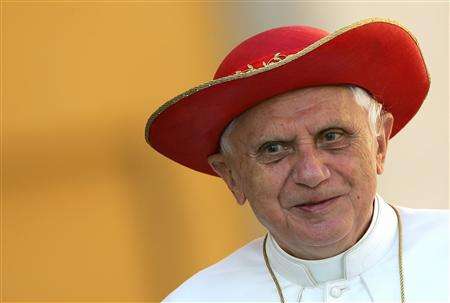

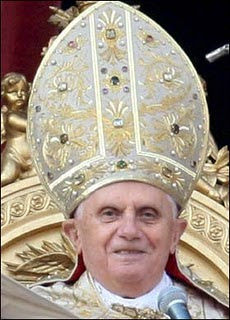
I am wearing these hats as I lurk and follow the discussion. This old queen has a lovely collection, which I am borrowing for the duration.
51urania1
It has come to my attention that not everyone has a hat. I will loan out hats from my personal collection for the duration of this reading thread.

Hat A

Hat B

Hat C

Hat D
More coming.

Hat A

Hat B

Hat C

Hat D
More coming.
52urania1

Hat E

Hat F

Hat G

Hat H
If none of these works I have at least 40 more hats from which you may choose.
53QuentinTom
oh golly. can I wear H? you make these yourself?
55urania1
Murr,
Hats B and D were made by a friend of mine. Hat B was me sainted wedding hat. Hat D is handwoven with straw imported from Italy.
Hats E, F, and H were designed by a fourth generation Belgian milliner (now living in the US)
Hat G is an antique snatched from the head of a stranger as I passed by her on the street.
I have made none of the hats in my collection.
You may wear Hat H.
Hats B and D were made by a friend of mine. Hat B was me sainted wedding hat. Hat D is handwoven with straw imported from Italy.
Hats E, F, and H were designed by a fourth generation Belgian milliner (now living in the US)
Hat G is an antique snatched from the head of a stranger as I passed by her on the street.
I have made none of the hats in my collection.
You may wear Hat H.
56absurdeist
Can I wear Hat D, U?
58anna_in_pdx
Goody no one has asked for hat C yet. May I wear it?
60QuentinTom
oh! Don't we all look just fabulous!!!!!!!!!
62theaelizabet
Oh, G, G, I claim G!!
63theaelizabet
>18 urania1: Just a quick thought on the narrator with the understanding that I'm still very early in the book. I like the narrator's voice, too, but was thrown a bit when I came to this on page 41 (at least that's the page in my book): "I have been unable to discover the exact location of that tavern." Sort of takes the narrator to a different place, no?
64LisaCurcio
Those are really great hats, and I could wear any one of them, except maybe H since I really don't look good in yellow. Now, I have only about ten of my own hats, but don't have pictures. Unfortunately, I have History and thought I would join you, but I have a couple of other things that I really want to finish first. When I get to it, I will be alone, but I will come back here to read all of your thoughts.
U--the Belgian milliner--does he/she still make hats and if so how would one contact him/her? Except for one I bought in Paris and another in Seattle, mine were all made for me by a gal in California: http://www.flamingojo.com/index.htm
Excuse the commercial break, but I just love those hats!
U--the Belgian milliner--does he/she still make hats and if so how would one contact him/her? Except for one I bought in Paris and another in Seattle, mine were all made for me by a gal in California: http://www.flamingojo.com/index.htm
Excuse the commercial break, but I just love those hats!
65Macumbeira
H for me
67urania1
Okay solla,
I am adding a few more hats here, but if you can't find one to suit you, you will either have to go hatless or find a hat of your own.

Hat I

Hat J

Hat K

Hat L

Hat M
I am adding a few more hats here, but if you can't find one to suit you, you will either have to go hatless or find a hat of your own.

Hat I

Hat J

Hat K

Hat L

Hat M
68urania1
Now that we have settled on our hats (except for solla who is being difficult), back to History. As I have been reading, I have marked the various places where Morante uses the word history. Sometimes the H is capitalized, sometimes not. A question for all to consider, why the distinction? What is the difference between history and History. Is the novel a history or a History? Those of you familiar with Italian may wish to explain the more nuanced Italian title La storia: Romanza. If no one steps in, I will make a bumbling attempt.
69anna_in_pdx
Just wanted to point to a small detail I noticed, which is about Ida's mom when she writes letters to her in-laws she refers to her dead husband as He. His story?
70solla
I will be the woman in the red hat. Our history needs a little color. I will stand out among the black shirts. I am not being difficult. I am never difficult.
I don't know any Italian - although I did study Latin in 8th and 9th grade - that was difficult, so many conjugations and declensions - but still not as bad as Russian which has declension and conjugations and is difficult to pronounce as well. Russian is difficult. I am not difficult. I am like Haitian - no declensions, no conjugations, just a couple of tense markers thrown in here and there, and some repetitions that makes it more rhythmical. That reminds me of a knock knock joke.
knock knock
who's there
solla
solla who
sol la ti do
there, you see, musical, not difficult
but since I don't know Italian I'm going back to the rape. What struck me about it was how emotionless it actually was in the actual interval of the rape. Before and after it there is emotion and relationship of Ida in her family, and there is the German soldier's loneliness. Afterwards there is Ida's fear and shame, and even the touching act of the soldier wanting to give a gift. I can feel those things. But during the act, we are told - but I don't feel it - that he is raping her in rage - and she is unconscious. Though, there is her blissful awakening which seems a bit unreal, especially as later on she feels raped. Perhaps from Ida's point of view this makes a kind of sense that a trauma becomes dissociated and unreal. But the young soldier's part was not convincing to me. First he is tender and lonesome and childishly jealous and then for a moment he is a brutal rapist, and there seems no connection between the one and the other.
I don't find him a believable rapist - true seemingly nice boys sometimes participate in rapes, but usually in a group - and I wonder about Morante's motives in painting him like this. Perhaps it's so Useppi won't have had a totally horrible father. Perhaps it's analogy for war during which ordinary people do horrible things (although in wars before Vietnam only about a sixth of front line troops actually fired their guns - during and since the Vietnam war their training is more like operant conditioning so that firing is an automated response to stimuli).
I don't know any Italian - although I did study Latin in 8th and 9th grade - that was difficult, so many conjugations and declensions - but still not as bad as Russian which has declension and conjugations and is difficult to pronounce as well. Russian is difficult. I am not difficult. I am like Haitian - no declensions, no conjugations, just a couple of tense markers thrown in here and there, and some repetitions that makes it more rhythmical. That reminds me of a knock knock joke.
knock knock
who's there
solla
solla who
sol la ti do
there, you see, musical, not difficult
but since I don't know Italian I'm going back to the rape. What struck me about it was how emotionless it actually was in the actual interval of the rape. Before and after it there is emotion and relationship of Ida in her family, and there is the German soldier's loneliness. Afterwards there is Ida's fear and shame, and even the touching act of the soldier wanting to give a gift. I can feel those things. But during the act, we are told - but I don't feel it - that he is raping her in rage - and she is unconscious. Though, there is her blissful awakening which seems a bit unreal, especially as later on she feels raped. Perhaps from Ida's point of view this makes a kind of sense that a trauma becomes dissociated and unreal. But the young soldier's part was not convincing to me. First he is tender and lonesome and childishly jealous and then for a moment he is a brutal rapist, and there seems no connection between the one and the other.
I don't find him a believable rapist - true seemingly nice boys sometimes participate in rapes, but usually in a group - and I wonder about Morante's motives in painting him like this. Perhaps it's so Useppi won't have had a totally horrible father. Perhaps it's analogy for war during which ordinary people do horrible things (although in wars before Vietnam only about a sixth of front line troops actually fired their guns - during and since the Vietnam war their training is more like operant conditioning so that firing is an automated response to stimuli).
71urania1
>69 anna_in_pdx: Regarding the use of He? Hmm . . . I wonder what the original Italian text does? Anybody have a copy?
72anna_in_pdx
70: hmmm, I thought the soldier was believable, but U is right, he is drawn quite sympathetically. However, the abrupt and clinical announcement of his death was jarring but had the effect, for me, of reminding me that his sympathitic qualities do not go with his behavior during the act itself.
73urania1
solla - the difficult one,
I agree with you that the rape scene in some respects seems unreal. The combination of loneliness, violence, and tenderness creates a fair amount of tension. And yet, under the circumstances, I find it believable.
The later references to Gunther are ambiguous. Ida clearly feels shame. But later she thinks of him as her lover. She also has a memory of his calling her tender names after the rape. As for her response during the rape . . . she dissociated during sex with her husband. It makes one wonder about a possible backstory. People usually dissociate for a reason.
I agree. I don't think Gunther rapes her in rage; rather, the rape seems to rise from a deep sense of loneliness and alienation from the strange place in which Gunther finds himself.
I agree with you that the rape scene in some respects seems unreal. The combination of loneliness, violence, and tenderness creates a fair amount of tension. And yet, under the circumstances, I find it believable.
The later references to Gunther are ambiguous. Ida clearly feels shame. But later she thinks of him as her lover. She also has a memory of his calling her tender names after the rape. As for her response during the rape . . . she dissociated during sex with her husband. It makes one wonder about a possible backstory. People usually dissociate for a reason.
I agree. I don't think Gunther rapes her in rage; rather, the rape seems to rise from a deep sense of loneliness and alienation from the strange place in which Gunther finds himself.
74theaelizabet
Earlier from Urania1: "I cried both for Ida and for Gunther." I didn't feel like crying, but was greatly saddened for both. I felt that at any moment during the rape, had there been even the tiniest moment of understanding between the two, the event might not have happened. The soldier and his actions were for me quite believable.
A larger question: Why are those of us in the U.S. awake at this hour?
A larger question: Why are those of us in the U.S. awake at this hour?
75theaelizabet
>73 urania1: I don't think Gunther rapes her in rage; rather, the rape seems to rise from a deep sense of loneliness and alienation from the strange place in which Gunther finds himself. Yes, I think that's it.
76QuentinTom
my feeling about this, from memory of reading this a long time ago, was that on a symbolic, narrative level, the soldier acts as a kind of divine visitation, he is simply the tool for an immaculate conception. his function is to plant the seed which starts the child, and that's it. Once he has fulfilled his function he is killed off by the narrative. he is not evil, although his act may be seen as evil.
is it possible that Morante choose to make it a rape rather than a one night stand or an otherwise friendly encounter in order to emphasize the fact that Ida has no choice in this, rather in the way that Mary had no choice in the immaculate conception.
Or is it symbolic of Germany's 'rape' of Italy in WWII.
As you progress through the novel, the encounter with the soldier fades very much into the background and takes on a kind of symbolic perspective.
Remember, on one level this is a story of Madonna and Child. At least, that's how I read it.
is it possible that Morante choose to make it a rape rather than a one night stand or an otherwise friendly encounter in order to emphasize the fact that Ida has no choice in this, rather in the way that Mary had no choice in the immaculate conception.
Or is it symbolic of Germany's 'rape' of Italy in WWII.
As you progress through the novel, the encounter with the soldier fades very much into the background and takes on a kind of symbolic perspective.
Remember, on one level this is a story of Madonna and Child. At least, that's how I read it.
77urania1
>74 theaelizabet: A larger question: Why are those of us in the U.S. awake at this hour?
Because we suffer from insomnia. Because some of us live in time zones where it's not as late as my zone (~3:09 am). Because we have nothing better to do. Because sleep bores us. Because we are visiting sainted relatives who provide us with hair shirts and a bed of nails. Because the early am hour is the only time we have any privacy and time to ourselves.
Because we suffer from insomnia. Because some of us live in time zones where it's not as late as my zone (~3:09 am). Because we have nothing better to do. Because sleep bores us. Because we are visiting sainted relatives who provide us with hair shirts and a bed of nails. Because the early am hour is the only time we have any privacy and time to ourselves.
78QuentinTom
or because we simply cannot bear to take off our grevi hats and go to bed?
81theaelizabet
>76 QuentinTom: I'm still pretty early in the book, but the symbolism of the event is hard to overlook. Madonna and Child? Probably. Microcosm of world-gone-awry? That, too.
Insomnia, yes. But I do look so nice in my hat.
Insomnia, yes. But I do look so nice in my hat.
82urania1
>81 theaelizabet:
Me - insomnia, visiting sainted relatives who provide me with hair shirts and a bed of nails, the early am hour is the only time I have any real privacy and time to myself.
Me - insomnia, visiting sainted relatives who provide me with hair shirts and a bed of nails, the early am hour is the only time I have any real privacy and time to myself.
83Macumbeira
Jane Schaberg's thesis of Jesus' illegitimacy.
Was Jesus the child of adultery, the product of seduction? Was Mary a violated woman, the victim of rape? Could the Holy Spirit be perceived as validating a child conceived in either rape or seduction as a life chosen by God for the accomplishment of God's will.
Was Jesus the child of adultery, the product of seduction? Was Mary a violated woman, the victim of rape? Could the Holy Spirit be perceived as validating a child conceived in either rape or seduction as a life chosen by God for the accomplishment of God's will.
84PimPhilipse
>69 anna_in_pdx:: she refers to her dead husband as He
For what it's worth: in Italian, when you want to address someone in a respectful way, you call him or her Lei which is really She (and you use the third person singular).
For what it's worth: in Italian, when you want to address someone in a respectful way, you call him or her Lei which is really She (and you use the third person singular).
85urania1
Thanks Pim. In the US, people typically only use the capitalized prounouns when referring to God or emphasizing (usually in a snide manner) the person in question. And also at the beginning of sentences. I had a feeling the meaning might be slightly different in Italian because the "He" didn't fit any of American uses. I was inclined to put a feminist slant on it. Thanks fo setting me straight.
86dchaikin
You all started talking about hats, and I got shy. I don't know how to do small talk (if that's small talk), I just quietly listen. But now I'm looking around at all these nice hats (excepts Murr's first choice, cringe) and I'm realizing I don't have one yet...and they are so femine. Do we have anything a touch more masculine?
As for the rape, I think it was not at all believable, nor was it meant be believable. It sticks out, like other things, and says "take notice, this has some kind of extra meaning. You can try to figure it out yourself, if you want." After reading Murr's take, I like that one.
Other oddities includes Rosella's attachment to Carlo and Guiseppe Secundo existence and the sense of Ninos's personal safety despite all the trouble he seems to get into, and how much he flaunts his doings.
Another thing I'm thinking about is education. Ida is a teacher, and yet she is clueless (and not curious either). Nino scoffs at school, and yet is (at my place in the book) a kind of success story, in control of some things.
As for the rape, I think it was not at all believable, nor was it meant be believable. It sticks out, like other things, and says "take notice, this has some kind of extra meaning. You can try to figure it out yourself, if you want." After reading Murr's take, I like that one.
Other oddities includes Rosella's attachment to Carlo and Guiseppe Secundo existence and the sense of Ninos's personal safety despite all the trouble he seems to get into, and how much he flaunts his doings.
Another thing I'm thinking about is education. Ida is a teacher, and yet she is clueless (and not curious either). Nino scoffs at school, and yet is (at my place in the book) a kind of success story, in control of some things.
88PimPhilipse
The gents are supposed to wear Borsalino hats or equivalent.
89PekoeTheCat
Alas, I also do not have a hat, and while I am partial to hat I, I don't believe it would stay on my head. Nonetheless, I have decided that my beautiful fur qualifies me for membership in this exclusive group.
Also, it is clear that you need me. I see not a single comment about the fate of the unfortunate Rosella! will no one speak up for her, condemned for merely following her biological imperative of chasing canaries?
also, it is clear that her passionate love for Carlo Vivaldi is one of the great themes of the work. but where is she now, abandoned chased away, never seen again. Do any of you feel that void as I do?
Also, it is clear that you need me. I see not a single comment about the fate of the unfortunate Rosella! will no one speak up for her, condemned for merely following her biological imperative of chasing canaries?
also, it is clear that her passionate love for Carlo Vivaldi is one of the great themes of the work. but where is she now, abandoned chased away, never seen again. Do any of you feel that void as I do?
90anna_in_pdx
89: I was sorry to see Rosella (alias Russia) leave our tale, too.
91PeterKein
>89 PekoeTheCat: I am sure you have read I am a Cat - but I didnt see it in your library....miao miao?
93PekoeTheCat
Oh, Peter, I have so little time between my wandering and my children, but now that you've brought it to my attention my human has ordered it from the library for me.
94MeditationesMartini
I haven't gotten to any part about any Rosella, but isn't the description of Useppe's first excursion wonderful.
95solla
Yes, useppi is a wonderful character - and, at the same time pretty much like any little kid, but she conveys that so well, and the sense of the relationship between him and his brother.
96dchaikin
Rosella - not just Russia, but an ideal, independent of any person, of course, like a good cat.
A few thoughts (WARNING : there are spoilers here - through 1946)
-I like that the war is over, and yet the book is only about halfway through
-after spending more of the book at an emotional distance, it's only now, after the war, that I'm finding myself emotionally involved
- I'm only just now realizing this book isn't about Ida or Useppe, it is actually about WWII, focusing on the Roman experience. I know that's practically in the title and blurbs, but I was skeptical. Now I think I see
- Useppe is a lot of things. He is German too, the innocent German. He tranfers from pure optimistism in the face of some ugly things to a slow emotional...not fall, but more than just a taint or scar...
- I'm sensing a structure I didn't see before. I sense Morante has been building the emotional reaction I'm having now at the end of the war. It's only now that there is an accounting and that I'm begin to see the big picture in such a way that I can feel it. Not sure how much of that is personal to me. But, my focus is leaving Ida and seeing a big picture and my emotions are doing things.
A few thoughts (WARNING : there are spoilers here - through 1946)
-I like that the war is over, and yet the book is only about halfway through
-after spending more of the book at an emotional distance, it's only now, after the war, that I'm finding myself emotionally involved
- I'm only just now realizing this book isn't about Ida or Useppe, it is actually about WWII, focusing on the Roman experience. I know that's practically in the title and blurbs, but I was skeptical. Now I think I see
- Useppe is a lot of things. He is German too, the innocent German. He tranfers from pure optimistism in the face of some ugly things to a slow emotional...not fall, but more than just a taint or scar...
- I'm sensing a structure I didn't see before. I sense Morante has been building the emotional reaction I'm having now at the end of the war. It's only now that there is an accounting and that I'm begin to see the big picture in such a way that I can feel it. Not sure how much of that is personal to me. But, my focus is leaving Ida and seeing a big picture and my emotions are doing things.
97QuentinTom
great post.
98urania1
>86 dchaikin: Regarding the request for hats of a more masculine style. Unfortunately I own none although Beloved has a few (unphotographed), but I have just now gained a day for myself and am sitting in me sainted research library in the neighboring city breathlessly reading about Elsa Morante. On that subject, I will post later. In the meantime, the hats:

Masculine Sort of Hat A

Masculine Sort of Hat B

Masculine Sort of Hat C

Masculine Sort of Hat D

Masculine Sort of Hat A

Masculine Sort of Hat B

Masculine Sort of Hat C

Masculine Sort of Hat D
99urania1
If I may make a personal suggestion, I would suggest this charming alpine hat. It will see one through History and also The Magic Mountain


100urania1
A few days ago, I mentioned that the word play in the Italian title of History might be important. Italian experts will, I am sure, correct me if I am wrong. The Italian title is La storia. In Italian, “storia” can mean either “history” or “story.” My thoughts? Morante plays on the tension between “storia” as “history” and “storia” as “story”. In the everyday understanding of the word "history," the news reports that precede each chapter function as history. But do they really? Do we read the news or read between the lines for history. Is Morante trying to blur the line between the two? About which history do we care?
Many postmodernists would argue that the distinction between history and story is false. Postmodern theories of narrative tend to reduce all to text with no privileging of one over the other. I do not entirely agree with dismissal of distinction, but I would require a whole other essay (and an off-topic one at that) to offer my arguments.
I would, however, say that I wouldn’t characterize Morante as a postmodernist although History certainly lends itself well to analysis using that critical idiom. I do think Morante wants to draw our attention to History versus history. Whose story gets told in the History books? Even in the latest orgy of had wringing that occurred leading up to the 911 “celebrations(?),” personal stories were distinguished from “factual” accounts. In fifty years, will we care about the dog that led his blind master to safety? In the world of real politick, do the Idas and other cast members count? I think not, not to world leaders that is. To us, small people ourselves, perhaps Ida’s story counts. But . . . think about all those who have died in Iraq, Afghanistan, etc. Do we know their stories? Would we hold those stories, those little “h” histories in our hearts? I suspect we dissociate ourselves from that kind of pain.
And for a related (sort of) digression, I’d like to turn to Michael McKeon’s The Origins of the English Novel. I don’t agree with everything he says. I think entirely too much focus has been wrongly placed on trying to establish England as the origin of the novelistic form. But don’t take my word for it. Go read Margaret Doody’s The True Story of the Novel. McKeon does make an interesting observation: our (Anglos that is) understanding of the word “novel” changed sometime around the middle of the 18th century. Prior to that, the word novel was used interchangeably with the words “history” and “romance” as well as assorted other types of writing such as travelogues, biographies, memoirs, etc. Anything that was “novel,” that is to say new, might be called a novel. Just an aside but an interesting one.
Many postmodernists would argue that the distinction between history and story is false. Postmodern theories of narrative tend to reduce all to text with no privileging of one over the other. I do not entirely agree with dismissal of distinction, but I would require a whole other essay (and an off-topic one at that) to offer my arguments.
I would, however, say that I wouldn’t characterize Morante as a postmodernist although History certainly lends itself well to analysis using that critical idiom. I do think Morante wants to draw our attention to History versus history. Whose story gets told in the History books? Even in the latest orgy of had wringing that occurred leading up to the 911 “celebrations(?),” personal stories were distinguished from “factual” accounts. In fifty years, will we care about the dog that led his blind master to safety? In the world of real politick, do the Idas and other cast members count? I think not, not to world leaders that is. To us, small people ourselves, perhaps Ida’s story counts. But . . . think about all those who have died in Iraq, Afghanistan, etc. Do we know their stories? Would we hold those stories, those little “h” histories in our hearts? I suspect we dissociate ourselves from that kind of pain.
And for a related (sort of) digression, I’d like to turn to Michael McKeon’s The Origins of the English Novel. I don’t agree with everything he says. I think entirely too much focus has been wrongly placed on trying to establish England as the origin of the novelistic form. But don’t take my word for it. Go read Margaret Doody’s The True Story of the Novel. McKeon does make an interesting observation: our (Anglos that is) understanding of the word “novel” changed sometime around the middle of the 18th century. Prior to that, the word novel was used interchangeably with the words “history” and “romance” as well as assorted other types of writing such as travelogues, biographies, memoirs, etc. Anything that was “novel,” that is to say new, might be called a novel. Just an aside but an interesting one.
101solla
So, you are suggesting that Morante is saying that Ida's - and other stories - are indeed important, whether recounted and remembered or not?
102urania1
>101 solla: solla - yes but more than that. I think she is challenging the way history is written and regarded.
103MeditationesMartini
>99 urania1: MINE! Mine. That hat is mine! I'll fight anyone here. Alpenstocks at dawn.
>100 urania1:, 102 and without asking you to provide but at the risk of accidentally-on-purpose eliciting that essay, Urania, where would you place Morante with regard to that postmodern social-history argument? Because this is the era where the Marxy left (which I take Morante to more-or-less represent) and the (proto-)postmodern left are just starting to differentiate and go their separate ways, right? And at this point the Annales School (which I take to refer to this type of history from at least an implicitly Marxist but also from a sort of postmodern viewpoint--history as the study of mentalités) is going strong .... This book could really have been called Social History, if that wouldn't have been a worse title and also wrecked the pun.
>100 urania1:, 102 and without asking you to provide but at the risk of accidentally-on-purpose eliciting that essay, Urania, where would you place Morante with regard to that postmodern social-history argument? Because this is the era where the Marxy left (which I take Morante to more-or-less represent) and the (proto-)postmodern left are just starting to differentiate and go their separate ways, right? And at this point the Annales School (which I take to refer to this type of history from at least an implicitly Marxist but also from a sort of postmodern viewpoint--history as the study of mentalités) is going strong .... This book could really have been called Social History, if that wouldn't have been a worse title and also wrecked the pun.
104dchaikin
oh, which hat...I think I could hide under D, I'll take that one.
History... perhaps "importance" isn't the right word. Important to what? Ida isn't important to anyone else in Rome except Useppe, so it would hard to call her important except in the sense that as a (fictional) living, breathing person she has a kind of self-evident importance.
If we remove that word, than we might wonder why history?
Nonetheless there are several histories. Some examples:
1. The official history approved by the powers that be. This is History
2. The mythical history, that which people actually believe.
3. The important history, that which affects us now.
4. The lessons of history, that which teach us something from experience.
5. The stories of history, the multiple narrative forms.
6. The experience of history (Ida, for example). This is history
7. ????
History... perhaps "importance" isn't the right word. Important to what? Ida isn't important to anyone else in Rome except Useppe, so it would hard to call her important except in the sense that as a (fictional) living, breathing person she has a kind of self-evident importance.
If we remove that word, than we might wonder why history?
Nonetheless there are several histories. Some examples:
1. The official history approved by the powers that be. This is History
2. The mythical history, that which people actually believe.
3. The important history, that which affects us now.
4. The lessons of history, that which teach us something from experience.
5. The stories of history, the multiple narrative forms.
6. The experience of history (Ida, for example). This is history
7. ????
106dchaikin
Oh goodness, i haven't the hat for that. I remain in dedicated reverence of your own leadership.
109QuentinTom
great discussion. I think you're both spot on about Morante's use of History/story in the title.
And I am wearing hat B. and even if I do say so myself, I look bloody fabulous in it.
And I am wearing hat B. and even if I do say so myself, I look bloody fabulous in it.
110dchaikin
A Dickens feel to that hat, Murr.
I just erased my post (#106). I was re-reading it and couldn't stand it.
I just erased my post (#106). I was re-reading it and couldn't stand it.
111solla
Does it strike you that Useppi is a kind of every child? I mean I am a little more than half way through the book and he is four, but the narrator, whoever it is, is looking back, writing about him in the manner that one might write of someone who became a historical figure, writing as though he were extraordinary from the first - and of course he is because children are - but really, the descriptions portray him as much like any little kid. He is really only extraordinary as we all are extraordinary.
112MeditationesMartini
>111 solla: but, like, idealized? In that he's so consistently and appealingly joyful? But then maybe not idealized because Morante goes to lengths to make clear that he's special? I like the idea that there's no contradiction between him being an Everychild and being amazing, though, of course.
113urania1
Urania, where would you place Morante with regard to that postmodern social-history argument? Because this is the era where the Marxy left (which I take Morante to more-or-less represent) and the (proto-)postmodern left are just starting to differentiate and go their separate ways, right? And at this point the Annales School (which I take to refer to this type of history from at least an implicitly Marxist but also from a sort of postmodern viewpoint--history as the study of mentalités) is going strong
In fact, the Marxists reviled Morante's book - "They accused Morante of indulging in a 'mystique' of regression,' of 'calling a poetic view of the world of victims a philosophy of history" ("Elsa Morante's La Storia" by Denise Valtz Ferreri). To put it bluntly the Marxists were pissed.
As to the rest of your request, are you asking me to write a dissertation? The heavens forfend. That question would take forever to answer adequately, but let me think about it for a while and see what kind of junk I can extract from my slowly disintegrating grey matter.
In fact, the Marxists reviled Morante's book - "They accused Morante of indulging in a 'mystique' of regression,' of 'calling a poetic view of the world of victims a philosophy of history" ("Elsa Morante's La Storia" by Denise Valtz Ferreri). To put it bluntly the Marxists were pissed.
As to the rest of your request, are you asking me to write a dissertation? The heavens forfend. That question would take forever to answer adequately, but let me think about it for a while and see what kind of junk I can extract from my slowly disintegrating grey matter.
114urania1
>109 QuentinTom: Murrushka,
You already have Hat H. Now you want B (I'm assuming by B you mean the Masculine Sort of Hat B). If you try to grab all the hats, you will find yourself with but one hat - this one.

You already have Hat H. Now you want B (I'm assuming by B you mean the Masculine Sort of Hat B). If you try to grab all the hats, you will find yourself with but one hat - this one.

115PekoeTheCat
Ooh, that's the one I want. I could crawl up inside it and have a nap.
116urania1
>115 PekoeTheCat: . . . and no doubt cause all manner of trouble.
117MeditationesMartini
>113 urania1: the Marxists can suck it. It's a weird thing, where in 2011 we (I) can pretend it was all Walter Benjamin and helping old ladies across the street, but at the time it was more like "Stalin: great guy, or the greatest guy?" I know that's not quite accurate, but one starts to think we needed identity politics just to come up with an alternative where people weren't pricks--macho banker republicans, or macho interventionist democrats, or macho gulag-apologists. This is a friendly book.
118MeditationesMartini
And I'm definitely asking you to write a dissertation. Consider it a perpetual implicit request, an inescapable looming.
119urania1
Hey Martin et al.
No dissertation forthcoming. I wrote one back in the mists of antiquity, the aforementioned mists safely shrouding my stupidity from all but the most intrepid. But, the following post from a now dormant forum provides a helpful guide to different schools of historical interpretation and provides some interesting perspectives from which we might view H/history.
http://www.librarything.com/topic/61376#1176028
You want to read the first post. I couldn't figure out how to mark a single post. The writing is a bit rough, but Urque's post will give a broad overview. It will also save me a lot of time trying to synthesize old notes into one meta-narrative.
For the record, I lean in the direction of a cultural materialist approach to history.
No dissertation forthcoming. I wrote one back in the mists of antiquity, the aforementioned mists safely shrouding my stupidity from all but the most intrepid. But, the following post from a now dormant forum provides a helpful guide to different schools of historical interpretation and provides some interesting perspectives from which we might view H/history.
http://www.librarything.com/topic/61376#1176028
You want to read the first post. I couldn't figure out how to mark a single post. The writing is a bit rough, but Urque's post will give a broad overview. It will also save me a lot of time trying to synthesize old notes into one meta-narrative.
For the record, I lean in the direction of a cultural materialist approach to history.
120urania1
Correction, the thread was dormant. The forum History: On learning from and writing history appears to be alive and kicking.
121QuentinTom
I can see why the MArxists got pissed. THere is a gendered element to this argument: traditional, top down history emphasised men, Marxist history emphasised economic forces, Hegelian history emphasised cultural forces: either way there was a depersonalisation of history, especially from the point of view of Women and Children.
Morante's view of history here, while arising from a Marxist perspective, as we can see form the historical outlines, presents personal history, history from the point of view of those traditionally left out of history: the women and the children. Men make wars, but Women and children suffer in them. Needless to say this is heresy to the orthodox Marxist.
Morante's view of history here, while arising from a Marxist perspective, as we can see form the historical outlines, presents personal history, history from the point of view of those traditionally left out of history: the women and the children. Men make wars, but Women and children suffer in them. Needless to say this is heresy to the orthodox Marxist.
123theaelizabet
>122 urania1: Me, too.
124MeditationesMartini
>120 urania1:(, 121) Thanks for that. I guess when I think of "Marxist history" I'm thinking of what Urquhart calls "history from below"--Lefebvre, I guess (although isn't he more sociology from below?), but typified more by Hobsbawm, Zinn, Chris Harman. Not straight dialectical materialism, because that's stupid. I know that over the grand sweep of the history of Marxism (as distinct from Marxist history), that positivist tradition has been dominant, but surely not since ... well, Morante's time, I guess? And it is of course Morante's time that we are discussing. Somebody help me out here. Am I overblowing the cuddly aspects of Marx beyond all conscience? The idea of an "orthodox Marxist" seems so quaint--although again that may be the difference between 1974 and 2011.
125urania1
Martin,
Your many questions about history, theories of histories, methods, etc., have aroused the old creative juices (no I am not writing a dissertation), but I have a history question of my own to posit, which ought to interest members of Le Salon considering their predilection for the content of which said question deals. Check my new thread.
Your many questions about history, theories of histories, methods, etc., have aroused the old creative juices (no I am not writing a dissertation), but I have a history question of my own to posit, which ought to interest members of Le Salon considering their predilection for the content of which said question deals. Check my new thread.
126MeditationesMartini
I'll get a dissertation out of you yet! It can be about lists.
127urania1
Martin,
Scheme away. I am done with dissertations. When the economic collapse comes and I am a bag lady with her goats in tow, I may start the Street University or the Traveling Mini-Bus Circus and University, but definitely no dissertations.
Scheme away. I am done with dissertations. When the economic collapse comes and I am a bag lady with her goats in tow, I may start the Street University or the Traveling Mini-Bus Circus and University, but definitely no dissertations.
128MeditationesMartini
Both those things will count as dissertations.
130MeditationesMartini
I assume that's short for "sophisticate".
131dchaikin
I'm near the end and very depressed. I noticed in 1947 - total consciousness, some insanity (is there a devil here somewhere too?). This feels like it came straight out of a Dostoevsky novel (er, or novella).
132urania1
SPOILER
I am depressed too. I peeked and know what's coming. In the meantime I have had two related eureka moments about History. When I have slept, I shall compose a shortish outline on my eurekas.
I am depressed too. I peeked and know what's coming. In the meantime I have had two related eureka moments about History. When I have slept, I shall compose a shortish outline on my eurekas.
133urania1
A few “historical” facts about History
Original cover photograph by Robert Capa taken during the Spanish Civil War
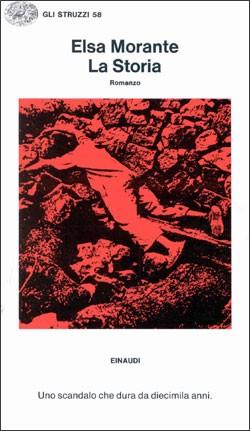
All information below comes from Lily Tuck's biography of Morante: Woman of Rome
1. When asked by Luca Fontana, “What sort of book are you writing?” Morante replied, “I am writing a book for the illiterate.”
2. She insisted the that the book be brought at in paperback right away and fixed the price at 2000 lire (approximately five dollars at the time). By insisting on these two conditions, Morante deprived herself of a considerable portion of royalties she might otherwise have earned. Why did she do this? She wanted this book to be available even to the poor. Within a year History had sold over 800,000 copies in the Italy.
3. Morante said of the book that she wanted to write a “modern-day Iliad.” Simone Weil’s essay “The Iliad or the Poem of Force,” informs much of History’s “philosophy” on the uses of power in history, From the opening of Simone Weil’s essay:
The true hero, the true subject, the center of the Iliad is force. Force employed by man, force that enslaves man, force before which man’s flesh shrinks away. In this work, at all times, the human spirit is shown as modified by its relations with force, as swept away, blinded, by the very force it imagined it could handle, as deformed by the weight of the force it submits to, For those dreamers who considered that force, thanks to progress, would soon be a thing of the past, the Iliad could appear as an historical document; for others, whose powers of recognition are more acute and who perceive force, today as yesterday, at the center of human history, the Iliad is the purest and loveliest of mirrors.. Weil goes on to say, the distress and misery caused by force never ceases and each side is made to suffer in turn like ‘a continual game of seesaw. Says Weil, Force is as pitiless to the man who possesses it, or thinks he does, as it is to its victims.”
Morante said of History, I must warn you that this book, before it is a work of poetry, must be an act of accusation and a prayer.
4. *SPOILER ALERT COMING* Original germ for History based on a report in a Roman newspaper (1947): insane mother, dead six-year-old son, and a dog so aggressively protecting its owners that the police had to shoot it to get into the apartment. The article ended with its author asking what might have brought the family to this tragic end. So in one way we might read History as an attempt to fill in the back story/history.
P.S. More to follow. My feeble attempts at analysis and few other random thoughts.
Original cover photograph by Robert Capa taken during the Spanish Civil War
All information below comes from Lily Tuck's biography of Morante: Woman of Rome
1. When asked by Luca Fontana, “What sort of book are you writing?” Morante replied, “I am writing a book for the illiterate.”
2. She insisted the that the book be brought at in paperback right away and fixed the price at 2000 lire (approximately five dollars at the time). By insisting on these two conditions, Morante deprived herself of a considerable portion of royalties she might otherwise have earned. Why did she do this? She wanted this book to be available even to the poor. Within a year History had sold over 800,000 copies in the Italy.
3. Morante said of the book that she wanted to write a “modern-day Iliad.” Simone Weil’s essay “The Iliad or the Poem of Force,” informs much of History’s “philosophy” on the uses of power in history, From the opening of Simone Weil’s essay:
The true hero, the true subject, the center of the Iliad is force. Force employed by man, force that enslaves man, force before which man’s flesh shrinks away. In this work, at all times, the human spirit is shown as modified by its relations with force, as swept away, blinded, by the very force it imagined it could handle, as deformed by the weight of the force it submits to, For those dreamers who considered that force, thanks to progress, would soon be a thing of the past, the Iliad could appear as an historical document; for others, whose powers of recognition are more acute and who perceive force, today as yesterday, at the center of human history, the Iliad is the purest and loveliest of mirrors.. Weil goes on to say, the distress and misery caused by force never ceases and each side is made to suffer in turn like ‘a continual game of seesaw. Says Weil, Force is as pitiless to the man who possesses it, or thinks he does, as it is to its victims.”
Morante said of History, I must warn you that this book, before it is a work of poetry, must be an act of accusation and a prayer.
4. *SPOILER ALERT COMING* Original germ for History based on a report in a Roman newspaper (1947): insane mother, dead six-year-old son, and a dog so aggressively protecting its owners that the police had to shoot it to get into the apartment. The article ended with its author asking what might have brought the family to this tragic end. So in one way we might read History as an attempt to fill in the back story/history.
P.S. More to follow. My feeble attempts at analysis and few other random thoughts.
134dchaikin
Waiting for more....
SPOILER WARNING
Having finished the book, I was left with the impression that the idea started with the end, and was written to explain that end. Very interesting, fascinating that it is based on a specific news report. For some reason this has me thinking about Ninno. He becomes such a wonderful character, yet he's not needed to explain that news report, as far as I can tell. All the other characters seem to fit naturally right into either explaining the picture or in filling in the historical background surrounding the picture.
SPOILER WARNING
Having finished the book, I was left with the impression that the idea started with the end, and was written to explain that end. Very interesting, fascinating that it is based on a specific news report. For some reason this has me thinking about Ninno. He becomes such a wonderful character, yet he's not needed to explain that news report, as far as I can tell. All the other characters seem to fit naturally right into either explaining the picture or in filling in the historical background surrounding the picture.
135PimPhilipse
Finished.
Depressing, yes, but I still found Davide's monologue uplifting enough to retain some hope for the future.
What a prophetic voice, some 25 pages he keeps on rambling and yet not all coherence is lost.
Depressing, yes, but I still found Davide's monologue uplifting enough to retain some hope for the future.
What a prophetic voice, some 25 pages he keeps on rambling and yet not all coherence is lost.
136urania1
Let me check, but Morante used Gramsci The Prison Notebooks almost word for word for some of the Davide entries. I will get back with you.
138anna_in_pdx
I just finished 1946 and it is so heartbreaking, I am having trouble getting the courage to sit down and finish it. I knew it would be sad, it's just so very very sad because you end up having so much compassion for these characters, even the pimp who killed the prostitute... Davide is fascinating and I can't wait to get to his monologue. The part where he was working in the machine reminded me of The Jungle.
139urania1
>138 anna_in_pdx: anna,
I like your analogy to The Jungle. I also kept thinking of the Charlie Chaplin movie Modern Times with Chaplin caught up in the cogs of the machine. I expect everyone on this forum has seen Modern Times , but if you have not it is a must-see movie. I have several posts on History that I haven't finished. Unexpected goats, the arrival of guests tomorrow (none of whom like me), and the garden have me pulling out my hair. In addition, I have to read The Hunchback of Notre Dame by Sunday at 1:00. I may lose my mind on purpose so I can be admitted to a padded cell. Being in the hospital last week did not help my schedule.
I like your analogy to The Jungle. I also kept thinking of the Charlie Chaplin movie Modern Times with Chaplin caught up in the cogs of the machine. I expect everyone on this forum has seen Modern Times , but if you have not it is a must-see movie. I have several posts on History that I haven't finished. Unexpected goats, the arrival of guests tomorrow (none of whom like me), and the garden have me pulling out my hair. In addition, I have to read The Hunchback of Notre Dame by Sunday at 1:00. I may lose my mind on purpose so I can be admitted to a padded cell. Being in the hospital last week did not help my schedule.
141dchaikin
from Tuck's biography:
page 17: Elsa's younger sister by ten years, Maria, tells Lilly Tuck that her own son, Luca, at three years old, was the model for Giuseppe, "recalling the he spoke baby talk and the peculiar way he waved his arms to say hello"
page 17: Irma, Elsa's mother, " was a good friend of Maria Montessori and taught her methods in school" It's my personal sense that Montessori had an influence on how Elsa viewed very young children.
Page 31: At, i think, 18 Elsa lived on her own. She was "so lonely, in fact, that she claimed she had to resort to telophoning the number that gives the correct time in order to hear the sound of a human voice."
page 31: "Morante also acknowledged, quite openly—without shame or remorse and only to describe the dire necessity of it—having occasionally resorted to prostitution for money"
page 61 "People, Elsa Morante always claimed, were essentially divided into three categories: there was Achilles, the man who lived out his passions; the was Don Quixote, the man who lived out his dreams; and finally, there was Hamlet, the man who questioned everything. Moravia*, in her opinion, was part Hamlet and part Achilles; She herself was Don Quixote."
*Italian author Alberto Moravia, Elsa's husband from 1941. They separated in 1961 (not sure if they divorced or not) while Morante was working on History. She worked on this novel for at least 14 years!
page 17: Elsa's younger sister by ten years, Maria, tells Lilly Tuck that her own son, Luca, at three years old, was the model for Giuseppe, "recalling the he spoke baby talk and the peculiar way he waved his arms to say hello"
page 17: Irma, Elsa's mother, " was a good friend of Maria Montessori and taught her methods in school" It's my personal sense that Montessori had an influence on how Elsa viewed very young children.
Page 31: At, i think, 18 Elsa lived on her own. She was "so lonely, in fact, that she claimed she had to resort to telophoning the number that gives the correct time in order to hear the sound of a human voice."
page 31: "Morante also acknowledged, quite openly—without shame or remorse and only to describe the dire necessity of it—having occasionally resorted to prostitution for money"
page 61 "People, Elsa Morante always claimed, were essentially divided into three categories: there was Achilles, the man who lived out his passions; the was Don Quixote, the man who lived out his dreams; and finally, there was Hamlet, the man who questioned everything. Moravia*, in her opinion, was part Hamlet and part Achilles; She herself was Don Quixote."
*Italian author Alberto Moravia, Elsa's husband from 1941. They separated in 1961 (not sure if they divorced or not) while Morante was working on History. She worked on this novel for at least 14 years!
142dchaikin
So, that must mean Nino is Achilles, Davide is Hamlet, Ida is nothing, Guiseppe2 is Don Quixote...and so is Useppe, maybe.
143anna_in_pdx
141: Many of the characters in History are "nothing" by this standard. And yet the narrator has such unbound compassion for them that their pointless lives seem like terrible tragedies. And they in fact are. I think she didn't exactly conform to her ideals when writing her books, she has too much empathy with common people.
139: Oh gosh, yes, Modern Times is very similar to this book on a variety of levels. A heartbreaking movie.
139: Oh gosh, yes, Modern Times is very similar to this book on a variety of levels. A heartbreaking movie.
144anna_in_pdx
I really need a synonym for "heartbreaking," don't I?
146MeditationesMartini
You guys are getting me worried.
147theaelizabet
Yeah, I've been thinking the same thing.
148solla
Yes, I felt utter desolation at the ending, and yet...
Well, thinking about the end of the Children's book by as Byatt, which ends after wwI. There was a sense of desolation at the end of that book too, but of a different sort - a difficult to hold onto the meaning of things in the midst of such purposeless destruction. It was like the individuals got lost in that procession of time. In history they do not seem lost, but very powerfully present. It is amazing to me how Morante is able to evoke the vividness of ordinary human beings and their peculiar specialness. When she says that some may question the telling about Useppi's last day, but for a child like Useppi a few hours can be of great importance (sorry I don't have the book with me), I am in total agreement. I love this book. I put it on my list of books that are loved or transforming or touch some special place - the only kind of list that really interests me.
Well, thinking about the end of the Children's book by as Byatt, which ends after wwI. There was a sense of desolation at the end of that book too, but of a different sort - a difficult to hold onto the meaning of things in the midst of such purposeless destruction. It was like the individuals got lost in that procession of time. In history they do not seem lost, but very powerfully present. It is amazing to me how Morante is able to evoke the vividness of ordinary human beings and their peculiar specialness. When she says that some may question the telling about Useppi's last day, but for a child like Useppi a few hours can be of great importance (sorry I don't have the book with me), I am in total agreement. I love this book. I put it on my list of books that are loved or transforming or touch some special place - the only kind of list that really interests me.
149MeditationesMartini
The thing about "all the kids and animals run away from the fire" has been making me sad all day.
150dchaikin
Martin , I think I read this book, but I don't recall that.
More from Lily Tuck:
page 74 (from an interview, but apparently paraphrased and not a direct quote): {Elsa explained in an interview} Reality...was much closer or "truer" in childhood. Adults distanced themselves from reality: they were interested in careers, in money, in absolutely absurd things. The only way to try to look at reality was through the eyes of children. In fact, all her real friends—Pier Paolo Pasolini, the poet Sandro Penna, even Moravia—had remained children or were childlike. Her goal was to try to understand the truth and to express it
page 97: As for the writers they admired, Moravia's favorite was Dostoevsky while Elsa's was Kafka. They both loved Rimbaud. Later, Elsa gave up Kafka in favor of Stendhal, who was less "heavy". "Stendhal, along with Mozart in music and Rimbaud in poetry," Moravia said, "represented for her that ideal of lightness to which she aspired all her life"
page 98: Elsa... was the sort of person who never talked about what she was writing
page 113: Morante always wrote in longhand in large, black, unlined notebooks that she bought at Zampini, a stationer on via Frattina not far from her apartment. She wrote on every other page, leaving the intervening pages blank for notes and corrections. The notes she wrote herself remain as guidelines to how she worked and many of her edits show that she was striving to achieve more simplicity in the text: "Important! get rid of these expressed sentiments and thoughts, let the facts speak for themselves." Several of the pages have large passages crosshatched and crossed out. She used different colored pens and she often doodled or drew pictures of cats and stars on the side of the page.
-- I love that detail of the doodles.
page 126: In the interview {1957}, Elsa Morante again said how she believed there were three kinds of heroes: Achilles who accepts reality, Hamlet who refuses it and Don Quixote who invents his own, and that her characters were like Don Quxote
-- that's quite different from what was explained before. Compare to the excerpt from page 61, in my post 141.
More from Lily Tuck:
page 74 (from an interview, but apparently paraphrased and not a direct quote): {Elsa explained in an interview} Reality...was much closer or "truer" in childhood. Adults distanced themselves from reality: they were interested in careers, in money, in absolutely absurd things. The only way to try to look at reality was through the eyes of children. In fact, all her real friends—Pier Paolo Pasolini, the poet Sandro Penna, even Moravia—had remained children or were childlike. Her goal was to try to understand the truth and to express it
page 97: As for the writers they admired, Moravia's favorite was Dostoevsky while Elsa's was Kafka. They both loved Rimbaud. Later, Elsa gave up Kafka in favor of Stendhal, who was less "heavy". "Stendhal, along with Mozart in music and Rimbaud in poetry," Moravia said, "represented for her that ideal of lightness to which she aspired all her life"
page 98: Elsa... was the sort of person who never talked about what she was writing
page 113: Morante always wrote in longhand in large, black, unlined notebooks that she bought at Zampini, a stationer on via Frattina not far from her apartment. She wrote on every other page, leaving the intervening pages blank for notes and corrections. The notes she wrote herself remain as guidelines to how she worked and many of her edits show that she was striving to achieve more simplicity in the text: "Important! get rid of these expressed sentiments and thoughts, let the facts speak for themselves." Several of the pages have large passages crosshatched and crossed out. She used different colored pens and she often doodled or drew pictures of cats and stars on the side of the page.
-- I love that detail of the doodles.
page 126: In the interview {1957}, Elsa Morante again said how she believed there were three kinds of heroes: Achilles who accepts reality, Hamlet who refuses it and Don Quixote who invents his own, and that her characters were like Don Quxote
-- that's quite different from what was explained before. Compare to the excerpt from page 61, in my post 141.
151MeditationesMartini
>150 dchaikin: It's around the 400s--don't have the book in front of me--and Rome is all desolation and Useppe is talking about his dreams. Definitely it's after they've been bombed out.
As for the Achilles/Hamlet/Don Q triumvirate, I can see how it applies to heroes of fiction better than real-life humans. I'd be interested in knowing Morante's idea of the difference between living out your dreams and living out your passions. In the book, Ida's a bit of a Hamlet, isn't she? To be or not to be a Jew? Except that she runs from reality by constructing a kind of contingent dream where as long as Useppe remains safe and the ghetto remains hidden, her purpose is fulfilled and there are no threats.
As for the Achilles/Hamlet/Don Q triumvirate, I can see how it applies to heroes of fiction better than real-life humans. I'd be interested in knowing Morante's idea of the difference between living out your dreams and living out your passions. In the book, Ida's a bit of a Hamlet, isn't she? To be or not to be a Jew? Except that she runs from reality by constructing a kind of contingent dream where as long as Useppe remains safe and the ghetto remains hidden, her purpose is fulfilled and there are no threats.
152urania1
Narration and Knowledge in Elsa Morante’s History.
Several characteristics emerge early in the novel that evade our usual descriptions of narrative point of view in the novel.
A. The straight newsreel reportage at the beginning of each major section of the novel
B. The elusive first person “I” narrator who vanishes for long periods of time creating,
C. The illusion of a third person or omniscient narrator
We might ask ourselves a number of questions about this method of narrative. Why does the author choose this technique; however, the issue of authorial intention is a vexed one even if the author announces, “I chose the method because . . .” How or when does the author deploy this technique? What results from the use of this particular technique (a question close related to the previous question). I will dance around the first questions (although I doubt I can avoid them) and try to focus on question three.
As we already know, some reviewers criticized Morante for her inclusion of the first person narrator and described the technique as flawed or ineptly done. I think the subtle and sly inclusion of the “I” narrator works wonderfully. First let’s look at the structure of the novel. It follows a more or less straight timeline especially with regard to the reportage that begins the nine major sections of the novel. This reportage takes the form of an objective recitation of the facts. Of course, this recitation is not objective in the sense that Morante has chosen which events of capital “H” history to present, which story about History to tell. Done by a Nazi sympathizer, the items on the list would be chosen rather differently and the so-called objective tone of the items subtlety (or not so subtlety) altered. So even History always has a point of view albeit often a subtle one.
Then the little “h” history, the history of the little people. The structure here mostly follows that of the standard realist novel. We meet a Dickensian array of people, but the book focuses on a small group: Isa, Useppi, Nino, and Davide. To a lesser extent, the two dogs Blitz and Belle, play important roles. These little “h” la storia characters are swept hither and thither by forces they really do not comprehend - a least not in the bigger pictures. Even the partisans are unaware that they are being used (with the exception of Davide who moves from idealism to abject despair over the course of his life much of which is related in a nonlinear form). Moreover, breaking out of this condition seems an overwhelming task (witness Davide and Nino). How does one intervene in the force of History, of Power? We do gain a certain access to these characters’ pov (almost an omniscient narrative buried in a third person limited narrative). And since these characters are fictional, we can call them la storia of La storia.
The insertion of the first person narrator occurs seldom, quietly, and almost unobtrusively. This "I" in a novel, which we tend to forget about for long periods of time, thereby succumbing to the illusion that we are reading from an omniscient point of view lends an air of legitimacy to the novel. The first person recitation is often more compelling (even if untrue) than a more "objective" account of the "facts." "I was there. I saw. I knew." Moreover this narrator likes to use strategies that enhance her credibility. By acknowledging that she doesn't have all the pieces of the story, she builds more legitimacy as a narrator - a narrator who will never claim to "know it all" for after all who can know it all about either history or History. Moreover, our narrator does not appear to have a dog in any particular political fight in the la storia sections of the novel (although in fact she quite obviously does). From my perspective, her insertion of the "I" narrator is brilliant.
Several characteristics emerge early in the novel that evade our usual descriptions of narrative point of view in the novel.
A. The straight newsreel reportage at the beginning of each major section of the novel
B. The elusive first person “I” narrator who vanishes for long periods of time creating,
C. The illusion of a third person or omniscient narrator
We might ask ourselves a number of questions about this method of narrative. Why does the author choose this technique; however, the issue of authorial intention is a vexed one even if the author announces, “I chose the method because . . .” How or when does the author deploy this technique? What results from the use of this particular technique (a question close related to the previous question). I will dance around the first questions (although I doubt I can avoid them) and try to focus on question three.
As we already know, some reviewers criticized Morante for her inclusion of the first person narrator and described the technique as flawed or ineptly done. I think the subtle and sly inclusion of the “I” narrator works wonderfully. First let’s look at the structure of the novel. It follows a more or less straight timeline especially with regard to the reportage that begins the nine major sections of the novel. This reportage takes the form of an objective recitation of the facts. Of course, this recitation is not objective in the sense that Morante has chosen which events of capital “H” history to present, which story about History to tell. Done by a Nazi sympathizer, the items on the list would be chosen rather differently and the so-called objective tone of the items subtlety (or not so subtlety) altered. So even History always has a point of view albeit often a subtle one.
Then the little “h” history, the history of the little people. The structure here mostly follows that of the standard realist novel. We meet a Dickensian array of people, but the book focuses on a small group: Isa, Useppi, Nino, and Davide. To a lesser extent, the two dogs Blitz and Belle, play important roles. These little “h” la storia characters are swept hither and thither by forces they really do not comprehend - a least not in the bigger pictures. Even the partisans are unaware that they are being used (with the exception of Davide who moves from idealism to abject despair over the course of his life much of which is related in a nonlinear form). Moreover, breaking out of this condition seems an overwhelming task (witness Davide and Nino). How does one intervene in the force of History, of Power? We do gain a certain access to these characters’ pov (almost an omniscient narrative buried in a third person limited narrative). And since these characters are fictional, we can call them la storia of La storia.
The insertion of the first person narrator occurs seldom, quietly, and almost unobtrusively. This "I" in a novel, which we tend to forget about for long periods of time, thereby succumbing to the illusion that we are reading from an omniscient point of view lends an air of legitimacy to the novel. The first person recitation is often more compelling (even if untrue) than a more "objective" account of the "facts." "I was there. I saw. I knew." Moreover this narrator likes to use strategies that enhance her credibility. By acknowledging that she doesn't have all the pieces of the story, she builds more legitimacy as a narrator - a narrator who will never claim to "know it all" for after all who can know it all about either history or History. Moreover, our narrator does not appear to have a dog in any particular political fight in the la storia sections of the novel (although in fact she quite obviously does). From my perspective, her insertion of the "I" narrator is brilliant.
153MeditationesMartini
>152 urania1: the long absences of "I" also lend an air of eventfulness to his/her appearances--caused me, at least, to sit up and pay attention, like a crisp sunny day, think about the context, consider why "I" was popping in now and in this way. And with that clarity, weirdly, comes another overlay--since we get used to taking the narrator as basically omniscient, the reflexive effect when he/she pops up again is especially notable. I took "I" for granted at the beginning, but toward the end, where it seems he/she appears more often, I've spent a lot more time wondering who he/she is--a (named) character in the book? A narrator only? Someone who had a fleshed-out character in Morante's mind, or an intentional cipher? Like with the timelines, it changes a lot when you ascribe different motivations, or impute, like, a professed neutrality to the first-person narrator rather than (via the use of third-person narration) to the "story itself". It also makes the whole book speech report, even the parts that it's unlikely or impossible any third-person narrator could know about, like Useppe's internal life. And the vividness of those passages makes the narrator perhaps mendacious, but certainly an artist.
154theaelizabet
I'm still here, though silent. I'm about halfway through the book and I've set it aside for a bit to read other things. Apparently, I'm going to be gutted by the end, and I can't handle being gutted right now. I mean I've already had to deal with the death of Blitz and this: ... but all the same, to please him, he gave Useppe a little kiss on the cheek. Useppe (so content, by now, that he had even forgotten the absent bicycle) promptly returned another little kiss. And this moment, in the history of their eternal love, remained one of the most cherished memories. And note that is not their most cherished memory, but the most cherished memory. *sniffs* Anyway, any comment I make is with the understanding that I haven't finished the book.
The first person narrator is working for me. Like Martin, I make note of her appearance and await her return, so I'm not sure that I see her as unobtrusive as you do, Ur. Her occasional presence roots the story to the moment, not the larger parade of events, be they world or local, "If I remember rightly ... " Because of this unknown presence, I think I've been expecting a payoff at the end, even if only a thematic one. Sounds like that might not happen. I sort of want to go back and track her appearances, just to see how Morante used her.
I want to return to this book soon, before MM begins in earnest. Right now, however, I'm in happy denial.
The first person narrator is working for me. Like Martin, I make note of her appearance and await her return, so I'm not sure that I see her as unobtrusive as you do, Ur. Her occasional presence roots the story to the moment, not the larger parade of events, be they world or local, "If I remember rightly ... " Because of this unknown presence, I think I've been expecting a payoff at the end, even if only a thematic one. Sounds like that might not happen. I sort of want to go back and track her appearances, just to see how Morante used her.
I want to return to this book soon, before MM begins in earnest. Right now, however, I'm in happy denial.
155urania1
thea,
I didn't mean that the narrator is unobtrusive, but that she doesn't exactly intrude. S/he is enigmatic and mysterious. I like your point about the narrator's occasional appearance grounding the story (although it doesn't always seem to be the present). And in reference to the post 133 - Morante said of History, I must warn you that this book, before it is a work of poetry, must be an act of accusation and a prayer - Ida's last appearance in the book will be a prayer.
And like you and MM, I find myself wanting to go back and examine all the places I have marked where the "I" voice slips in and try to find the common thread. Morante's use of the first person narrator certainly seems to make the story more personal and intimate, I think, than if the book had a more intrusive less elusive narrator.
I didn't mean that the narrator is unobtrusive, but that she doesn't exactly intrude. S/he is enigmatic and mysterious. I like your point about the narrator's occasional appearance grounding the story (although it doesn't always seem to be the present). And in reference to the post 133 - Morante said of History, I must warn you that this book, before it is a work of poetry, must be an act of accusation and a prayer - Ida's last appearance in the book will be a prayer.
And like you and MM, I find myself wanting to go back and examine all the places I have marked where the "I" voice slips in and try to find the common thread. Morante's use of the first person narrator certainly seems to make the story more personal and intimate, I think, than if the book had a more intrusive less elusive narrator.
156theaelizabet
Enigmatic and mysterious. That's it exactly, now that I think about it.
157QuentinTom
Great analysis everyone. still lurking here.
158anna_in_pdx
It was a little bit too much for me to read this book right after having read The Plague also for the first time. Humanity is achingly beautiful, tragic, awful and sad - sometimes reading about this is just a bit de trop. I'm enjoying the comedic aspects of The Magic Mountain now. (Who knew it could function as a palate cleanser. Probably Mann never thought of it that way.)
This experience reminds me of when we read the Lespector book (title missing me at the moment) because of the uncompromisingly grim view of a life of poverty and urban blight. Fortunately the narrator was not like the one in the Lespector book. I prefer narrators who act like they can empathize the characters. I liked the funny narrative voice that every so often reminded us of its own personality but was mostly third person omniscient.
This experience reminds me of when we read the Lespector book (title missing me at the moment) because of the uncompromisingly grim view of a life of poverty and urban blight. Fortunately the narrator was not like the one in the Lespector book. I prefer narrators who act like they can empathize the characters. I liked the funny narrative voice that every so often reminded us of its own personality but was mostly third person omniscient.
159MeditationesMartini
>158 anna_in_pdx: yeah, I thought of the Lispector book too. There's something profoundly troubling, in that light, in the way Morante brings a bunch of characters to life and makes us care--like, in the context of a rich society blighted by war we can relate to and grieve for everybody because they're like us and we have a surplus of sympathy for their lives ruined by History--as opposed to Lispector, where the only character we really care for is the protagonist, and there's this pity to the caring and a patheticness in her that makes the relationship really different to the one we have with, say, Iduzza, who considered on paper is maybe a broadly (thematically) related character, and the difference has these creepy neoimperial overtones.
160dchaikin
I have some more things I want to post from Tuck, if I get some time. There is a quote from Morante in there where she calls this book an accusation... (I'll try to post the full excerpt when I get a hold of my copy tonight). That changed my way of viewing the book. She's not just making us sad, she throwing the sadness at our feet and blaming us for it and saying, "Do something!"
Also, it felt to me that the narrator was Elsa, and that she was talking to the reader directly.
Also, it felt to me that the narrator was Elsa, and that she was talking to the reader directly.
161urania1
>160 dchaikin: dchaikin,
The quotation you seek is the following:
Morante said of History, I must warn you that this book, before it is a work of poetry, must be an act of accusation and a prayer.
The quotation you seek is the following:
Morante said of History, I must warn you that this book, before it is a work of poetry, must be an act of accusation and a prayer.
164dchaikin
Going back to my highlights from Lily Tuck's biography:
There is whole chapter dedicated to an uncompleted novel that was started roughly in 1959, and then abandoned in 1962 after Morante young American lover, Bill Morrow, killed himself either on purpose or by accident. The novel was titled Without the Comfort of Religion (well, the Italian equivalent of that). While writing she described it as "totally autobiographical" and "not in the sense of reality..., but in the sense that the main character, Guiseppe, would represent her soul..." She also described other characteristics that could be Useppe and Nino, although probably not a child Useppe.
There is a chapter on History
page 177 - "she wanted the novel to be a kind of "modern-day Iliad". This comment was influenced by an essay by Simone Weile on the Iliad, which begins: "The true hero, the true subject, the center of the Iliad is force"
page 180 - "And, unlike her other novels, History is narrated by the author herself, in the tone and timbre of her own voice, which gives i the form of a neighborhood chronicle....It is a neutral voice that has abandoned the musical quality of House of Liars and the fablelike echoes of Arturo's Island; instead, Morante writes from that distant place that she claimed renders the dead and the living equal"
page 182 - "A comparison has been made between the way Elsa Morante uses epilepsy or a grand mal attack for the physical consequences while Dostoevsky, in The Idiot specifically, uses it for its psychological ones. For Dostoevsky, epilepsy is a means of achieving Truth; it has the function of giving knowledge. In Morante, its function is destructive; epilepsy brings death."
page 186 - "Reading History now, admittedly, would be a very different experience from reading the novel when it first came out in 1974." At the time, the Italian political left was still optimistic, and unhappy with Morante's pessimism.
more coming, if I get time...
There is whole chapter dedicated to an uncompleted novel that was started roughly in 1959, and then abandoned in 1962 after Morante young American lover, Bill Morrow, killed himself either on purpose or by accident. The novel was titled Without the Comfort of Religion (well, the Italian equivalent of that). While writing she described it as "totally autobiographical" and "not in the sense of reality..., but in the sense that the main character, Guiseppe, would represent her soul..." She also described other characteristics that could be Useppe and Nino, although probably not a child Useppe.
There is a chapter on History
page 177 - "she wanted the novel to be a kind of "modern-day Iliad". This comment was influenced by an essay by Simone Weile on the Iliad, which begins: "The true hero, the true subject, the center of the Iliad is force"
page 180 - "And, unlike her other novels, History is narrated by the author herself, in the tone and timbre of her own voice, which gives i the form of a neighborhood chronicle....It is a neutral voice that has abandoned the musical quality of House of Liars and the fablelike echoes of Arturo's Island; instead, Morante writes from that distant place that she claimed renders the dead and the living equal"
page 182 - "A comparison has been made between the way Elsa Morante uses epilepsy or a grand mal attack for the physical consequences while Dostoevsky, in The Idiot specifically, uses it for its psychological ones. For Dostoevsky, epilepsy is a means of achieving Truth; it has the function of giving knowledge. In Morante, its function is destructive; epilepsy brings death."
page 186 - "Reading History now, admittedly, would be a very different experience from reading the novel when it first came out in 1974." At the time, the Italian political left was still optimistic, and unhappy with Morante's pessimism.
more coming, if I get time...

