This topic is currently marked as "dormant"—the last message is more than 90 days old. You can revive it by posting a reply.
1baswood
Planning to start in the first week of October, I will post some background information before then.
2baswood
Below is a copy of some postings from my thread about that cover
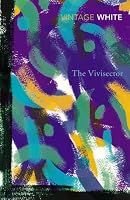
I also want to join the group read of The Vivisector, as I haven't gotten to Patrick White yet. Are you guys going to read the Penguin edition with the disturbing cover and Coetzee introduction, or is there a better version?
ETA: I forgot to mention how much I've been enjoying your Machiavelli reviews, Barry. Great, interesting stuff!
Reply | More—Add to favorites | Mark as read to here | Link | Flag86baswood
Yesterday, 6:28pm Hi Dewald, I have got the penguin version with a disturbing cover, You probably mean this one?
:
My version does not have the introduction by Coetzee.
Edit | More—Add to favorites | Mark as read to here | Link | Delete87steven03tx
Yesterday, 7:01pm I've got one very similar to that (same picture but white background instead of black), and it has no introduction either. He probably means this one:
And I made the picture small on purpose because I don't like to look at it either.
Reply | More—Add to favorites | Mark as read to here | Link | Flag88Linda92007
Today, 8:27am Mine is the Penguin Classics edition with the intro by Coetzee...and the eye. I bought it used, but it looks pristine - the previous owner probably never read it and wanted it gone because of that cover! I may have to rig a cover of some sort.
Reply | More—Add to favorites | Mark as read to here | Link | Flag89steven03tx
Edited: Today, 10:01am Google and ye shall find... Here is an interview with Paul Buckley, the Penguin art director who chose the cover. If you scroll down past the pictures you can find some comments about the Vivisector eyeball cover and Buckley's response as well as a comment from Jen Wang, the person who actually designed the cover.
http://imprint.printmag.com/books/five-questions-with-paul-buckley-penguin-art-d....
And here is Jen Wang's web site showing her other work.
http://www.designrelated.com/profile/scenicroute/page/1#creative-dialogue
I also want to join the group read of The Vivisector, as I haven't gotten to Patrick White yet. Are you guys going to read the Penguin edition with the disturbing cover and Coetzee introduction, or is there a better version?
ETA: I forgot to mention how much I've been enjoying your Machiavelli reviews, Barry. Great, interesting stuff!
Reply | More—Add to favorites | Mark as read to here | Link | Flag86baswood
Yesterday, 6:28pm Hi Dewald, I have got the penguin version with a disturbing cover, You probably mean this one?
:
My version does not have the introduction by Coetzee.
Edit | More—Add to favorites | Mark as read to here | Link | Delete87steven03tx
Yesterday, 7:01pm I've got one very similar to that (same picture but white background instead of black), and it has no introduction either. He probably means this one:
And I made the picture small on purpose because I don't like to look at it either.
Reply | More—Add to favorites | Mark as read to here | Link | Flag88Linda92007
Today, 8:27am Mine is the Penguin Classics edition with the intro by Coetzee...and the eye. I bought it used, but it looks pristine - the previous owner probably never read it and wanted it gone because of that cover! I may have to rig a cover of some sort.
Reply | More—Add to favorites | Mark as read to here | Link | Flag89steven03tx
Edited: Today, 10:01am Google and ye shall find... Here is an interview with Paul Buckley, the Penguin art director who chose the cover. If you scroll down past the pictures you can find some comments about the Vivisector eyeball cover and Buckley's response as well as a comment from Jen Wang, the person who actually designed the cover.
http://imprint.printmag.com/books/five-questions-with-paul-buckley-penguin-art-d....
And here is Jen Wang's web site showing her other work.
http://www.designrelated.com/profile/scenicroute/page/1#creative-dialogue



5baswood
Patrick White' own commentary on The Vivisector from his autobiography Flaws in the Glass
The Vivisector is about a painter, the one I was destined not to become - another of my frustrations. I had imagined that if I could acquire the technique I might give visual expression to what I have inside me, and that the physical act of painting would exhilarate me far more than grinding away at grey, bronchial prose. This could be the delusion of a writer, who has always resented having to write. Some painters have told me that Hurtle Duffield is not a painter, others that he is. Throughout my writing life I have encountered fiercely contradictory judgements: that Himmelfarb is/is not a Jew; that I know everything/nothing about women; that what I write illuminates, or on the other hand, that my novels are incomprehensible, boring rubbish. But I expect any writer who takes risks has had this battle fought over his body, live or dead.
Whether Hurtle Duffield is or is not a painter, I see him as a composite of several I have known, welded together by the one I have in me but never became. Setting out to portray a convincing artist, I wanted at the same time to paint a portrait of my city: wet, boiling, superficial, brash, beautiful, ugly Sydney, developing during my lifetime from a sunlit village into this present day parvenu bastard, compound of San Francisco and Chicago. I had a lot of exploring to do. It was not so much research as re-living the windswept, gritty, or steamy moods of the streets, coaxing dead ends, narrow lanes and choked thoroughfares to release those voices, images, emotions, of the past, which for my deplorable atypical Australian nature evoke guilt rather than pleasure.
The Vivisector is about a painter, the one I was destined not to become - another of my frustrations. I had imagined that if I could acquire the technique I might give visual expression to what I have inside me, and that the physical act of painting would exhilarate me far more than grinding away at grey, bronchial prose. This could be the delusion of a writer, who has always resented having to write. Some painters have told me that Hurtle Duffield is not a painter, others that he is. Throughout my writing life I have encountered fiercely contradictory judgements: that Himmelfarb is/is not a Jew; that I know everything/nothing about women; that what I write illuminates, or on the other hand, that my novels are incomprehensible, boring rubbish. But I expect any writer who takes risks has had this battle fought over his body, live or dead.
Whether Hurtle Duffield is or is not a painter, I see him as a composite of several I have known, welded together by the one I have in me but never became. Setting out to portray a convincing artist, I wanted at the same time to paint a portrait of my city: wet, boiling, superficial, brash, beautiful, ugly Sydney, developing during my lifetime from a sunlit village into this present day parvenu bastard, compound of San Francisco and Chicago. I had a lot of exploring to do. It was not so much research as re-living the windswept, gritty, or steamy moods of the streets, coaxing dead ends, narrow lanes and choked thoroughfares to release those voices, images, emotions, of the past, which for my deplorable atypical Australian nature evoke guilt rather than pleasure.
6baswood
By the time the Vivisector was published in 1970 Patrick White was an internationally acclaimed author, so well established that he could turn down literary awards that were offered to him. It is difficult to understand why he should do this but two reasons spring to mind: He did not like talking to the press or he was such a proud man that he turned his nose up at literary awards that he considered almost beneath his dignity to accept. He had a long memory and it always rankled with him that he was not granted the acclaim he felt he deserved in his early years as a writer. In trying to lift the spirits of a friend who was in mourning he said:
My experience has always been that nothing has ever come my way without pushing, fighting, manoeuvring, exploding. Nor does it happen any easier now: not the things I really want anyway.
White had always admired and befriended painters. As a struggling author in London he had befriended Roy De Maistre and much valued the insights he gained through Roy's work.

Figures Bathing - Roy de Maistre
There is a passage in The Vivisector that David Marr says could have been written for Roy:
It was you who taught me how to see, to be, to know instinctively. When I used to come to your house in Flint Street, melting with excitement and terror, wondering whether I would dare go through it again, or whether I would turn to wood, or dough, or say something so stupid and tactless you would chuck me out into the street, it wasn't simply thought of the delicious kisses and all the other lovely play which forced courage into me. It was the paintings I used to look at sideways whenever I got the chance. I wouldn't have let on, because I was afraid you might have been amused, and made me talk about them, and even more amused when I couldn't discuss them at your level. But I was drinking them in through the pors of my skin.
White was also friendly with Francis Bacon before he became a major figure in the world of art

Francis Bacon
Patrick White himself became a collector of art when he came into serious money, he had always imagined himself as being able to "descend on artists with commissions and largess. David Marr says in his biography that White was not searching for beauty in the paintings he bought. Raw creative ideas excited him and a blare of colour filled him with pleasure. More often than not he would buy paintings if he happened to like the artist.
My experience has always been that nothing has ever come my way without pushing, fighting, manoeuvring, exploding. Nor does it happen any easier now: not the things I really want anyway.
White had always admired and befriended painters. As a struggling author in London he had befriended Roy De Maistre and much valued the insights he gained through Roy's work.

Figures Bathing - Roy de Maistre
There is a passage in The Vivisector that David Marr says could have been written for Roy:
It was you who taught me how to see, to be, to know instinctively. When I used to come to your house in Flint Street, melting with excitement and terror, wondering whether I would dare go through it again, or whether I would turn to wood, or dough, or say something so stupid and tactless you would chuck me out into the street, it wasn't simply thought of the delicious kisses and all the other lovely play which forced courage into me. It was the paintings I used to look at sideways whenever I got the chance. I wouldn't have let on, because I was afraid you might have been amused, and made me talk about them, and even more amused when I couldn't discuss them at your level. But I was drinking them in through the pors of my skin.
White was also friendly with Francis Bacon before he became a major figure in the world of art

Francis Bacon
Patrick White himself became a collector of art when he came into serious money, he had always imagined himself as being able to "descend on artists with commissions and largess. David Marr says in his biography that White was not searching for beauty in the paintings he bought. Raw creative ideas excited him and a blare of colour filled him with pleasure. More often than not he would buy paintings if he happened to like the artist.
7Linda92007
Thank you for the wonderful background information, Barry. Whiteley's portrait shows such incredible intensity in the eyes.
8drachenbraut23
Hello, brilliant background information :) Thank you very much. I hope I will be able to start to read the Vivisector at the weekend.
10StevenTX
I just found this thread. I've only started The Vivisector and have just read the first chapter. My favorite quote so far:
"Morals!" said Lizzie. "My crikey! I think they was invented by those who're too cold to need 'em."
(page 26 of the Penguin edition)
My initial impression is that White has returned to the style of his first novel, The Living and the Dead, with a mixture of 3rd and 2nd person and occasional use of stream-of-consciousness.
The book Hurtle reads from at the Courtney's near the end of Chapter 1 is Phillip of Australia: An Account of the Settlement at Syndey Cove. I don't think this is important, but I was curious and did a Google search.
"Morals!" said Lizzie. "My crikey! I think they was invented by those who're too cold to need 'em."
(page 26 of the Penguin edition)
My initial impression is that White has returned to the style of his first novel, The Living and the Dead, with a mixture of 3rd and 2nd person and occasional use of stream-of-consciousness.
The book Hurtle reads from at the Courtney's near the end of Chapter 1 is Phillip of Australia: An Account of the Settlement at Syndey Cove. I don't think this is important, but I was curious and did a Google search.
11avidmom
Will start reading The Vivisector today. This is my first Patrick White book. Thanks for all the background information.
12baswood
Started later than I had planned, but finished the excellent first chapter today. The childhood of Hurtle Duffield is brilliantly evoked by White. Very readable and very enjoyable. My favourite simile:
Birds rose and fell in the air, like the notes of music out of the piano shops in Surrey Hills
Question who is the fowl from the first page; the one with the crook-neck that is pecked by the others and when Hurtle asks his pa why the others are pecking it; Pa replies
Because they don't like the look of it. Because it's different
White goes on to tell us that Rhoda; the Courtney's delicate child, has a weak neck, but he could also be saying it is Hurtle, because he is different from the other children.
Birds rose and fell in the air, like the notes of music out of the piano shops in Surrey Hills
Question who is the fowl from the first page; the one with the crook-neck that is pecked by the others and when Hurtle asks his pa why the others are pecking it; Pa replies
Because they don't like the look of it. Because it's different
White goes on to tell us that Rhoda; the Courtney's delicate child, has a weak neck, but he could also be saying it is Hurtle, because he is different from the other children.
13avidmom
Not quite through Chapter One yet (reading slower than usual these days). I failed to make the connection between Rhoda & the crook-neck fowl but it makes perfect sense.
14baswood
Just finished chapter 2 today where The Courtneys travel to Europe and Hurtle Courtney Duffield becomes aware of his sexuality as an early teen:
The chapter starts with yet another reference to those pianos in the Surrey Hills:
They went awhile in silence through the Surrey Hills. Hurtle pointed. "Those are the piano shops""
Mr Courney replied "Oh?"
There was no music at that hour.
It has become increasingly obvious that White is making us see everything through the eyes of Hurtle Duffied, (I can't think of a scenario in the book when he has not been present). It is also clear that Hurtle has a unique vision of the world around him and at this early stage in his life he is unable to come anywhere near to capturing it on paper as a drawing or painting. It is also apparent that his visions are disturbing. His images are already shocking his family and he is forced to hide them.
Freda Courtney has become involved in a campaign against vivisection and it is the image of a dog in a shop window in London that causes her to bring her family's travels to an end so that she can return to Australia to become involved again.
White is already telling us that Hurtle is the Vivisector. He dreams of his mother pulling the guts out of a sheep:
Crool crool cool and crool she began to shriek 'nasty little boy' with 'eyes like knives'. By the time she began pulling at the big cushiony bowel, her lips had turned the colour of liver. 'I am your blood mother I am only helping it to die to save it from the vivisector'. Her white neck all freckled with blood. 'I know Hurturrl you would split my head open to see what is inside'.................
Mr Courtney takes Hurtle out to a sheep station that he owns and there he meets Col Foster; a jackaroo. Col is busy writing and he says to Hurtle he is writing a novel but it is no good because he had not yet experienced enough. He laughs at Hurtle when he tells him he is going to be a great painter and Col Foster says:
Fancy yourself don't you?...... Well good luck to you kid! I am going to write the Great Australian Novel
The Great Australian Novel was something that Patrick White had always felt himself capable of doing. Some irony here I think.
The chapter starts with yet another reference to those pianos in the Surrey Hills:
They went awhile in silence through the Surrey Hills. Hurtle pointed. "Those are the piano shops""
Mr Courney replied "Oh?"
There was no music at that hour.
It has become increasingly obvious that White is making us see everything through the eyes of Hurtle Duffied, (I can't think of a scenario in the book when he has not been present). It is also clear that Hurtle has a unique vision of the world around him and at this early stage in his life he is unable to come anywhere near to capturing it on paper as a drawing or painting. It is also apparent that his visions are disturbing. His images are already shocking his family and he is forced to hide them.
Freda Courtney has become involved in a campaign against vivisection and it is the image of a dog in a shop window in London that causes her to bring her family's travels to an end so that she can return to Australia to become involved again.
White is already telling us that Hurtle is the Vivisector. He dreams of his mother pulling the guts out of a sheep:
Crool crool cool and crool she began to shriek 'nasty little boy' with 'eyes like knives'. By the time she began pulling at the big cushiony bowel, her lips had turned the colour of liver. 'I am your blood mother I am only helping it to die to save it from the vivisector'. Her white neck all freckled with blood. 'I know Hurturrl you would split my head open to see what is inside'.................
Mr Courtney takes Hurtle out to a sheep station that he owns and there he meets Col Foster; a jackaroo. Col is busy writing and he says to Hurtle he is writing a novel but it is no good because he had not yet experienced enough. He laughs at Hurtle when he tells him he is going to be a great painter and Col Foster says:
Fancy yourself don't you?...... Well good luck to you kid! I am going to write the Great Australian Novel
The Great Australian Novel was something that Patrick White had always felt himself capable of doing. Some irony here I think.
15avidmom
I read that little section about Hurtle's disturbing dream today. Not really the spot I needed to be on over my lunch hour...... It was his physical reaction to his own dream that got me.
16baswood
Chapter 3 is a sort of linking chapter covering Hurtle's teen years before he enlists in the Australian Army to fight in the war. Hurtle must escape from his adopted family and going to war is his only way out.
Chapter 4 - This is where the meat of the book really begins. Hurtle has survived the war, he has effectively cut himself off from his family and is now living the life he wants to live. He eventually returns to Australia and meets the first of the women in his life; Nance Lightfoot.
White now shows us Hurtle the artist, everything is sacrificed on the altar of his art. Nance says:
'What your sort don't realise' she wasn't saying, she was firing into his brain, 'is that other people exist. While your gummed up in the great art mystery, they're alive, and breakun their necks for love'
Patrick White himself was a driven man, everything had to be put aside so that he could write. It is interesting to ponder how much of himself he put into Hurtle.
White's attempts to get under the skin of the artist produces some fine prose; this is his description of Hurtle working on his self portrait:
While working, he had to recognize the voluptuous love with which he carved his own cheek out of the paint, down to the board : his not convincingly ascetic cheek. The nick to the corner of his not quite honest but human - he hoped - watchful eye produced the authentic shudder of love. Even the practice of mere skill, those weightless wet dreams of art, rejoiced his mind and refreshed his body.
Hurtle burns so fiercely for his art that anyone who gets too close to him is liable to go up in flames - I fear for Nance.
Chapter 4 - This is where the meat of the book really begins. Hurtle has survived the war, he has effectively cut himself off from his family and is now living the life he wants to live. He eventually returns to Australia and meets the first of the women in his life; Nance Lightfoot.
White now shows us Hurtle the artist, everything is sacrificed on the altar of his art. Nance says:
'What your sort don't realise' she wasn't saying, she was firing into his brain, 'is that other people exist. While your gummed up in the great art mystery, they're alive, and breakun their necks for love'
Patrick White himself was a driven man, everything had to be put aside so that he could write. It is interesting to ponder how much of himself he put into Hurtle.
White's attempts to get under the skin of the artist produces some fine prose; this is his description of Hurtle working on his self portrait:
While working, he had to recognize the voluptuous love with which he carved his own cheek out of the paint, down to the board : his not convincingly ascetic cheek. The nick to the corner of his not quite honest but human - he hoped - watchful eye produced the authentic shudder of love. Even the practice of mere skill, those weightless wet dreams of art, rejoiced his mind and refreshed his body.
Hurtle burns so fiercely for his art that anyone who gets too close to him is liable to go up in flames - I fear for Nance.
17StevenTX
I've just got a little bit left to go in Chapter 4. It's interesting that, as in The Tree of Man, World War I is basically a hole in the narrative. In other novels about the period it is an intense experience that changes the soldier forever, but in White's writing it is more about escape and absence.
A bit of googling shows that D. H. Lawrence is considered a major influence on Patrick White, so I wonder if there is a deliberate similarity between the scene when Nance gets down on the floor and bends over to light the fire (which Hurtle later obsessively paints) and the memorable scene in Lady Chatterley's Lover where Constance assumes the same position drying her hair in front of a fireplace.
I like this passage:
'D'you think anybody's gunner buy this sort of art work? T'isn't exactly pretty, is it?'
'Not supposed to be.'
'What is it, then? Explain to me. All this about modern art.'
'If you could put it in words, I wouldn't want to paint.'
A bit of googling shows that D. H. Lawrence is considered a major influence on Patrick White, so I wonder if there is a deliberate similarity between the scene when Nance gets down on the floor and bends over to light the fire (which Hurtle later obsessively paints) and the memorable scene in Lady Chatterley's Lover where Constance assumes the same position drying her hair in front of a fireplace.
I like this passage:
'D'you think anybody's gunner buy this sort of art work? T'isn't exactly pretty, is it?'
'Not supposed to be.'
'What is it, then? Explain to me. All this about modern art.'
'If you could put it in words, I wouldn't want to paint.'
18arubabookwoman
I'm enjoying following the discussions of The Vivisector, which I read earlier this year for the Patrick White group. I was most impressed by White's ability to convey the artist's mindset, and need to work to the exclusion of all else. Regarding the quoted passage above, I also remember liking the description of Hurtle as "seeing" rather than "thinking."
I also very much liked the opening section on Hurtle's childhood. I thought it was one of the best evocations of a child's viewpoint that I've read.
I also very much liked the opening section on Hurtle's childhood. I thought it was one of the best evocations of a child's viewpoint that I've read.
19baswood
You are so right about White's ability to evoke Hurtle's childhood arubabookwoman
Chapter 5 is only 9 pages long, but if anybody wanted proof of Patrick White's ability as a writer they only need to read these 9 pages.
White executes a time jump and he wishes to inform the reader of what has been happening to Hurtle Duffield in the meantime. He does this by introducing a character; Cecil Cutbush, explicitly for this purpose. Cecil is a grocer by trade who usually takes a stroll out of town to pass the time of day after work sitting on his favourite bench. This evening he is joined by a stranger and Cecil struggles to make a conversation with him. He finally draws him out and from the brief exchanges the reader realises the stranger is Hurtle, now a successful artist. White continues to refer to him as the stranger. So there is mystery and suspense as Hurtle's situation and his state of mind is revealed through the hesitant conversation with Mr Cutbush. Hurtle refers to God as "The Divine Vvivisector and says:
"Yes I believe in Him," the stranger repeated. "Otherwise how would men come by their cruelty - and their brilliance"
This jewel of a chapter would make a brilliant short story and we are left with the image of Cecil Cutbush left alone on the bench, but providing Hurtle with the idea for a new painting. There is no doubt that Hurtle is that same driven man.
Chapter 5 is only 9 pages long, but if anybody wanted proof of Patrick White's ability as a writer they only need to read these 9 pages.
White executes a time jump and he wishes to inform the reader of what has been happening to Hurtle Duffield in the meantime. He does this by introducing a character; Cecil Cutbush, explicitly for this purpose. Cecil is a grocer by trade who usually takes a stroll out of town to pass the time of day after work sitting on his favourite bench. This evening he is joined by a stranger and Cecil struggles to make a conversation with him. He finally draws him out and from the brief exchanges the reader realises the stranger is Hurtle, now a successful artist. White continues to refer to him as the stranger. So there is mystery and suspense as Hurtle's situation and his state of mind is revealed through the hesitant conversation with Mr Cutbush. Hurtle refers to God as "The Divine Vvivisector and says:
"Yes I believe in Him," the stranger repeated. "Otherwise how would men come by their cruelty - and their brilliance"
This jewel of a chapter would make a brilliant short story and we are left with the image of Cecil Cutbush left alone on the bench, but providing Hurtle with the idea for a new painting. There is no doubt that Hurtle is that same driven man.

