This topic is currently marked as "dormant"—the last message is more than 90 days old. You can revive it by posting a reply.
1_debbie_
I love setting challenges and making lists, but I’ve finally accepted the fact that doing so almost guarantees that my wandering reader spirit will buck my authority and devour whatever it pleases. So this year I’m setting no official goals for 2013. Here’s to a new year full of reading whims and fantastic discoveries!
3_debbie_
I have a nasty habit of leaving a trail of unfinished books behind me, so this year I’m making a spot for them. I’ll only include the ones I read enough of to feel like I truly gave up on them for one reason or another.
Abandoned Books
Amy and Isabelle by Elizabeth Strout - See post #13
A Train in Winter by Caroline Moorehead - See post #27
Abandoned Books
Amy and Isabelle by Elizabeth Strout - See post #13
A Train in Winter by Caroline Moorehead - See post #27
4_debbie_
My pleasure reading has taken a back seat while I worked on my master’s degree the past several years. Now that I’m done, I’m hoping to finally get back on track with my reading in 2013. I don’t even want to admit how few books I read in 2012, but here are the ones that I enjoyed the most.
Most Memorable Reads in 2012
Code Name Verity by Elizabeth Wein
Daughter of Smoke and Bone by Laini Taylor
The Night Watch by Sarah Waters
Gone Girl by Gillian Flynn
How to Read Literature Like a Professor by Thomas C. Foster
11/22/63 by Stephen King
Wool Omnibus Edition by Hugh Howey
Wonder by R.J. Palacio
Most Memorable Reads in 2012
Code Name Verity by Elizabeth Wein
Daughter of Smoke and Bone by Laini Taylor
The Night Watch by Sarah Waters
Gone Girl by Gillian Flynn
How to Read Literature Like a Professor by Thomas C. Foster
11/22/63 by Stephen King
Wool Omnibus Edition by Hugh Howey
Wonder by R.J. Palacio
5_debbie_

Locally Grown: Portraits of Artisanal Farms From America’s Heartland by Anna Blessing
Peek at a plot: Photographer Anna Blessing set out to photograph 20 Midwest farms that sell food to local chefs in Chicago. The farms are grouped into four different types based on location or experience of the farmers, but numerous types of agriculture are represented – from turkey farms to exotic fruits and vegetables. In addition to photographs, each farm portrait includes information on the people who run the farm, the type of food grown, who the food is sold to, and recipes from the farmers and the chefs.
What I liked: I was surprised how much I loved this book! It was in the Top 100 free Kindle non-fiction books, so I took a chance, and I’m extremely glad I did. More than just a statistical rundown of facts about the farm, the portraits are really short, well-written stories about the farmers and their approaches to growing food. While almost every farmer has a sustainable, organic method, many of them are not certified organic and they also talk about why that is. The real highlights for me were learning new exotic varieties (and I already know quite a few), and learning more about the details of farming, such as the temperature at which milk is pasteurized or how to move turkeys to fresh grass each day. The recipes look delicious for the most part, and I have saved several to try in the future.
What I didn’t like: I had no expectations or knowledge about the book going into it, so I was not disappointed. The only thing I would have liked better was the physical copy of the book (which I may go ahead and order). I read it on my computer through the Kindle reading app, so all the pictures were in color and it wasn’t bad. The formatting was a little funky in some places because of how the images were laid out.
Unofficial goal(s) met: Read more non-fiction
Recommended for: Anyone interested in farms, agriculture, organic food or farm-to-table restaurants.
6dchaikin
Hi Debbie, Congrats on your first 2013 book. Reminds me of the farmer portrayed in Michael Pollan's Omnivore's Dilemma
7_debbie_
Thanks! To be honest, I don't really remember much about the Omnivore's Dilemma to know how the portrayals compare. I'm horrible at remembering the specifics of things I read, except for the occasional random fact that pops out of my mouth unexpectedly from time to time (and then, of course, I can never remember where I read it!). I would say this book had much more of an old local cookbook feel where the family tells stories in between the recipes and lots of pictures are spread throughout. I really enjoyed it!
8janemarieprice
5 - Interesting. I added this to the wishlist. I'd like to learn more about farming, but I'm not sure how much of a commitment I'm reading to make to it yet.
9_debbie_
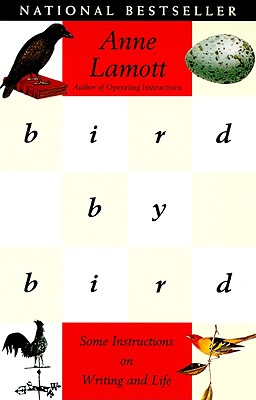
Bird by Bird by Anne Lamott
Peek at a plot: How to get over yourself and start writing that novel you’ve been talking about forever. (Oh, and why all the other writers are just as miserable as you, only more productive.)
What I liked: Anne’s sense of humor cracks me up. She has loads of good advice and her approach is likeable for the most part.
What I didn’t like: She got on my nerves at times. Actually, she reminds me a lot of someone I know who I like very much when she’s funny and don’t like so much when she’s whining on and on about how the world has treated her badly and everyone else around her is getting more than they deserve while she’s enduring the wrath of God. Anne didn’t say that exactly, but I bet it’s in her journal somewhere.
Unofficial goal(s) met: Read more non-fiction
Recommended for: This book comes up as a suggestion over and over by writers (and those aspiring to be one), and I always love reading about writing (as opposed to actually writing). So I suppose it's good for anyone who fits that description and can tolerate her hilarious yet weird personality.
11_debbie_
Drawing on the Power of Resonance in Writing by David Farland
Peek at a plot: The importance of resonance in novels. (Also, why Tolkien is the greatest writer EVER!)
What I liked: The book starts off with good points about how resonance is that feeling that we’ve seen this character, place, or struggle before. All of our favorite novels and characters resonate with us somehow, and Farland does an admirable job trying to illustrate how that happens.
What I didn’t like: He’s clearly in love with Tolkien. Ironically, I have never read anything by Tolkien, nor have I seen any of the LoR movies, so Farland’s examples did not resonate with me at all. In fact, he pretty much lost me. Good thing it was a short book.
Unofficial goal(s) met: Read more non-fiction
Recommended for: Anyone who loves Tolkien as much as the author does.
12fuzzy_patters
"Recommended for: Anyone who loves Tolkien as much as the author does."
That made me chuckle.
That made me chuckle.
13_debbie_
Well, it was going to happen eventually. Might as well be the first week of January …

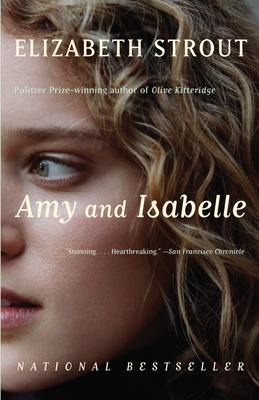
Amy and Isabelle by Elizabeth Strout
Why I tried to read this book: I read Olive Kitteridge and loved it.
How far I made it: 185/300 pages
Why I gave up: I wish I had known more of what this book was about before buying it. The topic is just not my thing at all. I got it on impulse back during the Borders farewell sale and have had it sitting on the shelf for a while (obviously). It’s well written for the most part. Strout has an unbelievably amazing ability to crawl inside the everyday ickiness that makes up our lives and wring out each drop of pain until we can’t bear it any longer. And I couldn’t. I tried. Really, I did. I wanted to keep going. I still want to keep going. But I can’t.
I handled the pain of Olive Kitteridge just fine, but this book started weighing on my soul within the first few chapters. Perhaps this book combined with my previous suffering with Olive just created this compounded horror that I now am attaching to Strout herself. Sort of like when you open a Steven King book and you’re scared before you read a page because of all the other books you’ve read by him. Overall, it’s a good book. I’ve just got to move on with my life.
Parting words: Dearest Elizabeth: It’s me, not you. But maybe you should still seek therapy.

Amy and Isabelle by Elizabeth Strout
Why I tried to read this book: I read Olive Kitteridge and loved it.
How far I made it: 185/300 pages
Why I gave up: I wish I had known more of what this book was about before buying it. The topic is just not my thing at all. I got it on impulse back during the Borders farewell sale and have had it sitting on the shelf for a while (obviously). It’s well written for the most part. Strout has an unbelievably amazing ability to crawl inside the everyday ickiness that makes up our lives and wring out each drop of pain until we can’t bear it any longer. And I couldn’t. I tried. Really, I did. I wanted to keep going. I still want to keep going. But I can’t.
I handled the pain of Olive Kitteridge just fine, but this book started weighing on my soul within the first few chapters. Perhaps this book combined with my previous suffering with Olive just created this compounded horror that I now am attaching to Strout herself. Sort of like when you open a Steven King book and you’re scared before you read a page because of all the other books you’ve read by him. Overall, it’s a good book. I’ve just got to move on with my life.
Parting words: Dearest Elizabeth: It’s me, not you. But maybe you should still seek therapy.
14baswood
So what is the topic? do tell us as you might save many club readers from the horrors that you experienced.
15_debbie_
>14 baswood: Mother/daughter angst and student/teacher romantic relationships (at least that's as far as I got with the story)
17_debbie_
>16 baswood: That is why books are so wonderful. To each his (or her) own. I'll take Prisoners of War for $400 please, Alex! ;o)
18labfs39
I love how you set up your reviews, Debbie. You convey more in a few lines than I do in paragraphs. Plus you're funny! Big shiny star for you. I'll take Prisoners of War for $400 please, Alex! I love it!
19_debbie_
>10 dchaikin: Dan, I'm sorry. I somehow skipped over your comment. Funny! I would kill to be able to read her journal. I bet she would sell it to us if she knew how much money it would bring! She is just hilarious!
>18 labfs39: Thanks Lisa! But I love your reviews!!
>18 labfs39: Thanks Lisa! But I love your reviews!!
20_debbie_
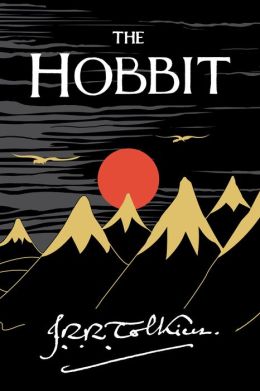
The Hobbit by J.R.R. Tolkien
Peek at a plot: Little bunny-ish thing called a hobbit gets forced to be a burglar and travel through the scary woods to help some dwarves get back their treasure. It’s a hard trip, but everything turns out okay in the end.
What I liked: The little bunny thing was cute. He had some great adventures, and I love how he slowly grows to believe in himself more. Gandalf the wizard was my favorite, but sadly even he was not quite as well developed as I prefer my favorite characters to be in a novel.
What I didn’t like: I was expecting to have the novel reading experience of my life with all the fanfare and love that is directed toward The Hobbit and Lord of the Rings. (Especially after the lovefest Farland lushed upon Tolkien’s name in Drawing on the Power of Resonance in Writing. Sadly, The Hobbit was just okay. I wouldn’t have even finished it more than likely if I hadn’t had this strong desire to say that I have read something by the man. Overall, it just seemed a little too shallow. The characters weren’t developed well enough for my tastes and the best parts went a little too fast. I can see where it would have more appeal for children. My mother should have read it to me as a child.
Unofficial goal(s) met: Try to blend in and act like I understand popular culture.
Here’s how the conversation went in my house just after I started reading the book:
Me (average books read per year ~ SO’s age): You’re never going to believe what I’m finally reading!
SO (averages 1 book per year): What?
Me: The Hobbit. It’s about this little bunny creature thing that lives in a hole. His name is like Bagbo or Biglands or something.
SO: Bilbo Baggins.
Me: Yes that’s it! (Pause) Wait! What? You’ve read The Hobbit?!?
SO: Um. Yes. A long time ago.
Me: (Dejected) Did you like it?
SO: Yes. How could you not love Bilbo Baggins?
Recommended for: I strongly suspect those who will truly enjoy this book have already read it. If you haven't read it, you probably should just so you never end up humiliated by your significant other. (Well, you probably will end up humiliated one day, but at least don't let it be because of a book!)
21labfs39
Please don't give up on Tolkien just yet. You are right, in that The Hobbit is a children's book, the only one he wrote, I think. The Lord of the Rings trilogy is for adults. Although it uses the kid's book as a springboard, the LOTR is much more, with more of everything: character development, complex themes, relationships, philosophy. I think you would like it a whole lot more. It starts with The Fellowship of the Ring.
Actually, I was a little bothered by the way the movies are being consumed. People who read the Hobbit to their kids took them to see the LOTR movies, which are not kids movies (IMO). And now because adults who may never have read Tolkien have seen the LOTR movies, and are expecting similar, the Hobbit movie has been turned into a more violent version (from what I hear). But kids who liked the book The Hobbit might think the movie is for them. Do you know what I mean? Common sense media gives the movie version of the Hobbit an 11 years and up rating, but the book a 9+.
Actually, I was a little bothered by the way the movies are being consumed. People who read the Hobbit to their kids took them to see the LOTR movies, which are not kids movies (IMO). And now because adults who may never have read Tolkien have seen the LOTR movies, and are expecting similar, the Hobbit movie has been turned into a more violent version (from what I hear). But kids who liked the book The Hobbit might think the movie is for them. Do you know what I mean? Common sense media gives the movie version of the Hobbit an 11 years and up rating, but the book a 9+.
22janemarieprice
Agreed with Lisa above, The Hobbit is by far the least sophisticated thing of Tolkien's I've read. Though I think it was intended to be that way - a good adventuresome children's book.
23_debbie_
Okay, the two of you have convinced me to not give up on Tolkien just yet. But I am taking a break instead of plunging ahead with LOTR as I had originally thought I would. Already a good chunk into Motherless Brooklyn and liking it so far!
25dchaikin
Another review that made me smile...what with the goal met and the conversation. Despite all the praise I think you may find yourself mixed when/if you start LoTR...and you do know you have re-read it? (It is much better the 2nd time.)
...
Bilbo bunny-ish?...oye...
...
Bilbo bunny-ish?...oye...
26_debbie_

Motherless Brooklyn by Jonathan Lethem
Peek at a plot: Lionel Essrog is one of four orphans chosen by a mobbish low-level crook named Frank Minna. Lionel and the other three boys become Minna Men, running errands and odd jobs for Frank and the “detective” agency for the next 15 years. Lionel narrates the story. The special thing about Lionel is that he has Tourette’s syndrome and is constantly fighting a stream of verbal and nonverbal tics. Very quickly into the novel, Frank Minna is killed and Lionel leads us on a discovery to find out who did it and why.
What I liked: I’ve only read a few novels in which the narrator had such a severe disorder that it affected the entire style of the book. Lethem did an amazing job making me feel as though I had Tourette’s along with Lionel, sort of like how a good psychology class can make you question your sanity. In my humblest of opinions, the book is worth reading for this factor alone.
What I didn’t like: It’s a crime/detective type novel and not the best one I’ve read. But there is something almost sweet and innocent in Lionel’s disruptive eatmebailey way of talking. However, the actual events of the story took a backseat role.
Unofficial goal(s) met: Read more of those books everyone keeps telling me I will like.
Recommended for: Anyone who enjoys the quirky, disordered, sort of unreliable narrator that makes you feel as if you know him.
27_debbie_
Here we are in the third week of January and it’s happened again …
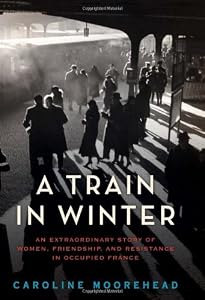
A Train in Winter by Caroline Moorehead
Why I tried to read this book: Lisa’s review of this book was amazing and inspired me to give it a try, especially since I loved Code Name Verity about women spies and (a little about) the French Resistance.
How far I made it: 75/565 pages
Time for a Confession: I don’t do history well. In fact, I usually tell people I hate history, but that’s not the complete truth either. I am captivated and fascinated by history when it’s told through a story I can understand with characters who I enjoy. My brain just does not hang on to information when I’m given lots of facts in a row without a more narrative frame to give me context.
Why I gave up: The introduction to this book was beautiful. Had the entire book been written this way, I would absolutely have loved it. Instead, it felt like one blurb after another with people’s names and tiny facts and no sense of how any of this was really coming together. It is not bad writing. In fact, it’s compelling if you like a more straightforward telling of facts or you already have a good understanding of the French Resistance. I don’t. Why kid myself and pretend like I was retaining any of the information I was reading. I wasn’t.
Parting words: Dearest Caroline: This would have made a great novel. If you decide to turn your research into one, call me.
A Train in Winter by Caroline Moorehead
Why I tried to read this book: Lisa’s review of this book was amazing and inspired me to give it a try, especially since I loved Code Name Verity about women spies and (a little about) the French Resistance.
How far I made it: 75/565 pages
Time for a Confession: I don’t do history well. In fact, I usually tell people I hate history, but that’s not the complete truth either. I am captivated and fascinated by history when it’s told through a story I can understand with characters who I enjoy. My brain just does not hang on to information when I’m given lots of facts in a row without a more narrative frame to give me context.
Why I gave up: The introduction to this book was beautiful. Had the entire book been written this way, I would absolutely have loved it. Instead, it felt like one blurb after another with people’s names and tiny facts and no sense of how any of this was really coming together. It is not bad writing. In fact, it’s compelling if you like a more straightforward telling of facts or you already have a good understanding of the French Resistance. I don’t. Why kid myself and pretend like I was retaining any of the information I was reading. I wasn’t.
Parting words: Dearest Caroline: This would have made a great novel. If you decide to turn your research into one, call me.
28LisaMorr
Motherless Brooklyn sounds like something I would enjoy, so I will add it to the wishlist; thanks for your comments.
I'm probably a bit like you in terms of tackling history; I usually force myself to finish, but it's often slow going. I put A Train in Winter on my list as well based on Lisa's review. It's still on there, but it might be one that I dip in and out of - and while dipping out read some quick, enticing fiction.
I'm probably a bit like you in terms of tackling history; I usually force myself to finish, but it's often slow going. I put A Train in Winter on my list as well based on Lisa's review. It's still on there, but it might be one that I dip in and out of - and while dipping out read some quick, enticing fiction.
29_debbie_
>28 LisaMorr: I should probably force myself to do like you and dip in and out, but I usually find myself dipping out more than in. I still have plans to go back to several books like this, but we shall see ...
30_debbie_

I Wrote This For You by Pleasefindthis
Peek at a plot: Short poetic writings. And photographs. At its core, it is a universal story of loss, pain, grief, love remembered, and moving on with life. At least the good parts.
What I liked: I don’t normally go for books that wallow in their agony, but there is something optimistic at the root of these short pieces that knows life is waiting on the other side of the rain cloud and is fighting with every fiber of its being to reconnect with happiness.
What I didn’t like: The images were odd at times and the brief snippets didn’t always seem to jive with what I thought was going on. But that is usually how it goes with me and books like this one. On the other hand, I read an interview with the photographer and he mentions how the intention of the book was to be a universal story that “lets the audience read more into the pieces than is necessarily said.” Sometimes they stretched it a little too far for me.
Unofficial goal(s) met: Give in to the random reading urge, even if I’ve never heard of the book or author before.
Recommended for: Anyone who appreciates the ability of poetry to touch some inner sadness that perhaps has healed over but never been quite forgotten. (Even though this isn’t poetry exactly.)
Some of my favorite pieces:
The First Time We Met
It’s when you hold eye contact for that second too long or maybe the way you laugh. It sets off a flash and our memories take a picture of who we are at that point when we first know “This is love.”
And we clutch that picture to our hearts because we expect each other to always be the people in that picture. But people change. People aren’t pictures. And you can either take a new picture or throw the old one away.
The Forgotten Star
You keep telling me to be glad for what we had while we had it. That the brightest flame burns quickest.
Which means you saw us as a candle. And I saw us as the sun.
The Truth Is Born in Strange Places
Joan of Arc came back as a little girl in Japan, and her father told her to stop listening to her imaginary friends.
Elvis was born again in a small village in Sudan, he died hungry, age 9, never knowing what a guitar was.
Michelangelo was drafted into the military at age 18 in Korea, he painted his face black with shoe polish and learned to kill.
Jackson Pollock got told to stop making a mess, somewhere in Russia. Hemingway, to this day, writes DVD instruction manuals somewhere in China. He’s an old man on a factory line. You wouldn’t recognise him.
Gandhi was born to a wealthy stockbroker in New York. He never forgave the world after his father threw himself from his office window, on the 21st floor.
And everyone, somewhere, is someone, if we only give them a chance.
31LesMiserables
> 1
I love setting challenges and making lists, but I’ve finally accepted the fact that doing so almost guarantees that my wandering reader spirit will buck my authority and devour whatever it pleases. So this year I’m setting no official goals for 2013. Here’s to a new year full of reading whims and fantastic discoveries!
Kindred spirits!
I love setting challenges and making lists, but I’ve finally accepted the fact that doing so almost guarantees that my wandering reader spirit will buck my authority and devour whatever it pleases. So this year I’m setting no official goals for 2013. Here’s to a new year full of reading whims and fantastic discoveries!
Kindred spirits!

33_debbie_

Rules for Virgins by Amy Tan
Peek at a plot: It’s 1912 in Shanghai and an older courtesan (aka prostitute) is giving a new virgin courtesan the rules of the trade. This is essentially a short story (42 pages), and it’s easily read in one sitting.
What I liked: The long monologue style creates tension and reveals questions the reader will never know the answer to, at least from this book. The older courtesan has compassion and tenderness toward Violet, and all of her wisdom and rules are aimed at helping Violet become the most desired, successful courtesan of her day. How did she choose Violet to take under her wing? What sort of person is Violet? I really want to know more about these characters and this story!
What I didn’t like: I can’t really think of anything. I enjoyed it immensely and only wish there were more of it!
Unofficial goal(s) met: Read more impulse purchases from long ago.
Recommended for: Amy Tan’s writing actually reminded me more of Lisa See than Amy Tan for some reason. Any fan of short fiction or either of these authors will probably enjoy this story.
34labfs39
Sorry Train in Winter didn't work for you. I think you stopped reading at one of the slowest parts of the book. I studied history in school, so to me this was pretty exciting in its narration. :-) That said there are a lot of women mentioned, which can make it tough to keep track. The mini-bios at the back helped me.
35_debbie_
>34 labfs39: Oh that's ok. I abandon books frequently, so I realize I usually give up too easily. Reading on the Kindle, I didn't notice the mini-bios! I really wish sometimes that history wasn't so hard for me. I would love to be knowledgeable in so many things like others are, but then again, my brain can only hold so much information and I exceeded capacity quite some time ago. Now, new information either disappears as fast as it goes in or it pushes something else out. {mumbles to self: Where are my keys??}
36baswood
I wrote this for you appears to be a bit of an oddity
37_debbie_
Fair warning, this is a long one!

The IBD Healing Plan and Recipe Book by Christie A. Korth
Peek at a plot: Korth is an IBD sufferer, health coach and holistic nutritionist. The book provides a brief overview of inflammatory bowel diseases, food intolerances, and various related topics such as common drugs used to treat the illnesses. The last section is filled with recipes using whole foods (and most are free of common allergens).
What I liked: Korth’s passion for this topic clearly shines through and it’s easy to see she believes and practices what she preaches. She covers a lot of topics and gives some good basic information to help familiarize readers with the issues discussed. She also includes numerous charts and graphs with everything from anti-inflammatory lunch ideas to substitutions for common food allergens like eggs and corn. Last, but not least, I thought her section on food intolerances was probably the most thoroughly explained and detailed in the entire book.
Let’s pause for a moment while we learn a little more about our reading sponsor: If you’re new to my LT threads (formerly located in unnamed challenge groups), it won’t take long to realize that I’m a fairly transparent person. I strongly believe sharing ourselves and our stories can help us learn about each other, as well as better ourselves. So I’ll digress another moment into my own experiences with IBD and whole foods. Skip the next paragraph if you don’t like too much personal info or you’re squeamish about colon stuff.
In my early 30s, during a very stressful period, I suddenly got very sick. I’ll spare you the details. Lots of doctors and tests later, it was believed that I had IBD. After a colonoscopy, which included random biopsies and polyp removal, my gastroenterologist firmly believed I had Crohn’s disease. However, he didn’t officially diagnose me because during the long course of doctors and tests, I had continued improving and pretty much stopped having symptoms by time we got to the colonoscopy. In case you don’t know, there is no cure for IBD, there is only symptom treatment, and the drugs are often worse than the disease. Long story short, I started getting better I believe because I pretty much did exactly what Korth recommends. I stopped eating almost everything except boiled chicken, rice, and potatoes for a couple of months since these were the only foods I could eat without inducing a major attack. I started taking a probiotic. I cut out caffeine, dairy, anything that might be allergy inducing, and then I slowly reintroduced organic, whole foods. Previously, I was a canned food, pre-cooked meat, how-easy-can-we-make-this cook. The transition was not easy to say the least, but my online research and intuition led me to believe changing my diet would help me feel better. And let me tell you, when you’re that sick, you will change your diet if you think it will help no matter how hard the adjustment is. So fast-forward almost a decade, and I’m still controlling the condition (if that’s what it was) by managing my food. I am not always good, and I have periods where I get way off track and my body starts to let me know. Adjusting my food brings me back on track each time. However, I will caution as another reviewer said in her post, not everyone is the same. Changing your diet may not work for everyone. I consider myself one of the very lucky ones.
Now, why did I tell you all this? So you can better understand what I’m about to say next.
What I didn’t like: If I didn’t already believe what Korth says in her book, what she’s included here would not have convinced me. I wasn’t familiar with everything she discussed, but much of it I did already know and would agree with. Her quizzes were a bit trite, but otherwise the information seemed solid based on my understanding from reading other sources over the years and my own experiences. She has a decent set of references in the back of the book, but I also would have appreciated having these more connected to her discussion, claims, and points while I was reading the book. Overall, it felt like a book written by someone who is very knowledgeable with the topic, but sat down and wrote it all from memory without a detailed outline. Needless to say, I think she could have done a much better job using supporting evidence to back up her statements.
I think her downfall is related to three major things. One, she’s tried to cover everything under the sun -- telling us what IBD is, providing detailed instructions on getting tested for food intolerances, talking about supplements, describing the benefits of organic foods, including quizzes on all sorts of stuff, listing gobs of recipes, etc. Consequently, she ends up spending a very brief amount of time on most topics and only hits the very, very broadest highlights. I think it was too much for one book and ended up not feeling like any sort of “plan” at all. Second, her style and tone are all over the place. One minute she is relating her own personal story, the next she’s giving case studies from her patients, and the next she is discussing scientific research. It felt a little unfocused. Last but not least, she didn’t have a clear audience in mind. While some of the information is geared to helping people understand what IBD is, she spends a lot of time building rapport with long-time sufferers who may have tried lots of things and may have suffered for years. I suppose trying to cover both groups isn’t a bad thing in and of itself, but with the other issues in the book, it was just one more problem as far as I was concerned.
Unofficial goal(s) met: Read an Early Reviewer book within a month of getting it.
Recommended for: IBD sufferers who want a starting place with a diet-based solution to treating Crohn’s or colitis and are willing to do additional research to learn more and verify the information for themselves. If you just want a good book to help you understand what whole foods really means and why learning more about the food you eat is important, I recommend What to Eat by Marion Nestle instead of this book.

The IBD Healing Plan and Recipe Book by Christie A. Korth
Peek at a plot: Korth is an IBD sufferer, health coach and holistic nutritionist. The book provides a brief overview of inflammatory bowel diseases, food intolerances, and various related topics such as common drugs used to treat the illnesses. The last section is filled with recipes using whole foods (and most are free of common allergens).
What I liked: Korth’s passion for this topic clearly shines through and it’s easy to see she believes and practices what she preaches. She covers a lot of topics and gives some good basic information to help familiarize readers with the issues discussed. She also includes numerous charts and graphs with everything from anti-inflammatory lunch ideas to substitutions for common food allergens like eggs and corn. Last, but not least, I thought her section on food intolerances was probably the most thoroughly explained and detailed in the entire book.
Let’s pause for a moment while we learn a little more about our reading sponsor: If you’re new to my LT threads (formerly located in unnamed challenge groups), it won’t take long to realize that I’m a fairly transparent person. I strongly believe sharing ourselves and our stories can help us learn about each other, as well as better ourselves. So I’ll digress another moment into my own experiences with IBD and whole foods. Skip the next paragraph if you don’t like too much personal info or you’re squeamish about colon stuff.
In my early 30s, during a very stressful period, I suddenly got very sick. I’ll spare you the details. Lots of doctors and tests later, it was believed that I had IBD. After a colonoscopy, which included random biopsies and polyp removal, my gastroenterologist firmly believed I had Crohn’s disease. However, he didn’t officially diagnose me because during the long course of doctors and tests, I had continued improving and pretty much stopped having symptoms by time we got to the colonoscopy. In case you don’t know, there is no cure for IBD, there is only symptom treatment, and the drugs are often worse than the disease. Long story short, I started getting better I believe because I pretty much did exactly what Korth recommends. I stopped eating almost everything except boiled chicken, rice, and potatoes for a couple of months since these were the only foods I could eat without inducing a major attack. I started taking a probiotic. I cut out caffeine, dairy, anything that might be allergy inducing, and then I slowly reintroduced organic, whole foods. Previously, I was a canned food, pre-cooked meat, how-easy-can-we-make-this cook. The transition was not easy to say the least, but my online research and intuition led me to believe changing my diet would help me feel better. And let me tell you, when you’re that sick, you will change your diet if you think it will help no matter how hard the adjustment is. So fast-forward almost a decade, and I’m still controlling the condition (if that’s what it was) by managing my food. I am not always good, and I have periods where I get way off track and my body starts to let me know. Adjusting my food brings me back on track each time. However, I will caution as another reviewer said in her post, not everyone is the same. Changing your diet may not work for everyone. I consider myself one of the very lucky ones.
Now, why did I tell you all this? So you can better understand what I’m about to say next.
What I didn’t like: If I didn’t already believe what Korth says in her book, what she’s included here would not have convinced me. I wasn’t familiar with everything she discussed, but much of it I did already know and would agree with. Her quizzes were a bit trite, but otherwise the information seemed solid based on my understanding from reading other sources over the years and my own experiences. She has a decent set of references in the back of the book, but I also would have appreciated having these more connected to her discussion, claims, and points while I was reading the book. Overall, it felt like a book written by someone who is very knowledgeable with the topic, but sat down and wrote it all from memory without a detailed outline. Needless to say, I think she could have done a much better job using supporting evidence to back up her statements.
I think her downfall is related to three major things. One, she’s tried to cover everything under the sun -- telling us what IBD is, providing detailed instructions on getting tested for food intolerances, talking about supplements, describing the benefits of organic foods, including quizzes on all sorts of stuff, listing gobs of recipes, etc. Consequently, she ends up spending a very brief amount of time on most topics and only hits the very, very broadest highlights. I think it was too much for one book and ended up not feeling like any sort of “plan” at all. Second, her style and tone are all over the place. One minute she is relating her own personal story, the next she’s giving case studies from her patients, and the next she is discussing scientific research. It felt a little unfocused. Last but not least, she didn’t have a clear audience in mind. While some of the information is geared to helping people understand what IBD is, she spends a lot of time building rapport with long-time sufferers who may have tried lots of things and may have suffered for years. I suppose trying to cover both groups isn’t a bad thing in and of itself, but with the other issues in the book, it was just one more problem as far as I was concerned.
Unofficial goal(s) met: Read an Early Reviewer book within a month of getting it.
Recommended for: IBD sufferers who want a starting place with a diet-based solution to treating Crohn’s or colitis and are willing to do additional research to learn more and verify the information for themselves. If you just want a good book to help you understand what whole foods really means and why learning more about the food you eat is important, I recommend What to Eat by Marion Nestle instead of this book.
39VivienneR
>37 _debbie_: I too won Karth's book but so far there is no sign of it - it looks like very few of the 50 offered have been received. I was hoping it would provide some help for me, but it looks like your recommendation of What to Eat is a better choice. Thanks for the excellent review, it is a salve for my disappointment.
40LisaMorr
I enjoyed your comments on Rules for Virgins and I'll be looking to read this.
41S.T.4.L.K.3.R
Really well written reviews,I think I'll be taking a few tips from you.
I'll be keeping an eye on this thread and there'll probably be reviews on "I wrote this for you" and "rules for virgins" by the end of this year. :)
S.T.4.L.K.3.R
I'll be keeping an eye on this thread and there'll probably be reviews on "I wrote this for you" and "rules for virgins" by the end of this year. :)
S.T.4.L.K.3.R

