This topic is currently marked as "dormant"—the last message is more than 90 days old. You can revive it by posting a reply.
1RBeffa
I've been on LibraryThing for about four years and have been in the 50 books group the last three. My 2012 thread can be found here: http://www.librarything.com/topic/129918#t
This year I decided to step up to the 75 group after reading about 60 books last year. I really doubt I can hit 75 since I have some doorstopper books in mind for 2013, but I'll give it a go.
I've always seemed to be a pretty avid reader, especially of science fiction, but my reading had dropped off to about 25 books a year before I found LibraryThing and got all excited about books again. I like to read about a book a week but when following threads I tend to find too many books I want to read, for better or worse. Mostly better as I have found some great books and series through LibraryThing.
To sum 2012: Looking over my reading for 2012 brings some nice memories. There were a lot of books I enjoyed and I was probably most pleased overall with discovering Colin Cotterill's stories that begin with "The Coroner's Lunch". Naming a favorite book isn't easy this year. I think I'll give the nod to Robert McCammon's "Boy's Life", but the most memorable for me just might be Mary Doria Russell's "Dreamers of the Day". Some of the other highlights for me were Barbara Kingsolver's "The Bean Trees", John Scalzi's "The God Engines", a re-read of Edgar Rice Burroughs "A Princess of Mars", "His Majesty's Dragon" by Naomi Novik, Robert Harris's "Fatherland", Pat Frank's "Alas Babylon", Anne Perry's "The Face of A Stranger", and the first two books of Allen Steele's Coyote series. I read more mysteries this year than I typically do, and I plan to continue that. I still read a healthy (or unhealthy) amount of science fiction stories, which remain my favorite sort of books. My non-fiction book reading really took a hit, although magazines like Smithsonian fill that gap a little. My fantasy reading was rather slight in 2012.
In 2013 I plan to continue my increased reading of mysteries. I'm also going to focus on series books. I've read parts of many series over the years and I want to get back to some old favorites and maybe do a re-read here and there as well as making headway into the series. I also want to add more fantasy into the mix with authors I like such as Robin Hobb and Lois McMaster Bujold just to name two. Some historical fiction and non-fiction should round out the mix for the year. As long as I read at least 50 books this year I'll be pleased with myself. With luck, 75.
-Ron
This year I decided to step up to the 75 group after reading about 60 books last year. I really doubt I can hit 75 since I have some doorstopper books in mind for 2013, but I'll give it a go.
I've always seemed to be a pretty avid reader, especially of science fiction, but my reading had dropped off to about 25 books a year before I found LibraryThing and got all excited about books again. I like to read about a book a week but when following threads I tend to find too many books I want to read, for better or worse. Mostly better as I have found some great books and series through LibraryThing.
To sum 2012: Looking over my reading for 2012 brings some nice memories. There were a lot of books I enjoyed and I was probably most pleased overall with discovering Colin Cotterill's stories that begin with "The Coroner's Lunch". Naming a favorite book isn't easy this year. I think I'll give the nod to Robert McCammon's "Boy's Life", but the most memorable for me just might be Mary Doria Russell's "Dreamers of the Day". Some of the other highlights for me were Barbara Kingsolver's "The Bean Trees", John Scalzi's "The God Engines", a re-read of Edgar Rice Burroughs "A Princess of Mars", "His Majesty's Dragon" by Naomi Novik, Robert Harris's "Fatherland", Pat Frank's "Alas Babylon", Anne Perry's "The Face of A Stranger", and the first two books of Allen Steele's Coyote series. I read more mysteries this year than I typically do, and I plan to continue that. I still read a healthy (or unhealthy) amount of science fiction stories, which remain my favorite sort of books. My non-fiction book reading really took a hit, although magazines like Smithsonian fill that gap a little. My fantasy reading was rather slight in 2012.
In 2013 I plan to continue my increased reading of mysteries. I'm also going to focus on series books. I've read parts of many series over the years and I want to get back to some old favorites and maybe do a re-read here and there as well as making headway into the series. I also want to add more fantasy into the mix with authors I like such as Robin Hobb and Lois McMaster Bujold just to name two. Some historical fiction and non-fiction should round out the mix for the year. As long as I read at least 50 books this year I'll be pleased with myself. With luck, 75.
-Ron
4RBeffa
Thanks Jim and Karen. This 75 group is a little overwhelming. I' reading my first book for the year, The Thief by Megan Whalen Turner and enjoying it. Good YA lit, if a little slow so far.
5drneutron
I've heard good things - looking forward to your thoughts on it!
Yeah, this week in the group is pretty busy - a lot of people waited until the first to make threads and we're getting the pulse through the system. In about a week or so it'll taper down to a more reasonable level.
Yeah, this week in the group is pretty busy - a lot of people waited until the first to make threads and we're getting the pulse through the system. In about a week or so it'll taper down to a more reasonable level.
6whitewavedarling
Good to see you here!
7RBeffa
1. The Thief by Megan Whalen Turner, finished January 3, 2013, 3 1/2 - 4 stars
 .
.
When I was thinking about series books to read in 2013, this Newberry Honor book came to mind. I had scribbled down the author and title several years ago and then forgotten about it. I tend to like well done young adult fiction such as Lois Lowrey's "The Giver", so I gave "The Thief", first in a 4 book series a read. Much of it is a relatively simple story, a journey, that becomes more interesting and complex as the story progresses. We know very little at the start about what is going on. Information is witheld from us about a variety of things, especially all of the characters. The parts that seem a little slow really aren't a problem because the story is so well written. The descriptions of the landscape were very good and really brought vivid pictures to life in my mind as a reader. A simple description of the story would make it sound like a generic mediocre medieval adventure, but it is better than that. I didn't try too hard too hard to puzzle out the mystery - I just let myself enjoy the story. It really picks up in the latter part of the book, and makes up for the rather bland first half. I liked this and look forward to continuing the series soon.
 .
.When I was thinking about series books to read in 2013, this Newberry Honor book came to mind. I had scribbled down the author and title several years ago and then forgotten about it. I tend to like well done young adult fiction such as Lois Lowrey's "The Giver", so I gave "The Thief", first in a 4 book series a read. Much of it is a relatively simple story, a journey, that becomes more interesting and complex as the story progresses. We know very little at the start about what is going on. Information is witheld from us about a variety of things, especially all of the characters. The parts that seem a little slow really aren't a problem because the story is so well written. The descriptions of the landscape were very good and really brought vivid pictures to life in my mind as a reader. A simple description of the story would make it sound like a generic mediocre medieval adventure, but it is better than that. I didn't try too hard too hard to puzzle out the mystery - I just let myself enjoy the story. It really picks up in the latter part of the book, and makes up for the rather bland first half. I liked this and look forward to continuing the series soon.
8scaifea
I read The Giver recently and enjoyed it - this one sounds good too, so I think it'll find its way onto my wishlist...
Thanks for the review!
Thanks for the review!
9RBeffa
Amber, "The Thief" was an enjoyable read and one that to me can clearly appeal to an adult as much as a 13 year old, especially by the end. It isn't one of those "must read" books though.
So, on with the reading ...
After finishing "The Thief" I started a mystery, but after a few pages I realized that what I really wanted to read was more about the Thief and the interesting world he lived in. So off I went to the library to get The Queen of Attolia. Reading it last night was a bit of a jar. "The Thief" is told in first person with what proves to be an unreliable narrator. "The Queen of Attolia" is a third person narrative and immediately proves to be a much darker book. At the 25 page mark I was ready to throw the book against the wall and walk away. "The Thief" had a sort of lightness to it, probably in part because we are being told the story from a smart-alecky young person's point of view. "The Queen of Attolia" is clearly embracing the darkness and I don't like it. I'll continue reading today and hope this improves.
ETA: Reading on, i'm coming to terms with the pain of the beginning of the book. I'm not sure if there will be a reward for this, but we will see where this goes. This is still a very different type of book and seems to be taking place after a jump of some years from the end of the first story.
So, on with the reading ...
After finishing "The Thief" I started a mystery, but after a few pages I realized that what I really wanted to read was more about the Thief and the interesting world he lived in. So off I went to the library to get The Queen of Attolia. Reading it last night was a bit of a jar. "The Thief" is told in first person with what proves to be an unreliable narrator. "The Queen of Attolia" is a third person narrative and immediately proves to be a much darker book. At the 25 page mark I was ready to throw the book against the wall and walk away. "The Thief" had a sort of lightness to it, probably in part because we are being told the story from a smart-alecky young person's point of view. "The Queen of Attolia" is clearly embracing the darkness and I don't like it. I'll continue reading today and hope this improves.
ETA: Reading on, i'm coming to terms with the pain of the beginning of the book. I'm not sure if there will be a reward for this, but we will see where this goes. This is still a very different type of book and seems to be taking place after a jump of some years from the end of the first story.
10RBeffa
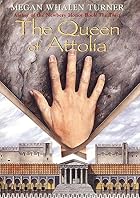
2. The Queen of Attolia by Megan Whalen Turner, finished January 4, 2013, 3 1/2 - 4 stars
 .
.
"The Queen of Attolia" is a very different book than its predecessor, "The Thief". The third person narrative quickly differentiates it as does the much darker tone of the story. The beginning of the novel really bothered me and for a time took away the likelihood that I would enjoy this second book in the series. The storytelling is quite different, but still excellent. The story is more complex with additional characters that sometimes are hard to keep in mind. It took me a while to understand that several years appear to have passed between the end of the first novel and the start of this one. The story played out unexpectedly for me. It again centers around Eugenides, the Queen's Thief, but there is much more political intrigue and war maneuvers. By the end I liked this almost as much as I did "The Thief".
On to something different this weekend, a mystery probably. I'll hopefully return to this series before too long.
 .
."The Queen of Attolia" is a very different book than its predecessor, "The Thief". The third person narrative quickly differentiates it as does the much darker tone of the story. The beginning of the novel really bothered me and for a time took away the likelihood that I would enjoy this second book in the series. The storytelling is quite different, but still excellent. The story is more complex with additional characters that sometimes are hard to keep in mind. It took me a while to understand that several years appear to have passed between the end of the first novel and the start of this one. The story played out unexpectedly for me. It again centers around Eugenides, the Queen's Thief, but there is much more political intrigue and war maneuvers. By the end I liked this almost as much as I did "The Thief".
On to something different this weekend, a mystery probably. I'll hopefully return to this series before too long.
11RBeffa
I've started on Peter Heller's The Dog Stars. Very different and interesting take on a post-apocalyptic tale after a flu and other plague have decimated man, beast, fish and fowl. This one wasn't planned. Grabbed it from the library along with some other interesting ones. Will soon read Colin Cotterill's The Merry Misogynist, one of my planned series reads. I really like Cotterill's Dr Siri books and TMM is one of only two I haven't read yet in the series, although a new one should be out this year.
12laytonwoman3rd
The first week or so of a new year is always manic in this group; but it gets easier to keep up as the year progresses. Good luck with your reading goals. Lots of 75'ers don't make "goal", but this is a great place to hang out and talk about what you're reading, numbers notwithstanding.
13alcottacre
Welcome to the group, Ron!
14RBeffa
Thanks for the welcome Stasia.
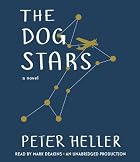
3. The Dog Stars by Peter Heller, finished January 7, 2013, 4 stars
 .
.
If Cormac McCarthy's "The Road" is literature I suppose "The Dog Stars" must be considered literature as well. Both stories are set in post-apocalypse settings with an unusual style of telling the tale. There the similarity ends. The Road is so bleak and inhabits such a dark place I could not identify with characters trying to live in a world such as was depicted. On the other hand in "The Dog Stars" we have a story with a better heart, and a character I COULD identify with. Hig, our protagonist has lost a lot - but there is still a remnant of the world to love and live in. There are bits of fine poetry scattered through the story as well. I don't consider this a "great" book but it was a story done very well in most places that engaged me and kept me reading at a good pace. When I wasn't reading it, I was constantly thinking about it. I began this book as an audiobook at the library which I read along with at the start. I found this very valuable to quickly accept and inhabit the slow unusual rhythm of the storytelling. The second half of the book is told in an increasingly "normal" manner, which I think parallels the change and direction of the story. Recommended
by the way, I was wondering about the time the story was set in because it seemed very 'Now". However, our main character flies a 1956 Cessna that I believe is stated several times as 80 years old. That would make the time of the story 2036.
3. The Dog Stars by Peter Heller, finished January 7, 2013, 4 stars
 .
.If Cormac McCarthy's "The Road" is literature I suppose "The Dog Stars" must be considered literature as well. Both stories are set in post-apocalypse settings with an unusual style of telling the tale. There the similarity ends. The Road is so bleak and inhabits such a dark place I could not identify with characters trying to live in a world such as was depicted. On the other hand in "The Dog Stars" we have a story with a better heart, and a character I COULD identify with. Hig, our protagonist has lost a lot - but there is still a remnant of the world to love and live in. There are bits of fine poetry scattered through the story as well. I don't consider this a "great" book but it was a story done very well in most places that engaged me and kept me reading at a good pace. When I wasn't reading it, I was constantly thinking about it. I began this book as an audiobook at the library which I read along with at the start. I found this very valuable to quickly accept and inhabit the slow unusual rhythm of the storytelling. The second half of the book is told in an increasingly "normal" manner, which I think parallels the change and direction of the story. Recommended
by the way, I was wondering about the time the story was set in because it seemed very 'Now". However, our main character flies a 1956 Cessna that I believe is stated several times as 80 years old. That would make the time of the story 2036.
16laytonwoman3rd
Interesting review, Ron. I don't like apocalyptic (or post-apocalyptic) fiction, so even though McCarthy is an author I often enjoy, I've avoided The Road. I'm not sure The Dog Stars is for me either, but it certainly sounds more approachable.
17RBeffa
There seems to be a surge of end of the world stories in books and film in recent years. The best of them use the event as a backdrop to explore human relationships and humanity and values. The world ends in two recent films, "Melancholia" and "seeking a friend for the end of the world" but the relationships of the characters and how they act, react and interact is what makes the films good stories and interesting to me. Similarly with books - good science fiction for me isn't about spaceships and lasers and wormholes or whatever - it is about examining characters and relationships. I love a good story in whatever fiction genre I happen to be reading, but the trappings have to be well done as well to make me buy it and enjoy it. That isn't a black and white thing for me however - some "sense of wonder" can present a terrific idea well enough to make up for weak characterization.
That's where "The Road" failed me. The father-son relationship in the novel is very well done, rather unique even. But the trappings of the story failed for me.
I had seen several mentions of "The Dog Stars" and when Karen mentioned that she thought it was good it was the extra push I needed and I gave it a try. There are a number of elements in the story that make it good. The story really is about a man trying to hold on to and refind his humanity. He doesn't want to live just to live. In his own way after all we learn he and others have gone through he remains a caring individual connected to the world. His relationships in the book are what it is all about. There is also some great imagery created of the region he lives in (Colorado) and of flying in the area in his small plane, and the love he and his dog have for each other.
The settings of these stories aren't for everyone. My wife tends to like them, but she wouldn't want to read war stories which also can be about relationships in horrible settings.
That's where "The Road" failed me. The father-son relationship in the novel is very well done, rather unique even. But the trappings of the story failed for me.
I had seen several mentions of "The Dog Stars" and when Karen mentioned that she thought it was good it was the extra push I needed and I gave it a try. There are a number of elements in the story that make it good. The story really is about a man trying to hold on to and refind his humanity. He doesn't want to live just to live. In his own way after all we learn he and others have gone through he remains a caring individual connected to the world. His relationships in the book are what it is all about. There is also some great imagery created of the region he lives in (Colorado) and of flying in the area in his small plane, and the love he and his dog have for each other.
The settings of these stories aren't for everyone. My wife tends to like them, but she wouldn't want to read war stories which also can be about relationships in horrible settings.
18RBeffa
4. Raptor Red by Robert T. Bakker, finished January 10, 2013, 2 1/2 stars
 .
.
I saw this book mentioned somewhere recently and it piqued my interest. Paleontologist Robert Bakker was noted in the 80's for his revolutionary theories on dinosaurs popularized in his non-fiction book The Dinosaur Heresies. He wrote a few children's books and one fiction novel for older (adult) readers and this is it. It is certainly something different. It is a story of one year in the life of a female Utahraptor; he names her "Raptor Red". This book essentially brings Bakker's theories to life.
Bakker includes a preface and epilogue to supplement his story. I'll quote Bakker from his introductory pages to the novel to best explain:
"We can learn from Utahraptor's story. Hers was a beautifully alert and sentient species. By looking through her eyes we can see the evolutionary forces that were changing the natural world during the Early Cretaceous. Our own human ancestors were being created by the invisible hand of natural selection, as were the beginnings of the other animals and plants that enjoy supremacy in today's world. Utahraptor's story is part of our story.
The story begins with an invasion, an ambush, and a death.
----------
The time is a hundred and twenty million years ago. On the flat, featureless floodplains that were central Utah, an evolutionary event is about to occur that will shock the ecological community of dinosaurs. The event is the arrival of a new superpredator."
Although intrigued, I wasn't excited about this book like I might have been if I was 10 or 11 years old. I did enjoy it but I felt like I was watching a documentary reenactment of some sort much of the time. I could even hear Rex Allen inside my head doing the narration. It kept my interest throughout and I did learn some things. I think a novel like this would be most enjoyed by middle school students. Throughout the novel I felt I was being taught to, but I give it credit for teaching in a way that mostly avoided dry details. Towards the latter part of the book the didactic tone lessens considerably and the story picked up and I liked it more and more. I can also understand a bit better the fun that being a dinosaur fossil hunter could bring.
This novel falls into the lower end of what I consider a good read.
 .
.I saw this book mentioned somewhere recently and it piqued my interest. Paleontologist Robert Bakker was noted in the 80's for his revolutionary theories on dinosaurs popularized in his non-fiction book The Dinosaur Heresies. He wrote a few children's books and one fiction novel for older (adult) readers and this is it. It is certainly something different. It is a story of one year in the life of a female Utahraptor; he names her "Raptor Red". This book essentially brings Bakker's theories to life.
Bakker includes a preface and epilogue to supplement his story. I'll quote Bakker from his introductory pages to the novel to best explain:
"We can learn from Utahraptor's story. Hers was a beautifully alert and sentient species. By looking through her eyes we can see the evolutionary forces that were changing the natural world during the Early Cretaceous. Our own human ancestors were being created by the invisible hand of natural selection, as were the beginnings of the other animals and plants that enjoy supremacy in today's world. Utahraptor's story is part of our story.
The story begins with an invasion, an ambush, and a death.
----------
The time is a hundred and twenty million years ago. On the flat, featureless floodplains that were central Utah, an evolutionary event is about to occur that will shock the ecological community of dinosaurs. The event is the arrival of a new superpredator."
Although intrigued, I wasn't excited about this book like I might have been if I was 10 or 11 years old. I did enjoy it but I felt like I was watching a documentary reenactment of some sort much of the time. I could even hear Rex Allen inside my head doing the narration. It kept my interest throughout and I did learn some things. I think a novel like this would be most enjoyed by middle school students. Throughout the novel I felt I was being taught to, but I give it credit for teaching in a way that mostly avoided dry details. Towards the latter part of the book the didactic tone lessens considerably and the story picked up and I liked it more and more. I can also understand a bit better the fun that being a dinosaur fossil hunter could bring.
This novel falls into the lower end of what I consider a good read.
19dk_phoenix
Nice to see another reader enjoying Turner's series! My husband read The Thief last year and really enjoyed it; he received the following two in the series for Christmas. Definitely one I'd like to get to this year myself!
20RBeffa
Faith, I'm planning on starting the third installment, The King of Attolia tonight or this weekend as my next book. I was going to wait a little while to finish the series but I wanted to see where the series is going.
21RBeffa
Back to my series reads ...
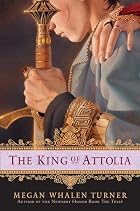
5. The King of Attolia by Megan Whalen Turner, finished January 15, 2013, 4 stars
 .
.
"The King of Attolia" is yet again a very different book than its predecessors, "The Thief" and "The Queen of Attolia". Building upon events from the prior books I believe that this one is my favorite of the series so far. There is one more book to go. The Thief of Eddis, Eugenides, now the King of Attolia, plays a dangerous game in this book. Attolia has long been rife with rival factions and some if not most would be happy to have the new King dead and gone. This story is told through the eyes of a young guard who adores his Queen, but initially hates and despises the King, but is very honest and devoted to his service and becomes fiercely loyal to Eugenides.
This was a well told tale that I enjoyed very much.
5. The King of Attolia by Megan Whalen Turner, finished January 15, 2013, 4 stars
 .
."The King of Attolia" is yet again a very different book than its predecessors, "The Thief" and "The Queen of Attolia". Building upon events from the prior books I believe that this one is my favorite of the series so far. There is one more book to go. The Thief of Eddis, Eugenides, now the King of Attolia, plays a dangerous game in this book. Attolia has long been rife with rival factions and some if not most would be happy to have the new King dead and gone. This story is told through the eyes of a young guard who adores his Queen, but initially hates and despises the King, but is very honest and devoted to his service and becomes fiercely loyal to Eugenides.
This was a well told tale that I enjoyed very much.
22RBeffa
6. Beautiful Ruins by Jess Walter, finished January 22, 2013, 4 - 4 1/2 stars
 .
.
This is more an impression than a review. Beautiful Ruins is not the sort of book I would normally read or have any interest in. I first saw it several months ago on the new releases shelf at my library. I was seduced by the cover, a lovely old postcard-like picture of Cinque Terre, Italy. I was further intrigued when I opened the book and read the opening pages which include this quote in the epigraph:
Dick Cavett's four great interviews with Richard Burton were done in 1980....Burton, fifty-four at the time, and already a beautiful ruin, was mesmerizing.
-"Talk Story" by Louis Menand, The New Yorker, November 22, 2010
So the intro sucked me in and now finally I picked it up again to read. I was charmed at the start as we meet Pasquale, a young Italian who is a big dreamer who becomes smitten. As we proceed we end up with a growing cast of characters, many of whom are dreamers too, most quite flawed. We move back and forth in time and place, from 1962 Italy where we start, to the present day in Hollywood, and bounce around even more. The appearance of Richard Burton as an actual character in the story was fun. There are characters and settings I really liked and some that I didn't so much. Overall though, I really liked this book. At the end I was wanting more, a very good sign. This book is a blend of a lot of things and it really touched me. It may be a bit too sentimental, but that is OK sometimes.
One of the things I liked about the book is that the story does not play out as expected.
I suspect this will be one of my favorite reads of 2013.
 .
.This is more an impression than a review. Beautiful Ruins is not the sort of book I would normally read or have any interest in. I first saw it several months ago on the new releases shelf at my library. I was seduced by the cover, a lovely old postcard-like picture of Cinque Terre, Italy. I was further intrigued when I opened the book and read the opening pages which include this quote in the epigraph:
Dick Cavett's four great interviews with Richard Burton were done in 1980....Burton, fifty-four at the time, and already a beautiful ruin, was mesmerizing.
-"Talk Story" by Louis Menand, The New Yorker, November 22, 2010
So the intro sucked me in and now finally I picked it up again to read. I was charmed at the start as we meet Pasquale, a young Italian who is a big dreamer who becomes smitten. As we proceed we end up with a growing cast of characters, many of whom are dreamers too, most quite flawed. We move back and forth in time and place, from 1962 Italy where we start, to the present day in Hollywood, and bounce around even more. The appearance of Richard Burton as an actual character in the story was fun. There are characters and settings I really liked and some that I didn't so much. Overall though, I really liked this book. At the end I was wanting more, a very good sign. This book is a blend of a lot of things and it really touched me. It may be a bit too sentimental, but that is OK sometimes.
One of the things I liked about the book is that the story does not play out as expected.
I suspect this will be one of my favorite reads of 2013.
23RBeffa
7. Far North by Marcel Theroux, finished January 25, 2013, 3 stars
 .
.
To talk about this book at all I have to be a little spoilery. Makepeace was a child born to Quakers who resettled in the far north, in Siberia. How this happened is told within the novel in a non-linear fashion. Thus, any details I mention spoil a little. Our story is a memoir from the future told primarily as a first-person narrative. I thought for a time that this might be an alternate history, but decided not. This is a sometimes beautifully written novel of a sad dystopian future set in the "Far North" and our 'heroine' is Makepeace. Sad might be an understatement. The story can't be described as a happy one, although post collapse stories rarely are. Every glint of something better gets trashed or twisted. Society has collapsed fairly recently, within the lifetime of our main character. What happened is slowly revealed, although why, who knows exactly, although global warming, overpopulation, pestilence, plagues and globalization seems to be part of it. The very few people who remain must try to live off the land as much as possible. I found it unusual that our lead character is a woman, which is not the norm for these types of stories. When the story begins Makepeace is the sole remaining resident of her town, a once thriving Quaker settlement of 30,000 residents in Siberia. She is not the dainty helpless sort, not a girly girl and never was.
The story is lacking in some details when told that were surprises when later revealed. The strength here is the main character, our narrator. There were quite a few secrets, twists and surprises in this book that some readers may or may not enjoy. There is also something of a stoic, flat affect present.
Overall this was probably worth the read but I hesitate to give it an endorsement. I liked a lot of the writing especially the descriptions of the landscape and habitat of Siberia, and some of the thoughtful contemplations that arise from time to time, but to my mind there are some problems with this story. The story never really got going for me, continuously losing momentum. I felt like I was doing a jigsaw puzzle with some missing pieces. On the other hand, some things were right because I really cared for the main character - the story itself is what failed to deliver on it's promise.
----------------
Going to work on The New Space Opera anthology as an "in between" book a bit before tackling another novel.
 .
.To talk about this book at all I have to be a little spoilery. Makepeace was a child born to Quakers who resettled in the far north, in Siberia. How this happened is told within the novel in a non-linear fashion. Thus, any details I mention spoil a little. Our story is a memoir from the future told primarily as a first-person narrative. I thought for a time that this might be an alternate history, but decided not. This is a sometimes beautifully written novel of a sad dystopian future set in the "Far North" and our 'heroine' is Makepeace. Sad might be an understatement. The story can't be described as a happy one, although post collapse stories rarely are. Every glint of something better gets trashed or twisted. Society has collapsed fairly recently, within the lifetime of our main character. What happened is slowly revealed, although why, who knows exactly, although global warming, overpopulation, pestilence, plagues and globalization seems to be part of it. The very few people who remain must try to live off the land as much as possible. I found it unusual that our lead character is a woman, which is not the norm for these types of stories. When the story begins Makepeace is the sole remaining resident of her town, a once thriving Quaker settlement of 30,000 residents in Siberia. She is not the dainty helpless sort, not a girly girl and never was.
The story is lacking in some details when told that were surprises when later revealed. The strength here is the main character, our narrator. There were quite a few secrets, twists and surprises in this book that some readers may or may not enjoy. There is also something of a stoic, flat affect present.
Overall this was probably worth the read but I hesitate to give it an endorsement. I liked a lot of the writing especially the descriptions of the landscape and habitat of Siberia, and some of the thoughtful contemplations that arise from time to time, but to my mind there are some problems with this story. The story never really got going for me, continuously losing momentum. I felt like I was doing a jigsaw puzzle with some missing pieces. On the other hand, some things were right because I really cared for the main character - the story itself is what failed to deliver on it's promise.
----------------
Going to work on The New Space Opera anthology as an "in between" book a bit before tackling another novel.
24RBeffa
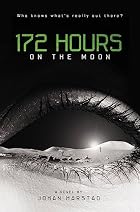
8. 172 Hours on the Moon by Johan Harstad, finished January 28, 2013, 3+ stars
 .
.
This is a translated novel, in english from the original norwegian. Horror is a genre I very rarely read, and usually only when done by an author I already like. I happened upon this book by chance when I was looking for something else and it looked interesting enough to give it a try. I didn't realize it was a horror story and it reads like a rather young adult science fiction adventure novel about a new expedition to the moon for the first half, although we are telegraphed some clues that there is a big danger lurking on the moon. That isn't the problem though. The horror part is actually pretty good. Unfortunately it takes half the book before much of anything happens. The story idea is also a little (a lot?) lame - three teenagers get picked in a lottery to go to the moon nearly 50 years after the last moon mission. In theory this is supposed to inspire a new generation of space age supporters and dreamers. However, knowing what the big whigs know, it is an astoundingly stupid idea. At a minimum I'd say they should be deploying some starship troopers and who knows what else.
The payoff for the story is pretty good, tho it is a bit of a slog getting there. Some slightly creepy stuff is thrown in along the way, but it gets quite scary for the final third of the novel. To the credit of the author the three chosen teenagers came across very much like teenagers, but each fairly unique, although I did mix the girls up a couple times.
All in all the second half of the book redeems some of the shortcomings and I found myself enjoying this well enough.
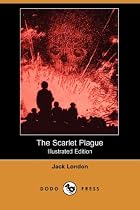
9. The Scarlet Plague an illustrated edition by Jack London, with Gordon Grant (Illustrator), finished January 28, 2013, 2 1/2 stars
 .
.
This short novel (or novella), originally published 100 years ago, is set in San Francisco 60 years after the Scarlet Death came in 2013. It opens with a very old man and his grandson, a young boy, walking along an old monorail track, now an animal trail, near the sand dunes and Cliff House on the beach. I suspect I may have read this when I was a young teen, because there was a vague familiarity to the story and illustrations.
The old man tells his grandchildren the story of how the Scarlet Death came and how rapidly civilization collapsed. The story was interesting, although quite dated in some ways. There was an extra appeal to me as the story covers many places and towns in the Bay Area where I was born and live. As London depicts the days before and during the plague it sounds like 1912 rather than 2012, although in other ways his observations of the world and it's problems are rather timeless. This is not a book to get excited about, but holds a place as one of the earliest pieces of post-apocalyptic fiction.
 .
.This is a translated novel, in english from the original norwegian. Horror is a genre I very rarely read, and usually only when done by an author I already like. I happened upon this book by chance when I was looking for something else and it looked interesting enough to give it a try. I didn't realize it was a horror story and it reads like a rather young adult science fiction adventure novel about a new expedition to the moon for the first half, although we are telegraphed some clues that there is a big danger lurking on the moon. That isn't the problem though. The horror part is actually pretty good. Unfortunately it takes half the book before much of anything happens. The story idea is also a little (a lot?) lame - three teenagers get picked in a lottery to go to the moon nearly 50 years after the last moon mission. In theory this is supposed to inspire a new generation of space age supporters and dreamers. However, knowing what the big whigs know, it is an astoundingly stupid idea. At a minimum I'd say they should be deploying some starship troopers and who knows what else.
The payoff for the story is pretty good, tho it is a bit of a slog getting there. Some slightly creepy stuff is thrown in along the way, but it gets quite scary for the final third of the novel. To the credit of the author the three chosen teenagers came across very much like teenagers, but each fairly unique, although I did mix the girls up a couple times.
All in all the second half of the book redeems some of the shortcomings and I found myself enjoying this well enough.
9. The Scarlet Plague an illustrated edition by Jack London, with Gordon Grant (Illustrator), finished January 28, 2013, 2 1/2 stars
 .
.This short novel (or novella), originally published 100 years ago, is set in San Francisco 60 years after the Scarlet Death came in 2013. It opens with a very old man and his grandson, a young boy, walking along an old monorail track, now an animal trail, near the sand dunes and Cliff House on the beach. I suspect I may have read this when I was a young teen, because there was a vague familiarity to the story and illustrations.
The old man tells his grandchildren the story of how the Scarlet Death came and how rapidly civilization collapsed. The story was interesting, although quite dated in some ways. There was an extra appeal to me as the story covers many places and towns in the Bay Area where I was born and live. As London depicts the days before and during the plague it sounds like 1912 rather than 2012, although in other ways his observations of the world and it's problems are rather timeless. This is not a book to get excited about, but holds a place as one of the earliest pieces of post-apocalyptic fiction.
25RBeffa
The following book has been sitting on my TBR soon shelf above my computer for too long. I've been planning to read Min's Pearl of China since it came out but felt I should read an earlier work first.
I'm also thinking I will scale back my planned assault on series reads this year. I'm still going to do some, but there are just so many other things I want to read as well.
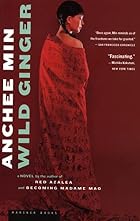
10. Wild Ginger by Anchee Min, finished February 4, 2013, 2 1/2 stars
 .
.
I really liked the epigraph to this novel: "During a certain period of our lives, we possess youth. The rest we spend living in the memories of it."
The story itself was a look at young people in Communist China dealing with Chairman Mao's cultural revolution. This is a sad book. The power of a totalitarian regime to indoctrinate their youth is frightening. Considering that the author lived through this time in China there is probably a fair amount of truth to this. The Red Menace from China and Russia was the boogeyman when I was young. It is no wonder that the American government was so virulently anti-communist. That is my takeaway from this book. Teenage angst and the need to conform and rebel in youth is hard enough without brainwashing to this extreme.
Despite being a short novel the story unfortunately seemed to lose its drive and became repetitive. I feel it also lost energy towards the end and the climax wasn't handled well in my opinion.
I'm also thinking I will scale back my planned assault on series reads this year. I'm still going to do some, but there are just so many other things I want to read as well.
10. Wild Ginger by Anchee Min, finished February 4, 2013, 2 1/2 stars
 .
.I really liked the epigraph to this novel: "During a certain period of our lives, we possess youth. The rest we spend living in the memories of it."
The story itself was a look at young people in Communist China dealing with Chairman Mao's cultural revolution. This is a sad book. The power of a totalitarian regime to indoctrinate their youth is frightening. Considering that the author lived through this time in China there is probably a fair amount of truth to this. The Red Menace from China and Russia was the boogeyman when I was young. It is no wonder that the American government was so virulently anti-communist. That is my takeaway from this book. Teenage angst and the need to conform and rebel in youth is hard enough without brainwashing to this extreme.
Despite being a short novel the story unfortunately seemed to lose its drive and became repetitive. I feel it also lost energy towards the end and the climax wasn't handled well in my opinion.
26RBeffa
xx. The Digging Leviathan by James B Blaylock, did not finish
 .
.
This was the 2nd or 3rd time I tried to read this. It LOOKS like a fun and inventive tale, although I found it just about impossible to differentiate the cast of characters thrown at us in the opening pages. That was a minus for me in the enjoyment of this outlandish tale. I think there is some wild zany stuff in here if you can persevere, but I could not.
I just wasn't getting into it so I decided to bail. This went into the giveaway bag and is deleted from my library.
I'm in the mood for some older science fiction stuff so I'm going to try some others.
 .
.This was the 2nd or 3rd time I tried to read this. It LOOKS like a fun and inventive tale, although I found it just about impossible to differentiate the cast of characters thrown at us in the opening pages. That was a minus for me in the enjoyment of this outlandish tale. I think there is some wild zany stuff in here if you can persevere, but I could not.
I just wasn't getting into it so I decided to bail. This went into the giveaway bag and is deleted from my library.
I'm in the mood for some older science fiction stuff so I'm going to try some others.
27RBeffa
11. A Shocking Thing edited by Damon Knight, finished February 12, 2013, 3 1/2+ stars
 .
.
I found this old anthology from 1974 a couple years ago and it really caught my eye. Unfortunately I stashed it away in a box and forgot about it. Damon Knight put together a very wide range of tales here from around the world. Unfortunately he doesn't provide either a forward to this collection or any information about the tales within the book. The info we do get is on the back cover: "The stories in this book are all different. Some are funny, some touching. Some are about the end of the world, some about polite drawing-room conversations. Some astound you with a surprise ending, some build inexorably to a horrible climax." The description goes on from there, but it was more than enough to whet my appetite. As it turned out, the stories didn't really need more of an introduction than the cover blurb.
The 17 included short stories are:
•1 • Man from the South • (1948) • shortstory by Roald Dahl
•13 • The Snail-Watcher • (1964) • shortstory by Patricia Highsmith
•21 • Bianca's Hands • (1947) • shortstory by Theodore Sturgeon
•31 • Poor Little Warrior! • (1958) • shortstory by Brian W. Aldiss
•39 • The Hounds • (1974) • novelette by Kate Wilhelm
•65 • The Clone • (1959) • shortstory by Theodore L. Thomas
•79 • The Touch of Nutmeg Makes It • (1941) • shortstory by John Collier
•89 • Casey Agonistes • (1958) • shortstory by Richard McKenna
•101 • The Abyss • (1943) • shortstory by Leonid Andreyev
•117 • A Case History • (1973) • shortstory by John Anthony West
•121 • Fondly Fahrenheit • (1954) • novelette by Alfred Bester
•143 • Lukundoo • (1907) • shortstory by Edward Lucas White
•159 • The Cabbage Patch • (1952) • shortstory by Theodore R. Cogswell
•165 • Oil of Dog • (1890) • shortstory by Ambrose Bierce
•171 • The Time of the Big Sleep • (1974) • novelette by Jean-Pierre Andrevon
•195 • The Right Man for the Right Job • (1962) • shortstory by J. C. Thompson
•207 • The Year of the Jackpot • (1952) • novelette by Robert A. Heinlein
This horror collection really lived up to my expectations. These are very well crafted short stories, two more than a century old now. Most of these have appeared in many collections and anthologies over the years. The first three stories, especially the first story by Dahl, certainly started this off with a high creep factor. Yikes, just five pages in I was creeped out, had the shivers and heebee jeebees. A few of these stories gave my goosebumps goosebumps. There were a couple stories that I didn't think were nearly as good as the others (such as the piece by Aldiss) but overall this is one creepy collection. I believe I have read two or three of the stories many years before, the ones by Bester, Sturgeon and Heinlein. The Sturgeon story is rather memorable in it's creepiness.
I need to make special mention of the Ambrose Bierce story "Oil of Dog". It can be read online here: http://www.ambrosebierce.org/dog.htm . The Bierce website states it was first published as "The Oil of a Dog: A Tragic Episode in the Life of an Eminent Educator," in the Oakland Tribune, October 11, 1890. Obviously I am unfamiliar with what newspapers were like in 1890, but it is hard to believe that this story would appear in a newspaper. It is amazingly creepy all the moreso because it is told in such a matter of fact fashion. I could hardly believe what I was reading.
 .
.I found this old anthology from 1974 a couple years ago and it really caught my eye. Unfortunately I stashed it away in a box and forgot about it. Damon Knight put together a very wide range of tales here from around the world. Unfortunately he doesn't provide either a forward to this collection or any information about the tales within the book. The info we do get is on the back cover: "The stories in this book are all different. Some are funny, some touching. Some are about the end of the world, some about polite drawing-room conversations. Some astound you with a surprise ending, some build inexorably to a horrible climax." The description goes on from there, but it was more than enough to whet my appetite. As it turned out, the stories didn't really need more of an introduction than the cover blurb.
The 17 included short stories are:
•1 • Man from the South • (1948) • shortstory by Roald Dahl
•13 • The Snail-Watcher • (1964) • shortstory by Patricia Highsmith
•21 • Bianca's Hands • (1947) • shortstory by Theodore Sturgeon
•31 • Poor Little Warrior! • (1958) • shortstory by Brian W. Aldiss
•39 • The Hounds • (1974) • novelette by Kate Wilhelm
•65 • The Clone • (1959) • shortstory by Theodore L. Thomas
•79 • The Touch of Nutmeg Makes It • (1941) • shortstory by John Collier
•89 • Casey Agonistes • (1958) • shortstory by Richard McKenna
•101 • The Abyss • (1943) • shortstory by Leonid Andreyev
•117 • A Case History • (1973) • shortstory by John Anthony West
•121 • Fondly Fahrenheit • (1954) • novelette by Alfred Bester
•143 • Lukundoo • (1907) • shortstory by Edward Lucas White
•159 • The Cabbage Patch • (1952) • shortstory by Theodore R. Cogswell
•165 • Oil of Dog • (1890) • shortstory by Ambrose Bierce
•171 • The Time of the Big Sleep • (1974) • novelette by Jean-Pierre Andrevon
•195 • The Right Man for the Right Job • (1962) • shortstory by J. C. Thompson
•207 • The Year of the Jackpot • (1952) • novelette by Robert A. Heinlein
This horror collection really lived up to my expectations. These are very well crafted short stories, two more than a century old now. Most of these have appeared in many collections and anthologies over the years. The first three stories, especially the first story by Dahl, certainly started this off with a high creep factor. Yikes, just five pages in I was creeped out, had the shivers and heebee jeebees. A few of these stories gave my goosebumps goosebumps. There were a couple stories that I didn't think were nearly as good as the others (such as the piece by Aldiss) but overall this is one creepy collection. I believe I have read two or three of the stories many years before, the ones by Bester, Sturgeon and Heinlein. The Sturgeon story is rather memorable in it's creepiness.
I need to make special mention of the Ambrose Bierce story "Oil of Dog". It can be read online here: http://www.ambrosebierce.org/dog.htm . The Bierce website states it was first published as "The Oil of a Dog: A Tragic Episode in the Life of an Eminent Educator," in the Oakland Tribune, October 11, 1890. Obviously I am unfamiliar with what newspapers were like in 1890, but it is hard to believe that this story would appear in a newspaper. It is amazingly creepy all the moreso because it is told in such a matter of fact fashion. I could hardly believe what I was reading.
28RBeffa
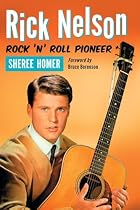
12. Rick Nelson Rock 'N' Roll Pioneer by Sheree Homer, finished February 14, 2013, 3 stars
 .
.
I don't think Sheree Homer's new biography on Rick Nelson can be discussed by me without consideration of a prior book. I read Joel Selvin's biography of Rick Nelson, "Idol For a Generation," a number of years ago. It was an adequate, but not great book that I felt suffered from being overly critical. I was not looking for a love fest when I read Selvin's book, but I also didn't want something that seemed so mean spirited. I thought that Selvin was trying to tear Rick Nelson (and his family) down in that book. What it lacked was balance. However, I had read Selvin's concert reviews in the San Francisco Chronicle many years ago and my sense was that his style was to be overly critical of artists. I would not recommend reading Selvin's biography of Rick Nelson without a recognition of this.
Sheree Homer's book on Nelson takes the opposite approach and is much more respectful of the artist and his music. Perhaps too much so. The focus here is on the music and the bands, less so on the private lives of Rick and his family. It is a well researched book but there are things that bother me. The majority of the interviews that provide new tidbits of information were done in 2010, which is 25-40 years or more after the actual events. Additionally, the author notes in her acknowledgements that she was introduced to Rick's country rock, having previously liked his rockabilly material.
I enjoyed reading this book but felt it suffered at times from being a bit too matter of fact in presenting information, and laid in the quotes from people so thickly that the presentation of information and the quotes from people ran together too closely. My favorite chapter was probably the one that discussed Rick and his music as a country rock pioneer. This time was hugely important in his maturity as an artist (there's MY bias entering the discussion). Rick tuned in early to the new genre developing out of the Byrds, Buffalo Springfield, Poco, Bob Dylan, Linda Ronstadt, John Stewart and others. I appreciated the information we got here but wished we had more on this, as well as the later excellent material such as the Epic album "Intakes" from 1977 which at the time was some of the best music he had done. "Intakes" only gets a very brief mention.
There is a lot of information in Selvin's book that isn't in this new biography. Ms. Homer, with the benefit of time and access to Rick's family updates us on the activities of the family and in preserving the Nelson legacy. There is also new material in Homer's book and some of it seems rather trivial with the machinations of people around him. Between the two books I think we get a picture of who Nelson was as both a person and an artist, and the importance of his music. There are some good photographs included within the book. I'm glad I read this, but I wish there was much more. I'm going to throw out a pure opinion here, and that is that I think the book suffers from some perspective on the times since the author did not live through them. I was also surprised to find no mention of Kristin Nelson Tinker's completely unconventional but excellent autobiography from 1997 "Out of My Mind". I suppose it wasn't necessary but that book is a treasure.
This book is a fairly quick read. It runs just shy of 150 pages of reading including photos, with nearly 50 pages additional of reference material on television appearances, discography, notes and indexes.
I received this book as part of the LibraryThing early reviewers program.
 .
.I don't think Sheree Homer's new biography on Rick Nelson can be discussed by me without consideration of a prior book. I read Joel Selvin's biography of Rick Nelson, "Idol For a Generation," a number of years ago. It was an adequate, but not great book that I felt suffered from being overly critical. I was not looking for a love fest when I read Selvin's book, but I also didn't want something that seemed so mean spirited. I thought that Selvin was trying to tear Rick Nelson (and his family) down in that book. What it lacked was balance. However, I had read Selvin's concert reviews in the San Francisco Chronicle many years ago and my sense was that his style was to be overly critical of artists. I would not recommend reading Selvin's biography of Rick Nelson without a recognition of this.
Sheree Homer's book on Nelson takes the opposite approach and is much more respectful of the artist and his music. Perhaps too much so. The focus here is on the music and the bands, less so on the private lives of Rick and his family. It is a well researched book but there are things that bother me. The majority of the interviews that provide new tidbits of information were done in 2010, which is 25-40 years or more after the actual events. Additionally, the author notes in her acknowledgements that she was introduced to Rick's country rock, having previously liked his rockabilly material.
I enjoyed reading this book but felt it suffered at times from being a bit too matter of fact in presenting information, and laid in the quotes from people so thickly that the presentation of information and the quotes from people ran together too closely. My favorite chapter was probably the one that discussed Rick and his music as a country rock pioneer. This time was hugely important in his maturity as an artist (there's MY bias entering the discussion). Rick tuned in early to the new genre developing out of the Byrds, Buffalo Springfield, Poco, Bob Dylan, Linda Ronstadt, John Stewart and others. I appreciated the information we got here but wished we had more on this, as well as the later excellent material such as the Epic album "Intakes" from 1977 which at the time was some of the best music he had done. "Intakes" only gets a very brief mention.
There is a lot of information in Selvin's book that isn't in this new biography. Ms. Homer, with the benefit of time and access to Rick's family updates us on the activities of the family and in preserving the Nelson legacy. There is also new material in Homer's book and some of it seems rather trivial with the machinations of people around him. Between the two books I think we get a picture of who Nelson was as both a person and an artist, and the importance of his music. There are some good photographs included within the book. I'm glad I read this, but I wish there was much more. I'm going to throw out a pure opinion here, and that is that I think the book suffers from some perspective on the times since the author did not live through them. I was also surprised to find no mention of Kristin Nelson Tinker's completely unconventional but excellent autobiography from 1997 "Out of My Mind". I suppose it wasn't necessary but that book is a treasure.
This book is a fairly quick read. It runs just shy of 150 pages of reading including photos, with nearly 50 pages additional of reference material on television appearances, discography, notes and indexes.
I received this book as part of the LibraryThing early reviewers program.
29laytonwoman3rd
Good review, Ron. My favorite chapter was probably the one that discussed Rick and his music as a country rock pioneer. This time was hugely important in his maturity as an artist (there's MY bias entering the discussion). Rick tuned in early to the new genre developing out of the Byrds, Buffalo Springfield, Poco, Bob Dylan, Linda Ronstadt, John Stewart and others. I'd like to read that chapter, in conjunction with the biography of Gram Parsons I'm reading now, Twenty Thousand Roads.
30RBeffa
The information is pretty Rick Nelson centered. Gram Parsons and most contemporaries aren't really discussed much in the book and when they are it is primarily if Rick intersected with them somehow. The book really needed a broader perspective in some (many?) places. I found myself repeatedly checking Selvin's book, which as a whole is the much better book despite being something of a hit piece.
The book seems to me to really be for people who are fairly big fans of Rick Nelson and want to know more. I really wish this book could have stepped up to the next level. I liked the book but wish I liked it a lot more.
I get a sense that despite being a very talented musician and artist, Nelson was his own worst enemy.
For me personally Rick was never a teen idol. Besides being male I was just a little too young when he was creating his early hits. I liked watching him on Ozzie and Harriet. I liked his music as well. Things like Fools Rush In are pretty timeless. In the late 60's though with the Stone Canyon band was where I got really interested in him. People seem to equate the lack of huge record sales as failure. I don't. Rick was a great Dylan interpreter and started writing some interesting stuff himself.
The book seems to me to really be for people who are fairly big fans of Rick Nelson and want to know more. I really wish this book could have stepped up to the next level. I liked the book but wish I liked it a lot more.
I get a sense that despite being a very talented musician and artist, Nelson was his own worst enemy.
For me personally Rick was never a teen idol. Besides being male I was just a little too young when he was creating his early hits. I liked watching him on Ozzie and Harriet. I liked his music as well. Things like Fools Rush In are pretty timeless. In the late 60's though with the Stone Canyon band was where I got really interested in him. People seem to equate the lack of huge record sales as failure. I don't. Rick was a great Dylan interpreter and started writing some interesting stuff himself.
 .
.32laytonwoman3rd
That's not THE room number, is it??
33RBeffa
It is. My son stayed there a few years ago and brought home the fob. Apparently you can buy it as a "souvenir" at the motel.
34laytonwoman3rd
Ahh....I might have guessed.
35RBeffa
13. Galore by Michael Crummey, finished February 23, 2013, 3 stars
 .
.
Books like this are a minor feast for one's imagination. This is an almost stunning multi-generational eccentric novel set in a fishing village on the Newfoundland coast where the real world and some other intersect. I was slowly sucked into this - at first I thought I had found a fairytale mashup of "The Shipping News" meets "Jonah and the Whale" with a dash of "Haven". The story shifts through time and it takes quite a while before we learn some of the back stories of the characters and some of what we surmised is not necessarily what was.
On the downside the author uses an unconventional writing style that I never quite got used to. It slowed down my reading and it hindered my enjoyment. I was constantly re-reading passages. It gave me a fair bit of confusion particularly in the beginning with a large cast of characters that took quite a while to get a handle on. In a book this dependent on conversation I don't like the lack of conventional style.
Still, I persevered and the book took some very unexpected turns as the details were fleshed out. This is surely an unusual set of stories with very unusual characters. For me this novel never made the leap from "intriguing" to "awesome". There are also a lot of people leading unhappy lives here.
I couldn't make up my mind on rating this, veering from 4 stars to 3 stars to 4 and back again. I leave it with 3, which seems a little unfair. But so is the book.
eta: There is a family tree at the front of the book that I frequently referred to. It doesn't cover many of the characters however.
 .
.Books like this are a minor feast for one's imagination. This is an almost stunning multi-generational eccentric novel set in a fishing village on the Newfoundland coast where the real world and some other intersect. I was slowly sucked into this - at first I thought I had found a fairytale mashup of "The Shipping News" meets "Jonah and the Whale" with a dash of "Haven". The story shifts through time and it takes quite a while before we learn some of the back stories of the characters and some of what we surmised is not necessarily what was.
On the downside the author uses an unconventional writing style that I never quite got used to. It slowed down my reading and it hindered my enjoyment. I was constantly re-reading passages. It gave me a fair bit of confusion particularly in the beginning with a large cast of characters that took quite a while to get a handle on. In a book this dependent on conversation I don't like the lack of conventional style.
Still, I persevered and the book took some very unexpected turns as the details were fleshed out. This is surely an unusual set of stories with very unusual characters. For me this novel never made the leap from "intriguing" to "awesome". There are also a lot of people leading unhappy lives here.
I couldn't make up my mind on rating this, veering from 4 stars to 3 stars to 4 and back again. I leave it with 3, which seems a little unfair. But so is the book.
eta: There is a family tree at the front of the book that I frequently referred to. It doesn't cover many of the characters however.
36RBeffa
14. Asimov's Science Fiction, July 2006 (366) edited by Sheila Williams, finished March 3, 2013, 3 1/2+ stars
 .
.
I'm trying to read some of the stack of science fiction magazines and anthologies I have accumulated. This issue is one I had partly read some years ago and remembered liking.
The July 2006 issue of Asimov's Science Fiction contains 2 novelettes and 6 short stories as well as several columns and book reviews. Overall I thought this was a pretty good issue, with a mix of reasonably good stories. One story really kicks this into the above average category.
The monthly editorial by Sheila Williams mostly discusses her own annual celebration of a "moon day" each July. The cover painting for this issue was done by Alan Bean, who was on the second lunar landing mission (Apollo 12) and was the fourth man to walk on the moon. The painting depicts Charlie Duke, the lunar module pilot of Apollo 16. Here is Alan himself on the moon:

Paul Di Filippo's book review column also seems better than his usual, and focuses on recent releases (for 2006) of books by British authors.
The fiction stories, in order, are:
Nano Comes to Clifford Falls • shortstory by Nancy Kress
You Will Go to the Moon • shortstory by William Preston
The World and Alice • novelette by L. Timmel Duchamp
Bitterseed • shortstory by Ted Kosmatka
Impossible Dreams • shortstory by Tim Pratt
Snail Stones • shortstory by Paul Melko
Fireflies • shortstory by Kathe Koja
The Djinn's Wife • novelette by Ian McDonald
The first story, Nancy Kress's "Nano Comes to Clifford Falls", is one of those be careful what you wish for tales. There's a moral to this somewhat heavy handed story. Machines can make everything for you for free, so why work? The economy and society collapses of course. The story was enjoyable. It also was selected for David Hartwell's Year's Best SF 12 anthology
"You will go to the moon" by William Preston is a rather sad bittersweet tale of a man dealing with his parents ageing and having moved first away from the town he grew up in, and then to a retirement colony on the moon. Going to the moon serves also as a sort of metaphor for the distance and separation that occurs with families. That part and trying to figure his own place in a changing world makes this good but not outstanding.
Duchamp's "The World and Alice" is an odd and sad story. I didn't really like it at first but gradually warmed to it, though I never understood it, and can't really say I liked it. We meet Alice as a young girl who was born very premature (at the very border of survivability) and sees herself as someone who God didn't intend to be in the world, or who is unaware of her because she wasn't supposed to be there. She feels ungrounded to the world and seeks anchors. There is this whole other time warp thing going on where Alice meets herself at points in her life which generates mental gnashing or something, but the "other Alice" doesn't really seem to be able to help herself. Then the rather surprise ending comes. Interesting reading.
"Bitterseed" by Ted Kosmatka is a survival/journey tale on another planet, tied to a Cain and Abel sort of story, in this case Eli and Marc. I found the journey really interesting and liked the story.
"Impossible Dreams" by Tim Pratt is a very cute, romantic and enjoyable story that intentionally reads like an episode of the Twilight Zone, only this one has a happy ending. A movie geek happens upon a new video store in his neighborhood, one that appears and disappears each evening for a short period of time, one he decides has slid over from an alternate reality. It has lost masterpieces, movies that were never made, and so on. He falls for the video store clerk who is a movie buff herself. Nice little tale.
Paul Melko's boy adventure story "Snail Stones" was also nice. Two boys on another world rescue a native inhabitant that has been kept in captivity by a rather nasty fellow.
Kathe Koja's "Fireflies" is a very short sad piece about a scientist who is apparently dying and an old friend and lover there to comfort her. I didn't really care for this, but some people might.
The highlight of this issue is "The Djinn's Wife" by Ian McDonald. This story was selected for a couple of the best of the year anthologies. It also later appeared in MCDonald's Cyberabad collection of stories. This was a very original story about an Indian dancer who marries an AI. This is told in an almost fairytale magical fashion like an arabian nights story. I really liked it. Unsurprising to me it won the 2007 Hugo for best novelette against serious competition (Paolo Bacigalupi's "Yellow Card Man", which lost, was a little better I think).
 .
.I'm trying to read some of the stack of science fiction magazines and anthologies I have accumulated. This issue is one I had partly read some years ago and remembered liking.
The July 2006 issue of Asimov's Science Fiction contains 2 novelettes and 6 short stories as well as several columns and book reviews. Overall I thought this was a pretty good issue, with a mix of reasonably good stories. One story really kicks this into the above average category.
The monthly editorial by Sheila Williams mostly discusses her own annual celebration of a "moon day" each July. The cover painting for this issue was done by Alan Bean, who was on the second lunar landing mission (Apollo 12) and was the fourth man to walk on the moon. The painting depicts Charlie Duke, the lunar module pilot of Apollo 16. Here is Alan himself on the moon:

Paul Di Filippo's book review column also seems better than his usual, and focuses on recent releases (for 2006) of books by British authors.
The fiction stories, in order, are:
Nano Comes to Clifford Falls • shortstory by Nancy Kress
You Will Go to the Moon • shortstory by William Preston
The World and Alice • novelette by L. Timmel Duchamp
Bitterseed • shortstory by Ted Kosmatka
Impossible Dreams • shortstory by Tim Pratt
Snail Stones • shortstory by Paul Melko
Fireflies • shortstory by Kathe Koja
The Djinn's Wife • novelette by Ian McDonald
The first story, Nancy Kress's "Nano Comes to Clifford Falls", is one of those be careful what you wish for tales. There's a moral to this somewhat heavy handed story. Machines can make everything for you for free, so why work? The economy and society collapses of course. The story was enjoyable. It also was selected for David Hartwell's Year's Best SF 12 anthology
"You will go to the moon" by William Preston is a rather sad bittersweet tale of a man dealing with his parents ageing and having moved first away from the town he grew up in, and then to a retirement colony on the moon. Going to the moon serves also as a sort of metaphor for the distance and separation that occurs with families. That part and trying to figure his own place in a changing world makes this good but not outstanding.
Duchamp's "The World and Alice" is an odd and sad story. I didn't really like it at first but gradually warmed to it, though I never understood it, and can't really say I liked it. We meet Alice as a young girl who was born very premature (at the very border of survivability) and sees herself as someone who God didn't intend to be in the world, or who is unaware of her because she wasn't supposed to be there. She feels ungrounded to the world and seeks anchors. There is this whole other time warp thing going on where Alice meets herself at points in her life which generates mental gnashing or something, but the "other Alice" doesn't really seem to be able to help herself. Then the rather surprise ending comes. Interesting reading.
"Bitterseed" by Ted Kosmatka is a survival/journey tale on another planet, tied to a Cain and Abel sort of story, in this case Eli and Marc. I found the journey really interesting and liked the story.
"Impossible Dreams" by Tim Pratt is a very cute, romantic and enjoyable story that intentionally reads like an episode of the Twilight Zone, only this one has a happy ending. A movie geek happens upon a new video store in his neighborhood, one that appears and disappears each evening for a short period of time, one he decides has slid over from an alternate reality. It has lost masterpieces, movies that were never made, and so on. He falls for the video store clerk who is a movie buff herself. Nice little tale.
Paul Melko's boy adventure story "Snail Stones" was also nice. Two boys on another world rescue a native inhabitant that has been kept in captivity by a rather nasty fellow.
Kathe Koja's "Fireflies" is a very short sad piece about a scientist who is apparently dying and an old friend and lover there to comfort her. I didn't really care for this, but some people might.
The highlight of this issue is "The Djinn's Wife" by Ian McDonald. This story was selected for a couple of the best of the year anthologies. It also later appeared in MCDonald's Cyberabad collection of stories. This was a very original story about an Indian dancer who marries an AI. This is told in an almost fairytale magical fashion like an arabian nights story. I really liked it. Unsurprising to me it won the 2007 Hugo for best novelette against serious competition (Paolo Bacigalupi's "Yellow Card Man", which lost, was a little better I think).
37RBeffa
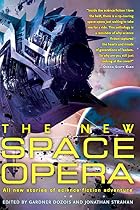
15. The New Space Opera various authors, edited by Gardner Dozois and Jonathan Strahan, finished March 11, 2013, 2 1/2 - 3 stars
 .
.
This is a collection of stories that I expected to be more or less excellent and brilliant, but I ended up pretty disappointed. I was surprised by having several stories that I simply didn't like at all or thought were just too strange. Some were actually boring. I won't try to review or critique each of the 18 stories, although I'll comment on most. Every one of these stories is by an established and well regarded author. A number of the stories in the collection I felt were rather weak, and some also did not give me any of that "space opera" feeling that this collection is supposedly about. These stories are all over the map for style and quality and I certainly would not use this collection as an introduction to the genre of science fiction. A list of all the stories and authors (from ISFD) follows my comments. There are some excellent stories in this collection but there is way too much yuck included here with them.
Another disappointment with this anthology lies with the introductions to the stories. To put it simply, most are lousy and not much more than a long recitation of all the various stories and novels written by the author. It would be nice to get a bit more or in most cases ANY information from the editors about why the story was chosen, what it represents, etc. Really lacking here for most stories.
The opening story, Gwyneth Jones' "Saving Tiamaat", was nearly incomprehensible and really put me off and I didn't even finish it. It seems to me to be a poor choice as an editor to start off with such a challenging difficult to comprehend story. I fear it also affected my enjoyment of the ultra far future story that followed by Ian McDonald, which I disliked also as being entirely too strange. I was about ready to bail on this collection at this point. Robert Reed's far future "Hatch" was better, and a little intriguing. I've read a lot of Reed's short fiction over the years and find it to be more hit than miss, but I didn't really like this either. The fourth story, Paul McAuley's "Winning Peace", a post space war prisoner escape yarn was the first story I actually sort of liked.
The fifth story here, Greg Egan's "Glory" is the first very good to excellent story in this anthology. A meld of hard science fiction with space opera where two mathmatician/archaeologists of a far future human culture encounter and insert themselves into a less advanced culture. The method of accomplishing this was mind boggling to me. A lot going on in this one and a little wild and "sense of wonder" at the start of it. Kage Baker's "Maelstrom", set on Mars, followed, but hardly space opera. Sometimes I enjoy Kage Baker's stories, sometimes not so much. "Maestrom" is one of those supposed to be clever and amusing stories that just didn't charm me for very long. Other readers might enjoy it more than I did.
Here's some trivia for Ken MacLeod's "Who's Afraid of Wolf 359?". The page headers in the uncorrected proof I read show the story as "Who's Afraid of Virgina Wolf 359?". An unmemorable story that I didn't like. Nor did I like James Patrick Kelly's "Dividing The Sustain".
I enjoyed Tony Daniel's inventive "The Valley of the Gardens" quite a lot until the end where it sort of rolled over and went to sleep. Alastair Reynolds' "Minla's Flowers" is the only story here that I have read before, and I liked it quite a bit, considering it one of the stronger stories in the collection, and I enjoyed re-reading it.
"Splinters of Glass", a novelette by Mary Rosenblum is set on Europa and was wonderfully inventive, exciting and rich with details and I liked it a lot. I wish more of the stories in this anthology were this good.
I'm a longtime fan of Robert Silverberg's stories. That bias may have slightly influenced my feeling that "The Emperor and the Maula" is one of the 2 or 3 best stories in this anthology. Nevertheless this is just a well told highly imaginative story set in the far future where humans were conquered by a huge galactic civilzation. A human woman, Laylah, travels against all taboos to the planet of the conquerors. More or less, this is Scheherazade in space. Wonderful story.
Dan Simmon's "Muse of Fire" is one of the other "best" stories in this anthology.
I have the second book in this series on hand which I may or may not tackle later this year.
•6 • Saving Tiamaat • shortstory by Gwyneth Jones
•24 • Verthandi's Ring • shortstory by Ian McDonald
•39 • Hatch • shortstory by Robert Reed
•66 • Winning Peace • shortstory by Paul J. McAuley
•88 • Glory • novelette by Greg Egan
•112 • Maelstrom • novelette by Kage Baker
•143 • Blessed by an Angel • shortstory by Peter F. Hamilton
•158 • Who's Afraid of Wolf 359? • shortstory by Ken MacLeod
•170 • The Valley of the Gardens • novelette by Tony Daniel
•202 • Dividing the Sustain • novelette by James Patrick Kelly
•234 • Minla's Flowers • novella by Alastair Reynolds
•291 • Splinters of Glass • novelette by Mary Rosenblum
•316 • Remembrance • shortstory by Stephen Baxter
•334 • The Emperor and the Maula • novelette by Robert Silverberg
•379 • The Worm Turns • shortstory by Gregory Benford
•401 • Send Them Flowers • novelette by Walter Jon Williams
•436 • Art of War • shortstory by Nancy Kress
•454 • Muse of Fire • novella by Dan Simmons
 .
.This is a collection of stories that I expected to be more or less excellent and brilliant, but I ended up pretty disappointed. I was surprised by having several stories that I simply didn't like at all or thought were just too strange. Some were actually boring. I won't try to review or critique each of the 18 stories, although I'll comment on most. Every one of these stories is by an established and well regarded author. A number of the stories in the collection I felt were rather weak, and some also did not give me any of that "space opera" feeling that this collection is supposedly about. These stories are all over the map for style and quality and I certainly would not use this collection as an introduction to the genre of science fiction. A list of all the stories and authors (from ISFD) follows my comments. There are some excellent stories in this collection but there is way too much yuck included here with them.
Another disappointment with this anthology lies with the introductions to the stories. To put it simply, most are lousy and not much more than a long recitation of all the various stories and novels written by the author. It would be nice to get a bit more or in most cases ANY information from the editors about why the story was chosen, what it represents, etc. Really lacking here for most stories.
The opening story, Gwyneth Jones' "Saving Tiamaat", was nearly incomprehensible and really put me off and I didn't even finish it. It seems to me to be a poor choice as an editor to start off with such a challenging difficult to comprehend story. I fear it also affected my enjoyment of the ultra far future story that followed by Ian McDonald, which I disliked also as being entirely too strange. I was about ready to bail on this collection at this point. Robert Reed's far future "Hatch" was better, and a little intriguing. I've read a lot of Reed's short fiction over the years and find it to be more hit than miss, but I didn't really like this either. The fourth story, Paul McAuley's "Winning Peace", a post space war prisoner escape yarn was the first story I actually sort of liked.
The fifth story here, Greg Egan's "Glory" is the first very good to excellent story in this anthology. A meld of hard science fiction with space opera where two mathmatician/archaeologists of a far future human culture encounter and insert themselves into a less advanced culture. The method of accomplishing this was mind boggling to me. A lot going on in this one and a little wild and "sense of wonder" at the start of it. Kage Baker's "Maelstrom", set on Mars, followed, but hardly space opera. Sometimes I enjoy Kage Baker's stories, sometimes not so much. "Maestrom" is one of those supposed to be clever and amusing stories that just didn't charm me for very long. Other readers might enjoy it more than I did.
Here's some trivia for Ken MacLeod's "Who's Afraid of Wolf 359?". The page headers in the uncorrected proof I read show the story as "Who's Afraid of Virgina Wolf 359?". An unmemorable story that I didn't like. Nor did I like James Patrick Kelly's "Dividing The Sustain".
I enjoyed Tony Daniel's inventive "The Valley of the Gardens" quite a lot until the end where it sort of rolled over and went to sleep. Alastair Reynolds' "Minla's Flowers" is the only story here that I have read before, and I liked it quite a bit, considering it one of the stronger stories in the collection, and I enjoyed re-reading it.
"Splinters of Glass", a novelette by Mary Rosenblum is set on Europa and was wonderfully inventive, exciting and rich with details and I liked it a lot. I wish more of the stories in this anthology were this good.
I'm a longtime fan of Robert Silverberg's stories. That bias may have slightly influenced my feeling that "The Emperor and the Maula" is one of the 2 or 3 best stories in this anthology. Nevertheless this is just a well told highly imaginative story set in the far future where humans were conquered by a huge galactic civilzation. A human woman, Laylah, travels against all taboos to the planet of the conquerors. More or less, this is Scheherazade in space. Wonderful story.
Dan Simmon's "Muse of Fire" is one of the other "best" stories in this anthology.
I have the second book in this series on hand which I may or may not tackle later this year.
•6 • Saving Tiamaat • shortstory by Gwyneth Jones
•24 • Verthandi's Ring • shortstory by Ian McDonald
•39 • Hatch • shortstory by Robert Reed
•66 • Winning Peace • shortstory by Paul J. McAuley
•88 • Glory • novelette by Greg Egan
•112 • Maelstrom • novelette by Kage Baker
•143 • Blessed by an Angel • shortstory by Peter F. Hamilton
•158 • Who's Afraid of Wolf 359? • shortstory by Ken MacLeod
•170 • The Valley of the Gardens • novelette by Tony Daniel
•202 • Dividing the Sustain • novelette by James Patrick Kelly
•234 • Minla's Flowers • novella by Alastair Reynolds
•291 • Splinters of Glass • novelette by Mary Rosenblum
•316 • Remembrance • shortstory by Stephen Baxter
•334 • The Emperor and the Maula • novelette by Robert Silverberg
•379 • The Worm Turns • shortstory by Gregory Benford
•401 • Send Them Flowers • novelette by Walter Jon Williams
•436 • Art of War • shortstory by Nancy Kress
•454 • Muse of Fire • novella by Dan Simmons
38RBeffa
16. Lord of Darkness by Robert Silverberg, finished March 22, 2013, 4 to 4 1/2 stars
 .
.
Robert Silverberg writes an excellent introduction in this new edition of what is a rather extraordinary novel. Silverberg takes a short 61 page narrative memoir of an englishman, Andrew Battell, who was born in 1558 and expands it through his imagination into a really large expansive story that is captivating. Silverberg states that he incorporated nearly every word of Battell into his own nearly 900 page manuscript when he first wrote this in 1982.
I've read a lot of Silverberg stories over the years - he's a prolific author with a very long career. I've really enjoyed his short stories published in magazines and anthologies, as well as a number of his novels. Although he is principly known as a science fiction writer, I have liked his historical fictions where I felt I learned something about history even though it is totally imagined with adventures of characters such as Prester John and Gilgamesh. This story however I do not believe I had ever heard of before and it is unusual to say the least. Reading this I couldn't help but feel I was reading an authentic centuries old memoir of Andrew Battell and the amazing story of his life. This is a very long novel and not a quick read. There are parts that are not for the faint of heart, more than a bit depraved - a journey to the heart of darkness in darkest Africa. It would be the rare person who doesn't have a few vivid dreams (I won't call them nightmares) while reading.
We meet Battell as a young man, the youngest in his family of sailors, who has been groomed for a clerk's job. His older brothers however bring home tales of adventures having sailed with Francis Drake and others, pirating the spanish and exploring. Despite his training he still falls rather slowly into the life of a local sailor working the river trade and then a bit further, earning better money than he could as a clerk. It is a rather subdued life compared to the adventures of his brothers. He buys land and takes a wife who dies of smallpox while pregnant with their first child and he falls into despair compounded by the death of his father. He loses his land. His life doesn't "pick up" till he nears 30 years of age and is smitten with another young woman. He wants to earn money to buy a freehold and signs on to do some pirating, and thus the real story of his life begins when he is captured and held in Portugese Africa, eventually losing just about all trappings of a civilized englishman. There is some shocking stuff in here.
One does not rush through a read of this. This is a powerful story that I doubt one would ever forget. I certainly won't. I must give credit to Silverberg for writing something that feels so authentic, yet is easily readable. This will certainly be one of my best reads of 2013
 .
.Robert Silverberg writes an excellent introduction in this new edition of what is a rather extraordinary novel. Silverberg takes a short 61 page narrative memoir of an englishman, Andrew Battell, who was born in 1558 and expands it through his imagination into a really large expansive story that is captivating. Silverberg states that he incorporated nearly every word of Battell into his own nearly 900 page manuscript when he first wrote this in 1982.
I've read a lot of Silverberg stories over the years - he's a prolific author with a very long career. I've really enjoyed his short stories published in magazines and anthologies, as well as a number of his novels. Although he is principly known as a science fiction writer, I have liked his historical fictions where I felt I learned something about history even though it is totally imagined with adventures of characters such as Prester John and Gilgamesh. This story however I do not believe I had ever heard of before and it is unusual to say the least. Reading this I couldn't help but feel I was reading an authentic centuries old memoir of Andrew Battell and the amazing story of his life. This is a very long novel and not a quick read. There are parts that are not for the faint of heart, more than a bit depraved - a journey to the heart of darkness in darkest Africa. It would be the rare person who doesn't have a few vivid dreams (I won't call them nightmares) while reading.
We meet Battell as a young man, the youngest in his family of sailors, who has been groomed for a clerk's job. His older brothers however bring home tales of adventures having sailed with Francis Drake and others, pirating the spanish and exploring. Despite his training he still falls rather slowly into the life of a local sailor working the river trade and then a bit further, earning better money than he could as a clerk. It is a rather subdued life compared to the adventures of his brothers. He buys land and takes a wife who dies of smallpox while pregnant with their first child and he falls into despair compounded by the death of his father. He loses his land. His life doesn't "pick up" till he nears 30 years of age and is smitten with another young woman. He wants to earn money to buy a freehold and signs on to do some pirating, and thus the real story of his life begins when he is captured and held in Portugese Africa, eventually losing just about all trappings of a civilized englishman. There is some shocking stuff in here.
One does not rush through a read of this. This is a powerful story that I doubt one would ever forget. I certainly won't. I must give credit to Silverberg for writing something that feels so authentic, yet is easily readable. This will certainly be one of my best reads of 2013
39RBeffa
make room make room
that's how i was feeling about all the books around here. I thinned out a couple hundred books from my library and donated them to our friends of the library group for resale. At least half of these were ones I had read many years ago and just knew I would not likely read again. Others were ones that just didn't seem to interest me anymore for a future read. My bookshelves are looking a lot neater.
The downside (upside?) of going through the books was that I set aside about 2 dozen books that I want to read or re-read before giving them away. Some are old semi-favorites that deserve a last look and others are just interesting enough that I want to give them a try. Some of these books I have literally had for decades without reading and that is crazy. So I'm going to squeeze them in over the next couple months.
One of those books that went in the giveaway box yesterday was the following:
DNF The Omnibus of Science Fiction edited by Groff Conklin
 .
.
I found a rather beat up reprint edition of this anthology published in 1980. It was first published in 1952 and there are a large number of stories (42!) in here, most dating from 1950-1952, but some as early as 1912, a Jack London tale, "The Scarlet Plague", which I coincidently had read recently. The 1952 edition has one more story, "Counter Charm" (1951) by Peter Phillips omitted from the reprints. I read part of this anthology over a couple months in small bursts. I can't say it was a great anthology. Some of it hasn't really aged well, but there are some stories in here that are pretty good. I didn't finish it mostly since I wasn't in the mood for such a great number of older stories. Most of these stories would be nearly impossible to find elsewhere, so I think for fans of early science fiction this is a worthwhile read.
The complete list of stories are (from ISFB):
vii • Foreward by R. Scott Latham (1980)
ix • Introduction (Omnibus of SF) • essay by Groff Conklin
3 • John Thomas's Cube • (1945) • shortstory by John Leimert
10 • Hyperpilosity • (1938) • shortstory by L. Sprague de Camp (variant of Hyperpelosity)
19 • The Thing in the Woods • (1935) • shortstory by Fletcher Pratt and B. F. Ruby
29 • And Be Merry . . . • (1950) • shortstory by Katherine MacLean
45 • The Bees from Borneo • (1931) • shortstory by Will H. Gray
55 • The Rag Thing • (1951) • shortstory by Donald A. Wollheim
58 • The Conqueror • (1952) • shortstory by Mark Clifton
65 • Never Underestimate . . . • (1952) • shortstory by Theodore Sturgeon
79 • The Doorbell • (1934) • shortstory by David H. Keller, M.D.
88 • A Subway Named Mobius • (1950) • shortstory by A. J. Deutsch
100 • Backfire • (1943) • novelette by Ross Rocklynne
117 • The Box • (1949) • shortstory by James Blish
132 • Zeritsky's Law • (1951) • shortstory by Ann Griffith
137 • The Fourth Dynasty • (1936) • shortstory by R. R. Winterbotham
146 • The Color Out of Space • Cthulhu Mythos • (1945) • novelette by H. P. Lovecraft (variant of The Colour Out of Space 1927)
167 • The Head Hunters • (1951) • shortstory by Ralph Williams
178 • The Star Dummy • (1952) • shortstory by Anthony Boucher
189 • Catch That Martian • (1952) • shortstory by Damon Knight
199 • Shipshape Home • (1952) • shortstory by Richard Matheson
214 • Homo Sol • (1940) • shortstory by Isaac Asimov
230 • Alexander the Bait • (1946) • shortstory by William Tenn
241 • Kaleidoscope • (1949) • shortstory by Ray Bradbury
249 • "Nothing Happens on the Moon" • (1939) • shortstory by Paul Ernst
263 • Trigger Tide • (1950) • shortstory by Wyman Guin
274 • Plague • (1944) • novelette by Murray Leinster
302 • Winner Lose All • (1951) • shortstory by Jack Vance
314 • Test Piece • (1951) • shortstory by Eric Frank Russell
327 • Environment • (1944) • shortstory by Chester S. Geier
341 • High Threshold • The Universe Between • (1951) • shortstory by Alan E. Nourse
350 • Spectator Sport • (1950) • shortstory by John D. MacDonald
355 • Recruiting Station • (1942) • novella by A. E. van Vogt (variant of Masters of Time)
419 • A Stone and a Spear • (1950) • novelette by Raymond F. Jones
435 • What You Need • (1945) • shortstory by Henry Kuttner and C. L. Moore
447 • The Choice • (1952) • shortstory by Wayland Hilton-Young
449 • The War Against the Moon • (1927) • shortstory by André Maurois
463 • Pleasant Dreams • (1951) • shortstory by Ralph Robin
471 • Manners of the Age • (1952) • shortstory by H. B. Fyfe
483 • The Weapon • (1951) • shortstory by Fredric Brown
485 • The Scarlet Plague • (1912) • novella by Jack London
522 • Heritage • (1942) • novelette by Robert Abernathy
542 • History Lesson • (1949) • shortstory by Arthur C. Clarke
549 • Instinct • (1952) • shortstory by Lester del Rey
that's how i was feeling about all the books around here. I thinned out a couple hundred books from my library and donated them to our friends of the library group for resale. At least half of these were ones I had read many years ago and just knew I would not likely read again. Others were ones that just didn't seem to interest me anymore for a future read. My bookshelves are looking a lot neater.
The downside (upside?) of going through the books was that I set aside about 2 dozen books that I want to read or re-read before giving them away. Some are old semi-favorites that deserve a last look and others are just interesting enough that I want to give them a try. Some of these books I have literally had for decades without reading and that is crazy. So I'm going to squeeze them in over the next couple months.
One of those books that went in the giveaway box yesterday was the following:
DNF The Omnibus of Science Fiction edited by Groff Conklin
 .
.I found a rather beat up reprint edition of this anthology published in 1980. It was first published in 1952 and there are a large number of stories (42!) in here, most dating from 1950-1952, but some as early as 1912, a Jack London tale, "The Scarlet Plague", which I coincidently had read recently. The 1952 edition has one more story, "Counter Charm" (1951) by Peter Phillips omitted from the reprints. I read part of this anthology over a couple months in small bursts. I can't say it was a great anthology. Some of it hasn't really aged well, but there are some stories in here that are pretty good. I didn't finish it mostly since I wasn't in the mood for such a great number of older stories. Most of these stories would be nearly impossible to find elsewhere, so I think for fans of early science fiction this is a worthwhile read.
The complete list of stories are (from ISFB):
vii • Foreward by R. Scott Latham (1980)
ix • Introduction (Omnibus of SF) • essay by Groff Conklin
3 • John Thomas's Cube • (1945) • shortstory by John Leimert
10 • Hyperpilosity • (1938) • shortstory by L. Sprague de Camp (variant of Hyperpelosity)
19 • The Thing in the Woods • (1935) • shortstory by Fletcher Pratt and B. F. Ruby
29 • And Be Merry . . . • (1950) • shortstory by Katherine MacLean
45 • The Bees from Borneo • (1931) • shortstory by Will H. Gray
55 • The Rag Thing • (1951) • shortstory by Donald A. Wollheim
58 • The Conqueror • (1952) • shortstory by Mark Clifton
65 • Never Underestimate . . . • (1952) • shortstory by Theodore Sturgeon
79 • The Doorbell • (1934) • shortstory by David H. Keller, M.D.
88 • A Subway Named Mobius • (1950) • shortstory by A. J. Deutsch
100 • Backfire • (1943) • novelette by Ross Rocklynne
117 • The Box • (1949) • shortstory by James Blish
132 • Zeritsky's Law • (1951) • shortstory by Ann Griffith
137 • The Fourth Dynasty • (1936) • shortstory by R. R. Winterbotham
146 • The Color Out of Space • Cthulhu Mythos • (1945) • novelette by H. P. Lovecraft (variant of The Colour Out of Space 1927)
167 • The Head Hunters • (1951) • shortstory by Ralph Williams
178 • The Star Dummy • (1952) • shortstory by Anthony Boucher
189 • Catch That Martian • (1952) • shortstory by Damon Knight
199 • Shipshape Home • (1952) • shortstory by Richard Matheson
214 • Homo Sol • (1940) • shortstory by Isaac Asimov
230 • Alexander the Bait • (1946) • shortstory by William Tenn
241 • Kaleidoscope • (1949) • shortstory by Ray Bradbury
249 • "Nothing Happens on the Moon" • (1939) • shortstory by Paul Ernst
263 • Trigger Tide • (1950) • shortstory by Wyman Guin
274 • Plague • (1944) • novelette by Murray Leinster
302 • Winner Lose All • (1951) • shortstory by Jack Vance
314 • Test Piece • (1951) • shortstory by Eric Frank Russell
327 • Environment • (1944) • shortstory by Chester S. Geier
341 • High Threshold • The Universe Between • (1951) • shortstory by Alan E. Nourse
350 • Spectator Sport • (1950) • shortstory by John D. MacDonald
355 • Recruiting Station • (1942) • novella by A. E. van Vogt (variant of Masters of Time)
419 • A Stone and a Spear • (1950) • novelette by Raymond F. Jones
435 • What You Need • (1945) • shortstory by Henry Kuttner and C. L. Moore
447 • The Choice • (1952) • shortstory by Wayland Hilton-Young
449 • The War Against the Moon • (1927) • shortstory by André Maurois
463 • Pleasant Dreams • (1951) • shortstory by Ralph Robin
471 • Manners of the Age • (1952) • shortstory by H. B. Fyfe
483 • The Weapon • (1951) • shortstory by Fredric Brown
485 • The Scarlet Plague • (1912) • novella by Jack London
522 • Heritage • (1942) • novelette by Robert Abernathy
542 • History Lesson • (1949) • shortstory by Arthur C. Clarke
549 • Instinct • (1952) • shortstory by Lester del Rey
40RBeffa
17. Edgar Rice Burroughs' Tarzan: The Lost Adventure by Joe R Lansdale and Edgar Rice Burroughs, finished April 1,
2013, 2 1/2 - 3 stars
 .
.
Edgar Rice Burroughs died in 1950, but a story fragment was completed by Joe R Lansdale (he was apparently chosen by the Burroughs family). The important thing I suppose is "Is this successful as a Tarzan novel"? My answer is yes, but not as a Burroughs' Tarzan novel. This is just an OK story, but I was entertained. It doesn't feel like the Tarzan I remember at all. It seems to have all the elements that a reader of earlier Tarzan novels would expect ... damsel in distress, bad guys, lost cities/civilization/treasure, lots of fights, lots of spoor, vine swinging, great apes, little monkey antics, lion fight ...
but I never really got excited and this wasn't a page turner. Still, I did enjoy this if I didn't think too hard.
There are a number of very nice pen and ink illustrations throughout the book. They were a real plus.
To be fair I don't recall that Burroughs own later Tarzan stories were as good as his early stuff.
2013, 2 1/2 - 3 stars
 .
.Edgar Rice Burroughs died in 1950, but a story fragment was completed by Joe R Lansdale (he was apparently chosen by the Burroughs family). The important thing I suppose is "Is this successful as a Tarzan novel"? My answer is yes, but not as a Burroughs' Tarzan novel. This is just an OK story, but I was entertained. It doesn't feel like the Tarzan I remember at all. It seems to have all the elements that a reader of earlier Tarzan novels would expect ... damsel in distress, bad guys, lost cities/civilization/treasure, lots of fights, lots of spoor, vine swinging, great apes, little monkey antics, lion fight ...
but I never really got excited and this wasn't a page turner. Still, I did enjoy this if I didn't think too hard.
There are a number of very nice pen and ink illustrations throughout the book. They were a real plus.
To be fair I don't recall that Burroughs own later Tarzan stories were as good as his early stuff.
41RBeffa
18. On Our Way to the Future by various authors, edited by Terry Carr, finished April 6, 2013, 2 stars
 .
.
This anthology of ten science fiction stories published in 1970 draws from stories first published from 1963 to 1969 primarily in various science fiction magazines of the day. Several top tier authors are included here giving this a little extra gravitas.
Terry Carr writes a very good introduction to the anthology built around the idea that change is the only constant. I thought it was an unusually thoughtful essay. He also provides a brief introduction to each story. The fiction stories are:
Greenslaves • (1965) by Frank Herbert
A Better Mousehole • (1965) by Edgar Pangborn
Ballenger's People • (1967) by Kris Neville
King Solomon's Ring • (1963) by Roger Zelazny
Sundance • (1969) by Robert Silverberg
Be Merry • (1966) by Algis Budrys
Under the Dragon's Tail • (1966) by Philip Latham
A Taste for Dostoevsky • (1967) by Brian W. Aldiss
Cyclops • (1965) by Fritz Leiber
Goblin Night • (1965) by James H. Schmitz
I didn't think I had read any of these stories before, but upon starting I immediately recognized Frank Herbert's Greenslaves". It is part of a larger novel "The Green Brain" which I read perhaps thirty years ago and had a strong impact on me such that I haven't forgotten the beginning of it. I was very glad to revisit. It is a tale of the evolution of insects in response to pesticides and other things. I was underwhelmed with Pangborn's "A Better Mousehole" especially since it is told in colloquial hickspeak. The next two stories did nothing for me as well. In fact I ended up skimming and not finishing the Zelazny story.
The next story, "Sundance" by Robert Silverberg surprised me because I had just read it last year in a large collection of his works. It is a sort of "Dances with Wolves" twist (circa 1969) where an Amerindian helping to prepare a new planet for colonization realizes he is exterminating an intelligent species. He goes native. It is a psychological drama and we don't know what is real or imagined. It is a pretty good story that I enjoyed re-reading.
Algis Budry's "Be Merry" I thought was a quite good idea and a reasonably good story. It is a post-apocalyptic novella unlike any that I can recall. I think the end was stretched out a little too long however to the climax.
"Under the Dragon's Tail" is a story written by an astronomer about the discovery that the asteroid Icarus may impact the earth. Since Icarus is a real minor planet near-earth asteroid that does actually get near earth the story had a lot of potential. Two years after the story was written Icarus came within 4 million miles of earth. Unfortunately the story struck me as a real clunker without direction or purpose - basically we spend a short time observing the life of an assistant at an observatory who probably loves his job but seems overwhelmed with life. FWIW, the next close approach of Icarus comes June 16, 2015 at approx 5 million miles.
The last three stories were disappointing. I didn't care much for either the Aldiss or Leiber. James Schmitz's "Goblin Night" is a novelette featuring Telzey Amberdon, one of his recurring characters in many stories he wrote. She is a girl with a bit of psi talent. Psi stuff is one of those SF tropes that was rather prevalent in earlier eras of science fiction writing and one of my least favorite things in most variations and uses. The story wasn't interesting to me and seemed a little silly and I just skimmed through the latter part of it.
So despite really liking several stories here, the clunkers really brought this collection down.
 .
.This anthology of ten science fiction stories published in 1970 draws from stories first published from 1963 to 1969 primarily in various science fiction magazines of the day. Several top tier authors are included here giving this a little extra gravitas.
Terry Carr writes a very good introduction to the anthology built around the idea that change is the only constant. I thought it was an unusually thoughtful essay. He also provides a brief introduction to each story. The fiction stories are:
Greenslaves • (1965) by Frank Herbert
A Better Mousehole • (1965) by Edgar Pangborn
Ballenger's People • (1967) by Kris Neville
King Solomon's Ring • (1963) by Roger Zelazny
Sundance • (1969) by Robert Silverberg
Be Merry • (1966) by Algis Budrys
Under the Dragon's Tail • (1966) by Philip Latham
A Taste for Dostoevsky • (1967) by Brian W. Aldiss
Cyclops • (1965) by Fritz Leiber
Goblin Night • (1965) by James H. Schmitz
I didn't think I had read any of these stories before, but upon starting I immediately recognized Frank Herbert's Greenslaves". It is part of a larger novel "The Green Brain" which I read perhaps thirty years ago and had a strong impact on me such that I haven't forgotten the beginning of it. I was very glad to revisit. It is a tale of the evolution of insects in response to pesticides and other things. I was underwhelmed with Pangborn's "A Better Mousehole" especially since it is told in colloquial hickspeak. The next two stories did nothing for me as well. In fact I ended up skimming and not finishing the Zelazny story.
The next story, "Sundance" by Robert Silverberg surprised me because I had just read it last year in a large collection of his works. It is a sort of "Dances with Wolves" twist (circa 1969) where an Amerindian helping to prepare a new planet for colonization realizes he is exterminating an intelligent species. He goes native. It is a psychological drama and we don't know what is real or imagined. It is a pretty good story that I enjoyed re-reading.
Algis Budry's "Be Merry" I thought was a quite good idea and a reasonably good story. It is a post-apocalyptic novella unlike any that I can recall. I think the end was stretched out a little too long however to the climax.
"Under the Dragon's Tail" is a story written by an astronomer about the discovery that the asteroid Icarus may impact the earth. Since Icarus is a real minor planet near-earth asteroid that does actually get near earth the story had a lot of potential. Two years after the story was written Icarus came within 4 million miles of earth. Unfortunately the story struck me as a real clunker without direction or purpose - basically we spend a short time observing the life of an assistant at an observatory who probably loves his job but seems overwhelmed with life. FWIW, the next close approach of Icarus comes June 16, 2015 at approx 5 million miles.
The last three stories were disappointing. I didn't care much for either the Aldiss or Leiber. James Schmitz's "Goblin Night" is a novelette featuring Telzey Amberdon, one of his recurring characters in many stories he wrote. She is a girl with a bit of psi talent. Psi stuff is one of those SF tropes that was rather prevalent in earlier eras of science fiction writing and one of my least favorite things in most variations and uses. The story wasn't interesting to me and seemed a little silly and I just skimmed through the latter part of it.
So despite really liking several stories here, the clunkers really brought this collection down.
42RBeffa
19. The Moon Is Down by John Steinbeck, finished April 7, 2013, 4+ stars
 .
.I've long considered Steinbeck a favorite author of mine. I devoured his books when I was young. Later in life I read novels such as "East of Eden" and still found him powerful and compelling. There still are a few of his books that I never read before however, and I wasn't sure if "The Moon is Down" was one of them. I happened upon a first edition a few months ago and scooped it up. It isn't valuable in dollar terms, but it is to me in historical terms. As I started to read it I did remember that I had read it long ago. That was OK. I should read/re-read all of Steinbeck again. This short novel was first published in March 1942. So I began reading my 71 year old piece of war propaganda. Or so some people say. Names aren't named, but it seems to be a fictional account of the German invasion of a small town in northern Europe, probably Norway or Denmark.
It reads something like a classic fable. It is a story of resistance and the invaders and the invaded could be anyone. In the first two pages one gets the distinct impression that Mr. Corell, "the popular storekeeper" has betrayed his town. It seems he was an infiltrator. The invaders aren't painted as horrible people. But they are, after all, the invaders.
I like Steinbeck's writing style a lot. It seems very direct and very descriptive. Although some might find it meandering. Like me meandering. And he tells a good story. "The flies have conquered the flypaper." I really enjoyed it.
43laytonwoman3rd
Interesting, Ron. I think I read that one as a teenager, but I doubt if I "got" it. Time to pull it off the shelf again, I think.
44RBeffa
The Moon is Down is a pretty quick read Linda. If I hadn't read wikipedia and elsewhere about the novel I doubt I would have determined it was war propaganda, per se. Reading it with that knowledge however it is very clear that it was a handbook for the resistance. However, it is still Steinbeck and well written for his style. Nothing earth shattering about it tho. What I did like is that the invaders were portrayed as very human, not inherently evil nazis. I suppose in early 1942 the depths of nazi evil were unknown. but by writing the book the way it was done, the invaders are a universal invader.
This put me into the mood to read some more WW2 stuff and I'm just starting on Hersey's classic A Bell For Adano. I found an old 1944 paperback of it a few years ago and have been letting it sit. I've seen the movie ages ago but don't think I ever read the book.
This put me into the mood to read some more WW2 stuff and I'm just starting on Hersey's classic A Bell For Adano. I found an old 1944 paperback of it a few years ago and have been letting it sit. I've seen the movie ages ago but don't think I ever read the book.
45Ganeshaka
Hi Ron,
Thanks for dropping by my 75 book list and for your comments. I'd recommend easing back into Hardy via Wessex Tales. They're not quite so depressing, but still have the Hardy style. I see you're quite a sci-fi fan. I only read sci-fi infrequently, although back in high school I remember enjoying those ACE back to back and upside down paperbacks by Andre Norton and others. If you've never read Child of Fortune by Norman Spinrad, I highly recommend it. I liked your Lord of Darkness review and may have to give it a try. I read a novel by Silverberg back in 1974 about a tall apartment building which encompassed an entire community, with social stratification corresponding to different floors, and recall really liking the story.
- G
Thanks for dropping by my 75 book list and for your comments. I'd recommend easing back into Hardy via Wessex Tales. They're not quite so depressing, but still have the Hardy style. I see you're quite a sci-fi fan. I only read sci-fi infrequently, although back in high school I remember enjoying those ACE back to back and upside down paperbacks by Andre Norton and others. If you've never read Child of Fortune by Norman Spinrad, I highly recommend it. I liked your Lord of Darkness review and may have to give it a try. I read a novel by Silverberg back in 1974 about a tall apartment building which encompassed an entire community, with social stratification corresponding to different floors, and recall really liking the story.
- G
46RBeffa
I think "The World Inside" is probably the Silverberg that you remember. I thought it was excellent all those years ago. I'm not sure at all who I would recommend Lord of Darkness to. I found it very interesting as a sort of boy's adventure story for grownups. I'll keep my eyes open for Wessex Tales.
48RBeffa
20. A Bell For Adano by John Hersey, finished April 11, 2013, 3 1/2+ stars
 .
.
This is a semi-sweet story set in WWII in which an Italian-American Major is assigned charge of a small port town in Sicily as the fascists are being routed by the allied forces. At the start I was unsure how much I would like it. Major Joppollo has a somewhat snarky aide, Seargent Borth. The time for this novel would be the summer of 1943.
As I read I was drawn in to the story and the Major's efforts to improve the infrastructure of this town following the toppling of Mussolini. Among the problems he faces is the loss of the town's 700 year old bell, which Mussolini had ordered to be taken and melted down for the metal for weapons. The bell was the heart of the town it seems.
The story is told in a simple, gentle style, very unlike modern novels. It is a very American story, and rather paternalistic. There's also a sort of sub-theme in here that America's strength came from being a nation of immigrants. There are sweet, odd and interesting characters in here that I enjoyed observing and getting to know. A glimpse at a world that no longer exists. I liked it quite a bit.
Puts me in the mood to go for some other classic 20th century fiction.
Here's how you could mail a letter with the occupation of Sicily by the AMG (Allied Military Gov't).
.jpg) .
.
...............................
meanwhile back at the ranch ...
Started on what could be a very interesting, but lengthy, book by Max Hastings Retribution The Battle for Japan 1944-5. Plan to work on this one over time.
For series reads I have wanted to have a go at Louis L'Amour's Sackett series for some time and decided there's no time like the present. So I have started them in chronological order beginning with Sackett's Land which I am liking already. It begins in 1599 in the Fens, Cambridgeshire England which ties in nicely with the beginning of my recent Lord of Darkness read, which began just a few years earlier.
 .
.This is a semi-sweet story set in WWII in which an Italian-American Major is assigned charge of a small port town in Sicily as the fascists are being routed by the allied forces. At the start I was unsure how much I would like it. Major Joppollo has a somewhat snarky aide, Seargent Borth. The time for this novel would be the summer of 1943.
As I read I was drawn in to the story and the Major's efforts to improve the infrastructure of this town following the toppling of Mussolini. Among the problems he faces is the loss of the town's 700 year old bell, which Mussolini had ordered to be taken and melted down for the metal for weapons. The bell was the heart of the town it seems.
The story is told in a simple, gentle style, very unlike modern novels. It is a very American story, and rather paternalistic. There's also a sort of sub-theme in here that America's strength came from being a nation of immigrants. There are sweet, odd and interesting characters in here that I enjoyed observing and getting to know. A glimpse at a world that no longer exists. I liked it quite a bit.
Puts me in the mood to go for some other classic 20th century fiction.
Here's how you could mail a letter with the occupation of Sicily by the AMG (Allied Military Gov't).
.jpg) .
................................
meanwhile back at the ranch ...
Started on what could be a very interesting, but lengthy, book by Max Hastings Retribution The Battle for Japan 1944-5. Plan to work on this one over time.
For series reads I have wanted to have a go at Louis L'Amour's Sackett series for some time and decided there's no time like the present. So I have started them in chronological order beginning with Sackett's Land which I am liking already. It begins in 1599 in the Fens, Cambridgeshire England which ties in nicely with the beginning of my recent Lord of Darkness read, which began just a few years earlier.
49RBeffa
21. Sackett's Land by Louis L'Amour, finished April 14, 2013, 3 1/2 stars
 .
.
This is the first story, chronologically, in the generations spanning saga of the Sackett family. It begins in the Fen country in eastern England in 1599. Barnabas Sackett is an honest hard working young man who has both very good and very bad luck fall upon him in the same day. This story isn't a "western" per se - it is set in England, the Atlantic and the early American coast around Cape Hatteras. I like the straightforward storytelling style of L'Amour. This story tells of how and why the Sackett's came to America. L'Amour writes in his introduction, "History is not made only by kings and parliments, presidents, wars, and generals. It is the story of people, of their love, honor, faith, hope and suffering; of birth and death, of hunger, thirst and cold, of lonliness and sorrow."
There is a lot of action and adventure in this. We see that Barnabas is a good, honest man following in the manner of his father. His actions seem to create more than a normal amount of luck, both good and bad.
I'm looking forward to reading more.
 .
.This is the first story, chronologically, in the generations spanning saga of the Sackett family. It begins in the Fen country in eastern England in 1599. Barnabas Sackett is an honest hard working young man who has both very good and very bad luck fall upon him in the same day. This story isn't a "western" per se - it is set in England, the Atlantic and the early American coast around Cape Hatteras. I like the straightforward storytelling style of L'Amour. This story tells of how and why the Sackett's came to America. L'Amour writes in his introduction, "History is not made only by kings and parliments, presidents, wars, and generals. It is the story of people, of their love, honor, faith, hope and suffering; of birth and death, of hunger, thirst and cold, of lonliness and sorrow."
There is a lot of action and adventure in this. We see that Barnabas is a good, honest man following in the manner of his father. His actions seem to create more than a normal amount of luck, both good and bad.
I'm looking forward to reading more.
50RBeffa
22. The Lady by Conrad Richter, finished April 16, 2013, 3 1/2 - 4 stars
 .
.
I really enjoyed this novel set in the New Mexico Territory. Some stories just suck you right in and this one did. It is very well written and told from the perspective of a young boy looking back from about 60 years in the future. The novel was published in 1957, which if we go by the same timeline would place the story in the mid 1890's. There is a reference near the end of the story to the great drought and economic depression of 1893, and it is a big factor in the path the story takes. I really got a sense of the rural atmosphere of the times and the people who lived there. The boy has been orphaned and although he doesn't believe it, many of the townspeople believe his father embezzled a large sum of gold he was transporting as a courier and left to join a woman far away. The boy is taken in by cousins, "The Lady" Dona Ellen and her husband Judge Sessions, the boy's uncle. There is some bad blood in the family with a nasty brother-in-law, Beasley, who is married to Dona Ellen's sister, Ana, and a murder mystery ensues when cattle are driven where they shouldn't be and a rifle shot finds its mark. Something of a range war ensues, with cattlemen vs sheep ranchers. First "The Lady" Dona Ellen's brother Charley is murdered and more deaths and disappearances follow. "The Lady" is at the center of it all. The story plays out rather sadly as a tragedy.
The author is famous for other stories including the classic "Light In The Forest", which I am sure I read as a young teen. He has written a number of other stories which I am in a mood to try and track down since I enjoyed this so much. My library system has purged many classic books that I wish they hadn't, but they seem to have held on to a good number of Richter's novels.
I'm surprised "The Lady" was never made into a movie.
 .
.I really enjoyed this novel set in the New Mexico Territory. Some stories just suck you right in and this one did. It is very well written and told from the perspective of a young boy looking back from about 60 years in the future. The novel was published in 1957, which if we go by the same timeline would place the story in the mid 1890's. There is a reference near the end of the story to the great drought and economic depression of 1893, and it is a big factor in the path the story takes. I really got a sense of the rural atmosphere of the times and the people who lived there. The boy has been orphaned and although he doesn't believe it, many of the townspeople believe his father embezzled a large sum of gold he was transporting as a courier and left to join a woman far away. The boy is taken in by cousins, "The Lady" Dona Ellen and her husband Judge Sessions, the boy's uncle. There is some bad blood in the family with a nasty brother-in-law, Beasley, who is married to Dona Ellen's sister, Ana, and a murder mystery ensues when cattle are driven where they shouldn't be and a rifle shot finds its mark. Something of a range war ensues, with cattlemen vs sheep ranchers. First "The Lady" Dona Ellen's brother Charley is murdered and more deaths and disappearances follow. "The Lady" is at the center of it all. The story plays out rather sadly as a tragedy.
The author is famous for other stories including the classic "Light In The Forest", which I am sure I read as a young teen. He has written a number of other stories which I am in a mood to try and track down since I enjoyed this so much. My library system has purged many classic books that I wish they hadn't, but they seem to have held on to a good number of Richter's novels.
I'm surprised "The Lady" was never made into a movie.
51karspeak
Oh, I read his Sea of Grass and enjoyed it. It blew my mind to realize that much of the land I drove through in southeastern NM used to be tall grassland. I will seek out some of his other books, thanks.
52RBeffa
Karen, Sea of Grass is one I want to track down. Reading the reviews there is a bit of common theme besides New Mexico as a setting. In "The Lady" the trouble begins when the cattlemen drive their herds through the sheep rancher's gardens more than once. They also trample the small cemetery. As a reviewer notes with sea of grass, I was thinking to myself here how enjoyable it was to read a good story told well in a compact fashion. Every book doesn't need to be turned into an epic. There is an art to a shorter novel that I really appreciate.
I'm going to read "The Trees" as my next Richter book.
I'm going to read "The Trees" as my next Richter book.
54RBeffa
I checked "The Trees" out from the library and when I started to read it was surprisingly familiar. I picked a random passage in the story to see if I was imagining things and recognized the scene. Clearly I have read this before. The language used is a big tell here as it is rather unique. It is not a long novel but I probably won't read it again unless I decide to have a go at the trilogy of which this is the first.
So for now I have started on the followup to Barbara Kingsolver's "The Bean Trees", which is "Pigs in Heaven". It isn't charming me like the first one did so far. It is OK tho.
So for now I have started on the followup to Barbara Kingsolver's "The Bean Trees", which is "Pigs in Heaven". It isn't charming me like the first one did so far. It is OK tho.
55RBeffa
23. Pigs in Heaven by Barbara Kingsolver, finished April 25, 2013, 3 stars
 .
.
Last year I really liked Kingsolver's "The Bean Trees" and have been looking forward to the followup, "Pigs in Heaven". I found myself just a little disappointed. Taylor and her adopted cherokee girl Turtle return, about 2 years after the events in the Bean Trees. We get a new cast of interesting characters including Taylor's mother Alice, one whose story we learn a little. The story is quite a bit longer but it didn't engage me as much as the first. The majority of things revolving around the young Cherokee lawyer just didn't interest me. Her character put me off. This is still a good read but it was missing that "something special" charm for me.
This might be one of those books that I like better after some time has passed.
 .
.Last year I really liked Kingsolver's "The Bean Trees" and have been looking forward to the followup, "Pigs in Heaven". I found myself just a little disappointed. Taylor and her adopted cherokee girl Turtle return, about 2 years after the events in the Bean Trees. We get a new cast of interesting characters including Taylor's mother Alice, one whose story we learn a little. The story is quite a bit longer but it didn't engage me as much as the first. The majority of things revolving around the young Cherokee lawyer just didn't interest me. Her character put me off. This is still a good read but it was missing that "something special" charm for me.
This might be one of those books that I like better after some time has passed.
56RBeffa
Took a book reading break this past week. Have been working on my vegetable garden and listening to a lot of good music. Pigs in Heaven has been in my thoughts a bit and as I suspected I maybe like it a little more upon reflection. Still not crazy about it.
I decided I should finish off the Attolia series I started this year and picked up the fourth novel, A Conspiracy of Kings from the library. I'm looking forward to it.
There are so many books I want to read ... I think I need about 2 more lifetimes to work on my current want to read list.
I decided I should finish off the Attolia series I started this year and picked up the fourth novel, A Conspiracy of Kings from the library. I'm looking forward to it.
There are so many books I want to read ... I think I need about 2 more lifetimes to work on my current want to read list.
57RBeffa
24. Redshirts by John Scalzi, finished May 12, 2013, 2 1/2+ stars
 .
.
I saw Redshirts at the library and picked it up - unintentionally interrupting my current book a few days ago. I sat down at Starbucks with a cup of coffee and the book and almost immediately wondered what I had stepped in. I quickly decided I was going to either love it or hate it. Surprisingly to me I ended up with a mild like and under-impressed. The book is funny, but tries a little too hard to be - and I thought I had it figured out after a few pages of reading. I hadn't but I wasn't terribly far off. The book isn't subtle which I think is why I don't love it - it is a very in your face sort of spoof of Star Trek. The characters at first seemed quite distinctive but quickly just became a mass of names without color or personalities. I could have loved this book, but, well ... nope. This reads a lot like weak fanfic. Can't really recommend it.
ETA: After reading a number of reviews on LibraryThing I felt a little differently about the story. My overall impression and rating didn't change however. I thought I would note here that about 3/4 of the novel is the Redshirts story proper. My criticisms of it stand. Following the primary story are three related short stories that Scalzi refers to as Codas. I really disliked the first one, the second one was better, and the third one, as others have noted, was really special. It frankly saved the book for me. I just can't help but feel that if the novel proper had been written better and the final coda expanded a little more we could have had a much better story here.
 .
.I saw Redshirts at the library and picked it up - unintentionally interrupting my current book a few days ago. I sat down at Starbucks with a cup of coffee and the book and almost immediately wondered what I had stepped in. I quickly decided I was going to either love it or hate it. Surprisingly to me I ended up with a mild like and under-impressed. The book is funny, but tries a little too hard to be - and I thought I had it figured out after a few pages of reading. I hadn't but I wasn't terribly far off. The book isn't subtle which I think is why I don't love it - it is a very in your face sort of spoof of Star Trek. The characters at first seemed quite distinctive but quickly just became a mass of names without color or personalities. I could have loved this book, but, well ... nope. This reads a lot like weak fanfic. Can't really recommend it.
ETA: After reading a number of reviews on LibraryThing I felt a little differently about the story. My overall impression and rating didn't change however. I thought I would note here that about 3/4 of the novel is the Redshirts story proper. My criticisms of it stand. Following the primary story are three related short stories that Scalzi refers to as Codas. I really disliked the first one, the second one was better, and the third one, as others have noted, was really special. It frankly saved the book for me. I just can't help but feel that if the novel proper had been written better and the final coda expanded a little more we could have had a much better story here.
58RBeffa
25. A Conspiracy of Kings by Megan Whalen Turner, finished May 19, 2013, 3 - 3 1/2 stars
 .
.
This book is the 4th in a very good series and I read the first three at the beginning of this year. Each of these books is quite different from the others both in style and subject. Our primary character here is Sophos, heir to the Kingdom of Sounis. He played a good part in the first book in this series, "The Thief", and then he vanished. The characters in the stories and we the readers did not know what had happened to him. Now we learn his story.
The prologue pulled me right back into the series and set up a nice start to the novel. After the prologue the story is told primarily as a first person narrative by Sophos that takes us back in time to early in this series and moves us to the present of the last novel. I really liked learning more about the world and the people in it. However I had difficulty sympathizing with Sophos. I found this book enjoyable and full of the surprises we have come to expect, but I think I'd rank it as the weakest of the series. That isn't a real criticism - these books are very good, esp for readers like me who prefer light fantasy rather than all the dark magic and faerie stuff.
 .
.This book is the 4th in a very good series and I read the first three at the beginning of this year. Each of these books is quite different from the others both in style and subject. Our primary character here is Sophos, heir to the Kingdom of Sounis. He played a good part in the first book in this series, "The Thief", and then he vanished. The characters in the stories and we the readers did not know what had happened to him. Now we learn his story.
The prologue pulled me right back into the series and set up a nice start to the novel. After the prologue the story is told primarily as a first person narrative by Sophos that takes us back in time to early in this series and moves us to the present of the last novel. I really liked learning more about the world and the people in it. However I had difficulty sympathizing with Sophos. I found this book enjoyable and full of the surprises we have come to expect, but I think I'd rank it as the weakest of the series. That isn't a real criticism - these books are very good, esp for readers like me who prefer light fantasy rather than all the dark magic and faerie stuff.
59RBeffa
26. In The Shadow of the Cypress by Thomas Steinbeck, finished May 22, 2013, 3 1/2 stars
 .
.
This recent (2010) book is the first published novel of John Steinbeck's eldest son Thom. I was expecting to perhaps find some similarity of place and voice, but otherwise had no extraordinary expectations. Having grown up on the coast of California I do enjoy reading books set there, which this one is, as were a number of John Steinbeck's. This was an interesting historical mystery book concerning artifacts that might show a very early Chinese exploration of the future California.
As it turned out, I never really felt a sense of place when reading the book. I did get a sense of the times though, and some of the characters were quite colorful and vivid to me. I found the story a little dry in places, but definitely interesting all the way through. The story is told in several parts and written well. I wondered if it was based in part on a true story, but I don't believe it is. Just good historical fiction. This isn't a book I'd rave about but it was a good read.
 .
.This recent (2010) book is the first published novel of John Steinbeck's eldest son Thom. I was expecting to perhaps find some similarity of place and voice, but otherwise had no extraordinary expectations. Having grown up on the coast of California I do enjoy reading books set there, which this one is, as were a number of John Steinbeck's. This was an interesting historical mystery book concerning artifacts that might show a very early Chinese exploration of the future California.
As it turned out, I never really felt a sense of place when reading the book. I did get a sense of the times though, and some of the characters were quite colorful and vivid to me. I found the story a little dry in places, but definitely interesting all the way through. The story is told in several parts and written well. I wondered if it was based in part on a true story, but I don't believe it is. Just good historical fiction. This isn't a book I'd rave about but it was a good read.
60RBeffa
27. The Automatic Detective by A. Lee Martinez, finished May 23, 2013, 3 1/2+ stars
 .
.This is a very offbeat book that I really enjoyed. I'm at a bit of a loss as to how to characterize it. It's a future noir story, a little bit Sam Spade and Joe Friday maybe, a little "Data" from Star Trek:TNG, maybe a little Bladerunner and Sopranos and Bicentennial Man and more, and very funny in a subdued way, and definitely twisted. It acts very serious as lines and situations are thrown about that can't help but give one a little chuckle. If I tried to further describe the story it would sound stupid I am sure. I also wouldn't want to spoil the discovery of the things that make this book so enjoyable.
I loved the main character, Mack Megaton. He's a robot who was designed to be a killer warrior, but he is also one of a few who spontaneously have become sentient with a "freewill glitch". He's got a real soft spot for a little girl and her mother who live down the hall from his apartment and he's working towards becoming a full citizen of society that is a mix of 1940's and a century or three in the future. I think the first part of the book is stronger, and this is really a mash-up of too many things, but there is funny stuff all the way through. I do think the story was stretched out a bit more than it should have - I think a little tightening up would have improved this.
61laytonwoman3rd
Interesting to read your review of the Thomas Steinbeck novel, Ron. I wasn't aware of it. Do you think you'd have liked it better if the author's name was Thomas Something Else? It's hard to be totally objective about an author carrying a legacy like that, isn't it?
62RBeffa
Linda, I probably would not have picked it up if I hadn't seen the Steinbeck name. My wife and I have visited the Steinbeck center in Salinas a couple times. (A real treasure for Steinbeck fans!) On a visit there about 10 years ago they had Thom's debut which was a collection of short stories. I picked up the book and enjoyed it. I hadn't seen anything else by him until I read a positive review of this novel in the newspaper when it came out. I promptly forgot about it. Then I saw it at the library when I was looking to see what they had on Steinbeck Sr.
It isn't a great book, but it is a good one. I don't think I would have liked it less or more with a different author's name. I wasn't judging it against what his father wrote. There are a few echoes in there however which were probably intentional. I'm not sure where I have put his collection of short stories but I should re-read it and post a short review. There isn't a single review of Down to a Soundless Sea here on LT which seems a shame.
It isn't a great book, but it is a good one. I don't think I would have liked it less or more with a different author's name. I wasn't judging it against what his father wrote. There are a few echoes in there however which were probably intentional. I'm not sure where I have put his collection of short stories but I should re-read it and post a short review. There isn't a single review of Down to a Soundless Sea here on LT which seems a shame.
63laytonwoman3rd
If you need encouragement to find the book and re-read it, here....I'll give you some..."how cool to post the first review of a book on LT". I'd be interested to know if you still like it, and what its strengths and weaknesses are. I see it's recommended for me because I have Ivan Doig in my catalog...that intrigues me.
64RBeffa
28. The Woman Who Wouldn't Die by Colin Cotterill, finished May 27, 2013, 3 1/2+ stars
 .
.
I've been looking forward this one, the ninth in a series of mystery books set in Laos in the late 70's featuring the relectant coroner, Dr. Siri Paiboun and his staff and friends. For a brief moment when I started the book I thought that perhaps the zombie apocalypse had finally reached Laos. But no, just one, Keui: Madame Used-To-Be. She walked out of a funeral pyre and just hasn't been the same since.
The overall story is quite enjoyable, just like every prior Dr. Siri investigation I have read. Our favorite characters have returned, we learn a little history, we get a touch of the supernatural, we bang heads with the commie bureaucracy and meet oddball and interesting characters along the way while we and Dr. Siri try to figure out what has happened. It is the same formula as before and it works just as well. There are changes though and the dynamics of the relationships are a little different. This is less mystery and more "investigation" and discovery. A bit darker in part also. It is October 1978 and Dr. Siri has finally been allowed to retire (and the morgue has been closed), and is three weeks into his retirement. And yet he is called again to to task because who else should investigate a ghost whisperer than a ghost whisperer. That is only part of what this book is about ... as is typical of Cotteril's novels, we have several different stories that weave their way together by tale's end.
Good fun for anyone who has enjoyed books in this series. I would not recommend starting with this book though. You could, but the backstories and history of the characters is just too valuable to miss.
There's a real oddity in this book. Page 306 out of 307 is missing. It is just a blank page. I was dumbfounded briefly but found the missing page on the author's website. Apparently the entire SOHO hardback run is missing this page! The missing page is contained within an extract on the author's website that actually begins within page 302 and runs to the end here: http://www.colincotterill.com/page306.html
The actual missing pg 306 text is as follows:
-- they continually eyed the clock that ticked towards 9 pm.
With two minutes to go, there was a gunshot and everyone fell silent. By the kitchen door, a soldier with his pistol held aloft, stood beside the transvestite. Two more soldiers wheeled in an aluminium dolly – not unlike the one from the morgue.
‘If I didn’t know better…,’ Siri began.
‘She did ask nicely,’ Dtui blushed. ‘And the morgue is officially shut so it wasn’t being used. And she offered to pay for the rental.’
‘Never mind,’ Siri laughed.
Four soldiers lifted Auntie Bpoo into the air like a singer in a musical and laid her on the trolly. She had nothing more to say. She waved like the Queen of England, north, south, east then west and lay her head back on the bright pink Hello Kitty pillow and sighed. Everyone watched the second hand of the clock.
‘Twenty’, shouted Siri as the hand reached eight.
‘Nineteen,’ shouted Daeng.
By seventeen, everyone in the Russian Club was shouting down the seconds like the old royalist crowd at the Nam Poo fountain on New Year’s Eve. At nine exactly there was an almighty cheer.
Then silence.
‘Do you think she’s really dead?’ asked Daeng.
But Siri couldn’t hear her. He had static in his ears. Some radio ham seemed to have made contact with his --
 .
.I've been looking forward this one, the ninth in a series of mystery books set in Laos in the late 70's featuring the relectant coroner, Dr. Siri Paiboun and his staff and friends. For a brief moment when I started the book I thought that perhaps the zombie apocalypse had finally reached Laos. But no, just one, Keui: Madame Used-To-Be. She walked out of a funeral pyre and just hasn't been the same since.
The overall story is quite enjoyable, just like every prior Dr. Siri investigation I have read. Our favorite characters have returned, we learn a little history, we get a touch of the supernatural, we bang heads with the commie bureaucracy and meet oddball and interesting characters along the way while we and Dr. Siri try to figure out what has happened. It is the same formula as before and it works just as well. There are changes though and the dynamics of the relationships are a little different. This is less mystery and more "investigation" and discovery. A bit darker in part also. It is October 1978 and Dr. Siri has finally been allowed to retire (and the morgue has been closed), and is three weeks into his retirement. And yet he is called again to to task because who else should investigate a ghost whisperer than a ghost whisperer. That is only part of what this book is about ... as is typical of Cotteril's novels, we have several different stories that weave their way together by tale's end.
Good fun for anyone who has enjoyed books in this series. I would not recommend starting with this book though. You could, but the backstories and history of the characters is just too valuable to miss.
There's a real oddity in this book. Page 306 out of 307 is missing. It is just a blank page. I was dumbfounded briefly but found the missing page on the author's website. Apparently the entire SOHO hardback run is missing this page! The missing page is contained within an extract on the author's website that actually begins within page 302 and runs to the end here: http://www.colincotterill.com/page306.html
The actual missing pg 306 text is as follows:
-- they continually eyed the clock that ticked towards 9 pm.
With two minutes to go, there was a gunshot and everyone fell silent. By the kitchen door, a soldier with his pistol held aloft, stood beside the transvestite. Two more soldiers wheeled in an aluminium dolly – not unlike the one from the morgue.
‘If I didn’t know better…,’ Siri began.
‘She did ask nicely,’ Dtui blushed. ‘And the morgue is officially shut so it wasn’t being used. And she offered to pay for the rental.’
‘Never mind,’ Siri laughed.
Four soldiers lifted Auntie Bpoo into the air like a singer in a musical and laid her on the trolly. She had nothing more to say. She waved like the Queen of England, north, south, east then west and lay her head back on the bright pink Hello Kitty pillow and sighed. Everyone watched the second hand of the clock.
‘Twenty’, shouted Siri as the hand reached eight.
‘Nineteen,’ shouted Daeng.
By seventeen, everyone in the Russian Club was shouting down the seconds like the old royalist crowd at the Nam Poo fountain on New Year’s Eve. At nine exactly there was an almighty cheer.
Then silence.
‘Do you think she’s really dead?’ asked Daeng.
But Siri couldn’t hear her. He had static in his ears. Some radio ham seemed to have made contact with his --
65RBeffa
29. China Flight by Pearl S. Buck, finished June 3, 2013, 2 1/2 - 3 stars
 .
.
I want to try and read a number of Pearl Buck's novels that I never had looked at before and have been picking some up the last couple years. Here is one of them.
This was an enjoyable book that kept me interested and reading, but nothing special. It was published during WWII and the story begins with a US Marine and two American women taken prisoner in Shanghai China when the Japanese attack Pearl Harbor. The marine had just left his ship for shore leave and was too far to return immediately. He is arrested when he got back to the dock to find his ship was gone, not wanting to be captured with war declared.
I guess I'd call this a war romance story. There's a bit too much "love at first sight .. I'll do anything for him/her" going on with multiple characters. It is a novel of the times, yet has an interesting unlikeable Japanese commander who is both stereotypical, and not. Most of the main characters are fairly strong women and I thought the characters were well realized. We spend a lot of time with a eurasian woman, half french and half chinese, another a journalist who is courted relentlessly by the Japanese commander and the other sort of an aid worker who has been in China for decades. I think some of the characters stretch a bit beyond the stereotypes we might expect, although the character of the marine struck me as rather underdeveloped. There is a good supporting cast of minor characters as well.
A few elements of the story had me perplexed a little, but it may have just been me, and bits of archaic language, phrases and style tripped me up a little. Buck's first-hand familiarity gives the reader a very real sense of China and the times, although I don't think she had any direct experience with the Japanese invasion. That is probably the greatest strength of the novel. There were several interesting storylines within the novel, and the characters are all linked in various ways as they hope and then work towards an escape.
 .
.I want to try and read a number of Pearl Buck's novels that I never had looked at before and have been picking some up the last couple years. Here is one of them.
This was an enjoyable book that kept me interested and reading, but nothing special. It was published during WWII and the story begins with a US Marine and two American women taken prisoner in Shanghai China when the Japanese attack Pearl Harbor. The marine had just left his ship for shore leave and was too far to return immediately. He is arrested when he got back to the dock to find his ship was gone, not wanting to be captured with war declared.
I guess I'd call this a war romance story. There's a bit too much "love at first sight .. I'll do anything for him/her" going on with multiple characters. It is a novel of the times, yet has an interesting unlikeable Japanese commander who is both stereotypical, and not. Most of the main characters are fairly strong women and I thought the characters were well realized. We spend a lot of time with a eurasian woman, half french and half chinese, another a journalist who is courted relentlessly by the Japanese commander and the other sort of an aid worker who has been in China for decades. I think some of the characters stretch a bit beyond the stereotypes we might expect, although the character of the marine struck me as rather underdeveloped. There is a good supporting cast of minor characters as well.
A few elements of the story had me perplexed a little, but it may have just been me, and bits of archaic language, phrases and style tripped me up a little. Buck's first-hand familiarity gives the reader a very real sense of China and the times, although I don't think she had any direct experience with the Japanese invasion. That is probably the greatest strength of the novel. There were several interesting storylines within the novel, and the characters are all linked in various ways as they hope and then work towards an escape.
66RBeffa
30. The Last Full Measure by Jack Campbell, finished June 3, 2013, 3 1/2 - 4 stars
 .
.
About 30 years ago I read one of the finest novels ever written, Michael Shaara's "The Killer Angels". It introduced me to Joshua Lawrence Chamberlain, one of the true heroes on the Union Side at the battle of Gettysburg. Shaara's son Jeff wrote a sequel to that novel many years later titled "The Last Full Measure". The book I have just read, a novella also titled "The Last Full Measure", is not that book, but rather an alternate history novel where the 19th century is turned on its ear and the story opens in a courtroom with Abraham Lincoln and Professor Joshua Chamberlain charged with sedition. "The Last Full Measure" is also part of the ending of Lincoln's "Gettysburg Address":
"It is rather for us to be here dedicated to the great task remaining before us — that from these honored dead we take
increased devotion to that cause for which they gave the last full measure of devotion — that we here highly resolve that
these dead shall not have died in vain — that this nation, under God, shall have a new birth of freedom — and that government
of the people, by the people, for the people, shall not perish from the earth."
If too much is said about the story I think it might spoil it for the reader. What we have is a setting very different from true history, in which the government has been transformed into something of a Northern Industrialist-southern aristocracy led military rule. The judges that Lincoln and Chamberlain face are hooded military officers. An entirely different civil war may be brewing and we encounter quite a few characters that Civil War buffs will recognize.
The story builds to an exciting and memorable end. It left me wanting more. That is usually a good thing. I would not be surprised to find this part of a larger novel someday, but it works as it is.
 .
.About 30 years ago I read one of the finest novels ever written, Michael Shaara's "The Killer Angels". It introduced me to Joshua Lawrence Chamberlain, one of the true heroes on the Union Side at the battle of Gettysburg. Shaara's son Jeff wrote a sequel to that novel many years later titled "The Last Full Measure". The book I have just read, a novella also titled "The Last Full Measure", is not that book, but rather an alternate history novel where the 19th century is turned on its ear and the story opens in a courtroom with Abraham Lincoln and Professor Joshua Chamberlain charged with sedition. "The Last Full Measure" is also part of the ending of Lincoln's "Gettysburg Address":
"It is rather for us to be here dedicated to the great task remaining before us — that from these honored dead we take
increased devotion to that cause for which they gave the last full measure of devotion — that we here highly resolve that
these dead shall not have died in vain — that this nation, under God, shall have a new birth of freedom — and that government
of the people, by the people, for the people, shall not perish from the earth."
If too much is said about the story I think it might spoil it for the reader. What we have is a setting very different from true history, in which the government has been transformed into something of a Northern Industrialist-southern aristocracy led military rule. The judges that Lincoln and Chamberlain face are hooded military officers. An entirely different civil war may be brewing and we encounter quite a few characters that Civil War buffs will recognize.
The story builds to an exciting and memorable end. It left me wanting more. That is usually a good thing. I would not be surprised to find this part of a larger novel someday, but it works as it is.
67RBeffa
31. Asimov's Science Fiction, February 2004 (whole no. 337) edited by Gardner Dozois, finished June 5, 2013, 3 1/2 - 4 stars
The February 2004 issue of Asimov's Science Fiction contains a novella, 3 novelettes and 2 short stories as well as several columns/articles, 2 poems and book reviews. Definitely an above average issue from the last year of Gardner Dozois's 19 year reign as editor. Mike Resnick's "Travels With My Cats" won the Hugo for best short story.
 .
.
The fiction stories, in order, are:
Travels with My Cats • shortstory by Mike Resnick
Romance for Augmented Trio • novelette by Tom Purdom
At Ten Wolf Lake • novelette by William Sanders
Language Barrier • novelette by Matthew Jarpe
Rewind • shortstory by Jack Skillingstead
Long Voyage Home • novella by R. Garcia y Robertson
In the intro to the story it is stated that Mike Resnick thinks "Travels With My Cats" is one of his three best stories. I really liked this sentimental story about a man who found a special book as a child that he re-reads much later in life and finds himself talking to the author who comes visiting with her cats one night. Sometimes a favorite story from one's youth is no longer fabulous when re-read later in life. Sometimes, like in this story, it is even more of a special treasure. I like a lot of Resnick's stories, and this one is indeed excellent. I don't think I'd put it up by the top of the heap however, esp. since I think the ending should have been sketched out a little more.
What is nice about this issue is that there were no major dud stories. The other stories in the issue were solid stories with a lot of variety, some interesting ideas and enjoyable to read. My least favorite was "Romance For Augmented Trio" which mixed an interesting premise with somewhat of a creepy juvenile fantasy.
The final story "Long Voyage Home" is a familiar theme: teen-aged girl, sole survivor must extract herself from the wreckage of a starship and find a way home across space. I thought it was very well done
The February 2004 issue of Asimov's Science Fiction contains a novella, 3 novelettes and 2 short stories as well as several columns/articles, 2 poems and book reviews. Definitely an above average issue from the last year of Gardner Dozois's 19 year reign as editor. Mike Resnick's "Travels With My Cats" won the Hugo for best short story.
 .
.The fiction stories, in order, are:
Travels with My Cats • shortstory by Mike Resnick
Romance for Augmented Trio • novelette by Tom Purdom
At Ten Wolf Lake • novelette by William Sanders
Language Barrier • novelette by Matthew Jarpe
Rewind • shortstory by Jack Skillingstead
Long Voyage Home • novella by R. Garcia y Robertson
In the intro to the story it is stated that Mike Resnick thinks "Travels With My Cats" is one of his three best stories. I really liked this sentimental story about a man who found a special book as a child that he re-reads much later in life and finds himself talking to the author who comes visiting with her cats one night. Sometimes a favorite story from one's youth is no longer fabulous when re-read later in life. Sometimes, like in this story, it is even more of a special treasure. I like a lot of Resnick's stories, and this one is indeed excellent. I don't think I'd put it up by the top of the heap however, esp. since I think the ending should have been sketched out a little more.
What is nice about this issue is that there were no major dud stories. The other stories in the issue were solid stories with a lot of variety, some interesting ideas and enjoyable to read. My least favorite was "Romance For Augmented Trio" which mixed an interesting premise with somewhat of a creepy juvenile fantasy.
The final story "Long Voyage Home" is a familiar theme: teen-aged girl, sole survivor must extract herself from the wreckage of a starship and find a way home across space. I thought it was very well done
68RBeffa
XX. The Shape of Water (Salvo Montalbano Mysteries) by Andrea Camilleri, DNF June 7, 2013
 .
.
Gave this one a try but abandonded it. Just could not get into it. It is translated from Italian and the writing style just seemed to annoy me. For example, there's a long run-on sentence that began on the first page and by the end on the second page nearly 100 words later I didn't know where we began. I was constantly re-reading sentences and decided this was too much work. I think the library has an audiobook of the second one in the series which I may give a try at a later date.
 .
.Gave this one a try but abandonded it. Just could not get into it. It is translated from Italian and the writing style just seemed to annoy me. For example, there's a long run-on sentence that began on the first page and by the end on the second page nearly 100 words later I didn't know where we began. I was constantly re-reading sentences and decided this was too much work. I think the library has an audiobook of the second one in the series which I may give a try at a later date.
69RBeffa
Started reading David McCullough's Brave Companions Portraits in History. So far, excellent! I picked this up many years ago after reading his Path Between The Seas and had completely forgotten about it.
70karspeak
Sorry you didn't like The Shape of Water, Ron! I feel a bit at fault for that one;).
71RBeffa
Not your fault at all Karen. I'd seen several favorable mentions of the book and/or series. I just didn't click with it.
72RBeffa
32. Brave Companions: Portraits In History by David McCullough, finished June 11, 2013, 4 stars
 .
.
This was an enjoyable collection of profiles and essays. The book was published in 1992 and McCullough assembled seventeen articles (primarily from magazines) that he had written from as far back as December 1969. This is a book about extraordinary people and quite a variety of people he covers, some very famous, some not. McCullough writes an excellent introduction to this book.
I am not always fond of McCullough's writing style, a little clunky at times but mostly very readable. He brings a rich enthusiasm to his topics and I learned quite a bit reading this. His first couple chapters on Alexander von Humboldt and Louis Agassiz are almost stunning with their infectious exhiliration. I liked this bit on Humboldt: "Emerson was to call him "one of those wonders of the world, like Aristotle ... who appear from time to time, as if to show us the possibilities of the human mind.""
Having just read Conrad Richter's "The Lady," I was surprised when I came to chapter ten. McCullough devotes a chapter to Richter, who he considered a friend. I found some of the topics much more interesting than others and I suspect this will vary among readers. I debated with myself how to rate this, as I think it is uneven, but I am very glad to have read it. Recommended.
time for a reading break ...
 .
.This was an enjoyable collection of profiles and essays. The book was published in 1992 and McCullough assembled seventeen articles (primarily from magazines) that he had written from as far back as December 1969. This is a book about extraordinary people and quite a variety of people he covers, some very famous, some not. McCullough writes an excellent introduction to this book.
I am not always fond of McCullough's writing style, a little clunky at times but mostly very readable. He brings a rich enthusiasm to his topics and I learned quite a bit reading this. His first couple chapters on Alexander von Humboldt and Louis Agassiz are almost stunning with their infectious exhiliration. I liked this bit on Humboldt: "Emerson was to call him "one of those wonders of the world, like Aristotle ... who appear from time to time, as if to show us the possibilities of the human mind.""
Having just read Conrad Richter's "The Lady," I was surprised when I came to chapter ten. McCullough devotes a chapter to Richter, who he considered a friend. I found some of the topics much more interesting than others and I suspect this will vary among readers. I debated with myself how to rate this, as I think it is uneven, but I am very glad to have read it. Recommended.
time for a reading break ...
73RBeffa
33. Fair Stood The Wind For France by H. E. Bates, finished June 23, 2013, 3 stars
 .
.
I think this novel is considered a minor classic of World War II fiction, but I didn't find it to be exceptional. It is a familiar story that has been told many times in various ways - a downed and injured pilot falls in love with the farm girl who shelters him and aids him in his recovery. The pilot and his four crewman take shelter with a sympathetic French family. This is set in Occupied France during WWII and I would guess in August and September of 1942. I enjoyed the story but felt too many of the supporting characters were not fleshed out well or at all, and the author's descriptions were quite repetitive. It took me a long while to buy into the romance as well.
On the plus side, although the story proceeded fairly slowly, there were some interesting scenes and happenings, and it did build to a rather powerful somewhat surprising conclusion which almost bumped my rating up a half star to the high end of an "average" read.
 .
.I think this novel is considered a minor classic of World War II fiction, but I didn't find it to be exceptional. It is a familiar story that has been told many times in various ways - a downed and injured pilot falls in love with the farm girl who shelters him and aids him in his recovery. The pilot and his four crewman take shelter with a sympathetic French family. This is set in Occupied France during WWII and I would guess in August and September of 1942. I enjoyed the story but felt too many of the supporting characters were not fleshed out well or at all, and the author's descriptions were quite repetitive. It took me a long while to buy into the romance as well.
On the plus side, although the story proceeded fairly slowly, there were some interesting scenes and happenings, and it did build to a rather powerful somewhat surprising conclusion which almost bumped my rating up a half star to the high end of an "average" read.
74RBeffa
34. The Good Children by Kate Wilhelm, finished June 28, 2013, 3 1/2+ stars
 .
.
The story is told from the perspective of Elizabeth McNair, one of four children, and she is 11 years old when the story begins. We meet the family on the day that Mom and Dad have signed the papers to buy the first real house for the family. It is over 100 years old and out in the country in Oregon, and everyone is excited. As Mom says, "Let The Wild Rumpus Begin," and the family does a wild things parade and dance through their new house. This story pulled me in immediately. We very quickly see however that all may not be as rosy as it appears. After some initial very happy days the Dad is killed in an accident at work. The Mom does not handle his death. The story gets very twisty after that. Not a happy story. Although there is an aura of sadness there are bits of sweetness too. The cover says it is "a novel of suspense." It is, but more than that since there's a bit of a ghost story or a haunting wrapped around coming of age tales for the children. I liked seeing the kids grow up and finding their strengths and callings.
One of the things that I really liked is that even the small minor characters are really brought to life and described well. No cardboard cutouts here. It is a well told story from a gifted storyteller and I really enjoyed it.
 .
.The story is told from the perspective of Elizabeth McNair, one of four children, and she is 11 years old when the story begins. We meet the family on the day that Mom and Dad have signed the papers to buy the first real house for the family. It is over 100 years old and out in the country in Oregon, and everyone is excited. As Mom says, "Let The Wild Rumpus Begin," and the family does a wild things parade and dance through their new house. This story pulled me in immediately. We very quickly see however that all may not be as rosy as it appears. After some initial very happy days the Dad is killed in an accident at work. The Mom does not handle his death. The story gets very twisty after that. Not a happy story. Although there is an aura of sadness there are bits of sweetness too. The cover says it is "a novel of suspense." It is, but more than that since there's a bit of a ghost story or a haunting wrapped around coming of age tales for the children. I liked seeing the kids grow up and finding their strengths and callings.
One of the things that I really liked is that even the small minor characters are really brought to life and described well. No cardboard cutouts here. It is a well told story from a gifted storyteller and I really enjoyed it.
75RBeffa
35. Astounding Tales of Space and Time edited by John W. Campbell, Jr., finished July 3, 2013, 3 stars
 .
.
I love the title of this collection of short stories. I only wish the stories were so astounding. There are seven stories in this collection as follows:
• Hobbyist • (1947) • novelette by Eric Frank Russell
• Hindsight • (1940) • shortstory by Jack Williamson
• Thunder and Roses • (1947) • novelette by Theodore Sturgeon
• E for Effort • (1947) • novella by T. L. Sherred
• Late Night Final • (1948) • novelette by Eric Frank Russell
• Protected Species • (1951) • shortstory by H. B. Fyfe
• Historical Note • (1951) • shortstory by Murray Leinster
Each of these stories was originally published in Astounding Science Fiction magazine from 1940 to 1951. I was hoping I could say there really aren't any complete clunkers in this collection, which perhaps IS astounding, but the final short story by Murray Leinster struck me as a real dud. The only really good pieces are "Thunder and Roses" by Theodore Sturgeon and T. L. Sherred's "E for Effort", and Eric Frank Russell's "Late Night Final" which fill the middle of the book. I enjoyed each of the stories for what they were and this was a pleasant diversion into "Golden Age" science fiction pulp stories.
Of course these are dated stories, but I would probably have eaten this stuff up in my teen tears. Even a weaker story, such as the over 70 year old "Hindsight," by Jack Williamson was entertaining on a basic level. It is a rather silly solar system battle story, with asteroid pirates vs. Earth and full of nonsensical technobabble such as "achronic transmission beams" and "nonelectro-magnetic waves of the subelectronic order" which must have sounded foolish even in 1940, but still, there is a nugget of a good story buried within where a man must determine where his loyalties lie, and where fate nonetheless leads him. Among the other stories, "Hobbyist" by Eric Frank Russell was a somewhat bland spin (while trying very hard not to be with a sort of smart-alecky protagonist) on a lost space explorer encountering something akin to God. Russell scored two stories in this collection and the second story, "Late Night Final" I thought was a fair bit better. It is an anti-war story first published in December 1948. You can practically smell the spit and polish leather of the jackboots in the opening scene of a planetary invasion. I like the way it plays out.
Of the better stories, I found the premise of Sturgeon's "Thunder and Roses" pretty intriguing. The story opens in an American military base sometime after the country has been nearly vaporized by an Atomic strike. Our viewpoint character, Pete Mawser, wonders if he is the last sane man living. He tells us that in this war America did not launch a return atomic missile barrage. What would be the sense of completely wiping humans from the earth? An interesting, almost heretical viewpoint for 1947 cold war America! A pop singer celebrity visits the base and her quest is to make certain that no one does launch whatever missiles may remain, which would be sufficient to completely sterilize the planet. Pete comes around to her way of thinking by the end of the story. "Protected Species" was also pretty good, one of those old fashioned twist stories about humans encountering what may or may not be a sentient species when space colonization of other solar systems was just beginning. I liked it.
The longest story in this collection by far, taking up more than a quarter of the book, and also my clear favorite, was "E for Effort" by T. L. Sherred. The story developed in ways I didn't expect at all and seems far ahead of its time (1947) in its sensibilities. A Mexican-American engineer has developed an advanced radio type device that can actually see through time and be tuned and moved to view images (but not sound). In doing so the engineer and his partner repeatedly see that real history varies from what people are allowed to believe. The men embark on a plan to use it to make war obsolete. This story is really a true classic of golden age science fiction in my opinion.
 .
.I love the title of this collection of short stories. I only wish the stories were so astounding. There are seven stories in this collection as follows:
• Hobbyist • (1947) • novelette by Eric Frank Russell
• Hindsight • (1940) • shortstory by Jack Williamson
• Thunder and Roses • (1947) • novelette by Theodore Sturgeon
• E for Effort • (1947) • novella by T. L. Sherred
• Late Night Final • (1948) • novelette by Eric Frank Russell
• Protected Species • (1951) • shortstory by H. B. Fyfe
• Historical Note • (1951) • shortstory by Murray Leinster
Each of these stories was originally published in Astounding Science Fiction magazine from 1940 to 1951. I was hoping I could say there really aren't any complete clunkers in this collection, which perhaps IS astounding, but the final short story by Murray Leinster struck me as a real dud. The only really good pieces are "Thunder and Roses" by Theodore Sturgeon and T. L. Sherred's "E for Effort", and Eric Frank Russell's "Late Night Final" which fill the middle of the book. I enjoyed each of the stories for what they were and this was a pleasant diversion into "Golden Age" science fiction pulp stories.
Of course these are dated stories, but I would probably have eaten this stuff up in my teen tears. Even a weaker story, such as the over 70 year old "Hindsight," by Jack Williamson was entertaining on a basic level. It is a rather silly solar system battle story, with asteroid pirates vs. Earth and full of nonsensical technobabble such as "achronic transmission beams" and "nonelectro-magnetic waves of the subelectronic order" which must have sounded foolish even in 1940, but still, there is a nugget of a good story buried within where a man must determine where his loyalties lie, and where fate nonetheless leads him. Among the other stories, "Hobbyist" by Eric Frank Russell was a somewhat bland spin (while trying very hard not to be with a sort of smart-alecky protagonist) on a lost space explorer encountering something akin to God. Russell scored two stories in this collection and the second story, "Late Night Final" I thought was a fair bit better. It is an anti-war story first published in December 1948. You can practically smell the spit and polish leather of the jackboots in the opening scene of a planetary invasion. I like the way it plays out.
Of the better stories, I found the premise of Sturgeon's "Thunder and Roses" pretty intriguing. The story opens in an American military base sometime after the country has been nearly vaporized by an Atomic strike. Our viewpoint character, Pete Mawser, wonders if he is the last sane man living. He tells us that in this war America did not launch a return atomic missile barrage. What would be the sense of completely wiping humans from the earth? An interesting, almost heretical viewpoint for 1947 cold war America! A pop singer celebrity visits the base and her quest is to make certain that no one does launch whatever missiles may remain, which would be sufficient to completely sterilize the planet. Pete comes around to her way of thinking by the end of the story. "Protected Species" was also pretty good, one of those old fashioned twist stories about humans encountering what may or may not be a sentient species when space colonization of other solar systems was just beginning. I liked it.
The longest story in this collection by far, taking up more than a quarter of the book, and also my clear favorite, was "E for Effort" by T. L. Sherred. The story developed in ways I didn't expect at all and seems far ahead of its time (1947) in its sensibilities. A Mexican-American engineer has developed an advanced radio type device that can actually see through time and be tuned and moved to view images (but not sound). In doing so the engineer and his partner repeatedly see that real history varies from what people are allowed to believe. The men embark on a plan to use it to make war obsolete. This story is really a true classic of golden age science fiction in my opinion.
76RBeffa
36. The Moscow option : an alternative Second World War by David Downing, finished July 5, 2013, 3 stars
 .
.
This is an unusual book. In his introduction the author credits Philip K. Dick's 'The Man in the High Castle' as the inspiration for this story. The author has no intention of writing a science fiction alternate history novel however. He writes: "In this book I have tried to write a history of a Second World War that both might and could have occurred. The scope - thirteen months of global conflict -..." He makes two initial changes to real history, one of which gives an early strong success to the Germans, and one that gives a decisive boost to the Japanese. He relates history over roughly a one year period to see what could have happened. The story begins on August 4, 1941.
What the author tries to show us is that even if the Axis powers had been even more successful early in the war, they would still in all probability lose. The author lays out a very believable history drawn based on the known actions of the participants and then plots the consequences of changed events. It reads entirely like a detailed non-fiction history of campaigns. But it still is made up. The current term for books like this is counterfactual history (This was written in 1978 well before this became sort of a fad). For me it isn't the sort of thing I will generally want to read. If I am reading detailed history I want it real. This is pretty much a book for military history buffs who like to play "What If?" rather than a casual reader.
ETA:
This one (Moscow) wasn't a planned read. It caught my eye and at a couple hundred pages wasn't a long read. What I have been wanting to start is one of my series reads I had planned to work on this year. Sitting near the top of the nearby TBR stack has been Iain Bank's "A Player of Games." Hope to start it this weekend.
I've also got a real hankering to re-read/read some Thomas Hardy before year's end. I may have enshrined Tess of the D'urbervilles in my mental DNA as the saddest book I ever read. Why would I want to re-read it? But I do. Maybe to see if it has the same power to the older me that it did to the young me.
 .
.This is an unusual book. In his introduction the author credits Philip K. Dick's 'The Man in the High Castle' as the inspiration for this story. The author has no intention of writing a science fiction alternate history novel however. He writes: "In this book I have tried to write a history of a Second World War that both might and could have occurred. The scope - thirteen months of global conflict -..." He makes two initial changes to real history, one of which gives an early strong success to the Germans, and one that gives a decisive boost to the Japanese. He relates history over roughly a one year period to see what could have happened. The story begins on August 4, 1941.
What the author tries to show us is that even if the Axis powers had been even more successful early in the war, they would still in all probability lose. The author lays out a very believable history drawn based on the known actions of the participants and then plots the consequences of changed events. It reads entirely like a detailed non-fiction history of campaigns. But it still is made up. The current term for books like this is counterfactual history (This was written in 1978 well before this became sort of a fad). For me it isn't the sort of thing I will generally want to read. If I am reading detailed history I want it real. This is pretty much a book for military history buffs who like to play "What If?" rather than a casual reader.
ETA:
This one (Moscow) wasn't a planned read. It caught my eye and at a couple hundred pages wasn't a long read. What I have been wanting to start is one of my series reads I had planned to work on this year. Sitting near the top of the nearby TBR stack has been Iain Bank's "A Player of Games." Hope to start it this weekend.
I've also got a real hankering to re-read/read some Thomas Hardy before year's end. I may have enshrined Tess of the D'urbervilles in my mental DNA as the saddest book I ever read. Why would I want to re-read it? But I do. Maybe to see if it has the same power to the older me that it did to the young me.
77RBeffa
37. The Player of Games by Iain M. Banks, finished July 16, 2013, 4 to 4 1/2 stars
 .
.
An excellent almost outstanding novel, second in Banks series of Culture novels. Some novels grab you; this one grabbed me. I liked this much better than "Consider Phlebas". It is very well written. I'm not sure the WOW factor is as strong here, unless this is the first Culture novel one is reading. The characters are so much better drawn. We get a much better idea of what the Culture is like. The descriptions are so well done it was like I was watching a movie inside my head. The first novel now seems like almost a glimpse. I love the names of ships, I love the AI's, snarky and otherwise. I love the whole idea of the games being played here. On the downside, despite being well written, the story did seem too drawn out in places and momentum suffered. Also, as a personal thing, when idiomatic speech is used in a story like this, it is guaranteed to throw me out of the bubble. It may be cute, but having an AI open a conversation with "Hows Tricks?" ...
Nevertheless, this is probably my best Banks novel yet. Makes me hungry for more.
 .
.An excellent almost outstanding novel, second in Banks series of Culture novels. Some novels grab you; this one grabbed me. I liked this much better than "Consider Phlebas". It is very well written. I'm not sure the WOW factor is as strong here, unless this is the first Culture novel one is reading. The characters are so much better drawn. We get a much better idea of what the Culture is like. The descriptions are so well done it was like I was watching a movie inside my head. The first novel now seems like almost a glimpse. I love the names of ships, I love the AI's, snarky and otherwise. I love the whole idea of the games being played here. On the downside, despite being well written, the story did seem too drawn out in places and momentum suffered. Also, as a personal thing, when idiomatic speech is used in a story like this, it is guaranteed to throw me out of the bubble. It may be cute, but having an AI open a conversation with "Hows Tricks?" ...
Nevertheless, this is probably my best Banks novel yet. Makes me hungry for more.
78RBeffa
DNF. To The Far Blue Mountains by Louis L'Amour, setting aside unfinished for now July 24, 2013, 2 - 2 1/2? stars
 .
.
This novel suffers greatly in comparison to Iain Bank's "The Player of Games". That novel was very immersive. Good historical fiction should also be. Well, at least I like it to. This book was much more like "I'm just reading a story".
This is the second novel, chronologically, in L'Amour's extended series on the Sackett family and the settling of America. I didn't enjoy this nearly as much as Sackett's Land which I read earlier this year. The story seemed slow and it actually was a little boring at times. I was repeatedly finding myself sleeping with my eyes open. And there is a manner about this book that I can't quite figure, but it was off-putting at times. Like someone is wagging a finger at me as they tell the story.
Neither this nor Sackett's Land are what I would call westerns. We're back in the Fens of England, and just beginning to explore and settle the eastern coast of America.
I'm just not connecting with this very well despite having plowed through a lot of it. So I'm setting it aside for the moment and may or may not have another look at it.
 .
.This novel suffers greatly in comparison to Iain Bank's "The Player of Games". That novel was very immersive. Good historical fiction should also be. Well, at least I like it to. This book was much more like "I'm just reading a story".
This is the second novel, chronologically, in L'Amour's extended series on the Sackett family and the settling of America. I didn't enjoy this nearly as much as Sackett's Land which I read earlier this year. The story seemed slow and it actually was a little boring at times. I was repeatedly finding myself sleeping with my eyes open. And there is a manner about this book that I can't quite figure, but it was off-putting at times. Like someone is wagging a finger at me as they tell the story.
Neither this nor Sackett's Land are what I would call westerns. We're back in the Fens of England, and just beginning to explore and settle the eastern coast of America.
I'm just not connecting with this very well despite having plowed through a lot of it. So I'm setting it aside for the moment and may or may not have another look at it.
79RBeffa
38. The Last Policeman by Ben H Winters, finished July 30, 2013, ~ 3 1/2 stars
 .
.
What a different kind of detective/mystery story this was. The back cover tells us this is the first part of a planned trilogy. What is so different here is that this is a pre-apocalypse story. An large asteroid is hurtling towards earth and when the story begins the impact day is about six months in the future. Many people no longer work. But a few policeman do, including our protagonist the very dedicated newly promoted Detective Henry Palace. I liked this guy quite a bit.
There is nothing science-fictiony within this novel other than the premise, until, maybe, just near the end. What is interesting is how people are reacting to the coming end of the world. This is rather a simple story, no great shakes. There's nothing really more to say about this except I enjoyed it. And I will probably read the followup when it comes along soon.
ETA: I've been thinking a lot about this book since yesterday and decided I needed to bump my rating up 1/2 star or so. I really enjoyed this book as a story. As a "mystery" it was no big deal. I didn't even care as I read it whether the dead body was a suicide or a murder and whodunnit. What I enjoyed was the journey through this unusual setting. I am looking forward to the sequel.
 .
.What a different kind of detective/mystery story this was. The back cover tells us this is the first part of a planned trilogy. What is so different here is that this is a pre-apocalypse story. An large asteroid is hurtling towards earth and when the story begins the impact day is about six months in the future. Many people no longer work. But a few policeman do, including our protagonist the very dedicated newly promoted Detective Henry Palace. I liked this guy quite a bit.
There is nothing science-fictiony within this novel other than the premise, until, maybe, just near the end. What is interesting is how people are reacting to the coming end of the world. This is rather a simple story, no great shakes. There's nothing really more to say about this except I enjoyed it. And I will probably read the followup when it comes along soon.
ETA: I've been thinking a lot about this book since yesterday and decided I needed to bump my rating up 1/2 star or so. I really enjoyed this book as a story. As a "mystery" it was no big deal. I didn't even care as I read it whether the dead body was a suicide or a murder and whodunnit. What I enjoyed was the journey through this unusual setting. I am looking forward to the sequel.
80RBeffa
39. Countdown City, The Last Policeman Book II by Ben H Winters, finished August 6, 2013, ~ 2 1/2 - 3 stars
 .
.
I eagerly started this sequel to "The Last Policeman" but rather quickly found myself somewhat disappointed. The first novel covered about a week in Detective Palace's life six months before an asteroid is expected to impact the earth. This novel opens about 77 days prior to impact, and by the end of the story we are 3 weeks further along. I'm ready for big stuff to be happening but mostly we just chug along on a little mystery and get told things offhand about events in the world at large. We see some stuff firsthand that I truly do not understand why people are wasting their time with if they are facing the end of days, but maybe that's just me. Then, about two thirds of the way the story gets a big kick and things get much more interesting. Overall though, maybe I'm being a little harsh but I just found no reason to get too excited here. Guess I have to wait for the third and final book.
 .
.I eagerly started this sequel to "The Last Policeman" but rather quickly found myself somewhat disappointed. The first novel covered about a week in Detective Palace's life six months before an asteroid is expected to impact the earth. This novel opens about 77 days prior to impact, and by the end of the story we are 3 weeks further along. I'm ready for big stuff to be happening but mostly we just chug along on a little mystery and get told things offhand about events in the world at large. We see some stuff firsthand that I truly do not understand why people are wasting their time with if they are facing the end of days, but maybe that's just me. Then, about two thirds of the way the story gets a big kick and things get much more interesting. Overall though, maybe I'm being a little harsh but I just found no reason to get too excited here. Guess I have to wait for the third and final book.
81RBeffa
I've now read 8 of the 9 Dr. Siri books. Only have "Love Songs From A Shallow Grave" left to go. These books are almost like comfort food for me.
40. The Merry Misogynist by Colin Cotterill, finished August 12, 2013, 3 1/2 - 4 stars
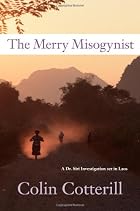 .
.
This was a little darker than some of the other entries in the Dr. Siri series. The Misogynist of the title is a sicko serial killer. I also thought it was one of the stronger books, and we have multiple storylines/mysteries to puzzle. The banter between Dr. Siri and his new wife Mdme. Daeng is pretty good - you can tell easily that there is a playful love between them. Siri still has to put up with the incompetent bureaucracy of the fledgling communist regime in Laos. But there are murders and other mysteries for Siri to untangle since no one else seems to be able to do it. His wife and friends certainly help him, especially with the mystery of Crazy Rashid. They are a familiar cast of characters from prior books that we have grown to love.
It was kind of creepy as a parallel story puts us inside the head of the serial killer and his plot to seduce and kill his next victim. We are on edge the whole novel wondering if Dr Siri and the police will be able to identify him and stop him before it is too late.
ETA 8/15: I've started reading Maisie Dobbs - it is set in a time period I am not that familiar with - 1929 England - I'd say it was more historical fiction than mystery but we'll see how it goes. I'm not sure I'm the target audience for this one; more a series for my wife I think.
40. The Merry Misogynist by Colin Cotterill, finished August 12, 2013, 3 1/2 - 4 stars
 .
.This was a little darker than some of the other entries in the Dr. Siri series. The Misogynist of the title is a sicko serial killer. I also thought it was one of the stronger books, and we have multiple storylines/mysteries to puzzle. The banter between Dr. Siri and his new wife Mdme. Daeng is pretty good - you can tell easily that there is a playful love between them. Siri still has to put up with the incompetent bureaucracy of the fledgling communist regime in Laos. But there are murders and other mysteries for Siri to untangle since no one else seems to be able to do it. His wife and friends certainly help him, especially with the mystery of Crazy Rashid. They are a familiar cast of characters from prior books that we have grown to love.
It was kind of creepy as a parallel story puts us inside the head of the serial killer and his plot to seduce and kill his next victim. We are on edge the whole novel wondering if Dr Siri and the police will be able to identify him and stop him before it is too late.
ETA 8/15: I've started reading Maisie Dobbs - it is set in a time period I am not that familiar with - 1929 England - I'd say it was more historical fiction than mystery but we'll see how it goes. I'm not sure I'm the target audience for this one; more a series for my wife I think.
82RBeffa
41. Maisie Dobbs by Jacqueline Winspear, finished August 19, 2013, 2 1/2 stars
 .
.
Since I like both mysteries and historical fiction this one looked worth a try. The story begins with Maisie Dobbs setting up a private investigator office in England in Spring 1929. The period of the novel runs from WWI (via flashbacks) to 1929. Maisie was a nurse in the Great War and it has left an indelible imprint on her. The book works hard to set the atmosphere of the time through speech and descriptions, and I think it succeeds. ex: "Nod's as good as a wink to a blind 'orse", the handyman says to Maisie, and they aren't discussing a record album by Ronnie Lane and The Faces...
The title of the story is Maisie Dobbs and that really is what the story is about. Forget the mystery and investigation angle. It is about Maisie. I enjoyed the book, but it really isn't my kind of story. Different kind of storytelling. There's a lot of attention to fashion details. Quite introspective, touching at times. I can't say it is a good fit for me, because I did not really connect to it as much as I think I should. This is the first in a series of books and I probably won't be reading more of them.
 .
.Since I like both mysteries and historical fiction this one looked worth a try. The story begins with Maisie Dobbs setting up a private investigator office in England in Spring 1929. The period of the novel runs from WWI (via flashbacks) to 1929. Maisie was a nurse in the Great War and it has left an indelible imprint on her. The book works hard to set the atmosphere of the time through speech and descriptions, and I think it succeeds. ex: "Nod's as good as a wink to a blind 'orse", the handyman says to Maisie, and they aren't discussing a record album by Ronnie Lane and The Faces...
The title of the story is Maisie Dobbs and that really is what the story is about. Forget the mystery and investigation angle. It is about Maisie. I enjoyed the book, but it really isn't my kind of story. Different kind of storytelling. There's a lot of attention to fashion details. Quite introspective, touching at times. I can't say it is a good fit for me, because I did not really connect to it as much as I think I should. This is the first in a series of books and I probably won't be reading more of them.
83RBeffa
42. The Faceless Man by Jack Vance, finished August 20, 2013, 3 stars
 .
.
I haven't read a Jack Vance story for quite a few years. Since he just passed away near the end of May I felt I owed myself a look at some of what I have missed over the years. "The Faceless Man", first published in 1971 and the first book in a trilogy was handy and looked interesting. Reading it reminded me of why I once liked Vance so much. The writing is smart, the world building is quick and good and we have little difficulty immersing ourselves in it and identifying with our young protaganist, Mur, who is about to rebel against a very harsh and unfair totalitarian community. The world of the story is a distinctly devolved group of xenophobic societies in the far future on another planet. Women in particular are not in a happy place. This is also partly a coming of age tale. When boys reach the age of 12 they go through a purification ceremony to become "Pure boys" and take on a new name. They must thereafter avoid the taint of women which they have just been cleansed of. Mur follows the letter of the law, but apparently not the spirit according to the religious leaders by being too close to his mother. This becomes the catalyst for Mur to break away from his birthplace.
This is as much a generic fantasy as science fiction. I liked it "OK", but my liking distinctly lessened for a time once the boy escaped and was out in the world. In fact I set is aside to read something else, but I came back to it since it kept hanging there in the back of my mind. It has some exciting moments, but it is also quite bland at times and, being part of a trilogy, a little unfinished. I enjoyed it, but it is fair to say I appreciated the story more in hindsight when I had a bigger picture of things and thought back on it. I will probably read the followup novels "The Brave Free Men" and "The Asutra" before too long.
This is by no means a great work, and since it is over 40 years old it can't help but seem a little dated. I thought it was a lot more readable than some of the experimental stuff from that era, however.
 .
.I haven't read a Jack Vance story for quite a few years. Since he just passed away near the end of May I felt I owed myself a look at some of what I have missed over the years. "The Faceless Man", first published in 1971 and the first book in a trilogy was handy and looked interesting. Reading it reminded me of why I once liked Vance so much. The writing is smart, the world building is quick and good and we have little difficulty immersing ourselves in it and identifying with our young protaganist, Mur, who is about to rebel against a very harsh and unfair totalitarian community. The world of the story is a distinctly devolved group of xenophobic societies in the far future on another planet. Women in particular are not in a happy place. This is also partly a coming of age tale. When boys reach the age of 12 they go through a purification ceremony to become "Pure boys" and take on a new name. They must thereafter avoid the taint of women which they have just been cleansed of. Mur follows the letter of the law, but apparently not the spirit according to the religious leaders by being too close to his mother. This becomes the catalyst for Mur to break away from his birthplace.
This is as much a generic fantasy as science fiction. I liked it "OK", but my liking distinctly lessened for a time once the boy escaped and was out in the world. In fact I set is aside to read something else, but I came back to it since it kept hanging there in the back of my mind. It has some exciting moments, but it is also quite bland at times and, being part of a trilogy, a little unfinished. I enjoyed it, but it is fair to say I appreciated the story more in hindsight when I had a bigger picture of things and thought back on it. I will probably read the followup novels "The Brave Free Men" and "The Asutra" before too long.
This is by no means a great work, and since it is over 40 years old it can't help but seem a little dated. I thought it was a lot more readable than some of the experimental stuff from that era, however.
84RBeffa
43. Miss Peregrine's Home for Peculiar Children by Ransom Riggs, finished August 24, 2013, barely 2 1/2 stars
 .
.
I received a trade paperback for review from the LibraryThing early reviewers program. Included at the end of the book was an informative interview with the author that provided some interesting background on this story as well as a 10 page brief preview of a follow-up novel titled "Hollow City".
There has been a fair amount of hype and excitement surrounding this book since it was first published in June 2011. I suppose I bought into that a bit, expecting something deliciously original and creepy. I found myself disappointed. Part of my problem with the story is that from very early on I thought that Jacob, our young 15/16 yo protagonist, was a jerk. He's spoiled and whiney and I had no sympathy for him. Since we are inside his head much of the time, this wasn't a good thing for me as a reader to bond with.
There are some cool photographs in the book that are mixed into the story with, well, mixed success. The best part of this novel is the prologue, where the photos are used very well and some excitement is built up. Then the wheels on the bus almost immediately fall off when the story begins. Still, I was interested enough to continue reading with some enthusiasm, but it faded rather abruptly midway when our mysteries begin to be revealed. This isn't a bad book, but it isn't a very good one and I can't shake the feeling that it coulda shoulda been a very good one, if only it had lived up to it's potential. I'm almost mad at this book, but what I am is disappointed.
ETA: There are a number of things to get nitpicky about in this book which I am not going to detail. As a reader they bugged me.
 .
.I received a trade paperback for review from the LibraryThing early reviewers program. Included at the end of the book was an informative interview with the author that provided some interesting background on this story as well as a 10 page brief preview of a follow-up novel titled "Hollow City".
There has been a fair amount of hype and excitement surrounding this book since it was first published in June 2011. I suppose I bought into that a bit, expecting something deliciously original and creepy. I found myself disappointed. Part of my problem with the story is that from very early on I thought that Jacob, our young 15/16 yo protagonist, was a jerk. He's spoiled and whiney and I had no sympathy for him. Since we are inside his head much of the time, this wasn't a good thing for me as a reader to bond with.
There are some cool photographs in the book that are mixed into the story with, well, mixed success. The best part of this novel is the prologue, where the photos are used very well and some excitement is built up. Then the wheels on the bus almost immediately fall off when the story begins. Still, I was interested enough to continue reading with some enthusiasm, but it faded rather abruptly midway when our mysteries begin to be revealed. This isn't a bad book, but it isn't a very good one and I can't shake the feeling that it coulda shoulda been a very good one, if only it had lived up to it's potential. I'm almost mad at this book, but what I am is disappointed.
ETA: There are a number of things to get nitpicky about in this book which I am not going to detail. As a reader they bugged me.
85RBeffa
44. Time For The Stars by Robert Heinlein, finished August 28, 2013, 2 1/2 stars
 .
.
This seemed a little dated even for a Heinlein "juvenile" from 1956. It may have been somewhat intentional on the author's part, or not. It just doesn't seem to have held up as well as some of Heinlein's other books from this time. It is set sometime in the future when we have developed interstellar space travel, but society and roles seem very 1956. Still, there's a bit of charm to these older early Heinlein tales. The story idea has some interest, exploring the time dilation effects that result from a near light-speed ship that leaves earth, and life on a ship. The entire story is built off of the idea (preposterous to me) that many sets of twins are telepathic, and telepathy obeys no laws of physics so that faster than light communication is possible between sets of twins. Twins, thus, can talk across the universe, instantaneously. So one twin heads out into space and one stays home as the radio receiver, or they are paired between ships, so that the peeps back home know where habitable planets are discovered by the spacefarers. It was quite readable though, and improved quite a bit from what I thought was a weak beginning. As the story went along I got a lot more interested, and I liked the ending even if it seemed a little rushed in the wrap-up. I don't think this is spoilery since these ideas are laid out in the first 30 or so pages of the book.
 .
.This seemed a little dated even for a Heinlein "juvenile" from 1956. It may have been somewhat intentional on the author's part, or not. It just doesn't seem to have held up as well as some of Heinlein's other books from this time. It is set sometime in the future when we have developed interstellar space travel, but society and roles seem very 1956. Still, there's a bit of charm to these older early Heinlein tales. The story idea has some interest, exploring the time dilation effects that result from a near light-speed ship that leaves earth, and life on a ship. The entire story is built off of the idea (preposterous to me) that many sets of twins are telepathic, and telepathy obeys no laws of physics so that faster than light communication is possible between sets of twins. Twins, thus, can talk across the universe, instantaneously. So one twin heads out into space and one stays home as the radio receiver, or they are paired between ships, so that the peeps back home know where habitable planets are discovered by the spacefarers. It was quite readable though, and improved quite a bit from what I thought was a weak beginning. As the story went along I got a lot more interested, and I liked the ending even if it seemed a little rushed in the wrap-up. I don't think this is spoilery since these ideas are laid out in the first 30 or so pages of the book.
86RBeffa
45. Homer's Odyssey by Gwen Cooper, finished August 30, 2013, 2 1/2 stars
 .
.
Homer the blind wonder cat, the star of this story died about a week ago. I had read much (almost half?) of the story at the library a couple years ago but not all of it. I think Homer deserved a full read. Reading/re-reading this, however, I see why my interest flagged the first time. Despite the title the book is more the author Gwen's Odyssey, but I think Homer's Odyssey is a much catchier title than the alternatives. Homer's story is amazing, reminding us that life is precious, incredibly adaptive and unpredictable, and for those like me with a lifelong soft spot for rescue kitties, especially heartwarming. Cats are amazing creatures.
The book itself didn't dazzle me. There were pluses and minuses in here for me. It felt a little repetitive at times, stretched out, but I enjoyed it when it was about Homer. There are some good stories within the story here. But the Gwen stuff, not so interesting. Then, the last quarter of the book came close to spoiling this for me. Despite what I said, the most poignant part of the book for me was Gwen describing her first hand experience of the 9/11 World Trade Center attack 5 blocks from her apartment and office. It is a riveting account.
ETA: I was thinking. For those who read this, as soon as Laurence shows up, stop reading. You'll be a lot happier with the book. I would have been.
 .
.Homer the blind wonder cat, the star of this story died about a week ago. I had read much (almost half?) of the story at the library a couple years ago but not all of it. I think Homer deserved a full read. Reading/re-reading this, however, I see why my interest flagged the first time. Despite the title the book is more the author Gwen's Odyssey, but I think Homer's Odyssey is a much catchier title than the alternatives. Homer's story is amazing, reminding us that life is precious, incredibly adaptive and unpredictable, and for those like me with a lifelong soft spot for rescue kitties, especially heartwarming. Cats are amazing creatures.
The book itself didn't dazzle me. There were pluses and minuses in here for me. It felt a little repetitive at times, stretched out, but I enjoyed it when it was about Homer. There are some good stories within the story here. But the Gwen stuff, not so interesting. Then, the last quarter of the book came close to spoiling this for me. Despite what I said, the most poignant part of the book for me was Gwen describing her first hand experience of the 9/11 World Trade Center attack 5 blocks from her apartment and office. It is a riveting account.
ETA: I was thinking. For those who read this, as soon as Laurence shows up, stop reading. You'll be a lot happier with the book. I would have been.
87RBeffa
46. Star Trek 2 by James Blish, finished September 1, 2013, 3 stars
 .
.
This collection of Star Trek stories was first published in February 1968. That would have been during the second season of the three original seasons. It has been a very long time since I watched any of the original episodes. Eight of the episodes have been turned into stories for this book, one of twelve collections that Blish put together. I have no idea how faithful these stories are to the original broadcasts. Most, maybe all of these stories triggered a memory for me, none moreso than "The City on the Edge of Forever," based on a script by Harlan Ellison. That episode earned a Hugo award. It was probably my favorite episode of the original series. This collection also has "Space Seed", the original Kahn story.
These stories are nothing fancy at all, they feel pretty stripped down, but they are quite enjoyable. Small morality plays. One nice thing is that in the original shows Captain Kirk was barely tolerable at times with Shatner's overacting. In these stories anyway none of that comes through at all.
Fun little book and I'm going to be reading more of these. This even makes me want to rewatch some of these old shows. The cover says "adapted by James Blish". Each story lists the original screenwriter name(s) below title. The eight included stories are:
Arena
A Taste of Armageddon
Tomorrow Is Yesterday
Errand of Mercy
Court Martial
Operation-Annihilate!
The City on the Edge of Forever
Space Seed
 .
.This collection of Star Trek stories was first published in February 1968. That would have been during the second season of the three original seasons. It has been a very long time since I watched any of the original episodes. Eight of the episodes have been turned into stories for this book, one of twelve collections that Blish put together. I have no idea how faithful these stories are to the original broadcasts. Most, maybe all of these stories triggered a memory for me, none moreso than "The City on the Edge of Forever," based on a script by Harlan Ellison. That episode earned a Hugo award. It was probably my favorite episode of the original series. This collection also has "Space Seed", the original Kahn story.
These stories are nothing fancy at all, they feel pretty stripped down, but they are quite enjoyable. Small morality plays. One nice thing is that in the original shows Captain Kirk was barely tolerable at times with Shatner's overacting. In these stories anyway none of that comes through at all.
Fun little book and I'm going to be reading more of these. This even makes me want to rewatch some of these old shows. The cover says "adapted by James Blish". Each story lists the original screenwriter name(s) below title. The eight included stories are:
Arena
A Taste of Armageddon
Tomorrow Is Yesterday
Errand of Mercy
Court Martial
Operation-Annihilate!
The City on the Edge of Forever
Space Seed
88RBeffa
47. The Status Civilization by Robert Sheckley, finished Sept 3, 2013, 3 stars
 .
.
This book is an odd one. I think it can only be read as social satire, and not subtle about it to my mind. The mandatory worship at the Church of Evil bit laid it on especially thick. The priests are not "father", but "uncle". They call you "nephew" rather than "son". Good exists in the world only because evil needs a contrast ...
This is a dark novel that begins with Will Barrent waking up on his way to a prison planet. His memories have been mostly wiped - he doesn't even know his name. They call him "402", his cell/room number, and tell him his name later when they tell him he has been exiled for murder. The first two-thirds of the novel is Will making his way through the society of this prison planet - he has been told that the place is run by the prisoners themselves and he should know that the average person lives only 3 years. He catches some breaks with very close calls, making me wonder how a person could manage even 3 weeks let alone 3 years. We get some glimpses of secondary characters but they weren't quite enough for me to flesh out the "normal" experiences of some of the other prisoners.
It is pretty clear that Will Barrent's path is not typical. Barrent doesn't accept his fate - he has a drive to escape and return to earth. He succeeds and the last third of the novel covers his escape and return to earth. The big reveal upon returning is pretty good; not something I would have guessed.
I haven't read Sheckley since I was a teenager probably. His "People Trap" really impressed me back then. This book dates to 1968. It was a satisfying read. The cover art of my book is by Jerome Podwill. It is quite interesting and what attracted me to this book.
 .
.This book is an odd one. I think it can only be read as social satire, and not subtle about it to my mind. The mandatory worship at the Church of Evil bit laid it on especially thick. The priests are not "father", but "uncle". They call you "nephew" rather than "son". Good exists in the world only because evil needs a contrast ...
This is a dark novel that begins with Will Barrent waking up on his way to a prison planet. His memories have been mostly wiped - he doesn't even know his name. They call him "402", his cell/room number, and tell him his name later when they tell him he has been exiled for murder. The first two-thirds of the novel is Will making his way through the society of this prison planet - he has been told that the place is run by the prisoners themselves and he should know that the average person lives only 3 years. He catches some breaks with very close calls, making me wonder how a person could manage even 3 weeks let alone 3 years. We get some glimpses of secondary characters but they weren't quite enough for me to flesh out the "normal" experiences of some of the other prisoners.
It is pretty clear that Will Barrent's path is not typical. Barrent doesn't accept his fate - he has a drive to escape and return to earth. He succeeds and the last third of the novel covers his escape and return to earth. The big reveal upon returning is pretty good; not something I would have guessed.
I haven't read Sheckley since I was a teenager probably. His "People Trap" really impressed me back then. This book dates to 1968. It was a satisfying read. The cover art of my book is by Jerome Podwill. It is quite interesting and what attracted me to this book.
89RBeffa
48. A Is For Alien by Caitlin R Kiernan, finished September 8, 2013, 1 1/2 stars
 .
.
This is a collection of short stories and novelettes that I didn't like at all. I wasn't crazy about the style of the stories, which bounce around and keep the reader off balance. Too artsy for my fartsy I guess and trying way waay too hard to be edgy. There are some interesting ideas in here, but the manner of storytelling constantly put me off. I began skimming stories as I lost hope. I'm surprised I finished this.
Not recommended.
 .
.This is a collection of short stories and novelettes that I didn't like at all. I wasn't crazy about the style of the stories, which bounce around and keep the reader off balance. Too artsy for my fartsy I guess and trying way waay too hard to be edgy. There are some interesting ideas in here, but the manner of storytelling constantly put me off. I began skimming stories as I lost hope. I'm surprised I finished this.
Not recommended.
90RBeffa
Both of these books deserve a better review/summary than I am giving them. Perhaps I will flesh them out a little when life takes a pause.
49. The Dubliners by James Joyce, finished about September 14, 2013, 4 - 4 1/2 stars
 .
.
James Joyce is one of those classic authors on my "to-do" list. One of many who I should have read or only read lightly. Others include Joseph Conrad and William Faulkner. There is a rather large lot of them. Even some like Thomas Hardy and Hemingway who I liked a lot in my younger days is under-read by me. So finally some Joyce. Some thoughts:
The Dubliners is a collection of 15 stories set in Dublin Ireland. Together they can be seen as a novel. The first story was published in 1904. The last in 1907. Some of these stories were apparently quite controversial at the the time. I read a little background material before tackling this. Doing so made me wonder if I could really appreciate this a century after they were written. I was ready for bleak. Stories I've read set in Ireland such as McCourt's Angela's Ashes have more than convinced me of the overwhelming crushing poverty and sadness for endless decades.
Bleak is what I got, but not overwhelming; more just like a great melancholy laying over many stories. Some are frankly depressing, almost enough to make one cry. These are small snapshots of moments in ordinary people's lives. I thought most of them were quite good. The writing is beautiful. As for my trepidation of not being able to fully appreciate these in their time, I think it was a little true. I wasn't quite sure what was going on at times and with the dialogue between characters. Other stories were 100% understandable. Someone with a depth of knowledge of the times and Irish history would probably get more from these stories, but I had no major problems other than being unfamiliar with a word here and there and some sensibilities. The stories really grew into something bigger than the pieces and my appreciation got ever larger. Very fine stuff here. I'm glad to have finally tackled Joyce. He is without a doubt a storyteller. Quite a good read.
------------------------
50. Yesterday's Son by A. C. Crispin, finished September 17, 2013, 3 1/2 stars
 .
.
This novel was one of several Star Trek books I have picked up this past year with an intention of enjoying some light entertainment now and then. There are a lot of Star Trek novels and this was one of the earliest and more highly regarded ones and was sitting on the top of my "read soon" pile. Is this great literature? No, but it is a well written book that did an excellent job of developing a new story that began with the next to last episode of the original Star Trek series. In this novel Spock discovers that he has fathered a child and sets out to find and rescue him, 5000 years in the past. Kirk and McCoy accompany him. I thought the author did an excellent job of capturing the characters and the settings in a believable way. Kirk comes across as a bit nicer then I recall, and Spock a bit stiffer, although there are extenuating circumstances at play. McCoy seemed to be captured perfectly. I liked Kirk in this novel a lot. The ending rather surprised me. There is a sequel to this book which I am going to keep a watch for. This frankly put me in the mood to read more Star Trek novels.
Ann Crispin, the author of this story died earlier this month. That makes me rather sad after reading this.
49. The Dubliners by James Joyce, finished about September 14, 2013, 4 - 4 1/2 stars
 .
.James Joyce is one of those classic authors on my "to-do" list. One of many who I should have read or only read lightly. Others include Joseph Conrad and William Faulkner. There is a rather large lot of them. Even some like Thomas Hardy and Hemingway who I liked a lot in my younger days is under-read by me. So finally some Joyce. Some thoughts:
The Dubliners is a collection of 15 stories set in Dublin Ireland. Together they can be seen as a novel. The first story was published in 1904. The last in 1907. Some of these stories were apparently quite controversial at the the time. I read a little background material before tackling this. Doing so made me wonder if I could really appreciate this a century after they were written. I was ready for bleak. Stories I've read set in Ireland such as McCourt's Angela's Ashes have more than convinced me of the overwhelming crushing poverty and sadness for endless decades.
Bleak is what I got, but not overwhelming; more just like a great melancholy laying over many stories. Some are frankly depressing, almost enough to make one cry. These are small snapshots of moments in ordinary people's lives. I thought most of them were quite good. The writing is beautiful. As for my trepidation of not being able to fully appreciate these in their time, I think it was a little true. I wasn't quite sure what was going on at times and with the dialogue between characters. Other stories were 100% understandable. Someone with a depth of knowledge of the times and Irish history would probably get more from these stories, but I had no major problems other than being unfamiliar with a word here and there and some sensibilities. The stories really grew into something bigger than the pieces and my appreciation got ever larger. Very fine stuff here. I'm glad to have finally tackled Joyce. He is without a doubt a storyteller. Quite a good read.
------------------------
50. Yesterday's Son by A. C. Crispin, finished September 17, 2013, 3 1/2 stars
 .
.This novel was one of several Star Trek books I have picked up this past year with an intention of enjoying some light entertainment now and then. There are a lot of Star Trek novels and this was one of the earliest and more highly regarded ones and was sitting on the top of my "read soon" pile. Is this great literature? No, but it is a well written book that did an excellent job of developing a new story that began with the next to last episode of the original Star Trek series. In this novel Spock discovers that he has fathered a child and sets out to find and rescue him, 5000 years in the past. Kirk and McCoy accompany him. I thought the author did an excellent job of capturing the characters and the settings in a believable way. Kirk comes across as a bit nicer then I recall, and Spock a bit stiffer, although there are extenuating circumstances at play. McCoy seemed to be captured perfectly. I liked Kirk in this novel a lot. The ending rather surprised me. There is a sequel to this book which I am going to keep a watch for. This frankly put me in the mood to read more Star Trek novels.
Ann Crispin, the author of this story died earlier this month. That makes me rather sad after reading this.
91RBeffa
51. Hiroshima by John Hersey, finished September 24, 2013, 3 1/2 - 4 stars
 .
.
One of my minor reading trends this year seems to be World War II. I first read this book as a young man, or possibly as a teen in high school. Hiroshima was first published in 1946 and it is a reconstruction of the experiences of six people who were there and who survived. There are fascinating accounts in here, stunning, terrible. The book I just read was a new edition published in 1989. Forty years after Hiroshima, Hersey returned to Japan to chronicle the lives of his survivors. The final chapter, "The Aftermath" is a bit more than one third of the book.
This is a horror story, the horror of war on everyday people. Not one to soon forget. Despite the horror, the book is an account of the moment, the minutes, the hours, the days, the weeks that followed the Hiroshima blast and the additional trials visited upon the survivors.
I probably would have rated this higher except that the manner of storytelling bothered me a bit. There was too much shifting of focus among the characters, primary and secondary in the main part of the story. The long final chapter "The Aftermath" was rather anti-climatic. Still, recommended.
 .
.One of my minor reading trends this year seems to be World War II. I first read this book as a young man, or possibly as a teen in high school. Hiroshima was first published in 1946 and it is a reconstruction of the experiences of six people who were there and who survived. There are fascinating accounts in here, stunning, terrible. The book I just read was a new edition published in 1989. Forty years after Hiroshima, Hersey returned to Japan to chronicle the lives of his survivors. The final chapter, "The Aftermath" is a bit more than one third of the book.
This is a horror story, the horror of war on everyday people. Not one to soon forget. Despite the horror, the book is an account of the moment, the minutes, the hours, the days, the weeks that followed the Hiroshima blast and the additional trials visited upon the survivors.
I probably would have rated this higher except that the manner of storytelling bothered me a bit. There was too much shifting of focus among the characters, primary and secondary in the main part of the story. The long final chapter "The Aftermath" was rather anti-climatic. Still, recommended.
92RBeffa
52. Love Songs From A Shallow Grave by Colin Cotterill, finished Sept 29, 2013, 3 1/2 - 4 stars
 .
.
This story is told in a little different fashion than other books in the Dr. Siri series. We move back and forth between two stories, and I wasn't quite sure what was going on in one of the story lines until we have some convergence. This story seemed a little more of a history lesson than the other Dr. Siri books and it made me a little sad. The book preceding this, "The Merry Misogynist" was a pretty dark tale and this one goes a step further that way with less humor to balance it. This is one of the better books in the series, but it oddly got a little draggy and close to boring with the prison sequence. I've now read all nine of these stories and finished this series.
eta: I can't decide if this should be a 4 star book. Maybe. Parts of this book are really great, esp the tour of Kampuchea, but I was underwhelmed by the "mystery" of the book.
 .
.This story is told in a little different fashion than other books in the Dr. Siri series. We move back and forth between two stories, and I wasn't quite sure what was going on in one of the story lines until we have some convergence. This story seemed a little more of a history lesson than the other Dr. Siri books and it made me a little sad. The book preceding this, "The Merry Misogynist" was a pretty dark tale and this one goes a step further that way with less humor to balance it. This is one of the better books in the series, but it oddly got a little draggy and close to boring with the prison sequence. I've now read all nine of these stories and finished this series.
eta: I can't decide if this should be a 4 star book. Maybe. Parts of this book are really great, esp the tour of Kampuchea, but I was underwhelmed by the "mystery" of the book.
93RBeffa
53. The Children of Green Knowe by L.M. Boston, finished October 4, 2013, 4 stars
 .
.This is a book I probably would have really enjoyed when I was about 10. It is a childhood favorite of my wife, the first in a series. I've seen it sitting on a shelf from when our children were young, but never picked it up until now. I've wanted to visit a few children's classics that I missed, and here is one of them. There is a gentleness to this story that I found very endearing. It is lovely. There is a simple magic to this book that slowly enchanted me. This is one to read to younger children, if you are lucky enough to still have them. With luck I will read this to a grandchild one day.
94RBeffa
I read this as a between book over a period of time and wrapped it up today.
54. Asimov's Science Fiction, May 2000 (292) edited by Gardner Dozois, finished October 10, 2013, 3 stars
The May 2000 issue of Asimov's Science Fiction contains 4 novelettes and 3 short stories as well as columns/articles, several poems and book reviews. Seems like an average issue, some weaker stories balanced by a couple very good ones. Robert Silverberg's Reflections column is an extended piece on author Bob Shaw and "slow glass".
 .
.
The fiction stories, in order, are:
Going After Bobo • novelette by Susan Palwick
The Elephants on Neptune • shortstory by Mike Resnick
Requiem Antarctica • novelette by Jane Yolen and Robert J. Harris
Calamity of So Long Life • shortstory by John Alfred Taylor
Merlin's Gun • novelette by Alastair Reynolds
Two Sams • shortstory by Robert Reed
The Noise of Their Joye • novelette by Tom Purdom
"Going After Bobo" made it into editor Dozois' best of the year collection for 2000. Although I liked it, it did not seem like a science fiction story. It examines a family and social situation surrounding a boy and his lost cat in a Reno winter. The boy's father has committed suicide although that is not immediately known to the reader. Resnick's "The Elephants on Neptune" was nominated for both the Nebula and Hugo short story award and won as best short story in the annual Asimov's reader's poll. Why this was I cannot fathom. I generally like Resnick's stories but this one bordered on cartoonish and inane. Perhaps other readers would get a chuckle from it. I liked "Requiem Antarctica" quite a bit at first for being an imaginative conjecture on why Robert Scott made a second expedition to the south pole in 1912, but then it seemed to drag, and no matter what, the reason was really absurd. This fantasy/horror really isn't science fiction by any stretch.
Of the remaining stories I really like Alastair Reynold's "Merlin's Gun." I have read this story before and was happy to read it again. I really enjoy Reynold's far future stuff and need to read more of his works.
54. Asimov's Science Fiction, May 2000 (292) edited by Gardner Dozois, finished October 10, 2013, 3 stars
The May 2000 issue of Asimov's Science Fiction contains 4 novelettes and 3 short stories as well as columns/articles, several poems and book reviews. Seems like an average issue, some weaker stories balanced by a couple very good ones. Robert Silverberg's Reflections column is an extended piece on author Bob Shaw and "slow glass".
 .
.The fiction stories, in order, are:
Going After Bobo • novelette by Susan Palwick
The Elephants on Neptune • shortstory by Mike Resnick
Requiem Antarctica • novelette by Jane Yolen and Robert J. Harris
Calamity of So Long Life • shortstory by John Alfred Taylor
Merlin's Gun • novelette by Alastair Reynolds
Two Sams • shortstory by Robert Reed
The Noise of Their Joye • novelette by Tom Purdom
"Going After Bobo" made it into editor Dozois' best of the year collection for 2000. Although I liked it, it did not seem like a science fiction story. It examines a family and social situation surrounding a boy and his lost cat in a Reno winter. The boy's father has committed suicide although that is not immediately known to the reader. Resnick's "The Elephants on Neptune" was nominated for both the Nebula and Hugo short story award and won as best short story in the annual Asimov's reader's poll. Why this was I cannot fathom. I generally like Resnick's stories but this one bordered on cartoonish and inane. Perhaps other readers would get a chuckle from it. I liked "Requiem Antarctica" quite a bit at first for being an imaginative conjecture on why Robert Scott made a second expedition to the south pole in 1912, but then it seemed to drag, and no matter what, the reason was really absurd. This fantasy/horror really isn't science fiction by any stretch.
Of the remaining stories I really like Alastair Reynold's "Merlin's Gun." I have read this story before and was happy to read it again. I really enjoy Reynold's far future stuff and need to read more of his works.
95RBeffa
55. The Quarry by Iain Banks, finished October 20, 2013, 3 1/2 stars
 .
.
There are a couple excellent summaries and reviews here on LT that cover this novel very well. This is the last book we will receive from Iain Banks. I'll just note that I really liked Kit, the son of the man who owns and lives in the house set on the edge of the encroaching quarry. His unique character is very well developed. Kit's father Guy is fairly well done also as a secondary character but he is also somewhat despicable and mean. A largish cast of other secondary characters slowly came to life for me.
Overall I did like the book and I liked how it ended, but it certainly is not a must read. Quite a few references in here are lost on me as an American.
 .
.There are a couple excellent summaries and reviews here on LT that cover this novel very well. This is the last book we will receive from Iain Banks. I'll just note that I really liked Kit, the son of the man who owns and lives in the house set on the edge of the encroaching quarry. His unique character is very well developed. Kit's father Guy is fairly well done also as a secondary character but he is also somewhat despicable and mean. A largish cast of other secondary characters slowly came to life for me.
Overall I did like the book and I liked how it ended, but it certainly is not a must read. Quite a few references in here are lost on me as an American.
96RBeffa
56. The Ivory and the Horn by Charles de Lint, finished October 26, 2013, 3 stars
 .
.
This is a collection of 15 stories first published between 1992 and 1995 and collected here in 1995. They are mostly short stories though a few edge close to novella length. I'm not sure how I'd class these stories; they are sort of seedy urban fantasy. I read one or two at a time and for me that was the best way to appreciate them. There are some really good stories in here, but most I'd call so-so; good but not great.
I've enjoyed de Lint's work in short story form in the past although not everything and I think I grew a little tired of him. I am just not a big fan of faerie stuff by anyone, but de Lint approaches it unconventionally. I'm planning to read some more of him in the future. The urban fantasy genre isn't one of my favorites, and De Lint is practically credited with inventing it. This collection is certainly a good example of it being done well.
 .
.This is a collection of 15 stories first published between 1992 and 1995 and collected here in 1995. They are mostly short stories though a few edge close to novella length. I'm not sure how I'd class these stories; they are sort of seedy urban fantasy. I read one or two at a time and for me that was the best way to appreciate them. There are some really good stories in here, but most I'd call so-so; good but not great.
I've enjoyed de Lint's work in short story form in the past although not everything and I think I grew a little tired of him. I am just not a big fan of faerie stuff by anyone, but de Lint approaches it unconventionally. I'm planning to read some more of him in the future. The urban fantasy genre isn't one of my favorites, and De Lint is practically credited with inventing it. This collection is certainly a good example of it being done well.
98RBeffa
I've never read Moonheart, Jim, but did read part of the followup Spiritwalk some years ago and didn't really take to it if I remember correctly. Sometimes I look for Moonheart in the used books and one day I'll probably find it and give it a try. I've picked up an assortment of new and used de Lint the last couple years that i need to work on.
Last night I started Heinlein's Orphans of the Sky which is a real throwback of sorts to golden age SF. I found this old Panther edition with a great cover. First published in Astounding around 1941. I've been trying to read these early Heinlein's the last few years - the ones I missed mostly. His early stuff had a big effect on my early enjoyment of the genre and getting hooked on SF. His later work put me off quite a bit tho. Orphans is a generation ship story and one of those easy to read books that I really enjoy sometimes.
Last night I started Heinlein's Orphans of the Sky which is a real throwback of sorts to golden age SF. I found this old Panther edition with a great cover. First published in Astounding around 1941. I've been trying to read these early Heinlein's the last few years - the ones I missed mostly. His early stuff had a big effect on my early enjoyment of the genre and getting hooked on SF. His later work put me off quite a bit tho. Orphans is a generation ship story and one of those easy to read books that I really enjoy sometimes.
99RBeffa
57. Orphans of the Sky by Robert Heinlein, finished October 27, 2013, 3 - 3 1/2 stars
 .
.
I've been trying to read/re-read a number of the early Heinlein books. This "golden age" short novel was first published in two parts in Astounding in 1941, and for that time it feels very groundbreaking. Keeping in mind when it was written, I thoroughly enjoyed this depiction of a feudal society on a generation ship that have forgotten their mission. There are criticisms of the role of women in books such as this, but for the devolved society that Heinlein has here it shouldn't surprise. The peasant farmer is also scarcely able to speak. Still, the gratuitous roughness at the end was completely unnecessary and offensive.
This is one of those stories where our protagonist, a young man apprenticed to become a scientist, comes to realize that just about everything he has been told about history and his life simply isn't true. His discoveries are revolutionary for the starship society who have forgotten who they were and their purpose. There are parallels to our own civilization's history.
 .
.I've been trying to read/re-read a number of the early Heinlein books. This "golden age" short novel was first published in two parts in Astounding in 1941, and for that time it feels very groundbreaking. Keeping in mind when it was written, I thoroughly enjoyed this depiction of a feudal society on a generation ship that have forgotten their mission. There are criticisms of the role of women in books such as this, but for the devolved society that Heinlein has here it shouldn't surprise. The peasant farmer is also scarcely able to speak. Still, the gratuitous roughness at the end was completely unnecessary and offensive.
This is one of those stories where our protagonist, a young man apprenticed to become a scientist, comes to realize that just about everything he has been told about history and his life simply isn't true. His discoveries are revolutionary for the starship society who have forgotten who they were and their purpose. There are parallels to our own civilization's history.
100RBeffa
58. Shane by Jack Schaefer, finished October 28, 2013, 4 1/2 stars
 .
.
Wonderful short novel. I think it is safe to call this literature and a classic, at least from my view. I am sure that my long held appreciation of the film influenced my enjoyment of this book. The actors from the film were immediately in my mind as I read this. The tension in this book starts on the first page. The story is told from the viewpoint of the boy in the story, young Bob Starrett, but he is telling us this story as an adult looking back on his childhood. He very believably shows the hero worship a young boy can have for the strong men in his life.
I've read Shane before but seemed to really appreciate it more this time. This is very well written. Scenes small and large were vivid to me and lingered long after reading. Close to a perfect book, this will be one of my few favorites for this year. The best "western" I ever read was Larry McMurtry's 'Lonesome Dove'. It is also one of the best novels I have ever read, and just possibly THE best. Shane is a small book and can't be fairly compared to an epic like Lonesome Dove, but it does show that great writing and a great story can be found in unexpected places.
 .
.Wonderful short novel. I think it is safe to call this literature and a classic, at least from my view. I am sure that my long held appreciation of the film influenced my enjoyment of this book. The actors from the film were immediately in my mind as I read this. The tension in this book starts on the first page. The story is told from the viewpoint of the boy in the story, young Bob Starrett, but he is telling us this story as an adult looking back on his childhood. He very believably shows the hero worship a young boy can have for the strong men in his life.
I've read Shane before but seemed to really appreciate it more this time. This is very well written. Scenes small and large were vivid to me and lingered long after reading. Close to a perfect book, this will be one of my few favorites for this year. The best "western" I ever read was Larry McMurtry's 'Lonesome Dove'. It is also one of the best novels I have ever read, and just possibly THE best. Shane is a small book and can't be fairly compared to an epic like Lonesome Dove, but it does show that great writing and a great story can be found in unexpected places.
101RBeffa
59. Hominids by Robert J. Sawyer, finished October 31, 2013, 3 stars
 .
.
Hominids won the Hugo award for best novel in 2003. My takeaway from that is that some people thought this was a pretty good book. I generally look at most of these awards with some degree of reservation because I see some excellent ones lose or even ignored. In fact, when I look over a list of winners from the last 20 years or so I do a lot of hmmmm-ing and think, is this really the best we can do? That said, this was a pretty good book. Anthropological science fiction. Yum.
I don't want to say too much and spoil the story, although the rear cover of the novel outlines most of the major plot points in some detail. This, as it happens, is a parallel world story - on another earth Neanderthals became the dominant species, and the neanderthal world inadvertently during an experiment intersects with our own. Sawyer builds a complex society for them. It makes for a very interesting, if unbelievable story. Clan of the Cave Bear society I could buy in to. This convergent evolution one not as much. Not that it couldn't be, I just, well, never mind. There was a lot that defied sensibility. The whole courtroom drama in Neanderthal earth I found extremely absurd. Despite thinking this, we have a well written story here that I enjoyed a lot even though I think we got a little carried away with a Neanderthal version of a sort of strange new world Utopia. Still, this IS a science FICTION story, and it is done well enough to be a very good read.
First of a three part series, the follow-up novels are Humans (Hugo nomination for 2003) and the finale Hybrids. I will continue with this series soon.
fyi the 3 stars for this is a compromise for me as I can see this as plus or minus a star from here. I'm hoping the next book in the series covers stuff / explains stuff that, as I say, is just unbelievable to me.
 .
.Hominids won the Hugo award for best novel in 2003. My takeaway from that is that some people thought this was a pretty good book. I generally look at most of these awards with some degree of reservation because I see some excellent ones lose or even ignored. In fact, when I look over a list of winners from the last 20 years or so I do a lot of hmmmm-ing and think, is this really the best we can do? That said, this was a pretty good book. Anthropological science fiction. Yum.
I don't want to say too much and spoil the story, although the rear cover of the novel outlines most of the major plot points in some detail. This, as it happens, is a parallel world story - on another earth Neanderthals became the dominant species, and the neanderthal world inadvertently during an experiment intersects with our own. Sawyer builds a complex society for them. It makes for a very interesting, if unbelievable story. Clan of the Cave Bear society I could buy in to. This convergent evolution one not as much. Not that it couldn't be, I just, well, never mind. There was a lot that defied sensibility. The whole courtroom drama in Neanderthal earth I found extremely absurd. Despite thinking this, we have a well written story here that I enjoyed a lot even though I think we got a little carried away with a Neanderthal version of a sort of strange new world Utopia. Still, this IS a science FICTION story, and it is done well enough to be a very good read.
First of a three part series, the follow-up novels are Humans (Hugo nomination for 2003) and the finale Hybrids. I will continue with this series soon.
fyi the 3 stars for this is a compromise for me as I can see this as plus or minus a star from here. I'm hoping the next book in the series covers stuff / explains stuff that, as I say, is just unbelievable to me.
102RBeffa
60. Humans by Robert J. Sawyer, finished November 3, 2013, 3 1/2 stars
 .
.I was a little surprised at how much I enjoyed this follow-up novel to 'Hominids'. What I like are the scientific explanations and discussions that are built into the stories. There is a lot of sociological discussion as well. Big things. The human-neanderthal romance that was begun in 'Hominids' becomes much more of a driver to the story. I see it as the vehicle that gets this story done. It doesn't really interest me. But the stuff around it does. For example I thought the scene at the Washington Mall where the woman explains the Vietnam Memorial was quite well done. To me, this second novel is as good or a little better than the first. The religious discussions are even interesting (mostly). I think the character development of several principals is well done. I was rather surprised at a few things as well. There is a mystery that involves a rape that was carried over from the first novel that is resolved by book's end here.
I was bothered by the technological advances of the neanderthals in the first book and it only gets worse in this one. Still, I'm looking forward to the final book of the trilogy, 'Hybrids'. I hope it doesn't let me down.
103RBeffa
61. Hybrids by Robert J. Sawyer, finished November 7, 2013, 2 1/2 stars
 .
.
I thought that this book was really a weak finish for this interesting trilogy. The story progresses like a slow lava flow and really lost momentum. Part of the problem was an endless insertion into the story of explanations ... who what when where and why, with who and more, of things from the first two books. This of course so that some random person starting this book without having read either of the two previous ones wouldn't be confused. The result for me though was a boring boring finish. I can safely say that this would have worked better as two books with a tightening up of the end story and elimination of the recap upon recap.
Overall this rates as a 3 star interesting, but not exceptional, series. I don't think I was ever convinced that the neanderthal society was a better one although I thought there were some good ideas mixed with some poor/bad ones and it also was never believable to me.
ETA: I'm probably being a little harsh in my assessment of the 3rd book in the series, but I think it reflects my disappointment with elements of the entire series and that I do think the last book was the weakest of the three.
 .
.I thought that this book was really a weak finish for this interesting trilogy. The story progresses like a slow lava flow and really lost momentum. Part of the problem was an endless insertion into the story of explanations ... who what when where and why, with who and more, of things from the first two books. This of course so that some random person starting this book without having read either of the two previous ones wouldn't be confused. The result for me though was a boring boring finish. I can safely say that this would have worked better as two books with a tightening up of the end story and elimination of the recap upon recap.
Overall this rates as a 3 star interesting, but not exceptional, series. I don't think I was ever convinced that the neanderthal society was a better one although I thought there were some good ideas mixed with some poor/bad ones and it also was never believable to me.
ETA: I'm probably being a little harsh in my assessment of the 3rd book in the series, but I think it reflects my disappointment with elements of the entire series and that I do think the last book was the weakest of the three.
104RBeffa
62. Thousand Cranes by Yasunari Kawabata, finished November 10, 2013, 3 1/2 stars
 .
.
This is a short novel set in post WWII Japan, but really almost timeless as it is built around the many centuries old tea ceremony. A young melancholy man, Kikuji, must deal with life surrounded by people and objects that have come to him following his father's death. It is a strange philosophical story but very interesting and left me sad. Poor Kikuji is the victim here, primarily due to the machinations of one of his father's mistresses as well as his own failures.
Kawabata received the Nobel prize in literature in 1968. This story was first published in english translation in 1958 but was originally in Japanese from about 1949-1951.
 .
.This is a short novel set in post WWII Japan, but really almost timeless as it is built around the many centuries old tea ceremony. A young melancholy man, Kikuji, must deal with life surrounded by people and objects that have come to him following his father's death. It is a strange philosophical story but very interesting and left me sad. Poor Kikuji is the victim here, primarily due to the machinations of one of his father's mistresses as well as his own failures.
Kawabata received the Nobel prize in literature in 1968. This story was first published in english translation in 1958 but was originally in Japanese from about 1949-1951.
105laytonwoman3rd
I'm making a note of that one...it sounds very moving.
106RBeffa
It is a very unusual story Linda. You know you are reading something from an entirely different culture and mindset. Some of the reviews on LT go into great detail about it. The subtext that isn't all that subtle contrasts the objects and ceremonies that have come across centuries against the fleeting form of life.
107RBeffa
Some more Japanese literature. This one a newer novel but set in older Japan, although I am uncertain when. This story is very different from 'Thousand Cranes', but it is again a sad story.
63. Shipwrecks by Akira Yoshimura, finished November 15, 2013, 3 1/2 stars
 .
.
There are a lot of unhappy people in this book. A small village of about 17 households on the seacoast of Japan barely survives year to year. Members of every household are either sold or sell themselves into years of servitude in order to provide small amounts of money for food for those who remain. This still is not enough. The people and community survives only through some very unsettling practices. All I can say is that this would be a terrible way to live.
The story begins with a 9 year old boy, Isaku, and what he deals with growing up here. We get a look at a lot of customs I was unfamiliar with. I read this as a story rather than as a depiction of a possible reality.
63. Shipwrecks by Akira Yoshimura, finished November 15, 2013, 3 1/2 stars
 .
.There are a lot of unhappy people in this book. A small village of about 17 households on the seacoast of Japan barely survives year to year. Members of every household are either sold or sell themselves into years of servitude in order to provide small amounts of money for food for those who remain. This still is not enough. The people and community survives only through some very unsettling practices. All I can say is that this would be a terrible way to live.
The story begins with a 9 year old boy, Isaku, and what he deals with growing up here. We get a look at a lot of customs I was unfamiliar with. I read this as a story rather than as a depiction of a possible reality.
108RBeffa
64. Timetrap by David Dvorkin, finished November 19, 2013, 2 1/2 stars
 .
.
I wanted something easy and fun to read. This did the trick well enough. I picked up a batch of these old Star Trek novels recently and I think I am going to be enjoying them when I want light reading. I used to look down my nose at these sorts of books but I can enjoy them now it seems. I should perhaps blame John Scalzi's recent work "Redshirts" for even making me think of reading these books.
Timetrap is something of a trickster sort of book. The Klingons are acting strange. Are they still the bad guys here, or are they new Klingons? Watch out. There is a lot of attention to details so this felt much like watching an episode of the original series. Since this is only the 2nd Star Trek novel I have read I don't know how it compares to others. I can only say that although this felt a little drawn out, it wasn't awful and I enjoyed it OK as an easy read.
------------------------
65. Imperium by Robert Harris, finished November 23, 2013, 3+ stars
 .
.
This is a biography of Cicero, sort of, a bit of historical fiction as it is told by his secretary Tiro. Historical references tell us that Tiro wrote a real biography of his former master, but it was apparently lost in the dark ages following the fall of Rome. Harris tells us that the events in the book are true and he has imagined how they might have happened without telling us anything that is not true.
I enjoyed this a fair bit. Harris does bring history to life. Cicero doesn't come across as a likeable fellow. In fact, no one with the exception of our narrator Tiro is very endearing. I am glad that Harris didn't try to paint Cicero pretty and gave us something that feels real. Although I found this interesting, I never felt really pulled into it and engaged.
 .
.I wanted something easy and fun to read. This did the trick well enough. I picked up a batch of these old Star Trek novels recently and I think I am going to be enjoying them when I want light reading. I used to look down my nose at these sorts of books but I can enjoy them now it seems. I should perhaps blame John Scalzi's recent work "Redshirts" for even making me think of reading these books.
Timetrap is something of a trickster sort of book. The Klingons are acting strange. Are they still the bad guys here, or are they new Klingons? Watch out. There is a lot of attention to details so this felt much like watching an episode of the original series. Since this is only the 2nd Star Trek novel I have read I don't know how it compares to others. I can only say that although this felt a little drawn out, it wasn't awful and I enjoyed it OK as an easy read.
------------------------
65. Imperium by Robert Harris, finished November 23, 2013, 3+ stars
 .
.This is a biography of Cicero, sort of, a bit of historical fiction as it is told by his secretary Tiro. Historical references tell us that Tiro wrote a real biography of his former master, but it was apparently lost in the dark ages following the fall of Rome. Harris tells us that the events in the book are true and he has imagined how they might have happened without telling us anything that is not true.
I enjoyed this a fair bit. Harris does bring history to life. Cicero doesn't come across as a likeable fellow. In fact, no one with the exception of our narrator Tiro is very endearing. I am glad that Harris didn't try to paint Cicero pretty and gave us something that feels real. Although I found this interesting, I never felt really pulled into it and engaged.
109RBeffa
66. Outnumbering The Dead by Frederik Pohl, finished November 24, 2013, 2 1/2 - 3 stars
 .
.
The recent death of Frederik Pohl on Sept 2, 2013 has prompted me to want to read some of his books that I missed over the years. Since his first stories date to about 1940, there are many to choose from. I was a big fan of Pohl when I was young - he was the editor of Galaxy Magazine in the 60's and I enjoyed a number of his Galaxy Reader anthologies and several novels, as well as numerous short stories over the years. He appears in an awful lot of books in my library. However, I haven't really read him in quite a few years (certainly no novels) and so I must catch up a bit.
'Outnumbering The Dead' is a mildly interesting novella from 1992 and a quick read. The story was enhanced by a number of full page illustrations by Steve Crisp. The gist of the tale is this: Suppose virtually everybody, except you, got to live forever. The you here is Rafiel, and this is his story from when he wakes up at 92 years of age having just had medical procedures to keep him "youthful," up to his last breath on the last page. I liked it OK. There may have been something profound in here that I missed. The story managed to feel slow and drawn out especially at the beginning, despite the short length. I warmed to the book a little by the end, but I'd skip this one.
 .
.The recent death of Frederik Pohl on Sept 2, 2013 has prompted me to want to read some of his books that I missed over the years. Since his first stories date to about 1940, there are many to choose from. I was a big fan of Pohl when I was young - he was the editor of Galaxy Magazine in the 60's and I enjoyed a number of his Galaxy Reader anthologies and several novels, as well as numerous short stories over the years. He appears in an awful lot of books in my library. However, I haven't really read him in quite a few years (certainly no novels) and so I must catch up a bit.
'Outnumbering The Dead' is a mildly interesting novella from 1992 and a quick read. The story was enhanced by a number of full page illustrations by Steve Crisp. The gist of the tale is this: Suppose virtually everybody, except you, got to live forever. The you here is Rafiel, and this is his story from when he wakes up at 92 years of age having just had medical procedures to keep him "youthful," up to his last breath on the last page. I liked it OK. There may have been something profound in here that I missed. The story managed to feel slow and drawn out especially at the beginning, despite the short length. I warmed to the book a little by the end, but I'd skip this one.
111RBeffa
Karen, I read Gateway in the mid or late 80's and can scarcely remember it. That seems terrible since it is such a highly regarded work. I've picked up the sequels and with a bit of time and determination I may give that series a read next year.
I may have been a little harsh on my review/rating of Outnumbering The Dead. The end part is quite good and touching but the slog to get there really pulled it down for me.
I may have been a little harsh on my review/rating of Outnumbering The Dead. The end part is quite good and touching but the slog to get there really pulled it down for me.
113RBeffa
Another Pohl. again, no great shakes but enjoyable
67. The Day The Martians Came by Frederik Pohl, finished December 1, 2013, 2 1/2 - 3 stars
 .
.
This novel was published in 1988 but has origins in 7 short stories published between 1967 and 1987 (most 86-87). The first of these was "The Day After The Day The Martians Came" from 1967 which appeared in Harlan Ellison's groundbreaking anthology "Dangerous Visions". Some call this type of novel a "fix-up" book. There are new additional stories in here that Pohl wrote for this book as well as quite a few interstitial pieces between the stories. The result is a loosely connected series of stories, but not a real novel in a traditional sense. Still, it works as a whole better than I would expect. Some of these stories I thought were pretty good. Several not so good. This is sort of old fashioned story-telling science fiction about everyday people. The segment "A Martian Christmas" got the book off to a good start as did the funny bit about a John Carter movie. This isn't masterpiece stuff, but Pohl is good at short stories and this reflects it. This was easy to read in small pieces. Comes in at the lower end of an average read.
I started a re-read of Gateway and then decided against it. I recalled it as I began reading and decided I'd rather read something else. I never thought of Gateway as a personal classic although a lot of folks like it.
67. The Day The Martians Came by Frederik Pohl, finished December 1, 2013, 2 1/2 - 3 stars
 .
.This novel was published in 1988 but has origins in 7 short stories published between 1967 and 1987 (most 86-87). The first of these was "The Day After The Day The Martians Came" from 1967 which appeared in Harlan Ellison's groundbreaking anthology "Dangerous Visions". Some call this type of novel a "fix-up" book. There are new additional stories in here that Pohl wrote for this book as well as quite a few interstitial pieces between the stories. The result is a loosely connected series of stories, but not a real novel in a traditional sense. Still, it works as a whole better than I would expect. Some of these stories I thought were pretty good. Several not so good. This is sort of old fashioned story-telling science fiction about everyday people. The segment "A Martian Christmas" got the book off to a good start as did the funny bit about a John Carter movie. This isn't masterpiece stuff, but Pohl is good at short stories and this reflects it. This was easy to read in small pieces. Comes in at the lower end of an average read.
I started a re-read of Gateway and then decided against it. I recalled it as I began reading and decided I'd rather read something else. I never thought of Gateway as a personal classic although a lot of folks like it.
114RBeffa
68. Snow Country by Yasunari Kawabata, finished December 5, 2013, 3 1/2 stars
 .
.
After reading Thousand Cranes last month I wanted to read more Kawabata and this one I wish was better, just by a bit. It is quite different. A short novel that is translated from Japanese and the prose is beautiful. Really lovely imagery that hooks you on the train ride into the mountains that begins the story, a story about love or something like it. A man who seems incapable of it. The setting of the story is very interesting, but two of the main characters less so. I suppose there is partly a cultural divide between me and 1930's Japan at work here. I didn't understand why people were acting as they did. In my mind I needed more background to understand how and why these people were as they were. We are given background on the characters as the story progresses. I know my lack of knowledge of different cultural norms impeded some of my understanding. For example, I was perplexed why the man who had come to the mountains regarded the Geisha at the hot spa resort as essentially prostitutes and little more. After a small amount of research I discovered that so-called hot-spring Geisha were in fact commonly regarded that way by most Japanese. I had difficulty understanding why the man was as he was also. So this is how you learn about culture sometimes.
Edward G. Seidensticker is the translator as he was for Thousand Cranes. He writes an excellent introduction to my edition but there is a rather glaring problem. After some excellent background material for the reader, he gives away stuff he should have let the reader have the joy of experiencing fresh. The intro did really whet my appetite for the book, but I know the discussion, especially the details about the climax of the novel would bother some readers. It slightly spoiled it for me.
This was written in parts between 1935-1947, starting as a short story and reaching final form as a novel in 1947. My edition dates from 1972. I will be reading more of this author.
------------------------
Early this year I did a purge of books from my library clearing out several hundred that I had either read long ago and would never re-read as well as quite a few books I had picked up over the years and never read and that just didn't look like they would interest me any more. Later I did another small purge of close to a hundred unread books. At the times I did this I set aside a couple dozen to give a chance to before the heave-ho. My intention was to read or heave-ho by year's end. That hasn't quite happened but I made excellent progress on the stack. Some got a chance and were later purged without a mention here. Others such as John Hersey's "A Bell For Adano", Kawabuta's "Thousand Cranes" and "Snow Country" and Kate Wilhelm's "The Good Children" turned out to be very enjoyable. So here is another, John Hersey's "The Child Buyer".
69. The Child Buyer by John Hersey, finished December 8, 2013, maybe 2 1/2 - 3 stars
 .
.
This novel is by an author I like but it came very close to not being read by me. It is from 1960 and is told in a very unusual style - the entire story is told via transcripts from the hearings of a state senate committee. This is a serious cautionary tale. It struck me as a little too weird at times, it is sinister and creepy but also humorous. This was worth the read but it didn't climb up to the great level. The idea was slightly ludicrous, that a strange appearing man was going around buying child prodigies for a secret experiment. What happens as a result is where Hersey delivers some interesting observations on American society.
I'll add that although I didn't like the story I recognize it as a good one. I wouldn't really recommend it for a casual read.
 .
.After reading Thousand Cranes last month I wanted to read more Kawabata and this one I wish was better, just by a bit. It is quite different. A short novel that is translated from Japanese and the prose is beautiful. Really lovely imagery that hooks you on the train ride into the mountains that begins the story, a story about love or something like it. A man who seems incapable of it. The setting of the story is very interesting, but two of the main characters less so. I suppose there is partly a cultural divide between me and 1930's Japan at work here. I didn't understand why people were acting as they did. In my mind I needed more background to understand how and why these people were as they were. We are given background on the characters as the story progresses. I know my lack of knowledge of different cultural norms impeded some of my understanding. For example, I was perplexed why the man who had come to the mountains regarded the Geisha at the hot spa resort as essentially prostitutes and little more. After a small amount of research I discovered that so-called hot-spring Geisha were in fact commonly regarded that way by most Japanese. I had difficulty understanding why the man was as he was also. So this is how you learn about culture sometimes.
Edward G. Seidensticker is the translator as he was for Thousand Cranes. He writes an excellent introduction to my edition but there is a rather glaring problem. After some excellent background material for the reader, he gives away stuff he should have let the reader have the joy of experiencing fresh. The intro did really whet my appetite for the book, but I know the discussion, especially the details about the climax of the novel would bother some readers. It slightly spoiled it for me.
This was written in parts between 1935-1947, starting as a short story and reaching final form as a novel in 1947. My edition dates from 1972. I will be reading more of this author.
------------------------
Early this year I did a purge of books from my library clearing out several hundred that I had either read long ago and would never re-read as well as quite a few books I had picked up over the years and never read and that just didn't look like they would interest me any more. Later I did another small purge of close to a hundred unread books. At the times I did this I set aside a couple dozen to give a chance to before the heave-ho. My intention was to read or heave-ho by year's end. That hasn't quite happened but I made excellent progress on the stack. Some got a chance and were later purged without a mention here. Others such as John Hersey's "A Bell For Adano", Kawabuta's "Thousand Cranes" and "Snow Country" and Kate Wilhelm's "The Good Children" turned out to be very enjoyable. So here is another, John Hersey's "The Child Buyer".
69. The Child Buyer by John Hersey, finished December 8, 2013, maybe 2 1/2 - 3 stars
 .
.This novel is by an author I like but it came very close to not being read by me. It is from 1960 and is told in a very unusual style - the entire story is told via transcripts from the hearings of a state senate committee. This is a serious cautionary tale. It struck me as a little too weird at times, it is sinister and creepy but also humorous. This was worth the read but it didn't climb up to the great level. The idea was slightly ludicrous, that a strange appearing man was going around buying child prodigies for a secret experiment. What happens as a result is where Hersey delivers some interesting observations on American society.
I'll add that although I didn't like the story I recognize it as a good one. I wouldn't really recommend it for a casual read.
115RBeffa
70. After The Quake by Haruki Murakami, finished December 10, 2013, 3 1/2 stars
 .
.
I have yet to dislike a Murakami story. This is a smaller collection of stories written in the years following the Kobe earthquake in Japan in 1995. Murakami as well as the characters in these stories are touched in various ways by that event but not focal points, for the most part. These are little vignettes. I liked each of the six stories in this collection but nothing struck me as outstanding.
Murakami's characters always feel so real, and interesting in unusual ways. My favorite stories here were "landscape with flatiron" and "thailand." The other stories included were "ufo in koshiro," "all god's children can dance," "super-frog saves tokyo," and "honey pie."
 .
.I have yet to dislike a Murakami story. This is a smaller collection of stories written in the years following the Kobe earthquake in Japan in 1995. Murakami as well as the characters in these stories are touched in various ways by that event but not focal points, for the most part. These are little vignettes. I liked each of the six stories in this collection but nothing struck me as outstanding.
Murakami's characters always feel so real, and interesting in unusual ways. My favorite stories here were "landscape with flatiron" and "thailand." The other stories included were "ufo in koshiro," "all god's children can dance," "super-frog saves tokyo," and "honey pie."
116RBeffa
71. The Magazine of Fantasy & Science Fiction, February 1995 edited by Kristine Kathryn Rusch, finished December 11, 2013, 3 1/2 stars
 .
.
The issue contained a number of book reviews and several columns including a rant on films by Harlan Ellison. There is also a long science article on bacteria by Bruce Sterling. Six works of fiction made it into the issue and they were:
Kevin17 • shortstory by William Shunn
The Beautiful, The Damned • shortfiction by Kristine Kathryn Rusch
Working Stiff • shortstory by Mike Resnick and Nicholas A. DiChario
Three Gifts • novelette by Dean Whitlock
Tirkiluk • novelette by Ian R. MacLeod
Dark Star • novelette by Jack Williamson
Kevin17 was an interesting look at a young boy who is a clone and his first days of school. He misses his sibling clones. Going to school is part of a darker experiment. KKR's "The Beautiful, The Damned" is a well done homage to F Scott Fitzgerald. Unfortunately the beautiful and the damned are vampires (I think). ugh. amazingly I still enjoyed it. "Working Stiff" is an entertaining piece about an old movie star. I think Dean Whitlock's "Three Gifts" was my favorite of the issue. A woman with a gift for healing and foresight escapes from an unhappy life and returns to her childhood home. She wants to be alone but a friendship comes with a monk, Brother Simon, who makes his prayers on her beach. Ian R. MacLeod's "Tirkiluk" is a horror story set in the North during WW2. Quite different. It is told by entries in the log of a man assigned to an arctic weather station. Golden Age writer Jack Williamson closed out the issue with "Dark Star." This was my least favorite in the issue. It is related to Williamson's later novel "The Black Sun."
As these things go this was a pretty good issue. Good reading with no clunkers among the stories!
 .
.The issue contained a number of book reviews and several columns including a rant on films by Harlan Ellison. There is also a long science article on bacteria by Bruce Sterling. Six works of fiction made it into the issue and they were:
Kevin17 • shortstory by William Shunn
The Beautiful, The Damned • shortfiction by Kristine Kathryn Rusch
Working Stiff • shortstory by Mike Resnick and Nicholas A. DiChario
Three Gifts • novelette by Dean Whitlock
Tirkiluk • novelette by Ian R. MacLeod
Dark Star • novelette by Jack Williamson
Kevin17 was an interesting look at a young boy who is a clone and his first days of school. He misses his sibling clones. Going to school is part of a darker experiment. KKR's "The Beautiful, The Damned" is a well done homage to F Scott Fitzgerald. Unfortunately the beautiful and the damned are vampires (I think). ugh. amazingly I still enjoyed it. "Working Stiff" is an entertaining piece about an old movie star. I think Dean Whitlock's "Three Gifts" was my favorite of the issue. A woman with a gift for healing and foresight escapes from an unhappy life and returns to her childhood home. She wants to be alone but a friendship comes with a monk, Brother Simon, who makes his prayers on her beach. Ian R. MacLeod's "Tirkiluk" is a horror story set in the North during WW2. Quite different. It is told by entries in the log of a man assigned to an arctic weather station. Golden Age writer Jack Williamson closed out the issue with "Dark Star." This was my least favorite in the issue. It is related to Williamson's later novel "The Black Sun."
As these things go this was a pretty good issue. Good reading with no clunkers among the stories!
117laytonwoman3rd
Making a note of the Murakami. I haven't read his short stories, but I was very taken with The Wind Up Bird Chronicle, and really want to read more of his work.
118RBeffa
72. The Magazine of Fantasy & Science Fiction, March 1995 edited by Kristine Kathryn Rusch, finished December 14, 2013, 2 - 2 1/2 stars
 .
.
The issue contained a number of book reviews as well as a film and science column. The science column by Greg Benford on meteor/comet impacts in our solar system and what, if anything, we should do about it was pretty interesting. Seven fiction stories and they are:
The Promise of God • shortstory by Michael F. Flynn
Just Ask • shortstory by Steve Perry
Ketamine • novelette by Sally Caves
Traffic • shortstory by Robert Onopa
As You Sow • shortstory by K. D. Wentworth
Maureen Birnbaum at the Looming Awfulness • novelette by George Alec Effinger
The Holo-Man • novelette by Leonard Rysdyk
"The Promise of God" is a flat out fantasy story that confused me with the gender confusion it keeps throwing at the reader as well as the rest of it. And yet this story made it into Dozois's 13th Annual Year's Best Science Fiction collection. This is not science fiction. It is magic and fantasy. It is also a good story. "Just Ask" was a bit of fluff. "Ketamine" is a strange thing about a woman with a cat obsession. "Traffic" I found quickly turned boring, like being stuck in traffic for the rest of your life as the characters were.
"As You Sow" was my favorite of the issue by far. A man raises a flock of flamingoes which only he seems to appreciate. Very clever. The Maureen story is apparently one of many stories about a valley girl turned barbarian. Perhaps it was funny in 1995. Perhaps not. The final story, "The Holo-Man" was a rather humorous inter-planetary virtual reality tale with some twists.
Overall for me this was a rather weak selection of stories.
 .
.The issue contained a number of book reviews as well as a film and science column. The science column by Greg Benford on meteor/comet impacts in our solar system and what, if anything, we should do about it was pretty interesting. Seven fiction stories and they are:
The Promise of God • shortstory by Michael F. Flynn
Just Ask • shortstory by Steve Perry
Ketamine • novelette by Sally Caves
Traffic • shortstory by Robert Onopa
As You Sow • shortstory by K. D. Wentworth
Maureen Birnbaum at the Looming Awfulness • novelette by George Alec Effinger
The Holo-Man • novelette by Leonard Rysdyk
"The Promise of God" is a flat out fantasy story that confused me with the gender confusion it keeps throwing at the reader as well as the rest of it. And yet this story made it into Dozois's 13th Annual Year's Best Science Fiction collection. This is not science fiction. It is magic and fantasy. It is also a good story. "Just Ask" was a bit of fluff. "Ketamine" is a strange thing about a woman with a cat obsession. "Traffic" I found quickly turned boring, like being stuck in traffic for the rest of your life as the characters were.
"As You Sow" was my favorite of the issue by far. A man raises a flock of flamingoes which only he seems to appreciate. Very clever. The Maureen story is apparently one of many stories about a valley girl turned barbarian. Perhaps it was funny in 1995. Perhaps not. The final story, "The Holo-Man" was a rather humorous inter-planetary virtual reality tale with some twists.
Overall for me this was a rather weak selection of stories.
119RBeffa
As the year winds down I can see a lot of books that I planned to read did not get read. I intended to read several of Anne Perry's historical mysteries, but I didn't do one. Well, here is a topical one for the end of the year.
73. A Christmas Secret by Anne Perry, finished December 15, 2013, 3 1/2 stars
 .
.
A very enjoyable murder mystery that was an easy read. A Vicar and his wife are sent to a small village for several weeks to fill in for a beloved old Reverend who has taken a vacation. It is shortly before Christmas. Colorful characters and an interesting setting. Pretty much all I want from a cozy mystery. I don't want to spoil the plot, so that is all I'll say.
73. A Christmas Secret by Anne Perry, finished December 15, 2013, 3 1/2 stars
 .
.A very enjoyable murder mystery that was an easy read. A Vicar and his wife are sent to a small village for several weeks to fill in for a beloved old Reverend who has taken a vacation. It is shortly before Christmas. Colorful characters and an interesting setting. Pretty much all I want from a cozy mystery. I don't want to spoil the plot, so that is all I'll say.
120RBeffa
74. Earth Is Room Enough by Isaac Asimov, finished December 19, 2013, 2 1/2 stars
 .
.
When I was young I enjoyed Asimov's stories a lot. I almost always found them smart and clever. His later work didn't thrill me and I suppose I outgrew him also. He was an incredibly prolific author and there are a lot of stories I have never read. This collection published in 1957 is one of them.
There are a lot of stories in this collection:
7 • The Dead Past • (1956) • novelette
55 • The Foundation of S.F. Success • (1954) • poem
57 • Franchise • (1955) • shortstory
75 • Gimmicks Three • (1956) • shortstory
83 • Kid Stuff • (1953) • shortstory
97 • The Watery Place • (1956) • shortstory
103 • Living Space • (1956) • shortstory
119 • The Message • (1956) • shortstory
121 • Satisfaction Guaranteed • (1951) • shortstory
137 • Hell-Fire • (1956) • shortstory (variant of Hell Fire)
139 • The Last Trump • (1955) • shortstory
157 • The Fun They Had • (1951) • shortstory
161 • Jokester • (1956) • shortstory
175 • The Immortal Bard • (1954) • shortstory
179 • Someday • (1956) • shortstory
189 • The Author's Ordeal • (1957) • poem
193 • Dreaming Is a Private Thing • (1955) • shortstory
These science fiction stories are all set on earth. That is where the title comes from. The subtitle of the book is "Science Fiction Tales of Our Own Planet." The 15 stories and 2 poems were first published in a wide variety of science fiction magazines primarily in 1956, with the earliest from 1951 as can be seen in the dates listed above. This is an OK collection of stories that I enjoyed reading, although they really feel dated. On the downside here, Asimov's humor always fell flat, very flat, with me.
There are only a couple stories that I can say I really enjoyed. My favorite stories here start with the first one, "The Dead Past." I've read this a long time before (I even have the 1956 magazine copy of Astounding in which it first appeared) but that didn't spoil my enjoyment. An older professor of ancient history wants access to a time viewer and super-computer to further his research on Carthage. That is how it starts but it rather quickly runs away from that. The story was set in what is our present. The technology here is way off the mark but the political and social ramifications are spot on. This was the longest story by far. Other favorites here were "Living Space," and "Satisfaction Guaranteed." There are several stories I'd call clunkers, but passable, and the two poems ... blah.
I would only recommend this collection to Asimov fans and those who enjoy old-time science fiction stories.
 .
.When I was young I enjoyed Asimov's stories a lot. I almost always found them smart and clever. His later work didn't thrill me and I suppose I outgrew him also. He was an incredibly prolific author and there are a lot of stories I have never read. This collection published in 1957 is one of them.
There are a lot of stories in this collection:
7 • The Dead Past • (1956) • novelette
55 • The Foundation of S.F. Success • (1954) • poem
57 • Franchise • (1955) • shortstory
75 • Gimmicks Three • (1956) • shortstory
83 • Kid Stuff • (1953) • shortstory
97 • The Watery Place • (1956) • shortstory
103 • Living Space • (1956) • shortstory
119 • The Message • (1956) • shortstory
121 • Satisfaction Guaranteed • (1951) • shortstory
137 • Hell-Fire • (1956) • shortstory (variant of Hell Fire)
139 • The Last Trump • (1955) • shortstory
157 • The Fun They Had • (1951) • shortstory
161 • Jokester • (1956) • shortstory
175 • The Immortal Bard • (1954) • shortstory
179 • Someday • (1956) • shortstory
189 • The Author's Ordeal • (1957) • poem
193 • Dreaming Is a Private Thing • (1955) • shortstory
These science fiction stories are all set on earth. That is where the title comes from. The subtitle of the book is "Science Fiction Tales of Our Own Planet." The 15 stories and 2 poems were first published in a wide variety of science fiction magazines primarily in 1956, with the earliest from 1951 as can be seen in the dates listed above. This is an OK collection of stories that I enjoyed reading, although they really feel dated. On the downside here, Asimov's humor always fell flat, very flat, with me.
There are only a couple stories that I can say I really enjoyed. My favorite stories here start with the first one, "The Dead Past." I've read this a long time before (I even have the 1956 magazine copy of Astounding in which it first appeared) but that didn't spoil my enjoyment. An older professor of ancient history wants access to a time viewer and super-computer to further his research on Carthage. That is how it starts but it rather quickly runs away from that. The story was set in what is our present. The technology here is way off the mark but the political and social ramifications are spot on. This was the longest story by far. Other favorites here were "Living Space," and "Satisfaction Guaranteed." There are several stories I'd call clunkers, but passable, and the two poems ... blah.
I would only recommend this collection to Asimov fans and those who enjoy old-time science fiction stories.
121RBeffa
#75 turns out to be something of a dud for me. I should finish up one more book for 2013. Been down and out with a cold for a week but am on the mend. Starting to think about another 75 for 2014. This next year is really going to be a books off the shelf year for me, more so than 2013 was. Need to look over my 2013 reading.
75. A Christmas Promise by Anne Perry, finished December 26, 2013, 2 - 2 1/2 stars
 .
.
A so-so murder mystery that I listened to as an audiobook and the presentation was very well done. The descriptions really bring the setting to life of lower class people in London in the early 1880's, but I just didn't enjoy the story very much. It was too slow moving and drawn out for me. An 8 year old girl is looking for a lost donkey after the tragic death of her Uncle Alf, a bone and rag man. This is only a few days before Christmas. She enlists the aid of another older girl to find their donkey and find out what happened to uncle, who they believe was murdered.
75. A Christmas Promise by Anne Perry, finished December 26, 2013, 2 - 2 1/2 stars
 .
.A so-so murder mystery that I listened to as an audiobook and the presentation was very well done. The descriptions really bring the setting to life of lower class people in London in the early 1880's, but I just didn't enjoy the story very much. It was too slow moving and drawn out for me. An 8 year old girl is looking for a lost donkey after the tragic death of her Uncle Alf, a bone and rag man. This is only a few days before Christmas. She enlists the aid of another older girl to find their donkey and find out what happened to uncle, who they believe was murdered.
122laytonwoman3rd
Anne Perry has been hit-or-miss for me. I have enjoyed some of her early Charlotte and Thomas Pitt books, but didn't really get caught up in the series as I had hoped to. I'm making the same resolution as you---more books off the shelves in 2014. Let's see how that goes!
124RBeffa
I've read several of the Pitt stories and enjoyed them and liked the couple Monk novels I have read as well. These Christmas stories however haven't jelled with me. Out of the 4 I've tried the last couple of years I really only liked one of them. I'll read more Perry, but no more of these Christmas stories.
I've had fun going through my books the last couple days picking out planned reads. So many good books waiting!
I'm really enjoying the book I am reading now. An anthropological mystery/sorta thriller by Pulitzer Prize novelist Adam Johnson. Parasites Like Us. I should finish it in a day or two.
- thanks Jim
I've had fun going through my books the last couple days picking out planned reads. So many good books waiting!
I'm really enjoying the book I am reading now. An anthropological mystery/sorta thriller by Pulitzer Prize novelist Adam Johnson. Parasites Like Us. I should finish it in a day or two.
- thanks Jim
125RBeffa
This turned out to be a good book to finish the year with. Karen (karspeak) had recommended Adam Johnson's recent book "The Orphan Master's Son" and while checking the library I found this other book by him. Since Orphan was checked out and a quick look at this intrigued me, we had a go. One more end of the world tale ...
76. Parasites Like Us by Adam Johnson, finished December 28, 2013, 3 1/2 stars
 .
.
Absolutely the best part of this story are the ideas in it - theories about early man (The Clovis) in North America. The main character here is an anthropology professor at a South Dakota University and one of his grad students makes an astounding discovery. Another student becomes involved with the action and discoveries. There are a lot of internal discussions and serious "mother" and "father" issues in here as well. The setting seems pretty unique as you read and there is a good cast of interesting well-realized characters.
The story takes a serious turn when the apocalypse hits. Not that we weren't warned because right at the beginning we are told that this is a look back at a gone world and how it happened. Id say the book is uneven and doesn't rise to the great level but I really enjoyed it and kept turning the pages. It rambles and stumbles here and there and the internal dialogue is a bit much at times. I would have like a stronger finish. We are told bits of an adventurous journey to follow, almost like a sequel set-up. I would have liked a bit more here in this book.
The novel got me thinking about a lot of stuff. I was unaware that many scholars consider the Clovis people responsible for the extinction of 35 large mammal species in North America from Mammoths on down. Apparently only the bison and boars because of their large population numbers escaped their murderous ways in a relatively short period of time before the Clovis put themselves out of business by killing all the prey.
Johnson is an English professor at Stanford University and also won the Pulitzer prize earlier this year for The Orphan Master's Son.
------------------------
Looking over 2013, my fifth year on LibraryThing, this is the first year since I began counting that I read 75 books. I'm not sure I can keep that pace for 2014 but I hope to do at least a book a week on average. My reading last year was more focused on science fiction than I intended it to be. A lot of my books were ones I had for a long time unread and I wanted to get them done. This gave me some nice reads but not a lot of outstanding ones. Still, I'm pleased with what I accomplished. I finished the Dr Siri series by Colin Cotterill. I really enjoyed the Thief of Eddis series early this year. Robert Sawyer's Neanderthal series was interesting although not exceptional. I only nibbled at Iain Banks Culture series - Player of Games was one of my favorite reads for the year and I will be sure to read one or two more by him this coming year. There are a number of series I hope to get to in 2014. Mysteries and history and historical fiction got a little shortchanged by me but I enjoyed the stories set around WW2. I'll be doing more.
I think my reading for 2014 is going to be somewhat similar - I really want to work on books at hand and I have been looking on the shelves and in my boxes and setting aside books for the coming months. Reading other threads and reviews always gives me an excess of ideas for other books to read. I think my first read for 2014 is going to be Jack Finney's Time and Again. I picked this one up about 5-6 years ago with every intention of reading it soon and never did. Well, here we go for 2014.
76. Parasites Like Us by Adam Johnson, finished December 28, 2013, 3 1/2 stars
 .
.Absolutely the best part of this story are the ideas in it - theories about early man (The Clovis) in North America. The main character here is an anthropology professor at a South Dakota University and one of his grad students makes an astounding discovery. Another student becomes involved with the action and discoveries. There are a lot of internal discussions and serious "mother" and "father" issues in here as well. The setting seems pretty unique as you read and there is a good cast of interesting well-realized characters.
The story takes a serious turn when the apocalypse hits. Not that we weren't warned because right at the beginning we are told that this is a look back at a gone world and how it happened. Id say the book is uneven and doesn't rise to the great level but I really enjoyed it and kept turning the pages. It rambles and stumbles here and there and the internal dialogue is a bit much at times. I would have like a stronger finish. We are told bits of an adventurous journey to follow, almost like a sequel set-up. I would have liked a bit more here in this book.
The novel got me thinking about a lot of stuff. I was unaware that many scholars consider the Clovis people responsible for the extinction of 35 large mammal species in North America from Mammoths on down. Apparently only the bison and boars because of their large population numbers escaped their murderous ways in a relatively short period of time before the Clovis put themselves out of business by killing all the prey.
Johnson is an English professor at Stanford University and also won the Pulitzer prize earlier this year for The Orphan Master's Son.
------------------------
Looking over 2013, my fifth year on LibraryThing, this is the first year since I began counting that I read 75 books. I'm not sure I can keep that pace for 2014 but I hope to do at least a book a week on average. My reading last year was more focused on science fiction than I intended it to be. A lot of my books were ones I had for a long time unread and I wanted to get them done. This gave me some nice reads but not a lot of outstanding ones. Still, I'm pleased with what I accomplished. I finished the Dr Siri series by Colin Cotterill. I really enjoyed the Thief of Eddis series early this year. Robert Sawyer's Neanderthal series was interesting although not exceptional. I only nibbled at Iain Banks Culture series - Player of Games was one of my favorite reads for the year and I will be sure to read one or two more by him this coming year. There are a number of series I hope to get to in 2014. Mysteries and history and historical fiction got a little shortchanged by me but I enjoyed the stories set around WW2. I'll be doing more.
I think my reading for 2014 is going to be somewhat similar - I really want to work on books at hand and I have been looking on the shelves and in my boxes and setting aside books for the coming months. Reading other threads and reviews always gives me an excess of ideas for other books to read. I think my first read for 2014 is going to be Jack Finney's Time and Again. I picked this one up about 5-6 years ago with every intention of reading it soon and never did. Well, here we go for 2014.
126RBeffa
Counting 2 early reviewer books, 51 of the 76 books I read in 2013 were off the shelf - that is 2/3 and it made me very happy to do that. I plan to be even more ambitious with off the shelf reads for 2014 - I want at least 80% to be from the shelf and even more if possible. I know I will buy more books - it is a fiendish addiction as are the library bookshelves. But I need to work on what I have already.
My reading log continues for 2014 here: http://www.librarything.com/topic/162945
My reading log continues for 2014 here: http://www.librarything.com/topic/162945

