This topic is currently marked as "dormant"—the last message is more than 90 days old. You can revive it by posting a reply.
1The_Hibernator
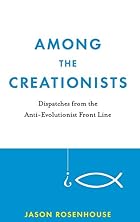
Hi everyone! This quarter in the Science, Religion, and History group we're reading Among the Creationists, by Jason Rosenhouse. This is a special quarter in which we will read two books, the other being Quantum: Einstein, Bohr, and the Great Debate about the Nature of Reality the thread is here.
This group read will take place from July through the end of September, and everyone is welcome to join! :)
3Nickelini
Not sure if I can get a copy in time for your group read, but it sounds very interesting. Thanks for pointing this book out to me.
4sjmccreary
I've put a request in at the library for this book for the end of July. So, I won't be starting until the first of August.
5The_Hibernator
Well, I probably won't start it until August either - but we'll see.
6qebo
I read this in February, and almost immediately afterward got off track with illness. I'm essentially fine now, but I've had other priorities. In hopes of catching up with the entire backlog eventually. Here, five months later, a review: http://www.librarything.com/topic/152577#4184650 .
7klobrien2
I'm so glad you're better, qebo!
Thanks for the review--I'm certainly more apt to read the book after reading your analysis.
Best,
Karen O.
Thanks for the review--I'm certainly more apt to read the book after reading your analysis.
Best,
Karen O.
8sjmccreary
I started the book this morning and have already reached the mid-point. Probably I'll read a while more this evening.
I don't know what I expected from it. I am Christian but accept the truth of evolution, so I do not feel threatened by anything he has said yet. In fact, so far, I am feeling his frustration. Trying to talk reason to those people is just impossible. And yet, it's hard to stop trying. It's so incredible that they actually believe the outrageous things they say. Personally, I've never had a creation vs evolution discussion with a Fundamentalist, but his descriptions sound exactly like the King James Version vs any-other-bible discussions I have read and experienced with the KJV-only people (very likely, they are mostly the same group).
Enjoying the book, and looking forward to finishing it very soon.
I don't know what I expected from it. I am Christian but accept the truth of evolution, so I do not feel threatened by anything he has said yet. In fact, so far, I am feeling his frustration. Trying to talk reason to those people is just impossible. And yet, it's hard to stop trying. It's so incredible that they actually believe the outrageous things they say. Personally, I've never had a creation vs evolution discussion with a Fundamentalist, but his descriptions sound exactly like the King James Version vs any-other-bible discussions I have read and experienced with the KJV-only people (very likely, they are mostly the same group).
Enjoying the book, and looking forward to finishing it very soon.
9Chatterbox
I've put in a request for this from the library, but it has to travel from Narrangasett, so who knows... Still, would be interested in joining the discussion.
10sjmccreary
Still making progress, although the second half is slower-going than the first was. I am bogging down - and in the process getting my back up a bit - as he seems to be attacking the basic tenets of God, and Christianity. (I finally had to abandon chapter 24, "Groaning under the Curse", and went on to the next chapter without finishing.) Although, he is sticking mostly with OT references and I am curious about why Jews are being excluded from this. I know there is an upcoming chapter about his own Jewish heritage, so maybe that will address those concerns.
Still finding the book worthwhile and interesting, and still making progress.
Still finding the book worthwhile and interesting, and still making progress.
11aulsmith
10: He is saying that the basic tenets of Western theism do not make sense in the light of what we know about evolution. If pointing out a basic discrepancy is an attack, then you could say he is making an attack. He will continue to critique attempts to reconcile the Western theistic position with evolution throughout the rest of the book.
12sjmccreary
#11 I understand what you are saying. He was clear in the beginning what his own position was. However, I was having trouble following his "critiques" and some of them didn't seem any more logical to me than the positions he was arguing against. Perhaps I was too tired to be reading, but I was having trouble determining which arguments were his own, and which were the opposing arguments.
13aulsmith
12: Chapter 24 is pretty dense. Here's what I got:
Christians have historically avoided the problem of theodicy (why God allows evil and suffering) with the doctrine of original sin. What we know about evolution upsets this explanation because it places the bulk of suffering before the emergence of human beings and therefore before the original sin argument makes sense. Creationists don't have a problem with theodicy because they deny evolution and stick with the historical solution. Atheists don't have a problem because they deny the existence of a god. (Inferred, but not stated, is that other religious beliefs who have a different take on theodicy are not being considered -- which is why he's only discussing Christians in this chapter).
However, all non-Creationist Christians have a problem. Their fundamental solution to the problem of theodicy is undermined.
He then makes a whirl-wind tour of the major post-evolutionary (Christian) proposals to solve the problem of theodicy, prods them a bit either from the point-of-view of the Creationists, the atheists, or simply other philosophers, and finds them all wanting. I was familiar with most of these arguments and generally knew what their weaknesses were, so for me this was an excellent review. However, if it's new territory, then this chapter requires not only close reading, but perhaps supplemental reading in order to evaluate its arguments.
Christians have historically avoided the problem of theodicy (why God allows evil and suffering) with the doctrine of original sin. What we know about evolution upsets this explanation because it places the bulk of suffering before the emergence of human beings and therefore before the original sin argument makes sense. Creationists don't have a problem with theodicy because they deny evolution and stick with the historical solution. Atheists don't have a problem because they deny the existence of a god. (Inferred, but not stated, is that other religious beliefs who have a different take on theodicy are not being considered -- which is why he's only discussing Christians in this chapter).
However, all non-Creationist Christians have a problem. Their fundamental solution to the problem of theodicy is undermined.
He then makes a whirl-wind tour of the major post-evolutionary (Christian) proposals to solve the problem of theodicy, prods them a bit either from the point-of-view of the Creationists, the atheists, or simply other philosophers, and finds them all wanting. I was familiar with most of these arguments and generally knew what their weaknesses were, so for me this was an excellent review. However, if it's new territory, then this chapter requires not only close reading, but perhaps supplemental reading in order to evaluate its arguments.
14sjmccreary
#13 The way you say it sounds so simple! I should go back and read chapter 24 again.
15sjmccreary
Well, I finished the book last week and have already returned it to the library. I did not go back and re-read chapter 24.
It turned out to be surprisingly thought-provoking for such a slim book. I learned more about the specific arguments for Creationism than I knew before. As I commented above, I was troubled by some of the author's comments in the middle of the book. They struck me at the time as a commentary on Christianity in general, which he was delighted to prove to be illogical.
As a pro-evolutionary Christian, I felt like he was making arguments that were untrue - I don't believe several of the points he was so pleased to have debunked. And I thought that many of the "if" portions of his if-then arguments concerning the Bible and Old Testament were inaccurate - which caused his conclusion to collapse for me. I don't know whether he was so focused on Creationist Christians that he forgot about the rest of us, or whether he was lumping us together in the same basket for some other reason. There were snippets of thoughts scattered throughout the book which led me to believe that he did realize that there are "other" Christians besides those he was focused on. I wish he had taken a couple of paragraphs to explore those thoughts more coherently.
The other possibility that occurred to me was that, perhaps, my beliefs are not as mainstream as I had assumed. I recall from childhood having an understanding of the concept of predestination, for example, which I still accept without trouble - despite the reams of paper covered with arguments and justifications by theologians from many centuries. In fact, a very good friend of mine once stated, "I would never go to a X church - they believe in predestination." I didn't say out loud that X was exactly the denomination that I had been raised in and (still) identify myself with, although we were both attending another church at that time. But that incident prompted me to learn more about the different arguments for and against predestination, and I began to understand why he would want to distance himself. I don't buy into what seems to be the official dogma of the X church concerning predestination, either.
Likewise, many of the claims in this book about what Christians believe didn't mesh with my own beliefs. The concept of Original Sin has always baffled me, too. Even as a child, I understood that dinosaurs were real, despite their not being mentioned in Genesis. And that they had roamed the earth for a very long time. At an early age, I understood that the 6 days of creation could not be literal 24-hour days. I understood that the creation story in Genesis was simply an attempt by early civilization to explain how we came to be. All cultures have such stories, don't they? The problem comes when people try to use a creation "myth" as a substitute for science, as the people he described in the book attempt to do. Although, the sequence of events in Genesis, in general, aren't that far off track, are they? First the heavens and earth were formed, then water and atmosphere, then plants and animals of all kinds, then larger animals, and then humans.
The inconsistencies that he mentioned do not trouble me. The Bible is a very old book written over an even longer time by many different people. Handed down orally, perhaps, even before it began to to be written. Of course there will be oddities and inconsistencies. And it does not even claim to contain all information. So, yes, Cain was married - but not necessarily to his sister. And there were other people from whom he needed protection after he killed his brother. Just because Genesis doesn't explain how these people came to be, doesn't mean that the only explanation is that they were also children of Adam and Eve. I don't know why God allows evil and suffering. If I could understand God then I wouldn't be human. (Although I came to favor the benevolent-parent-who-knows-best scenario, after standing by and allowing my 4-year old daughter to be strapped to a table by total strangers who then rammed a tube down her throat to pump the contents of her stomach out after she ingested too much koolaid-flavored cough medicine. She surely suffered during that ordeal.) I am not a philosopher - arguing every point to its final conclusion. It is enough for me to claim that God is the creator, and that science is our attempt to understand how and why. For me, God's primary creation was not the physical world, but the spiritual. I guess that is why I do not fear science.
As I write these thoughts, committing them to paper (as it were) for the first time, I realize that they sound simple and naive - childish. And perhaps they are. (And that's OK with me. "I tell you the truth, anyone who will not receive the kingdom of God like a little child will never enter it." Mark 10:15) I am interested in the discoveries being made by scientists, and am willing to let the philosophers have at it as well. It appears that my own brand of Christian belief may fall under a "liberal" umbrella, so I will be attempting to learn more about that. (I knew for certain that I wasn't "fundamental", and had just assumed that I would be considered "moderate".) However, in any case, I am definitely NOT teetering on the brink of atheism. I have escaped his arguments with my faith intact - and even energized.
The book - definitely worth the time and effort. His arguments, while I did not agree with all of them, were interesting and thought-provoking. I am glad to have had the opportunity to read it.
It turned out to be surprisingly thought-provoking for such a slim book. I learned more about the specific arguments for Creationism than I knew before. As I commented above, I was troubled by some of the author's comments in the middle of the book. They struck me at the time as a commentary on Christianity in general, which he was delighted to prove to be illogical.
As a pro-evolutionary Christian, I felt like he was making arguments that were untrue - I don't believe several of the points he was so pleased to have debunked. And I thought that many of the "if" portions of his if-then arguments concerning the Bible and Old Testament were inaccurate - which caused his conclusion to collapse for me. I don't know whether he was so focused on Creationist Christians that he forgot about the rest of us, or whether he was lumping us together in the same basket for some other reason. There were snippets of thoughts scattered throughout the book which led me to believe that he did realize that there are "other" Christians besides those he was focused on. I wish he had taken a couple of paragraphs to explore those thoughts more coherently.
The other possibility that occurred to me was that, perhaps, my beliefs are not as mainstream as I had assumed. I recall from childhood having an understanding of the concept of predestination, for example, which I still accept without trouble - despite the reams of paper covered with arguments and justifications by theologians from many centuries. In fact, a very good friend of mine once stated, "I would never go to a X church - they believe in predestination." I didn't say out loud that X was exactly the denomination that I had been raised in and (still) identify myself with, although we were both attending another church at that time. But that incident prompted me to learn more about the different arguments for and against predestination, and I began to understand why he would want to distance himself. I don't buy into what seems to be the official dogma of the X church concerning predestination, either.
Likewise, many of the claims in this book about what Christians believe didn't mesh with my own beliefs. The concept of Original Sin has always baffled me, too. Even as a child, I understood that dinosaurs were real, despite their not being mentioned in Genesis. And that they had roamed the earth for a very long time. At an early age, I understood that the 6 days of creation could not be literal 24-hour days. I understood that the creation story in Genesis was simply an attempt by early civilization to explain how we came to be. All cultures have such stories, don't they? The problem comes when people try to use a creation "myth" as a substitute for science, as the people he described in the book attempt to do. Although, the sequence of events in Genesis, in general, aren't that far off track, are they? First the heavens and earth were formed, then water and atmosphere, then plants and animals of all kinds, then larger animals, and then humans.
The inconsistencies that he mentioned do not trouble me. The Bible is a very old book written over an even longer time by many different people. Handed down orally, perhaps, even before it began to to be written. Of course there will be oddities and inconsistencies. And it does not even claim to contain all information. So, yes, Cain was married - but not necessarily to his sister. And there were other people from whom he needed protection after he killed his brother. Just because Genesis doesn't explain how these people came to be, doesn't mean that the only explanation is that they were also children of Adam and Eve. I don't know why God allows evil and suffering. If I could understand God then I wouldn't be human. (Although I came to favor the benevolent-parent-who-knows-best scenario, after standing by and allowing my 4-year old daughter to be strapped to a table by total strangers who then rammed a tube down her throat to pump the contents of her stomach out after she ingested too much koolaid-flavored cough medicine. She surely suffered during that ordeal.) I am not a philosopher - arguing every point to its final conclusion. It is enough for me to claim that God is the creator, and that science is our attempt to understand how and why. For me, God's primary creation was not the physical world, but the spiritual. I guess that is why I do not fear science.
As I write these thoughts, committing them to paper (as it were) for the first time, I realize that they sound simple and naive - childish. And perhaps they are. (And that's OK with me. "I tell you the truth, anyone who will not receive the kingdom of God like a little child will never enter it." Mark 10:15) I am interested in the discoveries being made by scientists, and am willing to let the philosophers have at it as well. It appears that my own brand of Christian belief may fall under a "liberal" umbrella, so I will be attempting to learn more about that. (I knew for certain that I wasn't "fundamental", and had just assumed that I would be considered "moderate".) However, in any case, I am definitely NOT teetering on the brink of atheism. I have escaped his arguments with my faith intact - and even energized.
The book - definitely worth the time and effort. His arguments, while I did not agree with all of them, were interesting and thought-provoking. I am glad to have had the opportunity to read it.
16aulsmith
15: Thanks for your very interesting commentary.
The usual dividing line between moderate and liberal Christians is believing in the bodily resurrection of Jesus, though I'm sure there are lots of border wars still being fought over that dividing line.
Rosenhouse's main beef with non-Fundamentalist Christians is this: Fundamentalists have a coherent sense of doctrine and understand that evolution completely undermines the doctrine. Non-Fundamentalist pretend that they can just add evolution and everything else is still okay. But evolution really undermines a lot more than a six day creation. As Chapter 24 explains it adds significantly to the the problem of theodicy. It undermines the belief that humans are the central point of God's interest in this universe. And it eliminates the pre-lapsarian mythology to which the world can return when the kingdom comes.
I don't think Roadhouse cares what people believe. I think he cares about them dumbing down evolution to arrive at doctrines to believe. I think he feels the Fundamentalists are more honest in their opposition to evolution than many non-fundamentalist doctrines which pay lip service to evolution but don't really understand the implications.
Of course, for many liberal Christians the doctrines are irrelevant. It is meeting the risen Christ and being changed by him. Roadhouse has no comment on that sort of belief at all.
The reason I like the book is because even as a moderate Christian who spent 45 years white-washing evolution to make it fit what I believed, I understood that the Fundamentalist had a point. If there's no original sin, then we don't need a savior. And if we don't need a savior, then Jesus has no special claim on our attention. Is meeting the risen Christ in the community any different from experiencing Buddha in the dharma? Liberal Christians say yes, but it never made sense to me. Many people tend to treat Fundamentalists like they're stupid hicks who don't realize the world is round, but they are actually protecting something that is very precious to them. Roadhouse gets that. He thinks ultimately what they're protecting can't be salvaged; but he gets what they're trying to do.
Oh, btw, Genesis has the sun and the moon being created after plants, among other glaring inconsistencies with the geologic record.
The usual dividing line between moderate and liberal Christians is believing in the bodily resurrection of Jesus, though I'm sure there are lots of border wars still being fought over that dividing line.
Rosenhouse's main beef with non-Fundamentalist Christians is this: Fundamentalists have a coherent sense of doctrine and understand that evolution completely undermines the doctrine. Non-Fundamentalist pretend that they can just add evolution and everything else is still okay. But evolution really undermines a lot more than a six day creation. As Chapter 24 explains it adds significantly to the the problem of theodicy. It undermines the belief that humans are the central point of God's interest in this universe. And it eliminates the pre-lapsarian mythology to which the world can return when the kingdom comes.
I don't think Roadhouse cares what people believe. I think he cares about them dumbing down evolution to arrive at doctrines to believe. I think he feels the Fundamentalists are more honest in their opposition to evolution than many non-fundamentalist doctrines which pay lip service to evolution but don't really understand the implications.
Of course, for many liberal Christians the doctrines are irrelevant. It is meeting the risen Christ and being changed by him. Roadhouse has no comment on that sort of belief at all.
The reason I like the book is because even as a moderate Christian who spent 45 years white-washing evolution to make it fit what I believed, I understood that the Fundamentalist had a point. If there's no original sin, then we don't need a savior. And if we don't need a savior, then Jesus has no special claim on our attention. Is meeting the risen Christ in the community any different from experiencing Buddha in the dharma? Liberal Christians say yes, but it never made sense to me. Many people tend to treat Fundamentalists like they're stupid hicks who don't realize the world is round, but they are actually protecting something that is very precious to them. Roadhouse gets that. He thinks ultimately what they're protecting can't be salvaged; but he gets what they're trying to do.
Oh, btw, Genesis has the sun and the moon being created after plants, among other glaring inconsistencies with the geologic record.
17sjmccreary
#16 Thank you for your insightful comments.
Tell me, after spending 45 years white-washing evolution, as you put it, where do you now stand?
Tell me, after spending 45 years white-washing evolution, as you put it, where do you now stand?
18aulsmith
17: I'm an atheist. I tried a bunch of the liberal Christian solutions that Roadhouse critiques and found them wanting for many of the same reasons he does. I looked into Buddhism and Taoism and didn't find anything I wanted. Then I had a conversion experience and realized my life was much better without a god, so here I am.
19sjmccreary
I'm glad to hear that you were able to find what you were searching for. I think the most we can hope for is for each of us to find a belief system that enables us to feel comfortable with the world and ourselves.
20JDHomrighausen
Just started and am about 20 pages in. I'm really enjoying the book, although his preface makes me worry he will try to sprawl over too many topics. He's very good (so far) at mixing narrative and scientific/religious critique.
I recently read Chris Stedman's Faitheist, about a young secular humanist who eschews the anger, vitriol, and religion-bashing he sees in much of the atheist movement in favor of dialogue and engaged conversation with the faithful. Rosenhouse's patient and respectful disagreement with conservative Christians reminds me of Stedman's approach.
I recently read Chris Stedman's Faitheist, about a young secular humanist who eschews the anger, vitriol, and religion-bashing he sees in much of the atheist movement in favor of dialogue and engaged conversation with the faithful. Rosenhouse's patient and respectful disagreement with conservative Christians reminds me of Stedman's approach.
21qebo
20: Yeah, he is not anti-religion in principle. In my review, I quoted a bit from his chapter “Why I Love Being Jewish”. He is focused on specific beliefs, as aulsmith describes so coherently, and to his credit he understands that giving up these beliefs would be a real emotional and psychological loss; this is not a you-believe-in-Santa-Claus-and-fairy-tales dismissal.
I’m coming at this mostly from the outside; my parents had lapsed from a Protestant background by the time I was born, and belief-wise I’m limited to Quakers and Unitarian Universalists. It’s not that I’m opposed to Christianity in all its forms, but that the language and rituals have no meaning.
One effort a reconciliation is this: http://thegreatstory.org/MD-writings.html, the gist of which is that everything Christians care about can be recast in terms of evolution. I don’t, in my life, see any particular need for this, and Michael Dowd is a tad tooself-promotional evangelical for my taste, but he’s coming from a born-again fundamentalist background and has a sense of what people of this ilk might be looking for, or might have heard about evolution. He spoke here at the UU church (“low hanging fruit” he described it) and also at a Mennonite church (all flavors of Mennonites around here, from very conservative to very liberal).
I’m coming at this mostly from the outside; my parents had lapsed from a Protestant background by the time I was born, and belief-wise I’m limited to Quakers and Unitarian Universalists. It’s not that I’m opposed to Christianity in all its forms, but that the language and rituals have no meaning.
One effort a reconciliation is this: http://thegreatstory.org/MD-writings.html, the gist of which is that everything Christians care about can be recast in terms of evolution. I don’t, in my life, see any particular need for this, and Michael Dowd is a tad too
22JDHomrighausen
My review.
Among the Creationists: Dispatches from the Anti-Evolutionist Front Line by Jason Rosenhouse
Rosenhouse, a math professor, did his postdoc in Kansas. While there he worked with the state department of education developing science and math curriculum. This was during a time when creationists were lobbying the state to teach their "science" in the classroom. So Rosenhouse went to one of their conferences. He was hooked. This book is the record of Rosenhouse's experiences at various creationist and intelligent design conferences and the Kentucky creationist museum. Interspersed throughout the book are his refutations of creationism and ID and his explanation of his own secular atheist beliefs.
I admire the way he respectfully debates with creationists. Most people find their ignorance of science irritating. Rosenhouse reports that he enjoys debating with them because in them he sees a passion for the big scientific questions that he shares. He finds a broad spectrum of creationists, from Bible-thumpers to ones with scientific backgrounds who are at least attempting to find viable scientific models for the flood, for the days of creation, etc. What Rosenhouse sees as their concern is not evolution per se, but the perceived dehumanizing effects of evolution. What special and sacred place do humans occupy in a world where we are not starkly separated from primates? I admire the way in which we tries to dig deeper into their worldview and sympathetically understand their concerns.
What else should we know about the creationists? For one, they are expert scienticians.** They are good at throwing around scientific terms, although they often misuse them. Rosenhouse catches this especially when he hears a talk involving information theory, which is one of the foundations of intelligent design. As a mathematician he is not afraid to stand up at Q&A and point out the blatant misuse of terms and bad chain of logic that a speaker has employed. Ironically fellow conference participants - most of whom have no scientific background - often tell him he needs to learn more about science!
Another interesting feature of this subculture is their common belief in a doctrine called the "perspicuity of scripture." If God wrote the Bible to speak to everyone, they say, then anyone who is literate should be able to comprehend scripture. If Genesis says "day," then by gum, it means day! This mindset is rather foreign to me, fascinated as I am by historical and literary approaches to the Bible. They seem to forget that a literate layman's ability to read the Bible presupposes a Biblical expert's need to translate it, which always involves some amount of interpretation. But this kind of dissecting of the broader background of the creationist worldview makes this book a great window into creationist thought.
And liberal Christians don't come off any easier in Rosenhouse's estimate. He reviews various liberal theologians' approaches to Genesis and finds most of them lacking. The main hermeneutic he seems amenable to is just admitting that the Bible is written by humans who bring their culture into the way they understand God, and rather than being God's word word-for-word the Bible is a human document that provides glimpses into God. I have thought this for some time but Rosenhouse's subjects do not.
One of my favorite chapters was his description of his identity as a cultural Jew. I have long admired Jewish culture for their focus on education and debate. Rosenhouse wants the culture without the metaphysics - one might call him a religious non-realist. There are days I feel the same way. But like Rosenhouse, one wonders if cultural religion will last. If every Jew went this route, would there still be synagogues? Are the creationists right in believing that once you start to let go of literalism and fundamentalism, secularist atheist isn't far off?
Among the Creationists: Dispatches from the Anti-Evolutionist Front Line by Jason Rosenhouse
Rosenhouse, a math professor, did his postdoc in Kansas. While there he worked with the state department of education developing science and math curriculum. This was during a time when creationists were lobbying the state to teach their "science" in the classroom. So Rosenhouse went to one of their conferences. He was hooked. This book is the record of Rosenhouse's experiences at various creationist and intelligent design conferences and the Kentucky creationist museum. Interspersed throughout the book are his refutations of creationism and ID and his explanation of his own secular atheist beliefs.
I admire the way he respectfully debates with creationists. Most people find their ignorance of science irritating. Rosenhouse reports that he enjoys debating with them because in them he sees a passion for the big scientific questions that he shares. He finds a broad spectrum of creationists, from Bible-thumpers to ones with scientific backgrounds who are at least attempting to find viable scientific models for the flood, for the days of creation, etc. What Rosenhouse sees as their concern is not evolution per se, but the perceived dehumanizing effects of evolution. What special and sacred place do humans occupy in a world where we are not starkly separated from primates? I admire the way in which we tries to dig deeper into their worldview and sympathetically understand their concerns.
What else should we know about the creationists? For one, they are expert scienticians.** They are good at throwing around scientific terms, although they often misuse them. Rosenhouse catches this especially when he hears a talk involving information theory, which is one of the foundations of intelligent design. As a mathematician he is not afraid to stand up at Q&A and point out the blatant misuse of terms and bad chain of logic that a speaker has employed. Ironically fellow conference participants - most of whom have no scientific background - often tell him he needs to learn more about science!
Another interesting feature of this subculture is their common belief in a doctrine called the "perspicuity of scripture." If God wrote the Bible to speak to everyone, they say, then anyone who is literate should be able to comprehend scripture. If Genesis says "day," then by gum, it means day! This mindset is rather foreign to me, fascinated as I am by historical and literary approaches to the Bible. They seem to forget that a literate layman's ability to read the Bible presupposes a Biblical expert's need to translate it, which always involves some amount of interpretation. But this kind of dissecting of the broader background of the creationist worldview makes this book a great window into creationist thought.
And liberal Christians don't come off any easier in Rosenhouse's estimate. He reviews various liberal theologians' approaches to Genesis and finds most of them lacking. The main hermeneutic he seems amenable to is just admitting that the Bible is written by humans who bring their culture into the way they understand God, and rather than being God's word word-for-word the Bible is a human document that provides glimpses into God. I have thought this for some time but Rosenhouse's subjects do not.
One of my favorite chapters was his description of his identity as a cultural Jew. I have long admired Jewish culture for their focus on education and debate. Rosenhouse wants the culture without the metaphysics - one might call him a religious non-realist. There are days I feel the same way. But like Rosenhouse, one wonders if cultural religion will last. If every Jew went this route, would there still be synagogues? Are the creationists right in believing that once you start to let go of literalism and fundamentalism, secularist atheist isn't far off?
23sjmccreary
Nice review.
24JDHomrighausen
Thanks!
25aulsmith
22 They seem to forget that a literate layman's ability to read the Bible presupposes a Biblical expert's need to translate it, which always involves some amount of interpretation.
Not if you assume the translators of the King James Bible were divinely inspired to translate it correctly.
Not if you assume the translators of the King James Bible were divinely inspired to translate it correctly.
26sjmccreary
#25 them and none other? I'll assume no such thing, thanks.
27aulsmith
I meant if "one assumes," as the people who you were critiquing normally do. Once one goes off into never-neverland with unverifiable statements, one can invent a vast, internally consistent system that meets outsider objections efficiently.
28sjmccreary
Oh, I understood what you meant. I forgot my *smirk* after that last statement - sorry about that. Never-neverland is a good way of putting it. And "unverifiable" is stronger than many of the statements I've heard/read from the KJV-only camp.

