sandstone78's Reading Hideout, 2013 - Better Late than Never
Talk The Green Dragon
Join LibraryThing to post.
This topic is currently marked as "dormant"—the last message is more than 90 days old. You can revive it by posting a reply.
1sandstone78

Hello, everyone. I'm sandstone78, primarily a reader of fantasy and science fiction with the occasional non-fiction or other genre mixed in. Some of you may know me from such posts in FantasyFans as "tl;dr" and "wall of text"- I enjoy taking a critical look at the books I read, and discussing them with other people, and the reading journal format in this group seems ideal for that. I am a woman of questioning sexuality and a feminist, and I work as a computer programmer and administrator of a Java web application that supports brain imaging research- I am therefore inclined to variously rant about, grouse about, nitpick, or laugh and shake my head at stories with dysfunctional gender roles or romance, computers doing improbable things, and "but brain research!" justifications of sexist or otherwise distasteful behavior.
I am always open to recommendations, and discussion of any book in my library whether I've read it or not yet. I don't generally mind spoilers unless the mystery is the lynchpin of the story, eg Yeine's fate in The Hundred Thousand Kingdoms or Tori's fate in Ultraviolet. Things guaranteed to catch my interest are engagement with gender other than "girl proves women are just as awesome as men" or "men are often horrible and oppressive to women in premodern historical periods," stories with swordswomen or female wizards or female space pilots as the protagonist without a focus on romance with a man in the same profession, stories with female protagonists that have no romantic subplot, romances with lesbian protagonists who get the girl, and settings without humans or stories told from non-human perspectives (generally excluding stories told from the perspective of Earth animals- I'm thinking more along the lines of Delan the Mislaid or The Admonishments of Kherishdar or The Pride of Chanur). Things that are likely to significantly decrease my interest are stories with a war or military focus, a grimdark/crapsack world setting, stories with ensemble casts where one or fewer women are mentioned in the blurb, and "alpha male" love interests.
My ratings are made up, and the stars don't matter. I am as likely to give a book five stars because it's great fun and just what I needed at the time (Melisa Michaels' Skirmish) or because of personal impact (Trouble and Her Friends, Biting the Sun) as I am for literary merit (Italo Calvino's Invisible Cities). Taste is subjective, and I often find books I will enjoy based on other people's negative reviews complaining about things I look for, so I will try to be specific in my dislikes as well to pass that on.
I understand that it's customary to provide refreshments here, so please enjoy the freshly-baked bread depicted in this image (appropriately titled "Bread, Roll Crispy, Delicious" at the source), and I look forward to many enjoyable discussions with all of you!

2sandstone78
This is the list of works I have read to date this year. Please feel free to bring any of them up at any time this year!
January
1 First Channel, Jean Lorrah and Jacqueline Lichtenberg ★★½
2 The Swan Kingdom, Zoë Marriott ★★★★½
3 The Exile and the Sorcerer, Jane Fletcher ★★★★★
4 The Traitor and the Chalice, Jane Fletcher ★★★★
5 On a Red Station, Drifting, Aliette de Bodard ★★★★½
February
6 Sabriel, Garth Nix ★★★★
7 Conspirator, C.J. Cherryh ★★★½
8 The Boxcar Children, Gertrude Chandler Warner ★★★★★
9 The Hundred Thousand Kingdoms, N.K. Jemisin ★★★
10 Hawksong, Amelia Atwater-Rhodes ★★★★
March
11 Deceiver, C.J. Cherryh ★★★★½
12 Snakecharm, Amelia Atwater-Rhodes ★★★½
13 Falcondance, Amelia Atwater-Rhodes ★★★★½
14 Wolfcry, Amelia Atwater-Rhodes ★★★★½
15 Wyvernhail, Amelia Atwater-Rhodes ★★★½
16 Betrayer, C.J. Cherryh ★★★
17 Lirael, Garth Nix ★★★★
18 Abhorsen, Garth Nix ★★★½
19 13675094::The Missing Queen, Samhita Arni ★★★★★
April
20 Green Rider, Kristin Britain ★★★½
21 Five-Twelfths of Heaven, Melissa Scott ★★★★★
22 Intruder, C.J. Cherryh ★★★★★
23 Ultraviolet, R.J. Anderson ★★★½
24 Angel on the Ropes, Jill Shultz ★★★½
25 16178::Archangel, Sharon Shinn ★★★★½
26 The Broken Kingdoms, N.K. Jemisin ★★★
May
27 12772977::Protector, C.J. Cherryh ★★★★
28 13167630::Deliberations, C.J. Cherryh ★★★★
29 Conflict of Honors (in The Dragon Variation), Sharon Lee and Steve Miller ★★★½
30 Agent of Change (in The Agent Gambit), Sharon Lee and Steve Miller ★★★½
31 Carpe Diem (in The Agent Gambit), Sharon Lee and Steve Miller ★★★½
32 Dragon Bones, Patricia Briggs ★★
33 Plan B (in Korval's Game), Sharon Lee and Steve Miller ★★★½
34 I Dare (in Korval's Game), Sharon Lee and Steve Miller ★★★½
June
35 The Kingdom of Gods, N.K. Jemisin ★★★★
36 Silence in Solitude, Melissa Scott ★★★★★
37 Enchanting the Lady, Kathryne Kennedy ★★½
38 The Empress of Earth (Revised E-book Version), Melissa Scott ★★★★★
39 Shards of Honor (in Cordelia's Honor), Lois McMaster Bujold ★
40 The Girl Who Leapt Through Time, Yasutaka Tsutsui ★★½
41 36256::City of Bones, Martha Wells ★★★½
42 12564748::Quicksilver, R.J. Anderson ★★½
43 The Magicians and Mrs. Quent, Galen Beckett (aka Mark Anthony) ★★
July
44 Mistwood, Leah Cypess ★½
45 The Shocks of Adversity, William Leisner ★★★★
46 Black Ships, Jo Graham ★★½
47 Zahrah the Windseeker, Nnedi Okorafor-Mbachu ★★★★
48 13659733::Winter Well, ed Kay T. Holt ★★★
49 Ill Wind, Rachel Caine ★★★★
50 Skirmish, Melisa Michaels ★★★★★
August
51 Wild Seed (in Seed to Harvest), Octavia Butler ★★★★
52 HeartMate, Robin D. Owens ★
53 13630471::The Swan Maiden, Lynn E. O'Connacht ★★★★
54 14145577::Invitations, C.J. Cherryh ★★★
55 Sandry's Book, Tamora Pierce ★★★½
56 Tris's Book, Tamora Pierce ★★★
57 Daja's Book, Tamora Pierce ★★★
September
58 Briar's Book, Tamora Pierce ★★★
59 The Aphorisms of Kherishdar, M.C.A. Hogarth ★★★★★
60 The Admonishments of Kherishdar, M.C.A. Hogarth ★★
61 Cold Magic, Kate Elliott ★★★
62 Magic Steps, Tamora Pierce ★★
63 Street Magic, Tamora Pierce ★★★
64 The Song of Mavin Manyshaped, Sheri Tepper ★★★★
65 The Perilous Life of Jade Yeo, Zen Cho ★★★★
66 The Left Hand of Darkness, Ursula K. Le Guin ★★★★★
October
67 14325022::Woman of the Sun, Woman of the Moon, Benjanun Sriduangkaew ★★★★★
68 13625558::Black Blossom, M.C.A. Hogarth ★★★
69 The Other Half of the Sky, eds Athena Andreadis and Kay T. Holt ★★★★
70 Mind of My Mind (in Seed to Harvest), Octavia Butler ★★★★★
71 Moreta: Dragonlady of Pern, Anne McCaffrey ★★★★
72 Nerilka's Story, Anne McCaffrey ★★★★½
73 Crossed Genres Magazine 2.0 Book One, eds Bart R. Leib and Kay T. Holt ★★★★★
74 Coraline, Neil Gaiman ★★★
75 13551587::Razor's Edge, Martha Wells ★★★★
76 11658042::Wolf at the Door, J. Damask (aka Joyce Chng) ★★★½
November
77 Jovah's Angel, Sharon Shinn ★★★★½
78 Indigo Time, Sally McBride ★
79 Double Enchantment, Kathryne Kennedy ★★★★½
80 Ascension, Jacqueline Koyanagi ★★★★★
81 Howl's Moving Castle, Diana Wynne Jones ★★★★
82 Into the Dark Lands, Michelle Sagara West ★★★★
83 Bone and Jewel Creatures, Elizabeth Bear ★★★
84 The Eye of the World, Robert Jordan ★★★½
December
85 14034342::Render, Heidi C. Vlach ★★★★★
86 Doppelganger (aka 776303::Warrior), Marie Brennan ★★★★
87 Book of Iron, Elizabeth Bear ★★★½
88 14540683::The Blade to Your Hand, M.C.A. Hogarth, narrated by K. Orion Fray ★★★★
89 Freedom, Spiced and Drunk, M.C.A. Hogarth, narrated by Moe Egan ★★★
90 8291::Cold Fire, Tamora Pierce ★★★½
91 Crystal Soldier (in The Crystal Variation), Sharon Lee and Steve Miller ★★★★
92 1257758::Ordinary People, Eleanor Arnason ★★★★★
93 Warrior and Witch (aka 1067376::Witch), Marie Brennan ★★★½
94 The Castle in the Attic, Elizabeth Winthrop ★★★★½
95 Scattered Among Strange Worlds, Aliette de Bodard ★★★
96 The Alleluia Files, Sharon Shinn ★★★½
97 Hogfather, Terry Pratchett ★★★★
98 The Battle for the Castle, Elizabeth Winthrop ★★★
99 Shatterglass, Tamora Pierce ★★★★
100 The Witch and the Changeling, Lynn E. O'Connacht ★★★½
My original goal was to read about 75 books this year, and with 25 of those to be off the looming peak of Mount TBR. The former has gone so well I have stretched my goal to 100, the latter is still languishing- I have tentatively dropped it down to 20 off Mount TBR, with hopes to do better next year.


January
1 First Channel, Jean Lorrah and Jacqueline Lichtenberg ★★½
2 The Swan Kingdom, Zoë Marriott ★★★★½
3 The Exile and the Sorcerer, Jane Fletcher ★★★★★
4 The Traitor and the Chalice, Jane Fletcher ★★★★
5 On a Red Station, Drifting, Aliette de Bodard ★★★★½
February
6 Sabriel, Garth Nix ★★★★
7 Conspirator, C.J. Cherryh ★★★½
8 The Boxcar Children, Gertrude Chandler Warner ★★★★★
9 The Hundred Thousand Kingdoms, N.K. Jemisin ★★★
10 Hawksong, Amelia Atwater-Rhodes ★★★★
March
11 Deceiver, C.J. Cherryh ★★★★½
12 Snakecharm, Amelia Atwater-Rhodes ★★★½
13 Falcondance, Amelia Atwater-Rhodes ★★★★½
14 Wolfcry, Amelia Atwater-Rhodes ★★★★½
15 Wyvernhail, Amelia Atwater-Rhodes ★★★½
16 Betrayer, C.J. Cherryh ★★★
17 Lirael, Garth Nix ★★★★
18 Abhorsen, Garth Nix ★★★½
19 13675094::The Missing Queen, Samhita Arni ★★★★★
April
20 Green Rider, Kristin Britain ★★★½
21 Five-Twelfths of Heaven, Melissa Scott ★★★★★
22 Intruder, C.J. Cherryh ★★★★★
23 Ultraviolet, R.J. Anderson ★★★½
24 Angel on the Ropes, Jill Shultz ★★★½
25 16178::Archangel, Sharon Shinn ★★★★½
26 The Broken Kingdoms, N.K. Jemisin ★★★
May
27 12772977::Protector, C.J. Cherryh ★★★★
28 13167630::Deliberations, C.J. Cherryh ★★★★
29 Conflict of Honors (in The Dragon Variation), Sharon Lee and Steve Miller ★★★½
30 Agent of Change (in The Agent Gambit), Sharon Lee and Steve Miller ★★★½
31 Carpe Diem (in The Agent Gambit), Sharon Lee and Steve Miller ★★★½
32 Dragon Bones, Patricia Briggs ★★
33 Plan B (in Korval's Game), Sharon Lee and Steve Miller ★★★½
34 I Dare (in Korval's Game), Sharon Lee and Steve Miller ★★★½
June
35 The Kingdom of Gods, N.K. Jemisin ★★★★
36 Silence in Solitude, Melissa Scott ★★★★★
37 Enchanting the Lady, Kathryne Kennedy ★★½
38 The Empress of Earth (Revised E-book Version), Melissa Scott ★★★★★
39 Shards of Honor (in Cordelia's Honor), Lois McMaster Bujold ★
40 The Girl Who Leapt Through Time, Yasutaka Tsutsui ★★½
41 36256::City of Bones, Martha Wells ★★★½
42 12564748::Quicksilver, R.J. Anderson ★★½
43 The Magicians and Mrs. Quent, Galen Beckett (aka Mark Anthony) ★★
July
44 Mistwood, Leah Cypess ★½
45 The Shocks of Adversity, William Leisner ★★★★
46 Black Ships, Jo Graham ★★½
47 Zahrah the Windseeker, Nnedi Okorafor-Mbachu ★★★★
48 13659733::Winter Well, ed Kay T. Holt ★★★
49 Ill Wind, Rachel Caine ★★★★
50 Skirmish, Melisa Michaels ★★★★★
August
51 Wild Seed (in Seed to Harvest), Octavia Butler ★★★★
52 HeartMate, Robin D. Owens ★
53 13630471::The Swan Maiden, Lynn E. O'Connacht ★★★★
54 14145577::Invitations, C.J. Cherryh ★★★
55 Sandry's Book, Tamora Pierce ★★★½
56 Tris's Book, Tamora Pierce ★★★
57 Daja's Book, Tamora Pierce ★★★
September
58 Briar's Book, Tamora Pierce ★★★
59 The Aphorisms of Kherishdar, M.C.A. Hogarth ★★★★★
60 The Admonishments of Kherishdar, M.C.A. Hogarth ★★
61 Cold Magic, Kate Elliott ★★★
62 Magic Steps, Tamora Pierce ★★
63 Street Magic, Tamora Pierce ★★★
64 The Song of Mavin Manyshaped, Sheri Tepper ★★★★
65 The Perilous Life of Jade Yeo, Zen Cho ★★★★
66 The Left Hand of Darkness, Ursula K. Le Guin ★★★★★
October
67 14325022::Woman of the Sun, Woman of the Moon, Benjanun Sriduangkaew ★★★★★
68 13625558::Black Blossom, M.C.A. Hogarth ★★★
69 The Other Half of the Sky, eds Athena Andreadis and Kay T. Holt ★★★★
70 Mind of My Mind (in Seed to Harvest), Octavia Butler ★★★★★
71 Moreta: Dragonlady of Pern, Anne McCaffrey ★★★★
72 Nerilka's Story, Anne McCaffrey ★★★★½
73 Crossed Genres Magazine 2.0 Book One, eds Bart R. Leib and Kay T. Holt ★★★★★
74 Coraline, Neil Gaiman ★★★
75 13551587::Razor's Edge, Martha Wells ★★★★
76 11658042::Wolf at the Door, J. Damask (aka Joyce Chng) ★★★½
November
77 Jovah's Angel, Sharon Shinn ★★★★½
78 Indigo Time, Sally McBride ★
79 Double Enchantment, Kathryne Kennedy ★★★★½
80 Ascension, Jacqueline Koyanagi ★★★★★
81 Howl's Moving Castle, Diana Wynne Jones ★★★★
82 Into the Dark Lands, Michelle Sagara West ★★★★
83 Bone and Jewel Creatures, Elizabeth Bear ★★★
84 The Eye of the World, Robert Jordan ★★★½
December
85 14034342::Render, Heidi C. Vlach ★★★★★
86 Doppelganger (aka 776303::Warrior), Marie Brennan ★★★★
87 Book of Iron, Elizabeth Bear ★★★½
88 14540683::The Blade to Your Hand, M.C.A. Hogarth, narrated by K. Orion Fray ★★★★
89 Freedom, Spiced and Drunk, M.C.A. Hogarth, narrated by Moe Egan ★★★
90 8291::Cold Fire, Tamora Pierce ★★★½
91 Crystal Soldier (in The Crystal Variation), Sharon Lee and Steve Miller ★★★★
92 1257758::Ordinary People, Eleanor Arnason ★★★★★
93 Warrior and Witch (aka 1067376::Witch), Marie Brennan ★★★½
94 The Castle in the Attic, Elizabeth Winthrop ★★★★½
95 Scattered Among Strange Worlds, Aliette de Bodard ★★★
96 The Alleluia Files, Sharon Shinn ★★★½
97 Hogfather, Terry Pratchett ★★★★
98 The Battle for the Castle, Elizabeth Winthrop ★★★
99 Shatterglass, Tamora Pierce ★★★★
100 The Witch and the Changeling, Lynn E. O'Connacht ★★★½
My original goal was to read about 75 books this year, and with 25 of those to be off the looming peak of Mount TBR. The former has gone so well I have stretched my goal to 100, the latter is still languishing- I have tentatively dropped it down to 20 off Mount TBR, with hopes to do better next year.


3sandstone78
To begin the discussion, the two books I've finished most recently are Kate Elliott's Cold Magic and M.C.A. Hogarth's The Admonishments of Kherishdar.
Cold Magic really turned into a slog for me, and I can't exactly pinpoint why- I suspect it's a combination of small annoyances adding up over the course of a relatively long book. Cold Fire is hanging out in "Will I continue this series?" limbo with The House on Durrow Street at this point; I'm interested in finding out what happens next, but I'm just not sure I want to commit to another 1200 more pages with these characters when I have so many other books in my TBR pile.
Annoyances to me that will not be annoyances to everyone include the "men have understanding of their magic and skill in its use through either lived experience or training, women have no understanding of their magic because they have been kept in the dark about it" trope in the main characters (cf Andevai and Rory vs Cat and another female main character), "Amazon soldier leaves Amazons because of a man/pregnancy," a ton of things happening through coincidences that result in Cat being at the exact place at the exact time for her to encounter someone (usually Andevai) or learn something about Andevai's background that gives her greater sympathy for him, and the heavy infodumping about these events throughout the first quarter of the book, including through the device of characters discussing things that they already know and have no particular reason to bring up at that point.
Alternate history isn't usually my genre, but I did find this setting interesting. However, it sometimes felt like there had been exactly three important events in the history of the world: the defeat of the Romans at Qart Hadast almost 2000 years ago, the Mande exodus from Africa after the ghoul plague several hundred years ago, and Camjiata's attempt to take over Europa within the past couple of decades- these things were all equally remarked upon by characters in the story where I would have expected the first two to just be taken for granted. While it's a good way to point out the differences between our world and the alternate, it didn't make sense to me from a story standpoint that everyone took their stereotypes about the Phoenicians from the Roman empire two thousand years before, for example, or that people are thought of as having both Celtic and Mande heritage instead of those groups who have become so intertwined becoming their own new identity after hundreds of years.
I also wasn't sure about the trolls- they are cool, but it just seems a little... iffy to me to say Native American cultures are absent from North America, and instead of them, peoples who have been treated as subhuman and often stereotyped as wearing feathered headdresses, we have sentient actually-not-human dinosaur descendents with naturally occurring feathered crests on their heads. To be fair, there seems to be no link between the troll culture and behavior and stereotypes of Native American peoples, so do think this was unintentional, and I understand the "no humans on the North American continent" is retconned in the second book, Cold Fire, to have both trolls and Native American nations sharing the continent, but it seemed a strange oversight in a book where the author has clearly put thought into diversifying the cast.
The biggest disappointment, though, was that despite Cat and Bee's strong devotion to each other, one of the selling points of the book for me, all of the other relationships driving the story are between a woman and a man or between two men: Cat and Daniel Hassi Barahal, Daniel Hassi Barahal and Tara Bell, Cat and her uncle (her aunt not even being present at the confrontation scene at the end of the story), Cat and spoiler relation, Cat and Rory, Cat and Andevai, Bee and Amadou, Bee and her father, Andevai and the mansa, Andevai and his brother, Andevai and his sister, Andevai and grandmother, Bee and the mansa, and so on. The incidental cast that Cat encounters while traveling is quite evenly divided, and Cat's chance acquaintance with Chartji does play a critical role in the end that looks like it might be expanded in the sequel, but while we get fascinating glimpses of Cat's mother, Cat's father is so much more important to her throughout the story that her mother seems almost an afterthought- those who've read further, do we get more about Cat's mother in the next books? Increased importance in the story for her might be enough of an enticement for me to continue.
I really enjoyed The Aphorisms of Kherishdar, a lovely collection of vignettes depicting everyday goings-on in the alien society of Kherishdar. Much to my disappointment, however, I really disliked The Admonishments of Kherishdar. This is also a collection of vignettes, but it lacked the cohesion and the sense of an alien culture that drew me into the first volume. The subject matter of appropriate punishment for crimes was decidedly darker than the appreciation of daily life, as I expected, but I think the key flaw for me was the narrative structure: each vignette is narrated by a different person, but all of them feature the priest of Shame who deals out punishment, called Correction. The difficulty is that the vignettes are short, usually only a page or two, which means there is little context for who the narrator is; the specifics of the crimes and the victims are often vague as well, left out in favor of showing Shame's actions (but only rarely his reasoning, which is a particularly important omission given that the actions taken to "Correct" an individual seem entirely up to Shame rather than an external body of laws).
The intensely personal focus on Shame and the perpetrators' experiences and the lack of background on these particular instances of crimes disconnected the events from their alien setting, making the vignettes read at times more to me as prescriptive for how crimes should be dealt with in our society rather than the alien society. This became a barrier for me in some of the stories whose moral judgments I really disagreed with, such as one stories that treated not wanting to have children as a selfish, terrible act.
TRIGGER WARNING on this, the narrator is a pregnant Ai-Naidari woman who reads as suffering from some serious body horror due to her pregnancy ("I didn't know it would be like this!", "I WANT MY BODY BACK!") to the extent that she has tried to deliberately cause a miscarriage. I feel like I'm supposed to read her as the kind of theoretical horribly selfish baby-killing woman in some anti-abortion material, but I can't help but have sympathy for her and feel like she needs help and support- instead, our protagonist Shame loses it and lunges at her, and needs to be held back by guards to stop from seriously hurting her. His "Correction," later on is to give her to the service of the "yay pregnancy!" Mother Goddess temple for a year, because she "won't spend seven months (the Ai-Naidari gestation period) to give sixty years of life to another Ai-Naidari," and the last part of her story is her screaming in horror at this fate. Given that Shame is held up as a pinnacle of empathy and correction of behavior through understanding throughout the earlier sections of the book, I'm not sure if I'm supposed to read this as some kind of breakdown on his part, or if I'm supposed to take "man (who will never have to endure pregnancy, and who has already admitted he's putting off having children in an earlier story due to ambivalence) calls woman selfish and evil for not wanting to be pregnant" at face value.
I will see if Black Blossom gives me any further perspective on this.
Right now, I'm back to Tamora Pierce's Emelan in Magic Steps, continuing with my series re-read in preparation for Battle Magic's release later this month.
Cold Magic really turned into a slog for me, and I can't exactly pinpoint why- I suspect it's a combination of small annoyances adding up over the course of a relatively long book. Cold Fire is hanging out in "Will I continue this series?" limbo with The House on Durrow Street at this point; I'm interested in finding out what happens next, but I'm just not sure I want to commit to another 1200 more pages with these characters when I have so many other books in my TBR pile.
Annoyances to me that will not be annoyances to everyone include the "men have understanding of their magic and skill in its use through either lived experience or training, women have no understanding of their magic because they have been kept in the dark about it" trope in the main characters (cf Andevai and Rory vs Cat and another female main character), "Amazon soldier leaves Amazons because of a man/pregnancy," a ton of things happening through coincidences that result in Cat being at the exact place at the exact time for her to encounter someone (usually Andevai) or learn something about Andevai's background that gives her greater sympathy for him, and the heavy infodumping about these events throughout the first quarter of the book, including through the device of characters discussing things that they already know and have no particular reason to bring up at that point.
Alternate history isn't usually my genre, but I did find this setting interesting. However, it sometimes felt like there had been exactly three important events in the history of the world: the defeat of the Romans at Qart Hadast almost 2000 years ago, the Mande exodus from Africa after the ghoul plague several hundred years ago, and Camjiata's attempt to take over Europa within the past couple of decades- these things were all equally remarked upon by characters in the story where I would have expected the first two to just be taken for granted. While it's a good way to point out the differences between our world and the alternate, it didn't make sense to me from a story standpoint that everyone took their stereotypes about the Phoenicians from the Roman empire two thousand years before, for example, or that people are thought of as having both Celtic and Mande heritage instead of those groups who have become so intertwined becoming their own new identity after hundreds of years.
I also wasn't sure about the trolls- they are cool, but it just seems a little... iffy to me to say Native American cultures are absent from North America, and instead of them, peoples who have been treated as subhuman and often stereotyped as wearing feathered headdresses, we have sentient actually-not-human dinosaur descendents with naturally occurring feathered crests on their heads. To be fair, there seems to be no link between the troll culture and behavior and stereotypes of Native American peoples, so do think this was unintentional, and I understand the "no humans on the North American continent" is retconned in the second book, Cold Fire, to have both trolls and Native American nations sharing the continent, but it seemed a strange oversight in a book where the author has clearly put thought into diversifying the cast.
The biggest disappointment, though, was that despite Cat and Bee's strong devotion to each other, one of the selling points of the book for me, all of the other relationships driving the story are between a woman and a man or between two men: Cat and Daniel Hassi Barahal, Daniel Hassi Barahal and Tara Bell, Cat and her uncle (her aunt not even being present at the confrontation scene at the end of the story), Cat and spoiler relation, Cat and Rory, Cat and Andevai, Bee and Amadou, Bee and her father, Andevai and the mansa, Andevai and his brother, Andevai and his sister, Andevai and grandmother, Bee and the mansa, and so on. The incidental cast that Cat encounters while traveling is quite evenly divided, and Cat's chance acquaintance with Chartji does play a critical role in the end that looks like it might be expanded in the sequel, but while we get fascinating glimpses of Cat's mother, Cat's father is so much more important to her throughout the story that her mother seems almost an afterthought- those who've read further, do we get more about Cat's mother in the next books? Increased importance in the story for her might be enough of an enticement for me to continue.
I really enjoyed The Aphorisms of Kherishdar, a lovely collection of vignettes depicting everyday goings-on in the alien society of Kherishdar. Much to my disappointment, however, I really disliked The Admonishments of Kherishdar. This is also a collection of vignettes, but it lacked the cohesion and the sense of an alien culture that drew me into the first volume. The subject matter of appropriate punishment for crimes was decidedly darker than the appreciation of daily life, as I expected, but I think the key flaw for me was the narrative structure: each vignette is narrated by a different person, but all of them feature the priest of Shame who deals out punishment, called Correction. The difficulty is that the vignettes are short, usually only a page or two, which means there is little context for who the narrator is; the specifics of the crimes and the victims are often vague as well, left out in favor of showing Shame's actions (but only rarely his reasoning, which is a particularly important omission given that the actions taken to "Correct" an individual seem entirely up to Shame rather than an external body of laws).
The intensely personal focus on Shame and the perpetrators' experiences and the lack of background on these particular instances of crimes disconnected the events from their alien setting, making the vignettes read at times more to me as prescriptive for how crimes should be dealt with in our society rather than the alien society. This became a barrier for me in some of the stories whose moral judgments I really disagreed with, such as one stories that treated not wanting to have children as a selfish, terrible act.
TRIGGER WARNING on this, the narrator is a pregnant Ai-Naidari woman who reads as suffering from some serious body horror due to her pregnancy ("I didn't know it would be like this!", "I WANT MY BODY BACK!") to the extent that she has tried to deliberately cause a miscarriage. I feel like I'm supposed to read her as the kind of theoretical horribly selfish baby-killing woman in some anti-abortion material, but I can't help but have sympathy for her and feel like she needs help and support- instead, our protagonist Shame loses it and lunges at her, and needs to be held back by guards to stop from seriously hurting her. His "Correction," later on is to give her to the service of the "yay pregnancy!" Mother Goddess temple for a year, because she "won't spend seven months (the Ai-Naidari gestation period) to give sixty years of life to another Ai-Naidari," and the last part of her story is her screaming in horror at this fate. Given that Shame is held up as a pinnacle of empathy and correction of behavior through understanding throughout the earlier sections of the book, I'm not sure if I'm supposed to read this as some kind of breakdown on his part, or if I'm supposed to take "man (who will never have to endure pregnancy, and who has already admitted he's putting off having children in an earlier story due to ambivalence) calls woman selfish and evil for not wanting to be pregnant" at face value.
I will see if Black Blossom gives me any further perspective on this.
Right now, I'm back to Tamora Pierce's Emelan in Magic Steps, continuing with my series re-read in preparation for Battle Magic's release later this month.
4clamairy
Glad to have you start your thread here, sandstone78. I have it starred and I will add the link to the master thread.
5MrsLee
Welcome, sandstone78, our reading goals are different, and our tastes vary wildly, but I always check the reading thread and enjoy the commentaries. I won't post unless I have something to say about a work though, so don't think I'm gone, I'm just lurking. :)
Thanks for that lovely bread, virtual being the only kind of bread I can enjoy at the moment.
Thanks for that lovely bread, virtual being the only kind of bread I can enjoy at the moment.
6SylviaC
Hi, @sandstone78. I like the sandstone picture, because I like looking at large expanses of rock. Like MrsLee, I probably won't be contributing much, but I will be paying attention. Since you've finished 61 books so far this year, and I haven't read a single one of them, I suspect out tastes are rather different. I see in your profile that you're currently reading Beauty, so I'm looking forward to what you have to say about that.
The bread looks delicious. Especially that pretzelly one with the cheese on top.
The bread looks delicious. Especially that pretzelly one with the cheese on top.
7Sakerfalcon
Welcome! It's great to find this thread, and I look forward to reading your insightful, interesting commentary on the books you read. We have similar tastes, I think.
I can't remember where I noticed The aphorisms of Kherishdar first, but it is something I very much want to read. I think I'll avoid the second collection though, based on your comments.
I enjoyed Cold magic more than you did; I liked Cat's narrative voice and was caught up in the world and society. Perhaps on a reread I'll notice more of the problems with the book. We do learn some more about Cat's mother in book 2, but I had issues with the pacing, which slows to a crawl.
It's nearly time for my lunch, so I'll take one of those rolls, thank you very much!
I can't remember where I noticed The aphorisms of Kherishdar first, but it is something I very much want to read. I think I'll avoid the second collection though, based on your comments.
I enjoyed Cold magic more than you did; I liked Cat's narrative voice and was caught up in the world and society. Perhaps on a reread I'll notice more of the problems with the book. We do learn some more about Cat's mother in book 2, but I had issues with the pacing, which slows to a crawl.
It's nearly time for my lunch, so I'll take one of those rolls, thank you very much!
8zjakkelien
Hi @sandstone78, nice threat! I'm with the others, I don't regularly post in threads like these unless I have something to contribute, but I do like reading your stuff.
And hey, you read Wild seed this year! What did you think of it? I discovered Octavia Butler recently, and so far, I've liked most of her books. I read all 4 Patternmaster books, and I definitely liked them. The only one that I found disappointing was nr. 3. 2 and 4 I liked a little better than 1, I think.
And hey, you read Wild seed this year! What did you think of it? I discovered Octavia Butler recently, and so far, I've liked most of her books. I read all 4 Patternmaster books, and I definitely liked them. The only one that I found disappointing was nr. 3. 2 and 4 I liked a little better than 1, I think.
9sandstone78
Hello, everyone!
>4 clamairy: Thank you very much. I looked for this master thread and did not see it, could you perhaps point me in its direction? It sounds like a useful resource.
>5 MrsLee: Pleased to meet you. Please do feel free to stop by any time- I do see that despite our different tastes, we share thirteen books. I see from your reviews that you were lukewarm on Bujold's Shards of Honor, but enjoyed The Warrior's Apprentice- that gives me hope that I might still be able to enjoy Bujold's work as much as so many other people do. I will probably write it up in more detail this thread eventually, but I was terribly disappointed with Shards, because Cordelia's major conflict in the novel was "Should I be with Aral or not?" and even that decision was made for her because of other people's actions at Beta Colony.
Virtual bread is hypoallergenic and suitable for any dietary restriction. Great taste, less filling!
>6 SylviaC: Pretzel bread and cheese is a natural combination, one of my favorites for grilled cheese and this would take even that much effort out of getting them together. Looking at it, I wish I had the recipe...
I also enjoy pictures of rock formations, and sandstone ones are some of the prettiest. I hope to someday be able to see some in person- my locale, the midwestern US, is more limestone than sandstone. (Limestone is good for fossils, though! There are pieces of fossilized crinoid stems and shells in abundance in practically every creekbed around here.)
Beauty seems very promising from the chapter and a half I am into it. I was spurred to finally pick it up after reading that there are similarities between its main character and Disney's Beauty and the Beast, which I just rewatched after it came up in discussion with a friend. I was surprised to discover that it's set on our Earth instead of a created world, with the references to Sophocles and all; I'm enjoying the fact that Beauty has functioning relationships with her sisters as well, protagonists with family are still fairly rare.
Please do stop by any time.
>7 Sakerfalcon: I'm flattered, thank you :) I enjoy reading your posts as well.
I first became aware of Hogarth when one of my connections (both of the people who own it are my connections, so I'm not sure who it was) added Black Blossom, which carries the subtitle "A Fantasy of Manners with Aliens." The cost of the paperback of Aphorisms of Kherishdar was prohibitive for me, though, but now that I have an e-reader and a tablet I picked it right up.
I've been in a generally frustrated mood lately due to events in real life, and I suspect part of my nitpicking with Cold Magic is an extension of that rather than any real flaw with the book over other books in the genre; part of it may also be that I had read a fair bit about the setting on Elliott's blog and elsewhere before picking the book up, so some of the joy of discovery was lost. I may yet give Cold Fire a try, but I will give the irritation for the first book time to ebb away first, though given that I found this one slow going, the fact that you enjoyed it and think that Fire slows to a crawl doesn't instill me with confidence. Perhaps I'll try a sample and see- if you read Cold Steel, do let me know if you think the ending is worth it.
Rolls for everyone!
I'm currently onto Beauty, as mentioned above, and am also savoring the last couple of chapters of The Left Hand of Darkness slowly, like rich chocolates. Black Blossom is on the burner to be read soon, and I am about halfway through Magic Steps.
I have picked up The Song of Mavin Manyshaped, my first Sheri Tepper book. Tepper is one of my mother's favorite authors, and she has been trying to get me to read Tepper for ages, so I am finally giving in. The prose is sometimes capable of beauty:
But the Danderbat shifters' keep is a terrible, horrible, oppressive place for women, as I understand Tepper often depicts in her work to critique, but that makes it a hard read as well; I understand from reviews that this series and her fantasy work in general are free of some of her more extreme political views, but here we have three horrible serial rapists in charge of a community who looks the other way, and a protagonist who (SPOILER) avenges her sister, who they repeatedly raped and abused, by castrating them- offscreen, but described. Evidently shapeshifters can't grow those parts back. Okay.
(Tepper is generally recognized as a feminist author, but while I can agree with her on some things- oppression of women is bad- she is strongly gender essentialist, often homophobic- her The Gate to Women's Country makes a passing reference to the "gay syndrome" being "cured", and also a proponent of eugenics. Tepper's feminism is not my feminism. See this article and discussion about a 2008 interview with Tepper for more.)
This is a short book, and I am just about a third of the way in, I will see where it goes. I have picked up The Walls of Westernfort for a concurrent comfort reread to balance things out if things in the Tepper get horribly unpleasant enough that I need to set it down for a little bit.
>4 clamairy: Thank you very much. I looked for this master thread and did not see it, could you perhaps point me in its direction? It sounds like a useful resource.
>5 MrsLee: Pleased to meet you. Please do feel free to stop by any time- I do see that despite our different tastes, we share thirteen books. I see from your reviews that you were lukewarm on Bujold's Shards of Honor, but enjoyed The Warrior's Apprentice- that gives me hope that I might still be able to enjoy Bujold's work as much as so many other people do. I will probably write it up in more detail this thread eventually, but I was terribly disappointed with Shards, because Cordelia's major conflict in the novel was "Should I be with Aral or not?" and even that decision was made for her because of other people's actions at Beta Colony.
Virtual bread is hypoallergenic and suitable for any dietary restriction. Great taste, less filling!
>6 SylviaC: Pretzel bread and cheese is a natural combination, one of my favorites for grilled cheese and this would take even that much effort out of getting them together. Looking at it, I wish I had the recipe...
I also enjoy pictures of rock formations, and sandstone ones are some of the prettiest. I hope to someday be able to see some in person- my locale, the midwestern US, is more limestone than sandstone. (Limestone is good for fossils, though! There are pieces of fossilized crinoid stems and shells in abundance in practically every creekbed around here.)
Beauty seems very promising from the chapter and a half I am into it. I was spurred to finally pick it up after reading that there are similarities between its main character and Disney's Beauty and the Beast, which I just rewatched after it came up in discussion with a friend. I was surprised to discover that it's set on our Earth instead of a created world, with the references to Sophocles and all; I'm enjoying the fact that Beauty has functioning relationships with her sisters as well, protagonists with family are still fairly rare.
Please do stop by any time.
>7 Sakerfalcon: I'm flattered, thank you :) I enjoy reading your posts as well.
I first became aware of Hogarth when one of my connections (both of the people who own it are my connections, so I'm not sure who it was) added Black Blossom, which carries the subtitle "A Fantasy of Manners with Aliens." The cost of the paperback of Aphorisms of Kherishdar was prohibitive for me, though, but now that I have an e-reader and a tablet I picked it right up.
I've been in a generally frustrated mood lately due to events in real life, and I suspect part of my nitpicking with Cold Magic is an extension of that rather than any real flaw with the book over other books in the genre; part of it may also be that I had read a fair bit about the setting on Elliott's blog and elsewhere before picking the book up, so some of the joy of discovery was lost. I may yet give Cold Fire a try, but I will give the irritation for the first book time to ebb away first, though given that I found this one slow going, the fact that you enjoyed it and think that Fire slows to a crawl doesn't instill me with confidence. Perhaps I'll try a sample and see- if you read Cold Steel, do let me know if you think the ending is worth it.
Rolls for everyone!
I'm currently onto Beauty, as mentioned above, and am also savoring the last couple of chapters of The Left Hand of Darkness slowly, like rich chocolates. Black Blossom is on the burner to be read soon, and I am about halfway through Magic Steps.
I have picked up The Song of Mavin Manyshaped, my first Sheri Tepper book. Tepper is one of my mother's favorite authors, and she has been trying to get me to read Tepper for ages, so I am finally giving in. The prose is sometimes capable of beauty:
Full light. Out at the edge of the p'natti a hedge of prismed spears arose, shattering light in a thousand directions, then broke into shapes which came forward to the music of their own drumming. They came low, then upward to fly, to catch, to slide down, to rear upward again, to sparkle in jeweled greens and blues, fiery reds and ambers, scales like emerald and sapphire- the mythical jewels of heaven- and eyes which glowed a hundred shades of gold. Beyond the narrowing pillars they thrust upward into trees of gems, glittering from a million leaves, slid forward between the pillars and confronted the square-form portals in contracting shapes of bulked steel, gleaming grey and shiny.
But the Danderbat shifters' keep is a terrible, horrible, oppressive place for women, as I understand Tepper often depicts in her work to critique, but that makes it a hard read as well; I understand from reviews that this series and her fantasy work in general are free of some of her more extreme political views, but here we have three horrible serial rapists in charge of a community who looks the other way, and a protagonist who (SPOILER) avenges her sister, who they repeatedly raped and abused, by castrating them- offscreen, but described. Evidently shapeshifters can't grow those parts back. Okay.
(Tepper is generally recognized as a feminist author, but while I can agree with her on some things- oppression of women is bad- she is strongly gender essentialist, often homophobic- her The Gate to Women's Country makes a passing reference to the "gay syndrome" being "cured", and also a proponent of eugenics. Tepper's feminism is not my feminism. See this article and discussion about a 2008 interview with Tepper for more.)
This is a short book, and I am just about a third of the way in, I will see where it goes. I have picked up The Walls of Westernfort for a concurrent comfort reread to balance things out if things in the Tepper get horribly unpleasant enough that I need to set it down for a little bit.
10clamairy
Here's a direct link: http://www.librarything.com/topic/98913
And the next time you need to find it you can go to The Green Dragon's group page and click on the link that says Personal Reading Journals:

And the next time you need to find it you can go to The Green Dragon's group page and click on the link that says Personal Reading Journals:

12sandstone78
>8 zjakkelien: I'm so sorry I missed your post before! Thank you for your comments, I enjoy seeing your posts as well.
Wild Seed was my first Butler, and I was quite impressed- it did live up to what I've heard about her work. I admired the way she presented situations without authorial comment (eg clearly dividing characters into good and bad, and ensuring their fates match up), allowing us readers to make our own judgment about characters' motivations and justifications. It did get uncomfortable at times because of the way she stayed true to the characters she'd built, and showed how people can adapt to any kind of situation as normal, but I never felt like any of it was unrealistic in the world she had built.
There is so much to discuss here as well, about identity and responsibility and many other things- I would love to participate in a group read about Butler's work sometime, I think it's a natural fit if her other books have the same ambiguity to them. There's some subtlety around gender that I'm still thinking about off and on, in the way that both Doro and Anyanwu can assume either male or female form. It doesn't seem to particularly matter to Doro, to the extent he hardly notices which body he resides in except that being male is more convenient and can get him on Anyanwu's good side if the body he's wearing is attractive, while Anyanwu's gender identity seems to matter to her, and is something she deliberately chooses- I read her as fairly gender-fluid, but seeming to prefer to live as a woman, even when that places her at a social disadvantage. I'm a little disappointed that the series changes narrators away from her, and seems to focus more on Doro than her.
(I have it in mind to take a look at the way various shapeshifting stories look at gender someday. The Tepper series I am currently reading has a whole society of shapeshifters, but one that is strongly gender essentialist- the few shifters born female are women pure and simple, and that is not pleasant in this society, while the men can do as they like with their powers and with the women.)
I do want to continue with Mind of My Mind and see how things play out, as soon as I am in a clear enough frame of mind that I can engage with a book like this without missing all of the depths and shadows that made the first book such an interesting read.
I actually also happen to have a copy of Survivor as well, purely by accident- I picked it up on bag day of a local used book sale several years ago, thinking "I've always meant to read Butler," and was surprised to find it is rare. (I saw another copy at my local library's book sale this summer, and took it up to the volunteers recommending that they consider it for the library's collection, or at least put it with the rare books- but I came back with a friend the last day of the sale and saw it still sitting out, marked $2- I do hope someone got it who can appreciate it!)
>10 clamairy: Thanks!
>11 majkia: Good to see you too! Feel free to pop out of the underbrush whenever you feel is appropriate. (Is there underbrush in the area implied by my header picture? Maybe not. From behind a rocky outcropping let's say, then.)
Wild Seed was my first Butler, and I was quite impressed- it did live up to what I've heard about her work. I admired the way she presented situations without authorial comment (eg clearly dividing characters into good and bad, and ensuring their fates match up), allowing us readers to make our own judgment about characters' motivations and justifications. It did get uncomfortable at times because of the way she stayed true to the characters she'd built, and showed how people can adapt to any kind of situation as normal, but I never felt like any of it was unrealistic in the world she had built.
There is so much to discuss here as well, about identity and responsibility and many other things- I would love to participate in a group read about Butler's work sometime, I think it's a natural fit if her other books have the same ambiguity to them. There's some subtlety around gender that I'm still thinking about off and on, in the way that both Doro and Anyanwu can assume either male or female form. It doesn't seem to particularly matter to Doro, to the extent he hardly notices which body he resides in except that being male is more convenient and can get him on Anyanwu's good side if the body he's wearing is attractive, while Anyanwu's gender identity seems to matter to her, and is something she deliberately chooses- I read her as fairly gender-fluid, but seeming to prefer to live as a woman, even when that places her at a social disadvantage. I'm a little disappointed that the series changes narrators away from her, and seems to focus more on Doro than her.
(I have it in mind to take a look at the way various shapeshifting stories look at gender someday. The Tepper series I am currently reading has a whole society of shapeshifters, but one that is strongly gender essentialist- the few shifters born female are women pure and simple, and that is not pleasant in this society, while the men can do as they like with their powers and with the women.)
I do want to continue with Mind of My Mind and see how things play out, as soon as I am in a clear enough frame of mind that I can engage with a book like this without missing all of the depths and shadows that made the first book such an interesting read.
I actually also happen to have a copy of Survivor as well, purely by accident- I picked it up on bag day of a local used book sale several years ago, thinking "I've always meant to read Butler," and was surprised to find it is rare. (I saw another copy at my local library's book sale this summer, and took it up to the volunteers recommending that they consider it for the library's collection, or at least put it with the rare books- but I came back with a friend the last day of the sale and saw it still sitting out, marked $2- I do hope someone got it who can appreciate it!)
>10 clamairy: Thanks!
>11 majkia: Good to see you too! Feel free to pop out of the underbrush whenever you feel is appropriate. (Is there underbrush in the area implied by my header picture? Maybe not. From behind a rocky outcropping let's say, then.)
13sandstone78
I've finished Magic Steps, and as I remembered, I didn't like it as well as the first books. Part of the reason is, yes, that the story splits up the main cast as each of the kids and their mentors goes off in separate directions, because the book is also about Sandry growing up and standing on her own we don't even get much of Lark or the Winding Circle community, but also neither the murder mystery plot nor the plot of Sandry teaching Pasco seemed that developed to me. It felt like we got as much point of view from the villains as we did from Sandry, certainly more from the villains than from Pasco, and this is already a slim book (about 250 mass-market paperback pages*)- the secondary characters suffered because of this as well, Yasmin and Pasco's family for example just never really got enough page space for me to get to know them.
* Both this and Street Magic are about 250 pages. The latter two books in the quartet, Cold Fire and Shatterglass, are around 350 pages. Will of the Empress is a whopping 555 pages, and Melting Stones is eight and a half hours in its original audio format, 320 pages in trade paperback. Battle Magic, which comes out next week in the US, is in the middle at about 450 pages in hardcover.
(Further nitpicks, SPOILERS: Pasco's bullying... cousin, was it? was a plotline that seemed to go nowhere. The resolution was marred by the fact that nobody acknowledged the fact that the Dihanurs are probably just going to send more assassins after the Rokats. And the police force are called harriers because their outfits are the colors of a harrier hawk, independent of the fact that they worship the got Harrier, who is literally a harrier hawk? That was a bit strange.)
Sandry has always been my least favorite of the four; I like her spinning and weaving magic, but she just doesn't come across as having a lot of personality to me beyond "the nice one"- she's definitely overshadowed by Daja, Tris, and Briar.
I remember liking Street Magic better, and will continue on there. I'm undecided whether to read Battle Magic directly after Street Magic, or to finish the Circle Opens quartet with Cold Fire and Shatterglass first.
Book recommendation: Katharine Eliska Kimbriel's Night Calls has just been reissued in ebook, with a print version soon to follow. I have good memories of this book and its sequel, dark fantasies about a young witch on the American frontier learning to control her Gift and deal with the supernatural (a werewolf in the first book and a poltergeist in the second.) I was pleased to see that a third one is on the way sometime next Spring, and plan to re-read these soon, along with a first read of the author's related chapbook Wings of Morning.
* Both this and Street Magic are about 250 pages. The latter two books in the quartet, Cold Fire and Shatterglass, are around 350 pages. Will of the Empress is a whopping 555 pages, and Melting Stones is eight and a half hours in its original audio format, 320 pages in trade paperback. Battle Magic, which comes out next week in the US, is in the middle at about 450 pages in hardcover.
(Further nitpicks, SPOILERS: Pasco's bullying... cousin, was it? was a plotline that seemed to go nowhere. The resolution was marred by the fact that nobody acknowledged the fact that the Dihanurs are probably just going to send more assassins after the Rokats. And the police force are called harriers because their outfits are the colors of a harrier hawk, independent of the fact that they worship the got Harrier, who is literally a harrier hawk? That was a bit strange.)
Sandry has always been my least favorite of the four; I like her spinning and weaving magic, but she just doesn't come across as having a lot of personality to me beyond "the nice one"- she's definitely overshadowed by Daja, Tris, and Briar.
I remember liking Street Magic better, and will continue on there. I'm undecided whether to read Battle Magic directly after Street Magic, or to finish the Circle Opens quartet with Cold Fire and Shatterglass first.
Book recommendation: Katharine Eliska Kimbriel's Night Calls has just been reissued in ebook, with a print version soon to follow. I have good memories of this book and its sequel, dark fantasies about a young witch on the American frontier learning to control her Gift and deal with the supernatural (a werewolf in the first book and a poltergeist in the second.) I was pleased to see that a third one is on the way sometime next Spring, and plan to re-read these soon, along with a first read of the author's related chapbook Wings of Morning.
14zjakkelien
12: Thanks for noticing, @sandstone78!
I'm glad you liked Wild seed. I very much liked that it is different and original. It's been a while since I read it, but I believe you are right: Doro doesn't care so much about gender. That could be taken as a positive thing, but with Doro, it seems like indifference. He could have embraced both genders, but I don't think that's what he does. It's more like his gender is inconsequential to him. From what I remember, he mostly chooses new bodies because of the effect it has on others. I like Anyanwu better for choosing a gender and sticking with it, I think. She is female, and doesn't want to deny that in any way.
I liked the next book, Mind of my mind a lot too. Anyanwu still has a role in that book, but it is not as large as in Wild seed. I can't say too much before you have read it, but I found that Butler described the moral dilemmas really well. Like you said, she doesn't judge, she just describes, and you can judge for yourself.
The third book, Clay's ark I didn't like very much. It had some interesting concepts, but it really felt like an in-between book, like she felt she had to write it to complete things, but wasn't entirely inspired. I understand that the last book, Patternmaster, is actually the first she wrote. The other three came later, and they sort of explain how the situation in book 4 came to be.
I'm glad you liked Wild seed. I very much liked that it is different and original. It's been a while since I read it, but I believe you are right: Doro doesn't care so much about gender. That could be taken as a positive thing, but with Doro, it seems like indifference. He could have embraced both genders, but I don't think that's what he does. It's more like his gender is inconsequential to him. From what I remember, he mostly chooses new bodies because of the effect it has on others. I like Anyanwu better for choosing a gender and sticking with it, I think. She is female, and doesn't want to deny that in any way.
I liked the next book, Mind of my mind a lot too. Anyanwu still has a role in that book, but it is not as large as in Wild seed. I can't say too much before you have read it, but I found that Butler described the moral dilemmas really well. Like you said, she doesn't judge, she just describes, and you can judge for yourself.
The third book, Clay's ark I didn't like very much. It had some interesting concepts, but it really felt like an in-between book, like she felt she had to write it to complete things, but wasn't entirely inspired. I understand that the last book, Patternmaster, is actually the first she wrote. The other three came later, and they sort of explain how the situation in book 4 came to be.
15kceccato
Good to see your new reading journal; I look forward to reading your thoughts here. And your original post will be a useful guide!
16sandstone78
I picked up Nalo Hopkinson Sister Mine for $2.99 on Amazon's (US) Kindle Daily Deals today; from the blurb, it's a bit out of my usual read in the genre, but the excerpt was interesting.
I have been thinking about book blurbs lately. One book I keep seeing is Phoebe North's Starglass.
This sounds like a book I would like:
A heroine who faces a decision that could determine the fate of her whole people? In space? Sign me up.
However, this blurb, found on Kobo when I went to get a sample, does not sound like a book I would enjoy at all:
The only female characters other than the heroine are a. dead, or b. (assuming this is a female character) "bitchy"? Oh. "She has started to fall for the boy..." Oh... No, I don't think this is a book for me after all.
Reviews, however, sound much closer to the first synopsis, and remark on the book's equality between male and female characters and inclusion of non-straight characters. (Also, everyone on the starship is Jewish, that being a requirement for acceptance on board.) Has anybody read this one? Is the second blurb a mere marketing attempt to bend the book to YA norms, or does it really turn out to be all about angsting over the love interest? The first blurb is the one found on the author's site, as is a statement that "Phoebe North writes about intergalactic spaceship rebellions, hot alien kissing, robot consciousness, angry girls, complicated boys, secrets, parents, angst, and psychic powers."
There was an article about literary fiction in The Atlantic recently titled It’s Frustratingly Rare to Find a Novel About Women That’s Not About Love. This problem goes double for SFF genre works, and through the roof for YA in the post-Twilight world.
I came by the article through YA author's Malinda Lo's response.
My kneejerk response to her response was "Yes, but replying to 'there aren't enough stories with girls and women that aren't about romance' with 'yes, but romance is awesome!' is... missing the point, isn't it?"
Lo says in her article there "I know these kinds of posts are mostly dissing “romance,” but frankly, a lot of the dissing of “romance” comes from the long tradition of dissing anything women like (i.e., sexism)," and I stopped and checked myself.
I have a problem with internalized misogyny. Femininity is equated with "trying to get attention from boys" on a deep level in my mind, and in my adolescent awkwardness where I never got those teenage "omg, sex!" hormones popular culture says I was supposed to, on some levels deliberately but many not I turned away from as much that was feminine as I could in order to make it clear that I had no interest in getting attention from boys. My engagement with feminism has made me aware that I did this, and has helped me in untangling the mess I've made of who I am and what I want, but I have a ways to go yet.
I stepped back and asked myself whether I disliked romance because it was a thing that girls and women did... and I realized that no, the fact that we can't have women (especially feminine women) without romance is part of the problematic representation that led me here, and so is the unquestioned assumption there that that "women like romance."
Many women do, possibly even a majority of women, and certainly a majority of the vocal readers of YA fandom, but- you know what? Just as non-straight people deserve to see themselves in love stories as Lo rightfully points out, the girl I was as a teenager deserves to get to read about fantastic adventures with wonderful complicated loving girls and women of all varieties where romance isn't part of the story at all too, in both YA and adult fiction and in both genre and mainstream fiction.
Recommendations for books that fit this criteria always accepted in this thread.
>14 zjakkelien: There's an article or review or interview with the author that I just can't track down about Melissa Scott's Trouble and Her Friends, which talks about the way that Trouble differentiates itself from cyberpunk's normal contempt for the body by having the protagonists marked as people who are valued lesser for society because of their bodies and physical experiences- both by their being lesbians, and thus having different physical attraction, and by their having the "brainworm" interface that allows them to translate the subjective reality of cyberspace into physical sensation. (Older hackers who use more typical peripherals like keyboard and mouse look down on this as sort of "cheating.") The discussion talked about the way that integrating the interface with physical sensation was contrary to the strong mind-body dualism present in Neuromancer and most more traditional cyberpunk, where the body is "meat" that holds hackers back, lesser than cyborg-like alterations or the ultimate ideal, pure virtual existence with no body at all.
I think there's something of that critique mind-body dualism in Wild Seed as well, Doro being the pure virtual whose existence (and his ability to feel sensation and act, that one time he SPOILER deliberately came to the edge of taking Anyanwu) is independent of the physical form, just the "meat" he uses, while Anyanwu's entire self is rooted in her body, that she can change at will. Doro's detachment from his body is presented as horrific, I think, and parallel to his detachment from human connections by the way he holds himself as a god over his people.
It was hard for me to tell if he's always been manipulative and detached from people and his own body except as tools, or if the way he's become after such a long life, though. I have mixed feelings with how things played out with Isaac asking Anyanwu to "fix" Doro, basically, and that sort of ending up working, just because of the toxic "it's up to women to civilize men" trope that's around in our culture from awful sitcoms on up, but I think it is supposed to be a commentary on the necessity human connections rather than gender here. I'm still not sure I found the resolution (that she succeeds, at least partially) satisfying, though- I will have to see what happens in Mind of My Mind.
Other interesting articles I came across while writing this reply, and some I've read before:
>15 kceccato: Glad to see you, please stop by any time!
I have been thinking about book blurbs lately. One book I keep seeing is Phoebe North's Starglass.
This sounds like a book I would like:
Terra has never known anything but life aboard the Asherah, a city-within-a-spaceship that left Earth five hundred years ago in search of refuge. At sixteen, working a job that doesn't interest her, and living with a grieving father who only notices her when he's yelling, Terra is sure that there has to be more to life than what she's got.
But when she inadvertently witnesses the captain's guard murdering an innocent man, Terra is suddenly thrust into the dark world beneath her ship's idyllic surface. As she's drawn into a secret rebellion determined to restore power to the people, Terra discovers that her choices may determine life or death for the people she cares most about. With mere months to go before landing on the long-promised planet, Terra has to make the decision of a lifetime--one that will determine the fate of her people.
A heroine who faces a decision that could determine the fate of her whole people? In space? Sign me up.
However, this blurb, found on Kobo when I went to get a sample, does not sound like a book I would enjoy at all:
In this futuristic, outer space thriller, Terra has to decide between supporting the rebellion she believes in—and saving the life of the boy she loves.
For generations, those aboard the Asherah have lived within strict rules meant to help them survive the journey from a doomed Earth to their promised land, the planet Zehava–which may or may not be habitable, a question whose imperative grows now, in the dwindling months before touchdown.
Sixteen-year-old Terra’s situation is tough. A dead mom. A grieving dad. A bitchy boss, and a betrothed who won’t kiss her no matter how bad she wants it. She’s doing her best to stay afloat, even when she gets assigned a vocation she has no interest in: botany.
But after Terra witnesses the Captain’s guard murder an innocent man, she’s drawn into a secret rebellion bent on restoring power to the people. The stakes are higher than anything she could have imagined. When the rebellion gives Terra an all-important mission, she has to decide where her loyalties lie for once and for all. Because she has started to fall for the boy she’s been sent to assassinate…
The only female characters other than the heroine are a. dead, or b. (assuming this is a female character) "bitchy"? Oh. "She has started to fall for the boy..." Oh... No, I don't think this is a book for me after all.
Reviews, however, sound much closer to the first synopsis, and remark on the book's equality between male and female characters and inclusion of non-straight characters. (Also, everyone on the starship is Jewish, that being a requirement for acceptance on board.) Has anybody read this one? Is the second blurb a mere marketing attempt to bend the book to YA norms, or does it really turn out to be all about angsting over the love interest? The first blurb is the one found on the author's site, as is a statement that "Phoebe North writes about intergalactic spaceship rebellions, hot alien kissing, robot consciousness, angry girls, complicated boys, secrets, parents, angst, and psychic powers."
There was an article about literary fiction in The Atlantic recently titled It’s Frustratingly Rare to Find a Novel About Women That’s Not About Love. This problem goes double for SFF genre works, and through the roof for YA in the post-Twilight world.
I came by the article through YA author's Malinda Lo's response.
My kneejerk response to her response was "Yes, but replying to 'there aren't enough stories with girls and women that aren't about romance' with 'yes, but romance is awesome!' is... missing the point, isn't it?"
Lo says in her article there "I know these kinds of posts are mostly dissing “romance,” but frankly, a lot of the dissing of “romance” comes from the long tradition of dissing anything women like (i.e., sexism)," and I stopped and checked myself.
I have a problem with internalized misogyny. Femininity is equated with "trying to get attention from boys" on a deep level in my mind, and in my adolescent awkwardness where I never got those teenage "omg, sex!" hormones popular culture says I was supposed to, on some levels deliberately but many not I turned away from as much that was feminine as I could in order to make it clear that I had no interest in getting attention from boys. My engagement with feminism has made me aware that I did this, and has helped me in untangling the mess I've made of who I am and what I want, but I have a ways to go yet.
I stepped back and asked myself whether I disliked romance because it was a thing that girls and women did... and I realized that no, the fact that we can't have women (especially feminine women) without romance is part of the problematic representation that led me here, and so is the unquestioned assumption there that that "women like romance."
Many women do, possibly even a majority of women, and certainly a majority of the vocal readers of YA fandom, but- you know what? Just as non-straight people deserve to see themselves in love stories as Lo rightfully points out, the girl I was as a teenager deserves to get to read about fantastic adventures with wonderful complicated loving girls and women of all varieties where romance isn't part of the story at all too, in both YA and adult fiction and in both genre and mainstream fiction.
Recommendations for books that fit this criteria always accepted in this thread.
>14 zjakkelien: There's an article or review or interview with the author that I just can't track down about Melissa Scott's Trouble and Her Friends, which talks about the way that Trouble differentiates itself from cyberpunk's normal contempt for the body by having the protagonists marked as people who are valued lesser for society because of their bodies and physical experiences- both by their being lesbians, and thus having different physical attraction, and by their having the "brainworm" interface that allows them to translate the subjective reality of cyberspace into physical sensation. (Older hackers who use more typical peripherals like keyboard and mouse look down on this as sort of "cheating.") The discussion talked about the way that integrating the interface with physical sensation was contrary to the strong mind-body dualism present in Neuromancer and most more traditional cyberpunk, where the body is "meat" that holds hackers back, lesser than cyborg-like alterations or the ultimate ideal, pure virtual existence with no body at all.
I think there's something of that critique mind-body dualism in Wild Seed as well, Doro being the pure virtual whose existence (and his ability to feel sensation and act, that one time he SPOILER deliberately came to the edge of taking Anyanwu) is independent of the physical form, just the "meat" he uses, while Anyanwu's entire self is rooted in her body, that she can change at will. Doro's detachment from his body is presented as horrific, I think, and parallel to his detachment from human connections by the way he holds himself as a god over his people.
It was hard for me to tell if he's always been manipulative and detached from people and his own body except as tools, or if the way he's become after such a long life, though. I have mixed feelings with how things played out with Isaac asking Anyanwu to "fix" Doro, basically, and that sort of ending up working, just because of the toxic "it's up to women to civilize men" trope that's around in our culture from awful sitcoms on up, but I think it is supposed to be a commentary on the necessity human connections rather than gender here. I'm still not sure I found the resolution (that she succeeds, at least partially) satisfying, though- I will have to see what happens in Mind of My Mind.
Other interesting articles I came across while writing this reply, and some I've read before:
- This interview with Melissa Scott ("Probably the theme that runs most consistently through all my books is the question of who gets to define themselves as 'people' - who gets to be the norm. And, by being the norm, set the rules, hold social and economic power, and never have to justify their own existence or their own ambitions."
- This review of Trouble and Her Friends talking about the book as a critique of individualism.
- Athena Andreadis' article Ghost in the Shell: Why Our Brains will Never Live in the Matrix. There are a lot of well-written, thoughtful posts at Andreadis' blog as well.
>15 kceccato: Glad to see you, please stop by any time!
17lohengrin
.... UGH. That response from Malinda Lo really upsets me. This idea that all women like romance is just... *twitch* I don't even have words for how much it pisses me off.
Shockingly, not all women like children, weddings, or fashion, either, without it necessarily having anything to do with internalised sexism. The idea that all women like ANYTHING is something that bugs the heck out of me.
Shockingly, not all women like children, weddings, or fashion, either, without it necessarily having anything to do with internalised sexism. The idea that all women like ANYTHING is something that bugs the heck out of me.
18Sakerfalcon
The Book Smugglers' review of Starglass implies that it is truer to the first blurb you quote rather than the second. They also mention that it touches on the issue of non-hetero desires. I suppose someone thought that girls might not want to read a book if it didn't appear to have a strong romantic thread. *sigh*
19majkia
Shockingly, not all women like children, weddings, or fashion, either, without it necessarily having anything to do with internalised sexism. The idea that all women like ANYTHING is something that bugs the heck out of me.
Ramen to that. ;)
Ramen to that. ;)
20Meredy
17: Well said. I respond very poorly to wisecracks about women and shopping, for instance, especially when they're directed at me. I hate shopping. I hate romances. I dislike pink and always have.
And the men in my life are not interested in sports.
And the men in my life are not interested in sports.
21sandstone78
I finished Street Magic. This was a step back up in terms of character relationships and pacing, but... SPOILER Briar and Evvy bonding over horrifically killing the villains was a bit much. Briar was having nightmares by the end, but Evvy didn't even get a "you really shouldn't do that" lecture from Briar or Rosethorn or anything after she either buried someone alive or crushed him to death (it's not clear which). I guess the message is that some people are evil enough that they deserve to be killed in horrible ways, though that seems to contradict the "even the ruthless merchant caricature Rokats deserve to not be horribly murdered" from Magic Steps. I don't know.
I also finished The Song of Mavin Manyshaped, my first Tepper. This one was short, about 140 pages, and such a mixed bag- alternately heavy-handed, charming, surreal, lyrical, occasionally subversive of tropes (Well, why would shapeshifting affect women's ability to bear children? Men can shapeshift and still father children fine! also, the resolution) but more prone to playing them straight (eg what the Shadowpeople need to save them is a human woman, our protagonist), and sometimes confusing (wait, he was just pretending to be Himaggery, so why is she thinking of him by that name now? why can't she just shift into the form she did to take care of the lechers to take care of the ghoul?), but somehow I ended up enjoying it and looking forward to the next one, The Flight of Mavin Manyshaped. I think I would have disliked the book if it was longer.
My next reads are up in the air, though. McKinley's Beauty is very promising indeed, but the kind of book I want to sit down and sink into- it doesn't lend itself to reading in snatches during lunch or breaktime. I think I want a little distance on Mavin and Pierce's Emelan, but I do have Cold Fire and The Flight of Mavin Manyshaped waiting, and may continue with one of them. I may take a break with something shorter, de Bodard's pair of Xuya short stories Scattered Among Strange Worlds or Zen Cho's The Perilous Life of Jade Yeo or Marion Zimmer Bradley's The Gratitude of Kings (a Lythande I haven't read, a whole novella!), or try to push through the rest of The Other Half of the Sky, or I may pick up Black Blossom or my recent bargain, the ebook omnibus of Madeleine L'Engle's Time Quintet (a friend gave me a Kobo coupon code for 90% off, so the entire bundle cost only about $3.50!). Haven't decided.
>17 lohengrin: Yes. I respect the work Lo has done in gathering statistics on diversity in YA (2012 LGBT YA by the Numbers, eg) and putting out novels with lesbian and bisexual teen girls as protagonists through a mainstream publisher (ensuring these type of works are widely available), these are important things, but... yes.
This post that I meant to post earlier and its comments(!) discussing the normativity of the nature of romantic relationships (one man, one woman, the dynamics of power weighted toward him, with a goal of obtaining children) and who's in them the romance genre, the very real damage that this constant monolithic portrayal of romance can do, and rightful criticism of those who claim the genre as a whole is feminist because "women like it" is worth a read as well. (Note strong language appropriate for strong feelings of outrage.)
While I was searching for the article, another result was a question on Yahoo answers, a woman asking "Is it normal for me to hate romance?" because her family thinks she's scared of relationships or jealous of romantic relationships and she can't convince them she's not.
>17 lohengrin:,19-20 Where I most often find the internalized misogyny comes in, I think, is in books that construct their female characters (usually the protagonist) as awesome because she doesn't like feminine things like dresses, shopping, and so on. Specifically, the character is awesomer than women who do like that kind of thing, a population which often consists of all of the other women in the setting- the protagonist is awesome because she's not like them.
This type of character has been around since Eowyn and Alanna at least in popular works in the genre, and it's implicit in books where there's only one important living female character, who usually fits into the action heroine mold. (I think of this as Highlander syndrome- there can only be one strong female character, and which one makes it in is presumably decided in some kind of extratextual strong female character deathmatch.) Any time you only have one female character, she becomes the official representative of women in the story, and it's implied that she's the only type of woman worth telling stories about- the cure for this, I believe, is to have more female characters who matter, diverse in their interests, expressions of femininity, and other wants and needs.
In any case, I'm going to mentally apply the Ferenginizer every time I see or hear people referring to women or girls as "females."
The weather has turned cooler around here, so how about some hot chocolate?

I also finished The Song of Mavin Manyshaped, my first Tepper. This one was short, about 140 pages, and such a mixed bag- alternately heavy-handed, charming, surreal, lyrical, occasionally subversive of tropes (Well, why would shapeshifting affect women's ability to bear children? Men can shapeshift and still father children fine! also, the resolution) but more prone to playing them straight (eg what the Shadowpeople need to save them is a human woman, our protagonist), and sometimes confusing (wait, he was just pretending to be Himaggery, so why is she thinking of him by that name now? why can't she just shift into the form she did to take care of the lechers to take care of the ghoul?), but somehow I ended up enjoying it and looking forward to the next one, The Flight of Mavin Manyshaped. I think I would have disliked the book if it was longer.
My next reads are up in the air, though. McKinley's Beauty is very promising indeed, but the kind of book I want to sit down and sink into- it doesn't lend itself to reading in snatches during lunch or breaktime. I think I want a little distance on Mavin and Pierce's Emelan, but I do have Cold Fire and The Flight of Mavin Manyshaped waiting, and may continue with one of them. I may take a break with something shorter, de Bodard's pair of Xuya short stories Scattered Among Strange Worlds or Zen Cho's The Perilous Life of Jade Yeo or Marion Zimmer Bradley's The Gratitude of Kings (a Lythande I haven't read, a whole novella!), or try to push through the rest of The Other Half of the Sky, or I may pick up Black Blossom or my recent bargain, the ebook omnibus of Madeleine L'Engle's Time Quintet (a friend gave me a Kobo coupon code for 90% off, so the entire bundle cost only about $3.50!). Haven't decided.
>17 lohengrin: Yes. I respect the work Lo has done in gathering statistics on diversity in YA (2012 LGBT YA by the Numbers, eg) and putting out novels with lesbian and bisexual teen girls as protagonists through a mainstream publisher (ensuring these type of works are widely available), these are important things, but... yes.
This post that I meant to post earlier and its comments(!) discussing the normativity of the nature of romantic relationships (one man, one woman, the dynamics of power weighted toward him, with a goal of obtaining children) and who's in them the romance genre, the very real damage that this constant monolithic portrayal of romance can do, and rightful criticism of those who claim the genre as a whole is feminist because "women like it" is worth a read as well. (Note strong language appropriate for strong feelings of outrage.)
While I was searching for the article, another result was a question on Yahoo answers, a woman asking "Is it normal for me to hate romance?" because her family thinks she's scared of relationships or jealous of romantic relationships and she can't convince them she's not.
>17 lohengrin:,19-20 Where I most often find the internalized misogyny comes in, I think, is in books that construct their female characters (usually the protagonist) as awesome because she doesn't like feminine things like dresses, shopping, and so on. Specifically, the character is awesomer than women who do like that kind of thing, a population which often consists of all of the other women in the setting- the protagonist is awesome because she's not like them.
This type of character has been around since Eowyn and Alanna at least in popular works in the genre, and it's implicit in books where there's only one important living female character, who usually fits into the action heroine mold. (I think of this as Highlander syndrome- there can only be one strong female character, and which one makes it in is presumably decided in some kind of extratextual strong female character deathmatch.) Any time you only have one female character, she becomes the official representative of women in the story, and it's implied that she's the only type of woman worth telling stories about- the cure for this, I believe, is to have more female characters who matter, diverse in their interests, expressions of femininity, and other wants and needs.
In any case, I'm going to mentally apply the Ferenginizer every time I see or hear people referring to women or girls as "females."
The weather has turned cooler around here, so how about some hot chocolate?

22kceccato
21: I do agree with you, when the girls and women in question are human; to call a human woman a "female" does sound, well, dehumanizing. But what word is best, most respectful, to use when you're dealing with nonhuman characters and you want to designate gender? I have that issue a lot in my own writing.
20: One of my problems is with the "Tomboy vs. Girly Girl" dichotomy -- some girls like sports, some girls like shoes. What about girls who like books? There's no name for them except the gender-neutral "nerd," but thanks to a popular culture that likes to insist only men like sci-fi and fantasy and comic books, play RPGs, or are good with computers, the image that pops into our heads when we hear the word "nerd" is nearly always male. The qualities of nerd-dom -- intelligence, creativity, imagination, a high level of interest in fiction, a tendency to daydream -- are, I've always thought, gender-neutral, as likely to be found in women as in men and vice-versa. Yet pop culture consistently puts a male face on the nerd. It drives me nuts!
20: One of my problems is with the "Tomboy vs. Girly Girl" dichotomy -- some girls like sports, some girls like shoes. What about girls who like books? There's no name for them except the gender-neutral "nerd," but thanks to a popular culture that likes to insist only men like sci-fi and fantasy and comic books, play RPGs, or are good with computers, the image that pops into our heads when we hear the word "nerd" is nearly always male. The qualities of nerd-dom -- intelligence, creativity, imagination, a high level of interest in fiction, a tendency to daydream -- are, I've always thought, gender-neutral, as likely to be found in women as in men and vice-versa. Yet pop culture consistently puts a male face on the nerd. It drives me nuts!
23sandstone78
I'm paralyzed with choice over what to read next, and am trying to make myself read one of the wonderful books I already have instead of buying something new and shiny. I am never going to make my goal of 25 books off Mount TBR if this keeps up.
Things that have caught my eye recently include Martha Wells' Princess Leia novel Razor's Edge: Empire and Rebellion (I just watched the original Star Wars trilogy all the way through and was saddened there wasn't more Leia- this looks like just the thing!), Dream of the Red Chamber (I have meant to check this out since reading the author's notes for On a Red Station, Drifting, and greatly enjoyed the preview I downloaded- it wasn't at all dry or dull as I typically dread of classics), or Glenda Larke's The Aware since the series is now being reissued as ebooks, or Candas Jane Dorsey's Black Wine which is also now in ebook, or Elizabeth Bear's novella Bone and Jewel Creatures- I've always meant to read something of hers, and it has a female wizard, or Cinder which my friend just recommended, or Guardian of the Dead which is supposed to feature an important secondary character who's asexual, or Austin Grossman's You where the preview was so interesting...
Hopeless, I say, hopeless.
>18 Sakerfalcon: I'm missing replies all over the place, oh dear. Sorry! Thanks for the link- I should have thought to look there, given that I think that's where I first saw the cover and preview. It still sounds firmly in the YA genre, but closer to the parts I'm interested in. This might be a library read for me.
>22 kceccato: My objection is to the use of "male" and "female" as nouns rather than as adjectives mostly. It usually comes with a particular set of baggage about evolution determining psychology.
I don't tend to mind as much for non-sentient animals, but English usually has gendered words for male and female animals too (eg hen and rooster, doe and buck, vixen and tod, and so on) that should you write epic fantasy about anthropomorphized chickens for example (probably still struggling to overthrow their Terry Goodkind character overlords) I would prefer to see "the hen let out a cackle that sounded like a laugh" instead of "the female chicken..." or (worse) "the chicken female..."
In my opinion, if a society of sentient non-humans has divided itself into gender roles (or divided itself in any way, really), they will also have names for said roles. If the roles are expected to align closely to the form of the body, and said bodies are generally understood in the culture to be separated into two groups, "male" and "female," I think it's appropriate to use "man" and "woman" even if their gender norms would not match up to what we outside the frame would think of as the roles of men and women.
If there are more (eg Shadow Man, Delan the Mislaid) or fewer (eg The Left Hand of Darkness) recognized genders, I hope to see a name for said gender and a pronoun of their own rather than "he" or "she" (or "it," though some people do prefer to be referred to by that pronoun.) It really does make a difference- there's a 25th anniversary edition of The Left Hand of Darkness (hardcover only, as far as I can tell- I got it through the library) that has selected excerpts from the book (where masculine pronouns are used for the agendered and usually intersex Gethenians) rewritten to use the feminine pronoun and a gender-neutral pronoun (E, ers, eis if I remember right), it's very interesting.
Though it's a digression, I also want to note having physical sex, gender, sexuality, sexual attraction, or romance interact with magic or science in a created at all is fraught with peril. It's so, so easy to erase large groups of people from existing in a setting, from "all female mages are healers, all male mages are warriors" (eg Lord of the Fading Lands) and relationships are decided by fate/a computer/magic bonds based on who is genetically compatible to produce the best children (many romances, most egregiously Linda Nagata's Memory whose setting is otherwise so cool I really want to like it, where contact with the bodily fluids of anyone other than your destined partner is fatal) to "when two people in my normally neither-male-nor-female alien race have sex a lot, they sexually differentiate into one man and one woman and end up married at a biological level immediately obvious to others" in Deborah J. Ross' Collaborators, see here, which sounded so promising when I first read her description about it being about pacifist gender-fluid aliens.
I agree on the "tomboy or girly girl" divide, by the way, and it's not even a dichotomy- many of the girls I went to school with were into both sports and fashion, for example, and one of my best friends was heavily into both wrestling and soap operas. (Though when I think about it, those two things actually have a lot of common ground...) Another one of my friends is really crafty, but also into fantasy, science fiction, and video games- she makes some really detailed cosplay costumes from scratch. It's not a dichotomy, it's not even a spectrum, it's more... multiple choice, choose as many as you like, for people of any gender.
The face of nerds is still very much male, though, to the extent that at the software developer conference I went to last year, the staff at the venue changed the main women's bathrooms to men's bathrooms for the event, and women had to go to secondary restrooms way out of the way from where talks were being held. The head of the convention issued an apology and promised that that would not happen again.
Many people in the industry, however, aren't any better, often not deliberately, but sometimes definitely deliberately. In several of the talks I went to, the male speaker used a woman (some combination of mother, wife, girlfriend, sister, or daughter) as their example nontechnical person (eg "I set up X for my wife...")- evidently nobody has any non-technical male relatives or friends that ever need help, ever. My coworkers and I watched a talk online about the Node.JS web server (an up and coming piece of software a few years ago) by the creator of Node.JS, and he tried to sell it with the claim "It's so easy my girlfriend could do it!" My coworkers and I just stared at each other, "Did he really just say that?"
Then there's the first time I went to the computer club at my college, and was greeted by the president with "Aren't you in the wrong room?" (he later said he was "joking"- uh huh) or the time a clueless guy in my database college class succeeded in derailing the class by asking our professor what she as a strong woman thought of Sarah Palin or any number of other examples...
But stereotypes are deeply rooted things. When someone says nerd, even though I'm a computer programmer, I work with both male and female computer programmers, and I tend to self-identify as a nerd (rather than geek, gamer, etc), the face that pops up in my mind for an instant before anything else is still the stereotypical teenaged white guy with acne and thick-rimmed glasses. Associations are hard to get rid of.
Things that have caught my eye recently include Martha Wells' Princess Leia novel Razor's Edge: Empire and Rebellion (I just watched the original Star Wars trilogy all the way through and was saddened there wasn't more Leia- this looks like just the thing!), Dream of the Red Chamber (I have meant to check this out since reading the author's notes for On a Red Station, Drifting, and greatly enjoyed the preview I downloaded- it wasn't at all dry or dull as I typically dread of classics), or Glenda Larke's The Aware since the series is now being reissued as ebooks, or Candas Jane Dorsey's Black Wine which is also now in ebook, or Elizabeth Bear's novella Bone and Jewel Creatures- I've always meant to read something of hers, and it has a female wizard, or Cinder which my friend just recommended, or Guardian of the Dead which is supposed to feature an important secondary character who's asexual, or Austin Grossman's You where the preview was so interesting...
Hopeless, I say, hopeless.
>18 Sakerfalcon: I'm missing replies all over the place, oh dear. Sorry! Thanks for the link- I should have thought to look there, given that I think that's where I first saw the cover and preview. It still sounds firmly in the YA genre, but closer to the parts I'm interested in. This might be a library read for me.
>22 kceccato: My objection is to the use of "male" and "female" as nouns rather than as adjectives mostly. It usually comes with a particular set of baggage about evolution determining psychology.
I don't tend to mind as much for non-sentient animals, but English usually has gendered words for male and female animals too (eg hen and rooster, doe and buck, vixen and tod, and so on) that should you write epic fantasy about anthropomorphized chickens for example (probably still struggling to overthrow their Terry Goodkind character overlords) I would prefer to see "the hen let out a cackle that sounded like a laugh" instead of "the female chicken..." or (worse) "the chicken female..."
In my opinion, if a society of sentient non-humans has divided itself into gender roles (or divided itself in any way, really), they will also have names for said roles. If the roles are expected to align closely to the form of the body, and said bodies are generally understood in the culture to be separated into two groups, "male" and "female," I think it's appropriate to use "man" and "woman" even if their gender norms would not match up to what we outside the frame would think of as the roles of men and women.
If there are more (eg Shadow Man, Delan the Mislaid) or fewer (eg The Left Hand of Darkness) recognized genders, I hope to see a name for said gender and a pronoun of their own rather than "he" or "she" (or "it," though some people do prefer to be referred to by that pronoun.) It really does make a difference- there's a 25th anniversary edition of The Left Hand of Darkness (hardcover only, as far as I can tell- I got it through the library) that has selected excerpts from the book (where masculine pronouns are used for the agendered and usually intersex Gethenians) rewritten to use the feminine pronoun and a gender-neutral pronoun (E, ers, eis if I remember right), it's very interesting.
Though it's a digression, I also want to note having physical sex, gender, sexuality, sexual attraction, or romance interact with magic or science in a created at all is fraught with peril. It's so, so easy to erase large groups of people from existing in a setting, from "all female mages are healers, all male mages are warriors" (eg Lord of the Fading Lands) and relationships are decided by fate/a computer/magic bonds based on who is genetically compatible to produce the best children (many romances, most egregiously Linda Nagata's Memory whose setting is otherwise so cool I really want to like it, where contact with the bodily fluids of anyone other than your destined partner is fatal) to "when two people in my normally neither-male-nor-female alien race have sex a lot, they sexually differentiate into one man and one woman and end up married at a biological level immediately obvious to others" in Deborah J. Ross' Collaborators, see here, which sounded so promising when I first read her description about it being about pacifist gender-fluid aliens.
I agree on the "tomboy or girly girl" divide, by the way, and it's not even a dichotomy- many of the girls I went to school with were into both sports and fashion, for example, and one of my best friends was heavily into both wrestling and soap operas. (Though when I think about it, those two things actually have a lot of common ground...) Another one of my friends is really crafty, but also into fantasy, science fiction, and video games- she makes some really detailed cosplay costumes from scratch. It's not a dichotomy, it's not even a spectrum, it's more... multiple choice, choose as many as you like, for people of any gender.
The face of nerds is still very much male, though, to the extent that at the software developer conference I went to last year, the staff at the venue changed the main women's bathrooms to men's bathrooms for the event, and women had to go to secondary restrooms way out of the way from where talks were being held. The head of the convention issued an apology and promised that that would not happen again.
Many people in the industry, however, aren't any better, often not deliberately, but sometimes definitely deliberately. In several of the talks I went to, the male speaker used a woman (some combination of mother, wife, girlfriend, sister, or daughter) as their example nontechnical person (eg "I set up X for my wife...")- evidently nobody has any non-technical male relatives or friends that ever need help, ever. My coworkers and I watched a talk online about the Node.JS web server (an up and coming piece of software a few years ago) by the creator of Node.JS, and he tried to sell it with the claim "It's so easy my girlfriend could do it!" My coworkers and I just stared at each other, "Did he really just say that?"
Then there's the first time I went to the computer club at my college, and was greeted by the president with "Aren't you in the wrong room?" (he later said he was "joking"- uh huh) or the time a clueless guy in my database college class succeeded in derailing the class by asking our professor what she as a strong woman thought of Sarah Palin or any number of other examples...
But stereotypes are deeply rooted things. When someone says nerd, even though I'm a computer programmer, I work with both male and female computer programmers, and I tend to self-identify as a nerd (rather than geek, gamer, etc), the face that pops up in my mind for an instant before anything else is still the stereotypical teenaged white guy with acne and thick-rimmed glasses. Associations are hard to get rid of.
24Sakerfalcon
>23 sandstone78:: I'm paralyzed with choice over what to read next, and am trying to make myself read one of the wonderful books I already have instead of buying something new and shiny.
Ah yes, purchasing a new book because choosing between the 100s you already own is too difficult; I've done that far too often! You do have some interesting ones lined up. I enjoyed Guardian of the dead, although I thought the set-up was better than the events after the nature of the mystery was revealed. And I'd love to get my hands on Bone and jewel creatures, especially as a prequel has just been published. I recently added Bear's Blood and iron to Mount Tbr, which will be my first read by her.
I do like the Book Smugglers; I don't always agree with them in their verdict on a book, but I appreciate that they give very clear reasons for their responses. The other review blog that I enjoy is Fangs for the fantasy, which looks at Urban Fantasy specifically in terms of its inclusiveness and social justice. I see that they have joined LT and posted their reviews over here recently, which should be a great resource.
Ah yes, purchasing a new book because choosing between the 100s you already own is too difficult; I've done that far too often! You do have some interesting ones lined up. I enjoyed Guardian of the dead, although I thought the set-up was better than the events after the nature of the mystery was revealed. And I'd love to get my hands on Bone and jewel creatures, especially as a prequel has just been published. I recently added Bear's Blood and iron to Mount Tbr, which will be my first read by her.
I do like the Book Smugglers; I don't always agree with them in their verdict on a book, but I appreciate that they give very clear reasons for their responses. The other review blog that I enjoy is Fangs for the fantasy, which looks at Urban Fantasy specifically in terms of its inclusiveness and social justice. I see that they have joined LT and posted their reviews over here recently, which should be a great resource.
25pwaites
I'm so glad I found this! I read Ultraviolet after reading your posts on it in FantasyFans, and I loved it. I'll be lurking...
26zjakkelien
16: I think there's something of that critique mind-body dualism in Wild Seed as well, Doro being the pure virtual whose existence (and his ability to feel sensation and act, that one time he SPOILER deliberately came to the edge of taking Anyanwu) is independent of the physical form, just the "meat" he uses, while Anyanwu's entire self is rooted in her body, that she can change at will. Doro's detachment from his body is presented as horrific, I think, and parallel to his detachment from human connections by the way he holds himself as a god over his people.
It was hard for me to tell if he's always been manipulative and detached from people and his own body except as tools, or if the way he's become after such a long life, though.
I like the way you describe that. And I think you're right, Doro is described as detached from everything that makes us human. He is detached from other people and from his own body as well. A body is just a tool to him, and in essence, other people are just tools to him as well. If I remember correctly (but maybe this becomes more clear in the subsequent books, I don't remember) Doro was different when he was young. There is a short description somewhere of his early years. Hmm, perhaps I should stop talking (well, writing) before I say too much. In any case, I think you should definitely read book 2.
17-21: I agree. Personally, I dislike almost all wisecracks about women. I'm not sure if it is my own prejudice, or if this is true, but they always seem rather derogatory to me.
I think there are two problems with how society views women: on the one hand, we apparently think we are all alike: if one woman can't drive, no woman can drive. The other hand: things that are associated with women are viewed negative. That's what comes through in some books, as @sandstone78 describes in post 21, with women being awesome, because they don't act like other women.
The problem is, I do it myself too. For instance, I associate a lot of make-up and a certain style of clothes with emptyheadedness. I've only recently started to wear dresses and wear a little make-up. I've also recently started a new (technical) job, and actually had some trouble reconciling the two things in my mind.
It was hard for me to tell if he's always been manipulative and detached from people and his own body except as tools, or if the way he's become after such a long life, though.
I like the way you describe that. And I think you're right, Doro is described as detached from everything that makes us human. He is detached from other people and from his own body as well. A body is just a tool to him, and in essence, other people are just tools to him as well. If I remember correctly (but maybe this becomes more clear in the subsequent books, I don't remember) Doro was different when he was young. There is a short description somewhere of his early years. Hmm, perhaps I should stop talking (well, writing) before I say too much. In any case, I think you should definitely read book 2.
17-21: I agree. Personally, I dislike almost all wisecracks about women. I'm not sure if it is my own prejudice, or if this is true, but they always seem rather derogatory to me.
I think there are two problems with how society views women: on the one hand, we apparently think we are all alike: if one woman can't drive, no woman can drive. The other hand: things that are associated with women are viewed negative. That's what comes through in some books, as @sandstone78 describes in post 21, with women being awesome, because they don't act like other women.
The problem is, I do it myself too. For instance, I associate a lot of make-up and a certain style of clothes with emptyheadedness. I've only recently started to wear dresses and wear a little make-up. I've also recently started a new (technical) job, and actually had some trouble reconciling the two things in my mind.
27zjakkelien
P.S. Just followed the Ferenginizer link in your post 21, @sandstone78. A very good answer by Brian Michael Bendis!
28sandstone78
I've currently settled into House Qenain with some strange Black Blossoms, and a cottage with Beauty, whose father has just brought home a strange blossom of his own- an enormous rose whose petals turn to gold when they fall... (I've also started Cold Fire- the Pierce, not the Elliott- but that lacks a suitable floral plot element.)
I finished The Left Hand of Darkness. Magnificent. Not without its dated parts, but the book just works for me on every level, from the worldbuilding of the cultures of Gethen to the fascinating character study of Estraven to the description of the journey across the Ice and the prose in general. I look forward to revisiting it in the future, and suspect it could become one of my very favorites next to Biting the Sun and Invisible Cities.
The book is most widely known, I would hazard a guess, for its exploration of gender, but I don't think I would recommend it to a modern reader looking specifically for what science fiction can do with gender- while this was undoubtedly a historically fundamental work for explorations of gender in science fiction, but it's not reflective of the current state of the treatment of gender in the genre. (For that, maybe look to the Tiptree awards?) Le Guin has written about her decision ("Is Gender Necessary? Redux" in The Language of the Night, afterword and appendices with excerpts recast varying pronouns in the 25th anniversary edition of Left Hand, ISBN 0802713025).
I found this 2009 interview with Le Guin about the book interesting, and by coincidence, happened to see that the Paris Review featured the handwritten first manuscript page of the book this month- note all the revisions! From what I can make out, even with them, most all of the page didn't make it into the book after all.
I also read Zen Cho's historical romance novella The Perilous Life of Jade Yeo, set in 1920s London (and occasionally Paris). I liked the narrator's voice in this one (the story is told as a series of her diary entries), and the way the author chose complexity over simple stereotypes in the characters and their relationships. The author's note about the various influences was interesting as well.
I was doing my periodic check for new Jane Fletcher books on the Bold Strokes Books website, and sadly there were none, but I discovered that the sequel to (other half of?) Shea Godfrey's Nightshade is coming out next August after a four-year gap. That one has been on my radar since it came out, but I've been putting it off due to reviews complaining about the cliffhanger- now it's back on the list. It looks like Barbara Ann Wright's series starting with Pyramid Waltz is getting another book around then as well, I really do need to read those...
My research was not for nothing, however, as I turned up a three part series with Fletcher interviewing Nora Olsen back in May of this year- the "about the author" for Fletcher says that both the Lyremouth and Celaeno series are "ongoing," so there is hope for a new book someday! I've downloaded the preview for Swans & Klons as well; not only does it sound interesting from the interview, but the author mentions reading a lot of William Sleator and Madeleine L'Engle, both of which were also favorites for me when I was younger. (This is a fairly easy way for books to end up on my TBR... as if I needed more ways!)
>24 Sakerfalcon: Yes, the publication of Book of Iron put Bone and Jewel Creatures back on my radar- I don't see an ebook for Book of Iron yet, though, so I may hold off and make sure that's coming out to ensure I can get the full story without having to track down a copy of the limited-edition hardcover later on.
I think Blood and Iron was the book in question during Racefail '09, if I recall correctly. That was the first time I'd heard of Bear, and it wasn't a positive one- I've heard good things about her recent Range of Ghosts and Shattered Pillars, though, which I believe is set in an alt-Mongol society (in the same world as Bone and Jewel Creatures, but with a big time gap, I think?).
I do like the way the Book Smugglers lay out their reasoning too. I kept up with Fangs for the Fantasy for a while, but their posts are so heavy on the TV shows that I kind of gave up. I'll have to check them out on LT. I'm not sure about some of their ratings either- I can't remember which, but some reviews they'd be pointing out issue after issue and the score would still end up as say 4 out of 5- I just wonder how they end up with that. I like You're Killing Us, which is from a similar perspective- they haven't been posting so much lately, though. Requires Hate is usually a good read as well- NSFW angry language though, usually.
>25 pwaites: Do stop by any time! I was pleasantly surprised by Ultraviolet too. (Though SPOILER I was frustrated by the way Sebastian and another character were all "You're not crazy! You're not crazy!" at the climax after the author had gone to such lengths to humanize the characters with mental illness earlier in the novel- it left a bad taste in my mouth.) Have you read the companion novel Quicksilver?
>26 zjakkelien:-27 Ach, you've convinced me- I think I'll swap in Mind of My Mind when I next finish a book. Looking forward to it!
I understand what you mean about not being able to reconcile things in your mind. I am often guilty of the same thing. There are a lot of campaigns by the Association of Computing Machinery and others to attempt to recruit more women to the science, technology, engineering, and mathematics fields, but often the approach is to show scientists wearing makeup and dresses and so on, with the explicit or implicit message being that it's okay to be traditionally feminine and a scientist too- I have mixed, mixed feelings about that, because my programming major and career have always been a "safe haven" for me where I didn't feel pressured to express my gender in that way. My instinctive reaction used to be that I didn't want that in my space- but you know, there's room enough in the field for women like me and women like them both. The campaigns need to show a variety of women working in our fields, because a person's expression of their gender has nothing to do with their competence- we can't break down sexism by proscribing a different right way to be a woman (eg one who doesn't like pink or shopping), only by recognizing that there is no authoritative right way to a woman.
And yeah, good answer by Bendis- it's always good to see that kind of behavior called out instead of catered to.
I finished The Left Hand of Darkness. Magnificent. Not without its dated parts, but the book just works for me on every level, from the worldbuilding of the cultures of Gethen to the fascinating character study of Estraven to the description of the journey across the Ice and the prose in general. I look forward to revisiting it in the future, and suspect it could become one of my very favorites next to Biting the Sun and Invisible Cities.
The book is most widely known, I would hazard a guess, for its exploration of gender, but I don't think I would recommend it to a modern reader looking specifically for what science fiction can do with gender- while this was undoubtedly a historically fundamental work for explorations of gender in science fiction, but it's not reflective of the current state of the treatment of gender in the genre. (For that, maybe look to the Tiptree awards?) Le Guin has written about her decision ("Is Gender Necessary? Redux" in The Language of the Night, afterword and appendices with excerpts recast varying pronouns in the 25th anniversary edition of Left Hand, ISBN 0802713025).
I found this 2009 interview with Le Guin about the book interesting, and by coincidence, happened to see that the Paris Review featured the handwritten first manuscript page of the book this month- note all the revisions! From what I can make out, even with them, most all of the page didn't make it into the book after all.
I also read Zen Cho's historical romance novella The Perilous Life of Jade Yeo, set in 1920s London (and occasionally Paris). I liked the narrator's voice in this one (the story is told as a series of her diary entries), and the way the author chose complexity over simple stereotypes in the characters and their relationships. The author's note about the various influences was interesting as well.
I was doing my periodic check for new Jane Fletcher books on the Bold Strokes Books website, and sadly there were none, but I discovered that the sequel to (other half of?) Shea Godfrey's Nightshade is coming out next August after a four-year gap. That one has been on my radar since it came out, but I've been putting it off due to reviews complaining about the cliffhanger- now it's back on the list. It looks like Barbara Ann Wright's series starting with Pyramid Waltz is getting another book around then as well, I really do need to read those...
My research was not for nothing, however, as I turned up a three part series with Fletcher interviewing Nora Olsen back in May of this year- the "about the author" for Fletcher says that both the Lyremouth and Celaeno series are "ongoing," so there is hope for a new book someday! I've downloaded the preview for Swans & Klons as well; not only does it sound interesting from the interview, but the author mentions reading a lot of William Sleator and Madeleine L'Engle, both of which were also favorites for me when I was younger. (This is a fairly easy way for books to end up on my TBR... as if I needed more ways!)
>24 Sakerfalcon: Yes, the publication of Book of Iron put Bone and Jewel Creatures back on my radar- I don't see an ebook for Book of Iron yet, though, so I may hold off and make sure that's coming out to ensure I can get the full story without having to track down a copy of the limited-edition hardcover later on.
I think Blood and Iron was the book in question during Racefail '09, if I recall correctly. That was the first time I'd heard of Bear, and it wasn't a positive one- I've heard good things about her recent Range of Ghosts and Shattered Pillars, though, which I believe is set in an alt-Mongol society (in the same world as Bone and Jewel Creatures, but with a big time gap, I think?).
I do like the way the Book Smugglers lay out their reasoning too. I kept up with Fangs for the Fantasy for a while, but their posts are so heavy on the TV shows that I kind of gave up. I'll have to check them out on LT. I'm not sure about some of their ratings either- I can't remember which, but some reviews they'd be pointing out issue after issue and the score would still end up as say 4 out of 5- I just wonder how they end up with that. I like You're Killing Us, which is from a similar perspective- they haven't been posting so much lately, though. Requires Hate is usually a good read as well- NSFW angry language though, usually.
>25 pwaites: Do stop by any time! I was pleasantly surprised by Ultraviolet too. (Though SPOILER I was frustrated by the way Sebastian and another character were all "You're not crazy! You're not crazy!" at the climax after the author had gone to such lengths to humanize the characters with mental illness earlier in the novel- it left a bad taste in my mouth.) Have you read the companion novel Quicksilver?
>26 zjakkelien:-27 Ach, you've convinced me- I think I'll swap in Mind of My Mind when I next finish a book. Looking forward to it!
I understand what you mean about not being able to reconcile things in your mind. I am often guilty of the same thing. There are a lot of campaigns by the Association of Computing Machinery and others to attempt to recruit more women to the science, technology, engineering, and mathematics fields, but often the approach is to show scientists wearing makeup and dresses and so on, with the explicit or implicit message being that it's okay to be traditionally feminine and a scientist too- I have mixed, mixed feelings about that, because my programming major and career have always been a "safe haven" for me where I didn't feel pressured to express my gender in that way. My instinctive reaction used to be that I didn't want that in my space- but you know, there's room enough in the field for women like me and women like them both. The campaigns need to show a variety of women working in our fields, because a person's expression of their gender has nothing to do with their competence- we can't break down sexism by proscribing a different right way to be a woman (eg one who doesn't like pink or shopping), only by recognizing that there is no authoritative right way to a woman.
And yeah, good answer by Bendis- it's always good to see that kind of behavior called out instead of catered to.
29pwaites
28> I haven't read Quicksilver yet. The local bookstore doesn't carry a copy, and I haven't seen it in the library either. I may end up getting it on ebook, but I'd have to dig out the charger for my nook.
I know a girl who does love shopping, watching chick flick type movies with hot male leads, and chatting with friends, but she also loves math, wants to go to MIT, and founded the school's math honor society. I don't think she's what people expect.
I know a girl who does love shopping, watching chick flick type movies with hot male leads, and chatting with friends, but she also loves math, wants to go to MIT, and founded the school's math honor society. I don't think she's what people expect.
30Sakerfalcon
>28 sandstone78:: I think the fangs for the fantasy people explained the disconnect between review and rating by saying that if they factored all the social justice fails into their ratings then virtually all books would end up with one or two stars only. So in most cases while they detail their issues in the review, the rating is based on plot, prose, etc. (And I skip the TV posts too; to be honest, I tend to consult the index of book reviews when I go to the site, rather than following the blog religiously.)
I'm going to have to check out Jane Fletcher. I've seen her books recommended a few times now and she sounds like someone whose work I'd enjoy.
I too really, really loved Left hand of darkness, in spite of feeling that other authors have looked at gender more successfully since it was written. I can only try to imagine the impact it might have had when first published. But the settings and politics were done so well and the journey through the snow so vivid that they more than compensated for any dissatisfaction I may have felt.
I'm going to have to check out Jane Fletcher. I've seen her books recommended a few times now and she sounds like someone whose work I'd enjoy.
I too really, really loved Left hand of darkness, in spite of feeling that other authors have looked at gender more successfully since it was written. I can only try to imagine the impact it might have had when first published. But the settings and politics were done so well and the journey through the snow so vivid that they more than compensated for any dissatisfaction I may have felt.
31pgmcc
#29 I know a girl who does love shopping, watching chick flick type movies with hot male leads, and chatting with friends, but she also loves math, wants to go to MIT, and founded the school's math honor society. I don't think she's what people expect.
Sounds like my daughter. She is currently doing her PhD in Physics and married a physicist from MIT who works at CERN. She won a special maths medal at her school. At the award ceremony her Physics and Applied Maths teachers (both girls) approached her and welcomed her to the world of nerds.
Sounds like my daughter. She is currently doing her PhD in Physics and married a physicist from MIT who works at CERN. She won a special maths medal at her school. At the award ceremony her Physics and Applied Maths teachers (both girls) approached her and welcomed her to the world of nerds.
32pgmcc
#28 & #30
I read The Lef Hand of Darkness in the early 1970s and loved it. It had recently won the Hugo award and it was the flash sign on the cover to that effect that drew the book to my attention. Le Guin has been a favourite author of mine since then.
I read The Lef Hand of Darkness in the early 1970s and loved it. It had recently won the Hugo award and it was the flash sign on the cover to that effect that drew the book to my attention. Le Guin has been a favourite author of mine since then.
33sandstone78
Yesterday was an eventful day!
I checked my RSS feed reader at lunch time, and was greatly surprised and flattered to find my own username (and this very thread!) referenced in a post on Katharine Eliska Kimbriel's blog. I may have walked around the office a bit in a daze for the rest of the afternoon. We are now livejournal friends, which reminds me I need to update there on occasion!
Second, I attended the book signing for Ann Leckie's Ancillary Justice! I knew this one was likely to end up in my library after reading Liz Bourke's glowing review on tor.com last month (that, and the pronouns- if a speculative story is doing interesting things with gender pronouns, I am probably going to read it), but I didn't realize the author was local until I happened upon her blog advertising the book signing. When I reached the end of my epub of Woman of the Sun, Woman of the Moon (about more anon) Wednesday evening and saw she was the editor who had acquired it, I decided I really must go to the signing- so I did!
There was a reading of the first chapter, and cake, and I briefly talked to the author about her book and Woman... and got my book signed- I also got a beautiful little beaded pin that she made while working on the book, she was giving them out. I look forward to reading this one soon too.
It is so pleasant when authors are as likeable and interesting as their work.
Wednesday, I read Woman of the Sun, Woman of the Moon from start to finish. This is a lovely novelette, a retelling of the myth of Houyi and Chang'e from Chinese mythology with Houyi as a woman. I really liked a lot of the imagery and the characters (the strong relationship and devotion between Houyi and Chang'e of course, but also the minor characters)- it has a lot of depth for a short work. It's available for free online or as an EPUB format download here at Giganotosaurus, and I wholeheartedly recommend it.
I discovered today in this blog post that there is a sequel story, "Chang'e Dashes to the Moon," online here, and I can't wait until I have time to sit down and read it. It's evidently also collected in Heiresses of Russ 2013. There's also a novella forthcoming after that- Sriduangkaew is a writer I will have to look for.
For all of you that have blogs, please consider signing up for Aarti Chapati's A More Diverse Universe event- all you have to do is read one work in the SFF genre by an author or color and review that work on your blog. I participated last year, and so did many others- there's a lot of great books on this list that you may not have heard of before, so do check it out.
I think this quote from Rochita Loenen-Ruiz's recent blog post on diversity sums up why this is so important:
Participating in A More Diverse Universe last year made me realize how white my typical reading has always been. This year, I have been making an effort to seek out more work by authors of color, and I have read some fantastic works because of this that I may never have heard about if I had not gone specifically looking for them- Zahrah the Windseeker, The Missing Queen, Woman of the Sun, Woman of the Moon, The Perilous Life of Jade Yeo, the Xuya works of Aliette de Bodard. These are the types of stories I want to read, and the types of stories I want to discuss with others as well, and I suspect they may be to the taste of many of you as well!
My reading list is still about 85% white; this is a work in progress, and I am trying to do better. I hope to get some more recommendations from this year's A More Diverse Universe review list!
I am nearly finished with Black Blossom, and have found it disappointingly uneven, but I am interested in seeing how it wraps up. I think there has been more of the characters' relationships with each other and less of their reactions to the external plot than I would have liked, but I think part of the point of the story is how intertwined the two are, so I will see. There have been flashes that illuminated parts of the earlier two books that are nice, though my opinion has not changed terribly much about Admonishments; a little bit of the seeming didacticism from that work shows up in this one on occasion as well. I will likely pick up Mind of My Mind when I'm done with this one.
Beauty, on the other hand, I am liking very much, and suspect it might sneak onto my favorites shelf before all is said and done. I was well pleased with the way the Beast's summoning of Beauty had the emphasis that she must be willing to come.
Cold Fire isn't holding my interest as much as I had hoped, I may set it aside and come back later- tomorrow is evidently Star Wars Reads Day, so I am thinking it may be a good day to start Razor's Edge. I saw the original Star Wars trilogy for the first time over the summer, and was disappointed with the lack of Leia's reaction to the destruction of Alderaan. (Instead, everything was peachy keen with Darth Vader by the end of the third movie, just because he saved Luke- whaat?) Hopefully this will fill in the gap.
>30 Sakerfalcon:,32 I had had mixed feelings or disappointment with the Le Guin I had read previously (A Wizard of Earthsea when I was in my early teens, The Word for World is Forest a little later, Changing Planes and Buffalo Gals recently), so I was quite pleasantly surprised with how much I liked Left Hand. I would like to try The Disposessed, or maybe The Telling, but the latter Earthsea books sound interesting as well.
>30 Sakerfalcon: I do recommend Fletcher. The Celaeno series is more action/romance, and Lyremouth is more mystery that happens to have a romantic subplot, but both are very good. Lyremouth starts with a duology, though, the first book The Exile and the Sorcerer does not really resolve things.
I checked my RSS feed reader at lunch time, and was greatly surprised and flattered to find my own username (and this very thread!) referenced in a post on Katharine Eliska Kimbriel's blog. I may have walked around the office a bit in a daze for the rest of the afternoon. We are now livejournal friends, which reminds me I need to update there on occasion!
Second, I attended the book signing for Ann Leckie's Ancillary Justice! I knew this one was likely to end up in my library after reading Liz Bourke's glowing review on tor.com last month (that, and the pronouns- if a speculative story is doing interesting things with gender pronouns, I am probably going to read it), but I didn't realize the author was local until I happened upon her blog advertising the book signing. When I reached the end of my epub of Woman of the Sun, Woman of the Moon (about more anon) Wednesday evening and saw she was the editor who had acquired it, I decided I really must go to the signing- so I did!
There was a reading of the first chapter, and cake, and I briefly talked to the author about her book and Woman... and got my book signed- I also got a beautiful little beaded pin that she made while working on the book, she was giving them out. I look forward to reading this one soon too.
It is so pleasant when authors are as likeable and interesting as their work.
Wednesday, I read Woman of the Sun, Woman of the Moon from start to finish. This is a lovely novelette, a retelling of the myth of Houyi and Chang'e from Chinese mythology with Houyi as a woman. I really liked a lot of the imagery and the characters (the strong relationship and devotion between Houyi and Chang'e of course, but also the minor characters)- it has a lot of depth for a short work. It's available for free online or as an EPUB format download here at Giganotosaurus, and I wholeheartedly recommend it.
I discovered today in this blog post that there is a sequel story, "Chang'e Dashes to the Moon," online here, and I can't wait until I have time to sit down and read it. It's evidently also collected in Heiresses of Russ 2013. There's also a novella forthcoming after that- Sriduangkaew is a writer I will have to look for.
For all of you that have blogs, please consider signing up for Aarti Chapati's A More Diverse Universe event- all you have to do is read one work in the SFF genre by an author or color and review that work on your blog. I participated last year, and so did many others- there's a lot of great books on this list that you may not have heard of before, so do check it out.
I think this quote from Rochita Loenen-Ruiz's recent blog post on diversity sums up why this is so important:
...basically my thoughts on diversity are summed in this: It’s not about you or your work, it’s about saying: look there’s this fantastic author who comes from this place we don’t hear enough voices from.
Instead of saying, I write LGBTQ characters, encourage and promote the work of LGBTQ writers. Instead of saying, I write brown characters in my novel, encourage and promote the work of writers of color.
Not that writers shouldn’t include a diverse cast of characters in their own work, but I’ve seen the conversation often boil down to people saying: but look at my work. I’m a white writer and I write brown people or I’m a straight writer trying to write QUILTBAG characters.
And yes, I appreciate that people are making that effort to write thoughtfully about us, but what I really really want to see happen is people saying: Oh, you must read so and so. Not because they’re this and that but because the work provides a different perspective from what we usually see.
Participating in A More Diverse Universe last year made me realize how white my typical reading has always been. This year, I have been making an effort to seek out more work by authors of color, and I have read some fantastic works because of this that I may never have heard about if I had not gone specifically looking for them- Zahrah the Windseeker, The Missing Queen, Woman of the Sun, Woman of the Moon, The Perilous Life of Jade Yeo, the Xuya works of Aliette de Bodard. These are the types of stories I want to read, and the types of stories I want to discuss with others as well, and I suspect they may be to the taste of many of you as well!
My reading list is still about 85% white; this is a work in progress, and I am trying to do better. I hope to get some more recommendations from this year's A More Diverse Universe review list!
I am nearly finished with Black Blossom, and have found it disappointingly uneven, but I am interested in seeing how it wraps up. I think there has been more of the characters' relationships with each other and less of their reactions to the external plot than I would have liked, but I think part of the point of the story is how intertwined the two are, so I will see. There have been flashes that illuminated parts of the earlier two books that are nice, though my opinion has not changed terribly much about Admonishments; a little bit of the seeming didacticism from that work shows up in this one on occasion as well. I will likely pick up Mind of My Mind when I'm done with this one.
Beauty, on the other hand, I am liking very much, and suspect it might sneak onto my favorites shelf before all is said and done. I was well pleased with the way the Beast's summoning of Beauty had the emphasis that she must be willing to come.
Cold Fire isn't holding my interest as much as I had hoped, I may set it aside and come back later- tomorrow is evidently Star Wars Reads Day, so I am thinking it may be a good day to start Razor's Edge. I saw the original Star Wars trilogy for the first time over the summer, and was disappointed with the lack of Leia's reaction to the destruction of Alderaan. (Instead, everything was peachy keen with Darth Vader by the end of the third movie, just because he saved Luke- whaat?) Hopefully this will fill in the gap.
>30 Sakerfalcon:,32 I had had mixed feelings or disappointment with the Le Guin I had read previously (A Wizard of Earthsea when I was in my early teens, The Word for World is Forest a little later, Changing Planes and Buffalo Gals recently), so I was quite pleasantly surprised with how much I liked Left Hand. I would like to try The Disposessed, or maybe The Telling, but the latter Earthsea books sound interesting as well.
>30 Sakerfalcon: I do recommend Fletcher. The Celaeno series is more action/romance, and Lyremouth is more mystery that happens to have a romantic subplot, but both are very good. Lyremouth starts with a duology, though, the first book The Exile and the Sorcerer does not really resolve things.
34zjakkelien
28: I understand what you mean about not being able to reconcile things in your mind. I am often guilty of the same thing.
Thanks for sharing, @sandstone78. Good to hear I'm not the only one...
And cool that you were mentioned in that blog!
Thanks for sharing, @sandstone78. Good to hear I'm not the only one...
And cool that you were mentioned in that blog!
35sandstone78
I finished Black Blossom over the weekend, about which more anon. I'm currently reading Beauty (she has just arrived at the castle with her father; I am about to begin Section Three), Martha Wells' Princess Leia novel Razor's Edge (I like Leia!), and Anne McCaffrey's Moreta, and I have just started Mind of My Mind. Cold Fire has fallen by the wayside a bit.
I checked out Moreta from the library as an ebook after looking through the TBR for likely candidates and turning up the related Nerilka's Story, which I plan to read as well. I read most of the main series of Pern books (up through, I believe, All the Weyrs of Pern, and possibly also Dragonseye) during high school, but never read these. I know how the story turns out, of course, but so far I am enjoying it- this period of Pern's history seems lighter on the misogyny (eg Menolly's father), and McCaffrey's weird gender dynamics are mostly in the background. (Except that one bit about Sh'gall not understanding the bisexual/gay riders because he's "fully male," right after "fully male" was used to describe a runner beast that hadn't been gelded. Except that. Sigh...)
Razor's Edge is delivering what I hope for from a tie-in novel- it's fast paced, with an amount of description and writing style that feels like a novelization of a picture that was never produced, and the characters are true to my understanding of them from the films. A bonus, especially after Black Blossom (about which more anon) is that the three major players in the story- Leia, the Alderaanian-turned-pirate ship captain, and the pirate leader- are all women, and this isn't remarked as odd or unusual in any way.
So, Black Blossom. I appreciate the emphasis on emotional healing and family-building, as well as the culture of Kherishdar- it is nice to read about a setting with a "good" government that's willing to make changes for the future rather than an evil one that needs to be brought down for once.
The two plots, though, Farren's healing of Shame and the Lord of Qenain's problem and its consequent spread of "taint" throughout his House, never felt well integrated to me. The beginning of the story started off strongly focusing on Qenain, with Shame and Farren doing their own investigations into the problem, then Shame got laid out sick for days and the focus instead turned to the Lord of Qenain, with the House cast of characters pretty much dropped, but the Lord of Qenain's issue (built up to be such a big deal, and once revealed it really should have been) itself took a backseat to Farren setting up the new household.
We got summaries of what happened to the House at the end, but many things- such as Seraeda's discovery of what her predecessor was working on, why exactly her predecessor stopped working (the catalyst for everything), what happened with the Lord's replacement in Qenain, the beast with a collar- remained frustratingly unresolved after the importance they were given.
And... I couldn't help feeling throughout that while I think I was supposed to take this as a gender-neutral world, there was a strange absence of women, oddly even moreso than The Left Hand of Darkness in which I think there's only about a paragraph or two with a woman in it in the whole book (though one of the side chapters of background information is a report written by a woman).
I suspect that's because even in the brief glimpses of women from the Ekumen, it's made clear that they have jobs and status equal to Genly Ai's status, while the major female characters we get in Black Blossom, Seraeda, Haraa, and Serapis, have plot arcs delineated by their romantic relationship status- Seraeda with Farren, Haraa and Serapis with the Lord of Qenain. Seraeda is a scientist, witty and intelligent, but whenever Farren is with her all I got was that she was attractive, and attractive, and also attractive, and then she was dropped and her part of the story ended up irrelevant to the outcome of Qenain's plot; Haraa and Serapis fare a little better (though Serapis is in the story for such a short time it's hard to tell much about her).
There were other things that bothered me more, though.
First was a small detail, the fact that Farren, having never seen a human before, is immediately able to correctly identify which human was male and which was female- evidently gender markers are consistent across species... okay, a lot of works do this, though.
Second was when half a dozen Guardians and their mentor join the newly-established household Qevallen, there's this exchange:
Oh, hello misogynistic "women are nagging shrews" meme... wait, why are you here in this supposedly gender-neutral society?
Lastly, though... I mentioned the episode with the pregnant woman in The Admonishments of Kherishdar that really bothered me back up in post 3. More accurately, the abortion-seeking pregnant woman caricature complete with selfish hysteria and loathing of women who have been pregnant because pregnancy has made them ugly and clearly no longer young, who gets Shame's full anger because she won't give up her body for seven months so someone else can have sixty years of life! Shame, who is chastised for not doing his own duty and fathering children in Admonishments, ends up with a male partner, and they adopt a son together, and everyone's perfectly okay with that in this book.
These things do not seem compatible at all to me. I don't feel like a society that normalizes same-sex relationships can also be a society that expects everyone to have children (ie, given we see no alternative technology, heterosexual sex), and one that expects women who deeply, deeply on a level of body dysphoria deeply (if one takes the pregnant woman in Admonishments at face value, separate from the context of the real world straw-woman character she seems clearly based on to me) do not want to be pregnant to carry that pregnancy to term- at the very least, the woman is due counseling and treatment, not placement with the "yay motherhood!" priestesses of motherhood who fawn over her pregnancy as she screams.
I still do recommend The Aphorisms of Kherishdar as a lovely, quiet work. I'm not sure, however, that I can recommend The Admonishments of Kherishdar or Black Blossom. I may revisit these sometime in the future, and despite my dissatisfaction with the latter two books I do intend to try some of Hogarth's other work sometime.
>34 zjakkelien: Never the only one :) I decided to celebrate being featured by not posting here for five days... yay other obligations.
I checked out Moreta from the library as an ebook after looking through the TBR for likely candidates and turning up the related Nerilka's Story, which I plan to read as well. I read most of the main series of Pern books (up through, I believe, All the Weyrs of Pern, and possibly also Dragonseye) during high school, but never read these. I know how the story turns out, of course, but so far I am enjoying it- this period of Pern's history seems lighter on the misogyny (eg Menolly's father), and McCaffrey's weird gender dynamics are mostly in the background. (Except that one bit about Sh'gall not understanding the bisexual/gay riders because he's "fully male," right after "fully male" was used to describe a runner beast that hadn't been gelded. Except that. Sigh...)
Razor's Edge is delivering what I hope for from a tie-in novel- it's fast paced, with an amount of description and writing style that feels like a novelization of a picture that was never produced, and the characters are true to my understanding of them from the films. A bonus, especially after Black Blossom (about which more anon) is that the three major players in the story- Leia, the Alderaanian-turned-pirate ship captain, and the pirate leader- are all women, and this isn't remarked as odd or unusual in any way.
So, Black Blossom. I appreciate the emphasis on emotional healing and family-building, as well as the culture of Kherishdar- it is nice to read about a setting with a "good" government that's willing to make changes for the future rather than an evil one that needs to be brought down for once.
The two plots, though, Farren's healing of Shame and the Lord of Qenain's problem and its consequent spread of "taint" throughout his House, never felt well integrated to me. The beginning of the story started off strongly focusing on Qenain, with Shame and Farren doing their own investigations into the problem, then Shame got laid out sick for days and the focus instead turned to the Lord of Qenain, with the House cast of characters pretty much dropped, but the Lord of Qenain's issue (built up to be such a big deal, and once revealed it really should have been) itself took a backseat to Farren setting up the new household.
We got summaries of what happened to the House at the end, but many things- such as Seraeda's discovery of what her predecessor was working on, why exactly her predecessor stopped working (the catalyst for everything), what happened with the Lord's replacement in Qenain, the beast with a collar- remained frustratingly unresolved after the importance they were given.
And... I couldn't help feeling throughout that while I think I was supposed to take this as a gender-neutral world, there was a strange absence of women, oddly even moreso than The Left Hand of Darkness in which I think there's only about a paragraph or two with a woman in it in the whole book (though one of the side chapters of background information is a report written by a woman).
I suspect that's because even in the brief glimpses of women from the Ekumen, it's made clear that they have jobs and status equal to Genly Ai's status, while the major female characters we get in Black Blossom, Seraeda, Haraa, and Serapis, have plot arcs delineated by their romantic relationship status- Seraeda with Farren, Haraa and Serapis with the Lord of Qenain. Seraeda is a scientist, witty and intelligent, but whenever Farren is with her all I got was that she was attractive, and attractive, and also attractive, and then she was dropped and her part of the story ended up irrelevant to the outcome of Qenain's plot; Haraa and Serapis fare a little better (though Serapis is in the story for such a short time it's hard to tell much about her).
There were other things that bothered me more, though.
First was a small detail, the fact that Farren, having never seen a human before, is immediately able to correctly identify which human was male and which was female- evidently gender markers are consistent across species... okay, a lot of works do this, though.
Second was when half a dozen Guardians and their mentor join the newly-established household Qevallen, there's this exchange:
(Farren to the mentor, Vekken) "I fear I will need your help keeping these young people (the Guardians) in line."
"At least until they're saddled with wives," Vekken said with a grin. "Then we'll let them do the nagging."
Oh, hello misogynistic "women are nagging shrews" meme... wait, why are you here in this supposedly gender-neutral society?
Lastly, though... I mentioned the episode with the pregnant woman in The Admonishments of Kherishdar that really bothered me back up in post 3. More accurately, the abortion-seeking pregnant woman caricature complete with selfish hysteria and loathing of women who have been pregnant because pregnancy has made them ugly and clearly no longer young, who gets Shame's full anger because she won't give up her body for seven months so someone else can have sixty years of life! Shame, who is chastised for not doing his own duty and fathering children in Admonishments, ends up with a male partner, and they adopt a son together, and everyone's perfectly okay with that in this book.
These things do not seem compatible at all to me. I don't feel like a society that normalizes same-sex relationships can also be a society that expects everyone to have children (ie, given we see no alternative technology, heterosexual sex), and one that expects women who deeply, deeply on a level of body dysphoria deeply (if one takes the pregnant woman in Admonishments at face value, separate from the context of the real world straw-woman character she seems clearly based on to me) do not want to be pregnant to carry that pregnancy to term- at the very least, the woman is due counseling and treatment, not placement with the "yay motherhood!" priestesses of motherhood who fawn over her pregnancy as she screams.
I still do recommend The Aphorisms of Kherishdar as a lovely, quiet work. I'm not sure, however, that I can recommend The Admonishments of Kherishdar or Black Blossom. I may revisit these sometime in the future, and despite my dissatisfaction with the latter two books I do intend to try some of Hogarth's other work sometime.
>34 zjakkelien: Never the only one :) I decided to celebrate being featured by not posting here for five days... yay other obligations.
36sandstone78
I took the time to finish The Other Half of the Sky and reviewed it. This was a very good anthology revolving around science fiction stories with female protagonists; I'll just duplicate my LT review here:
I need to get organized and copy more of my reading commentary into reviews so I can find it later.
I can't put down Mind of My Mind (well, I can, but I don't want to). The tone of the writing is much different from Wild Seed, conversational to the extent it almost seems YA compared to the more serious tone of the first book- it was jarring in the prologue with Doro and Anyanwu, but fits well with protagonist Mary's story. That's not to say that the writerly skill is in any way less here; it wasn't until I was in the fifth chapter that I realized Butler has been alternating between Mary's first-person narrative and the other characters in third-person. I will have to think about what that does as far as the moral ambiguity. Hmm.
Razor's Edge, Beauty, and Moreta are still coming along. Cold Fire is waiting patiently.
I have expanded my target number of books read for this year from 75 to 100. (Quite a change from last year's 18 books total! Some years are conducive to reading, some are not.) That will mean a busy couple of months. I still have 15 more to go on my Mount TBR target as well, but Beauty and Butler's Survivor will count when I get to them, as well as Nerilka's Story I plan to read after Moreta.
It took me several months to read this, starting with a NetGalley review copy and then from a copy I purchased when the review copy expired, but that doesn't reflect on the quality at all- it generally takes me quite a while to get through short story anthologies for some reason. This was a solid anthology, and I would recommend it to anyone looking for science fiction stories with plausible science or interesting imagined cultures (sometimes both).
Vandana Singh's "Sailing the Antarsa" is a lovely space exploration story that's definitely on my list of favorite short fiction, and though Nisi Shawl's "In Colors Everywhere" was a little hard to follow, being a sequel to a story I haven't read, a passing scene where the point of view character sees a person undressed and so doesn't know what gender they are made me question the way I think about gender and its relation to the body. Aliette de Bodard's "The Waiting Stars" was very good as I have come to expect from her Xuya stories, and Martha Wells' "Mimesis" has me looking forward to reading more about the Raksura in The Cloud Roads when I get there.
Melissa Scott's "Finders," one of my main reasons for picking the collection up, was a little disappointing (specifically the ending), but it had an interesting setting with one of the really neat technology ideas I like in Scott's work; Sue Lange's "Mission of Greed" and Jack McDevitt's "Cathedral" were the only stories in the collection that didn't really work for me.
I need to get organized and copy more of my reading commentary into reviews so I can find it later.
I can't put down Mind of My Mind (well, I can, but I don't want to). The tone of the writing is much different from Wild Seed, conversational to the extent it almost seems YA compared to the more serious tone of the first book- it was jarring in the prologue with Doro and Anyanwu, but fits well with protagonist Mary's story. That's not to say that the writerly skill is in any way less here; it wasn't until I was in the fifth chapter that I realized Butler has been alternating between Mary's first-person narrative and the other characters in third-person. I will have to think about what that does as far as the moral ambiguity. Hmm.
Razor's Edge, Beauty, and Moreta are still coming along. Cold Fire is waiting patiently.
I have expanded my target number of books read for this year from 75 to 100. (Quite a change from last year's 18 books total! Some years are conducive to reading, some are not.) That will mean a busy couple of months. I still have 15 more to go on my Mount TBR target as well, but Beauty and Butler's Survivor will count when I get to them, as well as Nerilka's Story I plan to read after Moreta.
37zjakkelien
36: Hmm, I didn't remember the change of first person to third person in Mind of my mind (but then again, I tend not to notice this, I'll have to pay more attention...). The tone of the book is very different from Wild seed, that's true. I rather liked it. I'm curious how you'll feel about it once it's finished!
38sandstone78
I finished Mind of My Mind on Saturday, after being unable to put it down variously during my lunch break, in elevators, between periods of a minor-league hockey game, during dinner, and at other times. This one was good! (As a bonus, I remembered that I had a paperback copy I'd acquired sometime last year before deciding to spring for the omnibus, so I'm counting it as a Mount TBR read as well.)
I do see what some reviewers have mentioned about the characterization of Doro and Anyanwu taking steps backwards from the end of Wild Seed... but I think it was in line with the accord they had reached at the end of the previous book, though that part itself felt like a change in characterization from earlier in the book, with Anyanwu giving up principles I felt she would have held fast on at one time.
Looking at the publication order, I suspect the end of Wild Seed was written to bring the characters from their starting points to the characterization established in Mind of My Mind- I wonder if it's not the case that Butler's understanding of the characters changed in the time between writing the books; they were published three years apart, with Survivor between them. Goodness knows the characterization of characters in my own WIPs have changed often enough from their initial concepts through drafts and subsequent stories.
I wanted more on-screen in the novel. Thinking about it, I wanted more on-screen in Wild Seed as well. But there's a scene in Mind of My Mind where one character tells another that going on longer wouldn't provide any information that the other wouldn't already know (frustratingly, I remember the wording well enough to track it back down), and I think that's true of both books here as well- Butler gives us enough of the characters to know what they are doing in the time-skips.
I badly want to see where the story goes from here, but Clay's Ark deals with an infectious alien parasite that causes people to lose their humanity; horrible plague stories are big anxiety triggers for me. Moreta has been relatively light on the on-screen suffering (also the cure to the pandemic is discovered like five or six days after it starts), but I fully expect Butler not to flinch away from the dark parts of things as she hasn't in the previous two books. I'll need to work up to this one. (That LT review that says "by far the grossest book of Butler's I've read" isn't helping.)
I am just over two thirds of the way through Moreta, and will move onto the related novella Nerilka's Story after that. I've also read the first two stories in Crossed Genres Magazine 2.0 Book One, which I received through early reviewers- I didn't notice until recently that Kay Holt was also an editor on the other two anthologies I've read this year, Winter Well and The Other Half of the Sky. I'll have to keep an eye out for other things she's edited.
Razor's Edge and Beauty are still coming along as well, off and on.
I do see what some reviewers have mentioned about the characterization of Doro and Anyanwu taking steps backwards from the end of Wild Seed... but I think it was in line with the accord they had reached at the end of the previous book, though that part itself felt like a change in characterization from earlier in the book, with Anyanwu giving up principles I felt she would have held fast on at one time.
Looking at the publication order, I suspect the end of Wild Seed was written to bring the characters from their starting points to the characterization established in Mind of My Mind- I wonder if it's not the case that Butler's understanding of the characters changed in the time between writing the books; they were published three years apart, with Survivor between them. Goodness knows the characterization of characters in my own WIPs have changed often enough from their initial concepts through drafts and subsequent stories.
I wanted more on-screen in the novel. Thinking about it, I wanted more on-screen in Wild Seed as well. But there's a scene in Mind of My Mind where one character tells another that going on longer wouldn't provide any information that the other wouldn't already know (frustratingly, I remember the wording well enough to track it back down), and I think that's true of both books here as well- Butler gives us enough of the characters to know what they are doing in the time-skips.
I badly want to see where the story goes from here, but Clay's Ark deals with an infectious alien parasite that causes people to lose their humanity; horrible plague stories are big anxiety triggers for me. Moreta has been relatively light on the on-screen suffering (also the cure to the pandemic is discovered like five or six days after it starts), but I fully expect Butler not to flinch away from the dark parts of things as she hasn't in the previous two books. I'll need to work up to this one. (That LT review that says "by far the grossest book of Butler's I've read" isn't helping.)
I am just over two thirds of the way through Moreta, and will move onto the related novella Nerilka's Story after that. I've also read the first two stories in Crossed Genres Magazine 2.0 Book One, which I received through early reviewers- I didn't notice until recently that Kay Holt was also an editor on the other two anthologies I've read this year, Winter Well and The Other Half of the Sky. I'll have to keep an eye out for other things she's edited.
Razor's Edge and Beauty are still coming along as well, off and on.
39zjakkelien
I'm very glad you liked Mind of my mind! Reading your comments, I think perhaps I need to re-read them. There is too much I have forgotten...
In the whole series, Clay's ark is definitely the book I like the least. I don't remember it being that gross. It just really felt like an in-between book, or a short story that was just written to fill up some space. Reading back my review, I see I also had a problem that it doesn't have any link to the previous two books (in fact, all three books have a link to the last book).
In the whole series, Clay's ark is definitely the book I like the least. I don't remember it being that gross. It just really felt like an in-between book, or a short story that was just written to fill up some space. Reading back my review, I see I also had a problem that it doesn't have any link to the previous two books (in fact, all three books have a link to the last book).
41sandstone78
I finished Moreta last night before bed. Overall, I liked it, even though I found the huge cast of characters confusing in some parts- it probably would have been less confusing if I'd come to it after the earlier books in the series, or noticed the glossary and list of characters at the end of the book before I got to the end of the book. This would absolutely not be a good place to start the series.
I expected the ending, which I had known beforehand having read the chronologically later (published earlier) books, but I guess I thought the reason for her ride would be more epic than it was- not just one jerk of a Weyrleader refusing to let his riders help them out, so Moreta had to stand in for all of them.
The whole timescale of the book felt off to me- the plague ravaged the continent and the cure was discovered and manufactured and distributed in only about eleven days? The fast spread of the disease was justified in the text by the simple, widespread mass transit of dragons, but I'm still not sure- this isn't a topic I'm particularly familiar with, but Briar's Book with a team of researchers trying to figure out the disease through scientific methods, taking a long time even with magical assistance, felt like a better treatment (do excuse the pun) of the issue.
But I liked the characters overall- the Dragonriders and various Craftspeople and Lord/Lady Holders are one of those SFF "in"-groups that it would be very interesting to be in, though as usual with books focusing on special in-groups, Pern would be a pretty terrible place to live if one did not have such a lofty position- I've just started Nerilka's Story, and there's a scene where she is supervising the bathing of the drudges and force-bathing them if they are not cleaning themselves to their satisfaction. Between this and some of the jerkish things she said to her mother, Nerilka is not particularly endearing herself to me yet- but it's early in the book.
The Complete Lythande is on Early Reviewers! Instant request for me. Some people have Elric for their angsty anti-hero in their teenage years- I had Lythande, and still have a soft spot, despite the gosh-whoa problems with gender of some of the stories.
I've checked out Embassytown and Coraline from the library- we'll see if I end up reading either of them before they're due back. I didn't get along at all with Perdido Street Station when I tried it years ago- it was a DNF for me- but this one caught my eye, and it's a Mount TBR read besides.
What I've had of Gaiman's work- a couple of the Death comics and the first Sandman TPB years ago which I thought were okay, more recently the episodes he's written for Doctor Who ("The Doctor's Wife," with its Manic Pixie Dream Girl TARDIS- cringe), the Coraline movie- has done pretty much nothing for me, but this article about Coraline makes it sound so promising...
It's one of those cases where so many people seem to really like his work, there must be something there... right? I didn't like Joss Whedon's Avengers movie at all either- I thought the pacing is terrible, using such a cheap shot to bring the team together undermined the "learning to work together" theme it had built up so far, and the characterization of Loki did not mesh well at all with what was established in the Thor movie (which I did like). Perhaps I'm just not enough of a "geek," as the current term seems to be for people who are into SFF TV/movies?
>39 zjakkelien: Oh, that's good to hear about Clay's Ark, I do have a low threshold for grossness. (Zombies, eg, very much not my thing.) I saw in one review that the connection to Mind of My Mind is that the "Clay" of the title is Clay Dana, the brother of one of Mary's Patternist "First Family" whose latent abilities are drawn out by the Pattern.
>40 Meredy: Hello! Stop by any time :)
How about some mid-week snacks and light reading?
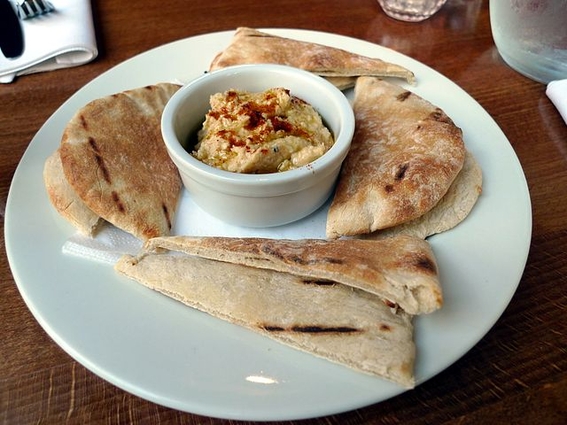
Oh, that looks good, doesn't it?
Nancy Jane Moore on retelling stories, Stealing from the Greats:
That second sentence gets it for me- retellings as part of a discussion. Yes. Four of the books I've read this year have been retellings (The Swan Kingdom, The Missing Queen, Black Ships, and Woman of the Sun, Woman of the Moon), with Beauty that I'm currently reading the fifth, and two more have been in conversation with the works of Jane Austen- The Magicians and Mrs. Quent and The Perilous Life of Jade Yeo. Myths and fairy tales and literary classics and so on have meaning not, as I've heard argued, because they reflect any immutable Jungian archetypes bubbling up from the collective unconscious, but because they are so widely known that so many people can be part of the conversation.
(Edited to note that the novella the article is about is available through Early Reviewers- I've requested a copy! I also requested Dun Lady's Jess, another Book View Cafe title, but if I get it I'll have to read its prequel Barrenlands first which has been in the TBR for ages...)
Ian Sales on the types of science fiction stories, On genres, modes, distances and invention:
I would strongly suggest that there is at least a fourth category in the genre, that has been with us since the earliest stories of the genre we know it today (eg Slan and Children of the Atom) and that draws many, many people to the genre: Being the Other.
This story is present from allegories like the X-Men to the "hold on, your strangeness is specialness and will eventually be rewarded with everyone recognizing your awesomeness" narratives like Dragonflight and Arrows of the Queen and so on, to works that deal with more concrete social issues either as part of the background like Trouble and Her Friends' community of hackers doubly marginalized because they are gay and because of the technology they use or more directly like Aliette de Bodard's "Immersion," to settings without humans or settings with no humans examining what society could be like divorced from human history and baggage in Delan the Mislaid and The Cloud Roads.
Perhaps also a fifth type of story, Coexisting with the Other, with equal exchange rather than assimilation on either side- most of the popular examples I can think of (eg Cherryh's Foreigner) end up becoming more "embracing the Other" (and often not only becoming "Other," but being more awesome at it than everyone else- see the movies Avatar and Dancing with Wolves, and the whole "what these people need is a honky" trope; Bren is moving that way a little bit in Foreigner lately, and I don't like it- there was one part in one of the recent books where he ranked himself the third most powerful person on the continent behind Tabini and Ilisidi!), but perhaps the human-dragon relationship and the like of Pern count a little, and I think Marks' Triad society established in Delan the Mislaid and perhaps Aligare in Render from what I've read so far qualify.
One last link for now, also on types of stories- Rachel Manija Brown's notes on a session about Beauty and the Beast themes in Robin McKinley's work at the recent Sirens conference:
Process stories. Yes. Sounds good to me- any recommendations? I suspect "learning magic" (eg parts of Sandry's Book and many others) or "learning a craft" (eg the woodworking parts of The Magic of Recluce- pretty much all I remember from that book) would fall into this category, but those things tend to be parts of a story rather than the whole.
I expected the ending, which I had known beforehand having read the chronologically later (published earlier) books, but I guess I thought the reason for her ride would be more epic than it was- not just one jerk of a Weyrleader refusing to let his riders help them out, so Moreta had to stand in for all of them.
The whole timescale of the book felt off to me- the plague ravaged the continent and the cure was discovered and manufactured and distributed in only about eleven days? The fast spread of the disease was justified in the text by the simple, widespread mass transit of dragons, but I'm still not sure- this isn't a topic I'm particularly familiar with, but Briar's Book with a team of researchers trying to figure out the disease through scientific methods, taking a long time even with magical assistance, felt like a better treatment (do excuse the pun) of the issue.
But I liked the characters overall- the Dragonriders and various Craftspeople and Lord/Lady Holders are one of those SFF "in"-groups that it would be very interesting to be in, though as usual with books focusing on special in-groups, Pern would be a pretty terrible place to live if one did not have such a lofty position- I've just started Nerilka's Story, and there's a scene where she is supervising the bathing of the drudges and force-bathing them if they are not cleaning themselves to their satisfaction. Between this and some of the jerkish things she said to her mother, Nerilka is not particularly endearing herself to me yet- but it's early in the book.
The Complete Lythande is on Early Reviewers! Instant request for me. Some people have Elric for their angsty anti-hero in their teenage years- I had Lythande, and still have a soft spot, despite the gosh-whoa problems with gender of some of the stories.
I've checked out Embassytown and Coraline from the library- we'll see if I end up reading either of them before they're due back. I didn't get along at all with Perdido Street Station when I tried it years ago- it was a DNF for me- but this one caught my eye, and it's a Mount TBR read besides.
What I've had of Gaiman's work- a couple of the Death comics and the first Sandman TPB years ago which I thought were okay, more recently the episodes he's written for Doctor Who ("The Doctor's Wife," with its Manic Pixie Dream Girl TARDIS- cringe), the Coraline movie- has done pretty much nothing for me, but this article about Coraline makes it sound so promising...
It's one of those cases where so many people seem to really like his work, there must be something there... right? I didn't like Joss Whedon's Avengers movie at all either- I thought the pacing is terrible, using such a cheap shot to bring the team together undermined the "learning to work together" theme it had built up so far, and the characterization of Loki did not mesh well at all with what was established in the Thor movie (which I did like). Perhaps I'm just not enough of a "geek," as the current term seems to be for people who are into SFF TV/movies?
>39 zjakkelien: Oh, that's good to hear about Clay's Ark, I do have a low threshold for grossness. (Zombies, eg, very much not my thing.) I saw in one review that the connection to Mind of My Mind is that the "Clay" of the title is Clay Dana, the brother of one of Mary's Patternist "First Family" whose latent abilities are drawn out by the Pattern.
>40 Meredy: Hello! Stop by any time :)
How about some mid-week snacks and light reading?
Oh, that looks good, doesn't it?
Nancy Jane Moore on retelling stories, Stealing from the Greats:
For me, those changes and my own provide commentary on Shakespeare’s work. One of the things fiction can do is add to the discussion of a work by altering it in ways that reflect both changing times and changing interpretations.
Which makes this sound too academic. Truth is, I borrowed As You Like It because I loved it and wanted to play with it. I can’t think of a better excuse.
That second sentence gets it for me- retellings as part of a discussion. Yes. Four of the books I've read this year have been retellings (The Swan Kingdom, The Missing Queen, Black Ships, and Woman of the Sun, Woman of the Moon), with Beauty that I'm currently reading the fifth, and two more have been in conversation with the works of Jane Austen- The Magicians and Mrs. Quent and The Perilous Life of Jade Yeo. Myths and fairy tales and literary classics and so on have meaning not, as I've heard argued, because they reflect any immutable Jungian archetypes bubbling up from the collective unconscious, but because they are so widely known that so many people can be part of the conversation.
(Edited to note that the novella the article is about is available through Early Reviewers- I've requested a copy! I also requested Dun Lady's Jess, another Book View Cafe title, but if I get it I'll have to read its prequel Barrenlands first which has been in the TBR for ages...)
Ian Sales on the types of science fiction stories, On genres, modes, distances and invention:
I won’t say where, or on what, I was at the time but this weekend I was thinking about definitions of hard science fiction for a podcast, and my thoughts spiralled out from there to definitions of science fiction itself. And it occurred to me that sf narratives break down into three rough forms: encountering the Other, embracing the Other and rejecting the Other. And the more I thought about it, the more it seemed to hold true. Think of a random sf novel, like… Dune. That’s embracing the Other – both Paul Atreides becoming a Fremen and learning to use his new-found powers.
I would strongly suggest that there is at least a fourth category in the genre, that has been with us since the earliest stories of the genre we know it today (eg Slan and Children of the Atom) and that draws many, many people to the genre: Being the Other.
This story is present from allegories like the X-Men to the "hold on, your strangeness is specialness and will eventually be rewarded with everyone recognizing your awesomeness" narratives like Dragonflight and Arrows of the Queen and so on, to works that deal with more concrete social issues either as part of the background like Trouble and Her Friends' community of hackers doubly marginalized because they are gay and because of the technology they use or more directly like Aliette de Bodard's "Immersion," to settings without humans or settings with no humans examining what society could be like divorced from human history and baggage in Delan the Mislaid and The Cloud Roads.
Perhaps also a fifth type of story, Coexisting with the Other, with equal exchange rather than assimilation on either side- most of the popular examples I can think of (eg Cherryh's Foreigner) end up becoming more "embracing the Other" (and often not only becoming "Other," but being more awesome at it than everyone else- see the movies Avatar and Dancing with Wolves, and the whole "what these people need is a honky" trope; Bren is moving that way a little bit in Foreigner lately, and I don't like it- there was one part in one of the recent books where he ranked himself the third most powerful person on the continent behind Tabini and Ilisidi!), but perhaps the human-dragon relationship and the like of Pern count a little, and I think Marks' Triad society established in Delan the Mislaid and perhaps Aligare in Render from what I've read so far qualify.
One last link for now, also on types of stories- Rachel Manija Brown's notes on a session about Beauty and the Beast themes in Robin McKinley's work at the recent Sirens conference:
(Robin McKinley's) characters are usually good people from the get-go, and her Beauty retellings (especially the first) have very little overt conflict. And yet they're enthralling (especially the first). They often have a lot of focus on mundane details, like gardening or baking. Cora said that they are not about individuals changing and learning to be better people, but about the process of falling in love and creating a relationship. Growing a garden or tending a beehive is a metaphor for that process: something new and beautiful is being made.
I suggested that stories don't necessarily need conflict, and that process - showing something being made - can be substituted. Nonfiction is often about process rather than conflict.
Process stories. Yes. Sounds good to me- any recommendations? I suspect "learning magic" (eg parts of Sandry's Book and many others) or "learning a craft" (eg the woodworking parts of The Magic of Recluce- pretty much all I remember from that book) would fall into this category, but those things tend to be parts of a story rather than the whole.
42zjakkelien
>39 zjakkelien: Oh, that's good to hear about Clay's Ark, I do have a low threshold for grossness. (Zombies, eg, very much not my thing.) I saw in one review that the connection to Mind of My Mind is that the "Clay" of the title is Clay Dana, the brother of one of Mary's Patternist "First Family" whose latent abilities are drawn out by the Pattern.
I can't completely guarantee it. I'd have to re-read it, but the virus-thingie is not really like a disease. And I don't think the clayarks were like zombies (I don't like zombies myself). I do remember a shootout at the end, but I don't remember if the descriptions were very graphic.
Thanks for the link, I totally missed that one!
I can't completely guarantee it. I'd have to re-read it, but the virus-thingie is not really like a disease. And I don't think the clayarks were like zombies (I don't like zombies myself). I do remember a shootout at the end, but I don't remember if the descriptions were very graphic.
Thanks for the link, I totally missed that one!
43reading_fox
Just in case you didn't know - IanSales is active on LT too. He is often found in the Science Fiction Fans group. I don't always agree with his opinions and have yet to read any of bis books. I sledom find it too helpful to limit the number of circles one can draw around anythig and say this is how you divide it. There are always edge cases and other ways of looking which divide it differently. Admittedly sometimes the whole is too large and some form of division is necessary, but it's worth remembering that any form is essentially arbitary.
44Sakerfalcon
How exciting to see all the Lythande stories in one volume! I have a UK collection of six of them but I assume there were more in other anthologies.
I was disappointed by Embassytown - I though the world building and set-up was great, but the plot failed to live up to the good start. However, I really liked PSS, so perhaps you will enjoy Embassytown.
I thought Coraline was very good too, a strong addition to the tradition of creepy supernatural stories for children. Dave McKean's illustrations helped too. I liked the film well enough, but (as usual) the book was better. The annoying boy was added for the film - because a girl can't carry a movie on her own? Pah!
Thank you for the snacks! Just what I need for elevenses :-)
I was disappointed by Embassytown - I though the world building and set-up was great, but the plot failed to live up to the good start. However, I really liked PSS, so perhaps you will enjoy Embassytown.
I thought Coraline was very good too, a strong addition to the tradition of creepy supernatural stories for children. Dave McKean's illustrations helped too. I liked the film well enough, but (as usual) the book was better. The annoying boy was added for the film - because a girl can't carry a movie on her own? Pah!
Thank you for the snacks! Just what I need for elevenses :-)
45zjakkelien
41: Process stories. Yes. Sounds good to me- any recommendations? I suspect "learning magic" (eg parts of Sandry's Book and many others) or "learning a craft" (eg the woodworking parts of The Magic of Recluce- pretty much all I remember from that book) would fall into this category, but those things tend to be parts of a story rather than the whole.
Tough one. I recently read The spirit keeper by K.B. Laugheed. I really liked it, and although there are conflicts in it, I think the book is not about conflict. The process is clearly present, taking place over a long journey. I think this one may count.
Another one that immediately sprang to mind is The night circus. Mainly because you mention making things, (I suggested that stories don't necessarily need conflict, and that process - showing something being made - can be substituted. ), because this book is clearly all about a conflict, but it is also about making something (the circus). And the making part is so beautiful...
Last one I think of is one of my favourites: Child of a rainless year by Jane Lindskold. Definitely an ongoing process, as well as some mystery. I don't think there was any real conflict in it. Well, a bit with the mother perhaps, but that is a very small part of the book.
Tough one. I recently read The spirit keeper by K.B. Laugheed. I really liked it, and although there are conflicts in it, I think the book is not about conflict. The process is clearly present, taking place over a long journey. I think this one may count.
Another one that immediately sprang to mind is The night circus. Mainly because you mention making things, (I suggested that stories don't necessarily need conflict, and that process - showing something being made - can be substituted. ), because this book is clearly all about a conflict, but it is also about making something (the circus). And the making part is so beautiful...
Last one I think of is one of my favourites: Child of a rainless year by Jane Lindskold. Definitely an ongoing process, as well as some mystery. I don't think there was any real conflict in it. Well, a bit with the mother perhaps, but that is a very small part of the book.
46sandstone78
The year is winding down fast- it's getting dark so early now outside and there are only about 75 days left in the year- if I want to make 29 more books, I'm going to have to finish one about every 2.5 days, yikes! We'll have to see about that...
I'm actually really enjoying Crossed Genres Magazine 2.0 Book One- I'm into the seventh story, and they've all been enjoyable to read. Hoping the rest of the book keeps up the same level of quality- if so, I'll be very pleased with it.
I'm halfway through Razor's Edge by chapter count, yet only 30% of the way through by percentage- however, the last 34% of the book is taken up by excerpts from other Star Wars books, so I'm actually 45% of the way through the book! That's the most extreme example of this I've seen, I think.
Nerilka's Story is proceeding quickly because it's so short, but I'm still in parts I know from Moreta's story- I'm settling in well enough. I need to get back to Beauty.
There are so many good books in my TBR pile, though- even my "TBR short list" has 31 right now! There are lots of series I want to finish up...
Reading CGM2.0BO (what an acronym) has me thinking about including more short fiction in the list; there are a number of anthologies I've had my eye on (Heiresses of Russ 2011 and Heiresses of Russ 2012 and Heiresses of Russ 2013, We See a Different Frontier, Beyond Binary, Outlaw Bodies, Scheherazade's Facade, The Feathered Edge, the recent Sword and Sorceress volumes) as well as collections (The Complete Lythande is a given, but also Dangerous Space, Bloodchild, and Clays Beneath the Skies). Not to mention all the ones I already own, oh dear... perhaps next year I'll devote an entire month to reading short fiction!
>42 zjakkelien:,45 I will probably give it a couple books' space after Nerilka's Story, but I do want to get to it soon. I am also not too clear on the details, but wondering if Clay (a telekinetic) propels the ship through space with his telekinesis in the same way that Isaac in Wild Seed propelled sailing ships- possibly another link? Reviews/summaries do say things along the lines of him inventing an interstellar drive or something, so possibly not- I'll have to see. It would be an interesting extrapolation if so.
I like the way that Butler doesn't give her actives morally convenient limits- telepaths are able to take control of people, full stop, with no restrictions like "can't compel people to do something they wouldn't already do" or "can't control another person's mind." It's more interesting, especially because it makes even the "better" characters very morally grey.
Thanks for the "process" books recommendations!
I'm getting kind of an iffy "special white person destined for love and a position of extra magical specialness among people of color" from The Spirit Keeper, though- does the author at least realize that's a really dubious trope and try to avoid the pitfalls (ie she saves everyone/becomes a leader more important than actual native leaders)?
I've heard a lot of good things about The Night Circus, but the excerpt I read made me think I might not get along with the writing style- I think it started off in second person? I was surprised to see this book was released in 2011 though- I didn't think it had been that long since I kept seeing it come up in discussions. Hmm. I've added it to my ebook list at my library though, for when I feel in the mood for something with a more literary tone- I did enjoy the descriptions of the performances in Jill Schultz' Angel on the Ropes which I read earlier this year.
Child of a Rainless Year is in my TBR pile, however- I picked it up because I loved the descriptive language in the beginning, and it seemed like it might have some of the magic I liked about de Lint, but somehow it's never made it out of the TBR pile. I must get round to it.
Also to Darkborn, which I saw your comments about recently over in FantasyFans- but that had the opposite problem, I've read the beginning several times and went "ehh, a guy and a lady who was involved with his brother, ehhhh.... sonn is pretty darn cool, but maybe later..."
Making a deliberate effort to go for Mount TBR books is liberating in a way, I don't have to feel guilty about adding to it and it's a selection I already know I should like.
>43 reading_fox: Oh really? I've not spent much time in that group- I'm familiar with him from his SF Mistressworks project, but also haven't read any of his fiction.
I think recognizing that there are works that don't neatly fit into categories in any possible system of categorization (subgenres, tropes, lists of Master Plots, whatever) is essential for any discussion of this type, and it does look from the comments that Sales probably recognizes this- but the "Being the Other" category seemed so large and obvious to me that I felt the need to point it out. It's one of the things that draws me to the genre.
I found the categorizations in Rhetorics of Fantasy interesting though, and I need to get back to it- Mendlesohn does have an entire section devoted to works that don't fit neatly in her categories instead of trying to chop off pieces or pick and choose to make them fit.
>44 Sakerfalcon: Isn't it? I have the Lythande collection, The Spell Singers, which had two further stories (but may have been a US-only release?), and The Gratitude of Kings which I just discovered last year- a novella published as a standalone hardcover. I've not read it yet, though, I think it follows directly off of one of the earlier short stories. I know there are several stories printed in magazines that I've not read though, so I am much looking forward to it.
Oh, I know what you mean about books that start off strong and peter out- it's always so disappointing. My library has most of Miéville's work available electronically, including PSS, so perhaps I'll give it another try sometime- I find that I'm more willing to try new things on an e-reader, oddly enough. I'll probably pick up Coraline after I finish Nerilka's Story and see how I like it.
Snacks are the best meal, I think! I plan to try making roasted chickpeas at home this weekend- perhaps if that goes well, I'll seek out a hummus recipe too. I made some aged cheddar/black pepper scones with white whole wheat flour and cornmeal last weekend, and they came out delicious.
I'm actually really enjoying Crossed Genres Magazine 2.0 Book One- I'm into the seventh story, and they've all been enjoyable to read. Hoping the rest of the book keeps up the same level of quality- if so, I'll be very pleased with it.
I'm halfway through Razor's Edge by chapter count, yet only 30% of the way through by percentage- however, the last 34% of the book is taken up by excerpts from other Star Wars books, so I'm actually 45% of the way through the book! That's the most extreme example of this I've seen, I think.
Nerilka's Story is proceeding quickly because it's so short, but I'm still in parts I know from Moreta's story- I'm settling in well enough. I need to get back to Beauty.
There are so many good books in my TBR pile, though- even my "TBR short list" has 31 right now! There are lots of series I want to finish up...
Reading CGM2.0BO (what an acronym) has me thinking about including more short fiction in the list; there are a number of anthologies I've had my eye on (Heiresses of Russ 2011 and Heiresses of Russ 2012 and Heiresses of Russ 2013, We See a Different Frontier, Beyond Binary, Outlaw Bodies, Scheherazade's Facade, The Feathered Edge, the recent Sword and Sorceress volumes) as well as collections (The Complete Lythande is a given, but also Dangerous Space, Bloodchild, and Clays Beneath the Skies). Not to mention all the ones I already own, oh dear... perhaps next year I'll devote an entire month to reading short fiction!
>42 zjakkelien:,45 I will probably give it a couple books' space after Nerilka's Story, but I do want to get to it soon. I am also not too clear on the details, but wondering if Clay (a telekinetic) propels the ship through space with his telekinesis in the same way that Isaac in Wild Seed propelled sailing ships- possibly another link? Reviews/summaries do say things along the lines of him inventing an interstellar drive or something, so possibly not- I'll have to see. It would be an interesting extrapolation if so.
I like the way that Butler doesn't give her actives morally convenient limits- telepaths are able to take control of people, full stop, with no restrictions like "can't compel people to do something they wouldn't already do" or "can't control another person's mind." It's more interesting, especially because it makes even the "better" characters very morally grey.
Thanks for the "process" books recommendations!
I'm getting kind of an iffy "special white person destined for love and a position of extra magical specialness among people of color" from The Spirit Keeper, though- does the author at least realize that's a really dubious trope and try to avoid the pitfalls (ie she saves everyone/becomes a leader more important than actual native leaders)?
I've heard a lot of good things about The Night Circus, but the excerpt I read made me think I might not get along with the writing style- I think it started off in second person? I was surprised to see this book was released in 2011 though- I didn't think it had been that long since I kept seeing it come up in discussions. Hmm. I've added it to my ebook list at my library though, for when I feel in the mood for something with a more literary tone- I did enjoy the descriptions of the performances in Jill Schultz' Angel on the Ropes which I read earlier this year.
Child of a Rainless Year is in my TBR pile, however- I picked it up because I loved the descriptive language in the beginning, and it seemed like it might have some of the magic I liked about de Lint, but somehow it's never made it out of the TBR pile. I must get round to it.
Also to Darkborn, which I saw your comments about recently over in FantasyFans- but that had the opposite problem, I've read the beginning several times and went "ehh, a guy and a lady who was involved with his brother, ehhhh.... sonn is pretty darn cool, but maybe later..."
Making a deliberate effort to go for Mount TBR books is liberating in a way, I don't have to feel guilty about adding to it and it's a selection I already know I should like.
>43 reading_fox: Oh really? I've not spent much time in that group- I'm familiar with him from his SF Mistressworks project, but also haven't read any of his fiction.
I think recognizing that there are works that don't neatly fit into categories in any possible system of categorization (subgenres, tropes, lists of Master Plots, whatever) is essential for any discussion of this type, and it does look from the comments that Sales probably recognizes this- but the "Being the Other" category seemed so large and obvious to me that I felt the need to point it out. It's one of the things that draws me to the genre.
I found the categorizations in Rhetorics of Fantasy interesting though, and I need to get back to it- Mendlesohn does have an entire section devoted to works that don't fit neatly in her categories instead of trying to chop off pieces or pick and choose to make them fit.
>44 Sakerfalcon: Isn't it? I have the Lythande collection, The Spell Singers, which had two further stories (but may have been a US-only release?), and The Gratitude of Kings which I just discovered last year- a novella published as a standalone hardcover. I've not read it yet, though, I think it follows directly off of one of the earlier short stories. I know there are several stories printed in magazines that I've not read though, so I am much looking forward to it.
Oh, I know what you mean about books that start off strong and peter out- it's always so disappointing. My library has most of Miéville's work available electronically, including PSS, so perhaps I'll give it another try sometime- I find that I'm more willing to try new things on an e-reader, oddly enough. I'll probably pick up Coraline after I finish Nerilka's Story and see how I like it.
Snacks are the best meal, I think! I plan to try making roasted chickpeas at home this weekend- perhaps if that goes well, I'll seek out a hummus recipe too. I made some aged cheddar/black pepper scones with white whole wheat flour and cornmeal last weekend, and they came out delicious.
47zjakkelien
46: I'm getting kind of an iffy "special white person destined for love and a position of extra magical specialness among people of color" from The Spirit Keeper, though- does the author at least realize that's a really dubious trope and try to avoid the pitfalls (ie she saves everyone/becomes a leader more important than actual native leaders)?
I can see how you might think so, but that was not the vibe I got from it. There is remarkably little saving of anyone, and one of the two native americans the white girl travels with is considered to be almost royalty by the others. The girl is mostly respected because she was in his vision. The book ends at a point (SPOILER) that I wouldn't have expected, before they actually reach their destination. I'm not sure if there are going to be any sequels, but so far, she hasn't become a leader at all. It is much more life-like than you might expect from the blurb.
Copying part of my review: The spirit keeper is about culture differences exacerbated by religion and language differences, it is about communication, about acceptance, about camaraderie, about love. In short, it is about living life.
As for The night circus, a lot of people around me were recommending it, but it didn't appeal to me. Then I got it through SantaThing and I figured I had to read it. For the first 100+ pages, I was mostly reading it to have read it, and was contemplating quitting. After that, I finally got what the book was about though, and then I couldn't put it away. The problem is that the author is not particularly good at writing characters, and I couldn't care about them. After a while though, I understood that this book is not about the characters, it's about the circus. The circus is the main character in a way. I believe the author is a graphical designer or something similar, and the entire book is like a painting of the circus, with every word a pencil stroke. After the 100+ pages, I started realizing this, and started to love the beauty of it. In the end, I gave the book 5 stars. Quite a turn-around!
Child of a rainless year is absolutely charming, a lovely book. The story is relatively quiet, which I like. The magic is very nice, the house is quite attractive. I love that the main character is middle-aged and mature, I love how she discovers the mysteries of her childhood, and the atmosphere of New Mexico really adds to the story.
I can see how you might think so, but that was not the vibe I got from it. There is remarkably little saving of anyone, and one of the two native americans the white girl travels with is considered to be almost royalty by the others. The girl is mostly respected because she was in his vision. The book ends at a point (SPOILER) that I wouldn't have expected, before they actually reach their destination. I'm not sure if there are going to be any sequels, but so far, she hasn't become a leader at all. It is much more life-like than you might expect from the blurb.
Copying part of my review: The spirit keeper is about culture differences exacerbated by religion and language differences, it is about communication, about acceptance, about camaraderie, about love. In short, it is about living life.
As for The night circus, a lot of people around me were recommending it, but it didn't appeal to me. Then I got it through SantaThing and I figured I had to read it. For the first 100+ pages, I was mostly reading it to have read it, and was contemplating quitting. After that, I finally got what the book was about though, and then I couldn't put it away. The problem is that the author is not particularly good at writing characters, and I couldn't care about them. After a while though, I understood that this book is not about the characters, it's about the circus. The circus is the main character in a way. I believe the author is a graphical designer or something similar, and the entire book is like a painting of the circus, with every word a pencil stroke. After the 100+ pages, I started realizing this, and started to love the beauty of it. In the end, I gave the book 5 stars. Quite a turn-around!
Child of a rainless year is absolutely charming, a lovely book. The story is relatively quiet, which I like. The magic is very nice, the house is quite attractive. I love that the main character is middle-aged and mature, I love how she discovers the mysteries of her childhood, and the atmosphere of New Mexico really adds to the story.
48Meredy
46, 47: I considered The Night Circus a waste of my time and attention.
49Sakerfalcon
>47 zjakkelien:: I second your recommendation of Child of a rainless year, for the reasons you give. It really is a wonderful book, although not a good one if you're looking for thrills and spills.
50kceccato
The Night Circus was a novel I found easier to admire than love. I appreciated its descriptive style, but I never quite took it into my heart. I'm far from sorry I read it, but I'm in no great hurry to read it again and will probably get some used-bookstore credit with it.
51zjakkelien
48: I considered The Night Circus a waste of my time and attention.
Ok, but why?
Ok, but why?
52zjakkelien
46: Found another process book. Just finished actually, and just finished crying. Man. A monster calls is seriously dramatic. Very good, though. Just not something you should read when you want something cheerful.
53sandstone78
I finished Nerilka's Story this afternoon, and ended up enjoying it. I'm not sure Nerilka ever became likeable to me, but her character was strongly and consistently drawn, and I can appreciate that. The book also filled in the story of what was going on offscreen in Moreta, and overall I found it a more cohesive read than Moreta since it was limited to Nerilka's first-person narrative instead of jumping around. I suspect I'll come back to these two books for rereads.
There is an appealing coziness to some of the Pern books, like these and the Harper Hall trilogy. I suspect it comes from the way all of the good characters seem to be such good friends, complete with banter and sometimes romance- like Star Trek: The Next Generation, where Gene Roddenberry reportedly did not want conflict among the recurring major characters.
I've started two shorter novels, Wolf at the Door and Coraline, and am continuing Razor's Edge and Crossed Genres Magazine 2.0 Book One- I expect to finish those up soon.
I saw Robin Hobb is writing a new trilogy set after the Tawny Man books continuing the adventures of FitzChivalry and the Fool. I liked Assassin's Apprentice all right, but had to bail from Royal Assassin because it felt like nothing good ever ever happened to Fitz- the Fool was an interesting character, though.
>47 zjakkelien: I see, possibly a case of summary giving the wrong picture of a story, then.
>47 zjakkelien:,48,50,51 Lots of mixed reactions about The Night Circus still, I see. I would be curious to hear your reasons too, Meredy- did it just not come together for you?
>47 zjakkelien:,49 I can't find my paper copy, boo, and thought about rebuying it as an ebook, but I remembered I bought it from Amazon, and am wondering if it will be eligible for Amazon's new Kindle Matchbook discounted ebook program for print books bought through them- I read that was supposed to launch this month, but haven't seen a date or a list of participating publishers yet.
>52 zjakkelien: I'm sure from the reviews that it's well written, but I've found that tragic death-of-family-member stories just are not good for my mental well-being, so I'll probably give that one a miss- thanks for the suggestions though!
There is an appealing coziness to some of the Pern books, like these and the Harper Hall trilogy. I suspect it comes from the way all of the good characters seem to be such good friends, complete with banter and sometimes romance- like Star Trek: The Next Generation, where Gene Roddenberry reportedly did not want conflict among the recurring major characters.
I've started two shorter novels, Wolf at the Door and Coraline, and am continuing Razor's Edge and Crossed Genres Magazine 2.0 Book One- I expect to finish those up soon.
I saw Robin Hobb is writing a new trilogy set after the Tawny Man books continuing the adventures of FitzChivalry and the Fool. I liked Assassin's Apprentice all right, but had to bail from Royal Assassin because it felt like nothing good ever ever happened to Fitz- the Fool was an interesting character, though.
>47 zjakkelien: I see, possibly a case of summary giving the wrong picture of a story, then.
>47 zjakkelien:,48,50,51 Lots of mixed reactions about The Night Circus still, I see. I would be curious to hear your reasons too, Meredy- did it just not come together for you?
>47 zjakkelien:,49 I can't find my paper copy, boo, and thought about rebuying it as an ebook, but I remembered I bought it from Amazon, and am wondering if it will be eligible for Amazon's new Kindle Matchbook discounted ebook program for print books bought through them- I read that was supposed to launch this month, but haven't seen a date or a list of participating publishers yet.
>52 zjakkelien: I'm sure from the reviews that it's well written, but I've found that tragic death-of-family-member stories just are not good for my mental well-being, so I'll probably give that one a miss- thanks for the suggestions though!
54SylviaC
I liked both Moreta and Nerilka's Story, but for some reason Nerilka stays with me more than Moreta. Perhaps it is because the single perspective makes the story more focused. I actually prefer Nerilka as a character to Moreta. Nerilka may not be out saving the world, but she plugs on steadily, making the most of what she has. She seems more solid and less flashy than Moreta.
55zjakkelien
53: I'm sure from the reviews that it's well written, but I've found that tragic death-of-family-member stories just are not good for my mental well-being, so I'll probably give that one a miss- thanks for the suggestions though!
Then you are making a good decision, and you shouldn't read it.
Then you are making a good decision, and you shouldn't read it.
57sandstone78
I finished Crossed Genres Magazine 2.0 Book One which I had from Early Reviewers, and very much enjoyed it. The stories were exactly the type of stories I like, with interesting characters and settings, and even if a couple of them didn't work for me as well as others, I'm not sorry to have spent the time reading any of them. I may have to consider a subscription to support the magazine- at the very least, I can safely say I will be picking up Book Two of its collected stories when it comes out.
I've picked up Indigo Time, my last book currently outstanding for Early Reviewers, to see if I can finish it before the end of the month- I went back and forth on this one, but ultimately requested it because I just couldn't figure out how the author could make the disparate elements in the summary go together:
An immortal empress, and the secret of her immortality is contained in the blood of a genetically engineered horse (who is also blue, by the way)? Generation-spanning psychic powers that could unwind time and destroy the universe? All right, all right, I'm going to request it.
But... unfortunately, about a chapter and a half in, it seems like this book and I might not get along. There's more than a little gender essentialism going on:
Later...
Okay, I'm possibly willing to chalk that and the general portrayal of Kael as frigid and unwilling to reward Grae with sex for his devotion up to Grae's own perspective, because it's not carried through when we get Kael's own perspective, but at this point I'm not looking forward to spending time with Grae's narrative.
But Kael's perspective has similar themes- here her thoughts about Grae:
And her thoughts about her nurse/servant, Hella:
Women occur on a spectrum from girl to crone, with mother the "perfect female" in the middle- women who are not mothers have thwarted motherly ambitions that they take out on others. Men are secretly lustful and possessive at heart, even when they seem not to be on the surface. It's that "at heart" that is the true evil of essentialism- it sets up a theory that cannot be disproved by any evidence to the contrary, because no matter how extensive, is wrong- somewhere way deep down all women want children, and so on. Egh.
And then one of my least favorite tropes makes an appearance: psychic fetuses and newborns. In this case, a child is lashing out at the world psychically, remembering the moment of her conception(!):
The newborn child can remember the time when she was, er... a single-celled zygote, or when the zygote was formed? I'm pretty sure the formation of memory at least requires... er... a brain? Also sensory organs to be able to even perceive the outside world? I guess we're going with a serious disembodied spirit experiencing things/mind-body dualism type thing here.
I don't even know what to think of this:
My hope for shades of gray with the Empress was pretty much dashed in this scene also- she seems out and out evil, evil, evil at this point. Sigh. I will press on, but I suspect more and more that this one is very much not for me.
>54 SylviaC: I would agree that Nerilka is probably more solid and less flashy, but I found that Moreta really appealed to me for her combination of enthusiasm, confidence, and competence with things like the delicate surgery for repairing dragons' wings- female characters who are enthusiastic, confident, competent all the way through the story are so rare.
>55 zjakkelien: It strikes me as odd that it seems so much harder to find books where the main character has living parents than those where at least one parent is dead or dies during the course of the story. I suppose that the phenomenon generally falls into the category of horrible things happening to other people as a source of angst and motivation for protagonists, though it seems that A Monster Calls deals with the issue straightforwardly instead of relegating it to backstory.
>56 Meredy: Interesting, thank you. I found it interesting that both you and zjakkelien decided to finish the book after all roughly the same time in- I wonder if it was the same event that did it? I do have to say that "pretentious" was exactly the word that came to mind when I read the excerpt- second person present tense. The whole thing is written in present tense. I tend to find that present tense narration keeps me from getting into a story for some reason- though there are some exceptions, they tend to be shorter works- eg I really liked its use in the novella "This Other World" by Anna Caro in Winter Well.
I've picked up Indigo Time, my last book currently outstanding for Early Reviewers, to see if I can finish it before the end of the month- I went back and forth on this one, but ultimately requested it because I just couldn't figure out how the author could make the disparate elements in the summary go together:
Marrula Tamara, once Empress of Worlds, has been exiled for treachery to a planet called Strand. She has one great treasure: the engineered horse Raj'azul. In his blood lies the secret of her immortality...and the seed of her downfall.
As her fellow exiles form a primitive society, centuries pass while Marrula schemes revenge. She needs three things: Raj'azul's blood, the time-twisting mind of her own great-granddaughter, and the utter ruthlessness to use them both. But when her rebellious slave Warrek realizes Marrula is about to destroy a world to save herself, he steals the horse and vanishes into the wild mountain territories. He must remain free long enough to kill the innocent girl and thwart Marrula's plan.
But in remote Tarlannat Hold he finds a woman even more beautiful and ruthless than Marrula...the doomed girl's mother, Kael. And Kael knows what is at stake. If these three women's rogue Talents meld, time itself will be unwound and the universe destroyed. Warrek must join forces with the one man who truly despises him and battle his way to the center of the coming time storm. Together, these two pawns might succeed in toppling a Queen...
An immortal empress, and the secret of her immortality is contained in the blood of a genetically engineered horse (who is also blue, by the way)? Generation-spanning psychic powers that could unwind time and destroy the universe? All right, all right, I'm going to request it.
But... unfortunately, about a chapter and a half in, it seems like this book and I might not get along. There's more than a little gender essentialism going on:
A clutch of women was flapping around, five of them, displaying a representative sample of the female sex from girl to crone, tucking sheets, carrying pans of water, and feeding the fire.
Later...
He was alone with Kael. She lay soft and warm before him, her ice half-melted by childbirth, so entirely and perfectly female that it hurt to look at her. He wanted nothing more than to shuck off his boots and crawl into bed beside her, take her and the child into his arms and hold them, protect them, forever.
Okay, I'm possibly willing to chalk that and the general portrayal of Kael as frigid and unwilling to reward Grae with sex for his devotion up to Grae's own perspective, because it's not carried through when we get Kael's own perspective, but at this point I'm not looking forward to spending time with Grae's narrative.
But Kael's perspective has similar themes- here her thoughts about Grae:
She had simply found him boring. He was old, rough as tree bark, could barely force words out, let alone sing or recite romantic verse. In her ignorance she hadn't known that within every man, no matter how old, how reticent, how devoted to work, lies a hot fire of passion and possession that allows for no escape.
And her thoughts about her nurse/servant, Hella:
Hella had never married, nor even borne a nino amor, rare in a society where childbearing was encouraged, so was able to lavish her thwarted mother-love upon Kael exclusively.
Women occur on a spectrum from girl to crone, with mother the "perfect female" in the middle- women who are not mothers have thwarted motherly ambitions that they take out on others. Men are secretly lustful and possessive at heart, even when they seem not to be on the surface. It's that "at heart" that is the true evil of essentialism- it sets up a theory that cannot be disproved by any evidence to the contrary, because no matter how extensive, is wrong- somewhere way deep down all women want children, and so on. Egh.
And then one of my least favorite tropes makes an appearance: psychic fetuses and newborns. In this case, a child is lashing out at the world psychically, remembering the moment of her conception(!):
"A snowfall... that seemed to be from last winter, approximately nine months ago when Nikkolue was conceived. Kael hadn't wanted to become pregnant again, but Grae had worn her down. Was the baby doing it, reflecting the moment of her sparking to life as she suffered the pain of birth? Could that be it?"
The newborn child can remember the time when she was, er... a single-celled zygote, or when the zygote was formed? I'm pretty sure the formation of memory at least requires... er... a brain? Also sensory organs to be able to even perceive the outside world? I guess we're going with a serious disembodied spirit experiencing things/mind-body dualism type thing here.
I don't even know what to think of this:
Marrula Tamara was not a genetic dwarf. Though perfectly proportioned, she had been deliberately stunted, in the womb and after by use of drugs and careful surgery, and was the size of an average eight-year-old. Her skin was pale, her wine-dark hair lay thick as blood down her back, and her eyes were a startling shade of emerald. She had the breasts and hips of a woman, the long neck and delicate features of a dancer, and the heart of an ancient predator.
Warrek had hated her and loved her for years.
Centuries.
That was how she liked it.
My hope for shades of gray with the Empress was pretty much dashed in this scene also- she seems out and out evil, evil, evil at this point. Sigh. I will press on, but I suspect more and more that this one is very much not for me.
>54 SylviaC: I would agree that Nerilka is probably more solid and less flashy, but I found that Moreta really appealed to me for her combination of enthusiasm, confidence, and competence with things like the delicate surgery for repairing dragons' wings- female characters who are enthusiastic, confident, competent all the way through the story are so rare.
>55 zjakkelien: It strikes me as odd that it seems so much harder to find books where the main character has living parents than those where at least one parent is dead or dies during the course of the story. I suppose that the phenomenon generally falls into the category of horrible things happening to other people as a source of angst and motivation for protagonists, though it seems that A Monster Calls deals with the issue straightforwardly instead of relegating it to backstory.
>56 Meredy: Interesting, thank you. I found it interesting that both you and zjakkelien decided to finish the book after all roughly the same time in- I wonder if it was the same event that did it? I do have to say that "pretentious" was exactly the word that came to mind when I read the excerpt- second person present tense. The whole thing is written in present tense. I tend to find that present tense narration keeps me from getting into a story for some reason- though there are some exceptions, they tend to be shorter works- eg I really liked its use in the novella "This Other World" by Anna Caro in Winter Well.
58zjakkelien
57: though it seems that A Monster Calls deals with the issue straightforwardly instead of relegating it to backstory.
It is pretty much the subject of the book. This is really not an ordinary fantasy book, it is more like a non-fantasy book that happens to use fantasy elements to describe what a young boy is going through.
About The night circus, I don't remember there being a specific scene that made me continue. At some point, the spirit of the book seemed to capture me, but I think that was more a gradual thing. I wonder how it would hold up during a re-read... *muses*
It is pretty much the subject of the book. This is really not an ordinary fantasy book, it is more like a non-fantasy book that happens to use fantasy elements to describe what a young boy is going through.
About The night circus, I don't remember there being a specific scene that made me continue. At some point, the spirit of the book seemed to capture me, but I think that was more a gradual thing. I wonder how it would hold up during a re-read... *muses*
59Sakerfalcon
>57 sandstone78:: Oh dear, it sounds as though Indigo time falls into the "women with power = evil" mould. I hope the horse is interesting at least.
60kceccato
57: Why would a female author present women in this light? Why would she go out of her way to present her male characters as heroic, and her female characters as despicable and in need to defeat?
I don't get it. I've never gotten it. And the one review on Goodreads calls this a "female empowerment" story! Really?? When I'm presented with "male heroes vs. female villains," empowering is the very last word I would use to describe it. Such a thing sends me running screaming into the night.
But I'm grateful that our reading blogs can give us an idea of what to avoid as well as what to read.
I don't get it. I've never gotten it. And the one review on Goodreads calls this a "female empowerment" story! Really?? When I'm presented with "male heroes vs. female villains," empowering is the very last word I would use to describe it. Such a thing sends me running screaming into the night.
But I'm grateful that our reading blogs can give us an idea of what to avoid as well as what to read.
61Sakerfalcon
>60 kceccato:: I can see why a female author might want to create a female villain. But why would you not also create some heroic women as well? Who wants to read a book where all of one sex is bad/weak and all of the other is strong/heroic? I guess people do, because such books keep being written, but it is lazy and insulting IMO.
But perhaps in this case there is an awesome twist to come before the end ...
But perhaps in this case there is an awesome twist to come before the end ...
62kceccato
61: Exactly. My problem is not female villains -- female villains can be a lot of fun; the story I'm working on right now has a female villain, in fact -- but the absence of heroines to counterbalance them. If evil women are the ONLY women of significance that we see, then something's not right, at least for me.
63sandstone78
I finished Coraline yesterday and Razor's Edge today, bringing me to 75 books- I've met my original reading goal for the year! Now to see if I can push it a little farther and make 100- that might be tight, but I've got a lot of good books waiting for me!
I'd still like to clear off another 13 from Mount TBR as well- my current plans include The Griffin Mage trilogy, the Liaden Great Migration Duology in The Crystal Variation, Survivor as part of the Patternmaster series, Shinn's The Alleluia Files (possibly the oldest Mount TBR in the list!) after I finish Jovah's Angel, a second chance for Bujold in Barrayar, an old Tanith Lee book- Day By Night, Mieville's Embassytown, a Melissa Scott- The Kindly Ones, and of course finishing Beauty; for lucky 13, I'm considering another visit to Pern with a reread Dragonsdawn and second try of its companion, another very-long-standing Mount TBR, the collection First Fall.
I am, however, better at making plans than committing to them; other strong possibilities include Darkborn, The Cloud Roads, Many Waters and An Acceptable Time if I go for The Time Quintet (Many Waters being unquestionably the longest standing entry, one I've been meaning to read since childhood), God Stalk and its sequel in The Godstalker Chronicles, Fires of Nuala and sequels, Expendable, the three books of The Tale of the Five, Flesh and Spirit (and Breath and Bone, though it's not a Mount TBR), Kritzer's Dead Rivers trilogy.
Not a dud in the bunch, I'm thinking!
I am liking Wolf at the Door. There are flaws with the writing that I can't deny- information is sometimes repeated once or twice with both places phrased as if the reader is encountering it for the first time, the timeline of events is sometimes unclear with flashbacks and rumination about the past and future and lack of time-establishing scene transitions, that sort of thing. But the characters' personality and their relationships are shining through to me, the dynamics of Singapore's Myriad and the way they go about their daily lives among humans grounding the story in daily life in a way that I have rarely if ever seen in urban fantasy. I'm liking it as I liked Atwater-Rhodes' Kiesha'ra books earlier this year, and I think if you like shapeshifter stories and can look past a few editing stumbles this one should be worth a go. Hopefully the next two thirds of this book will bear that out.
I am proceeding more slowly with Indigo Time, almost up to 10% according to my e-reader, and three chapters. The writing is also somewhat awkward here, I think a little in word choice and a little in the pacing with extended flashbacks like one where Kael meets Marrula Tamara that hasn't been given context yet. It may get somewhere- the background of an interstellar empire the exiles come from is being sketched in in this chapter. I'll give it a little more time.
But phrases like "Had he been thoroughly neutered by manipulation of his genes, or of his brain, until he could neither leave his thraldom nor defy his mistress?" are making me sigh.
Anyways, Coraline I enjoyed overall, but I must admit that despite the wonderfully creepy drawings, I often saw the decidedly less so claymation imagery from the movie in my mind's eye, though my lack of distinct memory and of course the changes in that adaptation made this a new read much more than a reread in general. What let the book down for me was its reliance on creepiness tropes- creepy rats and spiders and insectoid things, check, creepily empty rooms and noises, check, creepy "off" mirror versions of people, check, evil mother, check. The creepiness was much stronger in the things original to the story, like the button eyes.
But let's talk about the evil mother for a minute, actually. In the real world of the story, Coraline's parents are both busy with work and have little time for her- to the point of being neglectful, perhaps, as is sometimes the case in children's books. But both of them are shown to care about her despite their attention being elsewhere, even if they don't give her exactly what she wants a hundred percent of the time- an important point later in the book, that she doesn't want to get her way a hundred percent of the time, nobody does.
In the mirror world, however, we don't have an egalitarianly evil pair of parents- we have an Evil Mother, and a father-creature who was forced to do her bidding by her evilness. How would the story have changed if the genders were reversed, and the villain was a manipulative old man who craved the love of a child? If the story had been a manipulative demonic evil mother and father both? No, again we have a "beldam," literally meaning "old woman," and her thwarted "mother-love." Are these stereotypes any less stereotypical when you have a good heroine to go up against them? I don't think so.
Because evil for women is still a gendered thing, and if women are maidens, matrons, or crones, we have the thwarted maiden who manipulates men with sex, the thwarted mother who manipulates with love, and the unnatural old woman who commits evil for her youth. How many female villains can you think of who don't fit this pattern?
Razor's Edge provides some. We have the Pirate Viest, who runs a clearinghouse and a small pirate empire and the morally dubious but ambiguous Metara, who turned her Alderaanian ship pirate after Alderaan was destroyed. Motherhood or the lack of it, sexiness or the lack of it, and youth or the lack of it are irrelevant to their stories. Female villains who don't rely on stereotypes are possible, and we need to see more variety there as much as we do in female heroes.
Razor's Edge was overall a solid tie in story. I'd recommend it if you like Han and Leia, though I could have done with a little less Han and a little more Leia- if you are a fan of both of them together (not yet a couple) saving each other and generally being competent at their jobs, I think you'd like this.
>59 Sakerfalcon:-61 Kael, one of the three POV characters, is a woman, though it's yet to see how the narrative treats her she seems to be on the side of good. So is the female baby, Nikki- though she's... well, a baby. Despite that, as I mentioned in Coraline, you can have female characters on the side of good and still have woman + power = evil- Nikki's powers are wild and uncontrolled (she's a newborn!!), and Kael's powers are next to nothing as established so far. The woman who's in control of her power and in a position of authority (by herself, without a man!) is eeeeevil.
>58 zjakkelien: Rereads are good! Most of the time.....
I'd still like to clear off another 13 from Mount TBR as well- my current plans include The Griffin Mage trilogy, the Liaden Great Migration Duology in The Crystal Variation, Survivor as part of the Patternmaster series, Shinn's The Alleluia Files (possibly the oldest Mount TBR in the list!) after I finish Jovah's Angel, a second chance for Bujold in Barrayar, an old Tanith Lee book- Day By Night, Mieville's Embassytown, a Melissa Scott- The Kindly Ones, and of course finishing Beauty; for lucky 13, I'm considering another visit to Pern with a reread Dragonsdawn and second try of its companion, another very-long-standing Mount TBR, the collection First Fall.
I am, however, better at making plans than committing to them; other strong possibilities include Darkborn, The Cloud Roads, Many Waters and An Acceptable Time if I go for The Time Quintet (Many Waters being unquestionably the longest standing entry, one I've been meaning to read since childhood), God Stalk and its sequel in The Godstalker Chronicles, Fires of Nuala and sequels, Expendable, the three books of The Tale of the Five, Flesh and Spirit (and Breath and Bone, though it's not a Mount TBR), Kritzer's Dead Rivers trilogy.
Not a dud in the bunch, I'm thinking!
I am liking Wolf at the Door. There are flaws with the writing that I can't deny- information is sometimes repeated once or twice with both places phrased as if the reader is encountering it for the first time, the timeline of events is sometimes unclear with flashbacks and rumination about the past and future and lack of time-establishing scene transitions, that sort of thing. But the characters' personality and their relationships are shining through to me, the dynamics of Singapore's Myriad and the way they go about their daily lives among humans grounding the story in daily life in a way that I have rarely if ever seen in urban fantasy. I'm liking it as I liked Atwater-Rhodes' Kiesha'ra books earlier this year, and I think if you like shapeshifter stories and can look past a few editing stumbles this one should be worth a go. Hopefully the next two thirds of this book will bear that out.
I am proceeding more slowly with Indigo Time, almost up to 10% according to my e-reader, and three chapters. The writing is also somewhat awkward here, I think a little in word choice and a little in the pacing with extended flashbacks like one where Kael meets Marrula Tamara that hasn't been given context yet. It may get somewhere- the background of an interstellar empire the exiles come from is being sketched in in this chapter. I'll give it a little more time.
But phrases like "Had he been thoroughly neutered by manipulation of his genes, or of his brain, until he could neither leave his thraldom nor defy his mistress?" are making me sigh.
Anyways, Coraline I enjoyed overall, but I must admit that despite the wonderfully creepy drawings, I often saw the decidedly less so claymation imagery from the movie in my mind's eye, though my lack of distinct memory and of course the changes in that adaptation made this a new read much more than a reread in general. What let the book down for me was its reliance on creepiness tropes- creepy rats and spiders and insectoid things, check, creepily empty rooms and noises, check, creepy "off" mirror versions of people, check, evil mother, check. The creepiness was much stronger in the things original to the story, like the button eyes.
But let's talk about the evil mother for a minute, actually. In the real world of the story, Coraline's parents are both busy with work and have little time for her- to the point of being neglectful, perhaps, as is sometimes the case in children's books. But both of them are shown to care about her despite their attention being elsewhere, even if they don't give her exactly what she wants a hundred percent of the time- an important point later in the book, that she doesn't want to get her way a hundred percent of the time, nobody does.
In the mirror world, however, we don't have an egalitarianly evil pair of parents- we have an Evil Mother, and a father-creature who was forced to do her bidding by her evilness. How would the story have changed if the genders were reversed, and the villain was a manipulative old man who craved the love of a child? If the story had been a manipulative demonic evil mother and father both? No, again we have a "beldam," literally meaning "old woman," and her thwarted "mother-love." Are these stereotypes any less stereotypical when you have a good heroine to go up against them? I don't think so.
Because evil for women is still a gendered thing, and if women are maidens, matrons, or crones, we have the thwarted maiden who manipulates men with sex, the thwarted mother who manipulates with love, and the unnatural old woman who commits evil for her youth. How many female villains can you think of who don't fit this pattern?
Razor's Edge provides some. We have the Pirate Viest, who runs a clearinghouse and a small pirate empire and the morally dubious but ambiguous Metara, who turned her Alderaanian ship pirate after Alderaan was destroyed. Motherhood or the lack of it, sexiness or the lack of it, and youth or the lack of it are irrelevant to their stories. Female villains who don't rely on stereotypes are possible, and we need to see more variety there as much as we do in female heroes.
Razor's Edge was overall a solid tie in story. I'd recommend it if you like Han and Leia, though I could have done with a little less Han and a little more Leia- if you are a fan of both of them together (not yet a couple) saving each other and generally being competent at their jobs, I think you'd like this.
>59 Sakerfalcon:-61 Kael, one of the three POV characters, is a woman, though it's yet to see how the narrative treats her she seems to be on the side of good. So is the female baby, Nikki- though she's... well, a baby. Despite that, as I mentioned in Coraline, you can have female characters on the side of good and still have woman + power = evil- Nikki's powers are wild and uncontrolled (she's a newborn!!), and Kael's powers are next to nothing as established so far. The woman who's in control of her power and in a position of authority (by herself, without a man!) is eeeeevil.
>58 zjakkelien: Rereads are good! Most of the time.....
64pwaites
63> How many female villains can you think of who don't fit this pattern?
Challenge accepted.
Umbridge and Bellatrix in the Harry Potter series.
Jessica Witwell of the Bartimeaus Trilogy.
Lilly Weatherwax of Witches Abroad.
Duchess Felmet of Wyrd Sisters.
The Dark Fairy of Reckless, although she's actually somewhat sympathetic.
Erra of Magic Bleeds.
The thoroughly unpleasant Gwendolen Chant of Charmed Life.
I think it might be notable that all but one of these are magic users.
Challenge accepted.
Umbridge and Bellatrix in the Harry Potter series.
Jessica Witwell of the Bartimeaus Trilogy.
Lilly Weatherwax of Witches Abroad.
Duchess Felmet of Wyrd Sisters.
The Dark Fairy of Reckless, although she's actually somewhat sympathetic.
Erra of Magic Bleeds.
The thoroughly unpleasant Gwendolen Chant of Charmed Life.
I think it might be notable that all but one of these are magic users.
66sandstone78
I finished Wolf at the Door, which I enjoyed, but I am sad to say that the timeline remained disappointingly confusing throughout for me, definitely taking away from the work- there were at least two timelines going on, with Jan and her sister in the present and Jan and the Gang of Four in the past fighting the obsidian dragon, but there were also flashbacks to Jan and the Gang of Four as teenagers and Jan with the "pack" of misfit teenagers that she mentors. The first timeline was clear, the other three are what got tangled up for me- I couldn't tell where some of the scenes with Jan's pack belonged, or with some scenes with Jan and the Gang of Four whether it was a flashback to them as vigilante teenagers or the time they fought the obsidian dragon.
I may still give Obsidian Moon, Obsidian Eye a try, though. I am curious what happens to these characters.
I read the first few pages of Dragonsdawn, and found it to be a little... I hesitate to say "twee," because it's not precisely what I mean- perhaps "tidy," in the way that the name of every character that showed up in those first few pages becomes Incredibly Meaningful as a place name or something else later in the series- as if in hundreds of years, nothing gets renamed, there are no pronunciation shifts, and so on. I set that one down, not in the mood, and dismissed First Fall along with it as I read that most of its content is "alternate version" scenes for Dragonsdawn as Nerilka's Story is to Moreta.
Instead, I checked out Dragonseye, which I remember coming across on a library shelf a few years later than the rest of the Pern books I read and enjoying. The positive reviews sounded good enough- more of the same is what I wanted, with a little bit earlier time frame where the technology from the initial landing is finally failing to keep things interesting...
There are rereads where I don't know what I was thinking enjoying it at the time, and... well.
The first thing I did upon picking this book up was boggle at the cover, on which the dragon appears to have six-pack abs. I guess he's been working out.
I looked at the introduction with an omniscient narrator comparing the sky of Pern to a New England sky with some suspicion, rolled my eyes at the first few pages from the point of view of Unlikeable, Ignorant Lord Holder Chalkin of Bitra, raised an eyebrow at "certain bloodlines getting privilege is bad" being part of his villainous monologue (er... isn't that a bad thing?) and reasoned that probably the point is that Chalkin thinks this is the case when the real explanation is that nobody likes him personally, and then... paused at boyish, redheaded young Weyrleader K'vin, who is matched up with far more experienced Weyrwoman who is emotionally distant from him.
At first I was interested in this setup- an experienced woman and an inexperienced man is not a dynamic I see often- but... I can't say whether it was memory ringing a bell or merely my dysfunctional romance subplot radar, but alarms went off in my mind. Reviews bore them out, and I checked the book to make sure and found this... charming late-book scene between K'vin and Weyrwoman Zulaya.
Let me repeat that in case you missed it!
If I had had a physical copy of this book, I assure you that as you all have always hoped I would, I would have thrown this book across the room with the full authority of my femininity and my position as its reader, without a trace of hesitation or deference- especially if I had spent the time it took to read 390 mass-market paperback pages to get to that point.
This book was published in 1996, thirteen years after the relatively egalitarian Moreta and Nerilka, which featured a variety of strong and talented female characters. (I say relatively egalitarian, because there was still a fairly clear social division between genders in which men came out ahead in authority and the like, but we saw Moreta, Leri, Desdra, Nerilka, and Oklina being heroic and competent right alongside them). What happened? Ugh.
At least this has soundly cured me of my desire to visit Pern, for the time being. I will always have Moreta and Nerilka's stories, and the Harper Hall trilogy at least... assuming the egregious sexism fairy doesn't sneak into those too when I'm not looking.
I'm nearing 40% in Indigo Time. It's had a couple of timeskips and settled on a young Nikkolue, the baby I mentioned above, as its protagonist. I think I would have started off better with this book if we had started with her instead of her fairly unlikeable parents. She has a huge amount of power, a mostly positive relationship with her father and a distant one with her mother (who she is beginning to feel a little empathy for), the evil empress Marrula is her invisible psychic friend, and veterinarian Warrek has just shown up with the horse with the immortality drug in its blood... after being attacked by aggressive, sentient genetically engineered chimpanzees, one with brown skin and one with black skin (I believe the first mention of skin tone that we've had in the novel) who he thinks of as "Brownie" and "Blackie." I'm bemused that nobody seems to have caught the iffy racial overtones of the aggressive, dark-skinned subhuman race attacking someone here. Well, I will carry on...
In need of a book I know will be satisfying, I have tentatively picked up Burning Bright for a reread, a novel that made such a strong impression on me that having read it only once probably a good ten years or more ago, I can still vividly remember the characters and imagery (Ransome's faces in the tiles in the garden, for example...).
>64 pwaites:,65 Suggestions taken! The magic user point is interesting. From what I know of the source material, I believe there are "good" female magic users in many of those settings as well to avoid the "women + (magic) power = evil"?
I may still give Obsidian Moon, Obsidian Eye a try, though. I am curious what happens to these characters.
I read the first few pages of Dragonsdawn, and found it to be a little... I hesitate to say "twee," because it's not precisely what I mean- perhaps "tidy," in the way that the name of every character that showed up in those first few pages becomes Incredibly Meaningful as a place name or something else later in the series- as if in hundreds of years, nothing gets renamed, there are no pronunciation shifts, and so on. I set that one down, not in the mood, and dismissed First Fall along with it as I read that most of its content is "alternate version" scenes for Dragonsdawn as Nerilka's Story is to Moreta.
Instead, I checked out Dragonseye, which I remember coming across on a library shelf a few years later than the rest of the Pern books I read and enjoying. The positive reviews sounded good enough- more of the same is what I wanted, with a little bit earlier time frame where the technology from the initial landing is finally failing to keep things interesting...
There are rereads where I don't know what I was thinking enjoying it at the time, and... well.
The first thing I did upon picking this book up was boggle at the cover, on which the dragon appears to have six-pack abs. I guess he's been working out.
I looked at the introduction with an omniscient narrator comparing the sky of Pern to a New England sky with some suspicion, rolled my eyes at the first few pages from the point of view of Unlikeable, Ignorant Lord Holder Chalkin of Bitra, raised an eyebrow at "certain bloodlines getting privilege is bad" being part of his villainous monologue (er... isn't that a bad thing?) and reasoned that probably the point is that Chalkin thinks this is the case when the real explanation is that nobody likes him personally, and then... paused at boyish, redheaded young Weyrleader K'vin, who is matched up with far more experienced Weyrwoman who is emotionally distant from him.
At first I was interested in this setup- an experienced woman and an inexperienced man is not a dynamic I see often- but... I can't say whether it was memory ringing a bell or merely my dysfunctional romance subplot radar, but alarms went off in my mind. Reviews bore them out, and I checked the book to make sure and found this... charming late-book scene between K'vin and Weyrwoman Zulaya.
"EVERY ONE OF MY RIDERS IS IMPORTANT TO ME!" K'vin roared, clenching his fists at his sides because they wanted to grab something to release the pent-up fury in him. "Threadfall is two days away. I need to have a Weyr in full readiness. I need to be sure of everyone I ask to face Thread in two days time. I don't need secrets or evasions or--"
"K'vin," Zulaya began, reaching a hand out to him, "Kev, it's all right. The Weyr is ready- perhaps tuned a little too tight, but that's all to the good..."
"All to the good?" K'vin batted her hand away. "When we have unfit riders taking positions they couldn't possibly manage in their condition?"
He began pacing now, and Zulaya watched him, smiling with relief and pride. He was going to be a splendid Weyrleader, much better than B'ner had been.
He halted, just short of where we stood, his eyes, brilliant with his anger and frustration, fixed on her face.
"What on earth can you find to grin about right now?" he demanded, suspiciously, for there was a quality in her smile that he'd never seen before.
"That you're in full control," she said, leaving her smile in place.
"Oh I am, am I?" Then, as she had always hoped he would, he took her in his arms and began kissing her with the full authority of his masculinity and his position as her Weyrleader, without a trace of hesitation or deference. Just what she'd always hoped she'd provoke him to.
K'vin was still very much in complete control even very early the next morning, before dawn in fact, when Meranath told them that B'nurrin and Shanna were waiting for them.
Let me repeat that in case you missed it!
Then, as she had always hoped he would, he took her in his arms and began kissing her with the full authority of his masculinity and his position as her Weyrleader, without a trace of hesitation or deference. Just what she'd always hoped she'd provoke him to.
If I had had a physical copy of this book, I assure you that as you all have always hoped I would, I would have thrown this book across the room with the full authority of my femininity and my position as its reader, without a trace of hesitation or deference- especially if I had spent the time it took to read 390 mass-market paperback pages to get to that point.
This book was published in 1996, thirteen years after the relatively egalitarian Moreta and Nerilka, which featured a variety of strong and talented female characters. (I say relatively egalitarian, because there was still a fairly clear social division between genders in which men came out ahead in authority and the like, but we saw Moreta, Leri, Desdra, Nerilka, and Oklina being heroic and competent right alongside them). What happened? Ugh.
At least this has soundly cured me of my desire to visit Pern, for the time being. I will always have Moreta and Nerilka's stories, and the Harper Hall trilogy at least... assuming the egregious sexism fairy doesn't sneak into those too when I'm not looking.
I'm nearing 40% in Indigo Time. It's had a couple of timeskips and settled on a young Nikkolue, the baby I mentioned above, as its protagonist. I think I would have started off better with this book if we had started with her instead of her fairly unlikeable parents. She has a huge amount of power, a mostly positive relationship with her father and a distant one with her mother (who she is beginning to feel a little empathy for), the evil empress Marrula is her invisible psychic friend, and veterinarian Warrek has just shown up with the horse with the immortality drug in its blood... after being attacked by aggressive, sentient genetically engineered chimpanzees, one with brown skin and one with black skin (I believe the first mention of skin tone that we've had in the novel) who he thinks of as "Brownie" and "Blackie." I'm bemused that nobody seems to have caught the iffy racial overtones of the aggressive, dark-skinned subhuman race attacking someone here. Well, I will carry on...
In need of a book I know will be satisfying, I have tentatively picked up Burning Bright for a reread, a novel that made such a strong impression on me that having read it only once probably a good ten years or more ago, I can still vividly remember the characters and imagery (Ransome's faces in the tiles in the garden, for example...).
>64 pwaites:,65 Suggestions taken! The magic user point is interesting. From what I know of the source material, I believe there are "good" female magic users in many of those settings as well to avoid the "women + (magic) power = evil"?
67pwaites
I believe there are "good" female magic users in many of those settings as well to avoid the "women + (magic) power = evil"?
Harry Potter's got good female magic users galore. There's Hermione, Luna, Mrs. Weasley, Ginny, Tonks, McGonagle, and a variety of others.
The Bartimeaus Triology doesn't have any major ones, but it doesn't really have any good magic users at all.(well, I suppose there's a few characters from the last book that might count). It tends towards power=evil.
In both Witches Abroad and Wyrd Sisters, the protagonists are a trio of witches, all with their own magic of course.
Reckless is more difficult to pin down. The Dark Fairy herself, I wouldn't consider evil, just not on the side of the protagonist. The fairies, all of whom are female, are also immortal, and thus have a different view on life than the mortal characters. They aren't evil, but I wouldn't call them good either; for the most part, they have their own agenda. Fox, a woman who can shape shift into a fox, is on the side of the protagonists, but her power does not nearly approach that of any of the fairies. The Empress, who helps out the protagonists, wields political power, but no magic. Her power is also coming to an end, because her kingdom has just been conquered.
The protagonist of Magic Bleeds, Kate Daniels, is a woman who wields substantial magical power herself. There is also a number of other female characters who use or are magical, the most important of whom are probably Andrea, whose half hyena and half human; Julie, a young girl who can see magic; and Aunt B, leader of the were-hyenas.
Charmed Life has Julia, a enchantress, and Janet (whom I can't remember if is a witch or not).
Harry Potter's got good female magic users galore. There's Hermione, Luna, Mrs. Weasley, Ginny, Tonks, McGonagle, and a variety of others.
The Bartimeaus Triology doesn't have any major ones, but it doesn't really have any good magic users at all.(well, I suppose there's a few characters from the last book that might count). It tends towards power=evil.
In both Witches Abroad and Wyrd Sisters, the protagonists are a trio of witches, all with their own magic of course.
Reckless is more difficult to pin down. The Dark Fairy herself, I wouldn't consider evil, just not on the side of the protagonist. The fairies, all of whom are female, are also immortal, and thus have a different view on life than the mortal characters. They aren't evil, but I wouldn't call them good either; for the most part, they have their own agenda. Fox, a woman who can shape shift into a fox, is on the side of the protagonists, but her power does not nearly approach that of any of the fairies. The Empress, who helps out the protagonists, wields political power, but no magic. Her power is also coming to an end, because her kingdom has just been conquered.
The protagonist of Magic Bleeds, Kate Daniels, is a woman who wields substantial magical power herself. There is also a number of other female characters who use or are magical, the most important of whom are probably Andrea, whose half hyena and half human; Julie, a young girl who can see magic; and Aunt B, leader of the were-hyenas.
Charmed Life has Julia, a enchantress, and Janet (whom I can't remember if is a witch or not).
68MrsLee
66 - That quote made me laugh. It is one reason I steer clear of anything smacking of romance.
I'm pondering your thoughts of women + magic + evil. Thinking about the Jim Butcher books I've read. It seems to me that the females in those are very human. Having incredible strengths, foiled by some of their weaknesses, yet still surviving. I am not nearly as sensitive as you are to the plight of women in fiction, but I think Butcher does a good job of neither making them "special" or horrific. He just makes them women. Now Harry Dresden has his full bag of hangups concerning them, but for the most part, it is his weakness, not theirs.
I'm pondering your thoughts of women + magic + evil. Thinking about the Jim Butcher books I've read. It seems to me that the females in those are very human. Having incredible strengths, foiled by some of their weaknesses, yet still surviving. I am not nearly as sensitive as you are to the plight of women in fiction, but I think Butcher does a good job of neither making them "special" or horrific. He just makes them women. Now Harry Dresden has his full bag of hangups concerning them, but for the most part, it is his weakness, not theirs.
69zjakkelien
66: that quote from the Pern book! Hahaha, it's so bad, it's almost funny... I liked your version of it a lot better though!
70Jarandel
>66 sandstone78: Wasn't Dragonseye one of the later collab from the author and her son, or entirely authored by the son ?
I know I avoided those, while I enjoyed the original books very much as a teen they were no longer so fascinating to me by the time I became aware of the new books, and nothing in blurbs or reviews I'd seen seemed to imply that the extended series would be more appealing, esp. to a now older and maybe more sophisticated audience.
I know I avoided those, while I enjoyed the original books very much as a teen they were no longer so fascinating to me by the time I became aware of the new books, and nothing in blurbs or reviews I'd seen seemed to imply that the extended series would be more appealing, esp. to a now older and maybe more sophisticated audience.
71sandstone78
Books books books! Amazon's Kindle Matchbook service started today. I picked up free ebook copies of longstanding Mount TBR titles Knight Errant, Champion of the Rose, and The Apex Book of World SF, and a 99 cent copy of Lost Things. Heyer's The Masqueraders is available to me for $2.99, but I can't decide... not at this point, I don't think.
I've been selected to receive The Complete Lythande and Ardent Forest through Early Reviewers! Very much looking forward to both of these.
I'm still pressing on with Indigo Time- no further than yesterday- and continuing with Burning Bright, which I will talk about more when I have time. I've also picked up Jovah's Angel for a reread. Rereads are comforting- it was a surprise to me that I've gone thirteen books in a row without one.
>67 pwaites: I did read Charmed Life, but it was ages ago. I keep thinking I should pick Jones' books back up for a reread.
I've also read the first Kate Daniels, Magic Bites, but I didn't really like it- I have the second book, Magic Burns, on my shelf still though. I've heard that it's better, but still haven't picked it up... I just don't think toughened badass loner characters are my thing, but it is good to know that Kate gets some friends. Maybe in the coming year.
Harry Potter is one of those series I feel very much like I should like, but I just can't get past the names; even recognizing that its original audience was children, I have a hard time accepting a group of mighty wizards who would name their school Hogwarts.
Reckless sounds very interesting to me, though, and I do keep meaning to try Pratchett... The Bartimaeus trilogy sounds interesting as well.
>68 MrsLee: I enjoy a good romance every so often- but that's the key, for me. A good romance, every so often.
What I'm personally looking for in a "good romance" are relationships built on things like, I don't know, relative equals genuinely having things in common and liking each other who make a conscious choice to build a relationship based on a foundation mutual respect instead of, say, childish bickering and/or murder attempts and/or magical compulsion through some kind of soulmate bond. I don't really find one-sided relationships where one person is vastly more respected and experienced in their chosen occupation, inability to hold a civil conversation, threatened or actual violence, or inescapable magical compulsion romantic in the least.
(The sheer number of men who commit violence against or threaten to kill or outright try to murder their female love interests who end up happily paired off with them at the end...! One would think that would be a relationship dealbreaker, but evidently death threats and violence in these particular worlds are not signs of abusive tendencies but rather are signifiers of the fullness of their authoritative masculinity, like the colors and patterns in peacocks' tails.)
Relationships that fulfill all of my wishes are disappointingly rare in the genre, and so are female protagonists who don't end up in relationships at all- I have a treasured handful, but am always on the lookout for more.
I get frustrated when all of the books I pick up with female leads have a woman paired off with a man who begins kissing her with the full authority of his masculinity, or are about one or more men who to begin kissing them with the full authority of their masculinity (or see all women as potential objects to be kissed with the full authority of their masculinity).
I'm afraid to say that the Dresden books fell in the latter category to me when I tried them before- I read a few way back (around the time the sixth book came out, I want to say I got up to the fourth and then the library didn't have the next ones) and liked the character of Murphy, but I got really irritated with seemingly every woman Dresden came across being seen through Dresden's attractiveness-rating lenses, and treated with Dresden's chauvinism- he's one of those characters where I just didn't want to spend any more time with him in his POV. I could have liked the setting if it was told from another character's perspective.
(Also, after the four books that I read, from what I remember the background mystery of "something happened in Dresden's past to alienate him from the Wizard Council!" and other backstory mysteries seemed to be going nowhere fast- I expect they did eventually get there, but then again I read that Butcher planned some twenty or more books in the series, so maybe not...)
>69 zjakkelien: One has to either laugh or cry! For one thing, I would think it would be easier to kiss someone with perhaps one's lips than one's, er, masculinity? Or the authority of one's masculinity? Hmm.
I went through a period of reading 1990s futuristic romances in college for some unknown reason (most likely that the used bookstore down the street had a bunch for cheap) and while there were a few I liked (I've been meaning to give McCutcheon's Golden Prophecies and Quicksilver a reread), there are some seriously screwed up gender roles to be found, let me tell you.
I will have to dig out my copy of Warrior Moon sometime. I am utterly bemused that that book has a five-star rating on Amazon.
>70 Jarandel: Actually, Dragonseye is a solo McCaffrey book, falling between The Dolphins of Pern and The Masterharper of Pern in the publication order of the series. McCaffrey didn't start collaborating with her son until 2003, seven years and several books after this one.
I've heard dubious things about the collaborations as well, but they've been mostly craft issues like pacing and narrative focus (eg drama vs plot advancement). It's my understanding that content-wise, the collaborations actually go a long way toward retconning some of the iffiness regarding dragon-compelled sex and such away- they also seem less romance-oriented. It's hard to tell whether those are McCaffrey's own choices or the influence of her son, but it's enough to make me think of giving them a try someday.
I've been selected to receive The Complete Lythande and Ardent Forest through Early Reviewers! Very much looking forward to both of these.
I'm still pressing on with Indigo Time- no further than yesterday- and continuing with Burning Bright, which I will talk about more when I have time. I've also picked up Jovah's Angel for a reread. Rereads are comforting- it was a surprise to me that I've gone thirteen books in a row without one.
>67 pwaites: I did read Charmed Life, but it was ages ago. I keep thinking I should pick Jones' books back up for a reread.
I've also read the first Kate Daniels, Magic Bites, but I didn't really like it- I have the second book, Magic Burns, on my shelf still though. I've heard that it's better, but still haven't picked it up... I just don't think toughened badass loner characters are my thing, but it is good to know that Kate gets some friends. Maybe in the coming year.
Harry Potter is one of those series I feel very much like I should like, but I just can't get past the names; even recognizing that its original audience was children, I have a hard time accepting a group of mighty wizards who would name their school Hogwarts.
Reckless sounds very interesting to me, though, and I do keep meaning to try Pratchett... The Bartimaeus trilogy sounds interesting as well.
>68 MrsLee: I enjoy a good romance every so often- but that's the key, for me. A good romance, every so often.
What I'm personally looking for in a "good romance" are relationships built on things like, I don't know, relative equals genuinely having things in common and liking each other who make a conscious choice to build a relationship based on a foundation mutual respect instead of, say, childish bickering and/or murder attempts and/or magical compulsion through some kind of soulmate bond. I don't really find one-sided relationships where one person is vastly more respected and experienced in their chosen occupation, inability to hold a civil conversation, threatened or actual violence, or inescapable magical compulsion romantic in the least.
(The sheer number of men who commit violence against or threaten to kill or outright try to murder their female love interests who end up happily paired off with them at the end...! One would think that would be a relationship dealbreaker, but evidently death threats and violence in these particular worlds are not signs of abusive tendencies but rather are signifiers of the fullness of their authoritative masculinity, like the colors and patterns in peacocks' tails.)
Relationships that fulfill all of my wishes are disappointingly rare in the genre, and so are female protagonists who don't end up in relationships at all- I have a treasured handful, but am always on the lookout for more.
I get frustrated when all of the books I pick up with female leads have a woman paired off with a man who begins kissing her with the full authority of his masculinity, or are about one or more men who to begin kissing them with the full authority of their masculinity (or see all women as potential objects to be kissed with the full authority of their masculinity).
I'm afraid to say that the Dresden books fell in the latter category to me when I tried them before- I read a few way back (around the time the sixth book came out, I want to say I got up to the fourth and then the library didn't have the next ones) and liked the character of Murphy, but I got really irritated with seemingly every woman Dresden came across being seen through Dresden's attractiveness-rating lenses, and treated with Dresden's chauvinism- he's one of those characters where I just didn't want to spend any more time with him in his POV. I could have liked the setting if it was told from another character's perspective.
(Also, after the four books that I read, from what I remember the background mystery of "something happened in Dresden's past to alienate him from the Wizard Council!" and other backstory mysteries seemed to be going nowhere fast- I expect they did eventually get there, but then again I read that Butcher planned some twenty or more books in the series, so maybe not...)
>69 zjakkelien: One has to either laugh or cry! For one thing, I would think it would be easier to kiss someone with perhaps one's lips than one's, er, masculinity? Or the authority of one's masculinity? Hmm.
I went through a period of reading 1990s futuristic romances in college for some unknown reason (most likely that the used bookstore down the street had a bunch for cheap) and while there were a few I liked (I've been meaning to give McCutcheon's Golden Prophecies and Quicksilver a reread), there are some seriously screwed up gender roles to be found, let me tell you.
I will have to dig out my copy of Warrior Moon sometime. I am utterly bemused that that book has a five-star rating on Amazon.
>70 Jarandel: Actually, Dragonseye is a solo McCaffrey book, falling between The Dolphins of Pern and The Masterharper of Pern in the publication order of the series. McCaffrey didn't start collaborating with her son until 2003, seven years and several books after this one.
I've heard dubious things about the collaborations as well, but they've been mostly craft issues like pacing and narrative focus (eg drama vs plot advancement). It's my understanding that content-wise, the collaborations actually go a long way toward retconning some of the iffiness regarding dragon-compelled sex and such away- they also seem less romance-oriented. It's hard to tell whether those are McCaffrey's own choices or the influence of her son, but it's enough to make me think of giving them a try someday.
72kceccato
Well, I can strike Dragonseye off my To-Read List. I understand the portrayal of the female characters is pretty abysmal in The Dolphins of Pern as well.
68: My impression of the Dresden series has always been that while the books are set in a world full of wizards and other magical creatures, the only female character who is depicted as thoroughly trustworthy and decent is Karrin Murphy, a mundane. This has kept me away from those books (though I have read the first four Codex Alera novels, in which female magic users do get to be sympathetic). But I would be quite gratified to learn I am mistaken.
66: The synopsis of Indigo Time certainly makes it sound like a Righteous Male vs. Evil Female story. It's interesting to learn it might be more than it seems. I'll be watching this thread to learn more about it.
71: That "romantic" relationship between a woman and a man who has tried to murder her is the very thing I'm finding so irritating about Cold Magic -- and it's particularly irritating because I like absolutely everything else about this book! I love the protagonist; I love her cousin; I'm interested in forging ahead into the sequel -- but darn, that "love" story! Of course, now we're supposed to believe that "he didn't really mean it." (Eyes rolling.)
68: My impression of the Dresden series has always been that while the books are set in a world full of wizards and other magical creatures, the only female character who is depicted as thoroughly trustworthy and decent is Karrin Murphy, a mundane. This has kept me away from those books (though I have read the first four Codex Alera novels, in which female magic users do get to be sympathetic). But I would be quite gratified to learn I am mistaken.
66: The synopsis of Indigo Time certainly makes it sound like a Righteous Male vs. Evil Female story. It's interesting to learn it might be more than it seems. I'll be watching this thread to learn more about it.
71: That "romantic" relationship between a woman and a man who has tried to murder her is the very thing I'm finding so irritating about Cold Magic -- and it's particularly irritating because I like absolutely everything else about this book! I love the protagonist; I love her cousin; I'm interested in forging ahead into the sequel -- but darn, that "love" story! Of course, now we're supposed to believe that "he didn't really mean it." (Eyes rolling.)
73pwaites
71> You haven't read Pratchett! *faints*
He's an amazing author. You should definitely try him, especially if your looking for strong female protagonists. Granny Weatherwax (Wyrd Sisters) and Tiffany Aching (The Wee Free Men) are my first and second favorite female protagonists. Granny Weatherwax is amazing because not just because she's so strong in her beliefs and in her power and because she works to do the right thing, but because she has flaws as well. She's got a very high opinion of herself and can be very judgmental. Tiffany's wonderful because of all the fantasy heroines that I've ever read, she's the one that I can most identify with. I was reading Wintersmith when I was a freshman in high school, and I kept thinking, "How is this possible? This is exactly how I feel! How is Terry Pratchett so accurately able to channel the thoughts and feelings of a thirteen-year old girl?"
I remember reading an article where he was asked about his female characters. He said that he's been influenced by a number of strong women in his life: his mother, his aunts, his wife, and his daughter were some I remember mentioned. I looked for the article, but I couldn't find it. I did find this one, which really sums up his wonderful female characters - http://www.orbitbooks.net/2011/08/19/pratchett%E2%80%99s-women-2/
I would suggest rereading Jones' books. I have a few problems with her stories (she always seems to wrap things up too neatly and happily pair everyone off at the end), but they are enjoyable by large. I'd suggest reading House of Many Ways and Howl's Moving Castle.
Magic Burns is better. Even the authors say that the first book of the series is by far the worst. I went to a book signing and talk by them, and they groaned when someone brought it up. They said that they'd like to redo it if they could. In my opinion, the series reaches a standard quality level with the third book. It was good, and the ones after it continue being good. Kate does gain female friends; part of her character growth over the series is her forming friendships and deciding that she's going to commit herself to them.
I can understand what you mean about Harry Potter. I enjoyed the latter ones the most because they had a darker tone. However, even in the latter books there's still the sense that she enjoyed writing them. Moments of levity were still there, even if they were much fewer.
He's an amazing author. You should definitely try him, especially if your looking for strong female protagonists. Granny Weatherwax (Wyrd Sisters) and Tiffany Aching (The Wee Free Men) are my first and second favorite female protagonists. Granny Weatherwax is amazing because not just because she's so strong in her beliefs and in her power and because she works to do the right thing, but because she has flaws as well. She's got a very high opinion of herself and can be very judgmental. Tiffany's wonderful because of all the fantasy heroines that I've ever read, she's the one that I can most identify with. I was reading Wintersmith when I was a freshman in high school, and I kept thinking, "How is this possible? This is exactly how I feel! How is Terry Pratchett so accurately able to channel the thoughts and feelings of a thirteen-year old girl?"
I remember reading an article where he was asked about his female characters. He said that he's been influenced by a number of strong women in his life: his mother, his aunts, his wife, and his daughter were some I remember mentioned. I looked for the article, but I couldn't find it. I did find this one, which really sums up his wonderful female characters - http://www.orbitbooks.net/2011/08/19/pratchett%E2%80%99s-women-2/
I would suggest rereading Jones' books. I have a few problems with her stories (she always seems to wrap things up too neatly and happily pair everyone off at the end), but they are enjoyable by large. I'd suggest reading House of Many Ways and Howl's Moving Castle.
Magic Burns is better. Even the authors say that the first book of the series is by far the worst. I went to a book signing and talk by them, and they groaned when someone brought it up. They said that they'd like to redo it if they could. In my opinion, the series reaches a standard quality level with the third book. It was good, and the ones after it continue being good. Kate does gain female friends; part of her character growth over the series is her forming friendships and deciding that she's going to commit herself to them.
I can understand what you mean about Harry Potter. I enjoyed the latter ones the most because they had a darker tone. However, even in the latter books there's still the sense that she enjoyed writing them. Moments of levity were still there, even if they were much fewer.
74kceccato
73: It's interesting... after posting about my dissatisfaction with the romantic plot in Cold Magic, it occurred to me that one of the most satisfying love stories I have read in recent years is that between Sam Vimes and Sybil Ramkin in Guards! Guards! Pratchett can be surprisingly tender when he needs to be. When I read one of his books, I always know that, unlike a lot of humorists with a sharp satiric edge, Pratchett actually LIKES most of his characters. There's a sweetness to his satire that I find quite appealing and enjoyable.
75sandstone78
>74 kceccato: It's a surprise to everyone! My mother has been trying to get me to read Pratchett for years. :) She owns figurines of both Death and the Death of Rats.
I just bounce off whatever I try to start of his, and I can't even point my finger on why; I suspect part of it is that his cleverness strikes me as "twee" in the same way that parts of the Harry Potter's naming conventions do, though I have seen the live action adaptation of Hogfather, and did enjoy that- from that, I know his work does have depth to it under the surface that's putting me off (in the same way that Harry Potter later acquires depth, I suppose.)
I've tried Good Omens umpteen ages ago, The Color of Magic and Mort both earlier this year, The Wee Free Men that you mention at one point I believe (though it might have been The Amazing Maurice, I know it was one of his young adults)...
I have a great deal of respect for him and his work from everything I've heard about him, but I just haven't found the right book yet. By complete coincidence, though, I came across Strata earlier this week and the excerpt piqued my interest- have you read this one? It's not Discworld, and it seems to be different in tone from the Discworld books, though.
My library has pretty much the entire Discworld series in ebook, and I have considered checking one out, but I've been told that there are a lot of footnotes and I'm not sure how well that would work in the ebook format.
Perhaps I can read Wyrd Sisters with Ardent Forest and (stretching it, though The Tempest is quoted quite a few times) A Wrinkle in Time this year as a miniature "Shakespeare-influenced works" read.
I have been thinking a lot about Howl's Moving Castle after rewatching the Studio Ghibli movie earlier this year (which has its own charm, but is so different from the book). I actually read Castle in the Air first, and went backwards in the series; I've never read House of Many Ways, though. Perhaps I'll check Howl's Moving Castle out the next time I see it checked in at the library!
That fits in with what I've heard about the authors' opinion of Magic Bites too, but I've never heard exactly what they dislike about it, which I'm curious about. I just really didn't like the whole shapeshifter culture, or the way Curran treated her, and their relationship seems to be a big focus in the reviews I've seen. I also extraordinarily disliked the playing coy with Kate's nature. I haven't found a case of that yet where I wouldn't have felt the story was improved by telling the reader instead of keeping it from the reader, I don't think- either give the reader answers or don't put a neon sign that there's something mysterious and then refuse to tell!
>75 sandstone78: That's a good sign. Is Guards! Guards! a good starting point?
I just bounce off whatever I try to start of his, and I can't even point my finger on why; I suspect part of it is that his cleverness strikes me as "twee" in the same way that parts of the Harry Potter's naming conventions do, though I have seen the live action adaptation of Hogfather, and did enjoy that- from that, I know his work does have depth to it under the surface that's putting me off (in the same way that Harry Potter later acquires depth, I suppose.)
I've tried Good Omens umpteen ages ago, The Color of Magic and Mort both earlier this year, The Wee Free Men that you mention at one point I believe (though it might have been The Amazing Maurice, I know it was one of his young adults)...
I have a great deal of respect for him and his work from everything I've heard about him, but I just haven't found the right book yet. By complete coincidence, though, I came across Strata earlier this week and the excerpt piqued my interest- have you read this one? It's not Discworld, and it seems to be different in tone from the Discworld books, though.
My library has pretty much the entire Discworld series in ebook, and I have considered checking one out, but I've been told that there are a lot of footnotes and I'm not sure how well that would work in the ebook format.
Perhaps I can read Wyrd Sisters with Ardent Forest and (stretching it, though The Tempest is quoted quite a few times) A Wrinkle in Time this year as a miniature "Shakespeare-influenced works" read.
I have been thinking a lot about Howl's Moving Castle after rewatching the Studio Ghibli movie earlier this year (which has its own charm, but is so different from the book). I actually read Castle in the Air first, and went backwards in the series; I've never read House of Many Ways, though. Perhaps I'll check Howl's Moving Castle out the next time I see it checked in at the library!
That fits in with what I've heard about the authors' opinion of Magic Bites too, but I've never heard exactly what they dislike about it, which I'm curious about. I just really didn't like the whole shapeshifter culture, or the way Curran treated her, and their relationship seems to be a big focus in the reviews I've seen. I also extraordinarily disliked the playing coy with Kate's nature. I haven't found a case of that yet where I wouldn't have felt the story was improved by telling the reader instead of keeping it from the reader, I don't think- either give the reader answers or don't put a neon sign that there's something mysterious and then refuse to tell!
>75 sandstone78: That's a good sign. Is Guards! Guards! a good starting point?
76pwaites
75> Eh, Strata was one of his worst.
In the case of Magic Bites, I think it was a lot of "first novel" problems. It also had less mythology and world building than the later books. If you don't like the shapeshifter culture, than that would be a problem. The series becomes increasingly focused on the shapeshifters, one of whom, Andrea, even has her own book. Although, I don't think we actually see much in the first book. It's expanded upon substantially later.
I've never particularly liked Curran, but I'm able to tolerate him. I think their relationship is a large part of the books, but the plot never suffers and it never reaches the point where I would classify it as paranormal romance.
In the case of Magic Bites, I think it was a lot of "first novel" problems. It also had less mythology and world building than the later books. If you don't like the shapeshifter culture, than that would be a problem. The series becomes increasingly focused on the shapeshifters, one of whom, Andrea, even has her own book. Although, I don't think we actually see much in the first book. It's expanded upon substantially later.
I've never particularly liked Curran, but I'm able to tolerate him. I think their relationship is a large part of the books, but the plot never suffers and it never reaches the point where I would classify it as paranormal romance.
77kceccato
75: Guards! Guards! is the first of the Night Watch novels, which feature Sam Vimes and Captain Carrot. Wyrd Sisters stars the Granny Weatherwax cycle. Either of those would make a good gateway.
78reading_fox
Guards is often recommeneded as one of the entry points to Pratchett. Although mort is often described as one of his better ones. Not everybody likes his work of course. I wouldn't really descibe any of it as 'twee' other than perhaps superficially. It is vastly different to HP which could be described as twee, and has nothing like the depth that Pratchett manages.
79sandstone78
I received Where Dragons Dwell through Member Giveaway- the excerpt looked interesting enough, and few people were signed up for the giveaway. Into the review queue it goes, behind Render, which I really must get to next month.
Jovah's Angel is proving a quick re-read; I'm a third of the way through it already, and stayed up past my bedtime reading last night. Shinn's tactic of following one point of view character to the point where they meet up with the other point of view character and then switching to the other to show how they arrived at the same meeting just keeps me reading, and this is an example of the kind of romance I like (more so than the first Samaria book Archangel, though I did end up liking that one by the end- I never understood why so many readers find Rachel so unlikeable, but that's a different book).
I have to admit a little disappointment that we have engineer men and women who just aren't interested in that sort of thing or think they could never understand it, though. I love Alleya's introverted bookworm character, though, and her somewhat complicated relationship with Delilah, though; Caleb seems a bit of a blank slate, however. I find that some of Shinn's romantic heroes seem that way to me- Tayse in Mystic and Rider was another, but I think Alleya and Caleb have more "chemistry" than they did in the way they play off each other when talking- they do at least seem to genuinely like each other. The plot device of "Jovah's kiss" has been taken out of the picture as well, which makes me happy.
Proceeding along in Burning Bright and Indigo Time little by little. I've checked Howl's Moving Castle out from the library, and will probably start it after Jovah's Angel unless I decide to try to fit in Embassytown in the couple of days before it goes back...
>76 pwaites: I'll not start with Strata then. Upon further reading, I found out that it's a sort of send up of Ringworld, which I've never gotten around to reading.
The general mythology was one of the more interesting points about Magic Bites, so I am glad to hear that gets more focus and the thing with Curran doesn't go all out paranormal romance. I'm disappointed with the focus on the shapeshifters, but having a window into the culture other than Curran might go somewhat towards ameliorating that.
>76 pwaites:-78 Thank you for the info, everyone. I've looked through various Discworld excerpts, and neither Wyrd Sisters nor Guards! Guards! really caught me. Hogfather did, however- like Coraline, I'm curious to see how the book differs from and matches up to my vague memories of the adaptation I watched. (I liked the character of Susan- I believe one of the earlier books somewhere is her "origin story"?) I think I might pick that up closer to the holidays, and go back to the earlier books if I like it.
Jovah's Angel is proving a quick re-read; I'm a third of the way through it already, and stayed up past my bedtime reading last night. Shinn's tactic of following one point of view character to the point where they meet up with the other point of view character and then switching to the other to show how they arrived at the same meeting just keeps me reading, and this is an example of the kind of romance I like (more so than the first Samaria book Archangel, though I did end up liking that one by the end- I never understood why so many readers find Rachel so unlikeable, but that's a different book).
I have to admit a little disappointment that we have engineer men and women who just aren't interested in that sort of thing or think they could never understand it, though. I love Alleya's introverted bookworm character, though, and her somewhat complicated relationship with Delilah, though; Caleb seems a bit of a blank slate, however. I find that some of Shinn's romantic heroes seem that way to me- Tayse in Mystic and Rider was another, but I think Alleya and Caleb have more "chemistry" than they did in the way they play off each other when talking- they do at least seem to genuinely like each other. The plot device of "Jovah's kiss" has been taken out of the picture as well, which makes me happy.
Proceeding along in Burning Bright and Indigo Time little by little. I've checked Howl's Moving Castle out from the library, and will probably start it after Jovah's Angel unless I decide to try to fit in Embassytown in the couple of days before it goes back...
>76 pwaites: I'll not start with Strata then. Upon further reading, I found out that it's a sort of send up of Ringworld, which I've never gotten around to reading.
The general mythology was one of the more interesting points about Magic Bites, so I am glad to hear that gets more focus and the thing with Curran doesn't go all out paranormal romance. I'm disappointed with the focus on the shapeshifters, but having a window into the culture other than Curran might go somewhat towards ameliorating that.
>76 pwaites:-78 Thank you for the info, everyone. I've looked through various Discworld excerpts, and neither Wyrd Sisters nor Guards! Guards! really caught me. Hogfather did, however- like Coraline, I'm curious to see how the book differs from and matches up to my vague memories of the adaptation I watched. (I liked the character of Susan- I believe one of the earlier books somewhere is her "origin story"?) I think I might pick that up closer to the holidays, and go back to the earlier books if I like it.
80kceccato
79: Susan makes her first appearance in Soul Music. Mort tells the story of her parents. I agree, she's a wonderful character.
81sandstone78
>80 kceccato: Thanks, I'll keep that in mind.
Oh, I missed responding to some of your comments back in 72. I've not read Dolphins of Pern- that's one I avoided when I was reading all the Pern books when I was younger because the idea of "suddenly there are also telepathic dolphins, surprise!" was just too much.
I keep going back and forth on whether to continue with the Spiritwalker trilogy as well. I'm interested to see where the story goes, but I'm not sure I'm another 1200 pages interested. I do want to finally get to Jaran, though, perhaps I'll try that and see whether I want to give Spiritwalker another chance afterward.
Oh, I missed responding to some of your comments back in 72. I've not read Dolphins of Pern- that's one I avoided when I was reading all the Pern books when I was younger because the idea of "suddenly there are also telepathic dolphins, surprise!" was just too much.
I keep going back and forth on whether to continue with the Spiritwalker trilogy as well. I'm interested to see where the story goes, but I'm not sure I'm another 1200 pages interested. I do want to finally get to Jaran, though, perhaps I'll try that and see whether I want to give Spiritwalker another chance afterward.
82MrsLee
Hogfather was the first Pratchett book I read. I loved it, and went back for more. I had read 6 or 7 of them out of order before I decided to be methodical about it. I don't think it matters tremendously. If it is a style you like, eventually you will want to read them all.
83sandstone78
Some interesting new releases today and soon this month. I've got my eye on Feather by Feather by Lynn E O'Connacht, whose posts I've enjoyed reading in FantasyFans (and whose short story The Swan Maiden I also enjoyed earlier this year) and tentatively Jo Graham's Cythera (no touchstone yet), which the author describes as "Kushiel's Dart in space." (I still haven't read Kushiel's Dart, though... someday soon. Cythera seems much shorter...)
Also potentially interesting and coming soon are Masks by E. C. Blake (aka Edward Willett and Lee Arthur Chane), J. Kathleen Cheney's The Golden City, and Nicola Griffith's new historical novel Hild. There's also a new Liaden novel, Trade Secret, and a new Sharon Shinn, Royal Airs, which I will undoubtedly pick up at some point, after I get around to reading Balance of Trade and Troubled Waters.
I also saw that Jo Graham and Melissa Scott's Stargate Legacy tie in series is extended for another two books... Martha Wells writes Stargate novels as well. I need to give that a try at some point beyond the first few episodes...
>82 MrsLee: Good to know that Hogfather doesn't rely overmuch on previous entries, thanks! The adaptation didn't, but I figured that any subplots or anything that required series continuity would have been likely to be cut for the adaptation.
Also potentially interesting and coming soon are Masks by E. C. Blake (aka Edward Willett and Lee Arthur Chane), J. Kathleen Cheney's The Golden City, and Nicola Griffith's new historical novel Hild. There's also a new Liaden novel, Trade Secret, and a new Sharon Shinn, Royal Airs, which I will undoubtedly pick up at some point, after I get around to reading Balance of Trade and Troubled Waters.
I also saw that Jo Graham and Melissa Scott's Stargate Legacy tie in series is extended for another two books... Martha Wells writes Stargate novels as well. I need to give that a try at some point beyond the first few episodes...
>82 MrsLee: Good to know that Hogfather doesn't rely overmuch on previous entries, thanks! The adaptation didn't, but I figured that any subplots or anything that required series continuity would have been likely to be cut for the adaptation.
84Sakerfalcon
Thanks for the heads-up on the new releases. I've been looking forward to Hild and the new Shinn, although I'll probably end up waiting for paperbacks of both. I'll have to check out the others that you mention too.
85sandstone78
I also forgot to mention that Laurie J. Marks' Fire Logic is coming back into print in paperback in December- the ebook edition is already available, though, and has been for a little while. This one has been on my TBR for ages, but I am really looking forward to it- I've really enjoyed the other Marks novels I've read, her standalone The Watcher's Mask and Delan the Mislaid were intelligent, thoughtful works dealing with personal identity.
Also, two more in the realm of reprints- SF Gateway has brought Tricia Sullivan's Lethe, Maul, and Someone to Watch Over Me back into ebook, and Dru Pagliasotti's Clockwork Heart is back into print and ebook, and is evidently now going to be a trilogy. Sullivan's works are ones I've seen now and again on the used bookstore shelves and thought I should pick up sometime- they seem harder SF than I usually read, but variety is always good. I've had Clockwork Heart on my TBR for ages, so I might finally get around to trying it this time...
This seems like a very good month for books I'm interested in!
Oh, also, is anyone around here doing NaNoWriMo? I've thought about it, but am not sure I can commit the time this month. Good luck to those who are writing!
>84 Sakerfalcon: No problem, I hope you find something you like! SF Signal also has a huge cover gallery here here, and tor.com does monthly "Fiction Affliction" posts with selected blurbs for fantasy, urban fantasy, science fiction, and "genre-benders." There's usually one for paranormal romance as well, but it doesn't seem to be up yet for this month.
Also, two more in the realm of reprints- SF Gateway has brought Tricia Sullivan's Lethe, Maul, and Someone to Watch Over Me back into ebook, and Dru Pagliasotti's Clockwork Heart is back into print and ebook, and is evidently now going to be a trilogy. Sullivan's works are ones I've seen now and again on the used bookstore shelves and thought I should pick up sometime- they seem harder SF than I usually read, but variety is always good. I've had Clockwork Heart on my TBR for ages, so I might finally get around to trying it this time...
This seems like a very good month for books I'm interested in!
Oh, also, is anyone around here doing NaNoWriMo? I've thought about it, but am not sure I can commit the time this month. Good luck to those who are writing!
>84 Sakerfalcon: No problem, I hope you find something you like! SF Signal also has a huge cover gallery here here, and tor.com does monthly "Fiction Affliction" posts with selected blurbs for fantasy, urban fantasy, science fiction, and "genre-benders." There's usually one for paranormal romance as well, but it doesn't seem to be up yet for this month.
86zjakkelien
83: I absolutely love Jacqueline Carey's Kushiel series, so I'm interested in Cythera. There's more to Kushiel than 'courtesan has to save the world', though, so I'm not sure if it is a fair comparison. I checked out the blurb on GoodReads, and I don't think it is brilliant. That doesn't necessarily mean anything though. We'll see!
87sandstone78
>87 sandstone78: Yes, the blurb hit me more like "the dubious things I've heard about that character from Firefly" than Kushiel's Dart as well. The posts on Graham's blog about it seem to indicate it can go either way. To be honest, the phrase that caught my interest is "peace treaty" rather than "courtesan"- narratives about preventing or peacefully stopping war are always more interesting to me than the seeming default of winning wars, and the comparison to Kushiel's Dart had me hoping for some of the intrigue and so on that I've heard good things about in that novel.
I am generally suspicious of anything with a foundational belief of "sex is great! yay!" In my experience, such things all too often cast a dark shadow that implies that not having sex is not an equally valid choice- instead it's something to be fixed, because sex is so awesome that anyone who isn't enthusiastic about it has something wrong with them that can be fixed with the right sex. (I'm thinking of a handful of people I've known in real life rather than any genre example- though this attitude that a monogamous sexual relationship can fix anything is usually present to some degree in most modern genre romance books I've read.)
One of the excerpts on Graham's blog makes it seem like it could possibly head into that territory with one of the characters; I'm hoping that the excerpt will make it clear whether it goes further than I want in that area or not.
I am generally suspicious of anything with a foundational belief of "sex is great! yay!" In my experience, such things all too often cast a dark shadow that implies that not having sex is not an equally valid choice- instead it's something to be fixed, because sex is so awesome that anyone who isn't enthusiastic about it has something wrong with them that can be fixed with the right sex. (I'm thinking of a handful of people I've known in real life rather than any genre example- though this attitude that a monogamous sexual relationship can fix anything is usually present to some degree in most modern genre romance books I've read.)
One of the excerpts on Graham's blog makes it seem like it could possibly head into that territory with one of the characters; I'm hoping that the excerpt will make it clear whether it goes further than I want in that area or not.
88zjakkelien
87: That is what puts me off in the blurb. Two characters that had the night of their life 7 years ago, both of them cannot forget about it. Wonder what'll happen next?
I didn't get any 'not-having-sex-is-wrong' vibe from Kushiel's dart by the way. One of the main characters belongs to a group that is celibate, although (SPOILER BUT I HOPE NOT A HUGE ONE) he doesn't stay that way. (END SPOILER).
There are certainly plenty of non-monogamous relationships that work in Kushiel's dart. Some of the characters are fine with that and others are not, but it is accepted by society. I think Kushiel's dart is more about showing that it takes all sorts...
I didn't get any 'not-having-sex-is-wrong' vibe from Kushiel's dart by the way. One of the main characters belongs to a group that is celibate, although (SPOILER BUT I HOPE NOT A HUGE ONE) he doesn't stay that way. (END SPOILER).
There are certainly plenty of non-monogamous relationships that work in Kushiel's dart. Some of the characters are fine with that and others are not, but it is accepted by society. I think Kushiel's dart is more about showing that it takes all sorts...
89sandstone78
I made a trip to the used bookstore yesterday after ages of my working hours and their business hours not aligning, and picked up a nice trade paperback of The Snow Queen and...
The Wheel of Time? Nope- Adrienne Martine-Barnes' seemingly forgotten single-volume space opera/romance The Dragon Rises, published in 1983. It seems Martine-Barnes drew her "Dragon" from the Arthurian myths, which this seems to be a retelling of, in a fashion. How interesting.
Also, evidently Melissa Scott and Lisa A. Barnett's The Armor of Light is available as an ebook now- this is a standalone historical fantasy rather than one of their Points novels, but it seems to have the same attention to detail put into it. (I need to go back and finish Point of Hopes first... though technically the paper version of this has been in my TBR longer...)
>88 zjakkelien: Good, that's what I hoped for from the series' "Love as thou wilt" motto. My library has books 4-9 in the setting in ebook, so I had put in a request for them to acquire the first three as well- however, evidently the first three books are not available to libraries through the Overdrive service! That seems incredibly backward, unless, I can't help but think cynically, one wants ebook programs for libraries to fail...
I may yet give Cythera a try when I get another Kobo coupon- if I do, I'll post about it of course.
He is the Dragon: Warlord and King. Down the long centuries of human history he has fought and died at the dawning of each new Age...
The Wheel of Time? Nope- Adrienne Martine-Barnes' seemingly forgotten single-volume space opera/romance The Dragon Rises, published in 1983. It seems Martine-Barnes drew her "Dragon" from the Arthurian myths, which this seems to be a retelling of, in a fashion. How interesting.
Also, evidently Melissa Scott and Lisa A. Barnett's The Armor of Light is available as an ebook now- this is a standalone historical fantasy rather than one of their Points novels, but it seems to have the same attention to detail put into it. (I need to go back and finish Point of Hopes first... though technically the paper version of this has been in my TBR longer...)
>88 zjakkelien: Good, that's what I hoped for from the series' "Love as thou wilt" motto. My library has books 4-9 in the setting in ebook, so I had put in a request for them to acquire the first three as well- however, evidently the first three books are not available to libraries through the Overdrive service! That seems incredibly backward, unless, I can't help but think cynically, one wants ebook programs for libraries to fail...
I may yet give Cythera a try when I get another Kobo coupon- if I do, I'll post about it of course.
90zjakkelien
89:That would be cool, I'm curious about your thoughts. I have to say, the cover isn't helping, I think it's hideous. But well, no judging of the book by its cover...
Strange thing, your library only having 4-9 as ebook. Do they have paper copies perhaps?
Strange thing, your library only having 4-9 as ebook. Do they have paper copies perhaps?
91LolaWalser
Hi, just making myself known as a reader of your thread. I got here from kceccato's. I'm curious about attitudes to sex and gender in popular literature (because it's popular!) and your two threads have been enormously informative and interesting even to someone like myself who doesn't read in the genre.
92sandstone78
I finished Jovah's Angel. Aside from the junk genetics, which did come back into the picture (this is me scowling) with the usual "breeding humans for intelligence" deal (but there is no gene for pacifism- well, there's no gene for intelligence either, because genes don't work like that!), I liked it very much. I'm looking forward to reading The Alleluia Files later this year.
I've just started Ascension for A More Diverse Universe, and am liking the narrative voice; I've also started Double Enchantment which the library just got on, because the sample from when I read Enchanting the Lady intrigued me. Why I still bother with romance novels is a few paragraphs for another time... Indigo Time is still going, but somewhat slowly.
Burning Bright is Burning Bright; I wrote over in FantasyFans this morning that looking back, this is the first book I ever read with a mostly bisexual, lesbian, or gay cast, and also the first book I ever read with a setting where diversity in sexual orientation was treated as normal instead of being associated with persecution or oppression or bullying or marginalization. Trouble and Her Friends, which I read a few months before then (I got both on the same trip to the used bookstore and put off Burning Bright because I was afraid it wouldn't be as good), was the first story I read with two female leads who were in love with each other and had awesome adventures.
I went about twelve or thirteen or fourteen years of my life without seeing these stories told anywhere, in any media- books, popular music, television, movies- surrounded by stories that told me that men were men and women were women, and at the happy ending they paired off with each other. I had encountered Sailor Moon by then, of course, with Haruka and Michiru (who had most of their scenes cut and were recast as "cousins" in the US broadcast of the anime- but who were left mostly in tact in the manga), and Cardcaptor Sakura with Toya and Yukito and Tomoyo's unrequited crush- but the main characters, the main stories, were the loves between Usagi and Mamoru, and between Sakura and Syaoran.
The idea of a work where the main characters weren't straight, and further, one where most of the cast wasn't straight... well, it was a big deal, and Melissa Scott is still among my very favorite authors.
In any case, I have a terrible confession to make, everyone... I have bought way, way too many books in the past three days. I am planning to buy no further books the rest of this month, possibly the rest of the year, unless I have very good cause.
Due to the 75% off, multi-use Kobo discount code GxKj5ws (good on most everything except things put out by major publishers- if the right Kobo checkout page loads for you), mount TBR has gained several feet in height, and there aren't even physical objects to glare at me: I picked up the next Jan Xu novel Obsidian Moon, Obsidian Eye, Cythera, The Second Mango (which I read about here), Feather by Feather, Elizabeth Bear's Bone and Jewel Creatures and its prequel Book of Iron, Lilith's Brood, The Pyramid Waltz, and electronic copies of Mount TBR reads Jaran, Clockwork Heart, The Silent Tower, Point of Hopes, The Dark Wife, and Wolfsbane Winter for a total of about $25.
That's along with Three Parts Dead, which I bought because it was on sale for $2.99 last month, and Barrenlands (another one in Mount TBR in paper), which was only 99 cents and made a good end to the dregs of a pre-paid credit card I'd had laying around... and my two Early Reviewers books came today too!
The Complete Lythande contains twelve new-to-me Lythande stories that weren't collected in Lythande or The Spell Singers, and also contains the novella The Gratitude of Kings, which was previously published as a separate volume. Unfortunately, however, it's not quite "complete"- it lacks Vonda McIntyre's novella "Looking for Satan," which was part of the Lythande collection. Still, I never expected so many new-to-me stories! I'm looking forward to it very much.
>90 zjakkelien: It appears they do have paperbacks of Kushiel's Dart still in the system, and hardcovers of the second and third books.
>91 LolaWalser: Hello! Pleased to meet you. I'm very flattered by your comments, please feel free to stop by to read or join in the discussion any time- I see your library seems to contain a lot of literary fiction, which I am not as well read in, so I would welcome your perspective on things.
There have been some very interesting discussion threads over in FantasyFans as well, if you've not visited that group yet- @kceccato's Books about the female Other thread pointed out a lot of things I hadn't thought about, to name just one.
I would also give you fair warning that my tastes run to "unpopular popular literature," including a lot of long out of print, small press or self-published, and midlist titles, so while I think most of the books I read are overall very good and representative of what I look for in the genre, you may not want to take the books I read as representative of how gender and sex are portrayed in parts of the genre that people read. I'm not well-read in urban fantasy, one of the most thriving subgenres today, or modern young adult fiction, or time travel or historical or alternate historical fantasy, I don't tend to care much for military-focused stories or horror, and I have no interest whatsoever in the current school of "gritty" epic fantasy that's in fashion since the popularity of A Song of Ice and Fire. All of these offer quite different views of sex and gender than the generally smaller-scale, quieter, character-driven works I prefer, and also different from each other- the speculative fiction genre is a very broad spectrum, like any body of literary work.
Should you say the word, I would be glad to try to find some recommendations for books in the genre concerned with sex and gender that you might enjoy, or point you toward more resources for reading about the same. :)
I've just started Ascension for A More Diverse Universe, and am liking the narrative voice; I've also started Double Enchantment which the library just got on, because the sample from when I read Enchanting the Lady intrigued me. Why I still bother with romance novels is a few paragraphs for another time... Indigo Time is still going, but somewhat slowly.
Burning Bright is Burning Bright; I wrote over in FantasyFans this morning that looking back, this is the first book I ever read with a mostly bisexual, lesbian, or gay cast, and also the first book I ever read with a setting where diversity in sexual orientation was treated as normal instead of being associated with persecution or oppression or bullying or marginalization. Trouble and Her Friends, which I read a few months before then (I got both on the same trip to the used bookstore and put off Burning Bright because I was afraid it wouldn't be as good), was the first story I read with two female leads who were in love with each other and had awesome adventures.
I went about twelve or thirteen or fourteen years of my life without seeing these stories told anywhere, in any media- books, popular music, television, movies- surrounded by stories that told me that men were men and women were women, and at the happy ending they paired off with each other. I had encountered Sailor Moon by then, of course, with Haruka and Michiru (who had most of their scenes cut and were recast as "cousins" in the US broadcast of the anime- but who were left mostly in tact in the manga), and Cardcaptor Sakura with Toya and Yukito and Tomoyo's unrequited crush- but the main characters, the main stories, were the loves between Usagi and Mamoru, and between Sakura and Syaoran.
The idea of a work where the main characters weren't straight, and further, one where most of the cast wasn't straight... well, it was a big deal, and Melissa Scott is still among my very favorite authors.
In any case, I have a terrible confession to make, everyone... I have bought way, way too many books in the past three days. I am planning to buy no further books the rest of this month, possibly the rest of the year, unless I have very good cause.
Due to the 75% off, multi-use Kobo discount code GxKj5ws (good on most everything except things put out by major publishers- if the right Kobo checkout page loads for you), mount TBR has gained several feet in height, and there aren't even physical objects to glare at me: I picked up the next Jan Xu novel Obsidian Moon, Obsidian Eye, Cythera, The Second Mango (which I read about here), Feather by Feather, Elizabeth Bear's Bone and Jewel Creatures and its prequel Book of Iron, Lilith's Brood, The Pyramid Waltz, and electronic copies of Mount TBR reads Jaran, Clockwork Heart, The Silent Tower, Point of Hopes, The Dark Wife, and Wolfsbane Winter for a total of about $25.
That's along with Three Parts Dead, which I bought because it was on sale for $2.99 last month, and Barrenlands (another one in Mount TBR in paper), which was only 99 cents and made a good end to the dregs of a pre-paid credit card I'd had laying around... and my two Early Reviewers books came today too!
The Complete Lythande contains twelve new-to-me Lythande stories that weren't collected in Lythande or The Spell Singers, and also contains the novella The Gratitude of Kings, which was previously published as a separate volume. Unfortunately, however, it's not quite "complete"- it lacks Vonda McIntyre's novella "Looking for Satan," which was part of the Lythande collection. Still, I never expected so many new-to-me stories! I'm looking forward to it very much.
>90 zjakkelien: It appears they do have paperbacks of Kushiel's Dart still in the system, and hardcovers of the second and third books.
>91 LolaWalser: Hello! Pleased to meet you. I'm very flattered by your comments, please feel free to stop by to read or join in the discussion any time- I see your library seems to contain a lot of literary fiction, which I am not as well read in, so I would welcome your perspective on things.
There have been some very interesting discussion threads over in FantasyFans as well, if you've not visited that group yet- @kceccato's Books about the female Other thread pointed out a lot of things I hadn't thought about, to name just one.
I would also give you fair warning that my tastes run to "unpopular popular literature," including a lot of long out of print, small press or self-published, and midlist titles, so while I think most of the books I read are overall very good and representative of what I look for in the genre, you may not want to take the books I read as representative of how gender and sex are portrayed in parts of the genre that people read. I'm not well-read in urban fantasy, one of the most thriving subgenres today, or modern young adult fiction, or time travel or historical or alternate historical fantasy, I don't tend to care much for military-focused stories or horror, and I have no interest whatsoever in the current school of "gritty" epic fantasy that's in fashion since the popularity of A Song of Ice and Fire. All of these offer quite different views of sex and gender than the generally smaller-scale, quieter, character-driven works I prefer, and also different from each other- the speculative fiction genre is a very broad spectrum, like any body of literary work.
Should you say the word, I would be glad to try to find some recommendations for books in the genre concerned with sex and gender that you might enjoy, or point you toward more resources for reading about the same. :)
94sandstone78
>93 suitable1: If only that weren't true! It has led me to having nearly six hundred books in my TBR pile. I am at least restraining myself from buying Trade Secret until I read Balance of Trade...
I happened to notice that you have Arduino Workshop in your library. Do you like it? I have an Arduino Uno, but it's been gathering dust for months as I can't figure out what to use it for- I've been looking off and on for a good project book for whenever I get a decent space set up to play with it.
I happened to notice that you have Arduino Workshop in your library. Do you like it? I have an Arduino Uno, but it's been gathering dust for months as I can't figure out what to use it for- I've been looking off and on for a good project book for whenever I get a decent space set up to play with it.
95suitable1
Yes, I think it is a good introduction to Arduino. Every so often I get this urge to make something. Right now I'm thinking weather station and/or home automation using RaspberryPi and Arduino.
96LolaWalser
Thanks very much for the welcome!
I would also give you fair warning that my tastes run to "unpopular popular literature," including a lot of long out of print, small press or self-published, and midlist titles,
Yes, this comes through in your (and kceccato's) criticisms--that the sort of characters and situations you prefer aren't dominant in the genre as a whole. That's something that puzzles me about science fiction too--given that sf/fantasy are arguably the "freest" genres, not necessarily beholden to any standards of "realism" (although not without obligations to internal consistency and plausibility), why is there so much stuff that adopts current prejudices and injustices? People seem to predict new technology and invent new worlds much more readily than imagine a simplest social change. Or if there is change, it's not the roles and the relationship dynamics, but merely the actors that change.
Thanks for the offer of recommendations, I've been making notes already.
I would also give you fair warning that my tastes run to "unpopular popular literature," including a lot of long out of print, small press or self-published, and midlist titles,
Yes, this comes through in your (and kceccato's) criticisms--that the sort of characters and situations you prefer aren't dominant in the genre as a whole. That's something that puzzles me about science fiction too--given that sf/fantasy are arguably the "freest" genres, not necessarily beholden to any standards of "realism" (although not without obligations to internal consistency and plausibility), why is there so much stuff that adopts current prejudices and injustices? People seem to predict new technology and invent new worlds much more readily than imagine a simplest social change. Or if there is change, it's not the roles and the relationship dynamics, but merely the actors that change.
Thanks for the offer of recommendations, I've been making notes already.
97pgmcc
#96 Lola, it is said that Science Fiction is about the present albeit bedecked with futuristic or other world trappings. This is very much true of Eastern EuropeSF of the Soviet era and of a lot of the more socially aware contemporary SF. In an SF novel one has the freedom to highlight and expose the prejudices and injustices of the real world without being sued for slander.
98sandstone78
Indigo Time had a bogglesome character relationship plot twist just before two thirds of the way through. I'm not really sure where it's going to go with it, but there's only one of the three options I can think of that I would like without a large amount of convincing. This book overall has not really worked for me- there are some interesting ideas, but I find the characters mostly unlikeable, and it seems like not much has actually happened for the amount of time it's taken me to read this far.
It's hard to pinpoint why that is, but I suspect that, to go back to the old writing advice chestnut of "show, don't tell," it comes down to the book spending more pages telling me what characters think about things in their internal monologue than letting it show through character action and interaction.
I was interested to see that Garth Nix has two more Old Kingdom books under contract- Clariel, due out next September, which I was already aware of, and another which research points to as a "sequel of sorts" to Abhorsen. If Nicholas ends up romantically paired off with Lirael I'm going to be cross. (I don't like Nicholas... or Sameth, for that matter. What happens to Nicholas is awful for sure, but his willful ignorance was a major turn-off for me.)
>95 suitable1: Sounds good. My coworker and I went to an Arduino class at our local hackerspace a while ago, and it was useful for the basic-basics, but over too soon to really cover more than that.
I keep thinking I'd like to go for a music sequencer, but the only MIDI shield I've come across requires assembly, and I don't have a good workspace with proper ventilation for soldering, so it's pretty much all breadboard, all the time for me at this point.
>96 LolaWalser: That's a question many people are asking- and one many people are answering, with many answers that overlap in truth.
What @pgmcc mentions is one of the answers, even when it's not always so conscious as disguised political commentary- science fiction is written by authors who live in this world, and real-world prejudices and injustices and ideas of whose stories are worth telling and narratives and privilege and incomplete understandings of historical settings and so on draw the boundaries of the possible in speculative fiction as much as any other genre- there is as much danger of a single story in Fantasyland as there is for any other setting.
The majority of the "canonical" and bestselling and award-winning and perceived-to-be-marketable authors of the genre (as perceived in the US, the part of the genre I know) are straight, white, cisgender, English-speaking, monogamous, from the United States, the UK, Australia, Canada, and so on, and that matters a great deal, and it often goes unremarked and unnoticed.
It's easy not to read works by authors outside these parameters, terribly easy- looking at my reading history, I read seventy books in the genre in 2010 and I don't believe even one of them was by a non-white author, with the exception possibly of one of the short stories in one of the handful of anthologies I read whose tables of contents I don't have to hand or one of the more obscure authors who not a lot of information is available about on the internet- possibly. It's impossible that the relative homogeneity of the authors in the genre doesn't have an effect on the relative homogeneity of social norms in the settings they write, especially given that speculative fiction authors are often influenced by or in conversation with other speculative fiction authors' works... the effect is cumulative.
(This is absolutely not to say that there are not many works by straight, white, etc authors that deviate wildly from the clichés of the genre and feature diverse or wildly different settings- of course there are such works.)
There's also the fact that authors write what they want to read, and many readers and authors as readers aren't looking for their cultural norms to be scrutinized or their worldview to be overturned- they want to read about people like them with swords, spaceships, magic, adventures, etc who overcome obstacles and succeed with courage or cleverness and so on- which is great, comfort reads are fantastic, but when you look at who "people like them" usually consists of, there are more options for some people and no or almost no options for others- see what I wrote last post.
There's the fact that many authors are aware that writing straight, white characters in a setting with the social norms of present-day liberalish middle class USA is a decision that leaves them open to less criticism about their portrayal of said characters because there are so many of them. Many writers find it difficult to write female protagonists, for example, because of the tendency of people to decry "mary sue" or critique female characters on whether they are "strong" or not- talk about whether a male character is too perfect or qualifies as a "strong male character" is practically non-existent.
There are also reasons of craft- there is a tension in any work of fiction between dissemination of background information about the setting and characters' history and the unfolding of the plot, and as Kate Elliott notes, Farah Mendlesohn's Rhetorics of Fantasy goes in-depth on how fantasy worlds are constructed in the narrative through different types of plots- a character arriving as a stranger in a new place gives the writer plenty of excuse to describe the new place, but less to describe the character, who is often a "default" so there needn't be exposition on both ends, for example, and the same with the story where a monster comes to the town where the characters are- the norm is described by what the monster is not.
That's an awful lot of paragraphs, but I hope that it offers a few reasons for you to think about- there are no doubt just as many or more that I've left out as well, all parts of the same whole or intersecting.
It's hard to pinpoint why that is, but I suspect that, to go back to the old writing advice chestnut of "show, don't tell," it comes down to the book spending more pages telling me what characters think about things in their internal monologue than letting it show through character action and interaction.
I was interested to see that Garth Nix has two more Old Kingdom books under contract- Clariel, due out next September, which I was already aware of, and another which research points to as a "sequel of sorts" to Abhorsen. If Nicholas ends up romantically paired off with Lirael I'm going to be cross. (I don't like Nicholas... or Sameth, for that matter. What happens to Nicholas is awful for sure, but his willful ignorance was a major turn-off for me.)
>95 suitable1: Sounds good. My coworker and I went to an Arduino class at our local hackerspace a while ago, and it was useful for the basic-basics, but over too soon to really cover more than that.
I keep thinking I'd like to go for a music sequencer, but the only MIDI shield I've come across requires assembly, and I don't have a good workspace with proper ventilation for soldering, so it's pretty much all breadboard, all the time for me at this point.
>96 LolaWalser: That's a question many people are asking- and one many people are answering, with many answers that overlap in truth.
What @pgmcc mentions is one of the answers, even when it's not always so conscious as disguised political commentary- science fiction is written by authors who live in this world, and real-world prejudices and injustices and ideas of whose stories are worth telling and narratives and privilege and incomplete understandings of historical settings and so on draw the boundaries of the possible in speculative fiction as much as any other genre- there is as much danger of a single story in Fantasyland as there is for any other setting.
The majority of the "canonical" and bestselling and award-winning and perceived-to-be-marketable authors of the genre (as perceived in the US, the part of the genre I know) are straight, white, cisgender, English-speaking, monogamous, from the United States, the UK, Australia, Canada, and so on, and that matters a great deal, and it often goes unremarked and unnoticed.
It's easy not to read works by authors outside these parameters, terribly easy- looking at my reading history, I read seventy books in the genre in 2010 and I don't believe even one of them was by a non-white author, with the exception possibly of one of the short stories in one of the handful of anthologies I read whose tables of contents I don't have to hand or one of the more obscure authors who not a lot of information is available about on the internet- possibly. It's impossible that the relative homogeneity of the authors in the genre doesn't have an effect on the relative homogeneity of social norms in the settings they write, especially given that speculative fiction authors are often influenced by or in conversation with other speculative fiction authors' works... the effect is cumulative.
(This is absolutely not to say that there are not many works by straight, white, etc authors that deviate wildly from the clichés of the genre and feature diverse or wildly different settings- of course there are such works.)
There's also the fact that authors write what they want to read, and many readers and authors as readers aren't looking for their cultural norms to be scrutinized or their worldview to be overturned- they want to read about people like them with swords, spaceships, magic, adventures, etc who overcome obstacles and succeed with courage or cleverness and so on- which is great, comfort reads are fantastic, but when you look at who "people like them" usually consists of, there are more options for some people and no or almost no options for others- see what I wrote last post.
There's the fact that many authors are aware that writing straight, white characters in a setting with the social norms of present-day liberalish middle class USA is a decision that leaves them open to less criticism about their portrayal of said characters because there are so many of them. Many writers find it difficult to write female protagonists, for example, because of the tendency of people to decry "mary sue" or critique female characters on whether they are "strong" or not- talk about whether a male character is too perfect or qualifies as a "strong male character" is practically non-existent.
There are also reasons of craft- there is a tension in any work of fiction between dissemination of background information about the setting and characters' history and the unfolding of the plot, and as Kate Elliott notes, Farah Mendlesohn's Rhetorics of Fantasy goes in-depth on how fantasy worlds are constructed in the narrative through different types of plots- a character arriving as a stranger in a new place gives the writer plenty of excuse to describe the new place, but less to describe the character, who is often a "default" so there needn't be exposition on both ends, for example, and the same with the story where a monster comes to the town where the characters are- the norm is described by what the monster is not.
That's an awful lot of paragraphs, but I hope that it offers a few reasons for you to think about- there are no doubt just as many or more that I've left out as well, all parts of the same whole or intersecting.
99LolaWalser
#97
Well, sci-fi/fantasy as social commentary is centuries older than the USSR, and there's never been an obligation that it MUST be used that way, not even in the USSR. (Astounding as it is to Westerners, the concept of "fun" wasn't entirely unknown behind the Iron Curtain...) Anyway, I was thinking of the contemporary situation in North America, which seems to have a monopoly on the genre currently, in all the media.
Basically: one can understand, perhaps, why Asimov was apparently unable to imagine that women could be anything other than housewives even in the 50th century, or that someone of Arthur Clarke's vintage could declare (I forget exactly when--1970s?) that it's impossible women should ever go into space, as in gravity-less circumstances their bouncing boobies were bound to be too distracting to the men. But it's less understandable why a young woman, for instance, would propagate traditional stereotypes about the sexes in 2013.
Sorry for the thread hijack, sandstone--perhaps we should continue elsewhere, pgmcc, that is, if you'd like?
Well, sci-fi/fantasy as social commentary is centuries older than the USSR, and there's never been an obligation that it MUST be used that way, not even in the USSR. (Astounding as it is to Westerners, the concept of "fun" wasn't entirely unknown behind the Iron Curtain...) Anyway, I was thinking of the contemporary situation in North America, which seems to have a monopoly on the genre currently, in all the media.
Basically: one can understand, perhaps, why Asimov was apparently unable to imagine that women could be anything other than housewives even in the 50th century, or that someone of Arthur Clarke's vintage could declare (I forget exactly when--1970s?) that it's impossible women should ever go into space, as in gravity-less circumstances their bouncing boobies were bound to be too distracting to the men. But it's less understandable why a young woman, for instance, would propagate traditional stereotypes about the sexes in 2013.
Sorry for the thread hijack, sandstone--perhaps we should continue elsewhere, pgmcc, that is, if you'd like?
100LolaWalser
#98
Thanks again--I want to reply quickly as I didn't see your post before--just that this:
There's also the fact that authors write what they want to read, and many readers and authors as readers aren't looking for their cultural norms to be scrutinized or their worldview to be overturned- they want to read about people like them...
simple as it may sound, is to me actually really revelatory. Yes, I think that must be it--fantasy also in the sense of private fantasy, wish fulfilment, role-playing game.
Thanks again--I want to reply quickly as I didn't see your post before--just that this:
There's also the fact that authors write what they want to read, and many readers and authors as readers aren't looking for their cultural norms to be scrutinized or their worldview to be overturned- they want to read about people like them...
simple as it may sound, is to me actually really revelatory. Yes, I think that must be it--fantasy also in the sense of private fantasy, wish fulfilment, role-playing game.
101sandstone78
I can't believe this thread is up to over 100 posts in less than sixty days! Thanks for your participation, everyone! :D
>99 LolaWalser: I would not only invite you to continue the discussion here, should @pgmcc be interested in doing so or others be interested in joining in, but to do so while enjoying a delicious virtual fruit smoothie (or just-off-the-screen preferred alternative).

I would also propose that one reason that a young, present-day American woman would propagate traditional stereotypes about the sexes in 2013 is that she has internalized those stereotypes as true, because they are still omnipresent and inescapable in US culture.
>100 LolaWalser: I posted while you were posting that you were posting while I posted. Oh dear.
Anyways, certainly the speculative fiction genre is rife with wish-fulfillment, though the current mode is to by and general to deride such things (especially for female characters- see the "mary sue" article I linked above- there is a lot of policing of whose wishes are worth fulfilling), and the reality is not as simple or straightforward as that- the wish to be like a character is as much a part of it as wishing to be the character.
There is also a strong segment of novels that tie into pen and paper role-playing games (Dragonlance, Forgotten Realms) or are explicitly influenced by them, both ways in fact- eg Zelazny's Amber books have a role-playing system based on them for people to create their own characters in that world, and of course cosplay, where people dress as their favorite characters from anime and other mediums to show their enthusiasm for the character. ("Genderflipped" versions of characters are also quite common in cosplay.)
>99 LolaWalser: I would not only invite you to continue the discussion here, should @pgmcc be interested in doing so or others be interested in joining in, but to do so while enjoying a delicious virtual fruit smoothie (or just-off-the-screen preferred alternative).

I would also propose that one reason that a young, present-day American woman would propagate traditional stereotypes about the sexes in 2013 is that she has internalized those stereotypes as true, because they are still omnipresent and inescapable in US culture.
>100 LolaWalser: I posted while you were posting that you were posting while I posted. Oh dear.
Anyways, certainly the speculative fiction genre is rife with wish-fulfillment, though the current mode is to by and general to deride such things (especially for female characters- see the "mary sue" article I linked above- there is a lot of policing of whose wishes are worth fulfilling), and the reality is not as simple or straightforward as that- the wish to be like a character is as much a part of it as wishing to be the character.
There is also a strong segment of novels that tie into pen and paper role-playing games (Dragonlance, Forgotten Realms) or are explicitly influenced by them, both ways in fact- eg Zelazny's Amber books have a role-playing system based on them for people to create their own characters in that world, and of course cosplay, where people dress as their favorite characters from anime and other mediums to show their enthusiasm for the character. ("Genderflipped" versions of characters are also quite common in cosplay.)
102LolaWalser
#101
Aw, thanks! (Any flavour works for me with a spritz of rum...)
I've heard of Mary Sues but I definitely see many popular male characters as being in that mould--all of superheroes and James Bond types, for instance. It's a power trip/sexual fantasy enacted in public. So much becomes clear now, for instance--something I've discussed a lot in the past year--the refusal to consider the possibility of the character of the Doctor (in Doctor Who) being played by a woman. It's not about plausibility, precedent, tradition--its sheer anger and fear at having women take away a boy's own fantasy.
Aw, thanks! (Any flavour works for me with a spritz of rum...)
I've heard of Mary Sues but I definitely see many popular male characters as being in that mould--all of superheroes and James Bond types, for instance. It's a power trip/sexual fantasy enacted in public. So much becomes clear now, for instance--something I've discussed a lot in the past year--the refusal to consider the possibility of the character of the Doctor (in Doctor Who) being played by a woman. It's not about plausibility, precedent, tradition--its sheer anger and fear at having women take away a boy's own fantasy.
103pgmcc
Sandstone, thank you for the invitation to carry on the discussion here and for the drinks. A wee bevvy along the way always helps.
#97 Lola I was thinking of the contemporary situation in North America, which seems to have a monopoly on the genre currently, in all the media.
Luckily for me I am not totally submerged in the North American SF/F world. The UK/Ireland/Continental Europe SF/F world does have a level of separation from the North American situation, but as the largest market for English language SF/F it does have a major impact on many of the authors on this side of the Atlantic.
There are other authors, however, who consciously try to strike a better gender balance and it was always a topic of discussion panels and actions at any of the Irish conventions I attended. Authors I would name in this regard would be Juliet E. McKenna, C.E. Murphy, Maura McHugh and Charles Stross.
In relation to my comments about SF being about the present I was thinking about novels/stories in which the author is trying to make a statement, such as the works of Ken MacLeod and the late Iain Banks. Ken is more blatant in his political statements while Iain aspired to make political points and always felt he failed, although I considered some of his novels excellent at highlighting his views on many issues, including the attitude of different nations to the use of torture.
Considering your point about why ...a young woman, for instance, would propagate traditional stereotypes about the sexes in 2013. I would hypothesise a range of reasons, including Sandstone's point about the authors having absorbed the surrounding culture and it comes out in their writing.
Another point that came up recently in a discussion that some authors think they are doing something marvelous for gender balance when they create a strong female lead-character but they miss the point by surrounding these characters with strong male characters and having any other female characters weak and stereotypical. I see this as tokenism and having grown up in Belfast I am very aware of tokenism.
To support other hypotheses I would turn to author motivation. Juliet E. McKenna wants her books to have strong messages, not just about gender, but also about social injustice in other areas. Catie Murphy is more interested in the "fun" aspect of her stories rather than preaching a political message. Maura McHugh is very adament that stories should have a strong gender balance. Of the three I would suggest Catie is the one most focused on the earning potential of her writing and that might explain why her books are more "entertainment fodder" than rallying calls for justice, a situation she is not unhappy with.
Maura McHugh writes short stories, file scripts and comics (sorry, graphic novels). She is very vocal on gender balance in all media SF/F.
#97 Lola I was thinking of the contemporary situation in North America, which seems to have a monopoly on the genre currently, in all the media.
Luckily for me I am not totally submerged in the North American SF/F world. The UK/Ireland/Continental Europe SF/F world does have a level of separation from the North American situation, but as the largest market for English language SF/F it does have a major impact on many of the authors on this side of the Atlantic.
There are other authors, however, who consciously try to strike a better gender balance and it was always a topic of discussion panels and actions at any of the Irish conventions I attended. Authors I would name in this regard would be Juliet E. McKenna, C.E. Murphy, Maura McHugh and Charles Stross.
In relation to my comments about SF being about the present I was thinking about novels/stories in which the author is trying to make a statement, such as the works of Ken MacLeod and the late Iain Banks. Ken is more blatant in his political statements while Iain aspired to make political points and always felt he failed, although I considered some of his novels excellent at highlighting his views on many issues, including the attitude of different nations to the use of torture.
Considering your point about why ...a young woman, for instance, would propagate traditional stereotypes about the sexes in 2013. I would hypothesise a range of reasons, including Sandstone's point about the authors having absorbed the surrounding culture and it comes out in their writing.
Another point that came up recently in a discussion that some authors think they are doing something marvelous for gender balance when they create a strong female lead-character but they miss the point by surrounding these characters with strong male characters and having any other female characters weak and stereotypical. I see this as tokenism and having grown up in Belfast I am very aware of tokenism.
To support other hypotheses I would turn to author motivation. Juliet E. McKenna wants her books to have strong messages, not just about gender, but also about social injustice in other areas. Catie Murphy is more interested in the "fun" aspect of her stories rather than preaching a political message. Maura McHugh is very adament that stories should have a strong gender balance. Of the three I would suggest Catie is the one most focused on the earning potential of her writing and that might explain why her books are more "entertainment fodder" than rallying calls for justice, a situation she is not unhappy with.
Maura McHugh writes short stories, file scripts and comics (sorry, graphic novels). She is very vocal on gender balance in all media SF/F.
104kceccato
103: Hello, pgmcc!
"they create a strong female lead-character but they miss the point by surrounding these characters with strong male characters and having any other female characters weak and stereotypical."
Around these parts we've been known to call that "Highlander Syndrome," as in "there can be only one" competent, proactive heroine in a fantasy or sci-fi cast of characters. It's known on TV Tropes as "the Smurfette principle," but I like "Highlander Syndrome" better. And it drives me up the highest wall. It's wrong for many reasons, not the least of which it forces the sole strong female character to "represent" the entire gender, giving female readers a choice between accepting her as their point of identification and identifying with one of the male characters instead. A character who "represents" a group isn't typically allowed to be very complex, or flawed in interesting ways.
Also, having the lead female interact primarily, or solely, with male characters can sometimes suggest that the only really important relationships in a woman's life are romantic ones, or at least ones with the potential to become romantic. Male relatives -- fathers, brothers -- aren't often around, and the central female character may adopt a flirty-flirty manner even with male friends. Other women are irrelevant.
Some of my recent reads have been badly afflicted with Highlander Syndrome:
Magic Lost, Trouble Found -- Raine Benares has NO female friends around her own age (even her feline familiar is male!) and no female colleagues/equals; the only other women we see have walk-on parts. The Highlander Syndrome irritated me so badly that I decided to read no further in this series.
Soulless -- Alexia Tarabotti is our special snowflake; every other woman in the picture is evil (the vampire Countess), stupid (Alexia's ostensible BFF Ivy), or both (Alexia's half-sisters). I have it on authority that in the later books Alexia does make friends with a woman who's more her intellectual equal... but apparently she turns out to be bad news, so the Highlander Syndrome still holds. I might read further in this series because I like the world; I haven't decided yet.
Masques -- Patricia Briggs, for all her other virtues, may be the Queen of Highlander Syndrome; I have yet to hear of two female characters becoming good friends in ANY of her books. In this one, Aralorn is one of only two female characters who are even important enough to be named. The other one who gets a name? A child who is quickly murdered. This book was probably my favorite of the three in all other respects, but the Highlander Syndrome did depress me.
These days I have gone out of my way to look for books that offer an antidote, and I've found some enjoyable reads: The Stepsister Scheme, Troubled Waters (well, most things by Sharon Shinn except her urban-fantasy shapeshifter series), The Rook (I'm reading it now), The Book of Night With Moon, Cold Magic, Freedom and Necessity. Thanks for the mention of writers whose books avoid Highlander Syndrome; I'll have to explore them.
As to why female authors perpetuate Highlander Syndrome, well, some of it may go back to high school. (Don't a lot of bad things go back to that?) A "girl geek" can be a very lonely creature in high school as she actively looks for friends who share her interests. Many of the friends she finds, her fellow geeks, are guys, because girls aren't really encouraged to be geeks, and other girl geeks may hide their geek-light under a bushel. Many of the women now writing fantasy and sci-fi were girl geeks who may have had a lot of male friends, but not too many female friends, "back in the day." Making matters worse is the "Mean Girl" culture that encourages high school girls to mistrust and even fear other girls. I don't have any proof that this influences Highlander Syndrome; it's just a supposition. If it's a cause, it's only one of many. But I remember being a girl geek in high school and not finding many other girls like me. Luckily I did find them later on.
"they create a strong female lead-character but they miss the point by surrounding these characters with strong male characters and having any other female characters weak and stereotypical."
Around these parts we've been known to call that "Highlander Syndrome," as in "there can be only one" competent, proactive heroine in a fantasy or sci-fi cast of characters. It's known on TV Tropes as "the Smurfette principle," but I like "Highlander Syndrome" better. And it drives me up the highest wall. It's wrong for many reasons, not the least of which it forces the sole strong female character to "represent" the entire gender, giving female readers a choice between accepting her as their point of identification and identifying with one of the male characters instead. A character who "represents" a group isn't typically allowed to be very complex, or flawed in interesting ways.
Also, having the lead female interact primarily, or solely, with male characters can sometimes suggest that the only really important relationships in a woman's life are romantic ones, or at least ones with the potential to become romantic. Male relatives -- fathers, brothers -- aren't often around, and the central female character may adopt a flirty-flirty manner even with male friends. Other women are irrelevant.
Some of my recent reads have been badly afflicted with Highlander Syndrome:
Magic Lost, Trouble Found -- Raine Benares has NO female friends around her own age (even her feline familiar is male!) and no female colleagues/equals; the only other women we see have walk-on parts. The Highlander Syndrome irritated me so badly that I decided to read no further in this series.
Soulless -- Alexia Tarabotti is our special snowflake; every other woman in the picture is evil (the vampire Countess), stupid (Alexia's ostensible BFF Ivy), or both (Alexia's half-sisters). I have it on authority that in the later books Alexia does make friends with a woman who's more her intellectual equal... but apparently she turns out to be bad news, so the Highlander Syndrome still holds. I might read further in this series because I like the world; I haven't decided yet.
Masques -- Patricia Briggs, for all her other virtues, may be the Queen of Highlander Syndrome; I have yet to hear of two female characters becoming good friends in ANY of her books. In this one, Aralorn is one of only two female characters who are even important enough to be named. The other one who gets a name? A child who is quickly murdered. This book was probably my favorite of the three in all other respects, but the Highlander Syndrome did depress me.
These days I have gone out of my way to look for books that offer an antidote, and I've found some enjoyable reads: The Stepsister Scheme, Troubled Waters (well, most things by Sharon Shinn except her urban-fantasy shapeshifter series), The Rook (I'm reading it now), The Book of Night With Moon, Cold Magic, Freedom and Necessity. Thanks for the mention of writers whose books avoid Highlander Syndrome; I'll have to explore them.
As to why female authors perpetuate Highlander Syndrome, well, some of it may go back to high school. (Don't a lot of bad things go back to that?) A "girl geek" can be a very lonely creature in high school as she actively looks for friends who share her interests. Many of the friends she finds, her fellow geeks, are guys, because girls aren't really encouraged to be geeks, and other girl geeks may hide their geek-light under a bushel. Many of the women now writing fantasy and sci-fi were girl geeks who may have had a lot of male friends, but not too many female friends, "back in the day." Making matters worse is the "Mean Girl" culture that encourages high school girls to mistrust and even fear other girls. I don't have any proof that this influences Highlander Syndrome; it's just a supposition. If it's a cause, it's only one of many. But I remember being a girl geek in high school and not finding many other girls like me. Luckily I did find them later on.
105sandstone78
It's been a while, everyone! The weather has been up and down, but I've been mostly under it with not-quite-a-cold and a general lack of motivation.
This was not helped by Ascension, which kept me up mumble mumble hours past my bedtime last night (this morning, really), yet I don't regret it at all. This is one of those books I want a lot of people to read so I have people to discuss it with- there are things I really want to talk out, and I know I'm going to revisit it in rereads. I've put it on my favorites list and hope the subtitle of "A Tangled Axon Novel" implies that there will be more with these characters. I'm going to be writing it up this weekend for my little-used LiveJournal for A More Diverse Universe, so I'll link/crosspost that here as well once it's done.
I finished Indigo Time, and reviewed it:
I finished Double Enchantment as well, which gave me what I was looking for in the way of a light, character-driven story with characters who had relationships with other characters outside the romance- the heroine's strong relationship with her aunt and the hero's relationship with his sister especially, as well as the way the "evil twin" turned out to be much more sympathetic than "evil other arm of the love triangle."
I'm keeping on with Burning Bright, and I'm a little ways into Howl's Moving Castle, which is as thoroughly charming as my vague memories suggested (I read a ton of Jones' work when I was younger, but I must admit that like many authors I read when I was a kid, most of what I have outside of isolated scenes here and there are just general impressions of enjoyment), and I'm about a third of the way through Into the Dark Lands, which is a little sparse on the detail but interesting- things are just about to get moving.
I've also started Render, my next book for review that I got from Member Giveaway over the summer, and I'm liking it so far- this is a setting without humans, and the main character is a young woman who forages food for a newly-settled village. It's the third-published book in this setting, but they all follow different characters so can be read in any order.
Last night I also read "The Grammarian's Five Daughters" in Eleanor Arnason's Ordinary People, one of Aqueduct Press' short "conversation pieces" books, which I definitely recommend- I love Arnason's wit and down-to-earth sensibility. There are three Hwarhath stories in this volume as well. The Hwarhath stories, set in an alien culture with very different gender norms, are some of my favorite pieces in the genre- I would recommend "Holmes Sherlock" or "The Enchanted Castle, which I was reminded of by a LT recommendation on Howl's Moving Castle. This is a book I distinctly remember not being able to get into as a child- I remember skipping around trying to find the "interesting" parts about the princess and the invisibility ring, and being disappointed that it didn't seem to make sense. (That's likely because you were skipping around, elementary school me.) It may be one of the oldest "Mount TBR" books I have.
I suggested Jo Graham's Hand of Isis and Stealing Fire for purchase to one of my local libraries that had Black Ships in its ebook collection, and was pleased that they decided to add these as well, so I'll likely be reading Hand of Isis once I finish something else. Evidently Penguin books (ie DAW, Ace, and Roc) recently became available through Overdrive, so the library also recently added Kate Locke's The Queen is Dead and sequels which a friend had recommended, Jim C. Hines' Libriomancer and Codex Born, Sharon Shinn's Troubled Waters and Royal Airs, E. C. Blake's Masks, and J. Kathleen Cheney's The Golden City, so I've built up quite a queue of things to check out from the library! (And that's only one of my four local library systems!)
I'm looking forward to taking some time off for the US Thanksgiving holiday at the end of the month so I can laze about and spend my time reading and alternately cooking and eating tasty food.
Another new old release to note- SF Gateway is rereleasing Mary Gentle's Ancient Light, sequel to Golden Witchbreed, in ebook at the end of the month. The end of Ancient Light has stayed with me for a long, long time. I'm looking forward to rereading both of these together.
Some links:
- The A More Diverse Universe posting list is here, and will be populated throughout the weekend as people post their book reviews
- In one of those serendipitous moments, a post from N.K Jemisin demonstrating the importance of reading events like A More Diverse Universe, Contemplation, at the end of a season:
- Linked from Jemisin's blog post, an agent roundtable on the subject of diversity and a response by Léonicka
- Also on Léonicka's blog, Why I Focus on Diverse Authors, not Characters. This is important for all axes and intersections of diversity, really.
- Why Are Anthologies Important?, an SF Signal roundtable with some interesting anthologies mentioned and some discussion about anthologies in the current Kickstarter and online magazine environment
- A nice complement to the above, Playing the Short Game, a 32-part serial by Douglas Smith about selling short stories today
- The Art of Genealogy in World Building by Richard Ellis Preston- sounds interesting, has anyone read any of his work?
- Jenn Manley Lee's Dicebox (available to read online for free here) is one of my very favorite comics, fitting right into the same niche as Melissa Scott's work, Ascension, and some of Cherryh's Alliance-Union work- PDF and print versions of the first volume and related merchandise are on sale through Monday at the Dicebox web store; I own the paperback and it's quite a handsome and well-put-together book
- I'm outing myself as gasp a video game player here (though for the record I detest the term "gamer"), but this Sega Mega Drive/Genesis Collected Works book looks fantastic. (Please feel free to discuss Sega games and consoles at any time in this thread. <3)
- Via a link post on Martha Wells' blog, On Labeling Women 'Crazy':
>102 LolaWalser: Whenever I watch anything in Steven Moffat's turn as showrunner on Doctor Who, I can't shake my feeling that the Eleventh Doctor is Steven Moffat's self-insert character: the women are obsessed with him (seriously, with Amy, River Song, and Clara, we're now up to three women whose lives completely revolve around the Doctor), all the men are jealous of him... the sole sort-of exceptions to this rule in the major characters, and not-so-coincidentally by far my favorite characters on his run, have been Madame Vastra, Jenny, and Strax.
>103 pgmcc:-104 I've nothing really to add, but thanks for the interesting posts!
This was not helped by Ascension, which kept me up mumble mumble hours past my bedtime last night (this morning, really), yet I don't regret it at all. This is one of those books I want a lot of people to read so I have people to discuss it with- there are things I really want to talk out, and I know I'm going to revisit it in rereads. I've put it on my favorites list and hope the subtitle of "A Tangled Axon Novel" implies that there will be more with these characters. I'm going to be writing it up this weekend for my little-used LiveJournal for A More Diverse Universe, so I'll link/crosspost that here as well once it's done.
I finished Indigo Time, and reviewed it:
I received a copy of this book through Early Reviewers.
The basic setup of a medieval society with high-tech roots and people with extreme psychic powers calls to mind Darkover, but we don't see very much of it- the story is focused squarely on the characters and their somewhat ambiguous relationships and, in many cases, morals.
Unfortunately, the characters weren't enough to carry the story for me- I found them generally unlikeable except Nikkolue and sometimes Kael, and there were many times their motives or desires changed and I wasn't quite sure why. This was not helped by the fact that the story was heavily weighted towards introspection and interior monologue on the characters' part rather than actually showing their actions and interactions on screen up until the last few chapters, which were much more interesting and tense and had me wondering what was going to happen to the characters.
One SPOILER item ruined the goodwill the book had built for me, however- I didn't understand the point of the unwitting incest subplot. It was brought up and a big, horrifying deal for all of a few scenes, then other events distracted the characters, and the most affected character evidently came to not only accept it offscreen and also get over other problems in the relationship at the same time, leaving the relationship in tact for a bemusing happily ever after ending with the other person still unwittingly committing incest. What?
I finished Double Enchantment as well, which gave me what I was looking for in the way of a light, character-driven story with characters who had relationships with other characters outside the romance- the heroine's strong relationship with her aunt and the hero's relationship with his sister especially, as well as the way the "evil twin" turned out to be much more sympathetic than "evil other arm of the love triangle."
I'm keeping on with Burning Bright, and I'm a little ways into Howl's Moving Castle, which is as thoroughly charming as my vague memories suggested (I read a ton of Jones' work when I was younger, but I must admit that like many authors I read when I was a kid, most of what I have outside of isolated scenes here and there are just general impressions of enjoyment), and I'm about a third of the way through Into the Dark Lands, which is a little sparse on the detail but interesting- things are just about to get moving.
I've also started Render, my next book for review that I got from Member Giveaway over the summer, and I'm liking it so far- this is a setting without humans, and the main character is a young woman who forages food for a newly-settled village. It's the third-published book in this setting, but they all follow different characters so can be read in any order.
Last night I also read "The Grammarian's Five Daughters" in Eleanor Arnason's Ordinary People, one of Aqueduct Press' short "conversation pieces" books, which I definitely recommend- I love Arnason's wit and down-to-earth sensibility. There are three Hwarhath stories in this volume as well. The Hwarhath stories, set in an alien culture with very different gender norms, are some of my favorite pieces in the genre- I would recommend "Holmes Sherlock" or "The Enchanted Castle, which I was reminded of by a LT recommendation on Howl's Moving Castle. This is a book I distinctly remember not being able to get into as a child- I remember skipping around trying to find the "interesting" parts about the princess and the invisibility ring, and being disappointed that it didn't seem to make sense. (That's likely because you were skipping around, elementary school me.) It may be one of the oldest "Mount TBR" books I have.
I suggested Jo Graham's Hand of Isis and Stealing Fire for purchase to one of my local libraries that had Black Ships in its ebook collection, and was pleased that they decided to add these as well, so I'll likely be reading Hand of Isis once I finish something else. Evidently Penguin books (ie DAW, Ace, and Roc) recently became available through Overdrive, so the library also recently added Kate Locke's The Queen is Dead and sequels which a friend had recommended, Jim C. Hines' Libriomancer and Codex Born, Sharon Shinn's Troubled Waters and Royal Airs, E. C. Blake's Masks, and J. Kathleen Cheney's The Golden City, so I've built up quite a queue of things to check out from the library! (And that's only one of my four local library systems!)
I'm looking forward to taking some time off for the US Thanksgiving holiday at the end of the month so I can laze about and spend my time reading and alternately cooking and eating tasty food.
Another new old release to note- SF Gateway is rereleasing Mary Gentle's Ancient Light, sequel to Golden Witchbreed, in ebook at the end of the month. The end of Ancient Light has stayed with me for a long, long time. I'm looking forward to rereading both of these together.
Some links:
- The A More Diverse Universe posting list is here, and will be populated throughout the weekend as people post their book reviews
- In one of those serendipitous moments, a post from N.K Jemisin demonstrating the importance of reading events like A More Diverse Universe, Contemplation, at the end of a season:
Some did it with important caveats; Orbit, for example, made some very positive noises. But other publishers’ rejections were more offputting, even though they uniformly praised the book as well-written and engaging. Some thought it was “too esoteric” — by which I assume the setting wasn’t familiar enough to prospective epic fantasy readers, though I suppose it could mean other things. Okay. Not much fantasy-Egypt out there, maybe not much wanted; I get that. Some weren’t sure how to market it. Okay. Apparently “fantasy” or “epic fantasy” wasn’t sufficient. Some weren’t sure who its audience would be.If you want to see more diverse and interesting work on our shelves, reading and talking about the works that exist now is the first step to showing there's an audience!
- Linked from Jemisin's blog post, an agent roundtable on the subject of diversity and a response by Léonicka
- Also on Léonicka's blog, Why I Focus on Diverse Authors, not Characters. This is important for all axes and intersections of diversity, really.
- Why Are Anthologies Important?, an SF Signal roundtable with some interesting anthologies mentioned and some discussion about anthologies in the current Kickstarter and online magazine environment
- A nice complement to the above, Playing the Short Game, a 32-part serial by Douglas Smith about selling short stories today
- The Art of Genealogy in World Building by Richard Ellis Preston- sounds interesting, has anyone read any of his work?
- Jenn Manley Lee's Dicebox (available to read online for free here) is one of my very favorite comics, fitting right into the same niche as Melissa Scott's work, Ascension, and some of Cherryh's Alliance-Union work- PDF and print versions of the first volume and related merchandise are on sale through Monday at the Dicebox web store; I own the paperback and it's quite a handsome and well-put-together book
- I'm outing myself as gasp a video game player here (though for the record I detest the term "gamer"), but this Sega Mega Drive/Genesis Collected Works book looks fantastic. (Please feel free to discuss Sega games and consoles at any time in this thread. <3)
- Via a link post on Martha Wells' blog, On Labeling Women 'Crazy':
Gaslighting -- minimizing their feelings, reframing them as being unreasonable -- is classic abusive behavior. It's telling someone that they don't have a right to the way they feel because what they're feeling is wrong. Their feelings or their concerns or behavior isn't "rational." Once you take away their right to their feelings, it's that much easier to manipulate a person into the way you want them to behave.- I couldn't help but draw a line from that article to The Walter White Sliding Scale of Sympathetic Villainy:
Labeling women as "crazy" is a way of controlling them. It may not be something planned or pre-meditated, but the ease with which men call women "crazy" says a lot about them. Calling a woman "crazy" is quick and easy shut-down to any discussion. Once the "crazy" card has been pulled out, women are now put on the defensive: The onus is no longer on the man to address her concerns or her issue; it's on her to justify her behavior, to prove that she is not, in fact, crazy or irrational. Men don't even have to provide any sort of argument back -- it's a classic catch-22: "The fact that you don't even see that you're acting crazy is just proof that it's crazy."
Imagine two characters.This cultural narrative is pervasive- not only limiting what women are allowed to be in real life, but also what women are allowed to imagine themselves being in fiction. Note how close those fandom criticisms map on to Harris' "five deadly words" as well.
One of them is a cishet white dude. The other is a woman who may also be of color and/or LGBTQ. Both of them are doing dirt that involves morally dubious activities such as murder, theft, lying, abuse of power, or just being a rude fucking jerk.
Guess which one is called bitch, evil, crazy, whore and stupid. Guess which one is interpreted as a layered portrayal of the complexities of human nature.
>102 LolaWalser: Whenever I watch anything in Steven Moffat's turn as showrunner on Doctor Who, I can't shake my feeling that the Eleventh Doctor is Steven Moffat's self-insert character: the women are obsessed with him (seriously, with Amy, River Song, and Clara, we're now up to three women whose lives completely revolve around the Doctor), all the men are jealous of him... the sole sort-of exceptions to this rule in the major characters, and not-so-coincidentally by far my favorite characters on his run, have been Madame Vastra, Jenny, and Strax.
>103 pgmcc:-104 I've nothing really to add, but thanks for the interesting posts!
106LolaWalser
#103
pgmcc, sorry, I misspoke, should have said English-speaking instead of North America ("Anglodom" is how I like to put it succinctly...)
#104
It's interesting what you say about high school dynamics and possible influences. I can relate to the position of the sole woman in boys' clubs but I don't understand why would one reproduce such a situation in fantasy. (In my life that situation is never less than slightly uncomfortable, and sometimes more than slightly.) The problem with being cast as the only woman measuring up to the men is that it is never interpreted as proving a wider point about the female sex (look, there are smart, capable etc. women). And precisely because it is never used to cast a better light on the entire sex, it cannot be a shining compliment to that "special" one.
Rather, it serves to back-handedly "honour" and denigrate in the same breath that exceptional woman. If she's as smart as the men then she can't be a woman, but some kind of freak. And as a lone, isolated freakish individual, there's nothing to fear for the status quo--women as a whole are still weak, down and under, men as a whole are still dominant.
That's not a win.
#105
Ooh, criticising New/Moffat's Who! We need a whole new thread--nay, group ! ;)
P.S. Forgot to say, thanks for bringing FantasyFans to my attention, I starred a few threads.
Friend lent me Sheri Tepper's The Gate to Women's Country (actually had it in her office...)
pgmcc, sorry, I misspoke, should have said English-speaking instead of North America ("Anglodom" is how I like to put it succinctly...)
#104
It's interesting what you say about high school dynamics and possible influences. I can relate to the position of the sole woman in boys' clubs but I don't understand why would one reproduce such a situation in fantasy. (In my life that situation is never less than slightly uncomfortable, and sometimes more than slightly.) The problem with being cast as the only woman measuring up to the men is that it is never interpreted as proving a wider point about the female sex (look, there are smart, capable etc. women). And precisely because it is never used to cast a better light on the entire sex, it cannot be a shining compliment to that "special" one.
Rather, it serves to back-handedly "honour" and denigrate in the same breath that exceptional woman. If she's as smart as the men then she can't be a woman, but some kind of freak. And as a lone, isolated freakish individual, there's nothing to fear for the status quo--women as a whole are still weak, down and under, men as a whole are still dominant.
That's not a win.
#105
Ooh, criticising New/Moffat's Who! We need a whole new thread--nay, group ! ;)
P.S. Forgot to say, thanks for bringing FantasyFans to my attention, I starred a few threads.
Friend lent me Sheri Tepper's The Gate to Women's Country (actually had it in her office...)
107sandstone78
>106 LolaWalser: Those are exactly the problems with the exceptional woman character, yep. But I can see so many reasons that it still happens- the lack of general precedent is one big one, it being hard to make a choice to stop doing something if you don't even realize there is a choice or that you're doing something.
Things internalized from one's own social experience trying to become as invisible as everyone else when you're the only woman in a group- I know I've been guilty of trains of thought and action along the lines of "I don't wear makeup, I think it's dumb and shallow... ergo I'm one of the cool kids, right? Right? You like video games, look how much I know about video games, like me! I don't know anything about fashion, it's stupid! Stupid girls, ha ha!" (Hello internalized misogyny combined with wanting desperately trying to escape girls because I had no idea what to do when the topic of "hot boys" inevitably came up in girl-only company!) Thanks to my readings in feminism giving me the realization that that's the same old business with separating women into correct and incorrect femininity and and also a couple of awesome female friends who do lean towards the more traditionally feminine, I'm better about that now, but there are times I still have to catch myself, take a step back, and think.
The fact that male characters are still judged as the standard of competence as contrasted with weak or incompetent minor female characters or the strong heroine, stronger love interest trend- keeping up with the boys, being the exception to the weak woman rule, in that case, becomes its own kind of power fantasy. For heterosexual women (this strikes me as an especially heteronormative trope, but could also apply to any women interested in men of course) there's a romantic fantasy of being surrounded by strong, capable, sexy men in a love triangle or "harem" (to use a term from anime fandom, but I think eg Laurell K. Hamilton's books qualify), no doubt related to the number of works about such a group of men all getting paired off (eg a number of paranormal romance series like the Black Dagger Brotherhood, Dark Hunter, and so on).
I have to admit that Season 6 part 2 of New Who was pretty much the nail in the coffin for my interest in the show with the way it handled River Song. I put Season 7 on in the background while doing other things, and only really watched the parts with Jenny/Vastra/Strax. I do want to get my hands on Chicks Dig Time Lords, Chicks Unravel Time, and Queers Dig Time Lords to read, though, and I hold out hope that the next showrunner might do better...
I have The Gate to Women's Country in my TBR pile. I was really looking forward to it as a canonical work of feminist science fiction- then I came across this article (note major spoilers), and...
I still haven't managed to bring myself to read it, though I tried and liked one of Tepper's early fantasy books- rumor has it she considered them "hackwork," though. I'd be curious to hear what you think of it, though.
FantasyFans is a great place to hang out too! I'm actually quite new to The Green Dragon still, I keep hoping I'll eventually have time to participate in more of the group threads, but not so much these past couple of months.
Things internalized from one's own social experience trying to become as invisible as everyone else when you're the only woman in a group- I know I've been guilty of trains of thought and action along the lines of "I don't wear makeup, I think it's dumb and shallow... ergo I'm one of the cool kids, right? Right? You like video games, look how much I know about video games, like me! I don't know anything about fashion, it's stupid! Stupid girls, ha ha!" (Hello internalized misogyny combined with wanting desperately trying to escape girls because I had no idea what to do when the topic of "hot boys" inevitably came up in girl-only company!) Thanks to my readings in feminism giving me the realization that that's the same old business with separating women into correct and incorrect femininity and and also a couple of awesome female friends who do lean towards the more traditionally feminine, I'm better about that now, but there are times I still have to catch myself, take a step back, and think.
The fact that male characters are still judged as the standard of competence as contrasted with weak or incompetent minor female characters or the strong heroine, stronger love interest trend- keeping up with the boys, being the exception to the weak woman rule, in that case, becomes its own kind of power fantasy. For heterosexual women (this strikes me as an especially heteronormative trope, but could also apply to any women interested in men of course) there's a romantic fantasy of being surrounded by strong, capable, sexy men in a love triangle or "harem" (to use a term from anime fandom, but I think eg Laurell K. Hamilton's books qualify), no doubt related to the number of works about such a group of men all getting paired off (eg a number of paranormal romance series like the Black Dagger Brotherhood, Dark Hunter, and so on).
I have to admit that Season 6 part 2 of New Who was pretty much the nail in the coffin for my interest in the show with the way it handled River Song. I put Season 7 on in the background while doing other things, and only really watched the parts with Jenny/Vastra/Strax. I do want to get my hands on Chicks Dig Time Lords, Chicks Unravel Time, and Queers Dig Time Lords to read, though, and I hold out hope that the next showrunner might do better...
I have The Gate to Women's Country in my TBR pile. I was really looking forward to it as a canonical work of feminist science fiction- then I came across this article (note major spoilers), and...
There’s no space for queerness here: “the so-called ‘gay syndrome,’” she writes, “was caused by aberrant hormone levels during pregnancy. The women doctors now identified the condition...and corrected it before birth.”Record needle scratch.
I still haven't managed to bring myself to read it, though I tried and liked one of Tepper's early fantasy books- rumor has it she considered them "hackwork," though. I'd be curious to hear what you think of it, though.
FantasyFans is a great place to hang out too! I'm actually quite new to The Green Dragon still, I keep hoping I'll eventually have time to participate in more of the group threads, but not so much these past couple of months.
108LolaWalser
Argh, that's very annoying about The Gate! I suppose it may end as one for the "historical interest", but it's funny how little actual enjoyment I can expect from genre lit. (You know--enjoyment--that thing everyone else reads it for. ;))
There's not a single female character in Moffat's Who that I like.
Have you seen the anniversary special? I'm thankful for one big problem getting resolved (don't want to spoil anything), something that bothered me from the very start of New Who, but sure enough, the story just could NOT happen without multiple misogynistic digs.
There's not a single female character in Moffat's Who that I like.
Have you seen the anniversary special? I'm thankful for one big problem getting resolved (don't want to spoil anything), something that bothered me from the very start of New Who, but sure enough, the story just could NOT happen without multiple misogynistic digs.
109kceccato
107, 108: "An Adventure in Space and Time," with David Bradley and Jessica Raine, was better written, better acted, and more involving than any single Doctor Who episode during Steven Moffat's run, IMO. If the female Companions on Moffat's watch could be a little more like Raine's Verity Lambert -- competent, kind, and classy -- I would be a very happy Who fan indeed.
But then, Lambert was a real person, and not the product of Moffat's imagination, so there you go.
But then, Lambert was a real person, and not the product of Moffat's imagination, so there you go.
110sandstone78
This isn't really a reading update- I'm very close to finishing several books, so I'll hold off until I'm done for that- but I have been thinking. kceccato mentioned in passing in her thread reviews calling a male character "swoonworthy," and that got me trying in vain to think of any character I've encountered that came across as swoonworthy.
Perhaps Trouble in Trouble and her Friends, or Cerise? Silence Leigh in The Roads of Heaven? Maybe Alana or Tev in Ascension? Houyi or Chang'e in Woman of the Sun, Woman of the Moon? Hmm.
It seems to me that the traits I tend to associate with swoonworthiness- a high degree of competence at something, a sparkling wit, possibly height, elegance, a certain degree of muscle, a certain amount of mystery or ambiguity as in an independent person who has their own agenda or moral code that may or may not line up with the "good" characters- not all of which must be present in a single character- are not generally present in female characters.
Female characters are almost always naïve or fish-out-of-water- even when they're not the protagonists, where such might be reasonably excused as "hero's journey" or "narrative device allowing information to be smoothly delivered because the protagonist is learning about the world right alongside the reader."
Suggestions for swoonworthy female protagonists, main point of view characters (ones that get, say, a third of the story or more rather than one among a thousand-person epic fantasy ensemble cast), top-tier side characters (eg ones the plot revolves around), or love interests please- I know there must be some. I'm looking specifically for characters that have these traits from their first appearance and are never in a position of naivete or fish-out-of-waterness (which does rule out many of the Liaden female protagonists eg Priscilla who I quite like- a female Shan is more what I'm after), and more than one of them. Perhaps Kade in The Element of Fire, from what I've heard, or maybe Jame in Godstalk? Romantic involvement with other women is not required (but it doesn't decrease my interest either!)
>108 LolaWalser: Keep in mind though that Gate is 25 years old now- while certainly there were more progressive works published earlier and contemporarily, I would argue that the genre in general- at least the subset that is concerned with feminism in the genre- has moved on. There are a number of books in the genre that manage to avoid egregious homophobia! I get a lot of recommendations from Liz Bourke's Sleeps with Monsters column on Tor, it's a pretty good survey of modern SFF that does well on gender issues and so on (though my tastes don't always match up with Bourke's, and the name of her column irks me to no end).
I did see the anniversary special. I thought it was a good episode for Moffat (which is a low bar!) as far as actually telling a story, and I am interested to see where the twist goes (though it does pretty much invalidate lot of the characterization from RTD's series- and the reasoning why was pretty shaky, they forget this happened because...? will Eleven remember now?), but I wish it wasn't Moffat following up on it. Elizabeth was a pretty standard Moffat female character, meaning that she may have been competent in parts and yet her competence is unexpected and therefore a running joke... yeah.
The B plot (or B and C plots, historical and modern-day Earth) both just kind of, um, vanished- I guess we are supposed to assume things worked out okay? The Doctor's exact same method of "stick them all in a room until peace" did not exactly work out in the very similar situation with the Silurians in The Hungry Earth/Cold Blood, but I guess that was spoiled by an Angry Emotional Mother so...
The Doctor has shown a decided lack of empathy for the alien during Moffat's run- there has been a whole, whole lot of "they're unreasonable and will destroy us if left unchecked, kill them all!" which didn't even jive with Davies' run, not to mention the whole "Doctor Goes To War" over Amy and all that. Given the subject matter, I would have liked to have seen the episode address that as one of the changes in the Doctor's behavior- a new coping strategy after the Time War, perhaps. I hope this is a step back in the general direction of the Doctor "helping people" as the show says.
Perhaps Trouble in Trouble and her Friends, or Cerise? Silence Leigh in The Roads of Heaven? Maybe Alana or Tev in Ascension? Houyi or Chang'e in Woman of the Sun, Woman of the Moon? Hmm.
It seems to me that the traits I tend to associate with swoonworthiness- a high degree of competence at something, a sparkling wit, possibly height, elegance, a certain degree of muscle, a certain amount of mystery or ambiguity as in an independent person who has their own agenda or moral code that may or may not line up with the "good" characters- not all of which must be present in a single character- are not generally present in female characters.
Female characters are almost always naïve or fish-out-of-water- even when they're not the protagonists, where such might be reasonably excused as "hero's journey" or "narrative device allowing information to be smoothly delivered because the protagonist is learning about the world right alongside the reader."
Suggestions for swoonworthy female protagonists, main point of view characters (ones that get, say, a third of the story or more rather than one among a thousand-person epic fantasy ensemble cast), top-tier side characters (eg ones the plot revolves around), or love interests please- I know there must be some. I'm looking specifically for characters that have these traits from their first appearance and are never in a position of naivete or fish-out-of-waterness (which does rule out many of the Liaden female protagonists eg Priscilla who I quite like- a female Shan is more what I'm after), and more than one of them. Perhaps Kade in The Element of Fire, from what I've heard, or maybe Jame in Godstalk? Romantic involvement with other women is not required (but it doesn't decrease my interest either!)
>108 LolaWalser: Keep in mind though that Gate is 25 years old now- while certainly there were more progressive works published earlier and contemporarily, I would argue that the genre in general- at least the subset that is concerned with feminism in the genre- has moved on. There are a number of books in the genre that manage to avoid egregious homophobia! I get a lot of recommendations from Liz Bourke's Sleeps with Monsters column on Tor, it's a pretty good survey of modern SFF that does well on gender issues and so on (though my tastes don't always match up with Bourke's, and the name of her column irks me to no end).
I did see the anniversary special. I thought it was a good episode for Moffat (which is a low bar!) as far as actually telling a story, and I am interested to see where the twist goes (though it does pretty much invalidate lot of the characterization from RTD's series- and the reasoning why was pretty shaky, they forget this happened because...? will Eleven remember now?), but I wish it wasn't Moffat following up on it. Elizabeth was a pretty standard Moffat female character, meaning that she may have been competent in parts and yet her competence is unexpected and therefore a running joke... yeah.
The B plot (or B and C plots, historical and modern-day Earth) both just kind of, um, vanished- I guess we are supposed to assume things worked out okay? The Doctor's exact same method of "stick them all in a room until peace" did not exactly work out in the very similar situation with the Silurians in The Hungry Earth/Cold Blood, but I guess that was spoiled by an Angry Emotional Mother so...
The Doctor has shown a decided lack of empathy for the alien during Moffat's run- there has been a whole, whole lot of "they're unreasonable and will destroy us if left unchecked, kill them all!" which didn't even jive with Davies' run, not to mention the whole "Doctor Goes To War" over Amy and all that. Given the subject matter, I would have liked to have seen the episode address that as one of the changes in the Doctor's behavior- a new coping strategy after the Time War, perhaps. I hope this is a step back in the general direction of the Doctor "helping people" as the show says.
111LolaWalser
#109, 110
Oh, how I agree! It's a real surprise to me that someone who, as I hear, is himself married to a professionally highly successful, invested woman (and presumably socialises in circles where such women aren't uncommon), just can't seem to unglue his notion of female characters from primary motivations of marriage, romantic love, motherhood, caretaking.
I liked Adventures... very much, but have you seen Peter Davison's Five(ish) Doctors Reboot? It's hilarious and touching--I've seen many fans declare it far more enjoyable than the special. It's about thirty minutes long, definitely worth a look!
http://www.bbc.co.uk/programmes/p01m3kfy
I'm glad that--SPOILERS!!--they finally reversed that horrible genocide idea--the Tenth Doctor actually SAYING "What I did was wrong. Just wrong." I simply cannot fathom that anyone could so wantonly burden a beloved character--someone offered to children as an ideal to look up to--with such a crime. We had YEARS of jolly adventures with this mass murderer, annihilator of his own people, with an occasional hint at his dark deed, and then, hop! off to the next space bar with his little companion! Unconscionable. So I was ecstatic when this was finally addressed, and so frontally--of course it's just a gesture, 2.47 billion children, a couple scenes of people screaming--but even that was missing for years. This was a huge problem for me, worse than anything. I feel I can finally relax...
As to Moffat's women...
Elizabeth was a pretty standard Moffat female character
Totally--it reminded me of the still typical rubbishing female politicians get, of any stripe--someone is always ready to attack them as women, and that is considered normal. Never mind that Elizabeth I was one of the most formidable, astute political minds of her or any other period, capable of finer manipulation and steelier control than any of the idiots slavering at Joanna Paige's bosom--she can still be diminished to a marriage or sex-mad egotist, and just another in the string of women who adores the ground the Doctor walks on. I know the whole thing is supposed to be a joke--it is not funny.
Other things:
--the "sciency" dweeb with Tom Baker's scarf, "jealous of her pretty sister", who is apparently smart enough to get into UNIT's hierarchy, but whose brain turns off in Doctor's presence... New Who has it in for scientists big time, there was that idiot in the story shot in Dubai--the physicist, Malcolm--with exactly the same tic, loaded down with signifiers of extreme social ineptness AND nerdagsming over the Doctor... but picturing that dweeby fan/scientist stereotype as a woman is even worse, because, yes, there are so few of us.
--Kate Stewart randomly telling the Zygons she is her father's daughter. I'm a fan of Brigadier's and I'd welcome little nods to the past, especially in an anniversary episode, but just consider that line--first, it doesn't make a lot of sense textually, as a line a person in that situation would actually utter, and then again we have a woman's worth expressed through her connection to some man. She was saying in effect "fear me, because of my daddy".
It gets even worse when
--Hurt ("the War Doctor") tells Clara at the end: I wish I were half the man you are.
Yeah... because, obviously, "man" is a universal unit of personal value?! A real WTF moment, this, dumbfounding on EVERY level. If it was meant to refer to something she did--she did precious little in the episode--just sort of hung about, being herself, widening her eyes and inclining her head at one point, which gave the Doctor a hint that "there was another way". But looking not at all like a man of any kind, I may add. Even if we stretch it to mean not male, but "human being", it still makes no sense whatsoever. Why would this alien suddenly aspire to be human, even just half?
No, the only logical reading is that they actually wrote this line believing that it is complimentary to a woman to tell her that she is like a man, or more of a man than someone male.
I just hope that the show survives long enough for someone's different vision and more equitable notions of the genders, that's all.
Oh, how I agree! It's a real surprise to me that someone who, as I hear, is himself married to a professionally highly successful, invested woman (and presumably socialises in circles where such women aren't uncommon), just can't seem to unglue his notion of female characters from primary motivations of marriage, romantic love, motherhood, caretaking.
I liked Adventures... very much, but have you seen Peter Davison's Five(ish) Doctors Reboot? It's hilarious and touching--I've seen many fans declare it far more enjoyable than the special. It's about thirty minutes long, definitely worth a look!
http://www.bbc.co.uk/programmes/p01m3kfy
I'm glad that--SPOILERS!!--they finally reversed that horrible genocide idea--the Tenth Doctor actually SAYING "What I did was wrong. Just wrong." I simply cannot fathom that anyone could so wantonly burden a beloved character--someone offered to children as an ideal to look up to--with such a crime. We had YEARS of jolly adventures with this mass murderer, annihilator of his own people, with an occasional hint at his dark deed, and then, hop! off to the next space bar with his little companion! Unconscionable. So I was ecstatic when this was finally addressed, and so frontally--of course it's just a gesture, 2.47 billion children, a couple scenes of people screaming--but even that was missing for years. This was a huge problem for me, worse than anything. I feel I can finally relax...
As to Moffat's women...
Elizabeth was a pretty standard Moffat female character
Totally--it reminded me of the still typical rubbishing female politicians get, of any stripe--someone is always ready to attack them as women, and that is considered normal. Never mind that Elizabeth I was one of the most formidable, astute political minds of her or any other period, capable of finer manipulation and steelier control than any of the idiots slavering at Joanna Paige's bosom--she can still be diminished to a marriage or sex-mad egotist, and just another in the string of women who adores the ground the Doctor walks on. I know the whole thing is supposed to be a joke--it is not funny.
Other things:
--the "sciency" dweeb with Tom Baker's scarf, "jealous of her pretty sister", who is apparently smart enough to get into UNIT's hierarchy, but whose brain turns off in Doctor's presence... New Who has it in for scientists big time, there was that idiot in the story shot in Dubai--the physicist, Malcolm--with exactly the same tic, loaded down with signifiers of extreme social ineptness AND nerdagsming over the Doctor... but picturing that dweeby fan/scientist stereotype as a woman is even worse, because, yes, there are so few of us.
--Kate Stewart randomly telling the Zygons she is her father's daughter. I'm a fan of Brigadier's and I'd welcome little nods to the past, especially in an anniversary episode, but just consider that line--first, it doesn't make a lot of sense textually, as a line a person in that situation would actually utter, and then again we have a woman's worth expressed through her connection to some man. She was saying in effect "fear me, because of my daddy".
It gets even worse when
--Hurt ("the War Doctor") tells Clara at the end: I wish I were half the man you are.
Yeah... because, obviously, "man" is a universal unit of personal value?! A real WTF moment, this, dumbfounding on EVERY level. If it was meant to refer to something she did--she did precious little in the episode--just sort of hung about, being herself, widening her eyes and inclining her head at one point, which gave the Doctor a hint that "there was another way". But looking not at all like a man of any kind, I may add. Even if we stretch it to mean not male, but "human being", it still makes no sense whatsoever. Why would this alien suddenly aspire to be human, even just half?
No, the only logical reading is that they actually wrote this line believing that it is complimentary to a woman to tell her that she is like a man, or more of a man than someone male.
I just hope that the show survives long enough for someone's different vision and more equitable notions of the genders, that's all.
112Sakerfalcon
>110 sandstone78:: Dhulyn from The sleeping god would probably meet your definition of swoonworthy. She's intelligent, competent, and able to sum up a situation and take charge quickly.
113sandstone78
A short update, three more books finished and only a little time to talk about them-
Into the Dark Lands, Michelle Sagara West ★★★★
I'm interested to see where this goes. I can understand what some reviewers mean about the protagonist undergoing a personality shift between the first and second halves, but I read a different rationale into it, that Erin decided that that was the role the Lady had foreseen for her and she was going to play it with the best of her ability- one that was not, however, explicitly put forward in the text. The quandry between working to change a system from inside and trying to tear the system down was an interesting one, and I think that both the choice that Sara made and the ending were inevitable by the time they were made. I'm not completely sure I bought the romance, I would have liked to have seen more of it on-screen. Overall, this volume felt like it was mostly setup for what comes after, however, and I'm interested to see what's next in Children of the Blood.
83 Bone and Jewel Creatures, Elizabeth Bear ★★★
This was interesting but ultimately disappointing, I never really got a good sense of the world and there were some weird point of view issues that pulled me out of the story- it seemed like a deep third-person that switched between present-tense for one character (which made sense) and a head-hopping past-tense for the other characters, but occasionally it would slip out into omniscient, including words and terms that characters didn't know in narrative that read like it was from their point of view- a feral child discovering a book thinks of it as a mysterious thing with pictures of real things in one paragraph and then a book in the next paragraph, for example. The characters were interesting, but something was missing, and the climax lacked weight with me because of it. It might be worth a re-read sometime, but I don't think it was the best introduction to Bear's work. (There's also the fact that SPOILER the body count at the end is one male character, three interesting female characters- none of the named women make it out alive, I don't think, though one was undead to begin with.)
I'm currently in Book of Iron, a prequel novella with the same characters that I bought at the same time, and the writing definitely seems a big step up. Maledysaunte falls into the "interesting ambiguous powerful female characters" category. Some parts of the worldbuilding seem like they would have come up in the previous novella, though. I think these two are related to The Shattered Pillars and sequels, but there's a large time gap one way or the other.
84 The Eye of the World, Robert Jordan ★★★½
This series has been analyzed by many, many people, so I'm not going to go there with it. I have nostalgia bias for these books, I read the first several around seventh grade, mostly in gym class, which I was sitting out while other people were roller-skating (I couldn't rollerskate, and after seeing me try the gym teachers took my skates away because they thought I would hurt myself- their words, not mine), and I was completely drawn in. I think one of Jordan's strengths is the way he planned out different countries and regions and major cities- it's a series that actually deserves its map, and focuses on more than one city or country that has apparently no connection to any other city or country in the world. (I giggled at Mountains of Dhoom, though. Mountains of Dhoom! Dun dun dun!) Most of the scenes I remember were not in this book, but the last hundred and fifty pages or so were very familiar. Moiraine is still an awesome character, but the gender essentialism sticks out to me like a sore thumb- especially in the last bit of the book, where Rand decides he's not going to let the Aes Sedai- those manipulative scheming women, "all women are Aes Sedai!"- be the boss of him. I might continue on with The Great Hunt next year- the nostalgia is stronger than the irritation still at this point.
I'm currently reading and most of the way through:
Render, Heidi C. Vlach
Book of Iron, Elizabeth Bear
Hand of Isis, Jo Graham (While reading Black Ships, I had a feeling of "this author could write a book I'd really like, but this isn't it"- so far, I am liking this one quite a bit, and am interested in reading Stealing Fire which seems like a closely related companion to it- there are several other Alexander the Great books that have caught my interest too: of course Renault's Alexander Trilogy, but also Tarr's Lord of the Two Lands and Scott's A Choice of Destinies)
Doppelganger, Marie Brennan (A reread- having read Brennan's analysis of The Wheel of Time on her blog since I first read these, it's interesting to see some parallels between her witches and the Aes Sedai- I think it's the follow-up I needed to a WoT book, a mostly- perhaps all- female group of magicians without the gender essentialism)
and have vague plans to try to make 100 this year by finishing the following that I've started:
Crystal Soldier, Sharon Lee and Steve Miller (I'm warming up to Cantra finally, but knowing spoiler from the next book's blurb, all bets are off)
Ordinary People, Eleanor Arnason
Children of the Blood, Michelle Sagara
Beauty, Robin McKinley
Scattered Among Strange Worlds, Aliette de Bodard
and starting and finishing these:
Crystal Dragon, Sharon Lee and Steve Miller
Lady of Mercy, Michelle Sagara
Chains of Darkness, Chains of Light, Michelle Sagara
The Alleluia Files, Sharon Shinn
Warrior and Witch, Marie Brennan
Hogfather, Terry Pratchett
Stealing Fire, Jo Graham
It's a pretty slim chance, and the list is in flux- I keep swapping Ardent Forest and A Wrinkle in Time and Clay's Ark and Pierce's Cold Fire and Balance of Trade in and out of the list- but we'll see! I'm planning to take some time off at the end of the month, and hoping it's laze about and read and bake time off rather than deadlines-augh-work-from-home time off like my past few breaks.
I'm participating in SantaThing for the first time ever this year, and I'm terribly excited! I hope to be able to pick out some great books for my Santee :) I'm afraid I'm hard to buy for, though, so I'm trying to put things on my wishlist to help- but part of the fun is getting books you've never heard of or thought of, too!
Who else is participating in SantaThing this year? What do you think, would you prefer books by your wishlist or the letter of what you've said in your SantaThing profile, or more general suggestions based on your library? I'm working to balance sure things with surprises for my Santee!
Hope Thanksgiving went well for all of you US residents! And the shopping, for everyone looking for deals- I picked up a Nook SimpleTouch with Glowlight last week at my local B&N for only $50 as part of their "Discovery Friday" sale, and am finding it a good complement to my tiny, portable Kobo Mini that I keep in my purse and Nook HD tablet (on which I am distracted by the internet and games and rarely end up reading much at all). I like the light and the physical page turn buttons- I never imagined I'd get as much use out of the latter as I do, they're really nice.
>109 kceccato: That sounds interesting, I'll have to try to check it out.
>111 LolaWalser: I can't help but wince at Malcom and the UNIT scientist and so on, yeah- I can't decide whether it's supposed to be a self-insert for the particular subset of fandom or mocking that particular subset of fandom- possibly trying to play both sides- but both thoughts make me really uncomfortable. I feel like it's a little bit of an extension of RTD's "let's show the Doctor we appreciate him," eg in the Christmas special The Next Doctor where the entire city cheers him and so on. It's like I-the-viewer am now supposed to place myself in the cheering crowd or the obsessive fan's shoes rather in the Doctor's shoes or in the Doctor's companion's shoes, because the Doctor is now so far above me in awesomeness instead of just a really clever person trying to make the best of bad situations and save what can be saved with empathy and compassion. Meh.
The father's daughter line also struck me like an incredibly awkward shoutout to the past, and I- thankfully?- missed or misheard that Hurt line. About the only reading that makes sense is "man" as "person" rather than male human being or human being, but yeah, no. Since it's been formally established in the canon that gender is one of the potential axes of change during regeneration, the essentialist model of two genders with inherent and mutually exclusive virtues really doesn't make any sense.
I came into the series with Christopher Eccleston (accidentally- I found his series on the shelf at my local library marked "The Complete First Series" without the outer packaging of the DVD box set that had him and Billie Piper on it- it was just the TARDIS, so thought I was getting the beginning beginning with Hartnell), and only later went back and watched some of the earlier Doctors, so the Time War has always been in the background for me, but I was glad to see it addressed as well. "Children!!" seemed a fairly heavy-handed way of doing it, but at least it's out of the way I guess...
I want to watch The Five-ish Doctors, but haven't been able to carve out a chunk of time to do it yet. Hopefully soon!
Steven Moffatt's dim views of women in general are no secret- honestly, it's a surprise that his female characters aren't worse. Here's just a small selection of choice comments from one of the first search results to come up- they aren't sourced, but I've seen several of them before independently so I'm pretty confident of their veracity.
>112 Sakerfalcon: Those books are very high on my list to read next year!
Oh, dear, that wasn't very short after all, now was it...
Into the Dark Lands, Michelle Sagara West ★★★★
I'm interested to see where this goes. I can understand what some reviewers mean about the protagonist undergoing a personality shift between the first and second halves, but I read a different rationale into it, that Erin decided that that was the role the Lady had foreseen for her and she was going to play it with the best of her ability- one that was not, however, explicitly put forward in the text. The quandry between working to change a system from inside and trying to tear the system down was an interesting one, and I think that both the choice that Sara made and the ending were inevitable by the time they were made. I'm not completely sure I bought the romance, I would have liked to have seen more of it on-screen. Overall, this volume felt like it was mostly setup for what comes after, however, and I'm interested to see what's next in Children of the Blood.
83 Bone and Jewel Creatures, Elizabeth Bear ★★★
This was interesting but ultimately disappointing, I never really got a good sense of the world and there were some weird point of view issues that pulled me out of the story- it seemed like a deep third-person that switched between present-tense for one character (which made sense) and a head-hopping past-tense for the other characters, but occasionally it would slip out into omniscient, including words and terms that characters didn't know in narrative that read like it was from their point of view- a feral child discovering a book thinks of it as a mysterious thing with pictures of real things in one paragraph and then a book in the next paragraph, for example. The characters were interesting, but something was missing, and the climax lacked weight with me because of it. It might be worth a re-read sometime, but I don't think it was the best introduction to Bear's work. (There's also the fact that SPOILER the body count at the end is one male character, three interesting female characters- none of the named women make it out alive, I don't think, though one was undead to begin with.)
I'm currently in Book of Iron, a prequel novella with the same characters that I bought at the same time, and the writing definitely seems a big step up. Maledysaunte falls into the "interesting ambiguous powerful female characters" category. Some parts of the worldbuilding seem like they would have come up in the previous novella, though. I think these two are related to The Shattered Pillars and sequels, but there's a large time gap one way or the other.
84 The Eye of the World, Robert Jordan ★★★½
This series has been analyzed by many, many people, so I'm not going to go there with it. I have nostalgia bias for these books, I read the first several around seventh grade, mostly in gym class, which I was sitting out while other people were roller-skating (I couldn't rollerskate, and after seeing me try the gym teachers took my skates away because they thought I would hurt myself- their words, not mine), and I was completely drawn in. I think one of Jordan's strengths is the way he planned out different countries and regions and major cities- it's a series that actually deserves its map, and focuses on more than one city or country that has apparently no connection to any other city or country in the world. (I giggled at Mountains of Dhoom, though. Mountains of Dhoom! Dun dun dun!) Most of the scenes I remember were not in this book, but the last hundred and fifty pages or so were very familiar. Moiraine is still an awesome character, but the gender essentialism sticks out to me like a sore thumb- especially in the last bit of the book, where Rand decides he's not going to let the Aes Sedai- those manipulative scheming women, "all women are Aes Sedai!"- be the boss of him. I might continue on with The Great Hunt next year- the nostalgia is stronger than the irritation still at this point.
I'm currently reading and most of the way through:
Render, Heidi C. Vlach
Book of Iron, Elizabeth Bear
Hand of Isis, Jo Graham (While reading Black Ships, I had a feeling of "this author could write a book I'd really like, but this isn't it"- so far, I am liking this one quite a bit, and am interested in reading Stealing Fire which seems like a closely related companion to it- there are several other Alexander the Great books that have caught my interest too: of course Renault's Alexander Trilogy, but also Tarr's Lord of the Two Lands and Scott's A Choice of Destinies)
Doppelganger, Marie Brennan (A reread- having read Brennan's analysis of The Wheel of Time on her blog since I first read these, it's interesting to see some parallels between her witches and the Aes Sedai- I think it's the follow-up I needed to a WoT book, a mostly- perhaps all- female group of magicians without the gender essentialism)
and have vague plans to try to make 100 this year by finishing the following that I've started:
Crystal Soldier, Sharon Lee and Steve Miller (I'm warming up to Cantra finally, but knowing spoiler from the next book's blurb, all bets are off)
Ordinary People, Eleanor Arnason
Children of the Blood, Michelle Sagara
Beauty, Robin McKinley
Scattered Among Strange Worlds, Aliette de Bodard
and starting and finishing these:
Crystal Dragon, Sharon Lee and Steve Miller
Lady of Mercy, Michelle Sagara
Chains of Darkness, Chains of Light, Michelle Sagara
The Alleluia Files, Sharon Shinn
Warrior and Witch, Marie Brennan
Hogfather, Terry Pratchett
Stealing Fire, Jo Graham
It's a pretty slim chance, and the list is in flux- I keep swapping Ardent Forest and A Wrinkle in Time and Clay's Ark and Pierce's Cold Fire and Balance of Trade in and out of the list- but we'll see! I'm planning to take some time off at the end of the month, and hoping it's laze about and read and bake time off rather than deadlines-augh-work-from-home time off like my past few breaks.
I'm participating in SantaThing for the first time ever this year, and I'm terribly excited! I hope to be able to pick out some great books for my Santee :) I'm afraid I'm hard to buy for, though, so I'm trying to put things on my wishlist to help- but part of the fun is getting books you've never heard of or thought of, too!
Who else is participating in SantaThing this year? What do you think, would you prefer books by your wishlist or the letter of what you've said in your SantaThing profile, or more general suggestions based on your library? I'm working to balance sure things with surprises for my Santee!
Hope Thanksgiving went well for all of you US residents! And the shopping, for everyone looking for deals- I picked up a Nook SimpleTouch with Glowlight last week at my local B&N for only $50 as part of their "Discovery Friday" sale, and am finding it a good complement to my tiny, portable Kobo Mini that I keep in my purse and Nook HD tablet (on which I am distracted by the internet and games and rarely end up reading much at all). I like the light and the physical page turn buttons- I never imagined I'd get as much use out of the latter as I do, they're really nice.
>109 kceccato: That sounds interesting, I'll have to try to check it out.
>111 LolaWalser: I can't help but wince at Malcom and the UNIT scientist and so on, yeah- I can't decide whether it's supposed to be a self-insert for the particular subset of fandom or mocking that particular subset of fandom- possibly trying to play both sides- but both thoughts make me really uncomfortable. I feel like it's a little bit of an extension of RTD's "let's show the Doctor we appreciate him," eg in the Christmas special The Next Doctor where the entire city cheers him and so on. It's like I-the-viewer am now supposed to place myself in the cheering crowd or the obsessive fan's shoes rather in the Doctor's shoes or in the Doctor's companion's shoes, because the Doctor is now so far above me in awesomeness instead of just a really clever person trying to make the best of bad situations and save what can be saved with empathy and compassion. Meh.
The father's daughter line also struck me like an incredibly awkward shoutout to the past, and I- thankfully?- missed or misheard that Hurt line. About the only reading that makes sense is "man" as "person" rather than male human being or human being, but yeah, no. Since it's been formally established in the canon that gender is one of the potential axes of change during regeneration, the essentialist model of two genders with inherent and mutually exclusive virtues really doesn't make any sense.
I came into the series with Christopher Eccleston (accidentally- I found his series on the shelf at my local library marked "The Complete First Series" without the outer packaging of the DVD box set that had him and Billie Piper on it- it was just the TARDIS, so thought I was getting the beginning beginning with Hartnell), and only later went back and watched some of the earlier Doctors, so the Time War has always been in the background for me, but I was glad to see it addressed as well. "Children!!" seemed a fairly heavy-handed way of doing it, but at least it's out of the way I guess...
I want to watch The Five-ish Doctors, but haven't been able to carve out a chunk of time to do it yet. Hopefully soon!
Steven Moffatt's dim views of women in general are no secret- honestly, it's a surprise that his female characters aren't worse. Here's just a small selection of choice comments from one of the first search results to come up- they aren't sourced, but I've seen several of them before independently so I'm pretty confident of their veracity.
>112 Sakerfalcon: Those books are very high on my list to read next year!
Oh, dear, that wasn't very short after all, now was it...
114LolaWalser
About the only reading that makes sense is "man" as "person"
Yes, exactly. Which is some truly antiquated sexist language. I'm not sure it sounds any better (less dumb) pictured in, say, the 1930s, though.
Same sentiment could have been expressed in any number of ways, beginning with the obvious "I wish I were half the person you are, Clara." Or half as brave, or brilliant, or good or awesome or whatever.
Just suppose a woman was making that equivalent or identical compliment to a man? "I wish I were half the woman you are, John." "I wish I were half the man you are, Bubba."
I think it was a badly written episode altogether, surprisingly badly for being THE special, only I'm too happy they restored the Doctor's character to bother much about technicalities. I must sound like a diehard--I'd never heard of the show until a couple years ago, when I picked up the Eccleston DVDs from the library for the weekend, because it looked science fictiony. Found it mildly entertaining, but wouldn't have bothered to watch more, if I hadn't been intrigued by the factoid that the series started back in 1963. As I like quite a bit of old British TV, I borrowed a few stories from the "classic" period, the very first, some Tom Baker, one with Troughton, one with Pertwee... and you could say I became charmed in retrospect, in a way, knowing how I'd have responded if I had seen those stories as a kid.
The more classic stories I saw, the more irritated I grew with New Who. I feel they ruined the character by styling him as a cliched comic book superhero, with the accompanying kitsch of Jesusification and silly monikers, but the worst was flippantly saddling him with double genocide, including that of his own people, every last one of them. And this so he could have some interesting angst and brooding going on. I've no words for how morally repugnant I find this (from what I gather, rather common) plot, this blind cynicism. When I first went to a DW forum I asked people how they felt about this beloved character having destroyed every living being on his planet, and I couldn't believe how many were justifying the move.
War's hell, you gotta do what you gotta do, Time Lords were AWFUL, they deserved it (because the entire planet was only twelve old men in stiff collars, obviously), the calculation of payoff supported that decision... And the thing is, the show itself never questioned what he had done, it just used it to paint HIM as the victim, to make him sympathetic. There was some grumbling and cringing about the "Lonely God" business, but I'd seen no discussions about the ethics of the thing, of whether ANYONE, EVER, can take on themselves the responsibility of "calculating" what degree of annihilation of whom is acceptable, or whether they could then go on living. Any time I brought this up, "it's a children's show!" So a galactic-scale mass murderer was the hero in a children's show, but it couldn't be discussed because it would be too much of a downer... in a children's show?
So, I see Moffat's special scenario as a very late rescue of the basic character, its moral centre, the reason he was admired and loved and respected, the reason he WAS a hero. And in that one thing I completely agree with him, "the Doctor wouldn't have done that"--not the Doctor of old, the Doctor of the old show.
"Think of the children" was a way of telegraphing, condensing what was missing all these years, with children standing in for everyone, and being the usual stark, extreme example of innocence.
I'm curious about what you'll think of Mary Renault, I heard she has a very misogynistic voice in her Greek romances.
Geez, sorry about the length!
Yes, exactly. Which is some truly antiquated sexist language. I'm not sure it sounds any better (less dumb) pictured in, say, the 1930s, though.
Same sentiment could have been expressed in any number of ways, beginning with the obvious "I wish I were half the person you are, Clara." Or half as brave, or brilliant, or good or awesome or whatever.
Just suppose a woman was making that equivalent or identical compliment to a man? "I wish I were half the woman you are, John." "I wish I were half the man you are, Bubba."
I think it was a badly written episode altogether, surprisingly badly for being THE special, only I'm too happy they restored the Doctor's character to bother much about technicalities. I must sound like a diehard--I'd never heard of the show until a couple years ago, when I picked up the Eccleston DVDs from the library for the weekend, because it looked science fictiony. Found it mildly entertaining, but wouldn't have bothered to watch more, if I hadn't been intrigued by the factoid that the series started back in 1963. As I like quite a bit of old British TV, I borrowed a few stories from the "classic" period, the very first, some Tom Baker, one with Troughton, one with Pertwee... and you could say I became charmed in retrospect, in a way, knowing how I'd have responded if I had seen those stories as a kid.
The more classic stories I saw, the more irritated I grew with New Who. I feel they ruined the character by styling him as a cliched comic book superhero, with the accompanying kitsch of Jesusification and silly monikers, but the worst was flippantly saddling him with double genocide, including that of his own people, every last one of them. And this so he could have some interesting angst and brooding going on. I've no words for how morally repugnant I find this (from what I gather, rather common) plot, this blind cynicism. When I first went to a DW forum I asked people how they felt about this beloved character having destroyed every living being on his planet, and I couldn't believe how many were justifying the move.
War's hell, you gotta do what you gotta do, Time Lords were AWFUL, they deserved it (because the entire planet was only twelve old men in stiff collars, obviously), the calculation of payoff supported that decision... And the thing is, the show itself never questioned what he had done, it just used it to paint HIM as the victim, to make him sympathetic. There was some grumbling and cringing about the "Lonely God" business, but I'd seen no discussions about the ethics of the thing, of whether ANYONE, EVER, can take on themselves the responsibility of "calculating" what degree of annihilation of whom is acceptable, or whether they could then go on living. Any time I brought this up, "it's a children's show!" So a galactic-scale mass murderer was the hero in a children's show, but it couldn't be discussed because it would be too much of a downer... in a children's show?
So, I see Moffat's special scenario as a very late rescue of the basic character, its moral centre, the reason he was admired and loved and respected, the reason he WAS a hero. And in that one thing I completely agree with him, "the Doctor wouldn't have done that"--not the Doctor of old, the Doctor of the old show.
"Think of the children" was a way of telegraphing, condensing what was missing all these years, with children standing in for everyone, and being the usual stark, extreme example of innocence.
I'm curious about what you'll think of Mary Renault, I heard she has a very misogynistic voice in her Greek romances.
Geez, sorry about the length!
115zjakkelien
113: Who else is participating in SantaThing this year? What do you think, would you prefer books by your wishlist or the letter of what you've said in your SantaThing profile, or more general suggestions based on your library? I'm working to balance sure things with surprises for my Santee!
I am! I've done it a few years now, and I still love it. Mostly I prefer it if santa thinks about what books to give me based on my library and what I've written as my preference. It doesn't have to fit exactly, if someone has a great idea to surprise me with, I would love that too. On the other hand, a surprise that goes completely against everything I've written would not be appreciated as much... I wouldn't like it if all the books I got were from my wishlist, but one would be fine.
I am! I've done it a few years now, and I still love it. Mostly I prefer it if santa thinks about what books to give me based on my library and what I've written as my preference. It doesn't have to fit exactly, if someone has a great idea to surprise me with, I would love that too. On the other hand, a surprise that goes completely against everything I've written would not be appreciated as much... I wouldn't like it if all the books I got were from my wishlist, but one would be fine.
116sandstone78
More quick updates:
85 Render, Heidi C. Vlach ★★★★★
This was for Member Giveaway, so I will be writing a proper review eventually. Overall, though, I really enjoyed this one. It was a slow read for me, but I don't mean that in a bad way- rather I took it a chapter here and a chapter there, and the slice-of-life style made it like checking in with friends to see how they were doing. It's an interesting book in that the emotional core is the relationship between an individual and society, community spirit, rather than romance (which this book does not have), family relationships, or friendship, though the latter two do play significant parts as well- and none of the characters are human. I'll definitely be checking out the other two Aligare stories, Remedy and Ravel.
86 Doppelganger (aka Warrior), Marie Brennan ★★★★
This was a re-read, and a pretty fast one- I still find the setup and magic system interesting. The story moves quickly, but it does seem first-novelish to me now that I've read more books with a critical eye- the characterization is a little weak, and the setting seems constructed rather than organic (though it is still very interesting).
I can't quite get past the combination of actual Japanese names (eg Satomi for one major character) and Japanese-sounding names with characters that have pale skin, red or blonde or "chestnut" hair, and green eyes though- the names keep leading me to picture the characters as Japanese, and the physical appearance descriptions trip me up.
I've moved on to the sequel (which contains unavoidable spoilers for the first book's conclusion in any discussion of it) Warrior and Witch, which I'm more curious about- I like to read books about the fallout of major social change.
87 Book of Iron, Elizabeth Bear ★★★½
This novella read disappointingly like a D&D-tie-in-novel dungeon crawl for most of its length (two Necromancers, an Artificer, a Bard, and a Prince go down into a dungeon in a cursed city to stop a wizard's nefarious plan...), though there were some interesting worldbuilding ideas. The writing overall was of a higher quality though, not so head-hoppy as Bone and Jewel Creatures, but the pronouns could have used better editing- Bijou's artifice Ambrosius slipped between being an "it" and a "he" without enough of a discernible pattern for me to buy it as deliberate characterization.
The final couple of chapters that took place after the adventure and focused on the character relationships gave it a little more depth, though. I could have done without the explicit "Bijou likes Salamander BUT BIJOU IS CURSED TO BE ONLY ATTRACTED TO MEN so while lesbians are cool and all SHE'S TOTES NOT A LESBIAN AND SHE DOESN'T LIKE SALAMANDER LIKE THAT" callou in the text too- I think it was clear enough that Bijou's feelings were platonic from her dialogue and actions that the authorial intrusion into the narrative wasn't really necessary.
Overall, I think these two novellas have generally lessened my interest in seeking out other works by Bear, though I may still give her work a try sometime. There are interesting ideas, but the characterization just doesn't click with me.
Currently reading:
I've entered the world of audiobooks with Mystic and Rider (which is a re-read, and I still have the same problems with it I did last time regarding clumsiness of infodumping and the like that's not generally a problem in Shinn's other work- Senneth, however, is very swoonworthy :) and Barrayar (which I am so far liking far better than Shards of Honor, as it actually seems to be a story about Cordelia rather than Aral so far- though there is still some friction between Bujold's idea of the nature of womanhood and mine that I suspect will keep her works from being favorites for me).
In text, besides Warrior and Witch I'm back in Namorn with Daja in Cold Fire, and trying to finish up Hand of Isis.
I've also started a re-read To Share a Sunset (which I remember as being one of the better futuristic romances from my binge on that subgenre back in college- it's a Western on an alien planet between a princess-type with psychic powers and acowboy wastelander who's the last of his noble house- yes, one of those lawless wasteland frontier societies with an aristocracy- who rides a demon unicorn faralk with glowing red eyes whose species is thought of as evil but is really just misunderstood- also, there are pyramids, aliens, and vanished advanced ancient civilizations later on if I remember correctly). All bets are off when it comes to worldbuilding in 1990s futuristic romances.
>114 LolaWalser: I owe you a long response, but haven't had the time to write it, and I'm still thinking things through. I'm always glad to get long posts, though, never worry about the length! :)
>115 zjakkelien: I hope I made good choices for my santee! In the end none of the books I chose were on their wishlist. I've been trying to go around and leave suggestions for other people too, even though submissions are closed- there are a lot of SFF readers in the list, and it's always nice to give and receive suggestions!
85 Render, Heidi C. Vlach ★★★★★
This was for Member Giveaway, so I will be writing a proper review eventually. Overall, though, I really enjoyed this one. It was a slow read for me, but I don't mean that in a bad way- rather I took it a chapter here and a chapter there, and the slice-of-life style made it like checking in with friends to see how they were doing. It's an interesting book in that the emotional core is the relationship between an individual and society, community spirit, rather than romance (which this book does not have), family relationships, or friendship, though the latter two do play significant parts as well- and none of the characters are human. I'll definitely be checking out the other two Aligare stories, Remedy and Ravel.
86 Doppelganger (aka Warrior), Marie Brennan ★★★★
This was a re-read, and a pretty fast one- I still find the setup and magic system interesting. The story moves quickly, but it does seem first-novelish to me now that I've read more books with a critical eye- the characterization is a little weak, and the setting seems constructed rather than organic (though it is still very interesting).
I can't quite get past the combination of actual Japanese names (eg Satomi for one major character) and Japanese-sounding names with characters that have pale skin, red or blonde or "chestnut" hair, and green eyes though- the names keep leading me to picture the characters as Japanese, and the physical appearance descriptions trip me up.
I've moved on to the sequel (which contains unavoidable spoilers for the first book's conclusion in any discussion of it) Warrior and Witch, which I'm more curious about- I like to read books about the fallout of major social change.
87 Book of Iron, Elizabeth Bear ★★★½
This novella read disappointingly like a D&D-tie-in-novel dungeon crawl for most of its length (two Necromancers, an Artificer, a Bard, and a Prince go down into a dungeon in a cursed city to stop a wizard's nefarious plan...), though there were some interesting worldbuilding ideas. The writing overall was of a higher quality though, not so head-hoppy as Bone and Jewel Creatures, but the pronouns could have used better editing- Bijou's artifice Ambrosius slipped between being an "it" and a "he" without enough of a discernible pattern for me to buy it as deliberate characterization.
The final couple of chapters that took place after the adventure and focused on the character relationships gave it a little more depth, though. I could have done without the explicit "Bijou likes Salamander BUT BIJOU IS CURSED TO BE ONLY ATTRACTED TO MEN so while lesbians are cool and all SHE'S TOTES NOT A LESBIAN AND SHE DOESN'T LIKE SALAMANDER LIKE THAT" callou in the text too- I think it was clear enough that Bijou's feelings were platonic from her dialogue and actions that the authorial intrusion into the narrative wasn't really necessary.
Overall, I think these two novellas have generally lessened my interest in seeking out other works by Bear, though I may still give her work a try sometime. There are interesting ideas, but the characterization just doesn't click with me.
Currently reading:
I've entered the world of audiobooks with Mystic and Rider (which is a re-read, and I still have the same problems with it I did last time regarding clumsiness of infodumping and the like that's not generally a problem in Shinn's other work- Senneth, however, is very swoonworthy :) and Barrayar (which I am so far liking far better than Shards of Honor, as it actually seems to be a story about Cordelia rather than Aral so far- though there is still some friction between Bujold's idea of the nature of womanhood and mine that I suspect will keep her works from being favorites for me).
In text, besides Warrior and Witch I'm back in Namorn with Daja in Cold Fire, and trying to finish up Hand of Isis.
I've also started a re-read To Share a Sunset (which I remember as being one of the better futuristic romances from my binge on that subgenre back in college- it's a Western on an alien planet between a princess-type with psychic powers and a
>114 LolaWalser: I owe you a long response, but haven't had the time to write it, and I'm still thinking things through. I'm always glad to get long posts, though, never worry about the length! :)
>115 zjakkelien: I hope I made good choices for my santee! In the end none of the books I chose were on their wishlist. I've been trying to go around and leave suggestions for other people too, even though submissions are closed- there are a lot of SFF readers in the list, and it's always nice to give and receive suggestions!
117sandstone78
I've settled on Cold Fire for the moment... It's interesting to contrast Daja's body-heating fire powers with Senneth's.
One thing of interest to me (and SPOILERY for character development later in the series) is that there is no foreshadowing whatsoever of Daja being a "woman who loves women," at least not exclusively- quite the contrary, she thinks about modifying her behavior because she's short and stocky and she's heard men like women who are graceful and thin, she talks about an unrequited crush on "a fellow," and at least one other example I can't recall at the moment. It feels like Pierce must have made that character decision after this book was written.
>114 LolaWalser: Okay, now I have some time!
Moffat can't seem to plot worth a darn, either at the episode-level or at the larger story arc level. (Mels is the clumsiest instance of retconning I've seen in my life, by far.) He's reasonably good at clever ideas and twisty plots, but I feel like he needs a good editor or something to keep him in line.
The Time War plot was poorly managed overall, and your criticisms are completely valid. (Also, "But it's only..." is one of those beginnings of sentences that's never going to go anywhere good, especially in a critical discussion- the same as "I know it's not politically correct, but...")
I think the biggest reason for it initially was narrative convenience- it was a way to create a clean break from the old series and allow the writers to pick and choose which elements they brought back without doing an actual reboot.
In-universe, however, when it was first brought up, it seemed like it had had wide-ranging destructive consequences (planets being destroyed and the victims trying to take over Earth or wherever was a common background for plots in the RTD years from what I remember) that made the Doctor's decision to end the war by whatever means necessary an understandable one for his character- the victims were those whose planets were destroyed, and the Doctor was trying to make amends for what the Time Lords had done.
But at some point along the line it changed, and like you said the victim became the Doctor rather than the casualties of the war- and really, I think it was inevitable that it would go there as long as the Doctor was the one that caused the double genocide.
The parts that were done right- the "housecleaning" for narrative convenience, the well of plot, and the Doctor's grief and trying to make amends- would have worked as well or better if the Time Lords and the Daleks had destroyed each other and he had stayed neutral, or if Davros instead had been the one who had committed the double genocide out of "if I can't have it no one can."
We found out as early as the first season, "Dalek," that there had been survivors of the Time War, so I fully expected the decision to be reversed at some point- but instead, it just kept hanging on with more and more survivors (the fleet at the end of season 1, the Master, and so on...) and increasing the Jesusification and angst and poor Doctor, poor Doctor.
This is not independent of the rest of the genre; while there are and have always been many exceptions and much critical self-analysis, science fiction and fantasy as a whole are generally concerned with the angst of the privileged and powerful over the oppressed- it's the wizard's burden after all, having to save all of those ungrateful mundanes from the dark lord, despite the mundanes' general hate, fear, and loathing for wizards and so on who hold potentially unstoppable destructive power- of course the good ones would never use it for evil or nefarious purposes, we the readers can see that, so why can't they?
The Doctor isn't even the first poor little mass-murderer, or the most famous- that would be Ender from Ender's Game. The thorough Creating the Innocent Killer and the earlier article Sympathy for the Superman are good reads along this line, focusing on how Card very carefully constructed Ender as sympathetic despite his actions.
However, he's hardly the only one who's used this trope- sympathy for the mass-murderer shows up in works as wide-ranging as the epic fantasy The Hundred Thousand Kingdoms' love interest Nahadoth, a god who gleefully used a loophole in a poorly-worded command by the evil empire that had bound him into slavery and sank an entire continent, to the paranormal romance Lord of the Fading Lands, whose hero and love interest is a shapeshifting immortal Fey king who went berserk when his love was killed and decimated an entire battlefield, friend and foe alike.
Both are cast as tortured people who need love to heal them- tortured men, specifically; this is, in general, another role not played by female characters- very few in the genre have this kind of power or authority, and no examples come immediately to mind, though I'd not be surprised if others have some.
Is mass murder any more excusable when committed by a child who didn't know what he was doing, a god in disfavor acting out against terrible captors who have bound him in their service as an engine of war, a king gone mad with grief, a Time Lord acting in the way he feels is right to stop a war?
It's interesting to look at the villains in each too, who are held in contrast to the tortured hero- the adults who set up the child, the god who betrayed Nahadoth out of jealousy and his followers who exploit their favor with him to conquer the world with his blessing, a dark lord whose motives are eeevil and furthering his own power!, a huge army of genetic supremacists and the army fighting against them who has become just as bad- offscreen, of course, so the reader must take the narrative's word for it.
In any case, it's time consider that at different times, I've gotten enjoyment out of all of the above narratives, and perhaps think on that, go read How to Be a Fan of Problematic Things again... and believe even more strongly that these are discussions that need to keep happening in the genre.
One thing of interest to me (and SPOILERY for character development later in the series) is that there is no foreshadowing whatsoever of Daja being a "woman who loves women," at least not exclusively- quite the contrary, she thinks about modifying her behavior because she's short and stocky and she's heard men like women who are graceful and thin, she talks about an unrequited crush on "a fellow," and at least one other example I can't recall at the moment. It feels like Pierce must have made that character decision after this book was written.
>114 LolaWalser: Okay, now I have some time!
Moffat can't seem to plot worth a darn, either at the episode-level or at the larger story arc level. (Mels is the clumsiest instance of retconning I've seen in my life, by far.) He's reasonably good at clever ideas and twisty plots, but I feel like he needs a good editor or something to keep him in line.
The Time War plot was poorly managed overall, and your criticisms are completely valid. (Also, "But it's only..." is one of those beginnings of sentences that's never going to go anywhere good, especially in a critical discussion- the same as "I know it's not politically correct, but...")
I think the biggest reason for it initially was narrative convenience- it was a way to create a clean break from the old series and allow the writers to pick and choose which elements they brought back without doing an actual reboot.
In-universe, however, when it was first brought up, it seemed like it had had wide-ranging destructive consequences (planets being destroyed and the victims trying to take over Earth or wherever was a common background for plots in the RTD years from what I remember) that made the Doctor's decision to end the war by whatever means necessary an understandable one for his character- the victims were those whose planets were destroyed, and the Doctor was trying to make amends for what the Time Lords had done.
But at some point along the line it changed, and like you said the victim became the Doctor rather than the casualties of the war- and really, I think it was inevitable that it would go there as long as the Doctor was the one that caused the double genocide.
The parts that were done right- the "housecleaning" for narrative convenience, the well of plot, and the Doctor's grief and trying to make amends- would have worked as well or better if the Time Lords and the Daleks had destroyed each other and he had stayed neutral, or if Davros instead had been the one who had committed the double genocide out of "if I can't have it no one can."
We found out as early as the first season, "Dalek," that there had been survivors of the Time War, so I fully expected the decision to be reversed at some point- but instead, it just kept hanging on with more and more survivors (the fleet at the end of season 1, the Master, and so on...) and increasing the Jesusification and angst and poor Doctor, poor Doctor.
This is not independent of the rest of the genre; while there are and have always been many exceptions and much critical self-analysis, science fiction and fantasy as a whole are generally concerned with the angst of the privileged and powerful over the oppressed- it's the wizard's burden after all, having to save all of those ungrateful mundanes from the dark lord, despite the mundanes' general hate, fear, and loathing for wizards and so on who hold potentially unstoppable destructive power- of course the good ones would never use it for evil or nefarious purposes, we the readers can see that, so why can't they?
The Doctor isn't even the first poor little mass-murderer, or the most famous- that would be Ender from Ender's Game. The thorough Creating the Innocent Killer and the earlier article Sympathy for the Superman are good reads along this line, focusing on how Card very carefully constructed Ender as sympathetic despite his actions.
However, he's hardly the only one who's used this trope- sympathy for the mass-murderer shows up in works as wide-ranging as the epic fantasy The Hundred Thousand Kingdoms' love interest Nahadoth, a god who gleefully used a loophole in a poorly-worded command by the evil empire that had bound him into slavery and sank an entire continent, to the paranormal romance Lord of the Fading Lands, whose hero and love interest is a shapeshifting immortal Fey king who went berserk when his love was killed and decimated an entire battlefield, friend and foe alike.
Both are cast as tortured people who need love to heal them- tortured men, specifically; this is, in general, another role not played by female characters- very few in the genre have this kind of power or authority, and no examples come immediately to mind, though I'd not be surprised if others have some.
Is mass murder any more excusable when committed by a child who didn't know what he was doing, a god in disfavor acting out against terrible captors who have bound him in their service as an engine of war, a king gone mad with grief, a Time Lord acting in the way he feels is right to stop a war?
It's interesting to look at the villains in each too, who are held in contrast to the tortured hero- the adults who set up the child, the god who betrayed Nahadoth out of jealousy and his followers who exploit their favor with him to conquer the world with his blessing, a dark lord whose motives are eeevil and furthering his own power!, a huge army of genetic supremacists and the army fighting against them who has become just as bad- offscreen, of course, so the reader must take the narrative's word for it.
In any case, it's time consider that at different times, I've gotten enjoyment out of all of the above narratives, and perhaps think on that, go read How to Be a Fan of Problematic Things again... and believe even more strongly that these are discussions that need to keep happening in the genre.
118LolaWalser
Wow, thanks very much! (I do hope I'm not hogging your thread with this stuff...)
My one general comment about "sympathetic" genocidal mass murderers in fiction (I wonder whether we know of any in real life?) would be that I think intended audience makes a difference for presentation and treatment of such characters. Doctor Who is rather unusual in that it expects (and receives, from what I understand) an audience of ages 5-85, basically. It's one of its charms, no doubt, but also weaknesses when it comes to creating drama (and tackling various grown-up themes such as sex). I don't know whether it is possible to deal with genocide adequately in a way that would be appropriate for all. (Actually, I know that I think DW had entirely failed in this, as it simply skirted the issue for years.)
I understand that they wanted to "break with the past", but as you say, the Doctor could have been the last surviving of his species, without also being THE murderer. There was no overwhelming need to saddle him with that--especially as they didn't confront that act at all, they didn't deal with it, nobody asked him--when it was necessary to ask him, right then at the start--whether he had counted his victims, how he slept thinking of them etc.
Instead we got that cringeworthy (to me at least) romance with an Earth teenager... lots of majestic flapping of the raincoat, lots of gurning and teeth-grinding (ugh, can you tell I can't stand Tennant?! :))
(Listen, would you prefer to keep these meanderings in your thread, or would you be up for chatting about TV in a dedicated group? "Feminists watch Doctor Who" or something...? Come to think of it, there's a Feminist SF group, perhaps we could crash it...
I can see upsides for either, it all depends on whether you find these by-discussions integral to your thread... or for how long, should they continue!)
My one general comment about "sympathetic" genocidal mass murderers in fiction (I wonder whether we know of any in real life?) would be that I think intended audience makes a difference for presentation and treatment of such characters. Doctor Who is rather unusual in that it expects (and receives, from what I understand) an audience of ages 5-85, basically. It's one of its charms, no doubt, but also weaknesses when it comes to creating drama (and tackling various grown-up themes such as sex). I don't know whether it is possible to deal with genocide adequately in a way that would be appropriate for all. (Actually, I know that I think DW had entirely failed in this, as it simply skirted the issue for years.)
I understand that they wanted to "break with the past", but as you say, the Doctor could have been the last surviving of his species, without also being THE murderer. There was no overwhelming need to saddle him with that--especially as they didn't confront that act at all, they didn't deal with it, nobody asked him--when it was necessary to ask him, right then at the start--whether he had counted his victims, how he slept thinking of them etc.
Instead we got that cringeworthy (to me at least) romance with an Earth teenager... lots of majestic flapping of the raincoat, lots of gurning and teeth-grinding (ugh, can you tell I can't stand Tennant?! :))
(Listen, would you prefer to keep these meanderings in your thread, or would you be up for chatting about TV in a dedicated group? "Feminists watch Doctor Who" or something...? Come to think of it, there's a Feminist SF group, perhaps we could crash it...
I can see upsides for either, it all depends on whether you find these by-discussions integral to your thread... or for how long, should they continue!)
119sandstone78
This reading update contains no actual information on reading, because your humble thread host has been slacking off and playing video games instead. :)
If you were a Sega kid and you have an iOS or Android device, the mobile remake of Sonic 2 came out yesterday and it is excellent. The touch controls work great, and the graphics are beautiful in widescreen on my Nook HD tablet. Also, Hidden Palace!
(This is why I have an eink reader as well as a tablet- I am too easily distracted!)
3D Sonic the Hedgehog on the 3DS is also excellent, it looks really great in motion and there are some nice extra features like the spin-dash.
In addition, Sega has been translating and posting some fantastic interviews with M2, the group responsible for porting the Sega 3D classics to the 3DS that I think would be interesting to anyone interested in the technical side of video games or developing for limited capacity systems:
3D Space Harrier
3D Super Hang-On
3D Sonic the Hedgehog
3D Altered Beast
3D Ecco the Dolphin
3D Galaxy Force II
The love and care put into these ports is wonderful! I have 3D Space Harrier and Sonic so far, and will no doubt end up with the rest sooner or later...
>118 LolaWalser: In general, I chalk up the sympathetic mass murderer trend up as an effort scale everything up in a linear fashion without dealing with the exponential growth of consequences.
Need a tragic backstory? Last of their family! Need a more tragic backstory? Last of their family and possibly the cause of it! Need a more more tragic backstory? Last of their family and definitely the cause of it!
Not enough, and the axes of increase are: more death caused, more responsibility, and less ambiguous involvement. In the end, we end up with the knowing mass murderers.
For what it's worth, I liked Rose with the Ninth Doctor- I think they mostly had the sort of buddy dynamic that Ten and Donna had later. I wasn't crazy about bending their relationship to romance, but it's what happens when male and female characters share a given amount screen time. I don't like Ten as much as many people seem to, but I enjoyed his performance in some episodes, eg the Family of Blood two-parter, where he got to show more emotional range.
The show has been plagued with clunky scripts- the character of Martha was pretty much wasted, as was the build-up at the end of Turn Left (such a cliffhanger, such a disappointment!), the Christmas episode with the clockwork giant cyberman was the nadir of the modern show for me (until the bit with Mels)- misogyny up to and including literally exploding the head of the scheming female villain because she couldn't handle things, cringeworthy wall-breaking to praise the Doctor, two halfbaked plots that shockingly did not combine into one fully baked plot yet remained an underdone mess...
Even with that, I think he's had more to work with than Matt Smith. (Madman in a box! Madman in a box! Madman in a box! Madman in a box! Madman in a box! *cringe*)
I'm perfectly fine with keeping it in here (as you can see from my update, "on-topic" to me means "discussing anything I am interested in"- which covers a lot, including Doctor Who), but more people might join in if it was its own "Doctor Who Critical Discussion" thread in this group or Feminist SF too, and I am planning to roll my thread over in the new year so the discussion might break off. Perhaps around or after the airing of the Christmas special would be a good time?
If you were a Sega kid and you have an iOS or Android device, the mobile remake of Sonic 2 came out yesterday and it is excellent. The touch controls work great, and the graphics are beautiful in widescreen on my Nook HD tablet. Also, Hidden Palace!
(This is why I have an eink reader as well as a tablet- I am too easily distracted!)
3D Sonic the Hedgehog on the 3DS is also excellent, it looks really great in motion and there are some nice extra features like the spin-dash.
In addition, Sega has been translating and posting some fantastic interviews with M2, the group responsible for porting the Sega 3D classics to the 3DS that I think would be interesting to anyone interested in the technical side of video games or developing for limited capacity systems:
3D Space Harrier
3D Super Hang-On
3D Sonic the Hedgehog
3D Altered Beast
3D Ecco the Dolphin
3D Galaxy Force II
The love and care put into these ports is wonderful! I have 3D Space Harrier and Sonic so far, and will no doubt end up with the rest sooner or later...
>118 LolaWalser: In general, I chalk up the sympathetic mass murderer trend up as an effort scale everything up in a linear fashion without dealing with the exponential growth of consequences.
Need a tragic backstory? Last of their family! Need a more tragic backstory? Last of their family and possibly the cause of it! Need a more more tragic backstory? Last of their family and definitely the cause of it!
Not enough, and the axes of increase are: more death caused, more responsibility, and less ambiguous involvement. In the end, we end up with the knowing mass murderers.
For what it's worth, I liked Rose with the Ninth Doctor- I think they mostly had the sort of buddy dynamic that Ten and Donna had later. I wasn't crazy about bending their relationship to romance, but it's what happens when male and female characters share a given amount screen time. I don't like Ten as much as many people seem to, but I enjoyed his performance in some episodes, eg the Family of Blood two-parter, where he got to show more emotional range.
The show has been plagued with clunky scripts- the character of Martha was pretty much wasted, as was the build-up at the end of Turn Left (such a cliffhanger, such a disappointment!), the Christmas episode with the clockwork giant cyberman was the nadir of the modern show for me (until the bit with Mels)- misogyny up to and including literally exploding the head of the scheming female villain because she couldn't handle things, cringeworthy wall-breaking to praise the Doctor, two halfbaked plots that shockingly did not combine into one fully baked plot yet remained an underdone mess...
Even with that, I think he's had more to work with than Matt Smith. (Madman in a box! Madman in a box! Madman in a box! Madman in a box! Madman in a box! *cringe*)
I'm perfectly fine with keeping it in here (as you can see from my update, "on-topic" to me means "discussing anything I am interested in"- which covers a lot, including Doctor Who), but more people might join in if it was its own "Doctor Who Critical Discussion" thread in this group or Feminist SF too, and I am planning to roll my thread over in the new year so the discussion might break off. Perhaps around or after the airing of the Christmas special would be a good time?
120LolaWalser
Hey! So I took the liberty:
http://www.librarything.com/topic/162189
I hope that suits! I'll respond to your #119 there, if that's okay.
http://www.librarything.com/topic/162189
I hope that suits! I'll respond to your #119 there, if that's okay.
121sandstone78
>120 LolaWalser: Suits me! I'll respond to your response there as well :)
122kceccato
119: I thoroughly detested that Christmas episode, too. The evil woman wants to blow up the world, while the good woman... looks after children. Nausea ensues.
123sandstone78
Updates on recent reads forthcoming, but in the mean time since it seems to be the season, a list of ten books from new-to-me authors I'm looking forward to getting around to reading next year:
1. Ancillary Justice, Ann Leckie
2. The Sleeping God, Violette Malan
3. Darkborn, Alison Sinclair
4. Kushiel's Dart, Jacqueline Carey
5. Child of a Rainless Year, Jane Lindskold
6. Swordspoint, Ellen Kushner
7. Midnight Robber, Nalo Hopkinson
8. The Masqueraders, Georgette Heyer
9. The Madness Season, C.S. Friedman
10. Godstalk, P.C. Hodgell
I've heard quite good things about all of these, and many of them have been on my TBR or intend-to-read list for ages- I think next year is finally the year!
1. Ancillary Justice, Ann Leckie
2. The Sleeping God, Violette Malan
3. Darkborn, Alison Sinclair
4. Kushiel's Dart, Jacqueline Carey
5. Child of a Rainless Year, Jane Lindskold
6. Swordspoint, Ellen Kushner
7. Midnight Robber, Nalo Hopkinson
8. The Masqueraders, Georgette Heyer
9. The Madness Season, C.S. Friedman
10. Godstalk, P.C. Hodgell
I've heard quite good things about all of these, and many of them have been on my TBR or intend-to-read list for ages- I think next year is finally the year!
124zjakkelien
Cool, I particularly like numbers 3-5!
125Sakerfalcon
Some great titles there, sandstone! Nos 1 and 10 are also on my tbr list and I plan to get to them next year too. I also have to read Martha Wells' Raksura books which I didn't get around to this year. So many good books and not enough time.
126sandstone78
The end of the year sort of got away from me. I made it to 100, just barely, with the help of some short fiction, some quick rereads, and some books already in progress.
I'll summarize everything in this one last mega reading update for 2013, possibly prepare some year-end statistics, and then prepare a new thread for 2014!
I seem to have overloaded the touchstones in my reading list message, so I'm still working on that- perhaps I'll reserve two posts for that in this year's thread...
88 The Blade to Your Hand, M.C.A. Hogarth, narrated by K. Orion Fray ★★★★
89 Freedom, Spiced and Drunk, M.C.A. Hogarth, narrated by Moe Egan ★★★
I picked up these two audio short stories by M.C.A. Hogarth at an Audible sale in December. Both are roughly 45 minutes in length, and also available as ebooks- Freedom, Spiced and Drunk is free in ebook.
The Blade to Your Hand is about a pirate, Mazalaen, who disguises herself as a boy and a princess, Qethryn, trying to round up said pirates before they pillage a town. Mazalaen saves Qethryn's life and then defects, pledging to serve her instead. A short story without many twists, but I liked the intensity of it and the narrator.
Freedom, Spiced and Drunk is a story in the author's Jokka universe, following an alien race with three sexes and two puberties, during which they may "turn" to one of the other sexes. The neuter eperu are infertile, but both male (emodo) and female (anadi) Jokka are prone to a type of sudden onset amnesia/dementia known as the "mind-death," brought on by strenuous physical exertion during anything from hunting to childbirth. Kediil was born female (anadi), but turned to neuter (eperu) at its (eperu are referred to as "it") first puberty, and was inducted into the herb lore of the eperu.
SPOILER It turns out that the eperu know of an elixir that effectively and consistently prevents the mind-death, and they keep it a closely guarded secret from the anadi and emodo to ensure the continuation of the Jokka race. Kediil runs away and lives on its own in the wilderness, until her second puberty comes on and it turns back to anadi. She then seeks out the first among eperu of her former tribe, and it gives her the elixir, whereupon she decides to wander and visit other tribes.
SPOILER My biggest problem is the way that everyone seems to accept this as a necessary evil- even Kediil only gets the elixir for herself, she doesn't try to push for any change on a larger scale. There are so many more humane solutions possible here- at the very least administering the elixir after one child is fathered or born, for example, and that's assuming all of the eperu or anadi are capable of producing children and willing to do so.
I'm still interested in possibly reading some of Hogarth's other works in this setting for a more in-depth exploration of these ideas, but this one was a little bit of a let down.
90 Cold Fire, Tamora Pierce ★★★½
99 Shatterglass, Tamora Pierce ★★★★
These two novels completed my reread of the second of Pierce's Emelan quartets, The Circle Opens; the three further books in the series (Battle Magic, released just this past fall but chronologically next and continuing the adventures of Briar, Rosethorn, and Evvy; The Will of the Empress, which brings the four original protagonists back together; and Melting Stones, originally produced as an audiobook, which follows Evvy's adventures after Battle Magic- I'm not quite positive on the reading order of the last two, so I'm tentatively going with publication order at this point) will be new reads for me.
Cold Fire and Shatterglass are about a hundred pages longer each than the first two books- I've heard Pierce credit the success of Harry Potter for the publisher's easing of restrictions on the size of her books. These two books continue the major themes of the previous books, Magic Steps and Street Magic- criminal investigation and the four mage students' discovery of a mage who becomes their student (two twin girls in Daja's case in Cold Fire). Magic Steps had assassins, Street Magic had a noblewoman backing a gang and trying to take over the streets of a city; Cold Fire has an arsonist and Shatterglass a serial killer.
I remembered Cold Fire as being the weakest of the quartet, and I think that's still true for me, though this time around I was put off enough by Street Magic's climax that I rated it lower. Part of that weakness has to do with Daja's students, Nia and Jory, who seem almost like an afterthought- their training takes place off-screen except for meditation, so we don't get the series' usual glimpse into new crafts, and I never felt like I got to know them much beyond "the quiet one" and "the outgoing one."
The majority of it has to do with the villain, though, the arsonist, which I can't talk about without SPOILERS, so:
SPOILERS We find out midway through the book that the arsonist is Daja's friend Bennat Ladradun, the firefighter. We find out through his POV, and it's quite a long time until Daja discovers it. Both of those things are okay, but...
SPOILERS There seem to be two almost contradictory explanations for Ladradun's arsony. We're first told that he became a firefighter in response to the tragic death of his family, studied with a Great Mage who is the world's leading expert in fire, and returned home to teach others how to fight fires; he sets his fires to "test" his firefighters, then to convince the city council how necessary firefighters are... and then abruptly, he starts reveling in the deaths he causes and the power fire gives him over life and death.
SPOILERS This is more in line with the second explanation proposed, with Ladradun's anger at his horribly abusive mother (who he murders horribly offscreen near the end of the book), continues through his taking "trophies" from fires from the bones of his wife's hand with the wedding ring melted on to a religious figurine worn by a girl who died and other things from the fires he set, and culminates in his reveling in the power fire gives him, up to and including constructing a bomb that blows up a busy bathhouse, killing dozens.
SPOILERS What was missing was the connection between the two. I fully expected Ladradun to have set the fire that killed his family, most likely their deaths being an accident, but that connection was never made in the text, nor was the other obvious explanation that he was deluding himself as to his motives. I think in this case that the extra length worked against the story- if such a long time hadn't been spent building up Ladradun's first story, I think I would have bought his sudden change a little more.
Shatterglass was overall the strongest book of the quartet- the bond between Tris and her student Keth was well-developed as was that between Tris and Niko though that was in the background, there was a good balance of craft and magic and investigation, and we did not get the villain's point of view for the first time in the quartet, leaving the mystery an actual mystery.
However... there's always something, isn't there?
This is a society with a caste system among other things, and a priesthood with a fanatical aversion to death- the lowest caste, the prathmun, is composed of those who deal with the dead, and in the class right above them fall entertainers, the yaskedasi who are the targets of the serial killer. Our investigator mage is of the highest caste, the aristocracy which forms the ruling body of the democracy, and feels it is his responsibility as a person of high caste to take care of the lower castes, including the yaskedasi- those cases dismissed as "okozou," nobody worth anything involved.
Okay, so far not bad, but the problem comes in who the narrative considers "okozou." From here I have to SPOIL:
SPOILERS The killer turns out to be a prathmun, the abandoned child of a yaskedasu and a member of the highest caste, killing women like the mother who abandoned him- except for trying to kill Tris as well because she's been coming to the places that the yaskedasi congregate, which seemed to come a little out of left field.
SPOILERS Tris, of course, subdues him and reluctantly turns him over to the law instead of summarily executing him. On her way back to her lodgings, she warns all of the prathmun she meets that there will likely be reprisals because the killer was one of them. Twenty-nine prathmun are killed in riots before the lawkeepers step in, but instead of that being a preventable tragedy, it's presented as inevitable with a side of "Whew, thank goodness Tris was there to let them know to get out of town or more would have died.
There were a few other little things bothered me as well, but overall I think this was still the strongest book of the series. Tris is my favorite character of the four, though I also like Daja and Briar; I'm partcularly looking forward to the Tris-centric book scheduled to come out sometime in 2015. I'll take a little break and then return to the series with Battle Magic, though I'm a little leery of it from what I've heard.
93 Warrior and Witch (aka Witch), Marie Brennan ★★★½
The second in this two-book series, but it's not really a duology, I don't think- more a self-contained book and its sequel. The conflict of Doppelganger is resolved at the end of Doppelganger, and Warrior and Witch covers what happens next- since the conflict of Doppelganger is that one protagonist must kill the other, almost any discussion of Warrior and Witch is going to spoil what happens- the blurbs certainly do. I'll try to keep it minimal, but close reading will probably spoil anyways.
In this book, we see the fallout from the conclusion of the last book, as well as its impact on the witches' society- two of the five leading Primes break off from the rest of the witches in protest, taking much of Starfall with them, and the surviving protagonist must deal with that as well as protecting a group of Hunter school trainees with skills like Mirage- also doppelgangers. In addition to the survivor from the last book, we also get the point of view of Satomi, the Void Prime, leader of the witches.
I remembered this book as being somewhat unsatisfying, and on this reread I think I figured out why: the focus on the last book was on Miryo's feelings about having to kill Mirage, Mirage's feelings about learning she had a double, and both of their (platonic!) relationships with Mirage's partner Eclipse, who came to like Miryo as a friend during their journey. The witches' politics were secondary.
This story brings the action and politics front and center, and the character reflection and interaction becomes secondary. It's more plot-driven, the survivor and Satomi barely get a chance to rest, and the survivor is explicitly cut off from both Eclipse and Miryo's closest friend, the witch Eikyo. We get the big-picture societal fallout, but not the personal fallout, and there are a couple of pieces that feel missing- Eikyo's mission takes place almost completely off-screen, though it's set up as important, and how exactly did the army get to Starfall at the end? "We'll figure it out later (after the end of the book), doesn't really matter now" wasn't very satisfying, especially when it's something that many people, including the protagonists, should have seen coming, and a gaping hole in Starfall's security that a whole hired army is now privy to besides.
SPOILER I also would have expected the training of the first male child as a witch to be a deal as large as the fallout from the previous book, but it's not- the implications of witches being female-only were never really explored, just taken for granted, which could be a good or bad thing depending on your mood. This seems to be one of those generally egalitarian fantasy worlds, despite all of the gendered insults Mirage throws around, especially regarding Ice, who is such! a! bitch! we are repeatedly reminded. Ice is another character who got somewhat sidelined in the second book, now that I think about it.
These are interesting, and worth reading if you're in the mood for fast-paced, character-driven secondary world fantasy, and I'll probably reread them again eventually. For some reason, these are available as ebooks from B&N, ebooks.com, and Amazon in the US, but not from Kobo- odd, given that they are put out by Orbit, not self-published or a small press.
94 The Castle in the Attic, Elizabeth Winthrop ★★★★½
98 The Battle for the Castle, Elizabeth Winthrop ★★★
Another two book series. The Castle in the Attic is a book I read and reread as a kid, and The Battle for the Castle is its unnecessary sequel that develops the characters in disappointing directions and raises far more questions than it answers.
Maybe that's not quite fair.
The Castle in the Attic is about William, a ten-year-old boy who takes gymnastics lessons. His nanny and sometimes gymnastics spotter and support, Mrs. Phillips, is moving back to England, and gives him a model castle with a lead figurine of a knight. (Presumably lead poisoning wasn't as widely known as a problem when this book was written.)
When William examines the knight later, the figurine comes to life in his hand, telling him a tale of an evil wizard who took over his kingdom- the knight bears half of one of the wizard's artifacts, a token that can shrink living things to a fraction of their size. The wizard's other two artifacts, a token that can turn living things into lead and the other face of the shrinking token which can restore things to their normal size.
William uses the token to trap Mrs. Phillips (this seemed much more reasonable when I was a child), and then ends up shrinking himself in remorse and joining the knight, Sir Simon, on a quest to the knight's own world where he can defeat the wizard and retrieve the token so he and Mrs. Phillips can be restored to their normal size.
I still enjoy this book, especially the way that William's gymnastics save the day rather than Simon's brute force, and he learns to let go of Mrs. Phillips but keep hold of the lessons she's taught him and the inspiration she's given to him. (I always wanted to do gymnastics after reading this book, but physical coordination and flexibility are not my strong points at all- I could barely do rolls with a triangle wedge for assistance in gym class, sadly, and have never been able to cartwheel or handstand.) Mrs. Phillips takes the token with her to England when she leaves, leaving William the castle.
Then in The Battle for the Castle, William is twelve years old, and Mrs. Phillips decides to mail him the token... for reasons, I guess. That's her only role in the story, as a plot catalyst. She's otherwise vanished as an influence in William's life at all, pretty much.
The plot concerns William and his friend Jason, who are growing apart. Jason completes the local rite of passage for boys: he jumps a train, climbing up one side of a boxcar and down the other. William fails, and to try to keep Jason's friendship William shares the secret of the castle with him, and they go through to Sir Simon's world- where Sir Simon ends up leaving the castle to attend a tournament in a neighboring kingdom. (See Warrior and Witch earlier as well for sequels who contrive not to follow up on the most important character relationships from the previous volume- it's a fairly common thing.)
It ends up being up to William, Jason, a new female character Guldrun, and the minor characters from the previous volume to hold the castle against a monstrous army of rats, lead by a giant rat who came through the drawbridge of the model castle from William's attic and seems to have some sort of dark, psychic hold on the rat army. There are some vivid and horrific scenes here, for sure, and it is a compelling read- but the characterizations just don't quite fit with the characters from the first volume, such as minor characters who seemed to be random peasants before now having positions of authority in the castle- this makes sense in a "checking in with people we met from the previous volume" way, but not as much in an in-universe way.
It's still worth reading, I think, and it's an interesting and compelling read- but I don't think it's a good follow-up to The Castle in the Attic.
91 Crystal Soldier (in The Crystal Variation), Sharon Lee and Steve Miller ★★★★
This is the first half of the Great Migration duology which gives the deep backstory of the Liaden universe, including the origin of Clan Korval. It was a slow start for me, but once I got into it, I really began to like it- Cantra and Jela are, as usual for the series, likeable and competent characters and interesting people to spend time with, and the plot is compelling as well. Up until the last chapter, this was set to go right up there with Scout's Progress and Conflict of Honors as one of my favorites in the series. But...
Enter dodgy gender politics.
The later books (the "current" timeline running from Local Custom through I Dare, at least) take place in a universe where certain people have destined psychic romance bonds, lifemate bonds, as one will- a condition that includes most all of the main characters on the side of good in the series I've read so far due to the presence of dramliz (wizard) blood in the Korval line. Several of the main characters are canonically bi or pansexual, even going so far as having same-sex relationships on-screen, and overall it seems to be a universe where it's not a big deal (excepting of course the requirement that each member of a clan must produce a child through natural biological processes, which is not addressed), but... all of the real, lasting relationships, all of the lifemate relationships, are heterosexual pairings. Still, I held out hope that same-sex lifemate relationships were possible as well... until the last chapter here, when the dramliz show up:
Not only do dramliz pairings seem to be canonically heterosexual and monogamous, but explicitly now men are stronger than women, and women have power through their control of strong men- who must protect them at all costs or most likely die. It's the same old tiresome gender dynamics, canonified, in a fictional universe I had thought was a welcoming place for me- but once again, the best type of love, the eternal magic psychic love that the main characters get, is heterosexual people only.
Sigh.
I hold out some hope that the next volume, Crystal Dragon, will have some same-sex dominant and subordinate pairs, or some female-subordinate-male-dominant pairs, but as consistently gendered as the terminology is here, I don't think it's likely. Still, hopefully more Cantra will make up for it (and Jela too, to some extent)!
Just one more punch in the face, I guess... but the food is otherwise so good at the restaurant, I'll be back. I just need to take a break.
92 Ordinary People, Eleanor Arnason ★★★★★
This is a short collection from Aqueduct Press' "Conversation Pieces" series- about 150 pages in a slightly-narrower-than-mass-market paperback, though I read it in ebook where it has 88 EPUB pages. I needed an antidote to Crystal Soldier's ending, so I picked this one up because I know Arnason considers gender and plays with it in interesting, thoughtful ways, and I was not disappointed- "The Grammarian's Five Daughters" hit the spot for that, and it's so good to be back among the Hwarhath.
But though I bought this volume for the two new-to-me Hwarhath stories, the standout ended up being "The Warlord of Saturn's Moons," which is both an excerpt from a pulpy planetary romance/adventure/space opera story and the writing of said story by a woman living in a future Detroit plagued by pollution and crime. It has a lot to say about writing as wish-fullfillment (both Mary Sues and idealized love interests) and as an escape from life in both the positive and negative senses of the word, and it's one of those rare works that I just want to quote in full:
"So back I go to the domes of Titan and my red-headed heroine deathraying down the warlord’s minions. Ah, the smell of burning flesh, the spectacle of blackened bodies collapsing. Even on paper it gets a lot of hostility out of you, so that your nights aren’t troubled by dreams of murder. Terribly unrestful, those midnight slaughters and waking shaking in the darkness, your hands still feeling pressure from grabbing the victim or fighting off the murderer."
"As I write about 409, I find myself stirred by the same passion that stirs my heroine. I begin to feel uneasy, so I stop and drink some tea. I can see I’m going to have trouble with 409. It’s never wise to get too involved with one’s characters. Besides, I’m not his type. I imagine the way he’d look at me, indifference evident on his dark, scarred face. I could, of course, kill him off. My heroine would then spend the rest of the story avenging him, though she’d never get to the real murderer—me. But this solution, while popular among writers, is unfair."
"I find myself wishing that men like 409 really existed. Increasingly in recent years, I’ve found real men boring. Is it possible, as some scientists argue, that the Y chromosome produces an inferior human being? There certainly seem to be far fewer interesting men than interesting women. But theories arguing that one kind of human being is naturally inferior make me anxious."
Definitely recommended.
95 Scattered Among Strange Worlds, Aliette de Bodard ★★★
This is an ebook collection of two short stories by the author, one in her space opera Xuya continuity and the other a standalone to my knowledge concerning merfolk resettled onto land as French citizens. The first was as usual an interesting exploration of cultural and generational issues, though I liked the other stories I've read in that setting better, but the second didn't work for me as well- I find that de Bodard has a tendency to leave things understated and let the reader fill in the gaps, but this time I was just left with too many open questions. Maybe a more thorough re-read sometime in the future would ameliorate that.
96 The Alleluia Files, Sharon Shinn ★★★½
I read the first two Samaria books, Archangel and Jovah's Angel, years and years ago at my Mom's recommendation- Shinn being one of the few authors we generally agree on- and the two additional books Angelica and Angel-Seeker when they came out, but despite trying several times, I never made it more than about a chapter into The Alleluia Files. This time I pressed on.
I think what must have turned me off before was the very different tone of the first few chapters from Tamar's perspective- they have a claustrophobic, almost paranoid tone that reminded me of nothing so much as cyberpunk, and it's jarring after the first two books. (The "Alleluia Files" title can't help but call to mind the X-Files either.)
Tamar is a Jacobite- a follower of Jacob Fairman, who proposed based on conversations with the oracle Deborah that the god Jovah is really an orbiting spaceship activated by voice cues- as documented by Alleluia, the protagonist from the previous book, in her records- the "Alleluia files" of the title. Fairman was killed many years before the story by the always-evil race of Samaria, the Jansai, at the command of the corrupt Archangel Bael, and as the book opens, Tamar is going into hiding with plans to meet with the other surviving Jacobites at a remote place a few months down the road.
Our other protagonist is Lucinda, an angel who lives on a remote island with her aunt, and their love interests are Reuben, an Edori sailor who meets Lucinda on a voyage to mainland Samaria, and Jared, an angel who leads one of the three angel hosts for reasons I can't fathom, since he seems to have no redeeming qualities whatsoever to me- his main character traits are entitlement and avoidance of his duty, and his romance with Tamar seems to consist wholly of controlling behavior and emotional blackmail on his part. (I really did not like Jared- he's now my least favorite Shinn romantic interest, bumping down the disappointingly bland Tayse from Mystic and Rider bumped down to second place.)
Things proceed mostly as expected- the Jansai are evil, Bael is evil, the protagonists come together through interesting circumstances and find they are tied together by a shared past, the Alleluia files are found, and so on. The strength is in the characters- Lucinda, Reuben, and Tamar go a long way toward making up for Jared, all of them being interesting people to spend narrative time with. Tamar in particular is somewhat different from the other heroines in the trilogy, being a radical and a jack-of-all trades (she works as a waitress, a maid in an inn, and a hostler during the story)- sort of a proto-Senneth, in a way, though without the magical power- and may be my favorite of Shinn's heroines in this series, though I generally like them all. She's tough, cynical, and thoroughly practical, though these traits are somewhat undermined by her story, which is driven as much by is full of lucky breaks and strangers who are unexpectedly kind to her as it is by her own actions.
I've seen reviews criticising this book for having two romances and not fleshing out either well, and I would agree that's the case for Tamar and Jared for sure, but I think the bigger problem is the pacing. Lucinda and Reuben have less to do than Tamar and Jared, but what feels like roughly an equal amount of page space to do it in- the consequence is that Lucinda's side of the story sometimes feels padded or draggy.
The bigger problem is the sheer, disappointing number of arbitrary changes to the previously "rules" of the world and questions that are raised but not answered. If you are a nitpicker, this book is going to thoroughly irritate you.
A few of the questions I had when reading include:
SPOILERS "Wait, why is Samaria's previously unnamed currency suddenly now called dollars since they switched from gold to paper money?" "Wait, since when does the Kiss activate for someone other than one's Jovah-assigned true love, and let me think for a minute there was actually a chance for a lesbian heroine when Tamar's Kiss activated when she heard a woman singing?" (Of course that wouldn't happen. That would be ridiculous. Preposterous. Everyone on Samaria is straight, especially the protagonists, and true love is defined by genetic compatibility which will produce the optimal offspring. Sigh. I will also note that that isn't the reason I intensely dislike Jared, being that I'm not quite that shallow, but it didn't help either.) "Wait, since when does the Kiss provide super magic telepathy powers? (Maybe there was something back in Archangel about Rachel and Gabriel hearing each other sing from a distance?) Or is that just a Magical Twin Bond- that's awfully strange for an ostensibly scientific universe?"
SPOILERS "Wait, how exactly did Jovah prophecize that Samaria would be ready to learn the truth when special twins were born- how does that even make sense, in any way, given what we know about Jovah?" "Wait, if Jovah has such limited information that it can't even pinpoint a person's location, why did its creators think it would be a good idea to have it choosing the Archangel?" "Wait, is that why Jared is leader of the host, because Jovah picked him so they don't have a choice? How does succession there even work?" "Wait, why wasn't Jovah giving out the name of the next Archangel? Odd behavior like that in the previous books was either a malfunction or the system not having enough information, but that wasn't stated to be the case here." "Wait, if the purpose of the Alleluia Files was as stated, that Alleluia wanted to ensure Jovah wouldn't break down again without someone knowing what to do, why were the Files hidden in a remote village in her childhood home and the instructions to teleport hidden in the University and rendered in phonetically transliterated Edori instead of written down clearly in the old language and distributed to all of the Oracles whose duty it is to take care of Jovah and communicate with it?"
SPOILERS "Wait, given the levels of technology and Bael's strict opposition to technological progress, could the average Samarian even conceptualize a programmable computer with data storage? How come Lucinda and other average non-technical people seem to just effortlessly understand terms like wireless 'electronic links,' 'spaceships,' 'computers' and a ship's 'main computer,' orbital satellites, data processing, the inflexibility of programmed requirements, the mechanics of programming, and so on? Where did the terminology come from, when none of these concepts really seem quite there in the other parts of their technology?" Overall, the narrative and dialogue felt directed towards the reader in the 1990s rather than the characters on Samaria far too often, and it was jarring.
It's useless to think to deeply about things sometimes. This will conclude my Samaria re-read plus one new read for now- I won't be revisiting Angelica or Angel-Seeker, but instead I'm listening to the Twelve Houses series in audiobook. I'm a little over halfway through Mystic and Rider now, the only book in the series I'd already read, and I'm still convinced that book should instead be titled "This is Why Everyone Hates Mystics"- but that's another discussion.
97 Hogfather, Terry Pratchett ★★★★
My first Pratchett! Though as with my first Gaiman (excepting a volume or two of Sandman ages ago), Coraline, I had seen the filmed adaptation first (a more faithful one than Coraline's, that's for sure) and had some idea of what to expect.
My strongest impression is that this is an extraordinarily well-crafted book- the pacing is excellent, and the disparate threads of the story weave together to form a coherent whole, slowly forming the picture of what's going on.
I was a little disappointed, however, that despite the cutting and often accurate satire on things like photogenic philanthropy, he seemed to play the "craaaaazy villain" trope completely straight: Teatime looks weird (his eye, it's so weird, and scary, and weird!!), he acts weird and childlike, and of course he's also completely ruthless and amoral, as crazy villains are.
Overall I liked it, and plan to check out more of Pratchett's work- I bought The Wee Free Men on a Nook daily deal not too long ago, and my local libraries have most of the Discworld books- but I think his style is going to be something I have to be in the mood for.
100 The Witch and the Changeling, Lynn E. O'Connacht ★★★½
I had planned to finish the last hundred pages of McKinley's Beauty for my hundredth book last year, but by around 10 PM New Year's Eve when I was still scrambling to finish Battle for the Castle and Shatterglass it became apparent that wasn't going to happen. Instead, I reached for this short story, which I already had downloaded- I enjoyed The Swan Maiden earlier in the year. I finished it approximately three minutes before midnight, so perhaps I rushed a little and didn't catch all the nuances, but this light fairy tale with some ambiguity turned out to be a good note to end on, and as it's collected in Feather by Feather, I think I'll be revisiting it sometime in 2014- perhaps some of the ambiguities will resolve themselves then.
And that's it for 2013! I'll try to compile some statistics maybe, then create a 2014 thread after that! Hope the new year is treating everyone well!
I'll summarize everything in this one last mega reading update for 2013, possibly prepare some year-end statistics, and then prepare a new thread for 2014!
I seem to have overloaded the touchstones in my reading list message, so I'm still working on that- perhaps I'll reserve two posts for that in this year's thread...
88 The Blade to Your Hand, M.C.A. Hogarth, narrated by K. Orion Fray ★★★★
89 Freedom, Spiced and Drunk, M.C.A. Hogarth, narrated by Moe Egan ★★★
I picked up these two audio short stories by M.C.A. Hogarth at an Audible sale in December. Both are roughly 45 minutes in length, and also available as ebooks- Freedom, Spiced and Drunk is free in ebook.
The Blade to Your Hand is about a pirate, Mazalaen, who disguises herself as a boy and a princess, Qethryn, trying to round up said pirates before they pillage a town. Mazalaen saves Qethryn's life and then defects, pledging to serve her instead. A short story without many twists, but I liked the intensity of it and the narrator.
Freedom, Spiced and Drunk is a story in the author's Jokka universe, following an alien race with three sexes and two puberties, during which they may "turn" to one of the other sexes. The neuter eperu are infertile, but both male (emodo) and female (anadi) Jokka are prone to a type of sudden onset amnesia/dementia known as the "mind-death," brought on by strenuous physical exertion during anything from hunting to childbirth. Kediil was born female (anadi), but turned to neuter (eperu) at its (eperu are referred to as "it") first puberty, and was inducted into the herb lore of the eperu.
SPOILER It turns out that the eperu know of an elixir that effectively and consistently prevents the mind-death, and they keep it a closely guarded secret from the anadi and emodo to ensure the continuation of the Jokka race. Kediil runs away and lives on its own in the wilderness, until her second puberty comes on and it turns back to anadi. She then seeks out the first among eperu of her former tribe, and it gives her the elixir, whereupon she decides to wander and visit other tribes.
SPOILER My biggest problem is the way that everyone seems to accept this as a necessary evil- even Kediil only gets the elixir for herself, she doesn't try to push for any change on a larger scale. There are so many more humane solutions possible here- at the very least administering the elixir after one child is fathered or born, for example, and that's assuming all of the eperu or anadi are capable of producing children and willing to do so.
I'm still interested in possibly reading some of Hogarth's other works in this setting for a more in-depth exploration of these ideas, but this one was a little bit of a let down.
90 Cold Fire, Tamora Pierce ★★★½
99 Shatterglass, Tamora Pierce ★★★★
These two novels completed my reread of the second of Pierce's Emelan quartets, The Circle Opens; the three further books in the series (Battle Magic, released just this past fall but chronologically next and continuing the adventures of Briar, Rosethorn, and Evvy; The Will of the Empress, which brings the four original protagonists back together; and Melting Stones, originally produced as an audiobook, which follows Evvy's adventures after Battle Magic- I'm not quite positive on the reading order of the last two, so I'm tentatively going with publication order at this point) will be new reads for me.
Cold Fire and Shatterglass are about a hundred pages longer each than the first two books- I've heard Pierce credit the success of Harry Potter for the publisher's easing of restrictions on the size of her books. These two books continue the major themes of the previous books, Magic Steps and Street Magic- criminal investigation and the four mage students' discovery of a mage who becomes their student (two twin girls in Daja's case in Cold Fire). Magic Steps had assassins, Street Magic had a noblewoman backing a gang and trying to take over the streets of a city; Cold Fire has an arsonist and Shatterglass a serial killer.
I remembered Cold Fire as being the weakest of the quartet, and I think that's still true for me, though this time around I was put off enough by Street Magic's climax that I rated it lower. Part of that weakness has to do with Daja's students, Nia and Jory, who seem almost like an afterthought- their training takes place off-screen except for meditation, so we don't get the series' usual glimpse into new crafts, and I never felt like I got to know them much beyond "the quiet one" and "the outgoing one."
The majority of it has to do with the villain, though, the arsonist, which I can't talk about without SPOILERS, so:
SPOILERS We find out midway through the book that the arsonist is Daja's friend Bennat Ladradun, the firefighter. We find out through his POV, and it's quite a long time until Daja discovers it. Both of those things are okay, but...
SPOILERS There seem to be two almost contradictory explanations for Ladradun's arsony. We're first told that he became a firefighter in response to the tragic death of his family, studied with a Great Mage who is the world's leading expert in fire, and returned home to teach others how to fight fires; he sets his fires to "test" his firefighters, then to convince the city council how necessary firefighters are... and then abruptly, he starts reveling in the deaths he causes and the power fire gives him over life and death.
SPOILERS This is more in line with the second explanation proposed, with Ladradun's anger at his horribly abusive mother (who he murders horribly offscreen near the end of the book), continues through his taking "trophies" from fires from the bones of his wife's hand with the wedding ring melted on to a religious figurine worn by a girl who died and other things from the fires he set, and culminates in his reveling in the power fire gives him, up to and including constructing a bomb that blows up a busy bathhouse, killing dozens.
SPOILERS What was missing was the connection between the two. I fully expected Ladradun to have set the fire that killed his family, most likely their deaths being an accident, but that connection was never made in the text, nor was the other obvious explanation that he was deluding himself as to his motives. I think in this case that the extra length worked against the story- if such a long time hadn't been spent building up Ladradun's first story, I think I would have bought his sudden change a little more.
Shatterglass was overall the strongest book of the quartet- the bond between Tris and her student Keth was well-developed as was that between Tris and Niko though that was in the background, there was a good balance of craft and magic and investigation, and we did not get the villain's point of view for the first time in the quartet, leaving the mystery an actual mystery.
However... there's always something, isn't there?
This is a society with a caste system among other things, and a priesthood with a fanatical aversion to death- the lowest caste, the prathmun, is composed of those who deal with the dead, and in the class right above them fall entertainers, the yaskedasi who are the targets of the serial killer. Our investigator mage is of the highest caste, the aristocracy which forms the ruling body of the democracy, and feels it is his responsibility as a person of high caste to take care of the lower castes, including the yaskedasi- those cases dismissed as "okozou," nobody worth anything involved.
Okay, so far not bad, but the problem comes in who the narrative considers "okozou." From here I have to SPOIL:
SPOILERS The killer turns out to be a prathmun, the abandoned child of a yaskedasu and a member of the highest caste, killing women like the mother who abandoned him- except for trying to kill Tris as well because she's been coming to the places that the yaskedasi congregate, which seemed to come a little out of left field.
SPOILERS Tris, of course, subdues him and reluctantly turns him over to the law instead of summarily executing him. On her way back to her lodgings, she warns all of the prathmun she meets that there will likely be reprisals because the killer was one of them. Twenty-nine prathmun are killed in riots before the lawkeepers step in, but instead of that being a preventable tragedy, it's presented as inevitable with a side of "Whew, thank goodness Tris was there to let them know to get out of town or more would have died.
There were a few other little things bothered me as well, but overall I think this was still the strongest book of the series. Tris is my favorite character of the four, though I also like Daja and Briar; I'm partcularly looking forward to the Tris-centric book scheduled to come out sometime in 2015. I'll take a little break and then return to the series with Battle Magic, though I'm a little leery of it from what I've heard.
93 Warrior and Witch (aka Witch), Marie Brennan ★★★½
The second in this two-book series, but it's not really a duology, I don't think- more a self-contained book and its sequel. The conflict of Doppelganger is resolved at the end of Doppelganger, and Warrior and Witch covers what happens next- since the conflict of Doppelganger is that one protagonist must kill the other, almost any discussion of Warrior and Witch is going to spoil what happens- the blurbs certainly do. I'll try to keep it minimal, but close reading will probably spoil anyways.
In this book, we see the fallout from the conclusion of the last book, as well as its impact on the witches' society- two of the five leading Primes break off from the rest of the witches in protest, taking much of Starfall with them, and the surviving protagonist must deal with that as well as protecting a group of Hunter school trainees with skills like Mirage- also doppelgangers. In addition to the survivor from the last book, we also get the point of view of Satomi, the Void Prime, leader of the witches.
I remembered this book as being somewhat unsatisfying, and on this reread I think I figured out why: the focus on the last book was on Miryo's feelings about having to kill Mirage, Mirage's feelings about learning she had a double, and both of their (platonic!) relationships with Mirage's partner Eclipse, who came to like Miryo as a friend during their journey. The witches' politics were secondary.
This story brings the action and politics front and center, and the character reflection and interaction becomes secondary. It's more plot-driven, the survivor and Satomi barely get a chance to rest, and the survivor is explicitly cut off from both Eclipse and Miryo's closest friend, the witch Eikyo. We get the big-picture societal fallout, but not the personal fallout, and there are a couple of pieces that feel missing- Eikyo's mission takes place almost completely off-screen, though it's set up as important, and how exactly did the army get to Starfall at the end? "We'll figure it out later (after the end of the book), doesn't really matter now" wasn't very satisfying, especially when it's something that many people, including the protagonists, should have seen coming, and a gaping hole in Starfall's security that a whole hired army is now privy to besides.
SPOILER I also would have expected the training of the first male child as a witch to be a deal as large as the fallout from the previous book, but it's not- the implications of witches being female-only were never really explored, just taken for granted, which could be a good or bad thing depending on your mood. This seems to be one of those generally egalitarian fantasy worlds, despite all of the gendered insults Mirage throws around, especially regarding Ice, who is such! a! bitch! we are repeatedly reminded. Ice is another character who got somewhat sidelined in the second book, now that I think about it.
These are interesting, and worth reading if you're in the mood for fast-paced, character-driven secondary world fantasy, and I'll probably reread them again eventually. For some reason, these are available as ebooks from B&N, ebooks.com, and Amazon in the US, but not from Kobo- odd, given that they are put out by Orbit, not self-published or a small press.
94 The Castle in the Attic, Elizabeth Winthrop ★★★★½
98 The Battle for the Castle, Elizabeth Winthrop ★★★
Another two book series. The Castle in the Attic is a book I read and reread as a kid, and The Battle for the Castle is its unnecessary sequel that develops the characters in disappointing directions and raises far more questions than it answers.
Maybe that's not quite fair.
The Castle in the Attic is about William, a ten-year-old boy who takes gymnastics lessons. His nanny and sometimes gymnastics spotter and support, Mrs. Phillips, is moving back to England, and gives him a model castle with a lead figurine of a knight. (Presumably lead poisoning wasn't as widely known as a problem when this book was written.)
When William examines the knight later, the figurine comes to life in his hand, telling him a tale of an evil wizard who took over his kingdom- the knight bears half of one of the wizard's artifacts, a token that can shrink living things to a fraction of their size. The wizard's other two artifacts, a token that can turn living things into lead and the other face of the shrinking token which can restore things to their normal size.
William uses the token to trap Mrs. Phillips (this seemed much more reasonable when I was a child), and then ends up shrinking himself in remorse and joining the knight, Sir Simon, on a quest to the knight's own world where he can defeat the wizard and retrieve the token so he and Mrs. Phillips can be restored to their normal size.
I still enjoy this book, especially the way that William's gymnastics save the day rather than Simon's brute force, and he learns to let go of Mrs. Phillips but keep hold of the lessons she's taught him and the inspiration she's given to him. (I always wanted to do gymnastics after reading this book, but physical coordination and flexibility are not my strong points at all- I could barely do rolls with a triangle wedge for assistance in gym class, sadly, and have never been able to cartwheel or handstand.) Mrs. Phillips takes the token with her to England when she leaves, leaving William the castle.
Then in The Battle for the Castle, William is twelve years old, and Mrs. Phillips decides to mail him the token... for reasons, I guess. That's her only role in the story, as a plot catalyst. She's otherwise vanished as an influence in William's life at all, pretty much.
The plot concerns William and his friend Jason, who are growing apart. Jason completes the local rite of passage for boys: he jumps a train, climbing up one side of a boxcar and down the other. William fails, and to try to keep Jason's friendship William shares the secret of the castle with him, and they go through to Sir Simon's world- where Sir Simon ends up leaving the castle to attend a tournament in a neighboring kingdom. (See Warrior and Witch earlier as well for sequels who contrive not to follow up on the most important character relationships from the previous volume- it's a fairly common thing.)
It ends up being up to William, Jason, a new female character Guldrun, and the minor characters from the previous volume to hold the castle against a monstrous army of rats, lead by a giant rat who came through the drawbridge of the model castle from William's attic and seems to have some sort of dark, psychic hold on the rat army. There are some vivid and horrific scenes here, for sure, and it is a compelling read- but the characterizations just don't quite fit with the characters from the first volume, such as minor characters who seemed to be random peasants before now having positions of authority in the castle- this makes sense in a "checking in with people we met from the previous volume" way, but not as much in an in-universe way.
It's still worth reading, I think, and it's an interesting and compelling read- but I don't think it's a good follow-up to The Castle in the Attic.
91 Crystal Soldier (in The Crystal Variation), Sharon Lee and Steve Miller ★★★★
This is the first half of the Great Migration duology which gives the deep backstory of the Liaden universe, including the origin of Clan Korval. It was a slow start for me, but once I got into it, I really began to like it- Cantra and Jela are, as usual for the series, likeable and competent characters and interesting people to spend time with, and the plot is compelling as well. Up until the last chapter, this was set to go right up there with Scout's Progress and Conflict of Honors as one of my favorites in the series. But...
Enter dodgy gender politics.
The later books (the "current" timeline running from Local Custom through I Dare, at least) take place in a universe where certain people have destined psychic romance bonds, lifemate bonds, as one will- a condition that includes most all of the main characters on the side of good in the series I've read so far due to the presence of dramliz (wizard) blood in the Korval line. Several of the main characters are canonically bi or pansexual, even going so far as having same-sex relationships on-screen, and overall it seems to be a universe where it's not a big deal (excepting of course the requirement that each member of a clan must produce a child through natural biological processes, which is not addressed), but... all of the real, lasting relationships, all of the lifemate relationships, are heterosexual pairings. Still, I held out hope that same-sex lifemate relationships were possible as well... until the last chapter here, when the dramliz show up:
“There are several plans, Wingleader Jela. There is, for an instance, the plan formulated by our esteemed colleague Lute and his dominant. They—”
“Hold it,” Jela was frowning hard now. “Explain dominant.”
The lady sighed sharply, and it was Rool Tiazan who answered.
“Lady Cantra had previously raised the question of the flaws which insure that the dramliz pose no threat to their makers,” he said, as calmly as if they were discussing the possibilities of a proposed trading route. “Each dramliza is composed of two units. While each unit is possessed of those odd talents which the sheriekas find good, there is a selected-for disparity between them.
“The dominant unit’s talents are the lesser—” He inclined his head to Jela. “You understand, sir, that we speak in relative terms of value.”
“Right,” said Jela.
“Yes,” murmured Rool Tiazan. “So, the dominant unit holds the lesser powers, except that she may command and direct the subordinate unit and he may not withhold himself. The subordinate is also required to defend the dominant with his life.”
“Must make for an interesting situation,” Cantra commented, “if they ever wanted to shut one of you down.”
The vivid blue gaze came to rest on her face and he inclined his head.
“Indeed. The dominant carries the seeds of her annihilation within her. When the sheriekas wish to terminate a dramliza, they merely trigger the implanted doom, and the dominant expires. Unable to regulate himself, the subordinate soon follows, unless speedily paired with another dominant.”
Not only do dramliz pairings seem to be canonically heterosexual and monogamous, but explicitly now men are stronger than women, and women have power through their control of strong men- who must protect them at all costs or most likely die. It's the same old tiresome gender dynamics, canonified, in a fictional universe I had thought was a welcoming place for me- but once again, the best type of love, the eternal magic psychic love that the main characters get, is heterosexual people only.
Sigh.
I hold out some hope that the next volume, Crystal Dragon, will have some same-sex dominant and subordinate pairs, or some female-subordinate-male-dominant pairs, but as consistently gendered as the terminology is here, I don't think it's likely. Still, hopefully more Cantra will make up for it (and Jela too, to some extent)!
Just one more punch in the face, I guess... but the food is otherwise so good at the restaurant, I'll be back. I just need to take a break.
92 Ordinary People, Eleanor Arnason ★★★★★
This is a short collection from Aqueduct Press' "Conversation Pieces" series- about 150 pages in a slightly-narrower-than-mass-market paperback, though I read it in ebook where it has 88 EPUB pages. I needed an antidote to Crystal Soldier's ending, so I picked this one up because I know Arnason considers gender and plays with it in interesting, thoughtful ways, and I was not disappointed- "The Grammarian's Five Daughters" hit the spot for that, and it's so good to be back among the Hwarhath.
But though I bought this volume for the two new-to-me Hwarhath stories, the standout ended up being "The Warlord of Saturn's Moons," which is both an excerpt from a pulpy planetary romance/adventure/space opera story and the writing of said story by a woman living in a future Detroit plagued by pollution and crime. It has a lot to say about writing as wish-fullfillment (both Mary Sues and idealized love interests) and as an escape from life in both the positive and negative senses of the word, and it's one of those rare works that I just want to quote in full:
"So back I go to the domes of Titan and my red-headed heroine deathraying down the warlord’s minions. Ah, the smell of burning flesh, the spectacle of blackened bodies collapsing. Even on paper it gets a lot of hostility out of you, so that your nights aren’t troubled by dreams of murder. Terribly unrestful, those midnight slaughters and waking shaking in the darkness, your hands still feeling pressure from grabbing the victim or fighting off the murderer."
"As I write about 409, I find myself stirred by the same passion that stirs my heroine. I begin to feel uneasy, so I stop and drink some tea. I can see I’m going to have trouble with 409. It’s never wise to get too involved with one’s characters. Besides, I’m not his type. I imagine the way he’d look at me, indifference evident on his dark, scarred face. I could, of course, kill him off. My heroine would then spend the rest of the story avenging him, though she’d never get to the real murderer—me. But this solution, while popular among writers, is unfair."
"I find myself wishing that men like 409 really existed. Increasingly in recent years, I’ve found real men boring. Is it possible, as some scientists argue, that the Y chromosome produces an inferior human being? There certainly seem to be far fewer interesting men than interesting women. But theories arguing that one kind of human being is naturally inferior make me anxious."
Definitely recommended.
95 Scattered Among Strange Worlds, Aliette de Bodard ★★★
This is an ebook collection of two short stories by the author, one in her space opera Xuya continuity and the other a standalone to my knowledge concerning merfolk resettled onto land as French citizens. The first was as usual an interesting exploration of cultural and generational issues, though I liked the other stories I've read in that setting better, but the second didn't work for me as well- I find that de Bodard has a tendency to leave things understated and let the reader fill in the gaps, but this time I was just left with too many open questions. Maybe a more thorough re-read sometime in the future would ameliorate that.
96 The Alleluia Files, Sharon Shinn ★★★½
I read the first two Samaria books, Archangel and Jovah's Angel, years and years ago at my Mom's recommendation- Shinn being one of the few authors we generally agree on- and the two additional books Angelica and Angel-Seeker when they came out, but despite trying several times, I never made it more than about a chapter into The Alleluia Files. This time I pressed on.
I think what must have turned me off before was the very different tone of the first few chapters from Tamar's perspective- they have a claustrophobic, almost paranoid tone that reminded me of nothing so much as cyberpunk, and it's jarring after the first two books. (The "Alleluia Files" title can't help but call to mind the X-Files either.)
Tamar is a Jacobite- a follower of Jacob Fairman, who proposed based on conversations with the oracle Deborah that the god Jovah is really an orbiting spaceship activated by voice cues- as documented by Alleluia, the protagonist from the previous book, in her records- the "Alleluia files" of the title. Fairman was killed many years before the story by the always-evil race of Samaria, the Jansai, at the command of the corrupt Archangel Bael, and as the book opens, Tamar is going into hiding with plans to meet with the other surviving Jacobites at a remote place a few months down the road.
Our other protagonist is Lucinda, an angel who lives on a remote island with her aunt, and their love interests are Reuben, an Edori sailor who meets Lucinda on a voyage to mainland Samaria, and Jared, an angel who leads one of the three angel hosts for reasons I can't fathom, since he seems to have no redeeming qualities whatsoever to me- his main character traits are entitlement and avoidance of his duty, and his romance with Tamar seems to consist wholly of controlling behavior and emotional blackmail on his part. (I really did not like Jared- he's now my least favorite Shinn romantic interest, bumping down the disappointingly bland Tayse from Mystic and Rider bumped down to second place.)
Things proceed mostly as expected- the Jansai are evil, Bael is evil, the protagonists come together through interesting circumstances and find they are tied together by a shared past, the Alleluia files are found, and so on. The strength is in the characters- Lucinda, Reuben, and Tamar go a long way toward making up for Jared, all of them being interesting people to spend narrative time with. Tamar in particular is somewhat different from the other heroines in the trilogy, being a radical and a jack-of-all trades (she works as a waitress, a maid in an inn, and a hostler during the story)- sort of a proto-Senneth, in a way, though without the magical power- and may be my favorite of Shinn's heroines in this series, though I generally like them all. She's tough, cynical, and thoroughly practical, though these traits are somewhat undermined by her story, which is driven as much by is full of lucky breaks and strangers who are unexpectedly kind to her as it is by her own actions.
I've seen reviews criticising this book for having two romances and not fleshing out either well, and I would agree that's the case for Tamar and Jared for sure, but I think the bigger problem is the pacing. Lucinda and Reuben have less to do than Tamar and Jared, but what feels like roughly an equal amount of page space to do it in- the consequence is that Lucinda's side of the story sometimes feels padded or draggy.
The bigger problem is the sheer, disappointing number of arbitrary changes to the previously "rules" of the world and questions that are raised but not answered. If you are a nitpicker, this book is going to thoroughly irritate you.
A few of the questions I had when reading include:
SPOILERS "Wait, why is Samaria's previously unnamed currency suddenly now called dollars since they switched from gold to paper money?" "Wait, since when does the Kiss activate for someone other than one's Jovah-assigned true love, and let me think for a minute there was actually a chance for a lesbian heroine when Tamar's Kiss activated when she heard a woman singing?" (Of course that wouldn't happen. That would be ridiculous. Preposterous. Everyone on Samaria is straight, especially the protagonists, and true love is defined by genetic compatibility which will produce the optimal offspring. Sigh. I will also note that that isn't the reason I intensely dislike Jared, being that I'm not quite that shallow, but it didn't help either.) "Wait, since when does the Kiss provide super magic telepathy powers? (Maybe there was something back in Archangel about Rachel and Gabriel hearing each other sing from a distance?) Or is that just a Magical Twin Bond- that's awfully strange for an ostensibly scientific universe?"
SPOILERS "Wait, how exactly did Jovah prophecize that Samaria would be ready to learn the truth when special twins were born- how does that even make sense, in any way, given what we know about Jovah?" "Wait, if Jovah has such limited information that it can't even pinpoint a person's location, why did its creators think it would be a good idea to have it choosing the Archangel?" "Wait, is that why Jared is leader of the host, because Jovah picked him so they don't have a choice? How does succession there even work?" "Wait, why wasn't Jovah giving out the name of the next Archangel? Odd behavior like that in the previous books was either a malfunction or the system not having enough information, but that wasn't stated to be the case here." "Wait, if the purpose of the Alleluia Files was as stated, that Alleluia wanted to ensure Jovah wouldn't break down again without someone knowing what to do, why were the Files hidden in a remote village in her childhood home and the instructions to teleport hidden in the University and rendered in phonetically transliterated Edori instead of written down clearly in the old language and distributed to all of the Oracles whose duty it is to take care of Jovah and communicate with it?"
SPOILERS "Wait, given the levels of technology and Bael's strict opposition to technological progress, could the average Samarian even conceptualize a programmable computer with data storage? How come Lucinda and other average non-technical people seem to just effortlessly understand terms like wireless 'electronic links,' 'spaceships,' 'computers' and a ship's 'main computer,' orbital satellites, data processing, the inflexibility of programmed requirements, the mechanics of programming, and so on? Where did the terminology come from, when none of these concepts really seem quite there in the other parts of their technology?" Overall, the narrative and dialogue felt directed towards the reader in the 1990s rather than the characters on Samaria far too often, and it was jarring.
It's useless to think to deeply about things sometimes. This will conclude my Samaria re-read plus one new read for now- I won't be revisiting Angelica or Angel-Seeker, but instead I'm listening to the Twelve Houses series in audiobook. I'm a little over halfway through Mystic and Rider now, the only book in the series I'd already read, and I'm still convinced that book should instead be titled "This is Why Everyone Hates Mystics"- but that's another discussion.
97 Hogfather, Terry Pratchett ★★★★
My first Pratchett! Though as with my first Gaiman (excepting a volume or two of Sandman ages ago), Coraline, I had seen the filmed adaptation first (a more faithful one than Coraline's, that's for sure) and had some idea of what to expect.
My strongest impression is that this is an extraordinarily well-crafted book- the pacing is excellent, and the disparate threads of the story weave together to form a coherent whole, slowly forming the picture of what's going on.
I was a little disappointed, however, that despite the cutting and often accurate satire on things like photogenic philanthropy, he seemed to play the "craaaaazy villain" trope completely straight: Teatime looks weird (his eye, it's so weird, and scary, and weird!!), he acts weird and childlike, and of course he's also completely ruthless and amoral, as crazy villains are.
Overall I liked it, and plan to check out more of Pratchett's work- I bought The Wee Free Men on a Nook daily deal not too long ago, and my local libraries have most of the Discworld books- but I think his style is going to be something I have to be in the mood for.
100 The Witch and the Changeling, Lynn E. O'Connacht ★★★½
I had planned to finish the last hundred pages of McKinley's Beauty for my hundredth book last year, but by around 10 PM New Year's Eve when I was still scrambling to finish Battle for the Castle and Shatterglass it became apparent that wasn't going to happen. Instead, I reached for this short story, which I already had downloaded- I enjoyed The Swan Maiden earlier in the year. I finished it approximately three minutes before midnight, so perhaps I rushed a little and didn't catch all the nuances, but this light fairy tale with some ambiguity turned out to be a good note to end on, and as it's collected in Feather by Feather, I think I'll be revisiting it sometime in 2014- perhaps some of the ambiguities will resolve themselves then.
And that's it for 2013! I'll try to compile some statistics maybe, then create a 2014 thread after that! Hope the new year is treating everyone well!
127Sakerfalcon
Wow! That really was a bumper round-up for the year! Glad there were some standouts amid the disappointments. I'll definitely be looking for the Eleanor Arnason. Looking forward to following your reading in 2014.
128LolaWalser
Happy new year!
129sandstone78
As threatened, a year-end summary- I made a project of it, and copied my big list above into OpenOffice Calc spreadsheet to run some statistics (and learn how to use pivot tables, which I've mean meaning to do for ages).
Aside from the obvious title, author, rating, and format, I loosely grouped the books I read into four categories: rereads, mount TBR for books owned before January 1st, intend to be read for books I've had on my radar for a while but did not own, and impulse reads for books I picked up from Early Reviewers or seeing recommendations online and so on. I was curious to see if any one method stood out from the others in books I rated highly:
29 Impulse Reads, average rating 3.6379310345, standard deviation 1.1706302021
23 Intend To Reads, average rating 3.652173913, standard deviation 0.5311909263
18 Mount TBR Reads, average rating 3.6944444444, standard deviation 1.587191358
30 Rereads, average rating 3.7, standard deviation 0.4933333333
All 100 Books, average rating 3.67, standard deviation 0.8961
This was about the order I expected, with impulse reads ending up having the lowest scores on average, but they were all very close. I expected impulse reads to be variable as well, but I was surprised how variable my mount TBR reads turned out. I suspect that's due to a couple of disappointments that skewed the shorter list.
This was my breakdown of authors:
I read three anthologies, and by sheer coincidence, Kay T. Holt was sole editor on Winter Well and co-editor both on The Other Half of the Sky and Crossed Genres 2.0 Volume One, all titles I picked up independently- I'm going to have to watch for her name!
I read only one work each by thirty-two authors, two works each by eleven authors, four trilogies by Garth Nix, Melissa Scott, N.K. Jemisin, and Sharon Shinn; also five books by M.C.A Hogarth and Amelia Atwater-Rhodes, six by the team of Sharon Lee and Steve Miller, seven by C.J. Cherryh, and two quartets by Tamora Pierce.
That means that I ended up roughly divided into thirds between anthologies and singletons, two books (often duologies) and trilogies, and longer series:
Anthologies, 3%
Singletons, 32%
Two books, 22%
Trilogies, 12%
More books, 31%
I read books by 52 unique authors/editors and editing teams/author teams, not counting authors inside the anthologies, because I didn't keep track. My gender ratio was about as I expected, very heavily skewed towards female authors, though men get a little more when weighted by unique authors instead of total works:
Solo female authors and Winter Well, an anthology with all female authors and editor: 83% of total works, 80.77% of unique authors/teams
Solo male authors: 9% of total works, 13.46% of unique authors/teams
Mixed anthologies/collaborations: 8% of total works, 5.77% of unique authors/teams
After joining in Aarti Chapati's A More Diverse Universe event in 2012, I realized how non-diverse my reading list was- in 2010, for example, I read 72 books, and all of the authors were white; in 2011 I read another 42 books, and all of those authors were white as well. Last year, I committed to trying to read at least one work by an author of color every month, and I succeeded plus a little more with fifteen books, a trend I hope to keep up in 2014:
Samhita Arni, The Missing Queen
Aliette de Bodard, On a Red Station, Drifting
Aliette de Bodard, Scattered Among Strange Worlds
Octavia Butler, Wild Seed
Octavia Butler, Mind of My Mind
Zen Cho, The Perilous Life of Jade Yeo
Joyce Chng, Wolf at the Door
N.K. Jemisin, The Hundred Thousand Kingdoms
N.K. Jemisin, The Broken Kingdoms
N.K. Jemisin, The Kingdom of Gods
Jacqueline Koyanagi, Ascension
Nnedi Okorafor-Mbachu, Zahrah the Windseeker
Benjanun Sriduangkaew, Woman of the Sun, Woman of the Moon
Michelle Sagara West, Into the Dark Lands
Yasutaka Tsutsui, The Girl Who Leapt Through Time
There were also multiple authors in The Other Half of the Sky (Vandana Singh's piece was especially lovely) and Crossed Genres 2.0 Magazine. Many of these are fantastic works by authors I might not otherwise have found if I hadn't deliberately gone looking- Ascension secured a place in my favorites list immediately when I finished reading it, and The Missing Queen and Woman of the Sun, Woman of the Moon were both five-star books. I also got around to reading authors I might have kept putting off- Jemisin and Butler, for example. I'm still thinking about Wild Seed and Mind of My Mind, and look forward to continuing the series in 2014.
I'm planning one more post for top and bottom picks for 2013 and the biggest change in my reading- ereading- but I'll split it up a little this time!
>127 Sakerfalcon: Yes, good thing I was keeping notes along the way! If I get ambitious this year, I might consider converting some of these into actual LT reviews. Thank you as well, I've starred your topic too!
>128 LolaWalser: You too!
Aside from the obvious title, author, rating, and format, I loosely grouped the books I read into four categories: rereads, mount TBR for books owned before January 1st, intend to be read for books I've had on my radar for a while but did not own, and impulse reads for books I picked up from Early Reviewers or seeing recommendations online and so on. I was curious to see if any one method stood out from the others in books I rated highly:
29 Impulse Reads, average rating 3.6379310345, standard deviation 1.1706302021
23 Intend To Reads, average rating 3.652173913, standard deviation 0.5311909263
18 Mount TBR Reads, average rating 3.6944444444, standard deviation 1.587191358
30 Rereads, average rating 3.7, standard deviation 0.4933333333
All 100 Books, average rating 3.67, standard deviation 0.8961
This was about the order I expected, with impulse reads ending up having the lowest scores on average, but they were all very close. I expected impulse reads to be variable as well, but I was surprised how variable my mount TBR reads turned out. I suspect that's due to a couple of disappointments that skewed the shorter list.
This was my breakdown of authors:
I read three anthologies, and by sheer coincidence, Kay T. Holt was sole editor on Winter Well and co-editor both on The Other Half of the Sky and Crossed Genres 2.0 Volume One, all titles I picked up independently- I'm going to have to watch for her name!
I read only one work each by thirty-two authors, two works each by eleven authors, four trilogies by Garth Nix, Melissa Scott, N.K. Jemisin, and Sharon Shinn; also five books by M.C.A Hogarth and Amelia Atwater-Rhodes, six by the team of Sharon Lee and Steve Miller, seven by C.J. Cherryh, and two quartets by Tamora Pierce.
That means that I ended up roughly divided into thirds between anthologies and singletons, two books (often duologies) and trilogies, and longer series:
Anthologies, 3%
Singletons, 32%
Two books, 22%
Trilogies, 12%
More books, 31%
I read books by 52 unique authors/editors and editing teams/author teams, not counting authors inside the anthologies, because I didn't keep track. My gender ratio was about as I expected, very heavily skewed towards female authors, though men get a little more when weighted by unique authors instead of total works:
Solo female authors and Winter Well, an anthology with all female authors and editor: 83% of total works, 80.77% of unique authors/teams
Solo male authors: 9% of total works, 13.46% of unique authors/teams
Mixed anthologies/collaborations: 8% of total works, 5.77% of unique authors/teams
After joining in Aarti Chapati's A More Diverse Universe event in 2012, I realized how non-diverse my reading list was- in 2010, for example, I read 72 books, and all of the authors were white; in 2011 I read another 42 books, and all of those authors were white as well. Last year, I committed to trying to read at least one work by an author of color every month, and I succeeded plus a little more with fifteen books, a trend I hope to keep up in 2014:
Samhita Arni, The Missing Queen
Aliette de Bodard, On a Red Station, Drifting
Aliette de Bodard, Scattered Among Strange Worlds
Octavia Butler, Wild Seed
Octavia Butler, Mind of My Mind
Zen Cho, The Perilous Life of Jade Yeo
Joyce Chng, Wolf at the Door
N.K. Jemisin, The Hundred Thousand Kingdoms
N.K. Jemisin, The Broken Kingdoms
N.K. Jemisin, The Kingdom of Gods
Jacqueline Koyanagi, Ascension
Nnedi Okorafor-Mbachu, Zahrah the Windseeker
Benjanun Sriduangkaew, Woman of the Sun, Woman of the Moon
Michelle Sagara West, Into the Dark Lands
Yasutaka Tsutsui, The Girl Who Leapt Through Time
There were also multiple authors in The Other Half of the Sky (Vandana Singh's piece was especially lovely) and Crossed Genres 2.0 Magazine. Many of these are fantastic works by authors I might not otherwise have found if I hadn't deliberately gone looking- Ascension secured a place in my favorites list immediately when I finished reading it, and The Missing Queen and Woman of the Sun, Woman of the Moon were both five-star books. I also got around to reading authors I might have kept putting off- Jemisin and Butler, for example. I'm still thinking about Wild Seed and Mind of My Mind, and look forward to continuing the series in 2014.
I'm planning one more post for top and bottom picks for 2013 and the biggest change in my reading- ereading- but I'll split it up a little this time!
>127 Sakerfalcon: Yes, good thing I was keeping notes along the way! If I get ambitious this year, I might consider converting some of these into actual LT reviews. Thank you as well, I've starred your topic too!
>128 LolaWalser: You too!

