Laurence Sterne - Resources and General Discussion
Talk Literary Centennials
Join LibraryThing to post.
This topic is currently marked as "dormant"—the last message is more than 90 days old. You can revive it by posting a reply.
1edwinbcn
 (1713 – 1768)
Born in 1713, Laurence Sterne lived in near obscurity until 1760, when he was catapulted into celebrity with the publication of Tristram Shandy.
Unfortunately, at that point, Sterne had barely eight years more to live. He spent seven years enjoying his fame in the London literary circles, while completing a total of nine installments of The Life and Opinions of Tristram Shandy, Gentleman.
The final year of his life, 1768, saw the publication of his other work which achieved the status of a classic, viz. A Sentimental Journey Through France and Italy.
Very few other works remain in the legacy of Sterne, mostly forgotten or read by afficionados and experts alone.
3edwinbcn
Laurence Sterne was born on November 24, 1713, and his works were written in the last years of his life. So, saving his for the final month is apt.
4baswood
I have ordered Tristram Shandy today. I went for the Norton Critical edition, where there are plenty of second hand copies on offer from the USA. It might get to me before Xmas and so I might well read it before the end of the year.
5Mr.Durick
The Norton Critical Edition of Tristram Shandy was one that disappointed me. The text, of course, is authoritative, but the articles at the back were tedious to me and didn't seem informative. I'll be curious, later in the year, whether you found some use for them.
Robert
Robert
6edwinbcn
I have an annotated Penguin edition, and read The Cambridge Companion to Laurence Sterne for background. This volume of the Cambridge Companion is relatively thin; just about 200 pages over 12 chapters.
7edwinbcn
The Cambridge Companion to Laurence Sterne
Finished reading: 4 January 2016

As I often reassure my students, much academic writing is often written in a poor style, that makes your thoughts wander and your eyes droopy, no matter how interested you are in the subject matter at hand. It is much the same with The Cambridge Companion to Laurence Sterne, a collection of 12 essays in just under 200 pages.
Laurence Sterne's output was quite limited. Born in 1713, Laurence Sterne lived in near obscurity until 1760, when he was catapulted into celebrity from being an obscure parson with the publication of Tristram Shandy. Unfortunately, at that point, Sterne had barely eight years more to live. He spent seven years enjoying his fame in the London literary circles, while completing a total of nine installments of The Life and Opinions of Tristram Shandy, Gentleman.
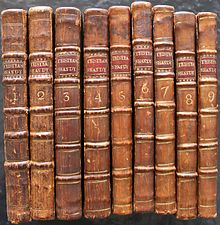
The final year of his life, 1768, saw the publication of his other work which achieved the status of a classic, viz. A Sentimental Journey Through France and Italy. Very few other works remain in the legacy of Sterne, mostly forgotten or read by afficionados and experts alone. They are rather political, such as A Political Romance or consist letter and sermons, published between 1747 and 1759.
The merit of The Cambridge Companion to Laurence Sterne is that it places Sterne very well in his time, describing the cultural background and literary scene of the middle of the 18th century. However, these descriptions introduce a large number of authors even more obscure than Sterne, which may provide clarifying background to specialized readers, but is dazzling to lay readers. Many of the essays are basically too detailed for the casual reader who wishes to understand Laurence Sterne a bit better. Ironically, reading the essays, one gets the feeling that there is not much to say about Sterne himself. This impression is strengthened by the fact that the volume as a whole counts barely 200 pages, while it contains many illustrations. In fact, one of the chapters is dedicated to images through the ages depicting Sterne's novels, and consists of many full-page B/W illustrations.
The Cambridge Companion to Laurence Sterne provides a lot of detailed and in-depth information about the man, his work and his times, but is written in a dry, academic style that makes reading less than a pleasure.

Finished reading: 4 January 2016

As I often reassure my students, much academic writing is often written in a poor style, that makes your thoughts wander and your eyes droopy, no matter how interested you are in the subject matter at hand. It is much the same with The Cambridge Companion to Laurence Sterne, a collection of 12 essays in just under 200 pages.
Laurence Sterne's output was quite limited. Born in 1713, Laurence Sterne lived in near obscurity until 1760, when he was catapulted into celebrity from being an obscure parson with the publication of Tristram Shandy. Unfortunately, at that point, Sterne had barely eight years more to live. He spent seven years enjoying his fame in the London literary circles, while completing a total of nine installments of The Life and Opinions of Tristram Shandy, Gentleman.
The final year of his life, 1768, saw the publication of his other work which achieved the status of a classic, viz. A Sentimental Journey Through France and Italy. Very few other works remain in the legacy of Sterne, mostly forgotten or read by afficionados and experts alone. They are rather political, such as A Political Romance or consist letter and sermons, published between 1747 and 1759.
The merit of The Cambridge Companion to Laurence Sterne is that it places Sterne very well in his time, describing the cultural background and literary scene of the middle of the 18th century. However, these descriptions introduce a large number of authors even more obscure than Sterne, which may provide clarifying background to specialized readers, but is dazzling to lay readers. Many of the essays are basically too detailed for the casual reader who wishes to understand Laurence Sterne a bit better. Ironically, reading the essays, one gets the feeling that there is not much to say about Sterne himself. This impression is strengthened by the fact that the volume as a whole counts barely 200 pages, while it contains many illustrations. In fact, one of the chapters is dedicated to images through the ages depicting Sterne's novels, and consists of many full-page B/W illustrations.
The Cambridge Companion to Laurence Sterne provides a lot of detailed and in-depth information about the man, his work and his times, but is written in a dry, academic style that makes reading less than a pleasure.

Join to post

