Swynn reads and runs in 2014
This topic was continued by Swynn reads and runs in 2014.
Talk 75 Books Challenge for 2014
This group has been archived. Find out more.
Join LibraryThing to post.
1swynn
No resolutions for 2014, since I'm going to read shiny things that grab my attention anyway. Expect mysteries and thrillers, science fiction, history, popular science and mathematics, and library science. Other than reading, my hobbies include running stupid distances and I ramble about that from time to time.
My 2014 reads are:
1) When the green star calls / Lin Carter
2) Big data / Viktor Mayer-Schönberger and Kenneth Cukier
3) Technomancer / B.V. Larson
4) Flesh and bone / Jefferson Bass
5) Mud season / Ellen Stimson
6) Cadillac desert / Marc Reisner
7) A storm too soon / Michael J. Tougias
8) Timebound / Rysa Walker
9) Echo X / Ben Barzman
10) The knife of never letting go / Patrick Ness
11) The four just men / Edgar Wallace
12) The book of Philip Jose Farmer / Philip Jose Farmer
13) Wild ones / Jon Mooallem
14) Descending son / Scott Shepherd
15) Fiend / Peter Stenson
16) Blackbirds / Chuck Wendig
19) Cold wind / C.J. Box
20) Testament XXI / Guy Snyder
21) The ask and the answer / Patrick Ness
22) Desolate angel / Chaz McGee
23) The thing around your neck / Chimamanda Ngozi Adichie
24) The blonde / Duane Swierczynski
25) Hyperbole and a half / Allie Brosh
26) Cold fear / Rick Mofina
27) Following Atticus / Tom Ryan
28) The secret lives of Baba Segi's wives / Lola Shoneyin
29) The man who bought London / Edgar Wallace
30) Beyond the hundredth meridian /Wallace Stegner
31) Skinner / Charlie Huston
32) Falling upward / Richard Holmes
33) The resurrectionist / Matthew Guinn
34) The solace of open spaces / Gretel Ehrlich
35) How to read novels like a professor / Thomas C. Foster
36) Man in the blue moon / Michael Morris
37) Whose body? / Dorothy Sayers
38) The end of Alice / A.M. Homes
39) A semantic web primer / Grigoris Antoniou, et al.
40) The madness season / C.S. Friedman
41) Ghostman / Roger Hobbs
42) Hitchers / Will McIntosh
43) Bad behavior / Mary Gaitskill
44) Tornado hunter / Stefan Bechtel and Tim Samaras
My 2014 reads are:
1) When the green star calls / Lin Carter
2) Big data / Viktor Mayer-Schönberger and Kenneth Cukier
3) Technomancer / B.V. Larson
4) Flesh and bone / Jefferson Bass
5) Mud season / Ellen Stimson
6) Cadillac desert / Marc Reisner
7) A storm too soon / Michael J. Tougias
8) Timebound / Rysa Walker
9) Echo X / Ben Barzman
10) The knife of never letting go / Patrick Ness
11) The four just men / Edgar Wallace
12) The book of Philip Jose Farmer / Philip Jose Farmer
13) Wild ones / Jon Mooallem
14) Descending son / Scott Shepherd
15) Fiend / Peter Stenson
16) Blackbirds / Chuck Wendig
19) Cold wind / C.J. Box
20) Testament XXI / Guy Snyder
21) The ask and the answer / Patrick Ness
22) Desolate angel / Chaz McGee
23) The thing around your neck / Chimamanda Ngozi Adichie
24) The blonde / Duane Swierczynski
25) Hyperbole and a half / Allie Brosh
26) Cold fear / Rick Mofina
27) Following Atticus / Tom Ryan
28) The secret lives of Baba Segi's wives / Lola Shoneyin
29) The man who bought London / Edgar Wallace
30) Beyond the hundredth meridian /Wallace Stegner
31) Skinner / Charlie Huston
32) Falling upward / Richard Holmes
33) The resurrectionist / Matthew Guinn
34) The solace of open spaces / Gretel Ehrlich
35) How to read novels like a professor / Thomas C. Foster
36) Man in the blue moon / Michael Morris
37) Whose body? / Dorothy Sayers
38) The end of Alice / A.M. Homes
39) A semantic web primer / Grigoris Antoniou, et al.
40) The madness season / C.S. Friedman
41) Ghostman / Roger Hobbs
42) Hitchers / Will McIntosh
43) Bad behavior / Mary Gaitskill
44) Tornado hunter / Stefan Bechtel and Tim Samaras
3goonergirl1982
Hi Swynn. Reading things that grab my attention is often my plan. Good luck.
6richardderus
Hi Steve! Glad to see you again this year.
10DorsVenabili
Hi Swynn! Dropping my star. I'm doing minimal planning this year as well, and it feels good!
Also, insanely, I'm going to sign up for the Chicago Marathon (October). I did a half two years ago, so we'll see how it goes. I have a lot of work to do, as I'm currently rather out of shape.
Also, insanely, I'm going to sign up for the Chicago Marathon (October). I did a half two years ago, so we'll see how it goes. I have a lot of work to do, as I'm currently rather out of shape.
11swynn
Hi Kerri. I'm counterstarring your thread.
Good luck on training for Chicago! I'd like to do Chicago at least once before my joints give up completely, and I do need a fall marathon next year. Hm. Looks like registration opens in March, so I have til then to decide.
Good luck on training for Chicago! I'd like to do Chicago at least once before my joints give up completely, and I do need a fall marathon next year. Hm. Looks like registration opens in March, so I have til then to decide.
12rosalita
You and I are heading in opposite directions in 2014, me plotting and you pantsing. That won't stop me from closely following your thread, since I always pick up great recommendations from you. Happy New Year, Steve!
13swynn
Welcome, Julia! I also have your thread starred. I do think I'd like to be more active on other threads this, year, so maybe I'll pipe up more often. Or not: it's not a resolution, since I've resolved not to have any this year.
14dk_phoenix
Here's a shiny star for YOU!
15HanGerg
Hi Swynn! I'm so with you on the not making any plans thing. I always get sidetracked from what I'm intending to read, and I kind of like it that way!
16rosalita
If you feel moved to comment, Steve, jump right in! And if you don't, that's totally OK, too. I am a very undemanding thread host. :-)
17DorsVenabili
#11 - We can have an LT contingent and get t-shirts made and everything! Who else is in?
18swynn
>17 DorsVenabili:: I'm in for Team Thing!
19UnrulySun
Yaaaay! A new Steve thread! How did I miss it till now? I plopped a star on ya.
Team Thing needs to happen. I will cheer for you all.
Team Thing needs to happen. I will cheer for you all.
20PaulCranswick
Steve, wishing you a wonderful, book filled, 2014
21qebo
No resolutions for 2014, since I'm going to read shiny things that grab my attention anyway.
Yeah, I've come to the same conclusion. Happy New Year!
Yeah, I've come to the same conclusion. Happy New Year!
25leperdbunny
Hi Steve! I am checking out your thread here and *waving* hello. :) Happy New Year!
27swynn
The president of the university that employs me has made a clever holiday greeting for our absent student body. Enjoy:
http://ow.ly/saRI7
http://ow.ly/saRI7
31swynn
That sense of humor has come in handy the last few years, and he has great rapport with the students. (Even better: he reads.)
Here's my first for the year:

1) DAW #62: When the Green Star Calls / Lin Carter
Date: 1973
Tagline: Beyond Mars shines the beacon of adventure
Second in Carter's "Green Star" series, following Under the Green Star, which I read a couple of years ago and called "fun, fluffy John-Carterish stuff." This is more of the same.
In fact, the summary I wrote back then was very helpful in getting me up to speed for this one, so I'm doing the same thing now in preparation for Green Star #3 (DAW #110). Details below, though if you're interested enough to wade through my summary you're probably interested enough to read the book, which is an entertaining example of its genre. You have been warned.
Some might think this cover is a candidate for the "uglies" TIOLI, but I like its dreamy mood. It's by Luis Dominguez.
SPOILERS FOLLOW!
Our narrator hesitates to return to the Green Star. When he left, he had just helped his true love Niamh the Fair escape from a gang of bandits but was himself killed in the fray, sending his spirit back to earth. So Niamh remains in danger, but our narrator can do nothing about it because he no longer has a body under the Green Star.
But of course he does finally return. He has no idea where to find Niamh, but floats around the planet until he finds a young man in danger. The boy has been tied to a branch near a phuol's lair -- a phuol being a sort of giant scorpion. He is later to learn that the boy had run afoul of tribal politics, but now all he knows is that the boy is helpless before the phuol, which stings him on the leg. Just after the attack, a tall human steps from the surrounding foliage and zaps the monster with an electrical wand.
Unfortunately, it's too late for the boy, whose spirit leaves its body. Our narrator moves into the dying body and holds on for all he's worth as the stranger carries him away. The stranger is Sarchimus the Wise, who lives in a tower of the dead city Sotaspra. There Sarchimus nurses the boy back to health.
Our narrator's name is now Karn, and he's in a bit of a muddle. On the one hand, Sarchimus seems to take pretty good care of him: he feeds Karn well and protects him from Sotaspra's giant fungus monsters. On the other hand, Sarchimus seems to have ulterior motives: he forbids Karn from visiting certain parts of the castle.
Karn's only interest is finding Jewel City and Niamh the Fair, so he searches the tower for maps. Finding none in the approved spaces, he searches the forbidden areas and discovers Zarqa the Kalood, a winged being whom Sarchimus has kept in his private chambers imprisoned in a magical cage. Zarqa is the last of the Kaloods, a technologically advanced race who founded Sotaspra but died out long ago due to side effects of an elixir of immortality. Sarchimus tortures Zarqa for the secrets of Kalood technology but so far Zarqa has not revealed the secrets of the elixir. Karn promises to help Zarqa however he can.
Though Zarqa has not revealed everything, Sarchimus knows most of the elixir's ingredients and has been testing formulas on captives, so far with deadly results. One evening Sarchimus invites Karn to dine in his private chambers, only to slip Karn the latest recipe. The elixir works on Karn, so Sarchimus drinks it himself only to be turned to stone.
Sarchimus's death frees Zarqa from the magical cage. Zarqa explains that while Sarchimus knew most of the elixir's ingredients he did not know the secret ingredient: phuol venom. Apparently enough of the venom lingered in Karn's system to prevent petrification. Whew.
Karn and Zarqa also find a prisoner in the tower's dungeon: Janchan of Phaolon. Sarchimus had taken Janchan captive for use as a test subject, but before his capture Janchan had been the leader of a party searching for Niamh the Fair. Now that he is free he resolves to continue the search. Karn and Zarqa offer to join him.
Janchan's best guess is that Niamh may have been captured and sold to Akhmim, king of Ardha, so they fly across the planet to that city. There are three major forces in Ardha: the king Akhmim; the Temple of the Gods, headed by the high priest Arjala; and the guild of assassins, led by Gurjan Tor. Politics are tense: by tradition Akhmim should marry Arjala to form a secular/sacred coalition. But Akhmim has rejected tradition and instead has demanded the hand of Niamh, princess of Phaolon.
Upon arrival, our heroes figure their best chance for infiltrating Ardha is for Janchan to pretend to be a mercenary and offer his services to the Ardhan army. Karn wants to joing Janchan, but his teenage appearance means he is unlikely to pass as a mercenary. So Karn and Zarqa camp out while waiting for Janchan to gather intelligence.
Janchan soon joins the retinue of the royal captain. There Janchan learns that Niamh is indeed in Ardha but that she is held in the Temple of the Gods by Arjala, who will not release her until Akhmim marries the high priestess, per tradition.
Karn's youth and his love for Niamh makes him impatient. He decides not to wait for Janchan and sneaks off on his own. Instead of fighting his enemies, he encounters a deadly zzumalak then through misadventure he lands in the assassins' guild, where he becomes a promising young student.
Zarqa goes in search of Karn after his disappearance. He finds the scene of Karn's battle with the zzumalak and decides that Karn is probably dead. Then Zarqa is captured by a hunting party who mistake him for a messenger of the gods. The hunters take Zarqa to Arjala at the temple. Arjala recognizes an opportunity. At the next festival she parades Zarqa around, claiming that the gods have sent a message that Akhmim must marry the high priestess.
With this turn of events, Akhmim and his captain hatch a plan to kidnap both Zarqa and Niamh from the temple. And who better to carry out the deed than the foreign mercenary Janchan? Janchan finds Zarqa and Niamh at the temple, and they battle guards to make their escape. When Arjala herself intervenes they manage to take her prisoner then escape out a window by flying car. They regret they must leave Karn behind, but rescuing Niamh is a priority and besides Karn is likely dead.
Meanwhile, Gurjan Tor orders Karn to sneak into the palace and assassinate Zarqa and Niamh. Karn plans of course to rescue them but just as he arrives at the palace he sees the flying car dash away with all of his friends aboard.
And that's where it ends. An epilogue explains that all of the Green Star novels are really one continuous story and there's no good place to break it but 60,000 words are 60,000 words so there we are. Also thanks to editor Donald Wollheim for letting Carter break it up this way. It's pretty much the same sentiment C.J. Cherryh would express a decade later for the Chanur novels.
Here's my first for the year:

1) DAW #62: When the Green Star Calls / Lin Carter
Date: 1973
Tagline: Beyond Mars shines the beacon of adventure
Second in Carter's "Green Star" series, following Under the Green Star, which I read a couple of years ago and called "fun, fluffy John-Carterish stuff." This is more of the same.
In fact, the summary I wrote back then was very helpful in getting me up to speed for this one, so I'm doing the same thing now in preparation for Green Star #3 (DAW #110). Details below, though if you're interested enough to wade through my summary you're probably interested enough to read the book, which is an entertaining example of its genre. You have been warned.
Some might think this cover is a candidate for the "uglies" TIOLI, but I like its dreamy mood. It's by Luis Dominguez.
SPOILERS FOLLOW!
Our narrator hesitates to return to the Green Star. When he left, he had just helped his true love Niamh the Fair escape from a gang of bandits but was himself killed in the fray, sending his spirit back to earth. So Niamh remains in danger, but our narrator can do nothing about it because he no longer has a body under the Green Star.
But of course he does finally return. He has no idea where to find Niamh, but floats around the planet until he finds a young man in danger. The boy has been tied to a branch near a phuol's lair -- a phuol being a sort of giant scorpion. He is later to learn that the boy had run afoul of tribal politics, but now all he knows is that the boy is helpless before the phuol, which stings him on the leg. Just after the attack, a tall human steps from the surrounding foliage and zaps the monster with an electrical wand.
Unfortunately, it's too late for the boy, whose spirit leaves its body. Our narrator moves into the dying body and holds on for all he's worth as the stranger carries him away. The stranger is Sarchimus the Wise, who lives in a tower of the dead city Sotaspra. There Sarchimus nurses the boy back to health.
Our narrator's name is now Karn, and he's in a bit of a muddle. On the one hand, Sarchimus seems to take pretty good care of him: he feeds Karn well and protects him from Sotaspra's giant fungus monsters. On the other hand, Sarchimus seems to have ulterior motives: he forbids Karn from visiting certain parts of the castle.
Karn's only interest is finding Jewel City and Niamh the Fair, so he searches the tower for maps. Finding none in the approved spaces, he searches the forbidden areas and discovers Zarqa the Kalood, a winged being whom Sarchimus has kept in his private chambers imprisoned in a magical cage. Zarqa is the last of the Kaloods, a technologically advanced race who founded Sotaspra but died out long ago due to side effects of an elixir of immortality. Sarchimus tortures Zarqa for the secrets of Kalood technology but so far Zarqa has not revealed the secrets of the elixir. Karn promises to help Zarqa however he can.
Though Zarqa has not revealed everything, Sarchimus knows most of the elixir's ingredients and has been testing formulas on captives, so far with deadly results. One evening Sarchimus invites Karn to dine in his private chambers, only to slip Karn the latest recipe. The elixir works on Karn, so Sarchimus drinks it himself only to be turned to stone.
Sarchimus's death frees Zarqa from the magical cage. Zarqa explains that while Sarchimus knew most of the elixir's ingredients he did not know the secret ingredient: phuol venom. Apparently enough of the venom lingered in Karn's system to prevent petrification. Whew.
Karn and Zarqa also find a prisoner in the tower's dungeon: Janchan of Phaolon. Sarchimus had taken Janchan captive for use as a test subject, but before his capture Janchan had been the leader of a party searching for Niamh the Fair. Now that he is free he resolves to continue the search. Karn and Zarqa offer to join him.
Janchan's best guess is that Niamh may have been captured and sold to Akhmim, king of Ardha, so they fly across the planet to that city. There are three major forces in Ardha: the king Akhmim; the Temple of the Gods, headed by the high priest Arjala; and the guild of assassins, led by Gurjan Tor. Politics are tense: by tradition Akhmim should marry Arjala to form a secular/sacred coalition. But Akhmim has rejected tradition and instead has demanded the hand of Niamh, princess of Phaolon.
Upon arrival, our heroes figure their best chance for infiltrating Ardha is for Janchan to pretend to be a mercenary and offer his services to the Ardhan army. Karn wants to joing Janchan, but his teenage appearance means he is unlikely to pass as a mercenary. So Karn and Zarqa camp out while waiting for Janchan to gather intelligence.
Janchan soon joins the retinue of the royal captain. There Janchan learns that Niamh is indeed in Ardha but that she is held in the Temple of the Gods by Arjala, who will not release her until Akhmim marries the high priestess, per tradition.
Karn's youth and his love for Niamh makes him impatient. He decides not to wait for Janchan and sneaks off on his own. Instead of fighting his enemies, he encounters a deadly zzumalak then through misadventure he lands in the assassins' guild, where he becomes a promising young student.
Zarqa goes in search of Karn after his disappearance. He finds the scene of Karn's battle with the zzumalak and decides that Karn is probably dead. Then Zarqa is captured by a hunting party who mistake him for a messenger of the gods. The hunters take Zarqa to Arjala at the temple. Arjala recognizes an opportunity. At the next festival she parades Zarqa around, claiming that the gods have sent a message that Akhmim must marry the high priestess.
With this turn of events, Akhmim and his captain hatch a plan to kidnap both Zarqa and Niamh from the temple. And who better to carry out the deed than the foreign mercenary Janchan? Janchan finds Zarqa and Niamh at the temple, and they battle guards to make their escape. When Arjala herself intervenes they manage to take her prisoner then escape out a window by flying car. They regret they must leave Karn behind, but rescuing Niamh is a priority and besides Karn is likely dead.
Meanwhile, Gurjan Tor orders Karn to sneak into the palace and assassinate Zarqa and Niamh. Karn plans of course to rescue them but just as he arrives at the palace he sees the flying car dash away with all of his friends aboard.
And that's where it ends. An epilogue explains that all of the Green Star novels are really one continuous story and there's no good place to break it but 60,000 words are 60,000 words so there we are. Also thanks to editor Donald Wollheim for letting Carter break it up this way. It's pretty much the same sentiment C.J. Cherryh would express a decade later for the Chanur novels.
32UnrulySun
he reads
THAT is as good a judge of character in a school president as ever I heard. Seems to be not-the-norm these days for those in power in education, or at least they keep it closeted, lest they seem like flibberdigibbets... bah.
I admit to skimming your review Steve, as, well, it looks like Klingon to me. ♥
THAT is as good a judge of character in a school president as ever I heard. Seems to be not-the-norm these days for those in power in education, or at least they keep it closeted, lest they seem like flibberdigibbets... bah.
I admit to skimming your review Steve, as, well, it looks like Klingon to me. ♥
33swynn
>31 swynn:: Agreed about the value of reading for educators.
Skimming my summaries is not only condoned, it's expected.
Skimming my summaries is not only condoned, it's expected.
36swynn
Yes, the DAWs are back. Only about 1600 to go! I only read a handful last year and I've missed them.
37swynn

2) Big Data / Viktor Mayer-Schönberger & Kenneth Cukier
"Big Data" is one of the buzzwords du jour in information science. The idea is that large datasets, cheap storage, and available processing power have reached a point that we can now perform computational tasks that were impossible just a few years ago. I confess I've been a little fuzzy on details: discussions of big data have been largely anecdotal (Look at these huge datasets! Look what we can do!) and the distinction between "big data" and "data mining" have been unclear to me.
This book helps, and is recommended for those interested in the subject. Since I am very interested in the subject I took notes which are expanded below for my own reference. As with the Lin Carter book, my summary is lengthy so skimming or skipping is expected.
Mayer-Schönberger and Cukier describe how "big data" datasets differ from traditional datasets: they're bigger, they're messier, and they're especially useful for discovering correlations. Additional advantages can be gained by repurposing data: gather it for one purpose, but store it in case it can be used for another. So combining data from multiple datasets can yield new results.
A canonical example -- one that the authors give early in the book -- is the repurposing of Google search terms. In 2008, Google did a study combining the CDC's records of flu infections with its own set of half a billion search terms entered during the 2007/2008 flu season. They discovered certain search terms that can be used to model the spread of flu: when they see a spike of searches for "cough medicine" and the like in Poughkeepsie they can infer it's spreading there. Using that information, Google can gather real-time epidemiological information faster than the CDC can.
Obviously, Google's dataset wasn't clean: it contained misspelled search terms, gobbledygook entered by cats walking across keyboards, and searches entered by people who weren't even sick. But with "big data," the advantages gained from the size of the dataset outweigh the disadvantages of messy data.
So far, so good: but that sounds to me a lot like "data mining," a buzzword du dernier jour. But to Mayer-Schönberger and Cukier, "big data" implies more than new services and products available through larger datasets: it implies a fundamental shift in the way data is gathered and valued.
Their data-gathering slogan is "datafication," which means ubiquitous and frequent collection of data points. We're already "datafying" a huge number of phenomena thanks to mobile devices, Facebook, data-gathering sensors in your car, and Internet-ready toasters. That makes these phenomena accessible to big-data analysis.
In terms of the value of information the authors expect that companies who gather data will take greater care to store their data, and will look for opportunities to re-use, license, or even sell the data for additional profit. They also see the rise of companies and professions who will specialize in the gathering, analysis, and reuse of data. This is a safe bet, as it's already happening, but they think these trends will continue to a degree that means a basic change in the relationship between data and society.
Lest they seem too starry-eyed about the prospects of big data, the authors acknowledge some concerns: privacy concerns are huge. Big data means that your private activities and preferences exposed for the word to see and exploit. But it also means a change in how we understand privacy. "Big data" means storing data in hopes of profitable reuse; but that undermines the standard practice of "notice and consent" because it's impossible to notify & acquire consent from customers for unknown future uses.
The authors are also concerned about "probability and punishment," the use of big data in law enforcement. In a worst-case scenario we'd have situations straight out of Minority Report, where police arrest citizens for crimes they're likely to commit in the future. That seems far-fetched to me but they point out that statistics on recidivism are already used in parole hearings, suggesting that some prisoners are denied parole based on probabilities: is this the first step in a slippery slope?
They also talk about the problem of the "dictatorship of data": that we will come to trust big data so completely that we'll become blinded to its flaws, making bad decisions based on faulty interpretations. These sorts of mistakes seem inevitable and I wish that the authors had spent some more time discussing the flaws of big-data analysis.
The authors take some care not to seem evangelical about big data, but I can't help feeling they're overly optimistic. I kept thinking about Nate Silver's The Signal and the Noise, and his cautions about correlations in large datasets. According to Silver, any dataset large or small will contain correlations that are purely accidental and have no predictive value. Increasing the size of the dataset exacerbates, not solves, the problem.
Of course, I'd also like to have heard the authors talk about libraries' roles in creating, curating, and exploiting data sets but that's a little outside their scope.
38swynn
**RUNNING POST**
Some of you will remember that I was training for a 50K in Dubuque this month. Those plans have changed in deference to my joints.
The training was going pretty well up to November, when the cold fronts started arriving. My ankles and hips hissed like cats at the new puppy. This was mostly a problem on long runs, when persistent unignorable pains kicked in somewhere between 11 and 15 miles. I did complete one 20 mile run in early December but it wasn't pretty and I couldn't repeat the feat.
So I'm backing off. I'm still running in Dubuque, but will run the half marathon instead of the 50K. I did 13.1 on the road yesterday at an easy 9:30 pace and felt good the entire distance. So a half is very doable. I may even break 2 hours.
Anyway ... when I mentioned the race last fall, Julia suggested an Iowa City meetup. Anyone still interested for Saturday, January 18?
Some of you will remember that I was training for a 50K in Dubuque this month. Those plans have changed in deference to my joints.
The training was going pretty well up to November, when the cold fronts started arriving. My ankles and hips hissed like cats at the new puppy. This was mostly a problem on long runs, when persistent unignorable pains kicked in somewhere between 11 and 15 miles. I did complete one 20 mile run in early December but it wasn't pretty and I couldn't repeat the feat.
So I'm backing off. I'm still running in Dubuque, but will run the half marathon instead of the 50K. I did 13.1 on the road yesterday at an easy 9:30 pace and felt good the entire distance. So a half is very doable. I may even break 2 hours.
Anyway ... when I mentioned the race last fall, Julia suggested an Iowa City meetup. Anyone still interested for Saturday, January 18?
39ronincats
Happy New Year, Steve! I'm looking forward to your reading this year. Had to laugh at the Lin Carter summary--I had no respect for the author after his error-ridden and off-topic Tolkien: A Look Behind the Lord of the Rings, so I'm pretty safe in assuming your summary is much more entertaining than his highly derivative fantasy. Loved it! And I'll also thank you for taking the hit for me with Big Data--sounds interesting but flawed.
40richardderus
The ending of the Green Star series was, to my 18-year-old self, so annoying that I gave the books to the kid brother of one of my friends with a big smile. (I didn't like the sprog then, like him less now.)
I still don't understand the difference between data mining and big data. Is this, permaybehaps, distinction without difference?
I still don't understand the difference between data mining and big data. Is this, permaybehaps, distinction without difference?
41rosalita
Very good review of "Big Data", Steve. It's certainly an increasingly important topic in today's world. I have yet to read "The Signal and the Noise" but I'm moving it up my to-read list.
I am definitely still interested in an Iowa City meetup. Is it July 18? For some reason I was thinking it was in January or February. Winter, anyway. I will put a bug in Amy (porch_reader)'s ear, as well.
I am definitely still interested in an Iowa City meetup. Is it July 18? For some reason I was thinking it was in January or February. Winter, anyway. I will put a bug in Amy (porch_reader)'s ear, as well.
43swynn
>39 ronincats:: Happy New Year to you too, Roni! I haven't read Carter's book on Tolkien and I've heard enough to know I the I probably won't read it. The kindest thing I've heard is that his heart was in the right place.
>40 richardderus:: Bad news about the end of the series. I've liked them pretty well up until now. One the distinction between data mining and big data: the distinction I infer from Mayer-Schönberger and Cukier is that "data mining" focuses on analysis, whereas "big data" implies a shift in habits encompassing every step of the process, from ubiquitous data-gathering to analyzing, applying, and pricing the data. I infer this distinction because they don't actually use the term "data mining."
>41 rosalita:: If you only read one, I definitely recommend The Signal and the Noise.
URGH! That's what I get for typing at 12:30 AM. It's definitely January 18: one week from Saturday. I'll edit the original post accordingly.
>42 qebo:: I think that data mining is a piece of big data. Since it's a buzzword, I expect that its meaning varies from person to person. In many uses I think the terms are interchangeable. But if "data mining" refers to a set of methods, and "big data" to broader professional and social contexts in addition to the methods, I think that distinction can be a useful one and is consistent with many discussions I've heard.
I should add, just in case it isn't obvious, that my interpretation of "big data" is that of a librarian who has read a book, a few articles in magazines and trade publications, and had a few conversations, generally with persons perhaps only slightly more informed than myself. Corrections and competing interpretations are welcome.
>40 richardderus:: Bad news about the end of the series. I've liked them pretty well up until now. One the distinction between data mining and big data: the distinction I infer from Mayer-Schönberger and Cukier is that "data mining" focuses on analysis, whereas "big data" implies a shift in habits encompassing every step of the process, from ubiquitous data-gathering to analyzing, applying, and pricing the data. I infer this distinction because they don't actually use the term "data mining."
>41 rosalita:: If you only read one, I definitely recommend The Signal and the Noise.
URGH! That's what I get for typing at 12:30 AM. It's definitely January 18: one week from Saturday. I'll edit the original post accordingly.
>42 qebo:: I think that data mining is a piece of big data. Since it's a buzzword, I expect that its meaning varies from person to person. In many uses I think the terms are interchangeable. But if "data mining" refers to a set of methods, and "big data" to broader professional and social contexts in addition to the methods, I think that distinction can be a useful one and is consistent with many discussions I've heard.
I should add, just in case it isn't obvious, that my interpretation of "big data" is that of a librarian who has read a book, a few articles in magazines and trade publications, and had a few conversations, generally with persons perhaps only slightly more informed than myself. Corrections and competing interpretations are welcome.
45UnrulySun
Good luck on your half, Steve! I'm sorry your body isn't cooperating for the longer run though. It stinks when you're mentally prepared but your body betrays you. It'll be fun if you get to have a meetup, and if so we expect pictures!
I won't get to do my half this February in New Orleans because of some health issues, so I'm kind of bummed about that. I'll still go and cheer on my pals, but... you know.
I won't get to do my half this February in New Orleans because of some health issues, so I'm kind of bummed about that. I'll still go and cheer on my pals, but... you know.
46porch_reader
Hi Steve! Julia (Rosalita) told me that you might be coming through Iowa City on your way to Dubuque in a couple of weeks. I'd love to get together, although I'll be out of town (in Ames, IA) from Friday afternoon (1/17) through late on Saturday (1/18). My son's Lego League team is going to the state tournament. So I'm afraid I might miss you, but I'll keep my eye on what you and Julia plan, just in case it works out.
Two other notes - First, my sister-in-law is a senior at Truman State. I almost went to college there myself (back in the days when it was Northeast Missouri State). My aunt and uncle still live in Kirksville. I loved the video you posted of the president.
Also, I enjoyed your review of Big Data. That one is on my TBR list. My husband teaches in the Business Analytics and Information Systems department at Iowa, although he's more on the IS side than the Big Data side. I'm a management professor, and our research is being influenced by the availability of Big Data as well.
If I don't get to meet you this time, we'll have to get together the next time one of us crosses the MO-IA state line. Good luck with the race!
Two other notes - First, my sister-in-law is a senior at Truman State. I almost went to college there myself (back in the days when it was Northeast Missouri State). My aunt and uncle still live in Kirksville. I loved the video you posted of the president.
Also, I enjoyed your review of Big Data. That one is on my TBR list. My husband teaches in the Business Analytics and Information Systems department at Iowa, although he's more on the IS side than the Big Data side. I'm a management professor, and our research is being influenced by the availability of Big Data as well.
If I don't get to meet you this time, we'll have to get together the next time one of us crosses the MO-IA state line. Good luck with the race!
47swynn
>44 drneutron:: Thanks, Jim!
>45 UnrulySun:: Agreed on the disappointments one's body can hand one, and I'm sorry to hear about the shelving of your New Orleans plans. I hope things get better & you get to do a half somewhere eventually.
>46 porch_reader:: Thanks for stopping by, Amy! I'm sorry you can't make it to a meetup on the 18th, but a Lego League tournament is the coolest excuse I can imagine. Hope your son's team does well; they can hardly avoid having a good time, playing with Legos and all. I hope to see you at some future meetup. And of course-- if you ever plan a trip my way (for sister-in-law's graduation, perhaps) let me know!
>45 UnrulySun:: Agreed on the disappointments one's body can hand one, and I'm sorry to hear about the shelving of your New Orleans plans. I hope things get better & you get to do a half somewhere eventually.
>46 porch_reader:: Thanks for stopping by, Amy! I'm sorry you can't make it to a meetup on the 18th, but a Lego League tournament is the coolest excuse I can imagine. Hope your son's team does well; they can hardly avoid having a good time, playing with Legos and all. I hope to see you at some future meetup. And of course-- if you ever plan a trip my way (for sister-in-law's graduation, perhaps) let me know!
48swynn
Treadmill reading:
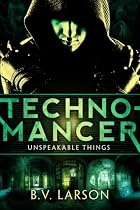
3) Technomancer / B.V. Larson
Urban fantasy about a paranormal investigator with amnesia who seems to be under attack by vicious "Grey Men" from another dimension. It's all plot, the protagonist is a jerk, and it's only mildly fun. Okay for the treadmill, but not recommended.
3) Technomancer / B.V. Larson
Urban fantasy about a paranormal investigator with amnesia who seems to be under attack by vicious "Grey Men" from another dimension. It's all plot, the protagonist is a jerk, and it's only mildly fun. Okay for the treadmill, but not recommended.
49ronincats
(If his heart were really in the right place, he'd have gone back and corrected his many truly egregious errors! I am unforgiving.)
Sounds like Technomancer is one I'm going to skip, Steve.
Have you ever considered alternating the earliest unread DAW with the latest and working toward the middle?
Sounds like Technomancer is one I'm going to skip, Steve.
Have you ever considered alternating the earliest unread DAW with the latest and working toward the middle?
50DorsVenabili
So sorry to hear about the hissing joints!
Will come back to read your review of Big Data when me brain isn't fried...
Will come back to read your review of Big Data when me brain isn't fried...
51swynn
Roni,
I will take your word on Carter's sins against Middle-Earth. Egregious though they might be, I maintain that the Green Sun stories are (so far) better than Technomancer, so skipping that one is a good choice.
As for reading new DAWs: nothing so systematic, but yes. I've read some more recent ones: Rosemary and Rue a couple of years ago, and the Chanur novels last year at somebody's shameless urging, can't remember whose (thanks again by the way, they rocked).
I do think I'd like to read more science fiction this year, and more off my shelves. That could very well include newer DAWs. But we'll see how that works out.
I will take your word on Carter's sins against Middle-Earth. Egregious though they might be, I maintain that the Green Sun stories are (so far) better than Technomancer, so skipping that one is a good choice.
As for reading new DAWs: nothing so systematic, but yes. I've read some more recent ones: Rosemary and Rue a couple of years ago, and the Chanur novels last year at somebody's shameless urging, can't remember whose (thanks again by the way, they rocked).
I do think I'd like to read more science fiction this year, and more off my shelves. That could very well include newer DAWs. But we'll see how that works out.
52swynn
>50 DorsVenabili:: Thanks for the commisseration, Kerri, and you're welcome here any time!
53swynn
For anyone who might make it to Iowa City on January 18th, I've started a meetup thread here:
http://www.librarything.com/topic/163906
I have no plans other than the date, so itinerary is wide open.
http://www.librarything.com/topic/163906
I have no plans other than the date, so itinerary is wide open.
55swynn
Thanks, Diana!
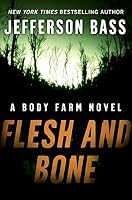
4) Flesh and Bone / Jefferson Bass
Second in the "Body Farm" series. This one has a grisly murder/mutilation of drag queen, but things don't really start moving until a second murder about halfway through. In the meantime it rambles and rants about the dangers of Internet predators and intelligent design. Tedious as they were, the rambles and rants were better than the endless descriptions of preferred driving routes through Knoxville. There are also a few plugs for Knoxville businesses so crass that they felt like product placements. I estimate 200 pages of story, 150 pages of filler.
I brought this home in December as a backup Tennessee read for the 50 State Challenge. I figured a thriller would be a quick alternative just in case The Girls of Atomic City took longer than expected. Turns out the Kiernan book was more engaging than the thriller. I think I'm done with this series.
4) Flesh and Bone / Jefferson Bass
Second in the "Body Farm" series. This one has a grisly murder/mutilation of drag queen, but things don't really start moving until a second murder about halfway through. In the meantime it rambles and rants about the dangers of Internet predators and intelligent design. Tedious as they were, the rambles and rants were better than the endless descriptions of preferred driving routes through Knoxville. There are also a few plugs for Knoxville businesses so crass that they felt like product placements. I estimate 200 pages of story, 150 pages of filler.
I brought this home in December as a backup Tennessee read for the 50 State Challenge. I figured a thriller would be a quick alternative just in case The Girls of Atomic City took longer than expected. Turns out the Kiernan book was more engaging than the thriller. I think I'm done with this series.
58swynn
... But this is not it.
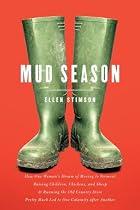
5) Mud Season / Ellen Stimson
Memoir of a woman whose family moves from St. Louis to small-town Vermont, and buys a country store with disastrous consequences.
The good: there are some funny stories here about big-city liberals meeting long-established country folk, and about close encounters with goats, skunks, and sheep. Stimson isn't afraid to tell an embarrassing story on herself.
The less good: the style is excruciatingly chatty and occasionally tries too hard for laughs. Some of Stimson's actions are unbelievably obtuse and seem to be motivated by an overweening sense of entitlement. I say "seem" because it's frequently hard to tell fact from comic exaggeration.
This is another leftover from last year's 50 state challenge. It was my first choice for a Vermont read, but didn't arrive until after the new year. The book I read instead, about Rudyard Kipling in Vermont had a similar theme: cosmopolitan sophisticate fails to fit in to rural Vermont community. The Kipling book was the more interesting one.
5) Mud Season / Ellen Stimson
Memoir of a woman whose family moves from St. Louis to small-town Vermont, and buys a country store with disastrous consequences.
The good: there are some funny stories here about big-city liberals meeting long-established country folk, and about close encounters with goats, skunks, and sheep. Stimson isn't afraid to tell an embarrassing story on herself.
The less good: the style is excruciatingly chatty and occasionally tries too hard for laughs. Some of Stimson's actions are unbelievably obtuse and seem to be motivated by an overweening sense of entitlement. I say "seem" because it's frequently hard to tell fact from comic exaggeration.
This is another leftover from last year's 50 state challenge. It was my first choice for a Vermont read, but didn't arrive until after the new year. The book I read instead, about Rudyard Kipling in Vermont had a similar theme: cosmopolitan sophisticate fails to fit in to rural Vermont community. The Kipling book was the more interesting one.
59qebo
58: Well shoot, because I like this sort of thing, but there's enough of it out there that the lesser efforts can be bypassed.
60swynn
Yeah, it has its moments but there's little reflection and it's played too much for laughs; I think you'd be disappointed too.
62swynn
>61 ronincats:: The good news is I'm reading something much better, but it's long and occasionally demanding: Marc Reisner's Cadillac Desert. Everything else may just be suffering by comparison.
64rosalita
#55> Steve, I can't really disagree with much of your review of "Flesh and Bone", except that I don't think it bothered me as much as it did you and I'm still reading the series. It's never risen to the level of greatness that I had hoped for (along the lines of Cornwell's early Scarpetta books), unfortunately.
65swynn
>63 qebo:: You won't be sorry about that hit, I think!
>64 rosalita:: I'll give you my share of future Body Farm reads in return for your share of testosterone-fueled swords-and-planets adventure stories. We'll call it win-win, deal?
>64 rosalita:: I'll give you my share of future Body Farm reads in return for your share of testosterone-fueled swords-and-planets adventure stories. We'll call it win-win, deal?
67UnrulySun
*waving hello to Steve*
Cadillac Desert looks interesting; can't wait to hear your thoughts on it.
Cadillac Desert looks interesting; can't wait to hear your thoughts on it.
69swynn
>69 swynn:: Welcome, Bente! My running goals this year are:
1. Don't hurt myself.
2. Have fun.
All other goals rank far behind these two, and aren't so much "goals" as they are training targets or wishful thoughts.
I try to do at least one race a month to help with motivation, though I don't necessarily give race reports on the thread. January's run is this weekend: the Triple D Winter Race in Dubuque, Iowa. I'll race in the shortest event, the half marathon.
Other races this year: I'm leaning strongly toward the Knoxville Marathon at the end of March, and am thinking about Chicago in October. How about you?
>67 UnrulySun:: It is. It's interesting and occasionally infuriating, and thoroughly entertaining. Reisner puts the "story" in history.
>68 rosalita:: Excellent! You get the CSI, I get the chainmail loincloth. No accounting for taste.
1. Don't hurt myself.
2. Have fun.
All other goals rank far behind these two, and aren't so much "goals" as they are training targets or wishful thoughts.
I try to do at least one race a month to help with motivation, though I don't necessarily give race reports on the thread. January's run is this weekend: the Triple D Winter Race in Dubuque, Iowa. I'll race in the shortest event, the half marathon.
Other races this year: I'm leaning strongly toward the Knoxville Marathon at the end of March, and am thinking about Chicago in October. How about you?
>67 UnrulySun:: It is. It's interesting and occasionally infuriating, and thoroughly entertaining. Reisner puts the "story" in history.
>68 rosalita:: Excellent! You get the CSI, I get the chainmail loincloth. No accounting for taste.
70scaifea
Best of luck on Sunday!
Also, if you get a chance while you're there, you should try to check out the River Lights Bookstore, which is right downtown. Beautiful little indy bookshop.
Also, if you get a chance while you're there, you should try to check out the River Lights Bookstore, which is right downtown. Beautiful little indy bookshop.
71Apolline
#69: That seems like reasonable goals to me:) Half marathon is actually the longest race I've tried, first time last year. I'm doing it again in May, and then an uphill half marathon in June (fjord to summit thing). I think I will leave the full marathons alone a little while longer, since half of it is more than enough for the time being :) But I am very impressed with those who finish full marathons. Kudos!
The weather keeps me from running outside at the moment, or maybe I just have to buy Icebugs or something.
The weather keeps me from running outside at the moment, or maybe I just have to buy Icebugs or something.
72swynn
>70 scaifea:: Thanks, Amanda! I'll definitely try to check out River Lights on Saturday. I'm hoping also to squeeze in a visit to the National Mississippi River Museum. See you Sunday in Iowa City!
>71 Apolline:: Bente: a fjord-to-summit half sounds both fun and insane. One of my wishful thoughts is to someday do the Pike's Peak Marathon: 13.1 miles up, then turn around for 13.1 miles down. A friend who has done it jokes, "I don't know why people say it's so hard. There's only one hill."
If you can manage an uphill half, then one of our flat midwestern marathons would pose you no challenge I'm sure.
>71 Apolline:: Bente: a fjord-to-summit half sounds both fun and insane. One of my wishful thoughts is to someday do the Pike's Peak Marathon: 13.1 miles up, then turn around for 13.1 miles down. A friend who has done it jokes, "I don't know why people say it's so hard. There's only one hill."
If you can manage an uphill half, then one of our flat midwestern marathons would pose you no challenge I'm sure.
73scaifea
*cough* It's Amber *cough* Ha! I've always liked the name Amanda though (She Who Must Be Loved sounds good to me!).
If you get to the River Museum, let me know what you think - we haven't been there yet, but I bet Charlie would really like it.
If you get to the River Museum, let me know what you think - we haven't been there yet, but I bet Charlie would really like it.
74leperdbunny
Hi Steve, loved the video from your president! Ooh a meetup! Unfortunately, too long for me to drive/too much gas. I hope you guys have fun.
75swynn
Hi, Tamara! Too bad you can't make it, but I am hoping for fun.
Day 1 of my great Dubuque/Iowa City vacation weekend was mostly a bust. This morning on my to Dubuque I hit a patch of ice, slid off the road, and took out a steel pole. So instead of the River Lights bookstore and Mississippi museum I spent most of the day talking to insurance agents and a tow truck driver and a Hertz agent and multiple relatives.
Good news is, I'm pretty sure I'm fine, and nobody else was hurt either. Evening was better, as I met up with an old high school friend for supper and decompression. I'll probably have some residual nervous energy for the race tomorrow, and am definitely still on for Iowa City on Monday.
Day 1 of my great Dubuque/Iowa City vacation weekend was mostly a bust. This morning on my to Dubuque I hit a patch of ice, slid off the road, and took out a steel pole. So instead of the River Lights bookstore and Mississippi museum I spent most of the day talking to insurance agents and a tow truck driver and a Hertz agent and multiple relatives.
Good news is, I'm pretty sure I'm fine, and nobody else was hurt either. Evening was better, as I met up with an old high school friend for supper and decompression. I'll probably have some residual nervous energy for the race tomorrow, and am definitely still on for Iowa City on Monday.
77rosalita
Oh gosh, Steve, I'm so glad you weren't injured in your accident. One of my coworkers was involved in a big multi-car pileup on Interstate 80 today but thankfully was not injured. It looked pretty slick out there.
Best of luck tomorrow in the race, and I'm looking forward to meeting you on Monday!
Best of luck tomorrow in the race, and I'm looking forward to meeting you on Monday!
78DorsVenabili
Oh, no! That's terrible, but I'm glad you're ok.
Good wishes on the race today!
Good wishes on the race today!
79UnrulySun
Wow! Glad to hear you're okay, Steve, and so sorry about your car.
Enjoy your race and take lots of pictures of the meetup. :)
Enjoy your race and take lots of pictures of the meetup. :)
81swynn
**Running Post**
Race report: The half was definitely the right choice. I've been completing 13 miles easily on my long training runs, and even thought breaking two hours was a good possibility, considering the flat course, I hadn't been giving due credit to the probable trail surface, which looked like this:

That's the starting line, on "Fish Pond Road," and if you only look down the scenery doesn't change much for 13 miles.The Heritage Trail had gotten several inches of fresh snow on Saturday, lightly packed overnight by snowmobile traffic Saturday night and Sunday morning. It ain't like running on roads: instead of pushing back, the ground scoots out behind you.
I figured out pretty quickly that any speed goals should be abandoned, and once the endorphins kicked in, I hit about a ten minute pace, and had a great time. The scenic course (looking up, of course) helped.
At about 11.5 miles, my left ankle seized up and I took it easy the rest of the way (Rule #1: Don't hurt myself), adding about five minutes to my overall time, and finishing in 2:17. I'm happy with that finish. I would definitely do Triple D again, but with more training on trails next time.
Now I'm back at the hotel, keeping my foot elevated and looking forward to Iowa City tomorrow.
Race report: The half was definitely the right choice. I've been completing 13 miles easily on my long training runs, and even thought breaking two hours was a good possibility, considering the flat course, I hadn't been giving due credit to the probable trail surface, which looked like this:

That's the starting line, on "Fish Pond Road," and if you only look down the scenery doesn't change much for 13 miles.The Heritage Trail had gotten several inches of fresh snow on Saturday, lightly packed overnight by snowmobile traffic Saturday night and Sunday morning. It ain't like running on roads: instead of pushing back, the ground scoots out behind you.
I figured out pretty quickly that any speed goals should be abandoned, and once the endorphins kicked in, I hit about a ten minute pace, and had a great time. The scenic course (looking up, of course) helped.
At about 11.5 miles, my left ankle seized up and I took it easy the rest of the way (Rule #1: Don't hurt myself), adding about five minutes to my overall time, and finishing in 2:17. I'm happy with that finish. I would definitely do Triple D again, but with more training on trails next time.
Now I'm back at the hotel, keeping my foot elevated and looking forward to Iowa City tomorrow.
82swynn
Thanks Roni, Julia, Kerri, Kathy, and Jim, for the well-wishes. I felt weirdly calm through the whole business, and it only occurred to me late last night how close I'd come to having a steel pole land on my head. Despite the nuisance, I feel incredibly fortunate to be able to live and run another day.
83leperdbunny
((Steve)) At least you are looking on the bright side. :)
84rosalita
Sounds like you had a good race, Steve. I didn't realize it was being run on trails — that certainly added a degree of difficulty with the recent snow. Well done! I hope your ankle benefits from an evening of rest.
See you soon!
See you soon!
85porch_reader
So good to see you today, Steve! I hope that the rest of your trip home was uneventful.
86scaifea
Hi, Steve! It was wonderful meeting you today! And how did I miss the whole car accident bit!? So sorry! And how did it not come up at meetup today?! Anyway, I hope you get home safely!
87swynn
Amy & Amber: It was great to meet you too, and we'll have to do it again. I did run into some weather on the way north, but took it very slowly. I have firm policy against more than one close encounter with an off-ramp speed limit sign per trip. I did make it to my parents' without incident, and will post pictures when I get back home tomorrow.
88rosalita
Glad to hear you made it safely to your parents' house, Steve. I think your travel policy is very wise. There's nothing about those speed limit signs that needs to be seen up close! Safe travels back home tomorrow.
90rosalita
On the Iowa City Meetup thread, Roni! Also on my thread, and Amy's thread, and Amber's thread. Steve isn't home yet so he won't be able to post his pics until tomorrow. But we've got you covered elsewhere. :-)
91qebo
75: Yikes. Lucky nobody got hurt. Congrats on the respectable time, especially in snow with rule #1 in effect. *going to look for photos*
92swynn
Made it home safely. I have posted pictures in the meetup thread.
93rosalita
Glad you're home, Steve, and you got your pictures posted. You are the only one who managed to take a picture outside of the coffee shop. :-)
I hope your car is fixed quickly and well.
I hope your car is fixed quickly and well.
95swynn
Julia, Roni, Katherine, Micky--
Thanks for stopping by and for the good wishes. The car will be done on Friday Monday Tuesday, which means a trip back north on Wednesday, hopefully a less eventful one. The meetup was indeed a lot of fun, and was worth every inconvenience.
My haul from the Prairie Lights Bookstore included a couple of Angry Robot books I've been hearing good things about:

Blackbirds, by Chuck Wendig, first in an urban fantasy series about a girl who can see how others will die.
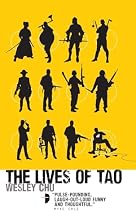
The Lives of Tao, by Wesley Chu, about a psychic symbiote (like the alien in Hal Clement's Needle) who must transform an out-of-shape computer geek into a warrior to fight a secret battle for control of the world.
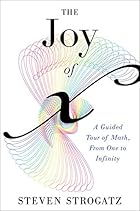
The Joy of x by Steven Strogatz, a survey of mathematics written for a general audience.
I'm pretty excited about these, but I also have a daunting stack of library books that have been accumulating like water behind a dam: speaking of which, I'm almost finished with Cadillac Desert.
Thanks for stopping by and for the good wishes. The car will be done on
My haul from the Prairie Lights Bookstore included a couple of Angry Robot books I've been hearing good things about:

Blackbirds, by Chuck Wendig, first in an urban fantasy series about a girl who can see how others will die.
The Lives of Tao, by Wesley Chu, about a psychic symbiote (like the alien in Hal Clement's Needle) who must transform an out-of-shape computer geek into a warrior to fight a secret battle for control of the world.
The Joy of x by Steven Strogatz, a survey of mathematics written for a general audience.
I'm pretty excited about these, but I also have a daunting stack of library books that have been accumulating like water behind a dam: speaking of which, I'm almost finished with Cadillac Desert.
97rosalita
Looking at those books in your post, Steve, I'm struck again (as I was at the meetup) by how really interesting all three covers are. They make me want to read the book, or at least pick it up and examine it closely. I hope they live up to their "faces".
98swynn
96: Yeah, me too.
97: I agree, they are attractive. The Strogatz cover makes me want to dig out my old Spirograph set. But don't worry: I have a hideous one coming soon.
Not this one, though. This cover isn't pretty, but it is effective:

6. Cadillac Desert / Marc Reisner
This is a history of water development in the United States, mostly in the desert Southwest, from John Wesley Powell's exploration of the Colorado River in the 19th century, up to controversies over dam projects in the Carter and Bush administrations.
If "history of water development" sounds as bland as water, you're in for a surprise: there's adventure, power politics, and environmental outrages.
Reisner tells how Los Angeles "stole" the water of Owens River, destroying that farming community of Owens Lake and providing the basis for the plot of Chinatown.
He tells how the U.S. Bureau of Reclamation routinely fudged cost/benefit analyses to get their projects done. In one case, they filed a cost estimate that excluded the cost of *constructing* the dam. The Bureau of course was well advised to do so, since when all costs and benefits were considered, most dams returned pennies on the dollar. And the further they lurched into the 20th century, the worse their plans became.
How bad did the plans become? Consider the infamous Tellico Dam, where construction was halted because of the discovery of a new species of fish, the snail darter. A Cabinet-level committee was created to review the case, and was widely expected to grant an exemption. They didn't: not just because of the fish, but because a careful look at the economics showed that the dam's expected benefits did not justify the cost of completing construction -- even though the dam was already 95% complete.
Reisner tells why these bad projects kept getting approved: how the Bureau needed to build dams in order to justify its existence; how it competed for damsites with the Army Corps of Engineers; how powerful agribusinesses and municipal water districts demand cheap and even free water at taxpayer expense; the bottomless cupidity of politicians who know a dam is a bad idea but know their constituents don't have the attention or desire to hear it. In a quip: water flows uphill toward money and power.
A dam's harmful effects aren't always long-term: Reisner tells the story of the Teton Dam, which failed spectacularly as its reservoir was being filled for the first time, killing eleven people and wiping downstream towns off the map. He tells how the disaster was almost repeated with a dam on the Platte River.
It's exciting and infuriating stuff. Reisner's tone is not exactly measured; his voice is more a muckraking journalist's rather than a historian's:
You do wonder from time to time whether there's another side to the story, especially after a tale of some player's breathtaking avarice or obtuseness. But it works for the material: Reisner makes the history of water development interesting and its future of consequence.
What's more, it turns out that he's mostly right according to a 2010 paper in the Proceedings of the National Academy of Science. According to that paper, Reisner's assessment of the long-term effects of dams and irrigation practices in the Southwest remains largely correct.
Warning: if you pick this one up you may find yourself obsessing about water policy: spending valuable reading time searching for articles about some western city's water supply, talking to your friends and relatives about water development, and thinking you'll never look at a dam the same way again. But pick it up, it's worth it.
97: I agree, they are attractive. The Strogatz cover makes me want to dig out my old Spirograph set. But don't worry: I have a hideous one coming soon.
Not this one, though. This cover isn't pretty, but it is effective:

6. Cadillac Desert / Marc Reisner
This is a history of water development in the United States, mostly in the desert Southwest, from John Wesley Powell's exploration of the Colorado River in the 19th century, up to controversies over dam projects in the Carter and Bush administrations.
If "history of water development" sounds as bland as water, you're in for a surprise: there's adventure, power politics, and environmental outrages.
Reisner tells how Los Angeles "stole" the water of Owens River, destroying that farming community of Owens Lake and providing the basis for the plot of Chinatown.
He tells how the U.S. Bureau of Reclamation routinely fudged cost/benefit analyses to get their projects done. In one case, they filed a cost estimate that excluded the cost of *constructing* the dam. The Bureau of course was well advised to do so, since when all costs and benefits were considered, most dams returned pennies on the dollar. And the further they lurched into the 20th century, the worse their plans became.
How bad did the plans become? Consider the infamous Tellico Dam, where construction was halted because of the discovery of a new species of fish, the snail darter. A Cabinet-level committee was created to review the case, and was widely expected to grant an exemption. They didn't: not just because of the fish, but because a careful look at the economics showed that the dam's expected benefits did not justify the cost of completing construction -- even though the dam was already 95% complete.
Reisner tells why these bad projects kept getting approved: how the Bureau needed to build dams in order to justify its existence; how it competed for damsites with the Army Corps of Engineers; how powerful agribusinesses and municipal water districts demand cheap and even free water at taxpayer expense; the bottomless cupidity of politicians who know a dam is a bad idea but know their constituents don't have the attention or desire to hear it. In a quip: water flows uphill toward money and power.
A dam's harmful effects aren't always long-term: Reisner tells the story of the Teton Dam, which failed spectacularly as its reservoir was being filled for the first time, killing eleven people and wiping downstream towns off the map. He tells how the disaster was almost repeated with a dam on the Platte River.
It's exciting and infuriating stuff. Reisner's tone is not exactly measured; his voice is more a muckraking journalist's rather than a historian's:
Most members who voted for such bills had not the faintest idea what was in them; they didn't care; they didn't dare look. All that mattered was that there was something in it for them. What had begun as an emergency program to put the country back to work, to restore its sense of self-worth, to settle the refugees of the Dust Bowl, grow into a nature-wrecking, money-eating monster that our leaders lacked the courage or ability to stop.
You do wonder from time to time whether there's another side to the story, especially after a tale of some player's breathtaking avarice or obtuseness. But it works for the material: Reisner makes the history of water development interesting and its future of consequence.
What's more, it turns out that he's mostly right according to a 2010 paper in the Proceedings of the National Academy of Science. According to that paper, Reisner's assessment of the long-term effects of dams and irrigation practices in the Southwest remains largely correct.
Warning: if you pick this one up you may find yourself obsessing about water policy: spending valuable reading time searching for articles about some western city's water supply, talking to your friends and relatives about water development, and thinking you'll never look at a dam the same way again. But pick it up, it's worth it.
99swynn

7) A Storm Too Soon / Michael J. Tougias
An unexpected storm hits off the eastern coast of the U.S. The Coast Guard rescues survivors from boats in trouble. I read this with my son, and we both give it a thumbs-up for adventure and peril.
100swynn
Treadmill read:
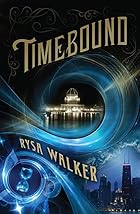
8) Timebound / Rysa Walker
Kate learns that she carries a gene that makes her able to travel through time. Kate's grandmother recruits her onto a team trying to correct corruptions in the timeline. They have their work cut out for them, because Kate's grandfather has turned evil and is reshaping history to make himself a sort of Randian superman.
This won the 2013 Amazon Breakthrough Novel Award in the Young Adult category. I found it okay. Like most time-travel novels, the plot doesn't bear much scrutiny, but who's scrutinizing when you're logging miles? The central conflict remains unresolved, which doubtless means sequels. This entry mostly introduces characters and sets up the obligatory love triangle (good news: it's much less kissy than it might have been).
8) Timebound / Rysa Walker
Kate learns that she carries a gene that makes her able to travel through time. Kate's grandmother recruits her onto a team trying to correct corruptions in the timeline. They have their work cut out for them, because Kate's grandfather has turned evil and is reshaping history to make himself a sort of Randian superman.
This won the 2013 Amazon Breakthrough Novel Award in the Young Adult category. I found it okay. Like most time-travel novels, the plot doesn't bear much scrutiny, but who's scrutinizing when you're logging miles? The central conflict remains unresolved, which doubtless means sequels. This entry mostly introduces characters and sets up the obligatory love triangle (good news: it's much less kissy than it might have been).
102rosalita
Steve, Cadillac Desert definitely sounds like a worthy read, and a frightening one as well. I truly believe that a lack of clean water may be the cause of the next global war if things continue as they are. Just as scary — and of course unavoidably linked to — climate change.
103swynn
It is indeed very interesting.
Cadillac Desert doesn't have much to say about climate change: with a 1986 copyright date, you wouldn't expect it to. But the PNAS paper does, and it's not encouraging.
According to the paper, the American southwest remains overdependent on rivers like the Colorado. From the very beginning of development planning, bureaucrats used unjustifiably optimistic estimates of flow. This was partly because estimates were based on an unusually wet recent history; and partly because lower estimates made the economic benefits look even worse.
With climate change, we're probably looking at an unusually dry and hot future for the region, which will probably reduce flow even further and increase evaporation.
Water problems of course are global, and I agree that shooting conflicts over water are inevitable.
Cadillac Desert doesn't have much to say about climate change: with a 1986 copyright date, you wouldn't expect it to. But the PNAS paper does, and it's not encouraging.
According to the paper, the American southwest remains overdependent on rivers like the Colorado. From the very beginning of development planning, bureaucrats used unjustifiably optimistic estimates of flow. This was partly because estimates were based on an unusually wet recent history; and partly because lower estimates made the economic benefits look even worse.
With climate change, we're probably looking at an unusually dry and hot future for the region, which will probably reduce flow even further and increase evaporation.
Water problems of course are global, and I agree that shooting conflicts over water are inevitable.
106swynn

9) Echo X / Ben Barzman
Date: 1960
Tagline: Twin Earths in conflict-- which would survive? A startling adventure in super science-fiction
That's really the cover: dude with a Charles Atlas body and a Ronald Reagan face, dressed only in a gold-plated sweatband, apparently strolling through the stratosphere dribbling planet-sized electric balls. Oh 1960s, what were you thinking?
Maybe it's a matter of low expectations but the story is surprisingly not bad. It's about a World War II vet living in Paris as a third-rate reporter. He gets involved with a researcher who establishes contact with an alternate Earth where World War II never happened: instead of a second global war, the "sister earth" saw a scientific revolution that solved its problems of poverty, war and crime. The "sister earth" must now decide whether to share its secrets with our earth. They send a contingent of scientists and diplomats to evaluate our civilization.
The premise isn't much, and the outcome is predictable, but it's nevertheless engaging, as the narrator comes to terms with his place in his own world. Among the visitors from sister earth are friends who died in the war, and whose loss he has never accepted. By the end, the sister earth has rejected our world but the narrator is able to embrace it. I wouldn't exactly recommend Echo X -- it wears its age -- but it's nowhere near as awful as the cover.
108rosalita
That is one seriously ugly book cover, Steve! It would be hard for the book to be as bad as that cover makes it seem.
110swynn
107, 108: Terrible as it is, it's the cover that made me pull it out of the used book store's bargain bin. I just had to know what kind of a book merited such a package.
109: I do hope you & Jim enjoy it Micky: there are many things to like about it even if it didn't leave me panting for the sequel.
109: I do hope you & Jim enjoy it Micky: there are many things to like about it even if it didn't leave me panting for the sequel.
111ronincats
"Lovely" book covers and lovely reviews, Steve.
You know, you would REALLY like the Iron Druid books...
You know, you would REALLY like the Iron Druid books...
113swynn
>111 ronincats:: I probably *will* like them Roni, but they're just going to have to stand in line behind Chaos Walking and The Hunger Games. Off to the swamp with them!
>112 lyzard:: But I meant ... I meant ... oh, drat that Doctor Freud.
>112 lyzard:: But I meant ... I meant ... oh, drat that Doctor Freud.
114swynn
In library news, some of you may have seen stories about mold trouble at a large library nearby:
http://www.columbiatribune.com/news/education/mold-mars-mu-volumes-stored-at-off...
We had a mold bloom at our own library a few years ago, when lightning took out the air conditioner for our Special Collections department in the middle of an especially hot and humid summer. Unlike the situation at MU, we noticed the growth pretty quickly, but it didn't do much good: the stuff grew faster than we could clean it off. Eventually we closed the department, waited for the air conditioning to be fixed (which took longer than you 'd expect) then hired professionals to clean the area top to bottom -- including brushing and vacuuming every single volume in the collection.
Though we feel MU's pain we're also breathing a sigh of relief, because a couple of years ago we had asked about pricing for offiste storage at this same facility. Whew.
http://www.columbiatribune.com/news/education/mold-mars-mu-volumes-stored-at-off...
We had a mold bloom at our own library a few years ago, when lightning took out the air conditioner for our Special Collections department in the middle of an especially hot and humid summer. Unlike the situation at MU, we noticed the growth pretty quickly, but it didn't do much good: the stuff grew faster than we could clean it off. Eventually we closed the department, waited for the air conditioning to be fixed (which took longer than you 'd expect) then hired professionals to clean the area top to bottom -- including brushing and vacuuming every single volume in the collection.
Though we feel MU's pain we're also breathing a sigh of relief, because a couple of years ago we had asked about pricing for offiste storage at this same facility. Whew.
115MickyFine
One of my most memorable lectures in library school was for my records management course, in which a guest lecturer from a document recovery company talked about disaster planning for records and books. Fascinating stuff. In that case, the heavier focus was on flooding but it was super interesting stuff.
Also, my first library job was working in an off-site storage facility for my university. It was an interesting 8 months.
Also, my first library job was working in an off-site storage facility for my university. It was an interesting 8 months.
116dk_phoenix
>114 swynn:: 600,000 books affected! Wow!!! I don't blame you for sighing in relief that it wasn't your library's books, as terrible as it is. What a predicament. You can certainly hear the bitterness in the comments about the cutbacks, in that article (and rightly so, I might add).
117swynn
>115 MickyFine:: Disaster planning is a scary conversation. Our local medical school's library experienced a flood a few years ago when a window to their basement space gave way during a heavy rainstorm:
http://www.atsu.edu/library/flood.htm
It's a cliche, but having a plan helps.
>116 dk_phoenix:: 600,000 volumes is roughly the size of our entire circulating collection, so I find it a bit mind-boggling. And yes, in this case it seems there may have been some penny-wise, pound-foolish cuts made.
http://www.atsu.edu/library/flood.htm
It's a cliche, but having a plan helps.
>116 dk_phoenix:: 600,000 volumes is roughly the size of our entire circulating collection, so I find it a bit mind-boggling. And yes, in this case it seems there may have been some penny-wise, pound-foolish cuts made.
118qebo
114: hired professionals to clean the area top to bottom -- including brushing and vacuuming every single volume in the collection
Expensive, I'd suppose.
Expensive, I'd suppose.
119rosalita
What a terrible mess for MU. Back in 2008 when there was a severe flood on the Iowa River, the University of Iowa library was flooded on the lower level where Special Collections are kept. Because floods are relatively slow-moving, hundreds of volunteers were able to relocate the 14,000 linear feet of books and manuscripts to upper floors, storing them wherever there was a flat surface. After the waters receded, it was weeks before the library was able to re-open. I know making sure the area was clean and dry and free of mold was a primary reason for the lengthy closure. Happily, a couple of years ago, a library renovation project moved all collections out of the lower level permanently, just in case a flood like 2008 ever happens again (please, no).
121rosalita
Steve, I wanted to let you know that I ended up snagging Blackbirds in the Kindle Daily Deal today. If it hadn't been for you buying it at the LT meetup, I would never have heard of it. So thanks for that!
122swynn
>118 qebo:: It was indeed, though I don't remember the price tag. We were very fortunate in that we were able to work with a local cleaning company. They'd submitted the lowest bid by far, and it was still expensive. Other bidders had more experience with archival materials but were out of our price range-- MU's estimate of $3/volume sounds about right.
We were skeptical about the local company, but it worked out well for us: they communicated closely with our special collections librarian about proper handling of materials, and were selective about who they had working with fragile volumes.
>119 rosalita:: I remember that flood, and talking to librarians who lived through it. IIRC, the Cedar Rapids Public Library lost about half their collection that year. It's scary.
We were skeptical about the local company, but it worked out well for us: they communicated closely with our special collections librarian about proper handling of materials, and were selective about who they had working with fragile volumes.
>119 rosalita:: I remember that flood, and talking to librarians who lived through it. IIRC, the Cedar Rapids Public Library lost about half their collection that year. It's scary.
123swynn
>121 rosalita:: Very.
>122 swynn:: Hope you like it, Julia! I was trying to decide which of my three Prairie Lights acquisitions should be my next off-the-shelf read. That settles it: it's Blackbirds.
>122 swynn:: Hope you like it, Julia! I was trying to decide which of my three Prairie Lights acquisitions should be my next off-the-shelf read. That settles it: it's Blackbirds.
124rosalita
Yes, Cedar Rapids was badly damaged. In fact, they ended up building a whole new library, which I've heard is fabulous but I haven't made it up there to check it out yet.
125swynn

10) The Knife of Never Letting Go / Patrick Ness
Todd Hewitt grew up in Prentisstown, a settlement on a colony world where all the men can hear each other's thoughts and all the women are dead. Just a few days away from his thirteenth birthday Todd sees something he shouldn't have seen. Now instead of looking forward to becoming a man, he has to flee Prentisstown, with every man in the settlement in pursuit.
He's joined by his telepathic dog Manchee and by Viola: a new arrival to New World, the only survivor of a crashed scout ship, and the only girl Todd has ever seen, whose presence started all the trouble in the first place.
Thanks to Micky for recommending this series. I will continue it.
126scaifea
I've seen that title floating around before but never read a review. But, wow, it sounds pretty good! Wishlisted.
127rosalita
Steve, I loved, loved, loved the Chaos Walking series! A definite cut above the usual YA dystopia, I thought. Amber, you really should read them, too. :-)
128porch_reader
Hi Steve! I read The Knife of Never Letting Go a couple of years ago and liked it a lot. But I haven't read the rest of them. Your review reminds me that I need to get back to that series. Some year, I just need to have a finish that series year. (I don't think a month would be enough!)
129swynn
It's certainly exciting: the action starts early, rarely takes a breath, and ends on a cliffhanger. It's a bit plot-heavy, but also offers appealing characters, an effective villain and even some food for thought on communication and privacy in an information-saturated environment. Or maybe those are just my preoccupations. Anyway, The Ask and the Answer will appear in this thread shortly.
Amy, I know what you mean about a finish-that-series year. There are at least a couple of series where I need to reread the volumes I've already finished, it's been so long.
Amy, I know what you mean about a finish-that-series year. There are at least a couple of series where I need to reread the volumes I've already finished, it's been so long.
130swynn
Treadmill reading:
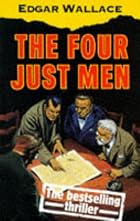
11) The Four Just Men / Edgar Wallace
"The Four Just Men" is a club of gentlemen of leisure who apply their resources to effecting justice that more formal courts are unable or unwilling to execute.
In this one, the men target a politician who is promoting a bill that would provide -- if I understand it rightly -- for the extradition of vigilantes. The "just men" obviously have a potential stake in such a law, but as little they regard every other law on the books it's hard to see why they've got their knickers in a knot over this one.
Whatever the reason, the men's solution is to publicly threaten the minister's life unless he drops the bill. As the deadline approaches, the minister becomes ever more determined to promote the bill, the government tries to protect him, and the vigilantes demonstrate that no level of security will suffice.
I'm not sure how Wallace expected us to feel about the "just men." If he expected us to sympathize with them it didn't work for me: in fact, despite descrptions of the minister as a ruthless politician, I found myself respecting him for his principled adherence to his plans despite the -- let's face it -- terrorist threats.
I'm not sure Wallace expects us to sympathize with them, though: there's a passage where he seems to admit that they may not exactly be virtuous, but argues that they're at least no worse than others:
Think of the enormous power for good or evil often vested in one man: a capitalist controlling the markets of the world, a speculator cornering cotton or wheat whilst mills stand idle and people starve, tyrants and despots with the destinies of nations between their thumb and finger -- and then think of the four men, known to none; vague, shadowy figures stalking tragically through the world, condemning and executing the capitalist, the corner maker, the tyrant-- evil forces all, and all beyond the reach of the law.
So I'll interpret it as a crime novel of the sort without heroes, and as such it works pretty well. There's suspense of the how-will-they-dunnit type, and it moves quickly:I finished it during a single run with time left to start another and felt sufficiently entertained.
I picked this up on the strength of Liz's reviews of Edgar Wallace. Thanks Liz!
11) The Four Just Men / Edgar Wallace
"The Four Just Men" is a club of gentlemen of leisure who apply their resources to effecting justice that more formal courts are unable or unwilling to execute.
In this one, the men target a politician who is promoting a bill that would provide -- if I understand it rightly -- for the extradition of vigilantes. The "just men" obviously have a potential stake in such a law, but as little they regard every other law on the books it's hard to see why they've got their knickers in a knot over this one.
Whatever the reason, the men's solution is to publicly threaten the minister's life unless he drops the bill. As the deadline approaches, the minister becomes ever more determined to promote the bill, the government tries to protect him, and the vigilantes demonstrate that no level of security will suffice.
I'm not sure how Wallace expected us to feel about the "just men." If he expected us to sympathize with them it didn't work for me: in fact, despite descrptions of the minister as a ruthless politician, I found myself respecting him for his principled adherence to his plans despite the -- let's face it -- terrorist threats.
I'm not sure Wallace expects us to sympathize with them, though: there's a passage where he seems to admit that they may not exactly be virtuous, but argues that they're at least no worse than others:
Think of the enormous power for good or evil often vested in one man: a capitalist controlling the markets of the world, a speculator cornering cotton or wheat whilst mills stand idle and people starve, tyrants and despots with the destinies of nations between their thumb and finger -- and then think of the four men, known to none; vague, shadowy figures stalking tragically through the world, condemning and executing the capitalist, the corner maker, the tyrant-- evil forces all, and all beyond the reach of the law.
So I'll interpret it as a crime novel of the sort without heroes, and as such it works pretty well. There's suspense of the how-will-they-dunnit type, and it moves quickly:I finished it during a single run with time left to start another and felt sufficiently entertained.
I picked this up on the strength of Liz's reviews of Edgar Wallace. Thanks Liz!
131MickyFine
>125 swynn: I'm glad you liked it, Steve. :)
132lyzard
>>#130
It's a worryingly amoral work, isn't it? I think we are supposed to admire the dedication and intelligence of the Men, but beyond that there's not much guidance. And actually, the fact that the target politician is simply trying to do what he thinks is right - as opposed to what they think is right - ramps up the discomfort.
It's a worryingly amoral work, isn't it? I think we are supposed to admire the dedication and intelligence of the Men, but beyond that there's not much guidance. And actually, the fact that the target politician is simply trying to do what he thinks is right - as opposed to what they think is right - ramps up the discomfort.
133leperdbunny
>98 swynn: Steve, A particularly timely topic with what is happening on the west coast, no? My mom and I were just talking about this. Also, quite a few book bullets on this thread. Sigh.*waves*
I've only volunteered at a regular library system and a science and specialty collection but we were in Oklahoma, and it is very dry (for the most part), so thankfully never had to deal with that. I know when we did get books that were water damaged and mold had set in, the library would immediately destroy the book (at the regular library system). No use endangering other books for one moldy one. :(
I've only volunteered at a regular library system and a science and specialty collection but we were in Oklahoma, and it is very dry (for the most part), so thankfully never had to deal with that. I know when we did get books that were water damaged and mold had set in, the library would immediately destroy the book (at the regular library system). No use endangering other books for one moldy one. :(
134swynn
>131 MickyFine:: I did indeed, Micky! You can fire a book bullet around here anytime.
>132 lyzard:: I agree about its amorality, but I find myself curiously attracted to the kind of crime novel without a sympathetic protagonist, where amoral actors meet with no holds barred. I'm not sure what that says about me, but I expect to enjoy more Wallace novels.
>133 leperdbunny:: As I read about continuing water negotiations in the west, now in the context of having read Cadillac Desert, I am amazed at how little has changed in the thirty years since it was published. Timely indeed.
With respect to mold: withdraw the moldy book is usually exactly what we do, for the very reason you name. We went to some expense cleaning our Special Collections materials because many items in that collection are rare or even unique, hence not replaceable. Had the same bloom happened in a section of our circilating collection we would have withdrawn any affected (or even suspected) books, replacing as necessary.
But we're not a research library and MU is one, with a stronger commitment to preserving a larger share of its collection. Even so I understand they will make some hard decisions in the coming months about which volumes are worth preserving.
>132 lyzard:: I agree about its amorality, but I find myself curiously attracted to the kind of crime novel without a sympathetic protagonist, where amoral actors meet with no holds barred. I'm not sure what that says about me, but I expect to enjoy more Wallace novels.
>133 leperdbunny:: As I read about continuing water negotiations in the west, now in the context of having read Cadillac Desert, I am amazed at how little has changed in the thirty years since it was published. Timely indeed.
With respect to mold: withdraw the moldy book is usually exactly what we do, for the very reason you name. We went to some expense cleaning our Special Collections materials because many items in that collection are rare or even unique, hence not replaceable. Had the same bloom happened in a section of our circilating collection we would have withdrawn any affected (or even suspected) books, replacing as necessary.
But we're not a research library and MU is one, with a stronger commitment to preserving a larger share of its collection. Even so I understand they will make some hard decisions in the coming months about which volumes are worth preserving.
135lyzard
The first Four Just Men sequel pits them against an actual terrorist organisation (if that distinction is permissible), with the police most uncertain about their own role...
136swynn

12) DAW #63: The Book of Philip Jose Farmer / Philip Jose Farmer
Date: 1973
When I was younger and read all science fiction all the time, I didn't appreciate Philip Jose Farmer. Not for want of trying: his The Lovers had a reputation for introducing kinky interspecies sex to science fiction, and descriptions of the Riverworld series sounded right up my alley. Somehow, though, whatever I tried I just never clicked with me. I was never able to finish his stories except for the Hugo-winner "Riders of the Purple Wage," and that only through sheer determination. My tastes must be changing because a couple of years ago I quite enjoyed The Other Log of Phileas Fogg, and found this collection more entertaining than not.
The pieces here are chosen by Farmer himself as representative of his work, and he offers introductions to most of them.
My Sister's Brother. Every member save one of a Mars landing crew disappears on excursions into the Martian landscape. The last surviving astronaut goes in search of his colleagues, but instead discovers an underground colony populated by Martian creatures together with a single intelligent being from someplace beyond Mars. The astronaut finds himself both attracted to and repulsed by the alien. They have a brief and difficult relationship.
Skinburn Kent Lane suffers a skin condition which turns out to be
The Alley Man. Old Many Paley is a garbage collector, a womanizer, a stinky old brute of a man, and by his own reckoning the last pure-blood descendant of the Neanderthals. A graduate student in anthropology seeks him out as fodder for her thesis. Her involvement disrupts the precarious arrangement Paley has with the other women in his life.
Father's in the Basement. Short gothic story about a terminally ill writer who makes his eleven-year-old daughter stand guard while he pounds out the novel he'd always wanted to write and now has barely enough time to finish.
Toward the Beloved City. The apocalypse described by St. John the Divine has occurred. Kelvin Norris and a remnant of the faithful are on a pilgrimage to the New Jerusalem. They are joined by Dana Webster, a wanderer who claims to be a Christian but who harbors some doubts about the genuineness of this particular apocalypse.
Polytropical Paramyths. It's not clear to me just what a "polytropical paramyth" is, except that it seems to be a very short story in which plot takes a back stage to puns, word association, and pop culture references. In one case, Farmer himself admits he doesn't know what it's about. These mostly didn't work for me. Instead, they felt too clever and self-indulgent. I wish I'd encountered these in college because I probably would have loved them then.
An Exclusive Interview with Lord Greystoke. One of Farmer's favorite worlds is the "Wold Newton Universe," in which pulp heroes like Tarzan, Doc Savage, and Phileas Fogg are in fact historical characters. In this Wold Newton piece Farmer interviews Tarzan, mostly about inconsistencies in the Burroughs ouevre.
Sexual Implications of the Charge of the Light Brigade. This is an excerpt from "Riders of the Purple Wage." I remember almost nothing of that story, and I didn't remember this bit, which is a clever (too clever?) parody of Freudian literary criticism.
The Obscure Life and Hard Times of Kilgore Trout. This is a biographical sketch of Kurt Vonnegut's fictional science fiction writer Kilgore Trout, claiming that Trout is a real person. The joke falls pretty flat today, considering how that stunt turned out.
Thanks for the Feast (by Leslie Fiedler). This is a critical appreciation of Farmer's work. It's awfully Freudian and goes on about Farmer's oral fixation. I half wonder whether it's a prank.
137goonergirl1982
>132 lyzard:. Ah, amoral books are the most fun.
138swynn
>137 goonergirl1982:: Agreed, Rosalind! I have an example coming up soon.
Not this one, though. It's morally perplexing, but certainly not amoral.
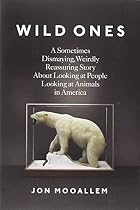
13) Wild Ones / Jon Mooallem
Journalist Jon Mooallem explores humanity's relationship endangered animals with reports on three species: a bear, a butterfly and a bird.
Mooallem is interested in the animals but even more he is interested in us: How do we imagine the lives of animals? What stories do we tell ourselves about them? What drives us to preserve some species? Why do we choose some and not others? These questions resist definitive answers and consequently Mooallem doesn't find any, filling his book with anecdotes and musings rather than arguments.
But there's plenty to think about. Mooallem visits polar bears in Churchill, Manitoba where a small industry of polar bear tourism flourishes. There he ponders how our stories about polar bears have changed, from polar bears as vicious predators to polar bears as cuddly plush toys with a heartbeat. He shows how this change was accomplished at least in part by a deliberate marketing campaign carried out by conservation interests. Also that this campaign has largely failed: the idea was to make polar bears a rallying point for fighting climate change; we see how well that's worked out.
At the Antioch Dunes wildlife refuge, Mooallem reports on the status of the Lange's metalmark butterfly. The report is not good: counts have fallen from thousands into double digits, largely because its habitat has disappeared. Its habitat was along the Sacramento River in sand dunes whose shifting habits prevented most plants from taking root. One exception was the buckwheat plant, where the butterfly lay its eggs. But at "Antioch Dunes" the sand is gone, sold to brickmakers in some haste before the land was set aside as a wildlife refuge. Staff and volunteers now preserve the species through laborious weeding, rototilling, and application of herbicides to fight invasive grasses. Is it rational to preserve a species after its habitat is irretrievably lost? How long is such an effort sustainable? Does it make a difference that the Lange's metalmark has a genome barely distinguishable from the Mormon metalmark, which is not endangered?
Finally, Mooallem follows pilots of Operation Migration who lead whooping cranes along migration paths from Canada to a refuge in Florida. It's a laborious operation, fueled largely by enthusiasm and donations. The pilots wear whooping crane costumes and avoid speaking around the cranes in order to prevent the birds from imprinting on humans. But what sense does it make to raise the birds in a world without humans when humans have invaded every habitat on earth?
The takeaways include the fact that our relationship with animals is complicated. That many of our efforts to "help" endangered species are futile or even counterproductive. That every generation starts with a new understanding of what "wild" means and of what nature should look like. And that stories we tell about animals are really stories about ourselves.
Recommended for those who worry about these things: you're likely to find more to worry about.
Not this one, though. It's morally perplexing, but certainly not amoral.
13) Wild Ones / Jon Mooallem
Journalist Jon Mooallem explores humanity's relationship endangered animals with reports on three species: a bear, a butterfly and a bird.
Mooallem is interested in the animals but even more he is interested in us: How do we imagine the lives of animals? What stories do we tell ourselves about them? What drives us to preserve some species? Why do we choose some and not others? These questions resist definitive answers and consequently Mooallem doesn't find any, filling his book with anecdotes and musings rather than arguments.
But there's plenty to think about. Mooallem visits polar bears in Churchill, Manitoba where a small industry of polar bear tourism flourishes. There he ponders how our stories about polar bears have changed, from polar bears as vicious predators to polar bears as cuddly plush toys with a heartbeat. He shows how this change was accomplished at least in part by a deliberate marketing campaign carried out by conservation interests. Also that this campaign has largely failed: the idea was to make polar bears a rallying point for fighting climate change; we see how well that's worked out.
At the Antioch Dunes wildlife refuge, Mooallem reports on the status of the Lange's metalmark butterfly. The report is not good: counts have fallen from thousands into double digits, largely because its habitat has disappeared. Its habitat was along the Sacramento River in sand dunes whose shifting habits prevented most plants from taking root. One exception was the buckwheat plant, where the butterfly lay its eggs. But at "Antioch Dunes" the sand is gone, sold to brickmakers in some haste before the land was set aside as a wildlife refuge. Staff and volunteers now preserve the species through laborious weeding, rototilling, and application of herbicides to fight invasive grasses. Is it rational to preserve a species after its habitat is irretrievably lost? How long is such an effort sustainable? Does it make a difference that the Lange's metalmark has a genome barely distinguishable from the Mormon metalmark, which is not endangered?
Finally, Mooallem follows pilots of Operation Migration who lead whooping cranes along migration paths from Canada to a refuge in Florida. It's a laborious operation, fueled largely by enthusiasm and donations. The pilots wear whooping crane costumes and avoid speaking around the cranes in order to prevent the birds from imprinting on humans. But what sense does it make to raise the birds in a world without humans when humans have invaded every habitat on earth?
The takeaways include the fact that our relationship with animals is complicated. That many of our efforts to "help" endangered species are futile or even counterproductive. That every generation starts with a new understanding of what "wild" means and of what nature should look like. And that stories we tell about animals are really stories about ourselves.
Recommended for those who worry about these things: you're likely to find more to worry about.
139rosalita
Steve, I'm adding that to the wishlist even though the last thing I need is more things to worry about!
Hope you're having a good weekend.
Hope you're having a good weekend.
140swynn
>139 rosalita:: Hope you find it thought-provoking when you get around to it, Julia!
Treadmill reading:

14) Descending Son / Scott Shepherd
Seven years ago Jess Stark left his priveleged home in Palm Springs and didn't look back. He built a new, low-key life for himself with a Los Angeles delivery business. But when his mother calls with news of his father's ill health and begs Jess to visit, he finds he can't say no. But bodies start piling up before Jess even arrives in Palm Springs, and when his father dies Jess is convinced it wasn't of natural causes. By the time Jess is buried alive in a pine box out in the desert it's obvious foul play is afoot.
This was okay. About a third of the way in, the book takes a sharp supernatural turn and plays out like an average horror novel. I think I would have preferred the revenge yarn it appears to be in the first act.
Treadmill reading:

14) Descending Son / Scott Shepherd
Seven years ago Jess Stark left his priveleged home in Palm Springs and didn't look back. He built a new, low-key life for himself with a Los Angeles delivery business. But when his mother calls with news of his father's ill health and begs Jess to visit, he finds he can't say no. But bodies start piling up before Jess even arrives in Palm Springs, and when his father dies Jess is convinced it wasn't of natural causes. By the time Jess is buried alive in a pine box out in the desert it's obvious foul play is afoot.
This was okay. About a third of the way in, the book takes a sharp supernatural turn and plays out like an average horror novel. I think I would have preferred the revenge yarn it appears to be in the first act.
141swynn
Abandoned, for shifty definitions, sloppy arguments, incorrect mathematics, and awkward writing:
The Outer Limits of Reason / Noson Yanofsky
Not recommended. Though to be fair, that judgment is based only on the fifty pages I could muscle through. Maybe it gets better.
The Outer Limits of Reason / Noson Yanofsky
Not recommended. Though to be fair, that judgment is based only on the fifty pages I could muscle through. Maybe it gets better.
142swynn
Here's that amoral novel I was talking about. I liked it, but it's not for everybody:
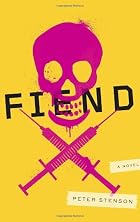
15) Fiend / Peter Stenson
The only people who survive the zombie apocalypse are meth addicts, and in order to keep surviving they have to stay high. Chase Daniels and his tweaker friends buzz around what's left of Minneapolis/St. Paul, looking for meth cooks and dodging the living dead. It's about despair and addiction and a weird kind of hope, with a cast of unsympathic characters.
Recommended for those who think "meth-head zombie novel" sounds like a good idea.
15) Fiend / Peter Stenson
The only people who survive the zombie apocalypse are meth addicts, and in order to keep surviving they have to stay high. Chase Daniels and his tweaker friends buzz around what's left of Minneapolis/St. Paul, looking for meth cooks and dodging the living dead. It's about despair and addiction and a weird kind of hope, with a cast of unsympathic characters.
Recommended for those who think "meth-head zombie novel" sounds like a good idea.
143qebo
142: Recommended for those who think "meth-head zombie novel" sounds like a good idea.
I will merely appreciate the wide range of tastes on LT.
I will merely appreciate the wide range of tastes on LT.
144swynn
>143 qebo:: Yeah, if "meth-head zombie novel" sounds like somebody else's cup of tea, reading this one probably wouldn't change your mind.
145MickyFine
>142 swynn: In university I took a popular culture in the English department where the subject matter changed depending on the sessional instructor's thesis. The year I took it, we ended up doing representations of drug addiction in popular culture - an interesting topic but not one I'd repeat. I think that book may have fit in well with the course material. That being said, definitely not for me.
146scaifea
>140 swynn:: Isn't it irritating when a book can't decide what genre it belongs to? Gah.
147swynn
>145 MickyFine:: The course sounds interesting and unpleasant. And I think Fiend is sufficiently interesting (and unpleasant) that it would lend itself to analysis.
>146 scaifea:: One does open a genre book with certain expectations. Upsetting those expectations requires some finesse. Sometimes a genre switch works. When Blake Crouch's Pines turned from a thriller into science fiction I was on board; I wasn't on board for the switch in Descending Son and I'm not sure why. Maybe Pines eased me into the switch, turning weirder and weirder until a science fiction plot was the only thing that made sense. But Descending Son is a straightforward thriller right up until it's not anymore.
If you're prepared for it, it's probably okay. Most reviews on Amazon do mention supernatural elements, so it's my own fault for either not reading the reviews or forgetting them.
>146 scaifea:: One does open a genre book with certain expectations. Upsetting those expectations requires some finesse. Sometimes a genre switch works. When Blake Crouch's Pines turned from a thriller into science fiction I was on board; I wasn't on board for the switch in Descending Son and I'm not sure why. Maybe Pines eased me into the switch, turning weirder and weirder until a science fiction plot was the only thing that made sense. But Descending Son is a straightforward thriller right up until it's not anymore.
If you're prepared for it, it's probably okay. Most reviews on Amazon do mention supernatural elements, so it's my own fault for either not reading the reviews or forgetting them.
148DorsVenabili
#136 - I've always been curious about him, but have never taken the plunge. But really, who does inter-species sex better than Octavia Butler in the Xenogenesis trilogy?
#142 - I'm not sure I'd read this, but I could see myself watching a film version. I'm not sure why.
#142 - I'm not sure I'd read this, but I could see myself watching a film version. I'm not sure why.
149swynn
I confess I haven't yet read the Xenogenesis trilogy. Based on the stories in the Farmer anthology, his take on interspecies sex-- and probably sex in general -- is pretty cynical. Attraction is ickily biological, and sexual relationships tend to violence. I'm not sure whether that's representative of his work, and though I'm not in a hurry to find out.
The stories were interesting and well-executed, but enough of a Farmer fix for now. If I do pick up another it will probably be To Your Scattered Bodies Go
I think Fiend could make an excellent film. I can imagine someone pitching it as "Trainspotters meets Night of the Living Dead."
The stories were interesting and well-executed, but enough of a Farmer fix for now. If I do pick up another it will probably be To Your Scattered Bodies Go
I think Fiend could make an excellent film. I can imagine someone pitching it as "Trainspotters meets Night of the Living Dead."
150swynn
RUNNING POST
My next target race is locked in. I've registered for the Knoxville (TN) Marathon on March 30. Training is on schedule, putting in the necessary mileage though I'm running a little slower than I did training for my last marathon. Probably looking at a 4:15 target unless something changes drastically in the next few weeks.
My next target race is locked in. I've registered for the Knoxville (TN) Marathon on March 30. Training is on schedule, putting in the necessary mileage though I'm running a little slower than I did training for my last marathon. Probably looking at a 4:15 target unless something changes drastically in the next few weeks.
154drneutron
Hey, I'm an old guy and I can run for 4 minutes and 15 seconds. What's the problem?
Oh. You mean *4 hours and 15 minutes*. Why the heck would anybody want to do that?! :)
Seriously - good luck with the race!
Oh. You mean *4 hours and 15 minutes*. Why the heck would anybody want to do that?! :)
Seriously - good luck with the race!
155swynn
151-154: Thanks for the marathon encouragement.
The race is coming soon, but I have been training properly. I've had this race in mind for months, and have been following a marathon training schedule. I just waited to commit until I was reasonably sure that I could follow through on the schedule. Registration fees increase tomorrow, or I'd probably have waited until after the first 20-mile training run.
As for why anyone would want to run 4 hours and 15 minutes well jeez, 4 hours and 20 would be *crazy*. My first marathon I ran because I wondered whether I could, and could think of only one way to find out. The next couple times were to see if I could do it faster. But at this point I've just lost my mind.
Also I've forgotten what the last six miles feel like, those miles where I swear I will never do anything this stupid ever again. I'm curious whether that will happen again.
The race is coming soon, but I have been training properly. I've had this race in mind for months, and have been following a marathon training schedule. I just waited to commit until I was reasonably sure that I could follow through on the schedule. Registration fees increase tomorrow, or I'd probably have waited until after the first 20-mile training run.
As for why anyone would want to run 4 hours and 15 minutes well jeez, 4 hours and 20 would be *crazy*. My first marathon I ran because I wondered whether I could, and could think of only one way to find out. The next couple times were to see if I could do it faster. But at this point I've just lost my mind.
Also I've forgotten what the last six miles feel like, those miles where I swear I will never do anything this stupid ever again. I'm curious whether that will happen again.
156rosalita
As for why anyone would want to run 4 hours and 15 minutes well jeez, 4 hours and 20 would be *crazy*.
Oh sure, that's what I was thinking. :-)
Oh sure, that's what I was thinking. :-)
157MickyFine
Ugh. I couldn't make it through 25 minutes today. Had to get off the treadmill and put my head between my legs for a minute (I hate when that happens). Hats off to you for not only running a marathon but doing more than one.
158swynn
>156 rosalita:: Great minds, Julia ...
>157 MickyFine:: I hate those days, Micky. Hope your next workout is less painful.
16) Blackbirds / Chuck Wendig
Miriam Black can see how others will die. She can't do anything about her visions; when she's tried her efforts have actually facilitated a death rather than prevented it. It's a depressing talent and a wearying existence; Miriam lives as a nomad, following the about-to-die in order to raid their wallets when fate strikes.
Then she meets a truck driver with just a few days left to live. She sees that he'll die while being tortured, and that he'll die calling her name. Suddenly her dark-but-simple life is complicated.
I have mixed feelings about this. It's gratuitously crude. I get that Miriam is a Bad Girl who has seen too much and has a mouth to match. But a lot of the banter feels forced, and she's so fond of penis jokes that I can't help thinking she's less a bad girl than a guy's fantasy about a bad girl. The villains are pretty James-Bondish, with a physically deformed mastermind and a grotesquely sadistic henchman.
On the other hand, the pacing is great, the villains for all their cartoonishness are menacing, and the story kept me up past my bedtime to read just one more chapter. That leaves me with nothing to complain about, and I will read the next.
>157 MickyFine:: I hate those days, Micky. Hope your next workout is less painful.
16) Blackbirds / Chuck Wendig
Miriam Black can see how others will die. She can't do anything about her visions; when she's tried her efforts have actually facilitated a death rather than prevented it. It's a depressing talent and a wearying existence; Miriam lives as a nomad, following the about-to-die in order to raid their wallets when fate strikes.
Then she meets a truck driver with just a few days left to live. She sees that he'll die while being tortured, and that he'll die calling her name. Suddenly her dark-but-simple life is complicated.
I have mixed feelings about this. It's gratuitously crude. I get that Miriam is a Bad Girl who has seen too much and has a mouth to match. But a lot of the banter feels forced, and she's so fond of penis jokes that I can't help thinking she's less a bad girl than a guy's fantasy about a bad girl. The villains are pretty James-Bondish, with a physically deformed mastermind and a grotesquely sadistic henchman.
On the other hand, the pacing is great, the villains for all their cartoonishness are menacing, and the story kept me up past my bedtime to read just one more chapter. That leaves me with nothing to complain about, and I will read the next.
159MickyFine
>158 swynn: Hmm, the premise is intriguing but the crudeness is keeping me away from this one. For now.
161swynn
>159 MickyFine:-160: Crudeness doesn't usually bother me much-- by any measure of crudity, Fiend was worse, and I liked that okay. So I feel a little funny complaining about it in Blackbirds. But in Fiend it felt natural, just part of the speech patterns and imagery of the addict characters. But in Blackbirds it felt off, like a teenager trying cusswords for the first time.
But it's gotten a lot of love so maybe it's just me. I'll be interested to read Julia's response to it.
But it's gotten a lot of love so maybe it's just me. I'll be interested to read Julia's response to it.
162swynn
Treadmill reading:

17) The Council of Justice / Edgar Wallace
Wallace's follow-up to The Four Just Men has two parts. First the "Just Men" punish a ring of anarchist terrorists. Then one of the "Just Men" is captured and condemned to death. The second part is the stronger one, as the condemned man waits patiently in his cell -- refusing the counsel of clergy, refusing even to participate in his own defense, confident that it is only a matter of time until he escapes. It's probably not a spoiler to say that he does, and in spectacular fashion.
The plot is muddy. In the first book, the Just Men killed a politician who wanted to extradite foreign criminals who would be doomed to certain death in their tyrannical homelands. Having rescued their victims from that fate, the Just Men now go about killing the foreign criminals personally. Other weirdness includes the chief villainess changing sides midstream for Love after the most bizarre wooing ever. Also it turns out the King's executioner makes house calls. Honestly, there are a couple of points where I'm still not clear on what exactly happened but am pretty sure details don't matter.
But it's also quite fun: elaborate plans, secret identities, disguise, betrayal, encrypted messages and hair's-breadth escapes. Oh, and True Love.
In my comments about the first book, I mentioned that I wasn't sure whether Wallace expects us to sympathize with the "Just Men." This book contains argumentative passages that make it clear: Wallace sees them as heroes and he expects us to see them as heroes also. I'm not buying it but I did have fun.

17) The Council of Justice / Edgar Wallace
Wallace's follow-up to The Four Just Men has two parts. First the "Just Men" punish a ring of anarchist terrorists. Then one of the "Just Men" is captured and condemned to death. The second part is the stronger one, as the condemned man waits patiently in his cell -- refusing the counsel of clergy, refusing even to participate in his own defense, confident that it is only a matter of time until he escapes. It's probably not a spoiler to say that he does, and in spectacular fashion.
The plot is muddy. In the first book, the Just Men killed a politician who wanted to extradite foreign criminals who would be doomed to certain death in their tyrannical homelands. Having rescued their victims from that fate, the Just Men now go about killing the foreign criminals personally. Other weirdness includes the chief villainess changing sides midstream for Love after the most bizarre wooing ever. Also it turns out the King's executioner makes house calls. Honestly, there are a couple of points where I'm still not clear on what exactly happened but am pretty sure details don't matter.
But it's also quite fun: elaborate plans, secret identities, disguise, betrayal, encrypted messages and hair's-breadth escapes. Oh, and True Love.
In my comments about the first book, I mentioned that I wasn't sure whether Wallace expects us to sympathize with the "Just Men." This book contains argumentative passages that make it clear: Wallace sees them as heroes and he expects us to see them as heroes also. I'm not buying it but I did have fun.
163rosalita
I'll be interested to read Julia's response to it, too! I will confess to hoping you would have had a more unreserved rave for it, but you didn't say anything that completely turned me off. I don't know if I'll get to it yet this month, but perhaps in March.
164swynn
>163 rosalita:: Whenever you get around to it, Julia!
165swynn

18) Newton's Football / Allen St. John and Ainissa Ramirez
Confession: I am a natural-born U.S. citizen and male and I don't like football. A love of football was supposed to come gratis with my sex and nationality, along with interests in motor sports, weapons, watery beer, Hooters and other things that hold no appeal for me.
For the most part I'm okay with being denied a guy card, but football is an exception. I hear people talk about football and I hear about strategy and action and intrigue: football sounds like something I should enjoy. But then I try to watch a game and instead of strategy and action and intrigue I see men with ridiculously large shoulders running around on astroturf. I'd rather just read a book. Or even a software license. Something is wrong with me: I have a football-shaped hole in my brain.
So when Newton's Football made Amazon's list of the best science books of 2013 I thought I'd give it a try: football puzzles me but I do like science, and maybe the two together could offer insight into one or the other. Either way it's a win.
St. John's and Ramirez's book is nicely organized in an accessible style. Their football anecdotes rarely lost me even though I don't know a linebacker from a tight end. (Don't bother explaining, because it will just fall through that hole in my brain.) They tell anecdotes about the history of football that make the game sound very strategic and exciting. When they veer into science their discussions are clear. I can see why Amazon's editors chose it as a nice example of popular science.
But that insight I was hoping for? Not much. The football stuff is clear, the science stuff is clear, but sometimes the connections are hazy, and many seem a stretch. Some connections didn't even make sense. For example: the authors compare the "no-huddle offense" to chaos theory. The no-huddle offense is a rapid-fire strategy that minimizes the time between plays, keeping the defense fatigued and unprepared. It's brilliant when it works, as even my perforated brain can see.
But then they say the no-huddle offense is like chaos, a situation in which small differences in initial conditions produce unpredictable results. To me, the no-huddle offense as described seems the *opposite* of chaos, since the strategy introduces a *large* reduction in time between plays, leading to the *predictable* result of a fatigued and unprepared opponent. That's the whole point, unless I'm missing something. The Bengals rode the no-huddle offense to the Superbowl, which suggests to me that its results are something other than chaotic.
Some other connections are similarly opaque, like the authors' parallel of penalties to surface tension. One exception is their counterintuitive argument that helmets actually increase injuries on the field. This argument is clear, unexpected and very interesting. Other connections fall somewhere in between.
I'm giving this one a noncommittal nonrecommendation: it's football, so what do I know? Readers who appreciate the game will probably enjoy it more than I did.
166qebo
165: I have a football-shaped hole in my brain.
Me too, but mine is more socially acceptable. More accurately, I have a team sports sieve.
Me too, but mine is more socially acceptable. More accurately, I have a team sports sieve.
167swynn
>166 qebo:: There are still at least two of us then, Katherine! Other team sports don't hold my interest much either. I did pay attention to baseball for a couple of years, then lost interest again and don't miss it.
I don't know why I feel I ought to like football, except that I have friends and relatives who were also indifferent about the game growing up but who have gotten very involved in recent years. I just have a feeling that if I caught the right game at the right time, an entire world would open up to me. So far, no dice.
I don't know why I feel I ought to like football, except that I have friends and relatives who were also indifferent about the game growing up but who have gotten very involved in recent years. I just have a feeling that if I caught the right game at the right time, an entire world would open up to me. So far, no dice.
168swynn

19) Cold Wind / C. J. Box
Eleventh in Box's series of mysteries featuring Wyoming game warden Joe Pickett. In this one, local billionaire Earl Alden is found shot and hanging from a wind turbine. The prime suspect is Alden's wife-- Joe's mother-in-law. The local sheriff and DA decide it's an open-and-shut case, but when Joe looks into the politics and financial maneuvers surrounding the wind farm he finds acres of reasonable doubt.
This one stretched credibility on a few points, but it's a better entry than the last few.
169swynn

20) DAW #64: Testament XXI / Guy Snyder
Tagline: The book of the twice damned
Date: 1973
John Williamson is an astronaut, recently returned to Earth from a long voyage to Bernard's [sic] Star. But Earth is now a radioactive wasteland, with pockets of survivors living in underground cities.
Williamson is taken into an underground city in or near old Detroit, where he becomes quickly and unwillingly involved in political maneuverings. The aging king plays a high-stakes political game against a power-hungry church. The king has one child: a son who is not exactly leadership material. The church plans to have the son declared insane so that the church can take over government upon the king's death.
The church has political difficulties of its own, however: a dissenting monk has discovered ancient Bibles (circa 2011) that predate the official 2111 version. Noting significant differences in the two Bibles, the reform-minded monk concludes the presiding bishop is the antichrist. Somehow Williamson, whose religious opinions sound either agnostic or pantheistic, gets drawn into the religious revolution as well.
I hesitate to say it's bad but the setting is cliched, the story rambles along in about three different directions then just stops, and the style is strange. Snyder is fond of compositional tricks and it's not always clear what effects he intends. There are passages arranged on the page like an e e cummings poem. Other passages relate two or more narratives in alternating paragraphs. There's a passage narrated from a squirrel's point of view. You'll find more ellipses and pointless repetition than you ever wanted. Whatever the intended effects, the result for me was frequently puzzlement.
Somebody at SF Reviews panned the book for its stylistic stunts:
So much of Snyder's prose is so thick with portent that even the simplest passages are silly. "The bedroom became silent, quiet silence, with no indication of noise." This, I assume, for readers unacquainted with the definition of silent in the first place.
Okay, it's bad. But it's not really all that bad. It kept my attention better than an awkwardly-written 1970's story about evil bishops in apostapocalyptic underground city has any right to. Snyder has the feel an ambitious and precocious child trying something new. If most of it doesn't work at least it's interesting, even if "interesting" sometimes means unintentionally funny. If I was a star-giving guy I'd give it two.
Really, the editor bothered me as much as the author, leaving Barnard's Star as "Bernard's," spelling "perimeter" as "parameter" and so on. And part of the problem must be perspective: Snyder received a Hugo nomination in 1974 for best new author, presumably on the strength of Testament XXI, so somebody must have liked it. (Spider Robinson and Lisa Tuttle won. Good choices, voters.)
Despite my defense of Snyder, it's not worth haunting used bookstores to find it. Give it a miss.
The coral-reefish cover, on the other hand, I find alluring. It's by Kelly Freas.
170scvlad
>165 swynn:. If it makes you feel better, I'm another American born non-football loving male. I don't hate it, I just don't find it very exciting. If I sit down to watch a game I need to have something else to do to keep me amused. I haven't really bothered now in some years. Same with basketball and football. Now a good hockey game I can get into. Go figure.
171qebo
169: a passage narrated from a squirrel's point of view
That has a certain appeal... but not enough to read the entire book.
That has a certain appeal... but not enough to read the entire book.
172rosalita
Warning: Completely irrelevant information ahead: I once interviewed a squirrel during my illustrious newspaper career.
174rosalita
It was a water-skiing squirrel named Twiggy, a featured performer at the big annual boat and vacation show. When you are assigned to write preview features for the same event several years in a row, you become desperate to find a new angle and the result ends up being an interview with a water-skiing squirrel.
175swynn
>170 scvlad:: Actually it does make me feel better. Next Superbowl Sunday, come on over and we'll not watch the game. I'm afraid I am also indifferent to hockey, thankfully with no sense that I ought to care.
>171 qebo:: Trust me, it's not worth it. I'm not sure what the point was: that the wildlife is recovering from the fallout? That it will outlast the humans? That radiation is producing intelligent mutant squirrels? Whatever the point, there's little insight into squirrels...
>172 rosalita:-174: ... in fact, if you want a squirrel's point of view, I'm betting the Twiggy interview is a better read. (Where can we find it, Julia?)
>171 qebo:: Trust me, it's not worth it. I'm not sure what the point was: that the wildlife is recovering from the fallout? That it will outlast the humans? That radiation is producing intelligent mutant squirrels? Whatever the point, there's little insight into squirrels...
>172 rosalita:-174: ... in fact, if you want a squirrel's point of view, I'm betting the Twiggy interview is a better read. (Where can we find it, Julia?)
176rosalita
Steve, the interview was done in the mid-1990s, before our newspaper even had a website. I'm sure I have a hard copy around here somewhere in my old clips file; I'll have to dig it out and see about getting it posted for your amusement.
177goonergirl1982
#165. "Football". You are aware that real football doesn't involve helmets and has a round ball? ;)
178swynn
>176 rosalita:: Julia, I will leave it up to your judgment whether the article is worth the dig, but I would certainly read it if you find it.
>177 goonergirl1982:: Well that explains it: I have been watching the wrong game. Now who is going to tell those massively-shouldered men they're doing it wrong?
>177 goonergirl1982:: Well that explains it: I have been watching the wrong game. Now who is going to tell those massively-shouldered men they're doing it wrong?
179swynn
Life Update:
I spent a long weekend (Friday night to Wednesday afternnon) at the University Hospital in Columbia after my son had a series of seizures Friday night. It was pretty scary: one of those things wipes him out for a couple of days, and he had three in the space of about three hours. He's still exhausted from the experience, but at least now he's home.
The doctors kept him sedated through Sunday, morning, and his mother and I kept watch to make sure one of us would be there when he woke up. On waking, he'd be unable to talk thanks to the breathing tube down his throat, and unable to pull the tube out thanks to the straps tying his hands to the bed rails. We thought that might be a scary way to wake up. It was, and he did not forgive them for it.
Anyway, I hadn't brought my tablet with me, so no LT for the last few days, but I did get some reading done, mostly titles that don't suffer much from being read half-awake. (Faulkner, it turns out, does not fall into this category.) Brief reviews to follow.
Main thing is, things seem to be mostly back to normal. We have another medication (this makes 3) to control seizures, and hope this one will be the magic bullet.
I spent a long weekend (Friday night to Wednesday afternnon) at the University Hospital in Columbia after my son had a series of seizures Friday night. It was pretty scary: one of those things wipes him out for a couple of days, and he had three in the space of about three hours. He's still exhausted from the experience, but at least now he's home.
The doctors kept him sedated through Sunday, morning, and his mother and I kept watch to make sure one of us would be there when he woke up. On waking, he'd be unable to talk thanks to the breathing tube down his throat, and unable to pull the tube out thanks to the straps tying his hands to the bed rails. We thought that might be a scary way to wake up. It was, and he did not forgive them for it.
Anyway, I hadn't brought my tablet with me, so no LT for the last few days, but I did get some reading done, mostly titles that don't suffer much from being read half-awake. (Faulkner, it turns out, does not fall into this category.) Brief reviews to follow.
Main thing is, things seem to be mostly back to normal. We have another medication (this makes 3) to control seizures, and hope this one will be the magic bullet.
180swynn

21) The Ask and the Answer / Patrick Ness
Terrific follow-up to The Knife of Never Letting Go. Todd and Viola are separated as they try to figure out their place in a new world. It's about the temptation to compromise freedom and identity for safety, and it's riveting.

22) Desolate Angel / Chaz McGee
Ugh. Tedious murder mystery whose gimmick is that the detective is a ghost. When he was alive, Kevin Fahey was a lazy and ineffective police detective; now that he's passed on, he realizes the error of his ways and wishes he could make amends. He gets his chance when he meets the ghost of a child whose murder he had investigated. Back in his breathing days, Fahey and his equally incompetent partner had nailed the wrong guy, putting an innocent man in prison and leaving a child-killer on the streets. Now Fahey must bring the real killer to justice.
Sounds intriguing, but it's just disappointing. The prose is full of new-agey platitudes and the ghost goes on and on about what a terrible person he was and a much better ex-person he has become. He's like a one-man twelve step meeting for Resurrected Jerks Anonymous.
The plot is porous: at one point the chief of police calls the D.A. to warn him that he (the chief of police) has decided to release a convicted murderer from the state prison because a rookie detective has made a case for the convict's innocence. I'm pretty sure this is not how the correctional system works in real life.
Worst, the ghost's ability to influence or even communicate with the living world is so limited that it's not clear just what his role is in the story. Altogether it's a mess, first in a series I don't plan to continue.

23) The Thing Around Your Neck / Chimamanda Ngozi Adichie
Effective collection of short stories, mostly set in Nigeria or about Nigerian expatriates living in the U.S. Themes include cultural conflict and gender issues, but most explore identity and dignity. These are good, and I'd like to read more Adichie.

24) The Blonde / Duane Swierczynski
Over-the-top crime novel about a guy who meets a blonde femme fatale in an airport bar. The blonde poisons his drink to ensure his cooperation. It turns out that the woman has been infected with a high-tech disease that will kill her unless she stays within ten feet of another human being, and she has chosen our poor sap of an antihero to be the body who will keep her alive for the night. Oh, and there is a government assassin on her tail. This one was too over the top for me, but I think that may be a matter of mood, and that I would probably enjoy a reread.

25) Hyperbole and a Half / Allie Brosh
Illustrated personal essays about dogs, depression, killer geese, dogs, growing up and its discontents, and dogs. I loved this: it's very funny and brutally honest, all in the right places.
182qebo
>179 swynn:: We thought that might be a scary way to wake up.
That would be disturbing even if informed ahead of time, terrifying if not. I gather this was a particularly alarming episode of a chronic problem?
>180 swynn:: Hyperbole and a Half
The depression essay made the rounds online a year or so ago; very accurate.
That would be disturbing even if informed ahead of time, terrifying if not. I gather this was a particularly alarming episode of a chronic problem?
>180 swynn:: Hyperbole and a Half
The depression essay made the rounds online a year or so ago; very accurate.
183swynn
>182 qebo:: Yes, I guess I haven't mentioned: my son has epilepsy, with unknown etiology. He has breakthrough seizures every six months or so, when we adjust medication in hopes of delaying the next. Recently the seizures have been relatively mild, but this one was the hardest he's ever had.
I hadn't seen the depression essay before, or any of Brosh's material. My loss, because she's very good.
I hadn't seen the depression essay before, or any of Brosh's material. My loss, because she's very good.
184MickyFine
>179 swynn: So sorry to hear about the scary weekend. You don't seem the type for hugs so take whatever kind of empathetic gesture you'd like: handshake, arm squeeze, hearty pat on the back. Or a hug if you are the type after all.
>180 swynn: I discovered the Hyperbole and a Half blog during library school and reading all of her online comics was one of my favourite procrastination tasks for a few weeks. Glad she's found another fan.
>180 swynn: I discovered the Hyperbole and a Half blog during library school and reading all of her online comics was one of my favourite procrastination tasks for a few weeks. Glad she's found another fan.
185scaifea
Oh no, I'm so sorry to hear about the hospital stay. It sounds like it was a very scary situation for him *and* you! Here's hoping the new medication will be just the thing.
186qebo
>183 swynn:: You may have mentioned and it didn't register. What a continuous concern that must be.
Aagh. Tim et al are playing colon or not?
Aagh. Tim et al are playing colon or not?
187swynn
Thanks Micky, Amber, and Katherine for the support.
Micky you're right that I'm usually not a hugs sort of guy, but in this case virtual hugs are welcome and appreciated. Thanks!
I've only just disvovered the Hyperbole and a Half blog, and it is a delight. So Brosh's book has added one more reader to her audience, and I hope it brings many more.
Amber, it was indeed nerve-wracking, but if it improves matters then it's all to the good. The new drug will help, I hope, and he'll also be seeing a new neurologist, who may have a fresh perspective.
Katherine, it is a continual concern but you learn to manage it, stay aware of risks but let it interfere with life as little as possible.
As for the quoting syntax, I don't have a strong opinion, but I find the wrangling over details surprisingly interesting. It's probably my inner grammar nerd.
Micky you're right that I'm usually not a hugs sort of guy, but in this case virtual hugs are welcome and appreciated. Thanks!
I've only just disvovered the Hyperbole and a Half blog, and it is a delight. So Brosh's book has added one more reader to her audience, and I hope it brings many more.
Amber, it was indeed nerve-wracking, but if it improves matters then it's all to the good. The new drug will help, I hope, and he'll also be seeing a new neurologist, who may have a fresh perspective.
Katherine, it is a continual concern but you learn to manage it, stay aware of risks but let it interfere with life as little as possible.
As for the quoting syntax, I don't have a strong opinion, but I find the wrangling over details surprisingly interesting. It's probably my inner grammar nerd.
188ronincats
Virtual hugs aplenty for you and your family. The uncertainty around when, where, and how severe must be the worst of it, I would think.
190swynn
Treadmill reading:

26) Cold Fear / Rick Mofina
Okay thriller about a young girl who goes missing in a remote part of Glacier National Park. Her father has a history of anger issues, and her mother has secrets of her own, so when searchers don't find the girl quickly, the investigation turns on her parents as suspects. Meanwhile, the girl and her dog have to contend with rough terrain, cold, and a hostile grizzly bear as she awaits rescue.
SPOILER:
The dog lives.

26) Cold Fear / Rick Mofina
Okay thriller about a young girl who goes missing in a remote part of Glacier National Park. Her father has a history of anger issues, and her mother has secrets of her own, so when searchers don't find the girl quickly, the investigation turns on her parents as suspects. Meanwhile, the girl and her dog have to contend with rough terrain, cold, and a hostile grizzly bear as she awaits rescue.
SPOILER:
192rosalita
Steve, I've been AWOL around here for a few days and am only now reading about your scary hospital episode with your son. I can only imagine how awful it must have been, for him and also for you and his mom. I hope the new medicine does help to curtail the seizures for him. Consider yourself virtually hugged from Iowa as well!
And on the book front: I am so glad you loved The Ask and the Answer. I thought the whole series asked some very sophisticated and difficult questions that I still think about on occasion. Definitely a cut above the usual YA as I have experienced it, anyway. I thought the final one, Monsters of Men, wrapped things up pretty well. I'll look forward to seeing your thoughts when you have read it.
And on the book front: I am so glad you loved The Ask and the Answer. I thought the whole series asked some very sophisticated and difficult questions that I still think about on occasion. Definitely a cut above the usual YA as I have experienced it, anyway. I thought the final one, Monsters of Men, wrapped things up pretty well. I'll look forward to seeing your thoughts when you have read it.
193swynn
>191 qebo:: Well, now you know the best part!
>192 rosalita:: Thanks for the hugs, Julia! I expect to get to Monsters of Men soon, but I do have a short stack of due dates intervening. Where do they all come from?
>192 rosalita:: Thanks for the hugs, Julia! I expect to get to Monsters of Men soon, but I do have a short stack of due dates intervening. Where do they all come from?
194rosalita
Steve, I swear the library sneaks into my apartment while I am gone and leaves books lying around. Of course, it would be rude to return them without reading them, right?
195swynn

27) Following Atticus / Tom Ryan
Tom Ryan hikes New Hampshire's White Moumtains with his miniature schnauzer Atticus.
This was a shared read with my son. I thought it was okay. It's sentimental, and when it works it effectively connects hiking with significant events in the author's life: the death of a pet, a career change, his father's passing. On the downside, it's a little heavy with generic raptures about breathtaking views and soul-changing moments.
196swynn
>194 rosalita:: Julia, I think my library offers the same service. I really should cancel it, just as soon as I finish the next batch.
197rosalita
>196 swynn: Definitely! :-)
198scaifea
>190 swynn:: Ha! I love the spoiler! (I can't not click on those.)
199porch_reader
Steve - I'm catching up on LT during the Oscars. I'm so sorry to hear about your son's seizures. I can only imagine what an ordeal having three seizures so quickly must have been for him. I hope that he is doing well with his new medicine.
200swynn
Thanks, Amy! So far so good. His voice is still a little hoarse, but he's having a good time showing off the bruises on his arms from the IVs. No more seizures, and we're hoping it stays that way.
201swynn

28) The Secret Lives of Baba Segi's Wives / Lola Shoneyin
Domestic drama featuring the Nigerian merchant Baba Segi and his household of four wives and seven children. The latest wife, Bolanle, is a young university-educated woman whose motives for marrying Baba Segi are obscure -- and who certainly does not fit in.
The story is told from a variety of viewpoints. The wives take turns narrating chapters. Even Baba Segi and his chauffeur take a turn, but there's rarely any confusion over who is speaking. Over the course of the book we learn the background and ambitions of each wife, making the whole a nice ensemble piece.
Each of the wives has joined the family willingly and for her own reasons. The wives don't necessarily get what they want out of the marriage -- neither does Baba Segi, though he realizes it late -- but the arrangement is preferable to alternatives. In Baba Segi's house they have a measure of independence and power they wouldn't necessarily have elsewhere. Unfortunately, it also turns the women on each other, through petty jealousies, petty politics, and not-so-petty power plays.
A few years ago, this was longlisted for the Orange Prize but not shortlisted. I'm not familiar with its competition but I expect I'd agree with both decisions. Toward the end I thought it was uncomfortably light in the context of a pretty dark event, and I found the denouement a little too tidy. But overall it's quite good, funny in places and poignant in others, and deserved the recognition. Recommended.
202swynn
Treadmill reading:

29) The Man Who Bought London / Edgar Wallace
American gazillionaire King Kerry arrives in England with a bottomless wallet and an eye for prime commercial property in downtown London. Some merchants receive generous offers for their properties; others are offered only half their worth, and are warned to take the money while they still can. What in the world is Kerry up to?
It's spoilerish to say, but you're not going to read it (well, maybe Liz) so I'll tell you: it's half a complicated scheme for revenge, and half a plan to turn London into a worker's paradise ruled by a benevolent merchant prince. And it turns into half a plan for True Love. That makes three halves, which is appropriate because the plot is full to bursting and doesn't add up.
But it's fun in a pulpy sort of way, and the economic slant makes it feel like Bizarro Ayn Rand. Good enough to pass the time.

29) The Man Who Bought London / Edgar Wallace
American gazillionaire King Kerry arrives in England with a bottomless wallet and an eye for prime commercial property in downtown London. Some merchants receive generous offers for their properties; others are offered only half their worth, and are warned to take the money while they still can. What in the world is Kerry up to?
It's spoilerish to say, but you're not going to read it (well, maybe Liz) so I'll tell you: it's half a complicated scheme for revenge, and half a plan to turn London into a worker's paradise ruled by a benevolent merchant prince. And it turns into half a plan for True Love. That makes three halves, which is appropriate because the plot is full to bursting and doesn't add up.
But it's fun in a pulpy sort of way, and the economic slant makes it feel like Bizarro Ayn Rand. Good enough to pass the time.
203lyzard
"Bursting with plots that don't add up" is as good a summary of Edgar Wallace as I've ever heard. :)
I don't think that one is actually on the list, but if it can be described as "Bizarro Ayn Rand", I'm there!
I don't think that one is actually on the list, but if it can be described as "Bizarro Ayn Rand", I'm there!
205qebo
>203 lyzard: if it can be described as "Bizarro Ayn Rand", I'm there!
I, OTOH, am elsewhere. :-) But apparently this is what it takes to train for a marathon.
I, OTOH, am elsewhere. :-) But apparently this is what it takes to train for a marathon.
206swynn
Here's one you might like better, Katherine:

30) Beyond the Hundredth Meridian / Wallace Stegner
This is a biography of John Wesley Powell the soldier, explorer, naturalist, bureaucrat, and philosopher who led the first expedition down the Colorado River through the Grand Canyon. As a civil servant he founded the U.S. Geological Survey and the National Bureau of Ethnology. Notably -- and this is a central theme -- he understood the limitations of settlement and agriculture in the American West better than anyone else at a time when arid land was being promoted as a New Eden. This contrarian thinking made bitter enemies, but hard lessons of history have proven him correct on most points.
I came across this title while reading Cadillac Desert: Marc Reisner recommends it, and says that his own description of Powell's Colorado Expedition is based heavily on Stegner's account. That adventure takes up the first third of this book, and it's easily the most exciting part. Soon after that expedition Powell became involved in Washington, D.C., where he promoted public spending for science.
For the last two thirds of the book Stegner details the arguments, alliances, and rivalries Powell faced among politicians. Powell's interests were wide: his Geological Survey created a series of topographical maps that have been phenomenally useful, and worth every cent of investment. But in the early years progress was slow and Powell's short-sighted detractors argued that such work was not the proper role of government. On the other hand, Powell's National Bureau of Ethnology, which collected valuable documentation about disappearing populations of Native Americans, was attached to the Smithsonian Institution which gave it some shelter from Powell's enemies.
Details of these maneuverings are less exciting than the first third: the thrills are mostly gone, replaced with insight into late 19th-century politics of the West and the early history of public science. It does not help that Stegner sometimes takes tangents that slow the pace even further, like an eight page subchapter on the origins of place names in the American West with a discussion of whether Powell was a better namer than others.
Overall, it's a good mix of adventure and detail, and recommended for those interested in Western history.

30) Beyond the Hundredth Meridian / Wallace Stegner
This is a biography of John Wesley Powell the soldier, explorer, naturalist, bureaucrat, and philosopher who led the first expedition down the Colorado River through the Grand Canyon. As a civil servant he founded the U.S. Geological Survey and the National Bureau of Ethnology. Notably -- and this is a central theme -- he understood the limitations of settlement and agriculture in the American West better than anyone else at a time when arid land was being promoted as a New Eden. This contrarian thinking made bitter enemies, but hard lessons of history have proven him correct on most points.
I came across this title while reading Cadillac Desert: Marc Reisner recommends it, and says that his own description of Powell's Colorado Expedition is based heavily on Stegner's account. That adventure takes up the first third of this book, and it's easily the most exciting part. Soon after that expedition Powell became involved in Washington, D.C., where he promoted public spending for science.
For the last two thirds of the book Stegner details the arguments, alliances, and rivalries Powell faced among politicians. Powell's interests were wide: his Geological Survey created a series of topographical maps that have been phenomenally useful, and worth every cent of investment. But in the early years progress was slow and Powell's short-sighted detractors argued that such work was not the proper role of government. On the other hand, Powell's National Bureau of Ethnology, which collected valuable documentation about disappearing populations of Native Americans, was attached to the Smithsonian Institution which gave it some shelter from Powell's enemies.
Details of these maneuverings are less exciting than the first third: the thrills are mostly gone, replaced with insight into late 19th-century politics of the West and the early history of public science. It does not help that Stegner sometimes takes tangents that slow the pace even further, like an eight page subchapter on the origins of place names in the American West with a discussion of whether Powell was a better namer than others.
Overall, it's a good mix of adventure and detail, and recommended for those interested in Western history.
207qebo
>206 swynn: Here's one you might like better, Katherine:
Yup. Onto the wishlist. When will I get to it? Who knows.
Yup. Onto the wishlist. When will I get to it? Who knows.
208swynn

31) Skinner / Charlie Huston
Pretty good thriller with a few familiar tropes. We've got the loose-cannon agent called out of retirement for one last job only he can handle; we've got the superhacker strike on the nation's infrastructure; we've got the bright young woman computer genius who sees what others cannot (which reminds me I need to finish the Millennium Trilogy)
Despite the familiar bits it feels fresh: our hero has an intriguing backstory to explain his tough-guy character; a setting in the world of outsourced espionage is interesting, and Huston's punchy prose helps move things along. Recommended.
209ronincats
AAargh, you hit me with a book bullet with the Stegner book--it's gone on the wishlist.
211swynn
Running Update:
It was absolutely fantastic to finally do a long run outside. In fact I have my first sunburn of the season. I guess I just forgot what sunblock was and that my pasty overwintered complexion might need it.
Bad news is that my left ankle -- the same one that gave me trouble in Dubuque -- staged a rebellion at about 13.6 miles. Legs still felt fresh, breathing good, heart rate reasonable, pace on target, but that ankle...
I walked through the worst of the pain in about a mile, and even knocked out a couple of slow running miles after that. Mostly walking, though, I was able to finish the 20 but not the way I really needed to. I'll change shoes for my next long run and hope that improves things.
It was absolutely fantastic to finally do a long run outside. In fact I have my first sunburn of the season. I guess I just forgot what sunblock was and that my pasty overwintered complexion might need it.
Bad news is that my left ankle -- the same one that gave me trouble in Dubuque -- staged a rebellion at about 13.6 miles. Legs still felt fresh, breathing good, heart rate reasonable, pace on target, but that ankle...
I walked through the worst of the pain in about a mile, and even knocked out a couple of slow running miles after that. Mostly walking, though, I was able to finish the 20 but not the way I really needed to. I'll change shoes for my next long run and hope that improves things.
212swynn

32) Falling Upwards / Richard Holmes
This is a choice from Scientific American's Best Books of 2013, and it is a delight. It's a popular history of early ballooning, mostly 19th century. Holmes seems to focus on anecdotes, adventure, and personality: he's light on technical detail, but does provide more than you suspect skilfully woven into the stories.
And what stories! Navigation and control of balloons are even today, I'm told, as much art as science. But in those early days it was all art -- like fingerpainting in kindergarten, playful and messy and brightly colorful. Holmes tells gripping stories of balloons gone astray horizontally and vertically, like LaMountain & Wise's unplanned crossing of Lake Ontario in a storm or Glaisher & Coxwell's near-fatal voyage to, and discovery of, the stratosphere. Other stories are simultaneously fanciful and horrifying, like Sophie Blanchard's death during a fireworks display launched from a balloon inflated with coal gas (both tragic and amazing that it hadn't happened sooner); or S.A. Andree's disastrous attempt to reach the North Pole by balloon in 1897.
These stories and others illustrate the development of ballooning for recreation, transportation, meteorological research, and military intelligence. I found a handful of editorial nits to pick -- Holmes spells "Fort Sumter" with a "p" and implies that Kentucky is west of Missouri -- but for the most part the text is captivating. It is also generously illustrated and highly recommended.
213qebo
>211 swynn: staged a rebellion
Oh boo. Maybe outside was too much of a shock.
Oh boo. Maybe outside was too much of a shock.
214swynn
>213 qebo:: There may be several factors. I do think that running outside is one.
I haven't had any ankle trouble on the treadmill, but that's a pretty monotonous surface. Yesterday I ran on gravel roads and uneven shoulders and sidewalks. The variety may be taxing -- I'm pretty sure this was the main factor on the loosely packed snow in Dubuque.
Second, my ankles tend to object to changes in weather, sometimes days in advance. Our high-forties Sunday qualifies.
I'm carrying about twenty pounds more than I should, which doesn't help. Fixing this will be a priority after the race.
Last, I just have bad ankles. Clumsy childhood, multiple breaks, sprains & strains, etc.
I haven't had any ankle trouble on the treadmill, but that's a pretty monotonous surface. Yesterday I ran on gravel roads and uneven shoulders and sidewalks. The variety may be taxing -- I'm pretty sure this was the main factor on the loosely packed snow in Dubuque.
Second, my ankles tend to object to changes in weather, sometimes days in advance. Our high-forties Sunday qualifies.
I'm carrying about twenty pounds more than I should, which doesn't help. Fixing this will be a priority after the race.
Last, I just have bad ankles. Clumsy childhood, multiple breaks, sprains & strains, etc.
215rosalita
Steve, I hope your ankle gets with the program soon. It would be a shame to waste running-outside weather on a treadmill indoors, right?
216swynn
>215 rosalita:: Right, Julia. I'm looking forward to a dramatic drop in "treadmill reading" posts.
217porch_reader
Steve - I have to admit that the couple of sunny warm days made me want to get outside and run too. I hope you can rehab your ankle and enjoy the spring days (which I'm sure are just around the corner!).
218swynn
>217 porch_reader:: Thanks Amy, and I hope the spring running days come to stay for you too! We've had a step back, with snow and ice again yesterday, and I understand it's supposed to seesaw back and forth for a little while. So spring is around the corner ... but it's probably a corner about three corners away.
220swynn

33) The Resurrectionist / Matthew Guinn
Pretty good Southern gothic set in a South Carolina medical school, where a new construction project unearths some very old bones: bones of the cadavers used at the medical school in the early 19th century. There are rather a lot of them, and they're mostly from Black bodies.
Jacob Thacker is a physician on probation for prescription drug abuse, doing penance in the medical school's P.R. department and trying to stay out of trouble until his license is restored. But the bones will make that very difficult, as the school's administration pressures Thacker to cover up the discovery by any means necessary, ethical or otherwise, legal or otherwise.
Alternating with chapters of Thacker's story is the story of Nemo Johnston, a slave owned by the medical school in the early 19th century. Nemo's chief responsibility was to act as the school's "resurrectionist," its procurer of cadavers. Though he was a skilled and even trusted member of the school's staff, Nemo was never allowed to forget his place in Southern society.
It's a decent story, with some appropriate grotesquerie, and the comparison/contrast between sets of moral dilemmas a century apart is thought-provoking. Nemo is the more interesting protagonist as he's more of a trickster, but I have trouble imagining that the school's administration would have allowed some of the things he gets away with. Thacker, on the other hand, behaves like a doormat for most of the book, which sucked away a lot of my interest in his half of the story. On balance, though, it's more good than not. Recommended for those who find the summary interesting.
221swynn

34) The Solace of Open Spaces / Gretel Ehrlich
City girl Gretel Ehrlich goes to Wyoming to make a documentary about sheep ranchers, but stays when she falls in love with the work, the pace of life, the rich seasons and the beautiful landscape.
There's a cover blurb from Annie Dillard: "Wyoming has found its Walt Whitman." I disagree. Ehrlich is no Whitman; she's no Annie Dillard either. She lacks their characteristic exuberance. But what she is, is still pretty good. Expect something more spare, less expansive, more interested in anthropology. There are bits of poetry, but they're more imagist than romantic:
The seasons are a Jacob's ladder climbed by migrating elk and deer.
This fall ducks flew across the sky in great "V"s as if that one letter were defecting from the alphabet.
Leaves are verbs that conjugate the seasons.
Not everything worked for me. Ehrlich seemed too eager for example to turn every Wyoming male into Wister's Virginian. But it's short and nicely composed and worth the read.
222drneutron
Last week, I brought The Resurrectionist home from the library. Based on your review, I think I'll enjoy it!
224swynn
Running update:
Another faiked attempt at a long outside run this weekend. I set out for 20 miles on Saturday but cut it short at 10. The last 2 were pretty uncomfortable with ankle pain, and it wasn't getting better. Not encouraging for a road marathon in 2 weeks, but then on Sunday I logged 14 on the treadmill, with no trouble.
At this point we're in the tapering phase, so attempting another long run would be a bad idea-- the rule of thumb is no runs longer than the number of days til the race.
Some encouraging news today, though: I finished the local St. Patrick's Day 5K in something near 23:30-- far from a PR, but faster than I'd expected, and with no ankle pain. So there's hope.
Another faiked attempt at a long outside run this weekend. I set out for 20 miles on Saturday but cut it short at 10. The last 2 were pretty uncomfortable with ankle pain, and it wasn't getting better. Not encouraging for a road marathon in 2 weeks, but then on Sunday I logged 14 on the treadmill, with no trouble.
At this point we're in the tapering phase, so attempting another long run would be a bad idea-- the rule of thumb is no runs longer than the number of days til the race.
Some encouraging news today, though: I finished the local St. Patrick's Day 5K in something near 23:30-- far from a PR, but faster than I'd expected, and with no ankle pain. So there's hope.
225qebo
>224 swynn: Well, worst case is you end up walking some of the marathon? You've done what you can.
226swynn
>225 qebo:: Exactly. As long as I don't push them too hard, the ankles don't seem to mind walking. So my plan is to monitor the ankles, throw in walking breaks when discomfort starts, and cross the finish line.
227swynn

35) How to Read Novels Like a Professor / Thomas C. Foster
This is a follow-up to Foster's How to Read Literature Like a Professor, which I read and enjoyed in 2012. I enjoyed this one too, though there's little in here to surprise anyone who has taken an undergraduate literature course ... or anyone who has read as many novels as the average 75er. But the presentation is engaging and informal, and uses examples that promptly jumped into the Someday Swamp.
228swynn

36) Man in the Blue Moon
Melodrama about a virtuous mother in 1918 rural Florida, abandoned by her scoundrel husband (Boo!) trying valiantly to provide for her beloved children (Awww!) while the wicked local banker (Hiss!) schemes to foreclose on her mortgage. (Boo! Hiss!) Fortunately, a hero with magic powers arrives (Yay!) to help her save the ranch (Hip...), conquer evil (Hip...), and find true love. (Hurrah!)
By "Hurrah!"of course I mean "Ugh." There are some appealing moments of local color, but that's all there is to recommend. The characters are flat, the writing cliched, and the plot somehow both formulaic and frantically busy. I kept waiting for the heroine to find herself tied to a railroad track with locomotives approaching from three directions. I'm pretty sure that didn't ever happen, but there was fire, sabotage, lechery, gun battles, old-time religion, and disease. There was even a token lesbian, of the neurotic homicidal/suicidal (stereo)type. And still the overall effect was tedium. Recommended not.
So I'm puzzled at all the love it's gotten, with starred reviews in Booklist and Publishers' Weekly, and overwhelmingly positive reader reviews here and on Amazon, gushing with praise for the wonderful writing and authentic characters. Unfortunately, I seem to have read the "bad parts" version. Fortunately, it's a read for my RL book discussion group, so maybe I can find out what I'm missing.
230swynn
>229 drneutron:: You're welcome!
I do feel a little funny trashing a book that so many others have enjoyed. I'll report back from tomorrow night's discussion with a retraction, if needed.
I do feel a little funny trashing a book that so many others have enjoyed. I'll report back from tomorrow night's discussion with a retraction, if needed.
231swynn
Ah, the joys of unintended consequences. Search Naperville Public Library's catalog for Doris Kearns Godwin's latest ... and notice what the catalog suggests you should search instead:
http://encore.naperville-lib.org/iii/encore/search/C__Sbully%20pulpit__Orightres...
http://encore.naperville-lib.org/iii/encore/search/C__Sbully%20pulpit__Orightres...
232swynn

37) Whose Body? / Dorothy Sayers
An unidentified body, wearing an elegant pince-nez and nothing else, appears uninvited in the bathtub of an architect's flat. At the same time, a Jewish financier disappears. The body is not the financier's, which makes two mysteries: who is the dead guy? And where is the other guy? Peter Wimsey investigates.
This was my first Peter Wimsey novel, and it was okay. The mystery was slight, strong enough for a short story but not really enough for a novel; the remaining pages were banter and Wimsey's prolonged analysis of the evidence. The analysis was overdone, and it seemed a bit of a cheat that after all his talking Wimsey solves the case with a brilliant flash of insight. But the banter was amusing: it made me laugh (on purpose), so Sayers gets points for that. I've heard the series improves as it continues, so I too will continue.
I've also heard complaints about the book's anti-Semitism, which I know has ruined the book and even the series for some readers. It certainly can't be overlooked, but I found the characters' casual bigotry more revealing of their own personalities and their sense of privilege than of the author's attitudes.
233swynn
Back from the discussion of Man in the Moon, and I have no reason for retraction. The discussion centered on the plot, and which characters readers found appealing.
There was some consensus that the plot was melodramatic and the characters stereotypes and charicatures. Somebody else mentioned, that he expected to turn the page to find the bsnker had tied the heroine to a railroad track, so I wasn't alone in that.
Most other readers nevertheless found enough characters to root for or to hate to make the read entertaining, but nobody expressed much love for the book. So my recommendation stands: run away.
There was some consensus that the plot was melodramatic and the characters stereotypes and charicatures. Somebody else mentioned, that he expected to turn the page to find the bsnker had tied the heroine to a railroad track, so I wasn't alone in that.
Most other readers nevertheless found enough characters to root for or to hate to make the read entertaining, but nobody expressed much love for the book. So my recommendation stands: run away.
234swynn
Digital rights management: coming soon to a coffee pot near you.
http://arstechnica.com/tech-policy/2014/03/how-do-you-drm-a-thing-like-a-coffee-...
http://arstechnica.com/tech-policy/2014/03/how-do-you-drm-a-thing-like-a-coffee-...
235swynn

38) The End of Alice / A.M. Homes
A convict serving time for the rape and murder of a 12-year old girl receives letters from an admirer: a 19-year old girl who has fallen in love with a much younger boy. Their correspondence provokes memories and fantasies in the aging and unstable prisoner.
The writing is terrific, full of wordplay and literary devices, but the content is difficult. It is after all narrated by a pedophile and we're treated to his eloquent and unedited fantasies. The point seems to be exploring desire and repulsion: how does one deal with impulses that are simultaneously attractive and disgusting? And where are the boundaries of having such impulses, of acknowledging them, suppressing them, acting on them ... acting on them vicarioiusly by reading about them?
This obviously owes a great deal to Lolita and makes another nod to Nabokov through a character's butterfly collection. Homes isn't quite the novelist Nabokov was, but then who is? She's still very good. Recommended to those with a stomach for it.
236qebo
>235 swynn: I'm not sure I have the stomach for Nabokov either, but I do have a book about his butterflies, Nabokov's Blues.
238swynn
>236 qebo:: Katherine, that one has been in the Someday Swamp for years. Someday ....
>237 ronincats:: It's certainly not for everyone. My next is a palate-cleanser.
>237 ronincats:: It's certainly not for everyone. My next is a palate-cleanser.
239swynn
Race report:
I ran the Knoxville Marathon on Sunday with an official time of 4:33:58. That's off my best time by more than half an hour, but all things considered I'm content.
I've talked about my ankles and followed the plan to treat them kindly, so I'm happy to report that they were mostly cooperative. I had intermittent discomfort through most of the race, but no real pain until about 21 miles, at which point my pace dropped from just under 10-minute miles to 12- and 13-minute miles. Curiously, the ankles seemed to do better running uphill than down. Knoxville being what it is, there was plenty of both.
Overheard around mile 7.5:
A: That was the last hill, right?
B: Dude, this is East Tennessee.
A: @#%. Next year I'm running Phoenix.
Actually, for East Tennessee the course was surprisingly gentle. Most of the course was on nonzero grade, but there weren't many steep hills and those that were, weren't long. It seemed terifically well organized, and was a lot of fun. I'd run it again in a heartbeat.
I ran the Knoxville Marathon on Sunday with an official time of 4:33:58. That's off my best time by more than half an hour, but all things considered I'm content.
I've talked about my ankles and followed the plan to treat them kindly, so I'm happy to report that they were mostly cooperative. I had intermittent discomfort through most of the race, but no real pain until about 21 miles, at which point my pace dropped from just under 10-minute miles to 12- and 13-minute miles. Curiously, the ankles seemed to do better running uphill than down. Knoxville being what it is, there was plenty of both.
Overheard around mile 7.5:
A: That was the last hill, right?
B: Dude, this is East Tennessee.
A: @#%. Next year I'm running Phoenix.
Actually, for East Tennessee the course was surprisingly gentle. Most of the course was on nonzero grade, but there weren't many steep hills and those that were, weren't long. It seemed terifically well organized, and was a lot of fun. I'd run it again in a heartbeat.
240ronincats
Uphill is ALWAYS easier on my leg joints than downhill! Congrats on your finish, Steve.
241porch_reader
Congrats, Steve! I can imagine the hills were hard on sore ankles. I'm a big fan of the flat courses that Iowa City is famous for. But good for you for finishing!
242swynn
Thanks, Roni & Amy! I know several older runners who say the same thing -- give 'em uphill over downhill any day. I may be joining them.
It occurs to me that my ankle pains may be related to heel-striking. Every time I've done gait analysis my heel-striking has been noted, even when I'm consciously trying to correct it. Running downhill would tend to aggravate that, I think. I should get a book on improving form to address that more deliberately.
It occurs to me that my ankle pains may be related to heel-striking. Every time I've done gait analysis my heel-striking has been noted, even when I'm consciously trying to correct it. Running downhill would tend to aggravate that, I think. I should get a book on improving form to address that more deliberately.
243swynn
Besides the race, I also finished a few books this weekend:
First, my palate-cleanser:
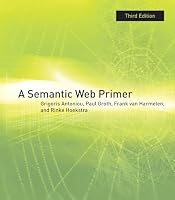
39) A Semantic Web Primer / Grigoris Antoniou, et al.
Basics of the semantic web, with overviews of:
RDF
RDF Schema
querying in general and SPARQL in particular
web ontology languages in general and OWL2 in particular
logic languages in general, with samples of OWL2 RL, SWRL, SPARQL:SPIN, and RuleML
several real-life examples of semantic web applications
ontology engineering
... all in about 200 pages, so you know it's much broader than deep. But that is the book's strength: by skipping most of the details, it offers a solid sense of how many of these buzzwords fit together. I've been exposed to RDF and RDF Schema in discussions of future changes in library cataloging formats, and have heard some of the other acronyms thrown about, but my understanding has been pretty handwavey of how they all make the future happen. I appreciated Grigoriou et al.'s perspective, and thought the book was well-organized and clear.
There are the usual set of typos, including some aggravating errors in examples -- which I suspect were incompletely converted from different examples in an earlier edition. But I've sort of come to expect those.
Recommended for those looking for a gentle introduction to semantic web technologies, and for those suffering from insomnia.
First, my palate-cleanser:
39) A Semantic Web Primer / Grigoris Antoniou, et al.
Basics of the semantic web, with overviews of:
RDF
RDF Schema
querying in general and SPARQL in particular
web ontology languages in general and OWL2 in particular
logic languages in general, with samples of OWL2 RL, SWRL, SPARQL:SPIN, and RuleML
several real-life examples of semantic web applications
ontology engineering
... all in about 200 pages, so you know it's much broader than deep. But that is the book's strength: by skipping most of the details, it offers a solid sense of how many of these buzzwords fit together. I've been exposed to RDF and RDF Schema in discussions of future changes in library cataloging formats, and have heard some of the other acronyms thrown about, but my understanding has been pretty handwavey of how they all make the future happen. I appreciated Grigoriou et al.'s perspective, and thought the book was well-organized and clear.
There are the usual set of typos, including some aggravating errors in examples -- which I suspect were incompletely converted from different examples in an earlier edition. But I've sort of come to expect those.
Recommended for those looking for a gentle introduction to semantic web technologies, and for those suffering from insomnia.
244qebo
>238 swynn: Yay, you did it! What's next?
Yeah, downhill is easier on the muscles, but uphill is easier on the joints and bones.
Yeah, downhill is easier on the muscles, but uphill is easier on the joints and bones.
245swynn
>244 qebo:: Thanks, Katharine! Next is some rest and some local runs, work on speed and dropping some weight. I'd like to do a long race next fall, either a marathon or ultra, so maintenance long runs will be part of the mix, too.
Early in the year, Kerri and I were talking about Chicago. I don't think I will be doing that this year, as it may conflict with some family plans. But I will do something, maybe Tulsa in November.
Early in the year, Kerri and I were talking about Chicago. I don't think I will be doing that this year, as it may conflict with some family plans. But I will do something, maybe Tulsa in November.
246swynn

40) The Madness Season / C.S. Friedman
Daetrin is a member, perhaps the last, of a race of near-immortal humans whose existence is the source of humanity's vampire and shapechanger myths. Far in the future, centuries after Earth has been conquered by a race of hive-minded aliens, Daetrin does what his kind have frequently done: lie low and hope to pass as human.
But the alien conquerors find him out. They plan take him off earth to a planet where they can study him and his weaknesses. Daetrin is certain that if they learn his weaknesses -- his unique dietary needs, his sensitivity to sunlight -- they will use that information to find and destroy any others like him. He is determined to prevent that.
For a book that could be described uncharitably as "vampires versus aliens," The Madness Season is ambitious and thoughtful. Friedman uses a variety of alien races to explore relationships between the individual and society -- from humans, whose sense and value of the individual is strong, to the alien conquerors who have no notion of the individual at all. Then there are the shape-shifting Marra, whose sense of the individual is plastic and whose "society" is entirely other. Our hero, who has almost always been a social misfit, has to figure out his own place in a complicated social universe.
It doesn't always work-- there are a couple of points in the plot where events seemed too convenient and the writing could be tightened, but overall it was entertaining and thought-provoking. Recommended.
247swynn

41) Ghostman / Roger Hobbs
"Jack" is a "ghostman": a specialist in disappearing. His skills are useful to criminals wanting to lie low after a job; they're also useful for cleaning up after a job gone wrong. In this case, a job has gone very wrong. A plan to rob federal cash from an armored car has turned bloody, conspicuous, and belly-up. One heister is dead, the other has disappeared with the money.
The plan's mastermind hires Jack to clean things up and find the money but fast: in forty-eight hours the cash will be ruined by ink bombs. Things quickly get more complicated as Jack gets caught up in a war between his employer and another criminal mastermind. Then there's the FBI agent on his tail ...
This is excellent crime fiction: fast, tough, convoluted, and convincing. It reminds me of Richard Stark's Parker novels. Recommended for those who like that sort of thing.
248MickyFine
Saw this Buzzfeed post and thought of you. Except maybe change the distances a lot. :)
249swynn
Micky, I definitely recognize some of those thoughts. Especially the babbling wordplay of #23.
I don't get all the anxiety about waving, though: I wave. If they don't wave back, I figure they're just not wavers.
I also count a lot: steps, breaths, telephone poles, parked cars. Sometimes I catch myself counting something and wonder what.
I don't get all the anxiety about waving, though: I wave. If they don't wave back, I figure they're just not wavers.
I also count a lot: steps, breaths, telephone poles, parked cars. Sometimes I catch myself counting something and wonder what.
250swynn

42) Hitchers / Will McIntosh
Finn Darby is a comic strip artist living in Atlanta. His strip is "Toy Shop," a project started by his grandfather with moderate success. After his grandfather's death Finn made it his own, adding characters and a fresh sensibility, achieving "Bloom County" levels of success. His grandfather wouldn't approve. In fact, before his death Finn's grandfather had forbidden Finn from continuing the strip. But the old man was a hateful misanthrope who missed no opportunity while he was alive to belittle Finn and predict Finn's future failures. So Finn doesn't mind that the drunk s.o.b. might be spinning in his grave.
But then a bioterrorist attack hits Atlanta, followed quickly by a bizarre epidemic: the dead return to inhabit the bodies of the living. Now Finn finds himself sharing his body with his grandfather, whose disposition death has not mellowed.
Finn finds company for his misery: Mick, a washed-up punk rock star now sharing a skull with an old bandmate, and Summer, a waitress who somehow became host to Finn's late wife.
I found it okay. The characters are strong and the scenario interesting. But other issues kept it from being more engaging: plot holes, an unsatisfying denouement, and a lack of humor that felt strange in a book about a comic strip artist. Some of Finn's strips are included in the book; they're not funny, or even "Bloom County" quirky.
So I have no recommendation for or against. If the summary sounds interesting, you might give it a try.
251swynn

43) Bad Behavior / Mary Gaitskill
A collection of stories, mostly set in Manhattan, about women, mostly moderately talented but unsuccessful writers, facing relationship problems, mostly addressed by drifting in and out of empty and abusive relationships and/or prostitution.
The writing is engaging, and I can understand Gaitskill's appeal, but it's not my cup of tea.
252swynn

44) Tornado Hunter / Stefan Bechtel and Tim Samaras
Stories about tornado chasers, featuring the late Tim Samaras. I read this with my son, wwho is a natural disaster fanatic and to whom Tim Samaras was a kind of rock star.
I found it interesting but a little overwrought. My son loved it and provided running commentary, which I enjoyed more than the book.
253swynn
45) The Lives of Tao / Wesley Chu
Overweight slacker Roen Tan becomes host to the alien symbiote Tao, whose people are fighting a war for control of the world.
This one was a huge disappointment. It has gotten a lot of love, including an Alex award (for books written for adults with a YA appeal), a nomination for the Goodreads reader's choice award, and plenty of enthusiastic reviews.
I don't get it. The story is rambling and lacking in tension, the narrative more tell than show, the protagonist weepier than a sparkly vamp's girlfriend, and the prose is just awful: garbled, clichéd, redundant, and prone to grammatical errors. Others have found the banter between the hero and his alien "laugh out loud funny," but here again, I don't get it. Their clever comments are mostly tired playground taunts, variations on "I know you are but what am I?" Maybe that explains its YA appeal, but it didn't appeal to me.
Not recommended.
254qebo
>253 swynn: "laugh out loud funny" is typically not a quality I seek, even when it's done well. The cover is cool though.
255swynn
>254 qebo:: Agreed about the cover design, which is by ARGH! Oxford.
256rosalita
Howdy, Steve! I'm working my way back into the LT groove. I'm not trying to catch up on all the posts I missed but I did slow down and glance at your book reviews. I added The Resurrectionists to the wishlist. Sorry your last read was a miss, though.
257swynn
>256 rosalita: Great to see you, Julia! And I hope you like The Resurrectionist.
I'm also sorry about The Lives of Tao, and I plan to follow it up with the next in a series that hasn't disappointed me yet.
I'm also sorry about The Lives of Tao, and I plan to follow it up with the next in a series that hasn't disappointed me yet.
This topic was continued by Swynn reads and runs in 2014.

