1rocketjk
I haven't gotten to 50 books over the last three years, or since I bought my used bookstore. My last three totals are 44, 46 and, in the first year of the store, only 40. Hope never dies, however!
In case you're interested:
2013 50-Book Challenge thread
2012 50-Book Challenge thread
2011 50-Book Challenge thread
2010 50-Book Challenge thread
2009 50-Book Challenge thread
2008 50-Book Challenge thread
In addition to the books I read straight through, I like to read anthologies, collections and other books of short entries one story/chapter at a time instead of straight through. I have a couple of stacks of such books from which I read one story/chapter each between the books I read from cover to cover (novels and histories, mostly). So I call these my "between books." When I finish a "between book," I add it to my yearly list.
Master List (Touchstones included with individual listings below):
1: The Secret Agent by Joseph Conrad
2: The New Yorker 1999 Summer Fiction Issue: 20 Writers for the 21st Century
3: The Outfit by Richard Stark
4: The Meaning of Night by Michael Cox
5: The Man Who Loved Books Too Much: the True Story of a Thief, a Detective, and a World of Literary Obsession by Allison Hoover Bartlett
6: The Fool's Run by John Sanford
7: Eternal Curse on the Reader of These Pages by Manuel Puig
8: The Five O'Clock Cake by Joan Sawyer Bloyd
9: Spycatcher by Matthew Dunn
10: Reigen, The Affairs of Anatol and Other Plays by Arthur Schnitzler
11: The Great Debate Between Robert Young Hayne of South Carolina and Daniel Webster of Massachusetts edited by Lindsay Swift
12: Path of the Assassin by Brad Thor
13: Colossus: Hoover Dam and the Making of the American Century by Michael A. Hiltzik
14: Flaubert's Parrot by Julian Barnes
15: Black and Blue: the Golden Arm, the Robinson Boys and the 1966 World Series that Stunned America by Tom Adelman
16: A Shade of Difference by Alan Drury
17: Hong Kong, China by Ralph Arnote
18: The Prophet of Tenth Street by Tsipi Keller
19: Malone Dies by Samuel Beckett
20: Museo Nazionale del Risorgimento Italiano di Torino - Pocket Guide by Daniela Orta
21: The Ides of May: the Defeat of France, May-June, 1940 by John Williams
22: The Castles of Bellinzona by Werner Meyer and Patricia Cavadini-Bielander
23: Murder at the Laurels by Leslie Cookman
24: Bill Haley by John Swenson
25: Life Class by Pat Barker
26: The Devil by Alfred Neumann
27: The Best Short Stories of 1931 edited by Edward J. O'Brien
28: Ramblings by J. Robert Mathias
29: Murder in Midwinter by Leslie Cookman
30: Desert Solitaire: A Season in the Wilderness by Edward Abbey
31: The Elegance of the Hedgehog by Muriel Barbery
32: The Prison Life of Harris Filmore by Jack Richardson
33: All Things Bright and Beautiful by James Herriot
34: The New Yorker Magazine Fiction Issue, December 2006
35: Far Arden by Kevin Cannon
36: High Bonnet by Idwal Jones
37: The Joy of Keeping Score by Paul Dickson
38: The House Without a Key by Earl Derr Biggers
39: The Empress File by John Sanford
40: Jewish Times: Voices of the American Jewish Experience by Howard Simons
41: The Year's Greatest Science-Fiction and Fantasy: Second Annual Volume edited by Judith Merril
42: Shades of Grey by Jasper Fforde
43: The Deep Blue Goodbye by John D. MacDonald
44: Dale Brown's Dreamland by Dale Brown
45: The Mourner by Richard Stark
46: Lincoln's Men: the President and His Private Secretaries by Daniel Mark Epstein
In case you're interested:
2013 50-Book Challenge thread
2012 50-Book Challenge thread
2011 50-Book Challenge thread
2010 50-Book Challenge thread
2009 50-Book Challenge thread
2008 50-Book Challenge thread
In addition to the books I read straight through, I like to read anthologies, collections and other books of short entries one story/chapter at a time instead of straight through. I have a couple of stacks of such books from which I read one story/chapter each between the books I read from cover to cover (novels and histories, mostly). So I call these my "between books." When I finish a "between book," I add it to my yearly list.
Master List (Touchstones included with individual listings below):
1: The Secret Agent by Joseph Conrad
2: The New Yorker 1999 Summer Fiction Issue: 20 Writers for the 21st Century
3: The Outfit by Richard Stark
4: The Meaning of Night by Michael Cox
5: The Man Who Loved Books Too Much: the True Story of a Thief, a Detective, and a World of Literary Obsession by Allison Hoover Bartlett
6: The Fool's Run by John Sanford
7: Eternal Curse on the Reader of These Pages by Manuel Puig
8: The Five O'Clock Cake by Joan Sawyer Bloyd
9: Spycatcher by Matthew Dunn
10: Reigen, The Affairs of Anatol and Other Plays by Arthur Schnitzler
11: The Great Debate Between Robert Young Hayne of South Carolina and Daniel Webster of Massachusetts edited by Lindsay Swift
12: Path of the Assassin by Brad Thor
13: Colossus: Hoover Dam and the Making of the American Century by Michael A. Hiltzik
14: Flaubert's Parrot by Julian Barnes
15: Black and Blue: the Golden Arm, the Robinson Boys and the 1966 World Series that Stunned America by Tom Adelman
16: A Shade of Difference by Alan Drury
17: Hong Kong, China by Ralph Arnote
18: The Prophet of Tenth Street by Tsipi Keller
19: Malone Dies by Samuel Beckett
20: Museo Nazionale del Risorgimento Italiano di Torino - Pocket Guide by Daniela Orta
21: The Ides of May: the Defeat of France, May-June, 1940 by John Williams
22: The Castles of Bellinzona by Werner Meyer and Patricia Cavadini-Bielander
23: Murder at the Laurels by Leslie Cookman
24: Bill Haley by John Swenson
25: Life Class by Pat Barker
26: The Devil by Alfred Neumann
27: The Best Short Stories of 1931 edited by Edward J. O'Brien
28: Ramblings by J. Robert Mathias
29: Murder in Midwinter by Leslie Cookman
30: Desert Solitaire: A Season in the Wilderness by Edward Abbey
31: The Elegance of the Hedgehog by Muriel Barbery
32: The Prison Life of Harris Filmore by Jack Richardson
33: All Things Bright and Beautiful by James Herriot
34: The New Yorker Magazine Fiction Issue, December 2006
35: Far Arden by Kevin Cannon
36: High Bonnet by Idwal Jones
37: The Joy of Keeping Score by Paul Dickson
38: The House Without a Key by Earl Derr Biggers
39: The Empress File by John Sanford
40: Jewish Times: Voices of the American Jewish Experience by Howard Simons
41: The Year's Greatest Science-Fiction and Fantasy: Second Annual Volume edited by Judith Merril
42: Shades of Grey by Jasper Fforde
43: The Deep Blue Goodbye by John D. MacDonald
44: Dale Brown's Dreamland by Dale Brown
45: The Mourner by Richard Stark
46: Lincoln's Men: the President and His Private Secretaries by Daniel Mark Epstein
2rocketjk
Book 1: The Secret Agent by Joseph Conrad

A few years ago I began a personal tradition of starting each year's reading with a reread of a Joseph Conrad novel. This year it was The Secret Agent, a book I did a massive amount of research about during my grad school days. The book, set in London in late 19/early 20th century, tells the story of Adolph Verloc, who is too indolent to work and so makes his living in the employ of an Eastern European embassy, spying on London's anarchists. When Verloc's employer puts pressure on him to create an anarchist outrage so that a too tolerant English society will decide to crack down on the anarchists in their midst, Verloc's troubles begin. We also follow at times the anarchists themselves and the police. But this is really only the framework for a broader portrayal of the ways in which Conrad saw the growing industrialization and impersonality of society as a destroyer of hope, incentive and emotion and as a promoter of alienation and despair. At the center of these themes are Verloc's home life, and especially the ways in which his wife has married him as a form of personal compromise, away from happiness but for security for herself, her indigent mother and her mentally challenged brother. But Conrad's themes are equally evident in his descriptions of the city itself, its filth, slime and darkness. Also, very unusual for its time was Conrad's bending of time, showing us important episodes out of chronological order in ways that make us feel that time itself is standing still.
Conrad had nothing but contempt for anarchists, and to a lesser degree for politics as a whole. He saw anarchists as parasites, people looking to tear down, but not to contribute to the daily business of getting along and getting on with life. Conrad, after all, came of age on merchant ships, a world where each man depended for his life on the other fellow doing his job all the time, and where even the most menial task could be crucial. But that level of contempt is the book's flaw, as Conrad let his antipathy run away with him, here. Consequently, the anarchists come off as mere caricatures, and the narrative loses power when they take center stage. As always, though, I am in love with Conrad's turn of a phrase and with his powers of observation.

A few years ago I began a personal tradition of starting each year's reading with a reread of a Joseph Conrad novel. This year it was The Secret Agent, a book I did a massive amount of research about during my grad school days. The book, set in London in late 19/early 20th century, tells the story of Adolph Verloc, who is too indolent to work and so makes his living in the employ of an Eastern European embassy, spying on London's anarchists. When Verloc's employer puts pressure on him to create an anarchist outrage so that a too tolerant English society will decide to crack down on the anarchists in their midst, Verloc's troubles begin. We also follow at times the anarchists themselves and the police. But this is really only the framework for a broader portrayal of the ways in which Conrad saw the growing industrialization and impersonality of society as a destroyer of hope, incentive and emotion and as a promoter of alienation and despair. At the center of these themes are Verloc's home life, and especially the ways in which his wife has married him as a form of personal compromise, away from happiness but for security for herself, her indigent mother and her mentally challenged brother. But Conrad's themes are equally evident in his descriptions of the city itself, its filth, slime and darkness. Also, very unusual for its time was Conrad's bending of time, showing us important episodes out of chronological order in ways that make us feel that time itself is standing still.
Conrad had nothing but contempt for anarchists, and to a lesser degree for politics as a whole. He saw anarchists as parasites, people looking to tear down, but not to contribute to the daily business of getting along and getting on with life. Conrad, after all, came of age on merchant ships, a world where each man depended for his life on the other fellow doing his job all the time, and where even the most menial task could be crucial. But that level of contempt is the book's flaw, as Conrad let his antipathy run away with him, here. Consequently, the anarchists come off as mere caricatures, and the narrative loses power when they take center stage. As always, though, I am in love with Conrad's turn of a phrase and with his powers of observation.
3Ameise1
Hi Jerry! This is a fantastic review. I wish you good luck with your new thread and happy reading 

4rocketjk
#3> Thanks! By the way, my wife and I are going to be visiting Switzerland this summer, going to see a friend who lives in Tichino.
5Ameise1
You'll like Ticino, I'm sure. It has got a lot of Italian life style but also our Alps. Where in Ticino is your friend living?
7Ameise1
That's a lovely place and I hope you'll take part on a hike in the Alps. Will you visit other parts of Switzerland or Europe during your holiday?
8rocketjk
#7> We're most likely to stay mostly in Switzerland, but we haven't really figured all that out. I have to admit that setting foot inside Liechenstein seems kind of attractive to me. Also, I've never been in Italy, either (my wife has), and we'll be very close. But right now it's all a big, happy quandry.
9Ameise1
From Lugano it's only a step to cross border with Italy, so you should be able to visit some parts in the north of Italy. Lichtenstein is lovely and it depends how you are travelling to make a stop there. When will you be here in Switzerland? Perhaps there will be a chance to meet?
Wish you a lovely Sunday.
Wish you a lovely Sunday.
10missizicks
Your review has just reminded me that I have a Joseph Conrad collection that includes The Secret Agent, among 43 other works! I read Heart of Darkness a couple of years ago (the first thing I've read by Conrad) and mean to read more. I think you've chosen my next book for me!
11rocketjk
#10> Jan, The Secret Agent is a wonderful book in my view. And since you are in England, you may well be fascinated by Conrad's take on London. But if you're interested in exploring Conrad and have enjoyed Heart of Darkness, I recommend going next to Lord Jim, which, in my opinion, and I think in the opinion of most others, is Conrad's pinnacle achievement. Either way, you are in for some memorable reading.
12missizicks
#11> Your write up of The Secret Agent has whetted my interest - I like mysteries, crime, espionage. I'm an archivist by profession, so am also intrigued by Conrad's perceptions of London. I loved the writing in Heart of Darkness, and Lord Jim has been recommended to me before. Oh, choices, choices! But first I need to finish Tristram Shandy...
13rocketjk
Book 2: The New Yorker 1999 Summer Fiction Issue: 20 Writers for the 21st Century

Read as a "between book" (see first post). I have a stack of oldish magazines in my office, and in order to finally (if gradually) get rid of them, I make myself read articles from the magazine at the top of the stack between each book I read. Then I recycle the magazine. I usually don't include them as part of this challenge, but the magazine I just finished, the 1999 New Yorker summer fiction issue, was more or less a short story anthology, and I read just about everything in it, rather than select articles as usual. So it goes on this list. As this was the final summer fiction edition of the 20th century for the magazine, the theme of the issue was "20 Writers for the 21st Century." The editors found 20 young writers they thought were going to make a splash in the New Millennium. They were pretty much on target, too, as the issue includes stories from Sherman Alexie, Ethan Canin, Michael Chabon, Junot Diaz, Jeffrey Eugenides, Jonathan Franzen, Allegra Goodman, Jhumpa Lahiri, Rich Moody, William T. Vollmann and David Foster Wallace, among others. The stories were generally very good, with particularly effective tales from Alexie, Lahiri and Eugenides.

Read as a "between book" (see first post). I have a stack of oldish magazines in my office, and in order to finally (if gradually) get rid of them, I make myself read articles from the magazine at the top of the stack between each book I read. Then I recycle the magazine. I usually don't include them as part of this challenge, but the magazine I just finished, the 1999 New Yorker summer fiction issue, was more or less a short story anthology, and I read just about everything in it, rather than select articles as usual. So it goes on this list. As this was the final summer fiction edition of the 20th century for the magazine, the theme of the issue was "20 Writers for the 21st Century." The editors found 20 young writers they thought were going to make a splash in the New Millennium. They were pretty much on target, too, as the issue includes stories from Sherman Alexie, Ethan Canin, Michael Chabon, Junot Diaz, Jeffrey Eugenides, Jonathan Franzen, Allegra Goodman, Jhumpa Lahiri, Rich Moody, William T. Vollmann and David Foster Wallace, among others. The stories were generally very good, with particularly effective tales from Alexie, Lahiri and Eugenides.
14rocketjk
Book 3: The Outfit by Richard Stark
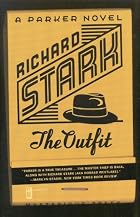
This is the third installment of the "Parker" series of noir thrillers by Richard Stark, a.k.a. Donald E. Westlake. Parker is a psychopathic but razor sharp career thief with an iron-clad code. The national crime syndicate known as The Outfit is still trying to rub Parker out, so he is still determined to retaliate against the whole, far-flung enterprise and, especially, its bosses. This is the weakest of the first three Parker novels, but I certainly intend to read some more, and I'm fully expecting a bounce back.
This is the third installment of the "Parker" series of noir thrillers by Richard Stark, a.k.a. Donald E. Westlake. Parker is a psychopathic but razor sharp career thief with an iron-clad code. The national crime syndicate known as The Outfit is still trying to rub Parker out, so he is still determined to retaliate against the whole, far-flung enterprise and, especially, its bosses. This is the weakest of the first three Parker novels, but I certainly intend to read some more, and I'm fully expecting a bounce back.
15PaperbackPirate
I think your magazine should count. I included a photography book on my list last year. I spent a fair amount of time going through it and I want to remember which year I "read" it so I counted it.
Happy Reading to you in 2014!
Happy Reading to you in 2014!
16eclecticdodo
The magazine definitely counts - and sounds fascinating!
17rocketjk
#15 & 16> Thanks for your comments and support. I have no hesitation about including a New Yorker fiction issue as an anthology/book for the purposes of this challenge, but it's always good to have back up! Happy reading to you both.
19RBeffa
Found you! and starred. Threads at the start of the year are overwhelming in the 75 group. 50 is so much quitter.
always enjoy your reviews. Secret Agent sounds great. I need to read me some Conrad. I was thinking of doing a hardy and a Conrad last year and it didn't happen. I'll do better (I hope)!
Have fun in Switzerland. My paternal line is from there - Airola. Matterhorn country. I haven't visited but I was told by a friend once that when she visited half the town was named beffa it seemed. I'm sure it was an exaggeration but she found it entertaining.
always enjoy your reviews. Secret Agent sounds great. I need to read me some Conrad. I was thinking of doing a hardy and a Conrad last year and it didn't happen. I'll do better (I hope)!
Have fun in Switzerland. My paternal line is from there - Airola. Matterhorn country. I haven't visited but I was told by a friend once that when she visited half the town was named beffa it seemed. I'm sure it was an exaggeration but she found it entertaining.
20rocketjk
"50 is so much quieter."
Yes. It's to each his/her own, of course, but that's one of the reasons why I prefer this group. That and the fact that I'll never get close to 75 books in a year.
Thanks for the kind words about my reviews. Good to know folks are reading and enjoying. I don't always comment, but I make it a rule to read/catch up on at least two 50-Book challenge threads every day.
Yes. It's to each his/her own, of course, but that's one of the reasons why I prefer this group. That and the fact that I'll never get close to 75 books in a year.
Thanks for the kind words about my reviews. Good to know folks are reading and enjoying. I don't always comment, but I make it a rule to read/catch up on at least two 50-Book challenge threads every day.
21notmyrealname
I've seen a few people reading The Secret Agent this year already, which is weird! Interesting, I put it down halfway through, but I really should give it another crack. Happy reading!
22rocketjk
Book 4: The Meaning of Night: a Confession by Michael Cox
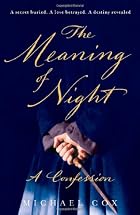
It took me a long time to get through this book, which checks in at 700 pages, but it was worth it. The Meaning of Night is a faux Victorian-era psychological thriller, published in 2006 but written in the style of 19th-century English murder novels. Cox knew what he was writing about, having been a scholar of the period, a biographer of early ghost-story writer M. R. James, and an editor of ghost and murder-story collections for Oxford University Press. Replications of Victorian-era literary practices abound, such as the book's format as a recently discovered manuscript containing this long "confession." The book starts with a murder, committed by the protagonist only as a rehearsal for the real murder he's planning, that of his life-long "enemy." The narrative then goes although back to the narrator's early life, telling a story of identity stolen, misplaced wrath and slow-turning tragedy until it finally reaches again the instant of the story's beginning, then hurtles forward toward its satisfying conclusion. The book begins as sort of a Victorian English Crime and Punishment, but along the way settles into a rhythm and style all its own. The story, as well, starts out slowly but soon gathers steam, and the characters move from seeming caricatures to interesting along the way. For the first 100 pages I wondered whether I was going to get through this, but by page 200 or so I was quite involved. Lots of fun in the long run, and worth the time, at least for me.
It took me a long time to get through this book, which checks in at 700 pages, but it was worth it. The Meaning of Night is a faux Victorian-era psychological thriller, published in 2006 but written in the style of 19th-century English murder novels. Cox knew what he was writing about, having been a scholar of the period, a biographer of early ghost-story writer M. R. James, and an editor of ghost and murder-story collections for Oxford University Press. Replications of Victorian-era literary practices abound, such as the book's format as a recently discovered manuscript containing this long "confession." The book starts with a murder, committed by the protagonist only as a rehearsal for the real murder he's planning, that of his life-long "enemy." The narrative then goes although back to the narrator's early life, telling a story of identity stolen, misplaced wrath and slow-turning tragedy until it finally reaches again the instant of the story's beginning, then hurtles forward toward its satisfying conclusion. The book begins as sort of a Victorian English Crime and Punishment, but along the way settles into a rhythm and style all its own. The story, as well, starts out slowly but soon gathers steam, and the characters move from seeming caricatures to interesting along the way. For the first 100 pages I wondered whether I was going to get through this, but by page 200 or so I was quite involved. Lots of fun in the long run, and worth the time, at least for me.
23rocketjk
Book 5: The Man Who Loved Books Too Much: the True Story of a Thief, a Detective, and a World of Literary Obsession by Allison Hoover Bartlett

As the owner of a used bookstore myself (although I'm far from an antiquarian expert), I thought I would find this book more interesting, but I ended up not being that impressed. I didn't mind Bartlett's putting herself into the narrative, making the book almost a memoir of her interviews and investigations, but I didn't share her sense of wonder at the motivations of the thief in the tale. The thief is a fellow who steals rare books because he wants them and considers himself entitled to them, and who has rationalized his behavior by developing an antagonism toward the rare book dealers and libraries he's stealing from. The fact that he happily tells his story over a long series of interviews with the author confirms the fact that he is simply a narcissistic schmuck. The story of the book dealer who becomes more or less obsessed with catching him is a bit more interesting, but not by all that much. As I said, Bartlett professes a sense of wonder at these goings on. She "can't fathom," the thief's motivation at first, she is "astonished" and sometimes "baffled" by what she learns, both about these goings on and about the enthusiasm for rare book collecting itself. I found some of what she wrote about interesting, but I didn't find any of it astonishing or difficult to fathom, so I was a bit put off by this constant wide-eyed wonder. And, as I said, I didn't find the thief all that fascinating. I just thought he was an asshole. This book started off as a magazine article, which was probably an interesting one. But to me this wasn't a particularly gripping book.

As the owner of a used bookstore myself (although I'm far from an antiquarian expert), I thought I would find this book more interesting, but I ended up not being that impressed. I didn't mind Bartlett's putting herself into the narrative, making the book almost a memoir of her interviews and investigations, but I didn't share her sense of wonder at the motivations of the thief in the tale. The thief is a fellow who steals rare books because he wants them and considers himself entitled to them, and who has rationalized his behavior by developing an antagonism toward the rare book dealers and libraries he's stealing from. The fact that he happily tells his story over a long series of interviews with the author confirms the fact that he is simply a narcissistic schmuck. The story of the book dealer who becomes more or less obsessed with catching him is a bit more interesting, but not by all that much. As I said, Bartlett professes a sense of wonder at these goings on. She "can't fathom," the thief's motivation at first, she is "astonished" and sometimes "baffled" by what she learns, both about these goings on and about the enthusiasm for rare book collecting itself. I found some of what she wrote about interesting, but I didn't find any of it astonishing or difficult to fathom, so I was a bit put off by this constant wide-eyed wonder. And, as I said, I didn't find the thief all that fascinating. I just thought he was an asshole. This book started off as a magazine article, which was probably an interesting one. But to me this wasn't a particularly gripping book.
24RBeffa
Coincidently I almost started reading this tale of a book thief a couple days ago. I remember hearing about it and picked it up at a library sale a couple months ago. I have it sitting on my read soon shelf. I'm not sure it will be a book I like but it sounded intriguing. Less so now after your review! Oh well, it may not get read soon after all! or maybe it will ... I am curious about book collecting. I imagine there are many varied reasons why.
25rocketjk
#24> Yeah, Ron. Your mileage may vary, of course, but my feeling is that while there is an interesting book to be written about the world of antiquarian books, including the thieves therein, this book isn't it. It has its moments, but is not the consistently absorbing book I was hoping for.
26notmyrealname
Completely agree about that book - just went on and on and glorified a criminal who didn't deserve it.
27rocketjk
Book 6: The Fool's Run by John Sanford
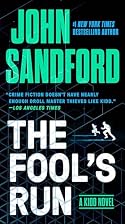
This is the first entry in John Sanford's "Kidd Novels" series, and my first John Sanford novel of any kind, as well. I enjoyed it. It is a thriller about industrial computer crime. As the book was written back in the late 80s, we are still in the relatively early days of computer networks, and it is fun to be reminded of those times. The characters are taking part in an elaborate computer fraud, but they often have to go looking for phone booths. Not that this is a very deep novel, of course, but it was interesting to get a backwards look at that point in time, the nexus between the old world and the new in many ways. Basically, though, just some good fun reading. I'll probably get to the next two books in this series sooner or later.
This is the first entry in John Sanford's "Kidd Novels" series, and my first John Sanford novel of any kind, as well. I enjoyed it. It is a thriller about industrial computer crime. As the book was written back in the late 80s, we are still in the relatively early days of computer networks, and it is fun to be reminded of those times. The characters are taking part in an elaborate computer fraud, but they often have to go looking for phone booths. Not that this is a very deep novel, of course, but it was interesting to get a backwards look at that point in time, the nexus between the old world and the new in many ways. Basically, though, just some good fun reading. I'll probably get to the next two books in this series sooner or later.
28Ameise1
Nice review. I've read Wicked Prey and Heat Lightning by John Sandford. I liked them both. So I could give a try for a new serie. :-D
29richardderus
>27 rocketjk: Phone booths! I would fall in a heap if I saw one now.
30rocketjk
Book 7: Eternal Curse on the Reader of These Pages by Manuel Puig

This is a somewhat surreal novel by Argentinian author Manuel Puig. The tale, which takes place in New York City, is told almost entirely in dialog between two characters, an infirm, amnesiac, political exile from Argentina and the at first somewhat vague character who is hired to attend to him several time a week. The novel explores the nature of memory, fantasy and inter-dependency as the two characters play off each other, sometimes encouraging and sometimes mocking each others' flights of imagination and reminiscence. I wouldn't say this was a gripping or wholly engaging book, but I did find it interesting in the reading, and worth the time I spent with it. I wouldn't be surprised to learn that there were elements of the story that I missed entirely.

This is a somewhat surreal novel by Argentinian author Manuel Puig. The tale, which takes place in New York City, is told almost entirely in dialog between two characters, an infirm, amnesiac, political exile from Argentina and the at first somewhat vague character who is hired to attend to him several time a week. The novel explores the nature of memory, fantasy and inter-dependency as the two characters play off each other, sometimes encouraging and sometimes mocking each others' flights of imagination and reminiscence. I wouldn't say this was a gripping or wholly engaging book, but I did find it interesting in the reading, and worth the time I spent with it. I wouldn't be surprised to learn that there were elements of the story that I missed entirely.
31PaperbackPirate
I love the title! Good luck with your curse.
32rocketjk
Book 8: The Five O'Clock Cake by Joan Sawyer Bloyd
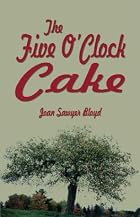
This is a self-published historical novel about life among the ranchers in 1920s Anderson Valley, Mendocino County, California, USA, the still-rural valley that my wife and I have lived in since 2008. The author was a long-time resident of the valley who married into one of the area's longest-established families. She based her narrative on stories she heard from her husband and his elders. While Bloyd was clearly not an experienced fiction writer, her tale does give an evocative picture of the lives and attitudes of the time she describes. I read this book as part of my ongoing project of gradually learning as much of the history of my adopted region as I can.
This is a self-published historical novel about life among the ranchers in 1920s Anderson Valley, Mendocino County, California, USA, the still-rural valley that my wife and I have lived in since 2008. The author was a long-time resident of the valley who married into one of the area's longest-established families. She based her narrative on stories she heard from her husband and his elders. While Bloyd was clearly not an experienced fiction writer, her tale does give an evocative picture of the lives and attitudes of the time she describes. I read this book as part of my ongoing project of gradually learning as much of the history of my adopted region as I can.
33rocketjk
Book 9: Spycatcher by Matthew Dunn
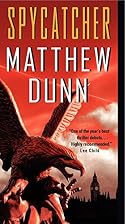
The introductory novel of the Spycatcher series, featuring British superspy Will Cochrane. Cochrane, who of course has a troubled and violent past, must battle an Iranian super-criminal and his minions. At stake is a horrific act of terror that our villain is planning and that Cochrane must stop at all costs. The setup is pretty good but the second half got repetitive. I'm going to read the 2nd and 3rd books of the series eventually, more out of curiosity than anything else, but I wasn't especially impressed. I've also recently started Brad Thor's series, which I like better.
The introductory novel of the Spycatcher series, featuring British superspy Will Cochrane. Cochrane, who of course has a troubled and violent past, must battle an Iranian super-criminal and his minions. At stake is a horrific act of terror that our villain is planning and that Cochrane must stop at all costs. The setup is pretty good but the second half got repetitive. I'm going to read the 2nd and 3rd books of the series eventually, more out of curiosity than anything else, but I wasn't especially impressed. I've also recently started Brad Thor's series, which I like better.
34rocketjk
Book 10: Reigen, The Affairs of Anatol and Other Plays by Arthur Schnitzler

Read as a "between book" (see first post). Arthur Schnitzler was an important Austrian playwright in the late 19- and early 20th centuries. He was one of the first dramatists to write frankly about sexual matters and the furor over the content of his plays was fueled by the fact that he was Jewish. Schnitzler died in 1931, but that didn't stop Hitler from having his books thrown onto the bonfires en masse during the Nazi's book burning heyday. The plays in this collection include Schnitzler's most famous, "Reigen," in which ten pairs of characters converse just before and after making love (note: not during), leading and ending with a prostitute. This play has been made into movies several times with the title La Ronde.
According to the Wikipedia entry on Schnitzler, Sigmund Freud, in a letter to Schnitzler, confessed "I have gained the impression that you have learned through intuition – though actually as a result of sensitive introspection – everything that I have had to unearth by laborious work on other persons."
At any rate, these plays (there are four in the collection) were fun to read, for their historical value as much as for the fun of the plays themselves. Three of the plays are on Schnitzler's main theme, sexual mores, (or, as he put it according to Wikipedia, "I write of love and death. What other subjects are there?"). The final play in the collection takes place in a Paris cafe during the French Revolution. I have to admit I had never heard of Schnitzler, and probably never would have, were it not for my modest Modern Library collection. A couple of years back I picked up at a garage sale a box of early ML volumes to add to that collection, and a month or so ago I decided to actually read one, picking Schnitzler off the stack more or less at random. The fact that my volume is a Modern Library first edition (alas, no dust jacket), published and printed in 1933, also added to the reading experience

Read as a "between book" (see first post). Arthur Schnitzler was an important Austrian playwright in the late 19- and early 20th centuries. He was one of the first dramatists to write frankly about sexual matters and the furor over the content of his plays was fueled by the fact that he was Jewish. Schnitzler died in 1931, but that didn't stop Hitler from having his books thrown onto the bonfires en masse during the Nazi's book burning heyday. The plays in this collection include Schnitzler's most famous, "Reigen," in which ten pairs of characters converse just before and after making love (note: not during), leading and ending with a prostitute. This play has been made into movies several times with the title La Ronde.
According to the Wikipedia entry on Schnitzler, Sigmund Freud, in a letter to Schnitzler, confessed "I have gained the impression that you have learned through intuition – though actually as a result of sensitive introspection – everything that I have had to unearth by laborious work on other persons."
At any rate, these plays (there are four in the collection) were fun to read, for their historical value as much as for the fun of the plays themselves. Three of the plays are on Schnitzler's main theme, sexual mores, (or, as he put it according to Wikipedia, "I write of love and death. What other subjects are there?"). The final play in the collection takes place in a Paris cafe during the French Revolution. I have to admit I had never heard of Schnitzler, and probably never would have, were it not for my modest Modern Library collection. A couple of years back I picked up at a garage sale a box of early ML volumes to add to that collection, and a month or so ago I decided to actually read one, picking Schnitzler off the stack more or less at random. The fact that my volume is a Modern Library first edition (alas, no dust jacket), published and printed in 1933, also added to the reading experience
35rocketjk
Book 11: The Great Debate Between Robert Young Hayne of South Carolina and Daniel Webster of Massachusetts by Lindsay Swift

The debate between Hayne and Webster took place in the U.S. Senate in 1830. The occasion was a proposed bill to investigate the possibility of suspending the sale of public lands in the Western territories. The western states saw this as an attempt by the northern states to keep the new territories under-populated and the southern states saw it as, by extension, an attack on the power of the slave states. Not surprisingly, therefore, the speeches of the two senators rehearsed many of the issues that eventually led to the American Civil War. Swift, in this slim volume, presents a quick synopsis of the situation, short biographies of both Hayne and Webster, and then the text of the two major speeches involved, one by each Senator, slightly edited for the printed page. Hayne was, at the time, a rising star on the Southern political stage (he died of a fever while still in his 40s), but he was no match for Webster, one of the great orators of American history. Towards the end of his speech, Webster gives one of the most concise descriptions of the value and constitutional legitimacy of a strong central government (in comparison to the states' rights doctrine) that I've ever read.

The debate between Hayne and Webster took place in the U.S. Senate in 1830. The occasion was a proposed bill to investigate the possibility of suspending the sale of public lands in the Western territories. The western states saw this as an attempt by the northern states to keep the new territories under-populated and the southern states saw it as, by extension, an attack on the power of the slave states. Not surprisingly, therefore, the speeches of the two senators rehearsed many of the issues that eventually led to the American Civil War. Swift, in this slim volume, presents a quick synopsis of the situation, short biographies of both Hayne and Webster, and then the text of the two major speeches involved, one by each Senator, slightly edited for the printed page. Hayne was, at the time, a rising star on the Southern political stage (he died of a fever while still in his 40s), but he was no match for Webster, one of the great orators of American history. Towards the end of his speech, Webster gives one of the most concise descriptions of the value and constitutional legitimacy of a strong central government (in comparison to the states' rights doctrine) that I've ever read.
36richardderus
The one thing I remember that Hayne said was, "The moment the federal government shall make the unhallowed attempt to interfere with the domestic concerns of the states; those states will consider themselves driven from the Union."
You *made* me hit you, said the abuser. Nauseating.
You *made* me hit you, said the abuser. Nauseating.
37rocketjk
Book 12: Path of the Assassin by Brad Thor

This is the second book in Thor's series about uber-spy Scot Horvath. Last year I read the first in the series, The Lions of Lucerne, and I liked it well enough to make plans to read several more in the series. However, this entry will be my last, as it turns out. About a third of the way through, the plot got repetitive, the violence too gleeful for my taste, and the characters too 2-dimensional. I'm not that nuts about the politics, either (the protagonist turns on Fox News to get the lowdown on current events), but I would be fine with that if the other factors of the storytelling were better. This might be a weak link in what is otherwise an enjoyable series, but I'm not going to spend any more time finding out.

This is the second book in Thor's series about uber-spy Scot Horvath. Last year I read the first in the series, The Lions of Lucerne, and I liked it well enough to make plans to read several more in the series. However, this entry will be my last, as it turns out. About a third of the way through, the plot got repetitive, the violence too gleeful for my taste, and the characters too 2-dimensional. I'm not that nuts about the politics, either (the protagonist turns on Fox News to get the lowdown on current events), but I would be fine with that if the other factors of the storytelling were better. This might be a weak link in what is otherwise an enjoyable series, but I'm not going to spend any more time finding out.
38richardderus
Sounds sensible to me. Yuck.
39rocketjk
#38> Yeah, in some of the reviews here on LT, some of Thor's fans say the series bounces back after this one, but I'm out, nevertheless.
40richardderus
All it would take for me is "Fox News" and I'd be shutting the door on it for good.
41rocketjk
Book 13: Colossus: Hoover Dam and the Making of the American Century by Michael A. Hiltzik

This is a very interesting history, informative and well written. In telling the story of the desire for, the fight and planning for and the construction of this engineering marvel, Hitzik is telling many interlocking stories. Most prominent is the recounting of the history of water rights in the American southwest, and the fighting between the states of that region for use of the waters of the Colorado River. Hitzik tells of the early attempts to control the river and make use of the river through irrigation and engineering, including canals and aqueducts. He describes how the ability to use the river for irrigation has transformed that formerly desert region and allowed Las Vegas and, especially, Los Angeles to explode into mega-cities. The politics of the fight to create the dam as a public rather than a private enterprise is very interesting and has resonance in today's political battles, as well. The detailing of the engineering itself, and the ways in which new procedures and technologies had to be designed to build this mammoth dam, is quite riveting. The ways in which the contractors made sure to squeeze every possible nickel of profit out of the project, sometimes fraudulently and very, very frequently at the expense of the safety and the lives of the thousands of construction workers involved in the project make depressing but hardly surprising reading. At least two full chapters are devoted to describing the ways in which the very real danger to the workers, danger that came in all sorts, was purposefully ignored by the construction company in order that they might rush the job and therefore maximize their profits. workers' attempts to organize in order to improve their lots (in addition to the danger, pay rates could be lowered at any time and often were) were crushed ruthlessly. And after all, this was all going on in the middle of the Great Depression. Where were these men and their families going to go? The whole thing gives us America in a nutshell, particularly at that point in history: the whole range from dynamic designers, builders and innovators to insatiable greed mongers and ruthless exploiters. This is a very, very good history.

This is a very interesting history, informative and well written. In telling the story of the desire for, the fight and planning for and the construction of this engineering marvel, Hitzik is telling many interlocking stories. Most prominent is the recounting of the history of water rights in the American southwest, and the fighting between the states of that region for use of the waters of the Colorado River. Hitzik tells of the early attempts to control the river and make use of the river through irrigation and engineering, including canals and aqueducts. He describes how the ability to use the river for irrigation has transformed that formerly desert region and allowed Las Vegas and, especially, Los Angeles to explode into mega-cities. The politics of the fight to create the dam as a public rather than a private enterprise is very interesting and has resonance in today's political battles, as well. The detailing of the engineering itself, and the ways in which new procedures and technologies had to be designed to build this mammoth dam, is quite riveting. The ways in which the contractors made sure to squeeze every possible nickel of profit out of the project, sometimes fraudulently and very, very frequently at the expense of the safety and the lives of the thousands of construction workers involved in the project make depressing but hardly surprising reading. At least two full chapters are devoted to describing the ways in which the very real danger to the workers, danger that came in all sorts, was purposefully ignored by the construction company in order that they might rush the job and therefore maximize their profits. workers' attempts to organize in order to improve their lots (in addition to the danger, pay rates could be lowered at any time and often were) were crushed ruthlessly. And after all, this was all going on in the middle of the Great Depression. Where were these men and their families going to go? The whole thing gives us America in a nutshell, particularly at that point in history: the whole range from dynamic designers, builders and innovators to insatiable greed mongers and ruthless exploiters. This is a very, very good history.
42RBeffa
sounds like a great book, Jerry. Like something David McCullough would have or should have tackled.
43rocketjk
Sure, I guess McCullough could have done a great job on this, and I'm a fan of his, but Hiltzik has been an LA Times columnist/reporter for many years, so is positioned well to know the history/issues surrounding water rights, etc. He is also a winner of a reporting Pulitzer, so seems to have as much credibility on this subject as any other writer/historian.
44rocketjk
Book 14: Flaubert's Parrot by Julian Barnes

What a wonderful novel of ideas, laced with terrific writing and thought-provoking images. Geoffrey Braithwaite, as we're told on the back cover of my paperback edition, is a retired English doctor and "and obsessive Flaubert scholar." In one of the many recurring themes of the novel, Braithwaite goes to Flaubert's native Normandy and visits two small Flaubert museums. Both of them contain stuffed parrots represented as the stuffed parrot Flaubert had sitting on his writing desk (and mentioned in his letters) during the writing of the story "Un Cœur Simple (A Simple Heart)." Which is the real one (or is either real)? Barnes circles back to this question, and Braithwaite's attempts to find the answer, several time throughout the book. Overall, however, this is a fascinating study of the nature of literature, a contemplation of the knowable vs. the unanswerable, the relation between an artist's life and his work, and between the past and the present, all sprining from Braithwaite's presentation of details about Flaubert's writing, life and relationships. And, as almost all first person narratives, the story is slowly revealed to be the narrator's own, at its core, Braithwaite slowly reveals details about his own life that roughly mirror some of the themes of Flaubert's great masterpiece, Madame Bovary.
Because of the flowing nature of the ideas and images, it's hard to find an example of the writing that's not too long, or a shorter example that does the book's style justice. Here's a passage that probably is too long, but anyway . . .
"I hope you* don't think I' being enigmatic, by the way. If I'm irritating, it's probably because I'm embarrassed, I told you I don't like the full face. But I really am trying to make things easier for you. Mystification is simple; clarity is the hardest thing of all. Not writing a tune is easier than writing one. Not rhyming is easier than rhyming. I don't mean art should be as clear as the instructions on a packet of seeds; I'm saying that you trust the mystifier more if you know he's deliberately choosing not to be lucid. You trust Picasso all the way because he could draw like Ingres.
But what helps? What do we need to know? Not everything. Everything confuses. Directness also confuses. The full-face portrait staring back at you hypnotizes. Flaubert is usually looking away in his portraits and photographs. He's looking away so that you can't catch his eye; he's also looking away because what he can see over your shoulder is more interesting than your shoulder."
At any rate, this is a novel I highly recommend for readers interested in the literary biography and criticism, and in a fictional investigation of the themes I've offered above. You don't need a familiarity with Flaubert's work of life, but it does help if you've read Madame Bovary.
* I should note that Barnes employs this use of the second person, which some (including me) consider irritating and pretentious in fiction, only very sparingly throughout the book.

What a wonderful novel of ideas, laced with terrific writing and thought-provoking images. Geoffrey Braithwaite, as we're told on the back cover of my paperback edition, is a retired English doctor and "and obsessive Flaubert scholar." In one of the many recurring themes of the novel, Braithwaite goes to Flaubert's native Normandy and visits two small Flaubert museums. Both of them contain stuffed parrots represented as the stuffed parrot Flaubert had sitting on his writing desk (and mentioned in his letters) during the writing of the story "Un Cœur Simple (A Simple Heart)." Which is the real one (or is either real)? Barnes circles back to this question, and Braithwaite's attempts to find the answer, several time throughout the book. Overall, however, this is a fascinating study of the nature of literature, a contemplation of the knowable vs. the unanswerable, the relation between an artist's life and his work, and between the past and the present, all sprining from Braithwaite's presentation of details about Flaubert's writing, life and relationships. And, as almost all first person narratives, the story is slowly revealed to be the narrator's own, at its core, Braithwaite slowly reveals details about his own life that roughly mirror some of the themes of Flaubert's great masterpiece, Madame Bovary.
Because of the flowing nature of the ideas and images, it's hard to find an example of the writing that's not too long, or a shorter example that does the book's style justice. Here's a passage that probably is too long, but anyway . . .
"I hope you* don't think I' being enigmatic, by the way. If I'm irritating, it's probably because I'm embarrassed, I told you I don't like the full face. But I really am trying to make things easier for you. Mystification is simple; clarity is the hardest thing of all. Not writing a tune is easier than writing one. Not rhyming is easier than rhyming. I don't mean art should be as clear as the instructions on a packet of seeds; I'm saying that you trust the mystifier more if you know he's deliberately choosing not to be lucid. You trust Picasso all the way because he could draw like Ingres.
But what helps? What do we need to know? Not everything. Everything confuses. Directness also confuses. The full-face portrait staring back at you hypnotizes. Flaubert is usually looking away in his portraits and photographs. He's looking away so that you can't catch his eye; he's also looking away because what he can see over your shoulder is more interesting than your shoulder."
At any rate, this is a novel I highly recommend for readers interested in the literary biography and criticism, and in a fictional investigation of the themes I've offered above. You don't need a familiarity with Flaubert's work of life, but it does help if you've read Madame Bovary.
* I should note that Barnes employs this use of the second person, which some (including me) consider irritating and pretentious in fiction, only very sparingly throughout the book.
45rocketjk
Book 15: Black and Blue: the Golden Arm, the Robinson Boys and the 1966 World Series that Stunned America by Tom Adelman
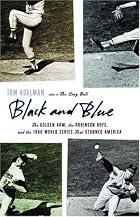
A good baseball history about the 1966 baseball season and the surprising World Series between the Baltimore Orioles and the Los Angeles Dodgers. Adelman does a good job of setting the cultural context of the 1966 baseball season, without going overboard or being too heavy handed. Those factors include the beginning of the counter-culture, the heating up of the anti-Vietnam War movement and, most importantly for the book, the fact that Baltimore was still a fully segregated city (but with a truly progressive mayor doing his best to change conditions).
There is a fair bit toward the beginning that will be old news for devoted baseball fans, such as the history of the Dodgers' move to LA, but I can of course understand Adelman's need to review such events before proceeding. Adelman does a nice job of moving the focus around and giving profiles of several of the most important/interesting players on both teams. He also avoids the worst pitfall of baseball books that chronicle a single season, which is to rely too heavily (and lazily) on simply giving a blow by blow account of game results instead of providing insights about events.
I learned a good bit about Frank Robinson, about Sandy Koufax (because while I have Jane Leavy's bio of Koufax on my baseball shelf, I haven't read it, yet) and in particular about how the stress of the close NL pennant race really ground the Dodgers down that year (the Orioles had things locked up early and were fresher in October). There's quite a bit more, as well, but I don't want to ruin the fun of reading this book. The account of the World Series itself is excellent.
So, a good (not great) baseball book, but of interest to baseball fans, only.
A good baseball history about the 1966 baseball season and the surprising World Series between the Baltimore Orioles and the Los Angeles Dodgers. Adelman does a good job of setting the cultural context of the 1966 baseball season, without going overboard or being too heavy handed. Those factors include the beginning of the counter-culture, the heating up of the anti-Vietnam War movement and, most importantly for the book, the fact that Baltimore was still a fully segregated city (but with a truly progressive mayor doing his best to change conditions).
There is a fair bit toward the beginning that will be old news for devoted baseball fans, such as the history of the Dodgers' move to LA, but I can of course understand Adelman's need to review such events before proceeding. Adelman does a nice job of moving the focus around and giving profiles of several of the most important/interesting players on both teams. He also avoids the worst pitfall of baseball books that chronicle a single season, which is to rely too heavily (and lazily) on simply giving a blow by blow account of game results instead of providing insights about events.
I learned a good bit about Frank Robinson, about Sandy Koufax (because while I have Jane Leavy's bio of Koufax on my baseball shelf, I haven't read it, yet) and in particular about how the stress of the close NL pennant race really ground the Dodgers down that year (the Orioles had things locked up early and were fresher in October). There's quite a bit more, as well, but I don't want to ruin the fun of reading this book. The account of the World Series itself is excellent.
So, a good (not great) baseball book, but of interest to baseball fans, only.
46missizicks
#41> Added this to my wish list. I studied Depression-era American Economic History as one of my university modules and found the construction of the Hoover dam as a publicly funded work fascinating. This book sounds great from your description.
47missizicks
#44> I like Julian Barnes and this is one of my favourites by him - I hadn't read Mme. B when I read this, but did so straight after. You might already have explored Barnes' other works, but others I recommend are Staring At The Sun and Talking It Over.
48rocketjk
#46 & 47> I think you'll very much enjoy Colossus. It's long but very well done.
As to Barnes, Flaubert's Parrot is the only novel I've read. I've also read an essay collection, Something to Declare: Essays on France and French Culture. That volume was a bit disappointing. The essays were well written and more or less enjoyable, but after the first one or two, they were all actually essays about Flaubert. So I thought the title was a misrepresentation. I recently purchased a collection of Barnes' short stories, called Pulse, which I will get to one of these days.
As to Barnes, Flaubert's Parrot is the only novel I've read. I've also read an essay collection, Something to Declare: Essays on France and French Culture. That volume was a bit disappointing. The essays were well written and more or less enjoyable, but after the first one or two, they were all actually essays about Flaubert. So I thought the title was a misrepresentation. I recently purchased a collection of Barnes' short stories, called Pulse, which I will get to one of these days.
49rocketjk
Got back from vacation a couple of days ago, and I am behind here, to put it mildly. The vacation was wonderful, as we were a week in Switzerland (Lausanne and Bellinzona, mostly) and a week in Turin, Italy. I've got three or so books to report. With luck I'll get to one a day for the next few days.
50rocketjk
Book 16: A Shade of Difference by Alan Drury

This is Drury's 1966 follow-up to his Pulitzer Prize winning novel, Advise and Consent. The first was an in-depth look at the workings of the Senate and the presidency. Drury's right-wing politics poked through a little, but mostly he concentrated on the story line and characters, and the book was (and I think still is) well worth reading. But in this sequel, which follows many of the same characters as the first, Drury's political views get full play, to the detriment of the book. I don't say this just because I disagree with those politics, but because Drury's outlook is so weighted. Basically, all liberals are wrong-headed; they are gullible, deluded and/or phonies.
The action moves mostly from Washington down to New York City, to take us inside the workings of the U.N. and a cynical attack on American prestige and cultural values is underway. Oh, and by the way, anybody who, in 1966, was impatient about the rate of improvement of civil rights for blacks was just unrealistic and probably anti-American. The NAACP, for example, is recast in the book as DEFY.
The storytelling was still decent, but barely allowed to breathe for the heavy-handed political message. Drury wrote six books in this series all told. After reading Advise and Consent, I'd intended to read the whole bunch, but my mind's been changed about that, boy howdy.

This is Drury's 1966 follow-up to his Pulitzer Prize winning novel, Advise and Consent. The first was an in-depth look at the workings of the Senate and the presidency. Drury's right-wing politics poked through a little, but mostly he concentrated on the story line and characters, and the book was (and I think still is) well worth reading. But in this sequel, which follows many of the same characters as the first, Drury's political views get full play, to the detriment of the book. I don't say this just because I disagree with those politics, but because Drury's outlook is so weighted. Basically, all liberals are wrong-headed; they are gullible, deluded and/or phonies.
The action moves mostly from Washington down to New York City, to take us inside the workings of the U.N. and a cynical attack on American prestige and cultural values is underway. Oh, and by the way, anybody who, in 1966, was impatient about the rate of improvement of civil rights for blacks was just unrealistic and probably anti-American. The NAACP, for example, is recast in the book as DEFY.
The storytelling was still decent, but barely allowed to breathe for the heavy-handed political message. Drury wrote six books in this series all told. After reading Advise and Consent, I'd intended to read the whole bunch, but my mind's been changed about that, boy howdy.
51rocketjk
Book 17: Hong Kong, China by Ralph Arnote
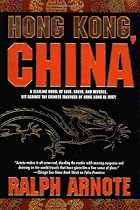
This book was written during the years before the scheduled takeover of Hong Kong by the People's Republic of China and is based upon the uneasiness and uncertainty within the colony, and especially within the colony's business community, about that looming event. So, an interesting premise. Unfortunately, this supposed thriller has barely any suspense, and features two-dimensional characters (everybody is rich and beautiful) and awful, wooden dialog. Sometimes I like to pick up old thrillers for a trip back in time. This is one to miss, with extreme prejudice.
This book was written during the years before the scheduled takeover of Hong Kong by the People's Republic of China and is based upon the uneasiness and uncertainty within the colony, and especially within the colony's business community, about that looming event. So, an interesting premise. Unfortunately, this supposed thriller has barely any suspense, and features two-dimensional characters (everybody is rich and beautiful) and awful, wooden dialog. Sometimes I like to pick up old thrillers for a trip back in time. This is one to miss, with extreme prejudice.
52rocketjk
Book 18: The Prophet of Tenth Street by Tsipi Keller
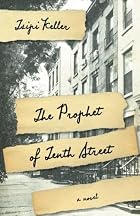
This is a nicely written novel of ideas. Marcus Weiss is a man in love with books and the ideas to be found within them. Now in middle age, in his (at least) second career and (definitely) second marriage. He is working on both a novel and a dictionary of, as he calls it, “The Human Gesture in Western Literature.” Weiss identifies strongly with the characters in his book, but also cares deeply about his wife and his sometimes tempestuous marriage, and with his small circle of friends. There's not much plot here. Mostly the book is a reverie about the writing life, and about the power of ideas, and of friendship, to inspire. It's also, on the side, as it were, a love letter to New York City. Eventually, I have to say, the writing and the ideas presented became repetitive for me, and I can't really say there's much new ground broken. Nevertheless, if this sort of narrative is your cup of tea, I would consider Prophet a novel worth exploring.
This is a nicely written novel of ideas. Marcus Weiss is a man in love with books and the ideas to be found within them. Now in middle age, in his (at least) second career and (definitely) second marriage. He is working on both a novel and a dictionary of, as he calls it, “The Human Gesture in Western Literature.” Weiss identifies strongly with the characters in his book, but also cares deeply about his wife and his sometimes tempestuous marriage, and with his small circle of friends. There's not much plot here. Mostly the book is a reverie about the writing life, and about the power of ideas, and of friendship, to inspire. It's also, on the side, as it were, a love letter to New York City. Eventually, I have to say, the writing and the ideas presented became repetitive for me, and I can't really say there's much new ground broken. Nevertheless, if this sort of narrative is your cup of tea, I would consider Prophet a novel worth exploring.
53rocketjk
Book 19: Malone Dies by Samuel Beckett
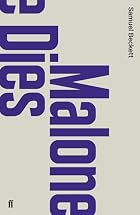
This is the second in what is commonly known as Beckett's post-World War 2 "trilogy." I put "trilogy" in quotation marks because, although Malone Dies is commonly (in English) published together with Molloy and The Unnamable, Peter Boxoll, in his introduction to the edition I read, tells us the following:
{Beckett} felt strongly that Malone Dies was one of a kind. In correspondence with both his American and British publishers, Barney Rosset and John Calder respectively, Beckett was adamant that the self-sufficiency of Malone Dies be preserved. He wrote to Calder on 6 January 1958, in response to Calder's request to describe the novels as a trilogy on the title page, "Not 'Trilogy,' I beseech you, just the three titles and nothing else," and to Barney Rosset in May 1969 that he "couldn't bear the thought of 'trilogy.'"
In addition, Boxoll notes that the three novels have not been published in a single volume together in French, which is significant because all three novels were originally written in French and translated, by Beckett himself, into English later on.
At any rate, Beckett, in this novel, presents us with the rambling testimony of a man lying alone in a bed in a closed room waiting to die. He resolves to tell himself stories to pass his final days, or weeks, or months (he knows not, other than that he's sure he's dying). So he in turn invents stories and also presents innumerable details about his minute-by-minute existence in his bed. The narrative is in turn humorous and tedious, as the conversation of a man in Malone's position would quite likely be. But Beckett, I don't think, was really trying to create a realistic character. Instead, this is a somewhat surrealistic investigation of the nature of memory and life. And at the same time, and exploration of new ways of (mostly plotless) storytelling. I think there were many such endeavors going on in the 50s, as many writers began looking for new ways to describe the often alienating post-war Western experience.
So there are times (the tedium) when the writing is hard to get through, and the form--pages and pages of text without paragraph breaks--adds to that. On the other hand, there is frequent, sly humor. All in all, I found Malone Dies to be a rewarding experience. Here is an example of the sort of passage I enjoyed immensely:
. . . . Which does not exclude a third hypothesis, namely that Moll, having finally decided that she had been mistaken in Macmann and that he was not the man she had taken him for, sought a means of putting an end to their intercourse, but gently, in order not to give him a shock. Unfortunately our concern here is not with Moll, who after all is only a female, but with Macmann, and not with the close of their relations, but rather with the beginning. Of the brief period of plentitude between these two extremes, when between the warming up of the one party and the cooling down of the other there was established a fleeting equality of temperature, no further mention will be made. For if it is indispensable to have in order not to have had and in order to have no longer, there is no obligation to expatiate upon it.
This is the second in what is commonly known as Beckett's post-World War 2 "trilogy." I put "trilogy" in quotation marks because, although Malone Dies is commonly (in English) published together with Molloy and The Unnamable, Peter Boxoll, in his introduction to the edition I read, tells us the following:
{Beckett} felt strongly that Malone Dies was one of a kind. In correspondence with both his American and British publishers, Barney Rosset and John Calder respectively, Beckett was adamant that the self-sufficiency of Malone Dies be preserved. He wrote to Calder on 6 January 1958, in response to Calder's request to describe the novels as a trilogy on the title page, "Not 'Trilogy,' I beseech you, just the three titles and nothing else," and to Barney Rosset in May 1969 that he "couldn't bear the thought of 'trilogy.'"
In addition, Boxoll notes that the three novels have not been published in a single volume together in French, which is significant because all three novels were originally written in French and translated, by Beckett himself, into English later on.
At any rate, Beckett, in this novel, presents us with the rambling testimony of a man lying alone in a bed in a closed room waiting to die. He resolves to tell himself stories to pass his final days, or weeks, or months (he knows not, other than that he's sure he's dying). So he in turn invents stories and also presents innumerable details about his minute-by-minute existence in his bed. The narrative is in turn humorous and tedious, as the conversation of a man in Malone's position would quite likely be. But Beckett, I don't think, was really trying to create a realistic character. Instead, this is a somewhat surrealistic investigation of the nature of memory and life. And at the same time, and exploration of new ways of (mostly plotless) storytelling. I think there were many such endeavors going on in the 50s, as many writers began looking for new ways to describe the often alienating post-war Western experience.
So there are times (the tedium) when the writing is hard to get through, and the form--pages and pages of text without paragraph breaks--adds to that. On the other hand, there is frequent, sly humor. All in all, I found Malone Dies to be a rewarding experience. Here is an example of the sort of passage I enjoyed immensely:
. . . . Which does not exclude a third hypothesis, namely that Moll, having finally decided that she had been mistaken in Macmann and that he was not the man she had taken him for, sought a means of putting an end to their intercourse, but gently, in order not to give him a shock. Unfortunately our concern here is not with Moll, who after all is only a female, but with Macmann, and not with the close of their relations, but rather with the beginning. Of the brief period of plentitude between these two extremes, when between the warming up of the one party and the cooling down of the other there was established a fleeting equality of temperature, no further mention will be made. For if it is indispensable to have in order not to have had and in order to have no longer, there is no obligation to expatiate upon it.
54rocketjk
Book 20: Museo Nazionale del Risorgimento Italiano di Torino - Pocket Guide

My wife and I went on vacation in July. The first week we were in Switzlerland, primarily, although not only, in Bellinzona, in the Italian-speaking east. The second week we were in Turin, Italy. In Turin is the fascinating National Museum of the Italian Risorgimento. "Risorgimento" refers to the 200-year efforts to combine the many nation-states/kingdoms of the Italian peninsula into a single, modern country. The present volume is the guidebook to that museum, which recounts to story in brief and I reread upon returning home. I had never learned about these events, and I'm looking forward to finding and reading a more in-depth book about this history. I could look it up online, certainly, but for some reason I'm determined to find a book, instead.

My wife and I went on vacation in July. The first week we were in Switzlerland, primarily, although not only, in Bellinzona, in the Italian-speaking east. The second week we were in Turin, Italy. In Turin is the fascinating National Museum of the Italian Risorgimento. "Risorgimento" refers to the 200-year efforts to combine the many nation-states/kingdoms of the Italian peninsula into a single, modern country. The present volume is the guidebook to that museum, which recounts to story in brief and I reread upon returning home. I had never learned about these events, and I'm looking forward to finding and reading a more in-depth book about this history. I could look it up online, certainly, but for some reason I'm determined to find a book, instead.
55rocketjk
Book 21: The Ides of May: the Defeat of France, May-June, 1940 by John Williams

This is an excellent history, well written and extremely well researched. That it is extremely frustrating to read says nothing about the author and everything about the subject matter. For this book is about the utter failure of the French nation and French army to prepare for war against Germany in the 1930s/1940s, and the failures and miscalculations that allowed the German armed forces to roll over the French in only two month's time.
Williams' research, in particular his extensive use of the diaries of the French leaders, allowed him to recreate conversations and take the reader inside conferences as the situation becomes more desperate and the participants more frantic.
A particularly fascinating section is Williams' description of the first two days of the German occupation of Paris, following the French leaders' agonizing yet clearly sound decision not to defend the city.
As Williams put it succinctly in his foreword:
"This is the history of the defeat of the French Army in the battles of May and June 1940. It is a story of unrelieved catastrophe in which the whole fabric of France was involved . . . When the cease fire took effect on June 25, the French Army had been in action for forty-six days--but it was already beaten by the middle of May. . . . {I}t was clear that the primary blame for what was, after all, a military defeat lay squarely with the French General Staff and High Command. The generals and the operations planners went to war in 1939 still thinking largely in terms of 1914-1918. Staking their faith on the old doctrine of the defensive, they continued to see warfare as static. They rejected the new theories of mobile war based on the concentrated use of tanks and aircraft and, instead, perpetuated the trench mentality of World War I. . . . Thus when the massed German panzers and dive bombers struck westward on May 12, the French were at the mercy of a fast-moving armored onslaught that proved irresistible. . . . The fall of France in June 1940 was a tragedy of lost military opportunities: lost during the eight months' lull in the West when the French army chiefs might still have revised their strategic and operational planning to counter the coming mechanized attack; and earlier, during the whole two decades from 1919 when they persistently refused to read the signs and continued to envisage and prepare for a type of war that was obsolete.
The book is, basically, a 375-page explication of this premise. It's therefore a difficult reading experience a lot of the time, but it is a fascinating one nevertheless.
I would have liked to read some "falling action," as the book stops immediately upon the signing of the armistice between France and Germany. Some information about the actions of Vichy France and the French armed forces that remained in the French colonial territories at that time, among other topics, would have been helpful to put the events of the book in better context.

This is an excellent history, well written and extremely well researched. That it is extremely frustrating to read says nothing about the author and everything about the subject matter. For this book is about the utter failure of the French nation and French army to prepare for war against Germany in the 1930s/1940s, and the failures and miscalculations that allowed the German armed forces to roll over the French in only two month's time.
Williams' research, in particular his extensive use of the diaries of the French leaders, allowed him to recreate conversations and take the reader inside conferences as the situation becomes more desperate and the participants more frantic.
A particularly fascinating section is Williams' description of the first two days of the German occupation of Paris, following the French leaders' agonizing yet clearly sound decision not to defend the city.
As Williams put it succinctly in his foreword:
"This is the history of the defeat of the French Army in the battles of May and June 1940. It is a story of unrelieved catastrophe in which the whole fabric of France was involved . . . When the cease fire took effect on June 25, the French Army had been in action for forty-six days--but it was already beaten by the middle of May. . . . {I}t was clear that the primary blame for what was, after all, a military defeat lay squarely with the French General Staff and High Command. The generals and the operations planners went to war in 1939 still thinking largely in terms of 1914-1918. Staking their faith on the old doctrine of the defensive, they continued to see warfare as static. They rejected the new theories of mobile war based on the concentrated use of tanks and aircraft and, instead, perpetuated the trench mentality of World War I. . . . Thus when the massed German panzers and dive bombers struck westward on May 12, the French were at the mercy of a fast-moving armored onslaught that proved irresistible. . . . The fall of France in June 1940 was a tragedy of lost military opportunities: lost during the eight months' lull in the West when the French army chiefs might still have revised their strategic and operational planning to counter the coming mechanized attack; and earlier, during the whole two decades from 1919 when they persistently refused to read the signs and continued to envisage and prepare for a type of war that was obsolete.
The book is, basically, a 375-page explication of this premise. It's therefore a difficult reading experience a lot of the time, but it is a fascinating one nevertheless.
I would have liked to read some "falling action," as the book stops immediately upon the signing of the armistice between France and Germany. Some information about the actions of Vichy France and the French armed forces that remained in the French colonial territories at that time, among other topics, would have been helpful to put the events of the book in better context.
56RBeffa
>55 rocketjk: nice. I've gotten interested in this period of history myself and want to explore it more in the future.
57rocketjk
#56> I think you'll find this book well worthwhile, although it is very specific in its scope.
58rocketjk
Book 22: The Castles of Bellinzona by Werner Meyer and Patricia Cavadini-Bielander

During the first week of our recent vacation (see post 54), my wife and I were in Switzerland. For most of our time in that country we stayed in beautiful Bellinzona, a small city/large town in the Canton of Ticino in the Italian-speaking eastern part of the country. Bellinzona is located at the confluence of three important Alpine passes from the north and west. Throughout the Middle Ages in particular, that made Bellinzona a very important spot indeed, as it was the spot that the Milanese dukes and other Italian forces built fortress castles to keep out invading armies from Germany and Austria, and later from the original Swiss cantons. (It wasn't until quite a bit later that Ticino joined up with Switzerland.) At any rate, the town's three beautiful castles were restored very well, using the considerable amount of original walls and towers that still stood, in the early to middle part of the 20th century. They are a lot of fun to wander around, and now also house a couple of very nice exhibitions of ancient art and local archeological finds. The book I'm posting here is the guidebook to those castles. The volume also includes a brief but very clear history of the region, and walking tour of the town itself that my wife and I enjoyed.

During the first week of our recent vacation (see post 54), my wife and I were in Switzerland. For most of our time in that country we stayed in beautiful Bellinzona, a small city/large town in the Canton of Ticino in the Italian-speaking eastern part of the country. Bellinzona is located at the confluence of three important Alpine passes from the north and west. Throughout the Middle Ages in particular, that made Bellinzona a very important spot indeed, as it was the spot that the Milanese dukes and other Italian forces built fortress castles to keep out invading armies from Germany and Austria, and later from the original Swiss cantons. (It wasn't until quite a bit later that Ticino joined up with Switzerland.) At any rate, the town's three beautiful castles were restored very well, using the considerable amount of original walls and towers that still stood, in the early to middle part of the 20th century. They are a lot of fun to wander around, and now also house a couple of very nice exhibitions of ancient art and local archeological finds. The book I'm posting here is the guidebook to those castles. The volume also includes a brief but very clear history of the region, and walking tour of the town itself that my wife and I enjoyed.
59Ameise1
I hope you did enjoy your holiday in Switzerland. Indeed, Bellinzona and its castles is beautiful also the whole Ticino.
60PaperbackPirate
Sounds like a memorable trip!
61rocketjk
#59 & 60> Yes, it was wonderful. We were visiting a very good friend of mine in Bellinzona. Her business is leading hiking trips in the Alps. So, on her days off while we were there, she led us on hiking trips in the Alps! Quite glorious. And Turino is a relatively small, manageable city that is nevertheless stunning.
62rocketjk
Book 23: Murder at the Laurels by Lesley Cookman

This is the second installment in Cookman's "Libby Sarjeant" series. The action takes place in the small, fictional village of Steeple Martin in Kent. Libby is a retired stage actress who has already solved one murder in this town. Her pal, Fran, has psychic "moments" that have helped her land work with real estates agencies interested in the histories of the houses they're selling. You get the idea. When Fran's aunt by marriage is done in at a nursing home in town called The Laurels, Libby and Fran swing into action. It's kind of a fun series, though not great. Maybe B-minus. Anyway, I guess I'll read a few more of them after a while.

This is the second installment in Cookman's "Libby Sarjeant" series. The action takes place in the small, fictional village of Steeple Martin in Kent. Libby is a retired stage actress who has already solved one murder in this town. Her pal, Fran, has psychic "moments" that have helped her land work with real estates agencies interested in the histories of the houses they're selling. You get the idea. When Fran's aunt by marriage is done in at a nursing home in town called The Laurels, Libby and Fran swing into action. It's kind of a fun series, though not great. Maybe B-minus. Anyway, I guess I'll read a few more of them after a while.
63rocketjk
Book 24: Bill Haley by John Swenson

This is a relatively short but very informative biography of one of the first, or quite possibly the first, rock and roll star, the man who had a huge hit in 1955 with the song "Rock Around the Clock," but was already an established star by then. This book was published only a year after Haley died, so Swenson obviously had some quick work to do, but he did it very well; there are quotes from many interviews of Haley's musicians and the people who worked with him in the music/recording business. Perhaps Swenson was already at work on the bio when Haley died of an inoperable brain tumor and the effects of years of alcohol abuse.
At any rate, this is a good book, and I learned a lot about how influential Haley was. I had always known Haley as the man who sang "Rock Around the Clock," but had thought of him as mostly a one-hit wonder. The degree to which Haley really did help launch rock music, and the degree to which he remained a huge star in Europe in particular right up to the day he died, came as a surprise to me. So this was a very interesting book. It well and crisply written, too. The second half is kind of rough stuff, as Haley had the usual problems of the good-hearted (according to most but not all of the witnesses, here) with a far less business sense then he thought he had and a cadre of associates equally out of their league. Haley's downward spiral is informative but not that much fun to read about. Swenson does a great job of showing us the musicians who formed the nucleus of Haley's band, the Comets. For the most part, they were excellent musicians, and the Comets were, by this account, a tight and dynamic rock band that performed very well on-stage.
Swenson doesn't dwell on details too much. The book comes in at only 164 pages. I kind of liked that. There's not much dwelling on Haley's childhood, for example. That's fine, for me, as the need to slog through bio subjects' childhoods often makes it hard for me to decide to read biographies in the first place. I don't feel I missed much in this case, though, as there didn't seem to be much childhood trauma to relate. Haley came from working-class parents who loved music themselves and supported his desire to be a professional musician. But the flavor of the early days of rock and roll and the mania it created comes through quite well. Interestingly, although Haley and Elvis Presley were friends, Haley saw himself as sort of the anti-Presley professionally, as he always made sure to keep his stage gestures and, for the most part, his lyrics free of sexual innuendo.
A note that my copy is a British edition. Evidently, the book was published in the U.S. with the title Bill Haley: the Daddy of Rock and Roll.

This is a relatively short but very informative biography of one of the first, or quite possibly the first, rock and roll star, the man who had a huge hit in 1955 with the song "Rock Around the Clock," but was already an established star by then. This book was published only a year after Haley died, so Swenson obviously had some quick work to do, but he did it very well; there are quotes from many interviews of Haley's musicians and the people who worked with him in the music/recording business. Perhaps Swenson was already at work on the bio when Haley died of an inoperable brain tumor and the effects of years of alcohol abuse.
At any rate, this is a good book, and I learned a lot about how influential Haley was. I had always known Haley as the man who sang "Rock Around the Clock," but had thought of him as mostly a one-hit wonder. The degree to which Haley really did help launch rock music, and the degree to which he remained a huge star in Europe in particular right up to the day he died, came as a surprise to me. So this was a very interesting book. It well and crisply written, too. The second half is kind of rough stuff, as Haley had the usual problems of the good-hearted (according to most but not all of the witnesses, here) with a far less business sense then he thought he had and a cadre of associates equally out of their league. Haley's downward spiral is informative but not that much fun to read about. Swenson does a great job of showing us the musicians who formed the nucleus of Haley's band, the Comets. For the most part, they were excellent musicians, and the Comets were, by this account, a tight and dynamic rock band that performed very well on-stage.
Swenson doesn't dwell on details too much. The book comes in at only 164 pages. I kind of liked that. There's not much dwelling on Haley's childhood, for example. That's fine, for me, as the need to slog through bio subjects' childhoods often makes it hard for me to decide to read biographies in the first place. I don't feel I missed much in this case, though, as there didn't seem to be much childhood trauma to relate. Haley came from working-class parents who loved music themselves and supported his desire to be a professional musician. But the flavor of the early days of rock and roll and the mania it created comes through quite well. Interestingly, although Haley and Elvis Presley were friends, Haley saw himself as sort of the anti-Presley professionally, as he always made sure to keep his stage gestures and, for the most part, his lyrics free of sexual innuendo.
A note that my copy is a British edition. Evidently, the book was published in the U.S. with the title Bill Haley: the Daddy of Rock and Roll.
64rocketjk
Book 25: Life Class by Pat Barker

This was my first Pat Barker novel. I liked it well enough to read more of her works, but not quite well enough to plan on reading Toby's Room, the sequel to this book. The first half of the book is more or less a romance/character study, following the lives and artistic endeavors and romantic concerns of Elinor and Paul, a pair of art students in pre-World War I London. It is well done, with the characters interesting, realistic and of some rewarding depth. The story really picks up in the second half, though, when Paul is off to the front as a volunteer hospital worker/ambulance driver in Belgium (his poor health having kept him out of the English Army). The descriptions of conditions there, and life under artillery bombardment, are harrowing. But Barker's real concern is the effect the war has on human relationships, and the importance of art, and the passion for it, in troubled times.
Barker is an excellent storyteller, with a keen eye for character and a deft hand at avoiding the obvious plot development just when one seems to be looming in the foreground. So, all in all, four stars.

This was my first Pat Barker novel. I liked it well enough to read more of her works, but not quite well enough to plan on reading Toby's Room, the sequel to this book. The first half of the book is more or less a romance/character study, following the lives and artistic endeavors and romantic concerns of Elinor and Paul, a pair of art students in pre-World War I London. It is well done, with the characters interesting, realistic and of some rewarding depth. The story really picks up in the second half, though, when Paul is off to the front as a volunteer hospital worker/ambulance driver in Belgium (his poor health having kept him out of the English Army). The descriptions of conditions there, and life under artillery bombardment, are harrowing. But Barker's real concern is the effect the war has on human relationships, and the importance of art, and the passion for it, in troubled times.
Barker is an excellent storyteller, with a keen eye for character and a deft hand at avoiding the obvious plot development just when one seems to be looming in the foreground. So, all in all, four stars.
65rocketjk
Book 26: The Devil by Alfred Neumann

From Wikipedia: Alfred Neumann (15 October 1895, Lautenburg, Germany (Poland) – 3 October 1952, Lugano, Switzerland) was a German writer of novels, stories, poems, plays, and films, as well as a translator into German. He was a recipient of the Kleist Prize in 1926 and his writings were banned during the Third Reich.
The Devil, translated into English and published in the U.S. in 1928, is an historical novel that takes us into the court of Louis XI of France in the 15th century. The title character is Oliver Necker, based on the historical figure Olivier le Dain, a.k.a. the Barber of Ghent, a.k.a. Oliver the Devil. The first half of the book is the more interesting, as Oliver's character progresses from a malevolent, manipulative child to a ruthless, behind-the-scenes, operative in Ghent. Eventually, he makes his way to the king, for whom he becomes an ever more important advisor.
The political machinations, often cruel and unprincipled, that the two map out in order to increase the power of the king at the expense of the French nobles, are at first interesting. But during the second half of the book, they begin to become repetitive and even a bit tedious.
As contemporary reviewers pointed, out, Neumann's narrative interests really did not lie in 15th-century France, as we get very little flavor of what life was like during that time, other than the political conditions. Neumann was interested in the motivations of power, the depths of cruelty that the powerful would go to in order to build and retain that power, and the effects such goings on would have on the personalities involved. Another important theme is the way in which two interlocking personalities may almost seem to fuse into one There are occasional long passages where one or the other of the two main characters, especially the title character, ponder such themes. In other words, it's sort of Shakespeare meets Henry James.
So, as noted, I found the book to be interesting and lively throughout the first half, and less so, almost, eventually, a bit of a slog, in the second half.

From Wikipedia: Alfred Neumann (15 October 1895, Lautenburg, Germany (Poland) – 3 October 1952, Lugano, Switzerland) was a German writer of novels, stories, poems, plays, and films, as well as a translator into German. He was a recipient of the Kleist Prize in 1926 and his writings were banned during the Third Reich.
The Devil, translated into English and published in the U.S. in 1928, is an historical novel that takes us into the court of Louis XI of France in the 15th century. The title character is Oliver Necker, based on the historical figure Olivier le Dain, a.k.a. the Barber of Ghent, a.k.a. Oliver the Devil. The first half of the book is the more interesting, as Oliver's character progresses from a malevolent, manipulative child to a ruthless, behind-the-scenes, operative in Ghent. Eventually, he makes his way to the king, for whom he becomes an ever more important advisor.
The political machinations, often cruel and unprincipled, that the two map out in order to increase the power of the king at the expense of the French nobles, are at first interesting. But during the second half of the book, they begin to become repetitive and even a bit tedious.
As contemporary reviewers pointed, out, Neumann's narrative interests really did not lie in 15th-century France, as we get very little flavor of what life was like during that time, other than the political conditions. Neumann was interested in the motivations of power, the depths of cruelty that the powerful would go to in order to build and retain that power, and the effects such goings on would have on the personalities involved. Another important theme is the way in which two interlocking personalities may almost seem to fuse into one There are occasional long passages where one or the other of the two main characters, especially the title character, ponder such themes. In other words, it's sort of Shakespeare meets Henry James.
So, as noted, I found the book to be interesting and lively throughout the first half, and less so, almost, eventually, a bit of a slog, in the second half.
66rocketjk
Book 27: The Best Short Stories of 1931 edited by Edward J. O'Brien

Read as a "between book" (see first post).
This is a fascinating collection of short stories, in that it includes several iconic short stories that had appeared for the first time in 1931, and were therefore being anthologized for the first time.
The most famous stories included are "That Evening Sun Go Down" by Faulkner, "Babylon Revisited" by Fitzgerald, "Here We Are" by Dorothy Parker, "Rest Cure" by Kay Boyle and "Only We Are Barren" by Alvah Bessie. Other well known authors include Louis Bromfield, Erskine Caldwell, William March and Don Marquis. (I have to admit that I skipped "Babylon Revisited." I just couldn't face it one more time.)
There were also many excellent stories by writers I'd never heard of. "Fiddlers of Moon Mountain" by Emmett Gowen and "White Man's Town" by Lowry Charles Wimberly are two that stand out.
Also quite interesting was editor Edward O'Brien's introduction, which included his summary of the current (in 1931) state of the short story form:
"John Chamberlain, in the course of a stimulating and acute article in The New Republic entitled "The Short Story Muddles On," . . . . pointed out with considerable justice that many of the writers whose work I printed last year appeared to have evolved a behavioristic system because they had been influenced not quite logically by Ernest Hemingway. . . .
Behaviorism as a substitute for a philosophy of life is certainly rife in America. It is in the air which every American short story writer is compelled to breathe. It does not enter, however, into Ernest Hemingway's philosophy of life, and the writers who have been most influenced by him have largely nullified any beneficent influence which Mr. Hemingway might have had upon their work by imposing behaviorism upon his vision of life. . . . Despite behaviorism, I am nevertheless compelled to affirm once more that the period of literary integration has begun. This integration is neither specially philosophical nor specially psychological, and it certainly has nothing to do one way or the other with ethics. The integration of which I am speaking is characterized by a general sense of wholeness. A story tends to start clean, to discard irrelevancies, to see lucidly, to allow no falsities, to rub in no morals, to discover and reveal life The old pretentiousness is gone. The false sentiment is gone. The "hard-boiled" mask is gone. . . .
The short story is just beginning to justify itself as a separate form. The old conception of an artificial plot imposed too much strain on the form, and turned the short story into something very much like a potted novel. In the new short story, plot is a servant and not a master, as a machine should be. Needless to say, in the transition towards the new short story, we have had to put up with a great deal of sprawling and formlessness . . . . "

Read as a "between book" (see first post).
This is a fascinating collection of short stories, in that it includes several iconic short stories that had appeared for the first time in 1931, and were therefore being anthologized for the first time.
The most famous stories included are "That Evening Sun Go Down" by Faulkner, "Babylon Revisited" by Fitzgerald, "Here We Are" by Dorothy Parker, "Rest Cure" by Kay Boyle and "Only We Are Barren" by Alvah Bessie. Other well known authors include Louis Bromfield, Erskine Caldwell, William March and Don Marquis. (I have to admit that I skipped "Babylon Revisited." I just couldn't face it one more time.)
There were also many excellent stories by writers I'd never heard of. "Fiddlers of Moon Mountain" by Emmett Gowen and "White Man's Town" by Lowry Charles Wimberly are two that stand out.
Also quite interesting was editor Edward O'Brien's introduction, which included his summary of the current (in 1931) state of the short story form:
"John Chamberlain, in the course of a stimulating and acute article in The New Republic entitled "The Short Story Muddles On," . . . . pointed out with considerable justice that many of the writers whose work I printed last year appeared to have evolved a behavioristic system because they had been influenced not quite logically by Ernest Hemingway. . . .
Behaviorism as a substitute for a philosophy of life is certainly rife in America. It is in the air which every American short story writer is compelled to breathe. It does not enter, however, into Ernest Hemingway's philosophy of life, and the writers who have been most influenced by him have largely nullified any beneficent influence which Mr. Hemingway might have had upon their work by imposing behaviorism upon his vision of life. . . . Despite behaviorism, I am nevertheless compelled to affirm once more that the period of literary integration has begun. This integration is neither specially philosophical nor specially psychological, and it certainly has nothing to do one way or the other with ethics. The integration of which I am speaking is characterized by a general sense of wholeness. A story tends to start clean, to discard irrelevancies, to see lucidly, to allow no falsities, to rub in no morals, to discover and reveal life The old pretentiousness is gone. The false sentiment is gone. The "hard-boiled" mask is gone. . . .
The short story is just beginning to justify itself as a separate form. The old conception of an artificial plot imposed too much strain on the form, and turned the short story into something very much like a potted novel. In the new short story, plot is a servant and not a master, as a machine should be. Needless to say, in the transition towards the new short story, we have had to put up with a great deal of sprawling and formlessness . . . . "
67rocketjk
Book 28: Ramblings by J. Robert Mathias

Read as a "between book" (see first post).
Bob Mathias lived much of his life in Boonville, CA, in Mendocino County, where my wife and I have lived since 2008. He was an educator and later a real estate agent. I only got to meet him once before he passed away, but in fact his daughter helped us by our house here. At any rate, Bob self-published this charming collection of short essays about his and his wife's extensive travels. They spent a lot of time roaming around the world, and they were very adventurous indeed. His recollections of their journeys in South America, Europe, Africa and Hawaii are really very interesting. They're all bite-sized, three or four pages each, but Bob had an eye for scenery, and because he genuinely liked people, he got to meet a lot of interesting folks. This was fun, and it helped me get to know him, albeit posthumously.

Read as a "between book" (see first post).
Bob Mathias lived much of his life in Boonville, CA, in Mendocino County, where my wife and I have lived since 2008. He was an educator and later a real estate agent. I only got to meet him once before he passed away, but in fact his daughter helped us by our house here. At any rate, Bob self-published this charming collection of short essays about his and his wife's extensive travels. They spent a lot of time roaming around the world, and they were very adventurous indeed. His recollections of their journeys in South America, Europe, Africa and Hawaii are really very interesting. They're all bite-sized, three or four pages each, but Bob had an eye for scenery, and because he genuinely liked people, he got to meet a lot of interesting folks. This was fun, and it helped me get to know him, albeit posthumously.
68rocketjk
Book 29: Murder in Midwinter by Lesley Cookman
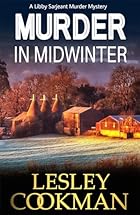
This is the third in Cookman's cosy mystery series about Libby Sarjeant and her psychic friend Fran Castle and their adventures solving murders in a rural Kentish village. They are kind of calming and enjoyable, but nothing I'd go out of my way to recommend. Yet I keep reading them. A dead body is found in an abandoned theater by the sea. Genial chaos ensues.
This is the third in Cookman's cosy mystery series about Libby Sarjeant and her psychic friend Fran Castle and their adventures solving murders in a rural Kentish village. They are kind of calming and enjoyable, but nothing I'd go out of my way to recommend. Yet I keep reading them. A dead body is found in an abandoned theater by the sea. Genial chaos ensues.
69rocketjk
Book 30: Desert Solitaire: A Season in the Wilderness by Edward Abbey
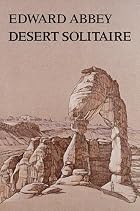
Read as a "between book" (see first post).
This well-known book is a memoir in the form of a series of essays about one year out of several that Abbey spent as a ranger at Arches National Park in Utah. Originally published in 1968, the edition I read was slightly re-edited by Abbey and republished in 1988. (Abbey had passed away in 1987.) I can see why this book is so well liked, even revered, by naturalists. Abbey's descriptions of the physical splendor and the many beautiful natural details of the park and its ecology are delightful and gripping. He retelling of some of the adventurous hikes and explorations are enjoyable, as well. I could have done without his condescending rants about the evils of civilization and the empty-headed tourists who invade his space. There is also more than a bit of spiritual noodling (he promises at the beginning not to anthropomorphize, but then does it freely throughout) that detracted from the reading experience for me, as well. So, 3.5 stars, but I'm definitely glad I read this.
Read as a "between book" (see first post).
This well-known book is a memoir in the form of a series of essays about one year out of several that Abbey spent as a ranger at Arches National Park in Utah. Originally published in 1968, the edition I read was slightly re-edited by Abbey and republished in 1988. (Abbey had passed away in 1987.) I can see why this book is so well liked, even revered, by naturalists. Abbey's descriptions of the physical splendor and the many beautiful natural details of the park and its ecology are delightful and gripping. He retelling of some of the adventurous hikes and explorations are enjoyable, as well. I could have done without his condescending rants about the evils of civilization and the empty-headed tourists who invade his space. There is also more than a bit of spiritual noodling (he promises at the beginning not to anthropomorphize, but then does it freely throughout) that detracted from the reading experience for me, as well. So, 3.5 stars, but I'm definitely glad I read this.
70PaperbackPirate
I loved reading The Monkey Wrench Gang but never got any farther. I definitely plan to read more of his. Maybe as a desert dweller I will enjoy it a little more.
71rocketjk
#70> Well, I definitely enjoyed the descriptions of the desert and of his desert life. It was just some of Abbey's societal critiques that left me cold. I'm sure you would enjoy it if you live in the desert. He was clearly a very good writer, and I do intend to search out some of his fiction, hoping he's not too didactic within his storytelling.
72rocketjk
Book 31: The Elegance of the Hedgehog by Muriel Barbery

I mostly loved this book, a story of ideas narrated by a pair of eloquent misfits. There were many, many beautiful and thought-provoking passages about human nature, the relationships between life and art and the things most of us aspire to. There were more than a few places I laughed out loud. But at around the 3/4 point, some of those passages began to feel redundant, and at spots I even began skimming whole paragraphs. And the ending, I could have done without. All in all, a beautiful book that I would recommend to anyone who loves beautiful writing and doesn't mind books that present ideas and character rather than plot.

I mostly loved this book, a story of ideas narrated by a pair of eloquent misfits. There were many, many beautiful and thought-provoking passages about human nature, the relationships between life and art and the things most of us aspire to. There were more than a few places I laughed out loud. But at around the 3/4 point, some of those passages began to feel redundant, and at spots I even began skimming whole paragraphs. And the ending, I could have done without. All in all, a beautiful book that I would recommend to anyone who loves beautiful writing and doesn't mind books that present ideas and character rather than plot.
73rocketjk
Book 32: The Prison Life of Harris Filmore by Jack Richardson

This is a light and breezy social satire, written in the early 1960s. As the book begins, Harris Filmore, a New York City bank president in a loveless marriage, used to his place in society and to the comforts and privileges his status brings him, is under indictment for illegally moving money around on his institution's books. While we are to understand that he did this for the most benign of reasons, and not for personal profit, the law is the law. Given the book's title, it comes as no surprise when friend Filmore gets 10 years in a New Jersey federal pen. It is the ease with which our hero fits into prison life that brings the surprise.
This book is a fun comedy, which delivers its philosophy with a wink. You might think of it as Thurber-light. The benign nature of prison life here portrayed is certainly not to be taken seriously, save as a commentary on the uncertainty of life on the "outside," and as a send up of humankind's search for meaning and order.
There is a sympathetically rendered homosexual relationship, evidently platonic, described, which was, I'd guess rather unusual for a "mainstream" novel in the early 60s. But I wouldn't call this gay literature, despite the many LT tags to that effect. That's all in the eyes of the beholder, though, certainly.
Jack Richardson was best known as a playwright. He had two plays produced Off-Broadway to great acclaim, then two plays produced on Broadway that both flopped. Thereafter, he wrote criticism and other essays for a wide variety of publications. The Prison Life of Harris Filmore is one of only two novels Richardson wrote.

This is a light and breezy social satire, written in the early 1960s. As the book begins, Harris Filmore, a New York City bank president in a loveless marriage, used to his place in society and to the comforts and privileges his status brings him, is under indictment for illegally moving money around on his institution's books. While we are to understand that he did this for the most benign of reasons, and not for personal profit, the law is the law. Given the book's title, it comes as no surprise when friend Filmore gets 10 years in a New Jersey federal pen. It is the ease with which our hero fits into prison life that brings the surprise.
This book is a fun comedy, which delivers its philosophy with a wink. You might think of it as Thurber-light. The benign nature of prison life here portrayed is certainly not to be taken seriously, save as a commentary on the uncertainty of life on the "outside," and as a send up of humankind's search for meaning and order.
There is a sympathetically rendered homosexual relationship, evidently platonic, described, which was, I'd guess rather unusual for a "mainstream" novel in the early 60s. But I wouldn't call this gay literature, despite the many LT tags to that effect. That's all in the eyes of the beholder, though, certainly.
Jack Richardson was best known as a playwright. He had two plays produced Off-Broadway to great acclaim, then two plays produced on Broadway that both flopped. Thereafter, he wrote criticism and other essays for a wide variety of publications. The Prison Life of Harris Filmore is one of only two novels Richardson wrote.
74rocketjk
Book 33: All Things Bright and Beautiful by James Herriot

I quite enjoyed this second installment in Herriot's trilogy about his early career as a country vet in the Yorkshire Dales in the late 1930s. Nobody needs another detailed review of this book at this late date. I'll just say that Herriot was a very good writer, with a keen eye for detail, character and dialog. He brought the time and place alive vividly, and I enjoyed his upbeat point of view about it all. I found this book (and it's predecessor, which I read last year) to be a good antidote to the cynicism and troubles of our times. I will read the third installment one of these days, as well.

I quite enjoyed this second installment in Herriot's trilogy about his early career as a country vet in the Yorkshire Dales in the late 1930s. Nobody needs another detailed review of this book at this late date. I'll just say that Herriot was a very good writer, with a keen eye for detail, character and dialog. He brought the time and place alive vividly, and I enjoyed his upbeat point of view about it all. I found this book (and it's predecessor, which I read last year) to be a good antidote to the cynicism and troubles of our times. I will read the third installment one of these days, as well.
75PaperbackPirate
I love those books! Something about the way they were written just takes you there.
76rocketjk
#75> Yes! And it's funny how great writing can make you nostalgic for a kind of life you have absolutely no desire to actually live.
77rocketjk
Book 34: The New Yorker Magazine Fiction Issue, December 2006

Read as a "between book" (see first post). I finished up another off my stack of old magazines. These New Yorker annual fiction issues are always fun. This one, in fact, didn't have that many stories, although what was there was quite good. There were long stories by Don DeLillo, Richard Russo and, particularly enjoyable, Alice Munro. Also, I started but abandoned an essay on Haruki Murakami, but very much enjoyed Susannah Clapp's profile of Bruce Chatwin. Finally, I devoured John Updike's essay on/review of The New Fowler's Modern English. Two gems from Updike from that last piece:
"The tools of logic fall afoul of so compounded and shifty an organism as English . . . . "
and
"The disciplinarians of language offer little encouragement to the attempt, which needs constant renewal, to find written equivalents for actual experience, in its unparsable, impressionistic complexity."
From these quotes you might think that Updike disapproved of the book he was reviewing, but in fact he seemed to love both the original edition of Fowler's and the later rewrite that he was actually reviewing. In fact, I consider myself a grammar "purist," but, still, one does take the point.

Read as a "between book" (see first post). I finished up another off my stack of old magazines. These New Yorker annual fiction issues are always fun. This one, in fact, didn't have that many stories, although what was there was quite good. There were long stories by Don DeLillo, Richard Russo and, particularly enjoyable, Alice Munro. Also, I started but abandoned an essay on Haruki Murakami, but very much enjoyed Susannah Clapp's profile of Bruce Chatwin. Finally, I devoured John Updike's essay on/review of The New Fowler's Modern English. Two gems from Updike from that last piece:
"The tools of logic fall afoul of so compounded and shifty an organism as English . . . . "
and
"The disciplinarians of language offer little encouragement to the attempt, which needs constant renewal, to find written equivalents for actual experience, in its unparsable, impressionistic complexity."
From these quotes you might think that Updike disapproved of the book he was reviewing, but in fact he seemed to love both the original edition of Fowler's and the later rewrite that he was actually reviewing. In fact, I consider myself a grammar "purist," but, still, one does take the point.
78Meredy
>77 rocketjk: Those are wonderful quotes. I'd like to see that essay too. And the new Fowler. I love the old one as one loves the architecture of a lost age, even while acknowledging in private sorrow that its time will never come again.
79rocketjk
Book 35: Far Arden by Kevin Cannon
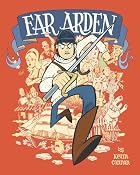
This was my first, if memory serves, foray into the world of graphic novels. This was a fun story, goofily implausible, about the search for a mythical idyllic island in the far northern reaches of the Canadian High Atlantic. Our hero, Army Shanks, sometimes joined and sometimes thwarted by a gaggle of friends and enemies, goes in search of this Neverland while a string of side plots unwind as well. The whole thing was quick and fun, though not particularly memorable in the long run.
This was my first, if memory serves, foray into the world of graphic novels. This was a fun story, goofily implausible, about the search for a mythical idyllic island in the far northern reaches of the Canadian High Atlantic. Our hero, Army Shanks, sometimes joined and sometimes thwarted by a gaggle of friends and enemies, goes in search of this Neverland while a string of side plots unwind as well. The whole thing was quick and fun, though not particularly memorable in the long run.
80rocketjk
Book 36: High Bonnet by Idwal Jones

This delightful short novel about a young Frenchman setting out into the culinary world via the kitchens of the restaurants of Paris was originally published in 1945. It had been out of print, though, for decades until 2001, when Modern Library brought it back as the first entry in their Modern Library Food Series. With its flashes of sly humor, enjoyable characterizations and, most importantly, extravagantly detailed descriptions of the cooking and consumption of lavish, gourmet meals, this book, for me, was provided a sumptuous reading repast. Although the book is short in pages, it took me a bit longer than I expected to read through. That's mainly because the food descriptions are so lush and enjoyable that you end up slowing down to savor them, much as you would a good meal, which I think, maybe, was Jones' point. There's not much in the way of plot, here. It's more of a picaresque coming of age tale. It story takes place in the late 1920s/early 1930s. The ending, I thought, was quite apt if somewhat sobering. At any rate, I highly recommend your searching this book out if you've an interest in the preparation and devouring of gourmet meals. Or if you just like descriptive writing. Or if you like to laugh.
Here's a serving of the writing style. An appetizer, if you will:
He served the Montepulciano. The aroma of it--a mellow, winy tapestry, woven patiently by six decades of time in some dark Apennine crypt--filled the room. We were not alone. History, art, and religion crowded in with the music of trumpets and gnawing horns. General Padiglione murmured as if in a prayer. The purple reflecting against his thin, marmoreal face colored it like a portrait in a church window. He drank reverently, in the minutest of sips. Pierre, in the silence, inaudibly slid before each guest a salad of cress lightly tumbled in oil.
"Wine is made to drink!" shouted Guido. "Pour it down!"

This delightful short novel about a young Frenchman setting out into the culinary world via the kitchens of the restaurants of Paris was originally published in 1945. It had been out of print, though, for decades until 2001, when Modern Library brought it back as the first entry in their Modern Library Food Series. With its flashes of sly humor, enjoyable characterizations and, most importantly, extravagantly detailed descriptions of the cooking and consumption of lavish, gourmet meals, this book, for me, was provided a sumptuous reading repast. Although the book is short in pages, it took me a bit longer than I expected to read through. That's mainly because the food descriptions are so lush and enjoyable that you end up slowing down to savor them, much as you would a good meal, which I think, maybe, was Jones' point. There's not much in the way of plot, here. It's more of a picaresque coming of age tale. It story takes place in the late 1920s/early 1930s. The ending, I thought, was quite apt if somewhat sobering. At any rate, I highly recommend your searching this book out if you've an interest in the preparation and devouring of gourmet meals. Or if you just like descriptive writing. Or if you like to laugh.
Here's a serving of the writing style. An appetizer, if you will:
He served the Montepulciano. The aroma of it--a mellow, winy tapestry, woven patiently by six decades of time in some dark Apennine crypt--filled the room. We were not alone. History, art, and religion crowded in with the music of trumpets and gnawing horns. General Padiglione murmured as if in a prayer. The purple reflecting against his thin, marmoreal face colored it like a portrait in a church window. He drank reverently, in the minutest of sips. Pierre, in the silence, inaudibly slid before each guest a salad of cress lightly tumbled in oil.
"Wine is made to drink!" shouted Guido. "Pour it down!"
81rocketjk
Book 37: The Joy of Keeping Score by Paul Dickson

A short book and easy read with lots of interesting photos and graphics, The Joy of Keeping Score provides, as the title suggests, a brief history of and testimonial for the process of keeping score while watching a baseball game. As a lifelong scorecard keeper myself, I was looking forward to a bit more than I actually got, here. I already knew why I liked keeping score, so I didn't need the encouragement, and I skipped entirely over the chapter explaining how to score a game. But there was some interesting history, particularly of the various forms of scorekeeping that have been developed over the years, and some nice anecdotes regarding the pitfalls experienced by official scorers from season to season. So I'd say this book is good for folks who are just getting interested in baseball and want to know what scoring the game yourself is all about, and for more knowledgeable baseball fans who don't mind skimming over familiar material in order to glean some bits of interesting trivia.

A short book and easy read with lots of interesting photos and graphics, The Joy of Keeping Score provides, as the title suggests, a brief history of and testimonial for the process of keeping score while watching a baseball game. As a lifelong scorecard keeper myself, I was looking forward to a bit more than I actually got, here. I already knew why I liked keeping score, so I didn't need the encouragement, and I skipped entirely over the chapter explaining how to score a game. But there was some interesting history, particularly of the various forms of scorekeeping that have been developed over the years, and some nice anecdotes regarding the pitfalls experienced by official scorers from season to season. So I'd say this book is good for folks who are just getting interested in baseball and want to know what scoring the game yourself is all about, and for more knowledgeable baseball fans who don't mind skimming over familiar material in order to glean some bits of interesting trivia.
82PaperbackPirate
I love keeping score at a game. This might be fun for me to check out because I don't know how to note some of the more uncommon plays. Thank you for sharing your review!
83rocketjk
#82> You're welcome! Also, I'm always around for scoring questions. I've been keeping scorecards since 1967!
84PaperbackPirate
Wow! I may take you up on that. I've only been doing it for about 12 years.
85rocketjk
Book 38: The House Without a Key by Earl Derr Biggers

This is the very first Charlie Chan mystery, published originally in 1925. I thought it might be fun, but I was very pleasantly surprised at how interesting and well written it was. This book is an intelligent murder mystery, with some nice physical descriptions of Hawaii, and some believable, interesting characters, as well. Don't get me wrong, it's not great literature. But it is high-quality detective fiction with a protagonist (not Chan) going through some interesting, if predictable, changes.

This is the very first Charlie Chan mystery, published originally in 1925. I thought it might be fun, but I was very pleasantly surprised at how interesting and well written it was. This book is an intelligent murder mystery, with some nice physical descriptions of Hawaii, and some believable, interesting characters, as well. Don't get me wrong, it's not great literature. But it is high-quality detective fiction with a protagonist (not Chan) going through some interesting, if predictable, changes.
86rocketjk
Book 39: The Empress File by John Sanford

Quick and lots of fun, The Empress File is the second in John Sanford's "Kidd" series. Part of the fun is that these are largely (though far from entirely) cyber-theft capers, but they were written in the relatively early days of cyber-world, so the techniques and equipment are noticeably outdated. They still make calls from phone booths, for instance. Anyway, appealing characters, if not particularly believable in terms of their slick skills make for an enjoyable reading experience. There are some bad, bad people running a southern town. Aren't there always?

Quick and lots of fun, The Empress File is the second in John Sanford's "Kidd" series. Part of the fun is that these are largely (though far from entirely) cyber-theft capers, but they were written in the relatively early days of cyber-world, so the techniques and equipment are noticeably outdated. They still make calls from phone booths, for instance. Anyway, appealing characters, if not particularly believable in terms of their slick skills make for an enjoyable reading experience. There are some bad, bad people running a southern town. Aren't there always?
87rocketjk
Book 40: Jewish Times: Voices of the American Jewish Experience by Howard Simons

This is a wonderful, dense, collection of oral histories covering much of the length and breadth of the American Jewish experience from immigration through much of the 20th century. The book was published in 1990, when there were still some of the early 20th century immigrants to interview, but the bulk of the book is taken up with Simons' interviews with the children of those immigrants, and in some cases their grandchildren. A majority of those interviewed are professional people, some quite prominent, either nationally or at least within their own communities. A few are famous, such has Barry Goldwater, who had converted from Judaism by the time he ran for president in 1964 but had much to say about his Jewish upbringing, and Larry King, interviewed when he was still only a Chicago radio personality. Plus Red Auerbach, the famous, longtime coach of the Boston Celtics and one of the pioneers of the NBA. There are two or three others who were Congressmen or White House advisers. The breadth of the scope is impressive, as we read the early, immigrant days of struggle, and then what it is/was like to grow up Jewish in America. Some of the speakers were religious, others not as much, identifying culturally as Jews instead. Sports, education, assimilation, anti-semitism and exclusion, politics, growing up within large Jewish communities and growing up as a member of one of two or three Jewish families in a town, growing up Jewish in the South, playing sports, being religious, not being religious, dating, summer camp, all of these areas and more are covered. To his credit, Simons removed himself from the interviews, not printing his questions, but simply letting his subjects speak, often at-length and in-depth, about their lives. For anyone interested in the topic, this is a fascinating book. My copy has my mother's name written in the inside cover. I don't recall, though, when she passed it on to me.
And, hurray, I made it to 40 books, at least. During the year there were times that I didn't think I was even going to climb this high. I don't think I'll get to 50 at this rate, but at least I've put in a respectable showing this year.

This is a wonderful, dense, collection of oral histories covering much of the length and breadth of the American Jewish experience from immigration through much of the 20th century. The book was published in 1990, when there were still some of the early 20th century immigrants to interview, but the bulk of the book is taken up with Simons' interviews with the children of those immigrants, and in some cases their grandchildren. A majority of those interviewed are professional people, some quite prominent, either nationally or at least within their own communities. A few are famous, such has Barry Goldwater, who had converted from Judaism by the time he ran for president in 1964 but had much to say about his Jewish upbringing, and Larry King, interviewed when he was still only a Chicago radio personality. Plus Red Auerbach, the famous, longtime coach of the Boston Celtics and one of the pioneers of the NBA. There are two or three others who were Congressmen or White House advisers. The breadth of the scope is impressive, as we read the early, immigrant days of struggle, and then what it is/was like to grow up Jewish in America. Some of the speakers were religious, others not as much, identifying culturally as Jews instead. Sports, education, assimilation, anti-semitism and exclusion, politics, growing up within large Jewish communities and growing up as a member of one of two or three Jewish families in a town, growing up Jewish in the South, playing sports, being religious, not being religious, dating, summer camp, all of these areas and more are covered. To his credit, Simons removed himself from the interviews, not printing his questions, but simply letting his subjects speak, often at-length and in-depth, about their lives. For anyone interested in the topic, this is a fascinating book. My copy has my mother's name written in the inside cover. I don't recall, though, when she passed it on to me.
And, hurray, I made it to 40 books, at least. During the year there were times that I didn't think I was even going to climb this high. I don't think I'll get to 50 at this rate, but at least I've put in a respectable showing this year.
88rocketjk
Book 41: The Year's Greatest Science-Fiction and Fantasy: Second Annual Volume edited by Judith Merril

Read as a "between book" (see first post). Published in 1957, this is a very fun collection of short stories in a cool "pulp fiction" edition. There is actually quite a lot of just plain good writing here, and many of these stories would stand up even for readers who are not fans of the science fiction genre. Some are funny, some are thought-provoking. Plus, Merril's comments before each of the stories are often quite amusing, as well. Names science fiction fans will recognize in this collection include C. M. Kornbluth, Algis Budrys, Damon Knight, Isaac Asimov, J. G. Ballard, Theodore Sturgeon and Garson Kanin. It's always interesting to go back to the 50s to revisit different writers' visions of "the future."

Read as a "between book" (see first post). Published in 1957, this is a very fun collection of short stories in a cool "pulp fiction" edition. There is actually quite a lot of just plain good writing here, and many of these stories would stand up even for readers who are not fans of the science fiction genre. Some are funny, some are thought-provoking. Plus, Merril's comments before each of the stories are often quite amusing, as well. Names science fiction fans will recognize in this collection include C. M. Kornbluth, Algis Budrys, Damon Knight, Isaac Asimov, J. G. Ballard, Theodore Sturgeon and Garson Kanin. It's always interesting to go back to the 50s to revisit different writers' visions of "the future."
89rocketjk
Book 42: Shades of Grey by Jasper Fforde

It's been a while since I dipped back into Jasper Fforde World. I am a huge fan of the Thursday Next books, in particular. This book, as Fforde enthusiasts know, sets up an entirely different world, another dystopian society. In this post-apocalyptic place, nobody can see the whole color spectrum, and society is set up in a hierarchy based on the color range one can see. And that's just the beginning of the strangeness. The book has Fforde's usual quotient of whimsical, absurdist humor, but this is a denser and, especially towards the end, darker offering than the Next and the Nursery Rhyme worlds. It took me a while to get wholly involved in this book, but eventually I did, and by the end I was more or less flying through.

It's been a while since I dipped back into Jasper Fforde World. I am a huge fan of the Thursday Next books, in particular. This book, as Fforde enthusiasts know, sets up an entirely different world, another dystopian society. In this post-apocalyptic place, nobody can see the whole color spectrum, and society is set up in a hierarchy based on the color range one can see. And that's just the beginning of the strangeness. The book has Fforde's usual quotient of whimsical, absurdist humor, but this is a denser and, especially towards the end, darker offering than the Next and the Nursery Rhyme worlds. It took me a while to get wholly involved in this book, but eventually I did, and by the end I was more or less flying through.
90rocketjk
Book 43: The Deep Blue Goodbye by John D. MacDonald
This is the first book in MacDonald's famed "Travis McGee" crime series. I can easily see why MacDonald & McGee have earned such hearty enthusiasm over the years. The writing is very good, and McGee's character is a fine, fine example of the cynical yet principled, heart-of-gold solver of other peoples' problems. This book had a bit too much exposition for my taste, but I am very much looking forward to getting to the rest of the series over time.
This is the first book in MacDonald's famed "Travis McGee" crime series. I can easily see why MacDonald & McGee have earned such hearty enthusiasm over the years. The writing is very good, and McGee's character is a fine, fine example of the cynical yet principled, heart-of-gold solver of other peoples' problems. This book had a bit too much exposition for my taste, but I am very much looking forward to getting to the rest of the series over time.
91rocketjk
Book 44: Dale Brown's Dreamland by Dale Brown

For some reason I have been in the midst of genre/series world lately, and for my latest book I started still another series, Dale Brown's Dreamland. This is a sort of techno-military series about a classified Air Force base in the Nevada desert (Dreamland) where cutting edge, futuristic, bells 'n whistles aircraft are developed and tested. The first half of the book is mostly taken up with the establishment of the political context of the base's history and current budgetary problems, setting up of some of the characters and lengthy technical descriptions of the hardware. As such, I found it fairly tedious. However, the second half of the book sends our heroes and their aeroplanes off to combat, and that gets a lot better, as Brown and his co-writer Jim DeFelice, write good action scenes. It's nice is the fact that the writers go out of their way to be non-sexist (two of the actions best and most trusted pilots are women, for example). So I have plans to read at least the second book in this series, although how far I get in the whole Dreamland set (there are 14 books, to date) remains to be seen.

For some reason I have been in the midst of genre/series world lately, and for my latest book I started still another series, Dale Brown's Dreamland. This is a sort of techno-military series about a classified Air Force base in the Nevada desert (Dreamland) where cutting edge, futuristic, bells 'n whistles aircraft are developed and tested. The first half of the book is mostly taken up with the establishment of the political context of the base's history and current budgetary problems, setting up of some of the characters and lengthy technical descriptions of the hardware. As such, I found it fairly tedious. However, the second half of the book sends our heroes and their aeroplanes off to combat, and that gets a lot better, as Brown and his co-writer Jim DeFelice, write good action scenes. It's nice is the fact that the writers go out of their way to be non-sexist (two of the actions best and most trusted pilots are women, for example). So I have plans to read at least the second book in this series, although how far I get in the whole Dreamland set (there are 14 books, to date) remains to be seen.
92rocketjk
Book 45: The Mourner by Richard Stark
Jumping over to still another of one of my ongoing series, I devoured The Mourner, the fourth entry in the Parker series by Richard Stark (a.k.a. Donald E. Westlake). This series is nasty fun. Parker is as ruthless as noir anti-heroes get, and the books are very well written.
Jumping over to still another of one of my ongoing series, I devoured The Mourner, the fourth entry in the Parker series by Richard Stark (a.k.a. Donald E. Westlake). This series is nasty fun. Parker is as ruthless as noir anti-heroes get, and the books are very well written.
93rocketjk
Book 46: Lincoln's Men: the President and His Private Secretaries by Daniel Mark Epstein
This is a very interesting history of the Lincoln White House as experienced by the three men who served as Lincoln's private secretaries. Two of these men in particular, John Hay and John Nicolay, had Lincoln's full trust and friendship, so the picture we get, as seen through the men's letters and diaries, are of the politics of the administration, and very much also of Lincoln, the man. It tells more than a little about the disruptive influence that Lincoln's wife Mary had on the administration at times. The book is well written and provides a relatively quick and entirely enjoyable reading experience.
And although my reading of this book leaked a little into 2015, as I finished up on New Year's Day, I'm allowing myself a little wiggle room and calling this Book 46 for 2014. So, not quite 50, but better than last year's 44 and equaling 2012's total. On to 2015!
This is a very interesting history of the Lincoln White House as experienced by the three men who served as Lincoln's private secretaries. Two of these men in particular, John Hay and John Nicolay, had Lincoln's full trust and friendship, so the picture we get, as seen through the men's letters and diaries, are of the politics of the administration, and very much also of Lincoln, the man. It tells more than a little about the disruptive influence that Lincoln's wife Mary had on the administration at times. The book is well written and provides a relatively quick and entirely enjoyable reading experience.
And although my reading of this book leaked a little into 2015, as I finished up on New Year's Day, I'm allowing myself a little wiggle room and calling this Book 46 for 2014. So, not quite 50, but better than last year's 44 and equaling 2012's total. On to 2015!
94PaperbackPirate
Nice job on 46! Happy New Year and happy reading in 2015!

