This topic is currently marked as "dormant"—the last message is more than 90 days old. You can revive it by posting a reply.
1Samantha_kathy
World War One (1914-1918)
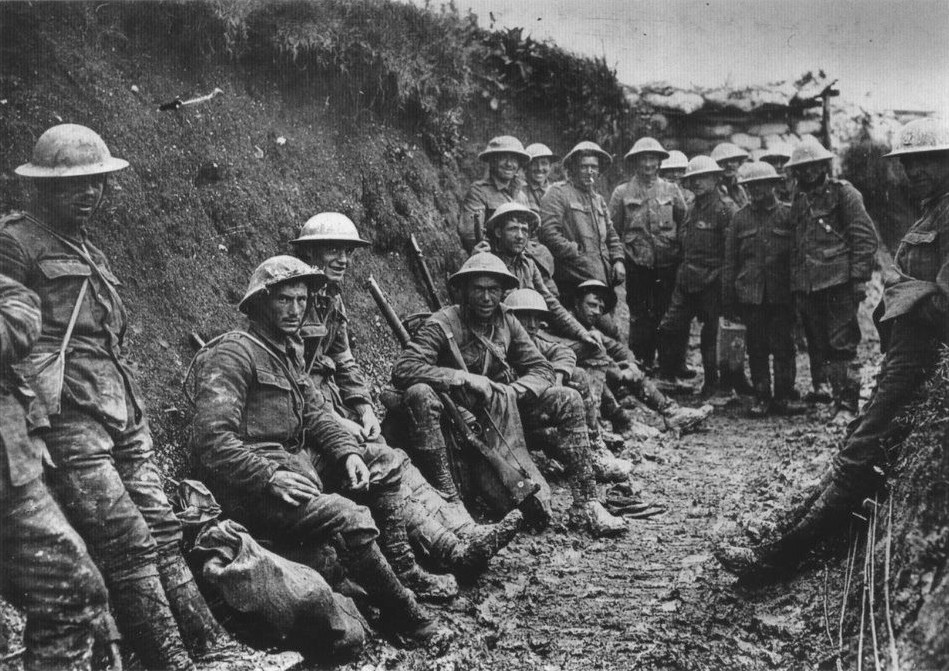
Royal Irish Rifles in a communications trench, first day on the Somme, 1916
1914 starts fairly quietly, despite the Sakurajima volcano in Japan erupting in January. The Unites States start the occupation of Veracruz in April, which causes Mexico to temporarily end diplomatic relationships with the USA. But there’s uplifting news as well, as Woodrow Wilson signs a Mother’s Day declaration in May, making the second Sunday in May a national holiday in honor of mothers. None yet knew that it was the fore evening of the Great War which would draw in all the world’s economic great powers.
World War One officially began on 28 July 1914, but the trigger for the war was the assassination of Archduke Franz Ferdinand of Austria on 28 June 1914. Soon, Europe was at war. On the Western Front, a trench war was fought which would change little until 1917. On the Eastern Front, the Russian army was at first successful against Austro-Hungary, but was stopped from advancing by Germany. With the Ottoman Empire also joining the war in November 1914, fronts opened up in the Caucasus, Mesopotamia and the Sinai. The United States entered the war in 1917, the same year the Russian government collapsed and a revolution saw them coming to terms with the Central Powers. 1918 saw the Allies gaining ground and both Austro-Hungary and Germany agreed to an armistice in November.
The Great War had a large impact on the world’s stage. The German, Russian, Austro-Hungarian and Ottoman Empires ceased to exist. The map of Europe and Southwest Asia was redrawn and several independent nations were restored or created. The League of Nations was formed. And, while none yet knew it, the stage had been set for another World War.
Any books set in 1914-1918, whether they deal with World War One or not, belong in this quarter. Books about the immediate aftermath can also fit in this quarter, but remember that next quarter we’ll be looking at the years between the wars (1919-1938) and books about the longer aftermath/aftereffects of the war belong in that quarter.
Here are some suggestions to get you started
A Long, Long Way by Sebastian Barry (Irish soldier in WW1)
Forget-Me-Not by Emma Blair (RAF pilot in WW1, romance)
Suffragette Girl by Margaret Dickinson (suffragette, nurse, WW1)
The Blooding of the Guns by Alexander Fullerton (British Royal Navy, WW1, 1st in a series)
March to the Sound of the Guns by Ray Grover (New Zealand soldiers, WW1)
Skylark Farm by Antonia Arslan (1915 Armenian genocide)
Flanders by Patricia Anthony (Texan volunteers, WW1)
To the Last Man by Jeff Shaara (United States entry into WW1)
Custard Tarts and Broken Hearts by Mary Gibson (British homefront, WW1)
The 13th Apostle by Dermot McEvoy (1916 Easter Rising, Irish independence struggle)
Loving and Losing by Pamela Oldfield (1918 flu pandemic)
The Birth House by Ami McKay (midwife in Nova Scotia during WW1)
The Air We Breathe by Andrea Barrett (tuberculosis, USA, set during WW1)
The Personal History of Rachel DuPree by Ann Weisgarber (African-American family in South Dakota, 1917)
Green City in the Sun by Barbara Wood (Kenya, 1917)
An Ice Cream War by William Boyd (continuation of WW1 in British East Africa after Armistice had been declared)
Shanghai Station by Bartle Bull (thriller, 1918)
The Light Between Oceans by M.L. Stedman (1918)
Far, Far the Mountain Peak by John Masters (mountaineers, India, WW1)
Flight of the Swan by Rosario Ferré (Anna Pavlova’s 1917 tour of Latin America)
Land of Marvels by Barry Unsworth (Mesopotamia, 1914)
Visit the Quarterly Theme Reads Wiki Page for more information and add your own books for this quarter’s theme!
Royal Irish Rifles in a communications trench, first day on the Somme, 1916
1914 starts fairly quietly, despite the Sakurajima volcano in Japan erupting in January. The Unites States start the occupation of Veracruz in April, which causes Mexico to temporarily end diplomatic relationships with the USA. But there’s uplifting news as well, as Woodrow Wilson signs a Mother’s Day declaration in May, making the second Sunday in May a national holiday in honor of mothers. None yet knew that it was the fore evening of the Great War which would draw in all the world’s economic great powers.
World War One officially began on 28 July 1914, but the trigger for the war was the assassination of Archduke Franz Ferdinand of Austria on 28 June 1914. Soon, Europe was at war. On the Western Front, a trench war was fought which would change little until 1917. On the Eastern Front, the Russian army was at first successful against Austro-Hungary, but was stopped from advancing by Germany. With the Ottoman Empire also joining the war in November 1914, fronts opened up in the Caucasus, Mesopotamia and the Sinai. The United States entered the war in 1917, the same year the Russian government collapsed and a revolution saw them coming to terms with the Central Powers. 1918 saw the Allies gaining ground and both Austro-Hungary and Germany agreed to an armistice in November.
The Great War had a large impact on the world’s stage. The German, Russian, Austro-Hungarian and Ottoman Empires ceased to exist. The map of Europe and Southwest Asia was redrawn and several independent nations were restored or created. The League of Nations was formed. And, while none yet knew it, the stage had been set for another World War.
Any books set in 1914-1918, whether they deal with World War One or not, belong in this quarter. Books about the immediate aftermath can also fit in this quarter, but remember that next quarter we’ll be looking at the years between the wars (1919-1938) and books about the longer aftermath/aftereffects of the war belong in that quarter.
Here are some suggestions to get you started
A Long, Long Way by Sebastian Barry (Irish soldier in WW1)
Forget-Me-Not by Emma Blair (RAF pilot in WW1, romance)
Suffragette Girl by Margaret Dickinson (suffragette, nurse, WW1)
The Blooding of the Guns by Alexander Fullerton (British Royal Navy, WW1, 1st in a series)
March to the Sound of the Guns by Ray Grover (New Zealand soldiers, WW1)
Skylark Farm by Antonia Arslan (1915 Armenian genocide)
Flanders by Patricia Anthony (Texan volunteers, WW1)
To the Last Man by Jeff Shaara (United States entry into WW1)
Custard Tarts and Broken Hearts by Mary Gibson (British homefront, WW1)
The 13th Apostle by Dermot McEvoy (1916 Easter Rising, Irish independence struggle)
Loving and Losing by Pamela Oldfield (1918 flu pandemic)
The Birth House by Ami McKay (midwife in Nova Scotia during WW1)
The Air We Breathe by Andrea Barrett (tuberculosis, USA, set during WW1)
The Personal History of Rachel DuPree by Ann Weisgarber (African-American family in South Dakota, 1917)
Green City in the Sun by Barbara Wood (Kenya, 1917)
An Ice Cream War by William Boyd (continuation of WW1 in British East Africa after Armistice had been declared)
Shanghai Station by Bartle Bull (thriller, 1918)
The Light Between Oceans by M.L. Stedman (1918)
Far, Far the Mountain Peak by John Masters (mountaineers, India, WW1)
Flight of the Swan by Rosario Ferré (Anna Pavlova’s 1917 tour of Latin America)
Land of Marvels by Barry Unsworth (Mesopotamia, 1914)
Visit the Quarterly Theme Reads Wiki Page for more information and add your own books for this quarter’s theme!
2Samantha_kathy
For those who like planning, here's the new thread. I won't be changing over the wiki until after Christmas, though, so please hold off on adding books for this quarter's read to the wiki.
3Samantha_kathy
I plan on reading Shout at the Devil, which takes place in Africa just before WW1 breaks out (and during it?). Either way, I think it starts in 1914, and it pits the main characters against a German villain.
4fuzzi
First one I'm planning to read is Rilla of Ingleside, which I never have read. The story of Anne's (of Green Gables) youngest daughter starts in 1914...
5CurrerBell
>4 fuzzi: I think I'm with you on this one. I've also got a reread of The Guns of August planned, but in case I don't get to it I'll at least have gotten to Rilla of Ingleside. Am I right, folks, that Rilla of Ingleside does not require having read all the earlier books in order? Because all I've ever read are Anne of Green Gables and Anne of Avonlea.
6fuzzi
>5 CurrerBell: I don't think you need to read them in order, just know that Anne married Gilbert .
7DeltaQueen50
I've been reading the Anne books but I am not up to Rilla of Ingleside yet. I don't think you need to have read the series in order to read and enjoy the book about Rilla.
In January I am planning on reading Daughters of Mars by Thomas Keneally which is about Australian nurses during WW I.
In January I am planning on reading Daughters of Mars by Thomas Keneally which is about Australian nurses during WW I.
8Samantha_kathy
Wiki has been changed! Happy new year.
9Samantha_kathy
I've set up a voting thread with options for where we could take the Quarterly Theme Reads after this year, since we'll have cycled through all time periods at the end of the year. Everyone is welcome to vote - even if you don't usually join the Quarterly Theme Reads. This is your chance to let me know the type of Quarterly Theme Reads you'd enjoy participating in!
Please come on over and vote! Thread is here: http://www.librarything.com/topic/185640
Please come on over and vote! Thread is here: http://www.librarything.com/topic/185640
10ccookie
I'm going to be reading The Birth House by Ami McKay
11DeltaQueen50
I've just completed The Daughters of Mars by Thomas Keneally for this theme. The story is about Australian nurses during WW I and was truly an epic story. Almost 5 stars except I felt quite removed from the characters while reading and I didn't care for the confusing ending.
12CurrerBell
Just finished Rilla of Ingleside and I'll give it 4****. The rah-rah patriotism wasn't to my taste and on a personal preference I'd probably rate it a bit lower for that reason, but if that patriotism doesn't both you then it's at least a 4**** read.
13Dejah_Thoris
The latest Ian Rutledge mystery by Charles Todd opens on June 28th, 1914 - Ian is proposing while Archduke Ferdinand and his wife Sophie are assassinated. The early months of the War are a looming presence throughout the novel.
The other 16 books in the series take place after WWI; Ian is a man truly haunted by events in the War.
The other 16 books in the series take place after WWI; Ian is a man truly haunted by events in the War.
15Dejah_Thoris
>14 cfk: I'm sorry - I can't believe I didn't list the title! It's A Fine Summer's Day. I hope you enjoy it.
18Roro8
The Absolutist by John Boyne is waiting for me on the reserve shelf of the mobile library. I'll be reading it in the next few weeks.
19Samantha_kathy
Still working on Shout at the Devil. While it is (partially) set during WW1, the blurb is a bit of false advertisement. It's about half-way through the book (maybe a little more than that), before we hit those years, while the blurb makes it seem like it will happen much sooner. I do think that the first half of the book makes it much more clear as to why the second half happens, so there's that.
20Samantha_kathy
The results of the vote for 2016 and beyond is in (a little belated, but still): https://www.librarything.com/topic/185640
On a related note, any suggestions/discussion about the time periods or other things to do with the organization of the Quarterly Theme Reads are welcome on the voting thread now. I've already kicked the discussion off with a question.
On a related note, any suggestions/discussion about the time periods or other things to do with the organization of the Quarterly Theme Reads are welcome on the voting thread now. I've already kicked the discussion off with a question.
21Roro8
I finally managed to read a WWI book! I borrowed The Absolutist but didn't get any further than reading the front and back covers. I read The Iron Necklace, an interesting story about an English family before during and after WWI. Irene marries a German and lives in Germany throughout WWI. Mark is a diplomat and Sofia becomes a nurse.
22countrylife
I didn't do so well with this quarter's WWI challenge compared to 2014, when, for the centenary, I read at least one WWI book each month, for a total of 26 WWI-setting or WWI-informational books.
January: nothing
February: Bright's Passage, which had a returned soldier dealing with war memories, and a horse inhabited by a dubious angel. (3 stars)
March: The Great War: Stories Inspired by Items from the First World War, with eleven authors and an artist contributing. (3.5 stars)
January: nothing
February: Bright's Passage, which had a returned soldier dealing with war memories, and a horse inhabited by a dubious angel. (3 stars)
March: The Great War: Stories Inspired by Items from the First World War, with eleven authors and an artist contributing. (3.5 stars)
23Samantha_kathy
New thread is up: https://www.librarything.com/topic/189534
I will switch over the wiki to the new quarter later today, after I've finished reading Shout at the Devil for this quarter and added it to the wiki.
I will switch over the wiki to the new quarter later today, after I've finished reading Shout at the Devil for this quarter and added it to the wiki.
24Samantha_kathy
A very, very late review of the book I finished last March for this theme.
Shout at the Devil by Wilbur Smith - 4.5 stars
I’m writing this review nine months after reading this book and the plot and characters are still clear as day in my mind. That alone says how much impact this book had. It’s a brilliant book, although it had its flaws regarding attitudes towards race since it was written in 1968. But the characters and the plot are very strong and the book resonated with me.
Although the blurb on the back of the book talks about the story being set in the early days of World War One, about half of the book is actually set in the early 1930s. It starts off slow, but that slow beginning drew me in masterfully and made the impact of the second half of the book even harder. The main story is about elephant poacher Flynn O’Flynn and his feud with a German Commissioner, Herman Fleischer. When the war breaks out, that feud is a reflection of the world at large, and their personal conflict suddenly reaches global importance. There is, however, a small subplot running through the book that also centers around Flynn and reminded me of the storyline in Moby Dick, only instead of the hunt for the white whale, this was the hunt for a very specific elephant. I’m not quite sure I liked that subplot, even though it did much to show Flynn’s character.
I do want to give one word of warning to those wanting to read this book. There is one scene that, while not even the most graphic I’ve ever read, deals with extreme violence against a very young child and that might be disturbing to read. It certainly was disturbing to me and while it was important to the plot and not gratuitous violence, I think it’s worth warning for.
All in all, I really liked this book. For history lovers who want to read about World War One in the African theater this is definitely a book I’d recommend.
Shout at the Devil by Wilbur Smith - 4.5 stars
I’m writing this review nine months after reading this book and the plot and characters are still clear as day in my mind. That alone says how much impact this book had. It’s a brilliant book, although it had its flaws regarding attitudes towards race since it was written in 1968. But the characters and the plot are very strong and the book resonated with me.
Although the blurb on the back of the book talks about the story being set in the early days of World War One, about half of the book is actually set in the early 1930s. It starts off slow, but that slow beginning drew me in masterfully and made the impact of the second half of the book even harder. The main story is about elephant poacher Flynn O’Flynn and his feud with a German Commissioner, Herman Fleischer. When the war breaks out, that feud is a reflection of the world at large, and their personal conflict suddenly reaches global importance. There is, however, a small subplot running through the book that also centers around Flynn and reminded me of the storyline in Moby Dick, only instead of the hunt for the white whale, this was the hunt for a very specific elephant. I’m not quite sure I liked that subplot, even though it did much to show Flynn’s character.
I do want to give one word of warning to those wanting to read this book. There is one scene that, while not even the most graphic I’ve ever read, deals with extreme violence against a very young child and that might be disturbing to read. It certainly was disturbing to me and while it was important to the plot and not gratuitous violence, I think it’s worth warning for.
All in all, I really liked this book. For history lovers who want to read about World War One in the African theater this is definitely a book I’d recommend.

