This topic is currently marked as "dormant"—the last message is more than 90 days old. You can revive it by posting a reply.
1The_Hibernator
Hello everyone! My name is Rachel, and I'm an avid reader who seems to have no time to read recently. I'm a misplaced biomedical scientist who is currently looking for a job in her field. I have a strong interest in Mental Health, Social Justice, Religion, and Philosophy - but I tend to read a lot of Fantasy Fiction lately.
This is my second time trying out a category challenge. I'm going to take it easy this year and make sure my goal is doable - with general rather than highly specific categories. This will mean that some of my books will overlap categories. But I'm sure you'll all forgive. My goal is to read two books in each category.
1. Religion - This is meant to be a non-fiction category, but if I read Christian fiction or other religious fiction I'll include it here.
The New Testament Canon, by Harry Y Gamble 1/3/2015(comments)
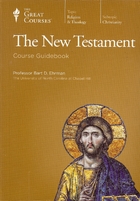
Lesson 1 of The New Testament (The Great Courses, Course Number 656)(comments)
The Meaning of Jesus, by Marcus Borg and N. T. Wright IN PROGRESS BingoDOG Owned more than a Year
2. Philosophy - Again, meant to be a non-fiction category, but I'll include deeply philosophical fiction if I think it fits.
Mr. Monk and Philosophy, by D. E. Wittkower BingoDOG - A book inspired by another work of fiction
Women, Fire, and Dangerous Things, by George Lakoff BingoDOG - about language POTENTIAL
3. Mental Health - Fiction or non-fiction that encourages people to think about mental health.
The How of Happiness, by Sonja Lyubomirsky IN PROGRESS
Bipolar II Disorder Workbook, by Stephanie McMurrich Robert IN PROGRESS
Bipolar Disorder: A Guide for Patients and Families, by Francis Mark Mondimore IN PROGRESS
Born to be Good, by Dacher Keltner IN PROGRESS
4. Science and Medicine
5. Social Justice - books that remind us of justice and injustice in society
Far From the Tree: Parents Children and the Search for Identity, by Andrew Solomon BingoDOG - about autism
The Autobiography of Malcolm X, by Malcolm X POTENTIAL FOR MAY GROUP READ
6. Other Non-fiction
Quiet, by Susan Cain IN PROGRESS
Lawrence in Arabia, by Scott Anderson BingoDOG - Major Historical Event POTENTIAL
Unbroken, by Laura Hillenbrand POTENTIAL - BingoDOG - Outside comfort zone
7. Classics
Sense and Sensibility, by Jane Austen BingoDOG - reminds me of childhood
Mansfield Park, by Jane Austen POTENTIAL BingoDOG - country not my own
The Metamorphosis, by Franz Kafka BingoDOG - Published in 1915 POTENTIAL
8. Series that I've already started
Fire & Ash, by Jonathan Maberry 1/7/2015 (comments) BingoDOG - LT Author
Rogue Knight, by Brandon Mull BingoDOG - character of opposite gender
9. Anthologies / Books of Essays
The Grey Fairy Book, by Andrew Lang IN PROGRESS BingoDOG - author's first name same as ancestor's
10. YA Books
The Coldest Girl in Coldtown, by Holly Black 1/23/2015 BingoDOG - LGBTQ
The Perks of Being a Wallflower, by Stephen Chbosky BingoDOG - Episleatory
I Want my Hat Back, by Jon Klassen
Penguin in Love, by Salina Yoon
Daughter of Smoke and Bone, by Laini Taylor BingoDOG - mythological creature
11. Other Non-realistic Fiction
The Remarkable Miss Frankenstein, by Minda Webber BingoDOG - Chosen by someone else
Cloud Atlas, by David Mitchell BingoDOG - Genre Bender POTENTIAL
12. Other Realistic Fiction
Daughter of Highland Hall, by Carrie Turansky IN PROGRESS
13. Magazines
the Winter 2015 Lapham's Quarterly about Foreigners IN PROGRESS
14. Movies
The Hobbit: Battle of the Five Armies (2014)
15. TV shows
Doctor Who: The Mind Robber (1968) 1/1/2015 (comments)
Doctor Who: The Krotons (1968) 1/1/2015 (comments)
This is my second time trying out a category challenge. I'm going to take it easy this year and make sure my goal is doable - with general rather than highly specific categories. This will mean that some of my books will overlap categories. But I'm sure you'll all forgive. My goal is to read two books in each category.
1. Religion - This is meant to be a non-fiction category, but if I read Christian fiction or other religious fiction I'll include it here.
The New Testament Canon, by Harry Y Gamble 1/3/2015(comments)
Lesson 1 of The New Testament (The Great Courses, Course Number 656)(comments)
The Meaning of Jesus, by Marcus Borg and N. T. Wright IN PROGRESS BingoDOG Owned more than a Year
2. Philosophy - Again, meant to be a non-fiction category, but I'll include deeply philosophical fiction if I think it fits.
Mr. Monk and Philosophy, by D. E. Wittkower BingoDOG - A book inspired by another work of fiction
Women, Fire, and Dangerous Things, by George Lakoff BingoDOG - about language POTENTIAL
3. Mental Health - Fiction or non-fiction that encourages people to think about mental health.
The How of Happiness, by Sonja Lyubomirsky IN PROGRESS
Bipolar II Disorder Workbook, by Stephanie McMurrich Robert IN PROGRESS
Bipolar Disorder: A Guide for Patients and Families, by Francis Mark Mondimore IN PROGRESS
Born to be Good, by Dacher Keltner IN PROGRESS
4. Science and Medicine
5. Social Justice - books that remind us of justice and injustice in society
Far From the Tree: Parents Children and the Search for Identity, by Andrew Solomon BingoDOG - about autism
The Autobiography of Malcolm X, by Malcolm X POTENTIAL FOR MAY GROUP READ
6. Other Non-fiction
Quiet, by Susan Cain IN PROGRESS
Lawrence in Arabia, by Scott Anderson BingoDOG - Major Historical Event POTENTIAL
Unbroken, by Laura Hillenbrand POTENTIAL - BingoDOG - Outside comfort zone
7. Classics
Sense and Sensibility, by Jane Austen BingoDOG - reminds me of childhood
Mansfield Park, by Jane Austen POTENTIAL BingoDOG - country not my own
The Metamorphosis, by Franz Kafka BingoDOG - Published in 1915 POTENTIAL
8. Series that I've already started
Fire & Ash, by Jonathan Maberry 1/7/2015 (comments) BingoDOG - LT Author
Rogue Knight, by Brandon Mull BingoDOG - character of opposite gender
9. Anthologies / Books of Essays
The Grey Fairy Book, by Andrew Lang IN PROGRESS BingoDOG - author's first name same as ancestor's
10. YA Books
The Coldest Girl in Coldtown, by Holly Black 1/23/2015 BingoDOG - LGBTQ
The Perks of Being a Wallflower, by Stephen Chbosky BingoDOG - Episleatory
I Want my Hat Back, by Jon Klassen
Penguin in Love, by Salina Yoon
Daughter of Smoke and Bone, by Laini Taylor BingoDOG - mythological creature
11. Other Non-realistic Fiction
The Remarkable Miss Frankenstein, by Minda Webber BingoDOG - Chosen by someone else
Cloud Atlas, by David Mitchell BingoDOG - Genre Bender POTENTIAL
12. Other Realistic Fiction
Daughter of Highland Hall, by Carrie Turansky IN PROGRESS
13. Magazines
the Winter 2015 Lapham's Quarterly about Foreigners IN PROGRESS
14. Movies
The Hobbit: Battle of the Five Armies (2014)
15. TV shows
Doctor Who: The Mind Robber (1968) 1/1/2015 (comments)
Doctor Who: The Krotons (1968) 1/1/2015 (comments)
2The_Hibernator
I'm currently reading:

The Daughter of Highland Hall, by Carrie Turansky is March's ACFW bookclub choice, for which I will be leading the discussion.

For my Western Canon book I'm reading The Epic of Gilgamesh, by anonymous; This is a group read with @aquascum at http://www.librarything.com/topic/188648

I'm listening to Mansfield Park, by Jane Austen, narrated by Juliet Stevenson
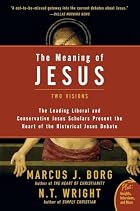
The Meaning of Jesus: Two Visions, by Marcus Borg and N. T. Wright is a book I'm reading in my study of the historical Jesus.
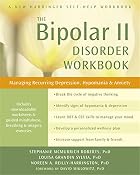
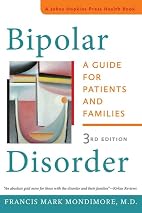
I'm going through The Bipolar II Disorder workbook, by Sephanie McMurrich Roberts in hopes that it will help me recognize what triggers and forebodes an attack of hypomania or depression. The workbook is meant for a chapter every 1 - 2 weeks, so I am also reading through Bipolar Disorder: A guide for patients and families, by Francis Mark Mondimore.


For Lecture 1 Masterpieces of the Imaginative Mind, by Professor Eric S Rabkin, I will be reading a variety of fairy tales. Currently, I am working on The Grey Fairy Book, by Andrew Lang.

For general non-fiction, I'm reading Quiet, by Susan Cain.
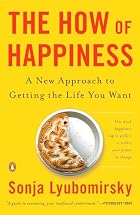

For "week 1" of The Science of Happiness at-your-own-pace MOOC, the readings are Chapter 1 and 2 of The How of Happiness, by Sonja Lyubomirsky; Chapter 1 of Born to Be Good, by Dacher Keltner; Happiness: A History, by Darrin McMahon
● Lyubomirsky, S., King, L., & Diener, E. (2005). The benefits of frequent positive affect: does happiness lead to success. Psychological Bulletin, 131(6), 803–55.
● Kahneman, D. (1999). Objective happiness. In D. Kahneman, E. Diener & N. Schwarz (Eds.), Well-being: Foundations of hedonic psychology (pp. 3-25). New York : Russell Sage Foundation Press.


The Daughter of Highland Hall, by Carrie Turansky is March's ACFW bookclub choice, for which I will be leading the discussion.

For my Western Canon book I'm reading The Epic of Gilgamesh, by anonymous; This is a group read with @aquascum at http://www.librarything.com/topic/188648
I'm listening to Mansfield Park, by Jane Austen, narrated by Juliet Stevenson
The Meaning of Jesus: Two Visions, by Marcus Borg and N. T. Wright is a book I'm reading in my study of the historical Jesus.
I'm going through The Bipolar II Disorder workbook, by Sephanie McMurrich Roberts in hopes that it will help me recognize what triggers and forebodes an attack of hypomania or depression. The workbook is meant for a chapter every 1 - 2 weeks, so I am also reading through Bipolar Disorder: A guide for patients and families, by Francis Mark Mondimore.


For Lecture 1 Masterpieces of the Imaginative Mind, by Professor Eric S Rabkin, I will be reading a variety of fairy tales. Currently, I am working on The Grey Fairy Book, by Andrew Lang.

For general non-fiction, I'm reading Quiet, by Susan Cain.

For "week 1" of The Science of Happiness at-your-own-pace MOOC, the readings are Chapter 1 and 2 of The How of Happiness, by Sonja Lyubomirsky; Chapter 1 of Born to Be Good, by Dacher Keltner; Happiness: A History, by Darrin McMahon
● Lyubomirsky, S., King, L., & Diener, E. (2005). The benefits of frequent positive affect: does happiness lead to success. Psychological Bulletin, 131(6), 803–55.
● Kahneman, D. (1999). Objective happiness. In D. Kahneman, E. Diener & N. Schwarz (Eds.), Well-being: Foundations of hedonic psychology (pp. 3-25). New York : Russell Sage Foundation Press.

4The_Hibernator
Thanks Carrie! Good to see you! I'll stop by your thread quick and star it since you were my first visitor. ;)
5rabbitprincess
Good luck with your challenge, especially the TBR category. It's an ongoing struggle!
6March-Hare
I will be interested in seeing what else turns up in the philosophy category.
8The_Hibernator
I'm trying for no structure this year, so I'll just see how well I do with this BINGO card.
9The_Hibernator
Well, even though this is the first day of my thread, I'll give you a weekend update. :)
This week was a stressful one for me. I'm having difficulty with my job because I don't like it as much as I would like (I'm looking for a new one, but at least I have a job). My employees are quitting without giving any notice, others have the flu, and others are simply unreliable. I was feeling stressed and anxious all week. On top of that, my boyfriend Joel, a recovering alcoholic of 4 months had the first anxiety attack of his life. He'd probably had anxiety for quite a long time, but he's been drinking unhealthily for the past 30 years, and the anxiety feels different when you're drunk. It was a hard time because I had to explain to him that he wasn't going crazy, anxiety attacks happen, talk to your doctor, etc. On the other hand, it made him understand my problems a little better, so there's a silver lining to that cloud. :)
Christmas was mostly spent sleeping. I had a roast dinner with Joel's family on Christmas eve, with a night of cards. And I had ham sandwiches with my own family on Christmas day.
I'm also taking intensive outpatient therapy (3 hours 3 times a week) called Dialectic Behavioral Therapy (DBT) which is: "is a cognitive behavioral treatment that was originally developed to treat chronically suicidal individuals diagnosed with borderline personality disorder and it is now recognized as the gold standard psychological treatment for this population." The developer of DBT, Marsha Linehan wrote several books, if you're interested in checking her out.
I'm not borderline, but I have been struggling with suicidal thoughts for over a year now, and this therapy gives me mad skilz to keep the invasive thoughts at bay.
In DBT this week, we have been learning about mindfulness. Specifically how to be aware of whether we're in emotion mind, reason mind, or wise mind - which is a balance between reason mind and emotion mind. Here's a picture of the balanced continuum:
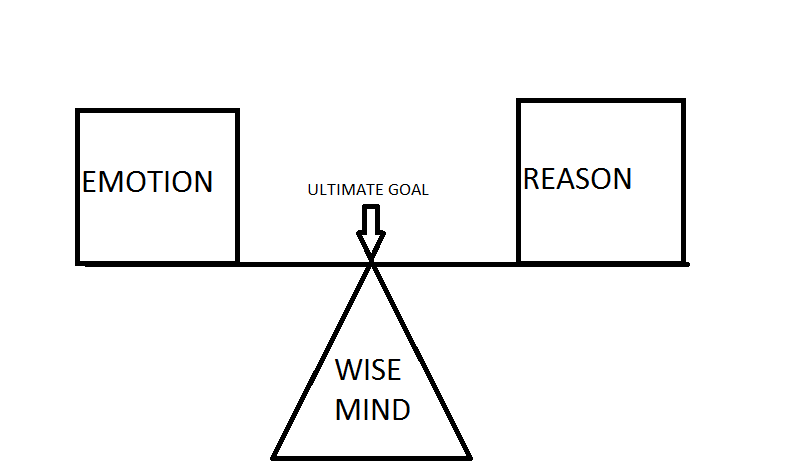
People would think it's a good thing to be in "reason mind" when making a decision - but according to DBT it's not. In fact, this fits well with data from the book Descartes' Error, which I hear gives evidence that thinking too "logically" can lead to poor decisions. (I have yet to read Descartes' Error, but I'm eager to and I own the book.)
We are also learning the "What" Skills - learning to observe, describe without judgement or assumption, and participate. Of course, just by observing you're participating, so I don't really get the whole participation skill. (Isn't that somehow related to the Heisenberg uncertainty principle? We can't observe without changing the event? Or am I going too far here?) Physicists???
Saturday I spent with my friend eeblue. Ate a nice dinner at Olive Garden, and then stopped by Barnes and Noble. I bought the book Rogue Knight, by Brandon Mull and The Brick Bible, by Bendan Powell Smith. It was a steal at only $10. It's only 2014, so these books don't count against my Mount TBR goal.
We watched a couple of story arcs from the 6th Season of Classic Doctor Who:


Tomorrow my plan is to lay low with Joel and to end the evening in my volunteer shift at a texting hotline for teens in crisis. That's every Sunday from 8pm-12am.
The books I'm currently reading are listed in comment >2 The_Hibernator:.
I hope everyone else's week went well, and have a happy New Year everyone!
This week was a stressful one for me. I'm having difficulty with my job because I don't like it as much as I would like (I'm looking for a new one, but at least I have a job). My employees are quitting without giving any notice, others have the flu, and others are simply unreliable. I was feeling stressed and anxious all week. On top of that, my boyfriend Joel, a recovering alcoholic of 4 months had the first anxiety attack of his life. He'd probably had anxiety for quite a long time, but he's been drinking unhealthily for the past 30 years, and the anxiety feels different when you're drunk. It was a hard time because I had to explain to him that he wasn't going crazy, anxiety attacks happen, talk to your doctor, etc. On the other hand, it made him understand my problems a little better, so there's a silver lining to that cloud. :)
Christmas was mostly spent sleeping. I had a roast dinner with Joel's family on Christmas eve, with a night of cards. And I had ham sandwiches with my own family on Christmas day.
I'm also taking intensive outpatient therapy (3 hours 3 times a week) called Dialectic Behavioral Therapy (DBT) which is: "is a cognitive behavioral treatment that was originally developed to treat chronically suicidal individuals diagnosed with borderline personality disorder and it is now recognized as the gold standard psychological treatment for this population." The developer of DBT, Marsha Linehan wrote several books, if you're interested in checking her out.
I'm not borderline, but I have been struggling with suicidal thoughts for over a year now, and this therapy gives me mad skilz to keep the invasive thoughts at bay.
In DBT this week, we have been learning about mindfulness. Specifically how to be aware of whether we're in emotion mind, reason mind, or wise mind - which is a balance between reason mind and emotion mind. Here's a picture of the balanced continuum:
People would think it's a good thing to be in "reason mind" when making a decision - but according to DBT it's not. In fact, this fits well with data from the book Descartes' Error, which I hear gives evidence that thinking too "logically" can lead to poor decisions. (I have yet to read Descartes' Error, but I'm eager to and I own the book.)
We are also learning the "What" Skills - learning to observe, describe without judgement or assumption, and participate. Of course, just by observing you're participating, so I don't really get the whole participation skill. (Isn't that somehow related to the Heisenberg uncertainty principle? We can't observe without changing the event? Or am I going too far here?) Physicists???
Saturday I spent with my friend eeblue. Ate a nice dinner at Olive Garden, and then stopped by Barnes and Noble. I bought the book Rogue Knight, by Brandon Mull and The Brick Bible, by Bendan Powell Smith. It was a steal at only $10. It's only 2014, so these books don't count against my Mount TBR goal.
We watched a couple of story arcs from the 6th Season of Classic Doctor Who:


Tomorrow my plan is to lay low with Joel and to end the evening in my volunteer shift at a texting hotline for teens in crisis. That's every Sunday from 8pm-12am.
The books I'm currently reading are listed in comment >2 The_Hibernator:.
I hope everyone else's week went well, and have a happy New Year everyone!
10lkernagh
Good luck on the work front, Rachel. Employees quiting without giving any notice is always difficult.
Glad to read that you were able to provide assistance to your boyfriend during his panic attack. It must be a very frightening to experience a panic attack. Interesting about the DBT scale and that being on the reason end of the scale isn't necessarily a good thing. I know I can find it challenging to balance reason and emotion - depending upon the situation it can be easy to lean more towards one of the two ends of the spectrum - but what they say makes sense, even the observing is participating bit. Even as an observer, one would be involved in that one would still be processing the information being presented to them and probably reaching decisions based on those inputs. I remember you mentioning that the therapy was very draining when you first started. Has it gotten any easier (less draining) for you?
Glad to see you had an enjoyable Christmas.
Glad to read that you were able to provide assistance to your boyfriend during his panic attack. It must be a very frightening to experience a panic attack. Interesting about the DBT scale and that being on the reason end of the scale isn't necessarily a good thing. I know I can find it challenging to balance reason and emotion - depending upon the situation it can be easy to lean more towards one of the two ends of the spectrum - but what they say makes sense, even the observing is participating bit. Even as an observer, one would be involved in that one would still be processing the information being presented to them and probably reaching decisions based on those inputs. I remember you mentioning that the therapy was very draining when you first started. Has it gotten any easier (less draining) for you?
Glad to see you had an enjoyable Christmas.
11cammykitty
& it seems like this time of the year is a common time for employees to quit without notice. Ugh! So sorry it's been a stressful week, especially Joel's panic attack. I've never had one, but I've heard of panic attacks that end in the ER because they feel like heart attacks. Scary. Hang in there! & enjoy that left over ham.
12The_Hibernator
>5 rabbitprincess: >6 March-Hare: Thanks for visiting my thread Rabbitprincess and March-Hare!
>10 lkernagh: Thanks for your support Lori! Yes, going to intensive outpatient therapy has become much easier. Part of it is that I'm enjoying it more now, but it's also nicer because now I'm only doing 3 days instead of 4 days a week, and I don't have to add another 1.5 hours to my daily commute at my current location. That makes a HUGE difference.
>11 cammykitty: Hi Katie! Yeah, I'm not the only one who had an employee quit without notice last week. I can't imagine doing that myself. And, yes, Joel's panic attack was a mess. He's only just starting to recover. I've never had one myself, though I've had enough of other mental issues that I could empathize with him. He said that before that day, he'd always thought of people with anxiety as weak. He'd never understood how all-encompassing anxiety could be.
>10 lkernagh: Thanks for your support Lori! Yes, going to intensive outpatient therapy has become much easier. Part of it is that I'm enjoying it more now, but it's also nicer because now I'm only doing 3 days instead of 4 days a week, and I don't have to add another 1.5 hours to my daily commute at my current location. That makes a HUGE difference.
>11 cammykitty: Hi Katie! Yeah, I'm not the only one who had an employee quit without notice last week. I can't imagine doing that myself. And, yes, Joel's panic attack was a mess. He's only just starting to recover. I've never had one myself, though I've had enough of other mental issues that I could empathize with him. He said that before that day, he'd always thought of people with anxiety as weak. He'd never understood how all-encompassing anxiety could be.
13LittleTaiko
What a stressful time you've had of it recently. Hopefully things start improving for you soon. Best of luck with the challenge.
14The_Hibernator
>13 LittleTaiko: Thanks Stacy! I'm sure things will improve. Best to be optimistic, right? ;)
Update for today: More employee problems. Ones that don't show up over the weekend but say they're there. Ones that ask for time off on New Year's eve TODAY when they should have asked weeks ago, and then when I can't accommodate, tattle on me to my boss and threaten to quit.
On the other hand, DBT was fun today - it was socialization day, where we get to eat yummy food and play silly games - and Joel wanted a "Rachel vacation" today, so I get some free time to read and play on LT. YAY!
Update for today: More employee problems. Ones that don't show up over the weekend but say they're there. Ones that ask for time off on New Year's eve TODAY when they should have asked weeks ago, and then when I can't accommodate, tattle on me to my boss and threaten to quit.
On the other hand, DBT was fun today - it was socialization day, where we get to eat yummy food and play silly games - and Joel wanted a "Rachel vacation" today, so I get some free time to read and play on LT. YAY!
15-Eva-
What a crazy week! DBT sounds very interesting - and yey for mad skillz! Hope you get equipped with many of those.
I've never experienced a panic attack either, but my brother (who normally refuses to acknowledge any sort of illness) had one and he got terrified enough to call himself an ambulance (thinking he was having a heart attack). If he got scared, then I know for sure it's a terrifying event.
Hope the work situation improves too.
I've never experienced a panic attack either, but my brother (who normally refuses to acknowledge any sort of illness) had one and he got terrified enough to call himself an ambulance (thinking he was having a heart attack). If he got scared, then I know for sure it's a terrifying event.
Hope the work situation improves too.
16cammykitty
Asks for the day off today? And goes to your boss expecting sympathy? If They got sympathy, you've got to keep looking for another job. I'll bet the boss laughed in faces though. Managing stinks at times!
17LittleTaiko
>14 The_Hibernator: - Exactly how old are these employees? Is this their very first job? I was going to say it's hard to imagine an adult acting that way, but I have seen my share of entitled whiners. Thankfully they were few and far between.
18mamzel
I think I'll be learning a lot here on your thread! All I could think about was the old poster of the kitten suspended by her claws, hangin' in there!
19nittnut
>9 The_Hibernator: Hi. I'm kinda new here, and I normally would just lurk for a while, but I wanted to say how much I appreciate you sharing a little about your therapy here. I have a close family member who suffers from depression and anxiety and is undergoing similar therapy. It was helpful for me to read what you said.
20The_Hibernator
>15 -Eva-: Hi Eva! Yes panic attacks are terrifying, especially the first time when you don't know exactly what is going on. Joel's was actually rather minor. He didn't start hyperventilating and didn't feel like he was having a heart attack. He's lucky for that, because a full-blown panic attack would have been a lot more upsetting for his kids, since he was alone with them when the panic hit. In the end, we're rather lucky.
Joel's feeling a lot better now, though he has switched from needing constant attention from me to almost a full week of disinterest in seeing me. So I can't be entirely certain how he's doing when I'm only having phone conversations with him. All I can do is judge from the tone of his voice, but since I've had my own problems the last couple of weeks I can't always be as receptive as I'd like. :(
>16 cammykitty: Actually, my boss really worked with her, Katie. It was rather upsetting for me, since I had good reason to tell her that I couldn't accommodate. He also accommodated someone else who wanted this weekend off - despite the fact that this meant I have to work her shift. On the other hand, after I told my boss how overwhelmed I was feeling at the moment, he WAS nice enough to give me an assistant manager on loan. I talked HER into working the weekend shift, since she'll get paid overtime. ;) Then, of course, the assistant manager (who is a very abrasive person) pissed off one of my employees, who threatened to quit if the ASM wasn't removed immediately. Ryan, my boss who was so accommodating to the other employee who threatened to quit, actually said to me "I never put up with threats, you shouldn't either." I had the gall to answer "But you put up with Tarsha's threat the other day." haha. He had to back-track and explain why one employee was more valuable than another. (Well, he's sort of right, on this one, but the whole situation is still very stressful to me.)
>17 LittleTaiko: Believe it or not Stacy, none of my employees are high school students and most of them are in their mid-20's if not early 30's. I suppose this is the unfortunate life of managing minimum wage employees. They don't have much to lose. Minimum wage jobs are like slavery, but then they can generally find another fairly easily.
>18 mamzel: Thanks mamzel!
>19 nittnut: Hi Jenn! Welcome to the group! From my limited experience, I think you'll find a different atmosphere here than in 75ers. Categoriers tend to focus their threads much more on books, whereas 75ers are chattier about all sorts of things. I think it's easier to come over here when I'm interested in enlarging Mt. TBR. But I enjoy the social chatter of 75ers, too. That said, my Categories thread so far has very little book discussion. ;)
I'm glad you enjoyed my discussion of my therapy. My plan is to keep you guys updated on what I'm learning, because typing it out helps me to process it, and you guys seem to be interested in reading it.
Joel's feeling a lot better now, though he has switched from needing constant attention from me to almost a full week of disinterest in seeing me. So I can't be entirely certain how he's doing when I'm only having phone conversations with him. All I can do is judge from the tone of his voice, but since I've had my own problems the last couple of weeks I can't always be as receptive as I'd like. :(
>16 cammykitty: Actually, my boss really worked with her, Katie. It was rather upsetting for me, since I had good reason to tell her that I couldn't accommodate. He also accommodated someone else who wanted this weekend off - despite the fact that this meant I have to work her shift. On the other hand, after I told my boss how overwhelmed I was feeling at the moment, he WAS nice enough to give me an assistant manager on loan. I talked HER into working the weekend shift, since she'll get paid overtime. ;) Then, of course, the assistant manager (who is a very abrasive person) pissed off one of my employees, who threatened to quit if the ASM wasn't removed immediately. Ryan, my boss who was so accommodating to the other employee who threatened to quit, actually said to me "I never put up with threats, you shouldn't either." I had the gall to answer "But you put up with Tarsha's threat the other day." haha. He had to back-track and explain why one employee was more valuable than another. (Well, he's sort of right, on this one, but the whole situation is still very stressful to me.)
>17 LittleTaiko: Believe it or not Stacy, none of my employees are high school students and most of them are in their mid-20's if not early 30's. I suppose this is the unfortunate life of managing minimum wage employees. They don't have much to lose. Minimum wage jobs are like slavery, but then they can generally find another fairly easily.
>18 mamzel: Thanks mamzel!
>19 nittnut: Hi Jenn! Welcome to the group! From my limited experience, I think you'll find a different atmosphere here than in 75ers. Categoriers tend to focus their threads much more on books, whereas 75ers are chattier about all sorts of things. I think it's easier to come over here when I'm interested in enlarging Mt. TBR. But I enjoy the social chatter of 75ers, too. That said, my Categories thread so far has very little book discussion. ;)
I'm glad you enjoyed my discussion of my therapy. My plan is to keep you guys updated on what I'm learning, because typing it out helps me to process it, and you guys seem to be interested in reading it.
21The_Hibernator
Update: Well, I rang in the New Year with eeblue - watching some classic Who.


We had just started the third doctor when the New Year rang in, but I'm really loving the contrast between the first two doctors and the third. Not that I didn't enjoy the first two - I loved the stories. And it's part of Doctor Who, after all, so how could I not love it? But it was time to move on to a new doctor. So far, I find the acting, sets, and color more titillating than those from the previous two doctors.
I really enjoyed the storyline of The Mind Robbers, in which The Doctor, Zoe, and Jaime meet a bunch of fictional characters. I especially love the episode in which the actor who played Jaime was out sick and they had to replace him with another Scottish actor. "Jaime! What happened to your face?!" "Ach! This is not my face! Where's my face?" Classic. :) Then the next episode "Jaime! You've got your face back!" "Ach! So I have!"
I'm afraid I fell asleep a little bit through The Krotons, in which I gather some evil alien robot-esque machine had taken a bunch of poor humanoid aliens hostage.


We had just started the third doctor when the New Year rang in, but I'm really loving the contrast between the first two doctors and the third. Not that I didn't enjoy the first two - I loved the stories. And it's part of Doctor Who, after all, so how could I not love it? But it was time to move on to a new doctor. So far, I find the acting, sets, and color more titillating than those from the previous two doctors.
I really enjoyed the storyline of The Mind Robbers, in which The Doctor, Zoe, and Jaime meet a bunch of fictional characters. I especially love the episode in which the actor who played Jaime was out sick and they had to replace him with another Scottish actor. "Jaime! What happened to your face?!" "Ach! This is not my face! Where's my face?" Classic. :) Then the next episode "Jaime! You've got your face back!" "Ach! So I have!"
I'm afraid I fell asleep a little bit through The Krotons, in which I gather some evil alien robot-esque machine had taken a bunch of poor humanoid aliens hostage.
22rabbitprincess
Hahaha! That's a creative way for them to deal with Jamie being sick ;) I see that the story is available on iTunes, so that's added to the wishlist! I have the novelization, which is also good.
23-Eva-
Wow, lots of difficult things going on. Sending a virtual *hug!* Ringing in the new year with the Doctor was a brilliant idea!
24HelenGress
I enjoy your book bingo card idea! Good luck with the reading
25The_Hibernator
>22 rabbitprincess: Hope you enjoy it rabbitprincess!
>23 -Eva-: Thanks Eva! This year my resolution is to be happy, so I'm making more effort to see the positives of each day. It's actually working a little. :)
>24 HelenGress: Well, that's not just me, but thanks! It's going to be fun.
>23 -Eva-: Thanks Eva! This year my resolution is to be happy, so I'm making more effort to see the positives of each day. It's actually working a little. :)
>24 HelenGress: Well, that's not just me, but thanks! It's going to be fun.
26The_Hibernator
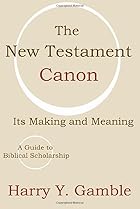
2015 Book #1 / Media #3: The New Testament Canon, by Harry Y. Gamble

Reason for reading: This is one of the supplementary books for the great course The New Testament (The Great Courses, Course Number 656), by Bart D. Ehrman.
Thoughts: This short "guide to biblical scholarship" glossed over some of the reasons certain books, and not others, were chosen for the New Testament canon. This is a very heavy topic with lots of scholarship, and this book tended to disagree with most of the specific theories in favor of the broader theory that there's no evidence that any specific movement had a great impact on the formation of the New Testament canon, but added all together they DID have an impact. I found this book rather dense at times. It assumed prior knowledge of the topic, which I'm only beginning to study.
Notes
Chapter 2: The History of the New Testament Canon
The history of the New Testament (NT) canon must be pieced together on fragmentary evidence. There are a couple types of evidence that are useful: 1) The contents of the ancient manuscripts of the NT together with scriptural aids like concordances or prologues. This evidence is mainly from the fourth and fifth centuries. 2) The use of early Christian documents written from the second through the fifth centuries. By noting early scholars' allusions to various texts, we can deduce which of these early texts were widely accepted.
The gospels which were incorporated into the NT did not gain clear prominence until the late second century. Mark, written around 65, appears to have been the first narrative gospel. But it originally ended at 16:8 and thus lacked any post-resurrection narrative of Jesus. John, too, was originally lacking sections that were later accepted as gospel - Chapter 21 was not composed by the same person that wrote the rest of the Gospel of John. Additionally, the story of the adulteress (John 7:53 - 8:11) wasn't originally part of the Gospel of John. These discrepancies might have cast doubt on the authoritative truth of these gospels. Furthermore, having too many gospels, especially ones that seem to contradict each other, cast doubt on the adequacy of any gospel.
The first evidence for a collection of four Gospels was in a document written by Irenaeus, bishop of Lyons in Gaul, writing around the year 180. There is also evidence of a four-gospel collection in the Muratorian canon list, which claims that the diversity of the gospels "matters nothing for the faith of believers." This comment suggests that some people had indeed found the discrepancies in the gospels disturbing.
The formation of a four-gospel collection was neither a necessity nor a natural outcome of the history of gospel literature in the early church. It is a compromise which balances an unmanageable number of gospels and a single self-sufficient gospel. Writers of the period tend to speak of the group of gospels as "gospel" (singular); thus, there are not four gospels but a fourfold gospel. Thus a balance is reached between two extremes.
There are several theories as to why Paul's letters gained the widespread appreciation that led to their placement in the canon.
One theory is that because his letters were highly valued by the communities he wrote to, they all sent his letters to neighboring communities so that everyone could share. But if this were the case, why did some letters survive and others disappear? And why did the author of Acts of the Apostles not mention the letters, if they were so important?
Another theory (Goodspeed's) is that Paul's letters were highly valued by one scholar, who went out of his way to collect as many of them as he could. He then wrote the letter to the Ephesians, in Paul's name, as an introduction to his collection. That would explain the difference in writing styles of that letter to the rest of them. Gamble suggests that this is an extremely romantic theory, but with no evidence to support it.
Another scholar (Schmithals) changed Goodspeed's theory a bit to say that the collector/editor of the letters did so to create a weapon against gnosticism, since many of Paul's letters contain comments that are in opposition to gnostic spirituality. Again, there's no evidence that this theory is true, and it's too complex to accept without evidence. (Occam's Razor and all that jazz.)
Schenke suggested that the letters were collected by a Pauline school of scholars that valued Paul's teaching. This theory seems to be the most attractive to our author Gamble.
Chapter 3: Factors in the Formation of the Canon
In the early years of Christianity, there were several Christian movements. Many theologians suggest that the New Testament was developed specifically to refute the claims of one or more of these movements. Gamble lists a few of them, and provides the arguments for and against particular groups having strong influence on the formation of the NT. Although Gamble does not support beliefs that any of these groups had much influence on the NT formation, he does suggest that all of them together could have had a larger effect on the NT.
The Marcionite Christians (second century) - movement begun by Marcion, a shipowner-turned-scholar who arrived in Rome in about the year 140. Marcionites Believed that there was an angry Jewish Creator God and a good God that Jesus came to save us from. Since Jesus was not created by the Creator God, he did not have a corporal body - he only appeared to. Thus, Jesus was not human, but he was divine. (This would sorely undervalue Jesus' gift of dying for our sins if he only appeared to suffer.) Because Judaism had nothing to do with Christianity (different Gods) the Jewish scriptures had no place in the Church.
Marcion was the potentially the first scholar to compile a canon of literature - composed of the letters of Paul and Gospel of Luke. Some theologians believe that the Church adopted Paul's letters into their canon because of pressures from Marcionites, and that it was compelled to compensate for Marcion's bias towards Paul by including a variety of other apostolic writings to the canon. However, this theory does not explain why Paul's letters were widely known before Marcion's time.
The Gnostic Christians - Believed that the real truth was only revealed to a select few. That when Jesus was baptized, a spirit entered him and he became the savior who taught the way to salvation. This spirit left Jesus and returned to heaven when Jesus was dying on the cross. We, also, are spiritual in nature, stuck in corporal bodies. (This doesn't fit exactly with the way Elaine Pagels described Gnostics in the two books of hers that I've read, but I guess there's room for error in studying a group of people on which so little information is available.)
It is commonly supposed that the NT was developed as an effort to oppose The privacy of many Gnostic beliefs, which were only abailable to the select few, and to oppose the "heretical" literature circulated by the Gnostics. However, Gnostics made free use of canonical literature, too, and it seems that the major difference between Gnotics and the Church was more about interpretation than literature.
Montanism - The Montanists were followers of a charismatic prophet named Montanus who claimed that the Paraclete promised by Jesus in the Gospel of John had come, and the end of times were at hand. (Seems like the end of times was always at hand for millennia on end.) Many theologians suggest that the New Testament was formed as a retaliation against Montanism for two reasons. First, the Montanists created new prophetic documents and claimed authoritative truth that the Church wanted to refute. Second, Montanists claimed prophetic revelation and the Church claimed that all prophetic revelations were in times past - that Jesus was the last prophet. However, as with the Marcionites and the Gnostics, Gamble refutes claim that Montanism had much impact on creation of the NT. First of all, Montanists, like the Gnostics, made free use of the canonical literature, but had different interpretations. Second, at the time that Montanism was popular the Holy Spirit and prophetic charisma were accepted by even the anti-Montanists in the Church.
In addition to the groups above, these Early Christian groups were outlined in Chapter 1 of Bart D. Ehrman's The New Testament: A Historical Introduction to the Early Christian Writings. I thought it would fit in well with these notes on Gamble's book.
The Jewish Christian Adoptionists - Believed that Jesus was born a human of a non-virgin. He was adopted by God as His son upon baptism. Jesus was not, however, divine. (I could believe this pretty easily if I were inclined to have fixed beliefs.)
Proto-Orthodox Christians - These are the ones that modern Christianity sprouted from. They believed that Jesus was divine and human. They believed there was only one God.
Another factor possibly affecting the formation of the New Testament is that the technology to create a codex large enough to hold the entire NT was not developed until the fourth century.
27The_Hibernator
NEWLY ADDED TO "CURRENTLY READING:"
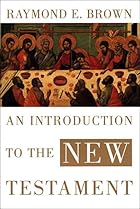
I'm reading chapter 1 of An Introduction to the New Testament, by Raymond E Brown for the great course The New Testament (The Great Courses, Course Number 656), by Bart D. Ehrman.
I'm reading chapter 1 of An Introduction to the New Testament, by Raymond E Brown for the great course The New Testament (The Great Courses, Course Number 656), by Bart D. Ehrman.
28DeltaQueen50
Hi Rachel, it's great to see you over here. I'm placing my star and wishing you good luck with your Challenge.
29The_Hibernator
Hi Judy! Thanks for stopping by!
30The_Hibernator

2015 Book #2 / Media #4 / Mt TBR #2: Fire & Ash, by Jonathan Maberry

Reason for reading: This is the fourth and final book in a series that I've been reading. I'm making a goal this year to get farther in / finish as many series as possible
Summary: In this fourth and final book in the Rot & Ruin series, Benny, Chong, Lila, and Nix battle the genocidal Reapers while keeping the zombies at bay. But they might have to become monsters to fight monsters. And who is more of a monster: The zombies or the humans?
Thoughts: This book was filled with action and adventure with a dash of intrigue. Like most Maberry books that I've read, the action got a little too much at times, to the point of feeling a little B-rate. But Maberry has some interesting plots and his philosophy about who really is the monster is quite interesting. Overall, a good finale. If you liked the first three books, you'll like this one as well.
31The_Hibernator
NEWLY ADDED TO "CURRENTLY READING:"

I'm listening to Far from the Tree: Parents Children and the Search for Identity, by Andrew Solomon. This is the 2014 winner of the Welcome Trust Book Prize which is awarded to a book that brings medicine into the lives of "popular" readers.

I'm listening to Far from the Tree: Parents Children and the Search for Identity, by Andrew Solomon. This is the 2014 winner of the Welcome Trust Book Prize which is awarded to a book that brings medicine into the lives of "popular" readers.
32The_Hibernator
Weekly update
What I acquired (free Friday nook book):

I finished one book Fire & Ash, by Jonathan Maberry >90.
This week in DBT:
We covered Non-Judgmental Stance (NJS), One Mindfulness (OM), and Effective (EFF)
NJS: The point here is to be as non-judgmental as you can. This doesn't just include the obvious stuff like judging people for the race, gender, or values, but subtler things like the little assumptions you make in life.
For instance, I told my boss that I had a disability (bipolar with suicidal ideation) last week because I was starting to feel really, really bad again. (If I had been in my right mind, I probably wouldn't have, but I was desperate at that moment, and it DID help. And he responded quite favorably.) However, when I saw my boss's boss the other day, he wasn't making eye contact with me. I immediately assumed it was because Ryan, my boss, had told Jim, his boss, that I was mentally ill.
But then I realized NJS. I need to stop assuming that I know why Jim is acting the way he's acting. Yes, it's likely to be exactly what I think it is. But there's no point in assuming. And there's no point in feeling self-conscious about it myself (i.e. there's no point in judging myself, either).
And that brings me to another point. You're not only not supposed to judge other people, you're supposed to stop judging yourself. Don't even judge yourself for judging. (Which is the bane of my judgmental existence - I feel like a hypocrite because I'm so judgmental of judgmental people. Anybody else have that problem?)
Being judgmental creates negative emotion and keeps you out of the present moment, because you're using assumptions/categorizations/data from the past to judge. Having a NJS can free you from the negative emotions that you associate with certain assumptions.
OM: This one I'm not quite a master of yet. Apparently, we're supposed to break each task into "molecules" or "units." For instance, thinking of what to write, typing each letter, and then reading it as I'm typing (which I'm told I'm not supposed to do if I want to be a "good" typist) are each one unit. I'm supposed to separate these and be conscious of each. I'm not supposed to do anything extra. Apparently, this will either distract me from my pain or keep me from getting distracted from what I'm doing. I'm not sure which.
EFF:Being effective means that you need to be aware of the rules (even if you don't agree with them) and follow those rules to get the task done as well as you can. That is, IF the task needs to be done and you are not sacrificing your own personal values or safety to follow those rules.
What I acquired (free Friday nook book):

I finished one book Fire & Ash, by Jonathan Maberry >90.
This week in DBT:
We covered Non-Judgmental Stance (NJS), One Mindfulness (OM), and Effective (EFF)
NJS: The point here is to be as non-judgmental as you can. This doesn't just include the obvious stuff like judging people for the race, gender, or values, but subtler things like the little assumptions you make in life.
For instance, I told my boss that I had a disability (bipolar with suicidal ideation) last week because I was starting to feel really, really bad again. (If I had been in my right mind, I probably wouldn't have, but I was desperate at that moment, and it DID help. And he responded quite favorably.) However, when I saw my boss's boss the other day, he wasn't making eye contact with me. I immediately assumed it was because Ryan, my boss, had told Jim, his boss, that I was mentally ill.
But then I realized NJS. I need to stop assuming that I know why Jim is acting the way he's acting. Yes, it's likely to be exactly what I think it is. But there's no point in assuming. And there's no point in feeling self-conscious about it myself (i.e. there's no point in judging myself, either).
And that brings me to another point. You're not only not supposed to judge other people, you're supposed to stop judging yourself. Don't even judge yourself for judging. (Which is the bane of my judgmental existence - I feel like a hypocrite because I'm so judgmental of judgmental people. Anybody else have that problem?)
Being judgmental creates negative emotion and keeps you out of the present moment, because you're using assumptions/categorizations/data from the past to judge. Having a NJS can free you from the negative emotions that you associate with certain assumptions.
OM: This one I'm not quite a master of yet. Apparently, we're supposed to break each task into "molecules" or "units." For instance, thinking of what to write, typing each letter, and then reading it as I'm typing (which I'm told I'm not supposed to do if I want to be a "good" typist) are each one unit. I'm supposed to separate these and be conscious of each. I'm not supposed to do anything extra. Apparently, this will either distract me from my pain or keep me from getting distracted from what I'm doing. I'm not sure which.
EFF:Being effective means that you need to be aware of the rules (even if you don't agree with them) and follow those rules to get the task done as well as you can. That is, IF the task needs to be done and you are not sacrificing your own personal values or safety to follow those rules.
33lkernagh
Thank you for providing the information about NJS. That is something that I found very helpful. It is so easy to slide into being judgmental position. I know I have done that a few times and then had to step back and re-frame my thinking. I would have difficulties with OM. I am more of a holistic thinker... breaking things down into units would be challenging for me, too.
Happy weekend, Rachel!
Happy weekend, Rachel!
34The_Hibernator
I've finished reading chapter 1 of An Introduction to the New Testament, by Raymond E Brown for the great course The New Testament (The Great Courses, Course Number 656), by Bart D. Ehrman.
Notes on Chapter 1:
The meaning of the word "Testament" has developed over time. At first, it was in reference to deals God had made with Noah, Abraham, David, and Moses - most notably the one to Moses in which the people of Israel were made "God's chosen people." Almost 600 years before the birth of Jesus, the prophet Jeremiah predicted "The days are coming when I will make a new covenant..." (Jer 31:31), where a covenant is a testament, and new means renewed. Then, before Jesus died, he referenced a new covenant/testament in his blood. Through his death and resurrection, therefore, Christians believed that god had renewed his covenant with his people, this time including the Gentiles. Only in the 2nd century do we see the word "testament" referring to a body of literature.
And, in fact, the idea of recording Jesus' story and sayings did not occur until after Jesus' death. Jesus didn't produce any written lectures, nor did he, in any of the Christian writings, suggest that his word be recorded. Letters were the first form of literature on Christian beliefs, and they were meant to answer immediate, pressing problems in the community to which they were addressed. Therefore, the letters of Paul have a different tone and emphasis in each, sometimes to the point of seeming contradictory.
By the late 60s, anybody who had had direct contact with Jesus had died. The passing of the first generation of Christians led to writings of a more permanent nature. These include the deuteroPauline writings such as II Thes, Col, Eph, I and II Tim, and Titus, which were written after Paul's death. The deuteroPauline letters have a more permanent and universal tone than earlier letters.
The Gospels also had a more permanent tone than early Pauline letters, but relevance to Christian problems would still have influenced which works were preserved. Mark's gospel emphasized the suffering of Christ on the cross, which would relate easily to the sufferings of early Christian persecution. The gospels of Matthew and Luke, probably written about 20 years later, are much more focused on the Jesus tradition, including sayings of Jesus which are hypothesized to originated in an earlier document dubbed "Q."
The Acts of the Apostles was probably meant as a continuation of Luke's gospel. It moved the story of Christianity beyond Jerusalem and Judea to Samaria and beyond.
The Book of Revelation is an example of apocalyptic literature with roots in Ezekiel and Zechariah. Apocalyptic literature was quite common at the time. Unfortunately, many modern readers have forgotten that the book was written to 1st century Christians, who would be quite familiar with the symbolic meaning of apocalyptic literature; they therefore interpret the Book of Revelation literally.
There are three reasons early Christian writings were preserved: 1) Apostolic origin - books that were purported to be written by apostles of Jesus (or Paul) had special place among Christians. 2) Which Christian communities the literature was addressed to - for instance, very little literature survives from Jerusalem or Judea, which was torn apart by the Jewish Revolt in 66-70. 3) Conformity with the rule of faith.
There is also a question of why we need 4 gospels instead of just 1. (This was discussed in my notes on >63 The_Hibernator: Gamble's book.) Brown suggests that concentration on one gospel could be used to support theology rejected by a large number of Christians. An example of this problem is the beliefs of the Marcionites (also mentioned in detail in my notes on >63 The_Hibernator: Gamble). The Marcionites believed that the creator God is not the same as the all-loving God of the NT. Therefore, the OT and teachings of Judaism should be rejected. Brown suggests that one reason the Church embraced four gospels was to refute Marcion's belief that only the gospel of Luke and the letters of Paul should be considered as canon. Brown also suggests that the Church embraced the OT to refute Marcion's rejection of it. However, in his book Gamble cautioned against putting too much emphasis on ONE driving factor for the Church's choices, and I agree with him on that.
35The_Hibernator
>33 lkernagh: Hi Lori! Good to see you on my thread! I'll repost something I said on my 75ers thread about NJS in case you're interested.
Yes true nonjudgmentalness is impossible to achieve, I believe. Except maybe for a higher power which has infinite mental capacity. ;) We mere humans are stuck with minds that categorize data in order to process it. Categorization leads to assumptions. So by the nature of how our minds work, we pass judgments. It's just a matter of how many of those assumptions we can drop and still be functional in society. This is what we'd call a "dialectic" in DBT. *laughs at her own use of DBT terminology* In a "dialectic" you can picture a see-saw such as the one I have up in >6 March-Hare: The_Hibernator:. The healthy range is somewhere in the middle where the see-saw is balanced. I guess that would be where Nonjudgmental Stance (NJS) is. On the far right, the see-saw tips towards an unhealthy level of judgement in which our ability to function is impaired by too many assumptions. And on the far left, the see-saw tips towards unhealthy level of non-categorization in which we lose our ability to process simple information because we can no longer make connections between one item of data and another.
Yes true nonjudgmentalness is impossible to achieve, I believe. Except maybe for a higher power which has infinite mental capacity. ;) We mere humans are stuck with minds that categorize data in order to process it. Categorization leads to assumptions. So by the nature of how our minds work, we pass judgments. It's just a matter of how many of those assumptions we can drop and still be functional in society. This is what we'd call a "dialectic" in DBT. *laughs at her own use of DBT terminology* In a "dialectic" you can picture a see-saw such as the one I have up in >6 March-Hare: The_Hibernator:. The healthy range is somewhere in the middle where the see-saw is balanced. I guess that would be where Nonjudgmental Stance (NJS) is. On the far right, the see-saw tips towards an unhealthy level of judgement in which our ability to function is impaired by too many assumptions. And on the far left, the see-saw tips towards unhealthy level of non-categorization in which we lose our ability to process simple information because we can no longer make connections between one item of data and another.
36The_Hibernator
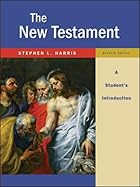
In my final text for Lesson 1 of The New Testament (The Great Courses, Course Number 656), I read chapters 1-3 of The New Testament: A Student's Introduction, by Stephen L. Harris.
I found these notes from chapter 3 worth sharing, since I was unaware of the differences between these groups before reading this text:
Chapter 3: The Diverse World of Fist-Century Judaism
Sadducees: Priests that conservatively stuck to a literal reading of the Torah, eschewing the "oral traditions" of the Pharisees. The Sadducees were the ones who turned Jesus over to the Romans for execution. They were the ones who stood the most to lose if there was fighting between the Romans and the Jews because the Sadducees seem to have been the chief mediators between the Roman rulers and the Jews. They disappeared after the sacking of Jerusalem by the Romans in 70CE.
Pharisees: These priests were also conservative, but they also had an oral law, which was later recorded as Mishnah in 200CE. Although there seems to be a lot of dispute between Jesus and the Pharisees in the Bible, Jesus most likely got along fine with most Pharisees (as can be seen in some Biblical stories). The disputes between Jesus and the Pharisees may have been biased by problems between the early Christians and the Pharisees around the time the Gospels were written.
Samaritins: This is a group of people (named after their capital city Samaria) related to the Jews by religion, but whom the Jews in Judea regarded as alien. Instead of worshiping at the Temple at Mount Zion, the Samaritins worshiped at Mount Gerizim. The Samaritins recognized only the Mosaic Torah, and not the Prophets or other biblical writings.
Essenes: These are the people who are thought to have written the Dead Sea Scrolls somewhere between the mid-second century and late first century CE. Little is known about them, but their practices seem to have many similarities to later Christian practices, though Jesus is never mentioned outright. It is supposed by Harris that this is a non-Christian sect that anticipated some Christian rituals, rather than a group of early Christians. There also seem to be some parallels between the Book of Hebrews and Essenes' beliefs.
37rabbitprincess
That's really interesting! I'd heard of the Pharisees and Samaritans, but never knew the differences.
38The_Hibernator
2015 Media #5 / Mt TBR #3: Lesson 1 of The New Testament (The Great Courses, Course Number 656)
Lecture 1: The Early Christians and Their Literature
This was an introductory lecture which suggested a few ways to study the New Testament: 1) as a faithful believer; 2) From a cultural perspective (e.g. the NT's influence on Western culture and on literature); and 3) From the historical context of the initial audience. Erhman's course intends on studying the NT from the third perspective.
He gives some background information: there are 27 books in the NT, all written by Christians of the 1st century. Many of these books claim to be written by direct apostles of Jesus (i.e. people who are considered to have been sent directly by Jesus to spread his word). All of the books were originally written in Greek.
The 27 books of the NT comprise 4 major groups. 1) The four Gospels, describing the birth, life, and death of Jesus; 2) The Acts of the Apostles, describing the spread of Christianity around the world; 3) 21 epistles, 13 of which are written by Paul, with a focus on the beliefs and ethics of Christianity; 4) The Book of Revelation, which is a piece of apocalyptic literature, originally thought to have been written by the apostle John, but later revealed to have been written by another John. (The belief that it was written by the apostle is why it attained popularity among early Christians.)
Texts read:
>26 The_Hibernator: The New Testament: A Historical Introduction to the Early Christian Writings, by Bart D. Ehrman - Chapter 1
>36 The_Hibernator: The New Testament: A Student's Introduction by Steven Harris - Chapters 1 - 3
>34 The_Hibernator: An Introduction to the New Testament By Raymond Brown - Chapter 1
>26 The_Hibernator: The New Testament Canon, by Harry Y Gamble
39The_Hibernator
Weekly update
This week I acquired no new books, and I finished>142 Lesson 1 of The New Testament (The Great Courses, Course Number 656).
At work things went OK. I'm still feeling a bit overwhelmed by my irresponsible staff, but I just hired two new members this week, so perhaps things will start getting better soon. I also am working out a deal with a local social support institution which looks for jobs for mentally ill people who have been out of the work-force for a while or who can't work a full-time job. I'm hoping I can get some new people that way. :) However, I need to write up a job description for that, and I'm a bit busy/lazy/procrastinator. Hopefully next week that will be set in motion.
Personal life was not so great. I finally got the information for my new insurance, and found out that NONE of my providers is covered. At least, that's what it appears from the company's website. I'll have to call up each provider one by one on Tuesday (because Monday's a holiday) to find out if that's true. If so, I'll have to find a new psychiatrist BEFORE I run out of meds (they are hard to find, and harder when your in-network pool is so small!), a new therapist, a new general practitioner (I loved Dr Spears!!!), and I'll have to drop out of DBT. It's like losing all of my support network at once, and it's very concerning. However, there's still hope until I talk to each place individually. I'll keep you updated if you're interested.
Also, my boyfriend Joel is getting harder to get along with. I'm not sure what's wrong with him - he claims nothing is wrong, yet he is alienating everyone in his life. He dropped his alcoholic treatment program and his therapist because his insurance didn't cover them, and he has no intent on replacing them because he says AA is enough and he's "on the road to recovery." Two or three weeks ago he almost checked himself into the hospital with suicidal thoughts. That is not "nothing." So, of course, I'm concerned about what's really going on in his life right now, why he's alienating everyone. And I'm frustrated because I have mental health issues of my own and it's hard dealing with his as well. :( However, I'll be meeting up with him later today and I'll see if I can coax some truth out of him - about how he's really feeling right now.
In DBT we're learning how to distract ourselves from our distress with the lovely acronym ACCEPTS:
A: Activities - find an activity which will keep your mind off your stress. (I do this by reading, watching netflix, reading, talking to friends, and, of course, reading. You'd think I'd finish more books than I do!)
C: Contribute - This doesn't have to be volunteering. It can be as small as smiling at someone or washing the dishes for your family. Raising kids is a form of contributing. (I volunteer at a crisis hotline).
C: Comparison - This is the hardest of the ACCEPTS skills. You need to learn to compare yourself to others (to yourself) in a positive way. It's easy to look at someone and see how great they're doing and feel depressed. It's harder to look at someone else and be like "I want to be that way" and feel uplifted. It's easy to look at someone who's worse off than you and say "Wow. Life sucks. It sucks more for them than for me, so I feel bad about feeling as depressed as I do." It's harder to say "look at that person who's in a worse place than me. Things could be worse." and feel uplifted. I like comparing myself to myself much better. I can say "look at where I am compared to where I was." That works pretty well. And I can say "look at where I want to be...that's possible if I work towards it."
E: Emotions - This one is similar to distract, only you're distracting yourself with the purpose of creating other emotions than the one you're wallowing in.
P: Push Away - This is where you lock your problem up somewhere so that you can worry about it on another day when you're better able to handle it. They even recommend that we visualize putting it in a box and locking it up. And also writing things down, and then hiding that in a drawer for another day. The writing thing I do all the time. I make a to-do list so that I can remember all of the things I need to do to get through the problem, then I don't have to stress about it as much. I also have a place that I consider my "safe place." It's a dome that keeps out demons. I visualize my spirit hiding out under that dome and all the demons (like righteous anger, resentment, terror, mental illness etc.) are unable to get at me. That is very calming. I have a very detailed safe place. It's my grandmother's house, superimposed on the beach of Lake Tahoe, with mountains in the background and the ocean on the other side (strangely enough the ocean is located OUTSIDE the dome...I need to go out there and face my demons sometimes.) I have some friends there who also need to be safe from demons. They each have a house. It's quite nice. :)
T: Thoughts - Mindfully focus on other thoughts. I'm not a very mindful person, so this one is hard for me, but I think this is somewhat what I'm doing with my visualization described in Push Away.
S: Sensations - Here you distract yourself by doing something physically active or exhausting. Like exercise, cleaning, etc.
Personally, I think distracting yourself is the easiest form of distress tolerance. Though I haven't had time to learn the others yet, and I might not ever have time. Unless I go through my manual by myself, which is possible. :)
This week I acquired no new books, and I finished>142 Lesson 1 of The New Testament (The Great Courses, Course Number 656).
At work things went OK. I'm still feeling a bit overwhelmed by my irresponsible staff, but I just hired two new members this week, so perhaps things will start getting better soon. I also am working out a deal with a local social support institution which looks for jobs for mentally ill people who have been out of the work-force for a while or who can't work a full-time job. I'm hoping I can get some new people that way. :) However, I need to write up a job description for that, and I'm a bit busy/lazy/procrastinator. Hopefully next week that will be set in motion.
Personal life was not so great. I finally got the information for my new insurance, and found out that NONE of my providers is covered. At least, that's what it appears from the company's website. I'll have to call up each provider one by one on Tuesday (because Monday's a holiday) to find out if that's true. If so, I'll have to find a new psychiatrist BEFORE I run out of meds (they are hard to find, and harder when your in-network pool is so small!), a new therapist, a new general practitioner (I loved Dr Spears!!!), and I'll have to drop out of DBT. It's like losing all of my support network at once, and it's very concerning. However, there's still hope until I talk to each place individually. I'll keep you updated if you're interested.
Also, my boyfriend Joel is getting harder to get along with. I'm not sure what's wrong with him - he claims nothing is wrong, yet he is alienating everyone in his life. He dropped his alcoholic treatment program and his therapist because his insurance didn't cover them, and he has no intent on replacing them because he says AA is enough and he's "on the road to recovery." Two or three weeks ago he almost checked himself into the hospital with suicidal thoughts. That is not "nothing." So, of course, I'm concerned about what's really going on in his life right now, why he's alienating everyone. And I'm frustrated because I have mental health issues of my own and it's hard dealing with his as well. :( However, I'll be meeting up with him later today and I'll see if I can coax some truth out of him - about how he's really feeling right now.
In DBT we're learning how to distract ourselves from our distress with the lovely acronym ACCEPTS:
A: Activities - find an activity which will keep your mind off your stress. (I do this by reading, watching netflix, reading, talking to friends, and, of course, reading. You'd think I'd finish more books than I do!)
C: Contribute - This doesn't have to be volunteering. It can be as small as smiling at someone or washing the dishes for your family. Raising kids is a form of contributing. (I volunteer at a crisis hotline).
C: Comparison - This is the hardest of the ACCEPTS skills. You need to learn to compare yourself to others (to yourself) in a positive way. It's easy to look at someone and see how great they're doing and feel depressed. It's harder to look at someone else and be like "I want to be that way" and feel uplifted. It's easy to look at someone who's worse off than you and say "Wow. Life sucks. It sucks more for them than for me, so I feel bad about feeling as depressed as I do." It's harder to say "look at that person who's in a worse place than me. Things could be worse." and feel uplifted. I like comparing myself to myself much better. I can say "look at where I am compared to where I was." That works pretty well. And I can say "look at where I want to be...that's possible if I work towards it."
E: Emotions - This one is similar to distract, only you're distracting yourself with the purpose of creating other emotions than the one you're wallowing in.
P: Push Away - This is where you lock your problem up somewhere so that you can worry about it on another day when you're better able to handle it. They even recommend that we visualize putting it in a box and locking it up. And also writing things down, and then hiding that in a drawer for another day. The writing thing I do all the time. I make a to-do list so that I can remember all of the things I need to do to get through the problem, then I don't have to stress about it as much. I also have a place that I consider my "safe place." It's a dome that keeps out demons. I visualize my spirit hiding out under that dome and all the demons (like righteous anger, resentment, terror, mental illness etc.) are unable to get at me. That is very calming. I have a very detailed safe place. It's my grandmother's house, superimposed on the beach of Lake Tahoe, with mountains in the background and the ocean on the other side (strangely enough the ocean is located OUTSIDE the dome...I need to go out there and face my demons sometimes.) I have some friends there who also need to be safe from demons. They each have a house. It's quite nice. :)
T: Thoughts - Mindfully focus on other thoughts. I'm not a very mindful person, so this one is hard for me, but I think this is somewhat what I'm doing with my visualization described in Push Away.
S: Sensations - Here you distract yourself by doing something physically active or exhausting. Like exercise, cleaning, etc.
Personally, I think distracting yourself is the easiest form of distress tolerance. Though I haven't had time to learn the others yet, and I might not ever have time. Unless I go through my manual by myself, which is possible. :)
40-Eva-
What a shame - I detest that a person's well-being should be dependent upon which insurance they have! Sending best wishes that things turn out OK for you!
41_Zoe_
Ahhh, insurance drives me crazy! I really hope you don't have to stop DBT when it seems like it's being so helpful (I know I'm learning a lot just reading your descriptions of it!). Fingers crossed that you can negotiate something with all the individual providers.
42The_Hibernator
Thanks Eva and Zoe! your support means a lot! :)
43The_Hibernator
Interesting articles so far:
A Mongrel Half-Bred Race http://www.laphamsquarterly.org/foreigners/mongrel-half-bred-race
An satire of British xenophobia written by Daniel Defoe
Mistaken Identities http://www.laphamsquarterly.org/foreigners/mistaken-identities
An interesting essay by Langston Hughes about mistaken racial identities.
44The_Hibernator
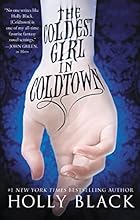
2015 Media #6 / Book #3: The Coldest Girl in Coldtown, by Holly Black
Reason for reading: This was the January pick for my bookclub.
Summary: In this near-future book, vampires have emerged into the public eye due to an outbreak started by a sloppy newly-made vampire who left his victims living instead of completely draining them. Vampires, and the Cold (people infected with the vampirism disease, but who haven't yet tasted the blood of humans and so haven't turned) are forced to live in ghettos called Coldtowns. In this setting, the story starts out with Tana waking up to a vampire-related disaster, which begins both a physical journey away from the disaster and a spiritual journey of self-discovery.
What I thought: This book was fast-paced and difficult to put down. It asked some interesting philosophical questions. Do we all have monsters within us? Do we crave immortality and beauty at the price of humanity? If not, why are so many people attracted to paranormal romances? Is it because we want the ultimate bad-boy? Or, in the opposite line of questioning, why do so many people seek good in what seems evil?
45The_Hibernator
NEWLY ADDED TO CURRENTLY READING:

The Remarkable Miss Frankenstein, by Minda Webber is a book given to me by a DBT friend. Not really the type of book I'd have gone for next, but I thought I'd give it a try since it was a sweet gift.

The Remarkable Miss Frankenstein, by Minda Webber is a book given to me by a DBT friend. Not really the type of book I'd have gone for next, but I thought I'd give it a try since it was a sweet gift.
46The_Hibernator
Weekly Update:
Book News: This week I finished reading The Coldest Girl in Coldtown, by Holly Black.(comments)
I acquired 4 new books (oops!). They are:
A gift from my DBT friend, Todd. It's not the type of book I'd normally read (too cheap romancy), but I'm giving it a try because it was a sweet gift.
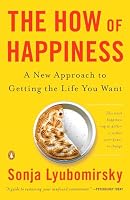

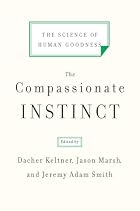
These were all purchased to supplement the self-paced MOOC I have signed up for: The Science of Happiness
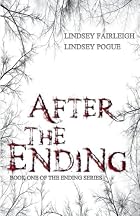
This week's Free Friday Nookbook from Barnes and Noble. It's good that it was free, because the reviews of it are terrible - I should have read them before downloading. On the other hand, it was free.
Personal News:This was another difficult week as I struggled to find solutions to my insurance problem. I also have to terminate an employee and write up another one. I'm desperately seeking another job - one in which I can stop thinking about it when I go home for the evening/weekend. I really need that right now. I have not yet found solutions to my insurance problem, though thanks to people here on LT I have a few leads to follow. My DBT facilitator tells me to keep coming, that they'll work something out. I hope he's right. Because otherwise I'll be getting a hefty bill soon.
DBT news: This week we studied Self-Soothing. When we get stressed out, we can try calming ourselves down with things that we find soothing to our senses. For instance, for sight I could look at pictures of loved ones or places that are special to me. Or I could look at art. Or I could stare at a sleeping child, which is a frequent pass-time, if I'm to believe the books I read. For sound I could listen to music or to background noise like rain forest, rivers, birds, or even white noise. Lots of people use candles or flowers to produce a calming smell. Eating "mindfully" soothes through taste. (To eat mindfully one must really concentrate on how something tastes, you shouldn't just mindlessly eat...) For touch - this is a little embarrassing - but I enjoy touching things to my mouth and feeling the texture. But you could also squeeze a stress toy or pet your cat, etc. You can combine more than one sense at a time (in reality everything you do combines more than one sense, so this is stating the obvious. There is also your "mind sense" and your "spiritual sense." For the mind sense, you could think peaceful thoughts or affirmations. I figure you could also do sudoku or something that exercises your mind, but still soothes. To soothe the spiritual sense you could meditate or pray.
These are skills that I don't often use. Or if I do use them, I don't think about it.
Book News: This week I finished reading The Coldest Girl in Coldtown, by Holly Black.(comments)
I acquired 4 new books (oops!). They are:
A gift from my DBT friend, Todd. It's not the type of book I'd normally read (too cheap romancy), but I'm giving it a try because it was a sweet gift.

These were all purchased to supplement the self-paced MOOC I have signed up for: The Science of Happiness
This week's Free Friday Nookbook from Barnes and Noble. It's good that it was free, because the reviews of it are terrible - I should have read them before downloading. On the other hand, it was free.
Personal News:This was another difficult week as I struggled to find solutions to my insurance problem. I also have to terminate an employee and write up another one. I'm desperately seeking another job - one in which I can stop thinking about it when I go home for the evening/weekend. I really need that right now. I have not yet found solutions to my insurance problem, though thanks to people here on LT I have a few leads to follow. My DBT facilitator tells me to keep coming, that they'll work something out. I hope he's right. Because otherwise I'll be getting a hefty bill soon.
DBT news: This week we studied Self-Soothing. When we get stressed out, we can try calming ourselves down with things that we find soothing to our senses. For instance, for sight I could look at pictures of loved ones or places that are special to me. Or I could look at art. Or I could stare at a sleeping child, which is a frequent pass-time, if I'm to believe the books I read. For sound I could listen to music or to background noise like rain forest, rivers, birds, or even white noise. Lots of people use candles or flowers to produce a calming smell. Eating "mindfully" soothes through taste. (To eat mindfully one must really concentrate on how something tastes, you shouldn't just mindlessly eat...) For touch - this is a little embarrassing - but I enjoy touching things to my mouth and feeling the texture. But you could also squeeze a stress toy or pet your cat, etc. You can combine more than one sense at a time (in reality everything you do combines more than one sense, so this is stating the obvious. There is also your "mind sense" and your "spiritual sense." For the mind sense, you could think peaceful thoughts or affirmations. I figure you could also do sudoku or something that exercises your mind, but still soothes. To soothe the spiritual sense you could meditate or pray.
These are skills that I don't often use. Or if I do use them, I don't think about it.
47The_Hibernator
Accidental post
48The_Hibernator
PEARL RULED:
Love without End, by Glenda Green. This is a book my aunt Michele loaned me, and it was the book that made her fall back in love with Jesus. I could tell immediately it wasn't my type of book, because I'm not a fan of book that share their meaning in the form of dialog. I want allegory, not dialog. On the other hand, I DID find the first section of the book (before the dialog with Jesus started) interesting. It was about the events leading up to and following her conversations with Christ. Now, keep in mind that she claimed that Christ and she had extensive conversations and that he was there in the room, sitting for a her painting. According to the painting, he has dazzlingly blue eyes and chestnut hair. :) I hear rumor that this fits the description of Jesus given in Heaven is for Real.
Don't get me wrong, even though I Pearl ruled this book doesn't mean it didn't have its inspiring moments. For instance, it pointed out "When you are in the presence of your enemies, you know for a fact that any love you feel is not because of external factors...you know that you are love." In other words, love for your enemies is pure - it isn't tainted with lust or greed.
Green's Jesus also had an interesting philosophy of "innocent perception." To Green, this was the action of seeing things as they are without categorizing the information with our minds. This idea reminded me a lot of the observe/describe of DBT - where you project a non-judgmental view on whatever you observe, and you describe not what you think, but what is (i.e. I feel a burning sensation on my tongue when I taste this food, instead of Mom put too much spice in the food.) This perception also reminded me of the philosophy of phenomenology.
Green's Jesus proposed a Trinity composed of Love, Spirit, and Adamantine Particles (a.k.a the Higgs Boson). Although this trinity made me chuckle a little - especially after all the recent news coverage of the Higgs Boson. However, it does have a certain beauty to it. I admit to knowing very little about the Higgs Boson other than the fact that it is nicknamed "The God Particle," and that Green suggests that it is a particle that creates mass and is unbreakable.
One issue I had with this book is that she put her emphasis in bold. And she used so much bolded emphasis that it became distracting! I assume this is because she decided to put Christ's words in italics. Funny thing is, she also put T. S. Elliot's poems in italics. ;)
Love without End, by Glenda Green. This is a book my aunt Michele loaned me, and it was the book that made her fall back in love with Jesus. I could tell immediately it wasn't my type of book, because I'm not a fan of book that share their meaning in the form of dialog. I want allegory, not dialog. On the other hand, I DID find the first section of the book (before the dialog with Jesus started) interesting. It was about the events leading up to and following her conversations with Christ. Now, keep in mind that she claimed that Christ and she had extensive conversations and that he was there in the room, sitting for a her painting. According to the painting, he has dazzlingly blue eyes and chestnut hair. :) I hear rumor that this fits the description of Jesus given in Heaven is for Real.
Don't get me wrong, even though I Pearl ruled this book doesn't mean it didn't have its inspiring moments. For instance, it pointed out "When you are in the presence of your enemies, you know for a fact that any love you feel is not because of external factors...you know that you are love." In other words, love for your enemies is pure - it isn't tainted with lust or greed.
Green's Jesus also had an interesting philosophy of "innocent perception." To Green, this was the action of seeing things as they are without categorizing the information with our minds. This idea reminded me a lot of the observe/describe of DBT - where you project a non-judgmental view on whatever you observe, and you describe not what you think, but what is (i.e. I feel a burning sensation on my tongue when I taste this food, instead of Mom put too much spice in the food.) This perception also reminded me of the philosophy of phenomenology.
Green's Jesus proposed a Trinity composed of Love, Spirit, and Adamantine Particles (a.k.a the Higgs Boson). Although this trinity made me chuckle a little - especially after all the recent news coverage of the Higgs Boson. However, it does have a certain beauty to it. I admit to knowing very little about the Higgs Boson other than the fact that it is nicknamed "The God Particle," and that Green suggests that it is a particle that creates mass and is unbreakable.
One issue I had with this book is that she put her emphasis in bold. And she used so much bolded emphasis that it became distracting! I assume this is because she decided to put Christ's words in italics. Funny thing is, she also put T. S. Elliot's poems in italics. ;)
49The_Hibernator
The Meaning of Jesus: Two Visions, by Marcus Borg and N. T. Wright is a book I'm reading in my study of the historical Jesus.
50lkernagh
Sorry to see that your last two reads were duds and I agree with Eva and Zoe.... an individual's well being should not be dependent upon insurance.
51-Eva-
Hope the DBT-really mean that they will work something out! Self-soothing sounds very interesting - when I get stressed I go to the beach and sit and really study the waves and the patterns the water makes in the sand and come away almost hypnotized. :)
52cammykitty
??? Looks like you haven't felt like updating your thread for awhile. I hope this means just that, not that your life is too crazy to even think about updating us. I was just curious to hear more about your reaction to The Daughter of Smoke and Bone.
53The_Hibernator
:) got lazy on my category thread. I'll update it tonight.
54The_Hibernator

Media #7 / Book #4: Mr. Monk and Philosophy, by D. E. Wittkower
Reason for reading: I was interested in trying out the Popular Culture and Philosophy books that are so hot these days. This seemed like a good place to start since I loved the TV show. :)
Review: This was a book of essays which described the philosophical content of the TV show Monk from an array of perspectives. There was a lot of comparisons with Sisyphus and, interestingly, Dr. House (from the TV show House). My favorite essay was on the phenomenology of Monk. It described how Monk's skills at seeing things as they are instead of placing too much personal interpretation on the data was both a blessing and a curse. This was a really fun read, and it makes me curious to rewatch some of the episodes, or maybe read some of the Monk books.
Has anybody here read any of the Monk books?
55The_Hibernator

Media #8: The Hobbit: Battle of the Five Armies (2014)
Reason for watching: Went to this with my nephew - RIGHT before it trickles out of the theaters altogether. :)
Review: I don't think there was a drop of plotline from this movie that was in the book - though admittedly I read the book a long, long time ago. That said, it was a pretty good ending to a pretty good trilogy of movies. I think if it weren't The Hobbit, I wouldn't have been as interested in the trilogy, though. I'm a fan of movies that end. :p So, I guess what I'm saying is that I enjoyed the movie, but I have mixed feelings about it.
56The_Hibernator
Media #9 / Book #5 / Mt TBR #3: The Perks of Being a Wallflower, by Stephen Chbosky; Narrated by Noah Galvin
Reason for reading: This was the February real life book club choice.
Summary: Due to stress from his up-coming freshman year in high school, Charlie begins writing letters to a person of unspecified gender and age because "she said" this person was a good listener and doesn't sleep with people at parties just because they can. What unfolds is a story of a naive young boy who learns to date and make friends; explore sexuality, drugs, and alcohol; and generally becomes self-aware during his freshman year in high school.
Review: Contemporary high school books are generally difficult to read because of difficult topics; however, this book was a smooth, easy read despite its dark content. Charlie's voice seemed a bit naive throughout the book, but I think this was purposefully written. Regardless of, or perhaps because of, Charlie's naivete, he was a sweet and charming character, and I truly cared about him by the end of the book.
I've heard great things about the movie, and am eager to see it.
57The_Hibernator

Media #11 / Book #7: I Want my Hat Back, by Jon Klassen

Hilarious picture book about the consequences of stealing and lying.
Media #12 / Book #8: Penguin in Love, by Salina Yoon
A cute romantic picture book about penguins finding love through a shared interest in knitting.
58The_Hibernator

Media #13 / Book #9: Far From the Tree, by Andrew Solomon
Reason for reading: This was the winner of the 2014 Wellcome Book Prize which is awarded to a book which best brings medicine to popular culture.
Summary: Solomon's thesis is that there are horizontal and vertical identities. Vertical identities are those that generally don't change from parent to child - like race, religion, and ethnicity. Parents as well as outsiders are generally comfortable with children staying within these vertical boundaries. But when children exit these boundaries, everybody becomes a little uncomfy. Horizontal identities is one way to cross out of the vertical boundary. A horizontal identity is one in which the child conforms to a cultural identity which differs from that of the parent - such as mental illness, deafness, LGBTQ, Transexuality, Autism, Down Sydrome, etc. Several of these, such as LGBTQ and deafness have strongly developed communities of people with the related identities. Often, the parents have to learn to become a member-from-the-outside of these communities in order to support their children.
Review: Amazing book. There were some parts that were difficult to read - such as the ones about children of rape victims and crime - but those sections were also very poignant. Solomon did a fantastic job of covering a large variety of topics while keeping to the same thesis, and not sounding repetitive. It's possible the book could have been shortened a bit if there were fewer individual interviews, but I liked having so many examples. It shows that no two individuals have the same story. One criticism I have (especially of dwarfism, deafness, and Autism) the people interviewed were more often than not exceptional members of the community who had resources (great intelligence/resourcefulness, money, education) than the average person would have. So stories in those sections seemed a bit skewed.
59The_Hibernator
Media #14 / Book #10: Daughter of Smoke and bone, by Laini Taylor
Reason for reading: This is the March choice for my RL Book Club
Summary: Karou has lived a double life for as long as she can remember. On Earth, she pretends to be a normal girl who pretends to be...something more. With her family she is....but what is she?
Review: I don't think I was in the mood for another teen supernatural romance right about now. So I think my rating is a bit lower than it should be. Regardless, I think this was a unique storyline with a romance that was deeper than your normal love-at-first-sight teen urban fantasies. A good story if you're in the mood for teen romance. The ending was a bit cliff-hangerish, though.
60The_Hibernator
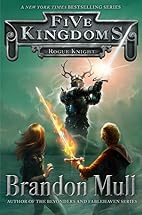
Media #16 / Book #12: The Rogue Knight, by Brandon Mull
Reason for reading: Second book in a series by my favorite young readers' author
Summary: Cole's adventure with his new friends continues as they rush to rescue Princess Honor. They meet with a rogue knight.
Review: I'm a bit biased towards all of Brandon Mull's books, but this one was not a disappointment. Mull's world is creative - even more so because there are 5 completely separate kingdom creations in this story. Of course, his creatures are all created by him rather than used from standard myths and fairy tales, making for a refreshing story. Looking forward to the next in the series.
61The_Hibernator
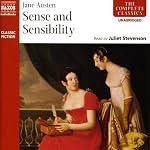
Media #15 / Book #11: Sense and Sensibility, by Jane Austen, narrated by Juliet Stevenson
Reason for reading: Felt like it
Summary: Elinor and Marianne Dashwood struggle through romantic hardships, the death of their father, and their removal from their childhood home in this classic story. It's a satire of sensibilities.
Review: This is my favorite of Austen's books - yes, even more so than Pride and Prejudice. I just felt like listening to it as I've never tried it in that format. Juliet Stevenson did a fantastic job of narration.
62rabbitprincess
I NEED that Penguin in Love book! It sounds so cute! Thanks for highlighting it :D

