AuntMarge64's ROOT - 30 for 2015
Talk 2015 ROOT Challenge - (Read Our Own Tomes)
This group has been archived. Find out more.
Join LibraryThing to post.

3rabbitprincess
Welcome back and good luck!
6auntmarge64
1. 
Buried Prey by John Sandford ****½ 1/2/15
I've been rereading the entire Lucas Davenport series and find that I remember few of them. This is a good thing! I'm enjoying them all over again, and I'll be able to read them again in a few years and have the same experience.

Buried Prey by John Sandford ****½ 1/2/15
I've been rereading the entire Lucas Davenport series and find that I remember few of them. This is a good thing! I'm enjoying them all over again, and I'll be able to read them again in a few years and have the same experience.
9auntmarge64
2. 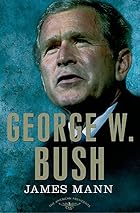
George W. Bush: The American Presidents Series by James Mann ***½ 1/12/15
Previous reviewers have commented negatively on the brevity of this book, but the entire American Presidents Series is meant to provide only very brief overviews of each president. As such, they usually succeed for the casual reader and for students. I've read a number of the books in the series, although this is the first time the subject has been so recent, or even within my own lifetime. My familiarity with the events covered has meant that not much of the information was new to me, and it was obvious that the complexity of modern life (and, therefore, of modern crises) does make such conciseness difficult.
I tried to discover the author's political leanings before reading the book. Although I am not a fan of GW, I have usually thought him to be well-meaning, so while I have my own opinion of his presidency I was open to new information and wanted to know where the writer was coming from. I've been able to find little, although he writes for the New Republic and Washington Post, so my assumption has been that he's right of center, although possibly not far. Thus I was surprised to see that this was not an apologia for Bush, and in some ways my own opinions were reinforced, especially that the tax cuts and the invasion of Iraq were catastrophic mistakes which cost the country dearly. But I did come away with a few insights into Bush's character and actions as President which made me see some of his decisions in a gentler light.
Mann portrays Bush as an average intellectual whose private school performance didn't qualify him for Yale but whose pedigree did. He didn't do particularly well there and spent most of his time drinking and pulling pranks. His endeavors after graduation didn't show him as particularly thoughtful or successful, either. But there was one area he excelled at: an understanding of political tactics. Aided by his new friend Karl Rove, he proceeded to help his father and then himself find just the right tones and actions to both put candidates forward (without actually giving many policy details), and put opponents in the worst light possible, sometimes by utilizing quite nasty methods. There is also some discussion of Bush's conversion to evangelical Christianity, which the author attributes to both a need for spiritual help and a means of wooing the far right to his father's and his own candidacies, although there is no light shed on how the rather vicious political tactics he used squared with the his new outlook. The point here is that Bush's political abilities, not his capabilities as a potential president, gave him the edge over both Gore and Kerry.
The two terms are presented as night and day, with first-term Bush trusting his instincts to pick aides and leave them to make policy (in hindsight based on numerous faulty assumptions and few facts), and second-term Bush taking more and more responsibility for decision-making. I found this part particularly interesting, especially in light of his actions when the Iraq effort began to fail and the economy collapsed. Mann also spends time discussing the AIDS initiative in Africa, which has been hugely successful, and the ways in which Bush fought his own party in certain areas, including the expansion of Medicare into drug coverage, and later again, as he saw the inadequacy of traditional Republican doctrine for several areas in which the country was unraveling. Interspersed throughout are quotes from Mr. Bush and his aides on events while he was in office. There is also some blame given to Bill Clinton for the failure of the economy (relaxation of federal banking regulations).
All-in-all, this is a succinct and basic outline of Bush's administration, best suited for students and those with only a passing interest. There are numerous footnotes and a four-page bibliography for those wishing to delve further.
3.
Stolen Prey by John Sandford **** 1/16/15
I found this entry in the Lucas Davenport series a bit less interesting than usual. Bank fraud and Mexican drug gangs don’t interest me all that much, and there’s a side-plot involving Virgil Flowers that didn’t seem necessary, as much as I enjoy his adventures also. So, fun to read and essential for fans, but not the best of the best from Sandford.
George W. Bush: The American Presidents Series by James Mann ***½ 1/12/15
Previous reviewers have commented negatively on the brevity of this book, but the entire American Presidents Series is meant to provide only very brief overviews of each president. As such, they usually succeed for the casual reader and for students. I've read a number of the books in the series, although this is the first time the subject has been so recent, or even within my own lifetime. My familiarity with the events covered has meant that not much of the information was new to me, and it was obvious that the complexity of modern life (and, therefore, of modern crises) does make such conciseness difficult.
I tried to discover the author's political leanings before reading the book. Although I am not a fan of GW, I have usually thought him to be well-meaning, so while I have my own opinion of his presidency I was open to new information and wanted to know where the writer was coming from. I've been able to find little, although he writes for the New Republic and Washington Post, so my assumption has been that he's right of center, although possibly not far. Thus I was surprised to see that this was not an apologia for Bush, and in some ways my own opinions were reinforced, especially that the tax cuts and the invasion of Iraq were catastrophic mistakes which cost the country dearly. But I did come away with a few insights into Bush's character and actions as President which made me see some of his decisions in a gentler light.
Mann portrays Bush as an average intellectual whose private school performance didn't qualify him for Yale but whose pedigree did. He didn't do particularly well there and spent most of his time drinking and pulling pranks. His endeavors after graduation didn't show him as particularly thoughtful or successful, either. But there was one area he excelled at: an understanding of political tactics. Aided by his new friend Karl Rove, he proceeded to help his father and then himself find just the right tones and actions to both put candidates forward (without actually giving many policy details), and put opponents in the worst light possible, sometimes by utilizing quite nasty methods. There is also some discussion of Bush's conversion to evangelical Christianity, which the author attributes to both a need for spiritual help and a means of wooing the far right to his father's and his own candidacies, although there is no light shed on how the rather vicious political tactics he used squared with the his new outlook. The point here is that Bush's political abilities, not his capabilities as a potential president, gave him the edge over both Gore and Kerry.
The two terms are presented as night and day, with first-term Bush trusting his instincts to pick aides and leave them to make policy (in hindsight based on numerous faulty assumptions and few facts), and second-term Bush taking more and more responsibility for decision-making. I found this part particularly interesting, especially in light of his actions when the Iraq effort began to fail and the economy collapsed. Mann also spends time discussing the AIDS initiative in Africa, which has been hugely successful, and the ways in which Bush fought his own party in certain areas, including the expansion of Medicare into drug coverage, and later again, as he saw the inadequacy of traditional Republican doctrine for several areas in which the country was unraveling. Interspersed throughout are quotes from Mr. Bush and his aides on events while he was in office. There is also some blame given to Bill Clinton for the failure of the economy (relaxation of federal banking regulations).
All-in-all, this is a succinct and basic outline of Bush's administration, best suited for students and those with only a passing interest. There are numerous footnotes and a four-page bibliography for those wishing to delve further.
3.

Stolen Prey by John Sandford **** 1/16/15
I found this entry in the Lucas Davenport series a bit less interesting than usual. Bank fraud and Mexican drug gangs don’t interest me all that much, and there’s a side-plot involving Virgil Flowers that didn’t seem necessary, as much as I enjoy his adventures also. So, fun to read and essential for fans, but not the best of the best from Sandford.
12auntmarge64
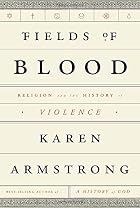
4. Fields of Blood: Religion and the History of Violence by Karen Armstrong ***** 2/6/15
When I began reading this book I started asking people if they thought religion causes violence. Invariably I received some version of this response: "Duh!......" So it was intriguing to have Armstrong begin her book by declaring the problem not quite so simple and proceed to give a long, interesting and surprising history of how religion and violence have been intertwined, although not always in a strictly causative manner. In short, what I think Armstrong is claiming that because throughout most of our known history there has been no separation between the secular and the spiritual, even theoretically, that therefore our communal identity (which included the political and religious) was the cause of conflict, not religion as a separate entity. Equally to blame for the beginning of organized violence was the agrarian revolution, c9000-8500 BCE, and civilization, with its need to support and control larger populations. Armstrong also examines the dilemma religions have faced pretty much as soon as they developed: "... if a ruling elite adopted an ethical tradition, such as Buddhism, Christianity, or Islam, the aristocratic clergy usually adapted their theology so that it could support the structural violence of the state."
The scholarship is far-reaching and not quickly digested, but it is fascinating. Folded into the narrative are numerous digressions which add to the conclusion that the book's question requires a much broader range of scholarship than might be obvious. And there are some very interesting facts and events to read about, among them:
The first Crusaders, "psychotic" as they massacred thousands of Muslims and Jews, then celebrating their actions in Christian ceremonies.
The siege of Béziers in 1209 by the abbot of Citeaux in an effort to wipe out the Cathari, a popular Christian sect dedicated to poverty, chastity and nonviolence. When asked by his troops how to tell the heretics from the orthodox he had them kill everyone, leaving it to God to "know his own".
John Locke's introduction into the Western philosophical canon of "the myth of religious violence", as he pushed to separate religion and politics.
The Puritans leader John Cotton, exhorting his followers on the "principle of nature" which gave "vacant" land to those who would use it, and justified unprovoked attacks on the natives as "a special Commission from God to take their land", and the Puritans' highly selective use of bellicose Old Testament excerpts rather than the pacifist teaching of Jesus as they killed their native neighbors.
Early Virginia, where it was assumed that "all citizens should have the same faith and that it was the duty of any government to enforce religious observance".
The election of 1800, in which Jefferson was accused of being a Muslim! (Doesn't that sound familiar?)
Calvin's non-literal interpretation of parts of the Bible, including Genesis, and fundamentalism's turn to Biblical literalism and denial of science as a recoil from modern life, especially after WWI.
The introduction of papal infallibility - in 1870!
The change in Israelite belief towards monotheism - but not until 6th century BCE.
I could go on and on, but suffice to say this is one fascinating book and sure to interest anyone with curiosity about the religion/violence connection.
13auntmarge64
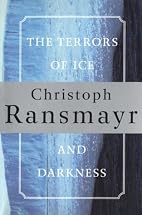
5. Terrors of Ice and Darkness by Christoph Ransmayr **** 2/18/15
I'm an enthusiast of Antarctic fiction and non-fiction and have rarely ventured into Arctic literature. That may change now. Although there is an awkward unnamed narrator and a second story wrapped around the central narrative, the majority of the book is a superb re-telling of the Payer-Weyprecht (Austro-Hungarian North Pole) Expedition of the 1870s, when nations were still trying to find a Northeast or Northwest passage from the Atlantic to the Pacific. After two winters trapped in a ship ice-bound near the 80th parallel, the officers and crew abandon the ship and proceed to walk and row (when open water is finally reached) for several months to get to the uninhabited island of Novaya Zemlya, hoping to find a whale or seal-hunting boat which can return them to Europe. The narration is perhaps 35% excerpts from the journals of the expedition members, and the rest an evocative retelling (no dialogue) of the adventure.
15auntmarge64

6. Antarctic Penguins: A Study of Their Social Habits by George Murray Levick ***** 2/22/15
A delightful account of the Adélie penguin colony at Cape Adare during the 1911-1912 summer season of the Terra Nova expedition. Levick was a keen observer with a warm sense of humor and obvious fondness for the penguins. A particularly amusing penguin pastime he describes is "floe riding", in which penguins line up at the windward end of their land, cram as many of themselves as possible on a small floe passing by, ride it to the end or their land, get off, and march back up to catch another ride. Voilà! A penguin amusement park ride.
Although Levick's photos are not included in the Kindle version I read, they can be seen in the online version at https://archive.org/stream/antarcticpeng00leviiala#page/n7/mode/2up

19auntmarge64
8. 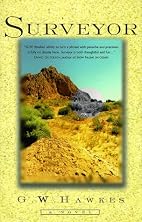
Surveyor by G. W. Hawkes **** 3/11/15
A gentle story of veteran buddies who accepted a post-college job with a rather shady foundation and have spent 30 years in New Mexico, drawing maps and banking a salary, never quite sure why they are doing this job. In one summer, their privacy is invaded by a team of archaeologists, a young film maker building a fake town to record as it is flooded in the fall rains, and a second young woman who seems to just hang about. Deeply suspicious of the newcomers, Paul and John's life begins to show cracks. Beautiful.
Surveyor by G. W. Hawkes **** 3/11/15
A gentle story of veteran buddies who accepted a post-college job with a rather shady foundation and have spent 30 years in New Mexico, drawing maps and banking a salary, never quite sure why they are doing this job. In one summer, their privacy is invaded by a team of archaeologists, a young film maker building a fake town to record as it is flooded in the fall rains, and a second young woman who seems to just hang about. Deeply suspicious of the newcomers, Paul and John's life begins to show cracks. Beautiful.
20Tess_W
>8 connie53: sound lovely........am going to have to add that to my list!
21auntmarge64
9. 
Random Harvest by James Hilton **** 3/16/15
10.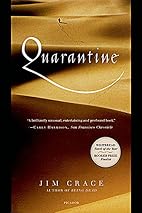
Quarantine by Jim Crace ***½ 3/27/15
A story of Jesus's time in the wilderness, beautifully written but with a very unpleasant character at the center of it and with Jesus largely an unseen presence. The imagined landscape is quite affecting, though, and the bleakness of the life and the position of women in the society seems plausibly horrifying.

Random Harvest by James Hilton **** 3/16/15
10.
Quarantine by Jim Crace ***½ 3/27/15
A story of Jesus's time in the wilderness, beautifully written but with a very unpleasant character at the center of it and with Jesus largely an unseen presence. The imagined landscape is quite affecting, though, and the bleakness of the life and the position of women in the society seems plausibly horrifying.
22auntmarge64
11. 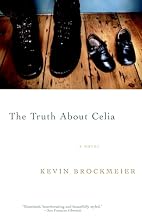
The Truth About Celia by Kevin Brockmeier *****
A beautiful book, more a collection of related stories than a novel, which begins the day a 7-year old girl vanishes from her yard. This is not a novel of suspense: there are no leads in the case and Celia is never seen again. The father, a professional writer who is unable to write for several years after, is the fictional author of the book, in which he tells his own story and makes up stories from the viewpoints of his daughter, his wife, and others. Several of the tales are gentle versions of what might have happened that morning, and one is about an adult woman who can't remember her childhood before age 7. Two or three are fairy tales, almost. Yes, there's a sadness underlying the book, of course, but the stories are so compelling and the writing so gorgeous that I think most readers would count themselves lucky for having found it.
The Truth About Celia by Kevin Brockmeier *****
A beautiful book, more a collection of related stories than a novel, which begins the day a 7-year old girl vanishes from her yard. This is not a novel of suspense: there are no leads in the case and Celia is never seen again. The father, a professional writer who is unable to write for several years after, is the fictional author of the book, in which he tells his own story and makes up stories from the viewpoints of his daughter, his wife, and others. Several of the tales are gentle versions of what might have happened that morning, and one is about an adult woman who can't remember her childhood before age 7. Two or three are fairy tales, almost. Yes, there's a sadness underlying the book, of course, but the stories are so compelling and the writing so gorgeous that I think most readers would count themselves lucky for having found it.
23bragan
>22 auntmarge64: Ooh, that one is going on my wishlist. I really loved Brockmeier's The Brief History of the Dead, and that one sounds like it should be excellent, too.
24auntmarge64
>23 bragan: I loved BHOTD too. (Of course, anything to do with Antarctica goes on my list to check out....) He's very creative.
26auntmarge64
13. 
The Worst Journey in the World by Apsley Cherry-Garrard ***** 4/13/15
Magnificent, and easily deserving of its frequent praise as the best of adventure and exploration stories.
Apsley Cherry-Garrard (known as "Cherry") was 24 when he was invited to join Robert Scott's Terra Nova Antarctic expedition (1910-1913). The expedition, comprised of scientists and support staff, was formed to do extensive research and, as a bonus, and a major reason given in fund-raising efforts, to try to reach the South Pole, which had never been done. The first third of the book tells of the voyage to Antarctica in a dangerously unfit ship and the first summer in Antarctica, building a hut and sledging farther and farther into the Antarctic interior to lay depots of supplies for the Pole effort the following year. During this time the men built up their endurance, practiced sledging techniques, became familiar with each other's strengths, and adjusted to life in close quarters, endless bitter cold and storms, and life in 24-hour darkness. They also proceeded with their various scientific enterprises. The middle section, the actual Worst Journey, describes the winter sledging trip Cherry took with Birdie Bowers and Edward Wilson to an emperor penguin breeding ground to bring back embryos for study. The trip was done almost entirely in darkness in temperatures of -30 to -40F, and it almost killed the three of them. Nights were spent in frozen sleeping bags, the men shivering so hard their teeth cracked. Waking hours meant trying to travel a few more miles in frozen clothes. They just managed to make it back to their hut, weak and sick, and there is a famous photograph of them on their return after weeks in such conditions: (http://upload.wikimedia.org/wikipedia/commons/5/56/Return_of_Wilson_Bowers_Cherry.jpg).
Wilson and Bowers, two of Cherry's best friends, survived that journey only to die the following summer after they were chosen to join Scott for the final push to the Pole. Much of the last section of Cherry's book is heart-breaking, relating the preparations for and much of Scott's run for the Pole, in which he was joined by Bowers, Wilson, Titus Oates, and Seaman Evans. Accompanied on the trip out by three other sledging parties who laid supply depots along the way, the five left behind the last of the other parties about 180 miles from the Pole and did get there, only to find that the Norwegians had beaten them. It was still an extraordinary achievement, but one they would not live to enjoy. On the return trip, Evans died from scurvy and a head injury; Titus became gangrenous and famously left the tent during a blizzard with the words "I'm just going outside and may be some time", hoping his sacrifice would give the others a chance to survive until the next depot. But Scott, Wilson and Bowers became trapped in their tent by a blizzard which lasted for over a week, and they died in their sleeping bags, lying next to each other. They were only 11 miles from the next big depot and almost home. It's interesting and enlightening to read the descriptions of how the line of command was followed closely, with any other method of decision-making being untenable in such dangerous circumstances. Cherry made a last-ditch attempt to take supplies to One-Ton Depot (the depot which Scott's party died so close to), but with no idea of where they might be stuck in the 900-mile expanse between camp and the Pole, he was ordered to return, since winter was closing in. Cherry describes the anguish of the party waiting in camp and finally acknowledging that the Polar party had to be dead. This second winter found them depressed and guilt-ridden, wondering what they could have done to bring about a different ending. When they were finally able to set out on a sledging trip in the spring, planning to travel about 2/3 of the distance to the Pole (after which they would not be sure of the path Scott might have taken), they were appalled to be out for only a few days before finding the tent.
I spent months reading this because I kept being pulled away to read parts of Scott's diary, or Cherry's biography, or to watch documentaries or read up on various techniques used in the expedition. Reading the book on the Kindle was a major help for understanding both polar terms and old British phrases, although the free version had no maps or illustrations, so I kept my tablet and several other books handy. Many of the people described in the book were major players in their fields, and Cherry was able to use diaries, letters, photographs and artwork from both deceased and surviving members of the expedition. More than in any other book I've read about the Antarctic, this one gave me a profound appreciation for the experience of early Antarctic exploration and the suffering endured by these men for the sake of science. Cherry was devastated by the loss of his friends and damaged physically by his own trials. His deep emotional reaction to his experiences makes the people and landscape come alive for the reader. For anyone interested in human drama, exploration, high adventure, history, or the Antarctic, this is highly, highly recommended.

The Worst Journey in the World by Apsley Cherry-Garrard ***** 4/13/15
Magnificent, and easily deserving of its frequent praise as the best of adventure and exploration stories.
Apsley Cherry-Garrard (known as "Cherry") was 24 when he was invited to join Robert Scott's Terra Nova Antarctic expedition (1910-1913). The expedition, comprised of scientists and support staff, was formed to do extensive research and, as a bonus, and a major reason given in fund-raising efforts, to try to reach the South Pole, which had never been done. The first third of the book tells of the voyage to Antarctica in a dangerously unfit ship and the first summer in Antarctica, building a hut and sledging farther and farther into the Antarctic interior to lay depots of supplies for the Pole effort the following year. During this time the men built up their endurance, practiced sledging techniques, became familiar with each other's strengths, and adjusted to life in close quarters, endless bitter cold and storms, and life in 24-hour darkness. They also proceeded with their various scientific enterprises. The middle section, the actual Worst Journey, describes the winter sledging trip Cherry took with Birdie Bowers and Edward Wilson to an emperor penguin breeding ground to bring back embryos for study. The trip was done almost entirely in darkness in temperatures of -30 to -40F, and it almost killed the three of them. Nights were spent in frozen sleeping bags, the men shivering so hard their teeth cracked. Waking hours meant trying to travel a few more miles in frozen clothes. They just managed to make it back to their hut, weak and sick, and there is a famous photograph of them on their return after weeks in such conditions: (http://upload.wikimedia.org/wikipedia/commons/5/56/Return_of_Wilson_Bowers_Cherry.jpg).
Wilson and Bowers, two of Cherry's best friends, survived that journey only to die the following summer after they were chosen to join Scott for the final push to the Pole. Much of the last section of Cherry's book is heart-breaking, relating the preparations for and much of Scott's run for the Pole, in which he was joined by Bowers, Wilson, Titus Oates, and Seaman Evans. Accompanied on the trip out by three other sledging parties who laid supply depots along the way, the five left behind the last of the other parties about 180 miles from the Pole and did get there, only to find that the Norwegians had beaten them. It was still an extraordinary achievement, but one they would not live to enjoy. On the return trip, Evans died from scurvy and a head injury; Titus became gangrenous and famously left the tent during a blizzard with the words "I'm just going outside and may be some time", hoping his sacrifice would give the others a chance to survive until the next depot. But Scott, Wilson and Bowers became trapped in their tent by a blizzard which lasted for over a week, and they died in their sleeping bags, lying next to each other. They were only 11 miles from the next big depot and almost home. It's interesting and enlightening to read the descriptions of how the line of command was followed closely, with any other method of decision-making being untenable in such dangerous circumstances. Cherry made a last-ditch attempt to take supplies to One-Ton Depot (the depot which Scott's party died so close to), but with no idea of where they might be stuck in the 900-mile expanse between camp and the Pole, he was ordered to return, since winter was closing in. Cherry describes the anguish of the party waiting in camp and finally acknowledging that the Polar party had to be dead. This second winter found them depressed and guilt-ridden, wondering what they could have done to bring about a different ending. When they were finally able to set out on a sledging trip in the spring, planning to travel about 2/3 of the distance to the Pole (after which they would not be sure of the path Scott might have taken), they were appalled to be out for only a few days before finding the tent.
I spent months reading this because I kept being pulled away to read parts of Scott's diary, or Cherry's biography, or to watch documentaries or read up on various techniques used in the expedition. Reading the book on the Kindle was a major help for understanding both polar terms and old British phrases, although the free version had no maps or illustrations, so I kept my tablet and several other books handy. Many of the people described in the book were major players in their fields, and Cherry was able to use diaries, letters, photographs and artwork from both deceased and surviving members of the expedition. More than in any other book I've read about the Antarctic, this one gave me a profound appreciation for the experience of early Antarctic exploration and the suffering endured by these men for the sake of science. Cherry was devastated by the loss of his friends and damaged physically by his own trials. His deep emotional reaction to his experiences makes the people and landscape come alive for the reader. For anyone interested in human drama, exploration, high adventure, history, or the Antarctic, this is highly, highly recommended.
27Familyhistorian
>26 auntmarge64: That sounds like an interesting book. I just took a course in a writing program where we analyzed some death bed letters. One of the letters was written by Scott. You can see it here http://www.mirror.co.uk/news/world-news/captain-scott-last-letter-home-1791053.
28Tess_W
>26 auntmarge64: Sounds like an excellent read! I took a course one and we studied the Shackleton Expedition which was so interesting, even if they ate their dogs!
29auntmarge64
14. 
Song of the Lark by Willa Cather *** 4/20/15
What a disappointment this book was. I've loved just about all the Cather I've read, even minor works, but this seemed endless, and after about 80% I realized I just didn't care what happened to the characters and so quit.

Song of the Lark by Willa Cather *** 4/20/15
What a disappointment this book was. I've loved just about all the Cather I've read, even minor works, but this seemed endless, and after about 80% I realized I just didn't care what happened to the characters and so quit.
30Tess_W
> 29 So sorry about the dissapointment. I have read Cather twice (Oh, Pioneers, and My Antonia) and I thought they were awful.
31Caramellunacy
>26 auntmarge64:, I know next to nothing about the polar explorers or Scott, but this sounds incredible (and heart-breaking) - when I was in high school, we saw a production of David Young's Inexpressible Island set at the South Pole. I remember relatively little about it except it made autumn in Texas feel VERY cold.
32auntmarge64
>30 Tess_W: Well, I'd definitely skip Song of the Lark then! My favorite of her books is Death Comes to the Archbishop. I gave it only 4 stars, but it's the one that has stayed with me
>31 Caramellunacy: Inexpressible Island is one with which I'm not familiar, although Cherry covers some of the story in his book. I'll have to try to get a copy. Thanks for bringing it to my attention! (Love your username.)
>31 Caramellunacy: Inexpressible Island is one with which I'm not familiar, although Cherry covers some of the story in his book. I'll have to try to get a copy. Thanks for bringing it to my attention! (Love your username.)
33auntmarge64
15. 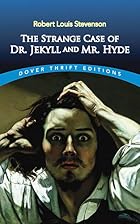
The Strange Case of Dr. Jekyll and Mr. Hyde by Robert Louis Stevenson ***½ 4/22/15
Trying to catch up on some classics I've had on my Kindle for quite some time.
The Strange Case of Dr. Jekyll and Mr. Hyde by Robert Louis Stevenson ***½ 4/22/15
Trying to catch up on some classics I've had on my Kindle for quite some time.
34Tess_W
>15 auntmarge64: That one is on my Kindle TBR, also!
35avanders
>33 auntmarge64: I've been meaning to read this forEVER! Maybe I'll move it up on the ol' TBR list....
36auntmarge64
16. 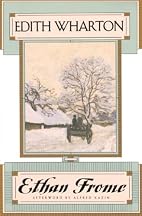
Ethan Frome by Edith Wharton ***** 4/23/15
A little gem. Boy, could this woman write! I stayed up well past bedtime last evening turning pages (on my Kindle) to see what happened.
Ethan Frome by Edith Wharton ***** 4/23/15
A little gem. Boy, could this woman write! I stayed up well past bedtime last evening turning pages (on my Kindle) to see what happened.
38auntmarge64
>37 Tess_W: This was short and about the poorer classes. Might make a better impression on you than AOI, which I don't plan on reading because I know the story from the film and don't particularly want to revisit it.
BTW, do read that penguin book by Levick if you get a chance. Also short, but so charming. Right now I'm reading Edward Wilson's diary from the Terra Nova expedition (during which he died with Scott on the return from the South Pole), and Wilson was a talented artist who illustrated his own writings and those of his companions. I know there are penguins in there, too.
BTW, do read that penguin book by Levick if you get a chance. Also short, but so charming. Right now I'm reading Edward Wilson's diary from the Terra Nova expedition (during which he died with Scott on the return from the South Pole), and Wilson was a talented artist who illustrated his own writings and those of his companions. I know there are penguins in there, too.
40readingtangent
>36 auntmarge64:, >37 Tess_W: It's been forever but I remember loving Ethan Frome. I loved The House of Mirth even more. But I have to agree about The Age of Innocence. I couldn't get into it, and I tried twice :(. I ended up just selling the book at some point.
41auntmarge64
>39 connie53: Hi Connie! Everything's good here. Been trying to read a bunch of classics piled up on my Kindle and finding some gems.
42auntmarge64
17. 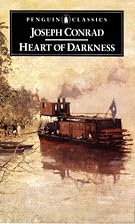
Heart of Darkness by Joseph Conrad ***** 5/1/15
I thought for sure I'd hate this, given the racist language and the locale, which doesn't interest me. Instead, it was wonderful. A British man, yachting with friends on the Thames, tells them of a time when he took a job running a rundown boat up the Congo River. The central character to his mind is Kurtz (the character played by Marlon Brando in the film adaptation, "Apocalypse Now"), but to me it was the land and the narrator's reaction to his surroundings. There is a marvelous discourse early on about sailors being basically homebodies, because wherever they go their home is with them and they rarely leave it. And then there are his observations on the cannibals he hires to run the boat - as opposed to the whites on the boat, whom he thinks stupid and incomprehensible. And, of course, there are the words he hears on a dying man's lips: "The horror! The horror!". Just brilliant writing.
Heart of Darkness by Joseph Conrad ***** 5/1/15
I thought for sure I'd hate this, given the racist language and the locale, which doesn't interest me. Instead, it was wonderful. A British man, yachting with friends on the Thames, tells them of a time when he took a job running a rundown boat up the Congo River. The central character to his mind is Kurtz (the character played by Marlon Brando in the film adaptation, "Apocalypse Now"), but to me it was the land and the narrator's reaction to his surroundings. There is a marvelous discourse early on about sailors being basically homebodies, because wherever they go their home is with them and they rarely leave it. And then there are his observations on the cannibals he hires to run the boat - as opposed to the whites on the boat, whom he thinks stupid and incomprehensible. And, of course, there are the words he hears on a dying man's lips: "The horror! The horror!". Just brilliant writing.
43Tess_W
>42 auntmarge64: Glad you enjoyed this! I have tried to start it twice and given up. However, it's still on my shelf and may just be a root this year!
44auntmarge64
>43 Tess_W: If you do try it again, read it slowly as though the narrator is telling you the story in person. It certainly seems to be written that way.
45auntmarge64
18. 
Breakfast of Champions by Kurt Vonnegut **** 5/5/15
Haven't read this since the 70s and, of course, had little recollection of it. Pointed social satire, a bit dated now in approach, but at the time it was unexpected and packed a punch. And it's still silly, strange, and delightful.

Breakfast of Champions by Kurt Vonnegut **** 5/5/15
Haven't read this since the 70s and, of course, had little recollection of it. Pointed social satire, a bit dated now in approach, but at the time it was unexpected and packed a punch. And it's still silly, strange, and delightful.
46avanders
>42 auntmarge64: oooooh, now I want to read it. :-D
>45 auntmarge64: another on my shelves.... I have kind of avoided Vonnegut bc I started with Bagombo Snuff Box and I did not think it was amazing. But my husband, who enjoys Vonnegut, said I should really go back and read some of the classics. So I will. Someday. :)
>45 auntmarge64: another on my shelves.... I have kind of avoided Vonnegut bc I started with Bagombo Snuff Box and I did not think it was amazing. But my husband, who enjoys Vonnegut, said I should really go back and read some of the classics. So I will. Someday. :)
47Tess_W
>45 auntmarge64:, glad you enjoyed Vonnegut. I read 50% of Slaughterhouse Five and it was pitched!
48auntmarge64
19. 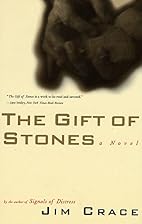
The Gift of Stones by Jim Crace **** 5/18/15
A beautifully written and evocative story of a disabled and disfigured boy who finds his calling in being a storyteller and a wanderer, always returning to his birth village, where the proud flint carvers and merchants have little use for someone who can't work. The tale takes place as the Stone Age transitions into the Bronze Age, causing life-changing events for the villagers.
The Gift of Stones by Jim Crace **** 5/18/15
A beautifully written and evocative story of a disabled and disfigured boy who finds his calling in being a storyteller and a wanderer, always returning to his birth village, where the proud flint carvers and merchants have little use for someone who can't work. The tale takes place as the Stone Age transitions into the Bronze Age, causing life-changing events for the villagers.
49Tess_W
>19 auntmarge64:, Oh no! Another book bullet I can't dodge!
50auntmarge64
>49 Tess_W: Heh, heh, heh.....
51auntmarge64
20. 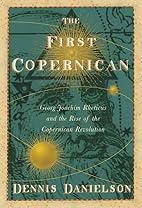
The First Copernican: Georg Joachim Rheticus and the Rise of the Copernican Revolution by Dennis Danielson ***** 6/11/15
A fascinating biography of the father of trigonometry, the man who convinced Copernicus to publish his ground-breaking work "On the Revolutions of the Heavenly Spheres" and then spent his life promoting it. Rheticus (1514-1574) was an inveterate traveler who couldn't stay in one university post for long before disappearing for a year or two to follow some scientific quest. As a young man he journeyed across Europe to meet Copernicus, whose ideas had caught Rheticus' imagination because they suggested a solution to the multitude of irregularities in Ptolemaic astronomy. Because of Rheticus' persistence, heliocentrism eventually became accepted science.
But this book is much more than a simple biography, and the reader learns about the extensive intertwining of medicine, astronomy and astrology; medicine and the beginnings of toxicology (the teaches of Paracelsus); the effects of religion on just about every aspect of science (mining, for instance, was considered blasphemous because it represented digging in the bowels of Mother Earth, the region of the devil); the laborious political, religious and logistical processes involved in publishing; and the stupendous effort of decades of hand-written calculations required to produce trigonometric tables (out to the 10th or 15th decimal!) required to prove Copernicus' theories. And, of course, there is the ever-present bickering and machinations among the (primarily) Protestant schools over minute disagreements in theology which often affected patronage, friendships, and even survival.
Entertaining, informative, and very well-written, with interesting reproductions of various documents and title pages and lengthy notes.
The First Copernican: Georg Joachim Rheticus and the Rise of the Copernican Revolution by Dennis Danielson ***** 6/11/15
A fascinating biography of the father of trigonometry, the man who convinced Copernicus to publish his ground-breaking work "On the Revolutions of the Heavenly Spheres" and then spent his life promoting it. Rheticus (1514-1574) was an inveterate traveler who couldn't stay in one university post for long before disappearing for a year or two to follow some scientific quest. As a young man he journeyed across Europe to meet Copernicus, whose ideas had caught Rheticus' imagination because they suggested a solution to the multitude of irregularities in Ptolemaic astronomy. Because of Rheticus' persistence, heliocentrism eventually became accepted science.
But this book is much more than a simple biography, and the reader learns about the extensive intertwining of medicine, astronomy and astrology; medicine and the beginnings of toxicology (the teaches of Paracelsus); the effects of religion on just about every aspect of science (mining, for instance, was considered blasphemous because it represented digging in the bowels of Mother Earth, the region of the devil); the laborious political, religious and logistical processes involved in publishing; and the stupendous effort of decades of hand-written calculations required to produce trigonometric tables (out to the 10th or 15th decimal!) required to prove Copernicus' theories. And, of course, there is the ever-present bickering and machinations among the (primarily) Protestant schools over minute disagreements in theology which often affected patronage, friendships, and even survival.
Entertaining, informative, and very well-written, with interesting reproductions of various documents and title pages and lengthy notes.
52auntmarge64
21. 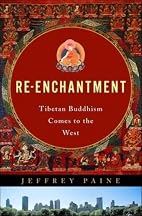
Re-Enchantment: Tibetan Buddhism Comes to the West by Jeffery Paine **** 7/29/15
A really interesting look at the people who "discovered" Tibetan Buddhism when it was still an unfamiliar philosophy in a little-known and inaccessible place, and then the explosion of interest after the Dalai Lama was forced from Tibet by the Chinese invasion. The author clearly sees the displacement of Tibet's religious elite and the diaspora to the West as a huge and beneficial change for both the religion and the rest of us.
Re-Enchantment: Tibetan Buddhism Comes to the West by Jeffery Paine **** 7/29/15
A really interesting look at the people who "discovered" Tibetan Buddhism when it was still an unfamiliar philosophy in a little-known and inaccessible place, and then the explosion of interest after the Dalai Lama was forced from Tibet by the Chinese invasion. The author clearly sees the displacement of Tibet's religious elite and the diaspora to the West as a huge and beneficial change for both the religion and the rest of us.
53auntmarge64
22. 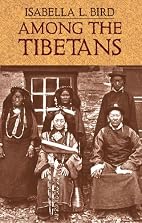
Among the Tibetans by Isabella L. Bird **** 8/30/15
A late nineteenth century travelogue of a trip from northern India to Ladakh and back taken by an adventurous Victorian woman and her motley caravan. The Tibetans of the title are the ethnic Tibetans of Ladakh, an area currently part of the Jammu and Kashmir district of India and closely tied to Tibet culturally and religiously. Bird became extremely fond of the people during her journey of several months, and there are some beautiful descriptions of scenery and people, but also a rather condescending and racist attitude typical of Victorian age. Some of the party's adventures are quite vividly described as well, and they underline Isabella's extraordinary character in the tightly proscribed world of Victorian English womanhood.
23.
The Testament of Jessie Lamb by Jane Rogers **½ 9/24/15
24.
Halbman Steals Home by B. Glen Rotchin *** 9/28/15
Among the Tibetans by Isabella L. Bird **** 8/30/15
A late nineteenth century travelogue of a trip from northern India to Ladakh and back taken by an adventurous Victorian woman and her motley caravan. The Tibetans of the title are the ethnic Tibetans of Ladakh, an area currently part of the Jammu and Kashmir district of India and closely tied to Tibet culturally and religiously. Bird became extremely fond of the people during her journey of several months, and there are some beautiful descriptions of scenery and people, but also a rather condescending and racist attitude typical of Victorian age. Some of the party's adventures are quite vividly described as well, and they underline Isabella's extraordinary character in the tightly proscribed world of Victorian English womanhood.
23.
The Testament of Jessie Lamb by Jane Rogers **½ 9/24/15
24.
Halbman Steals Home by B. Glen Rotchin *** 9/28/15
54auntmarge64
25. 
A Far Sunset by Edmund Cooper **** 10/27/15
For those who love sci fi of the mid- or slightly later-20th century, this is an entertaining and thoughtful story of the lone survivor of one of the starships sent from 20th century Earth in various directions to find what they may among the stars. After almost 20 years, most spent in hibernation, the 12 astronauts land on a vaguely Earth-like planet 16 light-years from Earth. There are indeed humanoids, and after several exploration parties disappear, Paul Marlowe finds himself prisoner in a primitive town where a god-king rules in absolute power for one year before being ritually killed and replaced. As he learns the language and makes a few friends, Paul seems to make somewhat of a life for himself until tragedy forces him to investigate an ancient myth about a structure which sounds an awful lot like a another starship.

A Far Sunset by Edmund Cooper **** 10/27/15
For those who love sci fi of the mid- or slightly later-20th century, this is an entertaining and thoughtful story of the lone survivor of one of the starships sent from 20th century Earth in various directions to find what they may among the stars. After almost 20 years, most spent in hibernation, the 12 astronauts land on a vaguely Earth-like planet 16 light-years from Earth. There are indeed humanoids, and after several exploration parties disappear, Paul Marlowe finds himself prisoner in a primitive town where a god-king rules in absolute power for one year before being ritually killed and replaced. As he learns the language and makes a few friends, Paul seems to make somewhat of a life for himself until tragedy forces him to investigate an ancient myth about a structure which sounds an awful lot like a another starship.
56auntmarge64
26. 
The Origin of Consciousness in the Breakdown of the Bicameral Mind by Julian Jaynes ***** 10/30/15
This is the third time I've read this book, this time in a superb Audible edition. More of a review to follow.

The Origin of Consciousness in the Breakdown of the Bicameral Mind by Julian Jaynes ***** 10/30/15
This is the third time I've read this book, this time in a superb Audible edition. More of a review to follow.
57auntmarge64
HURRAY!!!!!!!!! I'm done with this after 10 months!!! Loved it, though.
27.
Doubt: A History by Jennifer Michael Hecht ***** 11/9/15
A marvelous, dense, but readable history of religious doubt, from the earliest writings to the 21st century. I've been working on this for about 10 months, carrying it around on my Kindle and inching along, giving me plenty of time to digest between readings of other books. It's well worth the effort and has a large bibliography I plan to use frequently. Covers Greek, Roman, Christian, Jewish, Buddhist, and Muslim doubt, among others, with Buddhism, of course, beginning as a religion of non-theists. There's lengthy discussion of the various schools of doubt, as well as analysis of our America's Founding Fathers, many of whom, especially Jefferson, were doubters or downright non-believers and specifically worded the Bill of Rights to ensure that religion would never again intrude on our politics. If only.....
Given the current international situation, with fundamentalism as a core issue, I was delighted to find mention of the modern author Ibn Warraq (a pseudonym), an ex-Muslim who wrote Why I Am Not a Muslim and who castigates Western society for not subjecting Islam to the critical method, as Christianity and other religions have been, and instead being afraid to criticize it. Something to think about.
27.

Doubt: A History by Jennifer Michael Hecht ***** 11/9/15
A marvelous, dense, but readable history of religious doubt, from the earliest writings to the 21st century. I've been working on this for about 10 months, carrying it around on my Kindle and inching along, giving me plenty of time to digest between readings of other books. It's well worth the effort and has a large bibliography I plan to use frequently. Covers Greek, Roman, Christian, Jewish, Buddhist, and Muslim doubt, among others, with Buddhism, of course, beginning as a religion of non-theists. There's lengthy discussion of the various schools of doubt, as well as analysis of our America's Founding Fathers, many of whom, especially Jefferson, were doubters or downright non-believers and specifically worded the Bill of Rights to ensure that religion would never again intrude on our politics. If only.....
Given the current international situation, with fundamentalism as a core issue, I was delighted to find mention of the modern author Ibn Warraq (a pseudonym), an ex-Muslim who wrote Why I Am Not a Muslim and who castigates Western society for not subjecting Islam to the critical method, as Christianity and other religions have been, and instead being afraid to criticize it. Something to think about.
58connie53
Congrats on ending the book after ten months, Margaret! And you gave it five stars! So it must be worth your effort!
Only three to go!
Only three to go!
59auntmarge64
28. 
Tau Zero by Poul Anderson ****
29.
The Blind Geometer by Kim Stanley Robinson *** 11/17/15
30.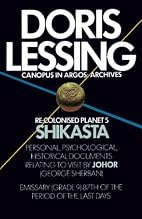
Shikasta by Doris Lessing **** 12/27/15

Tau Zero by Poul Anderson ****
29.

The Blind Geometer by Kim Stanley Robinson *** 11/17/15
30.
Shikasta by Doris Lessing **** 12/27/15

