Bragan reads everything in 2015
This topic was continued by Bragan reads everything in 2015, part 2.
Talk Club Read 2015
Join LibraryThing to post.
This topic is currently marked as "dormant"—the last message is more than 90 days old. You can revive it by posting a reply.
1bragan
Hello, Club Read, and welcome to my 2015 reading thread! I'm very much looking forward to another exciting year in books, as my (bloated, teetering) TBR shelves are chock-full of stuff I just cannot wait to put into my brain. I can confidently predict that, once again, the year's reading will consist of what I have in the past called an "eclectic mish-mash." Including lots of non-fiction on various topics, lots of things that fall into the handily vague umbrella category of "speculative fiction," and some deeply, deeply geeky volumes, but also a generous smattering of other genres, some literary fiction, some kids' books, an old classic or three, and probably a few odd things that will surprise even me.
Happy reading to all!
Happy reading to all!
3OscarWilde87
Put a star on your thread. Happy to follow your reading again in 2015!
5rebeccanyc
I always follow along too.
8Poquette
>1 bragan: Sounds like your "eclectic mish-mash" will have something to please everyone! Anticipate another interesting year of comments on your reading!
9bragan
>7 mabith: Thanks!
>8 Poquette: Something to please everyone sounds nice. And, of course, I'm hoping on a lot of things that will please me. :)
>8 Poquette: Something to please everyone sounds nice. And, of course, I'm hoping on a lot of things that will please me. :)
10bragan
And here we go: my first book of the year!
1. What If?: Serious Scientific Answers to Absurd Hypothetical Questions by Randall Munroe

Randall Munroe is best known for the webcomic xkcd, which may be one of the best things on the internet. But he also has a blog called What If?, where, as the title of this book says, he provides "serious scientific answers to absurd hypothetical questions." The book version collects many questions and answers that have previously appeared on the blog, along with some brand new ones. A few examples: "What would happen if you tried to hit a baseball pitched at 90 percent of the speed of light?", "Is it possible to build a jet pack out of downward-firing machine guns?", and "What if a rainstorm dropped all its water in a single giant drop?"
OK, a few of the questions are a bit more, uh, normal-sounding than that (like, "How high can a human throw something?"), but most of them are wonderfully bizarre or even downright insane. (And that's not even counting the "Weird (and Worrying) Questions from the What If? Inbox" sections, which mostly feature questions he doesn't even attempt to answer, and which are disturbingly hilarious.) No matter how odd the question may be, though, the answers are carefully thought out and based in real math and science. They're also very, very funny, and illustrated with Munroe's distinctive stick-figure drawings. (Seeing those pictures on the printed page was a weird experience for me, though. I kept wanting to tap them to bring up the hovertext.) Munroe's also a bit like the Mythbusters, in that if the answer he gets isn't terribly interesting, he'll usually keep poking at it and adding new wrinkles until it results in something nifty and absurd. A surprising number of these scenarios end in global cataclysm, but it's all good, clean, nerdy fun.
Rating: 4.5/5, although I admit that's probably me rating the website as much as it is the book. Still, it's a fun and very well-put-together book. Be sure to look inside the dust jacket for an illustration of what would happen if Earth's oceans were allowed to drain out through an inter-dimensional plughole!
1. What If?: Serious Scientific Answers to Absurd Hypothetical Questions by Randall Munroe

Randall Munroe is best known for the webcomic xkcd, which may be one of the best things on the internet. But he also has a blog called What If?, where, as the title of this book says, he provides "serious scientific answers to absurd hypothetical questions." The book version collects many questions and answers that have previously appeared on the blog, along with some brand new ones. A few examples: "What would happen if you tried to hit a baseball pitched at 90 percent of the speed of light?", "Is it possible to build a jet pack out of downward-firing machine guns?", and "What if a rainstorm dropped all its water in a single giant drop?"
OK, a few of the questions are a bit more, uh, normal-sounding than that (like, "How high can a human throw something?"), but most of them are wonderfully bizarre or even downright insane. (And that's not even counting the "Weird (and Worrying) Questions from the What If? Inbox" sections, which mostly feature questions he doesn't even attempt to answer, and which are disturbingly hilarious.) No matter how odd the question may be, though, the answers are carefully thought out and based in real math and science. They're also very, very funny, and illustrated with Munroe's distinctive stick-figure drawings. (Seeing those pictures on the printed page was a weird experience for me, though. I kept wanting to tap them to bring up the hovertext.) Munroe's also a bit like the Mythbusters, in that if the answer he gets isn't terribly interesting, he'll usually keep poking at it and adding new wrinkles until it results in something nifty and absurd. A surprising number of these scenarios end in global cataclysm, but it's all good, clean, nerdy fun.
Rating: 4.5/5, although I admit that's probably me rating the website as much as it is the book. Still, it's a fun and very well-put-together book. Be sure to look inside the dust jacket for an illustration of what would happen if Earth's oceans were allowed to drain out through an inter-dimensional plughole!
11lesmel
>10 bragan: I think you are the last straw in my resisting this book!!
12avidmom
>10 bragan: How can one resist disturbingly hilarious????
Starred your thread already and looking forward to your "eclectic" readings.
Starred your thread already and looking forward to your "eclectic" readings.
13bragan
>11 lesmel: I will happily play the "last straw" role in this case!
>12 avidmom: It's certainly not something I can resist. Not that I tried very hard, I admit.
Thanks for joining me on the eclectic reading ride!
>12 avidmom: It's certainly not something I can resist. Not that I tried very hard, I admit.
Thanks for joining me on the eclectic reading ride!
14NanaCC
>10 bragan: I bought that book for my son for Christmas. I may just have to borrow it.
15bragan
>14 NanaCC: An excellent choice of gift! Especially if you borrow it.
16dchaikin
Love your first choice. I got What If as a Hanukah gift to myself...not sure when i will finally get around to reading through it.
17bragan
>16 dchaikin: I sort of bought my copy as a Christmas gift to myself. :)
18DieFledermaus
Will be following your thread for the impressive eclecticism and the fun reviews! What If definitely sounds eclectic and fun.
A surprising number of these scenarios end in global cataclysm, but it's all good, clean, nerdy fun.
Heh heh
A surprising number of these scenarios end in global cataclysm, but it's all good, clean, nerdy fun.
Heh heh
19rebeccanyc
I don't know if I could take a whole book of What If, but I may yet succumb.
20Helenliz
>10 bragan: I very nearly bought that book as part of my present to myself. As I've not yet treated, it's going on the list.
21OscarWilde87
>10 bragan: This review really does make me want to go and buy What if. Sounds very funny.
22tonikat
>10 bragan: I'm loving the links to both of those sites, sense that I've long needed.
23Poquette
Well, let me add my voice to the chorus! What if? sounds like an amazingly good read. I wonder how I'll fit it in . . .
24bragan
Very happy I am to be able to point such a large crowd of people towards What If! It really is great, geeky fun, and, in its own hilarious way, educational. If only because it demonstrates how to go about thinking about these kinds of questions.
>19 rebeccanyc: It can be read in small chunks, as each individual "what if?" is only a few pages long. Me, I read it straight through and was sorry at the end that there wasn't more, but this sort of thing is not only right up my alley, it's pretty much a straight line right through the dead center of my alley.
>22 tonikat: I sometimes assume that everyone with an internet connection who might be the slighted bit interested in xkcd is already reading it, but that does seem not to be the case. I'm glad to have helped make it one person closer to being true, though. :)
>19 rebeccanyc: It can be read in small chunks, as each individual "what if?" is only a few pages long. Me, I read it straight through and was sorry at the end that there wasn't more, but this sort of thing is not only right up my alley, it's pretty much a straight line right through the dead center of my alley.
>22 tonikat: I sometimes assume that everyone with an internet connection who might be the slighted bit interested in xkcd is already reading it, but that does seem not to be the case. I'm glad to have helped make it one person closer to being true, though. :)
25bragan
2. The Salinger Contract by Adam Langer
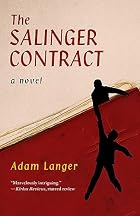
A novelist is approached by a mysterious, sinister man who offers him a bizarre but highly lucrative writing contract, one that has supposedly also been taken up by such literary giants as J.D. Salinger and Harper Lee. He takes it, of course, and -- of course -- finds himself caught up in some nefarious doings.
The literary angle here was fun, at least for a bibliophile like me, but the plot is ridiculous. Ridiculous enough, in fact, that I can't believe we're meant to take it especially seriously, which makes it mildly amusing, rather than annoying. Still... it's really, really ridiculous.
Rating: 3.5/5
A novelist is approached by a mysterious, sinister man who offers him a bizarre but highly lucrative writing contract, one that has supposedly also been taken up by such literary giants as J.D. Salinger and Harper Lee. He takes it, of course, and -- of course -- finds himself caught up in some nefarious doings.
The literary angle here was fun, at least for a bibliophile like me, but the plot is ridiculous. Ridiculous enough, in fact, that I can't believe we're meant to take it especially seriously, which makes it mildly amusing, rather than annoying. Still... it's really, really ridiculous.
Rating: 3.5/5
26mabith
I was given The Salinger Contract and felt instinctively that it wasn't for me so I made my dad read it first. I think he's basically had the same reaction as you, though he hasn't bothered to finish it. Definitely on my list to take to the used bookstore.
27bragan
>26 mabith: It was a very quick read, and had enough entertainment value that I don't regret spending the time on it, but I'd say you're not missing too much by skipping it.
28DieFledermaus
The premise for The Salinger Contract sounds like a lot of fun - too bad it goes off into ridiculousness.
29bragan
>28 DieFledermaus: Being ridiculous and being fun aren't mutually exclusive, of course, but I think what it set me up to expect was a bit different from what it delivered. Because it started out feeling fairly serious, and what it delivered was moderately entertaining, but extremely silly.
30bragan
3. Steve Jobs by Walter Isaacson
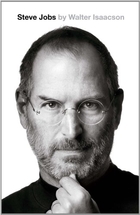
I have to hand it to Walter Isaacson. He was commissioned by Jobs to write a warts-and-all biography, and he absolutely followed through. The portrait of Jobs he paints here is that of a man who somehow managed to combine some of the worst traits of capitalist and hippie, a man who was, frankly, a colossal ass. Although, admittedly, a colossal ass with with a real eye for design and a certain amount of vision. (And I can't deny it, I do love my iPod.)
As I was reading this, especially the earlier chapters, in which the focus was more on Jobs's personality than his not-yet-fully-realized technology empire, I kept thinking that I was going to end up rating this book lower than I actually have, just because I found spending time with its subject, however vicariously, to be simply too unpleasant. But in the end, I couldn't do it. Isaacson's skills as a biographer are so good, and the details of Jobs's career are so interesting, that it turned out to be an entirely worthwhile read, after all.
Rating: a slightly surprised 4/5
I have to hand it to Walter Isaacson. He was commissioned by Jobs to write a warts-and-all biography, and he absolutely followed through. The portrait of Jobs he paints here is that of a man who somehow managed to combine some of the worst traits of capitalist and hippie, a man who was, frankly, a colossal ass. Although, admittedly, a colossal ass with with a real eye for design and a certain amount of vision. (And I can't deny it, I do love my iPod.)
As I was reading this, especially the earlier chapters, in which the focus was more on Jobs's personality than his not-yet-fully-realized technology empire, I kept thinking that I was going to end up rating this book lower than I actually have, just because I found spending time with its subject, however vicariously, to be simply too unpleasant. But in the end, I couldn't do it. Isaacson's skills as a biographer are so good, and the details of Jobs's career are so interesting, that it turned out to be an entirely worthwhile read, after all.
Rating: a slightly surprised 4/5
31dchaikin
Love your review. Funny there are parallels in our responses, but we responded quite differently. Not on the colossal ass part, though. My thought going through was somehow I didn't like Isaacson's approach, and the more I got to like the book, and more I got irritated I liked the book...very odd reaction. I had to grudgingly admit Isaacson did an especially good job.
32bragan
Odd it may be, but I do understand that "feeling irritated you liked the book" reaction, as it's something I've experienced a few times. Maybe even a tiny smidge with this one, since I disliked its subject so much.
I should maybe add that I was undoubtedly favorably predisposed towards Isaacson from the beginning, since I was very impressed by his Einstein biography, but went into this with no real preconceived feelings about Jobs one way or the other. (Hard as that may be to believe, considering the kinds of feelings he tended to inspire.)
I should maybe add that I was undoubtedly favorably predisposed towards Isaacson from the beginning, since I was very impressed by his Einstein biography, but went into this with no real preconceived feelings about Jobs one way or the other. (Hard as that may be to believe, considering the kinds of feelings he tended to inspire.)
33bragan
4. Ms. Marvel Vol. 1: No Normal by G. Willow Wilson
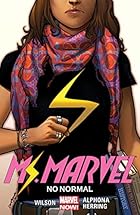
I'm not a fan of superhero comics, but I have a lot of friends who are, and I tend to hang out in circles where they're popular, so I manage to pick up a fair amount about them by sheer osmosis. And I'd certainly heard a lot of buzz about this one, mostly centered on the fact that the title character is a Pakistani-American Muslim girl, which is is apparently a first in comics history, and a welcome step in making the superhero scene a little more diverse. Which struck me as a laudable thing, but wasn't enough to make me want to run out and read it. But then I also heard that the main character, Kamala Kahn, was a fun, somewhat geeky, pop-culture-savvy heroine, and that did make me more interested. And then this first collected volume just sort of showed up on my doorstep -- this is a thing that happens to me with books -- so of course I had to read it.
And I did enjoy it. Kamala is indeed a likeable, well-realized character, and the way she's written feels very clueful and real. There's some thematic stuff here, too, about the experience of being a child of immigrants, trying to figure out exactly how you fit in and how to be yourself when you're not quite like everybody else around you. It's not necessarily terribly subtle, but it's not clunky Afterschool Special stuff, either, and overall it works. The artwork is very well done, too.
I'm not sure, though, whether I'll continue reading this series or not. This was a pleasant read, and I'm happy enough to have made Kamala's acquaintance, but it hasn't instantly converted me into a fan of superhero comics.
Rating: 4/5
I'm not a fan of superhero comics, but I have a lot of friends who are, and I tend to hang out in circles where they're popular, so I manage to pick up a fair amount about them by sheer osmosis. And I'd certainly heard a lot of buzz about this one, mostly centered on the fact that the title character is a Pakistani-American Muslim girl, which is is apparently a first in comics history, and a welcome step in making the superhero scene a little more diverse. Which struck me as a laudable thing, but wasn't enough to make me want to run out and read it. But then I also heard that the main character, Kamala Kahn, was a fun, somewhat geeky, pop-culture-savvy heroine, and that did make me more interested. And then this first collected volume just sort of showed up on my doorstep -- this is a thing that happens to me with books -- so of course I had to read it.
And I did enjoy it. Kamala is indeed a likeable, well-realized character, and the way she's written feels very clueful and real. There's some thematic stuff here, too, about the experience of being a child of immigrants, trying to figure out exactly how you fit in and how to be yourself when you're not quite like everybody else around you. It's not necessarily terribly subtle, but it's not clunky Afterschool Special stuff, either, and overall it works. The artwork is very well done, too.
I'm not sure, though, whether I'll continue reading this series or not. This was a pleasant read, and I'm happy enough to have made Kamala's acquaintance, but it hasn't instantly converted me into a fan of superhero comics.
Rating: 4/5
34mabith
If superhero comics had been like this new Ms. Marvel series, I probably would have grown up a fan. This Ms. Marvel felt far more suitable for kids, 11 and up or so, unlike the Marvel and DC titles when I was that age. I think my favorite bit was probably that they actually explained how she got a costume that fit with her abilities. My pragmatism and superhero comics/movies don't tend to mesh well.
35bragan
>34 mabith: My pragmatism and superhero comics/movies don't tend to mesh well.
I'm with you on that one! And, actually, I think costumes are part of what turns me off of superhero comics, especially the costumes on female superheroes, which I tend to find really disturbing and hard to look at, on a deep, instinctive level. I feel like, I'm not looking at a drawing of a person, I'm looking at the embodiment of some guy's off-putting sex fantasy. And even leaving that aside, if I could, the idea of anybody pulling off action moves in those getups snaps my suspension of disbelief immediately. Not to mention any hope I'd ever have of identifying with the character, because someone who would dress like that to fight crime is clearly an alien creature to me. Even if Ms. Marvel did nothing else noteworthy, it would get major points from me for explicitly acknowledging the ridiculous impracticality of such things; making its hero look like a real, normally proportioned human being; and having her finally settle on a costume that looks comfortable, practical, and not designed primarily to titillate men. Although the fact that it required a Muslim superhero, raised in a culture that puts special emphasis on female modesty, to give us female superhero clothing that actually looks like real, wearable, sensible clothing is kind of irritating to me.
Ahem. Rant mode off now. :)
I will say that Ms. Marvel feels to me just about ideal for preteen/teenage kids. I was kind of thinking that it felt like it aimed a little young for me to be its best target audience, but it might have been just about perfect when I was 12 or so.
I'm with you on that one! And, actually, I think costumes are part of what turns me off of superhero comics, especially the costumes on female superheroes, which I tend to find really disturbing and hard to look at, on a deep, instinctive level. I feel like, I'm not looking at a drawing of a person, I'm looking at the embodiment of some guy's off-putting sex fantasy. And even leaving that aside, if I could, the idea of anybody pulling off action moves in those getups snaps my suspension of disbelief immediately. Not to mention any hope I'd ever have of identifying with the character, because someone who would dress like that to fight crime is clearly an alien creature to me. Even if Ms. Marvel did nothing else noteworthy, it would get major points from me for explicitly acknowledging the ridiculous impracticality of such things; making its hero look like a real, normally proportioned human being; and having her finally settle on a costume that looks comfortable, practical, and not designed primarily to titillate men. Although the fact that it required a Muslim superhero, raised in a culture that puts special emphasis on female modesty, to give us female superhero clothing that actually looks like real, wearable, sensible clothing is kind of irritating to me.
Ahem. Rant mode off now. :)
I will say that Ms. Marvel feels to me just about ideal for preteen/teenage kids. I was kind of thinking that it felt like it aimed a little young for me to be its best target audience, but it might have been just about perfect when I was 12 or so.
36RidgewayGirl
On the topic of superheroes, I've just watched the first episode of Agent Carter and she not only wore clothes and kicked ass, but she was fighting sexism and had a cute guy as an assistant. Also, the 1949 setting is beautifully done.
37bragan
>36 RidgewayGirl: I saw some ads for that, and she did look pretty awesome. I'll have to check that out at some point. Knowing me, though, not until it's on Netflix.
38mabith
The fact that basically every drawing of female superheroes in mainstream comics is a completely unnatural pose in order to emphasize sexual characteristics...blech. The industry complained so much about losing readers, but of course that happened when they left nothing for the original demographic of young readers or people who wanted really interesting stories or humor (not 20 alternative universes where no one ever dies). The way even mediocre webcomics exploded in the early 2000s should have been the sign they needed. The changes they've made seem so miniscule and so gradual.
>36 RidgewayGirl: Good to know about Agent Carter!
>36 RidgewayGirl: Good to know about Agent Carter!
39avidmom
I think it's wonderful that "Ms. Marvel" exists! Even my not-so-recently teenage boys complain about the over-sexualization of women in video games, which I think says a whole heck of a lot!!!
My son has me addicted to the show "Arrow," which is a lot of fun. It's a bit soap-opera-ish but I like the fact that nearly all the women on that show kick a**.
My son has me addicted to the show "Arrow," which is a lot of fun. It's a bit soap-opera-ish but I like the fact that nearly all the women on that show kick a**.
40bragan
>38 mabith: I've seen some blogs commenting on how unnatural and hyper-sexualized those female superhero poses are by either having men trying to replicate them, or by drawing male superheroes in exactly the same way. It's extremely telling.
>39 avidmom: Geez, yeah, when, when it's too much even for teeange boys!
I haven't seen Arrow, and haven't felt a lot of desire to do so, but it's always nice to know there are shows out there with kick-ass women on them.
>39 avidmom: Geez, yeah, when, when it's too much even for teeange boys!
I haven't seen Arrow, and haven't felt a lot of desire to do so, but it's always nice to know there are shows out there with kick-ass women on them.
41LolaWalser
>35 bragan:
Although the fact that it required a Muslim superhero, raised in a culture that puts special emphasis on female modesty, to give us female superhero clothing that actually looks like real, wearable, sensible clothing is kind of irritating to me.
I'm not likely to pick that up, but I just want to say that this would greatly irritate me too. I absolutely detest the way "modest" has been co-opted for Islamic dress, because the inevitable implication is that everything other than that is immodest.
Recently, in what was pure coincidence but possibly all the more disturbing for that, I received three notices in two days from unrelated sources about Muslim women who have been allowed to participate in sports wearing a special, "modest" outfit. Which really split me down the middle--I mean, because of that word, occurring each time in three unrelated notices about three different women: "modest".
Because, on the one hand--big fat HOORAY for Muslim women participating publicly, professionally, in sports--this is not a small thing, for various reasons. I hope more and more manage to do so.
But on the other hand, now that THEIR costume is known as being "modest", there's just no escaping the obvious conclusion that other women on the team--one was a basketball player from Bosnia--are dressed "immodestly". And that drives me bonkers.
Call it Muslim or Islamic or special or halal dress--whatever--but not "modest".
Take a look at the picture with one of those women, Indira Kaljo, and her teammates (scroll to second):
http://ummahsports.net/2014/07/07/basketball-pro-indira-kaljo-ready-to-fight-fib...
I'm very happy for her to play basketball covered from head to toe. I'm not happy to have even a shadow of disapproval thrown on her teammates' outfits by way of calling Kaljo's "modest".
Although the fact that it required a Muslim superhero, raised in a culture that puts special emphasis on female modesty, to give us female superhero clothing that actually looks like real, wearable, sensible clothing is kind of irritating to me.
I'm not likely to pick that up, but I just want to say that this would greatly irritate me too. I absolutely detest the way "modest" has been co-opted for Islamic dress, because the inevitable implication is that everything other than that is immodest.
Recently, in what was pure coincidence but possibly all the more disturbing for that, I received three notices in two days from unrelated sources about Muslim women who have been allowed to participate in sports wearing a special, "modest" outfit. Which really split me down the middle--I mean, because of that word, occurring each time in three unrelated notices about three different women: "modest".
Because, on the one hand--big fat HOORAY for Muslim women participating publicly, professionally, in sports--this is not a small thing, for various reasons. I hope more and more manage to do so.
But on the other hand, now that THEIR costume is known as being "modest", there's just no escaping the obvious conclusion that other women on the team--one was a basketball player from Bosnia--are dressed "immodestly". And that drives me bonkers.
Call it Muslim or Islamic or special or halal dress--whatever--but not "modest".
Take a look at the picture with one of those women, Indira Kaljo, and her teammates (scroll to second):
http://ummahsports.net/2014/07/07/basketball-pro-indira-kaljo-ready-to-fight-fib...
I'm very happy for her to play basketball covered from head to toe. I'm not happy to have even a shadow of disapproval thrown on her teammates' outfits by way of calling Kaljo's "modest".
42bragan
>41 LolaWalser: I find the whole concept of "modesty" a bit problematic for all kinds of reasons, personally, and I definitely agree that the word is unfortunate. (Not least because the opposite of modesty is "pride." Is the implication that a woman who's not covering herself from head to toe is pridefully showing off what she's got? I mean, come on.)
In the case of superhero costumes, of course, it's not remotely a contest between modest and immodest, whatever those words mean, so much as it is between wearable clothing and something that resembles fetish gear. So even trying to frame it in terms of "modest vs. immodest" seems fundamentally wrong. In the comic's favor, it doesn't actually categorize things that way, but even so, it's hard not to draw the conclusion that Kamala only gets a comics-industry pass on the super-sexy clothes for religious and cultural reasons.
In the case of superhero costumes, of course, it's not remotely a contest between modest and immodest, whatever those words mean, so much as it is between wearable clothing and something that resembles fetish gear. So even trying to frame it in terms of "modest vs. immodest" seems fundamentally wrong. In the comic's favor, it doesn't actually categorize things that way, but even so, it's hard not to draw the conclusion that Kamala only gets a comics-industry pass on the super-sexy clothes for religious and cultural reasons.
43LolaWalser
>42 bragan:
Yep, and there's just no avoiding the fact that if Muslim puritanism is to be respected, why shouldn't puritanism generally?
It is a quandary--you're completely right about the "sex fantasy" origin of female superheroes, and that's annoying and troublesome in its own right. But to have it finally countered with a markedly religious-puritanical character is, as far as I'm concerned, worse than the original problem! I'd be much happier with a character who was asexual and couldn't tell or cared for "sexy" clothing from a bag of potatoes, or one who simply liked long sleeves and baggy pants or whatever...
Although I think there are/were some female superheroes in more reasonable costumes--modern Batwoman maybe? The Huntress? None of these are particularly successful characters, but then, I think female superheroes in general don't have many fans.
My favourite (of any title, regardless of sex) was and remains Wonder Woman, because she is consistently NOT anyone's sexy babe, or submissive mess of tears etc. She started her career in a knee-length skirt, and of course got a progressively more ridiculous "how does your bust not bust out a million times a day" swimsuit, but in combination with that personality it was more bearable.
Still, there's just no escaping the fact this is mainly fantasy lit drawn by men for men, so curves and stiletto heels and pole dancer contortions are there to stay.
Yep, and there's just no avoiding the fact that if Muslim puritanism is to be respected, why shouldn't puritanism generally?
It is a quandary--you're completely right about the "sex fantasy" origin of female superheroes, and that's annoying and troublesome in its own right. But to have it finally countered with a markedly religious-puritanical character is, as far as I'm concerned, worse than the original problem! I'd be much happier with a character who was asexual and couldn't tell or cared for "sexy" clothing from a bag of potatoes, or one who simply liked long sleeves and baggy pants or whatever...
Although I think there are/were some female superheroes in more reasonable costumes--modern Batwoman maybe? The Huntress? None of these are particularly successful characters, but then, I think female superheroes in general don't have many fans.
My favourite (of any title, regardless of sex) was and remains Wonder Woman, because she is consistently NOT anyone's sexy babe, or submissive mess of tears etc. She started her career in a knee-length skirt, and of course got a progressively more ridiculous "how does your bust not bust out a million times a day" swimsuit, but in combination with that personality it was more bearable.
Still, there's just no escaping the fact this is mainly fantasy lit drawn by men for men, so curves and stiletto heels and pole dancer contortions are there to stay.
44bragan
But to have it finally countered with a markedly religious-puritanical character is, as far as I'm concerned, worse than the original problem!
In fairness, the character herself is neither extremely religious nor puritanical. Heck, she initially wants the sexy costume her parents would clearly not approve of, before she realizes how stupid and impractical it is. I really do think the comic itself handles the whole thing very well, but it's still hard not to feel like it has an excuse that it really, really shouldn't need.
Although I think there are/were some female superheroes in more reasonable costumes
Ms. Marvel features some appearances by Captain Marvel, who is apparently a woman these days, and her current costume isn't bad, as such things go, although it's still pretty skin-tight.
but in combination with that personality it was more bearable.
I still find it hard to bear, alas.
Still, there's just no escaping the fact this is mainly fantasy lit drawn by men for men,
And yet, there are women who love it, and women who produce it. I wish them well in changing things. I know it is surely an uphill battle.
In fairness, the character herself is neither extremely religious nor puritanical. Heck, she initially wants the sexy costume her parents would clearly not approve of, before she realizes how stupid and impractical it is. I really do think the comic itself handles the whole thing very well, but it's still hard not to feel like it has an excuse that it really, really shouldn't need.
Although I think there are/were some female superheroes in more reasonable costumes
Ms. Marvel features some appearances by Captain Marvel, who is apparently a woman these days, and her current costume isn't bad, as such things go, although it's still pretty skin-tight.
but in combination with that personality it was more bearable.
I still find it hard to bear, alas.
Still, there's just no escaping the fact this is mainly fantasy lit drawn by men for men,
And yet, there are women who love it, and women who produce it. I wish them well in changing things. I know it is surely an uphill battle.
45bragan
5. What We See When We Read by Peter Mendelsund
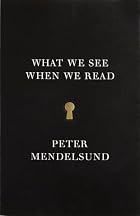
I have such mixed feelings about this book. To be honest, I had kind of a problem with it even before I started reading it. It's that "we" in the title. The thing is, I am really, really not a visual person. I have a poor visual memory and an even poorer visual imagination. When I read, I tend not to see anything at all. At most, if I have some reason to really try to conjure up an image of something I'm reading -- which, generally, I don't -- what I get is extremely vague and ephemeral, like the memory of a memory of something that might have once been an image.
Mendelsund, though, starts right off with the assertion that when "we" read, "we" think there's a movie playing in "our" heads. Which, uh... no. Not this portion of "we," anyway. He then suggests that this perception may be somewhat illusory, that mental imagery is not as vivid or as coherent as "we" think, so, OK, maybe I get to have a little moment of triumph, telling myself that I'm the only one who experiences this honestly. I don't think that's quite it, though, and Mendelsund continues right along making assertions about how everybody has these images in their heads and can't not have them.
There is one point where, unexpectedly, he captures my own experience perfectly: "If we don't have pictures in our minds when we read," he says, finally acknowledging this as a possibility, "then it is the interaction of ideas -- the intermingling of abstract relationships -- that catalyzes feeling in us readers." Yes! Yes, that is what reading is like for me! Except then he adds, "This sounds like a fairly unenjoyable experience..." Which... Wait, what? Admittedly, he then goes on to compare that to listening to music, a non-visual experience which nobody devalues, but I can't help feeling a little insulted, anyway. (And even if I didn't feel excluded from what he seems to be putting forth as a universal experience, even if a partly illusory one, I think I'd be wondering just what he's basing these generalizations about how reading works on. Has he sent out surveys? Have scientific studies been performed? Or is he just making assumptions based on his own experiences?)
The book itself is also intensely visual, with illustrations -- some only related to what he's talking about in vague or abstractly suggestive ways -- interspersed and intertwined with bite-sized blocks of text. Sometimes I found this clever and visually striking, and sometimes I thought it kind of pretentious and wished he'd spent less time playing around with images and more time unpacking the things he was saying in the text.
And yet, despite the fact that much of the supposedly universal experiences he's describing are alien to me, there is a lot in here that actually does resonate with my own experiences of reading, however non-visually, and a lot that feels insightful, or at the very least thought-provoking. So even though its assumptions and over-generalizations irritated me a little, in the end I am glad enough to have read it.
(Now, if someone wants to write a book called What We Hear When We Read, I will totally be there.)
Rating: 3.5/5
I have such mixed feelings about this book. To be honest, I had kind of a problem with it even before I started reading it. It's that "we" in the title. The thing is, I am really, really not a visual person. I have a poor visual memory and an even poorer visual imagination. When I read, I tend not to see anything at all. At most, if I have some reason to really try to conjure up an image of something I'm reading -- which, generally, I don't -- what I get is extremely vague and ephemeral, like the memory of a memory of something that might have once been an image.
Mendelsund, though, starts right off with the assertion that when "we" read, "we" think there's a movie playing in "our" heads. Which, uh... no. Not this portion of "we," anyway. He then suggests that this perception may be somewhat illusory, that mental imagery is not as vivid or as coherent as "we" think, so, OK, maybe I get to have a little moment of triumph, telling myself that I'm the only one who experiences this honestly. I don't think that's quite it, though, and Mendelsund continues right along making assertions about how everybody has these images in their heads and can't not have them.
There is one point where, unexpectedly, he captures my own experience perfectly: "If we don't have pictures in our minds when we read," he says, finally acknowledging this as a possibility, "then it is the interaction of ideas -- the intermingling of abstract relationships -- that catalyzes feeling in us readers." Yes! Yes, that is what reading is like for me! Except then he adds, "This sounds like a fairly unenjoyable experience..." Which... Wait, what? Admittedly, he then goes on to compare that to listening to music, a non-visual experience which nobody devalues, but I can't help feeling a little insulted, anyway. (And even if I didn't feel excluded from what he seems to be putting forth as a universal experience, even if a partly illusory one, I think I'd be wondering just what he's basing these generalizations about how reading works on. Has he sent out surveys? Have scientific studies been performed? Or is he just making assumptions based on his own experiences?)
The book itself is also intensely visual, with illustrations -- some only related to what he's talking about in vague or abstractly suggestive ways -- interspersed and intertwined with bite-sized blocks of text. Sometimes I found this clever and visually striking, and sometimes I thought it kind of pretentious and wished he'd spent less time playing around with images and more time unpacking the things he was saying in the text.
And yet, despite the fact that much of the supposedly universal experiences he's describing are alien to me, there is a lot in here that actually does resonate with my own experiences of reading, however non-visually, and a lot that feels insightful, or at the very least thought-provoking. So even though its assumptions and over-generalizations irritated me a little, in the end I am glad enough to have read it.
(Now, if someone wants to write a book called What We Hear When We Read, I will totally be there.)
Rating: 3.5/5
46dchaikin
i think I feel bad for you for the problems you had with the book...but, and i feel a little wrong saying this, your torment is very entertaining to read about. I have been interested in this book from other reviews, so i'm encouraged by your last paragraph- er, well the last one not in parentheses.
47bragan
>46 dchaikin: Hee! I'm glad my torment is entertaining. :) Although, honestly, it was less torment than frustration. And, yes, I'd say you can be (reasonably) encouraged. I wouldn't exactly steer anybody away from the book, despite my frustrations, and those are probably pretty idiosyncratic, anyway. It's just... Darn it, we non-visual readers exist, too! I demand recognition!
48RidgewayGirl
Interesting review of What We See When We Read. It is a bit self-centered to expect that one's reading experience is the same for everyone.
As for the modest dressing topic, I can't really say anything about Islamic culture, but there's an annoying and harmful trend these days among Christians to insist on girls and women dressing modestly so as to protect men from lustful thoughts. There's quite a selection of Mom blogs talking about how their precious sons are not allowed to have girls as Facebook friends who post pictures Mom disapproves of (the most egregious of these decorated her post with pictures of her sons in just swim trunks) and a host of YouTube videos of teenage boys lecturing teenage girls on proper dress. I don't suggest you go look as the whole thing is rage-inducing.
As for the modest dressing topic, I can't really say anything about Islamic culture, but there's an annoying and harmful trend these days among Christians to insist on girls and women dressing modestly so as to protect men from lustful thoughts. There's quite a selection of Mom blogs talking about how their precious sons are not allowed to have girls as Facebook friends who post pictures Mom disapproves of (the most egregious of these decorated her post with pictures of her sons in just swim trunks) and a host of YouTube videos of teenage boys lecturing teenage girls on proper dress. I don't suggest you go look as the whole thing is rage-inducing.
49FlorenceArt
>45 bragan: Wow. Did that guy do ANY research at all? I haven't, but I can definitely tell you I have absolutely no image in my head when I read. Or sound, for that matter, except my own voice. I guess I am sorely lacking in imagination. But I seriously doubt that we're the only two people in the world who don't visualize what they read.
50mabith
See, I had the opposite reaction to What We See When We Read. In my reading I felt that he was absolutely saying that the people who claim to see a movie really don't, that no one visualizes to the extent they think they do, in part because authors often don't physically describe a character to a great extent, and that while we read most of us do not visualize at all.
51ursula
>45 bragan: After reading another description of this book, I had commented to my husband that I don't think I really visualize much when I read. I admit that sometimes I do have the experience that I really feel like I am really *there* in a book, but I'm not entirely convinced that's an entirely visual experience. I guess maybe it's similar to what the author seems to be saying about how "we" don't get actual vivid pictures in our heads even if we think we do. I'm pretty much never the kind of person who sees a movie adaptation and says that the actor isn't how I imagined the character.
52japaul22
I definitely am not a visual reader. I rarely if ever have a clear picture of characters or setting in my mind while reading. I just get vague impressions. Despite this, I still have a strong feeling of "knowing" characters in a well-written book.
I'm interested in reading this book since its provoked fairly different reactions from readers in this group.
I'm interested in reading this book since its provoked fairly different reactions from readers in this group.
53bragan
>48 RidgewayGirl: It is a bit self-centered to expect that one's reading experience is the same for everyone.
Or short-sighted, at the very least. (Uh, so to speak.)
there's an annoying and harmful trend these days among Christians to insist on girls and women dressing modestly so as to protect men from lustful thoughts
I think that's usually the rationale for it, whatever the religious belief or cultural tradition behind it. And I do have big issues with that, starting with the way that's women's dress and women's bodies are seen as being, and needing to be, all about men. And surely teaching boys that they are slobbering slaves to their lusts and that women, not themselves, are to blame for their bad reactions is much worse for everybody than teaching them self-control and respect.
But I'm heading back into rant territory there...
(I do feel compelled to reiterate that there's nothing about the comic itself that I find objectionable, though.)
>49 FlorenceArt: Wow. Did that guy do ANY research at all?
From the book, it's really impossible to tell, although at one point he does mention asking a neuroscientist about some aspect of visual imagination. Mind you, it's not pretending to be a popular science book, but is more a series of musings. Maybe it's too much of me to expect lots of research, let alone careful citing of scientific sources. But these are, nevertheless, things that my analytical brain always wants. Otherwise, well, saying "this is my experience" is fine, but more general statements are not worth a whole lot unless you can back them up.
>50 mabith: In my reading I felt that he was absolutely saying that the people who claim to see a movie really don't, that no one visualizes to the extent they think they do,
He's definitely saying that people don't visualize as comprehensively as they think, which, OK, that's interesting and I believe it. But he also clearly is saying, over and over, that all of us always do at least think we're visualizing things. He seems to take it absolutely for granted that everybody has at least some visual component that they feel very strongly, even if it is partly an illusion. And, well, he is wrong about that.
I guess maybe it's similar to what the author seems to be saying about how "we" don't get actual vivid pictures in our heads even if we think we do.
Honestly, I came away from this book completely befuddled about whether my own experience is bizarrely abnormal (or at least radically different from the author's), or whether it is in fact much closer to more visual people's experiences, but just conceptualized differently. I think all I can really say is that much of how he thinks of the experience reading is alien to me.
>51 ursula: I'm pretty much never the kind of person who sees a movie adaptation and says that the actor isn't how I imagined the character.
I occasionally get "that's not quite how I imagined him" but it's more of a general sense of the person than me comparing it to an actual picture in my head. Voices, on the other hand... I remember having a bit of a hard time with Alan Rickman in the first Harry Potter movie, great as he is, because I had this very, very clear voice in my head for Snape, and it wasn't Rickman's. Then, the next time I picked up one of the books, his voice kept flipping back and forth between the one I originally heard and Rickman's. It was extremely distracting. The time after that, it had settled firmly into Rickman's, and I found I couldn't really remember the original voice anymore. Which I think is kind of fascinating.
>52 japaul22: Despite this, I still have a strong feeling of "knowing" characters in a well-written book.
Me, too, absolutely. But it's a kind of knowing that doesn't have a whole lot to do with being able to picture their hair color. Which is also my experience of knowing real people, really. I'm not usually picturing them when I'm thinking about them, either. Heck, I'm often not paying much attention to what they look like even when I'm staring right at them.
I'm interested in reading this book since its provoked fairly different reactions from readers in this group.
As I said in the review, I do think it's worth a read, if only because it is thought-provoking in interesting ways, whatever one's reactions to it.
Or short-sighted, at the very least. (Uh, so to speak.)
there's an annoying and harmful trend these days among Christians to insist on girls and women dressing modestly so as to protect men from lustful thoughts
I think that's usually the rationale for it, whatever the religious belief or cultural tradition behind it. And I do have big issues with that, starting with the way that's women's dress and women's bodies are seen as being, and needing to be, all about men. And surely teaching boys that they are slobbering slaves to their lusts and that women, not themselves, are to blame for their bad reactions is much worse for everybody than teaching them self-control and respect.
But I'm heading back into rant territory there...
(I do feel compelled to reiterate that there's nothing about the comic itself that I find objectionable, though.)
>49 FlorenceArt: Wow. Did that guy do ANY research at all?
From the book, it's really impossible to tell, although at one point he does mention asking a neuroscientist about some aspect of visual imagination. Mind you, it's not pretending to be a popular science book, but is more a series of musings. Maybe it's too much of me to expect lots of research, let alone careful citing of scientific sources. But these are, nevertheless, things that my analytical brain always wants. Otherwise, well, saying "this is my experience" is fine, but more general statements are not worth a whole lot unless you can back them up.
>50 mabith: In my reading I felt that he was absolutely saying that the people who claim to see a movie really don't, that no one visualizes to the extent they think they do,
He's definitely saying that people don't visualize as comprehensively as they think, which, OK, that's interesting and I believe it. But he also clearly is saying, over and over, that all of us always do at least think we're visualizing things. He seems to take it absolutely for granted that everybody has at least some visual component that they feel very strongly, even if it is partly an illusion. And, well, he is wrong about that.
I guess maybe it's similar to what the author seems to be saying about how "we" don't get actual vivid pictures in our heads even if we think we do.
Honestly, I came away from this book completely befuddled about whether my own experience is bizarrely abnormal (or at least radically different from the author's), or whether it is in fact much closer to more visual people's experiences, but just conceptualized differently. I think all I can really say is that much of how he thinks of the experience reading is alien to me.
>51 ursula: I'm pretty much never the kind of person who sees a movie adaptation and says that the actor isn't how I imagined the character.
I occasionally get "that's not quite how I imagined him" but it's more of a general sense of the person than me comparing it to an actual picture in my head. Voices, on the other hand... I remember having a bit of a hard time with Alan Rickman in the first Harry Potter movie, great as he is, because I had this very, very clear voice in my head for Snape, and it wasn't Rickman's. Then, the next time I picked up one of the books, his voice kept flipping back and forth between the one I originally heard and Rickman's. It was extremely distracting. The time after that, it had settled firmly into Rickman's, and I found I couldn't really remember the original voice anymore. Which I think is kind of fascinating.
>52 japaul22: Despite this, I still have a strong feeling of "knowing" characters in a well-written book.
Me, too, absolutely. But it's a kind of knowing that doesn't have a whole lot to do with being able to picture their hair color. Which is also my experience of knowing real people, really. I'm not usually picturing them when I'm thinking about them, either. Heck, I'm often not paying much attention to what they look like even when I'm staring right at them.
I'm interested in reading this book since its provoked fairly different reactions from readers in this group.
As I said in the review, I do think it's worth a read, if only because it is thought-provoking in interesting ways, whatever one's reactions to it.
54valkyrdeath
I'm not a visual reader at all, and that's actually what I liked about the book. Whether it's true for a majority or not I don't know, but I've certainly encountered plenty of people who claim reading is like seeing a movie in their head, and that they have clear images of characters while reading, so I found the book quite reassuring to think that maybe I'm not the only one who doesn't visualise. It's interesting to read a different view of the book though.
55mabith
Ah, I never got the feeling that he was saying everyone thinks they visualize loads, just that many people do, so it didn't rub me like that.
56bragan
>54 valkyrdeath: Well, you are definitely not the only one who doesn't visualize. Whatever Mendelsund is or isn't trying to say on the subject, I can certainly assure you of that.
>55 mabith: Well, if that was intent, it would have been a lot clearer if he'd used words like "many people" instead of "we" and "all of us" and just plain "people." :)
>55 mabith: Well, if that was intent, it would have been a lot clearer if he'd used words like "many people" instead of "we" and "all of us" and just plain "people." :)
57Helenliz
>45 bragan: I've seen a few reviews of that recently, and the title immediately made me think the answer is, in my case "not a lot". While I learn visually, I'm not in the least bit creative visually. I did yoga for a while and the meditation section at the end of the class was mainly an excuse to lie down and have a snooze. All that "imagine a beautiful place" leaves me with a big blank space. I can only seem to recall things I have seen, only in stills and almost never in colour.
I'd certainly agree that sometimes I just know a character, which makes it really disconcerting when an author throws in a plot twist that I'm sure the character would never do in my imagination.
I'd certainly agree that sometimes I just know a character, which makes it really disconcerting when an author throws in a plot twist that I'm sure the character would never do in my imagination.
58bragan
>57 Helenliz: I've seen a few reviews of that recently, and the title immediately made me think the answer is, in my case "not a lot".
Yeah, I was thinking that, never mind the big long review, my reaction can succinctly be summed up as: "What do you mean, we?"
All that "imagine a beautiful place" leaves me with a big blank space.
When I attempt to imagine somewhere pleasant as a relaxation technique, I imagine myself in a Barnes & Noble. But it's less visual and more about the smell of books and coffee. :)
(Mind you, Mendelsund also contends that we don't imagine smells nearly as well as we think we do, either.)
Yeah, I was thinking that, never mind the big long review, my reaction can succinctly be summed up as: "What do you mean, we?"
All that "imagine a beautiful place" leaves me with a big blank space.
When I attempt to imagine somewhere pleasant as a relaxation technique, I imagine myself in a Barnes & Noble. But it's less visual and more about the smell of books and coffee. :)
(Mind you, Mendelsund also contends that we don't imagine smells nearly as well as we think we do, either.)
59avidmom
>45 bragan: Sometimes I "see" what I read, but usually I "hear" what I read. And it's not necessarily in my own voice (thank God!) If I'm reading an autobiography; I "hear" that person's voice. In the case of Cannery Row I saw the movie first and therefore, every time I open Cannery Row (or even any other Steinbeck book), I hear John Huston....
Yes. I do hear voices in my head.
I'm OK with it.
;)
Yes. I do hear voices in my head.
I'm OK with it.
;)
60bragan
>59 avidmom: I've seen several comments lately about people hearing what they read in their own voices, which just strikes me as odd. I do sort of hear what I'm reading -- which can be a problem when it's full of names I don't know how to pronounce -- but if it's a voice I'm hearing, it's usually a voice without much in the way of identifiable qualities. Like you, though, I can certainly hear actors' voices in my head (and not just Alan Rickman doing Snape). I remember reading The Log: A Dwarfer's Guide to Everything by Craig Charles of the TV show Red Dwarf. And not only did I hear everything in the book in his distinctive Liverpudlian voice, but for a day or so afterward, other things I read and even my own thoughts were also in his voice! Which was a bit weird.
I also had an interesting experience once where a graphic novel character whose voice I was hearing very clearly in my head turned out to be from somewhere other than where I thought he was from, and I swear, it was like there was a little rewindy zzzzzzzipppppppppp! noise as my brain went back over the memory of what I'd read so far, replaced the accent I'd imagined with the right one, and then fast-forwarded back to the point I'd gotten to, and continued merrily along from there "hearing" the same voice with a different accent.
The voices in our heads just keep things interesting!
I also had an interesting experience once where a graphic novel character whose voice I was hearing very clearly in my head turned out to be from somewhere other than where I thought he was from, and I swear, it was like there was a little rewindy zzzzzzzipppppppppp! noise as my brain went back over the memory of what I'd read so far, replaced the accent I'd imagined with the right one, and then fast-forwarded back to the point I'd gotten to, and continued merrily along from there "hearing" the same voice with a different accent.
The voices in our heads just keep things interesting!
61mabith
Hearing my own thoughts in other accents happens to me too, though it's selective to accents I actually enjoy. Listening to an audiobook with a Scottish reader or watching a few episodes of a Scottish TV show = Scottish thoughts for days. When I was transcribing an oral history interview my granddaddy did I certainly didn't carry his very thick Norfolk VA accent away with me (which I associated with being constantly confused when I was little, as I couldn't understand even half of what he said until I was 10, and I didn't understand why only he talked like that).
62bragan
>61 mabith: For me, I think it only happens with accents I'm sufficiently familiar with, at least when it comes to books. Which I suppose makes sense. I do sometimes find myself in danger of picking up the accents or speech patterns of other people when I'm around them long enough, too. And I remember one summer in high school watching so much British TV that my mother ended up yelling at me, "You're an American, dammit! Talk like one!" I guess it rubbed off on me a little too much.
63rebeccanyc
I've been eager to read What We See When We Read . . . but I have to say after this discussion I'm less eager.
64dukedom_enough
Another mostly non-visual reader here, agreeing that not everyone, etc. Looking at the book on amazon, I see that Mendelsund is Knopf's Associate Art Director, which probably tells us why he thinks as he does.
I think of the power of the phrase "once upon a time" - completely nonvisual, yet connecting us to all the stories ever.
I think of the power of the phrase "once upon a time" - completely nonvisual, yet connecting us to all the stories ever.
65bragan
>63 rebeccanyc: Well, I think I'm the only person I've seen so far who's less than 100% happy with it after reading it, and even I think it's worth a look. So don't let me put you off too much!
>64 dukedom_enough: Yes, he's apparently designed a lot of highly praised book covers. And is clearly a very, very visually oriented person.
>64 dukedom_enough: Yes, he's apparently designed a lot of highly praised book covers. And is clearly a very, very visually oriented person.
66FlorenceArt
Well I'm a very visually oriented person too, but I don't have any visual imagination and very little memory, and I don't see anything when I read.
67AnnieMod
>45 bragan:
Very interesting review. I usually have a pretty good visual memory but I am with you on the reading - rarely if ever I actually "see" anything when reading...
Very interesting review. I usually have a pretty good visual memory but I am with you on the reading - rarely if ever I actually "see" anything when reading...
68bragan
>66 FlorenceArt: and >67 AnnieMod: There are legions of us, apparently!
69bragan
6. The Book of Strange New Things by Michel Faber

Pastor Peter Leigh is excited to be given the opportunity to travel to the planet Oasis to spread the word of Jesus to its alien natives, but not at all happy about leaving his wife behind. Once he gets there, he finds himself growing increasingly consumed by his ministry and detached from events and people back on Earth, even as the news his wife relays to him in her messages gets worse and worse.
It's funny: there are all kinds of reasons why I should really not have liked this book at all. Starting with the fact that I'm not a fan of missionaries, and find the whole thought of meeting aliens and trying to indoctrinate them into our religions downright appalling. The missionary in this case, it must be said, is a decent and well-meaning guy, neither a fundamentalist nor a fanatic. And the aliens have specifically asked for him to come and preach to them, which maybe mitigates things a bit, but it's still an idea that makes me deeply uncomfortable.
Then there's the character of Peter himself. Decent and well-meaning he might be, but he's also so painfully naive and passive that at one point I got so frustrated and angry at him that I shut the book, probably somewhat forcefully, and walked away from it for a while until I'd calmed down. Which is something I never do.
It also suffers from some world-building issues that I think are fairly common when mainstream or literary writers turn their hands to SF, as they don't necessarily realize just how valuable rich, coherent, plausible world-building can be, or how much certain types are readers are going to expect it. The biggest manifestation of that here is the fact that, while human beings have the ability (somehow) to travel to this alien world that we've discovered (somehow), everything about the culture and the technology says this is set at most a handful of years in the future. There are lots of other examples, too, of things that aren't quite logically believable, some minor and debatable, some pretty central to the story.
And all of that seems like it should have really irritated me. And yet... Well, it kind of didn't. Something about the story just drew me in and carried me along, in an almost dreamlike kind of way. Something about it was, in the end, rather touching. And Peter, for all his frustrating faults, also had some rather lovely moments of insight and humanity. (It must be said, too, that his faults were deliberate, intentional character traits, not the author failing to see the problems with his character.) The book also deals with the religious aspects surprisingly well, in that it never feels preachy. Even though we spend the entire novel in the head of a man whose religion pervades every aspect of his life, and who does preach, there's never a sense that the reader isn't entirely free to disagree with him. (Which is a relief for atheist me, who disagreed with him constantly.) It feels like there's some complex, subtle stuff going on here, too, a lot of things that I feel like I can look back at and chew on a bit, if I want to ask myself questions about what the story I just read was really about.
Rating: an unexpected and slightly uncertain 4/5.

Pastor Peter Leigh is excited to be given the opportunity to travel to the planet Oasis to spread the word of Jesus to its alien natives, but not at all happy about leaving his wife behind. Once he gets there, he finds himself growing increasingly consumed by his ministry and detached from events and people back on Earth, even as the news his wife relays to him in her messages gets worse and worse.
It's funny: there are all kinds of reasons why I should really not have liked this book at all. Starting with the fact that I'm not a fan of missionaries, and find the whole thought of meeting aliens and trying to indoctrinate them into our religions downright appalling. The missionary in this case, it must be said, is a decent and well-meaning guy, neither a fundamentalist nor a fanatic. And the aliens have specifically asked for him to come and preach to them, which maybe mitigates things a bit, but it's still an idea that makes me deeply uncomfortable.
Then there's the character of Peter himself. Decent and well-meaning he might be, but he's also so painfully naive and passive that at one point I got so frustrated and angry at him that I shut the book, probably somewhat forcefully, and walked away from it for a while until I'd calmed down. Which is something I never do.
It also suffers from some world-building issues that I think are fairly common when mainstream or literary writers turn their hands to SF, as they don't necessarily realize just how valuable rich, coherent, plausible world-building can be, or how much certain types are readers are going to expect it. The biggest manifestation of that here is the fact that, while human beings have the ability (somehow) to travel to this alien world that we've discovered (somehow), everything about the culture and the technology says this is set at most a handful of years in the future. There are lots of other examples, too, of things that aren't quite logically believable, some minor and debatable, some pretty central to the story.
And all of that seems like it should have really irritated me. And yet... Well, it kind of didn't. Something about the story just drew me in and carried me along, in an almost dreamlike kind of way. Something about it was, in the end, rather touching. And Peter, for all his frustrating faults, also had some rather lovely moments of insight and humanity. (It must be said, too, that his faults were deliberate, intentional character traits, not the author failing to see the problems with his character.) The book also deals with the religious aspects surprisingly well, in that it never feels preachy. Even though we spend the entire novel in the head of a man whose religion pervades every aspect of his life, and who does preach, there's never a sense that the reader isn't entirely free to disagree with him. (Which is a relief for atheist me, who disagreed with him constantly.) It feels like there's some complex, subtle stuff going on here, too, a lot of things that I feel like I can look back at and chew on a bit, if I want to ask myself questions about what the story I just read was really about.
Rating: an unexpected and slightly uncertain 4/5.
70avidmom
>69 bragan: It sounds like a good one to me. Is Michael Faber a Christian author? I've never heard of him. We Christians often admire and poke at Peter in the Gospels because he was continuously sticking his foot in his mouth and generally screwing things up. Yet he had a great amount of faith. I can see the connection between "Pastor Peter" and the "Peter" in the NT here from miles away.
71bragan
>70 avidmom: You know, having finished this book, I honestly could not tell you for sure whether Faber is a Christian himself, or whether he just understands them really, really well. (Which I think he does, based on how much Peter's thinking reminds me of that of some of the Christians I've known.) In any event, I don't think he's a Christian author, but a "literary" one. Although I haven't read any of his other stuff and can't say for sure how religious any of the rest of it is.
And that's really interesting about the Biblical Peter! That does sound a bit like the guy in the novel, at least in some respects. I'm betting the name isn't at all coincidental.
And that's really interesting about the Biblical Peter! That does sound a bit like the guy in the novel, at least in some respects. I'm betting the name isn't at all coincidental.
72RidgewayGirl
Well, Faber's the guy who wrote both The Crimson Petal and the White, about a Victorian prostitute, as well as Under the Skin, about a predatory alien (played by Scarlett Johanssen in the movie version). So he's not writing for a Christian audience at all. I have no idea what his personal views are, although in The Crimson Petal and the White he's pretty hard on the hypocrisy of the respectable man with a secret.
Faber can write, can't he? I have got to read The Book of Strange New Things, although I'm not one for SF or dystopian novels.
Faber can write, can't he? I have got to read The Book of Strange New Things, although I'm not one for SF or dystopian novels.
73avidmom
>70 avidmom: Now I'll have to read it to see if my suspicions are true about the whole "Peter" connection. LOL!
74bragan
>72 RidgewayGirl: He can write. The prose in The Book of Strange New Things is not the slightest bit showy, but it pulled me along very, very smoothly.
And I think this book might qualify quite well as good SF for people who aren't much into SF. (In fact, I'd say that people who are are regular SF readers might be at a disadvantage, as they're probably more likely to be bugged by some of the flaws I mentioned.)
And I think this book might qualify quite well as good SF for people who aren't much into SF. (In fact, I'd say that people who are are regular SF readers might be at a disadvantage, as they're probably more likely to be bugged by some of the flaws I mentioned.)
75DieFledermaus
Hmmm....I really liked The Crimson Petal and the White and Under the Skin - both have stuck with me although it's been awhile since I read them - but I was having similar thoughts about The Book of Strange New Things on missionaries and such. A good review, I like all the details about your doubts.
76bragan
>75 DieFledermaus: Thanks. So many of my thoughts about the book revolve around my doubts.
77OscarWilde87
>45 bragan: I haven't read the book but I seem to share your feelings about the 'we'. It got me thinking about what I see when I read and I think I'm actually included in this collective 'we'. Unconsciously, over the course of the reading process I tend to form vague ideas or visual concepts of places and characters in a book. I remember when I first saw the Hobbit movie that I had definitely imagined things differently.
79bragan
>77 OscarWilde87: Even I have do some vague ideas about visual stuff -- at least sometimes -- and the more I think about it, the more I find I tend to make some default assumptions about what characters look like. But that's different, I think, from actually picturing them. Or from doing something that feels like picturing them, which I think is what Mendelsund is saying that "we all" do.
>78 dchaikin: Thanks! And, hey, praising what I've written is perfectly intelligent. ;)
>78 dchaikin: Thanks! And, hey, praising what I've written is perfectly intelligent. ;)
80DieFledermaus
>76 bragan: - Heh heh, it was almost like a mini-narrative of "bragan has doubts but gradually changes her mind about the book" - fun to read.
81OscarWilde87
>79 bragan: Mendelsund probably should have been more careful with overgeneralizations. But if a book makes me think about these issues I think it is definitely worth reading. Your review made me pay more attention to what pictures (if any at all) I form in my mind during the reading process. I'm reading 11.22.63 at the moment and so far, I have pictured places, but only roughly, not like an actual "picture" that is in my mind. Strange, how the mind works!
82bragan
>81 OscarWilde87: That's pretty much exactly how I feel about it. The generalizations are irritating, but it's thought-provoking enough to be worthwhile, anyway.
83mabith
I'm still baffled at our different reactions to the WE in that book! I thought Mendelsund was just trying to be gentle with the people who think they visualize loads while they read and who might be defensive about that (I think the small pictures some build are always between chapters and paragraphs and done very purposefully vs something that just happens literally as we read).
84bragan
7. Confessions of a Sociopath: A Life Spent Hiding in Plain Sight by M.E. Thomas
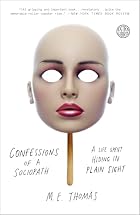
M.E. Thomas, a diagnosed sociopath, talks in depth about the way she lives her life, the forces that shaped her, the nature of her thoughts and feelings, and the way she navigates through a world of people very different from herself. This is both a memoir and a work of advocacy, as she makes the case for sociopathy not being all that bad a thing, painting sociopaths as being perhaps just one more point on a natural human spectrum.
As far as her intellectual arguments go, she does this well. Attempting to dispel a common stereotype, she points out that while the number of sociopaths is higher among violent criminals than among the general population, it is very much not true that all sociopaths are violent criminals, or even that most violent criminals are sociopaths. She argues that, while sociopaths lack feelings of guilt and shame to guide them and do not respond emotionally to the idea of doing something hurtful or morally wrong, it is entirely possible for sociopaths to behave pro-socially because they recognize that it is in their rational self-interest to do so, or because they recognize that society will function better, for them as well as for everyone else, if they follow certain rules. She calls this having "a prosthetic moral compass," and even suggests that claiming it is impossible to be good without an emotion-based sense of morality is as offensive as suggesting that it is impossible without religious belief... an argument that I personally cannot help but respond to. She also points out that there are areas where the dispassionate ruthlessness of a sociopath can be a definite advantage, such as her own field of law. A trial lawyer, after all, is supposed to be able to put aside her own emotions and moral judgments and concentrate solely on making the bast case she can.
Heck, Thomas even makes sociopathy sound kind of appealing: a life lived with a confident sense of self-worth, free of any of those often downright neurotic worries about what people might think of you, or about all the potential bad consequences of your actions.
And yet. And yet, in the midst of all this, I was constantly brought up short by the way she would casually discuss truly appalling things as if they were no big deal. She cheerfully talks about her favorite hobby of "ruining people," including all the details of why it's so much fun. She trots out lines of reasoning that are clearly twisted and self-serving to explain why such things are perfectly acceptable, and makes it clear that, to her, what "I didn't do anything wrong" means is only "I didn't do anything illegal" or "I scrupulously followed the rules of some game that only exists in my head, and that I did not ask anyone else if they actually wanted to play." Some of the things she describes are enough to raise the hairs on the back of your neck, and on the whole I think it may have left me feeling significantly more frightened of sociopaths than I ever was before, however much appreciation I might also have for their humanity.
And, of course, there's also the question of just how much we can trust anything Thomas says here. This memoir certainly feels tremendously open and sincere, and her stated reasons for writing it that way, her desire to be understood, seem very real. But then, this is also a person who, by her own account, excels at faking sincerity and manipulating people by telling them what they want to hear, so it's impossible not to wonder to what extent she's also doing that to her audience of readers.
The cumulative effect of all of this is illuminating, unsettling, and deeply, deeply fascinating. Not only does it provide a window into the world of the sociopathic, but it also offers up a very different perspective on the rest of us, raising a lot of extremely intriguing questions about what "empaths" have that sociopaths don't, how it works, and what it means.
Rating: 4.5/5
M.E. Thomas, a diagnosed sociopath, talks in depth about the way she lives her life, the forces that shaped her, the nature of her thoughts and feelings, and the way she navigates through a world of people very different from herself. This is both a memoir and a work of advocacy, as she makes the case for sociopathy not being all that bad a thing, painting sociopaths as being perhaps just one more point on a natural human spectrum.
As far as her intellectual arguments go, she does this well. Attempting to dispel a common stereotype, she points out that while the number of sociopaths is higher among violent criminals than among the general population, it is very much not true that all sociopaths are violent criminals, or even that most violent criminals are sociopaths. She argues that, while sociopaths lack feelings of guilt and shame to guide them and do not respond emotionally to the idea of doing something hurtful or morally wrong, it is entirely possible for sociopaths to behave pro-socially because they recognize that it is in their rational self-interest to do so, or because they recognize that society will function better, for them as well as for everyone else, if they follow certain rules. She calls this having "a prosthetic moral compass," and even suggests that claiming it is impossible to be good without an emotion-based sense of morality is as offensive as suggesting that it is impossible without religious belief... an argument that I personally cannot help but respond to. She also points out that there are areas where the dispassionate ruthlessness of a sociopath can be a definite advantage, such as her own field of law. A trial lawyer, after all, is supposed to be able to put aside her own emotions and moral judgments and concentrate solely on making the bast case she can.
Heck, Thomas even makes sociopathy sound kind of appealing: a life lived with a confident sense of self-worth, free of any of those often downright neurotic worries about what people might think of you, or about all the potential bad consequences of your actions.
And yet. And yet, in the midst of all this, I was constantly brought up short by the way she would casually discuss truly appalling things as if they were no big deal. She cheerfully talks about her favorite hobby of "ruining people," including all the details of why it's so much fun. She trots out lines of reasoning that are clearly twisted and self-serving to explain why such things are perfectly acceptable, and makes it clear that, to her, what "I didn't do anything wrong" means is only "I didn't do anything illegal" or "I scrupulously followed the rules of some game that only exists in my head, and that I did not ask anyone else if they actually wanted to play." Some of the things she describes are enough to raise the hairs on the back of your neck, and on the whole I think it may have left me feeling significantly more frightened of sociopaths than I ever was before, however much appreciation I might also have for their humanity.
And, of course, there's also the question of just how much we can trust anything Thomas says here. This memoir certainly feels tremendously open and sincere, and her stated reasons for writing it that way, her desire to be understood, seem very real. But then, this is also a person who, by her own account, excels at faking sincerity and manipulating people by telling them what they want to hear, so it's impossible not to wonder to what extent she's also doing that to her audience of readers.
The cumulative effect of all of this is illuminating, unsettling, and deeply, deeply fascinating. Not only does it provide a window into the world of the sociopathic, but it also offers up a very different perspective on the rest of us, raising a lot of extremely intriguing questions about what "empaths" have that sociopaths don't, how it works, and what it means.
Rating: 4.5/5
85bragan
>83 mabith: You're probably right about his motivation, but... Well, in my case, any recognition at all that not everybody has the same experience would have helped. It was the complete lack of even entertaining the possibility that kind of rubbed me the wrong way.
86mabith
I think I'm probably just so used to that kind of writing in popular science books that I automatically fill in the "not absolutely universal" stuff. That stuff bothers me a lot when it's something to do with societal gender roles, but all the pop. science books revolving around psychology or the brain write like that. I don't think I've read one that takes to say nothing to do with the human brain will be 100% universal.
87wandering_star
Thanks for the review of Confessions of a Sociopath. Sounds fascinating, and I love the way you break down your responses to the book - and the fact that a sociopath made a credible intellectual argument but alienated you by her lack of human connection to other people. It reminded me a bit of Jon Ronson's radio/book investigation of psychopaths - have you heard/read any of that? Particularly his encounter with the man who claims he faked insanity to escape a prison sentence, which has the same dichotomy between his immediate reaction to the case the man is making, and the creepiness he realises when he thinks about it afterwards.
88bragan
>86 mabith: I've read tons of those kinds of popular science books, myself, and while they're usually not full of disclaimers about all human beings not being exactly the same, the good ones, I think, usually do at least make some attempt not to oversell their conclusions. And, of course, What We See When We Read mostly doesn't even bother letting us know what kind of scientific basis there is or isn't for the author's assertions. Which, OK, Mendelsund is really not trying to write a science book, but he's also not confining himself to talking about his own experience just as his own experiences, either... Leaving me to wonder just what he is basing his assertions about other people's experiences on.
>87 wandering_star: It wasn't even so much her lack of human connection to other people that alienated me. A lack of human connection wouldn't remotely have shocked or put me off, by itself. (And there actually are people to whom she does seem to have some kind of connection, in her own socially stunted way.) It was the, for lack of a better word, creepiness of many of her actions and attitudes. And the fact that, for all her careful analysis of how people and society work and what kinds of behaviors are acceptable, she apparently still had no concept of just how creepy any of it was.
I have read The Psychopath Test, which was also good. (Thomas actually references it a few times, especially Ronson's interview with the CEO who recast every diagnostic criterion of sociopathy as a good business trait.) And, yeah, I guess my reaction to Thomas is perhaps somewhat similar to Ronson's reaction to that guy.
>87 wandering_star: It wasn't even so much her lack of human connection to other people that alienated me. A lack of human connection wouldn't remotely have shocked or put me off, by itself. (And there actually are people to whom she does seem to have some kind of connection, in her own socially stunted way.) It was the, for lack of a better word, creepiness of many of her actions and attitudes. And the fact that, for all her careful analysis of how people and society work and what kinds of behaviors are acceptable, she apparently still had no concept of just how creepy any of it was.
I have read The Psychopath Test, which was also good. (Thomas actually references it a few times, especially Ronson's interview with the CEO who recast every diagnostic criterion of sociopathy as a good business trait.) And, yeah, I guess my reaction to Thomas is perhaps somewhat similar to Ronson's reaction to that guy.
89dchaikin
>84 bragan:, >87 wandering_star:, >88 bragan: - the review and comments are interesting in a number of ways. The logic itself, cleansed of empathy, so to dpeak, is interesting - the things we do to be nice aren't really all that rathional.
90bragan
>89 dchaikin: I'd sort of like to think that morality could be achieved by pure rationality, or even that morality has a nice rational basis to it, but that may to a large extent be wishful thinking, and this book illustrates that pretty starkly, I think, if anything does.
91RidgewayGirl
Thanks for the review of What If?. I picked up a copy for my SO yesterday and he was very pleased.
92dchaikin
>90 bragan: But, i'm thinking, what if morality doesn't have a rational basis? No, actually i'm thinking there must be cases when it doesn't. But I haven't gotten so far as to think through any.
93bragan
>91 RidgewayGirl: Yay! I'm glad it pleased!
>92 dchaikin: It's a tough question, it really is. And just leads to all kinds of thorny additional questions, like "What is morality, anyway?" I do think, when you get down to it, when we try to come up with a rational basis for morality, what we're often doing is mostly rationalizing our own, inbuilt, emotional sense of right and wrong, developed over millions of years of evolution as a social species.
>92 dchaikin: It's a tough question, it really is. And just leads to all kinds of thorny additional questions, like "What is morality, anyway?" I do think, when you get down to it, when we try to come up with a rational basis for morality, what we're often doing is mostly rationalizing our own, inbuilt, emotional sense of right and wrong, developed over millions of years of evolution as a social species.
94dchaikin
Ah, yes, that unconscious driver.
Trying to come back to your book, it becomes a different and curious meeting point between the sociopath and the non-sociopath- not rationality, but the rationalization.
Trying to come back to your book, it becomes a different and curious meeting point between the sociopath and the non-sociopath- not rationality, but the rationalization.
95bragan
>94 dchaikin: The difference, probably, being just what it is we're rationalizing.
96bragan
8. One for the Money by Janet Evanovich
The first volume in Janet Evanovich's ridiculously popular Stephanie Plum series. In this initial installment our hero, desperate for cash after losing her job, turns to her cousin Vinne the bail bondsman for employment, thus embarking on her new career as a bounty hunter, a job for which she is woefully unequipped. And then it turns out that her first target is a man she had a one-night (or, more accurately, one-hour) stand with in high school, and that he's determined not to get caught until he's proved himself innocent.
This series was recommended to me as sheer brain candy, and that's probably about right. It's a quick, easy, but not particularly impressive or memorable read that worked fairly nicely as a palate cleanser between more serious books. I will say that although there are some lighthearted aspects to it -- Plum's family are pure comic relief, for instance -- overall it was less of a fun romp than I was expecting. There's a general air of sleaziness about the whole thing, and it features some very dark elements of sexual violence.
If I hadn't already picked up most of the rest of this series at a library sale, I'm not sure if I'd bother seeking out the next one, but since I have, I'll continue on with it the next time I want something this particular variety of mindless.
Rating: 3.5/5
The first volume in Janet Evanovich's ridiculously popular Stephanie Plum series. In this initial installment our hero, desperate for cash after losing her job, turns to her cousin Vinne the bail bondsman for employment, thus embarking on her new career as a bounty hunter, a job for which she is woefully unequipped. And then it turns out that her first target is a man she had a one-night (or, more accurately, one-hour) stand with in high school, and that he's determined not to get caught until he's proved himself innocent.
This series was recommended to me as sheer brain candy, and that's probably about right. It's a quick, easy, but not particularly impressive or memorable read that worked fairly nicely as a palate cleanser between more serious books. I will say that although there are some lighthearted aspects to it -- Plum's family are pure comic relief, for instance -- overall it was less of a fun romp than I was expecting. There's a general air of sleaziness about the whole thing, and it features some very dark elements of sexual violence.
If I hadn't already picked up most of the rest of this series at a library sale, I'm not sure if I'd bother seeking out the next one, but since I have, I'll continue on with it the next time I want something this particular variety of mindless.
Rating: 3.5/5
97NanaCC
>96 bragan:. I had listened to one of these many, many years ago when I first started listening to audio books. I had been at a company meeting and had about a 6 hour drive home. I went into a lovely book shop, and in addition to a few books, picked up one of the Evanovich books (mainly because it was the cheapest audiobook they had). I felt pretty much the way you did.
98bragan
>97 NanaCC: It seems like the sort of thing that'd be useful enough as a distraction on a long trip, without requiring any actual brainpower be expended on it while you're driving.
99rebeccanyc
>84 bragan: I really enjoyed your review of the sociopath book. I once worked with a guy who I finally figured out was a sociopath, and this would have been really helpful then!
100AnnieMod
>96 bragan:
I gave up on Stephanie Plum somewhere around 6 - even as mystery candy, it was just too shallow...
I gave up on Stephanie Plum somewhere around 6 - even as mystery candy, it was just too shallow...
101FlorenceArt
>96 bragan: Never went further than number one in the series myself. I didn't write a review and I have only a vague recollection, but I think AnnieMod's word shallow describes what I felt best, especially about the heroin.
102Helenliz
>96 bragan: after your recent reading, a bit of brain candy sounds entirely appropriate. The only downside with starting a series is somehow feeling obliged to finish it...
103bragan
>99 rebeccanyc: We've probably all known one at some point or another. Which is a slightly disturbing thought, really.
>100 AnnieMod:, >101 FlorenceArt: "Shallow" is a good word for it, at least for book one. I'm hoping I don't get completely tired of it as quickly as you guys, though, considering how many of the things I've still got on the TBR shelves.
>102 Helenliz: Yes, it seemed like about the ideal time for some brain candy! Even if it turned out to be somewhat dark and violent brain candy. And I might not feel too obliged to finish the series if I didn't already own the later books. But if I get to the point where I just have no interest in ever looking at another one, I can always donate them back to the library. Or so I tell myself, anyway.
>100 AnnieMod:, >101 FlorenceArt: "Shallow" is a good word for it, at least for book one. I'm hoping I don't get completely tired of it as quickly as you guys, though, considering how many of the things I've still got on the TBR shelves.
>102 Helenliz: Yes, it seemed like about the ideal time for some brain candy! Even if it turned out to be somewhat dark and violent brain candy. And I might not feel too obliged to finish the series if I didn't already own the later books. But if I get to the point where I just have no interest in ever looking at another one, I can always donate them back to the library. Or so I tell myself, anyway.
104AnnieMod
>103 bragan: Just do not read them back to back. Part of my problem is that I read the 6 in a row... and that got tiresome very fast... :) They are probably a lot better assimilated if you read one per year (or thereabouts)
105bragan
>104 AnnieMod: Oh, no, I'm pretty sure I couldn't stand reading them back to back. I'm figuring, maybe one every few months.
106DieFledermaus
>84 bragan: - Really interesting review of Confessions of a Sociopath. It definitely made me want to read it, but also made it sound like an uncomfortable read. It was available from the library, so I added it to the list, but thought, maybe not right now.
I also read The Psychopath Test as well as The Sociopath Next Door - and on the list are The Psychopath Inside, The Psychopath Whisperer and The Wisdom of Psychopaths. I think it seems like it's a lot less creepy if the book is narrated by a non-sociopath.
Glad you got some fluff after that book.
I also read The Psychopath Test as well as The Sociopath Next Door - and on the list are The Psychopath Inside, The Psychopath Whisperer and The Wisdom of Psychopaths. I think it seems like it's a lot less creepy if the book is narrated by a non-sociopath.
Glad you got some fluff after that book.
107RidgewayGirl
The Stephanie Plum books are like The Number One Ladies' Detective Agency books and the Bertie and Jeeves books. A series in which all the books are essentially the same book. There's certainly a place for that, but they shouldn't be read close together and one should not expect anything but the expected -- which is why they're popular -- sometimes we just need to have a few hours with something comfortable and fun.
108bragan
>106 DieFledermaus: I do think "unsettling" is the best word for it, although it was often unsettling in rather subtle ways. Mind you, the book starts with a scene of -- well, not animal cruelty, so much as disturbing indifference to an animal's suffering. So... some of it's not subtle at all. But the subtler stuff is creepier.
And it sounds like you are becoming quite the armchair expert on psychopathy!
>107 RidgewayGirl: Yeah, there's nothing intrinsically wrong with having a formula, if what you're doing with it is entertaining. And Jeeves & Wooster has got to be the premiere example of that. It may be basically the same story every time, but who cares? Every time, it's hilarious! Mind you, Evanovich is no Wodehouse, so if she does have that kind of formula, how well it'll hold up for me, I don't know.
(I have the The Number One Ladies' Detective Agency books on the TBR shelves, too -- or at least the first three -- but I haven't gotten to them yet.)
And it sounds like you are becoming quite the armchair expert on psychopathy!
>107 RidgewayGirl: Yeah, there's nothing intrinsically wrong with having a formula, if what you're doing with it is entertaining. And Jeeves & Wooster has got to be the premiere example of that. It may be basically the same story every time, but who cares? Every time, it's hilarious! Mind you, Evanovich is no Wodehouse, so if she does have that kind of formula, how well it'll hold up for me, I don't know.
(I have the The Number One Ladies' Detective Agency books on the TBR shelves, too -- or at least the first three -- but I haven't gotten to them yet.)
109baswood
>84 bragan: Confessions of a sociopath - I knew it I knew it! most lawyers are sociopaths.
110bragan
>109 baswood: She claims lots of them are. Honestly, is anyone surprised? :)
111bragan
9. Handling the Undead by John Ajvide Lindqvist
One unusually warm night in Stockholm, Sweden, something very strange happens. Everyone in the city experiences a terrible headache. Electrical appliances refuse to turn off, even when they're unplugged. And the recent dead begin to rise...
It sounds like a bog-standard setup for a zombie story, but what John Ajvide Lindqvist gives us is something very different: a deconstruction of the zombie genre, or a subversion of it, or maybe just a very different take. Because these zombies do not rise up and immediately begin hungering for human flesh. They are merely your loved ones, dead and rotting, not what they were, but not entirely gone, either. And, ultimately, it's a novel that's more concerned with the people that once belonged in those shuffling corpses than in the bodies themselves.
It is kind of an odd book. If you go into it looking for plot, or even for big drama, you might well be disappointed. Ditto if you're hoping for simple, logical, scientific explanations for everything in the end. And the writing can feel a little awkward, in a hard-to-pin-down way that I'm inclined to blame on the translation. But there are lots of fascinating subtleties to it, things that invite you to contemplate the mysteries of life and death and to take a new look at a horror trope that's become so familiar that we no longer bother to consider too closely at what it's really made of. Plus, there were a surprising number of moments when I found myself thinking, "Wow, zombies that don't' eat people are a thousand times creepier than ones who do. Who would have thought?"
Rating: 4/5
One unusually warm night in Stockholm, Sweden, something very strange happens. Everyone in the city experiences a terrible headache. Electrical appliances refuse to turn off, even when they're unplugged. And the recent dead begin to rise...
It sounds like a bog-standard setup for a zombie story, but what John Ajvide Lindqvist gives us is something very different: a deconstruction of the zombie genre, or a subversion of it, or maybe just a very different take. Because these zombies do not rise up and immediately begin hungering for human flesh. They are merely your loved ones, dead and rotting, not what they were, but not entirely gone, either. And, ultimately, it's a novel that's more concerned with the people that once belonged in those shuffling corpses than in the bodies themselves.
It is kind of an odd book. If you go into it looking for plot, or even for big drama, you might well be disappointed. Ditto if you're hoping for simple, logical, scientific explanations for everything in the end. And the writing can feel a little awkward, in a hard-to-pin-down way that I'm inclined to blame on the translation. But there are lots of fascinating subtleties to it, things that invite you to contemplate the mysteries of life and death and to take a new look at a horror trope that's become so familiar that we no longer bother to consider too closely at what it's really made of. Plus, there were a surprising number of moments when I found myself thinking, "Wow, zombies that don't' eat people are a thousand times creepier than ones who do. Who would have thought?"
Rating: 4/5
112Tom_D
Thanks for your reviews. I had What If? on my watch list and added The Book of Strange New Things as well as Confessions of a Sociopath: A Life Spent Hiding in Plain Sight. Both are very much not what I would look for on my own but sound interesting enough to try if the price it right.
113bragan
>112 Tom_D: Great! I hope you enjoy them, if and when you get to them, and do not feel I have led you astray. :)
114baswood
>111 bragan: Is their a History of Zombies around anywhere? because I don't believe they started out eating people, perhaps it all got confused with the vampires.
115bragan
>114 baswood: I'm sure there are several. I seem to remember seeing one offered through Early Reviewers a while back, even. But, yeah, I think we basically have George Romero to thank for our current notion of what zombies are and what they do.
116valkyrdeath
>114 baswood: >115 bragan: I think while George Romero did create the flesh eating undead that have come to be known as zombies as opposed to the traditional Voodoo zombies, he didn't actually call them that in Night of the Living Dead. It seems to be critics afterwards who started referring to them as zombies for some reason, and the name stuck. He was inspired by I Am Legend, so they really were more based on vampires than anything.
117bragan
>116 valkyrdeath: Yeah, I'm not sure he actually did use the word, at least not in the original. I wonder exactly when the flesh-eating corpses did get the voodoo name? Hmm. I think I need a history-of-zombies book.
118bragan
10. Into Thin Air: A Personal Account of the Mt. Everest Disaster by Jon Krakauer

In 1996, journalist and mountain-climbing enthusiast Jon Krakauer joined an expedition to the top of Mt. Everest as part of a magazine piece he was asked to do on the increasing commercialization of Everest expeditions. Karkauer reached the top and came back alive, but many of those who made the attempt at the same time, including several members of Krakauer's own group, died on the mountain. This book is his attempt to explain, both for his readers and himself, what happened and why.
Most of the account describes the ordinary business of climbing Everest -- if "ordinary" is remotely the right word to use for such an endeavor -- with a lot of background on the history of the mountain and its climbers, and a lot of detail about what an Everest attempt entails. Towards the end of the account, when disaster begins to strike in earnest, he continues to attempt to give as objective an account as he can muster, but also shares the depth of his survivor's guilt and his anguish at the role that he played in events.
What's particularly interesting about those events is that there are no obvious lessons to take from them, and no clear, simple narrative about actions A, B, and C leading to disastrous consequences X, Y, and Z. Instead, a lot of things just happened: weather, illness, bad choices and misperceptions by exhausted, oxygen-starved people.
My personal take-away from this narrative, honestly, is that attempting to climb Everest is a fundamentally crazy, even self-destructive act. Not because it's a harsh, dangerous environment where rescue in the event of disaster may be impossible, but because it's a harsh, dangerous, difficult-to-be-rescued-from environment where the human mind and body are not capable of proper functioning. But it's one that has just enough of a chance of not actually killing you that people insist on trying it anyway. Which I'd say makes it much worse place than, say, Mars. Nobody's going to try exploring Mars without proper life-support technology.
Well, that's one of my personal take-aways, anyway. The other one involves never, ever taking the life-giving sweetness of oxygen for granted again. I swear, the entire time I was reading this thing, I felt short of breath.
Rating: 4/5

In 1996, journalist and mountain-climbing enthusiast Jon Krakauer joined an expedition to the top of Mt. Everest as part of a magazine piece he was asked to do on the increasing commercialization of Everest expeditions. Karkauer reached the top and came back alive, but many of those who made the attempt at the same time, including several members of Krakauer's own group, died on the mountain. This book is his attempt to explain, both for his readers and himself, what happened and why.
Most of the account describes the ordinary business of climbing Everest -- if "ordinary" is remotely the right word to use for such an endeavor -- with a lot of background on the history of the mountain and its climbers, and a lot of detail about what an Everest attempt entails. Towards the end of the account, when disaster begins to strike in earnest, he continues to attempt to give as objective an account as he can muster, but also shares the depth of his survivor's guilt and his anguish at the role that he played in events.
What's particularly interesting about those events is that there are no obvious lessons to take from them, and no clear, simple narrative about actions A, B, and C leading to disastrous consequences X, Y, and Z. Instead, a lot of things just happened: weather, illness, bad choices and misperceptions by exhausted, oxygen-starved people.
My personal take-away from this narrative, honestly, is that attempting to climb Everest is a fundamentally crazy, even self-destructive act. Not because it's a harsh, dangerous environment where rescue in the event of disaster may be impossible, but because it's a harsh, dangerous, difficult-to-be-rescued-from environment where the human mind and body are not capable of proper functioning. But it's one that has just enough of a chance of not actually killing you that people insist on trying it anyway. Which I'd say makes it much worse place than, say, Mars. Nobody's going to try exploring Mars without proper life-support technology.
Well, that's one of my personal take-aways, anyway. The other one involves never, ever taking the life-giving sweetness of oxygen for granted again. I swear, the entire time I was reading this thing, I felt short of breath.
Rating: 4/5
119RidgewayGirl
Are you the last person on earth to read Into Thin Air? It's ideally read on a hot day, by the side of a pool featuring at least one lifeguard. After reading that, I read Anatoli Boukreev's account, The Climb, but I never got around to reading Beck Weathers account.
120bragan
>119 RidgewayGirl: I may well be, yes. :)
Mostly I found myself wishing I were reading it at sea level. Suddenly even the air up here at 5,000 feet, which I've been acclimatized to for 20 years, seemed entirely too thin, and I just wanted to go and hug the shoreline forever.
The edition I have includes a postscript in which he talks about Boukreev's book, and refutes a lot of the things he says in it.
Mostly I found myself wishing I were reading it at sea level. Suddenly even the air up here at 5,000 feet, which I've been acclimatized to for 20 years, seemed entirely too thin, and I just wanted to go and hug the shoreline forever.
The edition I have includes a postscript in which he talks about Boukreev's book, and refutes a lot of the things he says in it.
121AnnieMod
>119 RidgewayGirl: Naaah - that would be me when (if?) I get around to it finally :)
>118 bragan: Nice review... I never got why people do push the limits that much but oh well... I grew up with the story of the Bulgarian expedition to Everest in 1984 (Hristo Prodanov made it all the way up but died on the descent; the rest managed to go to the top and come down in the next few days) and all the documentaries about that. It had made me really weary of reading books for Everest for some reason..
>118 bragan: Nice review... I never got why people do push the limits that much but oh well... I grew up with the story of the Bulgarian expedition to Everest in 1984 (Hristo Prodanov made it all the way up but died on the descent; the rest managed to go to the top and come down in the next few days) and all the documentaries about that. It had made me really weary of reading books for Everest for some reason..
122bragan
>121 AnnieMod: I do sort of get the appeal of pushing one's limits, and I know that some of the more physically difficult experiences I've had -- like the time I ran out of water on a desert hike -- have given me some useful perspectives I wouldn't otherwise have had. But past a certain point, I find that my ability to understand or sympathize with the desire to do extreme things completely vanishes. I just don't see anything terribly exciting or heroic about refusing to accept that your body needs a certain amount of oxygen. For example.
123RidgewayGirl
I find the enormous cost of an Everest ascent troubling. I have a great deal of respect for climbers who go out there and climb, but the support and infrastructure used to climb Everest now makes it more a trophy than a challenge. I mean, I couldn't do it, it's not easy, but it's more a test of endurance than of skill.
124ursula
>122 bragan: I know that I have no interest in doing something where I have a good chance of dying (driving a car notwithstanding), but for some reason I find mountaineering and polar exploration books irresistible. What I read isn't always pretty, but I find the personalities and motivations interesting.
>123 RidgewayGirl: I think the problem I have with Everest climbers is that it's often a test of preparation and skill on the part of the Sherpas and expedition leaders rather than the climbers themselves. (This is of course talking mostly about a certain, but growing, subset of Everest climbers.) And further, it puts more strain on those people than would be there if they were climbing with people of equal skill levels.
>123 RidgewayGirl: I think the problem I have with Everest climbers is that it's often a test of preparation and skill on the part of the Sherpas and expedition leaders rather than the climbers themselves. (This is of course talking mostly about a certain, but growing, subset of Everest climbers.) And further, it puts more strain on those people than would be there if they were climbing with people of equal skill levels.
125AnnieMod
>123 RidgewayGirl: Agree. Which is probably why I stay away from current accounts - it is an extreme sport these days. The first guys going a certain route or doing it with no oxygen or whatever - that made sense. But the last decades... it is just a question of preparation, enough stupidity/bravery and finding the correct Sherpa and equipment. And company sometimes.
Don't get me wrong - I am all for people seeing things that their life had denied them. But if you cannot climb up there on your own, you don't have any work going up there..
Don't get me wrong - I am all for people seeing things that their life had denied them. But if you cannot climb up there on your own, you don't have any work going up there..
126bragan
>123 RidgewayGirl: Which is pretty much the thing Krakauer went up there to write about in the first place, really, this question of how troubled one ought to be the idea of Everest as a sort of tourist destination for less experienced climbers who put their equipment and their decisions in the hands of others. I feel like, after reading the book, I ought to have an opinion on this, but I fear my opinion is basically that these people are all nuts, however they're doing it.
>124 ursula: I don't even like having to drive a car, which is a ridiculously dangerous thing to take for granted as something we do every day. Of course, my own risk-aversion doesn't mean I don't enjoy reading about people doing things I regard as foolish or not worth it, even if I do spend a lot of time shaking my head at it all.
>124 ursula: I don't even like having to drive a car, which is a ridiculously dangerous thing to take for granted as something we do every day. Of course, my own risk-aversion doesn't mean I don't enjoy reading about people doing things I regard as foolish or not worth it, even if I do spend a lot of time shaking my head at it all.
127baswood
Excellent review of Into Thin Air: A personal account of the Mount Everest disaster It was a book that had me gripped all the way through.
128dchaikin
>119 RidgewayGirl: "Are you the last person on earth to read Into Thin Air?" - too funny. I think the problem is that once someone starts reading it, it becomes difficult to stop. Fun discussion here.
129Helenliz
I've not read Into Thin Air either, so the last person is not yet quite alone. The one account of climbing Everest I have read is Touching my Father's Soul which is about the first ascent of Everest, but told by Sherpa Tenzing's son. It has something quite reverential in the attitude to the mountain and the act of climbing it that might provide a considerable contrast to the package holiday climbing.
I can understand wanting to climb it. I don't want to do it myself, but I can understand the wish to do something completely outside your comfort zone. I ran a marathon and the only reason I can come up with is to prove I could - which is just a variant on the "because it's there" reason. But I know I'm nutty, so maybe that's no counter argument. >:-)
I can understand wanting to climb it. I don't want to do it myself, but I can understand the wish to do something completely outside your comfort zone. I ran a marathon and the only reason I can come up with is to prove I could - which is just a variant on the "because it's there" reason. But I know I'm nutty, so maybe that's no counter argument. >:-)
130FlorenceArt
I think when there is one person left in the world who hasn't read Into Thin Air, it will be me. In fact I don't think I will ever read a book by Krakauer. I bought Into the Wild some years ago, thinking it was a novel, and then I discovered it was a true story where the guy dies at the end. I never read the book and got rid of it at some point. I am NOT interested in reading about all these macho men going to their deaths just to prove... what? Anyway, no, that's not for me. Same for polar expeditions. Just thinking about it is disturbing. But I enjoyed your review, Bragan.
131RidgewayGirl
Florence, the guy Krakauer writes about in Into the Wild is very much the opposite of a macho man, but is instead a young man who is trying to live outside of the consumerist society, and to live more authentically. It's a fascinating story.
132bragan
>127 baswood: Thanks!
>128 dchaikin: It certainly becomes horrifically hard to put down once things start going wrong.
>129 Helenliz: At least with a marathon, you're staying on the horizontal. :)
>130 FlorenceArt: I actually have Into the Wild waiting to be read, but then, I sometimes find an odd attraction in reading about things that are disturbing.
>128 dchaikin: It certainly becomes horrifically hard to put down once things start going wrong.
>129 Helenliz: At least with a marathon, you're staying on the horizontal. :)
>130 FlorenceArt: I actually have Into the Wild waiting to be read, but then, I sometimes find an odd attraction in reading about things that are disturbing.
133mabith
I share the feeling of WHY?! about Everest, and especially since as you say it is largely an environment we're not meant to survive in. That really makes it a different sort of feat. I would be really angry if any of my family members or friends decided to try Everest (granting I'm not sure any of them have enough money to do that). A lot of us have to drive or ride in cars, and risk death or serious injury that way, but no one has to climb Everest. I don't think it's comparable to the arctic and antarctic exploration even, since there were missions with distinct aims.
I've got Into the Silence: The Great War, Mallory, and the Conquest of Everest on my to-read list and I think that's enough about it for me (just the title might be enough, given how l continue to avoid reading it).
I've got Into the Silence: The Great War, Mallory, and the Conquest of Everest on my to-read list and I think that's enough about it for me (just the title might be enough, given how l continue to avoid reading it).
134bragan
>133 mabith: Even apart from the out-of-reach sums of money involved, I can't imagine any of my family or friends being crazy enough to even consider taking on Everest. Well, maybe an ex-boyfriend of mine... It's probably just as well that he's very, very ex.
Into the Silence looks like it's gotten some very good reviews, but I think that's enough time on Everest for me for a while.
Into the Silence looks like it's gotten some very good reviews, but I think that's enough time on Everest for me for a while.
135Poquette
Why Everest? Because it is there. But someone already said that. Anyway, Into Thin Air was a gripping story. I read it when it first came out and my reaction at the time was that it was a tremendous story. If anyone saw the TV documentary of that climb at the time, it was very intense. I recall being appalled by the folly, the cost in dollars and in human life, but I still enjoyed the great adventure of it all, while fully aware that it was an undertaking I had no desire to make myself. The story has so many elements of a great novel, I wonder if our reactions would be different if it hadn't involved real people dying and surviving with serious bodily injuries.
136bragan
>135 Poquette: "Because it's there" does not seem like a sufficient reason to me, somehow, but maybe that's just because I lack some necessary adventurous mindset. Certainly, if it were less deadly I'd regard it as less insane, even if still not exactly my kind of thing. But, as Krakauer points out, the "disastrous" season he was there wasn't even an unusually bad year for fatalities, percentage-wise. And what do you get for risking your life? No advances for humanity or clear betterment of your own life, just the right to brag that you did it. Well, unless you're a Sherpa, in which case what you get is the ability to support your family doing pretty much the only job that really pays well by local standards. That, at least, is a motivation I understand.
137Poquette
>136 bragan: I don't disagree. There is no rhyme or reason. It does reflect sportsmanship run amok, I think. Why do people engage in car racing? or bicycle racing? or extreme motocross? It's all about competition. To be the best, the first, or whatever. Mountain climbing creates its own reality which gets turned into a human interest story — possibly undeserved because of the insanity, as you suggest. But it was difficult not to get caught up in the emotional intensity generated by the actual events recorded by Krakauer. It did appeal to the armchair adventurer in me. Vicarious definitely trumps reality in this case.
138bragan
>137 Poquette: And I don't disagree, either. It is impossible not to get a little caught up in it all, from the comfort of one's own warm home.
139bragan
11. The Ferryman by Amy Neftzger
This one's a little awkward for me to review. I got it as a freebie through LT's Early Reviewers program, but when the book arrived, it was missing the first six pages. I contacted LT, who contacted the publisher, and I was assured I'd be sent a replacement copy, but it never came. So, many months later, I finally figured I'd just read and review what I had.
Fortunately for me, it's not difficult to figure out what happens in those first few pages. Our hero, a woman named Karen (like "Charon," get it?) is in need of cash, so she turns to graverobbing. As one does. And when she removes the coins from a corpse's eyes, thus accepting the traditional fee tendered to the ferryman for the transportation of the dead, she finds herself unwillingly locking into a contract with Fate (or an anthropomorphic personification thereof) as a conveyer of souls to the afterlife, a job that seems to consist entirely of talking lingering ghosts into making their way onward.
It's a really good premise, with a couple of clever touches to it. Unfortunately, it fails in the execution, mainly because the writing is just not very good. Although this is definitely aimed at adults, the style feels like it belongs in a children's book. And, while "show, don't tell" is a piece of writing advice that's often misinterpreted or misapplied, this book is full of examples of the exact kind of thing that adage is meant to warn against: lots of passages where we get a summary of a ghost's backstory or a catalog of emotions our protagonist is feeling, related in a way that's completely unengaging and flat. Plus, the story as whole is so slight it could blow away in a stiff breeze, and it finishes rather abruptly with a pat, unsatisfying ending. Well, at least it's short; the fact that you could easily zip through it in one sitting means it doesn't have the chance to get too tedious.
Rating: 2/5, with the acknowledgement that not getting to start at the beginning, and my irritation at the publisher over this fact, may have predisposed me against it a bit. Although I really don't think those missing pages would have made much of a difference.
This one's a little awkward for me to review. I got it as a freebie through LT's Early Reviewers program, but when the book arrived, it was missing the first six pages. I contacted LT, who contacted the publisher, and I was assured I'd be sent a replacement copy, but it never came. So, many months later, I finally figured I'd just read and review what I had.
Fortunately for me, it's not difficult to figure out what happens in those first few pages. Our hero, a woman named Karen (like "Charon," get it?) is in need of cash, so she turns to graverobbing. As one does. And when she removes the coins from a corpse's eyes, thus accepting the traditional fee tendered to the ferryman for the transportation of the dead, she finds herself unwillingly locking into a contract with Fate (or an anthropomorphic personification thereof) as a conveyer of souls to the afterlife, a job that seems to consist entirely of talking lingering ghosts into making their way onward.
It's a really good premise, with a couple of clever touches to it. Unfortunately, it fails in the execution, mainly because the writing is just not very good. Although this is definitely aimed at adults, the style feels like it belongs in a children's book. And, while "show, don't tell" is a piece of writing advice that's often misinterpreted or misapplied, this book is full of examples of the exact kind of thing that adage is meant to warn against: lots of passages where we get a summary of a ghost's backstory or a catalog of emotions our protagonist is feeling, related in a way that's completely unengaging and flat. Plus, the story as whole is so slight it could blow away in a stiff breeze, and it finishes rather abruptly with a pat, unsatisfying ending. Well, at least it's short; the fact that you could easily zip through it in one sitting means it doesn't have the chance to get too tedious.
Rating: 2/5, with the acknowledgement that not getting to start at the beginning, and my irritation at the publisher over this fact, may have predisposed me against it a bit. Although I really don't think those missing pages would have made much of a difference.
140dchaikin
I will happily never read Neftzger.
Everest - you know, I'm thinking I'm fine with people wanting to climb, climbing it and risking their lives and dying, if they up to that kind of risking. Some people need that kind of risk, the kind that is life threatening. But the idea of paying to go with an expert, or taking money to bring up an amateur, or even taking up an amateur for no money, is whole other thing to me.
>130 FlorenceArt:, >130 FlorenceArt: - what Kay said. Of course, the book works better if you are expecting some macho overconfident idiot. But he really wins Krakauer over and Into the Wild evolves into a book about Krakauer revisiting his own dangerous obsessions, I loved that book.
Everest - you know, I'm thinking I'm fine with people wanting to climb, climbing it and risking their lives and dying, if they up to that kind of risking. Some people need that kind of risk, the kind that is life threatening. But the idea of paying to go with an expert, or taking money to bring up an amateur, or even taking up an amateur for no money, is whole other thing to me.
>130 FlorenceArt:, >130 FlorenceArt: - what Kay said. Of course, the book works better if you are expecting some macho overconfident idiot. But he really wins Krakauer over and Into the Wild evolves into a book about Krakauer revisiting his own dangerous obsessions, I loved that book.
141bragan
>140 dchaikin: I think not reading that particular author is a fine decision.
And I guess risking your own life is one thing... I really, really don't understand taking big, stupid risks, and I may personally think they're, well, stupid, but I recognize that that's to a large extent a personality thing and that some people are just born with the need for more excitement. When you're risking other people's lives as well, things start to feel a lot more disturbing. I don't feel remotely qualified to pass moral judgment in this particular area, though. For all I know, if guides weren't taking under-qualified paying clients up the mountain, many of them would go up by themselves, anyway, and get dead more often.
And I guess risking your own life is one thing... I really, really don't understand taking big, stupid risks, and I may personally think they're, well, stupid, but I recognize that that's to a large extent a personality thing and that some people are just born with the need for more excitement. When you're risking other people's lives as well, things start to feel a lot more disturbing. I don't feel remotely qualified to pass moral judgment in this particular area, though. For all I know, if guides weren't taking under-qualified paying clients up the mountain, many of them would go up by themselves, anyway, and get dead more often.
142RidgewayGirl
The thing that most sticks in my mind about Into Thin Air was the brief mention of the dying man passed by a group of climbers on the other side of Everest. They couldn't stop to take him to safety because that would jeopardize their own chances of summiting. And afterward, they felt they had made the right decision. While climbers do take a measure of risk on to themselves, the idea that they would leave their humanity behind them at base camp is horrific.
143bragan
>142 RidgewayGirl: Yeah, that was incredibly chilling.
144mabith
>142 RidgewayGirl: Wow. I just can't comprehend that. I have two diseases which cause severe chronic pain and make it so I can't work (or do a lot of what I love). I would love to be healthy, presumably just as much as anyone wants to climb Everest, but if there were a cure that came at the expense of letting someone else die, I'd never take it. I can't understand how anyone could just go past someone in need of help in that environment.
145DieFledermaus
An interesting discussion of mountain climbing and Everest. I am really not outdoorsy at all, so I certainly don't have an urge to climb Everest, but I also don't have an urge to get up early on a Saturday to go hiking for several hours. I assume that the Everest climbers (and other people who do extreme mountaineering feats) probably have the kind of passion that I completely lack + maybe the "pushing themselves" urge + wanting that obvious achievement/trophy/bragging rights (or maybe just the bragging and trophy). I do like to read about other people's passions and obsessions though.
Also agreeing that Into the Wild was very good and not macho at all.
>139 bragan:- The Ferryman sounds really not good, which is too bad as it has an interesting concept, like you say. Who is the publisher? (Not that good publishers can't put out bad books - I recently read a very bad one from a publisher I love - but maybe something to note.)
Also agreeing that Into the Wild was very good and not macho at all.
>139 bragan:- The Ferryman sounds really not good, which is too bad as it has an interesting concept, like you say. Who is the publisher? (Not that good publishers can't put out bad books - I recently read a very bad one from a publisher I love - but maybe something to note.)
146bragan
>145 DieFledermaus: Hiking I totally get, although getting up early in the morning for it is another matter. :) And I like to read about other people's obsessions and passions, too, or at least a lot of them. It's the ones that kill people I have uncomfortable feelings about.
The publisher is apparently some tiny press called "Fog Ink," about which I know nothing at all. I am learning to avoid certain publishers in ER, though. Well, mostly Journalstone, which appears to specialize in really bad books with fun-sounding premises. After the missing pages debacle, I think I'll avoid this one in future, too.
The publisher is apparently some tiny press called "Fog Ink," about which I know nothing at all. I am learning to avoid certain publishers in ER, though. Well, mostly Journalstone, which appears to specialize in really bad books with fun-sounding premises. After the missing pages debacle, I think I'll avoid this one in future, too.
147bragan
12. The Only Words That Are Worth Remembering by Jeffrey Rotter
The Only Words That Are Worth Remembering is set in a future version of America that has become a decaying corporate dystopia. It's also become a place where people once again believe the stars are nothing but holes in the smooth dome of the sky. The story follows the life of a young man named Rowan who, among other things, is coerced along with his family to train as a crewmember for a spaceship found hidden beneath the ruins of Kennedy Space Center.
I find it hard to know quite what to make of this one. It's well written; Rotter uses just the right touch with changes to language and place names to remind us that this is not our familiar world, and sometimes to provide a bit of subtle humor, without going overboard and doing something that feels too gimmicky or distracting. The world itself is interesting, and some of the inaccurate ideas its people have about the past are amusing, but despite some attention to detail, it doesn't feel especially believable. And to the extent that it's meant to be satirical, it's a very unfocused kind of satire.
The story itself is also unfocused, wandering here and there and not really reaching a solid conclusion. Which might be OK, especially in a novel this short, except that early on it seems to be setting up a certain kind of plot that it then abandons... and doesn't even tell us the details of what happened until close to the end of the novel, which is an odd sort of narrative structure.
The central idea, about humanity not only turning its back on the stars but forgetting they exist, and of someone learning better and learning to look upward, seems like it should really resonate with me, astronomy and space travel enthusiast that I am. But somehow it failed to grip me nearly as much as I would have liked. It's possible, though, that some of that was me, and not the book. I might just not have been in quite the right mood for it.
Rating: 3.5/5
(Note: This was an Early Reviewers book.)
The Only Words That Are Worth Remembering is set in a future version of America that has become a decaying corporate dystopia. It's also become a place where people once again believe the stars are nothing but holes in the smooth dome of the sky. The story follows the life of a young man named Rowan who, among other things, is coerced along with his family to train as a crewmember for a spaceship found hidden beneath the ruins of Kennedy Space Center.
I find it hard to know quite what to make of this one. It's well written; Rotter uses just the right touch with changes to language and place names to remind us that this is not our familiar world, and sometimes to provide a bit of subtle humor, without going overboard and doing something that feels too gimmicky or distracting. The world itself is interesting, and some of the inaccurate ideas its people have about the past are amusing, but despite some attention to detail, it doesn't feel especially believable. And to the extent that it's meant to be satirical, it's a very unfocused kind of satire.
The story itself is also unfocused, wandering here and there and not really reaching a solid conclusion. Which might be OK, especially in a novel this short, except that early on it seems to be setting up a certain kind of plot that it then abandons... and doesn't even tell us the details of what happened until close to the end of the novel, which is an odd sort of narrative structure.
The central idea, about humanity not only turning its back on the stars but forgetting they exist, and of someone learning better and learning to look upward, seems like it should really resonate with me, astronomy and space travel enthusiast that I am. But somehow it failed to grip me nearly as much as I would have liked. It's possible, though, that some of that was me, and not the book. I might just not have been in quite the right mood for it.
Rating: 3.5/5
(Note: This was an Early Reviewers book.)
148bragan
13. I am Malala: The Girl Who Stood Up for Education and Was Shot by the Taliban by Malala Yousafzai, with Christina Lamb
Malala Yousafzai, the youngest person ever to win the Nobel Peace Prize, is a teenage girl from Pakistan. Her father, a progressive thinker in a conservative area, founded a number of schools and was a great advocate for the education of girls, something many in Pakistan view as unnecessary or unseemly, and which the Taliban claim is downright blasphemous. And so after Malala followed in her father's footsteps, becoming an outspoken advocate for women's rights and education for all, a member of the Taliban shot her. In the face. On her school bus. Fortunately, she recovered from her injury, and her experience has not silenced her, although she has not been able to return to her home country, much to her regret.
Reading this, I am deeply moved by Malala's idealism, her bravery, and her humility, and I am filled with great respect for both her and her father. I've also learned a great deal about Pakistan, its history, and its troubles -- things I probably should have known, but didn't. I also have a new perspective on the Taliban. The Taliban... is awful. I mean, I knew that, we all know that, but to have this kind of intimate account of what it is like to have to live, day by day, in the shadow of the Taliban really brings it home in a way that no amount of sitting on my comfortable American couch watching the news could possibly manage.
Definitely recommended for, well, anyone who cares about living in a world where 15-year-old girls can attend school without being shot in the face.
Rating: 4.5/5
Malala Yousafzai, the youngest person ever to win the Nobel Peace Prize, is a teenage girl from Pakistan. Her father, a progressive thinker in a conservative area, founded a number of schools and was a great advocate for the education of girls, something many in Pakistan view as unnecessary or unseemly, and which the Taliban claim is downright blasphemous. And so after Malala followed in her father's footsteps, becoming an outspoken advocate for women's rights and education for all, a member of the Taliban shot her. In the face. On her school bus. Fortunately, she recovered from her injury, and her experience has not silenced her, although she has not been able to return to her home country, much to her regret.
Reading this, I am deeply moved by Malala's idealism, her bravery, and her humility, and I am filled with great respect for both her and her father. I've also learned a great deal about Pakistan, its history, and its troubles -- things I probably should have known, but didn't. I also have a new perspective on the Taliban. The Taliban... is awful. I mean, I knew that, we all know that, but to have this kind of intimate account of what it is like to have to live, day by day, in the shadow of the Taliban really brings it home in a way that no amount of sitting on my comfortable American couch watching the news could possibly manage.
Definitely recommended for, well, anyone who cares about living in a world where 15-year-old girls can attend school without being shot in the face.
Rating: 4.5/5
149NanaCC
>148 bragan:. Excellent review of a book I really should read.
150bragan
>149 NanaCC: Thanks! I really do recommend it. (And offer many thanks to my SantaThing Santa for sending it to me.)
151Helenliz
I'd make every child who has even complained about school or shirks or plays up read this book - the only problem is that they'd not see how lucky they are to be in school.
It is not the best written book ever, but I think that's secondary to the message.
It is not the best written book ever, but I think that's secondary to the message.
152bragan
>151 Helenliz: I was thinking about that as I was reading it. I certainly never had that kind of appreciation for school, and can't even imagine how precious it must be when it's a right one has to fight for.
And yes, the writing skill -- which is fine, really, but not exactly impressive -- is hardly the important thing about it.
And yes, the writing skill -- which is fine, really, but not exactly impressive -- is hardly the important thing about it.
153mabith
I had a great appreciation for school when I had good teachers, but with the bad ones... I learned more from Uncle Scrooge comics and the Bullwinkle Show than I did a lot of years in school, and middle school was particularly ridiculous in how little we learned and how awful the teachers were. Not to mention between bullying and schools doing nothing about the bullying, being in school is far worse for too many kids. It's not really possible to treat school as a universal good.
154bragan
>153 mabith: I had some very similar experiences. (Which is putting it mildly, really, but this is probably not the place to relive the full trauma of my middle school days.) What was especially depressing was what a huge difference it made when I moved from a poorer school district into a much more affluent one. The US may guarantee every kid schooling, but, boy, are those opportunities not created equal.
Education, on the other hand, is a universal good. Or so I would maintain. But first kids have to have the right to obtain one, and then it has to be delivered properly. I was all too aware, as a kid, how badly the public school system could fail at that second thing, but it sure never occurred to me that even the opportunity to become literate was a privilege that not every kid in the world might have.
Education, on the other hand, is a universal good. Or so I would maintain. But first kids have to have the right to obtain one, and then it has to be delivered properly. I was all too aware, as a kid, how badly the public school system could fail at that second thing, but it sure never occurred to me that even the opportunity to become literate was a privilege that not every kid in the world might have.
155lilisin
>154 bragan:
Although on the other hand, a lot of problems could be solved by changing the behavior of the students. If the students were to realize that school was a privilege and that they are the luckiest students to be more or less guaranteed education, then maybe their behavior would change. So instead of causing ruckus in the classroom, refusing to listen to the teacher, destroying school supplies, playing on their iphone, they would actually pay attention. If the students then listened, then the teacher could actually teach, the levels of education would go up, the administration could focus on more pressing matters that contribute to the student's education rather than wasting their resources on discipline, etc. So, poor school or not, a lot of the students' wellbeing really depends on how they want their wellbeing to be. Many though don't want to believe that education is the way out of their situation and so they take the "easy" way out by slacking off in class.
Although on the other hand, a lot of problems could be solved by changing the behavior of the students. If the students were to realize that school was a privilege and that they are the luckiest students to be more or less guaranteed education, then maybe their behavior would change. So instead of causing ruckus in the classroom, refusing to listen to the teacher, destroying school supplies, playing on their iphone, they would actually pay attention. If the students then listened, then the teacher could actually teach, the levels of education would go up, the administration could focus on more pressing matters that contribute to the student's education rather than wasting their resources on discipline, etc. So, poor school or not, a lot of the students' wellbeing really depends on how they want their wellbeing to be. Many though don't want to believe that education is the way out of their situation and so they take the "easy" way out by slacking off in class.
156bragan
>155 lilisin: Well, a big part of the problem with students is that they're kids. And kids are notoriously bad at having perspective, discipline, or an appreciation of the things they've never had to imagine being without, especially if the adults in their lives don't encourage such things. Kids like Malala and her schoolmates, of course, haven't had the luxury of taking such things for granted, and if they didn't come from homes where education was deeply valued, they wouldn't even be in school at all.
Mind you, based on my own experiences (which, admittedly, are from a couple of decades ago), the US public school system, especially in underfunded school districts, almost seems designed to make kids feel as restless, bored, resentful and unmotivated as possible, even if they actually do want to learn.
Mind you, based on my own experiences (which, admittedly, are from a couple of decades ago), the US public school system, especially in underfunded school districts, almost seems designed to make kids feel as restless, bored, resentful and unmotivated as possible, even if they actually do want to learn.
157lilisin
>156 bragan:
Certainly, kids and even adults, without perspective and an ability to think on their own, can't handle any information that is given to them. Many times one just has to start experiencing before we can build on those skills. And even if we do have them we can still make mistakes.
I'm just trying to respond to >151 Helenliz:'s initial comment of "I'd make every child who has even complained about school or shirks or plays up read this book". The question though as you say is, even by reading the book will they have enough perspective to be able to find privelege in their lives. Certaily the school system tries that by having students read Anne Frank but many can't relate to a Jewish girl who lived (and died) so long ago.
As for your second comment, the underfunded (yet still faily well funded comparitively) school districts I taught at were a) trying to design their programs to make students more interested in their program (ex. having them read Hunger Games instead of Shakespeare or b) trying to teach them just the means to how to pass a test without teaching content (ex. teaching them what buttons to push on the calculator without actually teaching them why they were pushing those buttons. But with a, I'm not sure that's helping, and with b, that's definitely not helping! But that's for those that don't want to learn. As for those who want to learn, I'm not too sure as I didn't have many of those students.
It's a complex problem, isn't it.
Certainly, kids and even adults, without perspective and an ability to think on their own, can't handle any information that is given to them. Many times one just has to start experiencing before we can build on those skills. And even if we do have them we can still make mistakes.
I'm just trying to respond to >151 Helenliz:'s initial comment of "I'd make every child who has even complained about school or shirks or plays up read this book". The question though as you say is, even by reading the book will they have enough perspective to be able to find privelege in their lives. Certaily the school system tries that by having students read Anne Frank but many can't relate to a Jewish girl who lived (and died) so long ago.
As for your second comment, the underfunded (yet still faily well funded comparitively) school districts I taught at were a) trying to design their programs to make students more interested in their program (ex. having them read Hunger Games instead of Shakespeare or b) trying to teach them just the means to how to pass a test without teaching content (ex. teaching them what buttons to push on the calculator without actually teaching them why they were pushing those buttons. But with a, I'm not sure that's helping, and with b, that's definitely not helping! But that's for those that don't want to learn. As for those who want to learn, I'm not too sure as I didn't have many of those students.
It's a complex problem, isn't it.
158RidgewayGirl
The education system is a mess. And middle schools seem purposefully designed to make learning as difficult as possible. Seriously, who thought that dumping kids from their secure, smaller elementary schools into a giant, prison-like environment with large classes and less nurturing and accountability would work best just when kids are being flooded with hormones and are at their most insecure?
I'm in the odd position of having kids in a private school (because we are spending a few years in a non-English speaking country) and it's seeing how school can be done well that is making me realize that we need to change the entire philosophy of public education. It really does make a difference to have small class sizes (my daughter's math class has eight students, for example), teachers who are empowered and engaged and not over-loaded, and treating the students as though they were people. Also, the educational philosophy focuses on the why - so along with the quadratic equation, for example, the students learn how it is applied in the real world and learn how it was derived. They have to be able to extrapolate out to the reasons behind the facts and to argue points not given in class. This was difficult for my kids for the first year - it's not good enough to just have a good memory and be quick at picking up concepts. They have to do this even in PE and food tech.
Of course, despite clear evidence that a well-educated workforce is economically beneficial for everyone, there's no way we would be willing to make the investment necessary to make our schools successful. /rant
I'm in the odd position of having kids in a private school (because we are spending a few years in a non-English speaking country) and it's seeing how school can be done well that is making me realize that we need to change the entire philosophy of public education. It really does make a difference to have small class sizes (my daughter's math class has eight students, for example), teachers who are empowered and engaged and not over-loaded, and treating the students as though they were people. Also, the educational philosophy focuses on the why - so along with the quadratic equation, for example, the students learn how it is applied in the real world and learn how it was derived. They have to be able to extrapolate out to the reasons behind the facts and to argue points not given in class. This was difficult for my kids for the first year - it's not good enough to just have a good memory and be quick at picking up concepts. They have to do this even in PE and food tech.
Of course, despite clear evidence that a well-educated workforce is economically beneficial for everyone, there's no way we would be willing to make the investment necessary to make our schools successful. /rant
159bragan
>157 lilisin: Ah, yes. I do think kids reading the book might help some of them gain a little bit of perspective, if they're open to it. And it certainly wouldn't hurt. But in general they just need to grow up and gain experience on their own. You can't pump it into them artificially, more's the pity. :)
And thing b) there is definitely exactly the wrong way around! You're certainly not going to interest kids that way, and if they think it's a pointless waste of time, they are exactly correct.
>158 RidgewayGirl: I am with you on pretty much every single point here. Sigh.
I am honestly very glad I don't have kids, as I'm not sure I could stomach putting them through what I experienced in the public school system, but could never afford to send them to private school. (Well, that's one of many reasons why I'm glad I don't have kids, but it's a real one.)
And thing b) there is definitely exactly the wrong way around! You're certainly not going to interest kids that way, and if they think it's a pointless waste of time, they are exactly correct.
>158 RidgewayGirl: I am with you on pretty much every single point here. Sigh.
I am honestly very glad I don't have kids, as I'm not sure I could stomach putting them through what I experienced in the public school system, but could never afford to send them to private school. (Well, that's one of many reasons why I'm glad I don't have kids, but it's a real one.)
160auntmarge64
Re: Confessions of a Sociopath, I think your distrust of anything the author says, and certainly her motivations or explanations, are spot on. In my small and somewhat isolated neighborhood we have just such a creature among us: not a criminally violent one, but someone who is so good at hiding his motivations, feelings, and thought processes that it took most of us several years to determine we weren't crazy ourselves.
As would be typical of most people, we simply didn't have the ability to recognize the lies and manipulation, and we looked for simpler explanations: mental illness, for instance, or perhaps simple misunderstandings. When we finally recognized what we were dealing with, and that no common explanations could possibly account for what we were seeing and being subjected to, most of us came up with a difficult solution which we thought had the best chance of success: complete withdrawal from contact with this person and his family. No eye contact, no responses when spoken to, nothing. It's been tremendously troubling, but it has, indeed, reduced much of the tension of the situation for those of us able to maintain this stance.
When I say he is not a violent sociopath, I mean in the murderous way. He does threaten neighbors, and he has been known to brag about and demonstrate his love of hurting animals: stomping a baby raccoon to death, shooting neighborhood deer with feces-covered pellets so they will die agonizing deaths later on, roasting one of his cats in his wood stove to observe the process (he claimed the cat was dead before he proceeded.) I won't go on and on about all the other nasty things which have happened, but I do want to encourage anyone who is dealing with someone like this to read up on sociopathy/psychopathy. There are several good books written by researchers which helped our neighborhood come to terms with what we were experiencing, among them Without Conscience: The Disturbing World of the Psychopaths Among Us by Robert D. Hare and The Sociopath Next Door by Martha Stout.
I personally have no desire to read the book you reviewed, but when I called another neighbor and read the review to him he immediately asked me to get the book from the local library for him. He'll tell if there's anything further I need to know, but I think the complete avoidance solution is what will work for me, as it has for the last 3 years.
As would be typical of most people, we simply didn't have the ability to recognize the lies and manipulation, and we looked for simpler explanations: mental illness, for instance, or perhaps simple misunderstandings. When we finally recognized what we were dealing with, and that no common explanations could possibly account for what we were seeing and being subjected to, most of us came up with a difficult solution which we thought had the best chance of success: complete withdrawal from contact with this person and his family. No eye contact, no responses when spoken to, nothing. It's been tremendously troubling, but it has, indeed, reduced much of the tension of the situation for those of us able to maintain this stance.
When I say he is not a violent sociopath, I mean in the murderous way. He does threaten neighbors, and he has been known to brag about and demonstrate his love of hurting animals: stomping a baby raccoon to death, shooting neighborhood deer with feces-covered pellets so they will die agonizing deaths later on, roasting one of his cats in his wood stove to observe the process (he claimed the cat was dead before he proceeded.) I won't go on and on about all the other nasty things which have happened, but I do want to encourage anyone who is dealing with someone like this to read up on sociopathy/psychopathy. There are several good books written by researchers which helped our neighborhood come to terms with what we were experiencing, among them Without Conscience: The Disturbing World of the Psychopaths Among Us by Robert D. Hare and The Sociopath Next Door by Martha Stout.
I personally have no desire to read the book you reviewed, but when I called another neighbor and read the review to him he immediately asked me to get the book from the local library for him. He'll tell if there's anything further I need to know, but I think the complete avoidance solution is what will work for me, as it has for the last 3 years.
161rebeccanyc
>118 bragan: >119 RidgewayGirl: Are you the last person on earth to read Into Thin Air? No! I've never read it; it's never seemed that appealing (even though it might, given that I'm interested in polar exploration).
Interesting conversation about education, too.
Interesting conversation about education, too.
162bragan
>160 auntmarge64: That does sound extremely troubling. (Hell, the descriptions of animal cruelty are just about too much for me, even at third-hand.) Avoidance sounds like it's probably the best policy to me.
What really got me, reading Confessions of a Sociopath, is how much of our relations with people, our trust of people, our sense of understanding of what motivates people, is based on a set of assumptions that don't seem to apply to the sociopath. They don't really play by normal human rules, and I find that deeply disconcerting.
What really got me, reading Confessions of a Sociopath, is how much of our relations with people, our trust of people, our sense of understanding of what motivates people, is based on a set of assumptions that don't seem to apply to the sociopath. They don't really play by normal human rules, and I find that deeply disconcerting.
163bragan
>161 rebeccanyc: Krakauer does actually talk a little bit about polar exploration in the book, if only in passing. Although that mostly just served to remind me that I really need to get around to really The Worst Journey in the World sometime.
164NanaCC
>161 rebeccanyc:$>163 bragan: I might also recommend a book I read two years ago called Island of the Lost: Shipwrecked at the Edge of the World which starts out as a journey to the South Pole, only to wind up as something completely different.
ETA: the fact that this book still sticks with me says something, but I just looked at my review and I think that they didn't start off for the South Pole, but to Antarctica for seal hunting. Either way, it is a great adventure.
ETA: the fact that this book still sticks with me says something, but I just looked at my review and I think that they didn't start off for the South Pole, but to Antarctica for seal hunting. Either way, it is a great adventure.
165rebeccanyc
>163 bragan: The Worst Journey in the World is terrific, and so is the more recent The Coldest March which takes a scientific look at some of the weather and other conditions Scott and his team faced, interspersed with excerpts from their journals.
>164 NanaCC: I actually tracked down a copy of Island of the Lost after you reviewed it, Colleen! It's on my TBR.
>164 NanaCC: I actually tracked down a copy of Island of the Lost after you reviewed it, Colleen! It's on my TBR.
166auntmarge64
>162 bragan: I do think that's the lesson to be learned. We are completely unprepared for someone who thinks so differently and whose motives are so foreign and malignant for the rest of us that we've never imagined we'd have to confront them in our regular lives. It's no wonder these "people" often rise to positions of power: the rest of us think we're all playing by the same rules and think the best person won.
I really appreciated the review. It gave me a queasy feeling to be thinking about my neighbor again, but it was a good reminder to keep up with the plan and not feel unsociable or guilty about being rude.
I really appreciated the review. It gave me a queasy feeling to be thinking about my neighbor again, but it was a good reminder to keep up with the plan and not feel unsociable or guilty about being rude.
167bragan
>164 NanaCC: That sounds fascinating! Adding it to the wishlist.
>165 rebeccanyc: The sheer size of The Worst Journey in the World keeps putting me off, but I've heard nothing but good things about it. So, one of these days...
>166 auntmarge64: It is a bit terrifying, isn't it? I'm glad you found the review useful, even if queasy-making.
>165 rebeccanyc: The sheer size of The Worst Journey in the World keeps putting me off, but I've heard nothing but good things about it. So, one of these days...
>166 auntmarge64: It is a bit terrifying, isn't it? I'm glad you found the review useful, even if queasy-making.
168Helenliz
I bought The Worst Journey in the World when I visited the Oates Museum. It's on the to read pile - bit you're right, it is a bit of a brick, so I keep putting it back. The Oates biography I picked up at the same time is a bit on the slimmer side. Maybe one to read in the height of summer!
169rebeccanyc
>167 bragan: >168 Helenliz: I read a Penguin edition which has a lot of pages but is a manageable size overall. It looks like this:


170bragan
14. The Whim of the Dragon by Pamela Dean.
This is the third volume of Pamela Dean's Secret Country trilogy, in which five children find themselves in a fantasy realm they thought they'd invented as part of a game. Honestly, I pretty much only read this one out of some completist impulse, as the first two books didn't exactly thrill me. Which is frustrating, because it seems to me that there's a good story buried in here somewhere, something with, at least potentially, an interesting plot and a bit of drama and a nifty little metafictional thread running through it. Pity it's ruined in the execution.
The main problem is the dialog. (Well, mostly the dialog; it bleeds over into other parts of the prose, too.) The problem with the dialog being that Dean needs to learn write her own damn dialog. I swear, there are entire conversations here where the characters talk entirely in Shakespeare quotes. For no good reason. When they're not quoting Shakespeare, it's poetry, or folk songs, or any of a number of writers that seem to be tossed into the mix just because the author likes them, and never mind how ridiculous it is that the child characters are somehow as expert in this stuff as your average English literature professor. There is, perhaps, some narrative justification for including the occasional quotation or snatch of poetry, and, if done with a light touch, it might have been pleasant and clever. As it is? No. No, it is not clever. It is pretentious, distracting, obfuscatory, and really goddamned annoying.
This volume, at least, was a faster read for me than the previous two, despite being the longest of the three. But it's also the point where the last thread of my forgiveness for Dean's writing snapped.
Rating: 2/5, and I'm going to let that rating stand for the series as a whole. Yes, I know I rated the first two books higher than that. It was wishful thinking; while there are good aspects to this series, they just do not overcome the annoyance factor, no matter how much I kept wanting them to.
This is the third volume of Pamela Dean's Secret Country trilogy, in which five children find themselves in a fantasy realm they thought they'd invented as part of a game. Honestly, I pretty much only read this one out of some completist impulse, as the first two books didn't exactly thrill me. Which is frustrating, because it seems to me that there's a good story buried in here somewhere, something with, at least potentially, an interesting plot and a bit of drama and a nifty little metafictional thread running through it. Pity it's ruined in the execution.
The main problem is the dialog. (Well, mostly the dialog; it bleeds over into other parts of the prose, too.) The problem with the dialog being that Dean needs to learn write her own damn dialog. I swear, there are entire conversations here where the characters talk entirely in Shakespeare quotes. For no good reason. When they're not quoting Shakespeare, it's poetry, or folk songs, or any of a number of writers that seem to be tossed into the mix just because the author likes them, and never mind how ridiculous it is that the child characters are somehow as expert in this stuff as your average English literature professor. There is, perhaps, some narrative justification for including the occasional quotation or snatch of poetry, and, if done with a light touch, it might have been pleasant and clever. As it is? No. No, it is not clever. It is pretentious, distracting, obfuscatory, and really goddamned annoying.
This volume, at least, was a faster read for me than the previous two, despite being the longest of the three. But it's also the point where the last thread of my forgiveness for Dean's writing snapped.
Rating: 2/5, and I'm going to let that rating stand for the series as a whole. Yes, I know I rated the first two books higher than that. It was wishful thinking; while there are good aspects to this series, they just do not overcome the annoyance factor, no matter how much I kept wanting them to.
171baswood
>170 bragan: You must have been annoyed. That is a very low rating from you.
172bragan
>171 baswood: It might be unfairly low, because if I don't much like a book, but think it does have some redeeming features, I'll usually at least give it a 2.5. And, yes, this series does have some positive qualities. But, man, I was, indeed, really, really annoyed.
173mabith
The constant quoting would annoy me enough with adult characters, frankly, let alone with children, so I don't blame you at all. I know some people who do that in real life, actually, and it's annoying there too (in part because I know they want praise for it).
174bragan
>173 mabith: I think there was a time when my friends and I could have conversations made entirely of Simpsons quotes. It was stupid, and we grew out of it. I honestly don't think doing it with Shakespeare is any better.
175mabith
Well, and it's one thing among friends when you're all really into something too and you all know it well. Just like in-jokes are great until you're using them when there are a people around who don't get them, at which point it just feels rude.
176bragan
>175 mabith: I think Dean maybe thought that's what she was doing, fun in-jokes for fellow lit nerds. But if so, I think it really misses the mark. I got lots of the references, but that doesn't mean I enjoyed them.
177mabith
Yeah, I don't think that kind of feeling can be forced like that. A stranger quoting something I like doesn't give much feeling of camaraderie (maybe if it's incredibly niche, but even then I'd roll my eyes at someone quoting something no one is likely to get, I don't go around quoting the extremely short-lived Mel Blanc radio show for good reason), and referencing things I just know is even lower down the line of warm feelings.
178bragan
>177 mabith: There are circumstances under which it might be pleasant. I mean, I usually have a positive reaction to a Star Trek or Doctor Who reference slipped in here and there, because, hey, always nice to recognize a fellow geek! But there's such a thing as overdoing it, and even worse than that is forcing it in where it doesn't belong.
179DieFledermaus
>170 bragan: - Sometimes I feel a bit bad for enjoying your negative reviews so much! That sounds horribly precious.
>174 bragan: - Oh, I had a phase like that in high school. We'd always quote The Simpsons, and there was a lot of "That's like X that happened in The Simpsons." (Simpsons did it!)
>174 bragan: - Oh, I had a phase like that in high school. We'd always quote The Simpsons, and there was a lot of "That's like X that happened in The Simpsons." (Simpsons did it!)
180bragan
15. You Can Date Boys When You're Forty: Dave Barry on Parenting and Other Topics He Knows Very Little About by Dave Barry
Don't let the title fool you; parenting is not the main focus of this book. In fact, there is no main focus. It's just a random collection of humorous essays, but, as Barry says in the introduction, the publisher for some reason wouldn't let him call it Dave Barry's Vague General Book of Humor Topics.
As is always the case with Barry, it's funny stuff. OK, none of it left me in rolling on the floor unable to breathe through the laughter, but I was chuckling by the time I'd finished the first page of the introduction, and with satisfying regularity after that. Barry does rely a little too much on gender-stereotype-based humor, which I tend to find annoying in that it's-not-funny-because-it's-not-true kind of way. (At least, I never recognize myself or the men and women I know in comedians' caricatures.) But it says something impressive about Barry that he can make even humor that basically boils down to "Ha, ha, women like scented candles and men don't talk about their feelings!" funny to me. His "Grammar FAQ" is way, way funnier, though. Heck, that one's probably enough to make the book worthwhile all by itself.
Rating: 4/5
Don't let the title fool you; parenting is not the main focus of this book. In fact, there is no main focus. It's just a random collection of humorous essays, but, as Barry says in the introduction, the publisher for some reason wouldn't let him call it Dave Barry's Vague General Book of Humor Topics.
As is always the case with Barry, it's funny stuff. OK, none of it left me in rolling on the floor unable to breathe through the laughter, but I was chuckling by the time I'd finished the first page of the introduction, and with satisfying regularity after that. Barry does rely a little too much on gender-stereotype-based humor, which I tend to find annoying in that it's-not-funny-because-it's-not-true kind of way. (At least, I never recognize myself or the men and women I know in comedians' caricatures.) But it says something impressive about Barry that he can make even humor that basically boils down to "Ha, ha, women like scented candles and men don't talk about their feelings!" funny to me. His "Grammar FAQ" is way, way funnier, though. Heck, that one's probably enough to make the book worthwhile all by itself.
Rating: 4/5
181RidgewayGirl
I think the gender stuff would put me off the book because of the title. Maybe if it had been "You Can Date Girls When You're Forty." Why do we still think girls need to be treated like mindless property? I do like this t-shirt for fathers:


182bragan
>181 RidgewayGirl: Yeah, there's a section about how he wants to keep all the horny boys away from his little girl forever, and it's perfectly obvious it's exaggerated for comic effect and not really worth having too strong a reaction to, but I did roll my eyes at it a bit, because I do think the idea that sex is evil and girls' precious purity needs to be protected at all costs by men is a damaging one. I think that t-shirt has it exactly right, although it only works if girls are informed about rather than protected from knowledge of sex, so that they are capable of making their own rules.
And that is probably way more heavy discussion than this fluffy humor book really deserves. :)
And that is probably way more heavy discussion than this fluffy humor book really deserves. :)
183bragan
16. A Rogue by Any Other Name: The First Rule of Scoundrels by Sarah MacLean.

Ten years ago, in 1821, the aristocratic Michael Bourne lost his entire inheritance in a card game. Ever since, he has desired nothing more than to reclaim his land and extract his revenge on the man who took it from him. But recently that land was sold to the daughter of Micheal's estranged childhood friend, Penelope, and her father is now offering it as part of her dowry. So, of course, Michael determines to marry her, even though she has been holding out for a man she truly loves.
Yes, it's a romance novel. I... am not a romance novel reader. But I was sort of challenged to expand my horizons a little with this book, and never let it be said I backed down from a bookish challenge, or from a bit of literary horizon expanding. The verdict? It was okay. The heroine was decent, neither a soppy damsel in distress nor a 21st century woman in 19th century clothing. The sex scenes were actually a bit sexy, which I find is often not the case for me, and were mercifully free of "throbbing manhood"s or other embarrassing euphemisms. And there was even the vague semblance of a plot, what with all the stuff about the inheritance and the revenge. (OK, it was a very vague semblance, but that's still more than I expected.)
There are some flaws, though. MacLean has this odd writing tic, where any time her characters get introspective or emotional she starts writing these choppy little one-sentence paragraphs and italicizing entire sentences for no particularly good reason. But that turned out to be less annoying than I though it would be; after a while, I mostly stopped noticing it. A slightly bigger issue is that Michael was rather more of a jerk than he should have been if I was supposed to be invested in him enough to care about breaking through the jerky exterior to the less-jerky man underneath. (Although at least there are decent reasons for Penelope to be that invested.) My main complaint, though, is that it drags a bit in the middle, where we're treated to a few too many repetitions of "Ooh, he cares about me after all! No, wait, he is just using me. Woe!" from her and "No, I must not get emotionally involved!" from him, before all the romantic tension resolves itself a bit too abruptly. But maybe that's just par for the course for this sort of thing. The romantic dialog also gets kind of over-the-top mushy at the end, but I imagine that's also to be expected.
Anyway. It was overall an okay read, and not off-putting, as I feared it might be. I'm guessing that for fans of romance this is a good one, but it's still not really my sort of thing. There's a clear hook at the end for a sequel, featuring the sister of this book's heroine, but I'm going to stop here and call it a day on the romance reading.
Rating: 3.5/5

Ten years ago, in 1821, the aristocratic Michael Bourne lost his entire inheritance in a card game. Ever since, he has desired nothing more than to reclaim his land and extract his revenge on the man who took it from him. But recently that land was sold to the daughter of Micheal's estranged childhood friend, Penelope, and her father is now offering it as part of her dowry. So, of course, Michael determines to marry her, even though she has been holding out for a man she truly loves.
Yes, it's a romance novel. I... am not a romance novel reader. But I was sort of challenged to expand my horizons a little with this book, and never let it be said I backed down from a bookish challenge, or from a bit of literary horizon expanding. The verdict? It was okay. The heroine was decent, neither a soppy damsel in distress nor a 21st century woman in 19th century clothing. The sex scenes were actually a bit sexy, which I find is often not the case for me, and were mercifully free of "throbbing manhood"s or other embarrassing euphemisms. And there was even the vague semblance of a plot, what with all the stuff about the inheritance and the revenge. (OK, it was a very vague semblance, but that's still more than I expected.)
There are some flaws, though. MacLean has this odd writing tic, where any time her characters get introspective or emotional she starts writing these choppy little one-sentence paragraphs and italicizing entire sentences for no particularly good reason. But that turned out to be less annoying than I though it would be; after a while, I mostly stopped noticing it. A slightly bigger issue is that Michael was rather more of a jerk than he should have been if I was supposed to be invested in him enough to care about breaking through the jerky exterior to the less-jerky man underneath. (Although at least there are decent reasons for Penelope to be that invested.) My main complaint, though, is that it drags a bit in the middle, where we're treated to a few too many repetitions of "Ooh, he cares about me after all! No, wait, he is just using me. Woe!" from her and "No, I must not get emotionally involved!" from him, before all the romantic tension resolves itself a bit too abruptly. But maybe that's just par for the course for this sort of thing. The romantic dialog also gets kind of over-the-top mushy at the end, but I imagine that's also to be expected.
Anyway. It was overall an okay read, and not off-putting, as I feared it might be. I'm guessing that for fans of romance this is a good one, but it's still not really my sort of thing. There's a clear hook at the end for a sequel, featuring the sister of this book's heroine, but I'm going to stop here and call it a day on the romance reading.
Rating: 3.5/5
185avidmom
>183 bragan: More power to ya! I tend to stay away from romance novels too.
186bragan
>184 dchaikin: I was a little entertained by it, too, but I think I'm done with it now. :)
>185 avidmom: I like to think there aren't that many directions left where my literary borders could expand, but romance was definitely one of them.
>185 avidmom: I like to think there aren't that many directions left where my literary borders could expand, but romance was definitely one of them.
187mabith
I feel like almost every book I read has a romantic relationship in it, even if that's not the focus, so why do I need to read something that's strictly romance? I'd like it if more only had platonic relationships, really (particularly in YA fiction, though I don't read that much of it, not all people are interested in romantic relationships after all, and I'm sure teens who aren't are made to feel abnormal).
188AnnieMod
I haven't read a proper romance novel in ages - I occasionally go for paranormal romance ( at least the heroines there do not seem to be as clueless as they are in the romance novels I've read in my teens). Very nice review - I expected you to be even more critical than that.
189bragan
>187 mabith: I think genre romance (from my admittedly not-very-informed perspective) is a bit different from what you get in books that happen to have romance in them without it being the main focus. Whether that's a good or a bad thing undoubtedly depends on your tastes. I will say that I do find a lot of romance subplots in books and movies (especially movies, I think) to be unnecessary and unconvincing. At least in the romance novel, it doesn't feel like it's shoehorned into a story where it doesn't belong just because there's a perception that it's something all stories ought to have.
>188 AnnieMod: I may actually have read a few things that qualify as paranormal romance, at least in a borderline way, but I'm always more interested in the paranormal part than the romance part.
And I think this particular book was deliberately chosen as a good, high-quality romance book to introduce non-romance readers to. I suspect I would have found more to criticize in your average romance novel. Plus, I was trying to be open-minded; after all, a book isn't necessarily a bad book just because it's using genre conventions that aren't the ones I prefer.
>188 AnnieMod: I may actually have read a few things that qualify as paranormal romance, at least in a borderline way, but I'm always more interested in the paranormal part than the romance part.
And I think this particular book was deliberately chosen as a good, high-quality romance book to introduce non-romance readers to. I suspect I would have found more to criticize in your average romance novel. Plus, I was trying to be open-minded; after all, a book isn't necessarily a bad book just because it's using genre conventions that aren't the ones I prefer.
190RidgewayGirl
I thought your review was fair. It's hard to comment on a genre that isn't to one's taste, even more difficult is reading it with an open mind. I'm reading a YA novel right now and it's an effort to remind myself that I am not the intended audience and the things that irk me are features of the genre. Hope to be as fair in my review as you were in yours.
191bragan
>190 RidgewayGirl: Thanks. It really is kind of difficult, but I know that I get a little irked when, say, I see people who aren't SF readers reading SF novels and saying things like, "Well, this is just too unrealistic, what with all those spaceships." (OK, that may be exaggerated, but you know the sort of thing.) I think there is a difference between a book that's a good example of a kind of thing that's just not really to your taste, and a book that's just no good.
192bragan
17. Station Eleven by Emily St. John Mandel

An actor dies of a heart attack on stage during a production of King Lear. One week later, most of the rest of humanity is also dead, due to a sudden, astonishingly virulent global flu pandemic. Twenty years later, a child actor the man was once kind to roams the Michigan countryside with a traveling troupe of performers, bringing music and Shakespeare to the scattered settlements of survivors.
The structure of this book is fascinating, the story moving back and forth between the time of the catastrophe, the time after, and the time before, weaving together its characters' stories in intricately connected ways. It's a structure that seems like it should be kind of annoying, one that is constantly dropping a narrative thread just as interesting things are starting to happen in order to jump back to characters we might almost have forgotten about. And yet, it works beautifully.
I've read approximately a zillion post-apocalyptic stories by now, but somehow this one manages to make the whole idea feel fresh and sharp and incredibly meaningful. There are moments here of almost unbearable poignancy, moments where I found myself deeply missing a world that still exists all around me, something, I think, that's all the more effective because it's invoked with such a deft, light touch.
This book's gotten a lot of hype, but in my opinion all of it is entirely deserved. It's just so good. So good. It's even left me feeling one of those "book hangovers," where I find myself reluctant to move on to anything else until it's done settling down into my head, and that's an experience I haven't had in a while.
Rating: After minimal internal debate, I'm giving this one the coveted 5/5.

An actor dies of a heart attack on stage during a production of King Lear. One week later, most of the rest of humanity is also dead, due to a sudden, astonishingly virulent global flu pandemic. Twenty years later, a child actor the man was once kind to roams the Michigan countryside with a traveling troupe of performers, bringing music and Shakespeare to the scattered settlements of survivors.
The structure of this book is fascinating, the story moving back and forth between the time of the catastrophe, the time after, and the time before, weaving together its characters' stories in intricately connected ways. It's a structure that seems like it should be kind of annoying, one that is constantly dropping a narrative thread just as interesting things are starting to happen in order to jump back to characters we might almost have forgotten about. And yet, it works beautifully.
I've read approximately a zillion post-apocalyptic stories by now, but somehow this one manages to make the whole idea feel fresh and sharp and incredibly meaningful. There are moments here of almost unbearable poignancy, moments where I found myself deeply missing a world that still exists all around me, something, I think, that's all the more effective because it's invoked with such a deft, light touch.
This book's gotten a lot of hype, but in my opinion all of it is entirely deserved. It's just so good. So good. It's even left me feeling one of those "book hangovers," where I find myself reluctant to move on to anything else until it's done settling down into my head, and that's an experience I haven't had in a while.
Rating: After minimal internal debate, I'm giving this one the coveted 5/5.
193rebeccanyc
i strenuously avoid books that have been hyped hyped hyped, but yours is the second review I've read on Club Read of Station Eleven that has made me think I should rethink my stance for this one.
194bragan
>193 rebeccanyc: Hype is so often problematic, because it raises expectation beyond all reason, or else because the sheer repetition of it becomes annoying and biases you against the book before you even read it. That second point wasn't an issue for me, since my exposure to the hype didn't go quite that far, but my expectations were definitely high, and were more than met.
195lilisin
>190 RidgewayGirl:, >191 bragan:
My problem* though with much YA and then with genre books like romance, is that the intended audience is often treated like an idiot with no ability to read into nuance. I've read genre fiction, fantasy to be exact, and even though it wasn't my typical genre, it was fantastic because it was well written and was able to create a wonderful world that sucked the reader in. Basically I feel that real genre fiction should be written at the same quality as "real" fiction (that real should be taken with a grain of salt please) to where it can blur the lines between genre and "real". I'm okay with reading books as entertainment as I enjoy reading a mystery every once in a while, but at the end of the day it still has to be well written and thought out and not mock my intelligence as a reader.
(*and perhaps I should state that I don't really have a problem per se; it might make me shrug my shoulders.)
>192 bragan:
I have also been following the hype of this book throughout LT and throughout other channels and media. The YA readers are really digging this book so if you like it I see that as a good sign of what I just previously stated. Perhaps I'll even read it myself.
My problem* though with much YA and then with genre books like romance, is that the intended audience is often treated like an idiot with no ability to read into nuance. I've read genre fiction, fantasy to be exact, and even though it wasn't my typical genre, it was fantastic because it was well written and was able to create a wonderful world that sucked the reader in. Basically I feel that real genre fiction should be written at the same quality as "real" fiction (that real should be taken with a grain of salt please) to where it can blur the lines between genre and "real". I'm okay with reading books as entertainment as I enjoy reading a mystery every once in a while, but at the end of the day it still has to be well written and thought out and not mock my intelligence as a reader.
(*and perhaps I should state that I don't really have a problem per se; it might make me shrug my shoulders.)
>192 bragan:
I have also been following the hype of this book throughout LT and throughout other channels and media. The YA readers are really digging this book so if you like it I see that as a good sign of what I just previously stated. Perhaps I'll even read it myself.
196AnnieMod
>195 lilisin: In the case of romance and YA, a lot of the intended audience will not be able to understand a nuance even if it slaps them on the nose. Which does not mean that both genres don't have intelligent readers and writers but if you are looking for the common denominator, the authors write what people read (same goes for thrillers - as much as I enjoy the genre, there is enough slush pile quality ones for the more... restricted readers).
197bragan
>195 lilisin: I personally don't think every book has to be beautifully subtle and nuanced to be worth reading, but it's certainly true that it's never fun to feel like a book is treating you as if you're an idiot.
Station Eleven, for the record, is one of the most beautifully nuanced books I've read in quite a while, I think.
Station Eleven, for the record, is one of the most beautifully nuanced books I've read in quite a while, I think.
198bragan
OK, something quick and frivolous to get me past my book hangover:
18. Doctor Who: The TARDIS Handbook by Steve Tribe
This slim volume is really not so much a TARDIS handbook as a mish-mash of mostly TARDIS-related stuff. It includes, among other things: a longish writeup on the history and culture of the Time Lords cobbled together from various bits of information given on the show over the years, descriptions and pictures of the different interior and exterior TARDIS designs (although I was a bit disappointed by how little detail there was on the classic series console room designs, as opposed to the new series ones), brief synopses of the first season of Eleventh Doctor episodes, behind-the-scenes info including some notes on early concepts for the show that were never used, some TARDIS-related quotes, descriptions of each of the Doctor's regenerations, and a long list of TARDIS systems and functions that have been mentioned in the series.
Like this TARDIS itself, much of it feels a little random. And I think it's probably a bit too geeky for casual viewers, while covering too much familiar ground for the truly dedicated ones. But it was still a reasonably diverting way to spend an hour or two, and it seems potentially useful as reference material for fan writers/artists/people who build TARDIS consoles in their garage.
It should be noted, though, that this was published in 2010. And, of course, the show has done some very interesting new things with the TARDIS since then...
Rating: 3.5/5
18. Doctor Who: The TARDIS Handbook by Steve Tribe
This slim volume is really not so much a TARDIS handbook as a mish-mash of mostly TARDIS-related stuff. It includes, among other things: a longish writeup on the history and culture of the Time Lords cobbled together from various bits of information given on the show over the years, descriptions and pictures of the different interior and exterior TARDIS designs (although I was a bit disappointed by how little detail there was on the classic series console room designs, as opposed to the new series ones), brief synopses of the first season of Eleventh Doctor episodes, behind-the-scenes info including some notes on early concepts for the show that were never used, some TARDIS-related quotes, descriptions of each of the Doctor's regenerations, and a long list of TARDIS systems and functions that have been mentioned in the series.
Like this TARDIS itself, much of it feels a little random. And I think it's probably a bit too geeky for casual viewers, while covering too much familiar ground for the truly dedicated ones. But it was still a reasonably diverting way to spend an hour or two, and it seems potentially useful as reference material for fan writers/artists/people who build TARDIS consoles in their garage.
It should be noted, though, that this was published in 2010. And, of course, the show has done some very interesting new things with the TARDIS since then...
Rating: 3.5/5
199avidmom
>192 bragan: Ok. That one is definitely on the wishlist!
200bragan
>199 avidmom: If/when you get to it, I hope you enjoy it as much as I did! Even though it's only February, I think its place on my Best Books of the Year list is entirely secure.
201RidgewayGirl
I'm glad, but not surprised, about your reaction to Station Eleven. I'm tired of all the dystopian stuff out there, but this was different, being so well done and I liked that the focus wasn't on how those left alive would survive, but on what society would look like once those initial survival years had passed.
I also loved the ending, which struck me as being in exactly the right place. I've read too many books lately where the ending happened a few pages or chapters after it should have.
I also loved the ending, which struck me as being in exactly the right place. I've read too many books lately where the ending happened a few pages or chapters after it should have.
202bragan
>201 RidgewayGirl: I'm not yet tired of dystopian fiction, myself, but I still found Station Eleven to be a breath of fresh air in an overcrowded genre. As far as post-apocalyptic fiction goes, the only thing I've read in the last couple of years that comes close to it is Colson Whitehead's Zone One, and I think that one did have some minor flaws that this one doesn't. Not to mention being ultimately much more depressing.
And, yes, a lesser writer could easily have drawn that ending out way too far.
And, yes, a lesser writer could easily have drawn that ending out way too far.
203wandering_star
I have been dithering about Station Eleven precisely because of the hype. You're making me waver in the book's direction!
204bragan
>203 wandering_star: My hype is the good kind of hype! :)
205bragan
19. Al Capone Does My Shirts by Gennifer Choldenko

This kids' novel tells the story of 12-year-old Moose, who goes to live on the island of Alcatraz in 1935 with his electrician/prison guard father, his mother, and his sister Natalie, who is autistic (not that that word or that diagnosis existed in 1935). It's a good, solid kids' story, one that captures the day-to-day experience of being a kid quite well, and also handles the day-to-day experience of dealing with a family member with special needs well. It's not, I think, the kind of kids' book that still holds a special appeal to adults, but even so, I did find the historical details interesting, and appreciated the author's note in the back explaining how accurate all of it was. (The answer is "very," which is nice.)
Rating: This is a little hard to rate, because from my adult perspective, the reading experience was OK, but my life would have been no poorer if I'd skipped it. But I would unhesitatingly recommend it for kids. So I'm going to try to be objective, consider the target audience, and call it a 4/5 kids' novel.

This kids' novel tells the story of 12-year-old Moose, who goes to live on the island of Alcatraz in 1935 with his electrician/prison guard father, his mother, and his sister Natalie, who is autistic (not that that word or that diagnosis existed in 1935). It's a good, solid kids' story, one that captures the day-to-day experience of being a kid quite well, and also handles the day-to-day experience of dealing with a family member with special needs well. It's not, I think, the kind of kids' book that still holds a special appeal to adults, but even so, I did find the historical details interesting, and appreciated the author's note in the back explaining how accurate all of it was. (The answer is "very," which is nice.)
Rating: This is a little hard to rate, because from my adult perspective, the reading experience was OK, but my life would have been no poorer if I'd skipped it. But I would unhesitatingly recommend it for kids. So I'm going to try to be objective, consider the target audience, and call it a 4/5 kids' novel.
206Poquette
Fascinating discussion of Station Eleven. I have actually avoided dystopian fiction, but your comments, Bragan, makes me think I would enjoy this one on several levels. Any novel that leaves you with a "book hangover" is worth looking into, IMHO. Excellent review, by the way.
207bragan
>206 Poquette: I'm not sure "dystopian" is actually the word I would use for it, anyway, even though it is partly a post-apocalyptic setting. And there is, I think, some very rich thematic meat to it.
208Nickelini
Just catching up on your thread. Good for you for stretching beyond your comfort zone and trying romance. I'm curious as to how you came to read that one out of the 14 billion romance novels published each year.
209bragan
>208 Nickelini: Thanks! The backstory is that I subscribed to this Quarterly box from the website Book Riot, a pretty cool book-related blog. Four times a year they set out at least one book that the website's editors have picked, as well as some interesting book-related goodies. It's fun.
Often they'll do a loose theme, and for the June box last year -- and the fact that I'm reading a book from June just shows you how backed up I am -- they did something interesting. Apparently the biggest question they get from people about the box is "Will there be any books from Genre X? Because I don't read Genre X." Where the top three Genre Xs were SF/fantasy, YA and romance. So they sent one fantasy novel, one YA novel, and one romance novel that month, along with a challenge to their subscribers to expand their horizons. A Rogue by Any Other Name was the romance novel they selected. (It was picked by one of the staffers who makes selections for the box, who is something or a romance fan.)
So, not actually a challenge directed at me personally, so much as one directed at me and at least a couple hundred other people. But I took it up personally! Especially as I was really tickled by the fact that that was their response to that particular recurring question, given that they're really clear in the description of the service that all genres are fair game. Also the fantasy novel -- a genre I do like -- was amazing, so clearly these folks have good taste in which genre novels they're choosing to foist into reluctant readers' hands.
Often they'll do a loose theme, and for the June box last year -- and the fact that I'm reading a book from June just shows you how backed up I am -- they did something interesting. Apparently the biggest question they get from people about the box is "Will there be any books from Genre X? Because I don't read Genre X." Where the top three Genre Xs were SF/fantasy, YA and romance. So they sent one fantasy novel, one YA novel, and one romance novel that month, along with a challenge to their subscribers to expand their horizons. A Rogue by Any Other Name was the romance novel they selected. (It was picked by one of the staffers who makes selections for the box, who is something or a romance fan.)
So, not actually a challenge directed at me personally, so much as one directed at me and at least a couple hundred other people. But I took it up personally! Especially as I was really tickled by the fact that that was their response to that particular recurring question, given that they're really clear in the description of the service that all genres are fair game. Also the fantasy novel -- a genre I do like -- was amazing, so clearly these folks have good taste in which genre novels they're choosing to foist into reluctant readers' hands.
210rebeccanyc
>209 bragan: Wow, that quarterly box sounds very cool!
211bragan
>210 rebeccanyc: I probably really shouldn't spend the money on it, but there is just nothing quite so delightful as surprise books and random book stuff showing up on my doorstep periodically.
212mabith
I signed up for the BookRiot quarterly too (though post-June 2014 box). Sometimes I think about cancelling, since it is a lot of money, but the surprise aspect is really fun. I justify it by saying that spending about $16/month on a fun thing for me is worth it, it's an investment in my happiness.
213AnnieMod
>209 bragan:, >212 mabith:
I have a subscription to http://www.powells.com/indiespensable/ for pretty much the same reasons - there are cheaper ways to get the books (or any books) but the surprise is something that I really like - although it looks like they are not accepting new subscriptions at the moment. I need to look into this BookRiot thing... :)
I have a subscription to http://www.powells.com/indiespensable/ for pretty much the same reasons - there are cheaper ways to get the books (or any books) but the surprise is something that I really like - although it looks like they are not accepting new subscriptions at the moment. I need to look into this BookRiot thing... :)
214wandering_star
I like the idea of a book subscription, but I'm not sure there are any in the UK, and the international postage is so expensive.
I'm curious, what was the excellent fantasy novel?
I'm curious, what was the excellent fantasy novel?
215Helenliz
I'm intrigued enough to google. One in the UK, http://www.thewilloughbybookclub.co.uk/ And I now need to make sure my credit card and my laptop are not within arm's reach of each other...
216mabith
Oh, one good thing about the Quarterly boxes, they are returnable if you just hate everything in it.
217SassyLassy
>214 wandering_star: and>215 Helenliz: And Other Stories has a subscription book service in the UK: http://www.andotherstories.org/ Many of their books are in translation and I have enjoyed almost all of them (one exception), even though there is no idea in advance of what will turn up. w_s I think you would enjoy them. Helen, I'm not as familiar with your reading tastes.
Persephone books http://www.persephonebooks.co.uk/ lets you choose six or twelve books a year to send to yourself or someone else. Different themes completely from And Other Stories, but interesting choices available nonetheless.
Hatchard's https://www.hatchards.co.uk/subscriptions/ offers a variety of subscriptions of current books, but they are considerably more expensive.
Persephone books http://www.persephonebooks.co.uk/ lets you choose six or twelve books a year to send to yourself or someone else. Different themes completely from And Other Stories, but interesting choices available nonetheless.
Hatchard's https://www.hatchards.co.uk/subscriptions/ offers a variety of subscriptions of current books, but they are considerably more expensive.
218bragan
>212 mabith: Yeah, when you break it down by month like that, the cost doesn't seem so bad.
>213 AnnieMod: I've given the occasional idle thought to subscribing to Indispensable, but always managed to resist, I think mostly because the books didn't look all that interesting to me. Although looking at it now, the recent few months' worth of books look pretty good. It may be just as well if they're not currently taking subscriptions!
>214 wandering_star: I'm not sure if they even do interenational orders, precisely because the shipping is so prohibitive. Alas.
The excellent fantasy novel was N.K. Jemisin's The Killing Moon, which I praised highly on last year's thread. (And I must get to the sequel soon.)
>215 Helenliz: That looks pretty good!
>216 mabith: Really? I didn't even know that. Not that I've ever had cause to reject one. Or anticipate having any. Heck, so far, they haven't even sent me any books I already have, which, considering how out-of-control my book-buying is, is actually something of a feat. Of course, the fact that they usually try to pick new-ish books helps.
>217 SassyLassy: All those subscription services look like they could get dangerous. :)
>213 AnnieMod: I've given the occasional idle thought to subscribing to Indispensable, but always managed to resist, I think mostly because the books didn't look all that interesting to me. Although looking at it now, the recent few months' worth of books look pretty good. It may be just as well if they're not currently taking subscriptions!
>214 wandering_star: I'm not sure if they even do interenational orders, precisely because the shipping is so prohibitive. Alas.
The excellent fantasy novel was N.K. Jemisin's The Killing Moon, which I praised highly on last year's thread. (And I must get to the sequel soon.)
>215 Helenliz: That looks pretty good!
>216 mabith: Really? I didn't even know that. Not that I've ever had cause to reject one. Or anticipate having any. Heck, so far, they haven't even sent me any books I already have, which, considering how out-of-control my book-buying is, is actually something of a feat. Of course, the fact that they usually try to pick new-ish books helps.
>217 SassyLassy: All those subscription services look like they could get dangerous. :)
219mabith
Yeah, I checked on return-ability which is a big part of why I decided to keep the subscription going. I'd initially only subscribed as a bit of a late birthday present to myself.
Ha, only I just checked again and they changed the policy starting at the end of January so they no longer accept returns. Drat, now I have to argue with myself about continuing to subscribe.
Ha, only I just checked again and they changed the policy starting at the end of January so they no longer accept returns. Drat, now I have to argue with myself about continuing to subscribe.
220bragan
>219 mabith: Ah, that's what happens when you actually double-check on things!
221RidgewayGirl
I'm planning to subscribe as soon as I get back to the US.
222bragan
>221 RidgewayGirl: I hope you enjoy!
223rebeccanyc
I'm very tempted to subscribe!
I previously subscribed to Archipelago Books, but I found I wasn't interested in enough of their books. I do still subscribe to Open Letter Books but I'll probably give that up too. NYRB (New York Review Books) also has a subscription plan but I buy a ton of their books anyway and I like to pick and choose them.
"
I previously subscribed to Archipelago Books, but I found I wasn't interested in enough of their books. I do still subscribe to Open Letter Books but I'll probably give that up too. NYRB (New York Review Books) also has a subscription plan but I buy a ton of their books anyway and I like to pick and choose them.
"
224RidgewayGirl
The idea of being surprised by the books is very attractive to me, but it surprised me to discover that what really excited me about the pictured selections was all the accessories and crap.
225bragan
>223 rebeccanyc: I think I'm not going to look at any of those ones, lest I be tempted.
>224 RidgewayGirl: Some of the random stuff hasn't been terribly interesting to me, and some of it has been marvelous. I just loooove my Banned Books mug. And I have been wearing the hat.
(Recent conversation with a co-worker:
Him: Hey, you dropped your hat!
Me: How did you know it was mine?
Him: It says 'books' on it.
He knows me well.)
>224 RidgewayGirl: Some of the random stuff hasn't been terribly interesting to me, and some of it has been marvelous. I just loooove my Banned Books mug. And I have been wearing the hat.
(Recent conversation with a co-worker:
Him: Hey, you dropped your hat!
Me: How did you know it was mine?
Him: It says 'books' on it.
He knows me well.)
226wandering_star
>216 mabith:, >217 SassyLassy: Ooh, thanks! The And Other Stories subscription looks particularly exciting.
227AnnieMod
>217 SassyLassy:, >223 rebeccanyc: Now you are really testing my resolve not to buy new books (outside of my subscriptions)
>218 bragan: It depends on the selection - they can get pretty weird sometimes. A lot of those books are books I would not even think of otherwise but every time I get around to reading one of them, it usually works... I look at it as broadening my reading tastes :)
>218 bragan: It depends on the selection - they can get pretty weird sometimes. A lot of those books are books I would not even think of otherwise but every time I get around to reading one of them, it usually works... I look at it as broadening my reading tastes :)
228bragan
>227 AnnieMod: That kind of being surprised by things I didn't have any idea I would actually like is one of my favorite things.
229Oandthegang
I'm often tempted by the Heywood Hill Year In Books, but fortunately it is such a lot of money to lay out at once that I never succumb.
http://www.heywoodhill.com/services/year-in-books
http://www.heywoodhill.com/services/year-in-books
230bragan
>229 Oandthegang: Yow, that is a lot of money! Nice idea, though.
231bragan
20. Fluid Concepts & Creative Analogies: Computer Models of the Fundamental Mechanisms of Thought by Douglas Hofstadter and the Fluid Analogies Research Group

A very detailed and in-depth look at various computer programs that Hofstadter and his team designed in an attempt to model certain aspects of human thought, notably pattern-matching, analogy-making, and, in a limited sense, creativity.
It should be noted that this book was published in 1995, and a lot of the work it describes was done even earlier than that, so it's... Well, maybe not "dated," exactly, as the ideas in it are still valid and interesting. But presumably no longer a reflection of the state-of-the-art in artificial intelligence research. I don't really know enough about the current state of the field, though, to know whether the approaches considered here have borne fruit since. My vague impression is that a lot of it has gone in the direction of building better expert systems instead, something Hofstadter is a bit disparaging about.
Anyway. A number of different programs are discussed here, all of which have certain commonalities. In particular, they're meant to approach problems the way a human might approach them, not the way we'd normally expect a computer to. For example, the Seek-Whence program was designed to analyze sequences of numbers of the kind you might find in an IQ test, the sort where one is expected to recognize a pattern in the numbers and supply the next digit. But instead of taking a brute-force approach, in which it mindlessly tests each sequence to see if it fits some pre-supplied list of possible rules, it instead uses a complex technique that mimics what humans seem to do: looking for obvious connections that "jump out," building tentative hypotheses and trying to make them work, abandoning one line of reasoning in favor of a more attractive one and then perhaps going back to the first one later, and so on.
Another example is the Copycat program, which builds analogies involving strings of numbers. Basically, it answers puzzles like this: "I change ABC into ABD. Now, you do the same thing to IJK." As a human, what do you do? Most people will respond with IJL, following the rule "change the last letter to the one that comes next in the alphabet." But why do we see that as the rule, and not "change the last letter to D" or even "change any Cs you find to Ds"? The programmers came up with some actual answers to that, and were able to make the program "think" about this sort of thing more or less the way that people do.
I find this stuff, in general, absolutely fascinating. As for the nitty-gritty specifics, though, my brain was sort of split in two here, between the part that found all the intricate little details -- of which there are many, all of which are pretty important to understanding how these programs work -- absolutely fascinating, and the part that quickly started to find the reality of reading about all those details rather tedious. That second part was unfortunately helped along a bit by the fact that all the programs operate on similar principles and the chapters in the book were originally published independently, which means there's a fair amount of repetition. I will admit, by the time I got to the description of the final program -- a then-in-progress attempt to get a computer to generate new typeface designs of a certain kind -- I was having real difficulty forcing myself to pay attention. Having reached the end of it, though, I am now looking back on it and thinking, "Well, that was interesting stuff, really. Even if I'm glad I don't have to read any more of it."
Rating: 3.5/5

A very detailed and in-depth look at various computer programs that Hofstadter and his team designed in an attempt to model certain aspects of human thought, notably pattern-matching, analogy-making, and, in a limited sense, creativity.
It should be noted that this book was published in 1995, and a lot of the work it describes was done even earlier than that, so it's... Well, maybe not "dated," exactly, as the ideas in it are still valid and interesting. But presumably no longer a reflection of the state-of-the-art in artificial intelligence research. I don't really know enough about the current state of the field, though, to know whether the approaches considered here have borne fruit since. My vague impression is that a lot of it has gone in the direction of building better expert systems instead, something Hofstadter is a bit disparaging about.
Anyway. A number of different programs are discussed here, all of which have certain commonalities. In particular, they're meant to approach problems the way a human might approach them, not the way we'd normally expect a computer to. For example, the Seek-Whence program was designed to analyze sequences of numbers of the kind you might find in an IQ test, the sort where one is expected to recognize a pattern in the numbers and supply the next digit. But instead of taking a brute-force approach, in which it mindlessly tests each sequence to see if it fits some pre-supplied list of possible rules, it instead uses a complex technique that mimics what humans seem to do: looking for obvious connections that "jump out," building tentative hypotheses and trying to make them work, abandoning one line of reasoning in favor of a more attractive one and then perhaps going back to the first one later, and so on.
Another example is the Copycat program, which builds analogies involving strings of numbers. Basically, it answers puzzles like this: "I change ABC into ABD. Now, you do the same thing to IJK." As a human, what do you do? Most people will respond with IJL, following the rule "change the last letter to the one that comes next in the alphabet." But why do we see that as the rule, and not "change the last letter to D" or even "change any Cs you find to Ds"? The programmers came up with some actual answers to that, and were able to make the program "think" about this sort of thing more or less the way that people do.
I find this stuff, in general, absolutely fascinating. As for the nitty-gritty specifics, though, my brain was sort of split in two here, between the part that found all the intricate little details -- of which there are many, all of which are pretty important to understanding how these programs work -- absolutely fascinating, and the part that quickly started to find the reality of reading about all those details rather tedious. That second part was unfortunately helped along a bit by the fact that all the programs operate on similar principles and the chapters in the book were originally published independently, which means there's a fair amount of repetition. I will admit, by the time I got to the description of the final program -- a then-in-progress attempt to get a computer to generate new typeface designs of a certain kind -- I was having real difficulty forcing myself to pay attention. Having reached the end of it, though, I am now looking back on it and thinking, "Well, that was interesting stuff, really. Even if I'm glad I don't have to read any more of it."
Rating: 3.5/5
232Poquette
This would be the same Douglas Hofstadter who wrote Gödel, Escher, Bach, I presume? Believe it or not, I managed to slog my way through that tome way back when. It sounds as though Fluid Concepts and Creative Analogies would be much more accessible. Very interesting review!
233bragan
>232 Poquette: It would be, yes! I must say, I found Gödel, Escher, Bach a much better, and certainly much livelier read -- I read it twice, back in my college days and loved it to pieces. But then, I was a giant nerd; I was majoring in astrophysics. And uber-nerdy college students were, I think, pretty much the entire target audience for that book. Sadly, I kind of doubt my brain would be up to that sort of workout these days, and my idea of fun no longer involves filling up sheets of scratch paper while playing around with Gödel's Incompleteness theorem or the propositional calculus, although sometimes I lament the passing of the days when it did.
234bragan
21. When Mystical Creatures Attack! by Kathleen Founds
Some of the cover blurbs on this refer to it as a collection of stories. I find this a little confusing, as to me it's pretty clearly a novel, albeit a very odd, very short novel. I mean, the same characters appear throughout, there's a narrative progression through time, and I'm not at all sure how well any of the chapters would stand on their own as stories. But maybe the confusion is understandable, because if it is a novel, it's an unusually structured one. Parts of it are told in the form journal entries, student writing assignments, an online advice column, and various other offbeat formats; the traditional-narrative parts vary between first and second person; and while it can be regarded as a unified whole, it's a very loose sort of whole.
There's also an odd contrast between structure and subject matter. There's a real sense of playfulness in the format, and, indeed, there's a lot of humor here, but it's really dark humor, and the story -- which focuses primarily on the lives of a high school teacher and one of her students -- features such cheery topics as mental illness, poverty, eating disorders, teen pregnancy, miscarriage, suicide, and both the good and bad aspects of religion.
The result is interesting, mostly in a good way, but its inventiveness, for me, teetered back and forth a bit between feeling clever and feeling kind of gimmicky. And in the end, for all its dark subject matter, it feels a bit slight. Still, it was a quick and sometimes intriguing read, and parts of it are surprisingly poetic.
Rating: 3.5/5
Some of the cover blurbs on this refer to it as a collection of stories. I find this a little confusing, as to me it's pretty clearly a novel, albeit a very odd, very short novel. I mean, the same characters appear throughout, there's a narrative progression through time, and I'm not at all sure how well any of the chapters would stand on their own as stories. But maybe the confusion is understandable, because if it is a novel, it's an unusually structured one. Parts of it are told in the form journal entries, student writing assignments, an online advice column, and various other offbeat formats; the traditional-narrative parts vary between first and second person; and while it can be regarded as a unified whole, it's a very loose sort of whole.
There's also an odd contrast between structure and subject matter. There's a real sense of playfulness in the format, and, indeed, there's a lot of humor here, but it's really dark humor, and the story -- which focuses primarily on the lives of a high school teacher and one of her students -- features such cheery topics as mental illness, poverty, eating disorders, teen pregnancy, miscarriage, suicide, and both the good and bad aspects of religion.
The result is interesting, mostly in a good way, but its inventiveness, for me, teetered back and forth a bit between feeling clever and feeling kind of gimmicky. And in the end, for all its dark subject matter, it feels a bit slight. Still, it was a quick and sometimes intriguing read, and parts of it are surprisingly poetic.
Rating: 3.5/5
235lilisin
>233 bragan:
That brought me down memory lane writing reaction after reaction, drawing figure after figure, for my organic chemistry masters. Although I'm glad to be out of that field in one way, I also lament all that knowledge I learned (that very quickly disappeared into that subconscious area where you know you know something but you just can't bring it out). Plus I have to admit I miss feeling that smart! (And I was also quite good at quantum chemistry and I lament the fact that I can't say that I'm a quantum chemist/physicist.) I can only laugh at my desire to have an ego like that.
That brought me down memory lane writing reaction after reaction, drawing figure after figure, for my organic chemistry masters. Although I'm glad to be out of that field in one way, I also lament all that knowledge I learned (that very quickly disappeared into that subconscious area where you know you know something but you just can't bring it out). Plus I have to admit I miss feeling that smart! (And I was also quite good at quantum chemistry and I lament the fact that I can't say that I'm a quantum chemist/physicist.) I can only laugh at my desire to have an ego like that.
236bragan
>235 lilisin: Ah, chemistry. I was always terrible at chemistry. But, man, do I know that feeling of knowing you know something but not being able to access it. Or worse yet, the feeling of knowing you once knew something and no longer do... I have forgotten so much math and physics. (Also a lot of Star Trek trivia.)
237Poquette
>233 bragan: You are much more math and science oriented than I am, so I can see why you loved Gödel, Escher, Bach. I didn't love it but I couldn't put it down! Haha! When I finished I wasn't sure what had happened to me!
238bragan
>237 Poquette: Somehow, I don't find it difficult to imagine it having that effect. :)
239baswood
>234 bragan: Could be a contender for the years worst book cover.
241bragan
>239 baswood: & >240 Nickelini: I cannot decide, myself, whether it is a good or a bad cover. But it's definitely eye-catching.
242dchaikin
It's a bit phallic...the squid thing on the cover.
>231 bragan:, >232 Poquette:, >233 bragan:, etc - this is discouraging because I want to read godel, escher, bach. So, i also need to be able to read it. Not so sure i can mow.
>231 bragan:, >232 Poquette:, >233 bragan:, etc - this is discouraging because I want to read godel, escher, bach. So, i also need to be able to read it. Not so sure i can mow.
243bragan
>242 dchaikin: I'm glad I'm not the only one who things so. Every time I catch it out of the corner of my eye, my brain insists for a moment that it's something else. :)
As for GEB, hey, I say give it a shot! Maybe it'll be too much for you, but you don't know until you've tried it, and I personally think it's a very cool book.
As for GEB, hey, I say give it a shot! Maybe it'll be too much for you, but you don't know until you've tried it, and I personally think it's a very cool book.
245bragan
22. The Prisoner of Heaven by Carlos Ruiz Zafon
This third volume in the series that began with The Shadow of the Wind features the character Fermin Romero de Torres, revealing to us his horrific past experiences in prison in the 1930s as a figure from that past reappears to haunt him.
I really, really enjoyed The Shadow of the Wind, but remember finding The Angel's Game much less compelling, and somewhat disappointing by contrast. I was hoping this one would take me back to the kind of engrossing read I got from the first one, but, alas, it was not to be. It's readable enough, despite sometimes giving the impression of having been rather inelegantly translated, but it never really engaged me as much as I'd hoped.
Also, while there's a note in the front of the book suggesting that any of these books can be read on their own, I wouldn't believe it if I were you. Taken on its own, this book is fairly frustrating, with none of its main narrative threads coming to any kind of satisfying conclusion. I'm pretty sure that if I were to go back and read The Angel's Game, which I read long enough ago to have forgotten almost all the details of, I'd find the answers to some of this volume's unanswered questions, but I really don't have the motivation to do that.
Rating: 3/5, although if I'd read it immediately after the previous book, or if it hadn't lied to me about standing on its own, I suspect I would have rated it higher.
This third volume in the series that began with The Shadow of the Wind features the character Fermin Romero de Torres, revealing to us his horrific past experiences in prison in the 1930s as a figure from that past reappears to haunt him.
I really, really enjoyed The Shadow of the Wind, but remember finding The Angel's Game much less compelling, and somewhat disappointing by contrast. I was hoping this one would take me back to the kind of engrossing read I got from the first one, but, alas, it was not to be. It's readable enough, despite sometimes giving the impression of having been rather inelegantly translated, but it never really engaged me as much as I'd hoped.
Also, while there's a note in the front of the book suggesting that any of these books can be read on their own, I wouldn't believe it if I were you. Taken on its own, this book is fairly frustrating, with none of its main narrative threads coming to any kind of satisfying conclusion. I'm pretty sure that if I were to go back and read The Angel's Game, which I read long enough ago to have forgotten almost all the details of, I'd find the answers to some of this volume's unanswered questions, but I really don't have the motivation to do that.
Rating: 3/5, although if I'd read it immediately after the previous book, or if it hadn't lied to me about standing on its own, I suspect I would have rated it higher.
246Nickelini
Prisoner of Heaven is my book club selection for our next meeting. I'm skipping this one, as I didn't like Shadow of the Wind at all and haven't read book 2. I was going to give the author another try, but then I found out this was book 3. Your review makes me think I made the right decision.
247bragan
>246 Nickelini: I saw your discussion of that, actually, when I was browsing through CR threads, but since I had this one lined up to get to soon, I didn't want to chime in until I'd read it. But now that I have... Yeah, even as someone who actually really liked The Shadow of the Wind, I'd say skipping it was probably a good call.
249NanaCC
>242 dchaikin:, >243 bragan:, and >248 Nickelini:. Oh thank goodness it wasn't just me. I was beginning to think The Red Riding Quartet was beginning to warp my brain. (2 books completed, halfway through the third, and then one to go)
250bragan
>249 NanaCC: I suspect it may be entirely deliberate, really.
251dchaikin
>245 bragan: wow, that bad. Not sure i would have read it anyway. The Angels Game was mixed for me.
...
You know, that squid/condom thing still makes me laugh.
...
You know, that squid/condom thing still makes me laugh.
252bragan
>251 dchaikin: I wouldn't even call it bad, really. It wasn't awful. But it was... disappointing. Definitely disappointing.
253RidgewayGirl
The Red Riding Quartet is certainly brain warping! I've read the first two and have the other two waiting for me.
254rebeccanyc
>249 NanaCC: >253 RidgewayGirl: Brain warping definitely, but oh so compelling.
255bragan
23. Turn Right at Machu Picchu: Rediscovering the Lost City One Step at a Time by Mark Adams

Mark Adams spent some time in Peru following in the footsteps (more or less) of Hiram Bingham III, the "discoverer" of the ruins of Machu Picchu. (You kind of have to put the scare quotes around "discoverer," given that there were actually people living there at the time. Not that his expedition wasn't still an impressive feat.) Adams intersperses his account of his own travels with a lot of details about Bingham's life and work, as well as a little bit of Incan history. It's interesting (and very bloody) history, and Adams certainly makes it sound like a marvelous place to visit in person. But, I have to say, my initial reaction to his writing is that while it was perfectly OK, and even featured a few nice, snappy metaphors, it wasn't exactly the liveliest travelog I'd ever read, and the Bingham chapters could actually get a little bit dull. I did like it better as it went along, though, and I suspect the book's failure to grip me quite as much as I would have liked may have had more to do with my mood than with Adams' prose. It is entirely too bad, though, that the photo section is all black-and-white, as it seems like the sights he's describing are definitely ones that deserve to be seen in color.
Rating: 3.5/5

Mark Adams spent some time in Peru following in the footsteps (more or less) of Hiram Bingham III, the "discoverer" of the ruins of Machu Picchu. (You kind of have to put the scare quotes around "discoverer," given that there were actually people living there at the time. Not that his expedition wasn't still an impressive feat.) Adams intersperses his account of his own travels with a lot of details about Bingham's life and work, as well as a little bit of Incan history. It's interesting (and very bloody) history, and Adams certainly makes it sound like a marvelous place to visit in person. But, I have to say, my initial reaction to his writing is that while it was perfectly OK, and even featured a few nice, snappy metaphors, it wasn't exactly the liveliest travelog I'd ever read, and the Bingham chapters could actually get a little bit dull. I did like it better as it went along, though, and I suspect the book's failure to grip me quite as much as I would have liked may have had more to do with my mood than with Adams' prose. It is entirely too bad, though, that the photo section is all black-and-white, as it seems like the sights he's describing are definitely ones that deserve to be seen in color.
Rating: 3.5/5
256mabith
It's too bad the Machu Picchu book was a bit disappointing. If there's one subject where I'd rather watch a documentary than read a book, I think that's the one. It's just so stunning.
257bragan
>256 mabith: It was only a little disappointing, really. But, yeah, I think it's just hard to do the place justice in writing.
258bragan
24. Avatar: The Last Airbender: The Promise by Gene Luen Yang
I recently watched all of Avatar: The Last Airbender on DVD at the urging of a friend, and I was bowled over by just how good it was. Not "good for a show aimed primarily at children." Just plain good, without any qualifiers whatsoever. I blazed through all three seasons and felt a bit bereft when it was over. Fortunately, I still have the sequel to watch. But before that, comics!
This volume collects all of the comics story "The Promise," which picks up after the show leaves off. I was extremely happy about this, because, although the series ends in a place that feels satisfying, it seemed to me that what comes after that ending was bound to be as interesting as what led up to it. And the comic does not disappoint in this, as it deals with all of the ways in which things are still messy, difficult, and complex, even after the triumphant happy ending. There's a lot of thoughtful moral and political nuance here. Also a lot of silliness, and some moments of outright hilarity. All of which is to say, it captures the spirit of the show extremely well. The characters feel right, too. And look right -- the artwork is spot-on. Admittedly, the action sequences the show always did so beautifully don't work nearly as well in still-picture form, but you can't have everything.
The edition I have -- a big, hefty, solid tome -- also features some annotations from the writer and artist, talking about the experience of creating the comic and where the inspiration for various elements came from, including some interesting cultural background. So that was a nice bonus.
Definitely recommended for fans of the show. Which everyone should be.
Rating: 4.5/5
I recently watched all of Avatar: The Last Airbender on DVD at the urging of a friend, and I was bowled over by just how good it was. Not "good for a show aimed primarily at children." Just plain good, without any qualifiers whatsoever. I blazed through all three seasons and felt a bit bereft when it was over. Fortunately, I still have the sequel to watch. But before that, comics!
This volume collects all of the comics story "The Promise," which picks up after the show leaves off. I was extremely happy about this, because, although the series ends in a place that feels satisfying, it seemed to me that what comes after that ending was bound to be as interesting as what led up to it. And the comic does not disappoint in this, as it deals with all of the ways in which things are still messy, difficult, and complex, even after the triumphant happy ending. There's a lot of thoughtful moral and political nuance here. Also a lot of silliness, and some moments of outright hilarity. All of which is to say, it captures the spirit of the show extremely well. The characters feel right, too. And look right -- the artwork is spot-on. Admittedly, the action sequences the show always did so beautifully don't work nearly as well in still-picture form, but you can't have everything.
The edition I have -- a big, hefty, solid tome -- also features some annotations from the writer and artist, talking about the experience of creating the comic and where the inspiration for various elements came from, including some interesting cultural background. So that was a nice bonus.
Definitely recommended for fans of the show. Which everyone should be.
Rating: 4.5/5
259Poquette
>245 bragan: I too very much enjoyed The Shadow of the Wind, but based on your comments perhaps I'll pass The Angel's Game and The Prisoner of Heaven. Too bad that the magic of the first book seems not to have been sustained.
260avidmom
>258 bragan: My sons both loved that show! I hear the live action movie is something to be avoided, though.
261bragan
>259 Poquette: It's always possible, of course, that you might like the second two books better than I did. I do think a lot of people were at least a little disappointed by them, though. It's definitely not just me.
>260 avidmom: Your sons have excellent taste! But, yeah, everything I've seen or heard about the live action movie has made me think that the only rational response to it is to run screaming in the other direction as quickly as possible.
>260 avidmom: Your sons have excellent taste! But, yeah, everything I've seen or heard about the live action movie has made me think that the only rational response to it is to run screaming in the other direction as quickly as possible.
262AnnieMod
>258 bragan: Hm. Interesting. Now I need to read this. And if you liked Avatar, take a look at The Legend of Korra as well - it is somewhat different but I found both shows equally good :)
263bragan
>262 AnnieMod: I need to pick up the collection that follows that one, too. Apparently it's finally gonna tell me what happened to Zuko's mom.
And I am definitely planning to watch Korra! Although it's a little annoying, because only half of it is available on Netflix.
And I am definitely planning to watch Korra! Although it's a little annoying, because only half of it is available on Netflix.
264AnnieMod
Well - the last season did air late last year - so it will take awhile for Netflix to get it. :)
265bragan
>264 AnnieMod: But I am impatient! And, actually, I just looked again, and it turns out they only have season 3, with some indication that season 4 may be coming eventually. Fortunately, Amazon Prime has seasons 1 and 2, but if I want season 4 sooner rather than later, I'm going to have to pay extra for it. And if it's anything like the original show, once I start watching, I'm probably not going to want to stop...
266rebeccanyc
>255 bragan: I looked at the Macchu Picchu book a while back and am now glad I didn't get it. However, I read a fantastic book about Peruvian archaeology last year, The White Rock: An Exploration of the Inca Heartland by Hugh Thomson, and can heartily recommend it.
267SassyLassy
>255 bragan: I was interested to see that the sections on Bingham were dull, as I am trying to read Bingham's Lost City of the Incas. You would think that would be fairly gripping, but it is definitely dull in spots, so perhaps Mark Adams in your book was just working with difficult material.
Perhaps it's time to look for the book rebecca mentions.
Perhaps it's time to look for the book rebecca mentions.
268bragan
>266 rebeccanyc: Honestly, I wouldn't dis-recommend Turn Right at Machu Picchu (if that's a word), even if it doesn't surprise me in the slightest that there are better books on the subject out there. I'll make a note of that one for the next time I experience a desire to read about it. (And maybe I'll recommend it to my sister, who is going out to see Machu Picchu this summer, and who is absolutely fascinated by it.)
>267 SassyLassy: Probably he was. He talks a fair bit, actually, about how Bigham had the ability to make a really fascinating subject dull, and how he'd spend pages and pages talking about things like what supplies he brought.
>267 SassyLassy: Probably he was. He talks a fair bit, actually, about how Bigham had the ability to make a really fascinating subject dull, and how he'd spend pages and pages talking about things like what supplies he brought.
269bragan
25. How Gone We Got by Dina Guidubaldi

A collection of short literary stories, mostly featuring people who are discontent, who want to get gone from where they are, or who have been left behind by others, or both. They're odd little stories, some mundane, some surreal, some that manage to be both at once. I'm not at all sure how satisfying most of them would be on their own, but taken as a whole there's something about this volume that is strangely compelling. Guidubaldi's writing really has... something. I'm not remotely sure what, but whatever it is, it's good.
Rating: 4/5
(Note: this was an Early Reviewers book)

A collection of short literary stories, mostly featuring people who are discontent, who want to get gone from where they are, or who have been left behind by others, or both. They're odd little stories, some mundane, some surreal, some that manage to be both at once. I'm not at all sure how satisfying most of them would be on their own, but taken as a whole there's something about this volume that is strangely compelling. Guidubaldi's writing really has... something. I'm not remotely sure what, but whatever it is, it's good.
Rating: 4/5
(Note: this was an Early Reviewers book)
270bragan
26. Deadly Choices: How the Anti-Vaccine Movement Threatens Us All by Paul A. Offit, M.D.

I've had this book sitting on my TBR shelves for a few years. Sadly, now seemed like a timely moment to pick it up.
In this very clear and readable, and often very damning book, Paul Offit covers the history of the anti-vaccine movement, from people who protested the smallpox vaccine in the 1800s up through the current wave of celebrity spokespeople, as well as what the science actually says about vaccines and why vaccines are important. He very effectively debunks a lot of the claims made by the anti-vax lobby, while at the same time taking a look at ways in which vaccines have actually caused problems. (Spoiler alert: it turns out that when the science actually exists to link a vaccine to serious or widespread problems, that vaccine gets withdrawn or changed, not covered up by a conspiracy of evil scientists and Big Pharma. Who knew!) He also, however, makes it easy to see where the anti-vaccine crusaders are coming from, much of which is heartbreakingly understandable, but some of which is willfully ignorant or even exploitative.
I definitely recommend this book for any parent considering the question of whether (or when, or how) to vaccine their child, but also for anyone interested in vaccines as a public health issue or in the medical science behind the controversy.
Rating: 4/5

I've had this book sitting on my TBR shelves for a few years. Sadly, now seemed like a timely moment to pick it up.
In this very clear and readable, and often very damning book, Paul Offit covers the history of the anti-vaccine movement, from people who protested the smallpox vaccine in the 1800s up through the current wave of celebrity spokespeople, as well as what the science actually says about vaccines and why vaccines are important. He very effectively debunks a lot of the claims made by the anti-vax lobby, while at the same time taking a look at ways in which vaccines have actually caused problems. (Spoiler alert: it turns out that when the science actually exists to link a vaccine to serious or widespread problems, that vaccine gets withdrawn or changed, not covered up by a conspiracy of evil scientists and Big Pharma. Who knew!) He also, however, makes it easy to see where the anti-vaccine crusaders are coming from, much of which is heartbreakingly understandable, but some of which is willfully ignorant or even exploitative.
I definitely recommend this book for any parent considering the question of whether (or when, or how) to vaccine their child, but also for anyone interested in vaccines as a public health issue or in the medical science behind the controversy.
Rating: 4/5
271mabith
I think what bothers me most about the anti-vax people who have believed there's an autism link is that the implication that they think autism is literally worse than children dying from preventable diseases.
272bragan
>271 mabith: Yeah. Although I think what bothers me most are the ones going, "Oh, there's nothing much wrong with communicable childhood diseases! OK, so maybe a few kids die, but, really, doctors just make way too much of such a small thing, such a natural part of childhood." As Offit points out, these are people who've never seen a child dying of measles or crippled by polio, precisely because the vaccines have been so effective.
273RidgewayGirl
It's not just putting your own child at risk of death or brain damage, but that your unvaccinated child might sail through the disease, but grandma or your newborn niece might not.
In Germany, there was a fashion for measles parties, where unvaccinated children were deliberately infected (the argument being that measles is a natural part of childhood). This ended abruptly when a thirteen year old boy died of the disease. I mean, there is a reason vaccines were developed in the first place.
I suspect that most of the readers of Deadly Choices are already fans of vaccinations.
In Germany, there was a fashion for measles parties, where unvaccinated children were deliberately infected (the argument being that measles is a natural part of childhood). This ended abruptly when a thirteen year old boy died of the disease. I mean, there is a reason vaccines were developed in the first place.
I suspect that most of the readers of Deadly Choices are already fans of vaccinations.
274mabith
Oh there are definitely lots of things competing for most-bothersome with this! Then you get the issue of young doctors not recognizing the symptoms of these diseases since they've never ever seen them before. I have a feeling that 99% of the anti-vaxxers are too young to have experienced these diseases themselves or to have even seen the effects of them.
I'm so glad that here in West Virginia vaccinations are required for children attending public schools with absolutely no exceptions (one of only two US states that fall in that category).
I'm so glad that here in West Virginia vaccinations are required for children attending public schools with absolutely no exceptions (one of only two US states that fall in that category).
275bragan
>273 RidgewayGirl: Or anybody with a compromised immune system. Offit tells a story about one of the people who tend to get overlooked in all of this: a kid with leukemia whose immune system is suppressed after radiation therapy. He can't be vaccinated, and exposure to a disease like measles has a very high likelihood of killing him. His parents are understandably terribly worried about having him around children who haven't been vaccinated and could pass the disease to him. What are they supposed to do? Does one parent's freedom to decide against following medical advice to protect their own child trump another's freedom to let their kid out in public places without fear of exposing him to a deadly disease it's in the first parent's power to prevent? And, of course, vaccines don't work to control epidemics unless a certain percentage of the population is vaccinated, something we're seeing demonstrated in distressing fashion these days.
I hadn't heard of measles parties. God, that's awful. I thought deliberately infecting kids with chicken pox was bad enough. (And, seriously, even if chicken pox itself isn't bad enough -- which it can be -- I would not wish shingles on my worst enemy. Why open your kid up to that possibility? Especially when deliberately infecting them with disease does exactly the same thing that the vaccine does, only with the fun side effect of making them very sick in the process.)
And, yeah, it's probably mostly preaching to the choir. But there are fence-sitters out there, and I can only hope books like this make it into at least some of their hands.
I hadn't heard of measles parties. God, that's awful. I thought deliberately infecting kids with chicken pox was bad enough. (And, seriously, even if chicken pox itself isn't bad enough -- which it can be -- I would not wish shingles on my worst enemy. Why open your kid up to that possibility? Especially when deliberately infecting them with disease does exactly the same thing that the vaccine does, only with the fun side effect of making them very sick in the process.)
And, yeah, it's probably mostly preaching to the choir. But there are fence-sitters out there, and I can only hope books like this make it into at least some of their hands.
276bragan
>274 mabith: Religious exemptions aren't a big deal if only a small percentage of people obtain them, but since that's no longer the case, it's definitely becoming a problem. I'm actually sympathetic to the argument that the government shouldn't be the one making choices about children's healthcare, at least up to a point. And you certainly don't want to do anything to stand in the way of every kid getting an education. But with something that's this big of a public health issue, it's increasingly seeming to me that no vaccination = no public school may be the only sensible and humane way to go. So, good on West Virginia.
By the way, have you seen the vaccine PSA segment that was on Jimmy Kimmel's show recently? "Remember that time you got polio? No, you don't. Because your parents got you f***ing vaccinated!"
By the way, have you seen the vaccine PSA segment that was on Jimmy Kimmel's show recently? "Remember that time you got polio? No, you don't. Because your parents got you f***ing vaccinated!"
277mabith
>276 bragan: Deliberate chicken pox infection makes more sense to me, because getting it as an adult seems to be 10 times worse (and more dangerous) than getting it when you're a kid. And never having had it doesn't save you from getting shingles, as far as I know.
>276 bragan: There's enough risk and enough people who can't be immunized that I'm fine with the government intervening on that point. Given West Virginians general attitude about that, it's a bit surprising we're one of those states. I have a feeling the law was made when the vaccines were new (have a feeling they spread slightly more slowly than in many states, due to our rural nature, if nothing else) and was just never revoked.
>276 bragan: There's enough risk and enough people who can't be immunized that I'm fine with the government intervening on that point. Given West Virginians general attitude about that, it's a bit surprising we're one of those states. I have a feeling the law was made when the vaccines were new (have a feeling they spread slightly more slowly than in many states, due to our rural nature, if nothing else) and was just never revoked.
278bragan
> 277 When I was a kid, well before the vaccine was available, my mother certainly didn't try too hard to keep me from being exposed to chicken pox, and there was an understandable logic to that at the time. (Even if it annoyed me immensely, because not only was the disease really unpleasant, it also made me miss the first grade field trip to the sheep farm.) Now that the vaccine exists, though, there's really no excuse for it.
And even if you can get shingles without having had chickenpox, my understanding is that having had chickenpox automatically puts you at a considerable risk of developing shingles later.
And even if you can get shingles without having had chickenpox, my understanding is that having had chickenpox automatically puts you at a considerable risk of developing shingles later.
279mabith
I admit I remember chicken pox fondly. School was really boring at that point in my childhood, and I was so happy to have a week off. I picked up pink-eye right after I got back to school too (much more unpleasant for me, as waking up and being unable to open my eyes was always scary). Missing a field trip certainly would have given it a different color!
280wandering_star
I think I read in a Ben Goldacre article that there are anti-vaccine movements in several countries but that the specific vaccine they are suspicious about is different in different countries - which seems to me all the evidence you need that it's conspiracy-theory rather than science-based.
281bragan
>279 mabith: 37 years later, and I am still resentful that I never got to see those sheep! Also of the fact that my sister caught it first, gave it to me, then shook it off quickly after a mild bout while I suffered for a week. She seemed to do that with everything.
>280 wandering_star: Oh, that is an interesting point! Not that there isn't plenty of other evidence that yields that conclusion, of course.
One thing I was interested to read about is how the current incarnation of the anti-vax movement seems to have become really popular in England before it took root here in the US. I don't know why I assumed we Americans spearheaded this particular debacle.
>280 wandering_star: Oh, that is an interesting point! Not that there isn't plenty of other evidence that yields that conclusion, of course.
One thing I was interested to read about is how the current incarnation of the anti-vax movement seems to have become really popular in England before it took root here in the US. I don't know why I assumed we Americans spearheaded this particular debacle.
282japaul22
I have kids who are 5 and 2 and vaccinated them on the recommended schedule. However, I have many friends who "delayed" vaccinations, believing that having the 3 or 4 at once that most babies get is too much for their systems to handle. I think they have some system of doing only 1 or 2 at a time and spreading them out. And then I have 2 people that I know that didn't vaccinate their children at all. Luckily I don't live in the same state as them!
I did the research when my oldest son was born because I'd heard so much about vaccines being dangerous. It took about 5 minutes of research to come to the conclusion that the diseases being vaccinated against are way scarier than the rumors surrounding vaccines. I did a lot of reading even after my decision was made to try to understand the reasoning and really couldn't find anything that made me question my decision.
One thing that bothers me, and I know this is conceited, but it bothers me that most of the people who are not vaccinating are educated people - usually college or beyond. These people should know better.
I did the research when my oldest son was born because I'd heard so much about vaccines being dangerous. It took about 5 minutes of research to come to the conclusion that the diseases being vaccinated against are way scarier than the rumors surrounding vaccines. I did a lot of reading even after my decision was made to try to understand the reasoning and really couldn't find anything that made me question my decision.
One thing that bothers me, and I know this is conceited, but it bothers me that most of the people who are not vaccinating are educated people - usually college or beyond. These people should know better.
283bragan
>282 japaul22: Offit actually talks quite a lot about that delayed schedule, including why it doesn't make things any safer, why kids should have the protection the vaccines give sooner rather than later, and how the guy who came up with that schedule wasn't really basing it on much of anything other than that it sounded good to him. He makes a pretty convincing case, even though, on the face of it, the idea seems like such a reasonable compromise.
Anyway. Good on you for doing the research. And apparently for finding the right resources, too. One thing that is potentially worrying is that the anti-vax crowd are so vocal that there's a danger that someone doing a too-casual, too-superficial web search on the subject might land on misinformation or propaganda and think that's the end of it. But a lot of people seem to be working against that and getting good information out there, which is good to see.
And, man, if education protected people from making stupid decisions, the world would be a much, much better place than it is.
Anyway. Good on you for doing the research. And apparently for finding the right resources, too. One thing that is potentially worrying is that the anti-vax crowd are so vocal that there's a danger that someone doing a too-casual, too-superficial web search on the subject might land on misinformation or propaganda and think that's the end of it. But a lot of people seem to be working against that and getting good information out there, which is good to see.
And, man, if education protected people from making stupid decisions, the world would be a much, much better place than it is.
284Helenliz
As a child before the whole array of vaccines were available (yes, I am that old, or we're that backward - I'm not sure which), I remember being sent to play with whoever had gone down with one of the childhood diseases. Better get it over and done with as a child than have it as an adult. I had the shots/sugarlumps/jabs that were available, but they weren't all available.
The thing that strikes me as odd in the anti vax debate is that when I went to the US in the 90s I had to provide my vaccination record before they'd issue me with a visa. My GP got into a fix over that, I hadn't been vaccinated with the MMR, because it wasn't available. I'd had my measles & rubela shots but I'd had the mumps. I was, therefore immune to all three but that wasn't good enough, I needed a date for my MMR shot. He swore blind at all officialdom, refused to give me an unnecessary shot and duly put my rubella shot date down as the date for my MMR. One rule for visitors, one for residents?
The thing that strikes me as odd in the anti vax debate is that when I went to the US in the 90s I had to provide my vaccination record before they'd issue me with a visa. My GP got into a fix over that, I hadn't been vaccinated with the MMR, because it wasn't available. I'd had my measles & rubela shots but I'd had the mumps. I was, therefore immune to all three but that wasn't good enough, I needed a date for my MMR shot. He swore blind at all officialdom, refused to give me an unnecessary shot and duly put my rubella shot date down as the date for my MMR. One rule for visitors, one for residents?
285bragan
>284 Helenliz: Well, US citizens are pretty much all required to be given those vaccinations as kids unless their parents apply for an exemption or keep them out of school. It's just that, in many states, exemptions are extremely easy to get. So not really different rules, I guess? I don't know, I hadn't even realized they checked vaccination records for foreign visitors. Although I suppose it does make sense. When we do get outbreaks of diseases like measles here, they generally come from people who have been abroad, in places where those diseases are more common.
Making somebody get a shot for a disease they've already had and are immune to, though, does seem like a prime example of blind, dumb bureaucracy at work. Although I suppose it's generally much easier to prove you've had the vaccine than the illness.
Making somebody get a shot for a disease they've already had and are immune to, though, does seem like a prime example of blind, dumb bureaucracy at work. Although I suppose it's generally much easier to prove you've had the vaccine than the illness.
286bragan
27. Armadale by Wilkie Collins

The first Wilkie Collins novel I read was The Moonstone, and I loved it so much that I devoured it practically in one sitting, while at home nursing a cold. Then I picked up The Woman in White, and, to my surprise, found it almost unbearably slow and tedious. Suddenly uncertain about a writer I'd thought I loved, I figured I'd let Armadale be my tie-breaker.... and I'm very pleased to report that the results were entirely in Mr. Collins' favor.
The plot of this one is almost impossible to describe in any concise or reasonable-sounding way. Suffice it to say that it involves secrets, murders, assumed identities, an inheritance, a scheming gold digger, a prophetic dream, and no fewer than four different people named "Allan Armadale." Among other things.
It's all pretty entertaining, with moments of humor and moments of tragedy and moments of suspense. One thing I find interesting about it is how, like most novels of this sort, it's full of a million ridiculously implausible coincidences, but it actually manages to turn that from a bug into a feature, creating an ominous sense of inescapable fate closing in. The characters, for the most part, are well-rendered and interesting -- especially the main villain, a manipulative, spiteful woman whom one might almost expect to be cartoony, but who instead feels extremely human, even sympathetic.
All of which isn't to say that it's flawless. It is somewhat slow-paced and rambly, although, really, if you sit down to a 650-page Victorian novel expecting something zippy, you're probably asking for disappointment. And there were a few places where I found myself kind of wanting to grab some of the characters and shake them until they talked to each other, or where they seemed not to react quite the way I would expect based on things that had been previously established, leading me to wonder if maybe Collins' convoluted plot might just be getting away with him a bit.
But mostly it was really enjoyable. Which leaves me wondering just what, exactly, my problem was with The Woman in White, since it's basically the same type of story as Armadale and The Moonstone, and did feature some good characters. Maybe I was just not in the right mood, or went into it with my expectations set too high. In any case, I'm glad I didn't let it put me off.
Rating: 4/5

The first Wilkie Collins novel I read was The Moonstone, and I loved it so much that I devoured it practically in one sitting, while at home nursing a cold. Then I picked up The Woman in White, and, to my surprise, found it almost unbearably slow and tedious. Suddenly uncertain about a writer I'd thought I loved, I figured I'd let Armadale be my tie-breaker.... and I'm very pleased to report that the results were entirely in Mr. Collins' favor.
The plot of this one is almost impossible to describe in any concise or reasonable-sounding way. Suffice it to say that it involves secrets, murders, assumed identities, an inheritance, a scheming gold digger, a prophetic dream, and no fewer than four different people named "Allan Armadale." Among other things.
It's all pretty entertaining, with moments of humor and moments of tragedy and moments of suspense. One thing I find interesting about it is how, like most novels of this sort, it's full of a million ridiculously implausible coincidences, but it actually manages to turn that from a bug into a feature, creating an ominous sense of inescapable fate closing in. The characters, for the most part, are well-rendered and interesting -- especially the main villain, a manipulative, spiteful woman whom one might almost expect to be cartoony, but who instead feels extremely human, even sympathetic.
All of which isn't to say that it's flawless. It is somewhat slow-paced and rambly, although, really, if you sit down to a 650-page Victorian novel expecting something zippy, you're probably asking for disappointment. And there were a few places where I found myself kind of wanting to grab some of the characters and shake them until they talked to each other, or where they seemed not to react quite the way I would expect based on things that had been previously established, leading me to wonder if maybe Collins' convoluted plot might just be getting away with him a bit.
But mostly it was really enjoyable. Which leaves me wondering just what, exactly, my problem was with The Woman in White, since it's basically the same type of story as Armadale and The Moonstone, and did feature some good characters. Maybe I was just not in the right mood, or went into it with my expectations set too high. In any case, I'm glad I didn't let it put me off.
Rating: 4/5
287bragan
28. Avatar: The Last Airbender: The Search by Gene Luen Yang

This collection of comics based on Avatar: The Last Airbender follows on from the previous story, Avatar: The Last Airbender: The Promise. You don't necessarily have to read that one first, but I would definitely not try reading either of them if you haven't seen the series; it'll just spoil everything and not make any sense.
The Search's storyline finally resolves the single biggest dangling plot thread of the series: what happened to Zuko's mom? It's nice to get some closure on that, and the comic also gives us a lot of interesting backstory. (Although the one bit of backstory I was really eager to see -- the details of what actually happened the night Fire Lord Azulon died -- turned out to feel weirdly anti-climactic, after all the time I spent wondering about it.)
I must say that while this was good, and had some rather lovely moments, it didn't delight me nearly as much as The Promise. Part of that might be that it's a much simpler story. But I think it's also that this one features lots of Azula, and I'm just not thrilled about Azula's turn from psychopath to delusional psychotic. That's not really the comic's fault, though, as it's just following through on where the TV show went. (It's also something that nobody but me seems to be bothered by, so, hey.)
Still. There's some beautiful artwork here, and some nice thematic stuff about identity and family, as well as being a story that I think it's important to Zuko's character to tell.
The edition I have also features some commentary by writer Gene Luen Yang, artist Gurihiru, and series co-creator Michael DiMartino, who has a number interesting things to say about the development of the story.
Rating: 4/5

This collection of comics based on Avatar: The Last Airbender follows on from the previous story, Avatar: The Last Airbender: The Promise. You don't necessarily have to read that one first, but I would definitely not try reading either of them if you haven't seen the series; it'll just spoil everything and not make any sense.
The Search's storyline finally resolves the single biggest dangling plot thread of the series: what happened to Zuko's mom? It's nice to get some closure on that, and the comic also gives us a lot of interesting backstory. (Although the one bit of backstory I was really eager to see -- the details of what actually happened the night Fire Lord Azulon died -- turned out to feel weirdly anti-climactic, after all the time I spent wondering about it.)
I must say that while this was good, and had some rather lovely moments, it didn't delight me nearly as much as The Promise. Part of that might be that it's a much simpler story. But I think it's also that this one features lots of Azula, and I'm just not thrilled about Azula's turn from psychopath to delusional psychotic. That's not really the comic's fault, though, as it's just following through on where the TV show went. (It's also something that nobody but me seems to be bothered by, so, hey.)
Still. There's some beautiful artwork here, and some nice thematic stuff about identity and family, as well as being a story that I think it's important to Zuko's character to tell.
The edition I have also features some commentary by writer Gene Luen Yang, artist Gurihiru, and series co-creator Michael DiMartino, who has a number interesting things to say about the development of the story.
Rating: 4/5
289bragan
29. Head Case: My Brain and Other Wonders by Cole Cohen
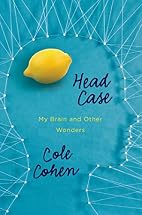
Nicole "Cole" Cohen has always had great difficulty with certain kinds of ordinary tasks, including crossing streets, doing arithmetic, and keeping track of the passage of time. Her parents took her to several doctors when she was a child, without much result. Finally, about to leave for grad school and desperate for some kind of help that would allow her to learn to drive a car, she visited a neurologist, got an MRI, and learned that she had been living her whole life with a hole in her brain the size of a lemon.
In this memoir, Cole talks about the strangeness of living with this knowledge, the impact that her disabilities have had on her life, and the ways in which she attempts to cope with it. Inextricably intertwined with the story of her brain is the story of her life, including the more commonplace difficulties of being a young, artistic, rather emotionally messed-up young woman trying to achieve independent adulthood at a time when that's difficult even for people without holes in their brains.
It's not a perfectly structured book, sometimes jumping around between time periods and topics in a way that's not particularly smooth. And some of the more personal content was really rather uncomfortable to read. Why, I don't know, since giving a window into someone's thoughts and feelings is part of the purpose of a memoir, but it was, anyway, at least for me. Maybe it's that it feels a bit like writing-as-therapy, rather than writing intended to reach an audience.
But we can be very, very glad that the damage was not in a part of her brain that affects her writing ability, because her talent in that area is impressive. It may not be consistently on display throughout the whole book -- much of it is just perfectly readably written without being especially remarkable -- but there are many moments where she comes out with these perfect, vivid, delightful metaphors that are wonderfully insightful, or funny, or both.
One thing I wasn't expecting with this memoir is how much of it I could relate to, in terms of Cole's difficulties. No sense of direction? Frustrating your elementary school teachers by writing letters backwards? Difficulty tracking rapidly moving objects? Being the only kid taking both remedial and gifted classes, on account of being bad with numbers but great with words? All eerily familiar to me. Oh my god, do I have a hole in my brain? Well, no. Probably not. My issues are mercifully mild compared to hers, and seem to have improved a lot more with age. But I think now I know which part of my brain to glare at for its suboptimal performance. And it certainly made me more sympathetic towards her problems, and more personally interested in her coping mechanisms (although she doesn't really go into the latter in the kind of detail one can pick up tips from).
I will admit, though, that other aspects of her life were more difficult for me to relate to, especially her willingness to embrace the quackier end of the medical spectrum -- even if her frustration with the medical system is entirely understandable.
Rating: This one is hard to rate, and probably made even more difficult by the fact that I have an unedited advance copy that's full of a lot of typos and things. Presumably these will be fixed by the time it hits bookstore shelves, but it did make parts of it a little hard to read. I think I'm going to call it 3.5/5, but with the note that it's littered throughout with writing that soars well above that average.
(Note: This was a LibraryThing Early Reviewers book.)
Nicole "Cole" Cohen has always had great difficulty with certain kinds of ordinary tasks, including crossing streets, doing arithmetic, and keeping track of the passage of time. Her parents took her to several doctors when she was a child, without much result. Finally, about to leave for grad school and desperate for some kind of help that would allow her to learn to drive a car, she visited a neurologist, got an MRI, and learned that she had been living her whole life with a hole in her brain the size of a lemon.
In this memoir, Cole talks about the strangeness of living with this knowledge, the impact that her disabilities have had on her life, and the ways in which she attempts to cope with it. Inextricably intertwined with the story of her brain is the story of her life, including the more commonplace difficulties of being a young, artistic, rather emotionally messed-up young woman trying to achieve independent adulthood at a time when that's difficult even for people without holes in their brains.
It's not a perfectly structured book, sometimes jumping around between time periods and topics in a way that's not particularly smooth. And some of the more personal content was really rather uncomfortable to read. Why, I don't know, since giving a window into someone's thoughts and feelings is part of the purpose of a memoir, but it was, anyway, at least for me. Maybe it's that it feels a bit like writing-as-therapy, rather than writing intended to reach an audience.
But we can be very, very glad that the damage was not in a part of her brain that affects her writing ability, because her talent in that area is impressive. It may not be consistently on display throughout the whole book -- much of it is just perfectly readably written without being especially remarkable -- but there are many moments where she comes out with these perfect, vivid, delightful metaphors that are wonderfully insightful, or funny, or both.
One thing I wasn't expecting with this memoir is how much of it I could relate to, in terms of Cole's difficulties. No sense of direction? Frustrating your elementary school teachers by writing letters backwards? Difficulty tracking rapidly moving objects? Being the only kid taking both remedial and gifted classes, on account of being bad with numbers but great with words? All eerily familiar to me. Oh my god, do I have a hole in my brain? Well, no. Probably not. My issues are mercifully mild compared to hers, and seem to have improved a lot more with age. But I think now I know which part of my brain to glare at for its suboptimal performance. And it certainly made me more sympathetic towards her problems, and more personally interested in her coping mechanisms (although she doesn't really go into the latter in the kind of detail one can pick up tips from).
I will admit, though, that other aspects of her life were more difficult for me to relate to, especially her willingness to embrace the quackier end of the medical spectrum -- even if her frustration with the medical system is entirely understandable.
Rating: This one is hard to rate, and probably made even more difficult by the fact that I have an unedited advance copy that's full of a lot of typos and things. Presumably these will be fixed by the time it hits bookstore shelves, but it did make parts of it a little hard to read. I think I'm going to call it 3.5/5, but with the note that it's littered throughout with writing that soars well above that average.
(Note: This was a LibraryThing Early Reviewers book.)
290bragan
>288 AnnieMod: There is, actually! They're different mental conditions. See, this is what I get for reading way too much about abnormal psychology; I find myself compelled to nitpick the psychology of cartoon villains. (It probably didn't help that I was watching Avatar about the same time as I was reading Confessions of a Sociopath and kept thinking that, wow, I was really impressed by how accurate-to-real-world-sociopathy almost everything about Azula's character was... until suddenly it kind of wasn't anymore. Ah, well. It's still a great show.)
291AnnieMod
>290 bragan: Which comes to show how much the reading/watching of one thing is influenced by what else you are reading at the same time. You may love the same story today and hate it if it is a week later and you are combining with something else.
Cartoons (and comics by extension) are sometimes much better in evaluating and showing the human condition than normal shows because they can hide the deep meaning behind the cartoon itself and is allowed a lot more leeway on what is allowed to be done/shown. So not really surprised that a cartoon villain is so close to the real life descriptions.
Cartoons (and comics by extension) are sometimes much better in evaluating and showing the human condition than normal shows because they can hide the deep meaning behind the cartoon itself and is allowed a lot more leeway on what is allowed to be done/shown. So not really surprised that a cartoon villain is so close to the real life descriptions.
292bragan
>291 AnnieMod: Yeah, it really is impossible to divorce things from the context in which you encounter them, or from the influence of everything else you've got in your mind at the same time. Makes it annoyingly impossible to be objective about anything! Although I guess it also offers the opportunity for very different kinds of things to collide and interact in interesting ways in your brain.
That's an interesting idea about cartoons. I may have to mull it over. Avatar seems like such an outlier to me, though, in terms of how complex and nuanced it is, how much attention it pays to detail, and how realistically it handles a lot of its characterization.
That's an interesting idea about cartoons. I may have to mull it over. Avatar seems like such an outlier to me, though, in terms of how complex and nuanced it is, how much attention it pays to detail, and how realistically it handles a lot of its characterization.
293mabith
>287 bragan: I noticed and lamented that change in Azula too. She was a great villain before she went delusional. I think Avatar is an outlier in American cartoons, but probably wouldn't rank all that highly in Japan (in terms of depth and complexity and such). How many US cartoons are there that have that kind of long plot though versus every single episode being a stand-alone affair?
Glad to see your review of Head Case. I had noticed it on the ER list, but didn't win, and I think I'll still look for it when it's out. It's funny how some ARCs really do still have lots of typos and others have none. The latter seems to be more common.
Glad to see your review of Head Case. I had noticed it on the ER list, but didn't win, and I think I'll still look for it when it's out. It's funny how some ARCs really do still have lots of typos and others have none. The latter seems to be more common.
294SassyLassy
>286 bragan: So glad your tie breaker came down on the side of Collins. Lydia Gwilt is such a great villain! Great point about how the coincidences actually create "an ominous sense of inescapable fate closing in". I wonder what is was about The Woman in White that didn't work. If you ever put your finger on it, please post.
295bragan
>293 mabith: Well, it's nice to know it's not just me! Most people, as far as I've seen, seem to think Azula's breakdown was actually well done.
Avatar surely has a lot more competition for complexity and depth among anime, but I think most of that is stuff that's aimed more at teenagers or adults. The fact that this one is primarily intended as a kids' cartoon makes it especially impressive to me, because there's nothing about it that's the least bit condescending or dumbed-down, and in terms of character development, continuity, and world-building it surpasses a lot of adult dramas.
(I will admit, though, that my knowledge of anime is extremely patchy, despite my deep and enthusiastic love of Fullmetal Alchemist.)
Most of the ARCs I've gotten have had at worst a scattering of random typos, but this one was absolutely thick with them, of just about every kind imaginable, and there were a number of sentences that were mangled enough to be nearly unreadable. Obviously, you're meant to ignore that kind of thing with an ARC, but it can get to a point where it makes the reading a little difficult. I really hope it gets the thorough editing job it needs.
>294 SassyLassy: I'm not entirely sure, but I really do think my issues with The Woman in White probably come down a lot to expectations and circumstances. I read The Moonstone so quickly, under circumstances that were so perfect for just getting lost in it, that I expected The Woman in White to just reach out and grab me the same way, even though I was reading it in small chunks over the holidays.
It probably wasn't helped, either, by the way it handled its woman characters. Marian was a great, strong character, but she had to constantly, explicitly remind us of what the standards of femininity were at the time and lament her own failure to fit them, which rubbed me the wrong way. Meanwhile, we had to endure page after page of her sickeningly sweet, innocent, paragon-of-Victorian-womanhood sister. It's a lot harder for me to enjoy a Victorian novel when it seems to be going out of its way to remind me how much Victorian society and I would loathe each other if I had to live there, based on the fact that I happen to come attached to lady parts.
Avatar surely has a lot more competition for complexity and depth among anime, but I think most of that is stuff that's aimed more at teenagers or adults. The fact that this one is primarily intended as a kids' cartoon makes it especially impressive to me, because there's nothing about it that's the least bit condescending or dumbed-down, and in terms of character development, continuity, and world-building it surpasses a lot of adult dramas.
(I will admit, though, that my knowledge of anime is extremely patchy, despite my deep and enthusiastic love of Fullmetal Alchemist.)
Most of the ARCs I've gotten have had at worst a scattering of random typos, but this one was absolutely thick with them, of just about every kind imaginable, and there were a number of sentences that were mangled enough to be nearly unreadable. Obviously, you're meant to ignore that kind of thing with an ARC, but it can get to a point where it makes the reading a little difficult. I really hope it gets the thorough editing job it needs.
>294 SassyLassy: I'm not entirely sure, but I really do think my issues with The Woman in White probably come down a lot to expectations and circumstances. I read The Moonstone so quickly, under circumstances that were so perfect for just getting lost in it, that I expected The Woman in White to just reach out and grab me the same way, even though I was reading it in small chunks over the holidays.
It probably wasn't helped, either, by the way it handled its woman characters. Marian was a great, strong character, but she had to constantly, explicitly remind us of what the standards of femininity were at the time and lament her own failure to fit them, which rubbed me the wrong way. Meanwhile, we had to endure page after page of her sickeningly sweet, innocent, paragon-of-Victorian-womanhood sister. It's a lot harder for me to enjoy a Victorian novel when it seems to be going out of its way to remind me how much Victorian society and I would loathe each other if I had to live there, based on the fact that I happen to come attached to lady parts.
296lyzard
Though I'm not sure that wasn't intentional on Collins' part, that is, that readers weren't supposed to react exactly as you did. Collins liked and understood women, and is responsible for some of the more complex female characters of his time; so he may have been intending to rub everyone's noses in "the system". It was certainly Marion who was the popular character at the time, and a great many Victorian readers felt just as you do about it.
It doesn't sound as if you read The Woman In White under the best conditions, so perhaps it might be worth your while giving it another chance some time, perhaps with the thought that Collins is playing games with his female characters?
It doesn't sound as if you read The Woman In White under the best conditions, so perhaps it might be worth your while giving it another chance some time, perhaps with the thought that Collins is playing games with his female characters?
297bragan
>296 lyzard: Yeah, I do get that general impression from Collins. One of the things I was thinking about Lydia Gwilt is that here's a great example of a woman who probably would have been a much less awful person if she lived in a better society, if there were any way for her to get what she wants out of life on her own merits. And the author genuinely feels sympathetic towards her, especially for what she's endured at the hands of men. It doesn't seem like an accident that she's more interesting and even more pleasant to spend time with than Neelie, just as Marian is more interesting and more likeable than Laura. Collins clearly likes the strong women and feels for them in the way society limits them, and I appreciate him for it.
But, well... even keeping all of that in my mind doesn't make some of this stuff less painful or annoying for me to read about. I think it's sort of like people who have trouble reading about animal cruelty because it upsets them too much. You can accept that the author isn't necessarily endorsing it as a good thing, and still find that it ruins your ability to enjoy what you're reading.
Anyway. I am not going to revisit The Woman in White. But I still have No Name sitting on my TBR shelves, and I will definitely be giving that one a shot at some point.
But, well... even keeping all of that in my mind doesn't make some of this stuff less painful or annoying for me to read about. I think it's sort of like people who have trouble reading about animal cruelty because it upsets them too much. You can accept that the author isn't necessarily endorsing it as a good thing, and still find that it ruins your ability to enjoy what you're reading.
Anyway. I am not going to revisit The Woman in White. But I still have No Name sitting on my TBR shelves, and I will definitely be giving that one a shot at some point.
298bragan
30. Skylight by José Saramago
This novel has an interesting history. The author sent it to a publisher in 1953. The publisher then failed to respond with an acceptance or a rejection until 1989, when someone apparently found the manuscript still sitting in a drawer somewhere. Saramago then refused to let it be published until after his death, which is why it has only recently seen the light of day. I gather Saramago's fans are understandably excited about this and see lots of interesting examples here of themes that would become familiar in his later works. It's the first of his books that I've read, though, so I can only respond to it on its own terms.
Anyway. This novel follows the separate but intertwined lives of the inhabitants of a small apartment building in Lisbon in the 1950s, showing us their petty disputes, unhappy marriages, secrets, sexual issues, mindgames, scandals, inner discontents, and philosophies. The structure is interesting: it moves smoothly back and forth between the different characters, and I often imagined the author's attention as that of a movie camera, sometimes following one person for a while and then swooping off after another instead, or poking into one room until tired of what's to be seen in there and popping in to see what's going on next door. This works well, I think, and serves to break up individual stories that might not be so interesting on their own, as well as providing a pretty broad look at the different experiences of life -- or at least of working-class life in 1950s Portugal.
The characters are mostly well-drawn, although the writing, and especially the dialog, sometimes felt rather stilted, though that may partly be an artifact of the translation. I do have to say that the rambling philosophical conversations between the inhabitants of one of the apartments struck kind of a false note for me, as they felt a little out of place, a little too much like the author stepping in to talk to us, or perhaps talking to himself in front of us. Also, while I don't necessarily have a problem with low-key, character-based novels, there was a point, maybe two-thirds of the way in, where I found myself longing for a little narrative thrust, a little forward momentum. Fortunately, the ending manages to be more satisfying in that respect than I was expecting, with most of the individual stories feeling as if they have, in fact, arrived somewhere, even if they never really felt like they were moving.
I feel like I've been dwelling a little too much on the negative here. Ultimately, I did find it worth reading, and it certainly hasn't put me off sampling more Saramago, but it just didn't quite affect me, or suck me into these people's lives quite as much as I would have hoped.
Rating: a very subjective 3.5/5
This novel has an interesting history. The author sent it to a publisher in 1953. The publisher then failed to respond with an acceptance or a rejection until 1989, when someone apparently found the manuscript still sitting in a drawer somewhere. Saramago then refused to let it be published until after his death, which is why it has only recently seen the light of day. I gather Saramago's fans are understandably excited about this and see lots of interesting examples here of themes that would become familiar in his later works. It's the first of his books that I've read, though, so I can only respond to it on its own terms.
Anyway. This novel follows the separate but intertwined lives of the inhabitants of a small apartment building in Lisbon in the 1950s, showing us their petty disputes, unhappy marriages, secrets, sexual issues, mindgames, scandals, inner discontents, and philosophies. The structure is interesting: it moves smoothly back and forth between the different characters, and I often imagined the author's attention as that of a movie camera, sometimes following one person for a while and then swooping off after another instead, or poking into one room until tired of what's to be seen in there and popping in to see what's going on next door. This works well, I think, and serves to break up individual stories that might not be so interesting on their own, as well as providing a pretty broad look at the different experiences of life -- or at least of working-class life in 1950s Portugal.
The characters are mostly well-drawn, although the writing, and especially the dialog, sometimes felt rather stilted, though that may partly be an artifact of the translation. I do have to say that the rambling philosophical conversations between the inhabitants of one of the apartments struck kind of a false note for me, as they felt a little out of place, a little too much like the author stepping in to talk to us, or perhaps talking to himself in front of us. Also, while I don't necessarily have a problem with low-key, character-based novels, there was a point, maybe two-thirds of the way in, where I found myself longing for a little narrative thrust, a little forward momentum. Fortunately, the ending manages to be more satisfying in that respect than I was expecting, with most of the individual stories feeling as if they have, in fact, arrived somewhere, even if they never really felt like they were moving.
I feel like I've been dwelling a little too much on the negative here. Ultimately, I did find it worth reading, and it certainly hasn't put me off sampling more Saramago, but it just didn't quite affect me, or suck me into these people's lives quite as much as I would have hoped.
Rating: a very subjective 3.5/5
300bragan
>299 baswood: Well, I didn't really intend to, but it kinda showed up on my doorstep. It's amazing how often that seems to happen. :)
301rebeccanyc
>298 bragan: I really enjoyed Saramago's A History of the Siege of Lisbon and have several other books by him on the TBR (if you're brave enough to try something else).
302bragan
>301 rebeccanyc: I already have Death with Interruptions on the TBR shelves. Which doesn't seem to be one of his most talked-about books, but its description intrigues me. So that'll probably be my next Saramago, and after that, I guess we'll see.
303bragan
31. The Girl Who Soared Over Fairyland and Cut the Moon in Two by Catherynne M. Valente
This is the third book in the series that started with The Girl Who Circumnavigated Fairyland in a Ship of Her Own Making. I really, really like this series. It's well-written and wonderfully inventive, with an impressive philosophical bent. It also manages to capture a lot of the feel of classic children's stories while displaying a decidedly modern sensibility. (I'm particularly impressed by the sheer number and diversity of roles that are filled by female characters, which is gratifying to see.)
In this one, our hero, September, has turned 14 and is worrying that she may soon be too old for fairyland, so the overarching themes here have a lot to do with the passing of time, and the experiences of realizing you're growing up and trying to figure out what your adult self is going to be. It handles these very well, I think. I'm slightly less certain about the plot, which is a strange one even for this series, and ends on a very frustrating note that I suppose I am going to have to wait for a future book to resolve for me. Still, it's good stuff, overall: clever and imaginative and insightful. So I think I can forgive it for that.
Rating 4/5
This is the third book in the series that started with The Girl Who Circumnavigated Fairyland in a Ship of Her Own Making. I really, really like this series. It's well-written and wonderfully inventive, with an impressive philosophical bent. It also manages to capture a lot of the feel of classic children's stories while displaying a decidedly modern sensibility. (I'm particularly impressed by the sheer number and diversity of roles that are filled by female characters, which is gratifying to see.)
In this one, our hero, September, has turned 14 and is worrying that she may soon be too old for fairyland, so the overarching themes here have a lot to do with the passing of time, and the experiences of realizing you're growing up and trying to figure out what your adult self is going to be. It handles these very well, I think. I'm slightly less certain about the plot, which is a strange one even for this series, and ends on a very frustrating note that I suppose I am going to have to wait for a future book to resolve for me. Still, it's good stuff, overall: clever and imaginative and insightful. So I think I can forgive it for that.
Rating 4/5
304dchaikin
>298 bragan: well, your review does not make me want to read that Saramango. But you never know with these early lost novels. I loved The Third Reich, an early novel by Roberto Bolaño that was only discovered after his death, amongst his stuff.
305bragan
>304 dchaikin: It was, at least, a novel that Saramago felt was sufficiently finished and in shape to sent to a publisher at the time. I'm always more leery of the manuscripts pulled out of the back of an author's drawer after their death, as it seems to me there's often a reason why they hadn't seen the light of day. But it's nice when those turn out to be good, after all.
As for the Saramago, lots of people seemed much more enthused about it than I was, and even I thought it was worth reading, even if it didn't do as much for me as I'd hoped. So I wouldn't necessarily warn anyone off of it.
As for the Saramago, lots of people seemed much more enthused about it than I was, and even I thought it was worth reading, even if it didn't do as much for me as I'd hoped. So I wouldn't necessarily warn anyone off of it.
306dchaikin
That's a good point, it was not fair to Bolaño. But he wasn't around to discuss this with. I think the publisher made a good call. It deserved to be published.
307bragan
OK, it's iffy whether I should even count this in my books-read list for the year, since I only skimmed through most of it. But I'm going to, anyway.
32. Star Trek Concordance by Bjo Trimble
This fan-compiled reference guide to Star Trek was originally started way back when the original series was still on the air. The version I have is an updated edition from 1995. But, although TNG had come and gone by then, and DS9 was currently on the air, the book confines itself only to the classic series, or more accurately, to anything involving the classic series characters. Which includes the movies, the oft-neglected animated series, and a few TNG and DS9 episodes in which the original characters appear. (Although DS9's "Trials and Tribble-ations" hadn't aired yet, so, sadly, that's not included.)
The first section of the book consists of short, fairly unremarkable episode recaps. It's followed by an encyclopedia-like "lexicon" section, which is... a little odd. In addition to all the things you'd expect -- people, places, weird alien diseases Dr. McCoy had to find cures for -- it includes entries like the one for "basement," which helpfully explains what a basement is and then mentions a couple of times in which characters went into basements, or the one for "quaint" which cites a couple of lines of dialog in which the word "quaint" was used. I'm pretty sure that even in the most rabidly Trekkie period of my youth, I wouldn't have had much use for that information. But... OK. Other entries are considerably more entertaining, such as the one for "beverage," which lists everything anyone ever drank on the show. (Which turns out to be kind of a lot.)
The book also includes fan-art illustrations, some of which are better than others, but the best of which are fairly impressive.
You really do have to admire the fannish labor-of-love dedication behind it all, and, back in the day, it was surely a useful reference to have, if, like me, you're the sort of person who finds ridiculously detailed information about Star Trek useful. These days, of course, if you want episode recaps, or the name of that redshirt who got killed by that cloud creature, it's a trivial matter to find it on the internet. And if you're just looking for something that's fun to browse through, books like The Star Trek Encyclopedia are probably a better bet.
Rating: 3/5, although a couple of decades ago it would probably have been higher.
32. Star Trek Concordance by Bjo Trimble
This fan-compiled reference guide to Star Trek was originally started way back when the original series was still on the air. The version I have is an updated edition from 1995. But, although TNG had come and gone by then, and DS9 was currently on the air, the book confines itself only to the classic series, or more accurately, to anything involving the classic series characters. Which includes the movies, the oft-neglected animated series, and a few TNG and DS9 episodes in which the original characters appear. (Although DS9's "Trials and Tribble-ations" hadn't aired yet, so, sadly, that's not included.)
The first section of the book consists of short, fairly unremarkable episode recaps. It's followed by an encyclopedia-like "lexicon" section, which is... a little odd. In addition to all the things you'd expect -- people, places, weird alien diseases Dr. McCoy had to find cures for -- it includes entries like the one for "basement," which helpfully explains what a basement is and then mentions a couple of times in which characters went into basements, or the one for "quaint" which cites a couple of lines of dialog in which the word "quaint" was used. I'm pretty sure that even in the most rabidly Trekkie period of my youth, I wouldn't have had much use for that information. But... OK. Other entries are considerably more entertaining, such as the one for "beverage," which lists everything anyone ever drank on the show. (Which turns out to be kind of a lot.)
The book also includes fan-art illustrations, some of which are better than others, but the best of which are fairly impressive.
You really do have to admire the fannish labor-of-love dedication behind it all, and, back in the day, it was surely a useful reference to have, if, like me, you're the sort of person who finds ridiculously detailed information about Star Trek useful. These days, of course, if you want episode recaps, or the name of that redshirt who got killed by that cloud creature, it's a trivial matter to find it on the internet. And if you're just looking for something that's fun to browse through, books like The Star Trek Encyclopedia are probably a better bet.
Rating: 3/5, although a couple of decades ago it would probably have been higher.
308Poquette
I fully understand the appeal of books like The Star Trek Concordance. There was a time when I might have acquired it. My favorite series was Next Generation, and I have a couple of editions of the Star Trek Next Generation Companion, which was really useful during the era when reruns were a common thing.
309bragan
>308 Poquette: I have an embarrassing number of Star Trek reference books. I think my favorite, if only just for sheer nostalgia value, is The Star Trek Compendium, which has some really good episode recaps and lots of behind-the-scenes details and stuff. I got the first edition of that when I was 12 or so, and came very close to wearing it out, I went back to it so often. Then, of course, I went out and bought the revised edition.
310avidmom
When I was younger, I lived by myself in a little studio apartment. Too broke for cable, I had a little (old) black and white TV that for some reason, only picked up one station from 7 - 8:30 (9 if I was lucky) p.m. What was on? Star Trek, TNG (followed by a sitcom - usually the Cosby show). I was a captive audience! Needless to say, I became a fan.
Have you seen the documentary "Trek Nation"?
Have you seen the documentary "Trek Nation"?
311bragan
>310 avidmom: I'd say you got very lucky in your TV's choice of what it would pick up!
I haven't seen Trek Nation. Although I'm thinking now that I'm going to need to look for it.
I haven't seen Trek Nation. Although I'm thinking now that I'm going to need to look for it.
312bragan
33. An Astronaut's Guide to Life on Earth by Col. Chris Hadfield

Retired astronaut Chris Hadfield is undoubtedly best known for the video of him playing guitar and singing David Bowie's "Space Oddity, " while actually in space. He's also made a bunch of other videos and maintains a fantastically popular Twitter feed, and is just generally terrific at putting a likeable, human face on the space program for the public at large, while stirring up some of that good old-fashioned sense of excitement and wonder.
In this book he talks about how he achieved his ambition to become an astronaut, his accomplishments in space, the fascinating details of life on the International Space Station, and the often-overlooked realities of the 95% of the astronaut job that takes place on the ground. He also talks a lot about the attitudes and philosophies that got him where he is, and the principles and strategies he believes are essential to success in an environment that can all too easily kill you. (In very brief summary, these more or less boil down to being crazy-prepared and highly detail-oriented, and not letting your ego get in your way.)
This can be read as a sort of self-help book, and I can see its key insights potentially being of real use to those who are open to them, especially to people who work in, or have ambitions towards high-pressure, high-stakes careers. At the very least, Hadfield is clearly an infinitely better role model than your average motivational speaker. It can also be enjoyed just as an interesting memoir, and as a thoughtful, intelligent look at what constitutes "the right stuff" in the modern space program.
Rating: 4/5

Retired astronaut Chris Hadfield is undoubtedly best known for the video of him playing guitar and singing David Bowie's "Space Oddity, " while actually in space. He's also made a bunch of other videos and maintains a fantastically popular Twitter feed, and is just generally terrific at putting a likeable, human face on the space program for the public at large, while stirring up some of that good old-fashioned sense of excitement and wonder.
In this book he talks about how he achieved his ambition to become an astronaut, his accomplishments in space, the fascinating details of life on the International Space Station, and the often-overlooked realities of the 95% of the astronaut job that takes place on the ground. He also talks a lot about the attitudes and philosophies that got him where he is, and the principles and strategies he believes are essential to success in an environment that can all too easily kill you. (In very brief summary, these more or less boil down to being crazy-prepared and highly detail-oriented, and not letting your ego get in your way.)
This can be read as a sort of self-help book, and I can see its key insights potentially being of real use to those who are open to them, especially to people who work in, or have ambitions towards high-pressure, high-stakes careers. At the very least, Hadfield is clearly an infinitely better role model than your average motivational speaker. It can also be enjoyed just as an interesting memoir, and as a thoughtful, intelligent look at what constitutes "the right stuff" in the modern space program.
Rating: 4/5
313mabith
Great review of the Hadfield book. I follow his posts of pictures from the space station, which were just incredible. I'm not sure I'm interested enough in the book (it might dash my dreams that I could have been an astronaut!), but it's good to hear a detailed review of it.
314RidgewayGirl
I'll take a closer look at the Hadfield book - I think it might interest my SO. You're why I'm so successful at choosing books for him, by the way.
315AnnieMod
>312 bragan:
Nice review... and something that I actually may like a lot.
Nice review... and something that I actually may like a lot.
316bragan
>313 mabith: He's also got a book of space photos out, which I must say I have been eying covetously.
Sadly, it became clear to me very early in life that I did not have the makings of an astronaut, so I have long since settled for being a space program fangirl.
>314 RidgewayGirl: I am very glad to be of service! Your SO clearly has good taste.
>315 AnnieMod: I do recommend it. I've read a fair number of astronaut memoirs, some of them really excellent, but this one stands out as something kind of fresh and different.
Sadly, it became clear to me very early in life that I did not have the makings of an astronaut, so I have long since settled for being a space program fangirl.
>314 RidgewayGirl: I am very glad to be of service! Your SO clearly has good taste.
>315 AnnieMod: I do recommend it. I've read a fair number of astronaut memoirs, some of them really excellent, but this one stands out as something kind of fresh and different.
317mabith
Ooh, glad to know about the space photos book. That's one of those where I want it mostly to show to my niece and nephew. Once I realized they would send you stuff, I spent a lot of time writing to NASA requesting information and pictures when I was a kid.
318bragan
>317 mabith: If only I'd realized that when I was a kid!
319mabith
My fourth grade teacher had written to them for materials for our class, so really I owe the credit to her. Hopefully that hasn't changed, though of course now there's the internet for the curious child.
320AnnieMod
>316 bragan:
Thanks :) I grew up in the town where the first Bulgarian astronaut was born and grew up - and he was doing the circuit of the local schools when possible. So I met my first live astronaut when I was still in grade school - and it being a small school and all that, you actually got to talk to him. Add a few more meetings like that and I never sought out someone's memoir - it was just not as exciting. But that was long ago and sounds like it is time to check one. :)
Thanks :) I grew up in the town where the first Bulgarian astronaut was born and grew up - and he was doing the circuit of the local schools when possible. So I met my first live astronaut when I was still in grade school - and it being a small school and all that, you actually got to talk to him. Add a few more meetings like that and I never sought out someone's memoir - it was just not as exciting. But that was long ago and sounds like it is time to check one. :)
321bragan
>319 mabith: I think they're still quite happy to give materials out to kids. I know my step-nephew went home with a big armful of stuff -- which, frankly, I do not think he sufficiently appreciated -- when we did a tour of Kennedy Space Center a couple of years ago. (And I may have snagged some, myself. :))
>320 AnnieMod: Oh, that is very cool! And such a good thing, I think, that astronauts are willing and encouraged to do that kind of outreach to kids.
I was once in the same small-ish room as Harrison Schmidt of Apollo 17, which was a massive thrill for me. But I didn't get to talk to him. Or catch the autographed rubber moon globe he threw out into the audience, either, alas. But I did have my signature flown into space on the Shuttle! Scientist/astronaut John Grunsfeld once did some work with the astronomical observatory I work for and apparently really enjoyed the experience. So as a thank-you, he took a flag with our logo into space with him, after all the employees signed it, then brought it back for us to frame and display. He also gave a nice little talk to us about his experiences repairing the Hubble. That was pretty great.
There are a number of good astronaut memoirs out there. In addition to Hadfield's, I very much recommend Michael Collins' Carrying the Fire.
>320 AnnieMod: Oh, that is very cool! And such a good thing, I think, that astronauts are willing and encouraged to do that kind of outreach to kids.
I was once in the same small-ish room as Harrison Schmidt of Apollo 17, which was a massive thrill for me. But I didn't get to talk to him. Or catch the autographed rubber moon globe he threw out into the audience, either, alas. But I did have my signature flown into space on the Shuttle! Scientist/astronaut John Grunsfeld once did some work with the astronomical observatory I work for and apparently really enjoyed the experience. So as a thank-you, he took a flag with our logo into space with him, after all the employees signed it, then brought it back for us to frame and display. He also gave a nice little talk to us about his experiences repairing the Hubble. That was pretty great.
There are a number of good astronaut memoirs out there. In addition to Hadfield's, I very much recommend Michael Collins' Carrying the Fire.
322bragan
34. Two for the Dough by Janet Evanovich

This is the second book in Evanovich's Stephanie Plum series. In this one, neophyte bounty hunter Plum goes after a guy accused of kneecapping his buddy and takes a side job involving tracking down some missing coffins. Needless to say, it all gets more dangerous than anticipated.
I think I liked this one a little bit more than the first one. Partly that may be because I knew exactly what to expect from it going in, but it also had some very dark humor that actually made me laugh in places, which One for the Money didn't so much. Still, like the first one, this can only be described as "brain candy." And, honestly, it's not even really high-quality brain candy. It's like the literary equivalent of Circus Peanuts. But, god help me, I can eat a whole bag of those things.
Rating: 3.5/5

This is the second book in Evanovich's Stephanie Plum series. In this one, neophyte bounty hunter Plum goes after a guy accused of kneecapping his buddy and takes a side job involving tracking down some missing coffins. Needless to say, it all gets more dangerous than anticipated.
I think I liked this one a little bit more than the first one. Partly that may be because I knew exactly what to expect from it going in, but it also had some very dark humor that actually made me laugh in places, which One for the Money didn't so much. Still, like the first one, this can only be described as "brain candy." And, honestly, it's not even really high-quality brain candy. It's like the literary equivalent of Circus Peanuts. But, god help me, I can eat a whole bag of those things.
Rating: 3.5/5
323avidmom
>322 bragan: Guilty pleasures .... Good for the soul. XD
Great review of the astronaut's memoir.
*sigh* There's another space book you led me to!
Great review of the astronaut's memoir.
*sigh* There's another space book you led me to!
324bragan
>323 avidmom: I generally try not to feel guilty about my pleasures, but I'm still not entirely sure whether or not Evanovich is more guilt than pleasure. Still, when what you want is a fast, brainless read, it definitely delivers. And some days, that's exactly what you want.
And I'm always glad to lead people to good space books!
And I'm always glad to lead people to good space books!
325FlorenceArt
>324 bragan: I read One for the money and gave it 3 stars, and decided not to pursue the series. I didn't write a review, but my recollection is that although the book was enjoyable enough, in retrospect I got annoyed by the fact that she kept getting herself into impossible situations through her ineptitude, and it always took a man to rescue her. Or am I thinking of another book?
326bragan
>325 FlorenceArt: No, that sounds about right. The main character is pretty inept. But I'm thinking that surely, surely, she must get more competent over the course of the next umpteen books.
327FlorenceArt
>326 bragan: What annoyed me really was that seemingly the only way she could solve a tricky situation was to run to a man friend and bat her eyelashes at him until he fixed it.
328bragan
>327 FlorenceArt: I hadn't quite thought of it in those terms, but now that you point it out...
Well, she gets rescued by a woman once in book two, sort of. So maybe that's an improvement.
Well, she gets rescued by a woman once in book two, sort of. So maybe that's an improvement.
329mabith
It's been five years probably since I read One for the Money, but running to man-friend didn't bother me much because as I recall he was also the most qualified person to help her (or one of the most). I think I read the first five, but then they changed the audiobook reader to someone I disliked (I partly continued because the first reader was really good). I'll happily go along with a fluff series when it's not terrible and there's a good reader, but drop them in a heartbeat when that changes.
The ineptness didn't bother me too much, because that was kind of the point, that she wasn't at all prepared for that job. But the modern amateur detective novel thing of making a smart character drop 100 IQ points so they can make a really foolish decision to move the plot along is why I don't tend to pick up modern mysteries (looking at you Kathy Reichs!).
The ineptness didn't bother me too much, because that was kind of the point, that she wasn't at all prepared for that job. But the modern amateur detective novel thing of making a smart character drop 100 IQ points so they can make a really foolish decision to move the plot along is why I don't tend to pick up modern mysteries (looking at you Kathy Reichs!).
330bragan
>329 mabith: The ineptness bothers me just a little, not because it's unrealistic -- which it isn't, really -- but because she's so clearly not cut out for that particular job. Which I know is part of the point and meant to be part of the fun: watching an ordinary person we can supposedly identify with responding as an ordinary person would in these situations more usually reserved for action hero types. But that doesn't stop me from often feeling like I want to grab her by the shoulders and force her into some career counseling.
But, yeah, at least her competence and/or intelligence don't seem to be variable depending on the requirements of the plot.
But, yeah, at least her competence and/or intelligence don't seem to be variable depending on the requirements of the plot.
331DieFledermaus
>298 bragan: - I like Saramago a lot and the premise of that book sounds interesting, but maybe I'll read it after a few other Saramagos I have on the pile or in mind.
>312 bragan: - Enjoyed reading your review. Hadfield sounds like a fun guy.
Interesting discussion of anti-vaxxers upthread. After the measles outbreak that triggered some of the latest discussions, I read some articles with a "What's wrong with people??" tone and agreed, but then there were other ones pointing out that yelling at people and telling them how wrong they are just makes them hold onto their beliefs even more. (Of course presenting scientific evidence didn't change people's minds either. A bad situation all around.) Some of the islands out here have ridiculously high rates of unvaccinated kids (these are also places with high incomes, high percentages of people with college degrees etc).
>312 bragan: - Enjoyed reading your review. Hadfield sounds like a fun guy.
Interesting discussion of anti-vaxxers upthread. After the measles outbreak that triggered some of the latest discussions, I read some articles with a "What's wrong with people??" tone and agreed, but then there were other ones pointing out that yelling at people and telling them how wrong they are just makes them hold onto their beliefs even more. (Of course presenting scientific evidence didn't change people's minds either. A bad situation all around.) Some of the islands out here have ridiculously high rates of unvaccinated kids (these are also places with high incomes, high percentages of people with college degrees etc).
332bragan
>331 DieFledermaus: Yeah, unfortunately, it can be very difficult to change people's minds on subjects like that, if only because it's human nature to get defensive and double down when challenged on something that important. Especially if the implication is that they're a bad parent for not vaccinating. Nobody wants to think of themselves as a bad parent. It's much easier to just decide that the other person is wrong or part of a conspiracy, instead.
333bragan
35. A Passion for Books edited by Harold Rabinowitz and Rob Kaplan

This volume bills itself as "A Book Lover's Treasury of Stories, Essays, Humor, Lore, and Lists on Collecting, Reading, Borrowing, Lending, Caring for, and Appreciating Books." Which I guess about covers it. The various essays and snippets here span a period from the 1990s all the way back to Petrarch, but it seems to be dominated mainly by pieces from the first half of the 20th century. Perhaps because of that, there was, to me, a sort of vaguely musty feeling about it all, a slight sense of stuffiness, despite the humorous bits. I also can't escape the feeling that the writers featured here are mostly men -- and virtually all of them are men -- to whom "book" primarily means "leather-bound work of Important Literature," something that mildly offends my more egalitarian book-loving soul. For my personal taste, there's not nearly enough about the joys of reading, and a little too much about the joys of collecting valuable first editions.
Still, there's some enjoyable stuff here. Robert Benchley's plaintive lament about how people collect Hemingway's books but not his is wonderfully funny. Although I think my favorite piece may be A. Edward Netwon's "What is the Matter with the Bookshop?", partly because it's delightfully written, but partly because I find its subject matter amusing. It's singing a very familiar tune: bookstores are not doing well these days, partly because people are so distracted by other forms of entertainment that nobody reads much anymore, and partly because independent booksellers have trouble competing with large companies that sell books cheaply as a loss leader for their other merchandise. What's amusing about that? The fact that it was written in 1921. Oh, the more things change!
Rating: 3.5/5

This volume bills itself as "A Book Lover's Treasury of Stories, Essays, Humor, Lore, and Lists on Collecting, Reading, Borrowing, Lending, Caring for, and Appreciating Books." Which I guess about covers it. The various essays and snippets here span a period from the 1990s all the way back to Petrarch, but it seems to be dominated mainly by pieces from the first half of the 20th century. Perhaps because of that, there was, to me, a sort of vaguely musty feeling about it all, a slight sense of stuffiness, despite the humorous bits. I also can't escape the feeling that the writers featured here are mostly men -- and virtually all of them are men -- to whom "book" primarily means "leather-bound work of Important Literature," something that mildly offends my more egalitarian book-loving soul. For my personal taste, there's not nearly enough about the joys of reading, and a little too much about the joys of collecting valuable first editions.
Still, there's some enjoyable stuff here. Robert Benchley's plaintive lament about how people collect Hemingway's books but not his is wonderfully funny. Although I think my favorite piece may be A. Edward Netwon's "What is the Matter with the Bookshop?", partly because it's delightfully written, but partly because I find its subject matter amusing. It's singing a very familiar tune: bookstores are not doing well these days, partly because people are so distracted by other forms of entertainment that nobody reads much anymore, and partly because independent booksellers have trouble competing with large companies that sell books cheaply as a loss leader for their other merchandise. What's amusing about that? The fact that it was written in 1921. Oh, the more things change!
Rating: 3.5/5
334bragan
36. Sweetland by Michael Crummey
This novel is set on a small island off the coast of Newfoundland. The island is home to a tiny rural community, but the government is keen to buy up the property and is offering the inhabitants a good sum of money to relocate. (It's never explicitly stated why the government wants the land, but I'm guessing the idea was to designate the place as a wildlife refuge.) Pretty much everybody agrees to take the deal, except for one Moses Sweetland who, for reasons he cannot properly articulate, simply cannot bring himself to leave.
I was a little uncertain about this one going in, as the premise could far too easily have served as the basis for some simplistic, sentimental Salt-of-the-Earth Old Coot Heroically Holds Out Against the Man narrative. But it's not. It's really, really not. What it is instead is a wonderfully smoothly written portrait of a damaged man and a vanishing place, with perhaps just a touch of the uncanny. And it's made my breakfast this morning very late, as I was thirty pages from the end and could not bring myself to put it down, no matter how hungry I was.
Rating: 4.5/5
This novel is set on a small island off the coast of Newfoundland. The island is home to a tiny rural community, but the government is keen to buy up the property and is offering the inhabitants a good sum of money to relocate. (It's never explicitly stated why the government wants the land, but I'm guessing the idea was to designate the place as a wildlife refuge.) Pretty much everybody agrees to take the deal, except for one Moses Sweetland who, for reasons he cannot properly articulate, simply cannot bring himself to leave.
I was a little uncertain about this one going in, as the premise could far too easily have served as the basis for some simplistic, sentimental Salt-of-the-Earth Old Coot Heroically Holds Out Against the Man narrative. But it's not. It's really, really not. What it is instead is a wonderfully smoothly written portrait of a damaged man and a vanishing place, with perhaps just a touch of the uncanny. And it's made my breakfast this morning very late, as I was thirty pages from the end and could not bring myself to put it down, no matter how hungry I was.
Rating: 4.5/5
335AlisonY
>334 bragan:: Sweetland sounds really good - just the kind of book I like. Another couple of inches added to the wish list!!
336bragan
>335 AlisonY: I really liked it so much better than I expected to. I definitely recommend it, and I've already added another of Crummey's novels to my wishlist.
337SassyLassy
>334 bragan: The Newfoundland government had a desperately ill advised policy, in the 1950s and 1960s, of resettling people from island communities and remote mainland (also an island) communities to larger centres, based partially on economic grounds. This was shortly after Newfoundland joined Canada, and there was very little money. They believed that supporting hydroelectric access, telephone access, hospitals and schools was not feasible. The fact that some of these communities were without these services anyway didn't seem to matter. People were resettled and special communities built for them, without regard to employment or the existing social fabric. This led the new communities to become instant slums. Money was offered to resettle, and there were holdouts, dividing communities.
The fallout from this policy, the brainchild of Parzival Copes, was hotly debated for years. More recently, the idea has surfaced once more, retitled "relocation". The driving factor this time seems to be aging within the community, for once many of the children leave for education, training or work, they do not return. Government assistance to relocate is being offered once more, with offers of integrating those being relocated into existing communities, but the whole matter is so emotionally charged that the government is treading lightly.
The remains of the resettled communities are still out there and it is still possible to see the structure. One place I visited had wild horses, descendants of horses left behind when the people left.
Here is a link to some amazing photos of houses being relocated, floated from remote islands to the mainland.
https://republicofme.wordpress.com/2011/11/21/time-to-go/
and a link to a general discussion of the topic with maps and photographs: https://www.mun.ca/mha/resettlement/
Sorry to dive in like that, but it brought back memories of many heated discussions in university.
I loved your description of the delayed breakfast, as Crummey has inflicted similar hiccups on my routines. I haven't read Sweetland yet, but Michael Crummey is one of my favourite contemporary authors. Galore is definitely my favourite of his novels I have read to date and I would highly recommend it.
The fallout from this policy, the brainchild of Parzival Copes, was hotly debated for years. More recently, the idea has surfaced once more, retitled "relocation". The driving factor this time seems to be aging within the community, for once many of the children leave for education, training or work, they do not return. Government assistance to relocate is being offered once more, with offers of integrating those being relocated into existing communities, but the whole matter is so emotionally charged that the government is treading lightly.
The remains of the resettled communities are still out there and it is still possible to see the structure. One place I visited had wild horses, descendants of horses left behind when the people left.
Here is a link to some amazing photos of houses being relocated, floated from remote islands to the mainland.
https://republicofme.wordpress.com/2011/11/21/time-to-go/
and a link to a general discussion of the topic with maps and photographs: https://www.mun.ca/mha/resettlement/
Sorry to dive in like that, but it brought back memories of many heated discussions in university.
I loved your description of the delayed breakfast, as Crummey has inflicted similar hiccups on my routines. I haven't read Sweetland yet, but Michael Crummey is one of my favourite contemporary authors. Galore is definitely my favourite of his novels I have read to date and I would highly recommend it.
338bragan
>337 SassyLassy: This bit of history was explained to me elsewhere, too, after I read the book and wrote the review. It does make more sense of some things mentioned in the novel, particularly a scene where a government representative says something about how this time it's completely voluntary whether people want to leave and they don't want to put on any pressure. It no doubt also explains some of the hostility and distrust the main character feels.
So, now I feel like, not only have I read a really good book, I've also learned a tiny bit of history that I was utterly ignorant about. And I thank you for expanding on that history a little for me! The pictures on that first website are particularly amazing.
Galore has already been added to my wishlist.
So, now I feel like, not only have I read a really good book, I've also learned a tiny bit of history that I was utterly ignorant about. And I thank you for expanding on that history a little for me! The pictures on that first website are particularly amazing.
Galore has already been added to my wishlist.
339bragan
And, that being the end of the first quarter of 2015, I do believe it's time to start up a fresh new thread. Looking back over the last three months' worth of books, I feel like I've been doing pretty well so far towards my modest goal of Reading Everything, and I'm looking forward to continuing that through the middle of the year.
This topic was continued by Bragan reads everything in 2015, part 2.

