This topic is currently marked as "dormant"—the last message is more than 90 days old. You can revive it by posting a reply.
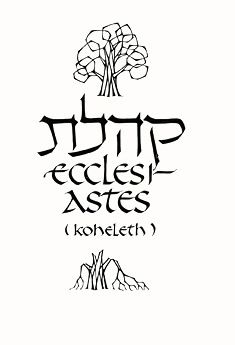
2dchaikin
Ecclesiates group read - roughly January 2015
Here are links to all our previous threads.
from le Salon:
Prep: http://www.librarything.com/topic/127545
Genesis: http://www.librarything.com/topic/129966
Exodus: http://www.librarything.com/topic/131811
Leviticus: http://www.librarything.com/topic/133405
Numbers: http://www.librarything.com/topic/135184
Deuteronomy: www.librarything.com/topic/136380
Joshua: http://www.librarything.com/topic/137927
Judges (same thread as Joshua, starts on post #69): http://www.librarything.com/topic/137927#3452932
Ruth (same thread as Joshua, starts on post #142): http://www.librarything.com/topic/137927#3478722
1 & 2 Samuel: http://www.librarything.com/topic/139684
1 & 2 Kings: http://www.librarything.com/topic/142552
1 & 2 Chronicles: http://www.librarything.com/topic/146697
Ezra and Nehemiah: http://www.librarything.com/topic/154880
Tobit & Judith: http://www.librarything.com/topic/159435
from Club Read 2014:
Ester http://www.librarything.com/topic/168909
Job: https://www.librarything.com/topic/171374
Psalms: https://www.librarything.com/topic/179892
Proverbs: https://www.librarything.com/topic/183854
Here are links to all our previous threads.
from le Salon:
Prep: http://www.librarything.com/topic/127545
Genesis: http://www.librarything.com/topic/129966
Exodus: http://www.librarything.com/topic/131811
Leviticus: http://www.librarything.com/topic/133405
Numbers: http://www.librarything.com/topic/135184
Deuteronomy: www.librarything.com/topic/136380
Joshua: http://www.librarything.com/topic/137927
Judges (same thread as Joshua, starts on post #69): http://www.librarything.com/topic/137927#3452932
Ruth (same thread as Joshua, starts on post #142): http://www.librarything.com/topic/137927#3478722
1 & 2 Samuel: http://www.librarything.com/topic/139684
1 & 2 Kings: http://www.librarything.com/topic/142552
1 & 2 Chronicles: http://www.librarything.com/topic/146697
Ezra and Nehemiah: http://www.librarything.com/topic/154880
Tobit & Judith: http://www.librarything.com/topic/159435
from Club Read 2014:
Ester http://www.librarything.com/topic/168909
Job: https://www.librarything.com/topic/171374
Psalms: https://www.librarything.com/topic/179892
Proverbs: https://www.librarything.com/topic/183854
3dchaikin
I have already read Ecclesiates, it's only 12 chapters...and I have re-read the first four chapters...because it's that kind of stuff here. Ecclesiates is philosophy in the way we think of philosophy today, in the sense that it asks difficult and problematic questions that cannot be answered. It also tries to show why they cannot be answered. Then comes chapter 5. The curtain comes down and advice comes in. There are lots of proverbs, although they have a twist (I summarized chapter 7 as the bitter proverbs). But, after those first four chapters had me so uncomfortable trying to grasp and respond, the last 8 chapters barely held my attention at all.
I have two things in mind here as think about what to do with these notes. One is to link Ecclesiates to Gilgamesh, even though the scholars seems to ignore or make the claim that such a connection is weak, as in there is likely no direct link. But, Gilgamesh is well know and there is a clear connection, regardless of how it made it's way.
The second is the explore rumors of a subtle blessing of sorts on atheism in Ecclesiates, maybe just a wink. I was looking forward to this, but never found it.
I have two things in mind here as think about what to do with these notes. One is to link Ecclesiates to Gilgamesh, even though the scholars seems to ignore or make the claim that such a connection is weak, as in there is likely no direct link. But, Gilgamesh is well know and there is a clear connection, regardless of how it made it's way.
The second is the explore rumors of a subtle blessing of sorts on atheism in Ecclesiates, maybe just a wink. I was looking forward to this, but never found it.
4dchaikin
As a final thread intro - if your reading along, or following the thread, please post to let me* know.
*I should say "us", as it's supposed to be a group read and I know Martin is still around. But the Proverbs thread was mostly me talking to myself. The Psalms took their toll on our momentum and may have knocked out one of the last of us. I'll probably still post even if I am really only talking to myself.
*I should say "us", as it's supposed to be a group read and I know Martin is still around. But the Proverbs thread was mostly me talking to myself. The Psalms took their toll on our momentum and may have knocked out one of the last of us. I'll probably still post even if I am really only talking to myself.
5dchaikin
As a follow up to post 3, I'm toying with a third idea - of arguing for a connection between Ecclesiates and the very non-biblical Roman-Era Epicureanism.
6Oandthegang
I'm reading the thread, so your words are not going into the void. Feels rather a cheat to be reading without joining in the hard work, but I am learning from you.
9dchaikin
Gilgamesh tablet III
or
Gilgamesh spoke to Enkidu, said to him:source: http://king-of-heroes.co.uk/the-epic-of-gilgamesh/robert-temple-translation/tabl...
‘Who can climb into heaven, my friend?
Immortal under the Sun are the gods alone,
As for mortals their days must end -
What they achieve is but the wind!
or
Who, my friend, can scale heaven(I lost my source for this translation, but here is a source, from a book titled, provocatively, The Symbolism of Evil: link to google book search here)
only the gods live forever under the sun.
As for mankind, numbered are their days
whatever they achieve is but the wind.
10dchaikin
Siduri - the "alewife" or the tavern keeper, or the refresher, or the one who serves those dying or something along those lines, from Gilgamesh tablet X
The Refresher said to him, said to Gilgamesh:and later
‘Gilgamesh, whence do you direct yourself?
You shall not find the life you seek,
For at the creation of mankind
The gods allotted Death to men.
They retained life in their own hands.
Gilgamesh, let your belly be full,
Make you merry by day and by night.
Make everyday a day of feasting and of rejoicing
Dance and play, by day, by night,
Let your clothes be sparkling and fresh
Wash your hair
Bathe your body
Attend to the babe who holds you by the hand
Take your wife and let her rejoice in you.
For this is the lot of mankind to enjoy
But immortal life is not for men.’
Siduri said to him, said to Gilgamesh:source http://king-of-heroes.co.uk/the-epic-of-gilgamesh/robert-temple-translation/tabl...
‘If you are Gilgamesh, who slew the watchman,
Who slew Humbaba – he of the Cedar Forest -
And slew lions in the mountain passes,
Seized and killed the bull that comes down from heaven -
Then why are your cheeks wasted?
Why is your face sunken,
Why is your heart so sad,
Why are your features worn,
Why in your entrails is ther woe,
Why is your face that of one who has come from afar?
Why is your countenance seared by heat and by cold?
And why do you roam over the steppe
Like one pursuing a mere puff of wind?’
11dchaikin
"Ecclesiastes is not atheistic; to be atheistic is to be unrealistic, and the Bible is never unrealistic."
oh dear...source: http://www.pbc.org/system/message_files/3073/0221.html
oh dear...source: http://www.pbc.org/system/message_files/3073/0221.html
12AnnieMod
>4 dchaikin: if your reading along, or following the thread, please post to let me* know.
I am reading the threads - not in the mood to pick up a bible again really and follow the reading itself but I like following the threads...
I am reading the threads - not in the mood to pick up a bible again really and follow the reading itself but I like following the threads...
13FlorenceArt
I'm here too. Thank you for keeping this going. I wish I was more actively involved but I'm still stuck somewhere in Psalms...
14MeditationesMartini
>13 FlorenceArt: a fate I wouldn't wish on anyone. Good to see you here though.
I've been looking forward to this one. Allow me to post this and get it out of the way:
http://www.youtube.com/watch?v=WB6jhbtDUZE
I've been looking forward to this one. Allow me to post this and get it out of the way:
http://www.youtube.com/watch?v=WB6jhbtDUZE
15dchaikin
Some famous lines from Ecclesiates...but I didn't notice because they are almost all changed in the NRSV...
Eat, drink and be merry…(8:15)
A fly in the ointment … (10:1)
There is a time for everything… (3:1)
Cast your bread upon the waters… (11:1)
There is nothing new under the sun … (1:9)
Eat, drink and be merry…(8:15)
A fly in the ointment … (10:1)
There is a time for everything… (3:1)
Cast your bread upon the waters… (11:1)
There is nothing new under the sun … (1:9)
16dchaikin
Add on London's bendy buses: "There is probably no God. Now stop worrying and enjoy your life.”
17dchaikin
I could go on and on with this stuff. Ecclesiastes seems to bring out some of the worst of the atheist/believer battles...and some very interesting stuff too. Below is from a believer ranting against an atheist take on Ecclessiates (Link). I'm posting it because I liked it, not to make fun it (like in >11 dchaikin:)
ETA only grammar fixes
I have written on the Book of Ecclesiastes and the subject of the meaning of our lives on several occasions on this blog. In this series on Ecclesiastes I hope to show how secular humanist man can not hope to find a lasting meaning to his life in a closed system without bringing God back into the picture. This is the same exact case with Solomon in the Book of Ecclesiastes. Three thousand years ago, Solomon took a look at life “under the sun” in his book of Ecclesiastes. Christian scholar Ravi Zacharias has noted, “The key to understanding the Book of Ecclesiastes is the term ‘under the sun.’ What that literally means is you lock God out of a closed system, and you are left with only this world of time plus chance plus matter.”
Let me show you some inescapable conclusions if you choose to live without God in the picture. Solomon came to these same conclusions when he looked at life “under the sun.”
1. Death is the great equalizer (Eccl 3:20, “All go to the same place; all come from dust, and to dust all return.”)
2. Chance and time have determined the past, and they will determine the future. (Ecclesiastes 9:11-13)
3. Power reigns in this life, and the scales are not balanced(Eccl 4:1)
4. Nothing in life gives true satisfaction without God including knowledge (1:16-18), ladies and liquor (2:1-3, 8, 10, 11), and great building projects (2:4-6, 18-20).
You can only find a lasting meaning to your life by looking above the sun and bring God back into the picture.
ETA only grammar fixes
18dchaikin
The general sense, from believers, is that atheists see Ecclesiastes as presenting nihilism and the absurd of real life. They counter the Ecclesiastes says that's only true if you don't see God above all this. Atheists are less clear on what they actually think.
I think I'll conclude that debate here and get to the book.
ETA only grammar fixes
I think I'll conclude that debate here and get to the book.
ETA only grammar fixes
19dchaikin
Time I actually start writing about the book. I have, unfortunately, managed to thoroughly intimidate myself.
Ok, some notes from introductions
HarperCollins Study Bible
What I found interesting about the introduction is that it's very long for such a short book, and has a somewhat complicated explanation for Ecclesiastes, and yet, the explanation they put forward if very clean and neatly tied up. Too clean, really.
Title: The Hebrew title is Qoheleth, which is translated different by everybody. HarperCollins says preacher or teacher, and Ecclesiastes is the Greek word of preacher. The book is largely in first person, so this Qoheleth's identity seems important...and he's not Solomon
Dating: many dates are given with poor support. HarperCollins says 5th to 3rd centuries based on Persian loan words. Ecclesiastes is included in the Dead Sea scrolls.
Ecclesiastes defies all formal structural descriptions. I don't know why, the structure is not that complicated. A first person narrative with philosophical musings (chapters 1-4), then a bunch of proverbs and advice (chapters 5-8), a narrative closing (chapter 9), extra advice stuff (Chapters 10 & 11), and then a poem (chapter 12)
In Jewish tradition Ecclesiastes is read during Sukkoth since it deals so much with the ephemeral.
Interpretation: OK, HarperCollins interpretation goes like this: Ecclesiastes is about joy and the ephemeral nature of life. It's not pessimistic. The lesson is never stop searching for knowledge even though you can never learn everything, fear God and enjoy life (while you can). HarperCollins notes the Ecclesiastes's God is more limited in the God of Moses. He doesn't act, but is just a mysterious unfathomable thing.
My response to that is how is Ecclesiastes not pessimistic? Life is vain, a puff of wind, pointless. What book did they read?
Ok, some notes from introductions
HarperCollins Study Bible
What I found interesting about the introduction is that it's very long for such a short book, and has a somewhat complicated explanation for Ecclesiastes, and yet, the explanation they put forward if very clean and neatly tied up. Too clean, really.
Title: The Hebrew title is Qoheleth, which is translated different by everybody. HarperCollins says preacher or teacher, and Ecclesiastes is the Greek word of preacher. The book is largely in first person, so this Qoheleth's identity seems important...and he's not Solomon
Dating: many dates are given with poor support. HarperCollins says 5th to 3rd centuries based on Persian loan words. Ecclesiastes is included in the Dead Sea scrolls.
Ecclesiastes defies all formal structural descriptions. I don't know why, the structure is not that complicated. A first person narrative with philosophical musings (chapters 1-4), then a bunch of proverbs and advice (chapters 5-8), a narrative closing (chapter 9), extra advice stuff (Chapters 10 & 11), and then a poem (chapter 12)
In Jewish tradition Ecclesiastes is read during Sukkoth since it deals so much with the ephemeral.
Interpretation: OK, HarperCollins interpretation goes like this: Ecclesiastes is about joy and the ephemeral nature of life. It's not pessimistic. The lesson is never stop searching for knowledge even though you can never learn everything, fear God and enjoy life (while you can). HarperCollins notes the Ecclesiastes's God is more limited in the God of Moses. He doesn't act, but is just a mysterious unfathomable thing.
My response to that is how is Ecclesiastes not pessimistic? Life is vain, a puff of wind, pointless. What book did they read?
20dchaikin
Robert Alter's introduction adds:
Qoholet, the word, derives from the word of assembly and implies someone who assembles, or speaks to those assembled.
This Qoholet is a radical philosopher in dissent from mainline wisdom (he means from Psalm and Proverbs) but still very conservative.
Dates: early-mid 4th century, but before Alexander, because has Persian loan words, Aramaic words, but not Greek loan words. So precise, but seriously, whatever...
He claims the Qoholet's proverbs resemble those of the Book of Proverbs, but actually undermines the same wisdom. I don't agree they undermine anything, but they are darker. I think of them as the bitter proverbs.
He talks of: Cycles (bring on Simon and Garfunkle...or The Birds...), fleeting duration of stuff, brevity of life and inevitable death, etc etc...This is not really all that interesting because it's just regurgitating the text.
Qoholet is not aware of an afterlife.
As for atheism, Alter says Ecclesiastes is "translatable into post-theistic terms" : )
Qoholet, the word, derives from the word of assembly and implies someone who assembles, or speaks to those assembled.
This Qoholet is a radical philosopher in dissent from mainline wisdom (he means from Psalm and Proverbs) but still very conservative.
Dates: early-mid 4th century, but before Alexander, because has Persian loan words, Aramaic words, but not Greek loan words. So precise, but seriously, whatever...
He claims the Qoholet's proverbs resemble those of the Book of Proverbs, but actually undermines the same wisdom. I don't agree they undermine anything, but they are darker. I think of them as the bitter proverbs.
He talks of: Cycles (bring on Simon and Garfunkle...or The Birds...), fleeting duration of stuff, brevity of life and inevitable death, etc etc...This is not really all that interesting because it's just regurgitating the text.
Qoholet is not aware of an afterlife.
As for atheism, Alter says Ecclesiastes is "translatable into post-theistic terms" : )
21dchaikin
additions from wikipedia - here https://en.wikipedia.org/wiki/Ecclesiastes
Koholeth - gatherer
date = circa 200 BCE (take that Alter).
Ecclesiastes talks about the meaning of life, the best way of life, how live ends in death and endorses wisdom, but cannot give wisdom... His journey and knowledge is incomplete, but the journey for knowledge is itself important (but you die either way, just sayin...)
Structure:
1:1 title
1:2-11 - initial poem
1:12 - 6:9 - Koholeth investigation of life
6:10 - 11:6 - Koholeth's conclusions
6:10-12 an introduction
7 - 8:17 man cannot discover what is good for him to do
9 - 11:6 man cannot know what will come after
11:7 - 12:8 concluding poem
12:9-14 - epilogue for orthodoxy
Summary of dating ideas
450 to 180 BCE - in 180 it is quoted by Ben Sira
450 to 330 BCE - based on lack of Greek influence
330 to 180 BCE - based on internal evidence of the influence of Greek thought - stoics and epicureans (eat, drink and be merry)
Ecclesiastes influenced and was rejected by two later non-canonical writings: Wisdom of Solomon and Sirach
The final poem was interpreted in ancient commentary as an allegory of old age - in: "the Targum, Talmud and Midrash, and by the rabbis Rashi, Rashbam and ibn Ezra"
Koholeth - gatherer
date = circa 200 BCE (take that Alter).
Ecclesiastes talks about the meaning of life, the best way of life, how live ends in death and endorses wisdom, but cannot give wisdom... His journey and knowledge is incomplete, but the journey for knowledge is itself important (but you die either way, just sayin...)
Structure:
1:1 title
1:2-11 - initial poem
1:12 - 6:9 - Koholeth investigation of life
6:10 - 11:6 - Koholeth's conclusions
6:10-12 an introduction
7 - 8:17 man cannot discover what is good for him to do
9 - 11:6 man cannot know what will come after
11:7 - 12:8 concluding poem
12:9-14 - epilogue for orthodoxy
Summary of dating ideas
450 to 180 BCE - in 180 it is quoted by Ben Sira
450 to 330 BCE - based on lack of Greek influence
330 to 180 BCE - based on internal evidence of the influence of Greek thought - stoics and epicureans (eat, drink and be merry)
Ecclesiastes influenced and was rejected by two later non-canonical writings: Wisdom of Solomon and Sirach
The final poem was interpreted in ancient commentary as an allegory of old age - in: "the Targum, Talmud and Midrash, and by the rabbis Rashi, Rashbam and ibn Ezra"
22Poquette
Very interesting to read through your various posts, Dan! I may have to drop everything and read Ecclesiastes! I read it way back in college in a course I took on the Bible as literature, but my recollection is way different from your discussion. That is to say my recollection is almost nonexistent, except that it was my last quarter and I had crammed too many hours in so I could graduate in June a year early! It would be a wonder if I remembered anything from that quarter!
24dchaikin
Some complex or multiple meaning key Hebrew words in Ecclesiastes make translations a problem:
hevel - means mist or vapor or breath and usually has meaning of ephemeral. KJV and many other interpreters translated it as "vanity". Hence the opening line: "vanity of vanities; all is vanity". So, that line doesn't mean what you think it means...but yet it does.
Other meanings of hevel
HarperCollins - meaninglessness, absurdity, emptiness, incongruity and uselessness. ("absurbity" is an interesting meaning and leads to the 20th-century absurdists philosophies (and existentialism and nihilism)...and, of course, Camus). HarperCollins uses NRSV which translates as vanity.
Alter - futility, absurdity, vanity, exhaled breath, insubstantiality, ephemerality, elusiveness. Alter always translates it as "breathe", so he opens "merest breath. All is mere breath." (Typical for Alter, I find this ascetically annoying. While I like "breath", I hate "merest breath". Anyway...)
Other words
toil - the Hebrew actually means both the process of toiling and the result of the toiling - namely getting the work done.
reward - the Hebrew can mean reward, but also portion or lot or share. The meaning is always positive
ha'olam - Literally means "the age" or "the world", but used to mean a sense of past and future, or eternity, or darkness or ignorance
Ha'olam is the key word in line 3:11 where Qohelet is telling us that God has set us such that we can't understand everything he is and has done. I have three translations below, where the translation for ha'olam is bold
KJV:
He hath made every thing beautiful in his time: also he hath set the world in their heart, so that no man can find out the work that God maketh from the beginning to the end.
NRSV:
He has made everything suitable for its time; moreover, he has put a sense of past and future into their minds, yet they cannot find out what God has done from the beginning to the end.
Alter:
Everything He had done aptly for its time. Eternity, too. He has put in their heart, without man's grasping at all what it is God has done from beginning to end.
hevel - means mist or vapor or breath and usually has meaning of ephemeral. KJV and many other interpreters translated it as "vanity". Hence the opening line: "vanity of vanities; all is vanity". So, that line doesn't mean what you think it means...but yet it does.
Other meanings of hevel
HarperCollins - meaninglessness, absurdity, emptiness, incongruity and uselessness. ("absurbity" is an interesting meaning and leads to the 20th-century absurdists philosophies (and existentialism and nihilism)...and, of course, Camus). HarperCollins uses NRSV which translates as vanity.
Alter - futility, absurdity, vanity, exhaled breath, insubstantiality, ephemerality, elusiveness. Alter always translates it as "breathe", so he opens "merest breath. All is mere breath." (Typical for Alter, I find this ascetically annoying. While I like "breath", I hate "merest breath". Anyway...)
Other words
toil - the Hebrew actually means both the process of toiling and the result of the toiling - namely getting the work done.
reward - the Hebrew can mean reward, but also portion or lot or share. The meaning is always positive
ha'olam - Literally means "the age" or "the world", but used to mean a sense of past and future, or eternity, or darkness or ignorance
Ha'olam is the key word in line 3:11 where Qohelet is telling us that God has set us such that we can't understand everything he is and has done. I have three translations below, where the translation for ha'olam is bold
KJV:
He hath made every thing beautiful in his time: also he hath set the world in their heart, so that no man can find out the work that God maketh from the beginning to the end.
NRSV:
He has made everything suitable for its time; moreover, he has put a sense of past and future into their minds, yet they cannot find out what God has done from the beginning to the end.
Alter:
Everything He had done aptly for its time. Eternity, too. He has put in their heart, without man's grasping at all what it is God has done from beginning to end.
25dchaikin
Notes on Chapter 1
First, before you read, go see the Gilgamesh quotes in post >9 dchaikin:. Gilgamesh dates from circa ~2100 BCE, Ecclesiastes from ~200 BCE.
All is hevel
It's worth noting that, according the HarperCollins, some interpret this poem positively in the sense that it promises permanence to the world order.
It's within this context that Qohelet tells us about himself. He "applied my mind to seek and to search out by wisdom all that is done under heaven" and then immediately, "it is an unhappy business that God has given to human beings to be busy with." - By unhappy business he means it cannot be obtained. He has set himself up into a sort of melodrama - one searching for what can't be found, namely a meaning in life. And he's doing it through acquiring knowledge (he calls it wisdom), which we who are reading are doing too. I think he can win us over with this paragraph (he won me over). And he ends the paragraph "all is vanity and chasing wind."
Go read post >9 dchaikin: again
The chapter ends with the first bitter proverb, a self-critical one for this searcher for wisdom:
ETA only grammar fixes
First, before you read, go see the Gilgamesh quotes in post >9 dchaikin:. Gilgamesh dates from circa ~2100 BCE, Ecclesiastes from ~200 BCE.
All is hevel
What has been is what will be,The opening poem tells the pointlessness of it all. There is nothing to accomplish, because nothing will last and it's all been done before. It's all pointless. But still we endlessly pursue our vain pursuits (All streams run to the sea, but the sea is not full.)
and what has been done is what will be done;
there is nothing new under the sun.
It's worth noting that, according the HarperCollins, some interpret this poem positively in the sense that it promises permanence to the world order.
It's within this context that Qohelet tells us about himself. He "applied my mind to seek and to search out by wisdom all that is done under heaven" and then immediately, "it is an unhappy business that God has given to human beings to be busy with." - By unhappy business he means it cannot be obtained. He has set himself up into a sort of melodrama - one searching for what can't be found, namely a meaning in life. And he's doing it through acquiring knowledge (he calls it wisdom), which we who are reading are doing too. I think he can win us over with this paragraph (he won me over). And he ends the paragraph "all is vanity and chasing wind."
Go read post >9 dchaikin: again
The chapter ends with the first bitter proverb, a self-critical one for this searcher for wisdom:
For in much wisdom in much vexation,I don't have much to add here except a note from HarperCollins on how the opening poem is careful to include the four elements of Earth, Fire (the sun), Air (the wind) and water.
and those that increase knowledge increase sorrow.
ETA only grammar fixes
26FlorenceArt
Fascinating! Thank you for sharing your thoughts. I think I reached Psalm 90. I feel a bit like Sysyphus.
28dchaikin
Notes on Chapter 2
He tries all pleasures and comes to not, then he reasons out the benefits of wisdom, and undercuts it and comes back to zero (all is vanity). So, he concludes, "Eat and drink, and find enjoyment" in your toil. And that only God can provide joy. And then back to zero again. HarperCollins will tell me he is saying enjoy life and keep your faith in God. But, I think he is just not finding answers.
There is so much worth quoting here, practically the whole chapter. So, why not, I'll post 2:1-12
When he comes to wisdom he rushes to a non-bitter proverb promoting wisdom
He tries all pleasures and comes to not, then he reasons out the benefits of wisdom, and undercuts it and comes back to zero (all is vanity). So, he concludes, "Eat and drink, and find enjoyment" in your toil. And that only God can provide joy. And then back to zero again. HarperCollins will tell me he is saying enjoy life and keep your faith in God. But, I think he is just not finding answers.
There is so much worth quoting here, practically the whole chapter. So, why not, I'll post 2:1-12
I said to myself, ‘Come now, I will make a test of pleasure; enjoy yourself.’ But again, this also was vanity. I said of laughter, ‘It is mad’, and of pleasure, ‘What use is it?’ I searched with my mind how to cheer my body with wine—my mind still guiding me with wisdom—and how to lay hold on folly, until I might see what was good for mortals to do under heaven during the few days of their life. I made great works; I built houses and planted vineyards for myself; I made myself gardens and parks, and planted in them all kinds of fruit trees. I made myself pools from which to water the forest of growing trees. I bought male and female slaves, and had slaves who were born in my house; I also had great possessions of herds and flocks, more than any who had been before me in Jerusalem. I also gathered for myself silver and gold and the treasure of kings and of the provinces; I got singers, both men and women, and delights of the flesh, and many concubines.Interesting that he essentially concludes toil is a reward in itself. We enjoy the work. But toil is also it's own reward.
So I became great and surpassed all who were before me in Jerusalem; also my wisdom remained with me. Whatever my eyes desired I did not keep from them; I kept my heart from no pleasure, for my heart found pleasure in all my toil, and this was my reward for all my toil. Then I considered all that my hands had done and the toil I had spent in doing it, and again, all was vanity and a chasing after wind, and there was nothing to be gained under the sun.
When he comes to wisdom he rushes to a non-bitter proverb promoting wisdom
Then I saw that wisdom excels folly as light excels darkness.But..."How can the wise die just like fools?" There is, alas, no real benefit to the dead whether he or she was wise or not in life.
The wise have eyes in their head,
but fools walk in darkness.
30dchaikin
Chapter 3 notes
You'll be happy to know I only starred verses 9 through 21...only about the whole chapter, sigh. The unstarred verses, 1-8, are that Simon and Garfunkel song, or Birds song...there is a season, turn, turn, turn.... See >14 MeditationesMartini:
Afraid I'll need to quote most of the chapter again. I'll do this in three parts - 1: v1-8, 2: v9-15 & 3: v10-22
I don't think I can avoid quoting all of 1-8...it's just that I want the reference here. You can match with the song lyrics on your own here.
You'll be happy to know I only starred verses 9 through 21...only about the whole chapter, sigh. The unstarred verses, 1-8, are that Simon and Garfunkel song, or Birds song...there is a season, turn, turn, turn.... See >14 MeditationesMartini:
Afraid I'll need to quote most of the chapter again. I'll do this in three parts - 1: v1-8, 2: v9-15 & 3: v10-22
I don't think I can avoid quoting all of 1-8...it's just that I want the reference here. You can match with the song lyrics on your own here.
For everything there is a season, and a time for every matter under heaven:I'll just make two notes on this. One is that I'm guessing "a time to break down" did not originally mean what we think it means. Two is that HarperCollins tells me this should make me think about how "time or circumstance can invert the value of actions".
a time to be born, and a time to die;
a time to plant, and a time to pluck up what is planted;
a time to kill, and a time to heal;
a time to break down, and a time to build up;
a time to weep, and a time to laugh;
a time to mourn, and a time to dance;
a time to throw away stones, and a time to gather stones together;
a time to embrace, and a time to refrain from embracing;
a time to seek, and a time to lose;
a time to keep, and a time to throw away;
a time to tear, and a time to sew;
a time to keep silence, and a time to speak;
a time to love, and a time to hate;
a time for war, and a time for peace.
31dchaikin
chapter 3 notes part 2 of 3 - verses 9-15
This is one of my favorite sections in the bible so far. I find the translation satisfyingly unsatisfactory. I mean it can be translated in many ways and have many different meanings, which leaves us a lot of ideas to think about at once. Admittedly it's not the most complex of ideas, but it's interesting and perplexing. Below is NRSV:
So, what does all this mean? The best thing my notes say is "hard to compress this." But, I'll give my interpretation and you can make your own. Just a side note I'll remind you that as an atheist I don't agree with any of this outright, but on the other hand I find it fascinating and worthwhile to ponder.
The idea is that what God has created is permanent, and that includes what happens in time. Time and change are part of this permanence. We can't add anything to it (or subtract from it) and it's beyond us. We can't see a beginning or an end - that is there is plenty specifics we can't grasp or even sense. (thinking about the oddities of spacetime and our inability to visualize aspects of it which occur in multi-demensions. Also, thinking of the limits of what we can and can't sense.)
This is one of my favorite sections in the bible so far. I find the translation satisfyingly unsatisfactory. I mean it can be translated in many ways and have many different meanings, which leaves us a lot of ideas to think about at once. Admittedly it's not the most complex of ideas, but it's interesting and perplexing. Below is NRSV:
What gain have the workers from their toil? I have seen the business that God has given to everyone to be busy with. He has made everything suitable for its time; moreover, he has put a sense of past and future* into their minds, yet they cannot find out what God has done from the beginning to the end. I know that there is nothing better for them than to be happy and enjoy themselves as long as they live; moreover, it is God’s gift that all should eat and drink and take pleasure in all their toil. I know that whatever God does endures for ever; nothing can be added to it, nor anything taken from it; God has done this, so that all should stand in awe before him. That which is, already has been; that which is to be, already is; and God seeks out what has gone by.*"a sense of past in future" is a translation of ha'olam. See >24 dchaikin:
So, what does all this mean? The best thing my notes say is "hard to compress this." But, I'll give my interpretation and you can make your own. Just a side note I'll remind you that as an atheist I don't agree with any of this outright, but on the other hand I find it fascinating and worthwhile to ponder.
The idea is that what God has created is permanent, and that includes what happens in time. Time and change are part of this permanence. We can't add anything to it (or subtract from it) and it's beyond us. We can't see a beginning or an end - that is there is plenty specifics we can't grasp or even sense. (thinking about the oddities of spacetime and our inability to visualize aspects of it which occur in multi-demensions. Also, thinking of the limits of what we can and can't sense.)
32dchaikin
chapter 3 notes part 3 of 3 - verses 16-22
Yeah, I'm quoting everything...
I don't think you need my notes to wondering about the lack of justice and the failure or righteous in our reality. I find "I said in my heart " surprisingly uncertain. The phrase is used twice. The uncertainty seems to last only one more chapter.
Yeah, I'm quoting everything...
Moreover, I saw under the sun that in the place of justice, wickedness was there, and in the place of righteousness, wickedness was there as well. I said in my heart, God will judge the righteous and the wicked, for he has appointed a time for every matter, and for every work. I said in my heart with regard to human beings that God is testing them to show that they are but animals. For the fate of humans and the fate of animals is the same; as one dies, so dies the other. They all have the same breath, and humans have no advantage over the animals; for all is vanity. All go to one place; all are from the dust, and all turn to dust again. Who knows whether the human spirit goes upwards and the spirit of animals goes downwards to the earth? So I saw that there is nothing better than that all should enjoy their work, for that is their lot; who can bring them to see what will be after them?thinking about dust:
Genesis 3.19:*humankind
By the sweat of your face
you shall eat bread
until you return to the ground,
for out of it you were taken;
you are dust,
and to dust you shall return.’
Job 10.9:
Remember that you fashioned me like clay;
and will you turn me to dust again?
Psalm 90.3:
You turn us* back to dust,
and say, ‘Turn back, you mortals.’
Psalm 103.14:*or the spirit
For he knows how we were made;
he remembers that we are dust.
Ecclesiastes 12.7:
and the dust returns to the earth as it was, and the breath* returns to God who gave it.
I don't think you need my notes to wondering about the lack of justice and the failure or righteous in our reality. I find "I said in my heart " surprisingly uncertain. The phrase is used twice. The uncertainty seems to last only one more chapter.
33FlorenceArt
Enjoying your notes as usual! I've been curious about Ecclesiastes. Maybe I should have read it before reading your notes though. Well, I've read most of it now, haven't I? :-)
As for the epicureans, I don't think they would have approved of "eat, drink and be merry". They were not hedonists, but I suppose you know that. And I'm not even sure that "be happy with your lot and enjoy the gain from your work" would work for them. For Epicurus, happiness was to be free from pain and desire. The first thing to do was to get rid of our irrational fear of death, since death, as the end of being, cannot give us any pain. Once you've got that out of the way, you are free to enjoy life, but you will enjoy it most if you get rid of unnecessary desires and just satisfy yourself with fulfilling the basic needs of survival.
OK, I cheated and got most of the above from the Stanford Encyclopedia of Philosophy's article on Epicurus.
As for the epicureans, I don't think they would have approved of "eat, drink and be merry". They were not hedonists, but I suppose you know that. And I'm not even sure that "be happy with your lot and enjoy the gain from your work" would work for them. For Epicurus, happiness was to be free from pain and desire. The first thing to do was to get rid of our irrational fear of death, since death, as the end of being, cannot give us any pain. Once you've got that out of the way, you are free to enjoy life, but you will enjoy it most if you get rid of unnecessary desires and just satisfy yourself with fulfilling the basic needs of survival.
OK, I cheated and got most of the above from the Stanford Encyclopedia of Philosophy's article on Epicurus.
34dchaikin
I'll stop quoting everything eventually. : )
Looks like i oversimplified Epicureanism. Thanks for the correction and the link.
Looks like i oversimplified Epicureanism. Thanks for the correction and the link.
35Poquette
>3 dchaikin: I, too have now read the whole of Ecclesiastes. I read it in The New Oxford Annotated Bible, which is based on the NRSV and has extensive notes. I also read the relevant chapter in Robert Alter's The Literary Guide to the Bible. Alter and Frank Kermode were the editors; the article was by someone named James G. Williams.
>3 dchaikin: the last 8 chapters barely held my attention at all Somewhere I read that development of thought does not occur after chapter 3. That statement is in my notes but I cannot find the source now. Ugh! Anyway, it is a rather bald statement, because I believe the whole thing builds up in a great crescendo of repeated thoughts to the key that is hinted at in chapter 5 and is completed in chapter 9. But I'll save that till we get there.
>20 dchaikin: Qoholet is not aware of an afterlife This struck me as well. Coming from a Christian upbringing, the outlook seems rather bleak since the promise of life in the hereafter is at the basis of Christian belief.
>24 dchaikin: hevel - means mist or vapor or breath and usually has meaning of ephemeral The notes in my Oxford/NRSV say: Vanity (Hebrew "hebel") translates the Hebrew word that literally means "breath" or "vapor." I kept thinking, well why didn't you just substitute "vapor" instead of continuing with the KJ tradition? I guess you could interpret "vanity" as "in vain" or pointless, but I rather like the poetic sound of vapor, as in "all is vapor and a chasing after wind."
>33 FlorenceArt: As for the epicureans, I don't think they would have approved of "eat, drink and be merry" I don't believe Qohelet is necessarily advocating eat drink and be merry in the sense we usually mean it. The entire book is pervaded by a sense that it is better to be wise than to be foolish and thus, although I cannot find it stated directly anywhere, one is left with the idea of moderation.
* * * * *
The Literary Guide points out some interesting features of Ecclesiastes:
"Ecclesiastes both presupposes and attacks the conventional wisdom represented by Proverbs. Ecclesiastes' style, outlook and conclusions on the meaning of life radically question received wisdom. He sees polarities in creation but subordinates them to a skeptical questioning of what the ancient sages taught."
Further, the article points out the interesting rhetorical techniques employed in Ecclesiastes which confirm this subversive questioning. One is the enigmatic pitting of proverb against proverb that we see in passages like: "A good name is better than precious ointment; and the day of death than the day of one's birth." (7:1)
Also, "he presents a conventional Wisdom idea in the form of a proverb and then contradicts it with his view of the truth of human experience that the proverb does not comprehend":
"Then I saw that wisdom excelleth folly,
as far as light excelleth darkness.
The wise man's eyes are in his head;
but the fool walketh in darkness;
and I myself perceived also that one event happeneth to them all." (i.e., death) (2:13-14)
As the opening of chapter 2 illustrates (2:1-17), the focus is not on authority of an ancient tradition, but on the voice of individual experience.
>3 dchaikin: the last 8 chapters barely held my attention at all Somewhere I read that development of thought does not occur after chapter 3. That statement is in my notes but I cannot find the source now. Ugh! Anyway, it is a rather bald statement, because I believe the whole thing builds up in a great crescendo of repeated thoughts to the key that is hinted at in chapter 5 and is completed in chapter 9. But I'll save that till we get there.
>20 dchaikin: Qoholet is not aware of an afterlife This struck me as well. Coming from a Christian upbringing, the outlook seems rather bleak since the promise of life in the hereafter is at the basis of Christian belief.
>24 dchaikin: hevel - means mist or vapor or breath and usually has meaning of ephemeral The notes in my Oxford/NRSV say: Vanity (Hebrew "hebel") translates the Hebrew word that literally means "breath" or "vapor." I kept thinking, well why didn't you just substitute "vapor" instead of continuing with the KJ tradition? I guess you could interpret "vanity" as "in vain" or pointless, but I rather like the poetic sound of vapor, as in "all is vapor and a chasing after wind."
>33 FlorenceArt: As for the epicureans, I don't think they would have approved of "eat, drink and be merry" I don't believe Qohelet is necessarily advocating eat drink and be merry in the sense we usually mean it. The entire book is pervaded by a sense that it is better to be wise than to be foolish and thus, although I cannot find it stated directly anywhere, one is left with the idea of moderation.
* * * * *
The Literary Guide points out some interesting features of Ecclesiastes:
"Ecclesiastes both presupposes and attacks the conventional wisdom represented by Proverbs. Ecclesiastes' style, outlook and conclusions on the meaning of life radically question received wisdom. He sees polarities in creation but subordinates them to a skeptical questioning of what the ancient sages taught."
Further, the article points out the interesting rhetorical techniques employed in Ecclesiastes which confirm this subversive questioning. One is the enigmatic pitting of proverb against proverb that we see in passages like: "A good name is better than precious ointment; and the day of death than the day of one's birth." (7:1)
Also, "he presents a conventional Wisdom idea in the form of a proverb and then contradicts it with his view of the truth of human experience that the proverb does not comprehend":
"Then I saw that wisdom excelleth folly,
as far as light excelleth darkness.
The wise man's eyes are in his head;
but the fool walketh in darkness;
and I myself perceived also that one event happeneth to them all." (i.e., death) (2:13-14)
As the opening of chapter 2 illustrates (2:1-17), the focus is not on authority of an ancient tradition, but on the voice of individual experience.
36dchaikin
>35 Poquette: woot, we have dialogue. : )
"Somewhere I read that development of thought does not occur after chapter 3." - That's not what I recall. It's just the uncertainty disappears after chapter 4 and my interested faded. :(
" I believe the whole thing builds up in a great crescendo of repeated thoughts to the key that is hinted at in chapter 5 and is completed in chapter 9. But I'll save that till we get there." - you got my attention with this comment.
"Ecclesiastes both presupposes and attacks the conventional wisdom represented by Proverbs." - yes. The proverbs part of the book of proverbs are like conventional wisdom, where the holy and good are rewarded and the bad and religiously wandering are punished. The psalms are also this way. Job and Ecclesiastes are kind of a reality check. It's one thing to say, long ago we felt God's presence and he gave us land and we were idiots and he punished us and look what we are stuck with now. It's another thing to say the injustice we see everyday isn't there. But, this kind of thing is a big deal. The book felt the need to preserve both sides, but surely does in a selective way. It wouldn't, for example, include a book by a biblical Edward Abbey.
""A good name is better than precious ointment; and the day of death than the day of one's birth." - I think I might have read something somewhere that removes, or attempts to remove the enigma of the comment. I'll come back if I find it.
""he presents a conventional Wisdom idea in the form of a proverb and then contradicts it with his view of the truth of human experience that the proverb does not comprehend"" - Yes. But it's not just some gimmick. In the example the author seems to really really want to believe wisdom is good and seems very frustrated that he can undermine it.
"Somewhere I read that development of thought does not occur after chapter 3." - That's not what I recall. It's just the uncertainty disappears after chapter 4 and my interested faded. :(
" I believe the whole thing builds up in a great crescendo of repeated thoughts to the key that is hinted at in chapter 5 and is completed in chapter 9. But I'll save that till we get there." - you got my attention with this comment.
"Ecclesiastes both presupposes and attacks the conventional wisdom represented by Proverbs." - yes. The proverbs part of the book of proverbs are like conventional wisdom, where the holy and good are rewarded and the bad and religiously wandering are punished. The psalms are also this way. Job and Ecclesiastes are kind of a reality check. It's one thing to say, long ago we felt God's presence and he gave us land and we were idiots and he punished us and look what we are stuck with now. It's another thing to say the injustice we see everyday isn't there. But, this kind of thing is a big deal. The book felt the need to preserve both sides, but surely does in a selective way. It wouldn't, for example, include a book by a biblical Edward Abbey.
""A good name is better than precious ointment; and the day of death than the day of one's birth." - I think I might have read something somewhere that removes, or attempts to remove the enigma of the comment. I'll come back if I find it.
""he presents a conventional Wisdom idea in the form of a proverb and then contradicts it with his view of the truth of human experience that the proverb does not comprehend"" - Yes. But it's not just some gimmick. In the example the author seems to really really want to believe wisdom is good and seems very frustrated that he can undermine it.
(2:16) For there is no enduring remembrance of the wise or of fools, seeing that in the days to come all will have been long forgotten. How can the wise die just like fools? (2:17) So I hated life, because what is done under the sun was grievous to me; for all is vanity and a chasing after wind.
37dchaikin
Chapter 4 notes
One can view the first 8 verses as the anti-capitalist section, covering oppression and work and what drives us to endlessly work. Here qohelet notes not only the tears of the oppressed, but the loneliness of the oppressor. Then he has this line, in NRSV
That about ends my careful commentary of Ecclesiastes. I'll make notes on the rest, but keep in short. As for overall themes so far. I have it like this:
Chapter 1 is about the vanity of life, and the fruitless search of answers through wisdom
Chapter 2 tries to find the answers through experience and does find enjoyment in work, but that's all. Anyway, we all die
Chapter 3 tells us their are mysteries beyond on grasp and explores the ideas of time and permanence.
Chapter 4 tells us we are working too hard at nothing.
But the basic question remains. It's all pointless. We will never find the answers, and we are still going to die and be forgotten. So, what's the point?
One can view the first 8 verses as the anti-capitalist section, covering oppression and work and what drives us to endlessly work. Here qohelet notes not only the tears of the oppressed, but the loneliness of the oppressor. Then he has this line, in NRSV
Then I saw that all toil and all skill in work come from one person’s envy of another.. The HarperCollins editors reinterpret it "all toil and all success in work are inseparable from human competition." Anyway, you get the point. We are wasting our time.
That about ends my careful commentary of Ecclesiastes. I'll make notes on the rest, but keep in short. As for overall themes so far. I have it like this:
Chapter 1 is about the vanity of life, and the fruitless search of answers through wisdom
Chapter 2 tries to find the answers through experience and does find enjoyment in work, but that's all. Anyway, we all die
Chapter 3 tells us their are mysteries beyond on grasp and explores the ideas of time and permanence.
Chapter 4 tells us we are working too hard at nothing.
But the basic question remains. It's all pointless. We will never find the answers, and we are still going to die and be forgotten. So, what's the point?
38FlorenceArt
Oh drat, I think I'll just skip the last 40 psalms and the whole of Proverbs and join you here.
39Poquette
>36 dchaikin: You got my attention with this comment. Let me know when I can spill the beans!
""he presents a conventional Wisdom idea in the form of a proverb and then contradicts it with his view of the truth of human experience that the proverb does not comprehend"" - Yes. But it's not just some gimmick.
I agree. It is not a gimmick. The above and the previous paragraph of my post are simply pointing out literary techniques used by the writer of Ecclesiastes. These are merely examples, of which there are many others that you can look for if interested. The techniques in no way diminish the meaning; on the contrary, these are clever ways of delivering that meaning. Just an interesting sidelight, really, for those of us interested in literary style.
>38 FlorenceArt: Yes, by all means, do. Ecclesiastes is a quick read.
""he presents a conventional Wisdom idea in the form of a proverb and then contradicts it with his view of the truth of human experience that the proverb does not comprehend"" - Yes. But it's not just some gimmick.
I agree. It is not a gimmick. The above and the previous paragraph of my post are simply pointing out literary techniques used by the writer of Ecclesiastes. These are merely examples, of which there are many others that you can look for if interested. The techniques in no way diminish the meaning; on the contrary, these are clever ways of delivering that meaning. Just an interesting sidelight, really, for those of us interested in literary style.
>38 FlorenceArt: Yes, by all means, do. Ecclesiastes is a quick read.
41dchaikin
Chapter 5 opens "Guard your steps when you go to the house of God; ..." I think the language of that line says a lot. It's advice, almost a command, it's telling you what to do. Arguable this started in 4:9 when we are told "Two are better than one, because they have a good reward for their toil." But, anyway you look at it, Ecclesiastes has become a book of advice. The wondering is over. It makes wonder whether the author ever truly wondering. But I think he was and now he or someone else needs to tie this up and bring this all back within the range of religious tolerance.
Now, admittedly, I lost interest here, so my notes are not the best/
Chapter 5 notes:
My notes are vague and note the word God is used a lot. My notes say, "different focus, less deep, same conclusion - eat, drink, find enjoyment in toil" But I was intrigued by two proverbs about dreams:
Now, admittedly, I lost interest here, so my notes are not the best/
Chapter 5 notes:
My notes are vague and note the word God is used a lot. My notes say, "different focus, less deep, same conclusion - eat, drink, find enjoyment in toil" But I was intrigued by two proverbs about dreams:
5:3HarperCollins has no comment on these lines.
For dreams come with many cares, and a fool’s voice with many words.
5:7
With many dreams come vanities and a multitude of words; but fear God.
42dchaikin
Chapter 6 notes:
Talks about the wealthy who are unable to enjoy their wealth and go unburied. Then says a baby stillborn is better than these. This seems to be a reference to Job. Job, in chapter 3, arguably the most powerful sections of the Book of Job (and IMO, the whole bible), wishes he had been born stillborn (Job 3:16-18)
6:10 is midpoint of the book in Hebrew tradition.
I was intrigued by 6:9
Talks about the wealthy who are unable to enjoy their wealth and go unburied. Then says a baby stillborn is better than these. This seems to be a reference to Job. Job, in chapter 3, arguably the most powerful sections of the Book of Job (and IMO, the whole bible), wishes he had been born stillborn (Job 3:16-18)
6:10 is midpoint of the book in Hebrew tradition.
I was intrigued by 6:9
Better is the sight of the eyes than the wandering of desire; this also is vanity and a chasing after wind.
43dchaikin
Chapter 7 notes:
I call the proverbs of this chapter the bitter proverbs. HarperCollins calls them the paradoxial proverbs. For example, here is verse 2:
I want to spend some time on verse 1 because Suzanne notes it regarding The Literary Guide to the Bible above (in >35 Poquette:), and Jame Kugel spent a lot of time on it too. In NRSV 7:1
OK, Kugel has a go at the enigma in How to Read the Bible. It's a long winded and a bit slippery. Here is my attempt to condense it. First, a name means the sum total a persons life. So, clearly that is better than the most precious material possession. The parallel is that the day of death, while sad, marks out the place where the person has accomplished the most and really made their name to its fullest. The day of birth is full of potential and promise, but, first the newborn has no name or accomplishments. And second, like oil, the flawless newborn will not live a perfect life, but will live out its flaws and mistakes (Kugel actually says it will decline, or be used up and go bad, meaning more like aging, instead of failing.)
I call the proverbs of this chapter the bitter proverbs. HarperCollins calls them the paradoxial proverbs. For example, here is verse 2:
It is better to go to the house of mourningYeah, OK. And verse 3 opens "Sorrow is better than laughter". But, i should add that not all the proverbs here all so sour.
than to go to the house of feasting;
for this is the end of everyone,
and the living will lay it to heart.
I want to spend some time on verse 1 because Suzanne notes it regarding The Literary Guide to the Bible above (in >35 Poquette:), and Jame Kugel spent a lot of time on it too. In NRSV 7:1
A good name is better than precious ointment,I liked James G. Williams chapter in The Literary Guide to the Bible, but I read it a long time ago and don't remember it. So, I'll simply quote Suzanne: "the article points out the interesting rhetorical techniques employed in Ecclesiastes which confirm this subversive questioning. One is the enigmatic pitting of proverb against proverb that we see in passages like"...7:1.
and the day of death, than the day of birth.
OK, Kugel has a go at the enigma in How to Read the Bible. It's a long winded and a bit slippery. Here is my attempt to condense it. First, a name means the sum total a persons life. So, clearly that is better than the most precious material possession. The parallel is that the day of death, while sad, marks out the place where the person has accomplished the most and really made their name to its fullest. The day of birth is full of potential and promise, but, first the newborn has no name or accomplishments. And second, like oil, the flawless newborn will not live a perfect life, but will live out its flaws and mistakes (Kugel actually says it will decline, or be used up and go bad, meaning more like aging, instead of failing.)
44Poquette
>43 dchaikin: The Kugel explanation is pretty good.
Back in >35 Poquette: I mentioned that I had in my notes that "development of thought does not occur after chapter 3," but I couldn't remember where I read it. Well, I found it in The Literary Guide, p. 277. I think Williams meant that what follows chapter 3 merely enlarges upon the ideas expressed in the first three chapters. Like I said, I think that is a rather bald statement, because the message definitely becomes progressively clearer as you read along.
I will try to summarize my take on Ecclesiastes and hope I don't go on and on.
At first I found it rather depressing, but after thinking about it, I don't believe it is meant to be negative. On the contrary, Qohelet is trying to be encouraging. I have this image of him as the wise old king, musing about his life, and trying to find a bottom line about the meaning of life and to say something that will be of use to his son or successor or any reader for that matter. The tone is rather avuncular, and maybe I am imagining it, but there seems to be a warmth to his expressions especially when he reveals something new.
In this godless world we live in, it is hard to take seriously the threat of judgment when there is no reward or punishment beyond this life. And I had to remind myself repeatedly that this man did believe in God and this belief provides some subtle clues. One needs to try to get inside his skin to fully appreciate what is being said here.
He says repeatedly that all should eat and drink and take pleasure in all their toil. I didn't notice on my initial pass the first time he said that "this is God's gift" (3:13) . He repeats this in 5:18-19 — ". . . it is fitting to eat and drink and find enjoyment in all the toil . . . This is the gift of God."
At 8:15 he says, "So I commend enjoyment for there is nothing better for people under the sun."
By the way, your exposition of this term "under the sun" in >17 dchaikin: above is a bit different from that of the NRSV which says that it refers to the realm of the living as opposed to the realm of the dead. So "people under the sun" refers to people who are alive. The passage at 6:3 referring to the stillborn child, is saying that if a man does not enjoy life's good things, he might as well have never been born.
More than once he alludes to the mystery: ". . . who can tell \mortals\ what will be after them under the sun?" (6:12) "Indeed, they do not know what is to be, for who can tell them how it will be?" (8:7) "Then I saw all the work of God, that no one can find out what is happening under the sun." (8:17) "This is an evil in all that happens under the sun, that the same fate comes to everyone." (9:3) As if to say, What the heck is God up to? "All go to one place; all are from the dust, and all turn to dust again." (3:20) As you said, Dan, What is the point?
We are edging ever closer to the point: "Go eat your bread with enjoyment . . . for God has long ago approved what you do \Wow!\. . . Enjoy life . . . for that is your portion." (9:7-10) Since we don't know God's plan, we should treasure this life, it is its own reward, and enjoyment of it is our "portion," i.e., what God has given us: "This is the gift of God." That is why we should take pleasure in God's gift.
Then the key to all: ". . . Follow the inclination of your heart and the desire of your eyes, but know that for all these things God will bring you into judgment." (11:9) In other words, enjoyment is a divine gift. You will be judged for failure to accept the gift of enjoyment.
Finally, the promise — or threat — of judgment implies an underlying belief in something beyond death.
In summary, far from being depressing, this is a very positive and hopeful message for a man who believes in God yet admits he doesn't know whether there is an afterlife or not. In that context, it seems to have uncovered and explained the meaning of life, such as it is.
Back in >35 Poquette: I mentioned that I had in my notes that "development of thought does not occur after chapter 3," but I couldn't remember where I read it. Well, I found it in The Literary Guide, p. 277. I think Williams meant that what follows chapter 3 merely enlarges upon the ideas expressed in the first three chapters. Like I said, I think that is a rather bald statement, because the message definitely becomes progressively clearer as you read along.
I will try to summarize my take on Ecclesiastes and hope I don't go on and on.
At first I found it rather depressing, but after thinking about it, I don't believe it is meant to be negative. On the contrary, Qohelet is trying to be encouraging. I have this image of him as the wise old king, musing about his life, and trying to find a bottom line about the meaning of life and to say something that will be of use to his son or successor or any reader for that matter. The tone is rather avuncular, and maybe I am imagining it, but there seems to be a warmth to his expressions especially when he reveals something new.
In this godless world we live in, it is hard to take seriously the threat of judgment when there is no reward or punishment beyond this life. And I had to remind myself repeatedly that this man did believe in God and this belief provides some subtle clues. One needs to try to get inside his skin to fully appreciate what is being said here.
He says repeatedly that all should eat and drink and take pleasure in all their toil. I didn't notice on my initial pass the first time he said that "this is God's gift" (3:13) . He repeats this in 5:18-19 — ". . . it is fitting to eat and drink and find enjoyment in all the toil . . . This is the gift of God."
At 8:15 he says, "So I commend enjoyment for there is nothing better for people under the sun."
By the way, your exposition of this term "under the sun" in >17 dchaikin: above is a bit different from that of the NRSV which says that it refers to the realm of the living as opposed to the realm of the dead. So "people under the sun" refers to people who are alive. The passage at 6:3 referring to the stillborn child, is saying that if a man does not enjoy life's good things, he might as well have never been born.
More than once he alludes to the mystery: ". . . who can tell \mortals\ what will be after them under the sun?" (6:12) "Indeed, they do not know what is to be, for who can tell them how it will be?" (8:7) "Then I saw all the work of God, that no one can find out what is happening under the sun." (8:17) "This is an evil in all that happens under the sun, that the same fate comes to everyone." (9:3) As if to say, What the heck is God up to? "All go to one place; all are from the dust, and all turn to dust again." (3:20) As you said, Dan, What is the point?
We are edging ever closer to the point: "Go eat your bread with enjoyment . . . for God has long ago approved what you do \Wow!\. . . Enjoy life . . . for that is your portion." (9:7-10) Since we don't know God's plan, we should treasure this life, it is its own reward, and enjoyment of it is our "portion," i.e., what God has given us: "This is the gift of God." That is why we should take pleasure in God's gift.
Then the key to all: ". . . Follow the inclination of your heart and the desire of your eyes, but know that for all these things God will bring you into judgment." (11:9) In other words, enjoyment is a divine gift. You will be judged for failure to accept the gift of enjoyment.
Finally, the promise — or threat — of judgment implies an underlying belief in something beyond death.
In summary, far from being depressing, this is a very positive and hopeful message for a man who believes in God yet admits he doesn't know whether there is an afterlife or not. In that context, it seems to have uncovered and explained the meaning of life, such as it is.
45dchaikin
Thanks P. Good stuff. Thinking...not getting anywhere...I'll have to write some thoughts down and then see where they go.
- I think on the surface that is exactly what the book is saying.
Chapter three tells us we don't understand the nature of God and universe, it's bigger then us. And, further, we are not capable of understanding it, no matter how much wisdom we acquire. It's fundamentally beyond us. This is restated elsewhere (somewhere in chap 5, 6 or 7)
Job teaches us the same thing. Job is not told he is wrong, but only that the mysteries and workings of God and the universe are beyond his abilities to understand. (of course, God was merely taking up an immoral dare, but that's a separate thing altogether).
In both cases, Job and we are told to just be humble and faithful and don't try to answer these questions beyond you.
- What gets me first is I don't like the answer.
Somehow it also bothers me that the first three chapters come across as really sincere. Qohelet is challenging us because he's having trouble too. Then later, it's all good... but the passion is gone (I want to say he's overdone the Prozac and gone emotive-dead.)
The third thing that that gets me is that chapters 1-3 work for everyone. Chapter 11 only works for those who believe.
An another thing that gets me, the fourth thing, is that chapter 1 asks questions that are good ones and cannot be answered. They are provoking. Chapter 11 offers the wild card answer. You don't understand, well then it must be God.
Well the fourth and first are the same thing...actually all my answers are the same thing just stated differently. Sigh. None of this solves anything. It merely puts me on pingpong ball flinging around between posts >16 dchaikin:, >17 dchaikin: & >18 dchaikin:.
- I think on the surface that is exactly what the book is saying.
Chapter three tells us we don't understand the nature of God and universe, it's bigger then us. And, further, we are not capable of understanding it, no matter how much wisdom we acquire. It's fundamentally beyond us. This is restated elsewhere (somewhere in chap 5, 6 or 7)
Job teaches us the same thing. Job is not told he is wrong, but only that the mysteries and workings of God and the universe are beyond his abilities to understand. (of course, God was merely taking up an immoral dare, but that's a separate thing altogether).
In both cases, Job and we are told to just be humble and faithful and don't try to answer these questions beyond you.
- What gets me first is I don't like the answer.
Somehow it also bothers me that the first three chapters come across as really sincere. Qohelet is challenging us because he's having trouble too. Then later, it's all good... but the passion is gone (I want to say he's overdone the Prozac and gone emotive-dead.)
The third thing that that gets me is that chapters 1-3 work for everyone. Chapter 11 only works for those who believe.
An another thing that gets me, the fourth thing, is that chapter 1 asks questions that are good ones and cannot be answered. They are provoking. Chapter 11 offers the wild card answer. You don't understand, well then it must be God.
Well the fourth and first are the same thing...actually all my answers are the same thing just stated differently. Sigh. None of this solves anything. It merely puts me on pingpong ball flinging around between posts >16 dchaikin:, >17 dchaikin: & >18 dchaikin:.
46dchaikin
side note : I don't agree with >17 dchaikin:, but I just thought it was an interesting thought process - that "under the sun" should be interpreted as a limited area. I hadn't every considered that. I just assumed it meant everything.
47dchaikin
My notes on chapter 8
From my notes - I want to emphasize it's not improvised, even if it sounds like me sulkily responding to Suzanne's reasonable post: "Odd set of stuff. Theme seems to be - obey & deal & enjoy what you can."
HarperCollins put it differently: "Here the limits of wisdom are made clear." They mean the limits of the wisdom in Psalms and Proverbs - but I take it to mean our ability to understand is clearly shown to be inadequate.
From my notes - I want to emphasize it's not improvised, even if it sounds like me sulkily responding to Suzanne's reasonable post: "Odd set of stuff. Theme seems to be - obey & deal & enjoy what you can."
HarperCollins put it differently: "Here the limits of wisdom are made clear." They mean the limits of the wisdom in Psalms and Proverbs - but I take it to mean our ability to understand is clearly shown to be inadequate.
48Poquette
>45 dchaikin: Here are some thoughts generated by your posts, Dan, in what may appear to be random order. But I am trying to give some shape to my discussion.
I think on the surface that is exactly what the book is saying. Actually, I don't see it as the surface. You have to dig deep to ferret out this meaning.
What gets me first is I don't like the answer. Just to clarify, what answer is that? Are you referring to my analysis? If so, I fully recognize that this is not "THE ANSWER." There are probably several other interpretations. I humbly offer my own interpretation merely for what it's worth. I actually expected some serious blowback! ;-)
Chapter 11 only works for those who believe. I disagree. I am not a believer although I can see how you might think otherwise from what I have written. We can talk about that some other time. What I tried to do was pretend that I was a believer as I read. It was almost necessary in order to internalize the message, to understand it from the point of view of the writer. I actually think the Bible needs to be approached this way, a suspension of disbelief, if you will, in order to fully appreciate it.
And may I nudge your memory and remind you of the obvious: The Bible is all about belief! God is on every page.
The crowning revelation (for me at least) of 11:9 says that you will be judged if you don't enjoy God's gifts. But you can take God out of it and substitute yourself. Judge yourself on this standard, that since this life is all there is, am I stopping to smell the roses along the way? Am I enjoying the fruits of my labors, my loved ones, my pursuits of whatever kind? This is just good psychology.
It might be helpful to think of God as a construct that embodies standards for right living. Even Plato thought virtue was the highest good.
(The judgmental aspect of God — even as a construct — is a totally other matter, and this is where I really part company with the Judeo-Christian concept of God. Again, that is beside the point.)
You don't understand, well then it must be God. No. You don't understand because it is beyond understanding! Therefore, just take life as a gift and enjoy it for its own sake and your own.
>47 dchaikin: even if it sounds like me sulkily responding Breathe a sigh of relief. You don't sound sulky, merely thoughtful with perhaps a tinge of disappointment. ;-)
By way of further clarification, when I was reading through Ecclesiastes the first time I could see all the repetitious stuff — as who couldn't? — which I kind of dismissed eventually as background noise: obey God; all is vanity; chasing after wind. This is the same old stuff. By the way, I like the first three chapters as you do, especially beginning with 1:12, "I, the Teacher, when king over Israel . . ." There is something almost Shakespearean about it.
At the beginning of chapter 2, he announces his theme: "Come now, I will make a test of pleasure; enjoy yourself." (2:1) But he has misgivings. He is haunted by the fear that all of life is in vain: "this also was vanity."
By making an investigation of pleasure his theme, he is doing something completely original in the Bible! Somehow he already knows that enjoyment is the gift of God — or the gift of life, if you prefer to leave God out of it — that differentiates mankind from the animal world. It is the reward for being saddled with knowledge that death is the inevitable conclusion.
Finally — and then I'll shut up — I think you may be trying too hard to interpret Ecclesiastes in terms of Job and Proverbs. There may be some commonalities, but as I said above, Ecclesiastes is its own thing. Forget about Job. Forget about the background noise.
The message that I got out of Ecclesiastes is quite lovely, and it is a worthwhile lesson: to treat our lives as the gifts that they are for their own sake — on balance, not a bad philosophy for living.
— PS. Thanks for calling me "reasonable." ;-)
I think on the surface that is exactly what the book is saying. Actually, I don't see it as the surface. You have to dig deep to ferret out this meaning.
What gets me first is I don't like the answer. Just to clarify, what answer is that? Are you referring to my analysis? If so, I fully recognize that this is not "THE ANSWER." There are probably several other interpretations. I humbly offer my own interpretation merely for what it's worth. I actually expected some serious blowback! ;-)
Chapter 11 only works for those who believe. I disagree. I am not a believer although I can see how you might think otherwise from what I have written. We can talk about that some other time. What I tried to do was pretend that I was a believer as I read. It was almost necessary in order to internalize the message, to understand it from the point of view of the writer. I actually think the Bible needs to be approached this way, a suspension of disbelief, if you will, in order to fully appreciate it.
And may I nudge your memory and remind you of the obvious: The Bible is all about belief! God is on every page.
The crowning revelation (for me at least) of 11:9 says that you will be judged if you don't enjoy God's gifts. But you can take God out of it and substitute yourself. Judge yourself on this standard, that since this life is all there is, am I stopping to smell the roses along the way? Am I enjoying the fruits of my labors, my loved ones, my pursuits of whatever kind? This is just good psychology.
It might be helpful to think of God as a construct that embodies standards for right living. Even Plato thought virtue was the highest good.
(The judgmental aspect of God — even as a construct — is a totally other matter, and this is where I really part company with the Judeo-Christian concept of God. Again, that is beside the point.)
You don't understand, well then it must be God. No. You don't understand because it is beyond understanding! Therefore, just take life as a gift and enjoy it for its own sake and your own.
>47 dchaikin: even if it sounds like me sulkily responding Breathe a sigh of relief. You don't sound sulky, merely thoughtful with perhaps a tinge of disappointment. ;-)
By way of further clarification, when I was reading through Ecclesiastes the first time I could see all the repetitious stuff — as who couldn't? — which I kind of dismissed eventually as background noise: obey God; all is vanity; chasing after wind. This is the same old stuff. By the way, I like the first three chapters as you do, especially beginning with 1:12, "I, the Teacher, when king over Israel . . ." There is something almost Shakespearean about it.
At the beginning of chapter 2, he announces his theme: "Come now, I will make a test of pleasure; enjoy yourself." (2:1) But he has misgivings. He is haunted by the fear that all of life is in vain: "this also was vanity."
By making an investigation of pleasure his theme, he is doing something completely original in the Bible! Somehow he already knows that enjoyment is the gift of God — or the gift of life, if you prefer to leave God out of it — that differentiates mankind from the animal world. It is the reward for being saddled with knowledge that death is the inevitable conclusion.
Finally — and then I'll shut up — I think you may be trying too hard to interpret Ecclesiastes in terms of Job and Proverbs. There may be some commonalities, but as I said above, Ecclesiastes is its own thing. Forget about Job. Forget about the background noise.
The message that I got out of Ecclesiastes is quite lovely, and it is a worthwhile lesson: to treat our lives as the gifts that they are for their own sake — on balance, not a bad philosophy for living.
— PS. Thanks for calling me "reasonable." ;-)
49tonikat
ooo I just found this thread (thanks Poquette from your thread), and thre i was quoting Ecclesiastes in a post this month, you've made me want to reread it, its very important to me and The Literary Guide was my guide in the past...have to catch up on all the gen on this thread.
51dchaikin
Suzanne - my post >45 dchaikin: was hardly clear. I am stumbling through the thought process.
I don't really know what to make of this all. I think the simple conclusion is have faith and also eat, drink and enjoy the life you have. But, I don't find that answer as interesting as the questions that lead to the have-faith conclusion.
a few responses to >48 Poquette:
-1- I don't normally read the bible to challenge belief. I want to be there with the author and understand what he (or she) was thinking. But Job and Ecclesiastes are two works that bring up and foreground challenges to belief in God. The author is thinking it and so I feel we must too. It's fair game. I'm reading Isaiah right now. I happen to love these dour oracles and this God threatening judgment, but it's not a nice thing. Nonetheless, I'm not spending time wondering whether Isaiah would have been better off atheist.
-2- I think we absolutely should read Ecclesiastes with the rest of the OT in mind. Well, that's too strong. I think we can read it without the background noise too. But, Ecclesiastes is clearly responding to and challenging accepted wisdom - there is no other way to look at it. So Proverbs and Psalms are part of Ecclesiastes in that way. (3:16 "Moreover, I saw under the sun that in the place of justice, wickedness was there, and in the place of righteousness, wickedness was there as well.")
The relation to Job is less certain. I think Ecclesiastes has Job in mind and I can easily see the "stillborn" comment as a direct reference - but it may not be.
I don't really know what to make of this all. I think the simple conclusion is have faith and also eat, drink and enjoy the life you have. But, I don't find that answer as interesting as the questions that lead to the have-faith conclusion.
a few responses to >48 Poquette:
-1- I don't normally read the bible to challenge belief. I want to be there with the author and understand what he (or she) was thinking. But Job and Ecclesiastes are two works that bring up and foreground challenges to belief in God. The author is thinking it and so I feel we must too. It's fair game. I'm reading Isaiah right now. I happen to love these dour oracles and this God threatening judgment, but it's not a nice thing. Nonetheless, I'm not spending time wondering whether Isaiah would have been better off atheist.
-2- I think we absolutely should read Ecclesiastes with the rest of the OT in mind. Well, that's too strong. I think we can read it without the background noise too. But, Ecclesiastes is clearly responding to and challenging accepted wisdom - there is no other way to look at it. So Proverbs and Psalms are part of Ecclesiastes in that way. (3:16 "Moreover, I saw under the sun that in the place of justice, wickedness was there, and in the place of righteousness, wickedness was there as well.")
The relation to Job is less certain. I think Ecclesiastes has Job in mind and I can easily see the "stillborn" comment as a direct reference - but it may not be.
52dchaikin
Some more notes:
Chapter 9
My notes say: feels like a conclusion.
The theme basically enjoy life " for God has long ago approved what you do." And there are many comments praising wisdom.
Chapter 10
My notes say: a set of random but darker proverbs.
There some oddballs here, like verse 8: "Whoever digs a pit will fall into it; and whoever breaks through a wall will be bitten by a snake. " -- alrighty then.
Chapter 11
opens with bit on diligence, and I like verse 2, the biblical version of diversify your finances and spread you risk: "Divide your means seven ways, or even eight, for you do not know what disaster may happen on earth. "
11:9 stands out here...wait a second...oh, that IS what Suzanne quoted. OK, I'll quote it again:
v3:16 has "in the place of justice, wickedness "
v3:17 has "I said in my heart, God will judge the righteous and the wicked" (see >32 dchaikin:)
v8:6 has "for every matter has its time and its way" - where "way" can mean judgment
v12:14 - the last line in the Ecclesiastes, says - "For God will bring every deed into judgement, including every secret thing, whether good or evil. "
So, book has quietly woven a final judgment by God on us all.
I feel a little betrayed, but also a little impressed. I mean, sure, enjoy life, and do whatever you want, but you WILL be judged. Oh, by the way, might I quietly suggest that you keep the faith. It's a pretty strong argument.
Chapter 12
Well, you already know how this ends. Chapter 12 also has a poem on death through the analogy of the progressive decay of buildings. "and the dust returns to the earth as it was, and the breath returns to God who gave it."
And I'll conclude on that one line.
Chapter 9
My notes say: feels like a conclusion.
The theme basically enjoy life " for God has long ago approved what you do." And there are many comments praising wisdom.
Chapter 10
My notes say: a set of random but darker proverbs.
There some oddballs here, like verse 8: "Whoever digs a pit will fall into it; and whoever breaks through a wall will be bitten by a snake. " -- alrighty then.
Chapter 11
opens with bit on diligence, and I like verse 2, the biblical version of diversify your finances and spread you risk: "Divide your means seven ways, or even eight, for you do not know what disaster may happen on earth. "
11:9 stands out here...wait a second...oh, that IS what Suzanne quoted. OK, I'll quote it again:
Rejoice, young man, while you are young, and let your heart cheer you in the days of your youth. Follow the inclination of your heart and the desire of your eyes, but know that for all these things God will bring you into judgement.OK, at this point I'm reading this chapter thinking, "yeah yeah, repeat repeat, I get it"...and then there is "God will bring you into judgment" which caught my attention full. This is not the first times the idea is used here, but it's a bit subtle before.
v3:16 has "in the place of justice, wickedness "
v3:17 has "I said in my heart, God will judge the righteous and the wicked" (see >32 dchaikin:)
v8:6 has "for every matter has its time and its way" - where "way" can mean judgment
v12:14 - the last line in the Ecclesiastes, says - "For God will bring every deed into judgement, including every secret thing, whether good or evil. "
So, book has quietly woven a final judgment by God on us all.
I feel a little betrayed, but also a little impressed. I mean, sure, enjoy life, and do whatever you want, but you WILL be judged. Oh, by the way, might I quietly suggest that you keep the faith. It's a pretty strong argument.
Chapter 12
Well, you already know how this ends. Chapter 12 also has a poem on death through the analogy of the progressive decay of buildings. "and the dust returns to the earth as it was, and the breath returns to God who gave it."
And I'll conclude on that one line.
53Poquette
Not only is there room for a variety of interpretations, I just noticed that the translation matters as well.
As noted above, my comments have been based on The New Oxford Annotated Bible, New Revised Standard Version. I happened to open the NKJV Study Bible (New King James Version), and find a wholly different text. If I had read that initially, I don't think I would have seen anything like what my comments reflect.
So . . . it raises the question in my mind: Can there be an agenda behind a translation? My assumption has been that the NRSV was an attempt to clarify and correct. But is even that NRSV text "correct"? I wonder.
The following was key to my argument:
NRSV 2:1 — I said to myself, "Come now, I will make a test of pleasure; enjoy yourself."
See how different it is in NKJV:
NKJV 2:1 — I said in my heart, "Come now, I will test you with mirth; therefore enjoy pleasure"
There was something else but I can't find it now. Anyway, we can all take what we will from this very interesting text.
As noted above, my comments have been based on The New Oxford Annotated Bible, New Revised Standard Version. I happened to open the NKJV Study Bible (New King James Version), and find a wholly different text. If I had read that initially, I don't think I would have seen anything like what my comments reflect.
So . . . it raises the question in my mind: Can there be an agenda behind a translation? My assumption has been that the NRSV was an attempt to clarify and correct. But is even that NRSV text "correct"? I wonder.
The following was key to my argument:
NRSV 2:1 — I said to myself, "Come now, I will make a test of pleasure; enjoy yourself."
See how different it is in NKJV:
NKJV 2:1 — I said in my heart, "Come now, I will test you with mirth; therefore enjoy pleasure"
There was something else but I can't find it now. Anyway, we can all take what we will from this very interesting text.
54dchaikin
For the record, the HarperCollins commentary does correct the NRSV, but not so often.
KJV is, by far, the best aesthetically. But it had an agenda. See Wikipedia. It was a response to another translation (Geneva ?) that was too rebellious for King James. So, he sponsored the KJV as a correction. Which means the scholarship is 1611 and there are tons of flaws. Still, it's brilliant in its Shakespeare era freedom of language.
NRSV has possibly the most scholarship consensus and possibly the least political or religious agenda - but it's designed to make everyone happy. So, it's bland and the aesthetics are bad to the point that the literary effect is often lost and occasionally even essentially bowlderized.
NJKV should have been a corrected KJV. But, as I understand, the aesthetic is lost. So, i've never tried it.
Regardless, the point of 2:1 seems to be - I decided to try every type of pleasure to see if i could find a meaning in life. Then he follows by talking about each of the pleasures he tried, ranging from food and wine to civic good to sex.
KJV is, by far, the best aesthetically. But it had an agenda. See Wikipedia. It was a response to another translation (Geneva ?) that was too rebellious for King James. So, he sponsored the KJV as a correction. Which means the scholarship is 1611 and there are tons of flaws. Still, it's brilliant in its Shakespeare era freedom of language.
NRSV has possibly the most scholarship consensus and possibly the least political or religious agenda - but it's designed to make everyone happy. So, it's bland and the aesthetics are bad to the point that the literary effect is often lost and occasionally even essentially bowlderized.
NJKV should have been a corrected KJV. But, as I understand, the aesthetic is lost. So, i've never tried it.
Regardless, the point of 2:1 seems to be - I decided to try every type of pleasure to see if i could find a meaning in life. Then he follows by talking about each of the pleasures he tried, ranging from food and wine to civic good to sex.
55Poquette
>54 dchaikin: NJKV should have been a corrected KJV. But, as I understand, the aesthetic is lost. So, i've never tried it.
This is unfortunately true. I bought NKJV initially for the commentary, but hated the text. The commentary definitely has an agenda. Then I got the NRSV which is so readable — and has a better, less loaded commentary IMHO. I still go back to the original KJV once in a while for the pleasure of the language, but lately I am more interested in clarity.
This is unfortunately true. I bought NKJV initially for the commentary, but hated the text. The commentary definitely has an agenda. Then I got the NRSV which is so readable — and has a better, less loaded commentary IMHO. I still go back to the original KJV once in a while for the pleasure of the language, but lately I am more interested in clarity.
56dchaikin
I posted a review on my thread: https://www.librarything.com/topic/185746#5063808 ... although with a strained grammar and a few tortured and twisted sentences.
57dchaikin
Next thread is Song of Songs. I was planning to kick off that thread after writing a couple other reviews. But I can do so sooner if anyone is anxious to have one.
58Poquette
Contrary to my initial decision, I too have posted a summary of my take on Ecclesiastes on my thread.
This was a really interesting exercise, Dan! Glad I jumped in.
This was a really interesting exercise, Dan! Glad I jumped in.
59dchaikin
Song of Songs is up: https://www.librarything.com/topic/188278
60FlorenceArt
... and I still haven't finished Ecclesiastes! I'll try to do it this week-end and post my comments here. In the meantime, I'll go star the new thread.
61FlorenceArt
A bit late, I did finish Ecclesiastes today on the train. I must say that I would lean toward Dan's interpretation rather than Suzanne's.
I see Qoheleth struggling to come to terms with two tensions and trying to reconcile them with his faith: the anguish of death, and the anger at injustice. The first one is the one that touches me most, and it delivers the most beautiful passages. I like his attempts at enjoying life while it lasts, but it's obviously always a struggle to keep to this determination, as demonstrated by how often the poem swings back and forth between death and life. And death, as is fitting, wins in the end. Chapter 12 (the last one, probably, in the original text, before an epilogue that is likely a later addition) is a heart-wrenching depiction of old age and death.
Ecclesiastes 9:5-7
5 The living know that they will die, but the dead know nothing; they have no more reward, and even the memory of them is lost. 6 Their love and their hate and their envy have already perished; never again will they have any share in all that happens under the sun.
7 Go, eat your bread with enjoyment, and drink your wine with a merry heart; for God has long ago approved what you do.
Ecclesiastes 11:7-8
7 Light is sweet, and it is pleasant for the eyes to see the sun.
8 Even those who live many years should rejoice in them all; yet let them remember that the days of darkness will be many. All that comes is vanity.
(I won't quote from chapter 12 because I would quote the whole thing, and besides it's pretty depressing although I find it somehow beautiful.)
The part about justice is the one I have trouble relating to. I was raised without religion and never felt the need to explain or justify the randomness and injustice of life. Yeah, life is unjust. Anybody above the age of 12 knows that. There is a family legend that one of my relatives (a great-uncle or something), when he was presiding over the dinner table and cutting a cake for his large family, used to cut wildly uneven slices and distribute them at random, saying "Mes enfants, la justice n'est pas de ce monde" (Children, justice is not for this world). Justice is something that doesn't come naturally and that we should fight for if we want it, and even then it will always be imperfect. But then, I was never asked to believe that the world was created by a perfect and benevolent God. So I can see the problem here but it's hard to sympathize. And maybe that's why I feel Qoheleth's conclusion feels forced and unconvincing. Just as I wasn't convinced by Job's deus ex machina conclusion.
There's more, of course, than these two themes. This short text is rich and full of surprises.
One interesting thing is the economic analysis, which is surprisingly accurate, and more than ever relevant today.
Ecclesiastes 4:4
4 Then I saw that all toil and all skill in work come from one person’s envy of another. This also is vanity and a chasing after wind.
Ecclesiastes 5:10-11
10 The lover of money will not be satisfied with money; nor the lover of wealth, with gain. This also is vanity.
11 When goods increase, those who eat them increase; and what gain has their owner but to see them with his eyes?
Ecclesiastes 6:7
7 All human toil is for the mouth, yet the appetite is not satisfied.
There is also some practical advice on how to prepare for the uncertainties of life and avoid getting into trouble.
Ecclesiastes 10:20
20 Do not curse the king, even in your thoughts,
or curse the rich, even in your bedroom;
for a bird of the air may carry your voice,
or some winged creature tell the matter.
Ecclesiastes 11:6
6 In the morning sow your seed, and at evening do not let your hands be idle; for you do not know which will prosper, this or that, or whether both alike will be good.
Well, that's it for my random thoughts and quotes.
Okay, just one more:
Ecclesiastes 11:5
5 Just as you do not know how the breath comes to the bones in the mother’s womb, so you do not know the work of God, who makes everything.
I see Qoheleth struggling to come to terms with two tensions and trying to reconcile them with his faith: the anguish of death, and the anger at injustice. The first one is the one that touches me most, and it delivers the most beautiful passages. I like his attempts at enjoying life while it lasts, but it's obviously always a struggle to keep to this determination, as demonstrated by how often the poem swings back and forth between death and life. And death, as is fitting, wins in the end. Chapter 12 (the last one, probably, in the original text, before an epilogue that is likely a later addition) is a heart-wrenching depiction of old age and death.
Ecclesiastes 9:5-7
5 The living know that they will die, but the dead know nothing; they have no more reward, and even the memory of them is lost. 6 Their love and their hate and their envy have already perished; never again will they have any share in all that happens under the sun.
7 Go, eat your bread with enjoyment, and drink your wine with a merry heart; for God has long ago approved what you do.
Ecclesiastes 11:7-8
7 Light is sweet, and it is pleasant for the eyes to see the sun.
8 Even those who live many years should rejoice in them all; yet let them remember that the days of darkness will be many. All that comes is vanity.
(I won't quote from chapter 12 because I would quote the whole thing, and besides it's pretty depressing although I find it somehow beautiful.)
The part about justice is the one I have trouble relating to. I was raised without religion and never felt the need to explain or justify the randomness and injustice of life. Yeah, life is unjust. Anybody above the age of 12 knows that. There is a family legend that one of my relatives (a great-uncle or something), when he was presiding over the dinner table and cutting a cake for his large family, used to cut wildly uneven slices and distribute them at random, saying "Mes enfants, la justice n'est pas de ce monde" (Children, justice is not for this world). Justice is something that doesn't come naturally and that we should fight for if we want it, and even then it will always be imperfect. But then, I was never asked to believe that the world was created by a perfect and benevolent God. So I can see the problem here but it's hard to sympathize. And maybe that's why I feel Qoheleth's conclusion feels forced and unconvincing. Just as I wasn't convinced by Job's deus ex machina conclusion.
There's more, of course, than these two themes. This short text is rich and full of surprises.
One interesting thing is the economic analysis, which is surprisingly accurate, and more than ever relevant today.
Ecclesiastes 4:4
4 Then I saw that all toil and all skill in work come from one person’s envy of another. This also is vanity and a chasing after wind.
Ecclesiastes 5:10-11
10 The lover of money will not be satisfied with money; nor the lover of wealth, with gain. This also is vanity.
11 When goods increase, those who eat them increase; and what gain has their owner but to see them with his eyes?
Ecclesiastes 6:7
7 All human toil is for the mouth, yet the appetite is not satisfied.
There is also some practical advice on how to prepare for the uncertainties of life and avoid getting into trouble.
Ecclesiastes 10:20
20 Do not curse the king, even in your thoughts,
or curse the rich, even in your bedroom;
for a bird of the air may carry your voice,
or some winged creature tell the matter.
Ecclesiastes 11:6
6 In the morning sow your seed, and at evening do not let your hands be idle; for you do not know which will prosper, this or that, or whether both alike will be good.
Well, that's it for my random thoughts and quotes.
Okay, just one more:
Ecclesiastes 11:5
5 Just as you do not know how the breath comes to the bones in the mother’s womb, so you do not know the work of God, who makes everything.
62dchaikin
For you Flo, Chapter 12, sans epilogue.
12Remember your creator in the days of your youth, before the days of trouble come, and the years draw near when you will say, ‘I have no pleasure in them’; 2before the sun and the light and the moon and the stars are darkened and the clouds return with the rain; 3on the day when the guards of the house tremble, and the strong men are bent, and the women who grind cease working because they are few, and those who look through the windows see dimly; 4when the doors on the street are shut, and the sound of the grinding is low, and one rises up at the sound of a bird, and all the daughters of song are brought low; 5when one is afraid of heights, and terrors are in the road; the almond tree blossoms, the grasshopper drags itself along and desire fails; because all must go to their eternal home, and the mourners will go about the streets; 6before the silver cord is snapped, and the golden bowl is broken, and the pitcher is broken at the fountain, and the wheel broken at the cistern, 7and the dust returns to the earth as it was, and the breath returns to God who gave it. 8Vanity of vanities, says the Teacher; all is vanity.
63dchaikin
>61 FlorenceArt: Enjoyed reading your thoughts and highlighted quotes.

