Rebeccanyc Reads from the TBR . . . Or Does She? Volume II
This is a continuation of the topic Rebeccanyc Reads from the TBR . . . Or Does She? Volume I.
This topic was continued by Rebeccanyc Reads from the TBR . . . Or Does She? Volume III.
Talk Club Read 2015
Join LibraryThing to post.
This topic is currently marked as "dormant"—the last message is more than 90 days old. You can revive it by posting a reply.
1rebeccanyc
Currently Reading


Read in June
36. La Débâcle by Émile Zola (started in May)
Read in May
35. Roadside Picnic by Arkady Strugatsky and Boris Strugatsky
34. Tyrant Banderas by Ramón del Valle-Inclán*
33. The Earth by Émile Zola*
32. Psychoanalysis: The Impossible Profession by Janet Malcolm
31. The Dead Mountaineer's Inn by Boris Strugatsky and Arkady Strugatsky*
30. The Journalist and the Murderer by Janet Malcolm* (started in April)
Read in April
29. Voyage along the Horizon by Javier Marías
28. The Man Who Loved Books Too Much: The True Story of a Thief, a Detective, and a World of Literary Obsession by Allison Hoover Bartlett
27. The Eustace Diamonds by Anthony Trollope
26. The Suitcase by Sergei Dovlatov*
25. An Olympic Death by Manuel Vázquez Montalbán
24. Thus Were Their Faces by Silvina Ocampo (started in March)
23. Between You & Me: Confessions of a Comma Queen by Mary Norris*
22. Tristana by Benito Pérez Galdós
21. Game of Mirrors by Andrea Camilleri
20. The Life of Lazarillo de Tormes by Anonymous
19. The Wrong Side of Paris by Honoré de Balzac* (started in March)
Read in March
18. Pushkin Hills by Sergei Dovlatov*
17. The Discreet Hero by Mario Vargas Llosa
16. The Hollow-Eyed Angel by Janwillem van de Wetering
15. Phineas Finn by Anthony Trollope
14. Our Endless Numbered Days by Claire Fuller
13. Clear Light of Day by Anita Desai*


Read in June
36. La Débâcle by Émile Zola (started in May)
Read in May
35. Roadside Picnic by Arkady Strugatsky and Boris Strugatsky
34. Tyrant Banderas by Ramón del Valle-Inclán*
33. The Earth by Émile Zola*
32. Psychoanalysis: The Impossible Profession by Janet Malcolm
31. The Dead Mountaineer's Inn by Boris Strugatsky and Arkady Strugatsky*
30. The Journalist and the Murderer by Janet Malcolm* (started in April)
Read in April
29. Voyage along the Horizon by Javier Marías
28. The Man Who Loved Books Too Much: The True Story of a Thief, a Detective, and a World of Literary Obsession by Allison Hoover Bartlett
27. The Eustace Diamonds by Anthony Trollope
26. The Suitcase by Sergei Dovlatov*
25. An Olympic Death by Manuel Vázquez Montalbán
24. Thus Were Their Faces by Silvina Ocampo (started in March)
23. Between You & Me: Confessions of a Comma Queen by Mary Norris*
22. Tristana by Benito Pérez Galdós
21. Game of Mirrors by Andrea Camilleri
20. The Life of Lazarillo de Tormes by Anonymous
19. The Wrong Side of Paris by Honoré de Balzac* (started in March)
Read in March
18. Pushkin Hills by Sergei Dovlatov*
17. The Discreet Hero by Mario Vargas Llosa
16. The Hollow-Eyed Angel by Janwillem van de Wetering
15. Phineas Finn by Anthony Trollope
14. Our Endless Numbered Days by Claire Fuller
13. Clear Light of Day by Anita Desai*
2rebeccanyc
Discussed on Previous Thread
Read in March
12. Hard Rain by Janwillem van de Wetering
Read in February
11. The Three Leaps of Wang Lun by Alfred Döblin*
10. Russian Short Stories from Pushkin to Buida edited by Robert Chandler*
9. The Rattle-Rat by Janwillem ven de Wetering
8. The Manuscript Found in Saragossa by Jan Potocki*
Read in January
7. Can You Forgive Her? by Anthony Trollope
6. The Streetbird by Janwillem van de Wetering
5. My Kind of Girl by Buddhadeva Bose
4. The Way We Live Now by Anthony Trollope*
3. Honeydew by Edith Pearlman*
2. The Mind-Murders by Janwillem van de Wetering
1. Orient Express (Stamboul Train) by Graham Greene
Read in March
12. Hard Rain by Janwillem van de Wetering
Read in February
11. The Three Leaps of Wang Lun by Alfred Döblin*
10. Russian Short Stories from Pushkin to Buida edited by Robert Chandler*
9. The Rattle-Rat by Janwillem ven de Wetering
8. The Manuscript Found in Saragossa by Jan Potocki*
Read in January
7. Can You Forgive Her? by Anthony Trollope
6. The Streetbird by Janwillem van de Wetering
5. My Kind of Girl by Buddhadeva Bose
4. The Way We Live Now by Anthony Trollope*
3. Honeydew by Edith Pearlman*
2. The Mind-Murders by Janwillem van de Wetering
1. Orient Express (Stamboul Train) by Graham Greene
3rebeccanyc
List by Country of Books Read (Nationality of Author)
Asia
India
Clear Light of Day by Anita Desai
My Kind of Girl by Buddhadeva Bose
Europe
England & the UK
The Eustace Diamonds by Anthony Trollope
Phineas Finn by Anthony Trollope
Our Endless Numbered Days by Claire Fuller
Can You Forgive Her? by Anthony Trollope
The Way We Live Now by Anthony Trollope
Orient Express by Graham Greene
France
La Débâcle by Émile Zola
The Earth by Émile Zola
The Wrong Side of Paris by Honoré de Balzac
Germany
The Three Leaps of Wang Lun by Alfred Doblin
Italy
Game of Mirrors by Andrea Camilleri
Poland
The Manuscript Found in Saragossa by Jan Potocki
The Netherlands
The Hollow-Eyed Angel by Janwillem van de Wetering
Hard Rain by Janwillem van de Wetering
The Rattle-Rat by Janwillem van de Wetering
The Streetbird by Janwillem van de Wetering
The Mind-Murders by Janwillem van de Wetering
Russia
Roadside Picnic by Arkady Strugatsky and Boris Strugatsky
The Dead Mountaineer's Inn by Boris Strugatsky and Arkady Strugatsky
The Suitcase by Sergei Dovlatov
Pushkin Hills by Sergei Dovlatov
Russian Short Stories from Pushkin to Buida edited by Robert Chandler
Spain
Tyrant Banderas by Ramón del Valle-Inclán
Voyage along the Horizon by Javier Marías
An Olympic Death by Manuel Vázquez Montalbán
Tristana by Benito Pérez Galdós
The Life of Lazarillo de Tormes by Anonymous
South and Central America and the Caribbean
Argentina
Thus Were Their Faces by Silvina Ocampo
Peru
The Discreet Hero by Mario Vargas Llosa
USA and Canada
US Fiction
Honeydew by Edith Pearlman
US Nonfiction
Psychoanalysis: The Impossible Profession by Janet Malcolm
The Journalist and the Murderer by Janet Malcolm
The Man Who Loved Books Too Much: The True Story of a Thief, a Detective, and a World of Literary Obsession by Allison Hoover Bartlett
Asia
India
Clear Light of Day by Anita Desai
My Kind of Girl by Buddhadeva Bose
Europe
England & the UK
The Eustace Diamonds by Anthony Trollope
Phineas Finn by Anthony Trollope
Our Endless Numbered Days by Claire Fuller
Can You Forgive Her? by Anthony Trollope
The Way We Live Now by Anthony Trollope
Orient Express by Graham Greene
France
La Débâcle by Émile Zola
The Earth by Émile Zola
The Wrong Side of Paris by Honoré de Balzac
Germany
The Three Leaps of Wang Lun by Alfred Doblin
Italy
Game of Mirrors by Andrea Camilleri
Poland
The Manuscript Found in Saragossa by Jan Potocki
The Netherlands
The Hollow-Eyed Angel by Janwillem van de Wetering
Hard Rain by Janwillem van de Wetering
The Rattle-Rat by Janwillem van de Wetering
The Streetbird by Janwillem van de Wetering
The Mind-Murders by Janwillem van de Wetering
Russia
Roadside Picnic by Arkady Strugatsky and Boris Strugatsky
The Dead Mountaineer's Inn by Boris Strugatsky and Arkady Strugatsky
The Suitcase by Sergei Dovlatov
Pushkin Hills by Sergei Dovlatov
Russian Short Stories from Pushkin to Buida edited by Robert Chandler
Spain
Tyrant Banderas by Ramón del Valle-Inclán
Voyage along the Horizon by Javier Marías
An Olympic Death by Manuel Vázquez Montalbán
Tristana by Benito Pérez Galdós
The Life of Lazarillo de Tormes by Anonymous
South and Central America and the Caribbean
Argentina
Thus Were Their Faces by Silvina Ocampo
Peru
The Discreet Hero by Mario Vargas Llosa
USA and Canada
US Fiction
Honeydew by Edith Pearlman
US Nonfiction
Psychoanalysis: The Impossible Profession by Janet Malcolm
The Journalist and the Murderer by Janet Malcolm
The Man Who Loved Books Too Much: The True Story of a Thief, a Detective, and a World of Literary Obsession by Allison Hoover Bartlett
4rebeccanyc
List by Time Written of Books Read
21st Century
The Man Who Loved Books Too Much: The True Story of a Thief, a Detective, and a World of Literary Obsession by Allison Hoover Bartlett
Game of Mirrors by Andrea Camilleri
The Discreet Hero by Mario Vargas Llosa
Our Endless Numbered Days by Claire Fuller
Honeydew by Edith Pearlman
20th Century
Roadside Picnic by Arkady Strugatsky and Boris Strugatsky
Tyrant Banderas by Ramón del Valle-Inclán
Psychoanalysis: The Impossible Profession by Janet Malcolm
The Dead Mountaineer's Inn by Boris Strugatsky and Arkady Strugatsky
The Journalist and the Murderer by Janet Malcolm
Voyage along the Horizon by Javier Marías
The Suitcase by Sergei Dovlatov
An Olympic Death by Manuel Vázquez Montalbán
Thus Were Their Faces by Silvina Ocampo
Pushkin Hills by Sergei Dovlatov
Clear Light of Day by Anita Desai
The Three Leaps of Wang Lun by Alfred Doblin
All the Janwillem van de Weterings
Russian Short Stories from Pushkin to Buida edited by Robert Chandler (some stories)
My Kind of Girl by Buddhadeva Bose
Orient Express by Graham Greene
19th Century
La Débâcle by Émile Zola
The Earth by Émile Zola
The Eustace Diamonds by Anthony Trollope
Tristana by Benito Pérez Galdós
The Wrong Side of Paris by Honoré de Balzac
Phineas Finn by Anthony Trollope
Russian Short Stories from Pushkin to Buida edited by Robert Chandler (some stories)
The Manuscript Found in Saragossa by Jan Potocki
Can You Forgive Her? by Anthony Trollope
The Way We Were by Anthony Trollope
16th Century
The Life of Lazarillo de Tormes by Anonymous
21st Century
The Man Who Loved Books Too Much: The True Story of a Thief, a Detective, and a World of Literary Obsession by Allison Hoover Bartlett
Game of Mirrors by Andrea Camilleri
The Discreet Hero by Mario Vargas Llosa
Our Endless Numbered Days by Claire Fuller
Honeydew by Edith Pearlman
20th Century
Roadside Picnic by Arkady Strugatsky and Boris Strugatsky
Tyrant Banderas by Ramón del Valle-Inclán
Psychoanalysis: The Impossible Profession by Janet Malcolm
The Dead Mountaineer's Inn by Boris Strugatsky and Arkady Strugatsky
The Journalist and the Murderer by Janet Malcolm
Voyage along the Horizon by Javier Marías
The Suitcase by Sergei Dovlatov
An Olympic Death by Manuel Vázquez Montalbán
Thus Were Their Faces by Silvina Ocampo
Pushkin Hills by Sergei Dovlatov
Clear Light of Day by Anita Desai
The Three Leaps of Wang Lun by Alfred Doblin
All the Janwillem van de Weterings
Russian Short Stories from Pushkin to Buida edited by Robert Chandler (some stories)
My Kind of Girl by Buddhadeva Bose
Orient Express by Graham Greene
19th Century
La Débâcle by Émile Zola
The Earth by Émile Zola
The Eustace Diamonds by Anthony Trollope
Tristana by Benito Pérez Galdós
The Wrong Side of Paris by Honoré de Balzac
Phineas Finn by Anthony Trollope
Russian Short Stories from Pushkin to Buida edited by Robert Chandler (some stories)
The Manuscript Found in Saragossa by Jan Potocki
Can You Forgive Her? by Anthony Trollope
The Way We Were by Anthony Trollope
16th Century
The Life of Lazarillo de Tormes by Anonymous
5rebeccanyc
Books Recommended by Others
(Idea for this stolen from Deebee's thread)
Carried Over from Previous Years
The Recognitions by William Gaddis Recommended by EnriqueFreeque
Arabian Sands and The Marsh Arabs by Wilfred Thesiger Recommended by Linda92007
The Exile Book of Yiddish Women Writers and Found Treasures edited by Frieda Johles Forman Recommended by Cyrel/torontoc
Mao's Last Revolution by Roderick MacFarquhar and Michael Schoenhals Recommended by Edwin
In the Beginning: A Short History of the Hebrew Language by Joel Hoffman Recommended by Jonathan
A Natural History of Latin by Tore Janson Recommended by Jonathan
Story of a Secret State by Jan Karski Recommended by Lisa
The Medusa Frequency by Russell Hoban Recommended by Suzanne/Poquette
The Dream of Scipio by Iain Pears Recommended by Suzanne/poquette
New Recommendations for 2015
By Night the Mountain Burns by Juan Tomás Ávila Laurel Recommended by SassyLassy
The Fortunes of Africa by Martin Meredith Recommended by AnnieMod
Books Burn Badly by Manuel Rivas Recommended by charl08
Outlaws by Javier Cercas Recommended by Darryl/kidzdoc
(Idea for this stolen from Deebee's thread)
Carried Over from Previous Years
The Recognitions by William Gaddis Recommended by EnriqueFreeque
Arabian Sands and The Marsh Arabs by Wilfred Thesiger Recommended by Linda92007
The Exile Book of Yiddish Women Writers and Found Treasures edited by Frieda Johles Forman Recommended by Cyrel/torontoc
Mao's Last Revolution by Roderick MacFarquhar and Michael Schoenhals Recommended by Edwin
In the Beginning: A Short History of the Hebrew Language by Joel Hoffman Recommended by Jonathan
A Natural History of Latin by Tore Janson Recommended by Jonathan
Story of a Secret State by Jan Karski Recommended by Lisa
The Medusa Frequency by Russell Hoban Recommended by Suzanne/Poquette
The Dream of Scipio by Iain Pears Recommended by Suzanne/poquette
New Recommendations for 2015
By Night the Mountain Burns by Juan Tomás Ávila Laurel Recommended by SassyLassy
The Fortunes of Africa by Martin Meredith Recommended by AnnieMod
Books Burn Badly by Manuel Rivas Recommended by charl08
Outlaws by Javier Cercas Recommended by Darryl/kidzdoc
6rebeccanyc
13. Clear Light of Day by Anita Desai

This beautifully written, perceptive, and compassionate novel has been on my shelves for nearly 35 years, and I am very happy that the Reading Globally theme read on the Indian subcontinent led me to take it off the shelf and read it. It is the story of a middle class family in Old Delhi and their interrelationships, focusing on three points in time. It starts when the younger daughter, Tara, who is married to Bakul, a diplomat, returns to her family home, then switches to the children's adolescence at the time of Indian independence and the partition with Pakistan, then goes back to their earlier childhood, and finally returns to the time of Tara's visit, presumably in the 70s.
In addition to Tara, the family consists of older son Raja, who is attracted to the Urdu literary world of their neighbor and landlord, a Muslim; older daughter Bim, who is interested in history, becomes a school teacher, and ends up taking care of the house and the younger son, Baba, who is what would have been called mentally retarded at the time this book was written. Various other characters enliven the book, including their parents, who are largely absent, spending most of their time at the club; an elderly aunt, Mira, who comes to live with the family; the neighbor/landlord family, the Hyder Alis, including their daughter Benazir who Raja ends up marrying after they flee to Hyderabad during the partition troubles; and their other neighbors, the big Misra family.
The beauty of this novel lies mostly in Desai's ability, similar to Chekhov's, to portray each character and his or her interests, strengths, flaws, gripes and grudges about others, and more so the reader can understand and sympathize with them and feel for their problems with the others even while feeling for the others as well. Among the issue they face are feelings of responsibility or irresponsibility, including caring for others, staying put versus moving, what one does with an education, escape and the inability to escape, and old feelings that harden with time. The issues of colonialism, independence, and post-colonialism are in the background, felt but only rarely directly expressed.
Some examples of Desai's writing.
"Oh, Bim," Tara said helplessly. Whenever she saw a tangle, an emotional tangle of this kind, rise up before her, she wanted only to turn and flee into that neat, sanitary, disinfected land in which she lived with Bakul, with its set of rules and regulations, its neatness and orderliness. And seemliness too --seemliness." p.28
"No one," said Bim, slowly and precisely, "comprehends better than children do. No one feels the atmosphere more keenly -- or catches all the nuances, all the insinuations in the air -- or notes those details that escape elders because their senses have atrophied, or calcified. . . .
"Or we lay on our backs at night, and stared up at the stars," Bim went on, more easily now. "Thinking. Wondering. Oh, we thought and we felt all right. Yes, Bakul, in our family at least we had the time. We felt everything in the air -- Mira-masi's insignificance and her need to apologize for it, mother's illness and father's preoccupation -- only we did nothing about it. Nothing." p. 149
The end of the novel reaches the sort of inconclusive resolution that it is so typical of real life.

This beautifully written, perceptive, and compassionate novel has been on my shelves for nearly 35 years, and I am very happy that the Reading Globally theme read on the Indian subcontinent led me to take it off the shelf and read it. It is the story of a middle class family in Old Delhi and their interrelationships, focusing on three points in time. It starts when the younger daughter, Tara, who is married to Bakul, a diplomat, returns to her family home, then switches to the children's adolescence at the time of Indian independence and the partition with Pakistan, then goes back to their earlier childhood, and finally returns to the time of Tara's visit, presumably in the 70s.
In addition to Tara, the family consists of older son Raja, who is attracted to the Urdu literary world of their neighbor and landlord, a Muslim; older daughter Bim, who is interested in history, becomes a school teacher, and ends up taking care of the house and the younger son, Baba, who is what would have been called mentally retarded at the time this book was written. Various other characters enliven the book, including their parents, who are largely absent, spending most of their time at the club; an elderly aunt, Mira, who comes to live with the family; the neighbor/landlord family, the Hyder Alis, including their daughter Benazir who Raja ends up marrying after they flee to Hyderabad during the partition troubles; and their other neighbors, the big Misra family.
The beauty of this novel lies mostly in Desai's ability, similar to Chekhov's, to portray each character and his or her interests, strengths, flaws, gripes and grudges about others, and more so the reader can understand and sympathize with them and feel for their problems with the others even while feeling for the others as well. Among the issue they face are feelings of responsibility or irresponsibility, including caring for others, staying put versus moving, what one does with an education, escape and the inability to escape, and old feelings that harden with time. The issues of colonialism, independence, and post-colonialism are in the background, felt but only rarely directly expressed.
Some examples of Desai's writing.
"Oh, Bim," Tara said helplessly. Whenever she saw a tangle, an emotional tangle of this kind, rise up before her, she wanted only to turn and flee into that neat, sanitary, disinfected land in which she lived with Bakul, with its set of rules and regulations, its neatness and orderliness. And seemliness too --seemliness." p.28
"No one," said Bim, slowly and precisely, "comprehends better than children do. No one feels the atmosphere more keenly -- or catches all the nuances, all the insinuations in the air -- or notes those details that escape elders because their senses have atrophied, or calcified. . . .
"Or we lay on our backs at night, and stared up at the stars," Bim went on, more easily now. "Thinking. Wondering. Oh, we thought and we felt all right. Yes, Bakul, in our family at least we had the time. We felt everything in the air -- Mira-masi's insignificance and her need to apologize for it, mother's illness and father's preoccupation -- only we did nothing about it. Nothing." p. 149
The end of the novel reaches the sort of inconclusive resolution that it is so typical of real life.
7rebeccanyc
14. Our Endless Numbered Days by Claire Fuller
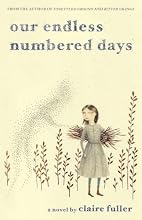
I spotted this book in a bookstore, and it seemed intriguing -- and it was, although I have somewhat mixed feelings about it. It is not a spoiler to say that it tells the story of Peggy (later known as Punzel, short for Rapunzel), who at 8 years old was taken by her father, a member of a survivalist group in London, to a remote, falling-down cabin in Germany, after which he tells her that there was a worldwide disaster and they are the only survivors. Part of the novel is told after she escapes/is rescued nine years later, but the bulk of it chronicles her experiences, from her point of view, and not always, as we learn, truthfully, living in the cabin with her father. And quite a daunting life it is -- wilderness living, with all its threats and with starvation always around the corner. The father seems almost too handy at doing things (including building a "piano" for Punzel -- her mother was a concert pianist), which strained my credulity a little and was one of the reasons I have mixed feelings about the book. Also, I felt some of the cabin sections went on too long, and could have benefited from an editorial touch.
At a certain point Punzel suspects that there is someone else around: she sees the name Reuben carved in the wood in the cabin, she sees a pair of boots -- and eventually she meets Reuben and he becomes her lover and leads her partway to freedom. But along the way, the reader, or at least this one, becomes suspicious that Reuben may not be what he seems to be. And so we find out what "really" happened in the concluding sections, including why the mother was on a concert tour in Europe when the father took Peggy/Punzel away and what happened to the father in the cabin.
Without giving away any of these (or other) secrets, I can only say that the conclusion wrapped up everything a little too tightly. Nonetheless, although when I finished this book I was annoyed by this, I found myself thinking about it for days afterwards. What Fuller is really exploring is how the mind reacts to overwhelming hardship and, indeed, trauma. It is well worth reading.
I spotted this book in a bookstore, and it seemed intriguing -- and it was, although I have somewhat mixed feelings about it. It is not a spoiler to say that it tells the story of Peggy (later known as Punzel, short for Rapunzel), who at 8 years old was taken by her father, a member of a survivalist group in London, to a remote, falling-down cabin in Germany, after which he tells her that there was a worldwide disaster and they are the only survivors. Part of the novel is told after she escapes/is rescued nine years later, but the bulk of it chronicles her experiences, from her point of view, and not always, as we learn, truthfully, living in the cabin with her father. And quite a daunting life it is -- wilderness living, with all its threats and with starvation always around the corner. The father seems almost too handy at doing things (including building a "piano" for Punzel -- her mother was a concert pianist), which strained my credulity a little and was one of the reasons I have mixed feelings about the book. Also, I felt some of the cabin sections went on too long, and could have benefited from an editorial touch.
At a certain point Punzel suspects that there is someone else around: she sees the name Reuben carved in the wood in the cabin, she sees a pair of boots -- and eventually she meets Reuben and he becomes her lover and leads her partway to freedom. But along the way, the reader, or at least this one, becomes suspicious that Reuben may not be what he seems to be. And so we find out what "really" happened in the concluding sections, including why the mother was on a concert tour in Europe when the father took Peggy/Punzel away and what happened to the father in the cabin.
Without giving away any of these (or other) secrets, I can only say that the conclusion wrapped up everything a little too tightly. Nonetheless, although when I finished this book I was annoyed by this, I found myself thinking about it for days afterwards. What Fuller is really exploring is how the mind reacts to overwhelming hardship and, indeed, trauma. It is well worth reading.
8mabith
Anita Desai is certainly going on my watch list. Clear Light of Day wasn't available in audio, but another book by her was. Have you read any of her works?
9reva8
>6 rebeccanyc: This is a lovely, sympathetic review of Desai's Clear Light of Day. I do feel that she has a gift for subtlety.
10charl08
>6 rebeccanyc: >7 rebeccanyc: Two more books to add to my WL. I also really like your recommendation acknowledgement post- will 'borrow' this for my 75 thread I think - thank you!
11RidgewayGirl
Our Endless Numbered Days sounds interesting. I'm sorry it didn't live up to its promise. After watching Unbreakable Kimmy Schmidt I'd read that is a heartbeat if your comment about the piano didn't give me pause.
12rebeccanyc
>8 mabith: No, I haven't read anything else by Anita Desai, Meredith, although I've had two of her books on my TBR almost as long as I'd had Clear Light of Day. They are Feasting, Fasting and Baumgartner's Bombay. On another thread, someone recommended In Custody as well. I definitely hope to read other books by her, but will probably choose something else if I read more for the Reading Globally theme read between now and the end of March.
>9 reva8: Thanks, Reva, and I agree with you about subtlety.
>10 charl08: I "borrowed" the idea for the recommendation post too (I used the term "stole"), so borrow away!
>11 RidgewayGirl: There is nothing funny about Our Endless Numbered Days, Kay; it is pretty grim (although in places lyrical). I did find aspects of it annoying, but overall it was thought-provoking.
>9 reva8: Thanks, Reva, and I agree with you about subtlety.
>10 charl08: I "borrowed" the idea for the recommendation post too (I used the term "stole"), so borrow away!
>11 RidgewayGirl: There is nothing funny about Our Endless Numbered Days, Kay; it is pretty grim (although in places lyrical). I did find aspects of it annoying, but overall it was thought-provoking.
13BLBera
Both Clear Light of Day and Our Endless Numbered Days go on my list. It's also interesting to see how people reimagine old stories. I'm a Desai fan and it's been a while. Thanks for the reminder.
14baswood
Enjoyed your review of Clear light of Day. I should imagine that the reading Globally theme would introduce readers to different cultures and I was wondering how much of a sense of Indian culture you got from Desai's book.
15rebeccanyc
>13 BLBera: >14 baswood: Thanks for stopping by, Beth and Barry, and for your kind words. Barry, in answer to your question, I've read books by Indian authors that gave me more of a sense of Indian culture than this one. It depicts a family that is initially very influenced by British colonial culture, in that the older two children memorize and recite to each other a lot of English poetry. There are differences, to be sure, in family customs and interactions, and the understated way in which Desai treated the issues of independence and partition was illuminating.
16DieFledermaus
Catching up. A lot of very interesting books, as usual.
I added The Three Leaps of Wang Lun to the library list - surprisingly, they have it, but they do have a lot of NYRBs so that probably accounts for it. I would never have guessed it was an NYRB from looking at the cover.
The Russian short story book sounds very tempting - it sounds like all the stories were good or excellent, which isn't always the case with collections.
Great review of The Clear Light of Day. I will have to look for that one after reading the ones available at the library.
I added The Three Leaps of Wang Lun to the library list - surprisingly, they have it, but they do have a lot of NYRBs so that probably accounts for it. I would never have guessed it was an NYRB from looking at the cover.
The Russian short story book sounds very tempting - it sounds like all the stories were good or excellent, which isn't always the case with collections.
Great review of The Clear Light of Day. I will have to look for that one after reading the ones available at the library.
17rebeccanyc
>16 DieFledermaus: Nice to see you here, DieF. The Three Leaps of Wang Lun is in a new NYRB imprint, Calligrams, which they are doing with a Chinese university press, so the books in that series all look similar, but not like "regular" NYRBs. You can find out more about Calligrams here.
And yes, the stories in the Russian book were almost uniformly good, and I attribute that to the editor, Robert Chandler.
And yes, the stories in the Russian book were almost uniformly good, and I attribute that to the editor, Robert Chandler.
18charl08
>17 rebeccanyc: This sounds like such an interesting project. I will look out for the series.
19Poquette
Yet another book by Anita Desai to watch for. Enjoyed your review, Rebecca!
20banjo123
Nice reviews! Our Endless Numbered Days sounds pretty interesting. Have you read Peter Rock's My Abandonment? They sound like they have similarities.
21rebeccanyc
Thanks, Suzanne and Rhonda. Rhonda, no I haven't read the Rock book, but from the descriptions on the book page it sounds like the Our Endless Numbered Days takes a much creepier approach.
22sibylline
Creepy indeed, I guess it is an archetypal story. Hmm. Yes, building a piano out in the middle of the woods. A harpsichord is doable, but a piano?
23rebeccanyc
>22 sibylline: It isn't a real piano. He marks keys on wood cut to the right size, and Punzel learns to sing along with the "notes" represented.
And I haven't revealed the creepiest parts! But I think this differs from other books in that the father tells the daughter that the rest of the world has disappeared and they are the only people left.
And I haven't revealed the creepiest parts! But I think this differs from other books in that the father tells the daughter that the rest of the world has disappeared and they are the only people left.
24rebeccanyc
15. Phineas Finn by Anthony Trollope

The second in Trollope's Palliser series, this book interweaves British politics, life among the elite, a look at life for the more "common" people, romance, the challenges of being a woman in the Victorian era, trips to Ireland and Scotland, even a duel (hence, I suppose, the gun on the cover of my edition), and a coming of age tale of a sort. The novel follows Phineas Finn, the son of an Irish doctor, whose father sent him to London to study law but who is selected by a lord in the local Irish district to run for Parliament -- and he wins. Although he is nervous, as who wouldn't be at first, he quickly makes friends and soon the plot is moving along. Phineas is described as attractive and comfortable talking to people, and he makes friends first with Lady Laura Standish and her father, Lord Brentford, as well as various people in Parliament. Later, because Parliament is dissolved several times, he is elected from other districts, is selected for a role in the government (which includes a salary, as service in Parliament is unpaid), and eventually faces a crisis of conscience about standing by his party (the liberals) or voting in support of his own beliefs.
Phineas's romantic life is equally complicated. Although he has a devoted girlfriend back in Ireland, he falls in love first with Lady Laura (and has the bad timing to only declare himself just after she has accepted a Scottish member of Parliament named Robert Kennedy), then with Lady Violet Effingham, Lady Laura's dearest friend who she desperately wants her somewhat good-for-nothing brother to marry, and possibly later with a foreign widow, Madame Goesler. What all of these women have in common, in addition to beauty and wit, is money -- and Phineas is in need of money if he is to continue in Parliament not only because Parliament doesn't pay but also because money is needed to run for Parliament. As always, Trollope creates wonderful female characters, and is also astute about the problems they encounter in trying to have lives of their own. Lady Laura's unhappy marriage is very compassionately, and excruciatingly, detailed.
At the same time, a lot is going on in British politics. As best as I could understand it, there was a proposal of a Reform Act that would extend the franchise to more people (but not all, and certainly not women), and would also eliminate certain electoral districts that were small and controlled by an individual lord. The politics of this are well explored, even to the point of being confusing, and Phineas does lose his seat because his district is axed (but he is able to run from another district, helped out by his political friends). The issue that causes his crisis of conscience has to do with land reform in Ireland, where he comes from, although the ending of the book is a little too conveniently happy.
The novel, as I've come to expect of Trollope, is chock full of characters, subplots, and set pieces, including a hunting scene with Lady Laura's brother (who becomes a friend of Phineas's, until conflict about Lady Violet rears its head), various dinner parties and other social events, the religious harshness of Mr. Kennedy, the Highlands of Scotland and country life in Ireland, a radical and not always scrupulous newspaperman, the man who tutored Phineas in the law and his wife and their disapproval of his going into Parliament, Phineas's landlord and his politics and troubles with the law, an Irish parliamentary colleague who prevails on Phineas to sign a note supporting his debt and the money lender who then haunts Phineas, and much more. Trollope paints a full portrait of a lot of Britain at the time of the novel. And Trollope being Trollope, the book is filled with witty asides.
And what of the Pallisers, Plantagenet and Lady Glencora, after whom this series was named, albeit after the novels were written? Plantagenet, in his role in Parliament, is alluded to occasionally, and Lady Glencora appears in a subplot involving the elderly Duke of Omnium, her husband's relative, and his possible marriage, which could result in Lady Glencora's son no longer being the heir to becoming a duke. I understand that the Pallisers will be featured more in future novels, which I look forward to reading.

The second in Trollope's Palliser series, this book interweaves British politics, life among the elite, a look at life for the more "common" people, romance, the challenges of being a woman in the Victorian era, trips to Ireland and Scotland, even a duel (hence, I suppose, the gun on the cover of my edition), and a coming of age tale of a sort. The novel follows Phineas Finn, the son of an Irish doctor, whose father sent him to London to study law but who is selected by a lord in the local Irish district to run for Parliament -- and he wins. Although he is nervous, as who wouldn't be at first, he quickly makes friends and soon the plot is moving along. Phineas is described as attractive and comfortable talking to people, and he makes friends first with Lady Laura Standish and her father, Lord Brentford, as well as various people in Parliament. Later, because Parliament is dissolved several times, he is elected from other districts, is selected for a role in the government (which includes a salary, as service in Parliament is unpaid), and eventually faces a crisis of conscience about standing by his party (the liberals) or voting in support of his own beliefs.
Phineas's romantic life is equally complicated. Although he has a devoted girlfriend back in Ireland, he falls in love first with Lady Laura (and has the bad timing to only declare himself just after she has accepted a Scottish member of Parliament named Robert Kennedy), then with Lady Violet Effingham, Lady Laura's dearest friend who she desperately wants her somewhat good-for-nothing brother to marry, and possibly later with a foreign widow, Madame Goesler. What all of these women have in common, in addition to beauty and wit, is money -- and Phineas is in need of money if he is to continue in Parliament not only because Parliament doesn't pay but also because money is needed to run for Parliament. As always, Trollope creates wonderful female characters, and is also astute about the problems they encounter in trying to have lives of their own. Lady Laura's unhappy marriage is very compassionately, and excruciatingly, detailed.
At the same time, a lot is going on in British politics. As best as I could understand it, there was a proposal of a Reform Act that would extend the franchise to more people (but not all, and certainly not women), and would also eliminate certain electoral districts that were small and controlled by an individual lord. The politics of this are well explored, even to the point of being confusing, and Phineas does lose his seat because his district is axed (but he is able to run from another district, helped out by his political friends). The issue that causes his crisis of conscience has to do with land reform in Ireland, where he comes from, although the ending of the book is a little too conveniently happy.
The novel, as I've come to expect of Trollope, is chock full of characters, subplots, and set pieces, including a hunting scene with Lady Laura's brother (who becomes a friend of Phineas's, until conflict about Lady Violet rears its head), various dinner parties and other social events, the religious harshness of Mr. Kennedy, the Highlands of Scotland and country life in Ireland, a radical and not always scrupulous newspaperman, the man who tutored Phineas in the law and his wife and their disapproval of his going into Parliament, Phineas's landlord and his politics and troubles with the law, an Irish parliamentary colleague who prevails on Phineas to sign a note supporting his debt and the money lender who then haunts Phineas, and much more. Trollope paints a full portrait of a lot of Britain at the time of the novel. And Trollope being Trollope, the book is filled with witty asides.
And what of the Pallisers, Plantagenet and Lady Glencora, after whom this series was named, albeit after the novels were written? Plantagenet, in his role in Parliament, is alluded to occasionally, and Lady Glencora appears in a subplot involving the elderly Duke of Omnium, her husband's relative, and his possible marriage, which could result in Lady Glencora's son no longer being the heir to becoming a duke. I understand that the Pallisers will be featured more in future novels, which I look forward to reading.
26VivienneR
Excellent review of Phineas Finn. You remind me that it's time I re-read my Trollope favourites and there are still so many others as yet unread.
28AlisonY
>24 rebeccanyc:: enjoyed your Trollope review. He's on my list of authors to get to - not quite sure where to start though.
29FlorenceArt
I'm also in the "Must get to Trollope some day" gang. Thanks for the review!
30rebeccanyc
>25 Poquette: >28 AlisonY: >29 FlorenceArt: I was in the "must get to Trollope some day gang" until the end of last year when I read The Way We Live Now, which is not part of either major Trollope series and which remains my favorite. Then I somewhat quixotically decided to read the Palliser series first. although people usually recommend starting with the Barsetshire series, and that's what I'm now reading, although of course with breaks for other books.
>26 VivienneR: What are your favorite Trollopes, Vivienne?
>27 baswood: and all: Thanks!
>26 VivienneR: What are your favorite Trollopes, Vivienne?
>27 baswood: and all: Thanks!
31sibylline
Thorough review of Finn! Brought much of it back to me - I consumed vast quantities of Trollope in my twenties - much of it one summer after finishing grad school while job hunting and staying with my uncle who conveniently had a house near the beach on the North Shore of Boston. And, yes, I did get a job eventually! But Trollope is deeply associated for me with the sound of the waves on Singing Beach and my anxiety about job interviews.
32rebeccanyc
It's funny how we associate certain books with certain times and places, isn't it? I don't know if I would have appreciated Trollope in my 20s, though.
33AlisonY
>30 rebeccanyc:: cheers. Will take a look at The Way We Live Now as a possible Trollope starting point!
35lyzard
>24 rebeccanyc: Lovely work, Rebecca! It would be great if you were able to join us for Phineas Redux in September (though of course The Eustace Diamonds would come first...).
36rebeccanyc
>33 AlisonY: Good choice, Alison!
>34 dchaikin: >35 lyzard: Thanks, Dan and Liz. I'll definitely be looking at your The Eustace Diamonds thread , Liz, when I read it, probably starting next month. But I may get to Phineas Redux before Septemeber, at the rate I'm going.
>34 dchaikin: >35 lyzard: Thanks, Dan and Liz. I'll definitely be looking at your The Eustace Diamonds thread , Liz, when I read it, probably starting next month. But I may get to Phineas Redux before Septemeber, at the rate I'm going.
37lyzard
Addictive, aren't they?? :)
The Eustace Diamonds is a bit polarising, so I'll be interested to hear your opinion.
The Eustace Diamonds is a bit polarising, so I'll be interested to hear your opinion.
38rebeccanyc
>37 lyzard: Yes, "addictive" is the word! I bought Phineas Redux and The Prime Minister at a bookstore yesterday, and ordered The Duke's Children, so now I will have the whole series just waiting to be read.
Intriguing that The Eustace Diamonds is polarizing . . .
Intriguing that The Eustace Diamonds is polarizing . . .
39rebeccanyc
16 The Hollow-Eyed Angel by Janwillem van de Wetering
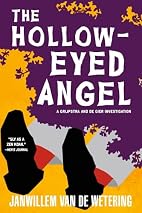
I am sad that I am nearing the end of the Grijpstra/de Geir mysteries, and that the commissaris, one of my favorite characters in the series, is retiring (but I hope not disappearing). This one largely took place in New York City, which of course I enjoyed, and involved the uncle of a Dutch reserve policeman who died mysteriously (and somewhat gruesomely, after the fact) in Central Park. All, of course, is not what it seems, and this one was a little grimmer than most. But enjoyable all the same. Written in the 90s, the World Trade Center was still a beacon and a way to orient oneself downtown.
I am sad that I am nearing the end of the Grijpstra/de Geir mysteries, and that the commissaris, one of my favorite characters in the series, is retiring (but I hope not disappearing). This one largely took place in New York City, which of course I enjoyed, and involved the uncle of a Dutch reserve policeman who died mysteriously (and somewhat gruesomely, after the fact) in Central Park. All, of course, is not what it seems, and this one was a little grimmer than most. But enjoyable all the same. Written in the 90s, the World Trade Center was still a beacon and a way to orient oneself downtown.
40StevenTX
Catching up here... I wondered about the pistol on the cover of Phineas Finn since Trollope isn't much into violence. It will be the next Trollope I read, but I don't have specific plans for when that will be. I'm glad that Glencora hasn't gone away, and I certainly agree with your observation about Trollope's excellent female characters.
41rebeccanyc
>40 StevenTX: I don't like the cover either, so I took a look at the other covers to see if there's one I thought was more appropriate, but they all seem to focus on the social aspects of the book, not the political ones. Adapting Chekhov, if you see a pistol on the cover, you know it will be used at some point in the book -- but the duel certainly wasn't the focus of the book.
42labfs39
I'm feeling guilty for skipping some of your threads to get here, but at least I am caught up on this one. Our Endless Numbered Days reminds me of the opening scenes of the movie thriller Hanna. A girl and her father live alone in a cabin on the northern Finnish tundra. There the similarities end, however. I read Barchester Towers a million years ago and enjoyed it, but have never gone back to Trollope. Some day.
43rebeccanyc
i forgot on whose thread we were talking about translation (probably on multiple threads), but here is a link to Richard Pevear and Larissa Volokhonsky talking on my local public radio station about, principally, their translation of The Brothers Karamazov. Also, here is a link to them answering eight questions about translation; the audio is the same for this as above, so just scroll down to read the interview.
44NanaCC
Just back from vacation, and catching up with your reading. You have some great stuff here. I had intended to read Doctor Thorne by Trollope while I was away, but we were doing so much running, I thought it better to stick to Dorothy Sayers. I'll get to Trollope again in April. He is so good.
45rebeccanyc
Thanks for stopping by, Lisa and Colleen. Next up for me Trollope-wise is The Eustace Diamonds, but I'm going to try to read some other books first. As Liz noted in >37 lyzard:, they're definitely addictive!
46labfs39
>43 rebeccanyc: Thank you for the P&V links. I haven't listened to the public radio bit about Brothers K, but the eight questions piece was fascinating. I especially loved hearing about their process: three versions and six iterations. Wow! It was comforting to me to hear how often they compare against the original. I like knowing that their translations are done with one eye always on the source. I dislike more interpretive translations.
47rebeccanyc
17. The Discreet Hero by Mario Vargas Llosa

Vargas Llosa has written many masterpieces: the complex and intense (and long) War at the End of the World, Conversation in the Cathedral, and The Green House, and the comic but serious Aunt Julia and the Scriptwriter and Captain Pantoja and the Special Service, among other books that I loved. He has set a high bar for himself, and this novel is not a masterpiece, although it is engaging and filled with interesting characters, some of whom readers of Vargas Llosa have met before.
The novel consists of two stories, told in alternating chapters. One takes place in the town of Piura, much developed since it was a sleepy desert town in earlier novels. It involves Felicito Yanaqué, the owner of a trucking and taxi service, who receives a note, signed with the symbol of a spider, asking him to pay "protection" money to an unnamed source. Yanaqué came from humble beginnings and built up his business on his own, and because his father told him "never let anybody walk all over you, son," he determines to resist this request and goes to the police, where he encounters Sergeant Lituma, a character familiar to Vargas Llosa readers and who sadly has only a secondary role in this novel. Needless to say, this does not make the prospective extorters happy. Yanaqué is married to a woman he doesn't love (he was tricked into marrying her because she was pregnant and claimed the child was his) and has raised two sons to take over the business; he also has a much younger mistress, Mabel, and regularly visits another woman, Adelaida, who has "inspirations" that tell her that things are going to happen. Complications ensue.
The second thread of the novel involves Rigoberto, Lucrecia, and Fonchito, who readers will also remember, and what happens when Rigoberto's widowed boss, Ismael Carrera, who owns the insurance company where Rigoberto works, decides to marry his maid, Armida and they head to Europe for an extended honeymoon. Needless to say, Carrera's sons, who are both stupid and dissolute, go wild when they hear this news, although Carrera has already paid them their inheritances in advance. This aspect of the story also continues the erotic and artistic adventures of Rigoberto et al., and Fonchito regularly encounters a mysterious man named Edilberto Torres, who may or may not be a figment of his imagination. Complications also ensue in this story.
When Carrera dies soon after returning from his honeymoon, it develops that there is a connection between characters in the two parts of the story. This, in turn, leads to several characters finally telling the truth about secrets they have kept for decades.
In the course of the novel, Vargas Llosa plays in many ways with the idea of what is real and what is not what it seems, as well as the role of imagination. He also explores how characters react to big upsets in their lives -- vengefully, calmly, honorably, creatively.
I liked this book a lot and was definitely pleased that Vargas Llosa has returned to real fiction writing (after his last book, a fictionalized biography of Roger Casement that didn't work for me at all). If this novel didn't hit the high spots of what he wrote earlier, I am nevertheless glad that he is still writing at the age of almost 80.

Vargas Llosa has written many masterpieces: the complex and intense (and long) War at the End of the World, Conversation in the Cathedral, and The Green House, and the comic but serious Aunt Julia and the Scriptwriter and Captain Pantoja and the Special Service, among other books that I loved. He has set a high bar for himself, and this novel is not a masterpiece, although it is engaging and filled with interesting characters, some of whom readers of Vargas Llosa have met before.
The novel consists of two stories, told in alternating chapters. One takes place in the town of Piura, much developed since it was a sleepy desert town in earlier novels. It involves Felicito Yanaqué, the owner of a trucking and taxi service, who receives a note, signed with the symbol of a spider, asking him to pay "protection" money to an unnamed source. Yanaqué came from humble beginnings and built up his business on his own, and because his father told him "never let anybody walk all over you, son," he determines to resist this request and goes to the police, where he encounters Sergeant Lituma, a character familiar to Vargas Llosa readers and who sadly has only a secondary role in this novel. Needless to say, this does not make the prospective extorters happy. Yanaqué is married to a woman he doesn't love (he was tricked into marrying her because she was pregnant and claimed the child was his) and has raised two sons to take over the business; he also has a much younger mistress, Mabel, and regularly visits another woman, Adelaida, who has "inspirations" that tell her that things are going to happen. Complications ensue.
The second thread of the novel involves Rigoberto, Lucrecia, and Fonchito, who readers will also remember, and what happens when Rigoberto's widowed boss, Ismael Carrera, who owns the insurance company where Rigoberto works, decides to marry his maid, Armida and they head to Europe for an extended honeymoon. Needless to say, Carrera's sons, who are both stupid and dissolute, go wild when they hear this news, although Carrera has already paid them their inheritances in advance. This aspect of the story also continues the erotic and artistic adventures of Rigoberto et al., and Fonchito regularly encounters a mysterious man named Edilberto Torres, who may or may not be a figment of his imagination. Complications also ensue in this story.
When Carrera dies soon after returning from his honeymoon, it develops that there is a connection between characters in the two parts of the story. This, in turn, leads to several characters finally telling the truth about secrets they have kept for decades.
In the course of the novel, Vargas Llosa plays in many ways with the idea of what is real and what is not what it seems, as well as the role of imagination. He also explores how characters react to big upsets in their lives -- vengefully, calmly, honorably, creatively.
I liked this book a lot and was definitely pleased that Vargas Llosa has returned to real fiction writing (after his last book, a fictionalized biography of Roger Casement that didn't work for me at all). If this novel didn't hit the high spots of what he wrote earlier, I am nevertheless glad that he is still writing at the age of almost 80.
48kidzdoc
Great review of The Discreet Hero, Rebecca! I'm thrilled that MVL has returned to his prior form, and I'll definitely pick up and read this book during the third quarter for the Reading Globally theme.
49rebeccanyc
>48 kidzdoc: Thanks, Darryl.
New York Review Books is having a 50% off sale on selected titles through March 31. Find out more here: http://www.nybooks.com/books/wintersale.
New York Review Books is having a 50% off sale on selected titles through March 31. Find out more here: http://www.nybooks.com/books/wintersale.
50Poquette
Enjoyed your review of The Discreet Hero. I have not yet read any Vargas Llosa, but I hope to correct that in the not too distant future. So many of the standout books for me in recent years have been from non-US writers, and I intend to tap into that source soon.
51rebeccanyc
>50 Poquette: Thanks, Suzanne. I wouldn't start with The Discreet Hero; I would start with one of his more complex or comic/serious novels.
52Linda92007
Great review of The Discreet Hero, Rebecca. I have had mixed reactions to Vargas Llosa. I really enjoyed Death in the Andes, The Storyteller and Who Killed Palomino Molero?, and am looking forward to reading The War at the End of the World and Conversation in the Cathedral. But I disliked and did not finish The Bad Girl and The Notebooks of Don Rigoberto.
53StevenTX
It sounds like The Discreet Hero is a bit of a nostalgia trip, bringing together characters from very different types of novels. It's one I would definitely want to read, but there are several of his earlier works I should probably read first.
54rebeccanyc
>52 Linda92007: I really liked Death in the Andes too, Linda, and loved The War of the End of the World and Conversation in the Cathedral, and I too couldn't wasn't really grabbed by The Notebooks of Don Rigoberto or its predecessor In Praise of the Stepmother. I own The Bad Girl but haven't read it yet. Other Vargas Llosas I loved are Captain Pantoja and the Special Service, Aunt Julia and the Scriptwriter, and The Green House. I enjoyed The Storyteller and Who Killed Palomino Molero?, wasn't wild about The Feast of the Goat, and didn't enjoy The Time of the Hero very much. I also have The Real Life of Alejandro Mayta and The Way to Paradise on the TBR.
>53 StevenTX: Which books do you have, Steven?
>53 StevenTX: Which books do you have, Steven?
56StevenTX
>54 rebeccanyc: These are the ones Ié afs (Holy cow! Two helicopters just went over my house at about 200'.) Let's try that again:
These are the ones I've read: The Cubs and Other Stories, The Time of the Hero, The War of the End of the World, The Feast of the Goat, In Praise of the Stepmother, The Notebooks of Don Rigoberto, Death in the Andes, Aunt Julia and the Scriptwriter, and The Bad Girl.
I own the following but haven't read them: Conversation in the Cathedral, The Green House, The Storyteller, The Way to Paradise, The Real Life of Alejandro Mayta, and Who Killed Palomino Molero?
These are the ones I've read: The Cubs and Other Stories, The Time of the Hero, The War of the End of the World, The Feast of the Goat, In Praise of the Stepmother, The Notebooks of Don Rigoberto, Death in the Andes, Aunt Julia and the Scriptwriter, and The Bad Girl.
I own the following but haven't read them: Conversation in the Cathedral, The Green House, The Storyteller, The Way to Paradise, The Real Life of Alejandro Mayta, and Who Killed Palomino Molero?
57rebeccanyc
>56 StevenTX: Of the ones you haven't read, I loved Conversation in the Cathedral and The Green House and liked The Story Teller and Who Killed Palomino Molero, and haven't read the others. I also can't recommend highly enough Captain Pantoja and the Special Service; it's a lot of fun.
ETA I see I'm repeating myself here.
ETA I see I'm repeating myself here.
58rebeccanyc
18. Pushkin Hills by Sergei Dovlatov
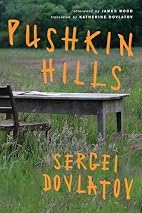
In this novella, Boris Alikhanov, a recently divorced struggling writer (struggling mainly because his work couldn't be published in even the comparatively more open Khrushchev era, but also because of his fondness for drinking) takes a summer job at the Pushkin Hill Preserve, dedicated to the area where Pushkin lived and a destination for tour buses. One of the women who works there finds him lodging in a neighboring village in the completely dilapidated home of a man who stays drunk as much as possible, and he starts training as a tour guide. The reader learns from flashbacks in the form of Boris's reflections about Boris's writing, his meeting with the woman who became his wife and subsequent marriage, and the problems within the marriage that led to the divorce. Eventually, his ex-wife shows up at Pushkin Hills to inform him that she has made plans to emigrate to the west, along with their daughter; this sets Boris off on a downward spiral with a noted local alcoholic, but he manages to make it to Leningrad before they leave. One reason Boris doesn't want to emigrate with them is because he claims "In a foreign tongue we lose eighty percent of our personality. We lose our ability to joke, to be ironic. This alone terrifies me."
That's the plot. What makes this book special is Dovlatov's sparkling, albeit dark and often absurd, satire of Soviet culture - everything from the ersatz nature of the Pushkin Preserve (with objects from the era of Pushkin rather than ones Pushkin actually owned), the tour guides, the tour itself, the people who come on the tour buses, and the villagers to a KGB officer. And, oh, Dovlatov writes so delightfully, and tells such telling tales, capturing the essence of a character or a situation with a few well chosen words or phrases.
Some of this is semi-autobiographical. Dovlatov was also a writer, of course, and couldn't get his writing published in the Soviet Union, and he did work for a summer at the Pushkin Preserve. His father was Jewish, and this novel includes some exchanges that illustrate the instinctive nature of Russian antisemitism. And he did eventually emigrate to New York where he joined his wife and daughter, who has translated this novel (and provided helpful notes). I first found out about Dovlatov from a story in Russian Short Stories from Pushkin to Buida, and I would be happy to read more of his translated works.
In this novella, Boris Alikhanov, a recently divorced struggling writer (struggling mainly because his work couldn't be published in even the comparatively more open Khrushchev era, but also because of his fondness for drinking) takes a summer job at the Pushkin Hill Preserve, dedicated to the area where Pushkin lived and a destination for tour buses. One of the women who works there finds him lodging in a neighboring village in the completely dilapidated home of a man who stays drunk as much as possible, and he starts training as a tour guide. The reader learns from flashbacks in the form of Boris's reflections about Boris's writing, his meeting with the woman who became his wife and subsequent marriage, and the problems within the marriage that led to the divorce. Eventually, his ex-wife shows up at Pushkin Hills to inform him that she has made plans to emigrate to the west, along with their daughter; this sets Boris off on a downward spiral with a noted local alcoholic, but he manages to make it to Leningrad before they leave. One reason Boris doesn't want to emigrate with them is because he claims "In a foreign tongue we lose eighty percent of our personality. We lose our ability to joke, to be ironic. This alone terrifies me."
That's the plot. What makes this book special is Dovlatov's sparkling, albeit dark and often absurd, satire of Soviet culture - everything from the ersatz nature of the Pushkin Preserve (with objects from the era of Pushkin rather than ones Pushkin actually owned), the tour guides, the tour itself, the people who come on the tour buses, and the villagers to a KGB officer. And, oh, Dovlatov writes so delightfully, and tells such telling tales, capturing the essence of a character or a situation with a few well chosen words or phrases.
Some of this is semi-autobiographical. Dovlatov was also a writer, of course, and couldn't get his writing published in the Soviet Union, and he did work for a summer at the Pushkin Preserve. His father was Jewish, and this novel includes some exchanges that illustrate the instinctive nature of Russian antisemitism. And he did eventually emigrate to New York where he joined his wife and daughter, who has translated this novel (and provided helpful notes). I first found out about Dovlatov from a story in Russian Short Stories from Pushkin to Buida, and I would be happy to read more of his translated works.
59FlorenceArt
>58 rebeccanyc: I had never heard of this author. Pushkin Hills sounds like a great read.
60Poquette
>58 rebeccanyc: Enjoyed your review of Pushkin Hills. Sounds like I would enjoy it especially for the writing.
61rebeccanyc
>59 FlorenceArt: >60 Poquette: Thanks! I read it (unusually for me) in a day and enjoyed it a lot.
62torontoc
This book looks interesting- I have read another book by this author The Suitcase
64SassyLassy
>54 rebeccanyc: Another fan of Vargas Llosa here. The Real Life of Alejandro Mayta was my introduction to this author and got me reading more of him. I think you will enjoy it. It also became one of those books I gave to other people.
I like the sound of Pushkin Hills.
I like the sound of Pushkin Hills.
65rebeccanyc
>64 SassyLassy: I hope to get to that one this year, Sassy.
And April is National Poetry Month, at least in the US. To get a poem sent to your e-mail address each day this month, you can sign up here for Knopf's poem-a-day. If you'd like a poem each day, every day, the Academy of American Poets will send you one; you can sign up here.
And April is National Poetry Month, at least in the US. To get a poem sent to your e-mail address each day this month, you can sign up here for Knopf's poem-a-day. If you'd like a poem each day, every day, the Academy of American Poets will send you one; you can sign up here.
66arubabookwoman
Wonderful reviews here. Catching up on your threads is always dangerous: I've added 3 new books to the Kindle, and several more to the wishlist. One I'm wavering about is Our Endless Numbered Days. These "end of the world"/surviving outside civilization types of books are a guilty pleasure of mine. However, in the past several years I've read a couple that sound very similar to this (My Abandonment by Peter Rock, mentioned above, and The Island At The End of the World by Sam Taylor), both of which I found to be at best mediocre, in part because so much suspension of disbelief was required. However, your recommendation weighs heavy, and I suspect it too will be on my Kindle before the end of the day.
I read Clear Light of Day about the time you were putting it on your shelf 35 years ago, and loved it, although I don't have a clear memory of any of its details. Because I loved it so much, I remember being extra disappointed in her daughter Kiran Dessai's books, the Booker-winning Inheritance of Loss and Hullaballoo in the Guava Orchard.
Great review of Phineas Finn, which I read out of order, thinking it was the first of the Palliser series. As you noted Glencora is a somewhat minor character in Phineas, and I actually didn't much care for her. However, now having encountered her in her major role in Can You Forgive Her? I look very much forward to reading more about her in the future volumes. (And also about Phineas). I'll probably be reading The Eustace Diamonds about the same time you do, now that I'm on the right track for the reading order.
I enjoyed the link to the interview with Richard and Larissa--their translation process is fascinating and is a true collaboration.
Also, I have the first in the Grijpstra/deGeir mystery series on my Kindle to get to one day.
I read Clear Light of Day about the time you were putting it on your shelf 35 years ago, and loved it, although I don't have a clear memory of any of its details. Because I loved it so much, I remember being extra disappointed in her daughter Kiran Dessai's books, the Booker-winning Inheritance of Loss and Hullaballoo in the Guava Orchard.
Great review of Phineas Finn, which I read out of order, thinking it was the first of the Palliser series. As you noted Glencora is a somewhat minor character in Phineas, and I actually didn't much care for her. However, now having encountered her in her major role in Can You Forgive Her? I look very much forward to reading more about her in the future volumes. (And also about Phineas). I'll probably be reading The Eustace Diamonds about the same time you do, now that I'm on the right track for the reading order.
I enjoyed the link to the interview with Richard and Larissa--their translation process is fascinating and is a true collaboration.
Also, I have the first in the Grijpstra/deGeir mystery series on my Kindle to get to one day.
67rebeccanyc
It's great to see you here, Deborah. I had mixed feelings about Our Endless Numbered Days, as I felt it was flawed in several ways. But it was nevertheless thought-provoking. I haven't read either of the two books you mention.
I have been very disappointed by Kiran Desai too, although I stopped at The Inheritance of Loss.
I'm hoping to start The Eustace Diamonds in about a week; just want to finish a few other things first.
Have fun with Grijpstra/de Gier!
I have been very disappointed by Kiran Desai too, although I stopped at The Inheritance of Loss.
I'm hoping to start The Eustace Diamonds in about a week; just want to finish a few other things first.
Have fun with Grijpstra/de Gier!
68DieFledermaus
Enjoying your Trollope reviews - hope you like The Eustace Diamonds as well! Glencora and co. play a pretty minor role in that one and the main character is rather unsympathetic, but I enjoyed reading about her. She's an obvious gold digger, but I usually don't judge female gold diggers as harshly as male ones in books of that time, because of the limitations on women (George Vavasor and some other men I thought were pretty horrible).
Dovlatov's name sounds vaguely familiar, but I didn't know anything about his work - sounds like one to keep an eye out for.
Dovlatov's name sounds vaguely familiar, but I didn't know anything about his work - sounds like one to keep an eye out for.
69rebeccanyc
>68 DieFledermaus: I've heard that the main character in The Eustace Diamonds is unlikable before, so I'm glad to know you enjoyed reading about her. I don't have a problem with unsympathetic characters in general, although sometimes if almost nobody is sympathetic I can have a problem (e.g., The Finkler Question, which I hated for other reasons too). George was really awful, wasn't he?
70dchaikin
Sergei Dovlatov sounds interesting and sounds like a greatf find from the Russian short story book.
71rebeccanyc
19. The Wrong Side of Paris by Honoré de Balzac

At the start of this short novel, Godefroid roams the streets of Paris, having squandered his fortune and fallen into debt. Resolving to change his ways, he is going to respond to an unusual sounding ad for a room to let for a "lodger of quiet habits" when he chances upon a priest offering advice to a worker, and lo and behold, they are going to the same place, a home nestled into the Île de la Cité. Godefroid moves in and discovers that the owner of the home, Madame de La Chanterie (known as Madame), and her other boarders, are involved in mysterious comings and goings, and have equally mysterious visitors who also come and go. Eventually he learns that they are all devout Catholics who go by their first names (as monks would) and who, with their own fortunes and money given to them by others, practice Charity by giving money (or really lending it, with the borrower deciding if and when to repay) to change the lives of the poor. Godefroid becomes interested in this and is instructed by Monsieur Alain, the priest he originally encountered, in both religion and in how they practice charity; he is also in training to become their accountant. Alain reveals to him, through court documents, Madame's secret history, which involves the turbulent counter-revolutionary era in the west of France, chronicled in Balzac's The Chouans.
At a certain point, Godefroid is deemed experienced enough to go live in a boarding house in a very poor area of Paris where a man focuses his life on caring for his appallingly sick grown-up daughter, along with her teenage son who is already studying law. Godefroid is supposed to figure out how to help them, both medically and financially. The man is writing a treatise on law and is deeply in debt to shady publishers, to whom the landlady of the house is connected; in fact, she is spying on them and getting involved in schemes to oust the family from her house. The story becomes a little convoluted at this point, and there are many complications, before an astounding secret is revealed, and the plot comes to a somewhat surprisingly forgiving conclusion.
This novel has the detailed descriptions of how people live, the vivid characters, and indeed the melodrama that are typical of Balzac. As it drew near to its end, I couldn't put it down. Although it definitely has a theme of the power of faith, charity, and forgiveness, this is mixed with so much else that it didn't really annoy me as much as I expected it would. There is also a tad of antisemitism (the rich Polish Jewish doctor has piles of money displayed in his office), but it is not more than what would have been standard at the time.
This is a new translation of a book whose French title would translate more as "the underside of contemporary history," which is certainly apt, if a mouthful. The translator discusses this in an interesting translator's introduction, as well as the place of this novel in Balzac's overall work, and has provided very helpful notes which oh so sadly are not referenced in the text so the reader has to guess what might have a note.

At the start of this short novel, Godefroid roams the streets of Paris, having squandered his fortune and fallen into debt. Resolving to change his ways, he is going to respond to an unusual sounding ad for a room to let for a "lodger of quiet habits" when he chances upon a priest offering advice to a worker, and lo and behold, they are going to the same place, a home nestled into the Île de la Cité. Godefroid moves in and discovers that the owner of the home, Madame de La Chanterie (known as Madame), and her other boarders, are involved in mysterious comings and goings, and have equally mysterious visitors who also come and go. Eventually he learns that they are all devout Catholics who go by their first names (as monks would) and who, with their own fortunes and money given to them by others, practice Charity by giving money (or really lending it, with the borrower deciding if and when to repay) to change the lives of the poor. Godefroid becomes interested in this and is instructed by Monsieur Alain, the priest he originally encountered, in both religion and in how they practice charity; he is also in training to become their accountant. Alain reveals to him, through court documents, Madame's secret history, which involves the turbulent counter-revolutionary era in the west of France, chronicled in Balzac's The Chouans.
At a certain point, Godefroid is deemed experienced enough to go live in a boarding house in a very poor area of Paris where a man focuses his life on caring for his appallingly sick grown-up daughter, along with her teenage son who is already studying law. Godefroid is supposed to figure out how to help them, both medically and financially. The man is writing a treatise on law and is deeply in debt to shady publishers, to whom the landlady of the house is connected; in fact, she is spying on them and getting involved in schemes to oust the family from her house. The story becomes a little convoluted at this point, and there are many complications, before an astounding secret is revealed, and the plot comes to a somewhat surprisingly forgiving conclusion.
This novel has the detailed descriptions of how people live, the vivid characters, and indeed the melodrama that are typical of Balzac. As it drew near to its end, I couldn't put it down. Although it definitely has a theme of the power of faith, charity, and forgiveness, this is mixed with so much else that it didn't really annoy me as much as I expected it would. There is also a tad of antisemitism (the rich Polish Jewish doctor has piles of money displayed in his office), but it is not more than what would have been standard at the time.
This is a new translation of a book whose French title would translate more as "the underside of contemporary history," which is certainly apt, if a mouthful. The translator discusses this in an interesting translator's introduction, as well as the place of this novel in Balzac's overall work, and has provided very helpful notes which oh so sadly are not referenced in the text so the reader has to guess what might have a note.
72rebeccanyc
>70 dchaikin: It was because I had read a story by him in that book that I noticed a new book by him in the bookstore. There were other writers I was unfamiliar with before reading that collection.
73kidzdoc
Great review of The Wrong Side of Paris, Rebecca.
74Poquette
>71 rebeccanyc: The Wrong Side of Paris sounds fascinating. Great review!
75edwinbcn
Nice review of L'Envers de l'histoire contemporaine, and great to see you are still going with Balzac.
76baswood
Is there a Wrong Side of Paris? Great review Rebecca.
77rebeccanyc
Thanks, Darryl, Suzanne, Edwin, and Barry, and no, there is no wrong side of Paris! (I don't think it's a good title, but the translator, as I noticed, explains his choice in the translator's introduction.)
78Linda92007
Excellent review of The Wrong Side of Paris, Rebecca. I have it here on my shelves and should pull it out, since I have yet to read anything by de Balzac. I find that a good introduction by a translator can add considerably to my understanding and enjoyment of a book.
79FlorenceArt
77> The French title is pretty bad too! I had never heard of that book, but that's not so surprising, he wrote so many.
I hated Balzac when I had to read Le père Goriot and Eugénie Grandet in school, then a few years later I read some of his more lyrical works (Les chouans, Le lys dans la vallée) and was surprised to enjoy them. I should read a few more, though I don't feel very tempted by L'envers de l'histoire contemporaine. But I enjoyed reading your review!
I hated Balzac when I had to read Le père Goriot and Eugénie Grandet in school, then a few years later I read some of his more lyrical works (Les chouans, Le lys dans la vallée) and was surprised to enjoy them. I should read a few more, though I don't feel very tempted by L'envers de l'histoire contemporaine. But I enjoyed reading your review!
80rebeccanyc
>78 Linda92007: I agree about a good introduction by a translator, Linda, as I am fascinated by the process of translation. My edition also had an introduction by Adam Gopnik, which I found sort of annoying. He compares the dramatic changes in type of government that France (and Balzac) experienced between the 1780s and 1830s to the changes in government in South American countries in the 20th century, and Balzac to some of the noted South American writers. I used to like Adam Gopnik's writing in The New Yorker but, increasingly, I find him irritating.
>79 FlorenceArt: It's so true that we hate what we have to read in school! (That ruined Dickens for me.) I have been enjoying the Balzacs I've read, particularly Lost Illusions, A Harlot High and Low, and The Black Sheep. The Wrong Side of Paris isn't up to those but, as I wrote, at the end I couldn't put it down. The faith stuff, though, is hard to take, for me anyway.
>79 FlorenceArt: It's so true that we hate what we have to read in school! (That ruined Dickens for me.) I have been enjoying the Balzacs I've read, particularly Lost Illusions, A Harlot High and Low, and The Black Sheep. The Wrong Side of Paris isn't up to those but, as I wrote, at the end I couldn't put it down. The faith stuff, though, is hard to take, for me anyway.
81rebeccanyc
20. The Life of Lazarillo de Tormes by Anonymous

I found this classic work of Spanish literature mildly entertaining, definitely satiric, and undoubtedly much more shocking when it was written (hence, the anonymous authorship) than it is today. Narrated by Lazaro himself, it tells the tale of his work as a servant for various, mostly harsh and, indeed, abusive, masters, starting with a blind man when he was but a boy, and progressing through working for a penniless squire who nonetheless acts as if he has money but doesn't deign to work, various, largely corrupt, representatives of the church, and a constable, eventually achieving a position of his own in government. This allows the anonymous author much opportunity for satire, as well as the opportunity to show the hardships prevalent in 16th century Spain. I found the chapter in which Lazaro works for a seller of indulgences especially funny, but overall I didn't enjoy this book as much as the introduction by Juan Goytisolo led me to believe I would. As an added note, this is said to be the first picaresque novel.

I found this classic work of Spanish literature mildly entertaining, definitely satiric, and undoubtedly much more shocking when it was written (hence, the anonymous authorship) than it is today. Narrated by Lazaro himself, it tells the tale of his work as a servant for various, mostly harsh and, indeed, abusive, masters, starting with a blind man when he was but a boy, and progressing through working for a penniless squire who nonetheless acts as if he has money but doesn't deign to work, various, largely corrupt, representatives of the church, and a constable, eventually achieving a position of his own in government. This allows the anonymous author much opportunity for satire, as well as the opportunity to show the hardships prevalent in 16th century Spain. I found the chapter in which Lazaro works for a seller of indulgences especially funny, but overall I didn't enjoy this book as much as the introduction by Juan Goytisolo led me to believe I would. As an added note, this is said to be the first picaresque novel.
82rebeccanyc
21. Game of Mirrors by Andrea Camilleri
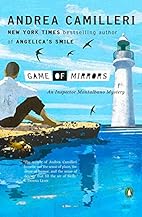
What can I say about the latest Inspector Montalbano novel to be translated into English except what I've said before? Of course, I scooped it up as soon as I saw it in the bookstore and of course I read it right away. It has all the delightful characters, all the sense of place, all the delicious food -- and a mystery into the bargain. Perhaps there is a little more violence of a gruesome sort in this novel than in past ones, but I'm still eager for the next one . . .
What can I say about the latest Inspector Montalbano novel to be translated into English except what I've said before? Of course, I scooped it up as soon as I saw it in the bookstore and of course I read it right away. It has all the delightful characters, all the sense of place, all the delicious food -- and a mystery into the bargain. Perhaps there is a little more violence of a gruesome sort in this novel than in past ones, but I'm still eager for the next one . . .
83NanaCC
>82 rebeccanyc: I think I need to start thi series. I have had the first book on my wishlist for quite a while. Are all the books up to this one translated?
84rebeccanyc
>83 NanaCC: Yes, Colleen. They have all been translated up to this one. You can see the series page here.
85charl08
You got me with The Wrong Side of Paris: sounds fascinating, will have a look for it. And that Montalbano cover is gorgeous.
86reva8
These are wonderful reviews, Rebecca. I particularly liked your reviews of Pushkin Hills and The Discreet Hero
87rebeccanyc
>85 charl08: >86 reva8: Thank you both! Reva, all the Montalbano covers published in the US have the same look and feel, and they all are very attractive.
88rebeccanyc
22. Tristana by Benito Pérez Galdós

This is a strange and depressing book, relieved by the portrait of a budding feminist young woman. Tristana is an orphaned 19-year-old, entrusted to and taken in by an old family friend who tried to help her parents when they fell on hard times. But this family friend, Don Lope Garrido, is an unrepentant Don Juan: he "was a skilled strategist in the war of love and prided himself on having stormed more bastions of virtue and captured more strongholds of chastity than he had hairs on his head." Soon, of course, he adds Tristana to his "very long list of victories over innocence."
Needless to say, Tristana is depressed by her life with Don Lope, especially because most of the day she helps the servant, Saturna, and is confined to the house. But she is able to go out with Saturna when she goes shopping or visits her son, who she had to place in an institution when her husband died and she had to go to work, and in the course of one of these excursions she meets a young artist, Horacio. Of course, they fall in love, and talk talk talk about their love, his art, and his unhappy childhood. But Tristana is enlivened not only by love but also by her innate imagination and ability to think, as we would now say, outside the box. She develops a love for and skill at painting and drawing, once they progress to Horacio's studio; reads literature; and declares she never wants to marry but wants to have her own work which will support her. And this in 19th century Spain! She turns out to be enormously talented at languages, and eventually music, too.
But things do not go well. Don Lope, of course, has his suspicions. Horacio has to take his elderly aunt to a house he owns near the Mediterranean, and the lovers correspond daily. I found this section, with their endless epistolary expressions of love, tedious. And then, Tristana has a very serious health crisis, which in turn provokes Don Lope to discover he truly cares about her "as a daughter" and to realize that the relationship with Horatio will come to naught because of both changes in Tristana and Horacio's reaction to the aftermath of her health problem. The changes in Tristana because of this crisis and its aftermath are not entirely hard to believe, but they also seem to be very dependent on a a time and a place. I found the conclusion of the novel depressing, but the last lines of it are brilliant.
All in all, I'm glad I read this book. Parts of it were, as I said, tedious, and overall I found it hard to read, but it was a fascinating portrait of two people, Tristana and Don Lope. The introduction to my NYRB edition notes that Pérez Galdós wrote other books with the names of women as titles and women as protagonists.

This is a strange and depressing book, relieved by the portrait of a budding feminist young woman. Tristana is an orphaned 19-year-old, entrusted to and taken in by an old family friend who tried to help her parents when they fell on hard times. But this family friend, Don Lope Garrido, is an unrepentant Don Juan: he "was a skilled strategist in the war of love and prided himself on having stormed more bastions of virtue and captured more strongholds of chastity than he had hairs on his head." Soon, of course, he adds Tristana to his "very long list of victories over innocence."
Needless to say, Tristana is depressed by her life with Don Lope, especially because most of the day she helps the servant, Saturna, and is confined to the house. But she is able to go out with Saturna when she goes shopping or visits her son, who she had to place in an institution when her husband died and she had to go to work, and in the course of one of these excursions she meets a young artist, Horacio. Of course, they fall in love, and talk talk talk about their love, his art, and his unhappy childhood. But Tristana is enlivened not only by love but also by her innate imagination and ability to think, as we would now say, outside the box. She develops a love for and skill at painting and drawing, once they progress to Horacio's studio; reads literature; and declares she never wants to marry but wants to have her own work which will support her. And this in 19th century Spain! She turns out to be enormously talented at languages, and eventually music, too.
But things do not go well. Don Lope, of course, has his suspicions. Horacio has to take his elderly aunt to a house he owns near the Mediterranean, and the lovers correspond daily. I found this section, with their endless epistolary expressions of love, tedious. And then, Tristana has a very serious health crisis, which in turn provokes Don Lope to discover he truly cares about her "as a daughter" and to realize that the relationship with Horatio will come to naught because of both changes in Tristana and Horacio's reaction to the aftermath of her health problem. The changes in Tristana because of this crisis and its aftermath are not entirely hard to believe, but they also seem to be very dependent on a a time and a place. I found the conclusion of the novel depressing, but the last lines of it are brilliant.
All in all, I'm glad I read this book. Parts of it were, as I said, tedious, and overall I found it hard to read, but it was a fascinating portrait of two people, Tristana and Don Lope. The introduction to my NYRB edition notes that Pérez Galdós wrote other books with the names of women as titles and women as protagonists.
89baswood
Tristana was made into a film in 1970 directed by perhaps the most famous Spanish director: Luis Buñuel.
90japaul22
>88 rebeccanyc: I read Galdos's Misericordia (often called Compassion in translations) last year and enjoyed it. It was a little out of my comfort zone as I haven't read a lot of Spanish literature. The characters were memorable, though, even if the plot was a bit convoluted to me. I'd consider reading Tristana if I happen upon it.
91rebeccanyc
>89 baswood: I understand the Buñuel film was more or less based on Tristana, but was far from a literal rendering of it (as, perhaps, one would expect of Buñuel).
>90 japaul22: Thanks for the recommendation of Misericordia; at this point, I'm not up for more Perez Galdos, but who knows in the future?
>90 japaul22: Thanks for the recommendation of Misericordia; at this point, I'm not up for more Perez Galdos, but who knows in the future?
92SassyLassy
I have one of his "name" books on my TBR, Fortunata and Jacinta, but keep swerving away from it. After reading your review, Tristana sounds like a better start.
93dchaikin
Some very curious and interesting pieces of Spanish literature you have been reading. Enjoying reading about them.
94rebeccanyc
>94 rebeccanyc: Well, I wasn't altogether thrilled with Tristana; it was very depressing (not that I find that a fault), and there were parts I found tedious.
>93 dchaikin: Thanks, Dan. I dug them out my massive TBR piles for this quarter's Reading Globally theme read on the Iberian peninsula. And both were NYRB editions.
>93 dchaikin: Thanks, Dan. I dug them out my massive TBR piles for this quarter's Reading Globally theme read on the Iberian peninsula. And both were NYRB editions.
95timjones
Just popping in to say that, based on my reading of it so far, I share some your reservations about Autobiography of a Corpse - it feels a bit like Division 2 Borges - similar preoccupations, but without the elegance of expression. Nevertheless, though I don't think I'll read it all in one go, I do intend to stick with it.
96rebeccanyc
>95 timjones: Thanks for stopping by, Tim, and reminding me that I really need to read Borges. I found Krzhizhanovsky very cold.
97rebeccanyc
23. Between You & Me: Confessions of a Comma Queen by Mary Norris
What a thoroughly delightful book -- for any lover of the English language or lover of grammar or lover of The New Yorker or just lover of good writing and a tale well told. Mary Norris worked her way up to a job as one of The New Yorker's chief copy editors, a role dear to my heart because I started my career in publishing as a proofreader and copy editor. In this book, she combines an examination of troubling aspects of grammar, spelling, and punctuation with a look at her own career (among her pre-magazine jobs, she checked feet for athlete's foot at a public pool in Cleveland and worked at a costume company and as a "milkwoman") and wonderful anecdotes about New Yorker authors and their writing idiosyncrasies.
The chapter titles (which are as witty as Norris' writing) address these subjects: spelling, the which/that issue, gender pronouns, between you and me (of course), commas, hyphens, dashes, semicolons, colons, apostrophes, the use of obscenity, and pencils. In the course of each chapter, Norris gives examples from literature (not limited to New Yorker writers), provides insight into how copy editing, proofreading, and editing interact at the magazine, tells those wonderful anecdotes, and allows the reader to observe her own life and travels.
This book not only gratified my inner grammar and punctuation geek but also delighted me for Norris' familiarity with New Yorker writers I have loved for decades (John McPhee and Ian Frazier, for example) and books by other authors such as James Salter, Philip Roth, and Herman Melville. I hate to mention that nasty, smarmy book by an English author in the same sentence, let alone in the same review, but this book is everything Eats Shoots and Leaves is not: witty, funny, illuminating, entertaining, and welcoming. Parts of it are definitely geeky, but I think enough of it is just fun to be enjoyable for non-geeks too.
What a thoroughly delightful book -- for any lover of the English language or lover of grammar or lover of The New Yorker or just lover of good writing and a tale well told. Mary Norris worked her way up to a job as one of The New Yorker's chief copy editors, a role dear to my heart because I started my career in publishing as a proofreader and copy editor. In this book, she combines an examination of troubling aspects of grammar, spelling, and punctuation with a look at her own career (among her pre-magazine jobs, she checked feet for athlete's foot at a public pool in Cleveland and worked at a costume company and as a "milkwoman") and wonderful anecdotes about New Yorker authors and their writing idiosyncrasies.
The chapter titles (which are as witty as Norris' writing) address these subjects: spelling, the which/that issue, gender pronouns, between you and me (of course), commas, hyphens, dashes, semicolons, colons, apostrophes, the use of obscenity, and pencils. In the course of each chapter, Norris gives examples from literature (not limited to New Yorker writers), provides insight into how copy editing, proofreading, and editing interact at the magazine, tells those wonderful anecdotes, and allows the reader to observe her own life and travels.
This book not only gratified my inner grammar and punctuation geek but also delighted me for Norris' familiarity with New Yorker writers I have loved for decades (John McPhee and Ian Frazier, for example) and books by other authors such as James Salter, Philip Roth, and Herman Melville. I hate to mention that nasty, smarmy book by an English author in the same sentence, let alone in the same review, but this book is everything Eats Shoots and Leaves is not: witty, funny, illuminating, entertaining, and welcoming. Parts of it are definitely geeky, but I think enough of it is just fun to be enjoyable for non-geeks too.
98rebeccanyc
24. Thus Were Their Faces by Silvina Ocampo
I scooped up this book when it first came out, because I had enjoyed other work by Ocampo, but found the stories collected in it so disturbing that I could only read one or two at a time. Unlike the witty and funny take on a detective story that she co-authored with her husband, Adolfo Bioy Casares, Where There's Love, There's Hate, or her playful and magical novella, The Topless Tower, Ocampo's short fiction (and some of it is really short), often fantastical, also often involves children who are cruel, children who are psychologically disturbed, children who are treacherous, people who have visions, and people who are not what they seem to be. Dolls, strange houses, and photographs/mirrors recur in these stories. Combined with her beautiful prose and imagery (Ocampo originally studied painting with de Chirico and Leger), the themes she explored from the 1930s through the 1980s created a feeling of dread in me. Sometimes it is hard to know what is going on as Ocampo doesn't explain much; she lets the characters express themselves in their unique ways and the reader has to figure it out (or not).
In an introduction to an earlier edition, reprinted with this one, Borges (he and Ocampo and Bioy Casares were friends) writes, "In Silvina Ocampo's stories there is something I have never understood: her strange taste for a kind of innocent and oblique cruelty. I attribute this to the interest, the astonished interest, that evil inspires in a noble soul. The present, we might say in passing, is perhaps no less cruel than the past, or than the various pasts, but the cruelties are clandestine."
I scooped up this book when it first came out, because I had enjoyed other work by Ocampo, but found the stories collected in it so disturbing that I could only read one or two at a time. Unlike the witty and funny take on a detective story that she co-authored with her husband, Adolfo Bioy Casares, Where There's Love, There's Hate, or her playful and magical novella, The Topless Tower, Ocampo's short fiction (and some of it is really short), often fantastical, also often involves children who are cruel, children who are psychologically disturbed, children who are treacherous, people who have visions, and people who are not what they seem to be. Dolls, strange houses, and photographs/mirrors recur in these stories. Combined with her beautiful prose and imagery (Ocampo originally studied painting with de Chirico and Leger), the themes she explored from the 1930s through the 1980s created a feeling of dread in me. Sometimes it is hard to know what is going on as Ocampo doesn't explain much; she lets the characters express themselves in their unique ways and the reader has to figure it out (or not).
In an introduction to an earlier edition, reprinted with this one, Borges (he and Ocampo and Bioy Casares were friends) writes, "In Silvina Ocampo's stories there is something I have never understood: her strange taste for a kind of innocent and oblique cruelty. I attribute this to the interest, the astonished interest, that evil inspires in a noble soul. The present, we might say in passing, is perhaps no less cruel than the past, or than the various pasts, but the cruelties are clandestine."
99rebeccanyc
25. An Olympic Death by Manuel Vázquez Montalbán

Darker than other Pepe Carvalho mysteries I've read, this one portrays Barcelona as it was being torn down and built up for the Olympic Games. The characters Carvalho encounters mirror the changes being wrought in Barcelona itself: for example, former Communists who are now managing and profiting from the multimillions being thrown around in preparation for the games. The mystery itself is not so much a murder mystery a mystery of character and hidden and disguised agendas and actions. Thankfully, it did not have the violence in many of the previous works I've read in this series; disappointingly, not all have been translated into English, so the death of one regular character came as surprise, as well as the changed relationship with another.

Darker than other Pepe Carvalho mysteries I've read, this one portrays Barcelona as it was being torn down and built up for the Olympic Games. The characters Carvalho encounters mirror the changes being wrought in Barcelona itself: for example, former Communists who are now managing and profiting from the multimillions being thrown around in preparation for the games. The mystery itself is not so much a murder mystery a mystery of character and hidden and disguised agendas and actions. Thankfully, it did not have the violence in many of the previous works I've read in this series; disappointingly, not all have been translated into English, so the death of one regular character came as surprise, as well as the changed relationship with another.
101japaul22
>97 rebeccanyc: That looks fun! I put it on my wish list.
102rebeccanyc
Thanks, Barry and Jennifer.
I'm looking forward to two long train trips in the next two days -- prime reading time! I hope to make a big dent in The Eustace Diamonds.
I'm looking forward to two long train trips in the next two days -- prime reading time! I hope to make a big dent in The Eustace Diamonds.
103Linda92007
>23 rebeccanyc: Mary Norris will be speaking at the NYS Writers Institute on Thursday and I am very disappointed that a scheduling conflict will keep me from seeing her. But I am going to buy the book.
>24 rebeccanyc: Great review of Thus Were Their Faces. I haven't read anything by Ocampo and this sounds too intriguing to resist.
>24 rebeccanyc: Great review of Thus Were Their Faces. I haven't read anything by Ocampo and this sounds too intriguing to resist.
104banjo123
>98 rebeccanyc: What an intriguing review! It goes on the list.
105charl08
>99 rebeccanyc: Sounds good: corruption around these sporting events are rich pickings for a crime writer. Makes me wonder if any have been set in London around the last games.
I've got a pile of Spanish / Portuguese books on reserve at the library, but hopefully they will come in time for me to read and order some more for the challenge.
I've got a pile of Spanish / Portuguese books on reserve at the library, but hopefully they will come in time for me to read and order some more for the challenge.
106SassyLassy
>97 rebeccanyc: I suspect I need this book. For some reason, the which/that explanation seemed to leave me completely once I was able to stop taking Latin courses. I have struggled with it ever since. I probably have problems with some of the other material covered too, but that's a different matter, as the which/that is consciously incompetent, whereas the others are merely unconsciously incompetent.
107rebeccanyc
>103 Linda92007: Too bad about the Norris schedule. As to Ocampo, I would highly recommend the book she wrote with her husband, Where There's Love, There's Hate or The Topless Tower first. But if you want to go straight to disturbing, Thus Were Their Faces is for you!
>104 banjo123: Thanks!
>105 charl08: Vazquez Montalban often addresses corruption and hypocrisy in his crime novels; that and the sense of place and the food are what make them so intriguing.
>106 SassyLassy: Unfortunately, I didn't find Norris' explanation of that/which to be the most illuminating I have ever read. I once read an article called "the which hunters," or at least I thought I read it until I couldn't find it on Google, and it was much clearer. But the gist of it was that most people use "which" when they should use "that," and that "which" is almost never right.
>104 banjo123: Thanks!
>105 charl08: Vazquez Montalban often addresses corruption and hypocrisy in his crime novels; that and the sense of place and the food are what make them so intriguing.
>106 SassyLassy: Unfortunately, I didn't find Norris' explanation of that/which to be the most illuminating I have ever read. I once read an article called "the which hunters," or at least I thought I read it until I couldn't find it on Google, and it was much clearer. But the gist of it was that most people use "which" when they should use "that," and that "which" is almost never right.
108StevenTX
I'm catching up on your reviews. I hadn't heard of Tristana, but I have read Fortunata and Jacinta. It's a more conventional 19th century marriage plot story with some political overtones, but it also has a bold young woman as the central character. It's good but very long and prone to extended and wordy digressions.
I like short and disturbing stories, so I've just put Thus Were Their Faces on the wishlist.
I like short and disturbing stories, so I've just put Thus Were Their Faces on the wishlist.
109janeajones
The Norris book sounds delightful -- now on my wish list.
110rebeccanyc
>108 StevenTX: I think I'll stay away from Fortunata and Jacinta based on your description! And Thus Were Their Faces should be right up your alley.
>109 janeajones: Definitely delightful!
>109 janeajones: Definitely delightful!
111Poquette
Catching up on your reviews after a week away. Especially enjoyed your comments about Between You & Me: Confessions of a Comma Queen by Mary Norris. I am putting this on my wish list.
112DieFledermaus
Great reviews of Tristana and Thus Were Their Faces. I had both on the library list. You do make the Ocampo sound interesting. I'd only read Where There's Love, There's Hate before. I read a couple hundred pages of Fortunata and Jacinta last year but then there was bad and busy stuff for awhile (jury duty, dissertation stuff) and I haven't picked it back up again, although it was good.
Good to read about The Life of Lazarillo de Tormes as well - that's on the pile.
Good to read about The Life of Lazarillo de Tormes as well - that's on the pile.
113rebeccanyc
>111 Poquette: Welcome back, Suzanne, and thanks.
>112 DieFledermaus: Thanks, Stephanie. If you're in the mood for something like Where There's Love, There's Hate, I'd recommend The Topless Tower before Those Were Their Faces! And I don't think I"ll be reading any more Perez Galdos for a while.
>112 DieFledermaus: Thanks, Stephanie. If you're in the mood for something like Where There's Love, There's Hate, I'd recommend The Topless Tower before Those Were Their Faces! And I don't think I"ll be reading any more Perez Galdos for a while.
114rebeccanyc
26. The Suitcase by Sergei Dovlatov
The narrator of this book, who shares the name and occupation of the author, left the Soviet Union with just one suitcase. Years later, he takes it out of the closet and each of the items in it gives rise to a tale about how he acquired that object, tales that illuminate life in the Soviet Union in the 70s and 80s. For example, a pair of Finnish crepe socks demonstrates how the black market worked, a double-breasted suit depicts the workings of a newspaper (and a potential spy), an officer's belt reflects a stint in the army guarding a supposedly crazy prisoner, and a pair of driving gloves illustrate an attempt to help a friend making an "underground" movie. Each of the eight tales about an object could stand alone as a short story (in fact, one was included in the collection of Russian short stories I read earlier this year), but together they build a story of the narrator's life as well as create a picture of Soviet society.
As in Pushkin Hills, Dovlatov has a wonderful satiric sense of humor, and an ability to skewer pretension and hypocrisy in just a few words or phrases. I am definitely planning on reading more Dovlatov.
The narrator of this book, who shares the name and occupation of the author, left the Soviet Union with just one suitcase. Years later, he takes it out of the closet and each of the items in it gives rise to a tale about how he acquired that object, tales that illuminate life in the Soviet Union in the 70s and 80s. For example, a pair of Finnish crepe socks demonstrates how the black market worked, a double-breasted suit depicts the workings of a newspaper (and a potential spy), an officer's belt reflects a stint in the army guarding a supposedly crazy prisoner, and a pair of driving gloves illustrate an attempt to help a friend making an "underground" movie. Each of the eight tales about an object could stand alone as a short story (in fact, one was included in the collection of Russian short stories I read earlier this year), but together they build a story of the narrator's life as well as create a picture of Soviet society.
As in Pushkin Hills, Dovlatov has a wonderful satiric sense of humor, and an ability to skewer pretension and hypocrisy in just a few words or phrases. I am definitely planning on reading more Dovlatov.
115reva8
>114 rebeccanyc: I'm really enjoying your reviews, I like your eclectic selection of books. Putting these last three (Ocampo, Harris, Dovlatov, on the ever-expanding TBR)
116AlisonY
>114 rebeccanyc: you're reeling me in to Dovlatov. His writing sounds really interesting - going to check him out some more.
What an interesting set of books you're reading this year!
What an interesting set of books you're reading this year!
117rebeccanyc
Thanks, Reva and Alison. I'm glad you find my selection of books "eclectic" and "interesting," as I sometimes I find it a little chaotic! I'm not doing too well at my attempt to read from my TBR because I just keep finding so many tempting books and authors I want to follow in bookstores!
118charl08
>114 rebeccanyc: Oh, this just sounds wonderful. I'll add it to the wishlist now, and try and get a copy at the library. Have found the Russian books you're reviewing really interesting, as I've not read many and generally am intimidated by the 'classics' and don't know where to start...
I picked up Burying the typewriter, an account of living in a family protesting Romanian communism, and finally migrating to the US, which promised a lot but seemed to lose direction in places I thought.
I picked up Burying the typewriter, an account of living in a family protesting Romanian communism, and finally migrating to the US, which promised a lot but seemed to lose direction in places I thought.
119rebeccanyc
>118 charl08: Over the years, I've read a lot of Russian and Soviet literature, so if you'd like any suggestions, let me know if there's a particular period that interests you.
120dchaikin
Enjoyed catching up and learning about another Dovlatov. I put Between you & me on my wishlist. Don't want Eats, Shoots and Leaves.
121charl08
>119 rebeccanyc: Thank you! That's really generous. I'm really interested in the 1920s and 30s, but would happily read more across the 19th / 20thC. Do you have a top ten for new readers of Russian fiction? (forgive the list mentality)
122rebeccanyc
>121 charl08: Going further back, you can't go wrong with some of the classics, like War and Peace, Anna Karenina, and Dead Souls, all of which I loved.
For the Stalinist era, I posted a list (which happily I found) on a Questions for the Avid Reader thread 2 1/2 years ago. You can find it here. Since then, of course I've read Dovlatov, and I would also recommend the short story collection I read earlier this year as an introduction to a lot of writers, Russian Short Stories from Pushkin to Buida.
For the Stalinist era, I posted a list (which happily I found) on a Questions for the Avid Reader thread 2 1/2 years ago. You can find it here. Since then, of course I've read Dovlatov, and I would also recommend the short story collection I read earlier this year as an introduction to a lot of writers, Russian Short Stories from Pushkin to Buida.
123wandering_star
You've reminded me I've had Dovlatov on my wishlist since hearing his short story, The Colonel Says I Love You, read on the New Yorker fiction podcast (download link). I must look out for one of the books.
124DieFledermaus
I checked out your review of The Topless Tower. That one sounds like a really fun read.
Also found that the library had Pushkin Hills as an ebook so I added it to the list. The Suitcase sound like something I'd like to read as well - good review!
Also found that the library had Pushkin Hills as an ebook so I added it to the list. The Suitcase sound like something I'd like to read as well - good review!
125rebeccanyc
>123 wandering_star: Thanks for the link. I'll listen when I have more time.
>124 DieFledermaus: The Topless Tower is largely fun, although it has a serious aspect too. And I liked Pushkin HIlls a little more than The Suitcase.
>124 DieFledermaus: The Topless Tower is largely fun, although it has a serious aspect too. And I liked Pushkin HIlls a little more than The Suitcase.
126laytonwoman3rd
>114 rebeccanyc: Those "gimmicks" in literature so often fall flat for me, but if you say this one worked (and making each item a story in itself should improve the chances of that, I'd say), then I'm going to give it a try.
127rebeccanyc
>126 laytonwoman3rd: Thanks for stopping by, Linda. I did like Pushkin Hills more, but the "gimmick" definitely worked in this case.
128rebeccanyc
27. The Eustace Diamonds by Anthony Trollope

In this novel, the third in Trollope's Palliser series, the Pallisers (and politics, for that matter) barely make an appearance, but when Lady Glencora and her crowd enter they brings a breath of fresh air to a book largely filled with grasping, greedy, scheming, and unpleasant characters.
As the novel opens, Lizzie Greystock, a "clever" girl who loves jewelry, marries Sir Florian Eustace, who soon dies, leaving her, for her lifetime, a castle in Scotland and the income from his land. But did he, or indeed could he, leave her the Eustace diamonds, a spectacular necklace which Lizzie has some unscrupulous jewelers value at 10,000 pounds, or are they an heirloom or the property of his estate, either of which means they would belong to Sir Florian's posthumous son? On this question, the first part of the novel turns, as Lizzie stoutly claims Florian gave them to her (indeed, put them around her neck!), but Mr. Camperdown, the lawyer for the Eustaces, and others, believe them to be an heirloom. After a decent interval, Lizzie becomes engaged to Lord Fawn (who readers of Phineas Finn will remember), who instructs her to return the diamonds to Mr. Camperdown for safe-keeping while the matter is resolved. Needless to say, Lizzie refuses, and begins to set her sights on other possible husbands. As Trollope tells us, and as we see for ourselves, Lizzie is a liar, not very good much of the time, but a liar through and through.
At the same time, Trollope tells us the story of Lucy Morris, who is everything that Lizzie is not: honest, hard-working, plain, without a suspicious bone in her body. (Lucy is, in fact, a boring character, not one of Trollope's excellent female creations.) She works as a governess for the Fawn family (Lord Fawn's mother and bevy of sisters, all of whom love Lucy) and is in love with Frank Greystock, a cousin of Lizzie's. She and Lizzie had formerly been friends, but Lucy and she grow distant because of Lizzie's grasping ways. Eventually, Frank proposes to Lucy, and she of course is ecstatic. However, Lizzie and Frank are very close; she turns to Frank for advice, and more, as she begins to think of him as a future husband. Frank needs money, and Lucy can offer him none, while Lizzie has her 4000 pound annual income.
Once the stage is set, a lot of action ensues, including two attempts, one successful, to steal the diamonds. There are a lot of complications, because everyone at first believes the first, dramatic, attempt was itself successful, and Lizzie does nothing to deny this, even though she had taken the necklace out of the iron box in which she kept it. Ultimately, she tells the truth to another potential suitor, Lord George, who she thinks of as her "corsair" (Lizzie longs for poetry and romance in her life, but has only the slimmest acquaintance with the poetry she reads and keeps with her).
This being Trollope, there are lots of secondary characters and subplots, including the vile Mrs. Carbuncle who is first a guest at Lizzie's Scottish castle and then allows Lizzie to live with her in London (for a price). Mrs. Carbuncle is trying to marry off her niece, Lucinda, who is my favorite new character in the book, for she is lively and has a mind of her own; this attempt, which Lucinda rejects strenuously, ends tragically. Then there is Mr. Emilius, a most prominent preacher who, rumor has it, started life in eastern Europe as a Jew, and not only converted but became an Anglican minister; he, like many of the other characters, schemes after his own advancement. The various policemen investigating the burglaries, and the burglars themselves, provide an enjoyable subplot as well, but there are way too many characters for me to discuss them all here.
In this novel, Trollope explores truth and deception, as well as the need to marry for money (even the few likable characters take this for granted), the power that men hold over women since women basically have no rights (in this sense, Lizzie has few options, although she certainly tricks and schemes her way in the world), and the way society accommodates to this. In fact, the men in this novel all have serious flaws, perhaps even more than the women, but society accepts this and castigates the women.
I cannot avoid noting the antisemitism in this novel, obviously a reflection of the times, but more apparent in this book than in others by Trollope I've read. Mr. Emilius, an obviously seedy character, was born Jewish, and the dishonest jewelers are referred to as Jews, among other antisemitic references. It is unpleasant, but of course antisemitism itself is more unpleasant, and dangerous too.
All in all, I didn't like this book as much as others by Trollope that I've read, but it certainly raised some interesting issues.

In this novel, the third in Trollope's Palliser series, the Pallisers (and politics, for that matter) barely make an appearance, but when Lady Glencora and her crowd enter they brings a breath of fresh air to a book largely filled with grasping, greedy, scheming, and unpleasant characters.
As the novel opens, Lizzie Greystock, a "clever" girl who loves jewelry, marries Sir Florian Eustace, who soon dies, leaving her, for her lifetime, a castle in Scotland and the income from his land. But did he, or indeed could he, leave her the Eustace diamonds, a spectacular necklace which Lizzie has some unscrupulous jewelers value at 10,000 pounds, or are they an heirloom or the property of his estate, either of which means they would belong to Sir Florian's posthumous son? On this question, the first part of the novel turns, as Lizzie stoutly claims Florian gave them to her (indeed, put them around her neck!), but Mr. Camperdown, the lawyer for the Eustaces, and others, believe them to be an heirloom. After a decent interval, Lizzie becomes engaged to Lord Fawn (who readers of Phineas Finn will remember), who instructs her to return the diamonds to Mr. Camperdown for safe-keeping while the matter is resolved. Needless to say, Lizzie refuses, and begins to set her sights on other possible husbands. As Trollope tells us, and as we see for ourselves, Lizzie is a liar, not very good much of the time, but a liar through and through.
At the same time, Trollope tells us the story of Lucy Morris, who is everything that Lizzie is not: honest, hard-working, plain, without a suspicious bone in her body. (Lucy is, in fact, a boring character, not one of Trollope's excellent female creations.) She works as a governess for the Fawn family (Lord Fawn's mother and bevy of sisters, all of whom love Lucy) and is in love with Frank Greystock, a cousin of Lizzie's. She and Lizzie had formerly been friends, but Lucy and she grow distant because of Lizzie's grasping ways. Eventually, Frank proposes to Lucy, and she of course is ecstatic. However, Lizzie and Frank are very close; she turns to Frank for advice, and more, as she begins to think of him as a future husband. Frank needs money, and Lucy can offer him none, while Lizzie has her 4000 pound annual income.
Once the stage is set, a lot of action ensues, including two attempts, one successful, to steal the diamonds. There are a lot of complications, because everyone at first believes the first, dramatic, attempt was itself successful, and Lizzie does nothing to deny this, even though she had taken the necklace out of the iron box in which she kept it. Ultimately, she tells the truth to another potential suitor, Lord George, who she thinks of as her "corsair" (Lizzie longs for poetry and romance in her life, but has only the slimmest acquaintance with the poetry she reads and keeps with her).
This being Trollope, there are lots of secondary characters and subplots, including the vile Mrs. Carbuncle who is first a guest at Lizzie's Scottish castle and then allows Lizzie to live with her in London (for a price). Mrs. Carbuncle is trying to marry off her niece, Lucinda, who is my favorite new character in the book, for she is lively and has a mind of her own; this attempt, which Lucinda rejects strenuously, ends tragically. Then there is Mr. Emilius, a most prominent preacher who, rumor has it, started life in eastern Europe as a Jew, and not only converted but became an Anglican minister; he, like many of the other characters, schemes after his own advancement. The various policemen investigating the burglaries, and the burglars themselves, provide an enjoyable subplot as well, but there are way too many characters for me to discuss them all here.
In this novel, Trollope explores truth and deception, as well as the need to marry for money (even the few likable characters take this for granted), the power that men hold over women since women basically have no rights (in this sense, Lizzie has few options, although she certainly tricks and schemes her way in the world), and the way society accommodates to this. In fact, the men in this novel all have serious flaws, perhaps even more than the women, but society accepts this and castigates the women.
I cannot avoid noting the antisemitism in this novel, obviously a reflection of the times, but more apparent in this book than in others by Trollope I've read. Mr. Emilius, an obviously seedy character, was born Jewish, and the dishonest jewelers are referred to as Jews, among other antisemitic references. It is unpleasant, but of course antisemitism itself is more unpleasant, and dangerous too.
All in all, I didn't like this book as much as others by Trollope that I've read, but it certainly raised some interesting issues.
129NanaCC
I really should get back to Trollope. I should be reading Dr. Thorne, but the timing just doesn't seem to be right. I'll get back there eventually though. Nice review of The Eustace Diamonds. The Palliser series is a long way away for me just now, as I've Dr. Thorne plus 3 more in the Barsetshire series to go.
130Poquette
Loved your review of The Eustace Diamonds. Trollope is definitely in my future, but when . . . ?
131AlisonY
Do any of you know how many books are in the Palliser series? Do each of the books standalone, or do you really need to read them in a row to get full enjoyment out of them?
132NanaCC
>131 AlisonY: According to LT there are 6 books in the Palliser series. I'm not sure that you must read them in order, but I know that in The Chronicles of Barsetshire series, which I am invested in, there are characters in the second book whose lives have moved forward from the first book. I would prefer to read them in order for that reason.
133rebeccanyc
>129 NanaCC: I started with the Palliser rather than the Barsetshire series, Colleen, so I have those way in my future.
>130 Poquette: Thanks, Suzanne. If you want to dip your toes in to Trollope, I recommend the stand-alone (not part of either series) The Way We Live Now. It is stunning, and remains my favorite Trollope.
>131 AlisonY: >132 NanaCC: As Colleen notes, Alison, there are six books in the Palliser series. They could be read individually, but I would recommend reading them in order for the same reason Colleen gives for the Barsetshire series: some characters appear in earlier novels who reappear in later novels and it's interesting to see how they've progressed. If you want to try Trollope without committing to a series, see my response to Suzanne, above.
>130 Poquette: Thanks, Suzanne. If you want to dip your toes in to Trollope, I recommend the stand-alone (not part of either series) The Way We Live Now. It is stunning, and remains my favorite Trollope.
>131 AlisonY: >132 NanaCC: As Colleen notes, Alison, there are six books in the Palliser series. They could be read individually, but I would recommend reading them in order for the same reason Colleen gives for the Barsetshire series: some characters appear in earlier novels who reappear in later novels and it's interesting to see how they've progressed. If you want to try Trollope without committing to a series, see my response to Suzanne, above.
134AlisonY
>133 rebeccanyc: thanks Rebecca - I think that may be a better place to start (The Way We Live Now), as currently I'm enjoying alternating between different authors and styles of writing.
135StevenTX
I'm lagging behind your pace (as usual) and am just now in the early chapters of Phineas Finn, but I think by the time I get to The Eustace Diamonds I'll be ready for something besides politics even if the characters are unlikable.
136Poquette
>133 rebeccanyc: I actually have The Way We Live Now on my Kindle. Was going to read it a couple of years ago and then didn't get to it. Thanks for recommending it as a place to begin. That makes it easy.
138rebeccanyc
>135 StevenTX: I can understand that, Steven!
>136 Poquette: It's my favorite of all the Trollopes (4) that I've read so far.
>137 baswood: Thanks, Barry!
>136 Poquette: It's my favorite of all the Trollopes (4) that I've read so far.
>137 baswood: Thanks, Barry!
139rebeccanyc
Here's a link to an article by Adam Gopnik about Anthony Trollope in The New Yorker: http://www.newyorker.com/magazine/2015/05/04/trollope-trending. I don't agree with Gopnik that “The Way We Live Now is the Trollope novel for people who don’t like Trollope novels." I read it first, and I think it's great, but I'm enjoying the Palliser series too.
140rebeccanyc
28. The Man Who Loved Books too Much: The True Story of a Thief, a Detective, and a World of Literary Obsession by Allison Hoover Bartlett

As I was reading this book, which was a gift, I kept thinking it would have worked much better as a long article. Too much padding, too much what the author did and thought, and too much confusion about what the book was about. And oh, how it cried out for an editor and a proofreader. (On p. 102, in the space of only two sentences, Bartlett uses the phrase "most of them do not cross the line between coveting and stealing" twice; I had to read the sentences several times to make sure I was reading what I was reading. And on p. 253 the word "Renaissance" appears as the last word on the page and then again as the first word on p. 254.)
All that being said, the topics Bartlett discusses could be interesting. She interviewed John Gilkey, who stole rare books from stores, multiple times (starting when he was imprisoned), as well as Ken Sanders, a rare book dealer who served as "security chief" for the ABAA (Antiquarian Booksellers Association of America) and was obsessed with tracking down the "credit card thief". All that is mildly interesting but what I found more compelling were the portraits of rare booksellers and rare book collectors. That's what I mean about the book being confused. It wouldn't be long enough as a look at rare book collecting, and it wouldn't be long enough just focusing on Gilkey and Sanders, so Bartlett combined the topics in a way that didn't work for me: it felt like she was padding the book. And I didn't like the way Bartlett intruded herself into the narrative so much and, indeed, I question whether it was ethical for her to hear Gilkey telling about his thefts and not report them at least to the stores he stole from (to be fair, Bartlett consulted lawyers about this and she found she wasn't obligated to report the thefts). She is interested in figuring out what makes Gilkey tick, and I found that a less than fascinating topic.
This book falls into my mental category of better title than book.

As I was reading this book, which was a gift, I kept thinking it would have worked much better as a long article. Too much padding, too much what the author did and thought, and too much confusion about what the book was about. And oh, how it cried out for an editor and a proofreader. (On p. 102, in the space of only two sentences, Bartlett uses the phrase "most of them do not cross the line between coveting and stealing" twice; I had to read the sentences several times to make sure I was reading what I was reading. And on p. 253 the word "Renaissance" appears as the last word on the page and then again as the first word on p. 254.)
All that being said, the topics Bartlett discusses could be interesting. She interviewed John Gilkey, who stole rare books from stores, multiple times (starting when he was imprisoned), as well as Ken Sanders, a rare book dealer who served as "security chief" for the ABAA (Antiquarian Booksellers Association of America) and was obsessed with tracking down the "credit card thief". All that is mildly interesting but what I found more compelling were the portraits of rare booksellers and rare book collectors. That's what I mean about the book being confused. It wouldn't be long enough as a look at rare book collecting, and it wouldn't be long enough just focusing on Gilkey and Sanders, so Bartlett combined the topics in a way that didn't work for me: it felt like she was padding the book. And I didn't like the way Bartlett intruded herself into the narrative so much and, indeed, I question whether it was ethical for her to hear Gilkey telling about his thefts and not report them at least to the stores he stole from (to be fair, Bartlett consulted lawyers about this and she found she wasn't obligated to report the thefts). She is interested in figuring out what makes Gilkey tick, and I found that a less than fascinating topic.
This book falls into my mental category of better title than book.
141RidgewayGirl
The Man Who Loved Books Too Much was the book I was listening to in the car when I discovered that they listened too. My son, in pre-school, named his plush raccoon Gilkey because of a raccoon who went through my bag when we were camping. Stealing, just like Gilkey.
142rebeccanyc
That's a funny story, Kay. Did you enjoy the book more than I did?
143sibylline
Dovlatov is definitely on my must-read list now. I definitely have a soft spot for satirical russian lit.
That is EXACTLY what I thought of The Man Who Loved Books Too Much. I was a bit disgusted, really.
Second recommend of the Norris that I've read today (after a bit of a hiatus)!
That is EXACTLY what I thought of The Man Who Loved Books Too Much. I was a bit disgusted, really.
Second recommend of the Norris that I've read today (after a bit of a hiatus)!
144rebeccanyc
Thanks for stopping by, Lucy. I'm glad to find someone else who felt the same thing! Interestingly, I'm now reading The Journalist and the Murderer, and it definitely puts Bartlett's treatment of Gilkey in perspective.
145Poquette
>139 rebeccanyc: Thanks for that link, Rebecca! I'll check it out.
>140 rebeccanyc: Another book I don't have to read. Thanks! ;0
>140 rebeccanyc: Another book I don't have to read. Thanks! ;0
146rebeccanyc
Happy to take one for the team, Suzanne!
147rebeccanyc
29. Voyage along the Horizon by Javier Marías
I am still puzzling over this book after finishing it a few days ago, because it is essentially composed of stories about people inside a "novel" called Voyage along the Horizon which is inside this novel of the same title. What is Marías trying to say? (The "Eight Questions for Javier Marías," included at the end of my edition, don't shed much light on this!)
The novel starts when the narrator meets a man and a woman at a party: the man is trying to promote a manuscript by a friend of his, Voyage along the Horizon, which features the story of one Victor Arledge, a writer, and may shed light on his fate; the woman has written her thesis on Arledge and is fascinated by him. The man agrees to read the manuscript to her the following day, and the narrator is invited along. The reading of the novel takes two days, and the woman fails to show up for the second day, creating another mystery.
Voyage along the Horizon (the "novel" within the novel) tells the tale of an sailing ship that left from Marseille, ostensibly to bring a group of apparently largely English scientists, artists, musicians, and writers on an expedition to Antarctica. There is a prequel of sorts in which one of those musicians either was or wasn't abducted and imprisoned for a few days in Scotland, and Arledge becomes obsessed, on the journey, with trying to find out what really happened to the musician. They spend weeks, if not months, traveling around the Mediterranean (i.e., never heading towards Antarctica), and spend some time in Alexandria while an investigation of the mysterious death of the boatswain proceeds. Throughout the "novel," the characters interact with each other, mostly failing to connect, and other tales interrupt the narrative of the journey. For example, there is a long story about the second in command of the ship, Kerrigan (an American), after he, in a drunken violent rage, throws a woman overboard (she is rescued) and attacks the captain, gravely injuring him. The story involves his past as a somewhat shady owner of a business in the far east, and his subsequent signing on with a pair of millionaires (and one of their wives) trying to find a south sea island to buy.
I enjoyed this book, although much of it mystified me. For example, is the "novel" the "true" tale of a really weird expedition, or is it made up by the novelist even though it includes at least one "real" person, Victor Arledge? Marías started the novel at the age of 19, and finished it at 21; it is accomplished for someone so young, but perhaps Marías is a little too entranced by the idea of being mysterious. Nevertheless, he is a wonderful story teller. And, as he says in response to the last of the eight questions addressed to him at the end:
What counts the most -- and what we remember the most -- is the atmosphere, the style, the path, the journey, and the world in which we have immersed ourselves for a few hours or a few days while reading a novel or watching a movie. What matters then is the journey along the horizon -- in other words, the journey that never ends." p. 182
I am still puzzling over this book after finishing it a few days ago, because it is essentially composed of stories about people inside a "novel" called Voyage along the Horizon which is inside this novel of the same title. What is Marías trying to say? (The "Eight Questions for Javier Marías," included at the end of my edition, don't shed much light on this!)
The novel starts when the narrator meets a man and a woman at a party: the man is trying to promote a manuscript by a friend of his, Voyage along the Horizon, which features the story of one Victor Arledge, a writer, and may shed light on his fate; the woman has written her thesis on Arledge and is fascinated by him. The man agrees to read the manuscript to her the following day, and the narrator is invited along. The reading of the novel takes two days, and the woman fails to show up for the second day, creating another mystery.
Voyage along the Horizon (the "novel" within the novel) tells the tale of an sailing ship that left from Marseille, ostensibly to bring a group of apparently largely English scientists, artists, musicians, and writers on an expedition to Antarctica. There is a prequel of sorts in which one of those musicians either was or wasn't abducted and imprisoned for a few days in Scotland, and Arledge becomes obsessed, on the journey, with trying to find out what really happened to the musician. They spend weeks, if not months, traveling around the Mediterranean (i.e., never heading towards Antarctica), and spend some time in Alexandria while an investigation of the mysterious death of the boatswain proceeds. Throughout the "novel," the characters interact with each other, mostly failing to connect, and other tales interrupt the narrative of the journey. For example, there is a long story about the second in command of the ship, Kerrigan (an American), after he, in a drunken violent rage, throws a woman overboard (she is rescued) and attacks the captain, gravely injuring him. The story involves his past as a somewhat shady owner of a business in the far east, and his subsequent signing on with a pair of millionaires (and one of their wives) trying to find a south sea island to buy.
I enjoyed this book, although much of it mystified me. For example, is the "novel" the "true" tale of a really weird expedition, or is it made up by the novelist even though it includes at least one "real" person, Victor Arledge? Marías started the novel at the age of 19, and finished it at 21; it is accomplished for someone so young, but perhaps Marías is a little too entranced by the idea of being mysterious. Nevertheless, he is a wonderful story teller. And, as he says in response to the last of the eight questions addressed to him at the end:
What counts the most -- and what we remember the most -- is the atmosphere, the style, the path, the journey, and the world in which we have immersed ourselves for a few hours or a few days while reading a novel or watching a movie. What matters then is the journey along the horizon -- in other words, the journey that never ends." p. 182
148rebeccanyc
30. The Journalist and the Murderer by Janet Malcolm

I am of fan of Janet Malcolm, but had never read this book, which is one of her most noted. In it, she famously starts out by writing:
"Every journalist who is not too stupid or too full of himself to notice what is going on knows that what he does is morally indefensible. He is a kind of confidence man, preying on people's vanity, ignorance, or loneliness, gaining their trust and betraying them without remorse. . . . Journalists justify their treachery in various ways according to their temperaments. The more pompous talk about freedom of speech and 'the public's right to know'; the least talented talk about Art; the seemliest murmur about earning a living." p. 3
In this book, Malcolm explores the relationship between a journalist and his or her subject, and journalistic ethics, by investigating the relationship between Jeffrey MacDonald, who may or may not have killed his pregnant wife and two children, and Joe McGinnis, who befriended MacDonald (and was "hired" by his defense team) and then wrote Fatal Vision in which he concluded that MacDonald did kill his family, while stoned on amphetamines. MacDonald, who had been convicted in what may or may not have been a fair trial, then sued McGinnis for fraud and breach of contract; the suit ended in a mistrial and the two settled out of court. In the course of investigating this (as a journalist herself!), Malcolm talks with many of the lawyers who were involved in the cases, as well as psychiatrists and others, and extensively corresponds with MacDonald (McGinnis refused to talk to her).
Malcolm explores the nature of the journalistic relationship, brings in aspects of psychology and psychiatry, tries to understand journalists' motivation in general and McGinnnis' in particular, describes the impossibility of taking even tape-recorded conversations and transcribing them verbatim as quotes, and much more. And she doesn't hesitate to turn that searchlight on herself: she writes, when interviewing a lawyer:
"Now, in Bostwick's office, I felt the familiar stir of something I hadn't felt since my dismissal by McGinnis -- something I recognized with delight, like the return of appetite after illness. This was the feeling of gratified vanity that American journalism almost guarantees its practitioners when they are out reporting." p.58
One of the topics Malcolm discusses that I found particularly interesting was the difference between portraying a real person in nonfiction and bringing a fictional character to life. (I don't completely agree with what she says here, but I understand her point.)
"McGinnis' letter . . . lays bare one of the fundamental differences between literary characters and people in life: literary characters are drawn with much broader and blunter strokes, are much simpler, are more generic (or, as they used to say, mythic) creatures than real people, and their preternatural vividness derives from their unambiguous fixity and consistency. Real people seem relatively uninteresting in comparison, because they are so much more complex, ambiguous, unpredictable, and particular than people in novels." p. 121
I feel I cannot do justice to the complexity and subtlety of Malcolm's arguments and explorations, and I found this a fascinating and thought-provoking book. And Malcolm is such a good writer, I could read her on a variety of subjects (and, indeed, have done so).
She ends this book as dramatically as she began it.
"Like the young Aztec men and women selected for sacrifice, who lived in delightful ease and luxury until the appointed day when their hearts were to be carved out of their chests, journalistic subject know all too well what awaits them when the days of wine and roses -- the days of the interviews -- are over. And still they say yes when a journalist calls, and still they are astonished when they see the flash of the knife." p. 145
ETA: This book was especially interesting after my discomfort with Bartlett's behavior towards Gilkey in >140 rebeccanyc: (The Man Who Loved Books Too Much).

I am of fan of Janet Malcolm, but had never read this book, which is one of her most noted. In it, she famously starts out by writing:
"Every journalist who is not too stupid or too full of himself to notice what is going on knows that what he does is morally indefensible. He is a kind of confidence man, preying on people's vanity, ignorance, or loneliness, gaining their trust and betraying them without remorse. . . . Journalists justify their treachery in various ways according to their temperaments. The more pompous talk about freedom of speech and 'the public's right to know'; the least talented talk about Art; the seemliest murmur about earning a living." p. 3
In this book, Malcolm explores the relationship between a journalist and his or her subject, and journalistic ethics, by investigating the relationship between Jeffrey MacDonald, who may or may not have killed his pregnant wife and two children, and Joe McGinnis, who befriended MacDonald (and was "hired" by his defense team) and then wrote Fatal Vision in which he concluded that MacDonald did kill his family, while stoned on amphetamines. MacDonald, who had been convicted in what may or may not have been a fair trial, then sued McGinnis for fraud and breach of contract; the suit ended in a mistrial and the two settled out of court. In the course of investigating this (as a journalist herself!), Malcolm talks with many of the lawyers who were involved in the cases, as well as psychiatrists and others, and extensively corresponds with MacDonald (McGinnis refused to talk to her).
Malcolm explores the nature of the journalistic relationship, brings in aspects of psychology and psychiatry, tries to understand journalists' motivation in general and McGinnnis' in particular, describes the impossibility of taking even tape-recorded conversations and transcribing them verbatim as quotes, and much more. And she doesn't hesitate to turn that searchlight on herself: she writes, when interviewing a lawyer:
"Now, in Bostwick's office, I felt the familiar stir of something I hadn't felt since my dismissal by McGinnis -- something I recognized with delight, like the return of appetite after illness. This was the feeling of gratified vanity that American journalism almost guarantees its practitioners when they are out reporting." p.58
One of the topics Malcolm discusses that I found particularly interesting was the difference between portraying a real person in nonfiction and bringing a fictional character to life. (I don't completely agree with what she says here, but I understand her point.)
"McGinnis' letter . . . lays bare one of the fundamental differences between literary characters and people in life: literary characters are drawn with much broader and blunter strokes, are much simpler, are more generic (or, as they used to say, mythic) creatures than real people, and their preternatural vividness derives from their unambiguous fixity and consistency. Real people seem relatively uninteresting in comparison, because they are so much more complex, ambiguous, unpredictable, and particular than people in novels." p. 121
I feel I cannot do justice to the complexity and subtlety of Malcolm's arguments and explorations, and I found this a fascinating and thought-provoking book. And Malcolm is such a good writer, I could read her on a variety of subjects (and, indeed, have done so).
She ends this book as dramatically as she began it.
"Like the young Aztec men and women selected for sacrifice, who lived in delightful ease and luxury until the appointed day when their hearts were to be carved out of their chests, journalistic subject know all too well what awaits them when the days of wine and roses -- the days of the interviews -- are over. And still they say yes when a journalist calls, and still they are astonished when they see the flash of the knife." p. 145
ETA: This book was especially interesting after my discomfort with Bartlett's behavior towards Gilkey in >140 rebeccanyc: (The Man Who Loved Books Too Much).
149reva8
Fantastic reviews of Javier Marias and Janet Malcolm. Particularly liked the bit by Marias that you quoted.
150RidgewayGirl
Oh, hey, I just bought a book by Malcolm, called Iphigenia in Forest Hills, last night, because it was mentioned by both Laura Lippman and Megan Abbott here:
http://www.booklistreader.com/2015/05/01/mystery-fiction/youre-doing-it-wrong-me...
http://www.booklistreader.com/2015/05/01/mystery-fiction/youre-doing-it-wrong-me...
151charl08
Both books tempting. Trying to resist (putting them on the wishlist anyway!). The idea of the difference between real people and literary characters is an interesting one - wonder how far this is in relation to the strength of the writing, rather than universally being true.
152rebeccanyc
>149 reva8: Thanks, Reva!
>150 RidgewayGirl: Oh, I read that a few years ago, Kay, and found it very interesting (and troubling too). Will check out that link.
>151 charl08: I was wondering that too. I've read many works of fiction in which the characters are ambiguous . . .
>150 RidgewayGirl: Oh, I read that a few years ago, Kay, and found it very interesting (and troubling too). Will check out that link.
>151 charl08: I was wondering that too. I've read many works of fiction in which the characters are ambiguous . . .
153rachbxl
Enjoyed your review of the Marias. I agree that he's an excellent storyteller, but for me he sometimes tries to be too clever, which gets in the way of the storytelling; that was certainly the case with The Infatuations, which I read earlier this year (less so with All Souls and A Heart so White, which I enjoyed more).
154rebeccanyc
That's interesting, Rachel, about Marias, and yes, he was being clever, but I excuse that in a 21-year-old. It's more annoying if he kept it up as he got older! But I will read more Marias, so thanks for the recommendations.
156Poquette
>147 rebeccanyc: Another fascinating Javier Marias review. I think you've got me hooked. Especially love the quote at the end. I am lifting it to use elsewhere, as you shall see. ;-)
>148 rebeccanyc: Ditto for Janet Malcolm. I used to enjoy her pieces in The New Yorker. This book somehow escaped my notice. Must make a note . . .
>148 rebeccanyc: Ditto for Janet Malcolm. I used to enjoy her pieces in The New Yorker. This book somehow escaped my notice. Must make a note . . .
157dchaikin
So happy to read your review of The Journalist and the Murderer. The quotes are terrific. Seems she really cuts deep. On the list of books i really want to read, but not sure i ever will.
158rebeccanyc
>155 NanaCC: > 157 Thanks, Colleen and Dan.
>156 Poquette: That quote was from the "eight questions" asked of the author at the end of my edition. There was no indication of who asked him these questions, or when, but it was clearly after he had written other books. And this Janet Malcolm was published in 1990, so it's relatively old. It was originally a New Yorker piece (or pieces) and published as a book with an afterword.
>156 Poquette: That quote was from the "eight questions" asked of the author at the end of my edition. There was no indication of who asked him these questions, or when, but it was clearly after he had written other books. And this Janet Malcolm was published in 1990, so it's relatively old. It was originally a New Yorker piece (or pieces) and published as a book with an afterword.
160DieFledermaus
Voyage Along the Horizon certainly sounds interesting, if weird. I usually like weird metafictional stuff, but have plans to read a couple other Marias first. Great review though!
Excellent review of the Malcolm - very tempting. Definitely seems appropriate after The Man Who Loved Books Too Much. I'd seen that one around at various bookstores, but will know not to bother now. I have The Journalist and the Murderer on the list at the library as I enjoyed Malcolm's In the Freud Archives. I was impressed with that one because Malcolm told a good story about a subject that I was not interested in at all (and actually had somewhat negative feelings - not a Freud fan).
Excellent review of the Malcolm - very tempting. Definitely seems appropriate after The Man Who Loved Books Too Much. I'd seen that one around at various bookstores, but will know not to bother now. I have The Journalist and the Murderer on the list at the library as I enjoyed Malcolm's In the Freud Archives. I was impressed with that one because Malcolm told a good story about a subject that I was not interested in at all (and actually had somewhat negative feelings - not a Freud fan).
161rebeccanyc
>159 sibylline: So true, Lucy.
>169 rebeccanyc: What books by Marias are you planning to read? I have In the Freud Archives on the TBR, but I'm thinking of reading Psychoanalysis: The Impossible Profession first because it's been on the TBR for decades.
>169 rebeccanyc: What books by Marias are you planning to read? I have In the Freud Archives on the TBR, but I'm thinking of reading Psychoanalysis: The Impossible Profession first because it's been on the TBR for decades.
162rebeccanyc
31. The Dead Mountaineer's Inn by Boris Strugatsky and Arkady Strugatsky
The brothers Strugatsky are best known as the Soviet Union's most famed science fiction writers, and unbeknownst to me, when I bought this book because it looked intriguing, science fiction creeps into what is otherwise a really fun spoof of a mystery story. (In fact, its subtitle is "One More Last Rite for the Detective Genre.")
All is emphatically not what it seems when the narrator, Peter Glebsky, a police inspector (who specializes in "bureaucratic" crimes, such as forgery and embezzlement), arrives for a two-week vacation at the Dead Mountaineer's Inn, so named because of a mountaineer who fell to his death while rock climbing, setting off an avalanche; his room has been preserved at the inn as a museum. Soon, after Glebsky meets the very hospitable owner of the inn, the very "friendly" maid Kaisia, and the very smart St. Bernard, Lel, he meets some of the other guests, and a very mixed and weird lot they are. The guests include a very rich man and his wife (somewhat unpleasantly called Moses), a physicist named Simone, a hypnotist with the unlikely name of Du Barnstoker and his his gender-ambiguous nephew or niece, a so-called youth counselor, Hinkus, who appears ill, and a man who says he is Swedish named Olaf Andvarafors. Many strange things occur at the inn, like smoke coming from the dead mountaineer's pipe, wet footprints on the floor, showers running with nobody in them, and petty thefts, and the guests occupy their time skiing, playing pool, trying to seduce each other, and eating and drinking.
Soon things take a more ominous turn, with mysterious notes, all in block letters, that claim, among other things, that Hinkus is a "dangerous gangster, sadist, and masochist." There is a blizzard, and then an avalanche that blocks off the inn from the nearest town; nevertheless, a one-armed man, who they eventually find out is named Luarvik L. Luarvik shows up half-dead. And then, Olaf turns up dead, with his neck twisted and his door locked from the inside and no footprints in the snow near the open window; Glebsky removes his suitcase which contains a mysterious machine and has the owner lock it up in the safe.
Then all is in turmoil at the inn, as Glebsky tries to investigate, but is way way way out of his depth. The physicist and the owner try to help him, but he has a hard time grasping what they are explaining --competing gangsters, a full-size doll exactly like the seductive Mrs. Moses, and visitors from other planets. I am intentionally not revealing the ending!
The brothers clearly had fun writing this book, and introducing weirder and weirder occurrences, and I had a lot of fun reading it. I am almost tempted to read some of their science fiction.
The brothers Strugatsky are best known as the Soviet Union's most famed science fiction writers, and unbeknownst to me, when I bought this book because it looked intriguing, science fiction creeps into what is otherwise a really fun spoof of a mystery story. (In fact, its subtitle is "One More Last Rite for the Detective Genre.")
All is emphatically not what it seems when the narrator, Peter Glebsky, a police inspector (who specializes in "bureaucratic" crimes, such as forgery and embezzlement), arrives for a two-week vacation at the Dead Mountaineer's Inn, so named because of a mountaineer who fell to his death while rock climbing, setting off an avalanche; his room has been preserved at the inn as a museum. Soon, after Glebsky meets the very hospitable owner of the inn, the very "friendly" maid Kaisia, and the very smart St. Bernard, Lel, he meets some of the other guests, and a very mixed and weird lot they are. The guests include a very rich man and his wife (somewhat unpleasantly called Moses), a physicist named Simone, a hypnotist with the unlikely name of Du Barnstoker and his his gender-ambiguous nephew or niece, a so-called youth counselor, Hinkus, who appears ill, and a man who says he is Swedish named Olaf Andvarafors. Many strange things occur at the inn, like smoke coming from the dead mountaineer's pipe, wet footprints on the floor, showers running with nobody in them, and petty thefts, and the guests occupy their time skiing, playing pool, trying to seduce each other, and eating and drinking.
Soon things take a more ominous turn, with mysterious notes, all in block letters, that claim, among other things, that Hinkus is a "dangerous gangster, sadist, and masochist." There is a blizzard, and then an avalanche that blocks off the inn from the nearest town; nevertheless, a one-armed man, who they eventually find out is named Luarvik L. Luarvik shows up half-dead. And then, Olaf turns up dead, with his neck twisted and his door locked from the inside and no footprints in the snow near the open window; Glebsky removes his suitcase which contains a mysterious machine and has the owner lock it up in the safe.
Then all is in turmoil at the inn, as Glebsky tries to investigate, but is way way way out of his depth. The physicist and the owner try to help him, but he has a hard time grasping what they are explaining --
The brothers clearly had fun writing this book, and introducing weirder and weirder occurrences, and I had a lot of fun reading it. I am almost tempted to read some of their science fiction.
163reva8
>162 rebeccanyc: This sounds delightful, loved your review.
164FlorenceArt
Yes, the book sounds like fun! I probably won't read it but I enjoyed your review.
165valkyrdeath
>162 rebeccanyc: I only knew of Roadside Picnic by the Strugatskys and for some reason it never really occured to me to see what else they had done. This one sounds like a fun read, I think I'll check it out.
I do have an adventure game, which I haven't played yet, called Dead Mountaineer's Hotel. I've just checked and it's based on this book, which I had no idea of. Sadly, it sounds like it's not very good.
I do have an adventure game, which I haven't played yet, called Dead Mountaineer's Hotel. I've just checked and it's based on this book, which I had no idea of. Sadly, it sounds like it's not very good.
166NanaCC
>162 rebeccanyc:. This doesn't sound like your typical book, Rebecca. Interesting. It sounds like fun.
Edited to add that I didn't mean that your usual books don't sound like fun. :)
Edited to add that I didn't mean that your usual books don't sound like fun. :)
167rebeccanyc
>163 reva8: >164 FlorenceArt: Thanks. It was both delightful and fun!
>165 valkyrdeath: Roadside Picnic is the one I was thinking of getting since it seems to be their most famous. The Dead Mountaineer's Inn was just released in a new translation, and that's why I found it on the new fiction table at my favorite bookstore. Too bad about the game!
>166 NanaCC: I know what you mean, Colleen, but I do read a lot of Russian/Soviet fiction, and I also read mysteries, so I didn't feel it was that atypical (although the unexpected sci fi component was). And I occasionally do read fun books!
>165 valkyrdeath: Roadside Picnic is the one I was thinking of getting since it seems to be their most famous. The Dead Mountaineer's Inn was just released in a new translation, and that's why I found it on the new fiction table at my favorite bookstore. Too bad about the game!
>166 NanaCC: I know what you mean, Colleen, but I do read a lot of Russian/Soviet fiction, and I also read mysteries, so I didn't feel it was that atypical (although the unexpected sci fi component was). And I occasionally do read fun books!
168wandering_star
The Dead Mountaineer's Inn had already intrigued me based on the cover - sounds like a lot of fun.
169rebeccanyc
32. Psychoanalysis: The Impossible Profession by Janet Malcolm

When Janet Malcolm published this book in 1980, strict Freudian psychoanalysis was still very much alive, at least in New York. There were, to be sure, those who challenged it, but the full flowering of alternative psychological theories had not taken place, much less the more recent medicalization of psychological treatment. Thus, this book is a portrait of psychoanalytic practice in a particular time and place.
Malcolm first provides a brief overview of Freud's theories, focusing on concepts that figure later in the book, especially transference, and how Freud's (and others') explanations of it developed. Then she introduces a New York psychoanalyst she calls "Aaron Green" who agreed to talk with her about how he conducts psychoanalysis, processes (and politics) at the New York Psychoanalytic Institute, the ne plus ultra of psychoanalytic training at the time, and psychoanalysis itself. Throughout the book, Malcolm interweaves psychoanalytic theory with the story of how it is practiced.
I found this book fascinating, and Malcom typically insightful, thoughtful, and readable. I've had it on the TBR since 1982 and, although I have no memory of having read it (what would Dr. Freud make of that?), I found a bookmark in it and, more tellingly, passages I had marked. Apparently, I started it but never finished it back then. (The passage I marked, when I was still at the end of my 20s, had to do with the idea that it is not productive for young people -- in their 20s -- to go into psychoanalysis because they haven't yet seen that they make the same mistakes over and over again. Obviously, I have oversimplified this.)

When Janet Malcolm published this book in 1980, strict Freudian psychoanalysis was still very much alive, at least in New York. There were, to be sure, those who challenged it, but the full flowering of alternative psychological theories had not taken place, much less the more recent medicalization of psychological treatment. Thus, this book is a portrait of psychoanalytic practice in a particular time and place.
Malcolm first provides a brief overview of Freud's theories, focusing on concepts that figure later in the book, especially transference, and how Freud's (and others') explanations of it developed. Then she introduces a New York psychoanalyst she calls "Aaron Green" who agreed to talk with her about how he conducts psychoanalysis, processes (and politics) at the New York Psychoanalytic Institute, the ne plus ultra of psychoanalytic training at the time, and psychoanalysis itself. Throughout the book, Malcolm interweaves psychoanalytic theory with the story of how it is practiced.
I found this book fascinating, and Malcom typically insightful, thoughtful, and readable. I've had it on the TBR since 1982 and, although I have no memory of having read it (what would Dr. Freud make of that?), I found a bookmark in it and, more tellingly, passages I had marked. Apparently, I started it but never finished it back then. (The passage I marked, when I was still at the end of my 20s, had to do with the idea that it is not productive for young people -- in their 20s -- to go into psychoanalysis because they haven't yet seen that they make the same mistakes over and over again. Obviously, I have oversimplified this.)
170rebeccanyc
33. The Earth by Émile Zola

In this novel, set in a farming region not far from Paris, Zola paints a vivid, harsh, and earthy portrait of those who live close to the earth. Although a part of the Rougon-Macquart cycle, the family representative here, Jean Macquart (brother of Gervaise from L'assommoir) has far from a starring role. Instead, the Fouan family, and the broader community, are the true centers of the novel. Jean is an outsider to the community and, though he works for a wealthy and "progressive" farmer, Hourdequin, and comes to love a young cousin of the Fouans, Francçoise, he always remains on the periphery of the novel, even though it starts with his initial meeting with Francçoise, as he is sowing grain on Hourdequin's fields and Francçoise comes by with her cow, Coliche, who she is taking to be impregnated by a bull of Hourdequin's (a mating which is quite graphically described, setting the tone for the book).
For this novel is full of graphically described elements, from sex, including casual coupling, attempted rape, rape, and even incest, to the smell of manure (an ever-present component of farming), and the equally smelly output of a character who can control his farts and emits them to make a point, make people laugh, and once engage in a competition. Equally graphically described are the commercial ambitions of some of the characters, who each try to take advantage of the others, by attempting to gain control of additional land, by not paying taxes or other obligations, by chlllingly trying to find the paper bonds the elderly Fouan has hidden, and much more. One wealthy couple made their money by running a thriving brothel in a nearby city (Chartres) which had an army garrison.
But the focus of the story is the extended Fouan family. At the beginning of the novel, the elderly Fouan has been convinced (against the advice of his cruel and even more elderly sister known as La Grande) to distribute his land to his three children: the "respectable" Fanny, married to Delhomme; the violent Buteau, who has impregnated but not married his cousin Lise, older sister of Francçoise; and the ne'er-do-well, frequently drunk, poacher, known as "Jesus Christ" for his long hair and beard (he is the at-will farter). They are supposed to pay him and his wife a pension, but only Fanny and Delhomme do. Over the course of the 10 years of the novel, the readers sees the downward spiral of Fouan, especially after his wife dies an horrific death, partly brought on by the violence of Buteau, and he goes to live with each of his children in turn. In fact, a number of the characters die violent, and indeed often gruesome, deaths, including a granddaughter of La Grande who dies basically from overwork and a character who dies from being pushed onto a scythe.
Many many other characters and subplots are featured in this novel, way too many for me to go into. Some of them involve the way the community interacts with the priest who initially has to come from another town and the sad fate of many of the "Daughters of Mary" who are supposed to set shining examples for other girls, the competition between two innkeepers, the threat of conscription and the various means of avoiding it (interestingly, for a reader who grew up in the Vietnam war era, they have a lottery in which higher numbers mean safety from conscription), the threat of cheap grain from the US which lowers the price the local farmers can get, the grumblings of "radicals," the burden of taxation and financial shenanigans, "scientific" farming, sexual scheming, the economics of keeping a brothel, politics, and on and on. Throughout it all, Zola describes the very hard and endless work of the farmers, including the women, providing vivid portraits of sowing, harvesting, and all the steps in between, keeping animals, and harvesting grapes and making wine, and of the natural world, including storms and searing heat, that so affect the lives of farmers.
I have barely scratched the surface of this novel. As with many of Zola's works, it has a tendency towards the melodramatic, especially at the end; however, it stands up there with his best works.

In this novel, set in a farming region not far from Paris, Zola paints a vivid, harsh, and earthy portrait of those who live close to the earth. Although a part of the Rougon-Macquart cycle, the family representative here, Jean Macquart (brother of Gervaise from L'assommoir) has far from a starring role. Instead, the Fouan family, and the broader community, are the true centers of the novel. Jean is an outsider to the community and, though he works for a wealthy and "progressive" farmer, Hourdequin, and comes to love a young cousin of the Fouans, Francçoise, he always remains on the periphery of the novel, even though it starts with his initial meeting with Francçoise, as he is sowing grain on Hourdequin's fields and Francçoise comes by with her cow, Coliche, who she is taking to be impregnated by a bull of Hourdequin's (a mating which is quite graphically described, setting the tone for the book).
For this novel is full of graphically described elements, from sex, including casual coupling, attempted rape, rape, and even incest, to the smell of manure (an ever-present component of farming), and the equally smelly output of a character who can control his farts and emits them to make a point, make people laugh, and once engage in a competition. Equally graphically described are the commercial ambitions of some of the characters, who each try to take advantage of the others, by attempting to gain control of additional land, by not paying taxes or other obligations, by chlllingly trying to find the paper bonds the elderly Fouan has hidden, and much more. One wealthy couple made their money by running a thriving brothel in a nearby city (Chartres) which had an army garrison.
But the focus of the story is the extended Fouan family. At the beginning of the novel, the elderly Fouan has been convinced (against the advice of his cruel and even more elderly sister known as La Grande) to distribute his land to his three children: the "respectable" Fanny, married to Delhomme; the violent Buteau, who has impregnated but not married his cousin Lise, older sister of Francçoise; and the ne'er-do-well, frequently drunk, poacher, known as "Jesus Christ" for his long hair and beard (he is the at-will farter). They are supposed to pay him and his wife a pension, but only Fanny and Delhomme do. Over the course of the 10 years of the novel, the readers sees the downward spiral of Fouan, especially after his wife dies an horrific death, partly brought on by the violence of Buteau, and he goes to live with each of his children in turn. In fact, a number of the characters die violent, and indeed often gruesome, deaths, including a granddaughter of La Grande who dies basically from overwork and a character who dies from being pushed onto a scythe.
Many many other characters and subplots are featured in this novel, way too many for me to go into. Some of them involve the way the community interacts with the priest who initially has to come from another town and the sad fate of many of the "Daughters of Mary" who are supposed to set shining examples for other girls, the competition between two innkeepers, the threat of conscription and the various means of avoiding it (interestingly, for a reader who grew up in the Vietnam war era, they have a lottery in which higher numbers mean safety from conscription), the threat of cheap grain from the US which lowers the price the local farmers can get, the grumblings of "radicals," the burden of taxation and financial shenanigans, "scientific" farming, sexual scheming, the economics of keeping a brothel, politics, and on and on. Throughout it all, Zola describes the very hard and endless work of the farmers, including the women, providing vivid portraits of sowing, harvesting, and all the steps in between, keeping animals, and harvesting grapes and making wine, and of the natural world, including storms and searing heat, that so affect the lives of farmers.
I have barely scratched the surface of this novel. As with many of Zola's works, it has a tendency towards the melodramatic, especially at the end; however, it stands up there with his best works.
171baswood
Excellent review of The Earth. It was the first Zola novel I read and I was surprised how coarse it was.
172StevenTX
The Earth sounds great and "earthy" indeed. I can certainly relate to the draft lottery as well. If I remember correctly my number was 212 so I was never called up. So does this leave you with only one Rougon-Macquart in modern translation, The Debacle?
173rebeccanyc
>171 baswood: Thanks, Barry. Even though I've read a lot of Zola, I was surprised too. (Maybe it's because I've been reading Trollope more recently.)
>172 StevenTX: Thanks, Steven. Yes, you are right. That's the only one left. I see that Oxford World Classics has been publishing some that haven't been recently translated, and I have The Conquest of Plassans in a more recent translation than the one I read (in a 1957 translation weirdly titled A Priest in the House, so I might reread that. I think they're coming out with a new translation of The Earth too (mine was a 1980 Penguin edition with some weird -- presumably British -- slang and no notes), but I'm not up for rereading some 500 pages of that right away. I hope they'll publish some of the others too.
>172 StevenTX: Thanks, Steven. Yes, you are right. That's the only one left. I see that Oxford World Classics has been publishing some that haven't been recently translated, and I have The Conquest of Plassans in a more recent translation than the one I read (in a 1957 translation weirdly titled A Priest in the House, so I might reread that. I think they're coming out with a new translation of The Earth too (mine was a 1980 Penguin edition with some weird -- presumably British -- slang and no notes), but I'm not up for rereading some 500 pages of that right away. I hope they'll publish some of the others too.
174dchaikin
I was wondering how many more Zola's you had left. You've made an impressive run through them.
>169 rebeccanyc: You make me even more interested in Janet Malcolm. How fun to find your own long lost notes and highlights.
>169 rebeccanyc: You make me even more interested in Janet Malcolm. How fun to find your own long lost notes and highlights.
175NanaCC
>167 rebeccanyc: I think I was referring to the sci-fi aspect, as I know you are the one who started me on the Andrea Camilleri series. :)
I keep saying I am going to read something by Zola. Your reviews are always intriguing. Maybe some day.
And as Dan said, how fun to find the old notes in the Malcom book.
I keep saying I am going to read something by Zola. Your reviews are always intriguing. Maybe some day.
And as Dan said, how fun to find the old notes in the Malcom book.
176rebeccanyc
>174 dchaikin: I looked back to see when I first started reading Zola, Dan, and it was in 2012 when Deborah/arubabookwoman recommended Germinal to me because I had read GB84 (also, I think, on her recommendation. It remains my favorite (I think). And I'm a big fan of Janet Malcolm; she has written about a variety of subjects (from crime to psychoanalysis to art and literature) and always is perceptive and readable.
>175 NanaCC: Yes, Colleen, I see what you mean. I didn't know about the sci-fi aspect when I started the book (and haven't read sci-fi since the 70s when I had a boyfriend who read it), but I have recently bought their most famous sci-fi book, Roadside Picnic, and will be reading it soon.
>175 NanaCC: Yes, Colleen, I see what you mean. I didn't know about the sci-fi aspect when I started the book (and haven't read sci-fi since the 70s when I had a boyfriend who read it), but I have recently bought their most famous sci-fi book, Roadside Picnic, and will be reading it soon.
177DieFledermaus
The Dead Mountaineer's Inn sounds like such fun - I checked the library and that is available, added it to the list. It also looked like they had a couple other books by the brothers.
I want to read more Malcolm, but Psychoanalysis: The Impossible Profession might be too much Freud. Good review though.
Fantastic review of The Earth! I can say that I wouldn't have guessed that Zola would have "a character who can control his farts and emits them to make a point, make people laugh, and once engage in a competition", but why not?
I want to read more Malcolm, but Psychoanalysis: The Impossible Profession might be too much Freud. Good review though.
Fantastic review of The Earth! I can say that I wouldn't have guessed that Zola would have "a character who can control his farts and emits them to make a point, make people laugh, and once engage in a competition", but why not?
178rebeccanyc
>177 DieFledermaus: It was a lot of fun -- the other books are all science fiction. And thanks about the Malcolm; it probably would be too much Freud for someone who doesn't want too much Freud. And, about the Zola, I never would have guessed it either!
179FlorenceArt
>170 rebeccanyc: I've never been interested in reading Zola beyond the few books I must have read at school (or was is just excerpts that I read?), but your review could almost tempt me to read The Earth.
180rebeccanyc
34. Tyrant Banderas by Ramón del Valle-Inclán
I found this book fascinating on several levels. First, it is the story of a Latin American dictator of a fictional country, but written by a Spanish author in the 1920s. Second, del Valle-Inclán's writing style is wonderful: he uses a mixture of perspectives, alternating among them, and writes with an almost surrealistic feeling (in these, he set the stage for future Latin American writers). And third, the book has a tight numerical structure. It is divided into seven parts, each made up of three "books," except the fourth part which has seven "books." Each "book" is then divided into a varying number of short sections. There are also a prologue and an epilogue
The novel takes place over a two-day period including, tellingly, the Day of the Dead. The reader learns from the prologue that there is a revolt against Tyrant Banderas planned for that day. Then the novel switches to a a complex mixture of voices, from the tyrant himself to his sycophants, the representative of the Spanish crown, other ambassadors, several prostitutes, an opposition leader and his supporters, a betrayer, a student who gets mixed up in the plot and his mother, and many more. Sometimes it takes a while to make sure whose perspective is whose. (The blurb on the back of my NYRB edition describes the writing as "cubist.") Several locations are dramatically described, including the old monastery that the dictator has made his headquarters and home and an old castle by the sea that now serves as the Tyrant's prison (sharks feature in this too). In less than 200 pages, del Valle-Inclán paints a full portrait of a dictator, his crimes, the people fighting against him, and the people who benefit from his rule.
There is much that is chilling in this book, and much that is impressive.
I found this book fascinating on several levels. First, it is the story of a Latin American dictator of a fictional country, but written by a Spanish author in the 1920s. Second, del Valle-Inclán's writing style is wonderful: he uses a mixture of perspectives, alternating among them, and writes with an almost surrealistic feeling (in these, he set the stage for future Latin American writers). And third, the book has a tight numerical structure. It is divided into seven parts, each made up of three "books," except the fourth part which has seven "books." Each "book" is then divided into a varying number of short sections. There are also a prologue and an epilogue
The novel takes place over a two-day period including, tellingly, the Day of the Dead. The reader learns from the prologue that there is a revolt against Tyrant Banderas planned for that day. Then the novel switches to a a complex mixture of voices, from the tyrant himself to his sycophants, the representative of the Spanish crown, other ambassadors, several prostitutes, an opposition leader and his supporters, a betrayer, a student who gets mixed up in the plot and his mother, and many more. Sometimes it takes a while to make sure whose perspective is whose. (The blurb on the back of my NYRB edition describes the writing as "cubist.") Several locations are dramatically described, including the old monastery that the dictator has made his headquarters and home and an old castle by the sea that now serves as the Tyrant's prison (sharks feature in this too). In less than 200 pages, del Valle-Inclán paints a full portrait of a dictator, his crimes, the people fighting against him, and the people who benefit from his rule.
There is much that is chilling in this book, and much that is impressive.
181rebeccanyc
35. Roadside Picnic by Arkady Strugatsky and Boris Strugatsky

I haven't read science fiction since the late 70s, but I picked up this book because I had such fun reading the Strugatsky brothers' satire on crime novels, The Dead Mountaineer's Inn (which had a touch of science fiction itself). And I enjoyed it because, unlike my memories of other books I'd read, it focused on real people and their reactions to a stopover, initially 13 years earlier, by aliens, referred to as the Visit.
The novel opens with an interview with a Nobel Prize-winning scientist, who sets the stage for the novel by pointing out that the most important thing about the Visit was that "we now know for sure that humanity is not alone in the universe." Then the novel switches to Harmont, a city/town that was one of the six places the aliens visited and then left, leaving havoc behind. (Harmont is in an unnamed country, that seems to be someplace in North America, possibly Canada since there are references to Royal organizations.) The reader meets Red Schuhart, then 23 (so 10 when the Visit occurred), who works as a lab assistant at the local branch of the International Institute of Extraterrestrial Cultures by day, and as a so-called stalker by night. Stalkers go into the heavily guarded Zone (the area abandoned after the Visit) braving the dangers there to bring out "swag," weird objects the aliens left behind which command high prices on the black market. Some of these have found uses in human culture, although the humans have no idea what the aliens used them for. Gradually the reader learns about the quest to find the perhaps mythical Golden Sphere, which is said to grant your most heartfelt wish, and at the end of the novel Red goes back into the Zone to find it.
But in between, the reader enters the world of the Zone and the community around it. Dangers abound in the Zone, from hell slime to silver cobwebs to bug traps that concentrate gravity to amazing heat that can burn people, and many who go into the Zone fail to come out. The community around the Zone includes the scientists at the Institute, police who try to control the stalkers, a variety of stalkers, black marketeers, "legitimate" businessmen, bar owners, and more. Red has a girlfriend, Guta, and marries her when she becomes pregnant; the fate of their child, who they call the Monkey, is revealed gradually as the novel progresses. Most of the novel is told from Red's perspective, but there is a section, when he is jailed for stalking, that is told from the perspective of one of his friends, a local salesman of electronic equipment who also seems to be involved in some way in the effort to control stalking.
In a way, this is a philosophical novel. What does it mean to have been visited by aliens who didn't stay? Were they just having a roadside picnic on the way to somewhere else? What does it mean to be human? What does it mean to do the right thing?
Note: my edition included as afterword by Boris Strugatsky describing the publication struggle about this book in the Soviet Union.

I haven't read science fiction since the late 70s, but I picked up this book because I had such fun reading the Strugatsky brothers' satire on crime novels, The Dead Mountaineer's Inn (which had a touch of science fiction itself). And I enjoyed it because, unlike my memories of other books I'd read, it focused on real people and their reactions to a stopover, initially 13 years earlier, by aliens, referred to as the Visit.
The novel opens with an interview with a Nobel Prize-winning scientist, who sets the stage for the novel by pointing out that the most important thing about the Visit was that "we now know for sure that humanity is not alone in the universe." Then the novel switches to Harmont, a city/town that was one of the six places the aliens visited and then left, leaving havoc behind. (Harmont is in an unnamed country, that seems to be someplace in North America, possibly Canada since there are references to Royal organizations.) The reader meets Red Schuhart, then 23 (so 10 when the Visit occurred), who works as a lab assistant at the local branch of the International Institute of Extraterrestrial Cultures by day, and as a so-called stalker by night. Stalkers go into the heavily guarded Zone (the area abandoned after the Visit) braving the dangers there to bring out "swag," weird objects the aliens left behind which command high prices on the black market. Some of these have found uses in human culture, although the humans have no idea what the aliens used them for. Gradually the reader learns about the quest to find the perhaps mythical Golden Sphere, which is said to grant your most heartfelt wish, and at the end of the novel Red goes back into the Zone to find it.
But in between, the reader enters the world of the Zone and the community around it. Dangers abound in the Zone, from hell slime to silver cobwebs to bug traps that concentrate gravity to amazing heat that can burn people, and many who go into the Zone fail to come out. The community around the Zone includes the scientists at the Institute, police who try to control the stalkers, a variety of stalkers, black marketeers, "legitimate" businessmen, bar owners, and more. Red has a girlfriend, Guta, and marries her when she becomes pregnant; the fate of their child, who they call the Monkey, is revealed gradually as the novel progresses. Most of the novel is told from Red's perspective, but there is a section, when he is jailed for stalking, that is told from the perspective of one of his friends, a local salesman of electronic equipment who also seems to be involved in some way in the effort to control stalking.
In a way, this is a philosophical novel. What does it mean to have been visited by aliens who didn't stay? Were they just having a roadside picnic on the way to somewhere else? What does it mean to be human? What does it mean to do the right thing?
Note: my edition included as afterword by Boris Strugatsky describing the publication struggle about this book in the Soviet Union.
182ELiz_M
>180 rebeccanyc: Wonderful review, onto the wishlist it goes!
183mabith
Roadside Picnic sounds really interesting. I'm not sure that I'll read it, but I'm glad to know about it.
184StevenTX
I have both Tyrant Banderas and Roadside Picnic on the TBR and am looking forward to reading them. A cubist novel with prostitutes and sharks sounds irresistible.
It's interesting to speculate what would be the reaction to the discovery that there is intelligent life elsewhere in the cosmos. There is a whole sub-genre of such "first contact" novels. Of course the reaction of many these days would be simply to deny that proof exists, just like they are denying the proofs of evolution and climate change, so the impact might not be all that great.
It's interesting to speculate what would be the reaction to the discovery that there is intelligent life elsewhere in the cosmos. There is a whole sub-genre of such "first contact" novels. Of course the reaction of many these days would be simply to deny that proof exists, just like they are denying the proofs of evolution and climate change, so the impact might not be all that great.
185valkyrdeath
>181 rebeccanyc: It's been a few years since I read Roadside Picnic now, but I do remember it having a unique feel, not quite like anything else I'd read. I'm hoping to reread it later this year as well as potentially checking out some more of their books. Sounds like the reread shouldn't be disappointing!
186rebeccanyc
Thanks, Elizabeth, Meredith, Steven, and valkyredeath. Steven, I know from reading the introduction to Roadside Picnic that there are tons of books about first contact, and I have to assume that we can't be the only intelligent beings in the universe. Of course, they may well be so completely different from us that we wouldn't recognize them if we encountered them. And who knows, they may be more advanced than us and don't consider us intelligent! I tend to agree with you about deniers, though.
187FlorenceArt
>181 rebeccanyc: So that's the book the movie Stalker was based on!!! I tried to find it some time ago but couldn't. I must read this book!
188baswood
If aliens were that intelligent I don't think they would bother with us. Is the Roadside picnic a satirical novel?
189janeajones
Catching up -- love your reviews.
190rebeccanyc
>187 FlorenceArt: When I bought the book, the cashier told me Stalker was one of his favorite movies and asked me if I was buying the book because of the movie. I told him it was because I had read The Dead Mountaineer's Inn. But I've just added it to my Netflix queue.
>188 baswood: Well, they didn't bother with us in Roadside Picnic -- they just passed through. It didn't strike me as a satirical novel (although The Dead Mountaineer's Inn was definitely satirical); it has been described as political, and I suppose it could be read as a powerful government stopping people from doing what they wanted to do, but I tend to think any government would be freaked out by alien visitation and would institute rules for the area of their visit. I suppose it could be read on the level of taking a hard line on foreign ideas, but that's quite a stretch.
>189 janeajones: Thanks, Jane.
>188 baswood: Well, they didn't bother with us in Roadside Picnic -- they just passed through. It didn't strike me as a satirical novel (although The Dead Mountaineer's Inn was definitely satirical); it has been described as political, and I suppose it could be read as a powerful government stopping people from doing what they wanted to do, but I tend to think any government would be freaked out by alien visitation and would institute rules for the area of their visit. I suppose it could be read on the level of taking a hard line on foreign ideas, but that's quite a stretch.
>189 janeajones: Thanks, Jane.
192dchaikin
What Alison said. Roadside Picnic sounds like scifi I can enjoy.
193SassyLassy
>180 rebeccanyc: Luckily I had just purchased Tyrant Banderas last month, so I don't even have to add it to my wish list after reading your review. Sounds like a great book for a special reading setting.
194rebeccanyc
>191 AlisonY: >192 dchaikin: Thanks Alison and Dan.
>193 SassyLassy: I thought it was fascinating, Sassy.
>193 SassyLassy: I thought it was fascinating, Sassy.
195DieFledermaus
Your review of Tyrant Banderas certainly make it sound impressive - glad I have it on the ebook pile somewhere.
Roadside Picnic also sounds interesting - good review. I'll have to check to see if that's the one the library has. It sounds a little different from other first contact novels/movies etc. in that the aliens don't make an appearance. I'm not too well read in that area, so I'm not sure if it's been done before.
Roadside Picnic also sounds interesting - good review. I'll have to check to see if that's the one the library has. It sounds a little different from other first contact novels/movies etc. in that the aliens don't make an appearance. I'm not too well read in that area, so I'm not sure if it's been done before.
196rebeccanyc
>195 DieFledermaus: Thanks for stopping by, DieF. As I noted in the review, I hadn't read any science fiction since the late 70s (when i was going out with a guy who read it), so I have no idea if the Strugatskys were the first to do first contact in which the aliens aren't presents, but it was certainly an interesting novel.
197sibylline
I've had to wishlist both Strugatskys - a nephew just talked about Roadside Picnic at dinner the other night, twice in two days, can't get away from it!
198sibylline
Make that three - I haven't read that Malcolm and I also think my daughter would like it.
199rebeccanyc
36. La Débâcle by Émile Zola

War is hell, and in this novel Zola vividly depicts that hell, from the battles themselves to the soldiers' struggles to find food and a dry place to sleep, from the horrifying conditions in a prison camp and the deadly march to it to the suffering of civilians caught in areas overrun by war, from the gruesome details of field hospital operations to the pain of wounds and the finality of death. The war is the rout of the French army by the Prussians in 1870, especially the shattering battle of Sedan (and the aftermath of the defeat in the 1871 Paris Commune). The seeds of the debacle were widespread. To cite just one example, referred to in passing by Zola, the French army had maps of Germany, but no maps of the areas of eastern France in which all the battles took place!
Sometimes my eyes glazed over with Zola's details of troop movements (although my Oxford World Classics edition had maps. which helped), but as with all Zola novels this is a novel about people as well as about history or social conditions. At the end of The Earth, Jean Macquart, devastated by the the disasters he has experienced, re-enlists in the army; in this book, he is a corporal and on the march to the war and the novel focuses on him, his unit, and the other people he encounters. This allows Zola to not only portray the army and its challenges, including both good and incompetent commanding officers, all the way up to Napoleon III himself, but also farmers and factory owners in the area of the battles and, eventually, how they adapt to the Prussian soldiers living in their midst. One of the soldiers in Jean's unit is Maurice, an educated but previously dissolute man; Maurice at first looks down on Jean because he is an uneducated peasant, but eventually they become fast friends, almost brothers. One of the farmers is Maurice's grandfather, who raised his twin sister, Henriette, and him near Sedan. Henriette is married to a man named Weiss, who knows the area well, and presciently warns some of the unit's leaders about the dangers of the army heading to Sedan (hills surround it). Various other characters associated with them, and with a local factory owner named Delaherche and his complicated family, also play important roles.
The novel is structured in three parts. The first corresponds to the week Jean's unit spent approaching the battlefields, then retreating, and then approaching them again, part of the debacle because the generals received competing orders from the Emperor, Napoleon III, who was traveling with the army, and the Empress back in Paris. The second is devoted to the horrifying details of the day-long battle of Sedan, and the third to the aftermath, first in the area of the battle, after Jean is wounded and holes up with Maurice's family (all soldiers are supposed to be prisoners of the Prussians), and later to the Commune and its bloody conclusion in Paris. There, Zola brilliantly depicts the suffering of the Parisians after being under siege by the Prussians for months, the violence on both sides, and the flames of the Tuileries and other buildings, set on fire by the Communards. Of course, being a Zola novel, there is melodrama at the end, before Jean sets off once more, looking towards the future.
The introduction to my edition helpfully explains all the research Zola did for this book, and notes how it completes the saga of the Second Empire that is the subject of the Rougon-Macquart cycle (there is a final novel that succeeds this one). The Third Republic was born from the ashes of this defeat, in which the French lost Alsace and Lorraine (as well as the military legacy of the first Napoleon). The defeat and the loss also set the stage for increased hostility between the French and the Germans that was a cause of the wars to come in the 20th century.
With this novel, I have completed my reading of all the novels in the Rougon-Macquart cycle that have been recently translated into English, begun with my reading of Germinal in 2012. I will comment on how much I have enjoyed this journey in a separate post.

War is hell, and in this novel Zola vividly depicts that hell, from the battles themselves to the soldiers' struggles to find food and a dry place to sleep, from the horrifying conditions in a prison camp and the deadly march to it to the suffering of civilians caught in areas overrun by war, from the gruesome details of field hospital operations to the pain of wounds and the finality of death. The war is the rout of the French army by the Prussians in 1870, especially the shattering battle of Sedan (and the aftermath of the defeat in the 1871 Paris Commune). The seeds of the debacle were widespread. To cite just one example, referred to in passing by Zola, the French army had maps of Germany, but no maps of the areas of eastern France in which all the battles took place!
Sometimes my eyes glazed over with Zola's details of troop movements (although my Oxford World Classics edition had maps. which helped), but as with all Zola novels this is a novel about people as well as about history or social conditions. At the end of The Earth, Jean Macquart, devastated by the the disasters he has experienced, re-enlists in the army; in this book, he is a corporal and on the march to the war and the novel focuses on him, his unit, and the other people he encounters. This allows Zola to not only portray the army and its challenges, including both good and incompetent commanding officers, all the way up to Napoleon III himself, but also farmers and factory owners in the area of the battles and, eventually, how they adapt to the Prussian soldiers living in their midst. One of the soldiers in Jean's unit is Maurice, an educated but previously dissolute man; Maurice at first looks down on Jean because he is an uneducated peasant, but eventually they become fast friends, almost brothers. One of the farmers is Maurice's grandfather, who raised his twin sister, Henriette, and him near Sedan. Henriette is married to a man named Weiss, who knows the area well, and presciently warns some of the unit's leaders about the dangers of the army heading to Sedan (hills surround it). Various other characters associated with them, and with a local factory owner named Delaherche and his complicated family, also play important roles.
The novel is structured in three parts. The first corresponds to the week Jean's unit spent approaching the battlefields, then retreating, and then approaching them again, part of the debacle because the generals received competing orders from the Emperor, Napoleon III, who was traveling with the army, and the Empress back in Paris. The second is devoted to the horrifying details of the day-long battle of Sedan, and the third to the aftermath, first in the area of the battle, after Jean is wounded and holes up with Maurice's family (all soldiers are supposed to be prisoners of the Prussians), and later to the Commune and its bloody conclusion in Paris. There, Zola brilliantly depicts the suffering of the Parisians after being under siege by the Prussians for months, the violence on both sides, and the flames of the Tuileries and other buildings, set on fire by the Communards. Of course, being a Zola novel, there is melodrama at the end, before Jean sets off once more, looking towards the future.
The introduction to my edition helpfully explains all the research Zola did for this book, and notes how it completes the saga of the Second Empire that is the subject of the Rougon-Macquart cycle (there is a final novel that succeeds this one). The Third Republic was born from the ashes of this defeat, in which the French lost Alsace and Lorraine (as well as the military legacy of the first Napoleon). The defeat and the loss also set the stage for increased hostility between the French and the Germans that was a cause of the wars to come in the 20th century.
With this novel, I have completed my reading of all the novels in the Rougon-Macquart cycle that have been recently translated into English, begun with my reading of Germinal in 2012. I will comment on how much I have enjoyed this journey in a separate post.
200AlisonY
Enjoyed your review, Rebecca. I think I would find myself wading through this one, but it was great to read about it here.
201rebeccanyc
Since August 2012, when I read my first Zola, Germinal, at Deborah/arubabookwoman's suggestion, I have been on a wonderful journey with Zola's Rougon-Macquart cycle. Having found on Wikipedia a recommended reading order (based, apparently on Zola's suggestion), I have attempted to read them in that order, reading only the ones that have been relatively recently translated into English because the original, contemporaneous English translations were heavily bowdlerized. Some I read out of order because new translations appeared. In total, I've read 16 of the 20 novels; the ones I haven't read are His Excellency Eugene Rougon, Une Page D'Amour, La Joie de Vivre, and Doctor Pascal. I hope they will be translated soon; Oxford World Classics has been coming out with some new translations, including one of The Conquest of Plassans, which I read in a 1957 translation with the terrible title of A Priest in the House, and I might reread it in the new translation.
Inevitably, I liked some of the novels better than others, and indeed, I believe some are better than others. My favorites were Germinal, Nana, L'assommoir, The Beast Within, and The Earth. Close runners up were The Kill, Pot Luck, and La Débâcle . I liked aspects of The Fortune of the Rougons, Money, The Conquest of Plassans, The Belly of Paris, The Ladies Paradise, The Dream, and The Masterpiece. And I wouldn't have read the extremely odd The Sin of Father Mouret if it hadn't been a Zola and part of the cycle.
Not only is Zola a real story-teller, he also conducted extensive research for all the novels he wrote, so he creates a vivid sense of the atmosphere and the details of whatever social sphere he is writing about, be it coal miners, stockbrokers, food shop owners, workers in a department store, peasants, soldier, or more. I have thoroughly enjoyed my time with Zola.
Inevitably, I liked some of the novels better than others, and indeed, I believe some are better than others. My favorites were Germinal, Nana, L'assommoir, The Beast Within, and The Earth. Close runners up were The Kill, Pot Luck, and La Débâcle . I liked aspects of The Fortune of the Rougons, Money, The Conquest of Plassans, The Belly of Paris, The Ladies Paradise, The Dream, and The Masterpiece. And I wouldn't have read the extremely odd The Sin of Father Mouret if it hadn't been a Zola and part of the cycle.
Not only is Zola a real story-teller, he also conducted extensive research for all the novels he wrote, so he creates a vivid sense of the atmosphere and the details of whatever social sphere he is writing about, be it coal miners, stockbrokers, food shop owners, workers in a department store, peasants, soldier, or more. I have thoroughly enjoyed my time with Zola.
202laytonwoman3rd
One of these days, when I get around to Zola, I will have you to thank, Rebecca. Not only for making him appealing, but for advice on how to approach, in what order to read, and which translations to avoid.
203rebeccanyc
Thank you, Alison and Linda!
204NanaCC
Your excellent reviews have definitely put Zola in my line of sight, and I might try the first one and see where it takes me.
205rebeccanyc
>204 NanaCC: Colleen, I wouldn't recommend starting with the first in the series, because it isn't one of the strongest ones. I would start with one of my favorites, because it will get you hooked for reading the others! Each novel can be read independently, anyway, because with a few exceptions the characters, although members of an extended family, are different in each book.
206RidgewayGirl
I've really enjoyed your Zola reviews.
207mabith
Count me among the admirers/appreciators of your Zola reviews! I'm not sure if/when I'll get to him, but I really enjoy knowing more about his books. Your review of The Earth is still floating around my brain.f
208rebeccanyc
Thank you, Kay and Meredith. I'm a little sorry that I've finished the cycle and now have only Zola's pre-Rougon-Macquart Therese Raquin to read.
209japaul22
>208 rebeccanyc: I was wondering if you'd read Therese Raquin since it's the only other Zola I own. I read Germinal a couple of years ago and can't imagine his other books living up to it, but I am intending to get to Therese Raquin sooner rather than later.
210rebeccanyc
I've started a new thread because I had time this morning, but feel free to continue talking here!
My new thread is here.
>209 japaul22: I think Germinal is still my favorite, but I got caught up in Zola's world even for the lesser novels in the cycle.
My new thread is here.
>209 japaul22: I think Germinal is still my favorite, but I got caught up in Zola's world even for the lesser novels in the cycle.
212StevenTX
Congratulations on completing your Zola adventure! As you know, I'm following the same course you have been but at a much slower pace. I expect my summation of the series to be much the same as yours. La Débâcle sounds like one I would especially like since I have a background in military history.
213rebeccanyc
Thanks, Reva and Steven. It has taken me three years, Steven, and I'll be interested in your summation too when you finish. I didn't know you had a background in military history! (And yes, you will find that aspect of the book more entrancing than I did.)
214baswood
I have enjoyed your fabulous journey through the Rougon-Macquart series and thank you for posting all those wonderful reviews. You must feel a tremendous sense of satisfaction having completed your project.
I can just imagine Zola writing about the horrors of war in La Débâcle
I can just imagine Zola writing about the horrors of war in La Débâcle
215rebeccanyc
Thanks, Barry. I do feel a sense of accomplishment; I wish the four I mentioned above had been recently translated into English (because my long-forgotten French isn't up to reading Zola); and I also wish he had written more!
216lilisin
>215 rebeccanyc:
Congratulations on finishing the Zola project and thank you for helping spread his name across LT as he is well worth reading. I'm fortunate to be able to read his works in French but I'm unfortunate that I have yet to go as deeply as you have so far within his works. (Or perhaps, fortunately, as that means I have something to look forward to.)
I wonder though if you'll enjoy Therese Raquin as it's such a radical departure from his other works. Personally, I understood the importance of TR, and I understood the characters are not at all redeemable as humans but even knowing that I couldn't get over my disaffection for the characters and ended up being nonplussed about the book. So it'll be interesting to read your review of that whenever it comes!
Congratulations on finishing the Zola project and thank you for helping spread his name across LT as he is well worth reading. I'm fortunate to be able to read his works in French but I'm unfortunate that I have yet to go as deeply as you have so far within his works. (Or perhaps, fortunately, as that means I have something to look forward to.)
I wonder though if you'll enjoy Therese Raquin as it's such a radical departure from his other works. Personally, I understood the importance of TR, and I understood the characters are not at all redeemable as humans but even knowing that I couldn't get over my disaffection for the characters and ended up being nonplussed about the book. So it'll be interesting to read your review of that whenever it comes!
217rebeccanyc
Thanks, Lilisin. And you do have something to look forward too, if you can tear yourself away from your Japanese reading. I have some qualms about Therese Raquin, but eventually I will read it.
This topic was continued by Rebeccanyc Reads from the TBR . . . Or Does She? Volume III.

