PGMCC's 2015 reading Volume ii.
This is a continuation of the topic PGMCC's 2015 reading (Very existentialist title.).
This topic was continued by PGMCC's 2016 sojourn through the pages. .
Talk The Green Dragon
Join LibraryThing to post.
This topic is currently marked as "dormant"—the last message is more than 90 days old. You can revive it by posting a reply.
1pgmcc
Read in 2015
Title Author Status/end date
The Bone Clocks by David MitchellJanuary 2015, 595pages
The Cry of the Sloth by Sam SavageJanuary 2015, 248pages
The Strange Library by Haruki Murakami January 2015, 77pages
L'Appassionata by Stefan GrabinskiJanuary 2015, 60pages
Stones of Dublin by Lisa Marie Griffith 09/02/2015
The Lies of Locke Lamora by Scott Lynch 24/02/2015, 530pages
Night Film by Marisha Pessl 07/03/2015, 598pages
Selected Stories by Guy De Maupassant 14/3/2015, 256pages
Madame Bovary by Gustave Flaubert 29/03/2015, 277pages
The Unfortunate Fursey by Mervyn Wall 07/04/2015, 262pages
The Unsettled Dust by Robert Aickman 18/04/2015, 362pages
The Beetle by Richard Marsh 06/05/2015, 282pages
The Cock and Anchor by Joseph Sheridan Le Fanu 20/05/2015, 439pages
The Code Book by Simon Singh 16/06/2015, 360pages
The Model by Robert Aickman 23/06/2015, 138pages
Seveneves by Neal Stephenson 15/07/2015, 864pages
Carmilla by Joseph Sheridan Le Fanu 20/07/2015 102pages
The Organized Mind by Daniel J. Levitin 22/7/2015 Abandoned (80pages)
Porterhouse Blue by Tom Sharpe 31/7/2015 327pages
The Society of Equals by Pierre Rosanvallon 23/08/2015 376pages
The Return of Fursey by Mervyn Wall 01/09/2015 247pages
The Monk by Matthew Lewis 11/09/2015 377pages
The Stepford Wives by Ira Levin 16/09/2015 117pages
Vathek by William Beckford 25/09/2015 82pages
The Dictator and the Hammock by Daniel Pennac 27/10/2015 276pages
The Martian by Andy Weir 14/10/2015 369pages
The Ring of Thoth by Sir Arthur Conan Doyle 14/10/2015 18pages
Songs of a Dead Dreamer and Grimscribe by Thomas Ligotti
The Village Sang to the Sea by Bruce McAllister 14/11/2015 170pages
Beatlebone by Kevin Barry 21/11/2015 263pages
On Horseback and Other Stories by Guy de Maupassant 25/11/2015 130pages
Burley Cross Postbox Theft by Nicola Barker 26/11/2015 Abandoned after 11 pages
The Post Office Girl by Stefan Zweig 05/12/2015 265pages
The Rise of the Robots by Martin Ford 29/12/105 286pages
Numero Zero by Umberto Eco Reading
Title Author Status/end date
The Bone Clocks by David MitchellJanuary 2015, 595pages
The Cry of the Sloth by Sam SavageJanuary 2015, 248pages
The Strange Library by Haruki Murakami January 2015, 77pages
L'Appassionata by Stefan GrabinskiJanuary 2015, 60pages
Stones of Dublin by Lisa Marie Griffith 09/02/2015
The Lies of Locke Lamora by Scott Lynch 24/02/2015, 530pages
Night Film by Marisha Pessl 07/03/2015, 598pages
Selected Stories by Guy De Maupassant 14/3/2015, 256pages
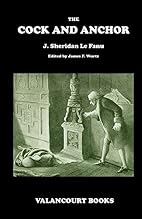
Madame Bovary by Gustave Flaubert 29/03/2015, 277pages
The Unfortunate Fursey by Mervyn Wall 07/04/2015, 262pages
The Unsettled Dust by Robert Aickman 18/04/2015, 362pages
The Beetle by Richard Marsh 06/05/2015, 282pages
The Cock and Anchor by Joseph Sheridan Le Fanu 20/05/2015, 439pages
The Code Book by Simon Singh 16/06/2015, 360pages
The Model by Robert Aickman 23/06/2015, 138pages
Seveneves by Neal Stephenson 15/07/2015, 864pages
Carmilla by Joseph Sheridan Le Fanu 20/07/2015 102pages
The Organized Mind by Daniel J. Levitin 22/7/2015 Abandoned (80pages)
Porterhouse Blue by Tom Sharpe 31/7/2015 327pages
The Society of Equals by Pierre Rosanvallon 23/08/2015 376pages
The Return of Fursey by Mervyn Wall 01/09/2015 247pages
The Monk by Matthew Lewis 11/09/2015 377pages
The Stepford Wives by Ira Levin 16/09/2015 117pages
Vathek by William Beckford 25/09/2015 82pages
The Dictator and the Hammock by Daniel Pennac 27/10/2015 276pages
The Martian by Andy Weir 14/10/2015 369pages
The Ring of Thoth by Sir Arthur Conan Doyle 14/10/2015 18pages
Songs of a Dead Dreamer and Grimscribe by Thomas Ligotti
The Village Sang to the Sea by Bruce McAllister 14/11/2015 170pages
Beatlebone by Kevin Barry 21/11/2015 263pages
On Horseback and Other Stories by Guy de Maupassant 25/11/2015 130pages
Burley Cross Postbox Theft by Nicola Barker 26/11/2015 Abandoned after 11 pages
The Post Office Girl by Stefan Zweig 05/12/2015 265pages
The Rise of the Robots by Martin Ford 29/12/105 286pages
Numero Zero by Umberto Eco Reading
4suitable1
It has been noted that The Martian is not on the list.
5SylviaC
>4 suitable1: Oh, but it will be!
7Sakerfalcon
I shall be keeping an eye on you too.
9pgmcc
HAPPY ST. PATRICK'S DAY, everyone. Whoever you are, wherever you are, whatever you are doing, I hope you have a fantastic day.
10MrsLee
And back atcha as well! I'm working today, wearing my green blouse with lots of jade jewelry, mostly because I love green. I made the very traditional Irish stew called Pozole last night. ;)
14Meredy
My inner Irish sends you greetings.
My father's Canadian family had a good bit o' the green in the blood.
My father's Canadian family had a good bit o' the green in the blood.
15pgmcc
>14 Meredy:, Thank you!
I had a quiet and peaceful St. Patrick's Day. I even had time to put protective covers on some books I want to keep in good condition.


Then I made a Beef Wellington and we had dinner. :-)
I had a quiet and peaceful St. Patrick's Day. I even had time to put protective covers on some books I want to keep in good condition.


Then I made a Beef Wellington and we had dinner. :-)
17pgmcc
Tomorrow morning, about 09:30hrs Irish time, we will experience an over 92% solar eclipse. I have not had the chance to observe such an extensive solar eclipse before.
Given the dangers of observing the Sun directly I have done my research, sought out the best materials, honed my skills, and crafted, to my own design, a highly technical gadget so that I can observe this event safely.
Ladies and gentlemen, I give you the, "SOLARSCOPE".

Given the dangers of observing the Sun directly I have done my research, sought out the best materials, honed my skills, and crafted, to my own design, a highly technical gadget so that I can observe this event safely.
Ladies and gentlemen, I give you the, "SOLARSCOPE".

18MrsLee
>17 pgmcc: That will work a treat! Very effective.
19NorthernStar
>17 pgmcc:, I used something similar (but not as nicely made) for the partial eclipse we had here a few years ago. It worked very well, giving me a lovely image of the sun with a bite out of it, cast on any convenient surface. You couldn't really tell the eclipse (which I think was less than 50%) was happening without it. I envy you your 92% eclipse, and hope it is clear for you.
21NorthernStar
>20 pgmcc: :( Hope forecast is inaccurate! Appropriate music.
Last night I went out to try to get some Northern Lights pictures, and the clouds closed in just as the lights were starting up. The night before they were spectacular, but I was busy. Oh well.
Last night I went out to try to get some Northern Lights pictures, and the clouds closed in just as the lights were starting up. The night before they were spectacular, but I was busy. Oh well.
22pgmcc
Sorry to hear about your Northern Lights cloud cover.
I have seen the Northern Lights twice: once from a plane while I was flying home from the US and the second time was when I was driving by the River Boyne and noticed something in the sky. I got out of the car to see beautiful curtains of green wafting in the solar wind. (Allow me some poetic licence, please.) I called to the others to get out of the car but they said it was too cold. :-(
I have seen the Northern Lights twice: once from a plane while I was flying home from the US and the second time was when I was driving by the River Boyne and noticed something in the sky. I got out of the car to see beautiful curtains of green wafting in the solar wind. (Allow me some poetic licence, please.) I called to the others to get out of the car but they said it was too cold. :-(
23hfglen
>22 pgmcc: how very appropriate that they were green over Ireland! A belated happy St Paddy's day to you.
24pgmcc
>23 hfglen: Thank you, Hugh.
25Sakerfalcon
>20 pgmcc: Did you get to see the eclipse? It was far too cloudy in London to see anything, but friends in Cornwall, the Midlands and Edinburgh all got glimpses.
26pgmcc
>25 Sakerfalcon: I caught a glance of it at about 9:23. I had resigned myself to seeing only cloud when I had to give some news to a colleague across the building. I was walking along a corridor with windows and looked up at the clouds and caught a brief thinning of the cloud that showed me the eclipse at quite an advanced state. I grabbed for my phone but by the time I had it out of my pocket the cloud had closed in again. At least I saw it.
I am now going to put my solarscope on ebay.
Never used and only one careful owner.
I am sure it will raise a pretty penny.
I am now going to put my solarscope on ebay.
Never used and only one careful owner.
I am sure it will raise a pretty penny.
27pgmcc
Acquisitions today from Swan River Press.
The Unfortunate Fursey:

The Return of Fursey:

These are by Mervyn Wall.
These are humorous fantasy novels dealing the tempting by the Devil of poor Brother Fursey.
The cover shots do not do justice to the beauty of these books. When the dust jackets are removed one can see the effort and care Swan River Press puts into the production of its books.


The Unfortunate Fursey:

The Return of Fursey:

These are by Mervyn Wall.
These are humorous fantasy novels dealing the tempting by the Devil of poor Brother Fursey.
The cover shots do not do justice to the beauty of these books. When the dust jackets are removed one can see the effort and care Swan River Press puts into the production of its books.


28suitable1
>26 pgmcc:
If it has never been used, how will we know if it works?
If it has never been used, how will we know if it works?
29MrsLee
>27 pgmcc: Those are delectable. Tempting, one might say.
30SylviaC
I think you should keep your solarscope. You can generate a steady stream of income by renting it out to eclipse viewers. I'll book it for August 21, 2017. . . . Okay, so maybe not a steady stream. A dribble?
31pgmcc
I am not going to name names but someone around here has been indulging in very loose talk about how much they enjoyed a certain book and I, as a result, am nursing a book shaped wound.


32Jim53
>31 pgmcc: TRP was the most fun I've had reading in quite awhile. My wife also read it and laughed at different things from those that most struck me. No doubt she has a less juvenile sense of humor. Anyway, hope you enjoy it!
33pgmcc
Someone on LibraryThing recently finished reading Beowulf and was pondering how the language of the epic would have sounded. I cannot remember who it was but the link below might prove of interest:
http://theweek.com/articles/545166/what-english-shakespeare-beowulf-king-arthur-...
http://theweek.com/articles/545166/what-english-shakespeare-beowulf-king-arthur-...
34MrsLee
>33 pgmcc: Well, that would be me, and that link was fascinating! Thank you!
37pgmcc
>34 MrsLee: By pure coincidence a Facebook fiend posted this link a couple of days ago. I remembered the comments about how Beowulf would have sounded so I posted it here in the hope it would be of interest to people. I am so glad some people have found it worthwhile.
38pgmcc
I am in the last 100 pages of Madame Bovary. I can see how it could have been considered the Fifty Shades of Grey of its time and how Gustave Flaubert ended up in court for writing it. I have not read Fifty Shades, but have discussed it with several people (all female) who have read it and some of them have also gone to see the film. I think Madame Bovary can only be compared to Fifty Shades in relation to the stir it caused as Flaubert's book is beautifully written, contains a lot of intelligent humour, often through characterisation, and reveals the emotions and thoughts of the key parties concerned in the events of the story beautifully. In addition it is a social commentary that Flaubert obviously constructed to cause controversy.
I hope to write more on the book when I have finished it but I must commend Flaubert for his insightfulness and the fact that the story is just as reflective of people's emotions today as it was when it was written. The language, the date and the technology have changed but the core of the story is as valid today as it was in the 1800s. It is a wonderful book.
By the way, a French friend of mine said he was disappointed when he read it but I clarified that he had read it for dirty bits and the book is more discreet in how it handles affairs of an amorous nature than one might find in more clumsy romantic literature of today. He agreed that that could have been the case. :-)
I can see Flaubert having been attacked because his book is a fairly clear exposé of the social norms, practices and prejudices of what would in other countries be called the emerging middle class, and which was referred to as the petite bourgeoisie. In particular the novel exposes the social constraints of the time on women.
A wonderful book that I think many people here will appreciate.
I hope to write more on the book when I have finished it but I must commend Flaubert for his insightfulness and the fact that the story is just as reflective of people's emotions today as it was when it was written. The language, the date and the technology have changed but the core of the story is as valid today as it was in the 1800s. It is a wonderful book.
By the way, a French friend of mine said he was disappointed when he read it but I clarified that he had read it for dirty bits and the book is more discreet in how it handles affairs of an amorous nature than one might find in more clumsy romantic literature of today. He agreed that that could have been the case. :-)
I can see Flaubert having been attacked because his book is a fairly clear exposé of the social norms, practices and prejudices of what would in other countries be called the emerging middle class, and which was referred to as the petite bourgeoisie. In particular the novel exposes the social constraints of the time on women.
A wonderful book that I think many people here will appreciate.
39pgmcc
I have just finished Madame Bovary and found it a wonderful commentary on society of the time and a thought provoking tale of the life and misfortune of a woman constrained by social norms yet driven by the desire for a better life. This is one of those books that leaves the reader with the feeling that so much has changed and yet nothing has changed.
My next read is The Unfortunate Fursey.
My next read is The Unfortunate Fursey.
40Meredy
>38 pgmcc:, >39 pgmcc: I saw a wonderful BBC adaptation of Madame Bovary many years ago starring Francesca Annis and Tom Conti:
http://www.imdb.com/title/tt0072539/?ref_=fn_al_tt_6
I followed Tom Conti for a while after that but never saw him give another performance as powerful as that of the well-meaning, bewildered doctor. Nearly 40 years later, I still remember his stricken expression when he asks, "Weren't you happy?" and his gasp of horror when the wooden boot comes off.
(Edited to correct a typo.)
http://www.imdb.com/title/tt0072539/?ref_=fn_al_tt_6
I followed Tom Conti for a while after that but never saw him give another performance as powerful as that of the well-meaning, bewildered doctor. Nearly 40 years later, I still remember his stricken expression when he asks, "Weren't you happy?" and his gasp of horror when the wooden boot comes off.
(Edited to correct a typo.)
41pgmcc
>40 Meredy:, my wife and I are very fond of Tom Conti. I must dig up the adaptation you watched. The BBC has always done period dramas to a very high standard.
I always love the aplomb he brings to his characters.
I discovered a novel written by him a few years ago. I have not read it yet so cannot give an opinion on it.
I always love the aplomb he brings to his characters.
I discovered a novel written by him a few years ago. I have not read it yet so cannot give an opinion on it.
42pgmcc
Madame Bovary by Gustave Flaubert
Before reading this book I was aware that it was a classic and that it was supposedly about scandalous behaviour. It is a book I have had on my shelves for some years with the intention of getting around to reading sometime. I am glad that “sometime” came to pass. This is a wonderful novel.
Flaubert, who was prosecuted in 1857 for offending against public decency by publishing this book, has produced a work of many levels and unexpected messages and lessons. He has demonstrated great understanding of human emotions and reactions, and has used his story to expose the prejudices and hypocrisies of the Petty Bourgeoisie.
The book opens with focus on a young schoolboy from the country, Charles Bovary, who is somewhat clumsy and not an “A” student by any stretch of the imagination. Flaubert brings the reader through the education years of the young man and presents the story of a fairly average man who does not excel at anything and who eventually does enough to qualify as a physician. His mother persuades his father to set the young man up as a Doctor in a rural community.
The story tells us of how he eventually ends up married to the beautiful Emma. In the passages up to this wedding, the young man’s second, the reader is treated to the excitement of the young bride and the anticipation of a happy life. One is fully convinced of the joy shared by the young couple.
Immediately after the wedding Flaubert gives the reader the cloistered background of Charles’s new wife and provides a glimpse of the dreams and ambitions she has for a grand, extravagant lifestyle. When Charles brings his new bride back to his house, the one he has shared with his late wife, the pair enter their new bedroom to find an old wedding bouquet in a jar at the window: it is Charles’s late wife’s bouquet which he embarrassedly removes and stores in the attic. We now start to see how Emma views the match and hear her questions about why she had to marry such a mediocre man. This is a real change of tone and I salute Flaubert for his success in making this so effect. I almost felt a physical jolt when I found the change of viewpoint and the consequent reinterpretation of what had gone before.
Charles and Emma continue through life with Emma always wanting more than her life with Charles gives her and this leads to adulterous relationships which her husband, who is totally in love with her, never suspects.
Throughout the book Flaubert presents wonderful characters that come across as very real.
Flaubert’s novel is, on the surface, a tale of a married couples life and the emotions and trials they felt and faced. This story is, however, only the vehicle for Flaubert’s exposé of the social injustices and hypocrisies of the time, many of which survive to this very day. He is particularly focused on what is referred to as the Petite Bourgeoisie, of often the Petty Bourgeoisie. These would be what was becoming the middle class which had the ambitions of being gentry and affected position by looking down on those that worked for them or who were less well of than themselves.
At the end of the novel we have the death of Emma. To me this felt like the natural place to end the book until I read on. Had the novel only been the story of a married couple’s life this would have been the end of the story. Reading on I realised that Flaubert had used this intricate story of love, betrayal and disappointment as a structure on which to present the society of his time and ridicule the snobbery of the better off. Reading to the end of the book convinced me that the main character of the story is not after all Madame Bovary, but the chemist, M. Homais, who is a real social climber who has grandiose notions of his own worth and the position he deserves in society.
I believe Flaubert used the scandals in the novel to attract attention so that his social commentary would get the exposure he wanted. This is a very modern book. It is books like this that make me realise that there are very few new ideas around in literature. I really enjoyed this book.
Before reading this book I was aware that it was a classic and that it was supposedly about scandalous behaviour. It is a book I have had on my shelves for some years with the intention of getting around to reading sometime. I am glad that “sometime” came to pass. This is a wonderful novel.
Flaubert, who was prosecuted in 1857 for offending against public decency by publishing this book, has produced a work of many levels and unexpected messages and lessons. He has demonstrated great understanding of human emotions and reactions, and has used his story to expose the prejudices and hypocrisies of the Petty Bourgeoisie.
The book opens with focus on a young schoolboy from the country, Charles Bovary, who is somewhat clumsy and not an “A” student by any stretch of the imagination. Flaubert brings the reader through the education years of the young man and presents the story of a fairly average man who does not excel at anything and who eventually does enough to qualify as a physician. His mother persuades his father to set the young man up as a Doctor in a rural community.
The story tells us of how he eventually ends up married to the beautiful Emma. In the passages up to this wedding, the young man’s second, the reader is treated to the excitement of the young bride and the anticipation of a happy life. One is fully convinced of the joy shared by the young couple.
Immediately after the wedding Flaubert gives the reader the cloistered background of Charles’s new wife and provides a glimpse of the dreams and ambitions she has for a grand, extravagant lifestyle. When Charles brings his new bride back to his house, the one he has shared with his late wife, the pair enter their new bedroom to find an old wedding bouquet in a jar at the window: it is Charles’s late wife’s bouquet which he embarrassedly removes and stores in the attic. We now start to see how Emma views the match and hear her questions about why she had to marry such a mediocre man. This is a real change of tone and I salute Flaubert for his success in making this so effect. I almost felt a physical jolt when I found the change of viewpoint and the consequent reinterpretation of what had gone before.
Charles and Emma continue through life with Emma always wanting more than her life with Charles gives her and this leads to adulterous relationships which her husband, who is totally in love with her, never suspects.
Throughout the book Flaubert presents wonderful characters that come across as very real.
Flaubert’s novel is, on the surface, a tale of a married couples life and the emotions and trials they felt and faced. This story is, however, only the vehicle for Flaubert’s exposé of the social injustices and hypocrisies of the time, many of which survive to this very day. He is particularly focused on what is referred to as the Petite Bourgeoisie, of often the Petty Bourgeoisie. These would be what was becoming the middle class which had the ambitions of being gentry and affected position by looking down on those that worked for them or who were less well of than themselves.
At the end of the novel we have the death of Emma. To me this felt like the natural place to end the book until I read on. Had the novel only been the story of a married couple’s life this would have been the end of the story. Reading on I realised that Flaubert had used this intricate story of love, betrayal and disappointment as a structure on which to present the society of his time and ridicule the snobbery of the better off. Reading to the end of the book convinced me that the main character of the story is not after all Madame Bovary, but the chemist, M. Homais, who is a real social climber who has grandiose notions of his own worth and the position he deserves in society.
I believe Flaubert used the scandals in the novel to attract attention so that his social commentary would get the exposure he wanted. This is a very modern book. It is books like this that make me realise that there are very few new ideas around in literature. I really enjoyed this book.
43pgmcc
Some time ago (over three years to be a bit more specific) I bought a batch of Maigret novels that I found in a wonderful little independent bookshop that, unfortunately, no longer exists. These books were of varying age from the early 1950s to the mid-1960s. Only today did I get round to cataloguing them on LT. As you can see from the first photograph below, Shadow decided to give me some help as I photographed the covers. He picked his moment well as he started helping me when I was photographing the oldest, and most delicate, of the books, a volume containing, A Battle of Nerves and At the Gai-Moulin. It was printed in 1951.


45hfglen
>45 hfglen: I often find with young Inky that I pick up a book and end up reading a cat.
46pgmcc
I am in a dilemma. I finished The Unfortunate Fursey yesterday having loved it. There are several parts I wish to record in a separate document to remind me of their wit and satirical nature. I also want to write down my views on the book, which are all positive.
Having finished this book I started reading a collection of short stories, The Unsettled Dust by Robert Aickman. I love Aickman's stories and in the first three pages of the first story I have already underlined three sections that I wish to remember and share.
My dilemma: How can I spend time writing about Fursey when I want to get back to Aickman? How can I read Aickman when there is so much I want to write about Fursey before my memories of it fade?
Oh, woe with me!
On the other hand, "Yay! I am following one great read with another great read."
Having finished this book I started reading a collection of short stories, The Unsettled Dust by Robert Aickman. I love Aickman's stories and in the first three pages of the first story I have already underlined three sections that I wish to remember and share.
My dilemma: How can I spend time writing about Fursey when I want to get back to Aickman? How can I read Aickman when there is so much I want to write about Fursey before my memories of it fade?
Oh, woe with me!
On the other hand, "Yay! I am following one great read with another great read."
48pgmcc
A samp.le from The Unfortunate Fursey.
After trading a chicken and a loaf of bread for four beakers of ale and five beakers of mead, Fursey and the Anchorite hermit he was with have the following conversation about barter and money.
“It’s a very efficient system,” he remarked, “though I’ve been told that there are barbarous foreign lands too backward to appreciate its merits. They have instead some highly involved method which they call “coinage”. They have little bits of gold and other metal, on which is engraved the head of the king; and in their benighted ignorance the backwards inhabitants of those lands attach a disproportionate value to the tiny amulets and use them for all purposes of exchange.”
“I seem to have heard,” replied Fursey racking his brains, “that there were at one time big territories called Greece and Rome which had some such complicated system.”
“There were,” agreed the Anchorite triumphantly. “And where are they now? Wiped from the face of the Earth forever, while this country, the Island of Saints and Scholars, still endures.”
After trading a chicken and a loaf of bread for four beakers of ale and five beakers of mead, Fursey and the Anchorite hermit he was with have the following conversation about barter and money.
“It’s a very efficient system,” he remarked, “though I’ve been told that there are barbarous foreign lands too backward to appreciate its merits. They have instead some highly involved method which they call “coinage”. They have little bits of gold and other metal, on which is engraved the head of the king; and in their benighted ignorance the backwards inhabitants of those lands attach a disproportionate value to the tiny amulets and use them for all purposes of exchange.”
“I seem to have heard,” replied Fursey racking his brains, “that there were at one time big territories called Greece and Rome which had some such complicated system.”
“There were,” agreed the Anchorite triumphantly. “And where are they now? Wiped from the face of the Earth forever, while this country, the Island of Saints and Scholars, still endures.”
49pgmcc
The Unsettled Dust by Robert Aickman (Faber & Faber, 2014 pp362)
This is one of the books of Robert Aickman’s stories Faber & Faber re-published in 2014 to commemorate the centenary of the author’s birth. As is appropriate, the most wonderful thing about theses editions is Aickman’s stories. Another aspect that I have found interesting is the “Robert Aickman Remembered” section at the end of each collection in which someone who had met Aickman reminisces about the man and their encounters, even relationships, with him. These memories are excellent and help build a picture of the man and the world in which he wrote. I have found elements of his stories reflect aspects of his life and this has added an extra dimension to my enjoyment of reading these books.
One criticism I have of the Faber & Faber editions is the content of the introductions. As a rule I do not read introductions to a book of fiction lest they contain detail of the stories within. With “The Unsettled Dust” collection, I have had to abandon the introduction totally having discovered that not only does if contain spoiling detail of the stories in the collection it accompanies, but also gives away key details of stories in other collections that I have not yet read. My abhorrence of inappropriate introductions is reinforced and my conviction to avoid introductions to fiction strengthened.
Of the stories in, “The Unsettled Dust”, I can only say one thing: wonderful.
I find that when I am in a reading slump I am always reinvigorated by reading an Aickman story. His stories delight me in many ways and these are ways that I have come to love and enjoy. Below I try to be specific about some aspects of Aickman’s writing that pleases me and that I find missing from the writings of so many other authors.
Aickman, as he has said himself, was from another era. This has given him a viewpoint of life, which he obviously observed and understood, that is not commonly found in this modern age. It also provided him with a vocabulary that permitted his describing events, people and situations in ways that have been forgotten or which may be considered quaint of archaic.
He had a wonderful way of presenting the mundane and turning it into a source of mystery and even fear.
Aickman never explains the weird events that have taken place. His stories give rise to many thoughts on where the story is going, what is behind the weird, and how uncertainty swallows up reality. His stories end in many cases with a myriad of possible explanations.
His sense of humour was obviously very droll. This can be seen in his very clear description in the title story of the collection of the civil servant’s dilemma and the consequent behaviour this engenders. It is with a calm, matter of fact fashion, that he describes how one can advance within the ranks of the civil service by following all the traits the public scoff at in civil servants, e.g. not having initiative and not supporting the initiatives of any colleagues.
Also in “The Unsettled Dust” Aickman’s protagonist criticises the approach taken by a man named, “Hand”, and how he organises volunteers in carrying out work to clear abandoned waterways. The main character refers to Hand when talking to an elderly colleague and before he can express his disquiet for Hand the elderly gentleman is praising Hand and saying the country needs more men like him. The full humour of this exchange is only available to those that realised the work carried out by Hand, and the fashion in which he is described doing it, is a direct description of how Aickman organised volunteers to clear waterways in England when he organised the Inland Waterways Association.
I always find my Aickman books end up with phrases or whole paragraphs underline and noted on the inside of the back cover. With some of his collections my list of interesting sections cover several pages.
I must provide you with some quotes that I find very entertaining and that I consider unusual but effective in getting across the idea Aickman is trying to convey. For example, in, “The Stains”, Aickman is describing the protagonist’s brother and in an effort to explain how dynamic a person the brother is he writes:
“Harewood himself cared more for rock growths than for controversies about South Africa or for other such fashionable Church preoccupations. He had published two important books on lichens. People often came to see him on the subject. He was modestly famous.”
Of a developing relationship:
“He surmised that there was now what is termed an understanding between them, even though in a sense he himself understood very little.”
He will often use a term and then humorously question his use of the term:
“…and Stephen saw that there was a curious serpentine rabbit-run that he had failed to notice – except that rabbits do not run like serpents.”
Rather than simply say it was a cloudy day Aickman writes:
“If he had been in the Alps, his shadow might have fallen in the early-autumn sun across the figure below, but in the circumstances that idea would have been fanciful, because, at the moment, the sun was mo more than a misty bag of gleams in a confused sky.
I enjoy Aickman’s stories. His works are never simply the story. They have multiple explanations and yet their power is in the unexplained. His writing is erudite, humorous and conjures up images galore.
50Jim53
>49 pgmcc: “He surmised that there was now what is termed an understanding between them, even though in a sense he himself understood very little.”
Love it!
Love it!
51pgmcc
>50 Jim53: If you liked that I would suggest you would enjoy much of Aickman's work.
52pgmcc
This is a very entertaining book. It is regarded as a classic horror but it is also a mystery and a romantic comedy of the Victorian era. I would describe it as a cross between Dracula and The Importance of Being Earnest with a tiny bit of Sherlock Holmes thrown in.
This book also provides me with more supporting evidence for my “Do not read the introduction to fiction until after having read the book” belief. While I agree with most of what David Stuart Davies has to say about the novel, I would not have enjoyed the story half as much as I did had I read the introduction first.
Marsh’s story gives the reader a glimpse into the male dominated society of the time and shows how women are supposed to play their role in areas other than the serious world of science and politics. The main female character, Marjorie Lindon, is a strong, independent woman, with views on politics, but as Davies points out in his introduction, she is shown ultimately to be forced by her adventures into playing the standard, subservient and supportive role to her husband. It is hard to tell if Marsh was lampooning women’s suffrage or if he is demonstrating that society forces capable women to play the conventional role that denies them the opportunity of self-fulfilment through other areas of activity, such as politics and science, which have traditionally been the preserve of men. I suspect the latter, in the same way that he treats racism in the book.
The villain is described as an Arab and the people of London talk about him in a disdainful fashion and use what would be regarded today as very racist language. There are, however, a number of instances in the book where a character has said something derogatory about, “The Arab”, and Marsh has another character question the previous speaker’s tone. I suspect Marsh was highlighting the racism of the time as being born out of ignorance with the hope that the reader will question his or her own prejudices.
The humour in the book is delivered using three vehicles: firstly we have characters who are comical in their blustering fashion; secondly the convolution of romantic intentions which certainly add an Oscar Wilde sense to parts of the book; finally, Marsh’s language, especially the way he delivers some observations.
One observation is a description of dining at a club and it indicates that social venues have obviously not improved over time since the late 1800s.
“…we got a little table to ourselves, in a corner of the room, and before anything was brought for us to eat he was at it again. A good many of the people were pretty near to shouting, and as they seemed to be all speaking at once, and the band was playing, and as the Helicon supper band is not piano, Percy did not have it quite all to himself, but, considering the delicacy of his subject, he talked as loudly as was decent – getting more so as he went on.”
He also give a wonderful two paragraph description of what a powerful speech in Parliament should be as one of his characters describes a speech being given in the House of Commons.
All in all a very entertaining book and one that is short enough to be indulged on a whim without stealing too much time from one’s busy life.
53pgmcc
I am currently reading The Cock and Anchor by Joseph Sheridan Le Fanu. It is set in 1710 in Ireland, twenty years after The Battle of the Boyne in which William of Orange defeated King James II of England and VII of Scotland, leading to the establishment of the Protestant Ascendancy in Ireland.
54pgmcc
@hfglen
Hugh, I do not know why but when I saw this book I thought of you.

The book starts off with the basic ingredients for making wine, beer, etc...
Part two deals with spices and the like that are added to drinks.
The third part is about the early 21st Century growth in popularity of cocktails and discusses the various plants used in them.
I found this book in, of all places, a garden centre.
Hugh, I do not know why but when I saw this book I thought of you.

The book starts off with the basic ingredients for making wine, beer, etc...
Part two deals with spices and the like that are added to drinks.
The third part is about the early 21st Century growth in popularity of cocktails and discusses the various plants used in them.
I found this book in, of all places, a garden centre.
55MrsLee
>54 pgmcc: I loved that book for its humor and arcane information. The presentation doesn't hurt, either. The author lives just across a mountain range from me, I'm glad to see her book found its way over there!
And yes, I thought of Hugh when reading this too. :)
And yes, I thought of Hugh when reading this too. :)
57hfglen
>54 pgmcc: >55 MrsLee: *snork* :D I've seen it in bookshops and coveted it, but always been without the wherewithal to acquire a copy (books are expensive here, even more so than in Australia.)
58imyril
>54 pgmcc: *dives for cover from the well-aimed book bullet*
59pgmcc
Unexpected visit to a bookshop resulted in the acquisition of:
Carmilla by Joseph Sheridan Le Fanu
Porterhouse by Tom Sharpe
The Double by José Saramago
Carmilla by Joseph Sheridan Le Fanu
Porterhouse by Tom Sharpe
The Double by José Saramago
60pgmcc
I haven't made the time to write up my views on The Cock and Anchor which proved to be a great book. When I read an old book (this one was first published in 1845) I am often surprised at how much of what we think is new and fresh in recent literature is actually a rewriting or paraphrasing of ideas and concepts that were appearing in literature over 100 years ago. I will have to make the time this weekend. There is so much to say about the book.
Currently I am reading The Code Book. This is a history of cryptography and cryptanalysis. It is fascinating but it also makes one feel that there are very few ways of keeping secret information totally secure.
Currently I am reading The Code Book. This is a history of cryptography and cryptanalysis. It is fascinating but it also makes one feel that there are very few ways of keeping secret information totally secure.
61Meredy
>60 pgmcc: I'm no authority on cryptography and code-breaking, but I don't think there is any way of keeping secret information totally secure. What people can make, people can break. Ultimately any human system comes down to people, and people can be compromised in any number of ways. Even supposedly deleted or destroyed records can yield something to an expert.
If the only ones who know how to access something are dead or incapacitated beyond recovery, then the information might as well not exist.
If the only ones who know how to access something are dead or incapacitated beyond recovery, then the information might as well not exist.
62pgmcc
The Cock and Anchor by Joseph Sheridan Le Fanu 5 Stars
“The Cock and Anchor” is set in Dublin in 1710, twenty years after Protestant William of Orange defeated Catholic King James II at the Battle of the Boyne. Ireland is under British rule and a Lord Lieutenant, Thomas, 5th Baron Wharton, is ruling the country from Dublin Castle. While the leaders of the Catholic aristocracy who supported King James have fled to France (The Wild Geese) there is still a corps of Jacobite supporters in Ireland who are readying themselves for the day when King James returns to reclaim his crown and the lands of England and Ireland.
I did not know what to expect when I started reading this novel, but what I found delighted and intrigued me. It proved to be one of those books that I did not like to put down and found myself making time to return to.
The Valancourt edition contains a 46 page introduction, the text of the novel (439 pages), 14 pages of informative notes referenced from within the text, and a 52 page appendix containing contemporary reviews and extracts of other works referenced in the introduction. All in all, this is a comprehensive tome for anyone intent on studying The Cock and Anchor in a serious fashion.
In this note I will freely discuss elements of the story so I warn the reader to set this document aside until having read the work and then return to discover my thoughts on the book and to agree with them, argue against them, or raise your own thoughts, feelings, or revelations that pounced upon you as you travelled through the pages written in an age long gone, about a period 130 years further into the past.
The geopolitical machinations of the novel’s setting, and the societal impact of the war ended only nineteen years before the tale told in the book begins, are used by Le Fanu as a backdrop to the story rather than as a raison d’être for the telling of the story. While the prevailing political and religious practices and prejudices of the time are not the main theme of the story, they do inform the behaviours of the characters and the social context of the events and relationships involved.
At the heart of the story is the love between the son (Edmond O’Connor) of a Jacobite nobleman, (Richard O’Connor), and the daughter of Sir Richard Ashwoode, a member of the ruling aristocracy. As a Jacobite, Edmond O’Connor is a Catholic and as the daughter of one of the established ruling aristocracy, Mary Ashwoode, the daughter is Protestant. Sir Richard is, of course, not in favour of an alliance between Mary and Edmond, but the religious difference is not cited as the root cause of his displeasure about the match, but the fact that he considers young Edmond O’Connor to be from a poorer class.
The Irish peasantry is presented as a body of people who look up to the wealthier classes and doff their caps and follow their orders. Some of them are used for comic relief, especially Mr Larry Toole who is a stereotypical, stage Irish, character with all the “begorrahs” and “begads” you could ask for. He was a servant in the employ of the Ashwoode estate who has been let go and who manages to find himself a position as servant to Edmond O’Connor.
Humour was an unexpected element of the book but it is more pervasive in the first half of the story. It is still present later in the book but the more serious matters of the later parts of the story reduce the opportunity for humour. It is still there, but not as frequently. Much of the humour is in the descriptions of the characters.
Lady Stukely:
Lady Stukely was a delicate, die-away lady, not very far from sixty; the natural blush upon her nose outblazoned the rouge upon her cheeks; several very long teeth - “ivory and ebony” peeped roguishly from beneath her upper lip, which her ladyship had a playful trick of screwing down, to conceal them – a trick which made her ladyship’s smile rather a surprising than an attractive exhibition.
Physician
The physician of those days was a solemn personage: he would as readily have appeared without his head, as without his full-bottomed wig; and his ponderous gold-headed cane was a sort of fifth limb, the supposition of whose absence involved a contradiction to the laws of anatomy; his dress was rich and funereal; his step was slow and pompous; his words very long and very few; his look was mysterious; his nod awful; and the shake of his head unfathomable; in short, he was in no respect very much better than a modern charlatan. The science which he professed was then overgrown with absurdities and mystification. The temper of the times was superstitious and credulous, the physician, being wise in his generation, framed his outward man (including his air and language) accordingly, and the populace swallowed his long words and his electuaries with equal faith.
Doctor Mallarde
Doctor Mallarde was a doctor-like person, and, in theatrical phraseology, looked the part well. …he had a habit of pressing the gold head of his professional cane against one corner of his mouth, in a way which produced a sinister and mysterious distortion of that organ; and by exhibiting the medical baton, the outward and visible sign of doctorship, in immediate juxtaposition with the fountain of language, added enormously to the gravity and authority of the words which from time to time proceeded therefrom.
I could continue to quote humorous character descriptions from this book all night, but I will let you enjoy reading them yourself when you read the book.
Real characters
Le Fanu uses a mixture of real and fictitious characters. The Lord Lieutenant, the Earl of Wharton, was a real person whose character and description Le Fanu gleaned from the writings of Jonathan Swift, another real person who appears in the novel. Swift wrote a pamphlet from which Le Fanu drew information on the Earl of Wharton.
The Supernatural
I recall four allusions to the supernatural: three of these could be dismissed as the imaginings of individuals but the fourth is a detailed description of the appearance of a spirit to Edmond O’Connor. This spirit fits with the legend of banshees in all but the appearance and the noise produced.
Lord Ashwoode is overheard telling someone to leave him while in a state of delirium but subsequently it is discovered there is no-one in his room. Likewise, his son tells O’Connor of a spirit that is bothering him and tormenting him in his time of despair.
The other mention of anything that might be supernatural is the young Sir Henry Ashwoode’s thinking her sees the paintings of his ancestors move as he looks at them.
Profanity
The novel is full of dashes: lines in the text to mark were foul words have been used. I have seen two editions of the novel and they both have the “bad words” obliterated. I suspect this was to placate the sensitivities of the puritanical reader. Even the word, “Devil”, is presented as, “D---l”.
Language
Le Fanu does not use one word where fifteen will do. This is not a complaint. The language he uses is a pleasure to read and is beautifully put together. Take for example, his description of Mr Larry Toole’s tendency to poke his nose into other people’s business:
A liberal and unsolicited attention to the affairs of other people, was one among the many amiable peculiarities of Mr. Laurence Toole…”
Kept guessing
While many of the plot elements are used in later texts, Le Fanu always kept what way the plot would turn a mystery. There were many places in the book where I was convinced I knew how the story was going to turn only to be surprised by Le Fanu as he took me a totally different direction. This kept me interested and eagre to carry on reading the book.
Locations
Many of the locations used in the story are real and still exist. One of the most famous is The Bleeding Horse pub which is still a thriving business and has a bronze plaque honouring Joseph Sheridan Le Fanu on the footpath at the entrance.
Other locations that can still be visited are Dublin Castle, albeit slightly renovated since 1710;Leixlip, with a better road through the village than existed at the time of the story; and Chaplizod which still some of the aspects of the small village of 1710.
The view of Ireland
Dublin Castle was the residence of the Lord Lieutenant and in the novel it is the scene of a great social gathering. Le Fanu does not, however, let the reader forget that it is the centre of an occupying force that supports a predominantly English ruling class in a country with a population that has proven difficult to keep repressed. His description of the castle on the night of the banquet in question is wound up thus:
…the ponderous old towers which have since disappeared, with their narrow loopholes and iron studded doors looming darkly over the less massive fabrics of the place with stern and gloomy aspect, reminded the passer every moment, that the building, whose courts he trod, was not merely the theatre of stately ceremonies, but a fortress and a prison.
In an exchange between the Lord Lieutenant and Johathan Swift, Le Fanu presents the views of the ruling class of Ireland and how it was considered a backwater that did no-one’s career any good>
”On my soul, we want you in England – this is no stage for you. By ---- you cannot hope to serve either yourself or your friends in this place.”
“Very few thrive here but scoundrels, my lord,” rejoined Swift. “Even so,” replied Wharton with perfect equanimity – “it is a nation of scoundrels – dissent on the one side and popery on the other. The upper order harpies, and the lower a mere prey – and all equally liars, rogues, rebels, slaves, and robbers. By ---- some fine day the devil will carry off the island bodily. For very safety you must get out of it…”
“The Cock and Anchor” is set in Dublin in 1710, twenty years after Protestant William of Orange defeated Catholic King James II at the Battle of the Boyne. Ireland is under British rule and a Lord Lieutenant, Thomas, 5th Baron Wharton, is ruling the country from Dublin Castle. While the leaders of the Catholic aristocracy who supported King James have fled to France (The Wild Geese) there is still a corps of Jacobite supporters in Ireland who are readying themselves for the day when King James returns to reclaim his crown and the lands of England and Ireland.
I did not know what to expect when I started reading this novel, but what I found delighted and intrigued me. It proved to be one of those books that I did not like to put down and found myself making time to return to.
The Valancourt edition contains a 46 page introduction, the text of the novel (439 pages), 14 pages of informative notes referenced from within the text, and a 52 page appendix containing contemporary reviews and extracts of other works referenced in the introduction. All in all, this is a comprehensive tome for anyone intent on studying The Cock and Anchor in a serious fashion.
In this note I will freely discuss elements of the story so I warn the reader to set this document aside until having read the work and then return to discover my thoughts on the book and to agree with them, argue against them, or raise your own thoughts, feelings, or revelations that pounced upon you as you travelled through the pages written in an age long gone, about a period 130 years further into the past.
The geopolitical machinations of the novel’s setting, and the societal impact of the war ended only nineteen years before the tale told in the book begins, are used by Le Fanu as a backdrop to the story rather than as a raison d’être for the telling of the story. While the prevailing political and religious practices and prejudices of the time are not the main theme of the story, they do inform the behaviours of the characters and the social context of the events and relationships involved.
At the heart of the story is the love between the son (Edmond O’Connor) of a Jacobite nobleman, (Richard O’Connor), and the daughter of Sir Richard Ashwoode, a member of the ruling aristocracy. As a Jacobite, Edmond O’Connor is a Catholic and as the daughter of one of the established ruling aristocracy, Mary Ashwoode, the daughter is Protestant. Sir Richard is, of course, not in favour of an alliance between Mary and Edmond, but the religious difference is not cited as the root cause of his displeasure about the match, but the fact that he considers young Edmond O’Connor to be from a poorer class.
The Irish peasantry is presented as a body of people who look up to the wealthier classes and doff their caps and follow their orders. Some of them are used for comic relief, especially Mr Larry Toole who is a stereotypical, stage Irish, character with all the “begorrahs” and “begads” you could ask for. He was a servant in the employ of the Ashwoode estate who has been let go and who manages to find himself a position as servant to Edmond O’Connor.
Humour was an unexpected element of the book but it is more pervasive in the first half of the story. It is still present later in the book but the more serious matters of the later parts of the story reduce the opportunity for humour. It is still there, but not as frequently. Much of the humour is in the descriptions of the characters.
Lady Stukely:
Lady Stukely was a delicate, die-away lady, not very far from sixty; the natural blush upon her nose outblazoned the rouge upon her cheeks; several very long teeth - “ivory and ebony” peeped roguishly from beneath her upper lip, which her ladyship had a playful trick of screwing down, to conceal them – a trick which made her ladyship’s smile rather a surprising than an attractive exhibition.
Physician
The physician of those days was a solemn personage: he would as readily have appeared without his head, as without his full-bottomed wig; and his ponderous gold-headed cane was a sort of fifth limb, the supposition of whose absence involved a contradiction to the laws of anatomy; his dress was rich and funereal; his step was slow and pompous; his words very long and very few; his look was mysterious; his nod awful; and the shake of his head unfathomable; in short, he was in no respect very much better than a modern charlatan. The science which he professed was then overgrown with absurdities and mystification. The temper of the times was superstitious and credulous, the physician, being wise in his generation, framed his outward man (including his air and language) accordingly, and the populace swallowed his long words and his electuaries with equal faith.
Doctor Mallarde
Doctor Mallarde was a doctor-like person, and, in theatrical phraseology, looked the part well. …he had a habit of pressing the gold head of his professional cane against one corner of his mouth, in a way which produced a sinister and mysterious distortion of that organ; and by exhibiting the medical baton, the outward and visible sign of doctorship, in immediate juxtaposition with the fountain of language, added enormously to the gravity and authority of the words which from time to time proceeded therefrom.
I could continue to quote humorous character descriptions from this book all night, but I will let you enjoy reading them yourself when you read the book.
Real characters
Le Fanu uses a mixture of real and fictitious characters. The Lord Lieutenant, the Earl of Wharton, was a real person whose character and description Le Fanu gleaned from the writings of Jonathan Swift, another real person who appears in the novel. Swift wrote a pamphlet from which Le Fanu drew information on the Earl of Wharton.
The Supernatural
I recall four allusions to the supernatural: three of these could be dismissed as the imaginings of individuals but the fourth is a detailed description of the appearance of a spirit to Edmond O’Connor. This spirit fits with the legend of banshees in all but the appearance and the noise produced.
Lord Ashwoode is overheard telling someone to leave him while in a state of delirium but subsequently it is discovered there is no-one in his room. Likewise, his son tells O’Connor of a spirit that is bothering him and tormenting him in his time of despair.
The other mention of anything that might be supernatural is the young Sir Henry Ashwoode’s thinking her sees the paintings of his ancestors move as he looks at them.
Profanity
The novel is full of dashes: lines in the text to mark were foul words have been used. I have seen two editions of the novel and they both have the “bad words” obliterated. I suspect this was to placate the sensitivities of the puritanical reader. Even the word, “Devil”, is presented as, “D---l”.
Language
Le Fanu does not use one word where fifteen will do. This is not a complaint. The language he uses is a pleasure to read and is beautifully put together. Take for example, his description of Mr Larry Toole’s tendency to poke his nose into other people’s business:
A liberal and unsolicited attention to the affairs of other people, was one among the many amiable peculiarities of Mr. Laurence Toole…”
Kept guessing
While many of the plot elements are used in later texts, Le Fanu always kept what way the plot would turn a mystery. There were many places in the book where I was convinced I knew how the story was going to turn only to be surprised by Le Fanu as he took me a totally different direction. This kept me interested and eagre to carry on reading the book.
Locations
Many of the locations used in the story are real and still exist. One of the most famous is The Bleeding Horse pub which is still a thriving business and has a bronze plaque honouring Joseph Sheridan Le Fanu on the footpath at the entrance.
Other locations that can still be visited are Dublin Castle, albeit slightly renovated since 1710;Leixlip, with a better road through the village than existed at the time of the story; and Chaplizod which still some of the aspects of the small village of 1710.
The view of Ireland
Dublin Castle was the residence of the Lord Lieutenant and in the novel it is the scene of a great social gathering. Le Fanu does not, however, let the reader forget that it is the centre of an occupying force that supports a predominantly English ruling class in a country with a population that has proven difficult to keep repressed. His description of the castle on the night of the banquet in question is wound up thus:
…the ponderous old towers which have since disappeared, with their narrow loopholes and iron studded doors looming darkly over the less massive fabrics of the place with stern and gloomy aspect, reminded the passer every moment, that the building, whose courts he trod, was not merely the theatre of stately ceremonies, but a fortress and a prison.
In an exchange between the Lord Lieutenant and Johathan Swift, Le Fanu presents the views of the ruling class of Ireland and how it was considered a backwater that did no-one’s career any good>
”On my soul, we want you in England – this is no stage for you. By ---- you cannot hope to serve either yourself or your friends in this place.”
“Very few thrive here but scoundrels, my lord,” rejoined Swift. “Even so,” replied Wharton with perfect equanimity – “it is a nation of scoundrels – dissent on the one side and popery on the other. The upper order harpies, and the lower a mere prey – and all equally liars, rogues, rebels, slaves, and robbers. By ---- some fine day the devil will carry off the island bodily. For very safety you must get out of it…”
63pgmcc
>61 Meredy: The book would support your views. There are a few examples described where the person who created a code has died and the message can no longer be decrypted. There are also other situations where difficult codes (the Enigma machine being a prime example) where it could not have been cracked had it not been for a disgruntled ex-soldier working in the German coding organisation giving foreign spies access to the manuals on operating the Enigma machine. Without that information on how the machine was constructed and operated the Allies would not have had a clue how to start decoding the messages encrypted using the Enigma machine.
Ultimately any human system comes down to people, and people can be compromised in any number of ways.
An example of this arose in the daily decrypting of what was called the "daily key" for the Enigma machine. The cryptanalysts were trying to decipher a repeated series of three letters that was to be used to set the coding for the day. After a while they realised that some of the Enigma operators were getting lazy and just picked fairly easy to type sequences on the keyboard. Once a list of these three character sequences had been identified as being easily created, this list was tested before doing any more sophisticated analysis. Often the daily code was found from this set of "lazy" codes. As you say, humans can be compromised in many ways.
Ultimately any human system comes down to people, and people can be compromised in any number of ways.
An example of this arose in the daily decrypting of what was called the "daily key" for the Enigma machine. The cryptanalysts were trying to decipher a repeated series of three letters that was to be used to set the coding for the day. After a while they realised that some of the Enigma operators were getting lazy and just picked fairly easy to type sequences on the keyboard. Once a list of these three character sequences had been identified as being easily created, this list was tested before doing any more sophisticated analysis. Often the daily code was found from this set of "lazy" codes. As you say, humans can be compromised in many ways.
64Meredy
>63 pgmcc: I read a book last year touting cloud storage as a secure way to protect data, arguing that putting it into the hands of security experts was much safer than expecting every company's IT people to be a match for hackers. If prospective data pirates were willing to play by nice people's rules, that might be enough.
Even with the greatest encryption in the world, there is still in the end a human gatekeeper somewhere--an underpaid guard at a server farm, a bored night clerk at a security company, the person or team who wrote the encryption software--some person or persons who could or would be susceptible to financial gain, threats of bodily harm, torture, and other kinds of coercion. Not to mention the kinds of human lapse you cited with respect to Enigma.
I thought it was very significant that after the Snowdon leaks, news reports said the Russians were going back to paper as a more secure way to store crucial information than anything electronically accessible.
Even with the greatest encryption in the world, there is still in the end a human gatekeeper somewhere--an underpaid guard at a server farm, a bored night clerk at a security company, the person or team who wrote the encryption software--some person or persons who could or would be susceptible to financial gain, threats of bodily harm, torture, and other kinds of coercion. Not to mention the kinds of human lapse you cited with respect to Enigma.
I thought it was very significant that after the Snowdon leaks, news reports said the Russians were going back to paper as a more secure way to store crucial information than anything electronically accessible.
65pgmcc
>64 Meredy: There are several issues that give rise to concerns about cloud computing. Security, as you mention, is one.
Another one appears to be closer to the heart of European law than US law: data protection legislation. The European law stipulates what companies can and cannot do with someone's personal data. One thing it cannot do is store it outside the EU. With cloud computing that can be difficult to track/ensure/enforce.
A third issue is one that many companies do not appear to be aware of.
If a company is suspected of fraudulent activity its files, both physical and digital, are seized by the authorities. When a company has its own computers this is a fairly straightforward operation. When a company uses the cloud the authorities will seize any server on which that company's data is stored. If that server happens to have data from other innocent companies stored on it their data will be confiscated too. This could lead to totally innocent firm's being discommoded because servers are seized.
The cloud is a nice technical solution but it has several legal and practical issues to address before we can all jump on the cloud bandwagon.
Another one appears to be closer to the heart of European law than US law: data protection legislation. The European law stipulates what companies can and cannot do with someone's personal data. One thing it cannot do is store it outside the EU. With cloud computing that can be difficult to track/ensure/enforce.
A third issue is one that many companies do not appear to be aware of.
If a company is suspected of fraudulent activity its files, both physical and digital, are seized by the authorities. When a company has its own computers this is a fairly straightforward operation. When a company uses the cloud the authorities will seize any server on which that company's data is stored. If that server happens to have data from other innocent companies stored on it their data will be confiscated too. This could lead to totally innocent firm's being discommoded because servers are seized.
The cloud is a nice technical solution but it has several legal and practical issues to address before we can all jump on the cloud bandwagon.
66Meredy
>65 pgmcc: Wow, I didn't know about that third point. That's major.
I've been saying since about 1980 that the computer is going to turn out to be the biggest Trojan Horse of all time. You've just reinforced my belief.
I've been saying since about 1980 that the computer is going to turn out to be the biggest Trojan Horse of all time. You've just reinforced my belief.
67pgmcc
>66 Meredy: I remember in the late 1960s and early 1970s talk about computers and automation often touched on the subject of what people would do with all the spare time they would have because the machines would be doing all the work for them. My father was particularly worried about this.
There was a general consensus amongst debaters that there would be a giant growth in the leisure industry and that people would have a much more relaxing time. People forecast a massive growth in education and a burgeoning of the Arts.
Then came the computers and the automation and the efficiency gurus. People could get through more work in less time. People realised they could make more money by working the same amount of time and getting through more work. Their competitors realised the same thing so started working the same way. Everyone then had to work faster and longer to maintain their competitive position.
Corporations realised that much of their cost base was people. Globalization became possible. Corporations moved their labour intensive operations to locations with cheaper labour rates thereby leaving their original employees with much more leisure time but no income with which to enjoy it.
I could go on. There is a fundamental flaw in our use of technology in the commercial world. The technology provides greater benefits to the corporations than to individuals. If the trend of doing more and more with less and less continues it will eventual result in* fewer and fewer people doing real work which will have many unintended consequences. Whether one is religious or not, the old phrase, "The Devil finds work for idle hands", holds a lot of truth.
And thus endeth the sermon on The Book of Efficiency and Man and Woman.
*I am often tempted to write: If the trend of doing more and more with less and less continues it will eventual result in everything being done with nothing. It reminds me of the definition of an expert: Someone who knows more and more about less and less until they finally know everything about nothing.
There was a general consensus amongst debaters that there would be a giant growth in the leisure industry and that people would have a much more relaxing time. People forecast a massive growth in education and a burgeoning of the Arts.
Then came the computers and the automation and the efficiency gurus. People could get through more work in less time. People realised they could make more money by working the same amount of time and getting through more work. Their competitors realised the same thing so started working the same way. Everyone then had to work faster and longer to maintain their competitive position.
Corporations realised that much of their cost base was people. Globalization became possible. Corporations moved their labour intensive operations to locations with cheaper labour rates thereby leaving their original employees with much more leisure time but no income with which to enjoy it.
I could go on. There is a fundamental flaw in our use of technology in the commercial world. The technology provides greater benefits to the corporations than to individuals. If the trend of doing more and more with less and less continues it will eventual result in* fewer and fewer people doing real work which will have many unintended consequences. Whether one is religious or not, the old phrase, "The Devil finds work for idle hands", holds a lot of truth.
And thus endeth the sermon on The Book of Efficiency and Man and Woman.
*I am often tempted to write: If the trend of doing more and more with less and less continues it will eventual result in everything being done with nothing. It reminds me of the definition of an expert: Someone who knows more and more about less and less until they finally know everything about nothing.
68Meredy
>67 pgmcc: Way back as a youngster in the fifties, I had a school assignment to imagine life in the year 2000. We third-graders drew pictures of robots mowing lawns and serving dinner while we lolled in hammocks or zipped about in little flying machines wearing disposable clothes we never had to wash. For decades we were told that technology would make our lives easier. Not just someone's, but ours.
Years ago I wrote an essay on the same subject as your fine rant above, called "The Myth of Leisure Time." It included these remarks:
Years ago I wrote an essay on the same subject as your fine rant above, called "The Myth of Leisure Time." It included these remarks:
So where is all the leisure that the machines have given us? Was it vapor? a myth? a lie? . . . Who has it?
Who indeed? The answer is so obvious that it hurts. We see them on our city streets, in our parks and parking lots, in our neighborhoods. The people who have nothing but leisure. We have gained immense quantities of free time from our labor-saving devices, and we have consolidated it in the hands of a few—the wealthy, at one end of the spectrum, who have always had that privilege and always will; and the unemployed, at the other, who have found not that there are plenty of jobs for all but that there is plenty of work for all who have work, which does not amount to the same thing.
70nhlsecord
>68 Meredy: I can't believe it Meredy! I did that same assignment, and I said we would learn our schooling by watching something like TV. I can't remember what else I wrote.
As for computers creating leisure: In my earlier employment I worked for Digital Equipment wiring computer circuit boards. Those panels were HUGE. And I worked at a radio station that was trying out a new computer system which meant they had to hire an extra person to get the data into the HUGE computer and by the time they thought they had it, small computers had come in and the "new" system was outdated. And at the university where I worked in the 80's and 90's we kept getting newer and newer typewriters and then computers (which meant I typed one textbook at least 3 times because the systems kept changing) made it possible for us to do even more work of different kinds so we still needed more staff and the professors were mystified and angry that we still didn't have enough time to do their work. I haven't worked there for more than 20 years, and I bet all that stuff is being done now by the students and professors themselves!
As for computers creating leisure: In my earlier employment I worked for Digital Equipment wiring computer circuit boards. Those panels were HUGE. And I worked at a radio station that was trying out a new computer system which meant they had to hire an extra person to get the data into the HUGE computer and by the time they thought they had it, small computers had come in and the "new" system was outdated. And at the university where I worked in the 80's and 90's we kept getting newer and newer typewriters and then computers (which meant I typed one textbook at least 3 times because the systems kept changing) made it possible for us to do even more work of different kinds so we still needed more staff and the professors were mystified and angry that we still didn't have enough time to do their work. I haven't worked there for more than 20 years, and I bet all that stuff is being done now by the students and professors themselves!
71hfglen
>68 Meredy:, >70 nhlsecord: Very true, and it leads on to another , if not rant then at least wry comment, about the computer-driven paradise we hear so much of. Several times in my career we have been assured that the arrival of the paperless office is imminent, paper is obsolete, yak yak yak. Each assurance is accompanied by an approximate doubling of the office's paper consumption.
72Bookmarque
I find people's natural instinct is for paper and it's hard to shake, especially in older people. I was out somewhere and needed a restaurant recommendation. A lady had a menu from a place and handed it to me with a piece of paper and a pen. I just took out my phone and took a picture of the address on the menu. She kept trying to write it down for me, but I was like 'I took a picture of it so I'm good, no need to write it down'. It was funny. The picture is now deleted. I do the same thing for parking locations at airports.
73Jim53
There are only two kinds of companies in the world: those that know that they have been hacked and those that don't. Security software might slow down the best hackers but it doesn't stop them. Mostly it identifies things that have happened, sends alarms, and denies further access to offenders.
74pgmcc
In Ireland it is very common for the weather to be great during the annual State examinations, the Junior Certificate (at age 15) and the Senior Certificate (at age 18). The Leaving Cert results determine whether or not you get your preferred choice of college place.
Yesterday was very wet and windy.
My son started his Leaving Certificate exams today. Right on cue:

Taken at about 7:30am this morning (3rd June, 2015) on Grattan Bridge (commonly referred to as Capel Street Bridge) in Dublin.
Yesterday was very wet and windy.
My son started his Leaving Certificate exams today. Right on cue:

Taken at about 7:30am this morning (3rd June, 2015) on Grattan Bridge (commonly referred to as Capel Street Bridge) in Dublin.
76pgmcc
>75 suitable1: I know. They have survived last winter. I am amazed.
The most northerly palm tree that survived outdoors that I have seen was in a place called Scourie in North West Scotland. That was in the walled garden of the home of a Victorian gentleman who travelled the world and brought botanical specimens back to his home in Scotland. The palm tree was perfectly healthy when I saw it in 1978.
The most northerly palm tree that survived outdoors that I have seen was in a place called Scourie in North West Scotland. That was in the walled garden of the home of a Victorian gentleman who travelled the world and brought botanical specimens back to his home in Scotland. The palm tree was perfectly healthy when I saw it in 1978.
77hfglen
>75 suitable1: Trachycarpus fortunei, Fountain Palm or Windmill Palm, (well displayed in Pete's picture) is the most cold-tolerant of all palms. I have a picture of one out in the open in Glasgow Botanic Garden, and I believe that's colder than Dublin!
78Jim53
My son was in Dublin last week to present a paper and said he had a wonderful time and felt right at home. I am of course very jealous but will probably make the trip only after some family commitments expire.
79Meredy
It certainly gives an unexpected character to the photo. If you just showed it to someone and asked where they thought it was, who would ever guess Dublin? (Unless they knew the city, of course.)
That palm looks a lot like one that stands right in front of our house in Northern California--it came up as a volunteer--but I've never seen it flower like that.
Best wishes to your son with his exams, Peter.
That palm looks a lot like one that stands right in front of our house in Northern California--it came up as a volunteer--but I've never seen it flower like that.
Best wishes to your son with his exams, Peter.
80pgmcc
>79 Meredy: Thank you!
>78 Jim53: Where was your son presenting and what was his topic?
>77 hfglen: Thank you for the benefit of your botanical knowledge. I will use it in work to amaze my colleagues.
>79 Meredy: If you just showed it to someone and asked where they thought it was, who would ever guess Dublin?
I showed it to some people in work, people who live and work in Dublin, and they were amazed when I pointed out that it was Dublin. The sunshine and the palm trees make it look like a postcard from Spain or some similarly sunny holiday destination. So, it fools even the Dubs.
Last year when I saw the palm trees being put in place on Grattan Bridge, O'Connell Bridge and along the boardwalk that runs along part of the River Liffey, I thought, "Yea, right, those are going to last more than a couple of months."
I expected the corporation to take then inside for Winter, but no, they left them out and most of them have survived unharmed. There are one or two casualties but in general they survived.
>78 Jim53: Where was your son presenting and what was his topic?
>77 hfglen: Thank you for the benefit of your botanical knowledge. I will use it in work to amaze my colleagues.
>79 Meredy: If you just showed it to someone and asked where they thought it was, who would ever guess Dublin?
I showed it to some people in work, people who live and work in Dublin, and they were amazed when I pointed out that it was Dublin. The sunshine and the palm trees make it look like a postcard from Spain or some similarly sunny holiday destination. So, it fools even the Dubs.
Last year when I saw the palm trees being put in place on Grattan Bridge, O'Connell Bridge and along the boardwalk that runs along part of the River Liffey, I thought, "Yea, right, those are going to last more than a couple of months."
I expected the corporation to take then inside for Winter, but no, they left them out and most of them have survived unharmed. There are one or two casualties but in general they survived.
81imyril
>76 pgmcc: I don't remember the palm in Scourie when I was last there (in about 2003), but I didn't specifically keep an eye out for it :) I do recall seeing one in Tongue on the north coast of Scotland that same trip.
82SylviaC
I wonder what the reasoning was for planting palm trees in Dublin. It seems like the general trend now is to go for native species, which are more adapted to the local environment.
83Meredy
>82 SylviaC: And less likely to homogenize environments that are naturally diverse, don't you think?
84SylviaC
>83 Meredy: Also less likely to import or attract new pests.
85Jim53
>80 pgmcc: Afraid I don't know all the details. He was speaking about something related to his professional specialty, which is innovative use of data in program and policy creation for foster services and related areas.
ETA: spoke with him today. It was the Global Implementation Conference.
ETA: spoke with him today. It was the Global Implementation Conference.
86pgmcc
>85 Jim53: That is a pretty impressive conference. In the late 1970s and early 1980s I worked as part of a group applying mathematical modelling to improving performance in the health service (e.g. optimising emergency ambulance location; minimising queue times in accident and emergency hospitals; etc...). It looks like a lot of the papers at the conference are not a million miles from that. With Atlantic Philanthropies as a sponsor I can see the direct relevance as that organization is interested in getting the greatest amount of benefit for people from its investments.
I am glad he enjoyed his visit.
I am glad he enjoyed his visit.
87pgmcc
>81 imyril: Tongue is further north, ok. We didn't get as far east as Tongue. We did take a trip to Durness to see the Durness Limestone.
I have just been looking at Google Street View for Scourie and it has taken me back to 1978. The Scourie Hotel is still there. I have some photographs somewhere that I must dig out. I see it now has a shop and a petrol station. Such modernisation.
I had a room at the front of the Scourie Hotel and remember waking up one morning and seeing half a dozen sheep ambling through the car part. The Royal Mail postbus used to pick up people at the front of the hotel. That was a relatively new innovation then, the postman driving a minibus rather than a van and acting as a bus service while doing his delivery route.
The palm tree was in a walled garden that could be seen from the back of the hotel. I had some instamatic pictures in which, if one could screw one's eyes up well enough, one could make out a palm tree amongst other trees behind a wall. :-)
(Note, my certainty, expressed as, "I have some photographs", has dwindled to, "I had some instamatic pictures", now that I ponder the question, "Where the hell are those pictures?")
I have just been looking at Google Street View for Scourie and it has taken me back to 1978. The Scourie Hotel is still there. I have some photographs somewhere that I must dig out. I see it now has a shop and a petrol station. Such modernisation.
I had a room at the front of the Scourie Hotel and remember waking up one morning and seeing half a dozen sheep ambling through the car part. The Royal Mail postbus used to pick up people at the front of the hotel. That was a relatively new innovation then, the postman driving a minibus rather than a van and acting as a bus service while doing his delivery route.
The palm tree was in a walled garden that could be seen from the back of the hotel. I had some instamatic pictures in which, if one could screw one's eyes up well enough, one could make out a palm tree amongst other trees behind a wall. :-)
(Note, my certainty, expressed as, "I have some photographs", has dwindled to, "I had some instamatic pictures", now that I ponder the question, "Where the hell are those pictures?")
88pgmcc
At least one palm tree did not fare well through the Dublin winter:

Hugh, what are we seeing in the pictures below, flowers, fruit, seeds, or what?


Hugh, what are we seeing in the pictures below, flowers, fruit, seeds, or what?


89pgmcc
In passing, I might as well mention something about my current reading.
My main read is, The Code Book, by Simon Singh.

This is a history of cryptography and is quit fascinating. To keep in line with the spirit of much of the content I decided to sit on the River Liffey boardwalk, have a coffee, and read the book in full view of any secret agents wandering around.
I have also started a short novel by Robert Aickman, The Model. I am only about 30 pages in so judgement reserved.
Another non-fiction book that I have started is, The Society of Equals, by Pierre Rosanvallon.
I only heard about him about two weeks ago when a colleague let me know he is giving a talk this coming Wednesday in Dublin at the Royal Irish Academy. I have a ticket and am looking forward to his talk. His book is about rethinking equality in the modern day. His first paragraph quotes a 1789 article on equality which states, "The privileged individual considers himself, along with his colleagues, as constituting a distinct order, a nation of the select within the nation...The privileged actually come to see themselves as another species of man."
I am sure I will bore you with other quotes as I make my way through the book.
My main read is, The Code Book, by Simon Singh.

This is a history of cryptography and is quit fascinating. To keep in line with the spirit of much of the content I decided to sit on the River Liffey boardwalk, have a coffee, and read the book in full view of any secret agents wandering around.
I have also started a short novel by Robert Aickman, The Model. I am only about 30 pages in so judgement reserved.
Another non-fiction book that I have started is, The Society of Equals, by Pierre Rosanvallon.
I only heard about him about two weeks ago when a colleague let me know he is giving a talk this coming Wednesday in Dublin at the Royal Irish Academy. I have a ticket and am looking forward to his talk. His book is about rethinking equality in the modern day. His first paragraph quotes a 1789 article on equality which states, "The privileged individual considers himself, along with his colleagues, as constituting a distinct order, a nation of the select within the nation...The privileged actually come to see themselves as another species of man."
I am sure I will bore you with other quotes as I make my way through the book.
90Meredy
>89 pgmcc: I decided to sit on the River Liffey boardwalk, have a coffee, and read the book in full view of any secret agents wandering around.
Made me grin. Anybody pass you anything, like a briefcase or a folded newspaper? Did you stop to tie your shoe?
Made me grin. Anybody pass you anything, like a briefcase or a folded newspaper? Did you stop to tie your shoe?
91pgmcc
>90 Meredy: I am not sure how much I can tell you. You could find yourself at risk if I tell you too much.
92Meredy
>91 pgmcc: Oh, gosh (pressing fingertips to left ear) . . . you're right. Hush now.
93hfglen
>88 pgmcc: Those are flowers. Look like males, not quite open. If so, then Dublin will soon be coated in masses of palm pollen.
By the way, if you look a tad closely at the leaves, you will see that the palm that got hammered is a different kind to the ones that are flowering; its leaflets are arranged in feather-formation not in a fan. If I were in Dublin I'd be inclined to do a bit of "guerrilla gardening" and cut away the dead bits, see that the remainder is watered and hope it recovers -- in Granny Weatherwax's immortal words, "it aten't dead yet".
By the way, if you look a tad closely at the leaves, you will see that the palm that got hammered is a different kind to the ones that are flowering; its leaflets are arranged in feather-formation not in a fan. If I were in Dublin I'd be inclined to do a bit of "guerrilla gardening" and cut away the dead bits, see that the remainder is watered and hope it recovers -- in Granny Weatherwax's immortal words, "it aten't dead yet".
94MrsLee
>93 hfglen: Yep, I've seen palms in worse shape revive. :)
95pgmcc
>93 hfglen: I trust Dulbin City Council has someone scheduled to do a bit of institutionalised gardening. With regards to the palm getting sufficient water...it's in Dublin. I suspect that will not be a problem. ;-)
>94 MrsLee: I will keep an eye on that particular palm.
>94 MrsLee: I will keep an eye on that particular palm.
96pgmcc
>93 hfglen: & >94 MrsLee:
I noticed during the week that the old leaves have been removed from the palm and it looks fresh and ready for another season. The Council obviously got its horticulturalists into action.
I noticed during the week that the old leaves have been removed from the palm and it looks fresh and ready for another season. The Council obviously got its horticulturalists into action.
97Meredy
>96 pgmcc: Please add me to your list of people rooting for the Brave Little Palm Tree of Dublin. I'm glad to know it's being looked after.
98pgmcc
>97 Meredy: I will give it your best regards when next I pass it by.
99Jim53
>89 pgmcc: Did you get to the Rosanvallon talk? Sounds interesting.
100pgmcc
>99 Jim53: Yes I did, Jim. It was very interesting. I have his latest book and will be commenting on it.
The book is, Society of Equals.
The book is, Society of Equals.
101jillmwo
Code books? Palm trees? Last year you were speeding around France in sports cars and sampling fine cheese. You can't fool me. I have come to the conclusion that @PGMCC is merely an alias and that we're really dealing with the Irish James Bond here.
102Meredy
>101 jillmwo: You mean 'PGMCC' doesn't sound like a real name to you? You know, I think you're onto something there.
103SylviaC
It took @jillmwo's trained eye to penetrate his fiendishly clever disguise. I guess that's why I've never been able to figure out how to pronounce PGMCC.
105pgmcc
>101 jillmwo: >102 Meredy: >103 SylviaC: >104 suitable1:
I am making representations to my superiors on your behalf but they seem determined that now that my cover is blown I have to sort out the mess. That is a shame because I have become very fond of you all.
;-)
Is anyone interested in attending a LibraryThing meet up in a quiet, secluded, very private location? Just asking.
I am making representations to my superiors on your behalf but they seem determined that now that my cover is blown I have to sort out the mess. That is a shame because I have become very fond of you all.
;-)
Is anyone interested in attending a LibraryThing meet up in a quiet, secluded, very private location? Just asking.
107pgmcc
>106 suitable1: Very deep.
After your trap with the tea bags I will have to find a particularly deep spot for you.
After your trap with the tea bags I will have to find a particularly deep spot for you.
108Meredy
I can't believe there aren't half a million good hiding places in the rural and urban landscapes of Ireland. Send us a postcard. We won't tell.
109pgmcc
>108 Meredy: I can't believe there aren't half a million good hiding places in the rural and urban landscapes of Ireland.
I drove through the Bog of Allen yesterday. It is a beautiful place.

I drove through the Bog of Allen yesterday. It is a beautiful place.

110pgmcc
My family laid on a lovely Father's Day for me. Breakfast in bed, lunch in a local hotel, cards, a trip to the cinema to see, "Mr Holmes", and four book tokens each worth 20 euros.
On Monday I spent some time in a bookshop and discovered a new Neal Stephenson novel, Seveneves. I picked that up and The Organized Mind by Daniel Levitin.
Off to France tomorrow and I am taking Stephenson with me.
On Monday I spent some time in a bookshop and discovered a new Neal Stephenson novel, Seveneves. I picked that up and The Organized Mind by Daniel Levitin.
Off to France tomorrow and I am taking Stephenson with me.
111Meredy
>110 pgmcc: Whoops, you winged me with Seveneves. Another breakwrist Stephenson, I see. Anathem was a pretty serious challenge to my bedtime reading comfort.
112pgmcc
>111 Meredy: I didn't even know there was a new Stephenson until I saw it displayed in the shop, and yes, it is a massive, hardback tome.
113Meredy
>112 pgmcc: Well, I hope it doesn't put your baggage over the limit all by itself.
Knowing Stephenson, it's no accident that the title is a palindrome.
I'll be awaiting your comments. I've put it on request at the library.
Knowing Stephenson, it's no accident that the title is a palindrome.
I'll be awaiting your comments. I've put it on request at the library.
114pgmcc
Currently on ferry awaiting pilit from Cherbourg. Docking within the hour.
Completed Aickman's The Model and started Stephenson's Seveneves. Currently only 14 pages in. It is relatively near-future and is dealing with near Earth issues.
>113 Meredy: I have a small bag and a larger backpack. The book makes the small bag heavier than the backpack.
Completed Aickman's The Model and started Stephenson's Seveneves. Currently only 14 pages in. It is relatively near-future and is dealing with near Earth issues.
>113 Meredy: I have a small bag and a larger backpack. The book makes the small bag heavier than the backpack.
115imyril
>114 pgmcc: ah, Neal Stephenson once again weighing in on the Kindle vs Hardback debate...
117Meredy
>115 imyril: Yes, it was after taking King's 11/22/63 on vacation with me (along with five or six other bricks) that I capitulated on the Kindle question. Most of my reading is still on paper, but the Kindle enlarges my choices.
119pgmcc
Back from my de-brief and backlog of comments to put up. I finished Robert Aickman's The Model. An interesting little novel about a young Russian girl coming of age at a time when it was the thing to speak French in polite company.
The Model is not a book that can be readily recommended to all readers. I enjoyed reading it because it was the produce of Robert Aickman and contains elements of style that demonstrate his sense of humour and his excellent writing. Also, it contains may examples of his insightful observation of both the individual and national character and custom.
This story is about many things with the kernel being the coming of age, predominantly in a maturing sense, of Elena, the central character and heroine.
I say it is not a book that can be readily recommended to all readers because not every reader is willing to take what is a relatively slow and gentle walk through the life of our young heroine. This walk introduces the characters that populate her initially privileged childhood. As she grows older she is exposed to the conflicting pressures of life, many emanating from within her own family.
As things are becoming more agitated and complex in her life, Elena is taken on an adventure that leaves one wondering what is real and what is not. As she progresses through her adventure Aickman blurs the boundaries between reality and something else. Is the supernatural impinging on Elena’s life? Is she in a dream? Has she gone crazy? Is this just the imagination of a troubled young girl as she approaches womanhood?
In her adventure Elena fulfils her ambition of becoming a ballerina achieving overnight success and adoration on her first night’s performance, in fact, on her first night in the theatre, without ever having practiced or rehearsed.
While this is part of the dreamlike nature of the episode in the book, it can be interpreted as a commentary on instant celebrity, a phenomenon that has become all too common in today’s world of showbiz. Elena finds herself the property of her adoring fans, even to the extent of requiring rescue from one who, it appears, is intent on devouring her.
Subsequent return to her home produces a maturity that leaves her unrealistic expectations behind and demonstrates sensible acceptance of reality rather than the assumption of achievement of the impossible.
Aickman started the book with the quotation below:
“All history is fiction, just as all fiction is history” – Benedetto Croce
I find this a very suitable description of how The Model works. One is never sure what is fiction and what is history. It reminded me of the phrase, “If you want to tell the truth, write fiction.” (Google tells me this is a quote from Joshua Halberstam.) It also reminds me of Umberto Eco’s novel, Baudolino which intimates, in the most persuasive of ways, that all history is lies, I mean, fiction.
The Model is not a book that can be readily recommended to all readers. I enjoyed reading it because it was the produce of Robert Aickman and contains elements of style that demonstrate his sense of humour and his excellent writing. Also, it contains may examples of his insightful observation of both the individual and national character and custom.
This story is about many things with the kernel being the coming of age, predominantly in a maturing sense, of Elena, the central character and heroine.
I say it is not a book that can be readily recommended to all readers because not every reader is willing to take what is a relatively slow and gentle walk through the life of our young heroine. This walk introduces the characters that populate her initially privileged childhood. As she grows older she is exposed to the conflicting pressures of life, many emanating from within her own family.
As things are becoming more agitated and complex in her life, Elena is taken on an adventure that leaves one wondering what is real and what is not. As she progresses through her adventure Aickman blurs the boundaries between reality and something else. Is the supernatural impinging on Elena’s life? Is she in a dream? Has she gone crazy? Is this just the imagination of a troubled young girl as she approaches womanhood?
In her adventure Elena fulfils her ambition of becoming a ballerina achieving overnight success and adoration on her first night’s performance, in fact, on her first night in the theatre, without ever having practiced or rehearsed.
While this is part of the dreamlike nature of the episode in the book, it can be interpreted as a commentary on instant celebrity, a phenomenon that has become all too common in today’s world of showbiz. Elena finds herself the property of her adoring fans, even to the extent of requiring rescue from one who, it appears, is intent on devouring her.
Subsequent return to her home produces a maturity that leaves her unrealistic expectations behind and demonstrates sensible acceptance of reality rather than the assumption of achievement of the impossible.
Aickman started the book with the quotation below:
“All history is fiction, just as all fiction is history” – Benedetto Croce
I find this a very suitable description of how The Model works. One is never sure what is fiction and what is history. It reminded me of the phrase, “If you want to tell the truth, write fiction.” (Google tells me this is a quote from Joshua Halberstam.) It also reminds me of Umberto Eco’s novel, Baudolino which intimates, in the most persuasive of ways, that all history is lies, I mean, fiction.
120pgmcc
I am currently reading Neal Stepehenson's Seveneves. It is some 835 pages long and I am about page 360.
While I am finding it quite "A" to "B" in its storytelling I am still compelled to read on. Without giving anything away it is about a near-future event that focuses attention on the International Space Station. A lot of it is about living in cramped conditions with a lot of heat to be coped with and striving to survive in less than comfortable conditions. Given that I was reading this in a mobile home with the outside temperature at 37 degrees Celsius in the shade and no air conditioning inside I could really relate to the story.
More updates as I move through the book.
While I am finding it quite "A" to "B" in its storytelling I am still compelled to read on. Without giving anything away it is about a near-future event that focuses attention on the International Space Station. A lot of it is about living in cramped conditions with a lot of heat to be coped with and striving to survive in less than comfortable conditions. Given that I was reading this in a mobile home with the outside temperature at 37 degrees Celsius in the shade and no air conditioning inside I could really relate to the story.
More updates as I move through the book.
121Meredy
>120 pgmcc: Would you compare it to The Martian in any way?
124pgmcc
My daughter, the one married to the Wisconsonite, is emigrating to the U S of A this morning. :-(
It appears my future holiday plans will have to include trips to Boston. :-)
It appears my future holiday plans will have to include trips to Boston. :-)
125suitable1
>124 pgmcc:
I'm sure she will be a positive addition to the population. Although, if her father won't read The Martian, one could have doubts.
I'm sure she will be a positive addition to the population. Although, if her father won't read The Martian, one could have doubts.
126pgmcc
>125 suitable1: That was not asked during her visa application process.
127jillmwo
Well, if you come to Boston, I will take the train up the Northeast Corridor so we can all share a LT face-to-face, in-person meet-up! There will be beer!
128Meredy
>124 pgmcc:, >127 jillmwo: When, when, when? Maybe I could even time a trip. I haven't been back since 2008.
129pgmcc
>127 jillmwo: & >128 Meredy:
There is nothing I would like more, with or without beer.
I will keep you posted.
I had been hoping that a visit to the U S of A would give the opportunity of a little LT meet-up.
As my daughter won't land in Boston for another four hours it is probably too soon to specify a specific time, although Spring 2016 is what I have in mind.
There is nothing I would like more, with or without beer.
I will keep you posted.
I had been hoping that a visit to the U S of A would give the opportunity of a little LT meet-up.
As my daughter won't land in Boston for another four hours it is probably too soon to specify a specific time, although Spring 2016 is what I have in mind.
130pgmcc
I am on page 664 (out of 861) of Seveneves by Neal Stephenso. I would suggest anyone wanting to read it borrow it from the library. I will give detail when I have finished but it is not great.
131imyril
>130 pgmcc: thank you for passing me the book body armour. This is unexpected, and much appreciated.
132Sakerfalcon
>130 pgmcc:, >131 imyril: I've been trying to resist buying Seveneves too. I'm hoping your comments will strengthen my resolve.
133pgmcc
>132 Sakerfalcon: I was presented with several book tokens as Father's Day gifts. I was then brought to bookshop where I discovered the existence of Seveneves. It was obvious I was going to buy it.
With 200 pages left to read I am not likely to have my views online this weekend, but early next week is a possibility.
With 200 pages left to read I am not likely to have my views online this weekend, but early next week is a possibility.
134Sakerfalcon
>133 pgmcc: Thank you. I think I can hold out for that long :-)
135jillmwo
But I can't. 200 pages? Piffle. @pgmcc should be able to swallow that down in one marathon read-through-the-next-twelve-hours-by-candle-light. (Do you need cheerleaders? Oceans of coffee? Klieg lights? Someone to pinch you on schedule? We're here to support you.)
136pgmcc
>135 jillmwo: Thank you for your generous offer of support to keep me awake.
137jillmwo
Actually, I had just returned with the intent to edit the sassy message of >135 jillmwo: because I KNOW that it would be entirely possible that, at the first sign of me whinging about reading something hard or unsatisfactory on my own reading thread, you might suddenly materialize at my elbow and remind me of my poorly considered words. So let me reassure you, dear @pgmcc, that I do not have any intention of FORCING you to stay awake or FORCING you to finish Stephenson's novel in record time.
In token of which, here let me offer you a pillow, a cup of warm milk, and soft soothing music. Would a teddy bear be of any use? You see, I do understand KARMA.
In token of which, here let me offer you a pillow, a cup of warm milk, and soft soothing music. Would a teddy bear be of any use? You see, I do understand KARMA.
138pgmcc
I have finished Seveneves. My excuse for the delay in the final couple of hundred pages is the implementation of a project I have been working on since 2009 that started a major roll-out Moday past and will continue for the next two weeks.
Seveneves was disappointing for a Stephenson novel. Near-future, hard Science fiction with plenty of detail for people to consider and verify. Some of his technology is wishful thinking but that is neither here nor there. Too long by far for the story that's in it.
I was wondering why I stuck with it to the end. To an extent I was giving Stephenson the opportunity to make it more interesting. Also, his writing, while not brilliant, is not off-puttingly terrible. I did want to know where he was taking the story.
The underlying theme for the final parts of the book were racism, politics and diplomacy.
In the earlier parst of the book someone interested in contemporary space travel might be interested in the book. The story focuses very much on the International Space Station.
If you want to start reading Stephenso do not start with this one.
Seveneves was disappointing for a Stephenson novel. Near-future, hard Science fiction with plenty of detail for people to consider and verify. Some of his technology is wishful thinking but that is neither here nor there. Too long by far for the story that's in it.
I was wondering why I stuck with it to the end. To an extent I was giving Stephenson the opportunity to make it more interesting. Also, his writing, while not brilliant, is not off-puttingly terrible. I did want to know where he was taking the story.
The underlying theme for the final parts of the book were racism, politics and diplomacy.
In the earlier parst of the book someone interested in contemporary space travel might be interested in the book. The story focuses very much on the International Space Station.
If you want to start reading Stephenso do not start with this one.
139Meredy
>138 pgmcc: Hmmm, thanks for your remarks. I really loved Snow Crash, and I liked Cryptonomicon a lot. I was interested in Anathem and liked the world-building, but I thought it was bloated, I was irritated by the unresolved threads, and I guessed the big surprise revelation way, way too soon, like as soon as it was being set up. With that in mind, should I just skip Seveneves?
140pgmcc
>139 Meredy:
Meredy, I loved Snow Crash. I thought it was hilarious. I did, however think the ending was a bit of a dud but that did not take away from my enjoyment of the book as a whole. I felt Stephenson had created a great story and it was rolling along nicely but he didn’t really know where to bring it so he made a dash to the finishing post just before his publisher’s submission date.
I enjoyed the humour in Snow Crash. The opening part of the book made fun of Management Science, an area in which I have done a lot of work, and he had me rolling about laughing.
Friends who loved Cryptonomicon persuaded me to read it and I enjoyed it. Again I felt the ending did not justify the bulk of the story. I did have a few other issues with the story, but in general I enjoyed it and the technology story it told.
I loved Anathem but again felt the quality of the ending did not stand up to the strength of what went before. There were a number of ideas and themes in Anathem that I enjoyed.
Reamde was a great read and it had a satisfying ending. I read this book in a week which indicates how much I enjoyed it. I could not put it down.
Cobweb was co-written with Frederick George. I do not know it that means Stephenson did not write it at all or whatever. It was a reasonable story about a terror plot in the US and it included a poignant element about families who have people in the military serving abroad.
Seveneves felt a bit mundane. I didn’t feel anything about any of the characters.
Does that answer your question?
Meredy, I loved Snow Crash. I thought it was hilarious. I did, however think the ending was a bit of a dud but that did not take away from my enjoyment of the book as a whole. I felt Stephenson had created a great story and it was rolling along nicely but he didn’t really know where to bring it so he made a dash to the finishing post just before his publisher’s submission date.
I enjoyed the humour in Snow Crash. The opening part of the book made fun of Management Science, an area in which I have done a lot of work, and he had me rolling about laughing.
Friends who loved Cryptonomicon persuaded me to read it and I enjoyed it. Again I felt the ending did not justify the bulk of the story. I did have a few other issues with the story, but in general I enjoyed it and the technology story it told.
I loved Anathem but again felt the quality of the ending did not stand up to the strength of what went before. There were a number of ideas and themes in Anathem that I enjoyed.
Reamde was a great read and it had a satisfying ending. I read this book in a week which indicates how much I enjoyed it. I could not put it down.
Cobweb was co-written with Frederick George. I do not know it that means Stephenson did not write it at all or whatever. It was a reasonable story about a terror plot in the US and it included a poignant element about families who have people in the military serving abroad.
Seveneves felt a bit mundane. I didn’t feel anything about any of the characters.
Does that answer your question?
141Meredy
>140 pgmcc: Sure does, and thanks! I think the opposite of a book bullet might be a book shield. Or maybe a book bandage. Whatever, you just gave me one.
I guess I ought to go back and catch up with Reamde, though--one that has been languishing on my come-back-later list for a long time.
I guess I ought to go back and catch up with Reamde, though--one that has been languishing on my come-back-later list for a long time.
142pgmcc
>141 Meredy: I did not find the first part of Reamde great. I did not find the family get-together very engaging but the story sped up a lot after that. One thing that struck me about the book was that it was not Science Fiction in that all the technology involved exists. It was an adventure story and I took it as that and enjoyed it.
143pgmcc
I have finished Carmilla. This is a charming little Gothic tale of a vampire. It is generally accepted that Carmilla influenced Bram Stoker in his writing of Dracula. There was a chapter in Dracula that Stoker's publisher suggest he exclude from the book for fear of being accused of plagiarism as it was so like Carmilla.
144pgmcc
I started reading The Organized Mind and have abandoned it as life is too short to waste time on verbose trivia.
In abandoning this book I am applying the author's approach to dealing with information overload: filtering out trivia.
The Introduction takes up fourteen pages to say what could be said in one: Our minds are overloaded by the amount of information we receive and the number of decisions we have to make. Reduce the load on your mind by filtering out trivial information and not wasting time making decisions on trivial issues. Oh! I said it in two sentences.
The main text is no less verbose. It contains endless anecdotes of people being overloaded with information and exhausted from making decisions. On page 77 it starts to offer advice on how to declutter. This too is verbose and tiresome.
I quickly got to the point of skimming by reading the first sentences of paragraphs. That only led me to the conclusion that most of the paragraphs were unnecessary.
As Levitin advises, avoid wasting your time on unimportant things. He is right. Apply his approach and avoid this book.
In abandoning this book I am applying the author's approach to dealing with information overload: filtering out trivia.
The Introduction takes up fourteen pages to say what could be said in one: Our minds are overloaded by the amount of information we receive and the number of decisions we have to make. Reduce the load on your mind by filtering out trivial information and not wasting time making decisions on trivial issues. Oh! I said it in two sentences.
The main text is no less verbose. It contains endless anecdotes of people being overloaded with information and exhausted from making decisions. On page 77 it starts to offer advice on how to declutter. This too is verbose and tiresome.
I quickly got to the point of skimming by reading the first sentences of paragraphs. That only led me to the conclusion that most of the paragraphs were unnecessary.
As Levitin advises, avoid wasting your time on unimportant things. He is right. Apply his approach and avoid this book.
145Meredy
>144 pgmcc: Very nice, Peter.
I can guess at only one thing you might have missed, and this is based on your review. I have no acquaintance with the book. It's that some (maybe major) portion of his prospective audience wants to read a book instead of doing the work, which is too overwhelming or frightening or just unpleasant to face. The longer the book goes on, the longer they can legitimately defer taking any action and still feel like they're "doing something."
Or maybe they simply need to be bludgeoned. If a quick word of advice would do the trick, they probably wouldn't need the book at all.
It sounds like you're not the target audience.
I can guess at only one thing you might have missed, and this is based on your review. I have no acquaintance with the book. It's that some (maybe major) portion of his prospective audience wants to read a book instead of doing the work, which is too overwhelming or frightening or just unpleasant to face. The longer the book goes on, the longer they can legitimately defer taking any action and still feel like they're "doing something."
Or maybe they simply need to be bludgeoned. If a quick word of advice would do the trick, they probably wouldn't need the book at all.
It sounds like you're not the target audience.
146pgmcc
>145 Meredy: I find your comments insightful and flattering. I am pleased you think I may not be the target audience for this book. :-)
Your remarks about people reading the book to avoid action reminded me of a comment I heard about civil servants. A colleague told me that civil servants consider a meeting as an outcome. The fact that nothing ever gets done as a result of the meeting is irrelevant.
Minister: "What are we doing about this disasterous situation?"
Permanent Secretary: "We've organised a meeting, Minister."
Minister: "Excellent. I shall inform the Prime Minister."
Your remarks about people reading the book to avoid action reminded me of a comment I heard about civil servants. A colleague told me that civil servants consider a meeting as an outcome. The fact that nothing ever gets done as a result of the meeting is irrelevant.
Minister: "What are we doing about this disasterous situation?"
Permanent Secretary: "We've organised a meeting, Minister."
Minister: "Excellent. I shall inform the Prime Minister."
147Sakerfalcon
I have borrowed a copy of Seveneves from the library but it's too big to take on holiday with me. However, I shall start it on my return and go into it with expectations lowered; that way I might be pleasantly surprised.
148pgmcc
>147 Sakerfalcon: I hope your reduced expectations result in enhanced enjoyment of the book.
Enjoy Romania.
Enjoy Romania.
149Meredy
>148 pgmcc: I hope your reduced expectations result in enhanced enjoyment of the book.
Now, there's a nicely turned remark. It's not quite paradoxical, but it's on that continuum. Maybe I'd call it semiparadoxical.
I canceled my library request for that one after seeing your previous comments.
Now, there's a nicely turned remark. It's not quite paradoxical, but it's on that continuum. Maybe I'd call it semiparadoxical.
I canceled my library request for that one after seeing your previous comments.
150pgmcc
>149 Meredy: Your action may have saved you some valuable time to spend on more rewarding reads. It would, however, be good to see Seveneves reduced to a six-word edition rather than 860 pages.
151Meredy
>150 pgmcc: Ha! Why don't you try it?
152pgmcc
>151 Meredy: I could never match your six-word erudition.
153Meredy
>152 pgmcc: How about "Overlong space allegory fails to engage"?
I don't know if it's an allegory or not, but from your remarks I thought it might be. In fact, all those ideas came from your comments above.
Thanks for the compliment, but I don't feel erudite at all, just reasonably competent, and that's on a good day. One of my six-word jobs (it happened to be for Heart of Darkness) said: "Not sure what I just read."
I don't know if it's an allegory or not, but from your remarks I thought it might be. In fact, all those ideas came from your comments above.
Thanks for the compliment, but I don't feel erudite at all, just reasonably competent, and that's on a good day. One of my six-word jobs (it happened to be for Heart of Darkness) said: "Not sure what I just read."
154MrsLee
>153 Meredy: One of my six-word jobs (it happened to be for Heart of Darkness) said: "Not sure what I just read."
That is one of the books I tried long ago. I couldn't get past the third chapter for precisely that reason; IMO, that is one of your better six-word reviews. :)
That is one of the books I tried long ago. I couldn't get past the third chapter for precisely that reason; IMO, that is one of your better six-word reviews. :)
155pgmcc
>153 Meredy: Your six-word description of Seveneves is very accurate but I fear calling it an allegory might be giving it credit for a depth that isn't there.
Knowing nothing about Heart of Darkness does not take away from my clear perception of the book based on your six-word review. I think the review said it all and it is obvious @MrsLee is also of that opinion.
Knowing nothing about Heart of Darkness does not take away from my clear perception of the book based on your six-word review. I think the review said it all and it is obvious @MrsLee is also of that opinion.
156pgmcc
Having finished the bloated Seveneves, enjoyed the Gothic Carmilla and given up on the verbose Organised Mind, I have opted for some light relief and am now reading Porterhouse Blue which is turning out to be not just funny but clever too. The book is set in a fictitious Cambridge University college called, "Porterhouse". It is a college steeped in tradition and which is proud of its lack of change. The newly appointed Master of the college, who is not universally welcome amongst the professors of Porterhouse, gives his first speech at the end of the annual feast, an act which is itself a break with tradition, and announces to all assembled that he intends to introduce, "CHANGE".
This book is proving very witty and has a depth that I had not expected. I can see it as a study of resistance to change and also an analysis of how politicians manipulate circumstances to achieve their objectives.
This book is proving very witty and has a depth that I had not expected. I can see it as a study of resistance to change and also an analysis of how politicians manipulate circumstances to achieve their objectives.
157MrsLee
>156 pgmcc: That would be a book bullet right there, except...No, no exceptions. You got me. I've always loved Mustrum Ridcully at the Unseen University in Discworld, and this sounds along those lines.
159pgmcc
I have finished Porterhouse Blue. I really enjoyed it. It is a satire of the English Oxbridge universities and the privileged lifestyle that these institutions stem from and preserve. First published in 1974 it is very witty, linguistically clever, and highlights the arrogance, pomposity, bigotry, prejudice and lack of connection with the real world that can exist in such elitist establishments.
Porter House is a fictitious college in Cambridge University and Sharpe uses it as a microcosm of life and attitudes in Oxford and Cambridge, Britain's most prestigious universities. By coincidence the article linked to below appeared yesterday and it suggests the elitist and privileged attitudes are not confined to a single fictitious college in Oxford or Cambridge, but that they permeate all the colleges of Oxbridge.
http://www.huffingtonpost.co.uk/joe-goodman/cambridge-university_b_7866420.html
The one thing Porterhouse will resist is, "Change". The college prides itself on its kitchens, its long heritage, archaic traditions, and a total disregard for intellectual achievement.
There is pathos in this novel but it does not take away from the powerful message that is delivered in a most humorous fashion.
Porter House is a fictitious college in Cambridge University and Sharpe uses it as a microcosm of life and attitudes in Oxford and Cambridge, Britain's most prestigious universities. By coincidence the article linked to below appeared yesterday and it suggests the elitist and privileged attitudes are not confined to a single fictitious college in Oxford or Cambridge, but that they permeate all the colleges of Oxbridge.
http://www.huffingtonpost.co.uk/joe-goodman/cambridge-university_b_7866420.html
The one thing Porterhouse will resist is, "Change". The college prides itself on its kitchens, its long heritage, archaic traditions, and a total disregard for intellectual achievement.
There is pathos in this novel but it does not take away from the powerful message that is delivered in a most humorous fashion.

161imyril
>160 pgmcc: brilliant!
163hfglen
>160 pgmcc: splendid! I want one -- no, two.
164pgmcc
I am reading Society of Equals by Pierre Rosanvallon. The "Introduction" was very interesting and I am enjoying the first chapter which is, "The Invention of Equality", and traces the origin of the concept. In particular it analyses the meaning of "equality" as it was envisioned during the French and American revolutions. The concept was developed before the Industrial Revolution which has fundamentally changed the environment and the basis for the original concept of equality and also the concept and meaning of "commerce".
This book is fascinating and it explains a lot.
Sorry! I forgot to mention this is non-fiction, serious stuff, economics, philosophy, sociology type things. Really interesting.
This book is fascinating and it explains a lot.
Sorry! I forgot to mention this is non-fiction, serious stuff, economics, philosophy, sociology type things. Really interesting.
166hfglen
And yesterday was the anniversary of the invention of Champagne in 1699 by Dom Perignon, or said to be. Cheers!
167Jim53
>160 pgmcc: I like it! (finally getting caught back up on reading some threads. I was protecting myself pretty well till I came upon your description of Porterhouse Blue. Ah well, I can't come in here and expect to escape unscathed.)
169pgmcc
We had a lovely weekend in Donegal and while the weather forecast was bad the actual weather was not...as bad. The weather did not affect our activities and we got in walks, paddling in the sea, a family Christening and a few great family meals.
On Sunday evening we had a lovely close to the day with rays of sunshine beaming down on Lough Swilly with the hills of Donegal stretching off to the West.

On Sunday evening we had a lovely close to the day with rays of sunshine beaming down on Lough Swilly with the hills of Donegal stretching off to the West.

170imyril
>169 pgmcc: that's beautiful. I have never been to Ireland, and I very much want to address that.
172hfglen
>169 pgmcc: gorgeous picture!
173Sakerfalcon
>169 pgmcc: Very beautiful. My friend's dad calls the rays of sunlight "God's fingers"when they reach down through the clouds like that.
>170 imyril: Me too. I'm angling to get sent to a conference in Dublin next summer.
>170 imyril: Me too. I'm angling to get sent to a conference in Dublin next summer.
174MrsLee
>169 pgmcc: & >173 Sakerfalcon: When I was little, I used to look very hard at those rays. I was sure that angels moved between heaven and earth on them. Never saw any though. Lovely photo.

176Meredy
>175 pgmcc: Oh, that is really nice. Thank you.
177hfglen
>175 pgmcc: At first look I wondered if you were a secret but accomplished watercolourist, Pete. That is most splendid.
178SylviaC
>175 pgmcc: That's a lovely little memory!
180pgmcc
>176 Meredy: >177 hfglen: >178 SylviaC: >179 Meredy:
Thank you for your kind words. It was one of those situations where I spotted opportunity for a picture and had to pull my phone from my pocket and set it to camera while holding my breath lest the ducks all decide to jump off the rock and go for a swim. I was lucky and they stayed in the one spot while I got ready to take the shot.
Thank you for your kind words. It was one of those situations where I spotted opportunity for a picture and had to pull my phone from my pocket and set it to camera while holding my breath lest the ducks all decide to jump off the rock and go for a swim. I was lucky and they stayed in the one spot while I got ready to take the shot.
181jillmwo
>175 pgmcc:, let me add my admiration. That's a marvelous shot. You're beginning to give another Green Dragon photographer ( @Tane ) a real run for his money.
183Sakerfalcon
>175 pgmcc: That is a lovely shot, both the composition and the colour. (And the subject, of course! I do love ducks.) I agree with both Meredy's comments in 179 and 182 as well.
184pgmcc
Thank you all for the compliments on the picture.
>181 jillmwo: You are too kind and being familiar with @Tane's pictures I would be doing him an injustice if I allowed you to compare my photographs to his without challenge. My pictures lack the focus and resolution of Tane's photographs. My shots are the simple snaps of an amateur but it is very gratifying to have them mentioned in relation to Tane's shots. I recall @fuzzi produced some very good pictures as well, if my memory serves me right. There were some very sharp butterfly photographs.
>182 Meredy: & >183 Sakerfalcon: I am afraid that the resolution of my pictures will not stand much enlargement before one sees how poor the focus is.
>179 Meredy: I agree it would be great for a jigsaw puzzle but would probably have to be enlarged and that would shatter the illusion.
>181 jillmwo: You are too kind and being familiar with @Tane's pictures I would be doing him an injustice if I allowed you to compare my photographs to his without challenge. My pictures lack the focus and resolution of Tane's photographs. My shots are the simple snaps of an amateur but it is very gratifying to have them mentioned in relation to Tane's shots. I recall @fuzzi produced some very good pictures as well, if my memory serves me right. There were some very sharp butterfly photographs.
>182 Meredy: & >183 Sakerfalcon: I am afraid that the resolution of my pictures will not stand much enlargement before one sees how poor the focus is.
>179 Meredy: I agree it would be great for a jigsaw puzzle but would probably have to be enlarged and that would shatter the illusion.
185pgmcc
A visit to Athlone to have breakfast with my son led to a day at Clonmacnoise, a monastic settlement first established in the 6th Century.

We then headed to nearby Shannonbridge for lunch in an old fort that was built by the British in the 18th Century to guard the stone bridge that gave the place its name.

The bridge was built in 1757 and the British built the fort later that century for fear the French would land in the west of Ireland and move east to attack the British seat of rule in Ireland at Dublin.

Lunch in the fort was good.

(My two sons in case you are wondering.)
Clonmacnoise features in The Unfortunate Fursey written by Mervyn Wall. I read this book earlier in the year and it is superb. It is about a mediaeval monk living at the monastery in Clonmacnoise. (In case you are wondering it is brilliantly written satire.) I recommend it strongly. I had always hoped to visit Clonmacnoise but never made the trip. Having read The Unfortunate Fursey I was more determined to visit the site and when I spotted a signpost to Clonmacnoise when visiting my son I said, "Let's go!", and we did. A worthwhile visit.

We then headed to nearby Shannonbridge for lunch in an old fort that was built by the British in the 18th Century to guard the stone bridge that gave the place its name.

The bridge was built in 1757 and the British built the fort later that century for fear the French would land in the west of Ireland and move east to attack the British seat of rule in Ireland at Dublin.

Lunch in the fort was good.

(My two sons in case you are wondering.)
Clonmacnoise features in The Unfortunate Fursey written by Mervyn Wall. I read this book earlier in the year and it is superb. It is about a mediaeval monk living at the monastery in Clonmacnoise. (In case you are wondering it is brilliantly written satire.) I recommend it strongly. I had always hoped to visit Clonmacnoise but never made the trip. Having read The Unfortunate Fursey I was more determined to visit the site and when I spotted a signpost to Clonmacnoise when visiting my son I said, "Let's go!", and we did. A worthwhile visit.
186SylviaC
Thank you for more lovely pictures that show me places that I am unlikely to see in person, and a bit of a history lesson. Plus, as a bonus, we get to see your highly intelligent looking sons.
189hfglen
>185 pgmcc: Ah, Memories! Happiness on your son's achievement, and many thanks for bringing this good one to the fore.

It was near here that we stopped to ask a local for directions. It is clear from my accent that I'm not Irish, so naturally he wanted to know where I was from. At that time Pretoria was not the flavour of the month, so I was a tad concerned about the response I was about to get. In the event it went like this:
"It's from Africa you are?"
"Yes"
"And it's black you're not?!" -- the answer to that is fairly obvious. After that we were helped on our way with great charm.

It was near here that we stopped to ask a local for directions. It is clear from my accent that I'm not Irish, so naturally he wanted to know where I was from. At that time Pretoria was not the flavour of the month, so I was a tad concerned about the response I was about to get. In the event it went like this:
"It's from Africa you are?"
"Yes"
"And it's black you're not?!" -- the answer to that is fairly obvious. After that we were helped on our way with great charm.
190pgmcc
When I was at Clonmacmoise I was wondering if you had managed to visit it.
While you received directions with great charm, were they accurate?
While you received directions with great charm, were they accurate?
192pgmcc
>191 hfglen: They were indeed.
Sure it must have been Paddy you were talkin' to then. Had it been Charlie he would have had you travelling half the country to come right back to the spot where you'd started from.
Sure it must have been Paddy you were talkin' to then. Had it been Charlie he would have had you travelling half the country to come right back to the spot where you'd started from.
193pgmcc
I have about 30 pages left to read in, The Society of Equals. It is very interesting as it traces the way equality was defined over the years starting with the American and French revolutions. I will not break the Green Dragon rule by discussing politics but I will say this book provides a very interesting analysis of where the main political movements of the past couple of hundred years have come from and why politics developed differently in the USA from how it developed in Europe.
This is more a philosophical, sociological and economics book than a political book but it does explain a lot of the thought processes behind political movements and parties.
By the way, without saying it straight out he is saying that every political party/movement is in it for the power rather than for doing the right thing for the people. Doing the right thing for the people will only be a happy accident if things are done to benefit the party that happen to result in doing the right thing for the people.
(Sorry, that just slipped out, but you must admit it is apolitical rather than party political: it slams all political parties. I will remove the last paragraph if anyone feels I should.)
Next read:
I am going to read, The Return of Fursey, the sequel to The Unfortunate Fursey, next. The first book was very funny but also very profound and poignant.
It struck me that it would be fun to write a comparative piece looking at how the Fursey books, which are satirical comedies about society and religious peculiarities in Ireland during mediaeval times, and Matthew Lewis's The Monk, a horror story about a monk. I think this will be fun and I cannot wait to finish The Return of Fursey and The Monk so that I can start writing the document.
This is more a philosophical, sociological and economics book than a political book but it does explain a lot of the thought processes behind political movements and parties.
By the way, without saying it straight out he is saying that every political party/movement is in it for the power rather than for doing the right thing for the people. Doing the right thing for the people will only be a happy accident if things are done to benefit the party that happen to result in doing the right thing for the people.
(Sorry, that just slipped out, but you must admit it is apolitical rather than party political: it slams all political parties. I will remove the last paragraph if anyone feels I should.)
Next read:
I am going to read, The Return of Fursey, the sequel to The Unfortunate Fursey, next. The first book was very funny but also very profound and poignant.
It struck me that it would be fun to write a comparative piece looking at how the Fursey books, which are satirical comedies about society and religious peculiarities in Ireland during mediaeval times, and Matthew Lewis's The Monk, a horror story about a monk. I think this will be fun and I cannot wait to finish The Return of Fursey and The Monk so that I can start writing the document.
194Meredy
>193 pgmcc: Interesting preliminary review. I think you're just reporting on content and not expressing political views or opinions, so I don't see any reason to object.
195jillmwo
>193 pgmcc:. that whole monk thing looks like a reading project to me! I've never read The Monk so am curious what you'll come up with.
196pgmcc
>194 Meredy: It is a fascinating book and explains political thinking in the western world. I have learned a lot from it.
197pgmcc
>195 jillmwo: You are determined to turn my reading into work. ;-)
Can I take it from your post that while you have not read The Monk you have read the Fursey books?
Can I take it from your post that while you have not read The Monk you have read the Fursey books?
198jillmwo
I must sorrowfully confess that I have NOT read the Fursey books. Having checked out whether used copies might be found on Amazon, it doesn't likely that I'll be able to rectify that oversight. Copies are as dear as hens teeth. (Although WorldCat tells me there's a copy at the University of Pennsylvania. I wonder if they will share?)
199pgmcc
>198 jillmwo: Unfortunately they are quite rare. I only came across it because The Swan River Press printed the two books and I collect their books. I understand that someone may be republishing the books in paperback soon which should make them more accessible. I can definitely recommend the first one and will comment on the second when I have finished it.
200Meredy
>196 pgmcc: You landed a bullet right here. *raising right hand* On my wishlist already. Payback, I suppose, eh?
202pgmcc
>200 Meredy: I suggest you request The Society of Equals from the library as it is quite an expensive academic publication. Rosanvallon's primary objective with this work is to start a debate about the definition of equality in the modern world. It is a Harvard University Press publication and as such the translation from the French is into US English.
I must quote. I have to quote.
Although he recognized similarity as the "generative principle" of democracy as a social form, he also warned against the possibility that it would lead to a society governed by conformism and mediocrity. The society of sembables (equals) might then depressingly resemble a "common mass", "an innumerable host of men, all alike and equal, endlessly hastening after petty and vulgar pleasures."
While Rosanvallon was commenting on the words of an 18th Century commentator I think this is a wonderful explanation for the rise of reality television.
;-)
Another favourite piece for me is when he is commenting on "Rational Choice Theory" that he says is at the heart of most modern day sociological analysis.
...individuals, before taking any decision, will compare the costs and benefits of different courses of action in order to maximize their self-interest...which is useful in that it lends itself to ready modelling. This explains its appeal, especially to those who aspire to give social analysis the appearance of mathematical rigor.
I think the last extract demonstrates that this author has a sense of humour and is poking fun at some sociologists, possibly specific ones that he knows.
I must quote. I have to quote.
Although he recognized similarity as the "generative principle" of democracy as a social form, he also warned against the possibility that it would lead to a society governed by conformism and mediocrity. The society of sembables (equals) might then depressingly resemble a "common mass", "an innumerable host of men, all alike and equal, endlessly hastening after petty and vulgar pleasures."
While Rosanvallon was commenting on the words of an 18th Century commentator I think this is a wonderful explanation for the rise of reality television.
;-)
Another favourite piece for me is when he is commenting on "Rational Choice Theory" that he says is at the heart of most modern day sociological analysis.
...individuals, before taking any decision, will compare the costs and benefits of different courses of action in order to maximize their self-interest...which is useful in that it lends itself to ready modelling. This explains its appeal, especially to those who aspire to give social analysis the appearance of mathematical rigor.
I think the last extract demonstrates that this author has a sense of humour and is poking fun at some sociologists, possibly specific ones that he knows.
203Meredy
>202 pgmcc: I'll certainly try the library. My local public library shares resources with a state university, so I have access to a lot of things that might not be available in the average cash-strapped city library. Unfortunately, though, things do disappear from the shelves.
204Jim53
>202 pgmcc: your last quote reminds me of the way that things that can be measured thereby become more important than fuzzier data that doesn't lend itself to pie charts.
205pgmcc
>204 Jim53: I know what you mean. I am aware of some companies that produce a weekly pack of Key Performance Indicators (KPIs). The measures in this pack are not necessarily indicators of the organisations performance but rather, as you suggest, easy to measure.
As John Gall said in his very funny book, Systemantics, "Things are as they are reported."
As John Gall said in his very funny book, Systemantics, "Things are as they are reported."
206pgmcc
I have completed The Society of Equals review. The book certainly provided me with food for thought in many areas and it helped me understand some things such as the origins of the tenets of the two main parties in the USA.
Chapters:
1. The Invention of Equality
2. The Pathologies of Equality
3. The Century of Redistribution
4. The Great Reversal
5. The Society of Equals: A Preliminary Outline
The contents page of Professor Pierre Rosanvallon’s “The Society of Equals” is admirable in the simplicity with which it presents the structure of the author’s argument. What it hides is the breadth and depth of the material Rosanvallon covers in the pages of his book. Professor Rosanvallon presents the history of equality, the reasons why people started seeking equality, and how the meaning of equality was changed over the centuries to suit the people who were calling for it.
In Chapter 1, The Invention of Equality, the reader is shown the attitudes of the aristocracy in the 18th Century and how members of the aristocracy were appalled at the idea of anyone intimating that they were in anyway related to the peasantry and poor people. Rosanvallon demonstrates that two races lived in the same land, the rich and the poor, and the gap between the two was vast.
While tracing the evolving meaning of equality from the start of the American and French revolutions to the present day, the author describes how, through various social shifts, the world progressed into the 20th Century with a general focus on redistribution of wealth through such mechanisms of as the welfare state. He then shows the changing situation in the 21st Century and demonstrates the trend towards closing the gap between the rich and the poor has been reversed and the gap is once again widening.
In his final chapter he proposes a definition of equality for the present day, a definition that means everyone is equal in their freedom to be different.
Along the way he explains how major political movements were established and set their formation in historical and economic context. Many of these movements have continued to the present day in the form of the main political parties in the United States and Europe.
He also explains how Socialism developed in Europe and not in the United States because the US did not have an established aristocracy based on heredity and that the de-facto US aristocracy, i.e. the wealthy, were spared a reaction against them as racism raised its head after the elimination of slavery. This reminded me of a joke that appeared recently: A banker, a worker and an asylum seeker sit down at a table with ten cookies. The banker takes nine of the cookies and tells the worker, “Be careful. The asylum seeker is going to take your cookie.”
This is explanatory of much of what is happening in Europe at the present as many asylum seekers and refugees fleeing wars in Africa and the Middle East are flocking into Europe.
In talking about the concept of equality and its origins he explains how it was first mooted in a time when the term “commerce” was defined as exchange between individuals and at a time, prior to the Industrial Revolution, when the means of production meant that no individual could attain a level of wealth that was immensely greater than what others could attain through hard work and dedication. It was the context in which the concept of the self-made-man made sense in terms of anyone could work hard and build up their position in the world. He explains how the Industrial Revolution, through its mass production created a situation where an individual could become much richer than others and the ways of doing commerce took the “individual” out of commercial interactions: the impersonal organisation was established.
In relation to current times, Rosanvallon has noted the ways in which citizens are being deprived of their representation with decisions on local expenditure being given to non-elected bodies, such as regional development boards and private utility companies. The establishment of Irish Water is a perfect example of this approach whereby the local authorities which were governed by the elected councillors, are having their control of local resources handed over to a commercial company that has no elected representatives on its board or anywhere in its organisation.
He points to other signs that the world is heading back to the days of the 18th Century with increased segregation and unequal treatment of people on the increase. The increased number of gated-communities is a sign, the rise of right-wing propaganda against migrants, the increasing wealth gap between the haves and the have nots.
It is Rosanvallon’s desire that his ideas will prompt a debate on the meaning of equality in modern day society and will lead to policies and initiatives that will enable everyone to have a fair deal in life whereby they, as citizens, receive the respect owed to them as citizens and in which they live up to their obligations to the community in which they live and work.
In his final pages the professor gives his views on the steps necessary to re-introduce the individual into society and to establish meaningful and sustainable interactions that will make society much more egalitarian and rewarding for all.
This is a book I will be coming back to time and again. I cannot hope in only a few pages to do justice to this 376 page book but I hope I have given you a flavour for what it is about.
Chapters:
1. The Invention of Equality
2. The Pathologies of Equality
3. The Century of Redistribution
4. The Great Reversal
5. The Society of Equals: A Preliminary Outline
The contents page of Professor Pierre Rosanvallon’s “The Society of Equals” is admirable in the simplicity with which it presents the structure of the author’s argument. What it hides is the breadth and depth of the material Rosanvallon covers in the pages of his book. Professor Rosanvallon presents the history of equality, the reasons why people started seeking equality, and how the meaning of equality was changed over the centuries to suit the people who were calling for it.
In Chapter 1, The Invention of Equality, the reader is shown the attitudes of the aristocracy in the 18th Century and how members of the aristocracy were appalled at the idea of anyone intimating that they were in anyway related to the peasantry and poor people. Rosanvallon demonstrates that two races lived in the same land, the rich and the poor, and the gap between the two was vast.
While tracing the evolving meaning of equality from the start of the American and French revolutions to the present day, the author describes how, through various social shifts, the world progressed into the 20th Century with a general focus on redistribution of wealth through such mechanisms of as the welfare state. He then shows the changing situation in the 21st Century and demonstrates the trend towards closing the gap between the rich and the poor has been reversed and the gap is once again widening.
In his final chapter he proposes a definition of equality for the present day, a definition that means everyone is equal in their freedom to be different.
Along the way he explains how major political movements were established and set their formation in historical and economic context. Many of these movements have continued to the present day in the form of the main political parties in the United States and Europe.
He also explains how Socialism developed in Europe and not in the United States because the US did not have an established aristocracy based on heredity and that the de-facto US aristocracy, i.e. the wealthy, were spared a reaction against them as racism raised its head after the elimination of slavery. This reminded me of a joke that appeared recently: A banker, a worker and an asylum seeker sit down at a table with ten cookies. The banker takes nine of the cookies and tells the worker, “Be careful. The asylum seeker is going to take your cookie.”
This is explanatory of much of what is happening in Europe at the present as many asylum seekers and refugees fleeing wars in Africa and the Middle East are flocking into Europe.
In talking about the concept of equality and its origins he explains how it was first mooted in a time when the term “commerce” was defined as exchange between individuals and at a time, prior to the Industrial Revolution, when the means of production meant that no individual could attain a level of wealth that was immensely greater than what others could attain through hard work and dedication. It was the context in which the concept of the self-made-man made sense in terms of anyone could work hard and build up their position in the world. He explains how the Industrial Revolution, through its mass production created a situation where an individual could become much richer than others and the ways of doing commerce took the “individual” out of commercial interactions: the impersonal organisation was established.
In relation to current times, Rosanvallon has noted the ways in which citizens are being deprived of their representation with decisions on local expenditure being given to non-elected bodies, such as regional development boards and private utility companies. The establishment of Irish Water is a perfect example of this approach whereby the local authorities which were governed by the elected councillors, are having their control of local resources handed over to a commercial company that has no elected representatives on its board or anywhere in its organisation.
He points to other signs that the world is heading back to the days of the 18th Century with increased segregation and unequal treatment of people on the increase. The increased number of gated-communities is a sign, the rise of right-wing propaganda against migrants, the increasing wealth gap between the haves and the have nots.
It is Rosanvallon’s desire that his ideas will prompt a debate on the meaning of equality in modern day society and will lead to policies and initiatives that will enable everyone to have a fair deal in life whereby they, as citizens, receive the respect owed to them as citizens and in which they live up to their obligations to the community in which they live and work.
In his final pages the professor gives his views on the steps necessary to re-introduce the individual into society and to establish meaningful and sustainable interactions that will make society much more egalitarian and rewarding for all.
This is a book I will be coming back to time and again. I cannot hope in only a few pages to do justice to this 376 page book but I hope I have given you a flavour for what it is about.
207MrsLee
>206 pgmcc: What a terrific review! Very informative and interesting. Certainly makes me curious about the book.
208pgmcc
>207 MrsLee: Thank you. I felt I was a bit unstructured and there was so much I left out that I was not sure if I gave a comprehensive enough overview. One could write a twenty page paper on it and still not have included everything.
The book helped me understand where some current political thinking came from and why, while it may appear absurd now, was perfectly logical in the days when the political thoughts came into being. I shall go into no more detail on that topic lest I infringe the pub rules and get escorted to the door by the bouncers. I suppose given that this is a virtual pub it will have a portal rather than a door.
The book helped me understand where some current political thinking came from and why, while it may appear absurd now, was perfectly logical in the days when the political thoughts came into being. I shall go into no more detail on that topic lest I infringe the pub rules and get escorted to the door by the bouncers. I suppose given that this is a virtual pub it will have a portal rather than a door.
209Meredy
>206 pgmcc: Very nice. I went to the book page so I could give your review a thumbs-up; I'm sorry to say that I don't take that extra step as often as I intend to (and I don't think many others do, either, for reviews we post on our own reading pages), but this time I got to be the first.
210pgmcc
>209 Meredy: Thank you! It is nice to get a thumbs up for a review. I also do not do it as often as I should.
211Meredy
>210 pgmcc: Yes, the recognition feels good, doesn't it? Sometimes I go to the profile page of someone whose comments I enjoy and read down through dozens of the person's reviews, thumbing the ones that strike me as exceptional.
212jillmwo
>211 Meredy: what a nice habit to develop!
I have a question, however, @pgmcc. What is the professor's writing style like? Is his book very dense and written in academic style? Did it seem like a book written by an academic for *other* academics? Or is this relatively accessible for the college-educated reader?
I have a question, however, @pgmcc. What is the professor's writing style like? Is his book very dense and written in academic style? Did it seem like a book written by an academic for *other* academics? Or is this relatively accessible for the college-educated reader?
213pgmcc
> I would describe it as semi-academic. My discipline was Geology and then I moved on to Business Studies so my college education had nothing to do with Sociology, Economics, or Political Science, let alone Philosophy, but I managed to read the book and appreciate its meaning and, on occasion, humour.
The notes section is extensive and the notes help when consulted but I did not find myself going to the notes that often.
I will not pretend it is an easy read, but it is a comfortable read. One does have to concentrate on it to get the best out of it but then is that not true of any book of substance? To be specific in my answer to your question, yes, it is accessible for the college-educated reader.
While Rosanvallon is a Professor in a college, his book was written for a broader audience and I believe he may have modified any academic style for that purpose.
This book is a translation from French. The English version is published by The Harvard Press so it is in American English.
It is one of those books that I want to sit and discuss with other people who have read it and who see the links to the real world in which we are living.
I mentioned in my review that he covers the way in which people have changed the meaning of equality over the years and that it is necessary to look at what is behind the people who are calling for equality and delve into what they mean. Rosanvallon has pointed out how the call for equality for women is a very recent phenomenon and that most of history restricted equality to men, and propertied men at that. As Orwell said in Animal Farm, "...some are more equal than others".
It is a book I wish politicians would read and understand. (Those are two wishes that are never likely to come true, not even for one politician.) Perhaps then they would act in the interests of the people who have elected them and whom they are suppose to represent rather than focusing on party political issues and self-interest. (Oops! I think I see the bouncers heading my way.)
If you get the impression that this book excited me and grabbed my interest you could be right. :-)
The notes section is extensive and the notes help when consulted but I did not find myself going to the notes that often.
I will not pretend it is an easy read, but it is a comfortable read. One does have to concentrate on it to get the best out of it but then is that not true of any book of substance? To be specific in my answer to your question, yes, it is accessible for the college-educated reader.
While Rosanvallon is a Professor in a college, his book was written for a broader audience and I believe he may have modified any academic style for that purpose.
This book is a translation from French. The English version is published by The Harvard Press so it is in American English.
It is one of those books that I want to sit and discuss with other people who have read it and who see the links to the real world in which we are living.
I mentioned in my review that he covers the way in which people have changed the meaning of equality over the years and that it is necessary to look at what is behind the people who are calling for equality and delve into what they mean. Rosanvallon has pointed out how the call for equality for women is a very recent phenomenon and that most of history restricted equality to men, and propertied men at that. As Orwell said in Animal Farm, "...some are more equal than others".
It is a book I wish politicians would read and understand. (Those are two wishes that are never likely to come true, not even for one politician.) Perhaps then they would act in the interests of the people who have elected them and whom they are suppose to represent rather than focusing on party political issues and self-interest. (Oops! I think I see the bouncers heading my way.)
If you get the impression that this book excited me and grabbed my interest you could be right. :-)
214pgmcc
31st August, 2015
My eldest child turned 30 today.
My youngest child started university today.
The other two are equally as wonderful and I am sure are doing equally wonderful things but I thought I would be more specific about the eldest and the youngest.
:-)
My eldest child turned 30 today.
My youngest child started university today.
The other two are equally as wonderful and I am sure are doing equally wonderful things but I thought I would be more specific about the eldest and the youngest.
:-)
216pgmcc
Yesterday I finished the second Fursey book, The Return of Fursey. These comedic books are about a hapless mediaeval monk, Fursey, who, through no fault of his own, gets mixed up with the Devil and his demons and is expelled from the monastery of Clonmacnoise.
Today I started The Monk by Matthew Lewis, a Gothic novel that I understand is a horror story. This book, like The Beetle which I read a few months ago, has fooled me. While they are both well known horror stories in the Gothic style they are both full of humour. Humour in The Monk was a particular surprise as it was written in 1794 and I expected it to be austere and serious.
When I jokingly suggested I would compare the Fursey books with The Monk in a comparative review I expected to be comparing the comedy of Fursey with the horror of The Monk; comparing a humorous text with that of a serious tome. Now I realise Fursey and The Monk could be more alike than I had anticipated.
Today I started The Monk by Matthew Lewis, a Gothic novel that I understand is a horror story. This book, like The Beetle which I read a few months ago, has fooled me. While they are both well known horror stories in the Gothic style they are both full of humour. Humour in The Monk was a particular surprise as it was written in 1794 and I expected it to be austere and serious.
When I jokingly suggested I would compare the Fursey books with The Monk in a comparative review I expected to be comparing the comedy of Fursey with the horror of The Monk; comparing a humorous text with that of a serious tome. Now I realise Fursey and The Monk could be more alike than I had anticipated.
217pgmcc
I had a nice day visiting Lucan House. I was there last year and bored you with photographs then but I want to bore you some more.


218MrsLee
As if you have ever bored us with anything. Spectacular birdy photos! Looks like a lovely day.
219pgmcc
>218 MrsLee: It was a lovely day. There were severe weather warnings for Friday night but, thankfully, the weather calmed down and the first rain did not appear until about 4:30pm. Unfortunately it interrupted the falconry display but given the grounds were closing at 5pm most people were happy to leave.
I went across the road with a friend and his two sons and we had coffee while his boys had ice cream. The rain was over by the time we had finished and all was once again good in the World.
I went across the road with a friend and his two sons and we had coffee while his boys had ice cream. The rain was over by the time we had finished and all was once again good in the World.
220Sakerfalcon
Birds are never boring, especially not when so beautifully photographed. Thank you for sharing the pictures.
221Sakerfalcon
This message has been deleted by its author.
222pgmcc
>220 Sakerfalcon: Thank you! I was pleased with the pictures. It is difficult to take bad pictures of such beautiful birds when they are tied to perches about ten feet in front of one. :-)
223jillmwo
>217 pgmcc: That top one, in particular, is marvelous. Did the bird say something on the order of I'm ready for my close-up, Mr. DeMille?
224pgmcc
>223 jillmwo: Something along those lines. He was quite the bossy-boots.
I was quite pleased with that shot.
I was quite pleased with that shot.
225pgmcc

Vathek by William Beckford
I came to this work knowing nothing about its origins, its author, or its content. All I knew was that it was written in the early days of Gothic novels, that it was Gothic in nature, and that there was some evil in its content. When reading fiction for the first time I like to know as little as possible about it so that I can develop my own impressions of the work without any risk of preconception or bias gleaned from the views of others. My ignorance of detail about this work proved beneficial to my enjoying reading the story, to my subsequent reading of people’s views about the book, and to my learning about the life of Beckford, the author.
My first impression on reading Vathek was of reading an Arabian Nights’ tale. The language was very florid and convolute with not a few litotes employed throughout the eighty-two pages of the work. Descriptions were detailed and exotic; greetings between characters were extravagant and hyperbolical, while the scale and grandeur of buildings and events were on a par with that of deities.
Very early in the story the reader learns that the Caliph, Vathek, is vainglorious, opulent and self-indulgent. He has regard for neither the well-being of his subjects nor the tenets of his Muslim faith. While he pays lip service to his obligations in public he makes no effort to conduct himself by the strictures of expected convention. He is supported in his opulence and disregard for morals by his mother, Carathis, who is a devotee of the dark sciences and the demons who rule the underworld.
Temptation and the consequences of giving in to temptation are key themes of this story. Right from the beginning it is made perfectly clear to the reader that Vathek is open to temptation and is just too happy to succumb to it. There are a couple of occasions when the Caliph repents of his evil ways but his mother rapidly puts him back on the dark and narrow path of self aggrandisement through following the conditions laid down in a parchment from the mysterious magician, referred to as the Giaour (a derogatory term for a non-Muslim), promising power and riches.
Evil deeds carried out by Vathek include the sacrifice of fifty young boys, murder and destruction. Having strayed from the evil path and then wanting to redeem his credentials as a sinner against Allah, he commits many crimes as he moves towards the final destination of his journey.
In several parts of the story there were thinly disguised descriptions of paedophilia, something that it turns out Beckford was accused of in real life, accusations that forced him to flee England to escape the consequences of scandal.
Beckford was the richest man in England at one time and apparently his anti-hero was not very different from himself in relation to wanting to be surrounded with grandeur and riches. Beckford had a large monastery like building constructed on his property which contained all forms of riches. He even had two dwarves in his service, a feature reflected in Vathek.
Apparently, like Vathek, Beckford was not one to resist temptation and indulged himself in his chosen pleasures on his private estate.
To talk of a moral message in Vathek one could discuss the issue of temptation and the consequences of wantonly giving into temptation. Given Beckford’s personal lifestyle it would appear he considered there to be no such consequences and that the inclusion of the fate of the transgressors, Vathek and Carathis, in his book was simply part of the story rather than a sincere warning to others.
Another moral message that can be inferred from the story is a reflection of what is becoming a bigger and bigger issue in modern day USA: the positioning of Science by some with an anti-religious position. Vathek’s mother, Carathis, is described as a woman of science, but the science described includes the dark sciences. While the story of Vathek takes place in a Muslim world context, it is not difficult to see a parallel between the conflict between Carathis’s science and Muslim orthodoxy in Vathek and the current arguments between proponents of fundamental Christianity and modern-day science. This is made very clear in the quotation on the last page of the story:
“Such is, and such should be, the chastisement of blind ambition, that would transgress those bounds which the Creator hath prescribed to human knowledge; and, by aiming at discoveries reserved for beings of a supernatural order, acquire that infatuated pride which perceives not that the condition appointed to man is to be –humble and ignorant.”
In what I consider an ironic twist that would be suitable within the story, the first English edition of the story, which Beckford had written in French, was the result of final translation and editing by the Reverend Samuel Henley. Beckford had translated the story into English but was not happy with his efforts and engaged Henley to polish it for him. After Beckford fled the country when the whiff of scandal concerning himself and a thirteen year old boy was in the air Henley published the English translation claiming it as his own work and that it had been translated from Arabic. Betrayal by a man of the cloth would appear very much in line with the themes in Beckford’s tale.
It would appear Beckford did suffer some consequences of his open courtship of temptation.
226jillmwo
Now, this sounds like an intriguing (if not altogether enjoyable) read! I had never heard of it before you mentioned it here. If I carry through on my current whim of reading a seasonally-appropriate Gothic novel in October, this might have to be one on the short list. That short list by the way includes The Monk on the basis of your experience.
227pgmcc
>226 jillmwo: If I were to make a recommendation and had to choose between The Monk and Vathek I would go with The Monk. Vathek is much shorter but I did find The Monk much more rewarding.
I had not heard of Vathek either until @housefulofpaper mentioned in a thread on The Monk where I was commenting on Fursey and The Monk.
I had not heard of Vathek either until @housefulofpaper mentioned in a thread on The Monk where I was commenting on Fursey and The Monk.
228pgmcc
I started reading The Dictator and the Hammock. It is a very interesting commentary about dictatorship and the abuse of power written in a comedic fashion. It is interesting how Pennac confides with the reader as he is developing the story as he tries to set up the background, i.e. the country where the story takes place, the name of the dictator and how it helps him become a dictator, how the dictator develops his agoraphobia.
This book makes me believe that Pennac is a strong believer in the tenet, "If you want to tell the truth write fiction." I too believe this to be true. (Is that last sentence the truth or fiction?)
Again I ventured into Books Upstairs to have a coffee and read. Again I failed not to buy a book. The books I did not fail to buy were, and still are, On Conspiracies by Niccolò Machiavelli and Letter from an Unknown Woman by Stefan Zweig.
This book makes me believe that Pennac is a strong believer in the tenet, "If you want to tell the truth write fiction." I too believe this to be true. (Is that last sentence the truth or fiction?)
Again I ventured into Books Upstairs to have a coffee and read. Again I failed not to buy a book. The books I did not fail to buy were, and still are, On Conspiracies by Niccolò Machiavelli and Letter from an Unknown Woman by Stefan Zweig.
229Meredy
>142 pgmcc: I'm racing along with a major book bullet of yours spurring my pace, namely, REAMDE. I think I resisted for so long (years) because the title irritated me, but now that I'm well into the Xiamen portion I'm finding plenty to hold my attention. Your assurance that it has a satisfactory ending is encouraging.
230jillmwo
*Meditating on @pgmcc statement in #228*
Um, folks, it appears the Irish James Bond is studying up on Machiavelli. I am not sure what this suggests although there is a faintly bothersome idea that it could lead to unhappy repercussions with things like diplomatic pouches, cryptography, and what not.
Um, folks, it appears the Irish James Bond is studying up on Machiavelli. I am not sure what this suggests although there is a faintly bothersome idea that it could lead to unhappy repercussions with things like diplomatic pouches, cryptography, and what not.
231pgmcc
Thinks! What do I do now: stick to the cover story that I thought Machiavelli was an Italian pasta chef and that Con Spiracies was a communal meal involving very rich food, or come clean and tell them it is part of my Continuing Professional Education programme that is necessary to keep my licence to spy current and valid?
Remember your training, Peter. No matter what, stick to the cover story.
>230 jillmwo: I do not know what you mean. It's a cook book, isn't it?
Remember your training, Peter. No matter what, stick to the cover story.
>230 jillmwo: I do not know what you mean. It's a cook book, isn't it?
232pgmcc
>229 Meredy: Your assurance that it has a satisfactory ending is encouraging.
Well, I found it satisfactory, much more so than the endings of his other books.
I am glad you managed to get onto the roller-coaster. It does tend to drag one along.
I resisted for so long (years) because the title irritated me,
I know what you mean.
Well, I found it satisfactory, much more so than the endings of his other books.
I am glad you managed to get onto the roller-coaster. It does tend to drag one along.
I resisted for so long (years) because the title irritated me,
I know what you mean.
233pgmcc
The Dictator and the Hammock
This is an intriguing book with an unusual structure. The first part tells the story of a Dictator, his agoraphobia, his childhood ambitions to become dictator, his passion for being in other lands, and how he became dictator.
In the next part of the book the author, through providing small stories of when he lived in Brazil, gives the reader an insight into where the idea for the story of the dictator came from.
I am only about one third into the book but I am enjoying it immensely. It is very much a social commentary on live in South America generally, but specifically about what goes on in the “Interior”. It is an attempt to give the reader an understanding, or at least a feeling, of life in the Interior.
Pannec moves on to give back story information about characters other than the dictator. He does this by telling their story in the same way he told the story of the dictator.
One key element of this story is that the dictator managed to become dictator and realise his wish to travel in Europe. He hired a double to take his place as dictator. Then he went off to Europe to enjoy himself.
As it happened, his double found that he was a great actor as he was able to fool everyone, including the dictator’s father and close friends. This being the case he developed ambitions of being a great actor in the cinema. To realise this wish he hired a double to take his place as double to the dictator, and so on…
This is a very funny book that contains some real insights into life in general and life in South America in particular. I am enjoying the way the author has written the novel and included elements of his own experiences in South America that gave him the material for writing this book.
I will provide updates as I get further through the book.
This is an intriguing book with an unusual structure. The first part tells the story of a Dictator, his agoraphobia, his childhood ambitions to become dictator, his passion for being in other lands, and how he became dictator.
In the next part of the book the author, through providing small stories of when he lived in Brazil, gives the reader an insight into where the idea for the story of the dictator came from.
I am only about one third into the book but I am enjoying it immensely. It is very much a social commentary on live in South America generally, but specifically about what goes on in the “Interior”. It is an attempt to give the reader an understanding, or at least a feeling, of life in the Interior.
Pannec moves on to give back story information about characters other than the dictator. He does this by telling their story in the same way he told the story of the dictator.
One key element of this story is that the dictator managed to become dictator and realise his wish to travel in Europe. He hired a double to take his place as dictator. Then he went off to Europe to enjoy himself.
As it happened, his double found that he was a great actor as he was able to fool everyone, including the dictator’s father and close friends. This being the case he developed ambitions of being a great actor in the cinema. To realise this wish he hired a double to take his place as double to the dictator, and so on…
This is a very funny book that contains some real insights into life in general and life in South America in particular. I am enjoying the way the author has written the novel and included elements of his own experiences in South America that gave him the material for writing this book.
I will provide updates as I get further through the book.
234pgmcc
For those of you who like pictures you might like to follow the link below. It will bring you to a website that contains several aerial shots of Dublin city. Keep your eye out for the Phoenix Park, the largest urban national park in the world.
http://lovindublin.com/feature/10-stunning-aerial-photos-showcasing-dublin-glory
PGMCC has received no gratuity for sharing this link and does not work for the Irish Tourist Board, nor is he related to anyone connected with the Irish Tourist Board. He just likes sharing nice pictures.
http://lovindublin.com/feature/10-stunning-aerial-photos-showcasing-dublin-glory
PGMCC has received no gratuity for sharing this link and does not work for the Irish Tourist Board, nor is he related to anyone connected with the Irish Tourist Board. He just likes sharing nice pictures.
235jillmwo
>234 pgmcc: Marvelous photos and I would love to someday visit! I never think of Dublin outside the imagined appearance of the city in novels (usually set in the period between 1900 and 1950 or thereabouts.) Most photographs tend to emphasize the period charm rather than the bustling metropolis that it must actually be.
237pgmcc
For many of my working years my place of employment was beside St. Stephen's Green and I used to walk through there at lunchtime...that is when I didn't go the extra 100 yds and spend the time in a book shop.
238SylviaC
I love looking at aerial photos, so thanks for sharing that link. Phoenix Park is impressive. I also like the way the yellow buses stand out from the air.
239hfglen
Inneresting. How big is Phoenix Park? I might beg to challenge the "largest national park in a city" since Table Mountain (Cape Town) was taken over by SANParks and so is now legally a National Park. This park comprises some 25 000 ha on land plus 1000 km2 of neighbouring marine reserve; the land part is surrounded and interdigitated with the city of Cape Town. Here are some of SANParks' own pictures of the place. I shall have to dig out my own.
PS. I'm sure Table Mountain is taller than Phoenix Park, or indeed anywhere else in Ireland. TMNP rises from sea level to 1088 m (about 3500 feet) at Maclear's Beacon.
PS. I'm sure Table Mountain is taller than Phoenix Park, or indeed anywhere else in Ireland. TMNP rises from sea level to 1088 m (about 3500 feet) at Maclear's Beacon.
240pgmcc
>239 hfglen: Hmm! Changing boundaries to claim a title? Hmm!
Granted, the scale is much bigger than the Phoenix Park, and it is also higher than the tallest point in Ireland by 50 metres, but is it as wet as the Phoenix Park? Does it have gas street lighting? Does it have the President's residence? Does it have the U.S. Ambassador's residence? Does it contain a zoo? Did the Pope say mass in it? Is there an old folks' home in it? Did Joseph Sheridan Le Fanu live beside it? Did Ireland just beat France at rugby? Yay!!!!!!!
Carrauntoohil
Carrauntoohil. Carrauntoohil (/ˌkærənˈtuːl/, Irish: Corrán Tuathail) is the highest peak on the island of Ireland. Located in County Kerry, Ireland it is 1,038 metres (3,406 ft) high and is the central peak of the Macgillycuddy's Reeks range.
Granted, the scale is much bigger than the Phoenix Park, and it is also higher than the tallest point in Ireland by 50 metres, but is it as wet as the Phoenix Park? Does it have gas street lighting? Does it have the President's residence? Does it have the U.S. Ambassador's residence? Does it contain a zoo? Did the Pope say mass in it? Is there an old folks' home in it? Did Joseph Sheridan Le Fanu live beside it? Did Ireland just beat France at rugby? Yay!!!!!!!
Carrauntoohil
Carrauntoohil. Carrauntoohil (/ˌkærənˈtuːl/, Irish: Corrán Tuathail) is the highest peak on the island of Ireland. Located in County Kerry, Ireland it is 1,038 metres (3,406 ft) high and is the central peak of the Macgillycuddy's Reeks range.
241hfglen
>240 pgmcc: Changed management, not boundaries. Yes it does contain a zoo, and a rather limited range of wild animals (and more wild plant species than UK AND Ireland) The President's residence is in the town below, as is the US Embassy. No street lighting -- it's kept natural, and I doubt if anywhere in this mad and sunny land is as wet as Dublin. No Papal visit to this country yet, but there are several old folks' homes nearby. No Le Fanu, but an assortment of our own writers (most recently, André Brink) and artists (Irma Stern's house is a museum) nearby. And General Smuts was in the habit of walking up to Maclear's Beacon daily when he was in Cape Town. (I should maybe explain that the only people allowed to live in any SANParks reserve are parks staff and contractors looking after tourists; so next door is as good as it gets.)
Yay Ireland on the rugby! We just won the first ODI cricket against India. Yay us!!!!!
Yay Ireland on the rugby! We just won the first ODI cricket against India. Yay us!!!!!
242pgmcc
Well, for those of you that have been browbeating me into reading The Martian I am over 100 pages into the book and enjoying it. I am finding it much better than The Seveneves. I think the voice of the main character carries the day.
In terms of my other read, The Dictator and the Hammock, I left it in Dublin to save weight for the flight. I felt there was no sense in bringing it with me for the sake of the last fifty pages. It is a great book but it will not suffer from a delay in reading the ending. It is quite a discursive book with the author discussing elements of the creation of the novel with the reader and with some of the characters. It is as much a book about creating a novel as it is a novel in its own right. It is very interesting and I will expound more on my return to normal duties.
In terms of my other read, The Dictator and the Hammock, I left it in Dublin to save weight for the flight. I felt there was no sense in bringing it with me for the sake of the last fifty pages. It is a great book but it will not suffer from a delay in reading the ending. It is quite a discursive book with the author discussing elements of the creation of the novel with the reader and with some of the characters. It is as much a book about creating a novel as it is a novel in its own right. It is very interesting and I will expound more on my return to normal duties.
243Jim53
>234 pgmcc: These are lovely, thanks for sharing. Might help my campaign to get my wife to agree to a vacation trip.
244pgmcc
>243 Jim53: I hope you are successful and that we can arrange a cup of coffee or lunch while you are in Ireland.
245jillmwo
>242 pgmcc: I am curious about something. Are you reading The Dictator and The Hammock in translation or in the original language of the author? When I went to Amazon (US) to see availability, there was no version of this specific title currently available in English.(Note I didn't go to the UK Amazon to see if there was an edition there.) Are you reading an older edition? Or are you (from all those summers in France) so fluent that you are able to enjoy the author's expression in French?
246pgmcc
>245 jillmwo: Unfortunately my repeated debriefing sessions in France have not equipped me to enjoy a French novel in its original language. Languages were always difficult for me.
The copy of The Dictator and the Hammock I am reading is one I picked up in one of my favourite bookshops in Dublin. I did have some difficulty acquiring other books by Pennac and I had to resort to ABEBOOKS.com on occasion.
I am within twenty pages of the end of The Martian. It is a quick read. More on that later.
The copy of The Dictator and the Hammock I am reading is one I picked up in one of my favourite bookshops in Dublin. I did have some difficulty acquiring other books by Pennac and I had to resort to ABEBOOKS.com on occasion.
I am within twenty pages of the end of The Martian. It is a quick read. More on that later.
247pgmcc
I have finished The Martian. I started it on the plane on Monday and I have just finished it at 22:00hrs on Wednesday. It was read in about four sittings and I would have finished it this morning if I had not been involved in a work related conference call.
Why do I give you these timings? These timings indicate that I was obviously caught up in the story and found it easy to read without getting bored.
As @MrsLee said, it is a good holiday read. As someone else said, it is like McIver, which could make it a bit irksome. I did not find it irksome as I approached it as a light read. There were a few times whenI thought, "Oh no, not again. This is a bit too tedious." but then I didn't put the book down.
I had gathered from various discussions on the book that he survived so I am left wondering how I would have felt reading the book not knowing if he survived or not. This I will never know.
I thought Weir laid a few hints as to what was going to happen, but then did not necessarily follow through with the threatened action, e.g. would Beck detether or not? I wasn't sure if another member of the crew was going to die rescuing Watney.
I was grateful Weir did not try to push the human interest angle with Watney's parents. Some books would play that angle and mess it up. He gave a light touch on this with the other crew members' families.
The book is an entertaining, fast read. Not heavy, and not pretentious. I enjoyed it the way one enjoys a movie with Bruce Willis in it. One accepts it is a movie with Bruce Willis in it and enjoys it as such.
I found it a more pleasant read than Neal Stephenson's Seveneves. Seveneves tried to be too clever and, in my opinion, lost its way.
Why do I give you these timings? These timings indicate that I was obviously caught up in the story and found it easy to read without getting bored.
As @MrsLee said, it is a good holiday read. As someone else said, it is like McIver, which could make it a bit irksome. I did not find it irksome as I approached it as a light read. There were a few times when
I had gathered from various discussions on the book that he survived so I am left wondering how I would have felt reading the book not knowing if he survived or not. This I will never know.
I thought Weir laid a few hints as to what was going to happen, but then did not necessarily follow through with the threatened action, e.g. would Beck detether or not? I wasn't sure if another member of the crew was going to die rescuing Watney.
I was grateful Weir did not try to push the human interest angle with Watney's parents. Some books would play that angle and mess it up. He gave a light touch on this with the other crew members' families.
The book is an entertaining, fast read. Not heavy, and not pretentious. I enjoyed it the way one enjoys a movie with Bruce Willis in it. One accepts it is a movie with Bruce Willis in it and enjoys it as such.
I found it a more pleasant read than Neal Stephenson's Seveneves. Seveneves tried to be too clever and, in my opinion, lost its way.
248pgmcc
>245 jillmwo: I have checked ABEBOOKS.com and there are some low price copies (about $1) of the Dictator and the Hammock available with a postage to the US of about five dollars.
250SylviaC
>249 pgmcc: I'm not only happy, but relieved! There's a lot of stress involved in this peer pressure thing, and I might have felt pangs of guilt if you hadn't liked it. So I can sleep well tonight.
251suitable1
>249 pgmcc:
It's good to see it on your list. Next time, if @jillmwo suggests that you read it, you could save us all a lot of time!😁
It's good to see it on your list. Next time, if @jillmwo suggests that you read it, you could save us all a lot of time!😁
252MrsLee
Glad you enjoyed it. My reactions were right in line with yours. I knew he had to have difficulties, because otherwise, ho-hum. Knowing that he survived didn't ruin it for me, and personally, I never watched Macgyver, so any similarities didn't bother me. In fact, I am related to several men who are "Macgyvers" so it brought me pleasure.
I am feeling just a wee bit smug that it seems I pushed you over the edge into the actual reading of it. ;)
I am feeling just a wee bit smug that it seems I pushed you over the edge into the actual reading of it. ;)
253pgmcc
>250 SylviaC: >251 suitable1: >252 MrsLee: I see nothing but admissions to involvement in a conspiracy in relation to the campaign of peer pressure launched with the objective of having me read The Martian. @suitable1 obviously wants it clearly understood that @jillmwo is the ringleader.
254pgmcc
>252 MrsLee: Thank you for correcting my MacGyver spelling.
While I could understand the comparison with MacGyver I thought The Martian was less rediculous in Watney's solutions to problems. In MacGyver one would find the hero using a chewing gum wrapper, a tea spoon and a raffle ticket to blow open a locked door. (Hyperbole used with advisement.) {The actor made a wise move in joining the Stargate team. It redeemed him from a life of total ridicule.}
Somehow, and I cannot quite put my finger on it, Weir provided information dumps in a fashion that was not as dull as those provided by Stephenson in Seveneves. As you can see, I am still quite sore about Seveneves.
While I could understand the comparison with MacGyver I thought The Martian was less rediculous in Watney's solutions to problems. In MacGyver one would find the hero using a chewing gum wrapper, a tea spoon and a raffle ticket to blow open a locked door. (Hyperbole used with advisement.) {The actor made a wise move in joining the Stargate team. It redeemed him from a life of total ridicule.}
Somehow, and I cannot quite put my finger on it, Weir provided information dumps in a fashion that was not as dull as those provided by Stephenson in Seveneves. As you can see, I am still quite sore about Seveneves.
255pgmcc
The Martian
I cannot help thinking about existentialist endings to The Martian. This would be something like a meteor destroying the Hermes as it enters Earth orbit, or a coffee maching exploding in rec area and causing a catastrophic decompression.
Apologies to those who may find this type of thing upsetting but I just cannot help thinking of such possible endings. I did think Beck was going to get wasted for a while in his attempt to rescue Watney.
I cannot help thinking about existentialist endings to The Martian. This would be something like a meteor destroying the Hermes as it enters Earth orbit, or a coffee maching exploding in rec area and causing a catastrophic decompression.
Apologies to those who may find this type of thing upsetting but I just cannot help thinking of such possible endings. I did think Beck was going to get wasted for a while in his attempt to rescue Watney.
256pgmcc
I read The Ring of Thoth by Sir Arthur Conan Doyle last evening. It is a short story and was published in 1890. It is being discussed on another thread in The Weird Tradition group.
It is one of those comfortable horror tales in which a Victorian man of learning witnesses something of a supernatural nature which is from the Egyptian past.
ETA: Apparently the inclusion of elements of The Ring of Thoth in The Mummy was simply an observation and no ackowledgement of The Ring of Thoth as source material for The Mummy is known to exist.
It is one of those comfortable horror tales in which a Victorian man of learning witnesses something of a supernatural nature which is from the Egyptian past.
ETA: Apparently the inclusion of elements of The Ring of Thoth in The Mummy was simply an observation and no ackowledgement of The Ring of Thoth as source material for The Mummy is known to exist.
257pgmcc
I have started reading Thomas Ligotti's recently published Penquin Classics edition which combines his two short story collections, Songs of a Dead Dreamer and Grimscribe. These are horror tales and Ligotti has said the greatest influence on his work was Edgar Allen Poe. I have read a couple of his other collections and found his writing excellent and the stories thought provoking. His horror is more weird rather than what I consider gore and scare.
258pgmcc
The Ligotti may not be everyone's cup of tea. If one is looking for something unsettling for Halloween it could be appropriate but it can be...unsettling. You have been warned.
259Jim53
"one of those comfortable horror tales..." haven't heard that phrase in a while! But I had a pretty good idea of what you meant.
260pgmcc
My Internet signal is very weak and unreliable but I will struggle on with this deprivation trial.
Today I visited the city of Tours. I discovered a street with mutliple secondhand book stalls. It was wonderful. I know all the books were in French but I took great pleasure in recognising the French names of novels I know in English (e.g The Road is La Route) and spotting books that are interesting and that I can chase up the English version of (e.g. Monsters and the Monsterous).
I have photographs but they will have to await a stronger Internet signal.
Today I visited the city of Tours. I discovered a street with mutliple secondhand book stalls. It was wonderful. I know all the books were in French but I took great pleasure in recognising the French names of novels I know in English (e.g The Road is La Route) and spotting books that are interesting and that I can chase up the English version of (e.g. Monsters and the Monsterous).
I have photographs but they will have to await a stronger Internet signal.
261pgmcc
In relation to the Thomas Ligotti stories I am reading I would think that perhaps they are more accessible to the masses on this thread than I had first thought. They do not contain gore, which I think is crass and vulgar in a horror story, but do contain weird and, in some cases, disturbing thoughts. Ligotti is very good at blurring the boundary between reality and the unreal/fantasy/otherworldiness. This is something I like and is probably one of the reasons I like Ligotti's work.
By the way, I have had a lovely duck dinner in the company of some Bourggogne Haute - Cotes de Nuit along with Munster and Gruyere cheese. This may account for some typoes and a wandering vein of thought.
As I am posting post number 260 I suspect it might be prudent to start another thread for this line of thoughts. All thoughts on this subject, and any other subject that strikes you as appropriate, gratefully received.
By the way, I have had a lovely duck dinner in the company of some Bourggogne Haute - Cotes de Nuit along with Munster and Gruyere cheese. This may account for some typoes and a wandering vein of thought.
As I am posting post number 260 I suspect it might be prudent to start another thread for this line of thoughts. All thoughts on this subject, and any other subject that strikes you as appropriate, gratefully received.
262imyril
>247 pgmcc: I think the parallel between The Martian and a Bruce Willis movie is entirely apt.
263pgmcc
I am flipping and flopping with regards to the Ligotti stories and whether or not I would recommend them to the clientele of the Green Dragon. On balance I think not. I am enjoying them but they are an acquired taste that I have been acquiring since 2006.
Intermingled with his stories are his thoughts on the concept of horror and his musings on what reality is and whether or not we, as humans, have an hankering for horror stories to blot out the real horror of reality. While I see his stories as a form of entertainment I could see some people being seriously disturbed by them. It is no secret that Ligotti has had his own issues with mental health and he has openly claimed use of his personal experiences in the development of his fictional horrors.
I am reading the stories with gaps in between. Some of them can be very intense and one needs a break before launching into another.
Ligotti stories tend towards the weird but also tend towards playing with the reader's perceptions. He likes turning the normal into the eerie and transforming a pleasant street into one where the observer sees hints of shadows and senses evil intent behind wafting curtains.
Bwahahahahahahahahahahahaha!
By the way, his writing is quite flourid and I believe influenced by H.P. Lovecraft.
Intermingled with his stories are his thoughts on the concept of horror and his musings on what reality is and whether or not we, as humans, have an hankering for horror stories to blot out the real horror of reality. While I see his stories as a form of entertainment I could see some people being seriously disturbed by them. It is no secret that Ligotti has had his own issues with mental health and he has openly claimed use of his personal experiences in the development of his fictional horrors.
I am reading the stories with gaps in between. Some of them can be very intense and one needs a break before launching into another.
Ligotti stories tend towards the weird but also tend towards playing with the reader's perceptions. He likes turning the normal into the eerie and transforming a pleasant street into one where the observer sees hints of shadows and senses evil intent behind wafting curtains.
Bwahahahahahahahahahahahaha!
By the way, his writing is quite flourid and I believe influenced by H.P. Lovecraft.
264Meredy
>263 pgmcc: Hmm and hmm. Stephen King thinks (as I recall from an essay I read long ago) that we enjoy conventional horror and mystery stories because they tell us that the horror can be defeated, the good guys can be saved, and justice can be done. (My apologies to SK if I'm remembering it wrong.) That's good news when the world is full of bigger horrors than anyone can comprehend, much less cope with.
Bruno Bettelheim thought that was also the message to kids in such traditional tales as "Hansel and Gretel"--which is why it's no favor to children to make the witch "silly" instead of "evil." Where's the justice in killing someone who's just silly? All that says is "Your fears aren't real. We can laugh them off." But there are things in the world that aren't nice (or silly) and can harm you, and a child needs to know that it's (sometimes) possible to vanquish them, or else the world is just too scary a place.
I've managed to read all of Poe and most of Lovecraft, so maybe I'll give Ligotti a try.
Bruno Bettelheim thought that was also the message to kids in such traditional tales as "Hansel and Gretel"--which is why it's no favor to children to make the witch "silly" instead of "evil." Where's the justice in killing someone who's just silly? All that says is "Your fears aren't real. We can laugh them off." But there are things in the world that aren't nice (or silly) and can harm you, and a child needs to know that it's (sometimes) possible to vanquish them, or else the world is just too scary a place.
I've managed to read all of Poe and most of Lovecraft, so maybe I'll give Ligotti a try.
265pgmcc
>264 Meredy: I will be interested to read your thoughts on the work of Mr. Ligotti.
266Meredy
>265 pgmcc: If you consider it to be $15 (13.21 euro) worth of entertainment, I'll go for it. (And that'll be yet another notch for you.)
267pgmcc
>266 Meredy: As long as you find it entertaining I will be happy.
268Meredy
>267 pgmcc: Ok, then, it's on order. I generally prefer long fiction, but horror often does work well in short form, and it sounds like a good seasonal choice.
269MrsLee
Had to stop by and tell you that Audible.com is now offering an audio adaptation of Carmilla. David Tennant is one of the performers.
270pgmcc
>269 MrsLee:
Thank for that information. That sounds very interesting and I know several people who will be very interested in it. You are very thoughtful to pass that on. Have a wonderfully spooky Halloween.
Bwahahaha...!
Thank for that information. That sounds very interesting and I know several people who will be very interested in it. You are very thoughtful to pass that on. Have a wonderfully spooky Halloween.
Bwahahaha...!
271Sakerfalcon
Book Depository sent me a 10% off coupon this week and I have used it to buy Songs of a dead dreamer and Grimscribe. Congratulations on the book bullet!
273pgmcc

I completed Kevin Barry's new novel, Beatlebone, this morning.
Barry's writing is excellent. His character building and sense of time and place are impeccable as always.
This story is primarily told from the viewpoint of a well known, successful star in the music world who is going through a nervous breakdown. Through his rambling thoughts and attempts to find a place of peace and quiet to get his head together, while trying to avoid the hounds of the press, the reader is taken on a voyage of frustration, exploration and analysis of how dwelling on the negatives of the past can haunt and trouble one's mind in the present. We are also treated to a ring-side view of how a creative mind works.
While this is an imagining of the thoughts of this musician the author inserts a section in the book from his own viewpoint as he researched for the book and he describes the facts behind the story that prop up his fictional telling of events.
Barry is sympathetic to the troubled character and his self exploration.
For those of you who want to know who the character is you will find his name behind the spoiler mask.
I think Kevin Barry is one of the best writers I have ever read. This book, however, deals with dark matters and is not one someone should turn to if looking for a cheery read.
As it happens, Kevin Barry is reading from this book in one of my favourite bookshops, Books Upstairs, on December 3rd and I have a ticket to attend. I have read all his works and I interviewed him at a convention about five years ago. Hopefully he will sign my copy of the novel for me. He is a really pleasant person.
If I were to recommend any of Kevin Barry's work for the general audience I would suggest his two collections of short stories, There are Little Kingdoms and Dark Lies the Island. The novels are somewhat experimental and the style may not be to everyone's liking but his short stories are wonderful and his portrayal of characters and places is perfect. He is an author whose work I will buy as soon as it becomes available.
More information about Kevin Barry can be found here.
274pgmcc

This is the story about a young girl whose family has been ruined by the privations of the First World War. Her brother marched off to war and died. Her father’s business, taxidermy, disappeared in the war years and the loss of his son drove him to despair and ultimately death.
Christine, the main character, was a teenager when the war started and after the war she ends up in a remote village working in the post office and looking after her aging mother. She is a dedicated worker and, although she knows her life is hard and that she has not felt happy since her brother left for the war, she does not object about her lifestyle.
A long estranged aunt, who left for the United States long before war broke out, makes contact and Christine is dispatched to meet her aunt in Switzerland where the aunt is holidaying with her wealthy husband.
Christine get a taste of the high life and this unsettles her normal acceptance of her lot back at the remote village.
Needless to say the real drama of the book is concerned with how she settles back into what was her life before the holiday with the aunt.
275pgmcc

I am a great fan of Guy de Maupassant's work. All his stories are excellent but the stories in this collection, while masterful pieces of story telling, are of the more depressing sort. I enjoyed the stories, some of which I had read before, but I missed the balance between the darker and brighter sides of life that I have found in other collections of his work.
276pgmcc

Burley Cross Postbox Theft
I abandoned this book after reading about 12 pages. This is unusually for me as I would normally like to give an author a much longer time to capture me. My abandonment was because of my revulsion at what I presume the author meant as humour.
The first part of the book is a note from on police officer to another of lower rank. The higher ranking offices is passing a case over to his lower ranking colleague whom, it turns out, has been known to the senior officer since they were at school together. In this note, which goes on for many more pages than the 12 I read, the junior officer is subjected to the most vile of abuse. I can only imagine the author wanted to show up the bullying officer for the plonker he is and thought she was being clever with the schoolboy humour. I found it tedious and offensive and felt I could do without getting angry reading a book that I was obviously not enjoying. I also think the author has no sense of scale. She could have achieved the same effect in five pages rather than labouring the point for endless pages.
Rant over!
Not a book I feel I can recommend.
277Meredy
>273 pgmcc: Why don't you post your review on the book page so I can give it a thumbs-up?
What you say about the book reminds me very loosely of Evening's Empire: A Novel, by Bill Flanagan, which is a standout mainly because it's so totally off the beaten path for me that I don't even know why I read it (other than for the title, which struck an instant chord). It too is a fictional narrative of the oscillating career of a British rock band and its manager. The author sounds like he knows very intimately what he's talking about.
What you say about the book reminds me very loosely of Evening's Empire: A Novel, by Bill Flanagan, which is a standout mainly because it's so totally off the beaten path for me that I don't even know why I read it (other than for the title, which struck an instant chord). It too is a fictional narrative of the oscillating career of a British rock band and its manager. The author sounds like he knows very intimately what he's talking about.
278pgmcc
>277 Meredy: I was thinking of doing a longer review but I know I will probably not get around to it.
Kevin Barry's reading on Thursday evening was very entertaining. I think he is outstanding. His short stories are particularly striking. In addition, he is a very down to Earth person and, while he is well versed and knowledgeable in the wheres and wherefores of the literary elite, he shuns the lingo of the literati and talks straight.
His work is genius and I believe he should be on a plinth as one of Ireland's greatest writers ever. I look forward to more great work from him. I would have him on a power with Yeats, Beckett and others. I won't mention Joyce because Barry leaves Joyce miles behind in his dust trail.
Kevin Barry's reading on Thursday evening was very entertaining. I think he is outstanding. His short stories are particularly striking. In addition, he is a very down to Earth person and, while he is well versed and knowledgeable in the wheres and wherefores of the literary elite, he shuns the lingo of the literati and talks straight.
His work is genius and I believe he should be on a plinth as one of Ireland's greatest writers ever. I look forward to more great work from him. I would have him on a power with Yeats, Beckett and others. I won't mention Joyce because Barry leaves Joyce miles behind in his dust trail.
279Jim53
Thanks for the alert on Kevin Barry. I was not familiar with his work at all. My library has Dark Lies the Island, so I'll start there.
280Meredy
Speaking of which and whom, obliquely, at least: do you have an opinion on Lady Augusta Gregory's treatment of the Cuchulain legends?
(Your author's name prompted the question.)
(Your author's name prompted the question.)
281pgmcc
>280 Meredy: I must confess that, although I have Lady Gregory's Complete Irish Mythology sitting beside me, I have not read her work yet.
In my primary school the Christian Brothers made sure we were familiar with Cuchulain and his exploits. The picture below shows the bronze statue of Cuchlain's death that stands in the General Post Office building in which I work. Retirees from the Irish Post Office (An Post) get a miniature of the bronze statue presented to them.

Of course, now that you have asked the question I will have to read it. This is also the reason the book is beside me as when I read your post I immediately ran upstairs and collected the volume from the bookshelf in my bedroom where it has been standing for some time beside W.B.Yeats collection of fairy tales, also not read to date. :-)
In my primary school the Christian Brothers made sure we were familiar with Cuchulain and his exploits. The picture below shows the bronze statue of Cuchlain's death that stands in the General Post Office building in which I work. Retirees from the Irish Post Office (An Post) get a miniature of the bronze statue presented to them.

Of course, now that you have asked the question I will have to read it. This is also the reason the book is beside me as when I read your post I immediately ran upstairs and collected the volume from the bookshelf in my bedroom where it has been standing for some time beside W.B.Yeats collection of fairy tales, also not read to date. :-)
282Meredy
I thought it was wonderful. I love the language. I also read it with a crib sheet beside me to help (in a small way) with the pronunciation of the names of people and places. As I recall, Yeats wrote the preface.
In the same vein, I also enjoyed the Mabinogion, but not nearly as much as the Cuchulain stories as retold by Lady Gregory, despite the high toll of beheadings it entailed.
In the same vein, I also enjoyed the Mabinogion, but not nearly as much as the Cuchulain stories as retold by Lady Gregory, despite the high toll of beheadings it entailed.
283pgmcc
>282 Meredy: You are correct with respect to Yeats writing the preface.
I have not read, and do not have, the Mabinogion, but it will be going onto the wish list. (Yes, I think that counts as a hit.)
I have not read, and do not have, the Mabinogion, but it will be going onto the wish list. (Yes, I think that counts as a hit.)
284pgmcc
I am currently reading The Rise of the Robots by Martin Ford. This sounds like a Science Fiction title but its subtitle, "Technology and the Threat of a Jobless Future", gives the game away. It is a discourse on how the march of technology is automating more and more jobs, is polarising society in terms of the rich getting richer and the poor getting poorer, etc., etc., etc...
It is fascinating and describes what I have witnessed in my lifetime. A fascinating read but too much discussion of it here will infringe the no politics rule. There is plenty to think about in the book and dire warnings of what is happening.
This will be another book I will keep coming back to. I suspect it will be my last big read of 2015. Hopefully I will get Lady Gregory's Complete Irish Mythology started before the end of the year. I have had this for some time but @Meredy's having read it has put an onus on me to finally open the pages that have been sitting on a bookshelf in my bedroom for years.
It is fascinating and describes what I have witnessed in my lifetime. A fascinating read but too much discussion of it here will infringe the no politics rule. There is plenty to think about in the book and dire warnings of what is happening.
This will be another book I will keep coming back to. I suspect it will be my last big read of 2015. Hopefully I will get Lady Gregory's Complete Irish Mythology started before the end of the year. I have had this for some time but @Meredy's having read it has put an onus on me to finally open the pages that have been sitting on a bookshelf in my bedroom for years.
286hfglen
And a very merry Christmas to you and yours, Pete! May you have many more. Give or take our VERY quiet day (absolutely nothing planned, yay!), I suspect you'd find familiar points if you could be instantly transported here: it's been raining gently since some time in the night, with a midday temperature of only 18°C.
287pgmcc
>286 hfglen: Our temperature mid-week was 15C but today it is only 7C. It is not raining gently. It is lashing down. We have a rain warning from the met office.
However, we are all together. Dinner will be ready soon. We hope to get a photograph of everyone together. There are eight of us: two sons, two daughters, two sons-in-law, and ourselves. The last time we were all together for Christmas was two years ago.
However, we are all together. Dinner will be ready soon. We hope to get a photograph of everyone together. There are eight of us: two sons, two daughters, two sons-in-law, and ourselves. The last time we were all together for Christmas was two years ago.
290jillmwo
>287 pgmcc: It sounds like a lovely family gathering, and you should certainly document the group in a photo. (If only so we can pick you out in a crowd!)
291pgmcc
>290 jillmwo: I had hoped to take the picture today but they all want to wait for tomorrow. One of my daughters bought us a frame so that we can mount the evidence.
292MrsLee
>287 pgmcc: May you have warmth, fun and love to balance the wild and wet weather. Oh, and food. Lots of your favorite food. Wishing you and yours all the best my friend.

294SylviaC
>293 pgmcc: I had no idea that there was so much variation in robins around the world! The ones we have here look nothing like any of the ones in the article, or the one hiding in your picture. The only thing they have in common is the orange breast.

296pgmcc
December 31st and I have had a chance to look at my reading statistics for 2015. I obviously haven't been reading as much this year as in 2014.
Books finished: 32 (39 in 2014)
Books abandoned: 2
Abandoned books:
One non-fiction - The Organized Mind - Abandoned as it was a meandering waste of time. Its premise was the idea that people should focus on important things and ignore the unimportant. Having stated this in the first few pages the book then went on to say the same thing again, and again, and again,...
One book of fiction - Burley Cross Postbox Theft - The first chapter is a long abusive letter. I believe the author meant it to be humorous but I found the blatant abuse to be unacceptable. Having witnessed such abuse in the work place I did not want to fill my recreational reading with such vile poison. It will be a long time before I pick up another Nicola Barker book.
Pages read: 9,366 (13,235 in 2014)
Authors read for the first time: 18 (17 in 2014)
Authors by gender:
Male - 31 (33)
Female - 3 (5)
Both - 0 (1)
Trans - 0 (0)
Fiction: 29
Non-Fiction: 5
Books finished: 32 (39 in 2014)
Books abandoned: 2
Abandoned books:
One non-fiction - The Organized Mind - Abandoned as it was a meandering waste of time. Its premise was the idea that people should focus on important things and ignore the unimportant. Having stated this in the first few pages the book then went on to say the same thing again, and again, and again,...
One book of fiction - Burley Cross Postbox Theft - The first chapter is a long abusive letter. I believe the author meant it to be humorous but I found the blatant abuse to be unacceptable. Having witnessed such abuse in the work place I did not want to fill my recreational reading with such vile poison. It will be a long time before I pick up another Nicola Barker book.
Pages read: 9,366 (13,235 in 2014)
Authors read for the first time: 18 (17 in 2014)
Authors by gender:
Male - 31 (33)
Female - 3 (5)
Both - 0 (1)
Trans - 0 (0)
Fiction: 29
Non-Fiction: 5
297jillmwo
First of all, the photo is wonderful! What a great family gathering and now at least I know you have a beard! (I have generally found men with beards to be attractive...)
Secondly, I am dumbfounded by the number of pages you read. (It never occurs to me to look at that.) I am equally dumbfounded by the number of authors you read for the first time! Another thing it never occurs to me to look at. (And you really only abandoned TWO books? You are careful in your selections apparently!)
I don't think it's quite January 1st in Ireland just yet, but let me be one of the first to wish you a Happy New Year! (Now I have to go review how many new authors I read in 2015...)
Secondly, I am dumbfounded by the number of pages you read. (It never occurs to me to look at that.) I am equally dumbfounded by the number of authors you read for the first time! Another thing it never occurs to me to look at. (And you really only abandoned TWO books? You are careful in your selections apparently!)
I don't think it's quite January 1st in Ireland just yet, but let me be one of the first to wish you a Happy New Year! (Now I have to go review how many new authors I read in 2015...)
298MrsLee
Wonderful family photo!
I think your reading is terrific, even though it may not be in the hundreds, you seem to get so much out of the books you do read, and then you thoughtfully share it with us. As jillmwo says, careful selections.
May this next reading year be another which brings you peace, knowledge and joy.
I think your reading is terrific, even though it may not be in the hundreds, you seem to get so much out of the books you do read, and then you thoughtfully share it with us. As jillmwo says, careful selections.
May this next reading year be another which brings you peace, knowledge and joy.
300pgmcc
>299 suitable1: First grandchild expected in June 2016.
Yay!
I hope you have a great 2016. I am sure we will do great things together for the ISPCB.
Yay!
I hope you have a great 2016. I am sure we will do great things together for the ISPCB.
301pgmcc
>297 jillmwo: Thanks for the nice comments on the photo.
I started looking at the page count last year as I had read a couple of large tomes and felt that to count them in a book count as only one book was short changing myself. This has backfired as this year I read fewer books and fewer pages. I thought it was because I had a bad last quarter with nastiness at work impacting my reading but when I looked at the cumulative page count by month I realised that by the end of the third quarter in 2014 I had already surpassed this years full year count. My fall back excuse is that I read some good non-fiction books this year that took me time as I was pondering the inner meanings. (Stones of Dublin; Code Book; Society of Equals)
In relation to reading authors that are new to me, I find these authors are a mixture of my trying to broaden my knowledge/reading experience/etc... by reading the works of someone I have not read before, and, while not mutually exclusive, my catching up on classics that I did not read in my youth and that I think I should have. The latter motivation is not predominantly a guilt trip but rather a desire built on good experiences from my previous reading of old books. The Monk would be a key example and I know that you are aware of how much I enjoyed it, even to the extent of putting a Trigger Warning on me on the basis of my book preferences. ;-)
January 1st, 2016 will be arriving here in 5hours 40minutes, but as I have two nieces and a nephew in New Zealand I have been actively wishing and receiving New Year's Greetings most of the day. I hope you have a fantastic 2016. Happy New Year!
I started looking at the page count last year as I had read a couple of large tomes and felt that to count them in a book count as only one book was short changing myself. This has backfired as this year I read fewer books and fewer pages. I thought it was because I had a bad last quarter with nastiness at work impacting my reading but when I looked at the cumulative page count by month I realised that by the end of the third quarter in 2014 I had already surpassed this years full year count. My fall back excuse is that I read some good non-fiction books this year that took me time as I was pondering the inner meanings. (Stones of Dublin; Code Book; Society of Equals)
In relation to reading authors that are new to me, I find these authors are a mixture of my trying to broaden my knowledge/reading experience/etc... by reading the works of someone I have not read before, and, while not mutually exclusive, my catching up on classics that I did not read in my youth and that I think I should have. The latter motivation is not predominantly a guilt trip but rather a desire built on good experiences from my previous reading of old books. The Monk would be a key example and I know that you are aware of how much I enjoyed it, even to the extent of putting a Trigger Warning on me on the basis of my book preferences. ;-)
January 1st, 2016 will be arriving here in 5hours 40minutes, but as I have two nieces and a nephew in New Zealand I have been actively wishing and receiving New Year's Greetings most of the day. I hope you have a fantastic 2016. Happy New Year!
302pgmcc
>298 MrsLee:
Thank you for your comment on the photo. Can you guess which one is me? I'll give you a clue: I took my glasses off for the picture as the flash was reflecting from them.
In the past year or so I have been more inclined to read what I want to read rather than reading something I have to read for a review. I think that has helped me reduce the number of duds that I find myself reading. As happened with the two abandoned books I can stop reading if I find myself not enjoying the content. I would have given up on Seveneves if it had not been Neal Stephenson and my feeling I had to give him the benefit of the doubt to the end.
In general I had a great reading year and four non-fiction books really grabbed my interest and forced me to think. (Society of Equals; Code Book; Stones of Dublin; The Rise of the Robots)
I hope you enjoy 2016 and that you continue to enjoy your new job. I look forward to following your reading and other exploits.
Thank you for your comment on the photo. Can you guess which one is me? I'll give you a clue: I took my glasses off for the picture as the flash was reflecting from them.
In the past year or so I have been more inclined to read what I want to read rather than reading something I have to read for a review. I think that has helped me reduce the number of duds that I find myself reading. As happened with the two abandoned books I can stop reading if I find myself not enjoying the content. I would have given up on Seveneves if it had not been Neal Stephenson and my feeling I had to give him the benefit of the doubt to the end.
In general I had a great reading year and four non-fiction books really grabbed my interest and forced me to think. (Society of Equals; Code Book; Stones of Dublin; The Rise of the Robots)
I hope you enjoy 2016 and that you continue to enjoy your new job. I look forward to following your reading and other exploits.
This topic was continued by PGMCC's 2016 sojourn through the pages. .

