PGMCC's 2016 sojourn through the pages.
This is a continuation of the topic PGMCC's 2015 reading Volume ii. .
This topic was continued by PGMCC's 2016 sojourn through the pages - Volume 2.
Talk The Green Dragon
Join LibraryThing to post.
This topic is currently marked as "dormant"—the last message is more than 90 days old. You can revive it by posting a reply.
1pgmcc
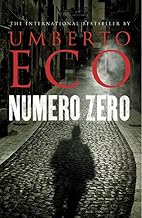
I am currently reading Umberto Eco's Numero Zero. This will consequently be my first book completion of 2016. It is an interesting book to start the year and I hope to keep the level of interest up. There were very few duds in 2015.
3pgmcc
>2 suitable1: Happy New Year to you, too. (7 minutes to go here.)
Looking forward to your company on the journey.
Looking forward to your company on the journey.
4pgmcc
Read in 2016
Title Author Status/end date
Numero Zero by Umberto Eco 04/01/2016 191pages
Mindfulness: A practical guide to finding peace in a frantic world by Mark Williams & Danny Penman 18/01/2016 264 pages
The Secret History by Donna Tartt 27/01/2016 660pages
Three Stations by Martin Cruz Smith 31/01/2016 277pages
Look to Windward by Iain M. Banks 12/02/2016 403pages
An Eochair (The Key) by Máirtín Ó Cahdain 14/02/2016 52 pages
The Signal and the Noise by Nate Silver 18/02/2016 ABANDONED 73pages
Hear the Wind Sing by Haruki Murakami 21/02/2016 152pages
Pinball, 1973 by Haruki Murakami 24/02/2016 162pages
Where I'm Reading From Reading
Nine Tailors by Dorothy L. Sayers 10/03/2016 374pages
Murder Must Advertise by Dorothy L. Sayers 23/03/2016 388pages
The Ultimate Guide to Business Process Management by Theodore Panagacos Reading
Mouse or Rat by Umberto Eco 10/04/2016 193pages
Slade House by David Mitchell 31/03/2016 233pages
The Stone Raft by José Saramago 30/04/2016
Whose Body? by Dorothy L Sayers 06/05/2016. 191pages
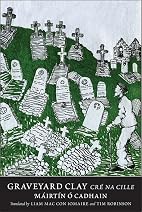
Graveyard Clay by Mártín Ó Cadhain 27/05/2016 315pages
The Duel by Alexander Pushkin 25/05/2016 12pages
CURRENTLY READING:
Title Author Status/end date
Numero Zero by Umberto Eco 04/01/2016 191pages
Mindfulness: A practical guide to finding peace in a frantic world by Mark Williams & Danny Penman 18/01/2016 264 pages
The Secret History by Donna Tartt 27/01/2016 660pages
Three Stations by Martin Cruz Smith 31/01/2016 277pages
Look to Windward by Iain M. Banks 12/02/2016 403pages
An Eochair (The Key) by Máirtín Ó Cahdain 14/02/2016 52 pages
The Signal and the Noise by Nate Silver 18/02/2016 ABANDONED 73pages
Hear the Wind Sing by Haruki Murakami 21/02/2016 152pages
Pinball, 1973 by Haruki Murakami 24/02/2016 162pages
Where I'm Reading From Reading
Nine Tailors by Dorothy L. Sayers 10/03/2016 374pages
Murder Must Advertise by Dorothy L. Sayers 23/03/2016 388pages
The Ultimate Guide to Business Process Management by Theodore Panagacos Reading
Mouse or Rat by Umberto Eco 10/04/2016 193pages
Slade House by David Mitchell 31/03/2016 233pages
The Stone Raft by José Saramago 30/04/2016
Whose Body? by Dorothy L Sayers 06/05/2016. 191pages
Graveyard Clay by Mártín Ó Cadhain 27/05/2016 315pages
The Duel by Alexander Pushkin 25/05/2016 12pages
CURRENTLY READING:
5SylviaC
I'm looking forward to following your reading and pictures again this year. Happy New Year!
7Sakerfalcon
Happy new year! I will be following your reading with interest.
8majkia
I'll be lurking mostly, but might pipe up when I have something worthwhile in the way of a comment. Wishing you a wonderful year.
10jillmwo
When may we expect the first review? I haven't read so very much by Umberto Eco (although of course I've read The Name of the Rose). There's another one of his that came out back when Borders was still in business that I think I mulled over buying but never did. There was a picture of a knight on the cover (at least in the US).
11Peace2
Wishing you a great year with plentiful books to garner your interest. I shall lurk along with others I'm sure (peeking out from time to time).
12pgmcc
>11 Peace2: Good to have you along.
13pgmcc
>10 jillmwo: I find that when I am at home I get very little read. I end up spending time with my wife and she likes watching boxed sets of TV shows and I can't read in a room with a TV on. She watched the first two series of Monk and is now working her way through episodes of 3rd Rock From the Sun.
I am about half way through Numero Zero. It is quite short (190 pages) so I hope to finish it tomorrow. It is entertaining. So far the story is about setting up a newspaper in Milan and the team is assembled for a briefing on the paper's style and mission. There are very good lessons on how newspapers influence readers and push opinions while appearing to be providing facts. Eco is good at satire.
There was a picture of a knight on the cover (at least in the US).

That could be Baudolino. It is a bit too long for my liking but I was delighted to have read it. In that book Eco puts the reliability of history in the crosshairs and assassinates it. It is very humorous and does make one think. One example, without giving too much away, is the group of crusaders who set out to find Prester John. The know they will have to trade for suppliers on their sojourn to the Orient and decide to bring relics of the saints with them for this purpose. In their treasure trove of relics they include six heads of John the Baptist. :-)
I am about half way through Numero Zero. It is quite short (190 pages) so I hope to finish it tomorrow. It is entertaining. So far the story is about setting up a newspaper in Milan and the team is assembled for a briefing on the paper's style and mission. There are very good lessons on how newspapers influence readers and push opinions while appearing to be providing facts. Eco is good at satire.
There was a picture of a knight on the cover (at least in the US).
That could be Baudolino. It is a bit too long for my liking but I was delighted to have read it. In that book Eco puts the reliability of history in the crosshairs and assassinates it. It is very humorous and does make one think. One example, without giving too much away, is the group of crusaders who set out to find Prester John. The know they will have to trade for suppliers on their sojourn to the Orient and decide to bring relics of the saints with them for this purpose. In their treasure trove of relics they include six heads of John the Baptist. :-)
14pgmcc
Umberto Eco is a master of the conspiracy novel. He weaves facts into his stories and leaves the reader not knowing what is true and what is not, or whether everything he presents in his tale is actually fact. In many of Eco’s novels he brings his reader to a place of uncertainty and doubt. He has the reader doubting everything read in a newspaper, presented in a television news programme, or expounded in a history book. Numero Zero is no exception.
Numero Zero is a very clever book that not only presents the details of a conspiracy hypothesis but also educates the reader in how newspapers get opinions across as facts, handle denials by asking questions that cast doubt on the denier’s motivation, and recycle news in such a way that it appears fresh and interesting. That last trick relies heavily on the shortness of the public’s memory. It is interesting to see how Eco has used some of these techniques in his novel to play with the reader’s mind. The book is worth reading just for the exposition of the journalistic tricks used to bamboozle the public, sorry, I mean inform the public.
The vehicle used by Eco in this novel is the setting up of a new newspaper in Milan in 1992. The main character is hired by the editor to shadow write the editor’s memoire of the first year of the setting up of the newspaper. Even the motivation for writing the editor’s memoire is cloaked in doubt, as is the purpose of setting up the newspaper.
To crown off Eco’s main conspiracy in Numer Zero, the author includes the main character watching a BBC documentary that reveals the details included in the novel. This is a real documentary and can be watched on YouTube here. This is typical of Eco’s skill for presenting conspiracy stories that appear to be fully supported by the publically available facts…if indeed they are facts.
Numero Zero is a very entertaining, thought provoking and intricate novel that I recommend be read by anyone with a shred of scepticism of the press or of history.
https://www.youtube.com/watch?v=GGHXjO8wHsA
16SylviaC
I have more than a shred of scepticism of the press, and I'm certainly not ready to accept everything I'm told about history. The book sounds interesting, but I no longer seem to have the powers of concentration necessary to appreciate Eco's work.
17pgmcc
>15 Meredy: :-)
>16 SylviaC: This one is only 191 pages and is served up in small chunks. I read it very quickly.
>16 SylviaC: This one is only 191 pages and is served up in small chunks. I read it very quickly.
19MrsLee
I'm hiding behind >15 Meredy: & >16 SylviaC:. I'll wait until I hear more. I enjoyed the one Eco book I read, but it was much brain work. Besides, I'm already depressed about the media skew in the world and this kind of stuff makes me more so.
21pgmcc
I have just finished Mindfulness: A practical guide to finding peace in a frantic world, a book the doctor suggested I read and use after having taken my blood pressure. In now have to start the eight week of meditation.
While reading Mindfulness on my commutes the only time I had for fiction was when I went to bed in the evening which meant I only read a couple of pages at a time. The result was a slow start with The Secret History. The slow start was not helping the book, but now that I am getting to read it in bigger chunks it is drawing me in.
I have not read The Great Gatsby but I naturally have preconceived ideas of what it is like. While reading about the main character's experiences meeting his well-to-do class mates in The Secret History I started wondering if this book is in any way similar to The Great Gatsby. On the next page I read the thoughts of the main character which were about his favourite book, The Great Gatsby.
While reading Mindfulness on my commutes the only time I had for fiction was when I went to bed in the evening which meant I only read a couple of pages at a time. The result was a slow start with The Secret History. The slow start was not helping the book, but now that I am getting to read it in bigger chunks it is drawing me in.
I have not read The Great Gatsby but I naturally have preconceived ideas of what it is like. While reading about the main character's experiences meeting his well-to-do class mates in The Secret History I started wondering if this book is in any way similar to The Great Gatsby. On the next page I read the thoughts of the main character which were about his favourite book, The Great Gatsby.
22Bookmarque
I think the outsider (poor person) looking in (on the rich/privileged) is a similar device. Also a touch of hedonism, but other than that I can't see any similarities. Of course it's been years since I've read either (although I own both).
23Sakerfalcon
>21 pgmcc: I loved both books and they do have things in common, as bookmarque says, though the plots are totally different.
Good luck with the mindfulness meditation. Have you seen the Ladybird book of Mindfulness, which was in all the UK Waterstones this Christmas? It puts a different perspective on the movement.
Good luck with the mindfulness meditation. Have you seen the Ladybird book of Mindfulness, which was in all the UK Waterstones this Christmas? It puts a different perspective on the movement.
24imyril
>23 Sakerfalcon: those Ladybird books had me in stitches. I had to avoid buying one for Mr B because it was perhaps too on the nose. Damn funny tho ;)
25pgmcc
>23 Sakerfalcon: I am familiar with series but have not seen the Mindfulness one. I told my daughter the "Hipster" one was her biography.
26pgmcc
I am 318 pages into The Secret History and it has caught my attention. Thoughts at this point:
The story has reached the point where the murder is committed. Donna Tartt appears to be attempting to do the same as Daphne Du Maurier did in Rebecca, i.e. (REBECCA SPOILER COMING), have the reader empathising with a murderer. With over half the book left to read I believe a lot can happen.
The book is interesting for a murder mystery. The mystery is not "Who killed the victim?", but rather, "What is going to happen to the murderers?"
I still think most of the main characters are spoilt rotten rich kids, but then that is what they have been written to be.
Not having been a very good Classics scholar I am obviously missing some elements of linguistic humour and clever nuances of plot. Still, it is an entertaining book.
The story has reached the point where the murder is committed. Donna Tartt appears to be attempting to do the same as Daphne Du Maurier did in Rebecca, i.e. (REBECCA SPOILER COMING), have the reader empathising with a murderer. With over half the book left to read I believe a lot can happen.
The book is interesting for a murder mystery. The mystery is not "Who killed the victim?", but rather, "What is going to happen to the murderers?"
I still think most of the main characters are spoilt rotten rich kids, but then that is what they have been written to be.
Not having been a very good Classics scholar I am obviously missing some elements of linguistic humour and clever nuances of plot. Still, it is an entertaining book.
27nhlsecord
I don't think I could settle down long enough to read a mindfulness book until I learn to settle down. I couldn't even study a raisin (the first lesson I had on mindfulness) for a few minutes because it was too boring. The instructor thought that was hilarious!
I really have to learn to settle down.
I really have to learn to settle down.
28pgmcc
>27 nhlsecord: The first meditation in my book is the chocolate meditation. The raisin meditation comes next.
Keep calm and pass the dark chocolate!
Keep calm and pass the dark chocolate!
29Meredy
>21 pgmcc: Does your touchstone go to the right book on mindfulness? I see only one member shown for that book, and it isn't you. I was hoping for a glimpse of what a chocolate meditation looks like. Sounds like something I could do.
30pgmcc
>29 Meredy: I believe I have fixed the touchstone. It appears there are two entries for this book and the one I had linked to is only in one person's LT account.
The chocolate meditation involves taking a type of chocolate you do not eat regularly, breaking off a square, observing the square as you hold it between your fingers, placing it on your tongue letting it melt as you sample the varying flavours from the chocolate. Do not chew it. Just let it melt.
When the first square has melted away, take a second square and repeat the process.
Does that give you some idea of what the chocolate meditation is like?
:-)
The chocolate meditation involves taking a type of chocolate you do not eat regularly, breaking off a square, observing the square as you hold it between your fingers, placing it on your tongue letting it melt as you sample the varying flavours from the chocolate. Do not chew it. Just let it melt.
When the first square has melted away, take a second square and repeat the process.
Does that give you some idea of what the chocolate meditation is like?
:-)
31clamairy
>26 pgmcc: I started The Secret History several years ago and then didn't finish it. It was highly recommended to me by several friends in here and I was enjoying it, but something interrupted me and I had to return it to the library as someone else was waiting for it. I own a copy now, and I keep eyeing it on the shelf. You've made me think I need to revisit it.
32nhlsecord
>30 pgmcc: "Just let it melt ... repeat"
I guess I DO know how to meditate! Well, that's one thing off the to-do list :)
I guess I DO know how to meditate! Well, that's one thing off the to-do list :)
33Sakerfalcon
>31 clamairy: Clam, I bounced off The secret history the first couple of times I tried it, and decided that me and it just weren't meant to be. However some years later I found myself possessed of a strange desire to give it another try, and that time I flew through it, loving every minute. I hope you have as good an experience should you pick it up again.
34clamairy
>33 Sakerfalcon: I am hoping so, too. I'm glad to hear that you enjoyed it so much. I guess we just aren't in the right frame of mind for certain books at certain times.
35pgmcc
>33 Sakerfalcon: & >34 clamairy:
I can understand people giving up on The Secret History. I would have done that myself if I was not driven on by the positive things people have said about it. I was not sure if it was the book or the fact that I was only getting to read a couple of pages a night before falling asleep.
In my opinion the first 150 pages or so spent too much time building the background. I still believe a good editor could have cut out quite a bit. In the later parts of the book there are some things coming to light that make some of the earlier meandering relevant but it was erring on the tedious side in many places. I am glad I got over the hump but I still believe the tedium could have been reduced a bit.
I can understand people giving up on The Secret History. I would have done that myself if I was not driven on by the positive things people have said about it. I was not sure if it was the book or the fact that I was only getting to read a couple of pages a night before falling asleep.
In my opinion the first 150 pages or so spent too much time building the background. I still believe a good editor could have cut out quite a bit. In the later parts of the book there are some things coming to light that make some of the earlier meandering relevant but it was erring on the tedious side in many places. I am glad I got over the hump but I still believe the tedium could have been reduced a bit.
36Peace2
All this talk of The Secret History makes me want to locate a copy and read it again as I've forgotten it - I know I read both it and The Little Friend fairly close together many years ago but only seem to have the latter on my shelf now. At a guess it's one I loaned to someone else and never got back :(
37Meredy
The Secret History is one of the rare novels that have won five stars from me. Not that it's without fault, but to me it has what it takes to place it in the top bracket.
39Meredy
>38 clamairy: I did, and reviewed it. I thought parts of it were excellent, but a good editor could have trimmed a lot of self-indulgent excess, probably a good 150 pages' worth. (Besides, and irrelevantly, I don't actually care much for the painting and got tired of the extravagantly adoring descriptions.)
40Sakerfalcon
>35 pgmcc: I love books set in schools and universities, so enjoyed those pages of set-up that you found tedious! Each to his or her own! I think it was the unpleasant cast of characters that put me off the first time.
41pgmcc
I have finished The Secret History. I enjoyed it but it was draining. As people have stated before, the main characters are not the most endearing. I am now ready for something a little lighter. Three Stations is my hope for a little rest from angst and depression.
The Secret History is a good book and it is more than just a mystery surrounding a murder. In a fashion it is a coming of age novel, albeit a rather extreme coming of age novel.
I will be giving this book four stars. For me three stars is a good book so four is very good. Five would be outstanding. This book did not get five stars from me for the following reasons:
- I found myself playing solitaire on the computer when I could have been reading the book
- Having finished the book I am not dashing off to read Tartt's other books, both of which I have on my bookshelves
- While it is a good book I would not be shouting from the rooftops, "READ THIS"
- I feel emotionally exhausted having read it
The Secret History is a good book and it is more than just a mystery surrounding a murder. In a fashion it is a coming of age novel, albeit a rather extreme coming of age novel.
I will be giving this book four stars. For me three stars is a good book so four is very good. Five would be outstanding. This book did not get five stars from me for the following reasons:
- I found myself playing solitaire on the computer when I could have been reading the book
- Having finished the book I am not dashing off to read Tartt's other books, both of which I have on my bookshelves
- While it is a good book I would not be shouting from the rooftops, "READ THIS"
- I feel emotionally exhausted having read it
42clamairy
>41 pgmcc: "I found myself playing solitaire on the computer when I could have been reading the book"
Okay, I laughed so hard that I covered my mouth and NO ONE IS HOME but me. :o)
"Emotionally exhausted" is how I felt after reading that Murakami* you recommended. ;o) It's also how I felt after reading Tartt's The Gold Finch. Right now I don't have room in my life for books that exhaust me, unless they are non-fiction. They get special dispensation.
*Oh sweet cheeses, I spelled it correctly on the first try without having to scan my library for it. Maybe gin does preserve gray matter after all...
Okay, I laughed so hard that I covered my mouth and NO ONE IS HOME but me. :o)
"Emotionally exhausted" is how I felt after reading that Murakami* you recommended. ;o) It's also how I felt after reading Tartt's The Gold Finch. Right now I don't have room in my life for books that exhaust me, unless they are non-fiction. They get special dispensation.
*Oh sweet cheeses, I spelled it correctly on the first try without having to scan my library for it. Maybe gin does preserve gray matter after all...
43pgmcc
>42 clamairy: Murakami can be exhausting. I usually need an easy read after one of his books. However, his books prevent my playing solitaire.
:-)
The Secret History dealt with dark things and the characters were all very self-focused.
:-)
The Secret History dealt with dark things and the characters were all very self-focused.
44imyril
>41 pgmcc: from Donna Tartt to Arkady Renko? It's like you're reading your way down my shelf! I've got Tatiana waiting to be read, but I might have to revisit Three Stations first - it's the only Renko I can't really remember anything about.
45pgmcc
>44 imyril: I have read Gorky Park, Polar Star and Red Square. I have Tatiana and Wolves Eat Dogs but have not read them yet. I also notice that I am missing Havana Bay. I also notice I have digressed from the chronological sequence.
46Bookmarque
I have all of the Renko books and to some degree you have to read them in order. A lot happens after Havana Bay, starting, I think with Wolves. There are allusions to the events, but no explanation. Just FYI. Tatiana is late enough that I think you could read it as a stand alone.
47imyril
>45 pgmcc: I heartily endorse Wolves Eat Dogs. A lot happens that certainly influences Stalin's Ghost. Plus I remember it as the best in the sequence, although it's a long time since I read it.
I'm pretty sure you can get away with never reading Havana Bay in the sense that it stands alone. You just need to know that Arkady spent some time abroad between Red Square and Wolves Eat Dogs. Uh, and there's a major development relating to Irina, but it's all in the past by the time Havana Bay actually starts and ancient history by the time of Wolves Eat Dogs.
Does it count as a book bullet if I you make me reread old favourites? ;)
I'm pretty sure you can get away with never reading Havana Bay in the sense that it stands alone. You just need to know that Arkady spent some time abroad between Red Square and Wolves Eat Dogs. Uh, and there's a major development relating to Irina, but it's all in the past by the time Havana Bay actually starts and ancient history by the time of Wolves Eat Dogs.
Does it count as a book bullet if I you make me reread old favourites? ;)
48imyril
>41 pgmcc: >45 pgmcc: I've also - belatedly - parsed that you're reading an Arkady Renko book as a respite from angst and depression. Mr McC, you're a very funny man.
49Bookmarque
Yeah right? I think I've "heard" Arkady laugh like once.
50pgmcc

This provided the light read I needed after The Secret History. A quick read with a familiar character and a glimpse into Moscow low-life.
51AHS-Wolfy
>50 pgmcc: Another series I should try and get back to at some point having only read (and enjoyed) Gorky Park so far. The next few are already on the tbr shelves so maybe sometime soon.
52pgmcc
The General Election campaign has just kicked off in Ireland. By chance I found the paragraph below in the book I am reading. It seems very appropriate.
“Oh, they never lie. They dissemble, evade, prevaricate, confound, confuse, distract, obscure, subtly misrepresent and wilfully misunderstand with what often appears to be a positively gleeful relish and are generally perfectly capable of contriving to give one an utterly unambiguous impression of their future course of action while in fact intending to do exactly the opposite, but they never lie. Perish the thought.”
Look to Windward by Iain M. Banks
“Oh, they never lie. They dissemble, evade, prevaricate, confound, confuse, distract, obscure, subtly misrepresent and wilfully misunderstand with what often appears to be a positively gleeful relish and are generally perfectly capable of contriving to give one an utterly unambiguous impression of their future course of action while in fact intending to do exactly the opposite, but they never lie. Perish the thought.”
Look to Windward by Iain M. Banks
53Peace2
>52 pgmcc: Sounds just about perfect for the occasion if you ask me!
54heathn
>54 heathn: I think that would work for many occasions, but especially in politics.
56pgmcc

Look to Windward
I have read this book for the second time and as with every Iain M. Banks book I re-read I am getting much more from the book than I did when I first read it, either that or I am suffering from faulty recall. Interestingly enough I wrote a review of this book when I first read it and when I have finished writing this piece I will compare the contents of the earlier review with my current effort and determine if I was naïve at the time of my first reading or if I need to start worrying about my memory.
Iain Banks always wanted to write political novels and in his Science Fiction he made his biggest efforts to make political points or to express his personal disgust at war, and the manipulation of peoples by the powerful nations. This book was first published in the year 2000 and the dedication reads, “For the Gulf War Veterans”. Having read this dedication the novel became easy to interpret in terms of its parallels with events of recent history and of circumstances that exist to this day and that have led to consequences that are unbearable to contemplate.
Look to Windward works at many levels. The lives of individuals are presented with their motivations, thoughts, faults and failings; society is presented in its different forms including social interaction, honour system and religious/atheistic beliefs, practices and observances; national/civilisation level; galactic scale. Iain Banks was always skilled at making his novels work at several levels and still give the reader a united story filled with different aspects of the plot.
The civil war came to an end when both sides realised that the Culture had been manipulating them and the Chelgrain were united in their disgust at the role the Culture played in the decimation of their civilisation.
A plan is developed to cause the destruction of a Culture orbital habitat killing billions of Culture citizens as a terrible revenge. The Chelgrain go to great efforts to realise the objectives of this plan in a clandestine fashion. This introduces a wonderfully suspenseful tale of selection of an agent for this mission, training the candidate, insinuating this person into the Culture society, and the execution of the ultimate objective of the mission.
An additional aspect of the story relates to Chelgrain co-operation with a mysterious ally. It is the ally that has suggested the target and is providing support to the preparations for the implementation of the plan.
On suggestions mooted in the book is that the Chelgrain alies are actually a ban of rogue Culture Minds (a Minds is a Culture Artificial Intelligence(AI) ) that is manipulating the Chelgrain to perpetrate this drastic sabotage to break the Culture society away from its decadent, soft lifestyle and to push the rest of Culture society towards the harder right wing philosophies it espouses.
This is obviously a reference to a group arranging a false flag attack on its own civilisation to influence society’s political views and boost strength for its own hardline views.
In addition to developing an integrate plot, Iain M. Banks has also filled the book with great humour and some very astute observations. When commenting on the Culture Minds, which can be interpreted as the establishment civil servants or politicians the following paragraph appears:
“Oh, they never lie. They dissemble, evade, prevaricate, confound, confuse, distract, obscure, subtly misrepresent and wilfully misunderstand with what often appears to be a positively gleeful relish and are generally perfectly capable of contriving to give one an utterly unambiguous impression of their future course of action while in fact intending to do exactly the opposite, but they never lie. Perish the thought.”
Banks also has a discussion about AIs composing music and how does this relate to individuals composing music and the relative worth of the works produced. I found this discussion, which was published sixteen years ago, particularly astute as I have recently read a non-fiction book called, “The Rise of the Robots”, in which it describes how computers have produced music that is fooling people into thinking it has been composed by humans.
Another humorous observation is included in a discussion between a orchestra conductor who is trying to avoid conducting at a concert and a drone that is keen for him to conduct the new piece of music he has composed.
“But who’ll conduct it?”
“Nobody. These things don’t really need conducting. Composers conduct to feed their own ego and to feel part of the performance rather than just the preparation”
“That’s not what you said before. You said there were nuances that could not be programmed, decisions that a conductor could make at the time on the night in response to the audience’s on-going reactions which required a single individual to collate, analyse and react to, functioning as a focal point for the distributed…”
“I was bullshitting you.”
57pgmcc
My earlier review of Look to Windward is presented for your enjoyment below.
I bought this book some years ago (pre-2002 as the price sticker was in Irish pounds (9.99 of them) and the euro came in on Jan 1st, 2002.). The book was first published in 2000, so I took my time before getting around to it. It was the only Banks book I haven’t read and I’m glad I eventually got to it. It is actually the first Banks book that I didn’t devour immediately on purchase.
Had it been written post 2001 people might have accused Iain of getting his inspiration from the 9/11 incident and the subsequent war on terror. There are many parallels with a major attack planned and the discussion of wars between significantly different cultures.
The book is strongly anti-war and yet is a great espionage thriller. I have often stated that Iain tries to do something different with each of his mainstream books and I have indicated the different styles he has used for many of them, e.g. Canal Dreams is his Fredrick Forsythe book, Whit is Agatha Christie, etc… In this vein I would call Look to Windward his Le Carré. There are so many intrigues and twists that the old spy master would have been proud to have written this plot.
Apart from the parallels with serious issues and the comparisons with other writers, Look to Windward is an enjoyable tale populated with strong, believable characters moving in a rich environment at both the micro and macro level.
Iain’s descriptions of an orbital, home to 50 billion people, are carefully crafted to provide a vivid picture in the reader’s mind. This same skill is used to create images of the inside of the giant behemothaurs and of the microscopic nanotechnology used by the Culture.
A fascinating book, enjoyable on many levels, and having read it at this stage I was struck by how much one could consider it prophetic in the light of world events.
I bought this book some years ago (pre-2002 as the price sticker was in Irish pounds (9.99 of them) and the euro came in on Jan 1st, 2002.). The book was first published in 2000, so I took my time before getting around to it. It was the only Banks book I haven’t read and I’m glad I eventually got to it. It is actually the first Banks book that I didn’t devour immediately on purchase.
Had it been written post 2001 people might have accused Iain of getting his inspiration from the 9/11 incident and the subsequent war on terror. There are many parallels with a major attack planned and the discussion of wars between significantly different cultures.
The book is strongly anti-war and yet is a great espionage thriller. I have often stated that Iain tries to do something different with each of his mainstream books and I have indicated the different styles he has used for many of them, e.g. Canal Dreams is his Fredrick Forsythe book, Whit is Agatha Christie, etc… In this vein I would call Look to Windward his Le Carré. There are so many intrigues and twists that the old spy master would have been proud to have written this plot.
Apart from the parallels with serious issues and the comparisons with other writers, Look to Windward is an enjoyable tale populated with strong, believable characters moving in a rich environment at both the micro and macro level.
Iain’s descriptions of an orbital, home to 50 billion people, are carefully crafted to provide a vivid picture in the reader’s mind. This same skill is used to create images of the inside of the giant behemothaurs and of the microscopic nanotechnology used by the Culture.
A fascinating book, enjoyable on many levels, and having read it at this stage I was struck by how much one could consider it prophetic in the light of world events.
58pgmcc

I have been commissioned by Swan River Press to write a review of An Eochair (The Key) by Máirtín Ó Cadhain for its twice-yearly literary publication, The Green Book: Writings on Irish Gothic, Supernatural and Fantastic Literature.
It is very nice to be asked. Compensation is a copy of The Key, two contributor's copies, and I also received a copy of Kwaidan: Ghost Stories of Lafcadio Hearn from a special limited edition printing produced by The Little Museum of Dublin to mark its exhibition on the life and works of Lafcadia Hearn, a person whose name will be very familiar to you all.

The Key, first published in the 1950s, is about fifty pages long but the book is over one hundred pages as the copy I have been provided is a dual-language edition with the original Irish on the left-hand page and the English translation on the right. It is a satire about the civil service which is always a good recommendation. Apparently it is about a civil servant who gets locked into his office when he breaks his key in the lock. The civil service strives to release him while abiding by all civil service rules and procedures. I am looking forward to reading this. It promises to be very amusing. I will keep you all informed.
59Meredy
>58 pgmcc: I have been commissioned by Swan River Press
Congratulations on that recognition! How nice indeed.
I first heard of Lafcadio Hearn more than 40 years ago, but I'm sorry to say that I've read nothing of his work. Do you have a recommended starting place?
Congratulations on that recognition! How nice indeed.
I first heard of Lafcadio Hearn more than 40 years ago, but I'm sorry to say that I've read nothing of his work. Do you have a recommended starting place?
60pgmcc
>59 Meredy: I only became aware of him about seven years ago and have only read his translations of Japanese ghost stories in Oriental Ghost Stories. This appears to be the most readily available collection of his work.
I recently bought the Swan River Press edition of Insect Literature which is a limited edition and is not likely to be in every bookshop.
Having just conducted a search on ABEBOOKS for any book by Hearn I found only one result, "Earless Ho-Ichi".
I recently bought the Swan River Press edition of Insect Literature which is a limited edition and is not likely to be in every bookshop.
Having just conducted a search on ABEBOOKS for any book by Hearn I found only one result, "Earless Ho-Ichi".
61jillmwo
>58 pgmcc: Congratulations! It's nice when the outside world recognizes a talent that we in the Pub have known about for some time!
63majkia
>62 pgmcc: Wow. Great!
65Sakerfalcon
>58 pgmcc: Congratulations, that's quite an honour! They couldn't have found a more suitable reviewer.
66imyril
>57 pgmcc: A good point on the timing of Look to Windward - I hadn't considered the date of publication vs current events when I last read it.
>58 pgmcc: Congratulations! That sounds like a fun commission (and compensation in books is its own reward, I find).
>58 pgmcc: Congratulations! That sounds like a fun commission (and compensation in books is its own reward, I find).
67pgmcc

I have abandoned The Signal and the Noise after 73 pages. It is not a book for anyone with even the most fundamental knowledge of statistics and forecasting. It is a book for people who know nothing about statistics and probability distributions, etc... Nate Silver presents the most basic forecasting concepts as if he were revealing the secrets of the gods. I've had enough of his marketing for his business in forecasting.
Now for a nice simple Haruki Murakami: Hear the Wind Sing.

68Sakerfalcon
>67 pgmcc: I look forward to your thoughts on the Murakami. I read both those short novels last year.
69SylviaC
Thanks for the warning about The Signal and the Noise. It's the sort of thing I might pick up, but you saved me the trouble!
70pgmcc
Those of us who enjoy the works of Umberto Eco will be saddened to hear that he has died. He was 84 years of age.
71imyril
>70 pgmcc: February seems to be to literature what January was to music :(
72pgmcc
>68 Sakerfalcon:
Claire, I have finished Hear the Wind Sing and enjoyed it. As always Murakami deals with deep themes and leaves his reader thinking. The forward about how he started reading was interesting. I found it interesting how he started writing in English to force him to use a limited vocabulary and then translated it into Japanese. George Orwell would have been proud of his attempts to keep the language simple.
I have now started Pinball and will report back when finished.
Claire, I have finished Hear the Wind Sing and enjoyed it. As always Murakami deals with deep themes and leaves his reader thinking. The forward about how he started reading was interesting. I found it interesting how he started writing in English to force him to use a limited vocabulary and then translated it into Japanese. George Orwell would have been proud of his attempts to keep the language simple.
I have now started Pinball and will report back when finished.
73pgmcc
Hear the Wind Sing & Pinball by Haruki Murakami
Hear the Wind Sing and Pinball are English translations of Haruki Murakami’s first two novels which were published together in a one volume edition in 2015. In a forward to this volume the author gives an overview of how he started writing. I found this very interesting and could relate some of his experiences to similar ones of my own, though mine were not related to writing fiction.
One practice Murakami described which I thought a fascinating idea was his writing a first draft in English, a language foreign to him, and then translating it into his native Japanese. His logic for doing this was that he would be writing with a limited vocabulary so that when he translated his words back into Japanese the resultant text would be free of any extraneous detours or embellishments that one might be prone to include when writing in one’s own language. He claimed this practice helped him develop his precise style of writing.
These two books work well together with Pinball being a sequel to Hear the Wind Sing.
Taking the two books as one entity the common theme is growing up, moving on, and the temporary nature of our world, the relationships, places and situations. There are two main characters who spend much time together drinking and smoking. One heads off to college and the other stays in the home town. The novels follow the life, thoughts, feelings and experiences of both.
I found the way characters in the story related to one another quite emotionless in many cases. There was an almost stoic, if not totally unemotional, acceptance of change and a reluctance, or should I say, no tendency, to become close to people, even people with whom one is spending a lot of time, even in very intimate circumstances. I find this different from my own environment, but perhaps it is a trait found in societies with a greater population density and level of mobility than one finds where I live.
These early works of Murakami’s contain many of the topics, themes and attributes found in his later stories. To name just a few one finds, wells, cats, and Japanese everyday life. The only straying into the surreal that I can recall from these two books was a reference to the perception one character had, while a passenger in a car, of the three dimensional world fading into a two dimensional world and back again. This is an illusion I have experienced myself and I believe is more to do with one’s level of tiredness rather than any dimensional shift.
I enjoyed reading these books and would recommend them to other Murakami fans, not that such a recommendation is necessary. Would I recommend them to someone who is not familiar with this author’s works? I don’t know. I like his style and his writing carries me along at a steady pace and I can relate to his digressions and detours while getting the overall sense of his message. The books are short so do not require much time commitment, but not a lot happens in them and someone new to Murakami may not be encouraged to read more of his novels on the basis of reading these two. Having said that, Hear the Wind Sing, won Murakami his first writing competition and it was his winning this competition that spurred him on to continue writing. For that, I am glad he won.
Hear the Wind Sing and Pinball are English translations of Haruki Murakami’s first two novels which were published together in a one volume edition in 2015. In a forward to this volume the author gives an overview of how he started writing. I found this very interesting and could relate some of his experiences to similar ones of my own, though mine were not related to writing fiction.
One practice Murakami described which I thought a fascinating idea was his writing a first draft in English, a language foreign to him, and then translating it into his native Japanese. His logic for doing this was that he would be writing with a limited vocabulary so that when he translated his words back into Japanese the resultant text would be free of any extraneous detours or embellishments that one might be prone to include when writing in one’s own language. He claimed this practice helped him develop his precise style of writing.
These two books work well together with Pinball being a sequel to Hear the Wind Sing.
Taking the two books as one entity the common theme is growing up, moving on, and the temporary nature of our world, the relationships, places and situations. There are two main characters who spend much time together drinking and smoking. One heads off to college and the other stays in the home town. The novels follow the life, thoughts, feelings and experiences of both.
I found the way characters in the story related to one another quite emotionless in many cases. There was an almost stoic, if not totally unemotional, acceptance of change and a reluctance, or should I say, no tendency, to become close to people, even people with whom one is spending a lot of time, even in very intimate circumstances. I find this different from my own environment, but perhaps it is a trait found in societies with a greater population density and level of mobility than one finds where I live.
These early works of Murakami’s contain many of the topics, themes and attributes found in his later stories. To name just a few one finds, wells, cats, and Japanese everyday life. The only straying into the surreal that I can recall from these two books was a reference to the perception one character had, while a passenger in a car, of the three dimensional world fading into a two dimensional world and back again. This is an illusion I have experienced myself and I believe is more to do with one’s level of tiredness rather than any dimensional shift.
I enjoyed reading these books and would recommend them to other Murakami fans, not that such a recommendation is necessary. Would I recommend them to someone who is not familiar with this author’s works? I don’t know. I like his style and his writing carries me along at a steady pace and I can relate to his digressions and detours while getting the overall sense of his message. The books are short so do not require much time commitment, but not a lot happens in them and someone new to Murakami may not be encouraged to read more of his novels on the basis of reading these two. Having said that, Hear the Wind Sing, won Murakami his first writing competition and it was his winning this competition that spurred him on to continue writing. For that, I am glad he won.
74Sakerfalcon
>73 pgmcc: An excellent review, as I would expect from you! I enjoyed these two short novels, mainly because of the emergence of the themes for which he is now known. I'm not sure I'd have been inspired to keep reading his work if these were my first examples of it, but as a fan of Murakami I thought they were very worthwhile.
75pgmcc
>74 Sakerfalcon:
Claire, thank you for your kind words.
Your feelings about these books concur with mine. It is almost a pilgrimage for me to read these books as they are the birthplace of his other works. Had I read these first I might never have read other Murakami novels. Having read his other works I was compelled to read these but also, despite the compunction, I enjoyed them in a way I could not have done had I not read later works.
Claire, thank you for your kind words.
Your feelings about these books concur with mine. It is almost a pilgrimage for me to read these books as they are the birthplace of his other works. Had I read these first I might never have read other Murakami novels. Having read his other works I was compelled to read these but also, despite the compunction, I enjoyed them in a way I could not have done had I not read later works.
76Meredy
>73 pgmcc: Great review. Thank you. I looked on the book pages to give you a thumbs-up, but didn't find it.
I've read maybe a half dozen Murakami novels, loved some, hated some. I didn't know about these two but am aware of them now. What you said about Murakami's writing process is very interesting and helps explain why his novels have such a Western feel to them.
I've read maybe a half dozen Murakami novels, loved some, hated some. I didn't know about these two but am aware of them now. What you said about Murakami's writing process is very interesting and helps explain why his novels have such a Western feel to them.
77pgmcc
>76 Meredy: Thank you! If you have enjoyed his novels you will probably like these two. They are quite short, one being 152 pages and the other 162. I found the introduction interesting.
I understand Murakami was not keen on their being translated as he felt they were not worthy.
I understand Murakami was not keen on their being translated as he felt they were not worthy.
78jillmwo
>73 pgmcc: This bit caught my attention:
One practice Murakami described which I thought a fascinating idea was his writing a first draft in English, a language foreign to him, and then translating it into his native Japanese. His logic for doing this was that he would be writing with a limited vocabulary so that when he translated his words back into Japanese the resultant text would be free of any extraneous detours or embellishments that one might be prone to include when writing in one’s own language. He claimed this practice helped him develop his precise style of writing.
That's a fascinating glimpse into a writer's practice.
One practice Murakami described which I thought a fascinating idea was his writing a first draft in English, a language foreign to him, and then translating it into his native Japanese. His logic for doing this was that he would be writing with a limited vocabulary so that when he translated his words back into Japanese the resultant text would be free of any extraneous detours or embellishments that one might be prone to include when writing in one’s own language. He claimed this practice helped him develop his precise style of writing.
That's a fascinating glimpse into a writer's practice.
79pgmcc
>78 jillmwo: I found his brief, autobiographical introduction every bit as interesting and enjoyable as the two novels. The introduction also left me wondering how much of the novels was autobiographical.
Apropos your comment about a writer's practice, I am currently about halfway through The Nine Tailors (I know, I am very far behind in my set reading.). It has struck me that Hilary Thorpe, the fifteen year old girl in the story, who is keen to become a writer and who discusses clues with Lord Peter, might be Dorothy L. Sayers inserting her younger self into the story. This may be a wild fancy, but the little research I have done tells me that she, as the daughter of a Church of England minister, lived in an old village like the one in The Nine Tailors and that many of the descriptions of the fens would aptly describe the area where she lived as a child.
Of course, the story may go in a direction that makes nonsense of this hypothesis, but it is a nice little diversionary track that embellishes the enjoyment of the novel. I also suspect it might appeal to the author's sense of humour, which must have existed given her attempts at gentle humour in the story.
I must say the, "My Lord", and the "Lord Peter", and the "villagers used to know their place", and the assumption that the local Police Inspector will straighten out any law breaking executed by "his lordship", leaves me a bit annoyed at the privilege of the aristocracy that has not entirely disappeared.
ETA: On second thoughts, the, "Lord Peter", sounds good to me.
Apropos your comment about a writer's practice, I am currently about halfway through The Nine Tailors (I know, I am very far behind in my set reading.). It has struck me that Hilary Thorpe, the fifteen year old girl in the story, who is keen to become a writer and who discusses clues with Lord Peter, might be Dorothy L. Sayers inserting her younger self into the story. This may be a wild fancy, but the little research I have done tells me that she, as the daughter of a Church of England minister, lived in an old village like the one in The Nine Tailors and that many of the descriptions of the fens would aptly describe the area where she lived as a child.
Of course, the story may go in a direction that makes nonsense of this hypothesis, but it is a nice little diversionary track that embellishes the enjoyment of the novel. I also suspect it might appeal to the author's sense of humour, which must have existed given her attempts at gentle humour in the story.
I must say the, "My Lord", and the "Lord Peter", and the "villagers used to know their place", and the assumption that the local Police Inspector will straighten out any law breaking executed by "his lordship", leaves me a bit annoyed at the privilege of the aristocracy that has not entirely disappeared.
ETA: On second thoughts, the, "Lord Peter", sounds good to me.
80hfglen
>79 pgmcc: When you get further into the Wimsey canon (Gaudy Night is in the arc I'm thinking of), you will find that Harriet Vane is composed of equal parts autobiography and what she wished were her autobiography.
81MrsLee
>79 pgmcc: I wonder if all the aristocracy bits don't annoy me because they have always seemed more of a myth to me, living over here?
I never thought about Sayers inserting herself into the story as mentioned above in >79 pgmcc: and >80 hfglen:. Even after reading the collections of her letters. Guess I always attributed it to the "write what you know" part of authorship, and not really a purposeful intention.
I never thought about Sayers inserting herself into the story as mentioned above in >79 pgmcc: and >80 hfglen:. Even after reading the collections of her letters. Guess I always attributed it to the "write what you know" part of authorship, and not really a purposeful intention.
82pgmcc
I have just had a quick look at the two threads on The Nine Tailors and think I may have something to add that I cannot see appearing in those threads. You will have to wait in anticipation as I am not in a position to write up my thoughts...and findings...just yet. Have a cup of tea and a crumpet while you wait. I may get round to it at the weekend...or maybe tonight.
(That's what is called a teaser.)

(That's what is called a teaser.)

83SylviaC
Aaagh!!! How can you make us wait!?! I'll have to fill some time by going to the store to buy some crumpets.
84pgmcc
>83 SylviaC: Now is the time to put you out of your misery. You can let your tea get cold. You can set your crumpet down on your plate. Your wait is over. I shall tell you what I noticed in The Nine Tailors.

The Nine Tailors by Dorothy L. Sayers
My introduction to Lord Peter Wimsey was via the 1970s TV series staring the excellent Ian Carmichael as the aristocratic sleuth. I recall my mother and I being amused to see Ian Carmichael in this role when we thought of him primarily as Bertie Wooster in the original 1960s TV adaptation of Jeeves with Dennis Price playing the unflappable valet.
In my mind the Lord Peter Wimsey tales were simply cosy crime stories. That is how I perceived them in the TV show and that is how I thought of the novels until reading The Nine Tailors.
I have to confess that this is the first Dorothy L Sayers novel I have read. It did not disappoint but until my curiosity was aroused by a few un-sleuth-story-like allusions I did not think the tale was anything other than a cosy crime novel.
My reaction to the book on the cosy crime story level is that it very much fits the bill of the golden age of crime novels and is enjoyable in that context alone. I must admit the book brought out the aristocracy element more than I had recalled from the shows and I was finding myself a bit annoyed at the deference shown to someone with a title on the basis of nothing other than their privileged position. Lord Peter did, of course, have his reputation as rather a good sleuth.
The first thing that raised my suspicion that Sayers was doing something more than writing a detective story was the mention of Abbot Thomas. The name “Abbot Thomas” rang bells (how apropos) at the back of my mind. “Of course,” thought I, M. R. James. He has a story called The Treasure of Abbot Thomas. There’s a coincidence. I wonder if Abbot Thomas was a real person and his tomb is in the fens.”
Next I found intricate descriptions of carvings on the pews in the parish church. This reminded me of M.R. James’s story The Stalls of Barchester Cathedral.
I was subsequently amused to see a chapter starting with a quote from Wylder’s Hand by Joseph Sheridan Le Fanu, the nineteenth century writer of horror stories whose tale, Carmilla, is considered to have influenced Bram Stoker in his writing of Dracula. Le Fanu’s work is not as well known generally as it deserves to be so I was intrigued at Sayers quoting one of these pieces.
My curiosity roused I turned to the omnipresent Google. I entered, “The Nine Tailors Abbot Thomas Le Fanu”, and clicked the search icon. The first result of my search was:
http://irishgothichorrorjournal.homestead.com/HConrad-OBriain.html
The link took me to a paper in the academic journal, “The Irish Journal of Gothic and Horror Stories”.
This paper is entitled:
“Providence and Intertextuality: LeFanu, M. R. James, and Dorothy Sayers' The Nine Tailors”
It was not just my imagination. I was not the first one to notice the links. It appears Sayers was a great fan of the Gothic tale and very fond of works of Le Fanu and M R James. Being a fan of these tales too I found another level of pleasure in reading The Nine Tailors. Finding out something about an author’s interests can open up an entirely new dimension of enjoyment when reading their work.
You can read the academic paper for yourself. I will not repeat the way it explains how The Nine Tailors is structured as a Gothic novel and how it contains many of the tropes that define the genre. I had been wondering about the inclusion of the final part of The Nine Tailors as it was not necessary to resolve or explain the crime. The academic paper demonstrates that this section serves the purpose of finishing the story in the style of a Gothic novel.
I had been thinking that while I enjoyed reading this novel I probably would not deliberately chase down more stories by Dorothy L Sayers. Now that I know she has hidden Gothic allusions and structures in her works I am more enthusiastic about reading more of her books. As it happens, my wife is a great fan of Sayers’ novels so we have a few of them around the house. I wonder if my wife knew she was reading Gothic stories.

The Nine Tailors by Dorothy L. Sayers
My introduction to Lord Peter Wimsey was via the 1970s TV series staring the excellent Ian Carmichael as the aristocratic sleuth. I recall my mother and I being amused to see Ian Carmichael in this role when we thought of him primarily as Bertie Wooster in the original 1960s TV adaptation of Jeeves with Dennis Price playing the unflappable valet.
In my mind the Lord Peter Wimsey tales were simply cosy crime stories. That is how I perceived them in the TV show and that is how I thought of the novels until reading The Nine Tailors.
I have to confess that this is the first Dorothy L Sayers novel I have read. It did not disappoint but until my curiosity was aroused by a few un-sleuth-story-like allusions I did not think the tale was anything other than a cosy crime novel.
My reaction to the book on the cosy crime story level is that it very much fits the bill of the golden age of crime novels and is enjoyable in that context alone. I must admit the book brought out the aristocracy element more than I had recalled from the shows and I was finding myself a bit annoyed at the deference shown to someone with a title on the basis of nothing other than their privileged position. Lord Peter did, of course, have his reputation as rather a good sleuth.
The first thing that raised my suspicion that Sayers was doing something more than writing a detective story was the mention of Abbot Thomas. The name “Abbot Thomas” rang bells (how apropos) at the back of my mind. “Of course,” thought I, M. R. James. He has a story called The Treasure of Abbot Thomas. There’s a coincidence. I wonder if Abbot Thomas was a real person and his tomb is in the fens.”
Next I found intricate descriptions of carvings on the pews in the parish church. This reminded me of M.R. James’s story The Stalls of Barchester Cathedral.
I was subsequently amused to see a chapter starting with a quote from Wylder’s Hand by Joseph Sheridan Le Fanu, the nineteenth century writer of horror stories whose tale, Carmilla, is considered to have influenced Bram Stoker in his writing of Dracula. Le Fanu’s work is not as well known generally as it deserves to be so I was intrigued at Sayers quoting one of these pieces.
My curiosity roused I turned to the omnipresent Google. I entered, “The Nine Tailors Abbot Thomas Le Fanu”, and clicked the search icon. The first result of my search was:
http://irishgothichorrorjournal.homestead.com/HConrad-OBriain.html
The link took me to a paper in the academic journal, “The Irish Journal of Gothic and Horror Stories”.
This paper is entitled:
“Providence and Intertextuality: LeFanu, M. R. James, and Dorothy Sayers' The Nine Tailors”
It was not just my imagination. I was not the first one to notice the links. It appears Sayers was a great fan of the Gothic tale and very fond of works of Le Fanu and M R James. Being a fan of these tales too I found another level of pleasure in reading The Nine Tailors. Finding out something about an author’s interests can open up an entirely new dimension of enjoyment when reading their work.
You can read the academic paper for yourself. I will not repeat the way it explains how The Nine Tailors is structured as a Gothic novel and how it contains many of the tropes that define the genre. I had been wondering about the inclusion of the final part of The Nine Tailors as it was not necessary to resolve or explain the crime. The academic paper demonstrates that this section serves the purpose of finishing the story in the style of a Gothic novel.
I had been thinking that while I enjoyed reading this novel I probably would not deliberately chase down more stories by Dorothy L Sayers. Now that I know she has hidden Gothic allusions and structures in her works I am more enthusiastic about reading more of her books. As it happens, my wife is a great fan of Sayers’ novels so we have a few of them around the house. I wonder if my wife knew she was reading Gothic stories.
85pgmcc
The review below is to appear in Issue 7 of The Green Book, The Swan River Press's bi-annual literary magazine featuring commentaries, articles, and reviews on Irish Gothic, Supernatural and Fantastic literature. This is the review I was boasting was commissioned. :-)

The Key An Eochair
by Máirtín Ó Cadhain
Translated by Louis de Paor and Lochlainn ÓTuairisg
Dalkey Archive Press, May 2015, 200 pages
Máirtín Ó Cadhain’s The Key (An Eochair to give its original Irish title), is more than just a satirical story about hierarchical rigidity and bureaucratic idiocy of the Irish civil service—or indeed any civil service. It is a display cabinet for the author’s cynical, or some would say accurate, views on political parties and politicians; on the influence of the Catholic Church within the instruments of the State; on nepotism and cronyism; on preferential treatment for the privileged; and on the systemic misogyny prevalent in the society of the time.
The story’s protagonist, referred to as “J.”, is a junior paperkeeper, i.e. he looks after files. In the early pages of the story, J. is instructed by his boss, “S.”, on the importance of files, how the civil service is files, how files are the civil service, and God created them both. S. also wastes no time in putting the fear of God into his new underling and leaving him in no doubt about how insignificant a being J. is.
The plot of this novella is a simple and amusing one: S. leaves the office early for a two-week holiday to the Isle of Man. Unbeknownst to J., S. has, through force of habit, locked J.’s office door while J. was daydreaming inside. On discovering the locked door, J. at first panics, but then realises he has a copy of the key in his desk drawer. Unfortunately, the key is a bit stiff to turn so he increases the torque. Snap! The rest of the story describes J.’s attempts to get someone’s attention and, once his predicament has been discovered, the machinations of his unnamed government department, the Board of Public Works, the fire brigade, the army, Fine Gael, Fianna Fáil, the Sweat Party, the Catholic Church, J.’s wife, the gardaí, and a cast of thousands as they attempt to release J. from his office prison—all while staying within the strictures of the civil service regulations and procedures.
Written in the early 1950s, a time when Ó Cadhain was working in the civil service as a translator for the Dáil (the Irish parliament), The Key was based on his first-hand experience of an environment that would not have been conducive to the active mind of the author. The son of a poor farming family from Connemara whose first language was Irish, Ó Cadhain had always had a sense of social justice and a longing to improve the lot of the poorer people of the West. This yearning led him to political activism and his membership in the IRA eventually saw him interned in the Curragh from 1939 to 1944.
While in the Curragh, Ó Cadhain read French and German classics, both of literature and of philosophy, often in their original languages. He also read the Russian classics in English translation, lamenting that his mastery of Russian was not sufficient to allow him to read them in their original form.
Ó Cadhain was a prolific writer, not only of original ma¬terial, but also as a translator into Irish. His contributions to the Irish language eventually won him a position as lecturer in the Irish department of Trinity College Dublin in 1955. The appointment of Ó Cadhain, a former IRA member with left-wing political views, was testimony to his exceptional achievements in support of the Irish language and his contri¬bution to the body of Irish literature.
Some understanding of Ó Cadhain’s life experiences and his political motivations sets a context for the reader to more fully appreciate the content of The Key. The main character J. represents the poor rural person from the West. He is the personification of the people the author has striven to defend and protect. We see J. bullied by people in authority and being used by politicians in pursuit of their own glorification. He is offered help by the clergy of the Catholic Church while at the same time being preached to about how he should live. J. also finds himself in the Kafkaesque situation of being at the mercy of an inexorable institution, the civil service, as it follows its procedures and achieves nothing but procrastination and the worsening of an already intolerable state of affairs.
Ó Cadhain, like many great writers, has written this story for the common reader. It includes references to bodily func¬tions, bawdy behaviour, and flagrant sexual abuse that would be considered too crude if the audience were from a more polite society. The author writes in his native dialect and this reinforces the thought that he was writing this for his own people, the rural poor of Connemara who would enjoy his lampooning of the “posh ones” up in Dublin.
As with any translation certain meanings become lost. One element that stands out is the translation of “Shean-Cheann” as “Old One”. J.’s wife is referred to as his Old One, which in English comes across as an almost derogatory term akin to Arthur Daly’s referral to his wife as “Her in doors”. In Connemara, however, the Shean-Cheann is the woman of the household to whom everyone turns to for advice and leader¬ship. It is a term of respect and deference which is important to understand when reading The Key in English as the first mention of “his Old One” comes right after the statement, “Bloody women! All jokes aside, isn’t it amazing how they understood nothing, ever.”
The Key can be read as a simple satire akin to Mervyn Wall’s, “They Also Serve . . . ”, or Antony Jay and Johnathan Lynn’s Yes Minister, and it can be enjoyed as such. However, an understanding of Máirtín Ó Cadhain’s political views, family background, and life experiences adds layers of meaning to the story and makes it a manifesto of protest and a declara¬tion of frustration with a social order, political system, and an assemblage of public bodies that function without any reference to doing anything that benefits the individual citizen in need—the very citizen the institutions and entities were established to support.
Written in the early 1950s, published in the late 1960s, this new translation of The Key, which also reproduces the original Irish text, is as relevant today as it was sixty-five years ago.
86SylviaC
>84 pgmcc: Well, finally!
I don't have the background to catch all of the allusions and nuances in Sayers' writing, but I'm always aware that they are there. Some of her mysteries are just straightforward puzzles, but several of them have more layers than I'll ever be able to peel apart. I hope you read more of the series, and continue to use your powers of analysis on them.
Now the butter is congealing on my crumpet.
I don't have the background to catch all of the allusions and nuances in Sayers' writing, but I'm always aware that they are there. Some of her mysteries are just straightforward puzzles, but several of them have more layers than I'll ever be able to peel apart. I hope you read more of the series, and continue to use your powers of analysis on them.
Now the butter is congealing on my crumpet.
87jillmwo
>84 pgmcc: Well, now I have to go look into this. I do admire M.R. James but hadn't tied his work into the works of Dorothy Sayers. I haven't looked at The Nine Tailors for at least twenty years and it might be time to revisit the book to see what we can see.
However, at the risk of sounding insensitive, why are so many readers so bothered by the once-ubiquitous cultural acceptance and treatment of the aristocracy? Yes, it was the source of many evils and societal injustices. Yes, it's the antithesis of the meritocracy. Still, the emphasis on birth, family line and wealth is largely an artifact of an earlier time -- at least in that combination. The aristocracy hasn't entirely disappeared in the modern era, but it is certainly not nearly as influential as it was. (And it gets mocked on a regular basis...)
Can't we forgive works of fiction for reflecting the attitudes of the era in which they were published?
However, at the risk of sounding insensitive, why are so many readers so bothered by the once-ubiquitous cultural acceptance and treatment of the aristocracy? Yes, it was the source of many evils and societal injustices. Yes, it's the antithesis of the meritocracy. Still, the emphasis on birth, family line and wealth is largely an artifact of an earlier time -- at least in that combination. The aristocracy hasn't entirely disappeared in the modern era, but it is certainly not nearly as influential as it was. (And it gets mocked on a regular basis...)
Can't we forgive works of fiction for reflecting the attitudes of the era in which they were published?
88MrsLee
>84 pgmcc: I once belonged to a group called Lord Peter, and its off-shoot called Piffle. This was years before LT existed. What impressed me, were the many intelligent people there who had made a study of Dorothy L. Sayers works and read them faithfully each year. One member would moderate the reading discussion of the novel being currently read. I was able to do this once, and let me tell you, I studied harder for that than for anything ever before. Still only skimmed the surface of it though I'm sure. Sayers is one of those authors who lead you on to new discoveries every time your read their works.
Thank you for sharing what you discovered with us! Not being familiar with the Gothic genre, I had not seen that aspect of the story.
Thank you for sharing what you discovered with us! Not being familiar with the Gothic genre, I had not seen that aspect of the story.
89suitable1
>84 pgmcc:
I wonder if my wife knew she was reading Gothic stories
Don't you live in the same house?
I wonder if my wife knew she was reading Gothic stories
Don't you live in the same house?
90pgmcc
>87 jillmwo: I was not complaining about the book or its portrayal of the aristocracy and its privileged status. I was complaining about the existence of the privileged status of the aristocracy which is not as far gone as you might imagine. It is not something you would see on your side of the Atlantic but it does occasionally raise its head on this side.
91pgmcc
>88 MrsLee:
"Piffle and tosh!"
That is an expression I have not heard for a long time. Thank you for reminding me of it.
"Piffle and tosh!"
That is an expression I have not heard for a long time. Thank you for reminding me of it.
92pgmcc
>89 suitable1: Yes, we do, but there are certain things one does not discuss in polite company. In addition, if I were to let her know of the Gothic side of a Sayers novel it could put her off one of her favourite authors.
93pgmcc
>86 SylviaC:
Mmmmmm! Congealled butter.
Mmmmmm! Congealled butter.
94Sakerfalcon
>84 pgmcc: I must confess to never having read M. R. James, though he's on the list of "things I really should read one day", so I'd never have picked up on the allusions you point out. I'm planning a reread of The nine tailors in the near future, prompted by having taken up bell-ringing myself, but shall make sure to read some of James' stories first.
>85 pgmcc: This is an excellent review. I started reading it without any real interest in the book itself, and ended by thinking "I wonder if I'll be able to find a copy in England because that sounds great!" I hope the journal is suitably appreciative of your contribution.
>85 pgmcc: This is an excellent review. I started reading it without any real interest in the book itself, and ended by thinking "I wonder if I'll be able to find a copy in England because that sounds great!" I hope the journal is suitably appreciative of your contribution.
95pgmcc
>94 Sakerfalcon:
Claire, you are in for a treat with the stories of M. R. James. He would gather friends in his rooms in Cambridge and tell them his stories. The best way to experience his stories is getting to one of the Nunkie Production performances. Robert Lloyd Parry tells his audiences M.R. James stories in the persona of M.R.James. It is a delightful evening and he brings out the humour of M.R.James as much as the ghostly tales.
Robert has now branched out into telling Le Fanu, H.G. Wells, and E.F. Benson stories.
If you have seen any of the old BBC "Ghost Stories for Christmas" that were broadcast on Christmas Eves in the 1960s & 1970s you are likely to have seen adaptations of M.R. James's work. I know I had seen many of his stories on television before I knew there was such a person as M.R. James.
Your bell ringing sounds interesting.
Thank you for your comments on the review of The Key (Irish Literature). While the Dalkey Archive Press has offices in Dublin and New York its edition of The Key appeared to be in short supply and The Swan River Press had great difficulty in obtaining a copy for me to review. My "read and review" time was reduced from an eight week time slot to ten days due to the book not arriving until a week and a half before the magazine proofs were due. All's well that ends well. Looking at abebooks.co.uk this morning it appears the shortage is over. There are several copies available.
Claire, you are in for a treat with the stories of M. R. James. He would gather friends in his rooms in Cambridge and tell them his stories. The best way to experience his stories is getting to one of the Nunkie Production performances. Robert Lloyd Parry tells his audiences M.R. James stories in the persona of M.R.James. It is a delightful evening and he brings out the humour of M.R.James as much as the ghostly tales.
Robert has now branched out into telling Le Fanu, H.G. Wells, and E.F. Benson stories.
If you have seen any of the old BBC "Ghost Stories for Christmas" that were broadcast on Christmas Eves in the 1960s & 1970s you are likely to have seen adaptations of M.R. James's work. I know I had seen many of his stories on television before I knew there was such a person as M.R. James.
Your bell ringing sounds interesting.
Thank you for your comments on the review of The Key (Irish Literature). While the Dalkey Archive Press has offices in Dublin and New York its edition of The Key appeared to be in short supply and The Swan River Press had great difficulty in obtaining a copy for me to review. My "read and review" time was reduced from an eight week time slot to ten days due to the book not arriving until a week and a half before the magazine proofs were due. All's well that ends well. Looking at abebooks.co.uk this morning it appears the shortage is over. There are several copies available.
96jillmwo
>90 pgmcc: Forgive me, Peter, for sounding so grumpy. I probably do underestimate the on-going influence of the aristocracy in the cultural environment. I am probably still under the influence from viewing the rose-colored Downton Abbey finale. (One tends to fantasize about living in another time and place, usually in a far more economically advantaged environment that one currently enjoys, with the expectation that everyone finally receives a happy ending.)
I would love to have a competent, live-in Bunter to cope with all the ordinaryness and who would say things like "As you wish, m'lady" without trace of either an arched eyebrow or sarcastic tone.
But seriously, can you specify a particular incident in Nine Tailors where you felt Lord Peter should not have received the treatment he got? I don't mean to provoke an argument here, I'm just trying to see what you see in a particular scene.
I would love to have a competent, live-in Bunter to cope with all the ordinaryness and who would say things like "As you wish, m'lady" without trace of either an arched eyebrow or sarcastic tone.
But seriously, can you specify a particular incident in Nine Tailors where you felt Lord Peter should not have received the treatment he got? I don't mean to provoke an argument here, I'm just trying to see what you see in a particular scene.
97pgmcc
>96 jillmwo: There is nothing to forgive. I hope my post did not sound too tetchy. You may not realise it but there are still people in the Irish Republic who retain their British titles, their castles and the lands their family owned under British rule and who do not regard the state in which they live as legitimate. We are in the centenary year of the Easter Rising, the seminal event that laid the ground for the formation of the State. There are still people living in Ireland who consider the heroes of 1916 to be traitors.
Of course, there are others who retain their lands and position but who adopt the responsible attitude and approach of the true nobility by considering their estates as a responsibility and view it as a resource that must be managed to the benefit of everyone in their area. I admire such people and give them credit for earning respect through their own hard work and efforts on behalf of those people dependent upon their resources for a livelihood.

In terms of specifics about Lord Peter in the Nine Tailors, there are many.One incident relates to his acquisition of a Post Restante letter through the illegal action of Bunter. You will find that this would be a federal offence in the USA. Both in the UK and Ireland the interception of a mail item is a serious offence. Lord Peter is quite blasé about it and assumes naturally that their friend the Superintendent will sort it out for them.
Every utterance of "milord" is a constant reminder of the aristocratic privilege.
Lord Peter's disregard for the dangers of driving on country roads at high speed is not related to his rank as an aristocrat but to his spoiled, rich-person's lack of consideration of the dangers his actions expose other road users to.
During the Inquest the coroner does not adjourn the proceedings without first consulting Lord Peter who has only been a member of the attending audience up to that point.
Without rereading the book I cannot be more specific.
At this stage I will finish this post as I am afraid it is treading into the banned territory of politics and I do not want to be the cause of a political brawl in The Green Dragon. That would never do.
Of course, there are others who retain their lands and position but who adopt the responsible attitude and approach of the true nobility by considering their estates as a responsibility and view it as a resource that must be managed to the benefit of everyone in their area. I admire such people and give them credit for earning respect through their own hard work and efforts on behalf of those people dependent upon their resources for a livelihood.

In terms of specifics about Lord Peter in the Nine Tailors, there are many.
Every utterance of "milord" is a constant reminder of the aristocratic privilege.
Lord Peter's disregard for the dangers of driving on country roads at high speed is not related to his rank as an aristocrat but to his spoiled, rich-person's lack of consideration of the dangers his actions expose other road users to.
During the Inquest the coroner does not adjourn the proceedings without first consulting Lord Peter who has only been a member of the attending audience up to that point.
Without rereading the book I cannot be more specific.
At this stage I will finish this post as I am afraid it is treading into the banned territory of politics and I do not want to be the cause of a political brawl in The Green Dragon. That would never do.
98suitable1
Speaking of the Easter Rising, I saw recently that the Dublin Post Office was the center of much of the action. Of course, I wondered if you were able to work around all the commotion or if it got in your way.
99pgmcc
>98 suitable1: It was the head quarters for the rising and it was where The Proclamtion of Independence was read in public. A new 1916 visitors' centre has been built in the courtyard of the GPO. Building works took eighteen months. At times the noise was pretty bad and one could imagine the place was under the British bombardment again.
(Did you see how I ignored your implication that I was working there 100 years ago? I only started working in the GPO in 2008. I was nowhere near the place in 1916.)
(Did you see how I ignored your implication that I was working there 100 years ago? I only started working in the GPO in 2008. I was nowhere near the place in 1916.)
100pgmcc
I currently have three books on the go. The first of these that I started some time ago was Where I'm Reading From by Tim Parks. The book consists of Tim Parks putting forward his views on books, why people read them, why people write them, etc... In such a book one is always going to find things to agree with and things to disagree with and things that one does not give a damn about one way or the other. It is not a book that I am very enthusiastic about but then it is not a book that I am getting annoyed with. I have reached page 66 and so far have only underlined one quote. It relates to Parks's views on impartiality when reviewing, or even reading, books. The quote I underlined is:
"To be impartial about narrative would be to come from nowhere, to be no one."
He is making the point that while one attempts to judge a book on its merits and independently of any personal bias or prejudice no one can really escape from the person he or she is, and one will always have some form of bias or prejudice, otherwise, as Parks suggests, one must have come from nowhere or be no one. We cannot escape ourselves, nor should be deny our own existence and development.
It was while reading this book that I took up The Nine Tailors and began to read. (That says it all about "Where I'm Reading From".)
Having finished "The Nine Tailors" I wondered what to read and mechanically picked up, The Ultimate Guide to Business Process Management: Everything you need to know and how to apply it to your organization by Theodore Panagacos. I am about 20% of the way into the book and it is neither an ultimate guide nor does it provide everything you need to know. What can one say about a book that claims to be the "Ultimate Guide" and to contain everything you need to know, then goes on to list the elements that constitute the subject matter involved and state that it is only going to deal with one of these elements and this announcement is made on page 6?
So far I would say it is a reasonable summary and may be a quick reference. To make such grandiose claims and then take the feet from under one's own statements appears rather foolish. Well, it is a relatively short book (176 pages) and I am reading it for work purposes so I am sure I will get over it.
The third book I have on the go is one I picked up last evening. It is Murder Must Advertise by Dorothy L. Sayers. I did not think I would read another Sayers so soon after completing The Nine Tailors but having had my enthusiasm for The Nine Tailors boosted by discovering its hidden Gothic-ness I was favourably inclined to read Murder Must Advertise when I just happened across it while tidying a bookcase. (My tidying the bookcase was not driven by any sense of cleanliness or organisational fervour, but rather by my helping my son look for his Kindle, which, incidentally, he found.) I took the book to bed with me and found the opening pages amusing and am now hooked. I was also amused by Sayers's introduction to this novel which contains the words below:
"I do not suppose that there is a more harmless and law-abiding set of people in the world than the Advertising Experts of Great Britain...If, in the course of this fantasy, I have unintentionally used a name or slogan suggestive of any existing person, firm or commodity, it is by sheer accident, and is not intended to cast the slightest reflection upon any actual commodity, firm or person."
I have to read the book now to find out the target of her exposé.
"To be impartial about narrative would be to come from nowhere, to be no one."
He is making the point that while one attempts to judge a book on its merits and independently of any personal bias or prejudice no one can really escape from the person he or she is, and one will always have some form of bias or prejudice, otherwise, as Parks suggests, one must have come from nowhere or be no one. We cannot escape ourselves, nor should be deny our own existence and development.
It was while reading this book that I took up The Nine Tailors and began to read. (That says it all about "Where I'm Reading From".)
Having finished "The Nine Tailors" I wondered what to read and mechanically picked up, The Ultimate Guide to Business Process Management: Everything you need to know and how to apply it to your organization by Theodore Panagacos. I am about 20% of the way into the book and it is neither an ultimate guide nor does it provide everything you need to know. What can one say about a book that claims to be the "Ultimate Guide" and to contain everything you need to know, then goes on to list the elements that constitute the subject matter involved and state that it is only going to deal with one of these elements and this announcement is made on page 6?
So far I would say it is a reasonable summary and may be a quick reference. To make such grandiose claims and then take the feet from under one's own statements appears rather foolish. Well, it is a relatively short book (176 pages) and I am reading it for work purposes so I am sure I will get over it.
The third book I have on the go is one I picked up last evening. It is Murder Must Advertise by Dorothy L. Sayers. I did not think I would read another Sayers so soon after completing The Nine Tailors but having had my enthusiasm for The Nine Tailors boosted by discovering its hidden Gothic-ness I was favourably inclined to read Murder Must Advertise when I just happened across it while tidying a bookcase. (My tidying the bookcase was not driven by any sense of cleanliness or organisational fervour, but rather by my helping my son look for his Kindle, which, incidentally, he found.) I took the book to bed with me and found the opening pages amusing and am now hooked. I was also amused by Sayers's introduction to this novel which contains the words below:
"I do not suppose that there is a more harmless and law-abiding set of people in the world than the Advertising Experts of Great Britain...If, in the course of this fantasy, I have unintentionally used a name or slogan suggestive of any existing person, firm or commodity, it is by sheer accident, and is not intended to cast the slightest reflection upon any actual commodity, firm or person."
I have to read the book now to find out the target of her exposé.
101hfglen
>100 pgmcc: You do know don't you that DLS herself worked in advertising? Particularly relevant to someone who lives where you do is that she did a very famous campaign for Guinness in the 1920s--30s. (see also this post, by the way. (edited to fix a quote sign.)
102pgmcc
>101 hfglen: Hugh, I was not aware of that. Knowing that makes her words even more interesting. Obviously she was ratting out some of her former colleagues.
:-)
:-)
103SylviaC
I can't wait to read your thoughts on Murder Must Advertise. I'll have to stock up on crumpets.
104pgmcc
>103 SylviaC: Crumpets are good.
105tardis
>99 pgmcc: you said:(Did you see how I ignored your implication that I was working there 100 years ago? I only started working in the GPO in 2008. I was nowhere near the place in 1916.)
You carefully didn't mention that you weren't alive in 1916.
You carefully didn't mention that you weren't alive in 1916.
106pgmcc
>105 tardis: One is making assumptions!
ETA: With a handle like @tardis I thought you might be more open minded on the subject of my being alive in 1916.
ETA: With a handle like @tardis I thought you might be more open minded on the subject of my being alive in 1916.
108jillmwo
>Well, I've got crumpets on order for the Murder Must Advertise review. It would however help if you all would start publicizing your intents a bit earlier in the game. It takes at least five business days for the shipment of crumpets to arrive....
What day/time shall we have tea in the library? (Just fair warning, MMA is one of my favorite DLS titles).
BTW, re: msg#97 ...there are still people in the Irish Republic who retain their British titles, their castles and the lands their family owned under British rule and who do not regard the state in which they live as legitimate. We are in the centenary year of the Easter Rising, the seminal event that laid the ground for the formation of the State. There are still people living in Ireland who consider the heroes of 1916 to be traitors. I truly did not know that!
What day/time shall we have tea in the library? (Just fair warning, MMA is one of my favorite DLS titles).
BTW, re: msg#97 ...there are still people in the Irish Republic who retain their British titles, their castles and the lands their family owned under British rule and who do not regard the state in which they live as legitimate. We are in the centenary year of the Easter Rising, the seminal event that laid the ground for the formation of the State. There are still people living in Ireland who consider the heroes of 1916 to be traitors. I truly did not know that!
109pgmcc
>108 jillmwo: I am only a few pages into the book but I can see it will be fun. Bertie Wooster has already been referenced.
110pgmcc
>107 tardis: Don't blink!
111Meredy
You guys keep talking about crumpets and I am simply going to have to have some. Time to appeal to the food and cooking thread.

114pgmcc
I don't have any crumpets in the house but there is a hot cross bun and I think I will go and devour it now.
:-)
:-)
115Meredy
I've been looking at crumpets recipes, and I think I see Jill's point about ordering them. (Where did we ever get the crazy idea that "English muffins" would do? Still, I wish I had some.) Meanwhile, I'm thinking about scones . . .
117pgmcc
I have had my hot cross bun with a nice cup of tea and have retired to bed with Dorothy L Sayers. Meanwhile, my lady wife is in the sittingroom with Bertie Wooster and his man Jeeves (of the Hugh Laurey and Steven Fry variety).
118MrsLee
>100 pgmcc: DLS was also very active in Coleman's Mustard advertising campaigns. I have a reprint of a booklet she reputedly wrote titled, The Recipe Book of the Mustard Club. Very droll and entirely in keeping with the slogans and such in Murder Must Advertise. Not sure when it was originally published, the data from LT says 1941, but the cover design is very much 1920s.
Rules of the Mustard Club
1. Every Member shall on all proper occasions eat Mustard to improve his appetite and strengthen his digestion.
2. Every Member shall once at least during every meal make the secret sign of the Mustard Club by placing the mustard-pot six inches from his neighbor's plate.
3. Every Member who asks for a sandwich and finds that it contains no Mustard shall publicly refuse to eat same.
4. Every Member shall see that the Mustard is freshly made, and no Member shall tip a waiter who forgets to put Mustard on the table.
5. Each Member shall instruct his children to "keep that schoolboy digestion" by forming the habit of eating Mustard.
"Mustard Makyth Methuselahs"
Rules of the Mustard Club
1. Every Member shall on all proper occasions eat Mustard to improve his appetite and strengthen his digestion.
2. Every Member shall once at least during every meal make the secret sign of the Mustard Club by placing the mustard-pot six inches from his neighbor's plate.
3. Every Member who asks for a sandwich and finds that it contains no Mustard shall publicly refuse to eat same.
4. Every Member shall see that the Mustard is freshly made, and no Member shall tip a waiter who forgets to put Mustard on the table.
5. Each Member shall instruct his children to "keep that schoolboy digestion" by forming the habit of eating Mustard.
"Mustard Makyth Methuselahs"
119MrsLee
I think Sayers used Wimsey's Lordship as a devise for him to be able to achieve his victories in detection. It helps every amateur detective to be rich and powerful so they can avoid the pesky laws and limitations the rest of us are subject to. Nero Wolfe is a good example of an American rich detective who at times uses the law to his own purposes, although he worked to achieve his riches.
As you get to know Wimsey, you will find that although rich and privileged, he served heroically in WWI, was damaged and suffered from PTSD. Bunter, who was his batman during the war (a relationship I've yet to understand fully), stays with him to watch over him as much as to serve him; and various other men who served under him in the war adore him as well, not for his Lordship, but for himself. So, he uses his privileges to be sure, but he is also aware of them. It is another thing he struggles with at times.
As you get to know Wimsey, you will find that although rich and privileged, he served heroically in WWI, was damaged and suffered from PTSD. Bunter, who was his batman during the war (a relationship I've yet to understand fully), stays with him to watch over him as much as to serve him; and various other men who served under him in the war adore him as well, not for his Lordship, but for himself. So, he uses his privileges to be sure, but he is also aware of them. It is another thing he struggles with at times.
120pgmcc
>118 MrsLee: At lunch today a friend did a quick search on DLS and showed me that she is responsible for the Guinness zoo advertisements and for the Tucan being used by Guinness.
124Peace2
>122 pgmcc: And to you, I hope your day was a particularly good one!
125hfglen
>122 pgmcc: And, belatedly, to you too, now that I'm back in communication. I wore green socks and a green-ish shirt.
126pgmcc
>123 Meredy: >124 Peace2: >125 hfglen:
Thank you!
I had a peaceful St.Patrick's Day. It involved watching the Dublin parade on television, reading Dorothy L. Sayers, and laughing at Bertie Wooster and Jeeves on DVD. There was the occasional food related interlude.
Today will involve lunch in Chez Max beside Dublin Castle, followed by a visit to Dublin City Hall to see an exhibition about the Dublin Fire Brigade's activities during the Easter Rising in 1916. My father-in-law was born in Tara Street Fire Station where his father was resident with his family, his being in charge of the station. We will be meeting up with my wife's siblings for the visit. It will be a family history day.

Thank you!
I had a peaceful St.Patrick's Day. It involved watching the Dublin parade on television, reading Dorothy L. Sayers, and laughing at Bertie Wooster and Jeeves on DVD. There was the occasional food related interlude.
Today will involve lunch in Chez Max beside Dublin Castle, followed by a visit to Dublin City Hall to see an exhibition about the Dublin Fire Brigade's activities during the Easter Rising in 1916. My father-in-law was born in Tara Street Fire Station where his father was resident with his family, his being in charge of the station. We will be meeting up with my wife's siblings for the visit. It will be a family history day.

127jillmwo
What, no soda bread?
More seriously, for your edification, this was in the NY Times a day or two past:
http://www.nytimes.com/interactive/2016/03/16/opinion/eight-women-of-irelands-19...
More seriously, for your edification, this was in the NY Times a day or two past:
http://www.nytimes.com/interactive/2016/03/16/opinion/eight-women-of-irelands-19...
128pgmcc
>127 jillmwo: Thank you for the link. Women played a major role in the Rising with the most well known being, Countess Markievicz.
There has been a concerted effort during the preparations for the centenary commemorations to highlight the role played by women during the Easter Rising. Apparently the authorities shied away from executing women for their role in the Rising, a situation that saved Countess Markievicz from that fate but which in no way reflects the level of commitment, involvement or drive of women where the Rising was concerned.
There has been a concerted effort during the preparations for the centenary commemorations to highlight the role played by women during the Easter Rising. Apparently the authorities shied away from executing women for their role in the Rising, a situation that saved Countess Markievicz from that fate but which in no way reflects the level of commitment, involvement or drive of women where the Rising was concerned.
129Meredy
>126 pgmcc: What did you have for lunch?
>127 jillmwo: Very interesting piece.
>108 jillmwo: Where did you order the crumpets from, and were they satisfactory? I've just put some into my shopping cart at the Vermont Country Store site, which for all its funkiness I happen to love. Haven't clicked 'place order' yet, though.
>127 jillmwo: Very interesting piece.
>108 jillmwo: Where did you order the crumpets from, and were they satisfactory? I've just put some into my shopping cart at the Vermont Country Store site, which for all its funkiness I happen to love. Haven't clicked 'place order' yet, though.
130pgmcc
>129 Meredy: I started with goats' cheese in filo pastry, warm, of course, with some salad.
My main course was moules frites, i.e. mussels and chips/fries. Delicious!
My wife had French onion soup to begin with, a favourite of hers. Her main course was goats' salad.
We had no time for dessert before meeting my wife's family.
My main course was moules frites, i.e. mussels and chips/fries. Delicious!
My wife had French onion soup to begin with, a favourite of hers. Her main course was goats' salad.
We had no time for dessert before meeting my wife's family.
131Peace2
>130 pgmcc: It sounds to me like both you and your wife have excellent taste - I would have enjoyed either of those! You've whetted my appetite.
132jillmwo
>129 Meredy: I use Wolfermans when I order crumpets. I have found a recipe (not yet attempted) that claims to be baking powder crumpets (not requiring yeast). It's the yeast element that I find tricky.
Forgive me for hijacking your thread, Peter, but for Meredy's sake, here's the one I plan on trying at some point when life slows down.
2 cups flour
½ cup sugar
1 Tbs. baking powder
½ tsp. salt
½ cup butter
1 egg
2/3 cup milk
1 tsp. vanilla
Milk for brushing on tops
Granulated sugar for sprinkling on top
Preheat oven to 400 degrees F.
Whisk together flour, sugar, baking powder, and salt. Cut in butter until crumbly. Beat egg lightly; add milk. Pour milk mixture into dry ingredients. Stir with a fork to make a soft dough. Pat out to 1/2 inch thickness. Cut out crumpets and place on greased baking sheet. Brush tops with milk and sprinkle with sugar. Bake for 20 minutes or until lightly browned. (Sorry, but I can't give credit for the original source.)
Alternatively, I found this URL that discussed the making of crumpets without yeast.
http://www.aselfsufficientlife.com/cheap-easy-meals-homemade-crumpets.html But I've not *tried* any of these so have no idea if the end result will be anything like an authentic crumpet. (For all I know, Wolferman's crumpets aren't overly authentic either...)
Forgive me for hijacking your thread, Peter, but for Meredy's sake, here's the one I plan on trying at some point when life slows down.
2 cups flour
½ cup sugar
1 Tbs. baking powder
½ tsp. salt
½ cup butter
1 egg
2/3 cup milk
1 tsp. vanilla
Milk for brushing on tops
Granulated sugar for sprinkling on top
Preheat oven to 400 degrees F.
Whisk together flour, sugar, baking powder, and salt. Cut in butter until crumbly. Beat egg lightly; add milk. Pour milk mixture into dry ingredients. Stir with a fork to make a soft dough. Pat out to 1/2 inch thickness. Cut out crumpets and place on greased baking sheet. Brush tops with milk and sprinkle with sugar. Bake for 20 minutes or until lightly browned. (Sorry, but I can't give credit for the original source.)
Alternatively, I found this URL that discussed the making of crumpets without yeast.
http://www.aselfsufficientlife.com/cheap-easy-meals-homemade-crumpets.html But I've not *tried* any of these so have no idea if the end result will be anything like an authentic crumpet. (For all I know, Wolferman's crumpets aren't overly authentic either...)
133pgmcc
A friend brought an article about Irish fantasy authors and the Easter Rising to my attention. It discusses the influence of the Rising on the writings of James Stephens, author of The Crock of Gold, and Edmund Plunkett, better known in the literary world as Lord Dunsany, author of The King of Elfland’s Daughter.
You can read the article here.
You can read the article here.
134Meredy
>132 jillmwo: Oh, thank you, Jill, and thanks, Peter, for your forbearance. One day I would love to sit down to some tea and crumpets with both of you.
135pgmcc
>132 jillmwo: Forgive me for hijacking your thread, Peter,
No forgiveness required.
By the way, I am enjoying Murder Must Advertise and below you can see the hot cross bun I enjoyed while reading Dorothy L Sayers.

No forgiveness required.
By the way, I am enjoying Murder Must Advertise and below you can see the hot cross bun I enjoyed while reading Dorothy L Sayers.

136pgmcc
>134 Meredy: One day I would love to sit down to some tea and crumpets with both of you.
We share that desire.
We share that desire.
137MrsLee
>135 pgmcc: That is a comfort photo if I ever saw one!
139SylviaC
I had my crumpets last week (just from Walmart, sorry), so now I'll have to go get some hot cross buns.
140pgmcc
Murder Must Advertise by Dorothy L Sayers
I know a lot of people here love this book and that @jillmwo is particularly fond of it so I will say this very quickly and silently:
IT IS A GREAT BOOK!
I know a lot of people here love this book and that @jillmwo is particularly fond of it so I will say this very quickly and silently:
IT IS A GREAT BOOK!
142hfglen
>140 pgmcc: Inspired by your good self I also re-read this the other day. Thanks to @MrsLee for helping to spot some of the author's real-life campaigns in the story.
143SylviaC
>140 pgmcc: You're right!
144pgmcc
>141 MrsLee: >142 hfglen: >143 SylviaC:
I am sitting down at my laptop with a massive mug of tea and starting to write up why I feel the way I do about that book.
I am sitting down at my laptop with a massive mug of tea and starting to write up why I feel the way I do about that book.
145jillmwo
>140 pgmcc:, >141 MrsLee:, >142 hfglen:, >143 SylviaC:, >144 pgmcc:, The whole lot of you crack me up some days.
146pgmcc

This is the second Lord Peter Wimsey novel I have read and, as with the first, I find myself delighted with the writing of Dorothy L Sayers. There is a lot happening in Murder Must Advertise and the murder mystery and sleuthing around to identify the culprit are almost incidental.
I knew nothing about Dorothy L. Sayers before I read The Nine Tailors and from that book and the bits of background research I carried out I learned she was a fan of Gothic stories and in particular the stories of M.R. James, Josephs Sheridan Le Fanu, and Wilkie Collins. Having had that experience I approached Murder Must Advertise with heightened awareness for more than just a story. Sayers’s “Author’s Note” at the start of the book added to my anticipation as she made such an issue of pointing out that while this book was set in an advertising agency she was not implying that anything like the goings on that happen in the book actually happened in any particular, or indeed any, advertising agency. I felt the lady didst protest too much. Having mentioned my suspicions on this thread @hfglen informed me that Sayers had actually worked in an advertising agency and had been responsible for several well known campaigns. With input from Hugh, Mrs Lee and some Googling (what an abominable word) I learnt that she was responsible for The Mustard Club, the Tucan in the Guinness advertisements and the Guinness phrase, “Guinness is good for you!”, all details that get referenced in the novel.
I will say nothing of the murder mystery or its solution but will mention a few things that delighted me and that mean I will be reading more Dorothy L Sayers books.
Firstly, Sayers used her obvious professional knowledge of the workings of an advertising agency to inform the reader of the workings of such an establishment. She also added in the petty jealousies, idiosyncrasies and internal politics that exist in any business, but especially a small to medium sized enterprise. Her characters ring true and I know I have come across many of them in my visits to different organisations.
At the start of Chapter 11, Sayers describes advertising from the view of Lord Peter Wimsey and presents his viewpoint as being independent of advertising as his being a rich person means he just buys something when he wants it and is not influenced by advertisements which he concludes are for the poorer people. He describes how the “comparatively poor” are influenced by advertisements that push them to acquired goods and services that will give them a fleeting experience of being well off, the feeling that people who are actually rich have all the time. In this two page socio-economic commentary on advertising, Sayers shows how, that if it were not for advertising, the comparatively poor would not spend the little money they have to buy goods and consequently drive the economy and keep people working and earning money. These two pages are filled with wonderful words and ideas but the essence of her comments are presented in the reaction of Lord Peter Wimsey to his thoughts on the matter.
”He had never before paid any attention to advertisements. He had never realised the enormous commercial importance of the comparatively poor. Not on the wealthy, who buy only what they want when they want it, was the vast superstructure of industry built up, but on those who, aching for a luxury beyond their reach and for a leisure for ever denied them, could be bullied or wheedled into spending their few hardly won shillings on whatever might give them, if only for moment, a leisured and luxurious illusion.”
The amorality of advertising is presented in a discussion between Wimsey and the two principals of the agency when they are discussing how they will devise a campaign that will boost their cigarette manufacturing client’s sales. The principals are talking about boosting cigarette smoking amongst the populace and describe how they have to make smoking appeal to women more and how to get them off the milder cigarettes and on to the stronger ones. This discussion would be wildly anachronistic today, but was probably very real for the time setting of the story.
”No, but really. Suppose you push up the smoking of every man and woman in the Empire till they must either stop or die of nicotine poisoning?”
“We’re a long way off that,” replied Mr Pym seriously…
…This scheme should carry a strong appeal to women…We want to get women down to serious smoking. Too many of them play about with it. Take them off scented stuff and put them on the straightforward Virginia cigarette.”
I also found little axioms that are as true today as they were when this novel was written, e.g.
”Directors are the last people to hear anything about the staff. Otherwise,” said Miss Meteyard, “they wouldn’t be able to stand on their hind legs at the Staff Dinner and shoot off the speeches about co-operation, and all being one happy family.”
When describing how another firm paid its staff well to keep them from feeling the need to have a union, Sayers states of the firm’s management,
“They had merely discovered that comfortable and well-fed people are constitutionally disinclined for united action of any sort – a fact which explains the asinine meekness of the income-tax payer.”
I found Sayers’s commentary on the tendency of one character’s trousers and shirt to part company very amusing.
”…while Mr Tallboy, irreproachable in other respects, had an unfortunate tendency to come apart at the waist, for which his tailor and his shirt-maker were, no doubt, jointly responsible.”
Something that I was less enthusiastic about was to do with the conclusion of the mystery. I was surprised how the culprit came to Wimsey and basically confessed, but I was also surprised how Wimsey gave him the “honourable way out”.
All in all, a very entertaining book filled with good writing, wit and some intelligent presentation of ideas and considerations. As I said at the beginning of this piece, this is more than just a murder mystery.
147MrsLee
>146 pgmcc: A very satisfying write-up of one of my favorite stories, too.
148pgmcc
>147 MrsLee: Thank you! I am glad you liked it.
149pgmcc
I have started reading Umberto Eco's Mouse or Rat: Translation as negotiation. It is a set of papers based on lectures he has delivered on the subject. So far I have read the introduction and am working my way through the first paper. "Working my way through", sounds like I am finding it hard work, but I am not. Eco has a way of making a subject interesting and the words flow readily. He provides plenty of examples to demonstrate the points he is making.
As an author who has had his own work translated, as a translator of the works of others, as a ployglut, and as an expert on semionics he certainly has the experience to present a wide range of viewpoints on the subject. I am looking forward to learning from his words of wisdom.
As an author who has had his own work translated, as a translator of the works of others, as a ployglut, and as an expert on semionics he certainly has the experience to present a wide range of viewpoints on the subject. I am looking forward to learning from his words of wisdom.
150SylviaC
>146 pgmcc: Well, that was a quick response! I didn't even have time to eat the hot cross buns that I would have been eating if I hadn't forgotten to buy them at the grocery store. I'm glad you liked it so much, because it is one of my very favourites.
As you explore the Gothic aspects of Dorothy L. Sayers' writing, don't overlook her short stories. The Adventurous Exploit of the Cave of Ali Baba and The Abominable History of the Man with Copper Fingers are two that leap to mind.
As you explore the Gothic aspects of Dorothy L. Sayers' writing, don't overlook her short stories. The Adventurous Exploit of the Cave of Ali Baba and The Abominable History of the Man with Copper Fingers are two that leap to mind.
151pgmcc
>150 SylviaC:
Apologies if I would have given you indigestion had you remembered to buy the hot cross buns at the supermarket and thank you for the pointers towards her short stories.
Apologies if I would have given you indigestion had you remembered to buy the hot cross buns at the supermarket and thank you for the pointers towards her short stories.
152jillmwo
>146 pgmcc: I have two items to which I'd be interested in hearing your response.
(1) Did the leap of the Harlequin into Dian de Momerie's fountain present any plausibility issues for you? I ask because I can't imagine either the appropriate height from which he'd make the leap or the appropriate depth of the pool below without Harlequin killing himself. Even in the ritziest of English country homes.
(2) There is a moment in MMA where Miss Rossiter (or maybe its Miss Meteyard) and Miss Parton believe they see their co-worker, Death Bredon, on the street. In order to throw them off the scent, Lord Peter Wimsey cuts them by pretending not to know who they are. This to me (as an American reader) was the quintessential example of the privileged British aristocrat. Did that incident bother you as you were reading? (You objected to the sense of privilege that Lord Peter enjoyed in Nine Tailors.)
I do love MMA and I'm glad you enjoyed it.
(1) Did the leap of the Harlequin into Dian de Momerie's fountain present any plausibility issues for you? I ask because I can't imagine either the appropriate height from which he'd make the leap or the appropriate depth of the pool below without Harlequin killing himself. Even in the ritziest of English country homes.
(2) There is a moment in MMA where Miss Rossiter (or maybe its Miss Meteyard) and Miss Parton believe they see their co-worker, Death Bredon, on the street. In order to throw them off the scent, Lord Peter Wimsey cuts them by pretending not to know who they are. This to me (as an American reader) was the quintessential example of the privileged British aristocrat. Did that incident bother you as you were reading? (You objected to the sense of privilege that Lord Peter enjoyed in Nine Tailors.)
I do love MMA and I'm glad you enjoyed it.
153pgmcc
>152 jillmwo:
(1) Yes, the fountain scene was BS of the highest order, but it did not bother me. It was a bit of hyperbole and it was along the lines of Lord Peter, expert at everything, trying to impress a drug addled lady. Totally incredulous but it did not disturb my slumber.
(2) In The Nine Tailors I was annoyed at the existence in reality of the privilege as described in the book rather than by its appearance in the book. If we look at the First World War we find that officers became officers not because they were expert soldiers or superior leaders of men but by virtue of their being from the aristocracy and in possession of a God given right to order ordinary plebeians to charge out into a rain of bullets from machineguns. I did not find the portrayal of privilege as annoying in MMA, probably because most, if not all, of the characters were city dwellers and professionals rather than country yokels who bowed and scrapped over aristocracy.
As you will have seen from my comments on the book I am also very fond of MMA.
The next Sayers novel I have in the house is, Have His Carcase. Do you have any views on this story?
(1) Yes, the fountain scene was BS of the highest order, but it did not bother me. It was a bit of hyperbole and it was along the lines of Lord Peter, expert at everything, trying to impress a drug addled lady. Totally incredulous but it did not disturb my slumber.
(2) In The Nine Tailors I was annoyed at the existence in reality of the privilege as described in the book rather than by its appearance in the book. If we look at the First World War we find that officers became officers not because they were expert soldiers or superior leaders of men but by virtue of their being from the aristocracy and in possession of a God given right to order ordinary plebeians to charge out into a rain of bullets from machineguns. I did not find the portrayal of privilege as annoying in MMA, probably because most, if not all, of the characters were city dwellers and professionals rather than country yokels who bowed and scrapped over aristocracy.
As you will have seen from my comments on the book I am also very fond of MMA.
The next Sayers novel I have in the house is, Have His Carcase. Do you have any views on this story?
154Meredy
>153 pgmcc: You have to read the four Harriet Vane books in order. Strong Poison comes first.
155jillmwo
I'm not a particular fan of Have His Carcase. If you're unfamiliar with the chronological order for titles involving Harriet Vane and Lord Peter, they meet in Strong Poison, they interact in Have His Carcase; they come to an understanding in Gaudy Night and they marry in Busman's Honeymoon. In terms of personal appeal for me, Strong Poison featured Miss Climpson as well as a courtroom. Gaudy Night was a robust feminist novel from my perspective and Busman's Honeymoon had humor to recommend it. I can't for the life of me at the moment recall enough about Have His Carcase to tell you what was either lacking or appealing. I just know it's one I've never wanted to go back and re-read!
Of course, now I shall have to revisit Have His Carcase as well as Nine Tailors simply because I can't discuss either with any intelligence. (That's a very sneaky kind of book bullet technique you used there, @pgmcc!)
Of course, now I shall have to revisit Have His Carcase as well as Nine Tailors simply because I can't discuss either with any intelligence. (That's a very sneaky kind of book bullet technique you used there, @pgmcc!)
156SylviaC
Have His Carcase was not a favourite of mine, either.
158hfglen
>153 pgmcc: "officers became officers not because they were expert soldiers or superior leaders of men but by virtue of their being from the aristocracy and in possession of a God given right to order ordinary plebeians to charge out into a rain of bullets from machineguns"
Pete, it goes back before that. The privileged incompetence of British commanders in the Boer War ensured that their troops (in red jackets) stuck out like sore thumbs on the veld, and couldn't grasp that the Boers, not having an oversupply of the ready, fought in their farming clothes (the same colour -- often probably, the same dust -- as the background, and for the same reason were trained from birth to make every shot count. Heaven alone knows how many lives could have been saved in that conflict by competent leadership. By the way, one of the best histories of the period is by a fellow-countryman of yours, Thomas Pakenham.
Pete, it goes back before that. The privileged incompetence of British commanders in the Boer War ensured that their troops (in red jackets) stuck out like sore thumbs on the veld, and couldn't grasp that the Boers, not having an oversupply of the ready, fought in their farming clothes (the same colour -- often probably, the same dust -- as the background, and for the same reason were trained from birth to make every shot count. Heaven alone knows how many lives could have been saved in that conflict by competent leadership. By the way, one of the best histories of the period is by a fellow-countryman of yours, Thomas Pakenham.
159pgmcc
>158 hfglen:
I met the man, albeit briefly, with a polite hello and a nod of the heads. He was the guest speaker at the launch of a book about the architecture of post offices in Ireland. His talk was excellent. Given the book was bout post offices and his subject is history he gave several stories about the role of the post office in the history of Ireland. Fascinating speaker. One of his stories related to the 1798 Rebellion. Apparently the signal for the rising across the country was the non-arrival of the post stagecoach. Four post stagecoaches left the GPO every day. The rebels were planning to stop the stagecoaches and prevent their reaching their destinations. This was to be the sign that the rising was happening. As it happened they only succeeded in stopping the stagecoach heading to Wexford and that was why this was the only area to start the rising on time and in any major fashion.
I have Pakenham's book, The Scramble for Africa, but I presume you are referring to his book, The Boer War, which I will have to tag as "BB" when I catalogue it in my LibraryThing account. You obviously have the same philosophy of making every bullet count.
I met the man, albeit briefly, with a polite hello and a nod of the heads. He was the guest speaker at the launch of a book about the architecture of post offices in Ireland. His talk was excellent. Given the book was bout post offices and his subject is history he gave several stories about the role of the post office in the history of Ireland. Fascinating speaker. One of his stories related to the 1798 Rebellion. Apparently the signal for the rising across the country was the non-arrival of the post stagecoach. Four post stagecoaches left the GPO every day. The rebels were planning to stop the stagecoaches and prevent their reaching their destinations. This was to be the sign that the rising was happening. As it happened they only succeeded in stopping the stagecoach heading to Wexford and that was why this was the only area to start the rising on time and in any major fashion.
I have Pakenham's book, The Scramble for Africa, but I presume you are referring to his book, The Boer War, which I will have to tag as "BB" when I catalogue it in my LibraryThing account. You obviously have the same philosophy of making every bullet count.
160MrsLee
Have His Carcase was the book I was assigned to moderate the discussion of in our Wimsey group. That has been yonks ago. I remember we delved into WWI, Robert Graves, PTSD and code breaking. Of the story, I liked it because it was important in the chronology of his romance to see that although he is aristocracy, he isn't going to have everything his way because of that. It also shows his gentle and loving-kindness as he pursues the woman he loves. And there is a terribly gruesome murder at the beginning. Really full of imagery.
Sayers was pretty good at horrific images/situations, as reference The Abominable History of the Man with Copper Fingers mentioned above by Sylvia. I believe that is the first story in the collection called Lord Peter. I made a grave error in giving that book to my mother to get her started on Sayers and Wimsey. She was so put off by that story that she didn't want to read another for 20 years, and there wasn't even any blood in it!
For what it's worth, my favorite in the four of the Harriet Vane novels is Strong Poison, pretty much for the same reasons jillmwo likes it, although for me it is more Mrs. Climpson than the courtroom, and the fact that it was the first Sayers book I ever read. I love Gaudy Night because it puts the icing on the cake, and gives some really interesting insight into the early history of women's colleges in Oxford; makes you fall in love with the Bodleian library. Like any trilogy, it must have a middle, so Have His Carcase fills that spot, admirably IMO.
Busman's Honeymoon was a concession to fans because she was trying to get rid of Wimsey by marrying him off and thus creating non-interest, only fans loved Harriet, and Wimsey with Harriet.
Sayers was pretty good at horrific images/situations, as reference The Abominable History of the Man with Copper Fingers mentioned above by Sylvia. I believe that is the first story in the collection called Lord Peter. I made a grave error in giving that book to my mother to get her started on Sayers and Wimsey. She was so put off by that story that she didn't want to read another for 20 years, and there wasn't even any blood in it!
For what it's worth, my favorite in the four of the Harriet Vane novels is Strong Poison, pretty much for the same reasons jillmwo likes it, although for me it is more Mrs. Climpson than the courtroom, and the fact that it was the first Sayers book I ever read. I love Gaudy Night because it puts the icing on the cake, and gives some really interesting insight into the early history of women's colleges in Oxford; makes you fall in love with the Bodleian library. Like any trilogy, it must have a middle, so Have His Carcase fills that spot, admirably IMO.
Busman's Honeymoon was a concession to fans because she was trying to get rid of Wimsey by marrying him off and thus creating non-interest, only fans loved Harriet, and Wimsey with Harriet.
161hfglen
>159 pgmcc: I, too have met the good Earl. In my case, I was able to join in on a guided tour of Durban Botanic Garden when he was in search of Remarkable Trees to photograph a few years ago. DBG has several we're inordinately proud of, including one that was there already before the garden was founded (and so is, by Irish standards, a "mere stripling" of some 170 summers).
162Meredy
>158 hfglen: The same was true during the American Revolution in the 1700s: the Redcoats in their highly visible uniforms and their marching formations were at a disadvantage against the guerrilla-style warfare of the colonists, who went into battle wearing their civilian clothes. Some were townsmen and some were farmers fighting on their own turf.
163hfglen
>162 Meredy: Evidently some people are even slower to learn than I thought!
164jillmwo
>146 pgmcc: Sitting in bed this morning with my coffee and Easter Sunday doughnut, I was re-visiting MMA and noticed something that had never apparently registered with me before. Had you noticed the chapter headings? The opening and closing chapters are headed "Death Comes to Pyms.." and "Death Departs From...". But then go look at the formula used for the intervening chapters:
Descriptor+Noun+of+ (followed by phrases like "a lethal weapon" or "a Chief Inspector" or "of a Harlequin").
I hadn't noticed it before. Had you noticed it when you were reading?
I am charmed.
Descriptor+Noun+of+ (followed by phrases like "a lethal weapon" or "a Chief Inspector" or "of a Harlequin").
I hadn't noticed it before. Had you noticed it when you were reading?
I am charmed.
165pgmcc
>164 jillmwo: I had not noticed that.
I did, however, print a list of Lord Peter Wimsey novels in chronological order and will be keeping my eyes out for copies of these books.
I did, however, print a list of Lord Peter Wimsey novels in chronological order and will be keeping my eyes out for copies of these books.
166pgmcc

I heard some terrifying news this morning. My daughter in Boston says she has no Easter eggs because Easter eggs do not exist in the USA. Is this true?
This will be my little girl's first ever Easter without a chocolate egg. If "no Easter eggs" is a thing in the USA then divorce proceedings may be initiated.
Please tell me it is not true. Tell me you have tons of Easter eggs.
167hfglen
>166 pgmcc: South Africa has them all shapes and sizes.
ETA: Some may be in a state to behold, considering that today's max. temperature was 35°C here in Durban.
ETA: Some may be in a state to behold, considering that today's max. temperature was 35°C here in Durban.
168pgmcc
>167 hfglen:
Hugh, we are having a balmy 6°C.
Hugh, we are having a balmy 6°C.
169SylviaC
There is definitely no shortage of Chocolate Easter eggs here in Canada. And chocolate rabbits, chickens, superheroes, etc. I can't imagine that it would be much different in the States.
171jillmwo
>166 pgmcc: A couple of variables may be in play.
--If she's in an urban area w/o many families shopping at her local supermarket, it's possible that the supermarket doesn't carry them as not being in demand.
-- If she's looking for a particular candy-maker's brand, there is the chance that we're not allowed to have the ones you all are allowed to have. (There are times when the food bans between here and the United Kingdom make no sense to the ordinary consumer.)
--There is a regrettable preference in my part of the country for Huge Chocolate Bunnies and Peeps. The chocolate eggs may be crowded out by those preferences.
I hope she understood before coming to the States that the Cadbury eggs here should in no wise be seen as comparable to the original Cadbury eggs of her childhood.
Even so, is this really a reason to terminate all treaties and trade agreements or resort to divorce? Can't we use this as an opportunity to enlarge our understanding of cultural and/or geographical differences? Have we sadly blighted her youth or otherwise given the impression that she's living amongst barbarians?
>165 pgmcc: Sayers doesn't follow that formula of chapter headings in her other works so I think it must be a bit of a play on the ad copy of her era.
--If she's in an urban area w/o many families shopping at her local supermarket, it's possible that the supermarket doesn't carry them as not being in demand.
-- If she's looking for a particular candy-maker's brand, there is the chance that we're not allowed to have the ones you all are allowed to have. (There are times when the food bans between here and the United Kingdom make no sense to the ordinary consumer.)
--There is a regrettable preference in my part of the country for Huge Chocolate Bunnies and Peeps. The chocolate eggs may be crowded out by those preferences.
I hope she understood before coming to the States that the Cadbury eggs here should in no wise be seen as comparable to the original Cadbury eggs of her childhood.
Even so, is this really a reason to terminate all treaties and trade agreements or resort to divorce? Can't we use this as an opportunity to enlarge our understanding of cultural and/or geographical differences? Have we sadly blighted her youth or otherwise given the impression that she's living amongst barbarians?
>165 pgmcc: Sayers doesn't follow that formula of chapter headings in her other works so I think it must be a bit of a play on the ad copy of her era.
172MrsLee
>166 pgmcc: Poor girl. When I want interesting candy, not the normal run of the mill stuff in every grocery store or Walmart (although I only eat dark chocolate now, if that), I go to a store called "Grocery Outlet." It has chocolates from Belgium and other good stuff sometimes, but the selection is random.
The internet may have to be her best friend if she has a certain candy in mind.
The internet may have to be her best friend if she has a certain candy in mind.
173pgmcc
>171 jillmwo: Even so, is this really a reason to terminate all treaties and trade agreements or resort to divorce?
Jill, there are certain red-line issues in life and the absence of chocolate eggs, something that is ubiquitous here at Easter time and is the raison d'être of the Easter Bunny, could easily be one of those red line issues. There will be long hours of negotiations in Boston before an agreement can be reached. I believe talks are beginning over an Easter BBQ with friends.
;-)
Jill, there are certain red-line issues in life and the absence of chocolate eggs, something that is ubiquitous here at Easter time and is the raison d'être of the Easter Bunny, could easily be one of those red line issues. There will be long hours of negotiations in Boston before an agreement can be reached. I believe talks are beginning over an Easter BBQ with friends.
;-)
174pgmcc
>172 MrsLee: If her husband has not sourced an Easter egg before Easter Sunday I am afraid the horse has bolted. Getting one after Easter Sunday is like receiving a Valentine Day's card on the 14th March.
177pgmcc
>171 jillmwo:
There are times when the food bans between here and the United Kingdom make no sense to the ordinary consumer.
I am aware of the ban on Cadbury chocolate as initiated by Hershey over a trademark and licensing dispute. While we are not in the UK we can, as a member state of the EU, enjoy access to any UK products that we like. Cadbury products would be numbered amongst such products and Cadbury chocolate eggs would be high on the list.
There are times when the food bans between here and the United Kingdom make no sense to the ordinary consumer.
I am aware of the ban on Cadbury chocolate as initiated by Hershey over a trademark and licensing dispute. While we are not in the UK we can, as a member state of the EU, enjoy access to any UK products that we like. Cadbury products would be numbered amongst such products and Cadbury chocolate eggs would be high on the list.
178pgmcc
>171 jillmwo:
Sayers doesn't follow that formula of chapter headings in her other works so I think it must be a bit of a play on the ad copy of her era.
While I have only read two of her novels I am of the opinion that Ms Sayers would be very fond of a play on anything. She must have had a great sense of humour to go with her great talent and intellect.
Sayers doesn't follow that formula of chapter headings in her other works so I think it must be a bit of a play on the ad copy of her era.
While I have only read two of her novels I am of the opinion that Ms Sayers would be very fond of a play on anything. She must have had a great sense of humour to go with her great talent and intellect.
179pgmcc
Analytics of reading practices
A friend brought an article about how companies are analysing the reading habits of people reading e-books using modern analytics tools. The article is here.
As a statistician I believe the most important paragraph is:
And, of course, people who sign up for a free e-book service might not represent the kinds of readers who would seek and pay for a crime novel, or a nonfiction book on a subject that interests them. The sample sizes are relatively small. So the reader data might not represent the reactions of a general audience.
I worry about the output of a publisher that produces its output on the basis of such analytics.
A friend brought an article about how companies are analysing the reading habits of people reading e-books using modern analytics tools. The article is here.
As a statistician I believe the most important paragraph is:
And, of course, people who sign up for a free e-book service might not represent the kinds of readers who would seek and pay for a crime novel, or a nonfiction book on a subject that interests them. The sample sizes are relatively small. So the reader data might not represent the reactions of a general audience.
I worry about the output of a publisher that produces its output on the basis of such analytics.
180pgmcc
Proud dad moment:

The inside cover image of the latest issue of the "Advance Optical Materials" magazine, a publication I am sure you all subscribe to, is taken from my daughter's article which is included in the issue. The caption is:
The inside cover depicts an analytically derived optimum solution to broadband plasmonic enhancement of solar harvesting: a nanoscale metal topography, capable of significantly improving the efficiency of solid state solar cells via excitation of surface plasmon polaritons. The structure presented by D. Zerulla and É. McClean-Ilten consists of a superposition of Bessel functions leading to high weighted absorption enhancements (> 130%) and unprecedented improvements (> 30%) of solar cell external quantum efficiencies over the entire harvestable range.
She is the, "É. McClean-Ilten" mentioned.

The inside cover image of the latest issue of the "Advance Optical Materials" magazine, a publication I am sure you all subscribe to, is taken from my daughter's article which is included in the issue. The caption is:
The inside cover depicts an analytically derived optimum solution to broadband plasmonic enhancement of solar harvesting: a nanoscale metal topography, capable of significantly improving the efficiency of solid state solar cells via excitation of surface plasmon polaritons. The structure presented by D. Zerulla and É. McClean-Ilten consists of a superposition of Bessel functions leading to high weighted absorption enhancements (> 130%) and unprecedented improvements (> 30%) of solar cell external quantum efficiencies over the entire harvestable range.
She is the, "É. McClean-Ilten" mentioned.
181MrsLee
>180 pgmcc: Kudos to your daughter, and to you vicariously, I hope she understands that caption, because it is gibberish to me! It sounds positive though, I'm sure it's positive. :D
182SylviaC
>180 pgmcc: Your family just oozes intelligence! I'll be sure to pick up the current issue on the newsstand.
183clamairy
>180 pgmcc: Congrats! You have every right to be bursting with pride. :o)
184pgmcc
>181 MrsLee:; >182 SylviaC:; >183 clamairy:;
Thank you! It is great to see them reach the stage where they are making their own way in the world.
Thank you! It is great to see them reach the stage where they are making their own way in the world.
185jillmwo
I assume that your chest is well-puffed out!! Congrats to both you and your daughter. (Now is this the daughter who didn't get the chocolate Easter egg?)
186pgmcc
>185 jillmwo: Thank you! Chest fully inflated.
Yes! This is the Boston based daughter. The article publication is going some way towards easing the trauma of her not having had an Easter egg.
Yes! This is the Boston based daughter. The article publication is going some way towards easing the trauma of her not having had an Easter egg.
188jillmwo
I have revisited Have His Carcase and can tell you why it is my least favorite of the four Sayers novels involving both Harriet and Peter. It starts off in a most promising way -- a dead body on a beach, found by Harriet while on a walking tour. Neither she nor Lord Peter are in their native settings so they are closer to being permitted to interact as equals in that sense. (And there's a lovely bit where Harriet telegraphs her literary agent that she can't possibly introduce a love interest for her detective, just to please her publisher. You know Sayers did it on purpose.)
However about mid-way through, we suddenly stop having a nice little summer holiday murder mystery and Sayers suddenly assembles a logic puzzle that is unremitting in its complexity. There are too many suspects, too many timetables and too many possible resolutions of the mystery. In part this is due to Sayers' demonstrating the difference between a writer concocting a mystery for amusement and the professional having to actually solve the mystery to render justice. But then she further introduces and painstakingly explains a cipher, taking a full chapter to do so.
Additionally, there is the idea that the primary victim and associated survivors (Paul Alexis and Mr. Antoine) have an occupation that is frankly dated and difficult for purposes of empathy. They are paid dancing partners at a summer resort. Now in 1932, this might have been routine paid employment, but there's an aura of unreality about it for the modern reader. I don't think even Carnival or Princess Cruise Lines nowadays requires such care for single or widowed passengers. It might have been intended as a way for Sayers to point out a parallel inequitable relationship (Alexi and Mrs. Weldon) to the inequitable relationship of Harriet and Peter, but it's not really done well.
Finally, the solution to the mystery is (OMG) one that is very nearly implausible. Sayers pulls a rabbit out of a hat, but in cubist form -- all triangles and misplaced.
At any rate, that's why (in the words of one critic) Have His Carcase is nobody's favorite Sayers novel.
(My opinion only; your mileage may vary.)
However about mid-way through, we suddenly stop having a nice little summer holiday murder mystery and Sayers suddenly assembles a logic puzzle that is unremitting in its complexity. There are too many suspects, too many timetables and too many possible resolutions of the mystery. In part this is due to Sayers' demonstrating the difference between a writer concocting a mystery for amusement and the professional having to actually solve the mystery to render justice. But then she further introduces and painstakingly explains a cipher, taking a full chapter to do so.
Additionally, there is the idea that the primary victim and associated survivors (Paul Alexis and Mr. Antoine) have an occupation that is frankly dated and difficult for purposes of empathy. They are paid dancing partners at a summer resort. Now in 1932, this might have been routine paid employment, but there's an aura of unreality about it for the modern reader. I don't think even Carnival or Princess Cruise Lines nowadays requires such care for single or widowed passengers. It might have been intended as a way for Sayers to point out a parallel inequitable relationship (Alexi and Mrs. Weldon) to the inequitable relationship of Harriet and Peter, but it's not really done well.
Finally, the solution to the mystery is (OMG) one that is very nearly implausible. Sayers pulls a rabbit out of a hat, but in cubist form -- all triangles and misplaced.
At any rate, that's why (in the words of one critic) Have His Carcase is nobody's favorite Sayers novel.
(My opinion only; your mileage may vary.)
189pgmcc
>188 jillmwo: Thank you for your comments. I have skimmed them as I do not want to pick up too much before I read the book. I have taken to trawling secondhand bookstores (brick and virtual) seeking out Lord Peter Wimsey novels in chronological order. I have the first three on order from abebooks. I may have to resort to the library for more.
190pgmcc
Being Friday I treated myself to lunch in the Books Upstairs café: pea & mint soup; lemongrass chicken roll; pot of tea.
I was in the company of Umberto Eco's Mouse or Rat.
Having finished my lunch I wandered down to the ground floor and the basement. This wandering resulted in my departing the shop with Blind Willow, Sleeping Woman by Haruki Murakami and, wait for it, Barchester Towers by Anthonly Trollope (with an "e" lest there be any doubt).
The Trollope book must be regarded as a book bullet. I have been meaning to read some Trollope and with the number of Trollope snipers around here I feel I have been riddled from several directions and have finally had to acquire a copy of Barchester Towers.
I was in the company of Umberto Eco's Mouse or Rat.
Having finished my lunch I wandered down to the ground floor and the basement. This wandering resulted in my departing the shop with Blind Willow, Sleeping Woman by Haruki Murakami and, wait for it, Barchester Towers by Anthonly Trollope (with an "e" lest there be any doubt).
The Trollope book must be regarded as a book bullet. I have been meaning to read some Trollope and with the number of Trollope snipers around here I feel I have been riddled from several directions and have finally had to acquire a copy of Barchester Towers.
191MrsLee
>190 pgmcc: I suppose you could say that the Trollope book was singing you a siren's song? Or perhaps more apt, the Trollope lovers in the pub (yes, I count myself among them) are singing for you? Enjoy!
192pgmcc
>191 MrsLee: I was thinking of tying my post into the Siren song of the Trollops contest but I was not as creative as you and others in the pub this Friday afternoon.
193jillmwo
>189 pgmcc: I am so sorry!! I honestly thought you'd finished that one already, but for what it's worth, I tried to eliminate spoilers. (Oh, and re #192, I wondered why you hadn't contributed yet. Color me sad...)
194pgmcc
>193 jillmwo: There is no need to apologise. I see no spoilers. I am just being cautious. I am going to try to read the books in chronological order so it will be a while before I get to the Caracse. By that time I will have forgotten the detail of your comments on the matter.
Remind me, what were we discussing?
Remind me, what were we discussing?
196pgmcc

Slade House works as an OK scary book but it is nothing special. It is listed as Book 3 in David Mitchell’s “Horologists” series. Books 1 and 2 are The Thousand Autumns of Jacob De Zoet and The Bone Clocks respectively. In those two books Mitchell introduced the Horologists, body jumping souls, some with doing good on their minds, others with more selfish motives.
His third Horologists novel appears to me as his attempt to fill out the back story of Horology and to establish some of the rules, mythology and methods of the Horologists. Someone described it as a collection of the discarded elements of the other two books. I would not be as harsh as that but do see it as an attempt to establish a framework to Horology that I suspect Mitchell intends to use in subsequent novels.
I was disappointed in Slade House as it is not as clever as his other novels. Slade House feels like the story he rushed together to explain some of the background to the supernatural elements of The Thousand Autumns and The Bone Clocks. The story lacked the sophistication and complexity of his other stories and this is the main reason I was disappointed in it.
Mitchell obviously sees the lives and works of the Horologists as his source of inspiration for future novels. While three books are described as being in the Horologists series, David Mitchell has attempted to retrospectively throw strands of Horology into at least one other novel, namely Black Swan Green. He does this in The Bone Clocks by having a character claim to have been possessing one of the characters in Black Swan Green.
In summary, the book was a disappointment when compared to the standard of other David Mitchell novels but it is still a reasonably scary book as a standalone story. Not a book I would suggest anyone to rush out and read but not a bad read if you have nothing else to hand.
197pgmcc

I am enjoying Umberto Eco's non-fiction book, Mouse or Rat? Translation as Negotiation. It is teaching me about homonyms, para-literature, and the relative suitability of various languages for expressing profanities and strong cursing. In relation to the last topics, Eco believed that Italian is the best language for the basest profanities and curses, while English has a paucity of suitable words and concepts to give realistic translations of profanities, and German is down-right prudish in this regard.
Umberto Eco strikes me as one of those very intelligent people that it would have been wonderful to be siting in a room with and listening to his discussing virtually any subject under the sun. His sense of humour comes through in his fiction and non-fiction. He must have been a delight to know.
198Sakerfalcon
I'm hoping to read Barchester Towers very soon too. Maybe I will make it my next commuting read.
Excellent review of Slade House. It's on my tbr pile so I will lower my expectations and try to resist comparison with Mitchell's other novels. I haven't yet read Jacob Zoet; should I read that first? (I have read The bone clocks already.)
Excellent review of Slade House. It's on my tbr pile so I will lower my expectations and try to resist comparison with Mitchell's other novels. I haven't yet read Jacob Zoet; should I read that first? (I have read The bone clocks already.)
199pgmcc
>198 Sakerfalcon: Thank you for your comment on the Slade House review. I do not think you would lose anything by reading the Horologist books out of sequence. There is no real dependency that I have noticed.
200imyril
Happy 10th Thingaversary @pgmcc!
I hope you are celebrating in appropriate style (i.e. acquiring the appropriate number of volumes at one of your excellent local bookshops).
>196 pgmcc: curious, doesn't Ghostwritten count as a Horology novel? The main thread of the novel is a body-jumping spirit... I'd completely forgotten that element in Thousand Autumns though.
I hope you are celebrating in appropriate style (i.e. acquiring the appropriate number of volumes at one of your excellent local bookshops).
>196 pgmcc: curious, doesn't Ghostwritten count as a Horology novel? The main thread of the novel is a body-jumping spirit... I'd completely forgotten that element in Thousand Autumns though.
201pgmcc
>200 imyril: Thank you! I have been acquiring and should have the requisite number of volumes by the exact date.
Ghostwritten is one of his books I have not read yet.
Ghostwritten is one of his books I have not read yet.
202SylviaC
"I have been acquiring and should have the requisite number of volumes by the exact date."
You must have a really big house!
You must have a really big house!
203imyril
>201 pgmcc: Glad to hear you have your act together and we don't have to hide you from the LT enforcement division.
Ghostwritten definitely read like an early work, and almost feels more like short stories than a single novel, but I quite enjoyed it.
Ghostwritten definitely read like an early work, and almost feels more like short stories than a single novel, but I quite enjoyed it.
204suitable1
>202 SylviaC:
I believe that he is shipping them to Boston; his house is full of computing devices for calculating Thingaversary requirements and penalties.
I believe that he is shipping them to Boston; his house is full of computing devices for calculating Thingaversary requirements and penalties.
205pgmcc
Damn! @suitable1 has tumbled my plan.
206Meredy
Happy 'Versary! That's a big one. Hope you've cleared several shelves in your library in anticipation.
Ha. Now I finally know whose picture is on your profile page.
Ha. Now I finally know whose picture is on your profile page.
207jillmwo
Well, of course, he cleared shelves! After all, he's got to purchase leather-bound volumes of Anthony Trollope's 47 novels (although I think he's holding off buying the Autobiography until next year), the Folio Society editions of Dorothy L. Sayers, and a couple of stray first editions of Umberto Ecco. (And he's got hiding places for the chocolate Easter Eggs as well, I'm sure.)
The man has quite a bit of reading to do. (My question is whether he's drinking beer in the library or if the butler brings him port properly decanted? Were you the one, @pgmcc, who told me about sliding the port along the table?)
The man has quite a bit of reading to do. (My question is whether he's drinking beer in the library or if the butler brings him port properly decanted? Were you the one, @pgmcc, who told me about sliding the port along the table?)
208Sakerfalcon
Happy Thingaversary! I'm looking forward to the big reveal of your acquisitions.
>201 pgmcc: I loved Ghostwritten.
>201 pgmcc: I loved Ghostwritten.
210pgmcc
Thank you for all the Happy Thingaversary good wishes for my 10th Thingaversary. My Thingaversary acquisitions:
George Bernard Shaw by G.K. Chesterton First edition, in a tattered state. It is an old library book and the name of a previous owner, whom I believe must have liberated it from its librarian existence, and the year of acquisition are written on the first page of the Preface: Mary Healy, 1916.
Barchester Towers by Anthony Trollope. Result of multiple book bullet wounds fired by assassins lurking in the Green Dragon Pub.
Blind Willow, Sleeping Woman by Haruki Murakami. Feeding my Murakami fetish.
The Uninvited by Dorothy MacArdle. A ghost story written by a republican who participated in the 1916 Easter Rising in Ireland. She was imprisoned but not executed because it was decided by the British authorities that there would be a public outcry if they started to execute the women of the Rising. I bought this book as I have recently been introduced to Dorothy MacArdle by The Swan River Press. The Swan River Press is publishing a book of her short stories that were written while she was incarcerated for her part in the Easter Rising. (Yes, I have a copy of that book on order.)
The Dirty Dust: CRE na Cille by Mairtín O’Cadhain, Alan Titley (Translator)
This is a recent translation into English of a book that is considered to be the pinnacle of Irish literature. It was written by Mairtín O'Cadhain who also wrote the novella, An Eochair (The Key), which was the story about which I wrote a review for The Green Book magazine. CRE na Cille was written in 1949 but it appears that people have been afraid of translating it lest they fail to do a good job translating what is considered a masterpiece of Irish literature. This translation, The Dirty Dust came out in 2015 and another translation, which is considered to be truer to the original, came out in 2016. The latter translation is entitled, Graveyard Clay, which is a more literal translation of the title. One commentator has compared the two translations by stating that, "'The Dirty Dust' should be on a bedside table with a bookmark working its way slowly through the pages while 'Graveyard Clay' should be in an academic library." Apparently the more academic translation is full of explanatory footnotes explaining the language of the original and the various interpretations and translations that are possible, while The Dirty Dust is written to be read rather than studied. It had been my intention to acquire both translations and compare them. It is for this reason I started reading Umberto Eco's Mouse or Rat to gain some structure and insight into the issues faced when translating a text. Unfortunately it is proving difficult to obtain a copy of Graveyard Clay. I am enjoying the Eco book and will, I am sure, enjoy The Dirty Dust.
Whose body? by Dorothy L Sayers
Unnatural Death by Dorothy L Sayers
Clouds of Witness by Dorothy L Sayers
My recent exposure to the work of Dorothy L Sayers has been witnessed by many of you and it is no surprise that I will be seeking out copies of Lord Peter Wimsey stories.
Ghostwritten by David Mitchell This is one of only two Mitchell novels I have not yet read and following a comment by @imryl in post 200 above I intend to fill that gap. (Yes, @imryl, you winged me.)
The Corporation Wars: Dissidence by Ken MacLeod. This is the first of a new trilogy written by Ken. He is an author whose work I enjoy.
The Pigeon Tunnel: A Life of Writing (no Touchstone as yet) by John Le Carré. This is John Le Carré's autobiography. I am sure it will be fascinating. I recently read a piece on his website in which he laments that people think he is an expert in spying and that his novels are detailing real events. He regrets that people think he is a spy who writes. He would prefer that people considered him a writer who was a spook when he wrote his first three novels. He must be a fascinating man to meet.
I have included comments on the book acquisitions as I know there are some people here who are curious as to the reasons I buy books. That has piqued my own curiosity about my own book buying motivations and these notes are as much for myself as they are for you.
George Bernard Shaw by G.K. Chesterton First edition, in a tattered state. It is an old library book and the name of a previous owner, whom I believe must have liberated it from its librarian existence, and the year of acquisition are written on the first page of the Preface: Mary Healy, 1916.
Barchester Towers by Anthony Trollope. Result of multiple book bullet wounds fired by assassins lurking in the Green Dragon Pub.
Blind Willow, Sleeping Woman by Haruki Murakami. Feeding my Murakami fetish.
The Uninvited by Dorothy MacArdle. A ghost story written by a republican who participated in the 1916 Easter Rising in Ireland. She was imprisoned but not executed because it was decided by the British authorities that there would be a public outcry if they started to execute the women of the Rising. I bought this book as I have recently been introduced to Dorothy MacArdle by The Swan River Press. The Swan River Press is publishing a book of her short stories that were written while she was incarcerated for her part in the Easter Rising. (Yes, I have a copy of that book on order.)
The Dirty Dust: CRE na Cille by Mairtín O’Cadhain, Alan Titley (Translator)
This is a recent translation into English of a book that is considered to be the pinnacle of Irish literature. It was written by Mairtín O'Cadhain who also wrote the novella, An Eochair (The Key), which was the story about which I wrote a review for The Green Book magazine. CRE na Cille was written in 1949 but it appears that people have been afraid of translating it lest they fail to do a good job translating what is considered a masterpiece of Irish literature. This translation, The Dirty Dust came out in 2015 and another translation, which is considered to be truer to the original, came out in 2016. The latter translation is entitled, Graveyard Clay, which is a more literal translation of the title. One commentator has compared the two translations by stating that, "'The Dirty Dust' should be on a bedside table with a bookmark working its way slowly through the pages while 'Graveyard Clay' should be in an academic library." Apparently the more academic translation is full of explanatory footnotes explaining the language of the original and the various interpretations and translations that are possible, while The Dirty Dust is written to be read rather than studied. It had been my intention to acquire both translations and compare them. It is for this reason I started reading Umberto Eco's Mouse or Rat to gain some structure and insight into the issues faced when translating a text. Unfortunately it is proving difficult to obtain a copy of Graveyard Clay. I am enjoying the Eco book and will, I am sure, enjoy The Dirty Dust.
Whose body? by Dorothy L Sayers
Unnatural Death by Dorothy L Sayers
Clouds of Witness by Dorothy L Sayers
My recent exposure to the work of Dorothy L Sayers has been witnessed by many of you and it is no surprise that I will be seeking out copies of Lord Peter Wimsey stories.
Ghostwritten by David Mitchell This is one of only two Mitchell novels I have not yet read and following a comment by @imryl in post 200 above I intend to fill that gap. (Yes, @imryl, you winged me.)
The Corporation Wars: Dissidence by Ken MacLeod. This is the first of a new trilogy written by Ken. He is an author whose work I enjoy.
The Pigeon Tunnel: A Life of Writing (no Touchstone as yet) by John Le Carré. This is John Le Carré's autobiography. I am sure it will be fascinating. I recently read a piece on his website in which he laments that people think he is an expert in spying and that his novels are detailing real events. He regrets that people think he is a spy who writes. He would prefer that people considered him a writer who was a spook when he wrote his first three novels. He must be a fascinating man to meet.
I have included comments on the book acquisitions as I know there are some people here who are curious as to the reasons I buy books. That has piqued my own curiosity about my own book buying motivations and these notes are as much for myself as they are for you.
212MrsLee
Perfection. Now I won't worry about whether you have good reading materials at hand for a bit.
215jillmwo
Accompanying commentary very nicely done! I hope you had a lovely time making all the various choices. (Happy Thingaversary indeed!)
216suitable1
>210 pgmcc:
You set a high bar, sir.
You set a high bar, sir.
217pgmcc
>216 suitable1: Given my past actions in calculating the penalty, I mean bonus, books to be acauired by those that do not carry out their Thingaversary Duties I could not leave my own tenth Thingaversary to chance. There are too many snipers lying in the long grass waiting to get a clear shot.
:-)
:-)
218pgmcc
>211 Meredy:; >212 MrsLee:; >213 SylviaC:; >214 AHS-Wolfy:; >215 jillmwo:; >216 suitable1:
I am glad you appreciated my acquisition notes.
While I am here I will say I am really enjoying Umberto Eco's Mouse or Rat. I now have language to explain what Dorothy L Sayer did in The Nine Tailors: It was double coded intertextual irony, apparently. (I am sure that means something to those of you with literary education and those same people will probably suggest I do not quite understand the meaing of double coding or intertextual irony. Regardless of that I am enjoying myself and consider double coded intertexual irony as my new toy and I will continue playing with it.) :-)
By the way, "Ekphrasis", is another term I picked up from Eco. More on that later.
I am glad you appreciated my acquisition notes.
While I am here I will say I am really enjoying Umberto Eco's Mouse or Rat. I now have language to explain what Dorothy L Sayer did in The Nine Tailors: It was double coded intertextual irony, apparently. (I am sure that means something to those of you with literary education and those same people will probably suggest I do not quite understand the meaing of double coding or intertextual irony. Regardless of that I am enjoying myself and consider double coded intertexual irony as my new toy and I will continue playing with it.) :-)
By the way, "Ekphrasis", is another term I picked up from Eco. More on that later.
219MrsLee
>218 pgmcc: Well, you zinged me with a bullet there my friend. Guess I'm envious of your new toy. LT says I won't like this book, and I'm hesitant, because the one review I read said you need a working knowledge of four languages to read it, which I have not. So thus far it is a flesh wound only and is on my wishlist, but not pursued vigorously.
I love the description of the book though, and your comments from it.
I love the description of the book though, and your comments from it.
220suitable1
double coded intertexual irony as my new toy and I will continue playing with it
Professional on a closed-course; don't try this at home.
Professional on a closed-course; don't try this at home.
221jillmwo
>218 pgmcc: Is this one of those instances where you have to stand up against the metric board that reads, "You must be this tall to ride" before gaining admittance?
Meanwhile, this came across my work related Twitter feed today and I thought of you: https://www.tcd.ie/Library/news/future-library/1916-easter-rising-web-archiving-...
Had you already encountered it?
Meanwhile, this came across my work related Twitter feed today and I thought of you: https://www.tcd.ie/Library/news/future-library/1916-easter-rising-web-archiving-...
Had you already encountered it?
222pgmcc
>221 jillmwo: Thank you for the link. I was not aware of this initiative.
Coincidentally I was waiting for my bus at a bus stop beside Trinity College when I read your post.
There are subtle ironies in Trinity's involvement in recording websites dealing with the Rising as Trinity staunchly supported the British during the Rising. There is also a lot of revisionist activity at present that is trying to change people's views on what happened 100 years ago.
Coincidentally I was waiting for my bus at a bus stop beside Trinity College when I read your post.
There are subtle ironies in Trinity's involvement in recording websites dealing with the Rising as Trinity staunchly supported the British during the Rising. There is also a lot of revisionist activity at present that is trying to change people's views on what happened 100 years ago.
223pgmcc
>218 pgmcc: Is this one of those instances where you have to stand up against the metric board that reads, "You must be this tall to ride" before gaining admittance?
I am 5 foot 7 inches tall if that helps.
Apart from that I am probably the exact opposite of a polyglot. At school (what you would call High School) I had one year of Spanish and five years of both Latin and French. In that time I passed one Spanish exam and one Latin exam.
In my last Latin exam there was a passage to be translated from Latin into English. I was a bit surprised as I translated the words and they were describing how one man took a knife and stabbed another man. As I was leaving the exam hall I said to one of my classmates that I was surprised that the passage was so violent. He looked surprised and asked me what I meant. I outlined my understanding of the passage and he, in a very flat tone, said, "It was about crushing grapes for making wine!"
My grade supported my classmates assessment. I got the lowest grade possible in that exam.
Since my school days I have picked up about fifty words in German that help me greet people, ask directions, book a hotel room, use public transport, and order food in a café or restaurant. By travelling to France I have picked up a bit of French but again, only the basics for survival in a land where everybody has better English than I have French.
What I am trying to say is that if I can get value out of Eco's book then anyone can. My linguistic skills are virtually non-existent.
There is plenty I do not get. When he compares a paragraph in Spanish with a its translation in German I am at sea, but there is enough in his discussion to entertain and educate me.
I only speak two languages fluently, English and American. ;-)
There are several points where he provides definitions and for these he quotes Webster's Dictionary. That should give you some comfort.
I would suggest that you are tall enough to get on this rollercoaster. There will be points that may be totally lost to you, as they are to me, but there is so much in the book that I am still enjoying it and having fun. I am also learning about some of the things I missed in his novels and yet still managed to enjoy the story. That is primarily due to his opinion that if someone does not get his allusions they still deserve to read a good story. It's all part of the intertextual irony double coding. (Or is that double coding intertextual irony?) Eco states that if someone gets his allusions he is pleased but if they do not he is happy that they enjoy the story at face value. He has not included his various literary jokes and allusions to trick people but to entertain those readers who spot what he has done. It would appear one would have to have had a lifetime of education in ancient and modern literature, as well as an amazing memory, to catch all the allusions in his books. I am in the camp of enjoying the story and just accept that there are probably several layers of meaning that I do not get.
Eco obviously had a great sense of humour and this pervades his chapters.
I may have mentioned before that he once said that people describing him as a novelist were making an error. According to himself he was an accademic who writes novels at the weekend. Mouse or Rat is really reinforcing his self description. In his description of what he did in some of his books it becomes clear that the novels were his playthings. Writing them was an entertainment for him and he just loved filling them with allusions to acrane texts and various other esoterica. He was just having fun. The facts that people wanted to read them and that publishers wanted to give him money were simply bonuses.
I am 5 foot 7 inches tall if that helps.
Apart from that I am probably the exact opposite of a polyglot. At school (what you would call High School) I had one year of Spanish and five years of both Latin and French. In that time I passed one Spanish exam and one Latin exam.
In my last Latin exam there was a passage to be translated from Latin into English. I was a bit surprised as I translated the words and they were describing how one man took a knife and stabbed another man. As I was leaving the exam hall I said to one of my classmates that I was surprised that the passage was so violent. He looked surprised and asked me what I meant. I outlined my understanding of the passage and he, in a very flat tone, said, "It was about crushing grapes for making wine!"
My grade supported my classmates assessment. I got the lowest grade possible in that exam.
Since my school days I have picked up about fifty words in German that help me greet people, ask directions, book a hotel room, use public transport, and order food in a café or restaurant. By travelling to France I have picked up a bit of French but again, only the basics for survival in a land where everybody has better English than I have French.
What I am trying to say is that if I can get value out of Eco's book then anyone can. My linguistic skills are virtually non-existent.
There is plenty I do not get. When he compares a paragraph in Spanish with a its translation in German I am at sea, but there is enough in his discussion to entertain and educate me.
I only speak two languages fluently, English and American. ;-)
There are several points where he provides definitions and for these he quotes Webster's Dictionary. That should give you some comfort.
I would suggest that you are tall enough to get on this rollercoaster. There will be points that may be totally lost to you, as they are to me, but there is so much in the book that I am still enjoying it and having fun. I am also learning about some of the things I missed in his novels and yet still managed to enjoy the story. That is primarily due to his opinion that if someone does not get his allusions they still deserve to read a good story. It's all part of the intertextual irony double coding. (Or is that double coding intertextual irony?) Eco states that if someone gets his allusions he is pleased but if they do not he is happy that they enjoy the story at face value. He has not included his various literary jokes and allusions to trick people but to entertain those readers who spot what he has done. It would appear one would have to have had a lifetime of education in ancient and modern literature, as well as an amazing memory, to catch all the allusions in his books. I am in the camp of enjoying the story and just accept that there are probably several layers of meaning that I do not get.
Eco obviously had a great sense of humour and this pervades his chapters.
I may have mentioned before that he once said that people describing him as a novelist were making an error. According to himself he was an accademic who writes novels at the weekend. Mouse or Rat is really reinforcing his self description. In his description of what he did in some of his books it becomes clear that the novels were his playthings. Writing them was an entertainment for him and he just loved filling them with allusions to acrane texts and various other esoterica. He was just having fun. The facts that people wanted to read them and that publishers wanted to give him money were simply bonuses.
224jillmwo
>223 pgmcc: What a wonderful explanation you have provided. Humorous and intelligent. I suspect I really do owe it to myself to take a closer look at Umberto Ecco! (I don't know if we call it a book bullet, but I clearly need to investigate the weaponry and force behind the shot...)
225MrsLee
I can think of several authors who use allusions which I know I'm not getting, but since I still can understand the story, I don't mind. Terry Pratchett and Dorothy L. Sayers are at the top of the list. I rather like the stretch, and find that rereading any of them is a new experience, because I am bound to catch on to something I missed in the first read. I've only read The Name of the Rose, and although I found it an excellent read, it was far too dark for my taste, so have not ventured into his other writings. My daughter loves him though. I'll have to see if she has read this one.
226Meredy
>223 pgmcc: Gahh. That was not a gentle graze. That was a shattering blast. I don't want to want to read another Eco, at least not right away. But matters pertaining to language and languages fascinate me, and I have a pretty good record with the ones I've studied. Who in their right mind could resist double coded intertexual irony?
227pgmcc
>226 Meredy: Sorry if I inflicted a serious wound. It is a risk one runs when using dum dum bullets.
228pgmcc
Drive-by post: Umberto Eco has just mentioned Dorothy L. Sayers in his Mouse or Rat book on translation. More later
230pgmcc
I have finished Eco's Mouse or Rat?.
Eco first described a categorisation of translation types that he did not agree with but that had been gaining some acceptance in academia. The lectures he gave at Oxford in 2002, and which constitute the core content of this book, were written with the intention of addressing, "...the exaggeratedly indulgent idea of translation that charmed some of my students and colleagues."
The categorisation was:
Interpretation - which would include paraphrasing
Translation from one language to another
Intersemiotic Translation/Transmutation - e.g. adapting a book to a film, or creating a piece of music to represent a painting
Eco's lectures demonstrate how Interpretation and Intersemiotic Translation cannot be regarded as true translation. With his natural wit and aplomb, Eco produces examples that expose the weaknesses of the arguments for these two activities to be described as translation.
While this description of the book's topic sounds fairly dull, I must say the execution is far from dull.
I was a little concerned that my lack of linguistic skill would be a problem for my reading this book. While the book includes some examples involving English, Spanish, Italian, German and French, these examples did not dominate the text and Eco gave explanations of the points he was making that minimised the amount of meaning I was missing.
The book focuses mostly on the situations that cause difficulties for translators and these are described in often humorous ways. He also discusses the acceptable and unacceptable approaches adopted by translators for addressing such situations.
Eco has a chapter on translating poetry. He described poetry as the touchstone for translation as it contains every difficulty and dilemma a translator will face. Not only does it have the problem of determining what the words mean and what effect the poet was trying to create, but it also brings in issues of rhythm, rhyme, and meter.
It was in the chapter on poetry that Eco referenced Dorothy L Sayers. She would have been pleased at his mention. Rather than being remembered for her Lord Peter Wimsey novels, Sayers wanted to be remembered for what she regarded as her greatest achievement: her translation of Dante's Inferno. It is this work that Eco references. She would have been pleased that his mentioned her translation was to express surprise that it had not been included in a famous critical work on the various translations of the Inferno.
As a polyglot, a philosopher, a bibliophile, an expert on semiotics, an author who has had his works translated into many languages, and as a translator of works himself, Umberto Eco was ideally suited to write a book on the difficulties of translation.
Eco first described a categorisation of translation types that he did not agree with but that had been gaining some acceptance in academia. The lectures he gave at Oxford in 2002, and which constitute the core content of this book, were written with the intention of addressing, "...the exaggeratedly indulgent idea of translation that charmed some of my students and colleagues."
The categorisation was:
Interpretation - which would include paraphrasing
Translation from one language to another
Intersemiotic Translation/Transmutation - e.g. adapting a book to a film, or creating a piece of music to represent a painting
Eco's lectures demonstrate how Interpretation and Intersemiotic Translation cannot be regarded as true translation. With his natural wit and aplomb, Eco produces examples that expose the weaknesses of the arguments for these two activities to be described as translation.
While this description of the book's topic sounds fairly dull, I must say the execution is far from dull.
I was a little concerned that my lack of linguistic skill would be a problem for my reading this book. While the book includes some examples involving English, Spanish, Italian, German and French, these examples did not dominate the text and Eco gave explanations of the points he was making that minimised the amount of meaning I was missing.
The book focuses mostly on the situations that cause difficulties for translators and these are described in often humorous ways. He also discusses the acceptable and unacceptable approaches adopted by translators for addressing such situations.
Eco has a chapter on translating poetry. He described poetry as the touchstone for translation as it contains every difficulty and dilemma a translator will face. Not only does it have the problem of determining what the words mean and what effect the poet was trying to create, but it also brings in issues of rhythm, rhyme, and meter.
It was in the chapter on poetry that Eco referenced Dorothy L Sayers. She would have been pleased at his mention. Rather than being remembered for her Lord Peter Wimsey novels, Sayers wanted to be remembered for what she regarded as her greatest achievement: her translation of Dante's Inferno. It is this work that Eco references. She would have been pleased that his mentioned her translation was to express surprise that it had not been included in a famous critical work on the various translations of the Inferno.
As a polyglot, a philosopher, a bibliophile, an expert on semiotics, an author who has had his works translated into many languages, and as a translator of works himself, Umberto Eco was ideally suited to write a book on the difficulties of translation.
231Meredy
>230 pgmcc: That's an excellent review on what is to me a compelling topic. I went to the book page and thumbed it, and I hope others do the same.
This is a subject that I have been interested in for some time. Without being a translator myself, I have often wondered how a person solves the problem of whether to stick as closely as possible to a literal rendition of the source document--and even then, it could be very tough because of multiple meanings and shades of meaning--versus striving to create the same effect on the reader as in the original.
I note this especially when it comes to figurative language and allusions. Let's say a Japanese work makes a reference to someone impersonating a priest and pretending to read aloud from a scroll that's actually blank. A Japanese audience would recognize the folktale this refers to. In translating into English, should the translator stick to the literal mention of the tale--and maybe then append a long footnote explaining it--or search for something similar in the Western tradition that English-speaking audiences would recognize? And would, for instance, the Irish, American, and Indian English-speaking audiences recognize the same tales anyway?
This brings up what looks to me (from the outside) like a possible shortcoming in the work: his illustrative languages are all European, and three of them are Romance languages. They function on pretty much the same logical structure. What other issues would come up if he'd included a discussion of issues with Asian and African languages, or Australian and American indigenous tongues?
When I was studying certain texts from Sanskrit, I used as many translations as I could find--I believe I came up with seventeen--and looked at them in parallel alongside the original. They included the most literal that I could find, a word-by-word heavily footnoted gloss with the Sanskrit and English texts on facing pages, and the most poetic and philosophical, which came closest (I thought) to conveying the feel and intent of the source, but didn't satisfy me because I wanted to know what it really said. A very brief and famous text, the Heart Sutra, is only about 300 words long in English, and the range of variation in language (and the understanding it conveys) is immense. I can't help wondering if Eco's study would cover a challenge of this sort.
At any rate, I will be looking up this work sometime soon and preparing to compare notes with you.
This is a subject that I have been interested in for some time. Without being a translator myself, I have often wondered how a person solves the problem of whether to stick as closely as possible to a literal rendition of the source document--and even then, it could be very tough because of multiple meanings and shades of meaning--versus striving to create the same effect on the reader as in the original.
I note this especially when it comes to figurative language and allusions. Let's say a Japanese work makes a reference to someone impersonating a priest and pretending to read aloud from a scroll that's actually blank. A Japanese audience would recognize the folktale this refers to. In translating into English, should the translator stick to the literal mention of the tale--and maybe then append a long footnote explaining it--or search for something similar in the Western tradition that English-speaking audiences would recognize? And would, for instance, the Irish, American, and Indian English-speaking audiences recognize the same tales anyway?
This brings up what looks to me (from the outside) like a possible shortcoming in the work: his illustrative languages are all European, and three of them are Romance languages. They function on pretty much the same logical structure. What other issues would come up if he'd included a discussion of issues with Asian and African languages, or Australian and American indigenous tongues?
When I was studying certain texts from Sanskrit, I used as many translations as I could find--I believe I came up with seventeen--and looked at them in parallel alongside the original. They included the most literal that I could find, a word-by-word heavily footnoted gloss with the Sanskrit and English texts on facing pages, and the most poetic and philosophical, which came closest (I thought) to conveying the feel and intent of the source, but didn't satisfy me because I wanted to know what it really said. A very brief and famous text, the Heart Sutra, is only about 300 words long in English, and the range of variation in language (and the understanding it conveys) is immense. I can't help wondering if Eco's study would cover a challenge of this sort.
At any rate, I will be looking up this work sometime soon and preparing to compare notes with you.
232pgmcc
>231 Meredy: Thank you for your kind words. I am pleased you liked my comments.
In terms of the points you raise about intercultural translation, Eco makes this a cornerstone of many parts of his argument. I think you will not be disappointed on that point.
He mentioned notes he wrote for the people translating his work so they will understand the context of his writings and what effect he is trying to have on his reader so that the translator would be better equipped to make the type of decisions you mentioned in your post. I think those notes would be fascinating. It would be great if they were to be published.
In terms of the points you raise about intercultural translation, Eco makes this a cornerstone of many parts of his argument. I think you will not be disappointed on that point.
He mentioned notes he wrote for the people translating his work so they will understand the context of his writings and what effect he is trying to have on his reader so that the translator would be better equipped to make the type of decisions you mentioned in your post. I think those notes would be fascinating. It would be great if they were to be published.

234MrsLee
>233 pgmcc: No, but I'm enchanted by the cover and the title.
235Sakerfalcon
>233 pgmcc: I read The stone raft back in 1999/2000 (can't remember which) on a visit to Portugal. I very much enjoyed it, though was taken aback by the length of Saramago's sentences, which I believe is a feature of his style. I still have my copy and intend rereading it some time when the books on my tbr pile will allow me. It's still the only book of Saramago's that I've read, although I do want to read others.
236pgmcc
>235 Sakerfalcon: though was taken aback by the length of Saramago's sentences, which I believe is a feature of his style.
There is a note from the translator at the front of my copy. It states that Saramago wanted his writing to be heard and he believed the full-stop and comma were all the punctuation necessary. In addition, he was playing with the sounds of the words to give a sense of rhythm. While it would not be possible for the translator to translate such a feature exactly I believe he did a good job of conveying a natural conversational rhythm.
I can understand how it could be irritating.
I am enjoying how Saramago is portraying the reactions of everyone to the incident. He has it perfect, starting with the animals who were the first to detect the incident; then local people; technicians; next the local authorities; followed by national governments; then the EU; the NATO; etc...
Media is well exposed.
There is a note from the translator at the front of my copy. It states that Saramago wanted his writing to be heard and he believed the full-stop and comma were all the punctuation necessary. In addition, he was playing with the sounds of the words to give a sense of rhythm. While it would not be possible for the translator to translate such a feature exactly I believe he did a good job of conveying a natural conversational rhythm.
I can understand how it could be irritating.
I am enjoying how Saramago is portraying the reactions of everyone to the incident. He has it perfect, starting with the animals who were the first to detect the incident; then local people; technicians; next the local authorities; followed by national governments; then the EU; the NATO; etc...
Media is well exposed.
237Jim53
>84 pgmcc: >108 jillmwo: >146 pgmcc: Just catching up with your thread, Peter, and enjoying the Sayers discussion. MMA is one of my favorites of hers. I struggled a bit with The Nine Tailors, but then I saw a discussion that suggested that Sayers felt that she needed to make Lord Peter worthy of Harriet. That added some interest to the book, although I cannot now remember exactly how this was portrayed. Do you remember anything that seems possibly relevant? I was not aware of the Gothic references, but will look for them if I get around to a re-read.
238pgmcc
>237 Jim53: I saw a discussion that suggested that Sayers felt that she needed to make Lord Peter worthy of Harriet...Do you remember anything that seems possibly relevant?
I have not read many Sayers books and have read none of the Harriet novels so I cannot say I noticed anything relevant. In the essay describing the Gothic elements of the book it did describe Wimsey as the dashing knight on his trusty steed (four-wheeled) coming to the rescue.
The things that alerted me to the Gothic aspects were the references to things in M.R. James's stories. Had I not read James's stories these things would have not given me pause for thought.
I have not read many Sayers books and have read none of the Harriet novels so I cannot say I noticed anything relevant. In the essay describing the Gothic elements of the book it did describe Wimsey as the dashing knight on his trusty steed (four-wheeled) coming to the rescue.
The things that alerted me to the Gothic aspects were the references to things in M.R. James's stories. Had I not read James's stories these things would have not given me pause for thought.
239pgmcc
While I am enjoying The Stone Raft the style does take its toll on one so I am taking breaks from it and reading Call for the Dead by John Le Carré. It is very enjoyable and full of observations on human life and bureaucracy, as is The Stone Raft.


240pgmcc
I have just finished Call for the Dead. It is an excellent story. It is the first book written by David Cornwell under the name of John Le Carré. He would have been an intelligence officer himself at the time of writing this novel.
The book introduces Mr. Smiley whom some of you will know is the main character in some of Le Carré's later novels, such as Tinker, Tailor, Soldier, Spy and Smiley's People. Smiley is portrayed superbly by Alec Guinness in the BBC's dramatizations of "Tinker, Tailor..." and "Smiley's People".
"Call for the Dead" brought me back to my boyhood, a time when fog was fog and the work smog hadn't been invented. It was the days of coal fires in every house, Bakelite telephones that rang with the sound of bells, men wore hats all the time, flying with an airline meant you had a physical ticket that you bought in a travel agents, etc... Yes, nostalgic.
Le Carré's books are always full of spy-craft and clever observation of human beings, their deceptions and their weaknesses. "Call for the Dead" is no exception.
The book introduces Mr. Smiley whom some of you will know is the main character in some of Le Carré's later novels, such as Tinker, Tailor, Soldier, Spy and Smiley's People. Smiley is portrayed superbly by Alec Guinness in the BBC's dramatizations of "Tinker, Tailor..." and "Smiley's People".
"Call for the Dead" brought me back to my boyhood, a time when fog was fog and the work smog hadn't been invented. It was the days of coal fires in every house, Bakelite telephones that rang with the sound of bells, men wore hats all the time, flying with an airline meant you had a physical ticket that you bought in a travel agents, etc... Yes, nostalgic.
Le Carré's books are always full of spy-craft and clever observation of human beings, their deceptions and their weaknesses. "Call for the Dead" is no exception.
241pgmcc
I had an interesting conversation with my wife on Saturday. We went to the local garden centre to have tea and scones (fruit scones with blackcurrant jam and fresh cream) in the garden centre restaurant. (It is a rather grand affair with palm trees, lots of light, and delicious food.)
We started talking about our rapidly approaching holiday week in France (or as @jillmwo would describe it, "one of my periodic debriefs and training sessions with my controller"). She was talking about the arrangements and asked me what I was thinking about the trip.
I responded that I hadn't yet decided what books to bring with me.
She said, "It could be thirty years ago. You haven't changed. That is exactly what your first concern was whenever we were planning the packing for holidays."
I am not quite sure how she meant it but I took it as a compliment.
So now then, which books should I bring with me? I am thinking of at least one Dorothy L. Sayers.
We started talking about our rapidly approaching holiday week in France (or as @jillmwo would describe it, "one of my periodic debriefs and training sessions with my controller"). She was talking about the arrangements and asked me what I was thinking about the trip.
I responded that I hadn't yet decided what books to bring with me.
She said, "It could be thirty years ago. You haven't changed. That is exactly what your first concern was whenever we were planning the packing for holidays."
I am not quite sure how she meant it but I took it as a compliment.
So now then, which books should I bring with me? I am thinking of at least one Dorothy L. Sayers.
242Bookmarque
My husband could say much the same! Although now I just take my iPad which is loaded with all kinds of books. I have one on deck for our trip to California next month.
You drilled me with the Le Carre, btw. I loved the Smiley books when I read them ages ago, but I missed this one and so got it from my local library branch on Monday.
You drilled me with the Le Carre, btw. I loved the Smiley books when I read them ages ago, but I missed this one and so got it from my local library branch on Monday.
244Peace2
>Books, passport, ticket, toothbrush, clean underwear - isn't that packing to go away? Was there anything else needed? Pretty sure those are the top priority anyway, anything else is just there to stop the books rolling around and getting damaged in the suitcase, isn't it?
Where are you off to in la belle France?
Where are you off to in la belle France?
245Jim53
I've been intrigued by ads for a miniseries of Le Carre's The Night Manager. Unfortunately they're starting it at 10:00 on Tuesday nights, and my experience is that that doesn't work well for me of late. I'll have to see if it appears on demand.
Hope your trip is wonderful!
Hope your trip is wonderful!
246MrsLee
Ah, the romance of France, a perfect place to take Sayers' trilogy of Lord Peter and Harriet, unless your controller will be monopolizing your time, in which case you should take Whose Body?. I love that one, too.
247pgmcc
>244 Peace2: I think you got the packing list fairly accurate.
We are off to the Loire Valley. We will be flying into Tours and staying about 40 minutes drive east of Tours. It is very peaceful but there is plenty to do if one wishes to do anything.
We are off to the Loire Valley. We will be flying into Tours and staying about 40 minutes drive east of Tours. It is very peaceful but there is plenty to do if one wishes to do anything.
248pgmcc
>245 Jim53: TThe Night Manager is very good with great performances from many members of the cast. Le Carré even has a cameo appearance. I hope you get to see it.
249pgmcc
>246 MrsLee: Whose Body is the one I am planning to read as it is the first Wimsey novel and I plan reading the in chronolgical order.
250MrsLee
>249 pgmcc: Bravo! Your comment about chronological order sent me off to the interwebs and I found this site, which is interesting because they have worked in the short stories as well. Chronological to the life of Lord Peter. They left out The Documents in the Case though, which while it does not feature Lord Peter, he is definitely in the background. Apparently my opinion on this matter is in the minority.
http://www.leftfield.org/~rawdon/books/mystery/sayers.html
http://www.leftfield.org/~rawdon/books/mystery/sayers.html
251pgmcc
>250 MrsLee: Thank you for that link. It looks like I will have great fun with it.
The copy of Whose Body? that I received in my order from ABEBOOKS, the on-line secondhand book retailer, had two slips of paper in it. They each had lists of Lord Peter Wimsey books and one of them had several struck out. It thrilled me to think that a former owner was on the trail of all the Wimseys and that this person's lists ended up in a book that is now in my possession. It stirrs me to contemplate who this person was; what else did they read; how long ago was the list drawn up (the edition is quite old).
I will report back on my thoughts on Whose Body?
The copy of Whose Body? that I received in my order from ABEBOOKS, the on-line secondhand book retailer, had two slips of paper in it. They each had lists of Lord Peter Wimsey books and one of them had several struck out. It thrilled me to think that a former owner was on the trail of all the Wimseys and that this person's lists ended up in a book that is now in my possession. It stirrs me to contemplate who this person was; what else did they read; how long ago was the list drawn up (the edition is quite old).
I will report back on my thoughts on Whose Body?
252Peace2
>247 pgmcc: Oooh, la Loire - chateaux, wine and food interspersed with books! What could be better?
>248 pgmcc: I was very tempted to try the series, but did wonder whether I should read the book first, never having read any Le Carre I wasn't sure whether it's closely tied/directly from the book or just a jump off point.
>248 pgmcc: I was very tempted to try the series, but did wonder whether I should read the book first, never having read any Le Carre I wasn't sure whether it's closely tied/directly from the book or just a jump off point.
253pgmcc
>252 Peace2: I have not read The Night Manager yet. I would prefer to have read the book before seeing the series but my wife was eager to watch the dramatisation. She has read the book. I understand the TV series transposed the story to a different geography to bring it more up to date.
I have come to a stage in life when I regard "The Book" and "The Adaptation" to be two different entities and this helps keep my blood pressure down when the dramatisation does not stick to the book's story line. This means I can enjoy the two entities separately without constantly comparing them to one another. Life has been so much more enjoyable since I adopted that approach.
When I think of all the adaptations I have seen I can only recall one that kept closely to the book: The Name of the Rose.
I have come to a stage in life when I regard "The Book" and "The Adaptation" to be two different entities and this helps keep my blood pressure down when the dramatisation does not stick to the book's story line. This means I can enjoy the two entities separately without constantly comparing them to one another. Life has been so much more enjoyable since I adopted that approach.
When I think of all the adaptations I have seen I can only recall one that kept closely to the book: The Name of the Rose.
254Peace2
>253 pgmcc: I know exactly what you mean about 'The Book' and 'The Adaptation' - for me in some cases it has meant not being able to watch the dramatised version, despite them sometimes receiving great acclaim, because I've got such a particular view in my head and I don't want to take away from that. Sometimes when I've really enjoyed a book, I won't watch the adaptation just because I don't want to spoil the experience I've had.
One of the reasons why I do try to read first and watch after (won't say I always manage it - sometimes because I haven't realised that there was a book first).
The actors in The Night Manager gave me hopes that it would be a decent performance - but no clue as to how it would relate to the book.
One of the reasons why I do try to read first and watch after (won't say I always manage it - sometimes because I haven't realised that there was a book first).
The actors in The Night Manager gave me hopes that it would be a decent performance - but no clue as to how it would relate to the book.
255jillmwo
>241 pgmcc: Just hoping to catch you before you sneak off for your annual debrief -- err, holiday -- in the South of France. Have a great time and keep the packing to a minimum. I'd always heard that those in the intelligence community could afford to dress well while traveling with a minimum of extraneous luggage. I assume the Masserati has been properly tuned?
256pgmcc
>255 jillmwo: Thank you for the good wishes. We are taking the plane this time, so I have had it given a full overhaul and the wings have received an extra polish.
We are not flying until Monday so there is plenty of time for you to suggest book titles from my library that I should bring with me.
We were going to fly tomorrow but my wife is involved in a 1916 commemoration event on Sunday. The 24th April is that actual date of the Easter Rising and my wife will be involved in a ceremony where the proclamation of the Irish Republic will be read. The proclamation was originally read on Easter Monday, 1916 (the day the Rising started) by Pádraig Pearse in front of the General Post Office. On Sunday an actor, in the persona of Padraig Pearse, will be reading the proclamation in the village square and my wife, in her Cumann na mBan uniform (see below), will be reading it in Irish.

We are not flying until Monday so there is plenty of time for you to suggest book titles from my library that I should bring with me.
We were going to fly tomorrow but my wife is involved in a 1916 commemoration event on Sunday. The 24th April is that actual date of the Easter Rising and my wife will be involved in a ceremony where the proclamation of the Irish Republic will be read. The proclamation was originally read on Easter Monday, 1916 (the day the Rising started) by Pádraig Pearse in front of the General Post Office. On Sunday an actor, in the persona of Padraig Pearse, will be reading the proclamation in the village square and my wife, in her Cumann na mBan uniform (see below), will be reading it in Irish.

257Jim53
>256 pgmcc: Wonderful! Hope you get good weather etc. for the readings.
259clamairy
>256 pgmcc: Sounds like a great time. Oh, and enjoy your trip as well!
260pgmcc
>259 clamairy: Thank you! I will do my best to follow your advice. :-)
261Sakerfalcon
I hope that today's commemorations and your upcoming travels go well. Enjoy Barchester Towers!
262pgmcc
>261 Sakerfalcon: Thank you, Claire.
263pgmcc
The Stone Raft by José Saramago, translated into English from Portugese by Giovanni Pontiero, is entertaining, insightful and, at times, intense. The translator's note informs the reader that Saramago limits his punctuation to full stops and commas. This appears peculiar at first but it works well.
Saramago believed that what has been spoken is destined to be heard and he wrote this novle with a rhythm and with the intention that his words would have the same impact as music. Not reading this in the original Portugese I cannot comment on how well he succeeded in this objective but I can say the translator certainly produced prose that have an energy and a continuous flow that brings the narrative to life. While the long sentences which include multiple sides of conversations may seem strange, they do work and they work well if you imagine yourself listening to the conversational flow rather than reading it.
The story itself is driven by the events surrounding the Iberian Penninsula breaking away from Europe and drifting into the Atlantic. The event itself is unimportant as it is simply the tool used to set the characters in motion and to create an environment in which human reactions and motivations, from the personal to the global politics level, are exposed and commented upon.
This book is about highlighting the peculiarities and contraditions of social order at all levels. Saramago presents his arguments and philosophies in a humerous fashion and with a deep understanding of human nature.
Those of you familiar with the BBC TV series, Yes Minister, will recognise some similarities between the humour of that series and the actions of the various public bodies in The Stone Raft. We have local authorities getting together to address a local issue followed by the national governments overruling the local entities with governments coming together urgently to take action and the action being the formation of a commission of investigation that will meet to organise investigations and discussions aimed at deciding what should be done with all possible haste. National governments, the EU, NATO and other bodies all come in for ridicule with meaningless communiqués being issued by various agencies and equally meaningless speeches being made by national presidents and world leaders.
This is a very clever book but I suspect the prose style could tire some people out. I have a couple more of Saramago's works and I will be reading them some time soon.
Saramago believed that what has been spoken is destined to be heard and he wrote this novle with a rhythm and with the intention that his words would have the same impact as music. Not reading this in the original Portugese I cannot comment on how well he succeeded in this objective but I can say the translator certainly produced prose that have an energy and a continuous flow that brings the narrative to life. While the long sentences which include multiple sides of conversations may seem strange, they do work and they work well if you imagine yourself listening to the conversational flow rather than reading it.
The story itself is driven by the events surrounding the Iberian Penninsula breaking away from Europe and drifting into the Atlantic. The event itself is unimportant as it is simply the tool used to set the characters in motion and to create an environment in which human reactions and motivations, from the personal to the global politics level, are exposed and commented upon.
This book is about highlighting the peculiarities and contraditions of social order at all levels. Saramago presents his arguments and philosophies in a humerous fashion and with a deep understanding of human nature.
Those of you familiar with the BBC TV series, Yes Minister, will recognise some similarities between the humour of that series and the actions of the various public bodies in The Stone Raft. We have local authorities getting together to address a local issue followed by the national governments overruling the local entities with governments coming together urgently to take action and the action being the formation of a commission of investigation that will meet to organise investigations and discussions aimed at deciding what should be done with all possible haste. National governments, the EU, NATO and other bodies all come in for ridicule with meaningless communiqués being issued by various agencies and equally meaningless speeches being made by national presidents and world leaders.
This is a very clever book but I suspect the prose style could tire some people out. I have a couple more of Saramago's works and I will be reading them some time soon.
265Sakerfalcon
>263 pgmcc: I'm glad you enjoyed The stone raft. You inspired me to give it a reread, to see how my impressions would compare to yours. As you note, the satire of governmental bureaucracy is very well done, though for me the interactions between the five characters (six if you count the dog) were the most enjoyable aspect of the book. You are right in that the prose style will separate the fans from the detractors of this author.
266pgmcc
I just thought I would share this picture of Shadow and George having their dinner. I call this picture, "Heads or tails?"


267MrsLee
They look so pet-able! Maybe not while they are eating, but I'm sure they are good for snuggles at other times. :)
269suitable1
>266 pgmcc:
Do they switch bowls often? Ours appear to think that the other one got the good stuff.
Do they switch bowls often? Ours appear to think that the other one got the good stuff.
270Sakerfalcon
>266 pgmcc: Lovely cats, and a great photo!
271pgmcc
>267 MrsLee: They certainly are soft but they are restless and do not stay still for long.
>268 Jim53: These batteries position themselves.
>269 suitable1: Just at the start of feeding time. Then they settle down and finish the bowl they are at. Of course, if one finishes his bowl before the other finishes his, then that's a whole new ball game.
>270 Sakerfalcon: Thank you! I just couldn't resist pulling my phone out and snapping the shot when their tails were so well displayed.
>268 Jim53: These batteries position themselves.
>269 suitable1: Just at the start of feeding time. Then they settle down and finish the bowl they are at. Of course, if one finishes his bowl before the other finishes his, then that's a whole new ball game.
>270 Sakerfalcon: Thank you! I just couldn't resist pulling my phone out and snapping the shot when their tails were so well displayed.
272pgmcc

I finished Whose Body? by Dorothy L. Sayers today. This is the first Lord Peter Wimsey novel published. It was very much an "introducing the characters" type of book. The story was first published in 1923 and the 1935 edition, which appears to be the one my 1973 edition is based on, includes a biography of Lord Peter which was supposedly written by Lord Peter's uncle, Paul Austin Delagardie, his mother's brother. I can see that this "biography" was added to support overarching plot lines and to provide back story that supports elements found in later Wimsey tales. Apparently the 1935 edition also incorporated some corrections from the author.
An enjoyable story with quotations from poems in the early chapters of the book that probably have allusions and meaning that I am not aware of, but that is more to do with my being a Philistine when it comes to all things poetry related more than any obscurity of the verses concerned.
The first volume of Sayers's translation of Dante's Inferno was published in 1949, some 26 years after "Whose Body?" However, in "Whose Body?", she demonstrates Lord Peter Wimsey's interest in books, or more correctly, his bibliophilia, by describing how keen he is to purchase a rare edition of Dante's Inferno at an auction for a significant sum of money. I suspect all Sayers's references to rare books in "Whose Body?" are accurate and will stand up to investigation. Rare books would have been something she would have been knowledgeable about and it is interesting to see her inserting some of her personal interests into the novel.
It is an interesting first novel and it is interesting to see how the characters are being introduced and described. It will be interesting to see their development as I read more of the Wimsey books.
The first Bertie Wooster/Jeeves story by P.G. Wodehouse was published in 1915. Sayers was obviously familiar with the character and it would appear she modelled Lord Peter on Bertie but added sufficient intelligence to give her character more gravitas and wisdom while still having flights of whimsy, if you excuse the near-pun. While reading "Whose Body?" it was hard not to hear Lord Peter's words in the voice of Hugh Laurie's depiction of Bertie Wooster in the BBC TV series.
Bunter, Lord Peter's "Man", appears to be as wise and reliable as Jeeves but much more sombre and serious.
273SylviaC
I like Whose Body. It does a good job of introducing the characters, and of setting up some future plot lines and character development. I wonder how far ahead Sayers planned out the series. After all, at that point, she can't have known whether there would be enough interest to keep going on.
274pgmcc
I am booked into an event at which David Mitchell will be a guest in August. I am excited about this but I might miss it as I may be in the U S of A at the time.
275Jim53
What part of the USA? NC is wonderfully hot and humid in August, and we'll probably have resolved the travel advisories by then.
276pgmcc
>275 Jim53: It would be Boston. Hoping to pop over to visit my daughter and her husband.
278pgmcc
>277 suitable1: Sure isn't it only the next parish over to the west?
281Meredy
>280 pgmcc: You mean at 279 Medford St. in Boston? or she lives in the town of Medford? Just curious where you were going to be rambling. I wish I could just pop over myself, and meet you, and visit old home territory. For me that would be mostly Cambridge and some of the old parts of Boston.
282pgmcc
>281 Meredy: I mean I must have mistyped and omitted the ">".
Medford by the Mystic River.
I would love to meet up were it possible.
Medford by the Mystic River.
I would love to meet up were it possible.
283Meredy
Oh, of course. Well, I do make it to Boston now and then. Meeting up would be lovely. I wouldn't go in August, though.
284pgmcc
>283 Meredy: I would prefer some other time of year myself but work and family activities are dictating the dates.
285clamairy
>276 pgmcc: Maybe we should try to plan our New England meet-up for August. How long are you going to be stateside? I wouldn't want to interrupt any of your family time.
286pgmcc
>285 clamairy: That would great if it suited LTers. We haven't finalised our length of stay. We will do that tonight. It looks like we will be arriving on 9th August. All being well we will be having a Christening on 6th (first grandchild) and will be travelling to Boston with our daughter who will be here for her new nephew/neice's baptism.
287pgmcc
>285 clamairy: It looks like we will be leaving Boston on 19th or 20th August having arrived on the 9th. I would love to meet up with any LTers or DGists who are around.
I think what I must do is win the lottery, quit my job, and plan a real holiday, months long.
I think what I must do is win the lottery, quit my job, and plan a real holiday, months long.
288pgmcc
Book Bullet arrives!
Murder of a Lady
Yestday I took delivery of a book bullet that was fired by by @jillmwo on April 23rd of this year.
When I have completed Graveyard Clay I will be reading The Corporation Wars: Dissidence by Ken MacLeod. Then the Murder of a Lady will be at the top of the pile.
I also took possession of The Loney.
The Loney is some form of horror story. Tartarus Press published a limited edition hardcover edition which I did not buy. It has now won a prestigious award and so I have bought the paperback.
Murder of a Lady
Yestday I took delivery of a book bullet that was fired by by @jillmwo on April 23rd of this year.
When I have completed Graveyard Clay I will be reading The Corporation Wars: Dissidence by Ken MacLeod. Then the Murder of a Lady will be at the top of the pile.
I also took possession of The Loney.
The Loney is some form of horror story. Tartarus Press published a limited edition hardcover edition which I did not buy. It has now won a prestigious award and so I have bought the paperback.
289pgmcc
Graveyard Clay by Máirtín Ó Chadhain (Yale University English Translation ©2016 310pp – Original Irish – Cré na Cille ©1949 by Sáirseál agus Dill)
The original language of this book is Irish. It was written during World War II and set in the Catholic graveyard of a small Connemara (very rural and remote part of County Galway in the West of Ireland) village where Irish was the only language spoken, not unlike the village where the author, Máirtín Ó Chadhain, grew up.
The novel documents the conversations between the corpses in the graveyard. The corpses can converse with one another but have no direct knowledge or communication with the living people of their village and only get a chance to update their knowledge of what has been happening in the world since their death when a recently deceased member of the community is buried and brings all the fresh gossip to the conversation.
Máirtín Ó Chadhain (1906 – 1970) is regarded as having been the best writer in the Irish language of the Twentieth Century. Cré na Cille is viewed by Gaelic scholars as the Irish language equivalent of Joyce’s Ulysses. (Disclaimer: I must put my hand up and confess that the two Joyce works I have attempted to read, “Ulysses” and “A Portrait of the Artist as a Young Man”, did not help me comprehend why his works are held in such high regard. I may be a Philistine but that’s the truth.) Being the Joycean Philistine that I am this accolade for Cré na Cille would not in itself encourage me to read the book. My introduction to Ó Chadhain’s work happened when I was commissioned to write a review of his recently translated novella, “An Eochair” (The Key), for the 1916 Commemoration Edition of “The Green Book”, a literary magazine published twice a year by The Swan River Press. When reviewing “The Key” I not only read the book but also researched the life of the author. Both my enjoyment of the novella and the knowledge I gleaned about the author and the societal context of his life and writings meant that I was bound to read this novel as soon as it became available to me in a language I could fully understand. This opportunity presented itself to me during 2015 and 2016 when the first two English translations of the novel, first published in 1949, appeared.
There is an hypothesis that translators were afraid to translate a novel so highly respected for fear that their translation would not do it justice and hence damage the reputation of the book as a masterpiece of the Irish language.
The 2016 edition I am reviewing was translated by Liam Mac Con Iomaire and Tim Robinson, and was published by Yale University Press. This is regarded as the more academic of the two translations with the English title of this version, “The Graveyard Clay”, being regarded as closer to the Irish, “Cré na Cille”, than the other edition’s English title, “The Dirty Dust”.
Being the more academic translation, “The Graveyard Clay” contains footnotes explaining points of translation and explaining some of the background behind allusions to Irish folklore or local sayings and customs. It also includes an extensive bibliography of Ó Chadhain’s original works, translations of his works, research references used in translating the book, and a selection of audio-visual materials relating to Ó Chadhain and his works. It also has a twenty-three page introductory note and a four page discussion on translating the book.
I read a comparison of the two translations in which the reviewer characterised the two books as follows (and I paraphrase):
“The Dirty Dust belongs on a bedside cabinet with a bookmark working its way slowly towards the back of the book while The Graveyard Clay belongs in an academic library.”
Not yet having read the other translation, generally regarded as more popularist and vulgar, I cannot express an informed opinion on the matter.
Apart from a few semi-florid soliloquies delivered by the longest resident corpse in the graveyard (who refers to himself as the “Trump” of the graveyard – more a reference to seniority than recent American political history) the book is reported speech with all the interruptions and disjointedness of a conversation in a relatively isolated, rural community, in a time when electricity and running water were unheard of, a slated roof was only something the gentry would have, and where your only source of heating was the turf fire fuelled with the turf you dug from the bog in the Spring. A motorcar was something of a novelty and the local schoolmaster and the priest were regarded as demigods who could do not wrong. It was a time when people whose relatives had emigrated to the U. S. of A. or to England would have to go to the Priest or the Master asking them to read any letters they received and also asking them to write letters to their relatives in response.
Life for the majority of people in the village was a struggle to make ends meet and a struggle with nature to provide food and shelter for their family.
The Cinema was something that only a few people in the village had seen; the priest’s sister wearing trousers and smoking cigarettes was something peculiar to talk about; and the only person of colour the people in the village had ever seen was a butler working for an English earl who has a big house in the area.
As stated earlier, the story takes place while World War II is taking place. Ireland was neutral in relation to that war and its recent history of revolution, war of independence, and civil war gave rise to a confused and mixed political tapestry amongst the residents of the village and, consequently, the graveyard.
Through the conversations of the corpses we find out about the petty hatreds and jealousies of the village; the suspected sharp practices of the shop keeper and the publican; the “tricks of the trade” practiced by the local insurance sales man who dupes people into taking out policies that will do them little good; the social hierarchy, from the miserably poor, through the people managing to survive by raising a few pigs, fattening a handful of cattle, selling the few eggs they can encourage their hens to lay, to the earl and his big house and property.
We hear about the two sisters who never speak because one of them married the man the other wanted; we hear about the postmistress who appears to know all the news about people’s relatives abroad before they receive letters with the news; we hear about the man who was stabbed by another villager because they were on opposite sides of the civil war; and we hear about every political view held in rural Ireland at the time, and which people carried with them to their graves.
Ó Chadhain has used the mechanism of conversations amongst the dead to paint an accurate picture of life in a remote rural village in the 1940s. While it is likely he based much of the characterisation on the inhabitants of his own home village, the characters, opinions, behaviours and jealousies would be fairly common to any such community.
The language in the book is strong in places, xenophobia and racism raise their heads a few times, and hatred of England appears occasionally. All in all, The Graveyard Clay, is an interesting depiction of life in a remote rural village in the west of Ireland and it acts as a microcosm of political views in the country at the time.
My commentary above may paint a rather bleak view of the book so I must hasten to say that this book is written with tremendous wit and humour. It is laugh out loud funny in places. Some of the humour is dependent upon knowledge of Irish history, particularly in relation to schemes initiated to influence society in a particular way, such as the revival of the Irish language. Given this book was written by a native Irish speaker and set in an area where only Irish is spoken, some of the moves to promote the use of Irish would appear redundant or totally foolish.
I would suggest this could be a difficult read for some people but it will be rewarding to those who can struggle through the colloquialisms and the footnotes. I will give it a four star rating with the proviso that it is probably not going to be everybody’s cup of tea.
For those who wish to know more about Máirtín Ó Chadhain, the author, I provide two links below, one is to a Wikipedia page on the man (I had Wikipedia) and the other is to a biography of the author, in Irish.
Biography in Irish
Wikipedia article
290Meredy
>289 pgmcc: ...the two Joyce works I have attempted to read, “Ulysses” and “A Portrait of the Artist as a Young Man”, did not help me comprehend why his works are held in such high regard.
I admire the way you put that. May find that I have to borrow your very circumspect phrasing myself. Thank you.
I admire the way you put that. May find that I have to borrow your very circumspect phrasing myself. Thank you.
291pgmcc
With this being the 290th post on this thread I think I should consider starting a new thread. Join me on Volume 2 of my 2016 sojourn through the pages.
ETA: 291st post. @Meredy was quick on the draw and posted in the 290th slot.
ETA: 291st post. @Meredy was quick on the draw and posted in the 290th slot.
292pgmcc
>290 Meredy: , if you are saying that we are both Joycean Philistines then I am honoured to be in your company.
The only person I have come across who has explained anything to me about Joyce's work was Umberto Eco. In his book on translation (Mouse or Rat?: Translation as Negotiation) he points out some of the games Joyce was playing in his books. Eco spotted them. They were similar to the type of games and allusions Eco put in his own books. The difference I see between Joyce and Eco is that Joyce played these games to be clever and to show off how clever he was. Eco considered his novel writing as a hobby, a diversion, and he put these things in his books for his own entertainment. He was delighted if anyone spotted them. I feel Joyce was just being arrogant and did not expect any of the Plebeians to spot his clever jokes. (Perhaps I do the man an injustice...but I do not think so.)
The only person I have come across who has explained anything to me about Joyce's work was Umberto Eco. In his book on translation (Mouse or Rat?: Translation as Negotiation) he points out some of the games Joyce was playing in his books. Eco spotted them. They were similar to the type of games and allusions Eco put in his own books. The difference I see between Joyce and Eco is that Joyce played these games to be clever and to show off how clever he was. Eco considered his novel writing as a hobby, a diversion, and he put these things in his books for his own entertainment. He was delighted if anyone spotted them. I feel Joyce was just being arrogant and did not expect any of the Plebeians to spot his clever jokes. (Perhaps I do the man an injustice...but I do not think so.)
This topic was continued by PGMCC's 2016 sojourn through the pages - Volume 2.

