On This Page
Description
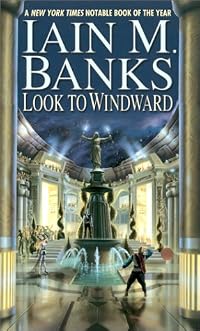
It was one of the less glorious incidents of the Idiran wars that led to the destruction of two suns and the billions of lives they supported. Now, 800 years later, the light from the first of those deaths has reached the Culture's Masaq' Orbital. A Chelgrian emissary is dispatched to the Culture.Tags
Recommendations






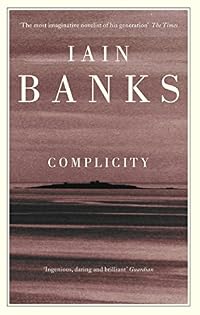
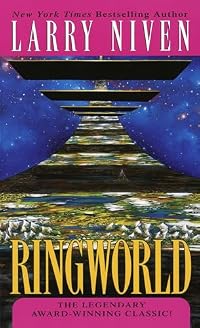
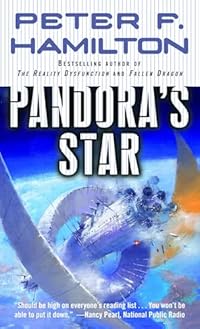
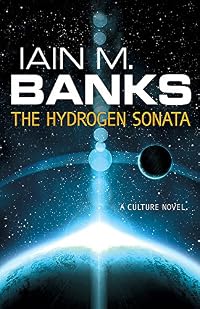




Member Recommendations
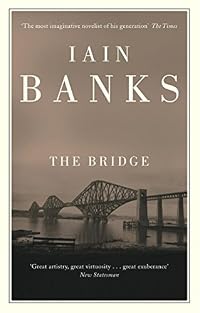
Mind_Booster_Noori This book can work loosely as a sequel to Excession. Of course that there's a lot more in it than that...
40
dkelly304 Gas Giant Creatures, Ancient Air-Based Intelligences, that don't bother anyone and have existed for billions of years. Sounds like the the behemothaur Yoleus in Look to Windward. Might also enjoy the Saga of the Seven Suns (the Hydrogues, Gas giant bad-guys).
I love the Culture Novels SO much so I may be twisted to recommend more Banks, when reading... Banks. But honestly if you really do like the range and depth of the story telling, and this story, is meta-told by a character from the story... if you like that a bit more it gives Banks greater freedom from Character Perspective when he narrates and allows him to bring a universe much like the Culture's back to life in 1 book, weaving all the nuances of almost a dozen Culture Novels into a new pattern and then deftly anchoring the story line into yet another complicated weave of flashbacks, character flaws and subtle, underplayed pivoting climaxes in the plot that make the reader double guess what was just read, and attempt to re-read back.
I say re-read back, and get the e-book version to accompany your Audio Rendition - I have the "Recorded Books Collection" version on audio and I find that the Non-Audible Style is a fresh take (even if it's a retro throw back to the 90's style recording), gives some of the more "british" aspects of Banks's style a more familiar and easily absorbed format for the American Reader/Listener.
As always Bank's need for a character (or an aspect of all of them) to be at some level, a nuisance, a spy, a bad lover with emotional baggage, once the opposite sex, several thousand years of age, in league with the enemy, using massively advanced technique technology and doing it with real gravitas when the time comes to deliver the written bomb that is the true climax to the plot in any great Banks novel. don't leave out long lists of possibles and extra things that come at the end of paragraphs - the long iterations of different like things that comically represents some aspect of the far flung society we are being told about. It is done as much to amuse us, as to bring in some of the well-known, the familiar idiocy of our current society out into the beyond in time so that when we hear of it again in story, our minds and hearts can believe it could really be so, just that much more.
For those who didn't enjoy this book as much as the culture novels, try it in Audio, or a Written Format other than e-Book - format makes a difference, I could not follow this book when it was in print, Audio Format is the only thing I was able to absorb (then I list it in my top 10 non-series Sci-Fi Novel List_#6 when I write this).
-Super Future Enthusiast and Sci-fi nerd novel reader extraordinaire
30
AlexanderM These works are both incredible pieces of literature that fit together nicely. Childhood's End and Look to Windward both have a similar view on humans as a species. Despite the fact that one is told from the humans' point of view, and the other is told from an alien races', they both give an interesting take on the future of humankind. Both are amazing pieces of literature, and I highly recommend reading them.
Member Reviews
It's hard to review a Culture novel, because there are few words capable of encompassing Iain Bank's vision. Needless to say, in a galactic utopia there are still crimes and ancient sins, and it is these that Bank's protagonists are concerned with; reparations for a civil war, the light of dying stars, and what remains when even memories are gone. Great aliens minds (and Minds), vistas to boggle the mind, and a characteristic Banksian cosmological bleakness that yet manages to carry a little hope for intelligence in a uncaring universe.
An excursion into the mid-life of the Culture, and one with almost no human protagonists. Banks has a fairly good go at writing a novel from an alien point-of-view, and whilst the end result might not seem too different to us, the exercise is well worth trying: after all, if the aliens are too alien, we won't have any point of reference to understand the story from.
The central characters in 'Look to windward' are Chelgrians, evolved predators with a fairly rigid caste system and a religion based around the reality of Sublimation, the process whereby souls (mind-states, essences, call them what you will) can migrate to a higher realm of existence, with or without technological assistance. After a civil war is precipitated by the Culture show more intervening in Chelgrian society with the best of intentions, a damaged soldier is sent by a Chelgrian faction to Masaq' Orbital, a Culture habitat where a famous Chelgrian composer, living in exile, is about to premiere a major new work marking the ending of the Idrian War (as depicted in 'Consider Phelebas'). The soldier has a mission that he has been made to forget; it may well be diplomatic, or it could be something else.
A lot of the novel is taken up with exotic travelogue as the composer and the soldier studiously avoid each other across the massive surface (mainly) of the orbital. There are also some parts of the story told in flashback, and some Special Circumstances jiggery-pokery involving megafauna in a planetary "airsphere" - effectively, a planet with no solid surface.
For all that there are very few human characters in the novel, it is a very human story, about guilt, regret and mourning. Much of the action is off-stage, but it is very central to the characters' stories and motivations. show less
The central characters in 'Look to windward' are Chelgrians, evolved predators with a fairly rigid caste system and a religion based around the reality of Sublimation, the process whereby souls (mind-states, essences, call them what you will) can migrate to a higher realm of existence, with or without technological assistance. After a civil war is precipitated by the Culture show more intervening in Chelgrian society with the best of intentions, a damaged soldier is sent by a Chelgrian faction to Masaq' Orbital, a Culture habitat where a famous Chelgrian composer, living in exile, is about to premiere a major new work marking the ending of the Idrian War (as depicted in 'Consider Phelebas'). The soldier has a mission that he has been made to forget; it may well be diplomatic, or it could be something else.
A lot of the novel is taken up with exotic travelogue as the composer and the soldier studiously avoid each other across the massive surface (mainly) of the orbital. There are also some parts of the story told in flashback, and some Special Circumstances jiggery-pokery involving megafauna in a planetary "airsphere" - effectively, a planet with no solid surface.
For all that there are very few human characters in the novel, it is a very human story, about guilt, regret and mourning. Much of the action is off-stage, but it is very central to the characters' stories and motivations. show less
revenge is measured in the billions?) and the SF concepts are powerfully explored. In addition to the travel and military training plotlines, I also enjoyed the exploration of the Sublimed - those individuals and societies that have evolved into a post-material energy state. The twist at the end was also fascinating. While I'm generally on the Culture's side, I confess to feeling a bit let down by the fact that the revenge on the Culture doesn't work. It seems like the Culture is so advanced that it cannot be threatened by anything.
This book is also the first
Some of my favourite passages:
"Some travel forever in hope and are serially disappointed. Others, slightly less self-deceiving, come to accept the process of traveling itself offers, if not fulfillment, then relief from the feeling that they should be feeling fulfilled."
"Supposedly they were infinitely patient, boundlessly resourceful, unceasingly understanding, but would not any rational mind, with or without the capital letter, grow tired of such unleavened niceness eventually? Wouldn't they want to cause just a little havoc, just once in a while, just to show that they could do?"
"It was more or less accepted in some quarters that the Culture's whole civilizational demeanour resulted from the fact that every single human in the society had been thoroughly, comprehensively,
and imaginatively spoiled as a child by everyone around them."
Either I'm getting accustomed to Banks or the plot of this one was fairly straightforward. Probably a bit of both. Really, what's not to love about the Ships, every aspect from names, classes, minds and not to mention the whole concept of the Culture and all their fantastic works on a galactic and epic scale . . . Trying to outfox Special Circumstances to wreak revenge on the Culture? Go ahead, give it a whirl, I say! Marvelous! ****1/2
This is obviously intended to be a companion piece to the first novel in Banks "Culture" series, "Consider Phlebas," since the same stanza from Eliot's "The Wasteland" gives birth to both titles. So what is the relationship between the two?
On the one level Banks Culture novels are great reading as old-school space opera galaxy-spanning conflicts, imaginatively strange worlds and powerful technologies. However as fans of Banks work know, behind the gadgetry and often horrific violence these are dense and careful philosophical meditations on ethics and morality. They are the antithesis of sci-fi in the steampunk and cyberpunk traditions, which are built around future societies that are structured by the inequalities and injustices show more spawned by the economics and politics of the enforced scarcity of Capitalism. Banks novels instead are grounded in worlds of limitless abundance: the inhabitants of the culture can do anything and be anything and go almost anywhere and live as long as they want. The almost god-like powers over matter and time are not just the preserve of a privileged elite but available to everyone. The question that is always lurking, but often at the forefront of Banks work, is how individuals in such a society, and the society itself, retains its moral and ethical grounding and perhaps even more important, a sense of purpose.
One answer to this is that almost limitless power does not guarantee an absence of testing and challenge. In response, Banks foregrounds in often surprising ways, the virtues of humility. The temptation of limitless power is arrogance and hubris; the responsibility is humility. As the Culture series evolves readers are treated to a number of instances where parts of the Culture or even its entirety are in effect humbled. There are constant reminders that as powerful and widespread as the Culture is, they are only one tiny portion of the universe; even our home galaxy remains a very mysterious place. In Look to Windward Banks drops into place a few more pieces of the puzzle that explain the broader shape of the universe by elaborating on the process of Subliming (where individuals or entire civilizations abandon the material plane of existence altogether) and introducing the Airspheres, ancient wandering habitats that orbit the galaxy and whose inhabitants are defined by something approaching cosmic time.
In this universe, the ability of the individual to make any sort of difference is almost completely erased, and it was this bleak vision that Banks established from the get-go in Consider Phlebas. The entire Culture series is in effect a reworking of the old saw: "Man plans: the Universe laughs." However, this does not mean that actions are without consequences. The relationship between Consider Phlebas iand Look to Windward is that the former is about the consequences of looking forward, or projective planning, while the latter is iin essence about looking back, and an attempt to account for--at least--or even atone for the accumulated effects of past actions. The philosophy here is involving and considered; all Banks novels are worth putting aside after you have read them and enjoyed the roller-coaster ride of the plot, and then just having a quiet think about the implications of what you've read. You will find that the implications of the story grow deeper and more thought-provoking, no more so than when you start to think about how they apply to our contemporary reality (the novel is dedicated, for example, to Gulf War veterans, a link that by the end of the novel makes perfect, if disturbing, sense).
As always, Banks sometimes has a tendency to over-explain things. He also has a tendency to lost track of the difference between characters needing to know things, and the reader needing to know things. For example, in the early part of the book we are treated to wonderful descriptions, more elaborate than in any of the other book, of what an Orbital is, how this mammoth structure works, etc. Then at a point later in the novel, it becomes necessary for a character to have it explained to them what an Orbital is and how it works. Forgetting that an alert reader will have picked all this up, Banks then embarks on pages and pages of description that tells the character new information but repeats what even a semi-alert reader will already have picked up.
Still, these lapses are rare, and Look to Windward not only deepens the larger world-building project of the Culture series but for reflective readers offers a lot of thought-provoking material. show less
On the one level Banks Culture novels are great reading as old-school space opera galaxy-spanning conflicts, imaginatively strange worlds and powerful technologies. However as fans of Banks work know, behind the gadgetry and often horrific violence these are dense and careful philosophical meditations on ethics and morality. They are the antithesis of sci-fi in the steampunk and cyberpunk traditions, which are built around future societies that are structured by the inequalities and injustices show more spawned by the economics and politics of the enforced scarcity of Capitalism. Banks novels instead are grounded in worlds of limitless abundance: the inhabitants of the culture can do anything and be anything and go almost anywhere and live as long as they want. The almost god-like powers over matter and time are not just the preserve of a privileged elite but available to everyone. The question that is always lurking, but often at the forefront of Banks work, is how individuals in such a society, and the society itself, retains its moral and ethical grounding and perhaps even more important, a sense of purpose.
One answer to this is that almost limitless power does not guarantee an absence of testing and challenge. In response, Banks foregrounds in often surprising ways, the virtues of humility. The temptation of limitless power is arrogance and hubris; the responsibility is humility. As the Culture series evolves readers are treated to a number of instances where parts of the Culture or even its entirety are in effect humbled. There are constant reminders that as powerful and widespread as the Culture is, they are only one tiny portion of the universe; even our home galaxy remains a very mysterious place. In Look to Windward Banks drops into place a few more pieces of the puzzle that explain the broader shape of the universe by elaborating on the process of Subliming (where individuals or entire civilizations abandon the material plane of existence altogether) and introducing the Airspheres, ancient wandering habitats that orbit the galaxy and whose inhabitants are defined by something approaching cosmic time.
In this universe, the ability of the individual to make any sort of difference is almost completely erased, and it was this bleak vision that Banks established from the get-go in Consider Phlebas. The entire Culture series is in effect a reworking of the old saw: "Man plans: the Universe laughs." However, this does not mean that actions are without consequences. The relationship between Consider Phlebas iand Look to Windward is that the former is about the consequences of looking forward, or projective planning, while the latter is iin essence about looking back, and an attempt to account for--at least--or even atone for the accumulated effects of past actions. The philosophy here is involving and considered; all Banks novels are worth putting aside after you have read them and enjoyed the roller-coaster ride of the plot, and then just having a quiet think about the implications of what you've read. You will find that the implications of the story grow deeper and more thought-provoking, no more so than when you start to think about how they apply to our contemporary reality (the novel is dedicated, for example, to Gulf War veterans, a link that by the end of the novel makes perfect, if disturbing, sense).
As always, Banks sometimes has a tendency to over-explain things. He also has a tendency to lost track of the difference between characters needing to know things, and the reader needing to know things. For example, in the early part of the book we are treated to wonderful descriptions, more elaborate than in any of the other book, of what an Orbital is, how this mammoth structure works, etc. Then at a point later in the novel, it becomes necessary for a character to have it explained to them what an Orbital is and how it works. Forgetting that an alert reader will have picked all this up, Banks then embarks on pages and pages of description that tells the character new information but repeats what even a semi-alert reader will already have picked up.
Still, these lapses are rare, and Look to Windward not only deepens the larger world-building project of the Culture series but for reflective readers offers a lot of thought-provoking material. show less
Very readable, fascinating characters, multiple plot thread that come together, but not always in expected ways. A many-layered story, thought-provoking and yet an enjoyable read.
I bought this book some years ago (pre-2002 as the price sticker was in Irish pounds (9.99 of them) and the euro came in on Jan 1st, 2002.). The book was first published in 2000, so I took my time before getting around to it. It was the only Banks book I haven’t read and I’m glad I eventually got to it. It is actually the first Banks book that I didn’t devour immediately on purchase.
Had it been written post 2001 people might have accused Iain of getting his inspiration from the 9/11 incident and the subsequent war on terror. There are many parallels with a major attack planned and the discussion of wars between significantly different cultures.
The book is strongly anti-war and yet is a great espionage thriller. I have often stated show more that Iain tries to do something different with each of his mainstream books and I have indicated the different styles he has used for many of them, e.g. Canal Dreams is his Fredrick Forsythe book, Whit is Agatha Christie, etc… In this vein I would call Look to Windward his Le Carré. There are so many intrigues and twists that the old spy master would have been proud to have written this plot.
Apart from the parallels with serious issues and the comparisons with other writers, Look to Windward is an enjoyable tale populated with strong, believable characters moving in a rich environment at both the micro and macro level.
Iain’s descriptions of an orbital, home to 50 billion people, are carefully crafted to provide a vivid picture in the reader’s mind. This same skill is used to create images of the inside of the giant behemothaurs and of the microscopic nanotechnology used by the Culture.
A fascinating book, enjoyable on many levels, and having read it at this stage I was struck by how much one could consider it prophetic in the light of world events. show less
Had it been written post 2001 people might have accused Iain of getting his inspiration from the 9/11 incident and the subsequent war on terror. There are many parallels with a major attack planned and the discussion of wars between significantly different cultures.
The book is strongly anti-war and yet is a great espionage thriller. I have often stated show more that Iain tries to do something different with each of his mainstream books and I have indicated the different styles he has used for many of them, e.g. Canal Dreams is his Fredrick Forsythe book, Whit is Agatha Christie, etc… In this vein I would call Look to Windward his Le Carré. There are so many intrigues and twists that the old spy master would have been proud to have written this plot.
Apart from the parallels with serious issues and the comparisons with other writers, Look to Windward is an enjoyable tale populated with strong, believable characters moving in a rich environment at both the micro and macro level.
Iain’s descriptions of an orbital, home to 50 billion people, are carefully crafted to provide a vivid picture in the reader’s mind. This same skill is used to create images of the inside of the giant behemothaurs and of the microscopic nanotechnology used by the Culture.
A fascinating book, enjoyable on many levels, and having read it at this stage I was struck by how much one could consider it prophetic in the light of world events. show less
Members
- Recently Added By
Published Reviews
ThingScore 75
Banks writes with a sophistication that will surprise anyone unfamiliar with modern science fiction. He begins in medias res, introducing characters, places and events that are not explained in detail until many pages later. [...] The deus ex machina ending will strike some as too easy. But as in all good fiction, what's important in Banks's work is the subtext, which I take to be the idea show more that freedom is both necessary and dangerous, and that only by imagining the unimaginable, both in ourselves and others, can we hope to remain free. show less
added by Widsith
.. he is not afraid to to ponder the implications of his flash-bang spectaculars. He examines the fine distinction between hedonism (what the Culture thinks it practises) and decadence (what many others perceive), as well as the responsibilities that come with immeasurable power. An enjoyable romp is overlaid with tragedy as he rubs our noses in the consequences of war: ...
added by andyl
Lists

NPRs your picks: top 100 Sci-Fi/Fantasy books
297 works; 78 members

Books We Love to Reread
688 works; 296 members

Books Read in 2018
4,360 works; 110 members
Talk Discussions
Past Discussions
LOOK TO WINDWARD discussion (The Culture group read) in 75 Books Challenge for 2014 (October 2014)
Author Information

76+ Works 92,992 Members
Iain Banks was born in Fife in 1954 and was educated at Stirling University where he studied English Literature, Philosophy and Psychology. Banks came to widespread and controversial public note with the publication of his first novel, The Wasp Factory, in 1984. His first science fiction novel, Consider Phlebas, was published in 1987. He continued show more to write both mainstream fiction (as Iain Banks) and science fiction (as Iain M. Banks). Banks' mainstream fiction included The Wasp Factory (1984), Walking on Glass (1985), The Bridge (1986), Espedair Street (1987), Canal Dreams (1989), The Crow Road (1992), Complicity (1993), Whit (1995), A Song of Stone (1997), The Business (1999), Dead Air (2002) and The Steep Approach to Garbadale (2007). His final book, The Quarry, was released posthumously on June 20, 2013. Banks died on June 9, 2013 of terminal gall bladder cancer. (Bowker Author Biography) show less
Some Editions
Awards and Honors
Distinctions
Notable Lists
Series

Belongs to Publisher Series
Work Relationships
Common Knowledge
- Canonical title*
- Le sens du vent
- Original title
- Look to Windward
- Original publication date
- 2000
- People/Characters
- Masaq' Hub Mind; Tibilo Quilan; Mahrai Ziller; Kabe Ischloear; Tersono; Sholan Hadesh Huyler (show all 8); Uage Zlepe; Worosei
- Important places
- Masaq' Orbital; Oskendari Airsphere; Chel
- Epigraph
- "Gentile or Jew
O you who turn the wheel and look to windward,
Consider Phlebas, who was once handsome and tall as you."
T. S. Eliot,
'The Waste Land', IV - Dedication
- For the Gulf War Veterans
- First words
- Near the time we both we knew I would have to leave him, it was hard to tell which flashes were lightning and which came from the energy weapons of the Invisibles. (Prologue)
The barges lay on the darkness of the still canal, their lines softened by the snow heaped in pillows and hummocks on their decks. - Quotations
- "Believe me; democracy in action can be an unpretty sight."
- Last words
- (Click to show. Warning: May contain spoilers.)By the time the warhead in Eweirl's brain exploded a few minutes later, she had become an attenuated column of greyness sucking itself up into the sky high above.
(Click to show. Warning: May contain spoilers.)Life never ceases to surprise. (Epilogue) - Original language
- English
- Canonical DDC/MDS
- 823.087625
*Some information comes from Common Knowledge in other languages. Click "Edit" for more information.
Classifications
- Genres
- Science Fiction, Fiction and Literature
- DDC/MDS
- 823.087625 — Literature & rhetoric English & Old English literatures English fiction By type Genre fiction Adventure fiction Speculative fiction Science fiction Space opera
- LCC
- PR6052 .A485 .L66 — Language and Literature English English Literature 1961-2000
- BISAC
Statistics
- Members
- 4,460
- Popularity
- 3,298
- Reviews
- 83
- Rating
- (3.95)
- Languages
- 7 — English, Finnish, French, German, Hungarian, Italian, Spanish
- Media
- Paper, Audiobook, Ebook
- ISBNs
- 24
- ASINs
- 18