PGMCC's 2016 sojourn through the pages - Volume 2
This is a continuation of the topic PGMCC's 2016 sojourn through the pages. .
This topic was continued by PGMCC reading in 2017 - Volume 1.
Talk The Green Dragon
Join LibraryThing to post.
This topic is currently marked as "dormant"—the last message is more than 90 days old. You can revive it by posting a reply.
1pgmcc
Read in 2016
Title Author Status/end date
Numero Zero by Umberto Eco 04/01/2016 191pages
Mindfulness: A practical guide to finding peace in a frantic world by Mark Williams & Danny Penman 18/01/2016 264 pages
The Secret History by Donna Tartt 27/01/2016 660pages
Three Stations by Martin Cruz Smith 31/01/2016 277pages
Look to Windward by Iain M. Banks 12/02/2016 403pages
An Eochair (The Key) by Máirtín Ó Cahdain 14/02/2016 52 pages
The Signal and the Noise by Nate Silver 18/02/2016 ABANDONED 73pages
Hear the Wind Sing by Haruki Murakami 21/02/2016 152pages
Pinball, 1973 by Haruki Murakami 24/02/2016 162pages
Where I'm Reading From Reading
Nine Tailors by Dorothy L. Sayers 10/03/2016 374pages
Murder Must Advertise by Dorothy L. Sayers 23/03/2016 388pages
The Ultimate Guide to Business Process Management by Theodore Panagacos Reading
Mouse or Rat by Umberto Eco 10/04/2016 193pages
Call for the Dead by John Le Carré 04/2016
Slade House by David Mitchell 31/03/2016 233pages
The Stone Raft by José Saramago 30/04/2016
Whose Body? by Dorothy L Sayers 06/05/2016. 191pages
Graveyard Clay by Mártín Ó Cadhain 27/05/2016 315pages
The Duel by Alexander Pushkin 25/05/2016 12pages
The Corporation Wars by Ken MacLeod 05/06/2016 326pages
Barchester Towers by Anthony Trollope 05/07/2016 530pages
The Three-Body Problem by Cixin Liu 27/07/2016 ?pages
Earth-Bound and other Supernatural Tales by Dorothy MacArdle 05/08/2016 134pages
Towards the End of the Morning by Michael Frayn 19/08/2016
Great Expectations by Charles Dickens 22/09/2016 555pages
The ABC Murders by Agatha Christie 29/09/2016 192pages
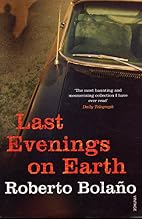
Last Evenings on Earth by Roberto Bolano Reading
The Haunted Hotel by Wilkie Collins 07/10/2016 149pages
Hopscotch by Brian Garfield 15/10/2016 187pages
Don't Look Now by Daphne Du Maurier 17/10/2016 57pages
The Phantom Tollbooth by Norton Juster 20/10/2016 256pages
Pietr the Latvian by Georges Simenon 22/10/2106 162pages
The Woman in White by Wilkie Collins 14/11/2016 569pages
The Fall by Albert Camus 25/11/2016 92pages
Maigret Meets a Milord by Georges Simenon 18/11/2016 124pages
The Three Impostors and Other Stories by Arthur Machen 08/12/2016 234pages
The Corporation Wars: Insurgence by Ken MacLeod 20/12/2016 309pages
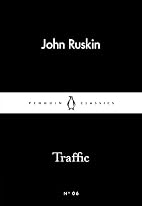
Traffic by John Ruskin 22/12/2016 32pages
CURRENTLY READING:
Title Author Status/end date
Numero Zero by Umberto Eco 04/01/2016 191pages
Mindfulness: A practical guide to finding peace in a frantic world by Mark Williams & Danny Penman 18/01/2016 264 pages
The Secret History by Donna Tartt 27/01/2016 660pages
Three Stations by Martin Cruz Smith 31/01/2016 277pages
Look to Windward by Iain M. Banks 12/02/2016 403pages
An Eochair (The Key) by Máirtín Ó Cahdain 14/02/2016 52 pages
The Signal and the Noise by Nate Silver 18/02/2016 ABANDONED 73pages
Hear the Wind Sing by Haruki Murakami 21/02/2016 152pages
Pinball, 1973 by Haruki Murakami 24/02/2016 162pages
Where I'm Reading From Reading
Nine Tailors by Dorothy L. Sayers 10/03/2016 374pages
Murder Must Advertise by Dorothy L. Sayers 23/03/2016 388pages
The Ultimate Guide to Business Process Management by Theodore Panagacos Reading
Mouse or Rat by Umberto Eco 10/04/2016 193pages
Call for the Dead by John Le Carré 04/2016
Slade House by David Mitchell 31/03/2016 233pages
The Stone Raft by José Saramago 30/04/2016
Whose Body? by Dorothy L Sayers 06/05/2016. 191pages
Graveyard Clay by Mártín Ó Cadhain 27/05/2016 315pages
The Duel by Alexander Pushkin 25/05/2016 12pages
The Corporation Wars by Ken MacLeod 05/06/2016 326pages
Barchester Towers by Anthony Trollope 05/07/2016 530pages
The Three-Body Problem by Cixin Liu 27/07/2016 ?pages
Earth-Bound and other Supernatural Tales by Dorothy MacArdle 05/08/2016 134pages
Towards the End of the Morning by Michael Frayn 19/08/2016
Great Expectations by Charles Dickens 22/09/2016 555pages
The ABC Murders by Agatha Christie 29/09/2016 192pages
Last Evenings on Earth by Roberto Bolano Reading
The Haunted Hotel by Wilkie Collins 07/10/2016 149pages
Hopscotch by Brian Garfield 15/10/2016 187pages
Don't Look Now by Daphne Du Maurier 17/10/2016 57pages
The Phantom Tollbooth by Norton Juster 20/10/2016 256pages
Pietr the Latvian by Georges Simenon 22/10/2106 162pages
The Woman in White by Wilkie Collins 14/11/2016 569pages
The Fall by Albert Camus 25/11/2016 92pages
Maigret Meets a Milord by Georges Simenon 18/11/2016 124pages
The Three Impostors and Other Stories by Arthur Machen 08/12/2016 234pages
The Corporation Wars: Insurgence by Ken MacLeod 20/12/2016 309pages
Traffic by John Ruskin 22/12/2016 32pages
CURRENTLY READING:
2pgmcc
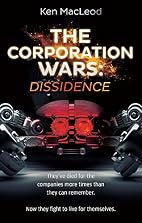
I am about to read, The Corporation Wars: Dissidence.
Why have I chosen to read this now, and why did I acquire it?
I discovered the work of Ken MacCleod many moons ago. I had picked up one of his novels as a trial and realised I liked his politically motivated Science Fiction. Subsequently I went on to read a few more of his novels and enjoyed his science, his politics, his humour, and his tendency to explore ideas to their logical conclusion.
Somewhere along the way I got to meet Ken at a few conventions and enjoyed his way of thinking.
Ken was a friend of Iain Banks, my favourite author. He had been a few years ahead of Iain at school (high school in American terms) and they lived across the Firth of Forth from one another. They met regularly to discuss their writing and bounce ideas off one another.
After Iain's death in 2013 Ken was very upset. As time went on and no new book from Ken appeared I was getting worried that Iain's death had put him off his stride and that we would see no more Ken MacCleod books. Then a couple of months ago I spotted a post by Ken that he had a trilogy called, "The Corporation Wars", coming out with the first novel, "Dissidence" being published in May. I immediately pre-ordered the book.
Ken was good enough to let me read a proof copy of his novel, Restoration Game, and to give him comments. When the book appeared in the shops I was delighted to discover that he had included my name in the acknowledgements for providing comments on his early draft. I was, and still am, chuffed.
I anticipate enjoying Dissidence. Ken has not disappointed me yet with his writing.
Why have I chosen to read this now, and why did I acquire it?
I discovered the work of Ken MacCleod many moons ago. I had picked up one of his novels as a trial and realised I liked his politically motivated Science Fiction. Subsequently I went on to read a few more of his novels and enjoyed his science, his politics, his humour, and his tendency to explore ideas to their logical conclusion.
Somewhere along the way I got to meet Ken at a few conventions and enjoyed his way of thinking.
Ken was a friend of Iain Banks, my favourite author. He had been a few years ahead of Iain at school (high school in American terms) and they lived across the Firth of Forth from one another. They met regularly to discuss their writing and bounce ideas off one another.
After Iain's death in 2013 Ken was very upset. As time went on and no new book from Ken appeared I was getting worried that Iain's death had put him off his stride and that we would see no more Ken MacCleod books. Then a couple of months ago I spotted a post by Ken that he had a trilogy called, "The Corporation Wars", coming out with the first novel, "Dissidence" being published in May. I immediately pre-ordered the book.
Ken was good enough to let me read a proof copy of his novel, Restoration Game, and to give him comments. When the book appeared in the shops I was delighted to discover that he had included my name in the acknowledgements for providing comments on his early draft. I was, and still am, chuffed.
I anticipate enjoying Dissidence. Ken has not disappointed me yet with his writing.
3pgmcc
Having visited my utterly beautiful, one day old, granddaughter at the hospital this morning my wife and I ventured into town to buy some clothes for my daughter and our grandchild. (The grandparent thing might be fun.) I dropped my wife at one shop and drove across town to park near the second shop she wanted to visit. I was instructed to go to a bookshop while waiting for my wife to finish her shopping and cross over where she would meet me. What was I to do? It would have been rude to go into a bookshop and not buy a book.
Here's the result:
Silence by Shusaku Endo
The Poison Artist by Jonathan Moore
The Long Way to a Small Angry Planet by Becky Chambers
The last book must be considered to be a book bullet as my decision to buy it was influenced by comments I have read on LT from people of impeccable taste when it comes to books.
The shop had a "buy 2 get one free" offer, so having picked one book I had to pick another two. It was a hopeless situation. Everything was out of my control. I was just doing what I was told and...
Here's the result:
Silence by Shusaku Endo
The Poison Artist by Jonathan Moore
The Long Way to a Small Angry Planet by Becky Chambers
The last book must be considered to be a book bullet as my decision to buy it was influenced by comments I have read on LT from people of impeccable taste when it comes to books.
The shop had a "buy 2 get one free" offer, so having picked one book I had to pick another two. It was a hopeless situation. Everything was out of my control. I was just doing what I was told and...

6pgmcc
>5 Peace2: Thank you! I think it's going to be fun; spoiling a child and having no guilt. What more could I ask for?
Now, what books can I buy her for tomorrow?
Now, what books can I buy her for tomorrow?
7Meredy
The Poky Little Puppy.
The Little Rabbit Who Wanted Red Wings.
The Tale of Peter Rabbit.
The Elephant's Child.
That ought to get her started.
Oh, and a blank notebook for her autobiography.
The Little Rabbit Who Wanted Red Wings.
The Tale of Peter Rabbit.
The Elephant's Child.
That ought to get her started.
Oh, and a blank notebook for her autobiography.
8Bookmarque
She's lovely. Congratulations.
9tardis
Wow, she's perfect!
I recommend Goodnight Moon by Margaret Wise Brown. I read that to my kids about a bazillion times (at their request).
I recommend Goodnight Moon by Margaret Wise Brown. I read that to my kids about a bazillion times (at their request).
10SylviaC
She's beautiful!
I second the suggestion of Goodnight Moon. It was the first book that I read to both of my babies, and now they are avid readers, so it must have worked! Another good one is Silly Sally by Audrey Wood. Jamberry by Bruce Degen is also fun to read aloud.
I second the suggestion of Goodnight Moon. It was the first book that I read to both of my babies, and now they are avid readers, so it must have worked! Another good one is Silly Sally by Audrey Wood. Jamberry by Bruce Degen is also fun to read aloud.
11jillmwo
We love baby pictures in the Pub! Congrats to your family on such a lovely addition!
Edited to add book titles for small children:
Moo, Baa, La, La, La
Goodnight Moon
Now We Are Six
and any Mother Goose you can remember!
Edited to add book titles for small children:
Moo, Baa, La, La, La
Goodnight Moon
Now We Are Six
and any Mother Goose you can remember!
12Peace2
Children's books, hmmmm - where to start? How about some authors instead? I love some of Nick Butterworth's work - Percy the Park keeper series, Amanda's Butterfly, Wonderful Earth amongst many others. Julia Donaldson has done some great books with illustrations by Axel Scheffler (and touchstones work so much better when the letters are in the right order) - The Gruffalo, The Snail and The Whale, Room on the Broom, A Squash and a Squeeze. Oliver Jeffers - The Day the Crayons Quit (he illustrated this one), Lost and Found and How to Catch a Star. Eric Carle - The Very Hungry Caterpillar, Brown Bear, Brown Bear, What do you see? (illustrator of this one) and Slowly, slowly, slowly said the Sloth (again among many others).
Oh, to have the fun of going to pick books for a little one - there are sooooooo many to choose from. You have many hours of pleasure ahead in the picking as well as the sharing I'm certain.
Oh, to have the fun of going to pick books for a little one - there are sooooooo many to choose from. You have many hours of pleasure ahead in the picking as well as the sharing I'm certain.
13clamairy
>4 pgmcc: AHHH, what a beautiful baby. :o) With a lovely name to match. You must be ecstatic. :o)
As to your comments on Joyce in the first half of your journal, well, I'm on the fence. I adored Dubliners. Especially the short story The Dead, which blew my socks right off when I read it. I somehow made it through Ulysses in graduate school without comprehending much of anything about it. I have toyed with the idea of listening to the audio and seeing if that brings any clarity, but I'm not sure if my aging brain could handle it.
Again, congrats on that glorious baby. :o) *hugs*
As to your comments on Joyce in the first half of your journal, well, I'm on the fence. I adored Dubliners. Especially the short story The Dead, which blew my socks right off when I read it. I somehow made it through Ulysses in graduate school without comprehending much of anything about it. I have toyed with the idea of listening to the audio and seeing if that brings any clarity, but I'm not sure if my aging brain could handle it.
Again, congrats on that glorious baby. :o) *hugs*
14Sakerfalcon
What a beautiful little girl! I am not surprised you're doting on her already.
My pick for best children's book is How to hide a lion. Unlike most board books it has a plot that adults will enjoy too. And of course there is The tiger who came to tea and the Mog books (you may notice a theme here ...)
My pick for best children's book is How to hide a lion. Unlike most board books it has a plot that adults will enjoy too. And of course there is The tiger who came to tea and the Mog books (you may notice a theme here ...)
15MrsLee
> 4 Captivating, charming and lovely!
I have an idea this will add a whole new (or forgotten) experience to your bookstore browsing. The children's sections are great fun.
I have an idea this will add a whole new (or forgotten) experience to your bookstore browsing. The children's sections are great fun.
16MerryMary
Such a beautiful girl-child!
So many of my favorite titles have already been mentioned. I might suggest I Already Know I Love You by Billy Crystal. Lyrical and sweet...and written from the viewpoint of a grandfather. How perfect is that??
So many of my favorite titles have already been mentioned. I might suggest I Already Know I Love You by Billy Crystal. Lyrical and sweet...and written from the viewpoint of a grandfather. How perfect is that??
17pgmcc
Thank you, everyone, for all the good wishes and all the book recommendations. Tara is going to have a vast library before very long.
As you might imagine I have been busy running about doing granddad things. (Mostly carrying shopping for Grandma.)
Of course, one cannot have anything without other people wanting in on the act. One of my brothers rang me yesterday to inform me of the birth of his 12th grandchild. Show off!
As you might imagine I have been busy running about doing granddad things. (Mostly carrying shopping for Grandma.)
Of course, one cannot have anything without other people wanting in on the act. One of my brothers rang me yesterday to inform me of the birth of his 12th grandchild. Show off!
19Jim53
>4 pgmcc: I'm a bit late to the party, but congratulations to you and your family! I can attest from four-plus years' experience that grandparenthood is tremendous fun.
20pgmcc
>19 Jim53: Thank you for the congratulations and the assurance the my new role is tremendous fun. I had my suspicions in that direction.
21pgmcc

It is difficult to know where to start when reviewing “The Corporation Wars: Dissidence”, part I of The Corporation Wars trilogy by Ken MacLeod, as it contains a wide range of themes, ideas and story threads.
I suppose I will start by saying that I enjoyed it very much. It is a story that one can enjoy without delving into the layers of meaning and allegory that Ken has embedded in the book. It is very much a setting the scene novel for the trilogy. One could read it as a standalone novel but one would have to then live with the yearning for more that this volume leaves the reader with. The next edition is due for release in December, 2016 and I will be reading it as soon as it comes out.
I have always believed in the ideas (and I do not know who came up with them first – citations welcome if you know their origin) that “to write the truth one should write fiction”, and “to write about the present one should write Science Fiction”. (Please forgive the paraphrasing.) It is my belief that these two ideas are very applicable Ken’s writing. I also believe that Orwell’s idea that “whoever controls the present controls history, and whoever controls history controls the future,” (Again, apologies for paraphrasing but at least I know whose idea this one was.) is present in “The Corporation Wars: Dissidence” (I will just call it “Dissidence” from here on in.). (Disclaimer: The statements in this paragraph represent my own perceptions and inferences rather than knowledge based on any comments or statements by Ken MacLeod. The novel is only a story; a work of fiction; Science Fiction, in fact.)
The main story is about a dispute between two corporations. That sounds simple enough and possibly even boring until one learns that the dispute is triggered by a territorial dispute brought about by two robots arguing over the territorial rights of their respective corporations, on a moon, around a planet, some 23 light years from Earth. These robots were no ordinary robots. They had just developed self-awareness, but that is another story thread, one that leads in the direction of self-determination and freedom, and many, many other ideas along that road.
Another aspect of the novel is automation. The recent non-fiction book, "The Rise of the Robots: Technology and the Threat of Mass Unemployment" (2015) by Martin Ford, describes the increased automation of jobs at all levels, and the way technology globalises the competition for the remaining high value jobs that require humans to be in the role. This idea is part of the back story for “Dissidence”. On of his characters considers thoughts prevalent at the end of the twenty-first century with the words:
“The only celebrity worth striving for was for the whole human race to become world famous. The only Utopia worth dreaming of was for everyone in the world to have First World Problems.
….Let it rip, let it run wild until full automation created full unemployment and confronted everyone with the choice to get on with the real work, and off the treadmill of fake work and make-work to pay the debt to buy the goods to make the make-work feel worthwhile and the exhausted, empty time tagged as leisure pass painlessly enough…”
“Dissidence” takes place in a world where the legal firms are AIs (Artificial Intelligences), legal actions (writs, etc…), fly back and forward with the same speed as the buy and sell transactions that were executed by the automated stock exchange trading systems, and that exacerbated the fall of share values during stock market crashes in the dot-bomb crash and subsequent market disasters. It is a world where nobody can be sure what is true and what is false; who is telling the truth and who is telling untruths, either knowingly or through their own ignorance or gullibility; or whether the world one is in is real or a simulation.
Equality is another topic under the surface in “Dissidence”. The main characters are human, in origin, as opposed to virtual constructs, or full blown AIs, or consciousnesses that came into existence through the occurrence of spontaneous self-awareness. Questions of self and being are obvious consequences of this mix of beings, if that word can be used for entities that exist in the virtual world, albeit in real world hardware constructed at the behest of AIs and other virtual beings. Even the human minds are reinstated instances of people from the long distant past, or so we are told.
Ken MacLeod has incorporated (if you excuse the pun) one company’s AI avatar in the person of John Locke, a philosopher whose work included much consideration of the concept of self. This is very apropos given the nature of virtually (another pun) every character in this story. It begs the question, “What is life?”
As I was trying to gather my thoughts for this review I jotted down a list of topics that I found in the pages of the novel. I present the list below:
Politics
Philosophy
Technology
Love
Loss
Economics
Exploitation
Loyalty
Deception
Betrayal
Manipulation
What is life?
Sentience/self determination
Free will
I will not pretend to have fathomed all the layers of meaning, philosophical conundrums, and political tenets that have been included in this novel (knowingly or otherwise) by the author, but I will claim to have found the work thought provoking, pertinent to today’s political, economic/commercial, and technological trends, and a great read. The main story is entertaining, exciting and intriguing. All in all, a very worthwhile read that has me on the edge of my seat for the next exciting episode. It also has me wondering if the reality that Ken has established in this first novel of the trilogy will continue to be the reality in the subsequent books.
ETA: I am rather pleased with myself. I posted this review on Twitter last night and this morning I discovered Ken MacLeod had reTweeted it. :-)
22pgmcc
I have started reading Barchester Towers and am enjoying Trollope's style and wit.
24Sakerfalcon
>21 pgmcc: I've only read Intrusion by Macleod but I thought it was excellent. I shall look out for a copy of this new one, based on your thoughtful and enthusiastic review.
25pgmcc
>24 Sakerfalcon: I have enjoyed a lot of Ken's novels. I must do a note on each one. It will be hard to remember the details of ones I read some time ago.
26pgmcc
This is a quick drive-by post to let the Trolloponians know that I am really enjoying Barchester Towers.
27jillmwo
*thumbs up* And with a certain degree of infuriating smugness, I will note that I am not surprised. You are a discerning reader.
28Sakerfalcon
>26 pgmcc: Great news!
29pgmcc
>27 jillmwo: & >28 Sakerfalcon:
I am feeling that this particular book bullet involved snipers positioned all around me. I feel quite riddled.
How nice!
I am feeling that this particular book bullet involved snipers positioned all around me. I feel quite riddled.
How nice!
30pgmcc
Those of you who have praised The Three Body Problem and attempted to inflict a BB wound on me should take some credit for my Friday night decision to buy the book. You had softened me up to the degree that when I met a new acquaintance on Friday night who is currently reading and enjoying The Three Body Problem I made the decision to acquire it. He was very enthusiastic about it.
31pgmcc
My three recent acquisitions
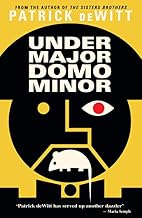
Under Major Domo Minor was acquired because I enjoyed De Witt's earlier novels, in particular, The Sisters Brothers.
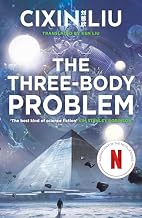
This acquisition is the result of some softening up fire from the LT BB guns followed up with my meeting someone last Friday night who endorsed the book so enthusiastically I had to through myself into the open and let all the BBs hit me.

This is the latest publication from The Swan River Press, is Ireland's only publishing house dedicated to literature of the gothic, fantastic, strange and supernatural. That in itself is sufficient reason for me to buy Earth-Bound but the more important reason is that the book is a collection of short stories written by Dorothy MacArdle while she was in prison for her actions during the 1916 Easter Rising.
Under Major Domo Minor was acquired because I enjoyed De Witt's earlier novels, in particular, The Sisters Brothers.
This acquisition is the result of some softening up fire from the LT BB guns followed up with my meeting someone last Friday night who endorsed the book so enthusiastically I had to through myself into the open and let all the BBs hit me.

This is the latest publication from The Swan River Press, is Ireland's only publishing house dedicated to literature of the gothic, fantastic, strange and supernatural. That in itself is sufficient reason for me to buy Earth-Bound but the more important reason is that the book is a collection of short stories written by Dorothy MacArdle while she was in prison for her actions during the 1916 Easter Rising.
32jillmwo
You might want to check the touchstone for Earth-Bound as it's not going to Dorothy MacArdle's work. (May not be listed in the LT database yet?)
36tardis
>35 clamairy: Nope, it's tomorrow. July 1st.
37SylviaC
>35 clamairy: Don't worry—it's tomorrow.
39suitable1
>38 clamairy: Canada Day has an Eve?
40clamairy
>39 suitable1: Everything worth celebrating does!
41SylviaC
>38 clamairy: Judging by the traffic and the fireworks, I would say yes.
44clamairy
>42 suitable1: Officially, no. But we celebrate it, for sure. Especially when the 4th is a Monday.
45pgmcc
I am at the Thornes' residence for their excellent social event. Mrs Bold is having a rough day and the clerical guests are all in a tizzy.
About 100 pages to go.
About 100 pages to go.
47pgmcc
I have just finished Barchester Towers by Anthony Trollope.
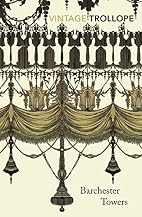
Thank you to all the LT members who encouraged my trying a book by Trollope. I had no idea how witty he was, or that he was such an astute observer of humanity. More later, but for now, brilliant!
Thank you to all the LT members who encouraged my trying a book by Trollope. I had no idea how witty he was, or that he was such an astute observer of humanity. More later, but for now, brilliant!
48clamairy
>47 pgmcc: Wait... did you read The Warden first? I'm glad you liked it. I recently watched Dr. Thorne on Amazon and really enjoyed it. Enough so that I think I'll be attempting Can You Forgive Her? one of these months.
49pgmcc
>48 clamairy: Until I read Barchester Towers I was a Trollope virgin which sounds like an oxymoron. The only things I knew about Anthony Trollope or his work before I read Barchester Towers was that he was an English author, that he worked in the post office in London and that his boss thought he was such a poor worker he was going to sack him but sent him to the Dublin General Post Office to give him a final chance. While in Ireland he was responsible for spreading postal services throughout rural Ireland, invented the pillar box, and became a great asset to the organisation. I also knew that several people on LT thought highly of his work.
I had no idea his work was so funny, no idea how his novels were sequenced or grouped, and had no idea whatsoever about the subject matter of his writing.
I will now look into his oeuvre with the intention of reading more of his novels. ("Oeuvre" always sounds such a pretentious word but if one cannot use pretentious words on a website dedicated to books where can one use them?)
Any advice on Trollope's work would be gratefully received. I hope you will still talk to me even thought I have read a book out of sequence.
I had no idea his work was so funny, no idea how his novels were sequenced or grouped, and had no idea whatsoever about the subject matter of his writing.
I will now look into his oeuvre with the intention of reading more of his novels. ("Oeuvre" always sounds such a pretentious word but if one cannot use pretentious words on a website dedicated to books where can one use them?)
Any advice on Trollope's work would be gratefully received. I hope you will still talk to me even thought I have read a book out of sequence.
50jillmwo
I'm so glad you enjoyed Barchester Towers. Trollope is definitely a keeper in my estimation. But I still think you should read The Warden, even if you will be doing it out of order. The only truly "sad" one of the series is The Last Chronicle of Barset and even that has those moments of wit to relieve the emotion.
51clamairy
>49 pgmcc: I am also a Trollope virgin. Though I did get about 20 pages into Doctor Thorne (on my phone) a couple of weeks ago while waiting for my car to be serviced. I did not know about his stint at the post office in Dublin. That is an awesome tale!
52Sakerfalcon
It's amazing that he had time to write so many books (and most of them are not short) while achieving so much for the Irish Postal Service!
53MrsLee
Very glad you enjoyed it! I read Trollope out of order as well, beginning with Barchester Towers, then reading The Warden, and I'm glad I did because I'm not sure I would have read more if The Warden had been the first read. Not all Trollope stories are equal IMO (for instance I didn't care for Can You Forgive Her), but his humor and insight make the reading well worth the while.
54pgmcc
The Warden is on order so that has to count as a book bullet. I am obviously on open ground and surrounded by snipers.
55jillmwo
Well, the good news is that it will take you some time to finish all 47 novels written by Trollope! You're set for at least a year or two!
56pgmcc
An unexpected Book Sale in Donegal yielded three Anthony Trollope's (including Dr. Thorne), two George A. Birminghams, a Kurt Vonnegut, and a few other books that I cannot remember at the moment (detailed list to be provided this evening when I get home) for the princely asking price of 3 euros (3.3 US Dollars). The sale was for charity so I gave more than the asking price and still thought I got a bargain.
57pgmcc
My haul from the unexpected Book Sale and the reasons I picked these books.

From the top down:
Trollope
Nina Balatka & Linda Tressel (one volume)
The Golden Lion of Grandpere
Doctor Thorne
Reason: Frequent visitors to this thread will know that I have recently fallen under the charms of Anthony Trollope's writing. When I saw three Trollopes in the sale there was nothing else for me to do but buy them.
Kurt Vonnegut
Mother Night
Reason: I like Vonnegut's work and this was one I had not seen before so I snatched it up.
Walter de la Mare
On the Edge
Reason: I read his book, The Return, and enjoyed it greatly. I hope to repeat the pleasure.
H. Rider Haggard
She ("Harry Potter and the Sorcerer's Stone" according to the Touchstone.)
Reason: The name rang a bell so I picked it up as a little gamble. One must live dangerously on occasion.
Alistair Maclean
The Way to Dusty Death
Reason: This is a Maclean I have never heard of so again, a little risk taking, but I believe there is not a lot of risk with a Maclean.
George A. Birmingham (Pen name of Canon James Owen Hannay)
Golden Apple ("The Adventures of Huckleberry Finn" according to the Touchstone.)
Laura's Bishop ("Pride and Prejudice" according to the Touchstone.)
Reason: I collect Birmingham's books (he wrote over sixty novels between 1903 and 1950). While I have copies of these two books these specimens are in quite good condition and copies of Birmingham's are quite rare.
Charles Dickens
Bleak House
People have told me it is quite bleak so I want to see for myself.

From the top down:
Trollope
Nina Balatka & Linda Tressel (one volume)
The Golden Lion of Grandpere
Doctor Thorne
Reason: Frequent visitors to this thread will know that I have recently fallen under the charms of Anthony Trollope's writing. When I saw three Trollopes in the sale there was nothing else for me to do but buy them.
Kurt Vonnegut
Mother Night
Reason: I like Vonnegut's work and this was one I had not seen before so I snatched it up.
Walter de la Mare
On the Edge
Reason: I read his book, The Return, and enjoyed it greatly. I hope to repeat the pleasure.
H. Rider Haggard
She ("Harry Potter and the Sorcerer's Stone" according to the Touchstone.)
Reason: The name rang a bell so I picked it up as a little gamble. One must live dangerously on occasion.
Alistair Maclean
The Way to Dusty Death
Reason: This is a Maclean I have never heard of so again, a little risk taking, but I believe there is not a lot of risk with a Maclean.
George A. Birmingham (Pen name of Canon James Owen Hannay)
Golden Apple ("The Adventures of Huckleberry Finn" according to the Touchstone.)
Laura's Bishop ("Pride and Prejudice" according to the Touchstone.)
Reason: I collect Birmingham's books (he wrote over sixty novels between 1903 and 1950). While I have copies of these two books these specimens are in quite good condition and copies of Birmingham's are quite rare.
Charles Dickens
Bleak House
People have told me it is quite bleak so I want to see for myself.
58pgmcc
When I wasn't in the Unexpected Book Sale I was getting out and about and taking a few pictures.

This is a view looking towards Inch Castle, an old ruin dating back to the 1430s.

This is a closer look at Inch Castle.

I couldn't resist catching this bee getting drunk on Scottish nectar.

This family of great crested grebes left me itching to take pictures of them.

This is a view looking towards Inch Castle, an old ruin dating back to the 1430s.

This is a closer look at Inch Castle.

I couldn't resist catching this bee getting drunk on Scottish nectar.

This family of great crested grebes left me itching to take pictures of them.
60SylviaC
Nothing like an Unexpected Book Sale and some beautiful scenery to brighten one's life!
The Way to Dusty Death is in my top five favourite Alistair Maclean books.
The Way to Dusty Death is in my top five favourite Alistair Maclean books.
61jillmwo
Sounds like you had a most productive and enjoyable time of it. Now settle back down and read through your TBR stack of many colors. (That's a bit of poetic license there. Your photo up there in #57 seems heavily oriented towards the blues and browns...)
63Sakerfalcon
Lovely photos, especially the grebes.
64Bookmarque
The grebes are great! And hey, way to take one for the team with that charity sale. Lol
66pgmcc
I am glad you liked the photographs. I had great fun taking them.
More to follow from the weekend just past.
Bookwise I am still reading The Three-body Problem. It is quite interesting. I am reading it because I believe some people here were quite enthusiastic about it and I met someone who was really enthusiastic about it. My level of enthusiasm has not reached the same heights but it is an interesting book. I am still trying to work out what it is really about. So far I see two possible themes, namely a statement on pollution and what humanity has done to our planet, and the eratic nature of economic bust and boom cycles. There is also the influence of political ideology on scientific research, but I see that as a backdrop to the book as opposed to one of the themes. (Please do not ask me to explain the difference. It seemed like the correct thing to write at the time and I am still a bit weary after my two weekends away in the wilds of Donegal.)
More to follow from the weekend just past.
Bookwise I am still reading The Three-body Problem. It is quite interesting. I am reading it because I believe some people here were quite enthusiastic about it and I met someone who was really enthusiastic about it. My level of enthusiasm has not reached the same heights but it is an interesting book. I am still trying to work out what it is really about. So far I see two possible themes, namely a statement on pollution and what humanity has done to our planet, and the eratic nature of economic bust and boom cycles. There is also the influence of political ideology on scientific research, but I see that as a backdrop to the book as opposed to one of the themes. (Please do not ask me to explain the difference. It seemed like the correct thing to write at the time and I am still a bit weary after my two weekends away in the wilds of Donegal.)
67Jim53
>66 pgmcc: One of the things he does is upend what you think the book is about, several times. I believe this is intended to mirror in the reader's mind the experiences of the more thoughtful characters.
68pgmcc
>67 Jim53: I noticed you have a review posted for the book but I am avoiding reading it until I get to the end.
69pgmcc
I have finished The Three-body Problem and will provide notes later. I am not as enthusiastic about it as others have been but it was a goid book with some interesting content, e.g. Descriptions of events during the Cultural Revolution. I am not itching to read the second and third books in the trilogy and will probably not read them.
My next read will be Earth-bound and other Supernatural Tales by Dorothy MacArdle.
My next read will be Earth-bound and other Supernatural Tales by Dorothy MacArdle.
70pgmcc
We have had a very busy few weeks with two weekends in Donegal, arrival of Boston based daughter for a visit, 60th birthday celebrations for my wife, family visit to the zoo, other daughter and her husband taking possession of their new house, arrangements for Christening on August 7th, etc...
The family visit to the zoo introduced us to a few interesting characters:


The family visit to the zoo introduced us to a few interesting characters:


72clamairy
>70 pgmcc: Stunning! All of them!
73pgmcc
>71 SylviaC: & >72 clamairy: Thank you!
The second last one is a hornbill. My camera autofocuses and very often I get great pictures of a wire fence or some leaves with a blurred impression of an animal in the background.
74jillmwo
I really love the expression on the lion! One of those Are you bothersome people going to keep me from my nap faces one sometimes encounters.
75pgmcc
>74 jillmwo: I posted the lion picture on my facebook page with the caption, "I couldn't be bothered!" We obviously spotted the same thought patterns in the lion's expression.
76MrsLee
I don't think I would have guessed a hornbill. I had it facing the wrong direction and was trying to think what mammal it could be! Silly me, on closer observation, the eyelashes give it away. I didn't know birds had eyelashes? I suppose they are feathers in an eyelash pattern? I didn't know birds had those, either.
Blessings to your Christening, and thank you for sharing the zoo photos.
Blessings to your Christening, and thank you for sharing the zoo photos.
77hfglen
>70 pgmcc: Lovely pictures; it would be very good to see the results of your seeing the animals in the wild (hint hint).
At least your lion was awake. It never ceases to amaze me the amount of adrenalin and sheer bad manners get expended every day in the Kruger Park, to ogle groups of comatose lions -- when the roads are available to tourists (daytime, in other words), the lions are usually fast asleep.
At least your lion was awake. It never ceases to amaze me the amount of adrenalin and sheer bad manners get expended every day in the Kruger Park, to ogle groups of comatose lions -- when the roads are available to tourists (daytime, in other words), the lions are usually fast asleep.
78Meredy
>77 hfglen: Ah, but Hugh, lions are such significant figures in so many cultural myths around the world, truly iconic as brave, strong, and powerful, not to mention charismatic--and seeing them in a zoo or a circus diminishes them so much that it feels tragic. Just seeing first hand that they're real and still live wild in their own habitats, their own kingdoms, must be an incomparable thrill and perhaps even a wordlessly deep mystery to many of those who can achieve it.
79hfglen
Meredy, I don't think I buy that argument (maybe after the pleasure of almost annual visits to Kruger). The lions invariably remind me of the cats that own our family, and there are so many other more interesting creatures actually doing things. Also real, wild in their own habitat, kingdom and all. Consider the elephant, for example ...
81SylviaC
>79 hfglen: Elephants are always worthy of consideration.
83MrsLee
>82 pgmcc: While you are visiting your daughter, mention to her that California is a great place to live. Maybe if she will move here I will have a chance to meet you! :) Have a wonderful trip, and I do hope that you enjoy a meet up of some of the group, even if I can't go.
84pgmcc
>83 MrsLee: Thank you!
I believe my daughter and her husband will be moving in about a year but where has yet to be decided. He works in MIT doing post-Doctoral work and is looking for tenured position. That could be in California, perhaps.
I believe my daughter and her husband will be moving in about a year but where has yet to be decided. He works in MIT doing post-Doctoral work and is looking for tenured position. That could be in California, perhaps.
85Sakerfalcon
I will look forward to a full report of the meetup. I'm sure you will all have a wonderful time.
86pgmcc
>85 Sakerfalcon: I expect the trip will be fun and I am looking forward to meeting some of my LT friends in person. We must organise a meet-up on this side of the pond some time.
87pgmcc
Earth-Bound and other Supernatural Tales by Dorothy MacArdle
This is a pleasant collection of supernatural tales from Dorothy MacArdle who was imprisoned for her Republican views during the Irish civil war and for refusing to sign an undertaking to never criticise the government o the Irish Free State. (The Irish Free State was set up under the British crown as part of the treaty that ended the War of Independence. This led to a split in Ireland, which manifested itself in civil war, with Republicans fighting on to achieve a full republic.) The stories in this collection were written by MacArdle while in prison. In his introduction to the collection, Peter Beresford Ellis provides a succinct overview of Dorothy MacArdle’s life and sets the stories in their political and social context.
It is my habit, born out of bitter experience, to read the primary content of a collection of fiction before reading the Introduction. In many cases I have found the Introduction gives away too much detail and hence destroy the reader’s experience of coming to the fiction afresh and with an open mind. In the case of Earth-Bound I must say Peter Beresford Ellis prepared an Introduction worthy of the title and its position at the front of the book. It is a safe to read before the fiction and it contains a wealth of information about Dorothy MacArdle’s life, career and political evolution (she was a founding member of Fianna Fail, one of the major political parties in Ireland today).
The stories fall into three categories; most of them are tales from the Irish War of Independence or the Civil War with an openly Republican slant; a couple of stories are tales involving the spirits and legends of Irish mythology impinging on contemporary (for the time) life; and one story highlights the grief of an old couple approaching their autumn years in a remote valley with fears of no one to support them. All the stories have a supernatural element.
My view of the Republican slanted stories is that they are reminiscent of the many tales I grew up hearing from my own father and others who lived through the troubled times of the War of Independence and the Civil War. The tales I grew up with did not have the supernatural elements added by MacArdle. The Republican tales in this book are about Republican activists in difficult situations and how badly the poor of Ireland were treated by the authorities. MacArdle adds supernatural elements to either save the day or present the weight of Irish mythology supporting the Republican struggle; not an unexpected theme in a story written by a Republican who was deeply interested in the Gaelic Revivalist movement.
This collection of stories will appeal to readers who love stories of “old” Ireland and Irish mythology.
Swan River Press has produced an excellent book and its publication in 2016, the Centenary of the Easter Rising, is an appropriate time to bring MacArdle’s work to the attention of the reading public.
This is a pleasant collection of supernatural tales from Dorothy MacArdle who was imprisoned for her Republican views during the Irish civil war and for refusing to sign an undertaking to never criticise the government o the Irish Free State. (The Irish Free State was set up under the British crown as part of the treaty that ended the War of Independence. This led to a split in Ireland, which manifested itself in civil war, with Republicans fighting on to achieve a full republic.) The stories in this collection were written by MacArdle while in prison. In his introduction to the collection, Peter Beresford Ellis provides a succinct overview of Dorothy MacArdle’s life and sets the stories in their political and social context.
It is my habit, born out of bitter experience, to read the primary content of a collection of fiction before reading the Introduction. In many cases I have found the Introduction gives away too much detail and hence destroy the reader’s experience of coming to the fiction afresh and with an open mind. In the case of Earth-Bound I must say Peter Beresford Ellis prepared an Introduction worthy of the title and its position at the front of the book. It is a safe to read before the fiction and it contains a wealth of information about Dorothy MacArdle’s life, career and political evolution (she was a founding member of Fianna Fail, one of the major political parties in Ireland today).
The stories fall into three categories; most of them are tales from the Irish War of Independence or the Civil War with an openly Republican slant; a couple of stories are tales involving the spirits and legends of Irish mythology impinging on contemporary (for the time) life; and one story highlights the grief of an old couple approaching their autumn years in a remote valley with fears of no one to support them. All the stories have a supernatural element.
My view of the Republican slanted stories is that they are reminiscent of the many tales I grew up hearing from my own father and others who lived through the troubled times of the War of Independence and the Civil War. The tales I grew up with did not have the supernatural elements added by MacArdle. The Republican tales in this book are about Republican activists in difficult situations and how badly the poor of Ireland were treated by the authorities. MacArdle adds supernatural elements to either save the day or present the weight of Irish mythology supporting the Republican struggle; not an unexpected theme in a story written by a Republican who was deeply interested in the Gaelic Revivalist movement.
This collection of stories will appeal to readers who love stories of “old” Ireland and Irish mythology.
Swan River Press has produced an excellent book and its publication in 2016, the Centenary of the Easter Rising, is an appropriate time to bring MacArdle’s work to the attention of the reading public.
88pgmcc
I have started reading Towards the End of the Morning, a comedy novel about journalist in a newspaper in Fleet Street. It was originally published under the title This is your Fleet Street Novel.
Only a few pages in but it has potential. I am enjoying the flow and the pace. The characters are being built up nicely and the seeds of discontent and conflict are well strewn.
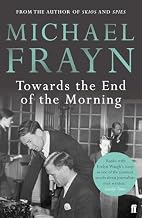
Any views on, Great Expectations? It will be my next read and a friend has been hyping it up. This is an opportunity for a myriad of puns.
Only a few pages in but it has potential. I am enjoying the flow and the pace. The characters are being built up nicely and the seeds of discontent and conflict are well strewn.
Any views on, Great Expectations? It will be my next read and a friend has been hyping it up. This is an opportunity for a myriad of puns.
89pgmcc
My Epic Sojourn to The Shire in Franklin, Massachusetts, won me the prizes below:

The Joe Haldeman omnibus contains Marsbound, Starbound and Earthbound. I bought this volume because I enjoyed Haldeman's Forever War (a story based on the feelings and perceptions the author had as a veteran from the Vietnam War) and I have not seen many of his works available in bookshops on the East side of the Atlantic. Also, at the 2005 WorldCon in Glasgow, I made a point of going to Joe Haldeman's reading on the first day and had an opportunity to meet the man (no more than a hello, I love your Forever War, nice to meet you in person), and he turned out to be a nice person.
The Lafcadio Hearn volume contains some of his translations of Chinese ghost stories. I have read his translations of Japanese stories but I was not aware of his translations from Chinese until I spotted this "ADVANCED UNCORRECTED PROOF" in The Shire. This volume made the whole trip to Franklin worth while.
A beautifully bound copy of The Complete Tales of Washington Irving was something I could not resist. Had I stayed longer in The Shire I would have come away with many more volumes. As it was I left behind a hardback copy of Ian McDonald's Evolution's Shore to avoid excess baggage charges on my way home.

The Joe Haldeman omnibus contains Marsbound, Starbound and Earthbound. I bought this volume because I enjoyed Haldeman's Forever War (a story based on the feelings and perceptions the author had as a veteran from the Vietnam War) and I have not seen many of his works available in bookshops on the East side of the Atlantic. Also, at the 2005 WorldCon in Glasgow, I made a point of going to Joe Haldeman's reading on the first day and had an opportunity to meet the man (no more than a hello, I love your Forever War, nice to meet you in person), and he turned out to be a nice person.
The Lafcadio Hearn volume contains some of his translations of Chinese ghost stories. I have read his translations of Japanese stories but I was not aware of his translations from Chinese until I spotted this "ADVANCED UNCORRECTED PROOF" in The Shire. This volume made the whole trip to Franklin worth while.
A beautifully bound copy of The Complete Tales of Washington Irving was something I could not resist. Had I stayed longer in The Shire I would have come away with many more volumes. As it was I left behind a hardback copy of Ian McDonald's Evolution's Shore to avoid excess baggage charges on my way home.
91pgmcc
>90 SylviaC: I believe light travels great distances and at high speed.
93pgmcc
The rest of the haul from my trip to the United States of America:

From the bottom up:
Systems Thinking for Social Change was acquired in the MIT Press Bookstore. Finding the MIT Press Bookstore was wonderful. I have read many MIT Press books and to find a store dedicated to them made my day. My older son bought three books there on the subjects of computer programming, ethics and ethical hacking.
Shirley Jackson's two collections, Let Me Tell You and The Lottery were found in the Porter Square Bookstore in Cambridge which my daughter introduced me to on the day before we flew home. It is a beautiful, well stocked bookshop that I recommend to anyone who finds themselves in that part of the world. Had I been introduced to this bookshop earlier I would certainly have been coming home with many more books. My daughter and her husband do their grocery shopping at Porter Square.
Why did I buy two Shirley Jackson collections?
I first noticed the "Let Me Tell You" volume and discovered it contains never before collected stories so that was a must buy. On reading some of the blurb in this volume I learned that "The Lottery" is one of Jackson's best stories and so I picked up the collection containing this story.
Next comes James Gleick's The Information. (The touchstone for this yielded, "The Return of the King by J.R.R. Tolkein). I liked his book on Chaos Theory many moons ago and thought I would listen to his thoughts on our relationship with information and communications. I found this book in the MIT COOP which is another bookstore I would strongly recommend. It sells other things as well but books are the important thing. I was also amazed to find a barber shop in the basement where the non-fiction and text books are on sale. "The Information" was found on my first day in the MIT COOP.
On my second visit to the MIT COOP, the afternoon of My Epic Sojourn to The Shire in Franklin Massachusetts, I discovered that the July/August edition of "The Magazine of Fantasy & Science Fiction" contained a story by Bruce McAllister whose novella, The Village Sang to the Sea was published in Ireland by a friend of mine and I liked that story so I thought I would give Mr McAllister another go.
This second visit was also the occasion I found Plato and a Platypus Walk into a Bar.... This was a book bullet from @Meredy and I caused me much difficulty when I realised it was the first book I have ever known Amazon to refuse to deliver to Ireland.
Last, but not least, I picked up a copy of The House of The Seven Gables when we visited Salem. We took a walk up to the house but did not pay $13 each (there were six of us) to go inside. We wandered back to the Visitors' Centre and I picked up the book. My son-in-law read The Scarlet Letter some time ago and found it miserable. He did not want to risk reading "The House of The Seven Gables" so I picked it up just to annoy him. To be fair, when he read the bumf on the back of the book he said, "Oh! This looks like it might be more interesting than The Scarlet Letter".
For those that are interested we returned to Ireland with three large suitcases having arrived in the USA with two. The third one contained some books, toys for our new grandchild (which took up most of the space in the case), and some new clothes. We avoided excess baggage charges by carrying some of my sons' heavier books (big Anime comic books) in our carry on bags.
Now, that is the first account of our book buying in Boston. I am slowly getting back to Irish time but this process was not helped by having to go to work in Germany for Tuesday and Wednesday having only arrived back from the US on Sunday. When my energy returns I will report on My Epic Sojourn to The Shire In Franklin, Massachusetts.

From the bottom up:
Systems Thinking for Social Change was acquired in the MIT Press Bookstore. Finding the MIT Press Bookstore was wonderful. I have read many MIT Press books and to find a store dedicated to them made my day. My older son bought three books there on the subjects of computer programming, ethics and ethical hacking.
Shirley Jackson's two collections, Let Me Tell You and The Lottery were found in the Porter Square Bookstore in Cambridge which my daughter introduced me to on the day before we flew home. It is a beautiful, well stocked bookshop that I recommend to anyone who finds themselves in that part of the world. Had I been introduced to this bookshop earlier I would certainly have been coming home with many more books. My daughter and her husband do their grocery shopping at Porter Square.
Why did I buy two Shirley Jackson collections?
I first noticed the "Let Me Tell You" volume and discovered it contains never before collected stories so that was a must buy. On reading some of the blurb in this volume I learned that "The Lottery" is one of Jackson's best stories and so I picked up the collection containing this story.
Next comes James Gleick's The Information. (The touchstone for this yielded, "The Return of the King by J.R.R. Tolkein). I liked his book on Chaos Theory many moons ago and thought I would listen to his thoughts on our relationship with information and communications. I found this book in the MIT COOP which is another bookstore I would strongly recommend. It sells other things as well but books are the important thing. I was also amazed to find a barber shop in the basement where the non-fiction and text books are on sale. "The Information" was found on my first day in the MIT COOP.
On my second visit to the MIT COOP, the afternoon of My Epic Sojourn to The Shire in Franklin Massachusetts, I discovered that the July/August edition of "The Magazine of Fantasy & Science Fiction" contained a story by Bruce McAllister whose novella, The Village Sang to the Sea was published in Ireland by a friend of mine and I liked that story so I thought I would give Mr McAllister another go.
This second visit was also the occasion I found Plato and a Platypus Walk into a Bar.... This was a book bullet from @Meredy and I caused me much difficulty when I realised it was the first book I have ever known Amazon to refuse to deliver to Ireland.
Last, but not least, I picked up a copy of The House of The Seven Gables when we visited Salem. We took a walk up to the house but did not pay $13 each (there were six of us) to go inside. We wandered back to the Visitors' Centre and I picked up the book. My son-in-law read The Scarlet Letter some time ago and found it miserable. He did not want to risk reading "The House of The Seven Gables" so I picked it up just to annoy him. To be fair, when he read the bumf on the back of the book he said, "Oh! This looks like it might be more interesting than The Scarlet Letter".
For those that are interested we returned to Ireland with three large suitcases having arrived in the USA with two. The third one contained some books, toys for our new grandchild (which took up most of the space in the case), and some new clothes. We avoided excess baggage charges by carrying some of my sons' heavier books (big Anime comic books) in our carry on bags.
Now, that is the first account of our book buying in Boston. I am slowly getting back to Irish time but this process was not helped by having to go to work in Germany for Tuesday and Wednesday having only arrived back from the US on Sunday. When my energy returns I will report on My Epic Sojourn to The Shire In Franklin, Massachusetts.
94jillmwo
You seemed to have enjoyed the trip to Boston on a number of different fronts (family, BOOKS, printed volumes, BOOKS, family, HEAVY TOMES, etc.) I'm so glad and so sorry I missed you. Unpack the bags and please begin planning your next trip -- but this time to the Philadelphia area.
95Bookmarque
Nice haul!
96suitable1
this process was not helped by having to go to work in Germany
New handler has you carrying secret messages already!
New handler has you carrying secret messages already!
97pgmcc
>96 suitable1: Shshshsh!
98Sakerfalcon
It sounds like you had a highly successful visit. Thanks for sharing the pictures of your haul, for those of us who must live vicariously.
99MrsLee
House of the Seven Gables is a lovely Gothic tome. I can't for the life of me remember the story, only the shivery feeling I had while reading it.
100Meredy
>93 pgmcc: You did us proud, Peter. What did you read on the return flight?
There's a chilling film version of The Lottery called The Dark Secret of Harvest Home--at least, it was chilling as a two-part TV miniseries in 1978, when I believe it was just called Harvest Home. I saw it only once, when it was broadcast, and some of the scenes are still with me.
Many American students are (or were) tortured with The Scarlet Letter by having to read it as a school assignment, write chapter summaries, take quizzes, and write a paper. I don't believe there's a book anywhere that can't be ruined that way. What a shame that so many lose forever the experience of reading after being put through that ordeal. And it seems as if it wouldn't be so hard to make it better--without resorting to "relevant" themes of teen angst and despair in place of wonderful classics.
How was literature taught in your schools?
There's a chilling film version of The Lottery called The Dark Secret of Harvest Home--at least, it was chilling as a two-part TV miniseries in 1978, when I believe it was just called Harvest Home. I saw it only once, when it was broadcast, and some of the scenes are still with me.
Many American students are (or were) tortured with The Scarlet Letter by having to read it as a school assignment, write chapter summaries, take quizzes, and write a paper. I don't believe there's a book anywhere that can't be ruined that way. What a shame that so many lose forever the experience of reading after being put through that ordeal. And it seems as if it wouldn't be so hard to make it better--without resorting to "relevant" themes of teen angst and despair in place of wonderful classics.
How was literature taught in your schools?
101pgmcc
>100 Meredy:
You did us proud,
I tried to uphold the honour of the Green Dragon...and the values of the ISPCB.
What did you read on the return flight?
This is where I hang my head in shame. I was reading Towards the End of the Morning when I flew to the US and it is the only book I finished while I was in Boston. I don't know if it was the heat (no AC in the apartment) of the Boston heat wave or jet lag, but I could not muster the energy to read on the flight home.
What's more, I have not started another book yet. I have Great Expectations lined up as my next read. A friend read it and said wonderful things about it. She has built up my expectations for it. (You can see where I'm going with this.)
Thank you for giving me the name of the dramatization of, The Lottery. Once I have read the story I will seek out the screen adaptation.
The Scarlet Letter was on sale with The House of the Seven Gables but I felt my son-in-law would take it as an insult if I bought it after his telling me how miserable he found it.
How was literature taught in your schools?
The second level (high) schools in Northern Ireland fell into two categories when I was going to school; the academic schools (Grammar Schools) that one could get into if one scored highly in the Eleven Plus (an intelligence test administered in the last year of primary school when one was eleven, hence the name of the examination); the more vocational schools (Secondary School) that one would go to if the Eleven Plus score was below the threshold for accessing the Grammar school. Secondary schools would include general subjects like English, Mathematics, Science, Geography, French and more practical subjects like woodwork, domestic science, secretarial studies, etc... while the Grammar schools had the same general subjects but also subjects like Latin, Greek, English Literature, etc...
If one's parents had the money someone who failed the Eleven Plus could go to grammar school by paying fees. This did not happen often.
One attended the second level school for seven years and then one would go to university if one achieved sufficiently high grades in one's A Levels (Advanced Level) exams at the age of 18.
There were Ordinary Level (O Levels) exams taken at the age of 16. Typically one did about eight O Level subjects. After the O Levels one specialised and studied three (exceptionally four) subjects for the A Levels.
I studied Physics, Mathematics and Geography for A Levels. This being the case I dropped English Language, English Literature, French, Latin, Religious Education, and some other subjects after my O Levels.
The quality of English Literature teaching was very dependent on the quality of the teachers. My English Literature teachers were not great. They were the type of teachers that believed themselves to be great poets and that the purpose of the pupils in their classes was to worship them and be in awe of their awesomeness.
From a curriculum point of view one was given set novels to read, critique and review. Over the years the novels I had to study included:
The Lost World by Arthur Conan Doyle (great choice for first year)
Out of the Silent Planet by C. S. Lewis
The Card by Arnold Bennett
Tom Sawyer by Mark Twain
One also read short stories that were to be analysed and reviewed.
Poetry was also on the curriculum and my teachers seemed to focus on our learning dozens of poems off by heart rather than understanding them and being able to write about their meaning and our interpretation of what the poet was trying to convey. (I must admit that I am not a great fan of poetry in general although there are some poems that mean a lot to me.)
I am afraid the majority* my English Literature teachers were too full of their own importance to actually educated the pupils.
At A Level more in depth analysis of literature would have been involved but my having taken a more Scientific route left me with nothing more than an amateur's interest in reading.
That was a bit of a rambling diatribe, but not having taken English Literature beyond O Level I cannot give you more detail in the teaching approach for the subject.
*The English teacher I had for first year was a wonderful teacher and he tried to instill and love of the written word into the pupils in his class. Unfortunately I did not have him in subsequent years.
You did us proud,
I tried to uphold the honour of the Green Dragon...and the values of the ISPCB.
What did you read on the return flight?
This is where I hang my head in shame. I was reading Towards the End of the Morning when I flew to the US and it is the only book I finished while I was in Boston. I don't know if it was the heat (no AC in the apartment) of the Boston heat wave or jet lag, but I could not muster the energy to read on the flight home.
What's more, I have not started another book yet. I have Great Expectations lined up as my next read. A friend read it and said wonderful things about it. She has built up my expectations for it. (You can see where I'm going with this.)
Thank you for giving me the name of the dramatization of, The Lottery. Once I have read the story I will seek out the screen adaptation.
The Scarlet Letter was on sale with The House of the Seven Gables but I felt my son-in-law would take it as an insult if I bought it after his telling me how miserable he found it.
How was literature taught in your schools?
The second level (high) schools in Northern Ireland fell into two categories when I was going to school; the academic schools (Grammar Schools) that one could get into if one scored highly in the Eleven Plus (an intelligence test administered in the last year of primary school when one was eleven, hence the name of the examination); the more vocational schools (Secondary School) that one would go to if the Eleven Plus score was below the threshold for accessing the Grammar school. Secondary schools would include general subjects like English, Mathematics, Science, Geography, French and more practical subjects like woodwork, domestic science, secretarial studies, etc... while the Grammar schools had the same general subjects but also subjects like Latin, Greek, English Literature, etc...
If one's parents had the money someone who failed the Eleven Plus could go to grammar school by paying fees. This did not happen often.
One attended the second level school for seven years and then one would go to university if one achieved sufficiently high grades in one's A Levels (Advanced Level) exams at the age of 18.
There were Ordinary Level (O Levels) exams taken at the age of 16. Typically one did about eight O Level subjects. After the O Levels one specialised and studied three (exceptionally four) subjects for the A Levels.
I studied Physics, Mathematics and Geography for A Levels. This being the case I dropped English Language, English Literature, French, Latin, Religious Education, and some other subjects after my O Levels.
The quality of English Literature teaching was very dependent on the quality of the teachers. My English Literature teachers were not great. They were the type of teachers that believed themselves to be great poets and that the purpose of the pupils in their classes was to worship them and be in awe of their awesomeness.
From a curriculum point of view one was given set novels to read, critique and review. Over the years the novels I had to study included:
The Lost World by Arthur Conan Doyle (great choice for first year)
Out of the Silent Planet by C. S. Lewis
The Card by Arnold Bennett
Tom Sawyer by Mark Twain
One also read short stories that were to be analysed and reviewed.
Poetry was also on the curriculum and my teachers seemed to focus on our learning dozens of poems off by heart rather than understanding them and being able to write about their meaning and our interpretation of what the poet was trying to convey. (I must admit that I am not a great fan of poetry in general although there are some poems that mean a lot to me.)
I am afraid the majority* my English Literature teachers were too full of their own importance to actually educated the pupils.
At A Level more in depth analysis of literature would have been involved but my having taken a more Scientific route left me with nothing more than an amateur's interest in reading.
That was a bit of a rambling diatribe, but not having taken English Literature beyond O Level I cannot give you more detail in the teaching approach for the subject.
*The English teacher I had for first year was a wonderful teacher and he tried to instill and love of the written word into the pupils in his class. Unfortunately I did not have him in subsequent years.
102Sakerfalcon
>101 pgmcc: That sounds very like my experiences of being taught secondary school English in England in the 80s, minus the aspiring poet-teachers. We didn't have to learn by rote, thankfully, but I didn't start to enjoy poetry until my second year of university when I had a really good teacher. We did Romeo and Juliet for GCSE and the day we started on it, when the teacher decided who would read each part aloud in class, some boys had let off a stink bomb in the classroom. My friend and I knew who did it but refused to tell on them, so as punishment we were given the parts of Servant 1 and Servant 2 so had a very dull term. I have never liked R & J and this may be why.
I too have a copy of The house of the seven gables on my Tbr pile, so perhaps I will be inspired to read it
I too have a copy of The house of the seven gables on my Tbr pile, so perhaps I will be inspired to read it
103pgmcc
It is two weeks since I completed my Quest to The Shire. It is only now I am finding I have the energy to assemble the memories and photographs of that journey. I soon hope to report my adventures in the Tunnels of T, the delights of the South Station Food Emporium, and the experience of wandering along East Street in the scorching, August sun.
Stay tuned!
Stay tuned!
104clamairy
>99 MrsLee: Yes, I enjoyed it as well, and also have no memory of it at all.
>100 Meredy: That miniseries Harvest Home is based on the book by Thomas Tryon, who also wrote a few other best sellers in his day, such as Lady. I can sort of see why you thought is might be loosely based on The Lottery, but without giving away giant spoilers Harvest Home is based on the mythos of the Sacred King.
>100 Meredy: That miniseries Harvest Home is based on the book by Thomas Tryon, who also wrote a few other best sellers in his day, such as Lady. I can sort of see why you thought is might be loosely based on The Lottery, but without giving away giant spoilers Harvest Home is based on the mythos of the Sacred King.
105clamairy
>103 pgmcc: I am still anxiously awaiting your tale, and all of the photos from your visit.
106Meredy
>104 clamairy: Oh, you're right. Thanks for the correction, and I remember that now. Well, something was based on The Lottery...wasn't it?
I don't want to discourage anybody, but I tried rather hard and simply failed to get into House of the Seven Gables last year, even though I'd been happily reading Dickens, Scott, and Eliot in the same year.
I don't want to discourage anybody, but I tried rather hard and simply failed to get into House of the Seven Gables last year, even though I'd been happily reading Dickens, Scott, and Eliot in the same year.
107pgmcc
A friend has enthusiastically promoted my reading of Great Expectations. I have read three chapters so far.
I must admit I was enthralled by the names of the three books and titles of the chapters within:
Volume One:
Chapter One
Chapter Two
....
I must admit I was enthralled by the names of the three books and titles of the chapters within:
Volume One:
Chapter One
Chapter Two
....
108Jim53
>107 pgmcc: Looks as if he set up a skeleton structure but then forgot to go back and give things names. I wonder if it might be related to serialization. I thought I remembered titles like "Chapter 1. A convict scares the stuffing out of me" and "Chapter 2. Joe and I go to church." GE is, so far as I can recall, my favorite Dickens. It's also necessary pre-reading for Jasper Fforde's Thursday Next series.
109pgmcc
>108 Jim53: I read Jane Eyre in preparation for The Eyre Affair.
110Jim53
>109 pgmcc: even more crucial, of course, especially for the first book. But Ms. Have-a-Sham is used brilliantly in the sequels.
111LibraryPerilous
Congratulations on your first grandchild, and she has such a lovely name! It also sounds like you had a lovely time on your holiday.
The Frayn book sounds enjoyable and the Macardle stories fascinating.
My advice: Manage your expectations. Great Expectations is my least favorite of Dickens' best known works, but it still is an enjoyable read. Miss Havisham is a most excellent character.
>106 Meredy: I find Hawthorne's short stories much more interesting than his novels.
The Frayn book sounds enjoyable and the Macardle stories fascinating.
My advice: Manage your expectations. Great Expectations is my least favorite of Dickens' best known works, but it still is an enjoyable read. Miss Havisham is a most excellent character.
>106 Meredy: I find Hawthorne's short stories much more interesting than his novels.
112pgmcc
>111 LibraryPerilous: Nice to see you on this thread. Thank you for the congratulations on my grandchild. Also, thank you for the expectation warning on Great Expectations.
113pgmcc
The author of The Code Book, Simon Singh, is giving a talk on cryptography in Dublin on September 22nd. Unfortunately when I went to get a ticket I could only get on to the waiting list. :-(
I read his book last year and it was great.
ETA: Touchstone brought up The Da Vinci Code.
I read his book last year and it was great.
ETA: Touchstone brought up The Da Vinci Code.
115pgmcc
It is taking me for ages to finish Great Expectations. This is not due to any lack of enjoyment but to hindrances which include: work getting in the way; bus strike robbing me of my commute reading time; severe cold and headache that put me off reading; busy family weekends; and other aspects of real life. On the good new side, I am approaching the end of the book. I am into the last 100 pages and the action is rolling along.
For the record, I still think Pip is a bit of an ass but he is showing signs of maturing and showing some consideration for other people.
For the record, I still think Pip is a bit of an ass but he is showing signs of maturing and showing some consideration for other people.
116jillmwo
What does one do in Dublin in the face of a bus strike? Walk? Go equestrian? (Or does the dashing secret agent hop into his sports car?)
117pgmcc
>116 jillmwo: One resorts to Qashqai!
On strike days my wife becomes chauffeuse sans uniform and peaked cap. She drops our elder son and I to work and our younger son to university and then parks in town to partake in some retail therapy. You have no idea how expensive bus strikes can be.
Some people are in a position to use the tram system; others walk; some get lifts; and yet others telecommute.
Most people are sympathetic to the bus drivers as there have been no wage increases in eight years and yet the government has introduced more taxes during those years.
By the way, you will be happy to know that I have just book flights to France for my end of Summer De-brief/training session.
On strike days my wife becomes chauffeuse sans uniform and peaked cap. She drops our elder son and I to work and our younger son to university and then parks in town to partake in some retail therapy. You have no idea how expensive bus strikes can be.
Some people are in a position to use the tram system; others walk; some get lifts; and yet others telecommute.
Most people are sympathetic to the bus drivers as there have been no wage increases in eight years and yet the government has introduced more taxes during those years.
By the way, you will be happy to know that I have just book flights to France for my end of Summer De-brief/training session.
118jillmwo
I just Googled "Qashqai", honestly thinking it might be an exotic, historical or somehow mysterious Celtic practice. Imagine my chagrin to learn that we're talking about a make of Japanese car.
120MrsLee
>118 jillmwo: I did the same thing, and I work at a car dealership, albeit not Nissan. :D
122LibraryPerilous
>115 pgmcc: Honestly, "Pip is a bit of an ass" probably is the best and most accurate review of Great Expectations in toto. I'm glad you're enjoying the read.
123Jim53
>117 pgmcc: Doesn't your wife get arrested for running around sans uniform?
124pgmcc
>123 Jim53: Ireland has become very liberal in recent years. Besides, there's a bus strike and everyone understands.
125pgmcc
I have finally finished Great Expectations and enjoyed it a lot.
At the back of my volume there is a commentary by George Bernard Shaw headed "Great Expectations" and I thought this was going to be a review or critique of "Great Expectations". It proved to be this and more.
Shaw took the opportunity to review Dickens's reputation as a social activist and concluded that while Dickens did highlight some social injustices he never did anything about them as he was too busy working to earn enough money to keep his family in a middle class lifestyle lest his family members fall into the depths of poverty Dickens describes in his writing and that he experienced as a child. Shaw also goes on to praise Dickens for being the first writer to identify and write about the flaw in the British parliamentary system that ends up favouring the rich an enslaving the poorer members of society.
Dickens's writing and portrayal of "gentlemen" is discussed and compared to that of Thackeray and Trollope. Shaw concludes that Dickens, unlike Thackeray and Trollope, lacks formal education and culture, and demonstrates this by discussing how he treats various characters in his novels.
In relation to Great Expectations, Shaw concludes that it is a great, though flawed, novel with his strongest criticism being for the ending. I must agree that the ending is inconsistent with the body of the work. Shaw explained that the published ending was the third ending for the book as a result of Dickens's publisher wanting to have a happy ending. Shaw points out that the start of the book is miserable, the middle is miserable, and that why does the end have a happy ending. He also suggested that given Estella's character throughout the earlier part of the book that it is incredulous to believe the Pip, if indeed anyone, could have a happy life with Estella. I must say I share Shaw's views.
I still think that Pip is a bit of an ass and that his reform at the end is a bit too much to take. He may have learnt his lesson but he is still making too many stupid decisions.
I found that I took more notes for Shaw's short piece on Great Expectations that I did for the novel itself.
At the back of my volume there is a commentary by George Bernard Shaw headed "Great Expectations" and I thought this was going to be a review or critique of "Great Expectations". It proved to be this and more.
Shaw took the opportunity to review Dickens's reputation as a social activist and concluded that while Dickens did highlight some social injustices he never did anything about them as he was too busy working to earn enough money to keep his family in a middle class lifestyle lest his family members fall into the depths of poverty Dickens describes in his writing and that he experienced as a child. Shaw also goes on to praise Dickens for being the first writer to identify and write about the flaw in the British parliamentary system that ends up favouring the rich an enslaving the poorer members of society.
Dickens's writing and portrayal of "gentlemen" is discussed and compared to that of Thackeray and Trollope. Shaw concludes that Dickens, unlike Thackeray and Trollope, lacks formal education and culture, and demonstrates this by discussing how he treats various characters in his novels.
In relation to Great Expectations, Shaw concludes that it is a great, though flawed, novel with his strongest criticism being for the ending. I must agree that the ending is inconsistent with the body of the work. Shaw explained that the published ending was the third ending for the book as a result of Dickens's publisher wanting to have a happy ending. Shaw points out that the start of the book is miserable, the middle is miserable, and that why does the end have a happy ending. He also suggested that given Estella's character throughout the earlier part of the book that it is incredulous to believe the Pip, if indeed anyone, could have a happy life with Estella. I must say I share Shaw's views.
I still think that Pip is a bit of an ass and that his reform at the end is a bit too much to take. He may have learnt his lesson but he is still making too many stupid decisions.
I found that I took more notes for Shaw's short piece on Great Expectations that I did for the novel itself.
126clamairy
>125 pgmcc: Glad you enjoyed the Dickens. I've loved everything of his that I've read, but for some reason I haven't touched anything of his for decades. Maybe this Winter... There just isn't enough time in the day. :o(
127Jim53
>125 pgmcc: Strong agreement with your comments on the ending of GE.
128pgmcc
I have started reading The ABC Murders by Agatha Christie. This is a book that my wife has had in the house for many a year and she would have read it multiple times. The novel was mentioned and praised by a number of people in the GD, I think @jillmwo may have been one of those people, and it was the good comments that made me pick it up when I found it in a pile of books on the window ledge at my wife's side of the bed. I suppose it might, therefore, be regarded as a book bullet of sorts. I will not get into arguments about whether or not a book already in the house can be regarded as a book bullet or not. I will simply accept my wound and read on.
The second murder has been committed and M. Poirot's little grey cells are busy at work. Hastings, as ever, is totally baffled.
I am also reading stories from Roberto Bolaño's collection, Last Evenings on Earth. The stories a very good at getting into the mind of the narrator and I can recognize the feelings portrayed. I have read four stories so far and have enjoyed them all. I do not know if they are autobiographical but I am sure many elements of them are drawn from Bolaño's own life and definitely from his observations of others. The stories so far are all about writers, their struggles and their imaginings. One brilliant story is about all the emotional difficulties we get ourselves into by over-thinking things.
This book of short stories is providing time fillers for when I do not have my main read with me. I am enjoying what fills up that time.
The second murder has been committed and M. Poirot's little grey cells are busy at work. Hastings, as ever, is totally baffled.
I am also reading stories from Roberto Bolaño's collection, Last Evenings on Earth. The stories a very good at getting into the mind of the narrator and I can recognize the feelings portrayed. I have read four stories so far and have enjoyed them all. I do not know if they are autobiographical but I am sure many elements of them are drawn from Bolaño's own life and definitely from his observations of others. The stories so far are all about writers, their struggles and their imaginings. One brilliant story is about all the emotional difficulties we get ourselves into by over-thinking things.
This book of short stories is providing time fillers for when I do not have my main read with me. I am enjoying what fills up that time.
129clamairy
>128 pgmcc: "I will not get into arguments about whether or not a book already in the house can be regarded as a book bullet or not. I will simply accept my wound and read on."
You've really got me chuckling here. (Or quite possibly it could be defined as a cackle.) Enjoy the Christie, and I will wait for your review. That one is not as highly rated here on LT as some of her others.
You've really got me chuckling here. (Or quite possibly it could be defined as a cackle.) Enjoy the Christie, and I will wait for your review. That one is not as highly rated here on LT as some of her others.
130pgmcc
Last night I experience being at the airport to collect my son, seeing that the flight was delayed by 45 minutes, and realizing I did not have a book with me. I thought I was lucky when I discovered one of the airport bookstalls was still open.
Unfortunately, I could not find anything amongst the meager selection of bestsellers and recently published titles that was available. Rather than be with no book I decided to give Stephen King a chance to impress me more than he has in the past. I bought, End of Watch.
This morning as I was heading out to work I tossed "End of Watch" aside and brought Wilkie Collins's Haunted Hotel with me for my bus ride. 30 pages into the King book and I could not care what happens in it. Sorry, but I was just bored by it. Perhaps I felt this way because I was reading something that was not what I wanted to read. I am sure it was nothing to do with the banality of the prose and the jerky language he was using to be modern and hip.
"The Haunted Hotel" is much more enjoyable.
Unfortunately, I could not find anything amongst the meager selection of bestsellers and recently published titles that was available. Rather than be with no book I decided to give Stephen King a chance to impress me more than he has in the past. I bought, End of Watch.
This morning as I was heading out to work I tossed "End of Watch" aside and brought Wilkie Collins's Haunted Hotel with me for my bus ride. 30 pages into the King book and I could not care what happens in it. Sorry, but I was just bored by it. Perhaps I felt this way because I was reading something that was not what I wanted to read. I am sure it was nothing to do with the banality of the prose and the jerky language he was using to be modern and hip.
"The Haunted Hotel" is much more enjoyable.
131Bookmarque
End of Watch is the third in a series, btw.
132pgmcc
>131 Bookmarque: I know!
133Bookmarque
Ok. Sometimes that's part of why some books don't click with me.
134clamairy
>130 pgmcc: When that happens to me I have the Kindle app on my phone! It's rescued me several times from the grizzly fate you described. The app is free and almost all classics have at least one free edition as well. It's not ideal because of the glare, but the font is adjustable. :o)
In fact I read somewhere recently that smartphones have allowed many people in the US access to books they wouldn't normally be likely to read.
In fact I read somewhere recently that smartphones have allowed many people in the US access to books they wouldn't normally be likely to read.
135pgmcc
>134 clamairy: I must try that. I have a Kindle account and use the Kindle on PC application.
136pgmcc
>133 Bookmarque: I know what you mean but I also did not like the level of detail he was going into about injuries. I found myself skimming and when that is happening in the early stages of a book I do not think it is going to auger well for one's relationship with the rest of the book.
137pgmcc
I finished The A. B. C. Murders. It was much as I expected. Having watched millions of hours of Agatha Christie films and TV episodes I was well aware of the format. I would categorize it as entertainment fodder and enjoyed it as that. I found the snobbery quite irritating and Christie was not kind to female characters, especially the younger, attractive ones.
I found it interesting that one of the clues was the murderer's choice of reading material, a book by E. Nesbit that he remembered from his childhood. I wonder if Agatha Christie realized that Edith Nesbit wrote horror stories as well as her children's books. When Nesbit was first mentioned I did wonder if it was her horror stories the character was going for.
Captain Hastings seems to be having a ball of a time. He leaves his wife in South America to free himself up to look after a few things in England and appears to spend months wandering about England having a grand old time with not a thought about how his wife is getting on back home.
When the prime suspect was first introduced I did feel this was too easy and that there had to be a twist. Knowing the structure of Christie stories I knew there had to be a surprise at the end so I had listed a number of possible suspects, including the actual murderer, but had not narrowed it down to that individual. I had been thinking the multiple murders were to cover up for a personal murder. This was more from knowing the form of these stories rather than any great deduction on my part.
While I enjoyed the book and will read more Agatha Christie I think I get more from a Dorothy L. Sayers novel. I think there will have to be one of those in my near future.
I found it interesting that one of the clues was the murderer's choice of reading material, a book by E. Nesbit that he remembered from his childhood. I wonder if Agatha Christie realized that Edith Nesbit wrote horror stories as well as her children's books. When Nesbit was first mentioned I did wonder if it was her horror stories the character was going for.
Captain Hastings seems to be having a ball of a time. He leaves his wife in South America to free himself up to look after a few things in England and appears to spend months wandering about England having a grand old time with not a thought about how his wife is getting on back home.
When the prime suspect was first introduced I did feel this was too easy and that there had to be a twist. Knowing the structure of Christie stories I knew there had to be a surprise at the end so I had listed a number of possible suspects, including the actual murderer, but had not narrowed it down to that individual. I had been thinking the multiple murders were to cover up for a personal murder. This was more from knowing the form of these stories rather than any great deduction on my part.
While I enjoyed the book and will read more Agatha Christie I think I get more from a Dorothy L. Sayers novel. I think there will have to be one of those in my near future.
138clamairy
>135 pgmcc: Then it will synch to your account and load any book you already own. :o)
>137 pgmcc: The snobbery is hard to face, isn't it? There was a healthy amount of that (and a fair amount of sexism) in the Christie I read last October.
>137 pgmcc: The snobbery is hard to face, isn't it? There was a healthy amount of that (and a fair amount of sexism) in the Christie I read last October.
139pgmcc
>138 clamairy: The sexism is something that one might expect to see written by a man. Agatha Christie appears to have had a very firm view on the role of women within their social class. She does make some women strong but almost in an "I think the lady dost protest too much" kind of way.
140stellarexplorer
>130 pgmcc: >134 clamairy: Otherwise, there is a huge risk of being stranded somewhere with nothing one wants to read. My phone/Kindle app have saved me many times. I'd hate to imagine, for instance, having to wait in a long line empty-handed knowing I could be reading a book
141ScoLgo
>134 clamairy: "When that happens to me I have the Kindle app on my phone!"
^ This!
I would estimate nearly half of my reading is done on my mobile phone - despite the fact that I also own a paperwhite.
The thing is, I rarely carry the kindle around with me but the phone is always there. The only thing the Kindle App won't do is allow access to books borrowed from the KOLL. But I only get ~3 or 4 books a year from there so that's not a huge detriment.
^ This!
I would estimate nearly half of my reading is done on my mobile phone - despite the fact that I also own a paperwhite.
The thing is, I rarely carry the kindle around with me but the phone is always there. The only thing the Kindle App won't do is allow access to books borrowed from the KOLL. But I only get ~3 or 4 books a year from there so that's not a huge detriment.
142jillmwo
>130 pgmcc: Like you, I thoroughly enjoyed Collins' The Haunted Hotel. I really can't always fathom why literary authorities value Dickens over Collins.
I am usually careful to have reading material with me in one form or another. (My cell phone has the Kindle app, there's usually either tablet (with app) or e-reader that's been recently charged, and I have been known to cart print about with me, depending upon the circumstances.) But like you, my dear @pgmcc, I don't usually find much of interest to be available in airport shops. And I really have never found anything by Stephen King to be enjoyable. So maybe just like MrsLee, you too are an evil Twin, Skippy. (Which might make us triplets which would be even MORE CONFUSING FOR EVERYONE. We'll have to resort to name tags or screen names -- oh, wait....)
I'm just grateful it is Friday. I'm going to indulge in a bunch of pubic domain Victorian ghost stories this weekend.
I am usually careful to have reading material with me in one form or another. (My cell phone has the Kindle app, there's usually either tablet (with app) or e-reader that's been recently charged, and I have been known to cart print about with me, depending upon the circumstances.) But like you, my dear @pgmcc, I don't usually find much of interest to be available in airport shops. And I really have never found anything by Stephen King to be enjoyable. So maybe just like MrsLee, you too are an evil Twin, Skippy. (Which might make us triplets which would be even MORE CONFUSING FOR EVERYONE. We'll have to resort to name tags or screen names -- oh, wait....)
I'm just grateful it is Friday. I'm going to indulge in a bunch of pubic domain Victorian ghost stories this weekend.
143SylviaC
I have the Kindle app on my phone for emergencies, and Audible to listen to in transit.
While I read a lot of Christie in the past, I've only read her autobiographies and one book of short stories in recent years. I don't know how the sexism and classism would affect me now. I suspect I would dismiss it as being "of its time". I read mysteries of that type for the puzzles, not the social commentary. I agree that you get a lot more from Sayers.
While I read a lot of Christie in the past, I've only read her autobiographies and one book of short stories in recent years. I don't know how the sexism and classism would affect me now. I suspect I would dismiss it as being "of its time". I read mysteries of that type for the puzzles, not the social commentary. I agree that you get a lot more from Sayers.
144ScoLgo
>142 jillmwo: "...pubic domain Victorian ghost stories..."
Now that sounds like a different type of ghost story! ;)
Now that sounds like a different type of ghost story! ;)
145pgmcc
>142 jillmwo: a bunch of pubic domain Victorian ghost stories this weekend
Any particular titles in mind?
Any particular titles in mind?
147MrsLee
Yep, Kindle on my phone, tablet, Kindle, etc.
I am reading, sort of, a collection of Poirot mysteries. I find I tire of them quickly, although if I read them one or two a week that's OK. I have all of Sayers' mysteries on my shelves, but I've never saved Christie mysteries. Like you, I find Sayers more chewy.
>145 pgmcc: "Don't go down in that Dark Alley" Sorry, I'm sorry.
I am reading, sort of, a collection of Poirot mysteries. I find I tire of them quickly, although if I read them one or two a week that's OK. I have all of Sayers' mysteries on my shelves, but I've never saved Christie mysteries. Like you, I find Sayers more chewy.
>145 pgmcc: "Don't go down in that Dark Alley" Sorry, I'm sorry.
148jillmwo
>144 ScoLgo: and >145 pgmcc: -- Well, I read three yesterday. One from Thomas Hardy, one from Robert Louis Stevenson and one by M.R. James. I posted to my thread earlier this am. But that menu was mostly just a "tasting" -- a sampler. One of the book bloggers I check in with (periodically) holds a fall RIP reading challenge each year (this may be the tenth year running) and it's a lead-in to the waning autumn daylight. I try to make it a point never read anything too terribly dark and I'm not a fan of real horror. But for the RIP reading challenge, I find short stories work nicely. And sometimes, they're unexpectedly meaty.
For example, in looking up one or two things about RLS, I discovered the dark nature of Edinburgh's history. Not only did we have Burke and Hare as murderers and grave-robbers, we also found out about the Great Plague of Edinburgh in 1645 when they literally walled sick folk up in their homes! (Check out some of the tales about Mary King's Close. I had no idea myself.)
For example, in looking up one or two things about RLS, I discovered the dark nature of Edinburgh's history. Not only did we have Burke and Hare as murderers and grave-robbers, we also found out about the Great Plague of Edinburgh in 1645 when they literally walled sick folk up in their homes! (Check out some of the tales about Mary King's Close. I had no idea myself.)
149pgmcc
I have posted my thoughts on The Haunted Hotel thread created by @MrsLee. That book has a lot going on in it. I enjoyed it for many reasons and am hoping I will get around to reading more Wilkie Collins stories soon.
Due to comments elsewhere I was hoping to read The Phantom Tollbooth next, but Amazon had a traffic problem in Britain and as a result my copy, that was due on Friday, will not reach me until Monday at the earliest. In the meantime I have started reading a novel by Brian Garfield which was the basis for one of my favourite films, Hopscotch.
The film is hilarious and has an amazing cast: Walter Matthau; Glenda Jackson; Herbert Lom; Ed Beatty; and others. I have discussed this film in a couple of locations and I know @fuzzi is also very fond of it.
I am two chapters into the book and am enjoying it immensely. My familiarity with the film means I hear the voices and see the faces of the characters in the film when they are present on the page. This has not hurt the book at all. The flow of the dialogue and prose is smooth and relaxed, and Garfield is obviously a very sharp observer of life and is skilled at stating the unspoken obvious in a very insightful and amusing way. He describes the discussion between airline passengers as follows:
"...the flavour of a talk with a stranger in the adjacent seat of an airliner: an exchange of meaningless monologues, half of them self-serving lies, the other half mechanical responses and none of it designed to be remembered beyond the debarkation ramp."
I think I will enjoy reading this book.
ETA: I forgot to mention, "Hopscotch" is set during the Cold War. The main Character, Miles Kendrig, has been a CIA operative and feels he has been treated badly by the Intelligence community. He decides to write his memoirs and the fun begins.
Due to comments elsewhere I was hoping to read The Phantom Tollbooth next, but Amazon had a traffic problem in Britain and as a result my copy, that was due on Friday, will not reach me until Monday at the earliest. In the meantime I have started reading a novel by Brian Garfield which was the basis for one of my favourite films, Hopscotch.
The film is hilarious and has an amazing cast: Walter Matthau; Glenda Jackson; Herbert Lom; Ed Beatty; and others. I have discussed this film in a couple of locations and I know @fuzzi is also very fond of it.
I am two chapters into the book and am enjoying it immensely. My familiarity with the film means I hear the voices and see the faces of the characters in the film when they are present on the page. This has not hurt the book at all. The flow of the dialogue and prose is smooth and relaxed, and Garfield is obviously a very sharp observer of life and is skilled at stating the unspoken obvious in a very insightful and amusing way. He describes the discussion between airline passengers as follows:
"...the flavour of a talk with a stranger in the adjacent seat of an airliner: an exchange of meaningless monologues, half of them self-serving lies, the other half mechanical responses and none of it designed to be remembered beyond the debarkation ramp."
I think I will enjoy reading this book.
ETA: I forgot to mention, "Hopscotch" is set during the Cold War. The main Character, Miles Kendrig, has been a CIA operative and feels he has been treated badly by the Intelligence community. He decides to write his memoirs and the fun begins.


151pgmcc

Hopscotch by Brian Garfield (1975 187pp)
This book was published in 1975 and a film based on its story was released in 1980. The film, also entitled, “Hopscotch”, starred Walter Matthau, Glenda Jackson, Herbert Lom, Ned Beatty, and Sam Waterston, and was directed by Ronald Neame. I have to confess this film is one of my favourites and I am sure my fondness for the screen adaptation has coloured my view of the novel. If you can live with that then so can I.
It was only about six weeks ago I realised the film was based on a novel and that Brian Garfield, someone I had never heard of, was the author. I only discovered the existence of the novel when I watched the “additional material” on a DVD of Hopscotch. The additional material was interviews with Ronald Neame, the director, and Brian Garfield, author of the novel and screenplay (Bryan Forbes also worked on the screenplay).
The film is a comedy about a very experienced CIA field operative, played by Walter Matthau, who is being taken out of the field and given a desk job. He resents the CIA boss who is doing this to him and decides to retaliate in what turns out to be an hilarious fashion. For what is a relatively basic story the cast assembled was amazing and everyone gave wonderful performances. Walter Matthau and Glenda Jackson were particularly wonderful and Ned Beatty played the arrogant, irritating, pompous boss to perfection. The head of the KGB was admirably played by Herbert Lom.
Having seen the film several times I found it difficult to not hear the voices of Walter Matthau and Herbert Lom as their characters were talking in the book.
The book did not disappoint but I do not think I would have read the book had it not been for having seen the film. If I were to recommend one over the other it would have to be the film. There were changes made to the plot in the translation from book to screen. The book cannot of course have the benefit of the excellent performances of the cast and given the cast gather for the making of the movie it is not surprising that the screen version delivers a better punch.
I will be hunting down more books written by Brian Garfield.
The book does, however, include some wonderful quotes that I found very entertaining and that are quite insightful observations of human nature. These are thoughts that are expressed in the mind of the main character, Miles Kendig. I will leave a few of them below for your amusement.
Description of “heavy” guarding a club:
“…a thug absurdly disguised as a doorman.”
Disappointment:
”…disappointment only follows anticipation and he’d had none of that.”
Living:
”Living is something most of us postpone, isn’t it. We sell the present for a chance at a future where we may do our living when we’re old and we’ve lost the talent for it.”
Commentary on barge life:
”Generations of them were born, lived and died aboard the canal barges. It was a peaceful life and a bastion of unchanged.”
View of athletic challenges:
”…he’d long since given up the athletic challenges. They’d all got to looking the same way – the way bowling had looked when he’d been a college freshman. As soon as he’d discovered that the object of bowling was to learn how to do exactly the same thing every time, he’d lost interest.”
Description of an office block:
”Number 748 Third Avenue was a steel-and-glass office tower that had been architected in evident imitation of a sheet of graph paper: as functional as a bayonet and just as warm.”
Use of a gun:
The use of a gun was the admission of amateurism and the only thing Kendig had was professionalism.
152pgmcc

The Phantom Tollbooth is my next read. This was a book bullet.
I am still reading Roberto Bolano's Last Evenings on Earth. It is a collection of very perceptive stories but they can be quite intense so I am pacing myself by not reading them one after another.
154MrsLee
I put Hopscotch on my watch list at Amazon.
>152 pgmcc: I'm about ready to start The Phantom Tollbooth also. Will start a thread soon for fun.
>152 pgmcc: I'm about ready to start The Phantom Tollbooth also. Will start a thread soon for fun.
155jillmwo
I too have added Hopscotch to my list of Films to Track. (Thanks for the heads up on the film.)
157pgmcc
>154 MrsLee: The Phantom Tollbooth is fun. It strikes me as the book that launched a thousand pedants.
158Sakerfalcon
>154 MrsLee:, >157 pgmcc: I need to join you in rereading this. I loved it as a child.
159MrsLee
>157 pgmcc: LOL, yes!
160pgmcc
>158 Sakerfalcon: & >159 MrsLee:
I have reached Dictionopolis and Milo and Tock are being brought off to the dungeon. Spelling Bee has buzzed off and Humbug is on the loose.
162pgmcc
I finished The Phantom Tollbooth. It was great fun.
I am now reading Pietr the Latvian by George Simenon. Apparently it is the first Maigret story.
I am now reading Pietr the Latvian by George Simenon. Apparently it is the first Maigret story.
163Meredy
>151 pgmcc: I like that line about bowling. I also quit doing pencil puzzles in newspapers and magazines when it dawned on me that I was going to work and work to end up with exactly the same answer that everyone else got. It turned out to be more fun to create puzzles than to solve them.
Maybe that's also why I always liked English but not math. The math teacher isn't really looking for anything from you; he's just checking to see if you can do as you're told (unless, of course, you're at some advanced level where I have no idea what people do). The English teacher wants to see something original.
Maybe that's also why I always liked English but not math. The math teacher isn't really looking for anything from you; he's just checking to see if you can do as you're told (unless, of course, you're at some advanced level where I have no idea what people do). The English teacher wants to see something original.
164pgmcc
Pietr the Latvian by George Simenon Translator: David Bellos (2013 Penguin 162pp)
This is the first Maigret novel. The translation by David Bellos has 2013 as its copyright date. The story has also been published under the titles, “Maigret and the Enigmatic Lett”, “The Case of Peter the Lett”, “The Strange Case of Peter the Lett”, and, “Suite at the Majestic”. Daphne Woodward was the translator for two edition published in 1963 and 1983 with the title, “Maigret and the Enigmatic Lett”. Anthony Abbot was the translator for five editions that appeared from 1933 to 1940 under the other titles mentioned. The original French edition was published in 1931.
I investigated the detail of the editions and their translators because I discovered that I have two copies of the same story but with different titles. In addition, I found the English in the Penguin edition I was reading contained some modern phrases and I suspected it was a more recent translation that what I had expected.
My impression of this book will be influenced by my many years of having watched Maigret screen adaptations for television. The first version would have been the 1960s BBC series with Rupert Davies as the eponymous hero, which I would have watched as a child with my family. The second was the 1990s series with Michael Gambon in the role of Maigret. The third Maigret series I have watched is the French version starring Bruno Cremmer, broadcast between 1991 and 2005 but which I have only seen recently on DVD. I loved them all, but naturally favour the French version as it will be the most authentic having been made for a French audience by French producers.
Having been steeped in the screen versions of Maigret I came to this book with some preconceptions and some anticipation with regards to how the book and my mental images would compare. As the book is the first in the series I expected the character of Maigret to not be as developed as I would have seen on TV. To an extent this was the impression I got, but a lot of the main characteristics of the character are there. The Maigret described in the book is a bit bigger and more rustic than the that portrayed in the screen adaptations I have seen.
In the book Maigret kept a lot to himself regarding his deductions and suspicions. He did not share them with the reader until the end of the story. This could put a reader off but I was happy to plod on with the Chief to find out where he was taking me.
I hope to look at the other translation I have to compare the texts. I found there were parts of the story where one could get confused as to who was saying what and who was doing what to whom. I suspect this may be a translation issue and I want to check if the other translation is different. I am not likely to acquire a copy of the original French edition for comparison purposes, not only because I would not want to spend the money, but also because my French is not adequate to enable a competent comparison.
One of the things I love about Maigret stories is the glimpse into France and French society of the period in which the stories take place. “Pietr the Latvian” did not disappoint on this front. I look forward to reading more Maigret novels. I do not know if I will have access to enough of them to read them in strict chronological order, but that is the way I would like to tackle them.
For those who are interested I have included a link to a website I discovered that presents lists of the Maigret novels in chronological sequence, alphabetically by title, and includes the French and English titles. I think this is going to be an invaluable resource for anyone who wants to do a through job of reading Simenon’s Maigret novels.
http://www.trussel.com/maig/maig.htm
This is the first Maigret novel. The translation by David Bellos has 2013 as its copyright date. The story has also been published under the titles, “Maigret and the Enigmatic Lett”, “The Case of Peter the Lett”, “The Strange Case of Peter the Lett”, and, “Suite at the Majestic”. Daphne Woodward was the translator for two edition published in 1963 and 1983 with the title, “Maigret and the Enigmatic Lett”. Anthony Abbot was the translator for five editions that appeared from 1933 to 1940 under the other titles mentioned. The original French edition was published in 1931.
I investigated the detail of the editions and their translators because I discovered that I have two copies of the same story but with different titles. In addition, I found the English in the Penguin edition I was reading contained some modern phrases and I suspected it was a more recent translation that what I had expected.
My impression of this book will be influenced by my many years of having watched Maigret screen adaptations for television. The first version would have been the 1960s BBC series with Rupert Davies as the eponymous hero, which I would have watched as a child with my family. The second was the 1990s series with Michael Gambon in the role of Maigret. The third Maigret series I have watched is the French version starring Bruno Cremmer, broadcast between 1991 and 2005 but which I have only seen recently on DVD. I loved them all, but naturally favour the French version as it will be the most authentic having been made for a French audience by French producers.
Having been steeped in the screen versions of Maigret I came to this book with some preconceptions and some anticipation with regards to how the book and my mental images would compare. As the book is the first in the series I expected the character of Maigret to not be as developed as I would have seen on TV. To an extent this was the impression I got, but a lot of the main characteristics of the character are there. The Maigret described in the book is a bit bigger and more rustic than the that portrayed in the screen adaptations I have seen.
In the book Maigret kept a lot to himself regarding his deductions and suspicions. He did not share them with the reader until the end of the story. This could put a reader off but I was happy to plod on with the Chief to find out where he was taking me.
I hope to look at the other translation I have to compare the texts. I found there were parts of the story where one could get confused as to who was saying what and who was doing what to whom. I suspect this may be a translation issue and I want to check if the other translation is different. I am not likely to acquire a copy of the original French edition for comparison purposes, not only because I would not want to spend the money, but also because my French is not adequate to enable a competent comparison.
One of the things I love about Maigret stories is the glimpse into France and French society of the period in which the stories take place. “Pietr the Latvian” did not disappoint on this front. I look forward to reading more Maigret novels. I do not know if I will have access to enough of them to read them in strict chronological order, but that is the way I would like to tackle them.
For those who are interested I have included a link to a website I discovered that presents lists of the Maigret novels in chronological sequence, alphabetically by title, and includes the French and English titles. I think this is going to be an invaluable resource for anyone who wants to do a through job of reading Simenon’s Maigret novels.
http://www.trussel.com/maig/maig.htm
165pgmcc

At long last I have started reading The Woman in White by Wilkie Collins. This has been lurking on Mt. TBR for a long time. The motivating factors that brought me to the point of reading it were my enjoyment of The Haunted Hotel coupled with people telling me that Collin's other books were better, and the fact that I am flying to France on Wednesday and need to have a good book on the go for the flights there and back. At my reading rate The Woman in White should fit the bill nicely. I will bring one other book with me just in case I get it finished before my return. How dreadful it would be to find myself lost in France with no book to read.
The "other book" I am thinking of bringing with me is the 685 page Capital in the Twenty-First Century by the French economist, Thomas Piketty. It is a ripping yarn of corruption and exploitation perpetrated by governments, banks, corporations and wealthy cliques around the world.

166MrsLee
>164 pgmcc: I'm glad Maigret did not disappoint. I haven't read enough of them to get a feel for the continuity. Picked up random copies here and there. I can't remember if I ever watched any of the screen adaptations.
167pgmcc
>166 MrsLee: I do not believe there is any progression other than possibly the greater development of the characters. For me, Maigret is a comfort watch and I suspect the books may become a comfort read, just as they have been for my wife.
168pgmcc
I am enjoying The Woman in White. So far the hero, or should I say the main character to date, has been established as a young drawing master whose mother and sister live on what was then the outskirts of London while he lives in London. His friend has found a position for him with a gentleman in Cumberland and he has arrived at the country house late at night due to the failure of a railway engine. He has met the woman in white and heard the news that she may have escaped from an asylum, something he finds peculiar as nothing about her gave him the impression of lunacy. The lady in white has mentioned the house to which our hero is heading and also mentioned the family name which is obviously setting up some tension for the coming pages.
My views so far arethat she may be a ghost, a lunatic, a relation or friend of the drawing master's new employer, or he may be heading into a haunted house, or a home filled with strangeness where one cannot trust one's senses to inform one of the real surroundings.
This is going to be an entertaining read.
In contrast to the seriousness of The Haunted Hotel I find that Collins has introduced some element of Dickens like humour in the character of Professor Pesca. There were no such colourful characters in "The Haunted Hotel". In this book Collins's description of Pesca reminds me of the exuberance with which Dickens paints his more eccentric characters for the amusement of his readers.
My views so far are
This is going to be an entertaining read.
In contrast to the seriousness of The Haunted Hotel I find that Collins has introduced some element of Dickens like humour in the character of Professor Pesca. There were no such colourful characters in "The Haunted Hotel". In this book Collins's description of Pesca reminds me of the exuberance with which Dickens paints his more eccentric characters for the amusement of his readers.
169Sakerfalcon
> I love The woman in white, I think it's my favourite of Collins' novels. I look forward to your comments as the mysteries unfold.
I hope your mission inFrance is a success.
I hope your mission inFrance is a success.
170Jim53
>165 pgmcc: I skimmed the Piketty a couple of months ago. It seemed to include some interesting ideas, but they were pretty well hidden under the less-than-riveting prose.
171pgmcc
>170 Jim53: This will be my first Piketty. I have his slimmer Economics of Inequality on my shelves but Capital in the Twenty-First Century is more up to date and having read The Society of Equals by Pierre Rosanvallon last year I want to see how Piketty deals with some of the same issues with recent data.
The Rise of the Robots by Martin Ford contains quite recent data to support his arguments. There is complementary material across the three books.
The Rise of the Robots by Martin Ford contains quite recent data to support his arguments. There is complementary material across the three books.
172pgmcc
I just had a quick recap of my 2016 reading and it appears I have done quite well in relation to reading authors that I had not read before.
I have read 14 books by 12 authors I have read before 2016 and 20 books by 16 authors not before read.
The previously read authors are:
Umberto Eco
Martin Cruz Smith
Iain Banks
Haruki Murakami
John Le Carré
David Mitchell
Pushkin
Ken MacLeod
Charles Dickens
Agatha Christie
Roberto Bolano
Daphne Du Maurier
Authors who are new to me are:
Mark Williams & Danny Penman
Donna Tart
Martín Ócahdain
Nate Silver
Tim parks
Dorothy L. Sayers
Theodore Penagacos
José Saramago
Anthony Trollope
Cixin Liu
Dorothy MacArdle
Michael Frayn
Brian Garfield
Norton Juster
George Simenon
Wilkie Collins
I have read 14 books by 12 authors I have read before 2016 and 20 books by 16 authors not before read.
The previously read authors are:
Umberto Eco
Martin Cruz Smith
Iain Banks
Haruki Murakami
John Le Carré
David Mitchell
Pushkin
Ken MacLeod
Charles Dickens
Agatha Christie
Roberto Bolano
Daphne Du Maurier
Authors who are new to me are:
Mark Williams & Danny Penman
Donna Tart
Martín Ócahdain
Nate Silver
Tim parks
Dorothy L. Sayers
Theodore Penagacos
José Saramago
Anthony Trollope
Cixin Liu
Dorothy MacArdle
Michael Frayn
Brian Garfield
Norton Juster
George Simenon
Wilkie Collins
173LolaWalser
>170 Jim53:, >171 pgmcc:
For what it's worth, I found Piketty amazingly readable (in French at least) and bought the book for two other people. I think the main thing is how much the subject interests you.
For what it's worth, I found Piketty amazingly readable (in French at least) and bought the book for two other people. I think the main thing is how much the subject interests you.
174pgmcc
>173 LolaWalser: Having very little French I will be at the mercy of the translator. Having read part of the Introduction yesterday I think I might be in good hands on that score.
In terms of my interest in the topic, it is high.
Have you read Rosanvallon's book? It was fascinating.
In terms of my interest in the topic, it is high.
Have you read Rosanvallon's book? It was fascinating.
175ScoLgo
>168 pgmcc: I really enjoyed The Woman in White when I read it as part of a Shelfari group read a while back. I won't comment on your spoiler-tagged thoughts as doing so would be spoiler-ey. I will say that it sounds as though you have not yet met the character that I found most interesting - the villain. He is deliciously rendered. An early depiction of an evil genius. It's a long book but accelerates nicely into a tension-filled finale. I hope you enjoy it as much as I did.
176Jim53
>172 pgmcc: that's an interesting look at new (to you) authors. I'm going to go back and see what my tally is.
177pgmcc
>176 Jim53: I think this is the first year I have tried more new authors than read old reliable writers.
Some of the new authors will not be repeated; namely:
Nate Silver
Cixin Liu
Theodore Penagacos
The jury is out on Tim Parks. It was a non-fiction book I was reading and I have not tried any of his fiction.
Others will be fondly sought after:
Martín Ócahdain
Dorothy L. Sayers
José Saramago
Anthony Trollope
Brian Garfield
George Simenon
Wilkie Collins
Some of the new authors will not be repeated; namely:
Nate Silver
Cixin Liu
Theodore Penagacos
The jury is out on Tim Parks. It was a non-fiction book I was reading and I have not tried any of his fiction.
Others will be fondly sought after:
Martín Ócahdain
Dorothy L. Sayers
José Saramago
Anthony Trollope
Brian Garfield
George Simenon
Wilkie Collins
178pgmcc
Having now met the character Mrs. Vesey and read Collins's descriptions of her I can see that Mr. Collins can be just as cruel as Dickens in his characterization. I think this cruelty reaches its peak in relation to Mrs. Vesey when he writes,
"A mild, a compliant, an unutterably tranquil and harmless old lady, who never by any chance suggested the idea that she had been actually alive since the hour of her birth."
Collins gave a hint of his views on Mrs. Vesey when he introduced her with the comment,
"Some of us rush through life, and some of us saunter through life. Mrs. Vesey 'sat' through life."
I am still of the opinion that I am going to love this book.
"A mild, a compliant, an unutterably tranquil and harmless old lady, who never by any chance suggested the idea that she had been actually alive since the hour of her birth."
Collins gave a hint of his views on Mrs. Vesey when he introduced her with the comment,
"Some of us rush through life, and some of us saunter through life. Mrs. Vesey 'sat' through life."
I am still of the opinion that I am going to love this book.
179MrsLee
178 That doesn't seem particularly cruel to me, albeit perhaps dismissive. I think authors must use such descriptions to help us know what sort of character we are dealing with. He quickly lets us know what to expect of her. It seems the sort of thought any of us might have, but hopefully never say, about a real person. Of course it would be wrong to say that of a real person because one would not know their past or their heart, but a fictional character is the creation of its author. Perhaps he is setting her up for some unprecedented action in the near future.
180pgmcc
This is the result of an impromptu visit to a secondhand bookshop in Athlone that I believe I have only visited three times before.

Louise de la Valliere by Alexander Dumas
Eyeless in Gaza by Aldous Huxley
England Made Me by Graham Greene
The Mysteries of Udolpho by Ann Radcliffe
Critical Essays by George Orwell
The Sleeper Awakes and Men Like Gods by H. G. Wells

Louise de la Valliere by Alexander Dumas
Eyeless in Gaza by Aldous Huxley
England Made Me by Graham Greene
The Mysteries of Udolpho by Ann Radcliffe
Critical Essays by George Orwell
The Sleeper Awakes and Men Like Gods by H. G. Wells
182pgmcc
>181 Meredy: The H. G. Wells has the prior owner's name and address on the inside. It is dated December 1934.
183Meredy
>182 pgmcc: In beautiful handwriting, I'll bet.
186pgmcc
I am still working my way through The Woman in White (page 374). I have reached the point where Mr Hartright has discovered that Laura is not dead but pretending to be Anne Catherick and Anne Catherick is pretending to be the dead Lady Glyde, in quite an effective fashion.
I first suspected a switch when Count Fosco returned to the house with Lady Glyde having gone to meet her at the railway station. Lady Glyde's health appeared too weak to have been that of the real Lady Glyde and when the doctor identified that the person he was examining had been ill for some time I immediately thought of Anne Catherick's state of health and her prediction that she was not long for this world.
Now that Walter, Laura and Marian are living in London in poor circumstances (though probably better than many Londoners), I expect to have the "how" explained in as adventurous a fashion as Mr. Collins can muster. In the current context it is obvious that we have been mislead, at least in some part, in relation to the characters of the Count and Countess Fosco. Was the Count's question to Lord Percival about the arrangements regarding money if Lady Glyde died simply a seeking of information needed for his scheme; a scheme in which the imminent death of one person could be used as a faux death of another, and that would see Lord Percival get the money he so much wanted, and allow Laura the freedom she so much desired?
These are but the temporal thoughts that assail my mind at this stage in the story.
Other thoughts are, where was Anne Catherick hiding? Was she kept in Lady Glyde's locked room, under Sir Percival's nose? Was Sir Percival privy to all the details of the scheme?
What is the secret about Sir Percival held by Anne Catherick and her mother? Now that Anne Catherick is dead will we learn what that secret was?
Is there a familial connection between Anne Catherick and Lady Glyde, as has been hinted at from early in the story when the reader's attention was first drawn to how alike the two girls look?
This book has strengthened my view that Collins was a feminist of his times. Some of Miss Halcombe's statements and thoughts, and Collins's description of the societal position of women, can, to my mind, only be deliberate in an attempt to have readers question the social order of the time in relation to women's rights.
Yes, I am enjoying the mystery. As expected, Collins has used a number of narrative viewpoints. This is proving interesting and has provided the opportunity for much humour, such as the presentation of Mr. Fairlie's account of things which gives the reader an insight into the thought process of the lazy lout.
Thank you to those of you who encouraged my reading this book.
ETA: Having read on I see I was totally wrong on some aspects. We read and learn.
I first suspected a switch when Count Fosco returned to the house with Lady Glyde having gone to meet her at the railway station. Lady Glyde's health appeared too weak to have been that of the real Lady Glyde and when the doctor identified that the person he was examining had been ill for some time I immediately thought of Anne Catherick's state of health and her prediction that she was not long for this world.
Now that Walter, Laura and Marian are living in London in poor circumstances (though probably better than many Londoners), I expect to have the "how" explained in as adventurous a fashion as Mr. Collins can muster. In the current context it is obvious that we have been mislead, at least in some part, in relation to the characters of the Count and Countess Fosco. Was the Count's question to Lord Percival about the arrangements regarding money if Lady Glyde died simply a seeking of information needed for his scheme; a scheme in which the imminent death of one person could be used as a faux death of another, and that would see Lord Percival get the money he so much wanted, and allow Laura the freedom she so much desired?
These are but the temporal thoughts that assail my mind at this stage in the story.
Other thoughts are, where was Anne Catherick hiding? Was she kept in Lady Glyde's locked room, under Sir Percival's nose? Was Sir Percival privy to all the details of the scheme?
What is the secret about Sir Percival held by Anne Catherick and her mother? Now that Anne Catherick is dead will we learn what that secret was?
Is there a familial connection between Anne Catherick and Lady Glyde, as has been hinted at from early in the story when the reader's attention was first drawn to how alike the two girls look?
This book has strengthened my view that Collins was a feminist of his times. Some of Miss Halcombe's statements and thoughts, and Collins's description of the societal position of women, can, to my mind, only be deliberate in an attempt to have readers question the social order of the time in relation to women's rights.
Yes, I am enjoying the mystery. As expected, Collins has used a number of narrative viewpoints. This is proving interesting and has provided the opportunity for much humour, such as the presentation of Mr. Fairlie's account of things which gives the reader an insight into the thought process of the lazy lout.
Thank you to those of you who encouraged my reading this book.
ETA: Having read on I see I was totally wrong on some aspects. We read and learn.
187pgmcc
Update on evolving thoughts as I progress through The Woman in White.
I am now at the point where Mr. Hartright has interviewed Mrs. Clements and learned that the perceived wisdom of the masses was that Sir Percival was Anne Catherick's father. However, there does appear to be more to it than this. Was Laura's father Anne's father and did he support the betrothal of Sir Percival to Laura because Sir Percival was looking after the embarrassment of Laura's father's indiscretion? Was the arrangement put in place as a reward for Sir Percival undertaking the task of dealing with Mrs. Catherick and her daughter? What was and is Lady Fosco's involvement in all this? Is there something in the secret that explains her being snubbed by the family other than her marrying a foreigner?
I don't see how this would ruin Sir Percival unless there is more to the story about his involvement in this convolute financing scheme.
Only a couple of hundred pages left. I will, of course, be proven to have been barking up the wrong trees? Those of you familiar with the story are probably highly amused at my misconceptions of where the story is going.
By the way, I just read a paragraph in which Laura expressed a feeling that has been growing in my mind. It is one in which she describes herself as useless, as a burden to Walter and Marian, and in which she gets a bit jealous that Walter will like Marian better than her. I must say, I would dump lazy Laura. She is nothing but trouble. A privileged, spoilt brat who can't even boil a kettle to make a decent cup of tea.
;-)
I don't see how this would ruin Sir Percival unless there is more to the story about his involvement in this convolute financing scheme.
Only a couple of hundred pages left. I will, of course, be proven to have been barking up the wrong trees? Those of you familiar with the story are probably highly amused at my misconceptions of where the story is going.
By the way, I just read a paragraph in which Laura expressed a feeling that has been growing in my mind. It is one in which she describes herself as useless, as a burden to Walter and Marian, and in which she gets a bit jealous that Walter will like Marian better than her. I must say, I would dump lazy Laura. She is nothing but trouble. A privileged, spoilt brat who can't even boil a kettle to make a decent cup of tea.
;-)
188MrsLee
When I finally get around to reading The Woman in White, you will have to remind me to come back here and read your comments. :) I'm not going to click on the spoilers for now, but have no immediate plans for reading it, either. Maybe next October.
189pgmcc
>188 MrsLee: That would be my approach too. I will keep a watch on your thread for when you are reading The Woman in White.
190Bookmarque
Heh. I'm glad I'm not the only one who felt that way about Laura. Here's a bit of my review and how her utter helplessness worked against her in my opinion -
I admit that it was hard sometimes to keep my 21st century sensibilities to myself. Honestly, I couldn't see what was so attractive about Laura that kept Marian and Walter her devoted slaves. I guess being a limpid, fainting female so compliant as to have no personality of her own was the epitome of female attractions back then. Maybe both Walter and Marian just needed someone to mother, protect and control to feel like they had any value in life. The lengths they went to keep Laura completely sheltered from any whiff of reality was absurd to me and a few times I wanted to smack all three of them. But only a few times. Overall, Collins did a good job of reaching through the decades and making me feel sympathy for Laura and her plight. Then again, she was so insensible to most of it that there wasn't a lot to feel sorry for. I mean, doesn't a person have to feel the pain of her situation before anyone else can feel bad about it? Of all the players involved, we never hear from her directly so can't get a good grip on what this whole experience did to her. She was so thoroughly insulated that it probably wasn't much, like a bird that has its cage changed from one to another doesn't comprehend what's been done.
I admit that it was hard sometimes to keep my 21st century sensibilities to myself. Honestly, I couldn't see what was so attractive about Laura that kept Marian and Walter her devoted slaves. I guess being a limpid, fainting female so compliant as to have no personality of her own was the epitome of female attractions back then. Maybe both Walter and Marian just needed someone to mother, protect and control to feel like they had any value in life. The lengths they went to keep Laura completely sheltered from any whiff of reality was absurd to me and a few times I wanted to smack all three of them. But only a few times. Overall, Collins did a good job of reaching through the decades and making me feel sympathy for Laura and her plight. Then again, she was so insensible to most of it that there wasn't a lot to feel sorry for. I mean, doesn't a person have to feel the pain of her situation before anyone else can feel bad about it? Of all the players involved, we never hear from her directly so can't get a good grip on what this whole experience did to her. She was so thoroughly insulated that it probably wasn't much, like a bird that has its cage changed from one to another doesn't comprehend what's been done.
191pgmcc
I have finished The Woman in White and enjoyed it a lot. The only gap I see in the plot is how did Laura and Walter get married when Laura's identity was legally in doubt at the time? Did the authorities not require proof of identity at the time of marriage? What was put into the register of marriages?
As you will have seen by my earlier posts regarding my views of the story as I was reading it, Collins was able to throw me deceptions that led me up false paths and had me totally wrong on many points.I was identifying unreliable narrators where there were none, and double thinking where none was necessary. I did, however, predict the fate of Count Fosco from the appearance of the man with the scar in the theatre. The end suggested to me by his appearance was the only way to tie up the loose threads of Walter's security and a happy ending. I did not think the circumstances guaranteed the safety of Walter's Italian friend who could have been murdered by Mr. Rubelle when he went to take possession of the letter.
I am still of the opinion of Wilkie Collins being a feminist of his time. He missed no opportunity to highlight the treatment of women in relation to their subservience to their husbands in all things, including the right to their own money and property.
Now I head to the world of an Existentialist and jump headlong into The Fall by Albert Camus. The opening pages remind me of The Reluctant Fundamentalist.
As you will have seen by my earlier posts regarding my views of the story as I was reading it, Collins was able to throw me deceptions that led me up false paths and had me totally wrong on many points.
I am still of the opinion of Wilkie Collins being a feminist of his time. He missed no opportunity to highlight the treatment of women in relation to their subservience to their husbands in all things, including the right to their own money and property.
Now I head to the world of an Existentialist and jump headlong into The Fall by Albert Camus. The opening pages remind me of The Reluctant Fundamentalist.
193pgmcc
I have also started reading Maigret Meets a Milord which, I believe, is also known as, Lock 14. A quick bit of investigation into the translators and publishers is in order to satisfy my curiosity.
The Fall was downstairs when I went up to bed so I reached for the Maigret novel which was on a bookshelf in my bedroom. I also suspect that The Fall is going to need the level of reading that is not always present when one is drifting off to sleep at midnight.
The Fall was downstairs when I went up to bed so I reached for the Maigret novel which was on a bookshelf in my bedroom. I also suspect that The Fall is going to need the level of reading that is not always present when one is drifting off to sleep at midnight.
194MrsLee
>193 pgmcc: Yes, true that. Sometimes we propose, but books dispose*. ;)
*Giving dispose its second meaning, sort of.
*Giving dispose its second meaning, sort of.
195pgmcc
Another point about The Woman in White is that the arrangement between Count Fosco and Mr. Hartright (obviously a contrived name to help identify the good guy - had it been a western he would have been wearing a white hat) is giving his Itanian friend's address to the bad guys. That would have left poor Pesca (if I have the name right) open to assassination. There was nothing to stop Rubelle killing Pesca and returning to the Count and killing Walter.
Luckily Wilkie Collins didn't think of that so we all lived happily ever after, especially as selfish Mr. Fairlie died.
Luckily Wilkie Collins didn't think of that so we all lived happily ever after, especially as selfish Mr. Fairlie died.
196ScoLgo
>2 pgmcc: I've never read anything by Ken Macleod but, perusing book descriptions, his stuff looks right up my street. I also found that my local library has a wealth of his titles available for e-lending. Any recommendations on where to start with his catalog?
Thank you in advance.
Thank you in advance.
197Bookmarque
I'm definitely in the minority when it comes to Uncle Fairlie. I liked him as I think he added a much-needed bit of levity and sense of the absurd to the proceedings. OMG his poor man servant! No, his selfish and willfully blind treatment of our fainting flower wasn't nice, but without that, there would have been no story. And in the end, he did leave his gobs of cash to the right people.
198pgmcc
>196 ScoLgo: I would be delighted to give you a few pointers about Ken MacLeod's books. To get a quick idea of the type of books you like I had a quick look at the books we have in common and looked at your reviews and ratings for those books that had a review. I am delighted to report that we appear to like similar things, so I am quite confident you will like any of Ken MacLeod's books.
He has quite a number of books out at the moment and they cover several types. I cannot quite remember how I first discovered his books but I do remember that it was the early 200s and I think Star Fraction was the first one I read. It is a long time since I read it so, while I remember enjoying it and bits of the plot I will suggest you start with something more recent.
around 2010 he started writing some near future novels which include: Execution Channel. That is an interesting novel about the threat from Islamic terrorism but, as it is a Ken MacLeod novel do not expect it to be ordinary or to have a very straightforward plot.
Night Sessions might be a good one to start with. I would like to get your take on it.
A good, standalone novel in the space opera arena is, Newton's Wake. There are some great concepts in that and Ken's sense of humour comes through well in parts of it.
The novels in his Engines of Light series, Cosmonaut Keep, Dark Light, and Engine City, are all good. I enjoyed each of them individually, but when I got to the end of the third book I was amazed at how the trilogy worked as a unit that far exceed the reading of the individual books. If you sample his work and like it I would strongly recommend that trilogy.
Intrusion is one of his later novels and it is about the concept of the "Nanny State", and the civil liberties of the individual. Ken is very good at exploring political concepts in his novels.
Descent is a great exploration of conspiracy hypotheses. (I have a "thing" about the abuse of the word "theory".)
As only the first book in his Corporation Wars trilogy has been released yet I am loath to suggest you start with that series even though I loved the first book and cannot wait until the next one arrives in December. I wouldn't have you waiting until next September for the third one. I already have the bug so I am doomed to sit waiting.
Let me know how you get on with Ken's works. I find his work very interesting as there are always several layers to them (like ogres, or parfait). I find he makes me think about life and society. I strongly believe in the axiom that to write about reality one must write fiction and to write about the present one must write Science Fiction. That is what Ken MacLeod's Science Fiction is all about, the present day truth.
He has quite a number of books out at the moment and they cover several types. I cannot quite remember how I first discovered his books but I do remember that it was the early 200s and I think Star Fraction was the first one I read. It is a long time since I read it so, while I remember enjoying it and bits of the plot I will suggest you start with something more recent.
around 2010 he started writing some near future novels which include: Execution Channel. That is an interesting novel about the threat from Islamic terrorism but, as it is a Ken MacLeod novel do not expect it to be ordinary or to have a very straightforward plot.
Night Sessions might be a good one to start with. I would like to get your take on it.
A good, standalone novel in the space opera arena is, Newton's Wake. There are some great concepts in that and Ken's sense of humour comes through well in parts of it.
The novels in his Engines of Light series, Cosmonaut Keep, Dark Light, and Engine City, are all good. I enjoyed each of them individually, but when I got to the end of the third book I was amazed at how the trilogy worked as a unit that far exceed the reading of the individual books. If you sample his work and like it I would strongly recommend that trilogy.
Intrusion is one of his later novels and it is about the concept of the "Nanny State", and the civil liberties of the individual. Ken is very good at exploring political concepts in his novels.
Descent is a great exploration of conspiracy hypotheses. (I have a "thing" about the abuse of the word "theory".)
As only the first book in his Corporation Wars trilogy has been released yet I am loath to suggest you start with that series even though I loved the first book and cannot wait until the next one arrives in December. I wouldn't have you waiting until next September for the third one. I already have the bug so I am doomed to sit waiting.
Let me know how you get on with Ken's works. I find his work very interesting as there are always several layers to them (like ogres, or parfait). I find he makes me think about life and society. I strongly believe in the axiom that to write about reality one must write fiction and to write about the present one must write Science Fiction. That is what Ken MacLeod's Science Fiction is all about, the present day truth.
199pgmcc
>197 Bookmarque: I share your liking of Mr. Fairlie as a character that introduced a degree of levity, and I was wondering about commenting on the great delight everyone shows at the result of his death and the lack of any sign of regret or berievement.
In relation to his leaving his money to the right people I am tempted to suggest that rather than making out his will to the benefit of his neice he was going along with the prevailing practice of allowing the inheritance go to the next "male" heir, further highlighting the predicament of women in the social order of the time. Making a will with any variation to the norm would probably have upset the poor man's nerves and caused him days of discomfort.
:-)
In relation to his leaving his money to the right people I am tempted to suggest that rather than making out his will to the benefit of his neice he was going along with the prevailing practice of allowing the inheritance go to the next "male" heir, further highlighting the predicament of women in the social order of the time. Making a will with any variation to the norm would probably have upset the poor man's nerves and caused him days of discomfort.
:-)
200Bookmarque
Yup that was probably the easiest way out, so of course he did.
201ScoLgo
>198 pgmcc: Thank you very much for the detailed and comprehensive reply! Above & beyond, really... ;)
My library has Night Sessions available so I will likely begin there. They do offer Dissidence as well but I plan to heed your advice and will therefore wait for a complete series before diving in. They also have The Restoration Game. I do enjoy a good cyber-thriller so that one also looks appealing.
Thank you again!
My library has Night Sessions available so I will likely begin there. They do offer Dissidence as well but I plan to heed your advice and will therefore wait for a complete series before diving in. They also have The Restoration Game. I do enjoy a good cyber-thriller so that one also looks appealing.
Thank you again!
202stellarexplorer
>201 ScoLgo: >198 pgmcc: I like MacLeod's novels quite a lot too. I don't know how much this strikes you pgmcc, and with no intention at all to get political in this no-fly zone, but I am always impressed with how much MacLeod is not a fan of the US, something that naturally is more palpable in his near-future work. It is possible this might trouble some of the more sensitive American readers. Just thought I'd add a proviso, fwiw.
203pgmcc
>202 stellarexplorer: I can only think of that being the case with The Execution Channel and that was only a plot twist. I do not recall the US being mentioned much in other novels.
Had you said that about Iain M. Banks's work I would have agreed that it would be the case, but I have not really noticed it coming through in Ken's work. I do recall that the USSR got well lampooned inNewton's Wake .
Many, if not all of Ken's stories, are about some injustice or other, whether real or perceived, and the perpetrator of said injustice is likely to be the government, which in most of Ken's near future books is more likely to be the UK government.
Had you said that about Iain M. Banks's work I would have agreed that it would be the case, but I have not really noticed it coming through in Ken's work. I do recall that the USSR got well lampooned in
Many, if not all of Ken's stories, are about some injustice or other, whether real or perceived, and the perpetrator of said injustice is likely to be the government, which in most of Ken's near future books is more likely to be the UK government.
204ScoLgo
>202 stellarexplorer: Thanks for the warning. No worries on my account though... I may live in the USA but am not troubled by the questioning - or lampooning/skewering - of authority.
205stellarexplorer
>203 pgmcc: Yes, you're quite right that it was most prominent in The Execution Channel. He's certainly entitled, and I think he's one of the best SF writers out there. Banks, yes another topic indeed.
>204 ScoLgo: I share that, especially in parlous times. Clammy has said that if I am oblique, I'm ok.
>204 ScoLgo: I share that, especially in parlous times. Clammy has said that if I am oblique, I'm ok.
206Jim53
>198 pgmcc: I think I've taken a tentative, general-purpose bullet on Mr. MacLeod. I've added Night Sessions to my library list.
208pgmcc
The Fall is proving entertaining and deep. Some interesting commentary on life, or how one deals with life.
209MrsLee
>208 pgmcc: Glad you are finding it so.
210pgmcc
>209 MrsLee: I am on page 29. In the nine pages from page 20 I have underlined loads. It is dense with ideas and comments. Great fun!
211clamairy
>210 pgmcc: Nice light reading material. ;o)
212pgmcc
>211 clamairy: You took the words right out of my mouth.
213jillmwo
>212 pgmcc: Shouldn't >211 clamairy: put them back now? (Yes, I lay awake all night long, working to come up with that kind of sophomoric joke. Yes, I understand that there is medication available for that kind of problem.)
215clamairy
>213 jillmwo: & >214 suitable1: Should I put them in my dog's mouth? She is not very fussy about such things. Think of how entertaining that could be.
216suitable1
>215 clamairy:
There's a good joke about eating words in there somewhere.
There's a good joke about eating words in there somewhere.
218Meredy
Thank you. We're keeping it small and simple today, but it's still an out-of-the-ordinary day.
219pgmcc
Wow!
Camus was a master at writing the powerful book. The Fall is an easy book to read in that it is short and conversational, but it forces the reader to think, which can be exhausting. It forces one to think about oneself, one’s self-image and one’s behaviour to others.
The technique used for writing the book is giving one side of a conversation between the main character and his chosen interlocutor. Mohsin Hamid used this approach to great effect in his book, The Reluctant Fundamentalist.
Camus’s story is a real ripping away of the masks people wear and is a fundamental questioning of the real reasons behind why people do what they do and say what they say. A key element of Camus’s argument, or should I say, the argument of his character, is paradox. He questions why people do good things: is it because they want to make the world better for others or because they want to feel good about themselves and appear to morally soar above their peers? It is the old chestnut of all charity being selfish because it is ultimately self-serving.
This story tells of the success and decline of a high flying lawyer in Paris, full of self-confidence, a master of his own destiny, who has a momentary doubt about himself. This momentary doubt, this sudden crisis of confidence, plays on his mind. It grows. It takes over his life. “The Fall” leads the reader to the discovery of these facts through the conversation in which the protagonist “confesses” his weaknesses and flaws, and in which he justifies his views and turns the tables on every member of the human race.
Having reached the end of the book I have to recover my breath. I have underlined more quotes and comments in this book per page than in any other book I can think of, but rather than sharing these quotes and ideas here I am inclined to say, “Read the book. Enjoy the quotes in their natural surroundings.”
“The Fall” is a worthwhile read and I think it is a book that everyone will get something from. Whether you agree with the protagonist’s views or not, it will help you think about life and put things in perspective.
If we were all sitting in the Green Dragon Pub I would have my copy of The Fall sitting beside my pint and I would be showing you the quotes that I liked and the ideas I liked.
Thank you, @MrsLee, for pushing me to reading it.
Camus was a master at writing the powerful book. The Fall is an easy book to read in that it is short and conversational, but it forces the reader to think, which can be exhausting. It forces one to think about oneself, one’s self-image and one’s behaviour to others.
The technique used for writing the book is giving one side of a conversation between the main character and his chosen interlocutor. Mohsin Hamid used this approach to great effect in his book, The Reluctant Fundamentalist.
Camus’s story is a real ripping away of the masks people wear and is a fundamental questioning of the real reasons behind why people do what they do and say what they say. A key element of Camus’s argument, or should I say, the argument of his character, is paradox. He questions why people do good things: is it because they want to make the world better for others or because they want to feel good about themselves and appear to morally soar above their peers? It is the old chestnut of all charity being selfish because it is ultimately self-serving.
This story tells of the success and decline of a high flying lawyer in Paris, full of self-confidence, a master of his own destiny, who has a momentary doubt about himself. This momentary doubt, this sudden crisis of confidence, plays on his mind. It grows. It takes over his life. “The Fall” leads the reader to the discovery of these facts through the conversation in which the protagonist “confesses” his weaknesses and flaws, and in which he justifies his views and turns the tables on every member of the human race.
Having reached the end of the book I have to recover my breath. I have underlined more quotes and comments in this book per page than in any other book I can think of, but rather than sharing these quotes and ideas here I am inclined to say, “Read the book. Enjoy the quotes in their natural surroundings.”
“The Fall” is a worthwhile read and I think it is a book that everyone will get something from. Whether you agree with the protagonist’s views or not, it will help you think about life and put things in perspective.
If we were all sitting in the Green Dragon Pub I would have my copy of The Fall sitting beside my pint and I would be showing you the quotes that I liked and the ideas I liked.
Thank you, @MrsLee, for pushing me to reading it.
220MrsLee
>219 pgmcc: Glad you enjoyed it! Wish I could be sitting beside you in the pub to share my underlined bits too! I think we could have Meredy with us, as I believe she has a copy marked up somewhere as well.
For the record, IMO, it matters not whether charity/helpfulness/good deeds are given to make ourselves feel good or for the good of mankind. It seems a false argument to me. The only one it hurts, is the one who is hung up on that argument. :)
221pgmcc
>220 MrsLee: I agree! Or do I?
:-)
:-)
223Meredy
(Looking for the paper I wrote on Camus in 2010, showing how fiction can be a vehicle for philosophy.) I would love to join in that discussion with you. What I remember most especially, in addition to the second-person narrative (which, yes, was also used to good effect in The Reluctant Fundamentalist), was the theme of judging and being judged. And the incident on the bridge, and the laugh, and how they ended up exposing the speaker to the severest self-scrutiny, and by extension also the reader.
224pgmcc
>223 Meredy: It was a remarkable book. Camus was using on his reader the same technique his main character was on his companion. He even describes what he is doing and still one reads on. The subtle change from saying, "I", to saying, "we", is carried out particularly well just after Jean-Baptiste describes his way of working.
By the way, @Meredy, what are you drinking? It's my turn to get a round. @MrsLee, what'll you have?
By the way, @Meredy, what are you drinking? It's my turn to get a round. @MrsLee, what'll you have?
225MrsLee
>224 pgmcc: In an Irish pub? Your favorite brew will do me, thanks! Although, in the spirit of the book, I suppose gin is in order. :)
226pgmcc
>225 MrsLee: One of my favourite quotes from The Fall:
"It's nothing: a slight temperature that I'm treating with gin."
"It's nothing: a slight temperature that I'm treating with gin."
227imyril
I need to remember to get behind cover before I hunker down to take notes; you've winged me. I've got both The Fall and The Reluctant Fundamentalist on the shelf; it's time I took them down and read them.
228pgmcc
>227 imyril:
They are both quite short. The Reluctant Fundamentalist takes place in one evening. I am not saying one has to read it in one evening, but it would be possible.
I hope you enjoy them.
They are both quite short. The Reluctant Fundamentalist takes place in one evening. I am not saying one has to read it in one evening, but it would be possible.
I hope you enjoy them.

230pgmcc
>223 Meredy: Your essay on Camus must be very interesting. I have only read The Fall and L'Etranger so far. I think he is a writer whose works I will read with a rest period between them.
231ScoLgo
>226 pgmcc: "It's nothing: a slight temperature that I'm treating with gin."
Hah! I just read that line this morning and it jumped out at me as well.
Hah! I just read that line this morning and it jumped out at me as well.
232pgmcc
>231 ScoLgo: :-)
233pgmcc
I am currently reading The Three Impostors by Arthur Machen. This is a great example of the weird tales genre. I am finding it very entertaining.
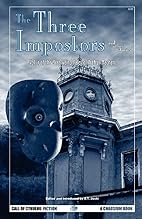
While I have had this story on my shelf for some years, my reading it now is the result of prompting by @veilofisis in the Gothic Literature group, and the fact that I do not want to read anything too long in case it delays my reading the second novel in Ken MacLeod's Corporation Wars trilogy, The Corporation Wars: Insurgence, when it arrives in the near future.
While I have had this story on my shelf for some years, my reading it now is the result of prompting by @veilofisis in the Gothic Literature group, and the fact that I do not want to read anything too long in case it delays my reading the second novel in Ken MacLeod's Corporation Wars trilogy, The Corporation Wars: Insurgence, when it arrives in the near future.
234clamairy
>226 pgmcc: I always tell my kids that gin in medicinal. And now I can quote Camus!
236pgmcc
As soon as I have finished reading some of the shorter Arthur Machen stories I will be reading The Corporation Wars: Insurgence by Ken MacLeod. This is the second novel in his new trilogy and it arrived into my hands this morning. The world will have to just wait while I read it. I loved the first one, The Corporation Wars: Dissidence.
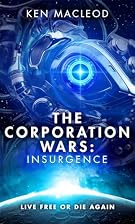
237pgmcc
I have started The Corporation Wars: Insurgence and anticipate an excellent read.
238pgmcc
I have just finished The Corporation Wars: Insurgence by Ken MacLeod and have started Traffic by John Rushkin. (The latter is triggering the Touchstone for the Plains of Passage by Jean M. Auel. I love the way the Touchstones force one to think laterally.)
239pgmcc
The Corporation Wars: Insurgence was an excellent follow-on from the first book in the trilogy, The Corporation Wars: Dissidence. Ken MacLeod is a master at using fiction to shine a spotlight on the problems of today. He has used the advanced technology in a Science Fiction tale to highlight the ramifications of corporate activity on politics at a grand and a local level.
240stellarexplorer
>239 pgmcc: I think I need to read these. Don't I?
241pgmcc
>240 stellarexplorer: If you like straight up Science Fiction and have an interest in the affairs of humankind, then I would certainly recommend you try them.
Two non-fiction books that may be of interest and that deal with humans and advanced technology are The Blind Giant by Nick Harkaway and The Rise of the Robots by Martin Ford.
Two non-fiction books that may be of interest and that deal with humans and advanced technology are The Blind Giant by Nick Harkaway and The Rise of the Robots by Martin Ford.
This topic was continued by PGMCC reading in 2017 - Volume 1.

