August HistoryCAT: The 18th Century + Medicine and Disease
Talk 2015 Category Challenge
Join LibraryThing to post.
This topic is currently marked as "dormant"—the last message is more than 90 days old. You can revive it by posting a reply.
1RidgewayGirl

The Eighteenth Century
This month's time frame is the Eighteen Century (1701-1800), and there's no shortage of things going on in the world. By 1701, the Age of Enlightenment was well underway, with discoveries and developments in science and medicine progressing rapidly. The Industrial Age would begins. In Britain, there was the final Jacobite Rebellion, ending when Bonnie Prince Charlie's forces were defeated at Culloden in 1746. In France, there was the French Revolution, of course. The Austro-Hungarian Empire was on the rise and there were plenty of wars throughout Europe, even as the principles of the Enlightenment spread.

In North America, the American Colonies eventually rebelled, while Australia was explored and found to be a handy place to send convicted criminals. Captain James Cook circumnavigated New Zealand. Slave traders regularly brought kidnapped slaves to the New World and industries that depended on their labour became profitable. The only successful slave uprising took place in Haiti. In China, the Qing Dynasty, the last Imperial dynasty rules. In Japan, foreigners were restricted to the island of Dejima in Nagasaki Bay.
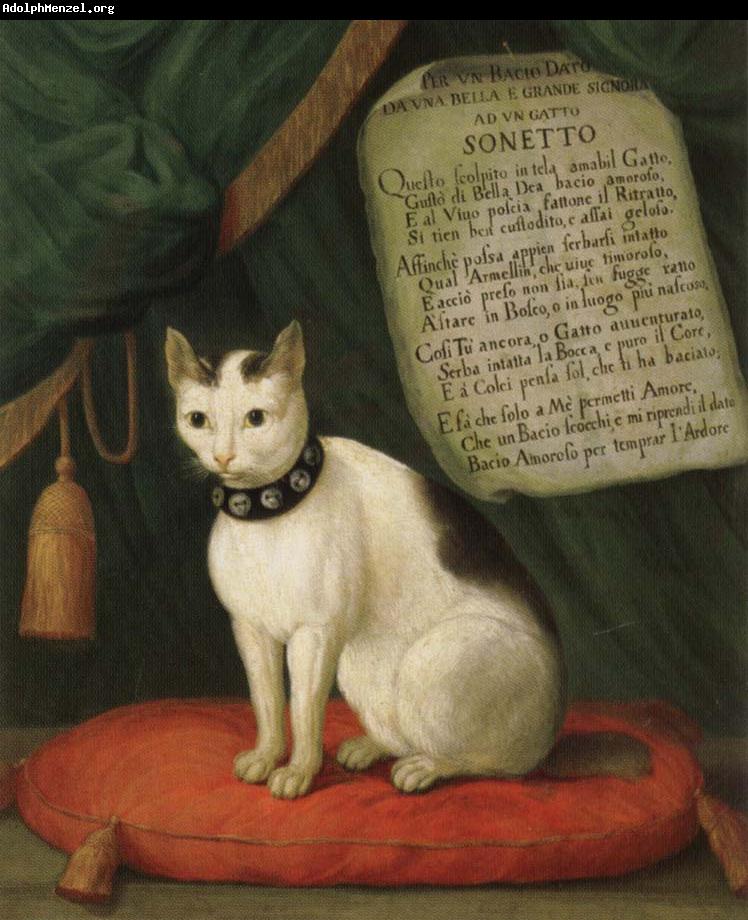
In music, Bach, Haydn and Mozart thrived. Museums, including the British museum, the Alte Pinakothek in Munich and the Hermitage in St. Petersburg opened. Authors writing during the 18th century include: Frances Burney, Daniel Dafoe, Walter Scott and Jonathan Swift.
Medicine and Disease

In the 1700s, as science became more popular, doctors began to look at more scientific approaches. Medical training remained abysmal, with an abundance of self-trained barber surgeons. Only in Edinburgh, Scotland were doctors taught in any quantity and medical training consisted only of lectures, cadavers being in short supply. With germ theory, vaccines and basic sanitation still unknown, medicine was a hit or miss profession and surgery done only in the most dire of cases.
Bubonic plague was still an ever present fear, with an epidemic sweeping Russia as late as 1771, leading to the Plague Riots in Moscow. Major outbreaks also occurred along the Baltic and in Marseille, France.
Typhus was endemic in prisons at that time, where conditions were both crowded and filthy. In Britain it was a much more common cause of death than executions. Newgate prison in London often spread the disease out into the population of the city and officers of the court sometimes died of it.
Tuberculosis was considered to have been spread by vampires, according to folklore and the disease was not identified and studied until the 1820s.
Other diseases that caused epidemics in the 18th century included smallpox, measles, yellow fever and influenza.
2rabbitprincess
I'm going to read to fit the time period this month, and continue with Volume 2 of the Poldark series: Demelza, by Winston Graham.
3MarthaJeanne
My book will be Belle : the slave daughter and the Lord Chief Justice. That is period. As far as I know, it has nothing to do with medicine.
4RidgewayGirl
Books set in the Eighteenth Century
Non-Fiction:
1776 by David McCullough
Citizens: A Chronicle of the French Revolution by Simon Schama
Craze: Gin and Debauchery in an Age of Reason by Jessica Warner
Fiction:
Blind Justice by Bruce Alexander
A Tale of Two Cities by Charles Dickens
Outlander by Diana Gabaldon
Les Liaisons Dangereuses by Pierre Choderlos de Laclos
A Conspiracy of Paper by David Liss
The Thousand Autumns of Jacob De Zoet by David Mitchell
The Scarlet Pimpernel by Baroness Orczy
Perfume by Patrick Süskind
Books about Disease and Medicine
Non-Fiction:
Dr. Mutter's Marvels by Cristin O'Keefe Aptowicz
The Weaker Vessel by Antonia Fraser
The Ghost Map by Steven Johnson
And the Band Played On: Politics, People, and the AIDS Epidemic by Randy Shilts
The Immortal Life of Henrietta Lacks by Rebecca Skloot
Fiction:
A Journal of the Plague Year by Daniel Dafoe
The Painted Veil by W. Somerset Maugham
Doomsday Book by Connie Willis
Books that fit both themes
Non-Fiction:
The Weaker Vessel by Antonia Fraser
An American Plague by Jim Murphy
Bring Out Your Dead by John Harvey Powell
The Age of Agony by Guy R. Williams
Fiction:
Fever 1793 by Laurie Halse Anderson
Path of the Pale Horse by Paul Fleischman
Be sure to keep us up to date with what you're planning to read, are reading and what you've read. More reading suggestions are also welcome!
Non-Fiction:
1776 by David McCullough
Citizens: A Chronicle of the French Revolution by Simon Schama
Craze: Gin and Debauchery in an Age of Reason by Jessica Warner
Fiction:
Blind Justice by Bruce Alexander
A Tale of Two Cities by Charles Dickens
Outlander by Diana Gabaldon
Les Liaisons Dangereuses by Pierre Choderlos de Laclos
A Conspiracy of Paper by David Liss
The Thousand Autumns of Jacob De Zoet by David Mitchell
The Scarlet Pimpernel by Baroness Orczy
Perfume by Patrick Süskind
Books about Disease and Medicine
Non-Fiction:
Dr. Mutter's Marvels by Cristin O'Keefe Aptowicz
The Weaker Vessel by Antonia Fraser
The Ghost Map by Steven Johnson
And the Band Played On: Politics, People, and the AIDS Epidemic by Randy Shilts
The Immortal Life of Henrietta Lacks by Rebecca Skloot
Fiction:
A Journal of the Plague Year by Daniel Dafoe
The Painted Veil by W. Somerset Maugham
Doomsday Book by Connie Willis
Books that fit both themes
Non-Fiction:
The Weaker Vessel by Antonia Fraser
An American Plague by Jim Murphy
Bring Out Your Dead by John Harvey Powell
The Age of Agony by Guy R. Williams
Fiction:
Fever 1793 by Laurie Halse Anderson
Path of the Pale Horse by Paul Fleischman
Be sure to keep us up to date with what you're planning to read, are reading and what you've read. More reading suggestions are also welcome!
5RidgewayGirl
Would this be an appropriate place to mention that the Poldark series is a lot of fun?
6rabbitprincess
>5 RidgewayGirl: Of course!
7cbl_tn
I'll be reading The Black Count for the quarterly biography read. it will fit the time period. Dead Man's Land will fit the disease and medicine theme. I also plan to res The Pox and the Covenant which will fit both time period and theme.
8RidgewayGirl
Carrie, I keep hearing fantastic things about The Black Count.
9clue
I think I'll read Abundance by Sena Jeter Naslund.
10LibraryCin
Ok, a few I'll be aiming for:
If I don't get to this in July:
- Dragonfly in Amber / Diana Gabaldon (Time period)
Also:
- Copper Sun / Sharon M. Draper (time period)
- The Killer of Little Shepherds / Douglas Starr (medicine/disease)
If I don't get to this in July:
- Dragonfly in Amber / Diana Gabaldon (Time period)
Also:
- Copper Sun / Sharon M. Draper (time period)
- The Killer of Little Shepherds / Douglas Starr (medicine/disease)
11RidgewayGirl
>10 LibraryCin: Given that Clare is a nurse and does lots of medical things, you could probably count Dragonfly in Amber as fulfilling both themes.
12MarthaJeanne
>11 RidgewayGirl: Agreed.
13LibraryCin
>11 RidgewayGirl: Yes, thank you! Maybe I'll put it off till August, then, for that reason! :-)
14DeltaQueen50
I am joining Carrie in reading Dead Man's Land which fits the medical theme. I am also planning on reading a Diana Gabaldon volume, The Drums of Autumn which fits both time period and theme. I also have City of Dreams on deck which I believe is about a family of doctors.
15MissWatson
I think Pure by Andrew Miller would fit both the time and the theme. And it will be one more book off the TBR.
16Robertgreaves
Fiction written in the 18th century: The Golden Days by Cao Xueqin
History about the 18th century:
Aristocrats by Stella Tillyard and
Courtiers by Lucy Worsely
History about the 18th century:
Aristocrats by Stella Tillyard and
Courtiers by Lucy Worsely
17lkernagh
>15 MissWatson: - Good to know as I own a copy of Pure and it would be great to read for both this CAT and my ROOT reading!
18sallylou61
I read Defiant Brides: the Untold Story of Two Revolutionary-Era Women and the Radical Men They Married by Nancy Rubin Stuart.
I detailed description of the book can be found on my thread.
I detailed description of the book can be found on my thread.
19Robertgreaves
Starting Hawksmoor by Peter Ackroyd, a detective story set in the 18th and 20th centuries.
20MarthaJeanne
Finished The Black Count Believe it or not there is even quite a discussion of late 18th century medicine towards the end.
21Robertgreaves
COMPLETED Hawksmoor by Peter Ackroyd.
My review:
As occultist and architect, Nicholas Dyer, builds churches in the City of London from 1711 to 1715, events in his life are strangely echoed in the life of Nick Hawksmoor, a detective in the 1980s who is investigating murders whose victims are found in Dyer's churches.
A complex and demanding read, obviously taking Dyer's side in the belief that there is more to life than the facts we perceive based on experience and experiment as championed by the Greshamites as he calls the scientists who were early members of the Royal Society.
My review:
As occultist and architect, Nicholas Dyer, builds churches in the City of London from 1711 to 1715, events in his life are strangely echoed in the life of Nick Hawksmoor, a detective in the 1980s who is investigating murders whose victims are found in Dyer's churches.
A complex and demanding read, obviously taking Dyer's side in the belief that there is more to life than the facts we perceive based on experience and experiment as championed by the Greshamites as he calls the scientists who were early members of the Royal Society.
22MissWatson
I completed Pure where an old cemetery in Paris is liquidated for reasons of public health in 1785. Much symbolism about the rottenness of the Ancien Régime, and probably lots more that I missed. It was not as memorable as I expected from the reviews.

24LibraryCin
Dragonfly in Amber / Diana Gabaldon
4 stars
This continues where Outlander leaves off, with a separate intro from the 1960s. Claire is “back” and has a grown-up daughter, Brianna. Frank has passed away. Claire brings Brianna to Scotland, intending to tell her about Claire's having travelled back to 18th century Scotland. Claire also finds someone, Roger, whom she needs to fill in on something. She tells them her story, continuing from where Outlander left off, with Claire and Jaime heading to France.
I really liked this one. I liked the story with Brianna and Roger, as well as Claire and Jamie's continuing story. I would actually say I liked this better than Outlander, but that is most likely because I listened to the audio for Outlander, but read this one, instead. The books are so long, it's easy to lose focus with the audios, so reading in print or ebook seems to be the way to go for this series for me.
4 stars
This continues where Outlander leaves off, with a separate intro from the 1960s. Claire is “back” and has a grown-up daughter, Brianna. Frank has passed away. Claire brings Brianna to Scotland, intending to tell her about Claire's having travelled back to 18th century Scotland. Claire also finds someone, Roger, whom she needs to fill in on something. She tells them her story, continuing from where Outlander left off, with Claire and Jaime heading to France.
I really liked this one. I liked the story with Brianna and Roger, as well as Claire and Jamie's continuing story. I would actually say I liked this better than Outlander, but that is most likely because I listened to the audio for Outlander, but read this one, instead. The books are so long, it's easy to lose focus with the audios, so reading in print or ebook seems to be the way to go for this series for me.
25DeltaQueen50
I have just finished Dead Man's Land by Robert Ryan. Set in WW I the book follows Dr. John Watson as he oversees a new medical technique of blood transfusions, treats the wounded and solves a particular nasty set of murders. I enjoyed this book a lot and look forward to sequels.
26cbl_tn
>25 DeltaQueen50: Ditto. :)
27LibraryCin
>25 DeltaQueen50: Oh, that sounds interesting!
28MarthaJeanne
I read Belle : the slave daughter and the Lord Chief Justice. This is more about the discussion about slavery and colour in late 18th century Britain than really a biography.
29MarthaJeanne
A week at Waterloo in 1815 is just after this period, but counts for theme, as she spent that week nursing her fatally wounded husband.
30MissWatson
I finished Verbrannte Erde, a non-fiction account of the Great Northern War, and in particular the campaign of Charles XII of Sweden in Russia in the first years of the 18th century. I knew practically nothing about it, so I learnt quite a lot, but I was a little underwhelmed. The author is not a specialist in the matter, he names only books published in German or English in his bibliography, so he obviously missed out on what the Swedes, Russians have published. Not to mention Poles or the Baltic peoples whose history this also is.
31MissWatson
Der schwedische Reiter was a direct follow-up, as it takes place during this very same war. A thief impersonates a young Swedish nobleman so he can save an orphaned girl and her estate. He marries her and has a few good years before fate catches up with him. Absolutely wonderful, I especially liked the language of this, which breathes the spirit of the times. There's quite a bit of Grimmelshausen left in here, and I also found echoes of the style Pérez-Reverte uses for his Alatriste. I think I'll remain in that time a little longer.
32mamzel
The Leper of Saint Giles by Ellis Peters features the sad and unfortunate treatment of victims of Hansen's disease in the Middle Ages. Besides I love the good Brother Cadfael.
33MarthaJeanne
Mein Leben : Ohne mich is the story of a patient with apallic syndrome who wakes up after five years and is able to live a mostly normal life again. This is certainly applicable to the theme.
34DeltaQueen50
I have completed City of Dreams by Beverly Swerling for both the theme of medicine and the time period. This is a multi-generational story about a family of doctors in Manhatten. I wasn't all that taken with the writing or some of the story choices the author made.
35countrylife
My reads for the HistoryCAT this month:
Time period:
The Black Count, Tom Reiss (biography of the writer Dumas' father, General Alexandre Dumas) 4.3 stars
Theme:
Dr. Mutter's Marvels, Cristin O'Keefe Aptowicz (bio of a pioneer in the field of plastic surgery) 4.1
The Spare Room, Helen Garner (woman cares for friend with stage four cancer during the time she is in town for alternative treatments) 3.1
Both time and theme:
The Royal Physician's Visit, Per Olov Enquist (historical about the young King Christian of Denmark and the influence exerted by his doctor) 3.6
Time period:
The Black Count, Tom Reiss (biography of the writer Dumas' father, General Alexandre Dumas) 4.3 stars
Theme:
Dr. Mutter's Marvels, Cristin O'Keefe Aptowicz (bio of a pioneer in the field of plastic surgery) 4.1
The Spare Room, Helen Garner (woman cares for friend with stage four cancer during the time she is in town for alternative treatments) 3.1
Both time and theme:
The Royal Physician's Visit, Per Olov Enquist (historical about the young King Christian of Denmark and the influence exerted by his doctor) 3.6
36DeltaQueen50
Squeezed in one more for August. A Dublin Student Doctor by Patrick Taylor fits the theme, but as it takes place in the 1930's not the time period.
37Kristelh
I read The Black Count for this month. I did put it in the Wiki where everyone else did but I think it worked for both time and theme because the last few pages do discuss medicine and disease while Dumas is in the dungeon.
38mathgirl40
I finished The Emperor of All Maladies: A Biography of Cancer, which fit this month's medicine and disease theme. I thought the book was excellent and I also recommend the 6-hour Ken Burns documentary based on the book.
39staci426
I finished The Dead Shall Not Rest by Tessa Harris for this month. This ended up fitting both the time and theme. It's an historical mystery which takes place in 1780s London and features Dr. Thomas Silkstone, an anatomist who specializes in autopsies.

