This topic is currently marked as "dormant"—the last message is more than 90 days old. You can revive it by posting a reply.
1OscarWilde87
A new year has just started and of course I'll be keeping track of my reading again. This is my third year in Club Read and I enjoy being here and reading about what others read and recommend. While I usually am not too active posting, I follow quite a number of threads on a regular basis.
I am a high school teacher of English and mathematics. My job allows me to read a lot on vacation but there are some rough patches throughout the year where my workload is just too big to get much reading done. As for my reading, I tend to read mostly fiction but I also enjoy a good non-fiction book. At the beginning of a year I always set some reading goals.
Goals for 2016:
#1: Read a book with more than 1,000 pages.
This is a goal I set for myself every year as I enjoy reading at least one of the bigger tomes a year.
#2: Read more books than last year, that is more than 20.
I usually read around 25 books a year, but last year I only managed to read 20. So this will be my challenge for 2016.
#3: Finish one book off the shelf.
Just as last year, this first post will serve as some sort of reading summary of 2016 and some stats.
__________________________
Finished in 2016
#1: Memory Man by David Baldacci ( )
)
#2: Return to Sender: A Civil War Time Travel Novel by Fred Holmes ()
#3: Threat Vector by Tom Clancy ( )
)
#4: Paper Towns by John Green ()
#5: Stoner by John Williams ( )
)
#6: The Death of Bunny Munro by Nick Cave ( )
)
#7: Gray Mountain by John Grisham ( )
)
#8: Mr. Mercedes by Stephen King ()
#9: You are Dead by Peter James ()
#10: A Connecticut Yankee in King Arthur's Court by Mark Twain ()
#11: Holes by Louis Sachar ()
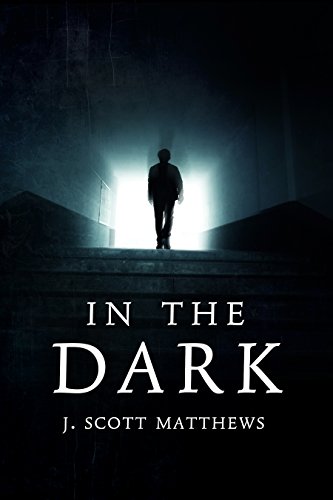
#12: In the Dark by J. Scott Matthews ()
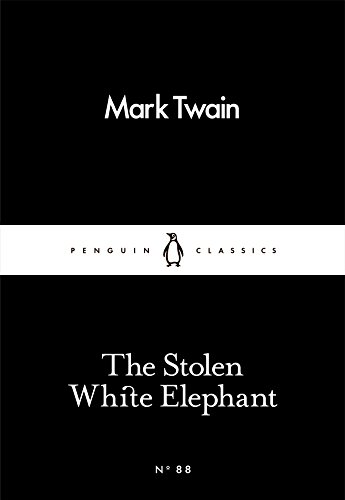
#13: The Stolen White Elephant by Mark Twain ()
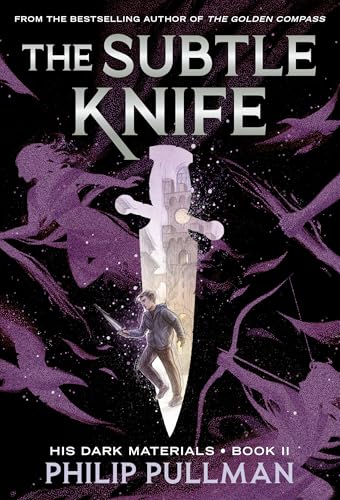
#14: The Subtle Knife by Philip Pullman ()
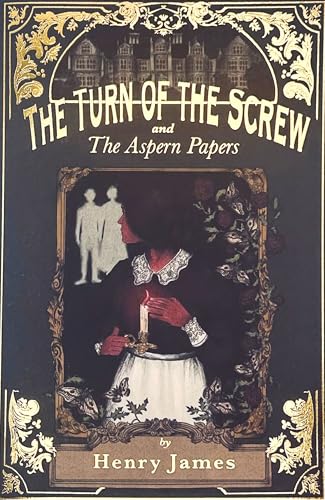
#15: The Turn of the Screw & The Aspern Papers by Henry James ()
#16: Under the Dome by Stephen King ( )
)
#17: The German Genius: Europe's Third Renaissance, the Second Scientific Revolution and the Twentieth Century by Peter Watson ()
#18: Finders Keepers by Stephen King ()
#19: The Pilgrim's Progress by John Bunyan ()
#20: How Not to Be Wrong: The Power of Mathematical Thinking by Jordan Ellenberg ()
#21: Mr. Penumbra's 24-Hour Bookstore by Robin Sloan ()
#22: Rogue Lawyer by John Grisham ()
#23: The American Dream: A Short History of an Idea That Shaped a Nation by Jim Cullen ()
#24: Butcher's Crossing by John Williams ()
#25: The Girl On the Train by Paula Hawkins ()
#26: Driving Miss Daisy by Alfred Uhry ()
#27: Through the Language Glass: Why the World Looks Different in Other Languages by Guy Deutscher ()
#28: Cujo by Stephen King ()
__________________________
2016
Books read: 28
Pages read: 10,626
2015
Books read: 20
Pages read: 8,280
2014
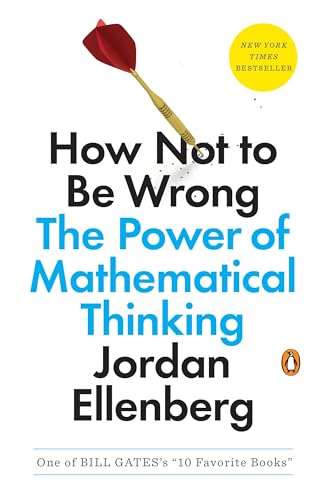
Books read: 27
Pages read: 7,164
2013
Books read: 26
Pages read: 11,618
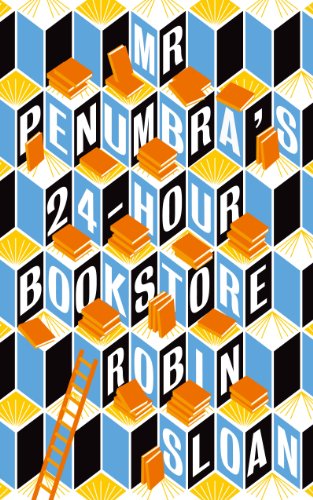
I am a high school teacher of English and mathematics. My job allows me to read a lot on vacation but there are some rough patches throughout the year where my workload is just too big to get much reading done. As for my reading, I tend to read mostly fiction but I also enjoy a good non-fiction book. At the beginning of a year I always set some reading goals.
Goals for 2016:
#1: Read a book with more than 1,000 pages.
This is a goal I set for myself every year as I enjoy reading at least one of the bigger tomes a year.
#2: Read more books than last year, that is more than 20.
I usually read around 25 books a year, but last year I only managed to read 20. So this will be my challenge for 2016.
#3: Finish one book off the shelf.
Just as last year, this first post will serve as some sort of reading summary of 2016 and some stats.
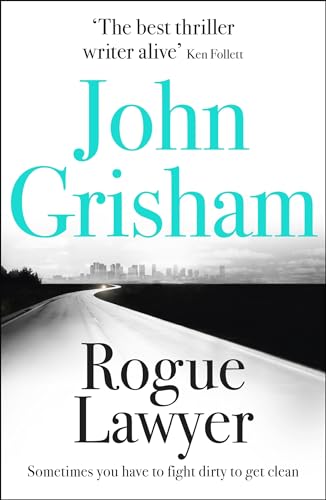
__________________________
Finished in 2016
#1: Memory Man by David Baldacci (
 )
)#2: Return to Sender: A Civil War Time Travel Novel by Fred Holmes (
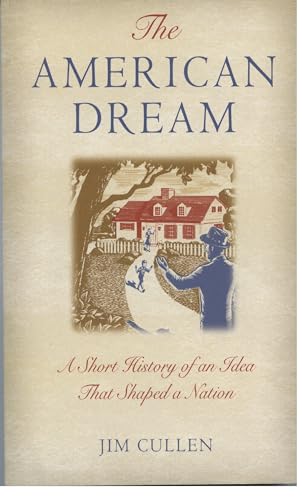
)#3: Threat Vector by Tom Clancy (
 )
)#4: Paper Towns by John Green (
)#5: Stoner by John Williams (
 )
)#6: The Death of Bunny Munro by Nick Cave (
 )
)#7: Gray Mountain by John Grisham (
 )
)#8: Mr. Mercedes by Stephen King (
)#9: You are Dead by Peter James (
)#10: A Connecticut Yankee in King Arthur's Court by Mark Twain (
)#11: Holes by Louis Sachar (
)#12: In the Dark by J. Scott Matthews (
)#13: The Stolen White Elephant by Mark Twain (
)#14: The Subtle Knife by Philip Pullman (
)#15: The Turn of the Screw & The Aspern Papers by Henry James (
)#16: Under the Dome by Stephen King (
 )
)#17: The German Genius: Europe's Third Renaissance, the Second Scientific Revolution and the Twentieth Century by Peter Watson (
)#18: Finders Keepers by Stephen King (
)#19: The Pilgrim's Progress by John Bunyan (
)#20: How Not to Be Wrong: The Power of Mathematical Thinking by Jordan Ellenberg (
)#21: Mr. Penumbra's 24-Hour Bookstore by Robin Sloan (
)#22: Rogue Lawyer by John Grisham (
)#23: The American Dream: A Short History of an Idea That Shaped a Nation by Jim Cullen (
)#24: Butcher's Crossing by John Williams (
)#25: The Girl On the Train by Paula Hawkins (
)#26: Driving Miss Daisy by Alfred Uhry (
)#27: Through the Language Glass: Why the World Looks Different in Other Languages by Guy Deutscher (
)#28: Cujo by Stephen King (
)__________________________
2016
Books read: 28
Pages read: 10,626
2015
Books read: 20
Pages read: 8,280
2014
Books read: 27
Pages read: 7,164
2013
Books read: 26
Pages read: 11,618
2OscarWilde87
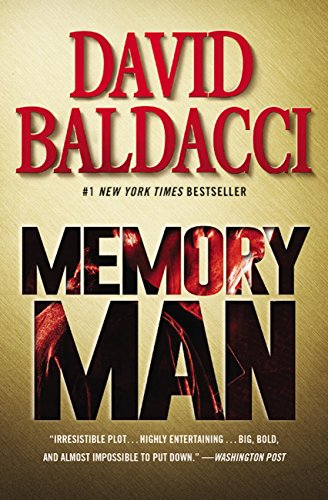
#1: Memory Man by David Baldacci
(507 pages)
Memory Man is the start of a new series by David Baldacci centered around former detective Amos Decker. The protagonist is also a former football player who was badly injured in his first and only NFL game. After being resuscitated twice on the pitch his brain has changed. Amos Decker now associates numbers with colors, a condition called synesthesia, and he cannot forget anything anymore, which is known as hyperthymesia. While the latter seems to be a good thing at first and helps him become a very successful detective, it is exactly this condition that makes him suffer the worst when his wife, his daughter and his brother-in-law are murdered. From then on, Decker's life just falls apart. He quits his job, becomes homeless and gives in to his pain. Only after a mass shooting at the local high school that is somehow connected to the murder of his family, Amos Decker returns to being an investigator again as a consultant to local and federal law enforcement.
I liked this book very much, especially because of the character of Amos Decker. The plot was interesting enough to keep me ploughing through the 500+ pages. Generally, this is quite an enjoyable book that can be read rather fast despite its many pages. It is very entertaining and provides the reader with a great reading experience. If you like the genre and are not averse to reading pop fiction, that is. I will definitely follow Amos Decker through the series and I am really looking forward to getting my hands on the next book in the series. 4 stars.
3OscarWilde87
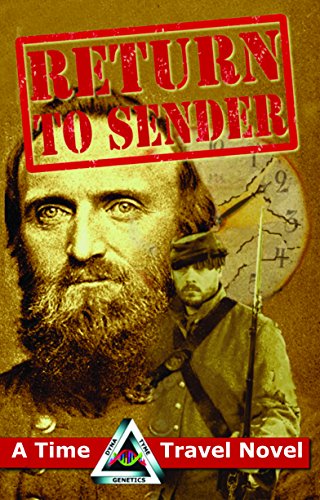
#2: Return to Sender: A Civil War Time Travel Novel by Fred Holmes
(325 pages)
Return to Sender is not just your ordinary time travel novel. Combining time travel with the issue of modifying DNA is what sets this book apart from the rest. The idea is that in everyone's DNA there is some sort of GPS marker and time stamp that can be changed just like you can go backwards and forwards when you watch a DVD. The result is that people can be sent back in time to very specific places with just a simple DNA-changing injection. Dyna-Time Genetics is the company that invented the procedure and their CEO is now willing to use it for what he deems to be a good cause. Namely, he wants to send protagonist Carleton Venable VI back in time in order to change the outcome of the American Civil War. The goal is to have the south win the war in order to change American history for the better. Carleton Venable VI, while reluctant at first, agrees to this mission as he sees a chance to make some changes for his personal life.
As with every time travel novel, Return to Sender explores the issue of having multiple timelines and the effect that changing history has on the present. To my mind, the issue of enabling time travel by modifying DNA is quite a nice touch, but does not really contribute much to the overall reading experience. In the end, this novel could easily do without this additional component and work out just the same. Topic-wise I liked the Civil War idea a lot. The way the story unfolds and how it is at various points connected to the personal situation of the characters in the book made for a unique reading experience. To my mind, this is why Return to Sender is actually a very readable book. As it is to be the first one in a series, it will be worth reading the sequel. 4 stars.
4OscarWilde87
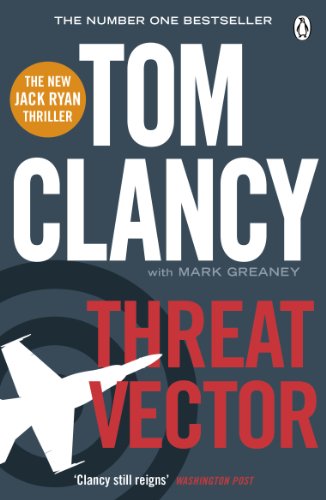
#3: Threat Vector by Tom Clancy
(710 pages)
One of the last novels in Tom Clancy's Jack Ryan Series, Threat Vector is about a conflict between the United States and China. The focus of the novel is on cyberwarfare and how easily cyber attacks can tip the scales in a war between two superpowers. While the protagonist of the series and now President of the United States Jack Ryan only plays a minor role, his son, Jack Ryan Jr., plays a major part in the novel. Both China and the United States have set up a system of cover agents which cannot directly be linked to the government in case one of the agents is caught spying on other countries or eliminating foreign nationals. In Threat Vector China wants to regain power in the South China Sea and wants to reclaim Taiwan through military action. The United States, however, as an ally of Taiwan, have to interfere with Chinese plans and actions and war seems to be unavoidable. President Jack Ryan has to decide how to cleverly employ his military and covert assets in order to prevent the loss of thousands of lives.
Generally, with Threat Vector you will get everything that you would expect from a Clancy novel. As usual, there is the conflict between two superpowers, the involvement of the Russians, and a lot of background on military tactics and data. To my mind, however, this novel does not quite live up to the quality of former novels in the Jack Ryan series as I found some parts to be quite tedious and just read along to get to more thrilling parts. Still, the topic of cyberwarfare and the consequences of an ever-growing importance of modern technology makes this book quite interesting to read. As always, I think Clancy could have done with less pages. On the whole, 3 stars.
5OscarWilde87
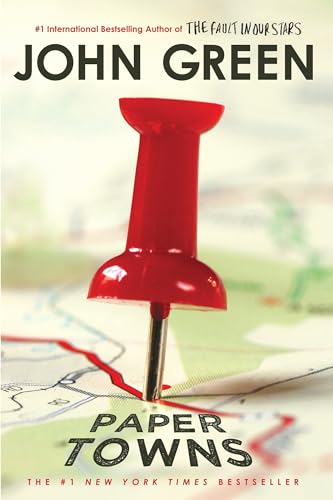
#4: Paper Towns by John Green
(305 pages)
John Green's novel Paper Towns tells the story of the teenager Quentin, who has loved his neighbor Margo Roth Spiegelman since he was nine years old. However, with Margo being a very popular girl and Quentin belonging to the nerds at school there is not much interaction between the two. Just a few days before graduating from high school Margo enters Quentin's room in the middle of the night and takes him out on an adventure trip. Right when Quentin thinks he can reconnect with Margo, she suddenly vanishes the next morning. As Margo leaves some clues as to where she might have gone for Quentin, Q sets out on a journey to find her and to find out who the real Margo is.
The title paper towns can be approached from two angles. On the one hand, they are explained as towns that exist only on maps but not in reality. This seems to have been a common practice with map makers who included non-exisiting towns in their maps as copyright traps in order to prevent copyright infringement. On a deeper level, Margo describes herself as being a paper girl living in a paper town, meaning that her life is quite flat and dull.
Paper Towns was a rather average read. While the beginning of the novel is quite interesting, the story is pretty boring throughout the main part and contains quite a bit of repetition. The last third of the novel, which describes Q's road trip in search of Margo, however, is actually quite interesting and fun to read. All in all, if it had not been for the rather boring section in the middle of the novel, I would have rated this book with more stars. But, as it is, just three stars for an on the whole average reading experience. As Paper Towns is YA fiction, I would recommend it to teenagers who will probably like the book better than I did.
6OscarWilde87
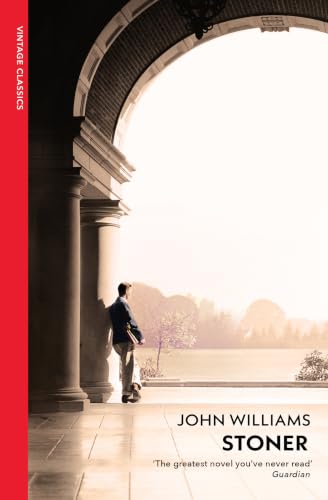
#5: Stoner by John Williams
(288 pages)
William Stoner grows up on a farm in Missouri. One day, his father learns that William has the chance to attend the University of Missouri in order to study agriculture. Intending to take over his parents' farm, Stoner seizes the opportunity. In the course of his studies, Stoner is forced to have an introductory lecture in literature. While he does not like it at the beginning, literature slowly starts to grow on him, which is mainly because of his instructor Professor Archer Sloane and a Shakespeare sonnet. Stoner is so impressed by literary studies that he changes his major to literature and his mentored by Archer Sloane. Over the next couple of years, Stoner remains at the university and finally manages to receive a Ph. D. All this is set against the background of the beginning of the twentieth century, so during his studies Stoner is faced with the decision whether he wants to join the armed forces in World War I or stay at university and pursue his studies. Stoner opts for the latter, while some of his friends decide to go to war. After receiving his Ph. D., Stoner becomes assistant professor at the university and finds joy in teaching literature to young students. This is about it for Stoner's career as he is never promoted, one reason being that he loves teaching so much that he does not feel the need for a full professorship, the other being a dispute with the head of the English department.
In his private life, Stoner marries Edith after knowing her only for a short time. The marriage is far from being a happy one and William Stoner finds his wife to be very cold and resentful. While sex is not really part of the Stoners' marriage, they still have a child, Grace, who is mostly cared for by William. To sum up, Stoner is a portrait of the protagonist with the same name and follows his career and his private life, both of which are full of struggles. The only positive aspects in Stoner's life are his never-fading love of literature and his affair with a younger colleague, Katherine.
The character of William Stoner is probably what I loved most about this novel. The depiction of Stoner's life is truly realistic and makes you identify with him. There are many well-known characters in literature and to my mind, John Williams' Stoner deserves to be called one of them. I found myself passionately following his every move, hurting when he had to suffer the hardships of his marriage and being joyful when he finally finds true love and is able to enjoy his life. William Stoner takes great care of his daughter in times his wife selfishly abandons the family. There is a special bond between William and his daughter Grace that you can feel while reading the little episodes in their lives. When Stoner is challenged by the head of the department at university, you can grasp the strain this puts on Stoner, who loves teaching literature. The moment Stoner manages to fight back and is once again allowed to teach advanced classes in his field is not just a victory for Stoner but it has also been a victory for me as a reader who just felt that it was about time that something positive happened to this great character.
Stoner is one of the greatest novels I have ever read. Probably it is also one of the greatest novels I am ever going to read. This novel left a deep impression on me that certainly is to last for a very long time. Highly recommendable and no less than a 5-star read.
7NanaCC
>6 OscarWilde87: Nice review of Stoner.
"is one of the greatest novels I have ever read."
That is quite the recommendation. Onto my wishlist.
"is one of the greatest novels I have ever read."
That is quite the recommendation. Onto my wishlist.
9dchaikin
>6 OscarWilde87: this novel has been mentioned a lot here and I knew very little about it. Enjoyed your review. I think this will have to go on the wishlist.
10brodiew2
>4 OscarWilde87: I think I may have skipped this one. I can't remember. I have been listening to Greany's Clancy novels for some time and have enjoyed Lou Diamond Phillips' narration greatly. I have also enjoyed the ongoing adventures of Clark, Chavez, and Jack Ryan Jr and Sr. I am looking forward to the newest one, Commander in Chief.
11cabegley
>6 OscarWilde87: Nice review of Stoner. I loved this book, and it does seem to inspire that feeling in others, which I think is unusual in such a quiet novel.
12OscarWilde87
>7 NanaCC: I hope you'll like it but I'm actually quite certain that many people will love Stoner.
>8 baswood: Thanks baswood!
>9 dchaikin: I'm not sure anymore if I read about it here first or if I bought it first and then read about it here. Anyway, I was very impressed and there seem to be quite a few people here thinking the same way. It really is a fantastic book.
>10 brodiew2: Oh, I didn't know that there are still some Clancy books to be published. Is Mark Greaney taking over and continuing the Jack Ryan series?
>11 cabegley: Thank you, cabegley! I thought so, too. It is actually a very quiet novel but seems to impress many readers.
>8 baswood: Thanks baswood!
>9 dchaikin: I'm not sure anymore if I read about it here first or if I bought it first and then read about it here. Anyway, I was very impressed and there seem to be quite a few people here thinking the same way. It really is a fantastic book.
>10 brodiew2: Oh, I didn't know that there are still some Clancy books to be published. Is Mark Greaney taking over and continuing the Jack Ryan series?
>11 cabegley: Thank you, cabegley! I thought so, too. It is actually a very quiet novel but seems to impress many readers.
13RidgewayGirl
>3 OscarWilde87: I'm curious as to what justification there could be (other than the blatantly racist) for thinking that it would have been better if the South had won the Civil War. Is the sequel about WWII?
And I agree with your evaluation of Stoner. What a great novel.
And I agree with your evaluation of Stoner. What a great novel.
14OscarWilde87
>13 RidgewayGirl: There is no real justification, actually. It is actually just the thought of the (to my mind) heavily deranged CEO of this time travel company. He thinks this would lead to an improvement of the living conditions in the South. I don't kow about the sequel. I don't think it has been published yet. But maybe I can get it via Early Reviewers/Member Giveaway again.
15OscarWilde87
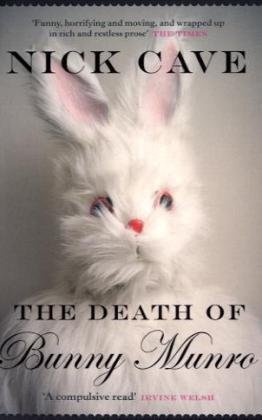
#6: The Death of Bunny Munro by Nick Cave
(278 pages)
The ending of this novel is already given away by its title The Death of Bunny Munro, so reading this book is about finding out who this Bunny Munro is and how his death comes about. Bunny Munro, the protagonist of the novel, is a highly unlikeable character. In the beginning of the novel the reader learns that Bunny Munro is a door to door beauty product salesman and is currently spending the night in a hotel in the course of a sales trip. After he had sex with a prostitute he is on the phone with his wife while getting more drunk and smoking one cigarette after another. Their conversation shows that the two of them are not separated but pretty much live separate lives. Bunny's wife, Libby, knows about Bunny's affairs with different women and what he does when he is away on business trips. The next day, after having sex with a waitress at the hotel, Bunny returns home to his wife and his son, Bunny Jr. He finds the bedroom door locked with his wife in the room. When he manages to get inside he sees that his wife has committed suicide and the reader learns that Libby has had a 'medical condition' and was depressed. Bunny cannot really cope with the situation and starts drinking and smoking day and night. Most of the time, his thoughts revolve around vaginas - especially that of Avril Lavigne, for whatever reason that might be - and Bunny jerks off a lot. All this time, Bunny Jr. has to witness his father's behavior firsthand and is left alone in dealing with his mother's death. After the funeral, Bunny takes his son on a sales trip with him. All along the trip, Bunny is drinking heavily and trying to have sex with his female customers while Bunny Jr. is waiting in the car. Reality and imagination are oftentimes a blur for Bunny as well as his son, as they see Libby very often. While Bunny feels haunted by the frequent apparitions of his dead wife, his son finds some comfort in seeing his mother again. In the end, Bunny dies, as is already announced in the title.
I found The Death of Bunny Munro to be a highly disturbing novel with a very unpleasant protagonist. There is so much at fault with this character that I cannot even begin to describe the things I do not like about him. The story that leads the reader to the eventual death of Bunny is to my mind not very thrilling and highly repetitive. For example, sexual references are abundant and Bunny's glorification of female body parts seems to be one of the most important elements in the story as it is repeated so often. Then, there is the lighting of cigarettes. After reading the novel, I had the feeling that a cigarette was lit on every single page of the book. Some things did just not add up for me, so the reading experience became quite tedious. While the beginning seemed to provide a promising setting, the remainder of the book disappointed me a lot. On the whole, not more than 2.5 stars.
16AlisonY
Ah - we all feel the love for Stoner. Lovely reading your review.
Sorry you didn't like Bunny Monro as much as I did. I agree there was absolutely nothing likeable about the character, but I thought Nick Cave did a fair job in executing this novel. I think I gave it an average rating - wasn't one of my favourites from last year, but I didn't hate it either.
Sorry you didn't like Bunny Monro as much as I did. I agree there was absolutely nothing likeable about the character, but I thought Nick Cave did a fair job in executing this novel. I think I gave it an average rating - wasn't one of my favourites from last year, but I didn't hate it either.
17OscarWilde87
>16 AlisonY: Yeah, well. Maybe I just didn't get Cave. I didn't exactly hate the book, but I think I could have spent my time better.
18brodiew2
>12 OscarWilde87: Yes, Mark Greaney has written 3 or 4 more since Clancy's passing.
20OscarWilde87
>18 brodiew2: Ah, okay. Maybe I'll give them a try. But I think I will start with the original ones first.
21OscarWilde87
>19 baswood: I don't know his songs, but I did not like his fiction much.
22janemarieprice
>19 baswood: Are they the same guy? What about the artist? This has confused me for years.
23OscarWilde87
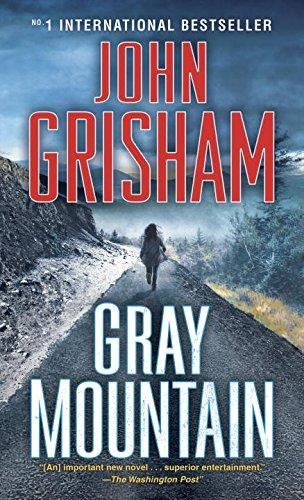
#7: Gray Mountain by John Grisham
(461 pages)
Samantha Kofer is a young lawyer with a big corporation in New York until the financial crisis of the early 2000s hits and Samantha is furloughed. The company offers her to do an internship with a different company and return after a year without losing her status and her health insurance. At first, Samantha is reluctant to leave New York, but finally she ends up with the Mountain Aid Legal Clinic in Brady, Virginia. Deep down in coal country, Samantha finds herself dealing with legal disputes caused by big coal companies. Though a lawyer, she had never been involved in actual litigation before and had rarely seen a courtroom from the inside. While her new life promises to be very tedious and not very fulfilling, she slowly starts to see that there are many people who cannot afford a lawyer in their fight against the big coal companies and are destined to lose their jobs, their homes and their lives. On her first day in Virginia, Samantha meets Donovan, a local lawyer who takes on coal companies and tries to set things right. While she is certainly attracted to him, she cannot imagine starting a relationship with Donovan as she is set on leaving Brady as soon as she can return to her old life in New York. However, plans change as Donovan dies and Samantha is faced with a decision that will affect her future.
John Grisham's legal thriller Gray Mountain is not really fast-paced and does not offer the typical Grisham kick of big fights in a courtroom. Rather, this novel explores the consequences of strip-mining in rural Virginia for the people as well as for nature. The reader follows Samantha Kofer through a hard time in her life, in which she has to make life-changing decisions. On the whole, I liked reading Gray Mountain, but I did not enjoy it as much as other Grisham novels. The reading experience was a little above average, but not more. 3.5 stars.
24OscarWilde87
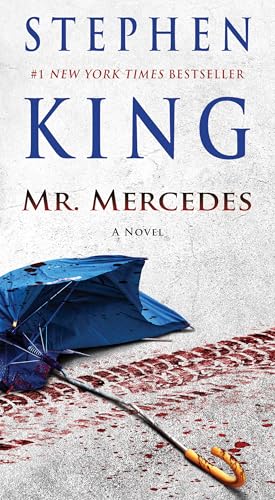
#8: Mr. Mercedes by Stephen King
(527 pages)
Mr. Mercedes is the first book in a series and it follows retired detective Bill Hodges to solve a crime he could not solve before his retirement. The unemployment line in front of the City Center is long and people have been waiting for hours for the doors to open. Their goal: a job and a way out of their misery. Shortly before the doors to the job fair open, a gray Mercedes appears out of the fog, heading straight for the crowd of waiting people. And it does not stop. The Mercedes runs over many people, killing eight and injuring many more. After his retirement, former detective Bill Hodges is depressed and contemplating suicide. Then he receives a letter from the man the media dubbed the 'Mercedes Killer' and his life changes. Bill Hodges sets out to find the man who killed all those innocent people.
Being a detective book, this is not the typical Stephen King novel. However, King can again employ one of his greatest gifts as a writer, which is characterization. The portrayal of the 'Mercedes Killer', Brady Hartsfield, is just perfect. Mama's boy, computer geek, driver of the ice-cream van, psychopath, killer. This book was hard to put down in the end, which means about the last 100 pages for a Stephen King novel. A suspenseful read. 4 stars.
25OscarWilde87
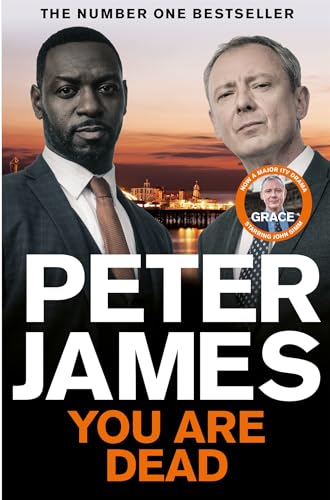
#9: You are Dead by Peter James
(510 pages)
You are Dead is the eleventh novel in the Roy Grace series by Peter James. In Brighton, a woman is abducted from a parking garage. Soon afterwards, a dead female body is found on a construction site. Those two cases seem to have no connection whatsoever in the beginning, but when another woman goes missing and yet another body from the past is found, it turns out that the women actually do have something in common. All of them have long brown hair and have been in their early twenties at the time of their abduction. When protagonist Roy Grace finds out that the women are branded 'U R dead', he is afraid that he is investigating a series of crimes that have taken place over a period of thirty years. With the 'Brighton Brander' the seaside town has a serial killer.
Even though I started the Roy Grace series with this novel, which is its eleventh part, I had no trouble getting into the character constellations. I am afraid, though, that not knowing the characters' backgrounds might have taken away from the reading experience. Still, I found the novel quite enjoyable and its protagonist Roy Grace quite likable. I am not sure whether I will read other novels in the series as its setting in England is usually not my cup of tea. However, especially due to its gripping ending, I can definitely recommend this novel to fans of crime fiction. 3 stars.
26OscarWilde87
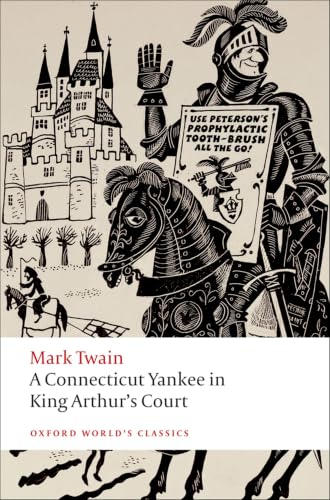
#10: A Connecticut Yankee in King Arthur's Court by Mark Twain
(360 pages)
The United States in the 19th century. Hartford, Connecticut. Hank Morgan receives a blow to the head and is suddenly and inexplicably transported to 6th-century England. After this time travel, Hank Morgan, still equipped with his 19th-century knowlege, starts an adventure through medieval England. Captured and brought to King Arhtur's court he is sentenced to burn at the stake. However, Hank Morgan manages to escape his fate by divining a solar eclipse, which, regarding the circumstances, is not such a big feat. Much to the chagrin of the greatest magician of England, the famous Merlin, Morgan manages to become the chief minister to King Arthur and is henceforth known and feared as 'The Boss' because of his magical capabilities. Living up to his position, Hank Morgan slowly starts to institute changes in a society that can only seem totally backward to his 19th-century eyes. His main goals throughout the novel are to diminish the power and influence of the church, to abolish the insitution of knight-errantry, to introduce the democratic republic as a new system of government, and, on a more personal level, to publicly make Merlin look like a fool whenever he can.
As much as this book can be seen as a criticism of monarchy and the strong role of the church, it can be read as a criticism of slavery in the United States. Aristocrats in 6th-century England are compared to slaveholders in America:
"The repulsive feature of slavery is the thing, not its name. One needs but to hear an aristocrat speak of the classes that are below him to recognize - and in but indifferently modified measure - the very air and tone of the actual slaveholder; and behind these are the slaveholder's spirit, the slaveholder's blunted feeling. They are the result of the same cause in both cases: the possessor's old and inbred custom of regarding himself as a superior human being." (p. 190)The original illustrations by Daniel Carter Beard underline Twain's criticism throughout the novel and contribute to its satiric tone.
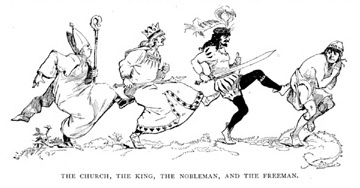
("The Church, the King, the Nobleman, and the Freeman", p. 127)
Speaking of the humorous and satirical qualities of Mark Twain's A Connecticut Yankee in King Arhtur's Court, I much enjoyed the frequent jabs Twain took at different institutions or groups of people. Those parts definitely contributed to an already great reading experience. Read what Mark Twain has to say about the German language when he compares it to 6th-century English:
"(...) I was standing in the awful presence of the Mother of the German Language. (...) If words had been water, I had been drowned, sure. She had exactly the German way: whatever was in her mind to be delivered, whether a mere remark, or a sermon, or a cyclopedia, or the history of a war, she would get it into a single sentence or die. Whenever the literary German dives into a sentence, that is the last you are going to see of him till he emerges on the other side of his Atlantic with his verb in his mouth."To my mind, Twain's exploration of the possibility of speeding up historical development makes this novel even more valuable. When 19th-century Yankee Hank Morgan tries to use his advanced knowledge of history to do away with monarchy and set up a democratical society, the question arises whether 6th-century England is ready for such a radical change. In the end, Morgan himself has to act as the driving force of revolution only to see his system fail when people fall back to their 6th-century beliefs. The church certainly plays an important role here as a separation of church and state is not yet ingrained in people's minds. Therefore, the experiment of introducing a democratic system in the 6th-century is doomed to fail. Now is it just that mankind is not ready for the change yet and has to exist a couple of centuries longer to recognize the merit of a different system? Or is it the radical and abrupt way in which Hank Morgan approaches his project? In the end, even Hank himself recognizes that with him as a leader in a democratic society nothing much would change as people would regard him as the ruling monarch and 'The Boss'.
In conclusion, Mark Twain's novel is a highly enjoyable and highly recommendable read for several reasons, of which I will name the four main ones for me. First, it is a humorous depiction of 6th-century customs, especially knight-errantry. Second, it raises some very interesting questions and makes you rethink the development of different systems of government. Third, Beard's illustrations fit perfectly to Twain's narrative and as Twain said himself "[Beard ] not only illustrates the text but he illustrates my thoughts". Fourth, the narrative of the Yankee's adventure's in King Arthur's court are highly readable and reminded me somewhat of the adventures of Miguel Cervantes' Don Quixote, which I loved. All in all, 4.5 stars.
27bragan
>26 OscarWilde87: I am now very annoyed that my copy of Connecticut Yankee didn't have the illustrations.
28baswood
Enjoyed your excellent review of A Connecticut Yankee in King Arthurs Court. It reminds me that I have not read it and so I will put that right soon. Do you need to know anything about Connecticut Yankees? are they different to other Americans?
29OscarWilde87
>27 bragan: Sorry to hear that. But maybe you can google them. There's a lot you can find with picture search. But then again, they have their specific place in the book...
>28 baswood: Thanks! I haven't given that any particular thought, but I don't think it's all too special that Hank Morgan is from Connecticut. I think it might have been any other (northern?) state. It might be important for the issue of slavery. But other than that, I'm not so sure.
>28 baswood: Thanks! I haven't given that any particular thought, but I don't think it's all too special that Hank Morgan is from Connecticut. I think it might have been any other (northern?) state. It might be important for the issue of slavery. But other than that, I'm not so sure.
30OscarWilde87
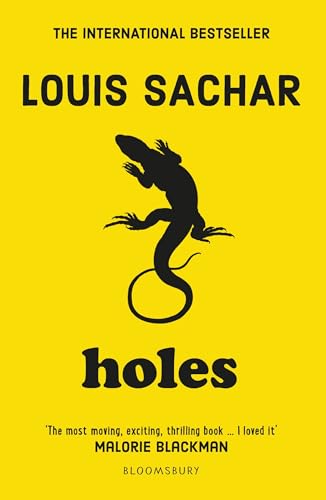
#11: Holes by Louis Sachar
(152 pages)
Protagonist Stanley Yelnats is the fourth Stanley in his family. His great-great-grandfather traveled from Latvia to the United States, unaware that he was cursed because he forgot to keep a promise. Whenever bad things happen, his family always blames that curse. So it is only the bad luck caused by Stanley's 'no-good-dirty-rotten pig-stealing-great-great grandfather' when Stanley is hit on the head by a pair of sneakers and consequently accused of stealing them from a children's orphanage. The boy is faced with the decision of either going to jail or going to Camp Green Lake. For Stanley, whose family is very poor, Camp Green Lake seems to be the obvious choice as he thinks of it as some kind of summer camp. This, however, turns out to be a big misconception. Camp Green Lake is a correctional facility for boys. Located in the desert, there is no lake as the name of the camp might have suggested. Instead, there is just dust, a few tents and many holes. Those holes are the right means to turn bad boys into good boys according to the Warden of Camp Green Lake. Each boy has to dig one hole every day to 'build character'. However, Stanley soon finds out that there is more to the holes than the Warden lets out.
In this young adult novel, the reader follows the development of protagonist Stanley, who progresses from being bullied at school to being a courageous young boy at Camp Green Lake. While the narrator clearly shows his opinion about the effectiveness of digging holes to 'build character', ironically, it is exactly this that helps Stanley in his development in the end. The novel explores the meaning of friendship in a world of hardship for boys who come from poor families or do not even know their families. To my mind, the novel is less criticism of teenage correctional facilities or boot camps, but rather a story revolving around a likeable protagonist everyone can sympathize with. It is Stanley and his relationships to the other boys in the story that are most important in unfolding a plot that is almost secondary. Eventually, Holes follows Stanley in his endeavor to step out of the hole that is his life.
I would recommend this novel to teenagers and any other readers interested in young adult fiction. 3 stars.
31cabegley
>30 OscarWilde87: Have you seen the movie of Holes? I really liked both the book and the film.
32NanaCC
>30 OscarWilde87:&>31 cabegley: I'll second Chris' thoughts and yours about Holes. Chris, I think your kids enjoyed that one too, right?
33OscarWilde87
>31 cabegley: >32 NanaCC: I haven't seen the movie yet. But I will try and get hold of it soon(ish). Thanks for the recommendation!
34OscarWilde87
#12: In the Dark by J. Scott Matthews
(306 pages)
In his novel In the Dark J. Scott Matthews explores the effects of PTSD on the life of soldiers after a war. After an 'accident', the details of which are unclear in the beginning and still somewhat hazy in the end, Nine is discharged from the military. A governmental program officially set up to treat victims of PTSD treats patients with an ominous 'procedure' after which their condition only deteriorates. Many patients start having strong hallucinations and some patients have a stroke and die. While the higher-ranking officials try to cover up what happens in their facility, ex-psychiatrist Grant Engel actually tries to help his patients. He escapes with two patients, only called Nine and Five throughout the novel.
Two plot strands converge in In the Dark. There is the story of Grant Engel, who loses his highly paid job, starts drinking and thereby destroys his family. When he loses his license as a psychiatrist and there seems to be no way but down, he is offered a job by an old acquaintance. He is supposed to interview patients that are treated for PTSD in a governmental program. Glad that his downward spiral finally stops, he jumps at the opportunity only to recognize that something is very wrong with the treatment of the patients. Since he is offered no details by his superiors, he feels he cannot do his job anymore and helps two patients escape before their evident death in the treatment facility.
Then there is the story of Nine, a patient in the PTSD treatment program, who wanders around town trying to make sense of what happened to him after he wakes up in a bar with blood and dead bodies around him. The line between reality and hallucination is often very blurry for Nine and he has trouble deciding what is real and what is not. For me, this is one of the strong suits of the novel. As a reader, you are constantly challenged to decide for yourself what to believe and whom to trust. J. Scott Matthews has done a good job in creating characters that seem very authentic. The pace of the novel is just fine so that you want to keep on reading and follow Nine in solving the mystery of what has happened to him.
I liked this novel a lot and would recommend it to anyone interested in the topic. 4 stars for an aspiring writer.
35OscarWilde87
#13: The Stolen White Elephant by Mark Twain
(54 pages)
In the Penguin Little Black Classics Edition, The Stolen White Elephant is published in a volume with three other short stories by Mark Twain, namely The Story of the Bad Little Boy Who Didn't Come to Grief, The Story of the Good Little Boy Who Did Not Prosper and The Celebrated Jumping Frog of Calaveras County.
The Stolen White Elephant was published in 1882 and it is about a British government agent posted to India who is tasked by the King of Siam with presenting the Queen with a precious Siamese elephant. On his way to Britain he makes a stop in New Jersey in the US in order for the elephant to get some rest before traveling over the Atlantic. The elephant, however, goes missing and the police take over the case. Detectives are dispatched and follow leads in several states. It is the humorous depiction of the detectives' search that makes this story a fun read despite its tragic ending. 4 stars.
36OscarWilde87
#14: The Subtle Knife by Philip Pullman
(283 pages)
The second installment in the His Dark Materials series, The Subtle Knife follows protagonist Lyra Silvertongue on her way to find out the truth about dust, a mysterious substance that seems to control many aspects of life in Lyra's world. Will Parry, a boy from another world, sets out to find his father. Then their paths cross and they discover that there are multiple worlds. Both know their way around Oxford, for example, but their versions of Oxford are somewhat different. To travel between the worlds, one has to find almost invisible doors in the air that serve as portals. In their quest, Lyra's alethiometer, a dust-powered instrument that tells her the truth about everything, is stolen. Confronting the thief, Lyra and Will are offered a deal to bring him the subtle knife, a knife that can cut through every material known to man. What is more, this knife can also be used to open doors into other worlds and the bearer of this knife has control over opening and closing those portals. In the meantime, Lord Asriel gathers troops to fight the authority. In the end, several plotlines converge and leave the reader with an outlook on what could happen in the third novel of the series.
I liked The Subtle Knife better than The Golden Compass as it was more fast-paced and seemed to be more mature than the first novel in the series. I kept turning pages in order to see what would eventually happen to Lyra and her world, but in the end I was a little disappointed by the open ending that leaves the most interesting questions unanswered. On the whole, 3.5 stars.
37dchaikin
I think I felt the same about The Subtle Knife, although I've completely forgotten the story line.
I just caught up a bit. Loved your review of A Connecticut Yankee in King Arthur's Court. Interesting that you are one of seven LTers with In the Dark. There are five reviews, all very positive.
I just caught up a bit. Loved your review of A Connecticut Yankee in King Arthur's Court. Interesting that you are one of seven LTers with In the Dark. There are five reviews, all very positive.
38OscarWilde87
>37 dchaikin: I got an early review copy of In the Dark via MemberGiveAway. I guess that is why there are not so many people with the book.
39OscarWilde87
#15: The Turn of the Screw & The Aspern Papers by Henry James
(180 pages)
Published in 1898, The Turn of the Screw is a ghost story in novella length. A young governess is hired to look after the niece and nephew of a man who seems not to be interested in raising the children himself after the death of their parents. Soon after the governess has arrived at Bly she meets the housekeeper, Mrs. Grose, and Miles and Flora, the children. Miles was expelled from a boarding school, the reasons of which remain unclear until the end of the novella. The governess, however, is set on finding out the truth about Miles and why he was expelled. Exploring the grounds of her new temporary home, the governess sees a strange man, first far away in a tower of the country house, then much closer, looking through a window into her room. Soon, she starts seeing a second figure, a woman. When the governess relates these strange encounters to Mrs. Grose, the housekeeper identifies the two figures as Miss Jessel and Mr. Quint, former employees who are already dead. The governess now strives to protect the children and find out about the strange apparitions.
The second novella in this volume is The Aspern Papers, published in 1888. It is set in Venice, Italy, and the protagonist is an editor who wants to acquire documents by Jeffrey Aspern, a poet who had a relationship with Miss Bordereau before he died. Miss Bordereau and her niece live a secluded life in a palazzo in Venice and the old lady prefers not to talk about her relationship with Jeffrey Aspern. She is in possession of the documents, letters to her written by Jeffrey Aspern, that the protagonist wants to have. The editor rents rooms in the Bordereau palazzo and tries to establish communications to Juliana Bordereau, which, however, fails. When the editor tries to work his way to Jeffrey Aspern's former lover by talking to her niece and taking her out to see Venice, the conversation finally turns to the Aspern papers. The protagonist finds out where they had been kept and tries to find them, but he is discovered by Juliana Bordereau who dies soon after. Her niece, Tina, now owns the Aspern papers and the protagonist is still dead set on possessing them. When Tina Bordereau implies that the only way he could own them is if he were part of the family, the protagonist despairs and leaves the palazzo for a while. On his return, he learns that the papers have been burnt by Tina Bordereau.
There are certain aspects both novellas have in common. First, there is the narrator. In both cases the narrator of the story is the protagonist, relating events from a first person perspective. The governess in The Turn of the Screw as well as the editor in The Aspern Papers remain nameless. Their credibility is doubtful as they contradict themselves in their narration or appear to see things that are not there. As a reader, you find yourself questioning everything you are told and constantly trying to figure out the truth. This, however, is impossible as certain details in both stories are never revealed. Both stories leave a lot open to interpretation.
Second, there is the matter of truth. As already mentioned, the reader has a hard time finding out the truth because of the narrative perspective chosen for the stories. The protagonists of both stories, however, also strive to reveal the truth. In The Turn of the Screw, the governess wants to find out the reason for Miles' being expelled from boarding school. In The Aspern Papers, the editor wants to find out more about the mysterious relationship between Juliana Bordereau and Jeffrey Aspern. Eventually, the 'truth' is lost when, respectively, Miles dies or the letters are burnt and cannot be recovered anymore.
In light of those two aspects, narrative perspective and the quest for truth, I found both novellas very interesting. They made me rethink matters of composition in literary works, especially the trustworthiness of narrators. On the whole, I liked The Aspern Papers a little better than The Turn of the Screw as the story was more to my liking. 4 stars for the former and 3 stars for the latter leave me with a combined rating of 3.5 stars for this volume.
40AlisonY
>39 OscarWilde87: enjoyed your review. It's a long time since I read these two novellas, but I remember enjoying them.
42baswood
Enjoyed your excellent reviews of The Turn of the Screw & The Aspern papers
44OscarWilde87
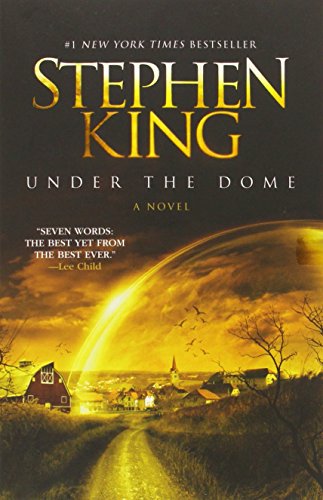
#16: Under the Dome by Stephen King
(1074 pages)
Stephen King's Under the Dome relates the story of a small Maine town, Chester's Mill, which is suddenly cut off from the rest of the United States by what people call the Dome. The Dome is an invisible barrier that shuts off Chester's Mill completely. No one can get out, no one can get in. Its invisibility leads to many crashes in the beginning, starting with a plane crash and many cars crashing into the Dome.
While the novel features a large set of characters, many of which have major roles in unfolding the plot, it is mainly the interplay between protagonist Dale 'Barbie' Barbara, a former Army lieutenant, and antagonist James 'Big Jim' Rennie, the town's Second Selectman and the owner of a used-car dealership, that is the dirivng force of the novel. Yet, there are so many other characters, whose stories make for a compelling reading experience. Dale Barbara wants to leave Chester's Mill after an altercation with Big Jim's son Junior Rennie and his friends. However, the Dome forces him to stay in Chester's Mill. James Rennie is an elected town official, sells used cars and is a self-proclaimed 'faithful servant' of the Lord. And he runs one of the biggest drug rings in the United States. Soon, they clash, Big Jim striving to have all the power in the city and Dale Barbara trying to help the city cope with the situation under the Dome and trying to find a way out.
This is the setting for one of Stephen King's greatest novels. Not only because of its length of more than 1,000 pages it is reminiscent of King's major epic The Stand. King creates a credible scenario of what could happen if a city was shut off from the rest of the world. Despite its length, Under the Dome never fails to capture and is a fantastic read. It is only the ending that disappointed me a little. On the whole 4.5 stars.
45OscarWilde87
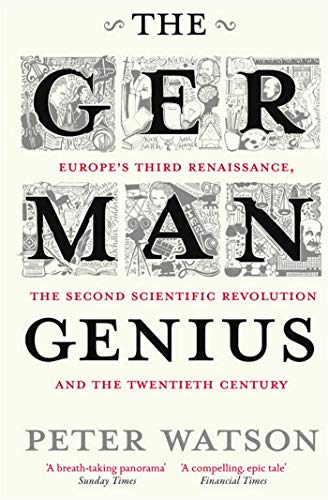
#17: The German Genius: Europe's Third Renaissance, the Second Scientific Revolution and the Twentieth Century by Peter Watson
(856 pages)
At first sight, the title The German Genius could mean everything and nothing. What should one expect here? A biography of an important German thinker or scientist? A look at the subtitle Europe's Third Renaissance, the Second Scientific Revolution, and the Twentieth Century allows further insight. Peter Watson sets out to provide a panorama of important Germans from the end of the Baroque Age to modern day Germany and the development of the notion of being German throughout the stages of history. In his book he touches upon scientific and cultural developments and the key figures who brought them about.
Watson's intention becomes quite clear when you read the introduction to the book which he titled "Blinded by the light". He argues that yes, Hitler and the Holocaust are probably what most people first think of when they think of Germany. However, there is so much more to Germany than this dark part of its history. In his conclusion, Watson writes:
"Kant, Humboldt, Marx, Clausius, Mendel, Nietzsche, Planck, Freud, Einstein, Weber, Hitler - for good or ill, can any other nation boast a collection of eleven (or even more) individuals who compare with these figures in regard to the enduring influence they have had on modern ways of thought? I suggest not." (p. 828)
The German predicament is not easy and the arguments in this book will not please everyone. It is to those who find it difficult to move beyond Hitler that The German Genius is dedicated. (p. 849)So, what Watson tries to do is look at Germany and how its thinkers, scientists, writers, painters, architects, musicians, psychologists, etc. shaped not only a nation, but also the rest of the world. To be clear, Watson does not glorify the Germans or play down the atrocities of the National Socialists. Rather, he states, in addition to looking at Nazi Germany it is worth to look at what it meant to be German before Hitler came to power and also how Germany managed to become the nation that it is today. In that respect, Watson proposes that the social revolution of 1968 is a crucial point in Germany's history. While a new political and legal structure was imposed on Germany by the occupying powers after World War II, so Watson, the social revolution of 1968 came from inside Germany and functioned as a cut in its history. He argues further that while one should not forget Germany's past, one should also not reduce Germany to the Hitler regime.
On his way from the introduction to the conclusion of the book, Peter Watson provides a panorama of German historical figures, some famous and some less well-known. At times, I found the pace with which the author jumped from one person to the next a bit too fast. To my mind, the book is much easier to follow, when you at least roughly know all the figures, Watson talks about. Generally, it took me some time to find my way into this book, but once I got used to the structure, following Watson's thoughts was much easier, even if I did not know all of the Germans he wrote about. Personally, I found the parts about science and philosophy as well as the chapter about the effect of German thought on America the most interesting, but that is just personal preference. While I do not agree with everything Watson says, I find the book well worth reading and would recommend it to everyone interested in history and the influence of the Germans on the US, Great Britain and the rest of Europe, and not least Germany itself. Be warned though, this book is a longer project and requires perseverance. 3.5 stars.
47dchaikin
An interesting topic. Should Leibniz have been added to those 11? How many others? But it sounds like a tough book to pull off. Life summaries of the famous would be insufficient to capture the atmosphere of these developments or to delve into why. Wondering how Watson handled that.
48OscarWilde87
>46 baswood: That's a good question actually. I probably wouldn't have picked it up myself. But my aunt gave it to me as a birthday present. She went to a bookstore and told the guy that I was interested in history. That's how I came to owning (and reading) this book.
49OscarWilde87
>47 dchaikin: It is indeed very interesting. Leibniz is not among those 11 Watson mentions in the conclusion, but he's in the book. I am actually not sure why Watson chose to mention just those eleven in his conclusion and he doesn't give a reason for his choice. He said that one could easily name many more.
But the book is not just life summaries. The life summaries are actually a very short part of the book. It is more about how those people influenced history with their contributions to their respective fields. Mentioning as many person as Watson did, this has to end up in becoming a relatively fragmented text, but Watson often goes back to take a look at the bigger picture and summarize what certain people have achieved together to bring about certain movements or events.
But the book is not just life summaries. The life summaries are actually a very short part of the book. It is more about how those people influenced history with their contributions to their respective fields. Mentioning as many person as Watson did, this has to end up in becoming a relatively fragmented text, but Watson often goes back to take a look at the bigger picture and summarize what certain people have achieved together to bring about certain movements or events.
50OscarWilde87
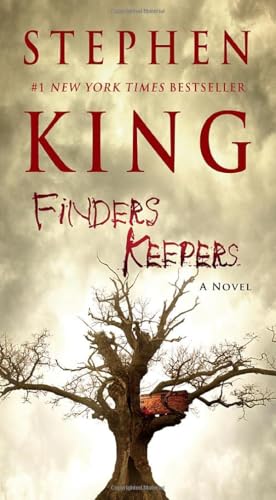
#18: Finders Keepers by Stephen King
(528 pages)
Finders Keepers is the second novel in the Bill Hodges trilogy by Stephen King. In 1978, Morris Bellamy murders author John Rothstein and steals money and notebooks from the author's safe. The notebooks are especially important to Bellamy, who admires Rothstein's work but is disappointed by the last novel in his favorite series. He hopes to find a sequel to this last novel in the stolen notebooks that contain many manuscripts. After a night of drinking, Bellamy rapes a woman and is sent to jail before he got a chance to read the notebooks. In 2009, Pete Saubers finds the stolen notebooks and the stolen money, which Bellamy had buried before he went to jail. As Pete Saubers' family goes through a rough time financially and his parents are constantly arguing about money, Pete Saubers uses the money to send his father $500 every month. While his parents are not sure who sends the money they still use it to pay their bills. Pete, who wants to study English literature, takes interest in the notebooks and reads them in the privacy of his own room. When the money from the trunk runs out, Pete decides to sell some of the notebooks to be able to keep up the monthly payments to his parents. At the same time, Morris Bellamy is granted parole and is set on getting his hands on the stolen notebooks. This is where the two plotlines converge.
I found this novel highly readable and loved how the plot unfolded. Bill Hodges role in saving Pete Saubers' life and the background of the Saubers family connects this novel to the first book in the series. The reader also learns that Brady Hartsfield, the Mercedes killer from the first novel, is in a hospital rather than a jail due to his brain condition. The very end of Finders Keepers promises a reappearance of Brady Hartsfield, which will probably give the Bill Hodges trilogy a suspenseful conclusion. I am really looking forward to reading End of Watch, the last novel in the series. 5 stars for this one.
51OscarWilde87
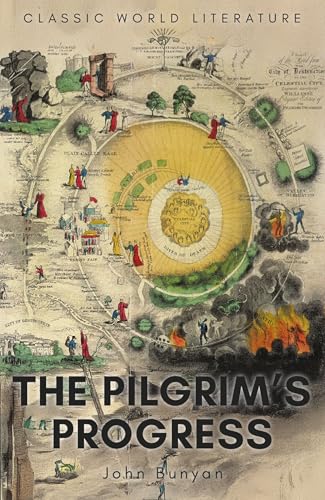
#19: The Pilgrim's Progress by John Bunyan
(255 pages)
The Pilgrim's Progress by John Bunyan was written in 1678 and can be counted among the most significant works of English literature. It is an allegory, presented as a narration of a dream, and it is divided into two parts. The first part follows protagonist Christian from the City of Destruction, i.e. this world, to the Celestial City, i.e. heaven. Christian sets out on this journey, leaving behind his wife, his children and his home, because he is weighed down by a burden. On his way, he goes through several stages and meets various persons, some of whom accompany him on his journey and some of whom try to convince him of leaving the path he is on. The characters he encounters have, as he himself, very straightforward names that show their main character trait. They can be regarded as flat characters whose name already gives away what their character is like and what their role in the story will be. Examples of such names are Legality, Goodwill, Faithful, Ignorance, Giant Despair, and Mistrust, to name but a few. The same thing can be said for the stages Christian passes through. There is the Valley of the Shadow of Death, Vanity Fair, the Hill of Difficulty, or the Delectable Mountains. The second part of The Pilgrim's Progress relates the story of Christiana, Christian's wife, who sets out with her children and Mercy, another woman from the City of Destruction, to follow her husband's path to Mount Zion and the Celestial City.
Although the book was written in 1678, the text is very easy to follow as the language is quite simple with no complex sentence structures. Bunyan's writing style is very direct, which is probably due to the fact that the book was intended for a popular and not for a higher-educated academic readership. Being a Christian allegory it was aimed at a broad audience depicting Christian life as the only true way of life. The names of characters and places ensure that there is no trouble in deciphering the allegoric meaning of the novel. Yet, I have read that Bunyan, who is said to have traveled from Bedford to London, was influenced by his personal surroundings in the description of the places in the story. Generally, the book can be approached without much background knowledge, but you probably might get more out of it with a religious background.
On the whole, 3.5 stars as the second part was somewhat repetitive after having read the first one. Plus, I felt I was getting a moralizing lecture.
52baswood
Interesting to read a review of The Pilgrim's progress One of those books that most of us will have heard of, but few of us will have read.
53VivienneR
When I was a pre-teen I loved Little Women and other books by L.M. Alcott. The March daughters referred to Pilgrim's Progress frequently. So, being the little "keener" that I was, I borrowed it from the library. Of course it went right over my head! I came to the conclusion that the March girls were much smarter than I. I've never been brave enough to try again.
54OscarWilde87
>52 baswood: Yeah, it seems there is a list of those books somewhere. I just thought I'd cross one off.
>53 VivienneR: Pilgrim's Progress might indeed not be recommendable to a too young audience...
>53 VivienneR: Pilgrim's Progress might indeed not be recommendable to a too young audience...
55OscarWilde87
#20: How Not to Be Wrong: The Power of Mathematical Thinking by Jordan Ellenberg
(441 pages)
In order to pick up this book, I guess you have to have at least a faint interest in mathematics. Otherwise, the word 'mathematical' in the title will probably scare you off. However, not being wrong anymore sounds like a good enough prospect to make up for all the maths in the book, right? How Not to Be Wrong: The Power of Mathematical Thinking starts out by giving a reason why mathematical thinking can be a helpful skill in everyone's life and what math can reveal about improving your chances to win the lottery, understanding different systems to elect a president, and many more. The titles of chapters such as "Everyone is obese", "How much is that in dead Americans?" or "Miss more planes!" show first, that math can be fun, and second, that the intended audience of the book are not math professors but rather everyone.
Anticipating readers' feeling towards mathematics, Jordan Ellenberg attempts to answer the most-asked question in math classes first: "So, when am I going to use this?" Ellenberg encourages people to look deeper into things and discover the math in our everyday lives. However, he is very straightforward and also admits that there are aspects of your mathematical education that you might not specifically need anymore. But why should you still learn maths? Ellenberg argues that there is so much more to maths than just adding and subtracting numbers or doing fractions. Math classes improve your way of thinking about many aspects in your life - or at least, math classes should do that. This issue is still debated among math teachers. There are still the ones who prefer the traditional approach of having students practice doing fractions and solving yet another sometimes often slightly math-related problem until they finally discover an algorithm that they can use for a very limited range of problems 'normal' people don't have, anyway. And then there is the more modern approach to teach students the meaning behind what they are doing and to promote critical thinking before mindlessly applying algorithms to problems. This is not to say that students should not learn algorithms anymore. They still should, to my (and Ellenberg's) mind. However, this is just the foundation of what maths is all about. The following quotation sums up Ellenberg's view quite nicely and I couldn't agree more.
Working an integral or performing linear regression is something that a computer can do quite effectively. Understanding whether the result makes sense - or deciding whether the method is the right one to use in the first place - requires a guiding human hand. When we teach mathematics we are supposed to be explaning how to be that guide. A math course that fails to do so is essentially training the student to be a very slow, buggy version of Microsoft Excel. And let's be frank: that really is what many of our math courses are doing.
At the same time, Ellenberg admits that not everything can be solved with one hundred percent certainty, even though this is often expected of mathematicians. Sometimes, for example when asked to predict which presidential candidate is going to win a certain state, mathematicians can provide a probability, but not rule out uncertainty entirely. However:
Math gives us a way of being unsure in a principled way: not just throwing up our hands and saying "huh," but rather making a firm assertion: "I'm not sure, and this is roughly how not-sure I am." Or even more: "I'm unsure, and you should be too."
The book also touches upon a topic many of us discuss around here. Are pop fiction and classic literature - literature with a capital 'L', if you may - mutually exclusive? Or framed differently: Is reading pop fiction a waste of time, and is classic literature always worth the time and effort you put in reading? Ellenberg compares this to the phenomenon of how the guys (or women, for that matter) you meet are either handsome and mean or nice and ugly, but never nice and handsome. He says that we do not even look at the mean and ugly ones so they are ruled out anyway. The triangle of acceptable men, then, which he defines as either nice or handsome is naturally only a small portion of all the men you can meet. And the nice and handsome men are an even smaller part of all the men available. Therefore, the chance of meeting a nice and handsome man has to be quite small logically. If you substitute the two axes from 'ugly' to 'handsome' and 'mean' to 'nice' with 'bad' to 'good' and 'classic' to 'popular', you end up with a similar situation for literary works. If you want to look up the whole reasoning, either read the book or look up Berkson's fallacy. Here goes Ellenberg and his answer seems quite intelligent to me:
Literary snobbery works the same way. You know how popular novels are terrible? It's because the masses don't appreciate quality. It's because the Great Sphere of Novels, and the only novels you ever hear about are the ones in the Acceptable Triangle, which are either popular or good.
To sum up, I enjoyed reading How Not to Be Wrong: The Power of Mathematical Thinking a lot, not only because I agree with what Ellenberg writes to a large extent. No matter if you are interested in mathematics or not, you will probably find this book quite interesting and will probably (not certainly, of course!) not be sorry about picking it up. 4 stars.
56bragan
>55 OscarWilde87: Oh, I like the sound of that one. Onto the wishlist it goes.
57brodiew2
>24 OscarWilde87: Good morning, OscarWilde87! I hope all is well with you. Mr. Mercedes has been fast tracked and I expect to get to it before the end of October.
58OscarWilde87
>56 bragan: I actually hadn't expected anyone to say that. I mean, it's mathematics. As a math teacher I hear complaints about the subject almost on a daily basis. I guess it sort of became fashionable to say that one does not like math.
59OscarWilde87
>57 brodiew2: It's a nice novel, so I guess you will enjoy it. You might want to continue the series after you've read Mr. Mercedes.
60OscarWilde87
#21: Mr. Penumbra's 24-Hour Bookstore by Robin Sloan
(288 pages)
The idea of a 24-hour bookstore probably sounds very intriguing to all bibliophiles. Of course you can order books online at any time of the day, but browsing the shelves of a real brick-and-mortar bookstore is certainly a different experience. That is why the title of Robin Sloan's Mr. Penumbra's 24-Hour Bookstore caught my eye almost instantly. But what is it about? Ajax Penumbra owns a bookstore in San Francisco and with the help of two clerks he is able to keep it open around the clock. But Penumbra's bookstore is not your usual bookstore. It is actually almost the complete opposite. Here, you will not find bestsellers, popular fiction or literary classics. Penumbra's bookstore rather serves as a lending library for members of a peculiar book club. When protagonist Clay Jannon loses his job as a web-designer as a result of the recession, he stumbles upon an advert that offers a clerk job in a 24-hour bookstore. Instantly curious, he sees Mr. Penumbra and finds himself working the nightshift in a bookstore - something he had not even thought existed - from then on. Clay Jannon soon starts to wonder why no one ever buys a book and why he is supposed to write down the appearance of all customers in a ledger. When Clay starts to analyze the customer's behavior and reading habits, he discovers a secret about a mysterious book club. Of course he sets out to find out more about the strange fellowship of readers and the hidden truths about Mr. Penumbra's 24-Hour Bookstore.
Clay Jannon sets out on a quest to reveal hidden secrets of a strange club of readers that tries to decrypt the main work of a fictionalized Aldus Manutius. The real Aldus Manutius lived in 15th-century Italy and was a printer and publisher who invented italic type. The Aldus Manutius in Sloan's novel additionally functions as the writer of a 'codex vitae' which has to be decoded in order to bring Manutius back to life. To be fair, the protagonist does not believe that a person can be brought back to life by decoding a secret codex. However, revealing the secret behind the code is a good enough incentive for Clay Jannon to approach the task. In his quest, Jannon is supported by various friends and his short-time girlfriend who works for Google. I liked the idea of involving a big tech company that is said to have answers to all - or at least - most of your questions and have it try to decode a book that was written 500 years ago. Add to that the mysterious and somewhat anachronistic character of Ajax Penumbra and you end up with a story that is really worth reading. After finishing the novel I found myself wanting more, especially about the background of Ajax Penumbra. That is why I will read the sequel Ajax Penumbra 1969.
All in all, 4 stars.
61dchaikin
>60 OscarWilde87: I've heard only good things about this. Enjoyed your review.
>55 OscarWilde87: this a really fun review of How to not be wrong. I might have some issues in the logic on literature (there is a possible cause and effect relationship between good and popular, even if it seems disfunctional in practice. That would seem to undermine the simple equation..??) but I enjoyed thinking about it.
>55 OscarWilde87: this a really fun review of How to not be wrong. I might have some issues in the logic on literature (there is a possible cause and effect relationship between good and popular, even if it seems disfunctional in practice. That would seem to undermine the simple equation..??) but I enjoyed thinking about it.
62OscarWilde87
>61 dchaikin: Thanks!
I agree with you on the literature issue after re-reading my review, but when you read the book, Ellenberg makes it sound quite convincing. However, I could not reproduce that two-page argument here. Perhaps I have oversimplified.
I agree with you on the literature issue after re-reading my review, but when you read the book, Ellenberg makes it sound quite convincing. However, I could not reproduce that two-page argument here. Perhaps I have oversimplified.
63bragan
>58 OscarWilde87: Well, I was a physics major. Which means I am not afraid of math! Admittedly, I wasn't nearly as good at it as I needed to be to pursue physics as a career, but I never would have made it even that far if I was afraid of it. :)
Mind you, there is something very weird about math being the one subject it's almost not social acceptable to be good at or like, somehow...
Mind you, there is something very weird about math being the one subject it's almost not social acceptable to be good at or like, somehow...
64OscarWilde87
>63 bragan: Oh, now I understand why you're not afraid of math. And the math in the book is certainly nothing to be afraid of (this is not saying that other math is... it is just perceived that way).
65wandering_star
>60 OscarWilde87: Ooh, thanks for mentioning Ajax Penumbra 1969 - I didn't know this existed!
>63 bragan: >64 OscarWilde87: My academic background is humanities through and through but I have never understood why maths is perceived as being especially different (or, as bragan says, it's totally socially acceptable to say you can't do it). How Not To Be Wrong is now on my wishlist too!
>63 bragan: >64 OscarWilde87: My academic background is humanities through and through but I have never understood why maths is perceived as being especially different (or, as bragan says, it's totally socially acceptable to say you can't do it). How Not To Be Wrong is now on my wishlist too!
66brodiew2
Hello OscarWillde87! I just wanted to pop in and let you know how much I loved Mr. Mercedes. Your was one of the reviews which encouraged me to check it out. The audio narrated by Will Patton, was brilliant. Not only the Brady Hartsfield character, but Hodges and his motley band are also well fleshed out.
67OscarWilde87
>65 wandering_star: You're welcome. Please let me know how you liked it. I haven't read it yet.
>66 brodiew2: I'm glad to hear that you liked it. Have you already started with the sequels?
>66 brodiew2: I'm glad to hear that you liked it. Have you already started with the sequels?
68OscarWilde87
#22: Rogue Lawyer by John Grisham
(371 pages)
John Grisham's Rogue Lawyer is Sebastian Rudd, a lawyer who takes cases that no one else wants. He is divorced, his ex-wife is in a relationship with a woman and he is only allowed to see his son Starcher for several hours on the weekend. Sebastian Rudd does not have an office, but uses a van to meet his clients. This is not due to financial reasons but rather because Rudd has made so many enemies in the course of his career that being mobile is basically a necessity. The book starts out wrapping-up the case of Link Scanlon, who is visited by Rudd on death row. Shortly before getting the needle, Scanlon manages to escape. While Rudd tries several cases, there are two main ones in the novel. First, there is the case of Tadeo Zapate, a cage fighter who kills the referee in anger over a lost fight. As Rudd is also Zapate's manager and tries to make some money on the side by betting on cage fights, it goes without saying that Rudd will be Zapate's defendant. Second, there is the case of Arch Swanger, a mysterious young man involved in the abduction of Jiliana Kemp, daughter of the assistant chief of police. In the course of the novel, Rudd, who often works on the brink of legality, is threatened by Link Scanlon and many others. Even Rudd's son Starcher is abducted to make Rudd reveal confidential information.
I liked this novel for the usual Grisham charm of courtroom action. The characters are well crafted and even though protagonist Sebastian Rudd is far from a perfect lawyer Grisham manages to make him quite likeable. While the novel is a page-turner, the action is not always highly suspenseful. On the whole, Rogue Lawyer is an enjoyable read that I would recommend to everyone who likes Grisham's works or entertaining crime fiction in general. 4 stars.
69brodiew2
>67 OscarWilde87: I have not started the sequel. I'm giving my self some time between them.
>68 OscarWilde87: I'm glad you liked Rogue Lawyer. I listened to the audiobook earlier this year. I had a great time with it and enjoyed the multiple cases and Rudd's family drama.
>68 OscarWilde87: I'm glad you liked Rogue Lawyer. I listened to the audiobook earlier this year. I had a great time with it and enjoyed the multiple cases and Rudd's family drama.
70OscarWilde87
>69 brodiew2: Oh, I knew that I had read about Rogue Lawyer in this group. Must have been your thread then. Sweet!
EDIT: I just looked it up in your thread again. February! How time flies! Thanks for the recommendation.
EDIT: I just looked it up in your thread again. February! How time flies! Thanks for the recommendation.
72OscarWilde87
>71 This-n-That: Thanks!
73OscarWilde87
#23: The American Dream: A Short History of an Idea That Shaped a Nation by Jim Cullen
(214 pages)
The American Dream - home ownership, doing better than your parents' generation did, from rags to riches, the pursuit of happiness. In The American Dream: A Short History of an Idea That Shaped a Nation Jim Cullen explores the famous notion that was coined by James Truslow Adams in The Epic of America in 1931. Starting with the Puritans, Cullen goes on by discussing the role of the Declaration of Independence, the concept of upward mobility, the struggle towards equality, home ownership and the frontier.
I found this short volume quite helpful in deepening my understanding of the development of the American Dream. There is so much talk nowadays that the American Dream is changing, that it is withering, fading away, even dying or already dead. To my mind, however, that is too simple. One should understand that the concept of a 'dream' can never offer guarantees and that the American Dream cannot be achieved without effort. While it once meant tomake it in life through hard work and against all odds, people nowadays tend to think that the right to 'life, liberty and the pursuit of happiness' means that you can just wait for success to happen, your career to unfold and for wealth to come to you. The American Dream is changing, yes. But it has to. You won't be able to claim 160 acres of land anymore (as you could under the Homestead Act in 1862), you are not very likely to move to California to dig for gold and become rich. However, there is so much more to the American Dream than wealth or material possessions. I found The American Dream: A Short History of an Idea That Shaped a Nation a very intelligent book that helps (re-)understand the concept and the background of the American Dream. 4 stars.
74OscarWilde87

#24: Butcher's Crossing by John Williams
(326 pages)
Butcher's Crossing is a town in the West. It consists of a hotel, a saloon, a dry goods store, stables and a few other houses. The railroad has not yet come to Butcher's Crossing, but the local hide seller, McDonald, strongly believes it will and that the town will flourish then. So far, only few people live in Butcher's Crossing, many of them hunters who provide the hides for McDonald to sell. This is the setting of John Williams' Butcher's Crossing. Enter Will Andrews, the protagonist. He leaves Harvard and sets out to to go west to Butcher's Crossing. Soon after he arrives he meets with McDonald, who is an aquaintance of Will's father. In search of a new way of living, Will Andrews asks McDonald where to go in town and whom to talk to. This is how Andrews learns about Miller, a buffalo hunter. Miller and his companion, Charley Hoge, are soon found in the saloon. After a short talk Andrews agrees to Miller's proposition to go further west to find a buffalo herd in a hidden valley in Colorado and hunt them for their hides. With the help of Andrews' money, Miller is able to buy everything they need for the trip and hire a skinner, Schneider.
In the second part of the novel, the reader follows the group of men on their trip to Colorado. After they almost die of thirst, Miller finally manages to find water and soon afterwards the group arrives in the valley where they find a huge herd of buffalo. Miller is set on killing all the animals which delays the group's return to Butcher's Crossing. They camp in the valley for so long that they are surprised by a blizzard and are snowed in, struggling for survival in the cold. Unable to leave the valley in the snow they have to wait till spring which delays their return to Butcher's Crossing for over six months. The second part ends with Schneider dying while crossing a river and the group losing all their hides, that is everything they had worked for for so long. Back in Butcher's Crossing it becomes obvious that the railroad has not come. Andrews, Miller and Charley Hoge find the town almost completely deserted and run down, which leaves Andrews to reflect on his life and what has and will become of him.
The novel works with a rather small set of characters and it is exactly the interplay of those characters that I liked. Williams did an excellent job of describing the landscape and capturing the characters in their surroundings. This is especially true for the character of Will Andrews, a young man who sets out to discover a new way of living. Through an omniscient third-person narrator we learn what Andrews thinks about the persons that surround him and how he feels on the trip to Colorado. To my mind the following quotation (p. 176) shows Williams' skill quite well. It describes how Andrews feels about hunting, skinning and cutting up buffalo. In the end, it is also a good comparison to the way Andrews feels about his new way of living.
It came to him that he turned away from the buffalo not because of a womanish nausea at blood and stench and spilling gut; it came to him that he had sickened and turned away because of his shock at seeing the buffalo, a few moments before proud and noble and full of the dignity of life, now stark and helpless, a length of inert meat, divested of itself, or his notion of its self, swinging grotesquely, mockingly, before him. It was not itself; or it was not that self that he had imagined it to be. That self was murdered; and in that murder he had felt the destruction of something within him, and he had not been able to face it. So he had turned away.Butcher's Crossing is a perfect novel, superbly written and highly readable. 5 stars.
75OscarWilde87

#25: The Girl On the Train by Paula Hawkins
(316 pages)
Rachel takes the same train every day. And every day she passes the same house seeing the same couple in their back garden. Although she always sees them from afar, Rachel thinks she almost knows them and even gives them names. What she initially describes as a happy and loving couple will soon enter her life on a very real level and make her revise that impression. Megan, the woman Rachel has only ever seen from a distance, goes missing and Rachel starts to get involved in the case. Why? Her ex-husband Tom lives on the same street with his new wife, Anna, and Rachel has not yet finished with this part of her past. Following Rachel's journey to find herself, the reader is taken on a journey to find out the truth about the missing woman.
Hawkins works with just a small set of characters and the story is narrated from three different points of view. Rachel, Anna and Megan are the first-person narrators. Rachel, the protagonist, struggles with alcoholism and cannot relate certain parts of the story as she suffers from blackouts. As she is the main narrator, one wants to trust her, but the feeling of being an unreliable witness to the story lingers, of course. Anna narrates only small parts of the story, but her parts become more important towards the end. The third narrator, Megan, can obviously not reveal how she goes missing, but she slowly unfolds the events until that point. The mixture of those three perspectives gives the novel an interesting touch and contributes to The Girl On the Train being a page-turner.
I enjoyed reading this novel a lot and can recommend it not just to fans of thrillers, but also to readers who like well-developed characters and their interplay. 4 stars.
77OscarWilde87
>76 This-n-That: I haven't seen the movie either, but I think I will check it out some time.
78RidgewayGirl
I liked The Girl on the Train, too. It was fun.
I have a copy of Butcher's Crossing, and have had it for some months now. I purchased it right after finishing Stoner, which I adored and didn't read it right away because what if it wasn't as good? Glad to know that I can relax.
I have a copy of Butcher's Crossing, and have had it for some months now. I purchased it right after finishing Stoner, which I adored and didn't read it right away because what if it wasn't as good? Glad to know that I can relax.
79VivienneR
>75 OscarWilde87: Nice review of The Girl on the Train. I enjoyed it too. As a debut it's great, I'm looking forward to more by Hawkins. I'd like to check out the movie too sometime.
80OscarWilde87
>78 RidgewayGirl: I was afraid of the same thing. There have been many reviews saying that they either liked Stoner or Butcher's Crossing, but almost never both. That might be due to the fact that both novels deal with different topics. But when you read it as character studies, I think there are some common elements in the two novels.
>79 VivienneR: Thanks!
>79 VivienneR: Thanks!
81japaul22
>78 RidgewayGirl: that is my exact story! I will try to get to Butcher's Crossing in the next year.
82OscarWilde87
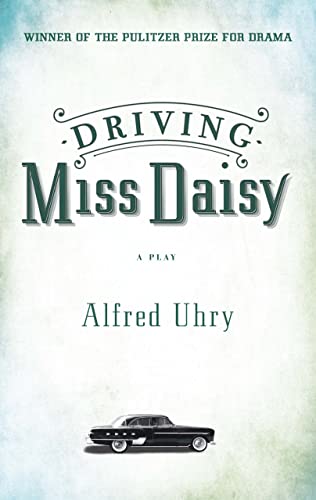
#26: Driving Miss Daisy by Alfred Uhry
(42 pages)
Driving Miss Daisy is a short episodic play in 25 scenes written by Alfred Uhry. It was first staged in 1987 and the screenplay was adapted for a 1989 movie. The play is set in Atlanta between 1948 and 1973. The story is quite simple, not least due to the fact that there are only three characters, namely Hoke Colburn, Miss Daisy's chauffeur, Miss Daisy Werthan, a Jewish lady who is 72 years old at the beginning of the play, and Boolie Werthan, Miss Daisy's son. Driving Miss Daisy starts with Daisy crashing her car in her own driveway and her son hiring Hoke as her chauffeur. At first the relationship between Daisy and Hoke is tense as Daisy insists that she is perfectly able to drive herself and does not need someone to drive her around. Throughout the play, the relationship between Hoke and Daisy becomes more friendly. The play ends when Hoke visits 'Miss Daisy', now age 97, in a nursing home.
The relationship between an old Jewish lady and a black chauffeur in the American South of 1948 provides an exemplary glance at what life was like in the US at that time. Both characters belong to a minority and both, while different, have their own struggles and fears. Not for nothing the play has won the Pulitzer Prize for Drama and was staged on Broadway in 2010 after starting out off-Broadway in 1987. 4 stars.
83OscarWilde87
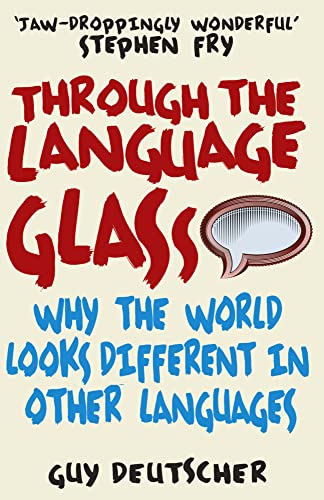
#27: Through the Language Glass: Why the World Looks Different in Other Languages by Guy Deutscher
(249 pages)
All of us who speak more than one language have probably come across a situation where you are trying to translate or mediate a word or concept from one language to the other and are stuck because there is no equivalent that fits 100%. Many have heard that the Inuit have many words for the English 'snow'. Does that mean that English has a limited vocabulary in this respect? Does it mean that speakers of one language see the world differently than speakers of another language? This is basically the question that Guy Deutscher sets out to answer in his book Through the Language Glass: Why the World Looks Different in Other Languages.
While the book certainly aims at a broader audience than merely linguists, it is certainly helpful if you have at least some linguistic training. Otherwise, some explanations might take longer to digest or some of the information provided in the book will be lost on you. The author focuses on the three aspects of color, space and gender in order to show that a large part of our thought processes are influenced by the cultural conventions of our society. Examining how language and thought are connected are to my mind quite intriguing and well worth exploring. The example of color perception serves as a red thread for the book, but to my mind it is used a little too much. I would recommend this book to people interested in linguistics. 3 stars.
84ursula
>80 OscarWilde87: Then maybe I should pick up Butcher's Crossing if I get the opportunity, because I thought Stoner was only okay.
85OscarWilde87

#28: Cujo by Stephen King
(420 pages)
Cujo is a likable Saint Bernard dog living with the Camber family in Castle Rock, Maine. Joe Camber has a car repair shop in his barn and his wife, Charity, is a housewife who dreams of a more properous future than her husband can offer her. Joe Camber is rather blunt and aggressive and his wife dreams of a more sophisticated life in a bigger city. Since she cannot have that dream herself, she wants her ten-year-old son Brett to see what opportunities a good education can offer. Therefore, she takes him on a trip to her sister whose husband is a lawyer. When they return home to Castle Rock, their lives have changed. Joe Camber is dead, killed by their dog Cujo, who has become rabid.
Then there is the Trenton family. Vic Trenton works in advertising. He and his wife Donna have just moved to Castle Rock from New York City. Their son is four years old. Life has not been treating the Trenton's well lately. Vic is struggling not to lose his only big client. Plus, his wife has been cheating on him for some time and he only finds out about it when he gets a note from his wife's lover who seeks revenge on Donna who has dumped him. On top of that, Donna's car is broken and she has to take it to the Camber farm for repairs. She does so while her husband is in Boston on a business trip to save his ad agency. Since she cannot leave her son home alone, she takes him with her. The two of them only just make it to the Camber's when the car dies. The car, however, is not the only thing that's dead. Joe Camber is not to be found, but soon Cujo, the family dog, starts attacking Donna. Donna and her son are trapped in the car, which is their only protection against Cujo. However, it is a very hot summer, they cannot open the windows and they do not have food or drink.
Stephen King himself says about this novel that he likes it a lot, but that he can almost not remember writing it because he was in an alcoholic stupor. Cujo was published in 1981, a time when Stephen King, according to his own description, was a heavy drinker. The novel, then, probably serves as a metaphor for King's life, also being a good guy who only wants the best for his family, but addicted to alcohol, which messes with his head just as rabies messes with Cujo's head.
On the whole, the novel is quite enjoyable, but I think King has written many better novels. 3 stars.

