This topic is currently marked as "dormant"—the last message is more than 90 days old. You can revive it by posting a reply.
1MrsLee
And when I say "group" I mean that two of us are reading this, but we thought it a seasonal read and wanted to invite others to join if they wish to. :)
I have begun reading The Haunted Hotel, about 5 chapters in so far. I'm finding it very accessible, even though it was published in 1879.
I spent about an hour at work yesterday (slow day) researching what sort of poison could permanently remove a person's skin pigment. All I could come up with is lead, which due to the anemia, it causes pallor. That isn't necessarily permanent, but if the lead isn't removed from the person's habitat, I suppose it could be, and the character mentioned painting, which I believe in those days exposed one to lead.
Is it my imagination, or is Collins pretty progressive talking about men's sexual inclinations and such?
I have begun reading The Haunted Hotel, about 5 chapters in so far. I'm finding it very accessible, even though it was published in 1879.
I spent about an hour at work yesterday (slow day) researching what sort of poison could permanently remove a person's skin pigment. All I could come up with is lead, which due to the anemia, it causes pallor. That isn't necessarily permanent, but if the lead isn't removed from the person's habitat, I suppose it could be, and the character mentioned painting, which I believe in those days exposed one to lead.
Is it my imagination, or is Collins pretty progressive talking about men's sexual inclinations and such?
2Bookmarque
I downloaded it yesterday because of you and said other reader. lol Haven't gotten to it yet, but I've read Collins beyond the big two and find that he's always got a social axe to grind in one way or another.
3clamairy
Ack, I do want to join you, but I have several other books I must tackle first. Hopefully I'll be able to participate before October ends.
4hfglen
>1 MrsLee: A dim and distant memory tells me that the active ingredient in local skin-lightening creams was hydroquinone, which was withdrawn yonks ago because it was toxic. I don't think it was all that permanent. More drastically, bad burns remove pigment all too often around here.
5pgmcc
>1 MrsLee: Thank you for setting up this thread. I am just finishing Chapter 8. Like yourself I have limited reading time; yesterday I did not get to sit down on the bus and therefore got no reading done on my way home. That will teach me for leaving work earlier than usual. This morning my reading was interrupted by a beautiful salmon coloured clouds as the sun was peeking over the horizon and illuminating their undersides.
My previous read was Great Expectations and I am interested in the difference between Wilkie Collins's style and that of Dickens. Collins is telling the story in a very serious/matter of fact fashion while I found Dickens's style in "Great Expectations" to be more focused on entertaining the reader with humour and colourful characters. I like both styles and find Collins's approach appropriate for this Gothic tale.
I suppose I should sign this post, "said other reader", as @Bookmarque put it. :-)
My previous read was Great Expectations and I am interested in the difference between Wilkie Collins's style and that of Dickens. Collins is telling the story in a very serious/matter of fact fashion while I found Dickens's style in "Great Expectations" to be more focused on entertaining the reader with humour and colourful characters. I like both styles and find Collins's approach appropriate for this Gothic tale.
I suppose I should sign this post, "said other reader", as @Bookmarque put it. :-)
6MrsLee
>5 pgmcc: Unless I can see your name, I can never remember for sure the order of the letters. :P lol, also I was in a great hurry this morning.
>2 Bookmarque: & >3 clamairy: Glad you can join us eventually. Who knows, you might even finish the book before we do.
>2 Bookmarque: & >3 clamairy: Glad you can join us eventually. Who knows, you might even finish the book before we do.
7catzteach
Drat! My library does not have a copy! I'll have to find it elsewhere. Hm, where else do I look? I do not have an ereader. Well, I have my iPad, but I hate reading on it.
8pgmcc
>6 MrsLee: Unless I can see your name, I can never remember for sure the order of the letters.
It is part of my cover; it is designed to confuse enemy agents.
It is part of my cover; it is designed to confuse enemy agents.
9pgmcc
>7 catzteach: The Haunted Hotel by Wilkie Collins is available to download on the Gutenber.org website.
I also have an aversion to reading books on screens but when needs must.
I also have an aversion to reading books on screens but when needs must.
10Sakerfalcon
I've just downloaded this and will make it my next book to read on the train. I read quite a few of Collins' novels when I was younger and really enjoyed them - much more so than Dickens'.
11MrsLee
I too am enjoying it more than Dickens, and I do like Dickens. This feels much more modern, less patronizing.
Will post some of my thoughts later today. I'm up to chapter 8 now. Changed my mind, I'll post them now; "but I'm only a woman, and you must not expect too much of me." *gag*
My first thought was to blame the author for that nonsense line. Then I realized, I know women who spout that nonsense, and perhaps I have myself, as a cop-out. Or as a way to pass the buck or not do something we don't want to do. It's a lousy excuse, but so often it works. Well, it used to. Not so much any more. :D Damn feminists. ;)
Will post some of my thoughts later today. I'm up to chapter 8 now. Changed my mind, I'll post them now; "but I'm only a woman, and you must not expect too much of me." *gag*
My first thought was to blame the author for that nonsense line. Then I realized, I know women who spout that nonsense, and perhaps I have myself, as a cop-out. Or as a way to pass the buck or not do something we don't want to do. It's a lousy excuse, but so often it works. Well, it used to. Not so much any more. :D Damn feminists. ;)
12pgmcc
>11 MrsLee: "but I'm only a woman, and you must not expect too much of me."
That is one of the quotes I underlined and noted. I suspect Collins was highlighting the social norm of the time and emphasizing it to get people more aware of the treatment of women.
There is also a quote earlier in the book where Collins describes how someone's opinion is ignored because he is a lawyer.
I read both those quotes to a friend who is a lawyer and she has very strong views in support of feminism. She gave me a terrible look before trying to strangle me. :-)
Another aspect of the story I am finding interesting is the references to Ireland and how the Montbarry's had their lands in Ireland and drew their income from those lands. The Great Famine in Ireland was before 1860 when Great Expectations started to come out in its serialized form. The famine was caused by the failure of the potato crop on which the local inhabitants were dependent. All other crops and farm animals were produced to export to England, and the English land owners, a group of which the Montbarry's would have belonged, continued to export those crops during the famine rather than using them for famine relief. During the famine anyone caught trying to steal food from the warehouses was transported to Australia. It is interesting to see how Collins has the Montbarry's and their friends refer to Ireland and how there is no mention of the extreme poverty that existed in the country at that time.
That is one of the quotes I underlined and noted. I suspect Collins was highlighting the social norm of the time and emphasizing it to get people more aware of the treatment of women.
There is also a quote earlier in the book where Collins describes how someone's opinion is ignored because he is a lawyer.
I read both those quotes to a friend who is a lawyer and she has very strong views in support of feminism. She gave me a terrible look before trying to strangle me. :-)
Another aspect of the story I am finding interesting is the references to Ireland and how the Montbarry's had their lands in Ireland and drew their income from those lands. The Great Famine in Ireland was before 1860 when Great Expectations started to come out in its serialized form. The famine was caused by the failure of the potato crop on which the local inhabitants were dependent. All other crops and farm animals were produced to export to England, and the English land owners, a group of which the Montbarry's would have belonged, continued to export those crops during the famine rather than using them for famine relief. During the famine anyone caught trying to steal food from the warehouses was transported to Australia. It is interesting to see how Collins has the Montbarry's and their friends refer to Ireland and how there is no mention of the extreme poverty that existed in the country at that time.
13pgmcc
>1 MrsLee: Is it my imagination, or is Collins pretty progressive talking about men's sexual inclinations and such?
He is not behind the door in talking about women's sexual inclination either.
"Suddenly conscious of this bold question, and of the self-abandonment which it implied, she returned mechanically to her book, distrusting the unrestrained liberty of her own thoughts. What lurking temptations to forbidden tenderness find their hiding-places in a woman's dressing-gown, when she is alone in her room at night!"
He is not behind the door in talking about women's sexual inclination either.
"Suddenly conscious of this bold question, and of the self-abandonment which it implied, she returned mechanically to her book, distrusting the unrestrained liberty of her own thoughts. What lurking temptations to forbidden tenderness find their hiding-places in a woman's dressing-gown, when she is alone in her room at night!"
14MrsLee
>13 pgmcc: Whew! Steamy.
I am only so far as The Third Part. These are some of the notes I've jotted in my copy of the book while reading at work. I began the notes in the book at work because I didn't have my reading notebook with me, now I have notes in both.
In the book:
"Lead poisoning causes anemia, hence depigmentation." Is there another poison which could cause this? Personally, I think Lady Montbarry exhibits many of the symptoms. Aggressive behavior, sleep problems, headaches, irritability, fatigue, anemia. When she went to the physician and behaved so strangely, well, again, poison! I looked up mercury and arsenic, and although those cause odd pigmentations, they do not cause overall pigment loss. Of course, with her brother being an amatuer chemist, it could be something remote and off the wall.
When the lawyer was giving his thoughts on what happened to Mr. Ferrari, I thought they were spot on. Mrs. Ferrari reacted explosively, so I wrote; "Too much truth?" I thought both the lawyer and Mrs. Ferrari were portrayed reasonably. As much as I would love all women to be level-headed and wonderful like Cordelia in the Vorkosigan sagas, I've known many who were not. Going a step further into the danger zone, I will say that the less education and money, the more I've seen this temperament. Now I've stepped in it.
I've already mentioned about Agnes' use of the "don't mind me I'm just a woman" creed may have been her way of getting rid of a nosy Parker and trying to keep her self to herself.
I had to Google "mantle" because although I knew it was an item of ladies clothing, I wasn't sure what it was. It seems to be a loose-fitting, frilly jacket. I always thought it was something worn over the head, like the Virgin Mary is usually portrayed with.
Chapter 11 & 12. I think this quote from the book sums them up nicely. "Even now, she had innocently failed to see the object which her visitor had in view." Yeah, me too. Understand this woman I do not.
I am only so far as The Third Part. These are some of the notes I've jotted in my copy of the book while reading at work. I began the notes in the book at work because I didn't have my reading notebook with me, now I have notes in both.
In the book:
"Lead poisoning causes anemia, hence depigmentation." Is there another poison which could cause this? Personally, I think Lady Montbarry exhibits many of the symptoms. Aggressive behavior, sleep problems, headaches, irritability, fatigue, anemia. When she went to the physician and behaved so strangely, well, again, poison! I looked up mercury and arsenic, and although those cause odd pigmentations, they do not cause overall pigment loss. Of course, with her brother being an amatuer chemist, it could be something remote and off the wall.
When the lawyer was giving his thoughts on what happened to Mr. Ferrari, I thought they were spot on. Mrs. Ferrari reacted explosively, so I wrote; "Too much truth?" I thought both the lawyer and Mrs. Ferrari were portrayed reasonably. As much as I would love all women to be level-headed and wonderful like Cordelia in the Vorkosigan sagas, I've known many who were not. Going a step further into the danger zone, I will say that the less education and money, the more I've seen this temperament. Now I've stepped in it.
I've already mentioned about Agnes' use of the "don't mind me I'm just a woman" creed may have been her way of getting rid of a nosy Parker and trying to keep her self to herself.
I had to Google "mantle" because although I knew it was an item of ladies clothing, I wasn't sure what it was. It seems to be a loose-fitting, frilly jacket. I always thought it was something worn over the head, like the Virgin Mary is usually portrayed with.
Chapter 11 & 12. I think this quote from the book sums them up nicely. "Even now, she had innocently failed to see the object which her visitor had in view." Yeah, me too. Understand this woman I do not.
15MrsLee
>12 pgmcc: Thank you for the insights into Ireland at that time. Of course I'm familiar with a superficial history, but it didn't connect in my brain about the timeline and what was going on there. Something to keep in mind when reading these old stories centered in England. So frequently we are presented with the romantic vision of the Empire and not the reality of what that meant for those who were "under" it.
16jillmwo
I'm only about a third of the way in (the insurance companies have gotten involved), but honestly I am most taken by the character of the Countess Narona. Is she evil? Is she doomed? OMG, how very GOTHIC this opening is. I originally read the novel years back, but can't now remember how this all plays out. But the Countess is one heck of a lead character. (And so much more attractive to the modern reader than the mild-mannered, pure-minded Agnes....)
So much fun!
So much fun!
17MrsLee
>16 jillmwo: Attractive in a bat-shit crazy way. The further I read the more I do not know what is going on with that woman, whether it is chemical, psychological or spiritual. She is the kind of person I would change my schedule to avoid. :P
18catzteach
>9 pgmcc: got it! Thanks! I'll start it as soon as I'm done with Dragonfly in Amber.
19pgmcc
I finished the book last night in the airport while waiting for my son to arrive home from Glasgow where he has been working all week. I also managed to spend some time pulling together a few thoughts. These are presented below.
This is the first Wilkie Collins story I have read and it will not be the last. Collins is one of those authors I have been meaning to read but I never manage to actually opening one of his books and start to read. I have had The Haunted Hotel on my bookshelf for some time, as well as The Woman in White, Moonstone and No Name.
My interest in reading Collins was heightened when I read Dan Simmons’s Drood which is a tale involving both Charles Dickens and Wilkie Collins. I am never a great fan of fictions built around real, historical characters but I find it hard to resist a Dan Simmons novel. While he is doing something that I am quite uncomfortable with, he does a fantastic job of it. Before Reading “Drood” I read Dickens’s last novel, The Mystery of Edwin Drood, which he did not live long enough to complete. Not only was this an enjoyable read, but the summary of the various hypotheses about how Dickens might have ended that novel was fascinating. (Yes, I would recommend both “The Mystery of Edwin Drood” and “Drood”.)
Having read “Drood” I went out and bought a biography (well, two biographies) of Dickens as the book got me hungry to find out more about Dickens’s life. Ironically I found Collins to have a bigger role in Drood than Dickens and while I was more interested in learning about Collins’s life than that of Dickens, I did not pick up a biography of Collins. (Ouch! I think I may have inadvertently shot myself with a book bullet.)
By the way, while “Drood” takes a lot from “The Mystery of Edwin Drood” the elements taken from Dickens’s novel are used in completely different ways in Simmons’s novel than Dickens did in the original story. There is no connection whatsoever between “Drood” and “The Mystery of Edwin Drood” from a story or plot aspect.
Perhaps it is time to say something about “The Haunted Hotel”.
Firstly, let me say I enjoyed it greatly and it will not be long before people find me reading another novel by Wilkie Collins. For those of you who have not read the book or have not finished it I warn you there will be spoilers ahead.
I found Collins’s use of viewpoint very interesting and felt the book benefitted from it in several ways. While the story is told by an all-seeing narrator (something I have seen criticised by the more pretentious of the modern-day literati when they are busy dismantling recent novels - they appear to have a problem with the an author knowing things that could not be known by someone other than one of the characters who did not have a chance to pass on what they know before dying) Collins tells it from the context of different characters at different stages of the story. For example, he opens with Doctor Wybrow and one could not be criticised for believing that the good Doctor was going to have a bigger roll in the novel than transpires to be the case. Doctor Wybrow’s function is to introduce the main characters of the story, provide some necessary background about the situation in which we find these characters and the relationships between them, and to set the social context of the story and indicate the attitude of society to the protagonists involved.
The narrator follows Wybrow as he tries to satisfy his curiosity about the Countess and her motivations and circumstances. In this part of the novel the reader finds some beautiful prose that I believe reveal Wilkie Collins’s sense of humour and also indicate to me that he was not just telling a tale but also highlighting some aspects of society that he did not fully approve of. (This last point is pure conjecture on my part and as I dig into more of Collins’s work and biography I am quite open to being corrected if my ideas prove to be wrong.) I give two examples below:
”There was a time when a man in search of the pleasures of gossip sought the society of ladies. The man knows better now. He goes to the smoking-room of his club.”
“Only one member of the assembly in the smoking-room took the part of the much-abused woman, and declared that her character had been most cruelly and most unjustly assailed. But as the man was a lawyer his interference went for nothing: it was naturally attributed to the spirit of contradiction inherent in his profession.”
To me the first quote hints at how women were viewed at the time but also pokes fun at men’s clubs and the nature of men that frequent them, in particular those that frequent the smoking-room.
The second quote suggests to me that Collins did not regard lawyers in a particularly favourable light. This is supported by the character attributes he gives Mr.Troy in the second part of the story. Troy, in my opinion, is presented as a just about acceptable member of the lawyer fraternity and he is demonstrated to have flaws, not least his general demeanour towards and treatment of those of lower station than himself and his social equals. Collins gives several examples of this snobbery throughout the book.
Continuing on the topic of the narrator changing viewpoint, Collins takes the reader to see the world from the life of Agnes Lockwood next, the spurned woman whom Lord Montbarry cast aside for the Countess.
The shifting of the narrator’s main character happens throughout the book and this worked for me. At the end we are with Henry Westwick having accompanied various other members of the family at different points in the novel.
One of the greatest shifts in viewpoint is the reading of the Countess’s play. Given all that has gone before can we trust what has been written as the truth, or must we take the Countess as the most unreliable narrator present. She claims the play is pure fiction but Henry Westwick is convinced it is the truth and that it explains all the mysteries about what happened to the first Lord Montbarry and the courier, Ferari.
Collins has proved himself in this novel to be a master at raising questions and doubts; at presenting answers to mysteries but in a way that leaves the answer open to challenge and doubt.
The questions that I feel contributed to my enjoyment of the story by opening up many possibilities as to what way the story was going to go, include those discussed below.
What was the cause of the Countess’s pallor? Her complexion was referenced a number of times and was emphasised when we first met her at Doctor Wybrow’s consulting rooms. The mystery of her pale complexion was something I thought the Doctor considered to be the reason for the Countess’s visit. However, it was not, and we are never given a definitive explanation as to its cause. Given the early introduction of her pale skin as a point of note, the questions raised in my head were, is she a vampire or is she being poisoned? Following her consultation with the Doctor I wondered was she mad or was she the victim of some supernatural power exercised by Agnes Lockwood. I also wondered whether Agnes was unwittingly exercising some influence over the Countess.
Towards the end of the story I was wondering if the Baron had succeeded in his quest for The Philosopher’s stone and whether or not his death in America had been faked as some scheme to hide the Baron’s continued existence. With the disappearance of the courier I was suspecting the man had been sacrificed in some fashion as part of the Baron’s search for eternal life.
The new Lord Montbarry’s approach to the possible involvement of supernatural activity is clearly indicated by his treatment of the play which, having read it, he throws into the fire and uses the poker to ensure it is consumed by the flames. His approach to the affair is very English establishment like. He poo-poos the concept of his brother having been murdered and goes on to brush the unwanted idea under the carpet. He takes full advantage of the unreliability of the play’s content due to the obviously deranged state of mind in which the Countess found herself while writing her work of fiction. This would be a typical approach taken by masters of diplomacy; no one is embarrassed or upset by unwanted knowledge (plausible deniability); commercial interests, in this case the interests of the investors in the hotel, do not have their wealth affected by a scandal that may or may not have happened; the world can carry on and everyone can remain calm. Whether the new Lord Montbarry believed in the murder hypothesis or not is irrelevant; in this one action he proved himself a worthy head of the family and a pragmatist.
Young Henry Westwick also proved himself a worthy gentleman who suffered his knowledge of the truth about his brother’s murder silently to spare the feelings of others, especially the love of his life, Agnes.
Without a boubt the first Lord Montbarry was a cad, a bounder, and a complete and utter gobshite. It was fitting that his head did not receive the recognition his spirit appeared to think it deserved.
I thought the Countess’s devotion to the Baron was very ambiguous. She attempts to scotch the rumours of his being her lover rather than her brother but the part in her play where she describes the Countess’s devotion to her brother muddies the water and makes one wonder was the Baron actually her lover, or did she wish he were her lover, even if he really was her brother. I am thinking of the quote:
”’Where is the true woman,’ she exclaims, ‘who wants time to consummate the sacrifice of herself, when the man to whom she is devoted demands it? She does not want five minutes – she does not want five seconds – she holds out her hand to him, and she says, Sacrifice me on the altar of your glory! Take as stepping-stones on the way to your triumph, my love, my liberty, and my life!”
Is this Collins having a laugh? Is he using hyperbole to highlight the position of women in the contemporary society of his time? Or was he trying to show that the Countess, even through the unreliable narration of her play, was a bit loopy and her state of mind left her totally under the power of the Baron?
This is the first Wilkie Collins story I have read and it will not be the last. Collins is one of those authors I have been meaning to read but I never manage to actually opening one of his books and start to read. I have had The Haunted Hotel on my bookshelf for some time, as well as The Woman in White, Moonstone and No Name.
My interest in reading Collins was heightened when I read Dan Simmons’s Drood which is a tale involving both Charles Dickens and Wilkie Collins. I am never a great fan of fictions built around real, historical characters but I find it hard to resist a Dan Simmons novel. While he is doing something that I am quite uncomfortable with, he does a fantastic job of it. Before Reading “Drood” I read Dickens’s last novel, The Mystery of Edwin Drood, which he did not live long enough to complete. Not only was this an enjoyable read, but the summary of the various hypotheses about how Dickens might have ended that novel was fascinating. (Yes, I would recommend both “The Mystery of Edwin Drood” and “Drood”.)
Having read “Drood” I went out and bought a biography (well, two biographies) of Dickens as the book got me hungry to find out more about Dickens’s life. Ironically I found Collins to have a bigger role in Drood than Dickens and while I was more interested in learning about Collins’s life than that of Dickens, I did not pick up a biography of Collins. (Ouch! I think I may have inadvertently shot myself with a book bullet.)
By the way, while “Drood” takes a lot from “The Mystery of Edwin Drood” the elements taken from Dickens’s novel are used in completely different ways in Simmons’s novel than Dickens did in the original story. There is no connection whatsoever between “Drood” and “The Mystery of Edwin Drood” from a story or plot aspect.
Perhaps it is time to say something about “The Haunted Hotel”.
Firstly, let me say I enjoyed it greatly and it will not be long before people find me reading another novel by Wilkie Collins. For those of you who have not read the book or have not finished it I warn you there will be spoilers ahead.
I found Collins’s use of viewpoint very interesting and felt the book benefitted from it in several ways. While the story is told by an all-seeing narrator (something I have seen criticised by the more pretentious of the modern-day literati when they are busy dismantling recent novels - they appear to have a problem with the an author knowing things that could not be known by someone other than one of the characters who did not have a chance to pass on what they know before dying) Collins tells it from the context of different characters at different stages of the story. For example, he opens with Doctor Wybrow and one could not be criticised for believing that the good Doctor was going to have a bigger roll in the novel than transpires to be the case. Doctor Wybrow’s function is to introduce the main characters of the story, provide some necessary background about the situation in which we find these characters and the relationships between them, and to set the social context of the story and indicate the attitude of society to the protagonists involved.
The narrator follows Wybrow as he tries to satisfy his curiosity about the Countess and her motivations and circumstances. In this part of the novel the reader finds some beautiful prose that I believe reveal Wilkie Collins’s sense of humour and also indicate to me that he was not just telling a tale but also highlighting some aspects of society that he did not fully approve of. (This last point is pure conjecture on my part and as I dig into more of Collins’s work and biography I am quite open to being corrected if my ideas prove to be wrong.) I give two examples below:
”There was a time when a man in search of the pleasures of gossip sought the society of ladies. The man knows better now. He goes to the smoking-room of his club.”
“Only one member of the assembly in the smoking-room took the part of the much-abused woman, and declared that her character had been most cruelly and most unjustly assailed. But as the man was a lawyer his interference went for nothing: it was naturally attributed to the spirit of contradiction inherent in his profession.”
To me the first quote hints at how women were viewed at the time but also pokes fun at men’s clubs and the nature of men that frequent them, in particular those that frequent the smoking-room.
The second quote suggests to me that Collins did not regard lawyers in a particularly favourable light. This is supported by the character attributes he gives Mr.Troy in the second part of the story. Troy, in my opinion, is presented as a just about acceptable member of the lawyer fraternity and he is demonstrated to have flaws, not least his general demeanour towards and treatment of those of lower station than himself and his social equals. Collins gives several examples of this snobbery throughout the book.
Continuing on the topic of the narrator changing viewpoint, Collins takes the reader to see the world from the life of Agnes Lockwood next, the spurned woman whom Lord Montbarry cast aside for the Countess.
The shifting of the narrator’s main character happens throughout the book and this worked for me. At the end we are with Henry Westwick having accompanied various other members of the family at different points in the novel.
One of the greatest shifts in viewpoint is the reading of the Countess’s play. Given all that has gone before can we trust what has been written as the truth, or must we take the Countess as the most unreliable narrator present. She claims the play is pure fiction but Henry Westwick is convinced it is the truth and that it explains all the mysteries about what happened to the first Lord Montbarry and the courier, Ferari.
Collins has proved himself in this novel to be a master at raising questions and doubts; at presenting answers to mysteries but in a way that leaves the answer open to challenge and doubt.
The questions that I feel contributed to my enjoyment of the story by opening up many possibilities as to what way the story was going to go, include those discussed below.
What was the cause of the Countess’s pallor? Her complexion was referenced a number of times and was emphasised when we first met her at Doctor Wybrow’s consulting rooms. The mystery of her pale complexion was something I thought the Doctor considered to be the reason for the Countess’s visit. However, it was not, and we are never given a definitive explanation as to its cause. Given the early introduction of her pale skin as a point of note, the questions raised in my head were, is she a vampire or is she being poisoned? Following her consultation with the Doctor I wondered was she mad or was she the victim of some supernatural power exercised by Agnes Lockwood. I also wondered whether Agnes was unwittingly exercising some influence over the Countess.
Towards the end of the story I was wondering if the Baron had succeeded in his quest for The Philosopher’s stone and whether or not his death in America had been faked as some scheme to hide the Baron’s continued existence. With the disappearance of the courier I was suspecting the man had been sacrificed in some fashion as part of the Baron’s search for eternal life.
The new Lord Montbarry’s approach to the possible involvement of supernatural activity is clearly indicated by his treatment of the play which, having read it, he throws into the fire and uses the poker to ensure it is consumed by the flames. His approach to the affair is very English establishment like. He poo-poos the concept of his brother having been murdered and goes on to brush the unwanted idea under the carpet. He takes full advantage of the unreliability of the play’s content due to the obviously deranged state of mind in which the Countess found herself while writing her work of fiction. This would be a typical approach taken by masters of diplomacy; no one is embarrassed or upset by unwanted knowledge (plausible deniability); commercial interests, in this case the interests of the investors in the hotel, do not have their wealth affected by a scandal that may or may not have happened; the world can carry on and everyone can remain calm. Whether the new Lord Montbarry believed in the murder hypothesis or not is irrelevant; in this one action he proved himself a worthy head of the family and a pragmatist.
Young Henry Westwick also proved himself a worthy gentleman who suffered his knowledge of the truth about his brother’s murder silently to spare the feelings of others, especially the love of his life, Agnes.
Without a boubt the first Lord Montbarry was a cad, a bounder, and a complete and utter gobshite. It was fitting that his head did not receive the recognition his spirit appeared to think it deserved.
I thought the Countess’s devotion to the Baron was very ambiguous. She attempts to scotch the rumours of his being her lover rather than her brother but the part in her play where she describes the Countess’s devotion to her brother muddies the water and makes one wonder was the Baron actually her lover, or did she wish he were her lover, even if he really was her brother. I am thinking of the quote:
”’Where is the true woman,’ she exclaims, ‘who wants time to consummate the sacrifice of herself, when the man to whom she is devoted demands it? She does not want five minutes – she does not want five seconds – she holds out her hand to him, and she says, Sacrifice me on the altar of your glory! Take as stepping-stones on the way to your triumph, my love, my liberty, and my life!”
Is this Collins having a laugh? Is he using hyperbole to highlight the position of women in the contemporary society of his time? Or was he trying to show that the Countess, even through the unreliable narration of her play, was a bit loopy and her state of mind left her totally under the power of the Baron?
20MrsLee
>19 pgmcc: Did you mean for the majority of your spoiler to be in italics? If not, I think you need to edit. :)
I also finished this last night. Had to keep getting up to do something to keep me awake, but that was not the fault of the book, only my constitution. I really wanted to read it because the story and mystery had gripped me. Like you, I enjoyed the switch of perspective of the narration.
This IMO was a very good mystery. It kept me guessing whether we were talking about actual paranormal activity, or only seeming paranormal activity, murder, misunderstandings, and all sorts of other questions.
I never did get a hold on the character of the Countess, I don't think we were meant to. Your thoughts about her and her brother may have a lot of insight. To our modern sensibilities it would seem to describe an incestuous relationship, whether forced on her or not I don't know, but the brother certainly seemed capable of using people without remorse.
As for her self-destruction for him, her sacrifice speech. That seemed to me an ideal of the times (hence Agnes' devotion to a dead betrayer, more on that later) in other works I have read from that era. So, was Collins repeating the ideal, or exposing it for what it was? His tone seems to my modern ears to have a bit of the mockery in it. Interesting that Collins referenced Queen Caroline, a woman who was put aside, rumored to be unfaithful, yet remained constant (maybe). Why didn't the Countess allow her brother to marry the rich widow and be done with him? Talk about messed up relationship.
Agnes: She was fettered by the conventions of the day of what is proper and what isn't. Repressing her natural grief and anger, except for one wonderful moment when we see her as a real person in the privacy of her hotel room under the influence of the uneasy spirit perhaps. But she quickly stuffs that away. Is her continued devotion to a dead man who betrayed her her own way of controlling the relationship? Of not allowing the possibility of another man to reject her? Or a simple nature trying to be conventional in her time because the ideal woman is expected to be constant. No wonder women were given to vapors, etc. if they were expected to repress everything. I thought she handled her experience of waking in the night with someone by her bed and a ghost hovering very well, although I think I may have started hitting both visions with anything at hand. And cussing.
I was cheering Henry! He supported the woman he loved without diminishing her concerns. Also, he had the uncommon good sense to wait for a witness before going into a dark and scary place! Also enjoyed the hotel manager having the good sense to put his gloves on before delving into the dark space.
Speaking of hotels, one of my favorite paragraphs in the book was that of the hotel manager dealing with the American guest. Boy did that ever ring true! Especially with my background as a hotel manager. :) 'You are a cultured person, sir,' he said; 'and you will no doubt understand the decorations.' LOL I'm wondering if they were naked cherubs or women or something of the sort.
Chapter 14 had some puzzling things for me. I was wondering what "bright, pretty and luxurious modern furniture" looked like in the 1860s. Things I've seen look pretty heavy and dark. Also, this provoked a Wait. Whut? response, "The rooms were dried by steam." Would that be steam radiators? That's the only way I could think that steam could possibly dry anything.
I also agree about the actions of Steven, Lord Montbarry. What else could be done, really? Was it any good trying to expose the truth at that point? All the players were dead. I found it very interesting that both he and Henry never told anyone, but Collins made it very clear that their reasons for doing so were different. Whether Lord Montbarry believed or didn't, we don't really know, he simply chose not to. Henry did believe, but chose to bear the burden of his belief. So much character revealing in such a simple thing.
Was it my imagination, or did the author get a little snippy at the end?
I also finished this last night. Had to keep getting up to do something to keep me awake, but that was not the fault of the book, only my constitution. I really wanted to read it because the story and mystery had gripped me. Like you, I enjoyed the switch of perspective of the narration.
I never did get a hold on the character of the Countess, I don't think we were meant to. Your thoughts about her and her brother may have a lot of insight. To our modern sensibilities it would seem to describe an incestuous relationship, whether forced on her or not I don't know, but the brother certainly seemed capable of using people without remorse.
As for her self-destruction for him, her sacrifice speech. That seemed to me an ideal of the times (hence Agnes' devotion to a dead betrayer, more on that later) in other works I have read from that era. So, was Collins repeating the ideal, or exposing it for what it was? His tone seems to my modern ears to have a bit of the mockery in it. Interesting that Collins referenced Queen Caroline, a woman who was put aside, rumored to be unfaithful, yet remained constant (maybe). Why didn't the Countess allow her brother to marry the rich widow and be done with him? Talk about messed up relationship.
Agnes: She was fettered by the conventions of the day of what is proper and what isn't. Repressing her natural grief and anger, except for one wonderful moment when we see her as a real person in the privacy of her hotel room under the influence of the uneasy spirit perhaps. But she quickly stuffs that away. Is her continued devotion to a dead man who betrayed her her own way of controlling the relationship? Of not allowing the possibility of another man to reject her? Or a simple nature trying to be conventional in her time because the ideal woman is expected to be constant. No wonder women were given to vapors, etc. if they were expected to repress everything. I thought she handled her experience of waking in the night with someone by her bed and a ghost hovering very well, although I think I may have started hitting both visions with anything at hand. And cussing.
I was cheering Henry! He supported the woman he loved without diminishing her concerns. Also, he had the uncommon good sense to wait for a witness before going into a dark and scary place! Also enjoyed the hotel manager having the good sense to put his gloves on before delving into the dark space.
Speaking of hotels, one of my favorite paragraphs in the book was that of the hotel manager dealing with the American guest. Boy did that ever ring true! Especially with my background as a hotel manager. :) 'You are a cultured person, sir,' he said; 'and you will no doubt understand the decorations.' LOL I'm wondering if they were naked cherubs or women or something of the sort.
Chapter 14 had some puzzling things for me. I was wondering what "bright, pretty and luxurious modern furniture" looked like in the 1860s. Things I've seen look pretty heavy and dark. Also, this provoked a Wait. Whut? response, "The rooms were dried by steam." Would that be steam radiators? That's the only way I could think that steam could possibly dry anything.
I also agree about the actions of Steven, Lord Montbarry. What else could be done, really? Was it any good trying to expose the truth at that point? All the players were dead. I found it very interesting that both he and Henry never told anyone, but Collins made it very clear that their reasons for doing so were different. Whether Lord Montbarry believed or didn't, we don't really know, he simply chose not to. Henry did believe, but chose to bear the burden of his belief. So much character revealing in such a simple thing.
Was it my imagination, or did the author get a little snippy at the end?
21pgmcc
>20 MrsLee: Thank you for mentioning the formatting error.
22pgmcc
>20 MrsLee: I enjoyed reading your comments.
I think it is clear that this book provides much material for discussion and does not fall into the trap of explaining everything. In my opinion some books are made stronger by the loose ends that are left loose. An ambiguous ending to a novel gives so much opportunity for the reader to exercise his or her imagination muscle and to get into big arguments with people whose imagined resolution differs from theirs.
The Countess does appear to have been the puppet of the Baron during life and of her overactive conscience as she anticipated her end. Collins gave no hint as to the Countess's predictions.
You are perfectly correct about it being a great mystery and that the possibilities of what was going on are manifold.
The "dried by steam" comment stopped me in my tracks. My wife has just on through a year of discovering the wonders of steam cleaning (I think we now have three steam cleaners of varying size) and I wondered if that is what Collins was referring too, but then I opted for the steam heating through pipes and radiators like you suggest.
This has been a great read and again I have found delight in reading an old classic. I must push on and read more of those books on my shelves that I have always been intending to read. Castle Otranto might be next. According to my LT catalogue I might have three copies of this. Oops!
Thank you for suggesting the joint read.
I think it is clear that this book provides much material for discussion and does not fall into the trap of explaining everything. In my opinion some books are made stronger by the loose ends that are left loose. An ambiguous ending to a novel gives so much opportunity for the reader to exercise his or her imagination muscle and to get into big arguments with people whose imagined resolution differs from theirs.
You are perfectly correct about it being a great mystery and that the possibilities of what was going on are manifold.
The "dried by steam" comment stopped me in my tracks. My wife has just on through a year of discovering the wonders of steam cleaning (I think we now have three steam cleaners of varying size) and I wondered if that is what Collins was referring too, but then I opted for the steam heating through pipes and radiators like you suggest.
This has been a great read and again I have found delight in reading an old classic. I must push on and read more of those books on my shelves that I have always been intending to read. Castle Otranto might be next. According to my LT catalogue I might have three copies of this. Oops!
Thank you for suggesting the joint read.
23MrsLee
>22 pgmcc: I've enjoyed it very much as well. Along with being a great book, I think knowing I could share my thoughts with others who have read it made me a more attentive reader.
24pgmcc
>23 MrsLee: Likewise!
25Sakerfalcon
I finished this yesterday but while I enjoyed it I can't say it is one of Collins' best works. I like that things were left up to the reader and the characters to decide, but felt that the device of having us read the countess's "play" was a very weak means of revealing what might have happened - literally telling not showing I liked the use of different narrative perspectives, something Collins is always good at, and appreciated the various ambiguities of the characters and their relationships. But this is not a patch on The woman in white, No name or Armadale. Still, it was a nice seasonal read and didn't outstay its welcome.
26pgmcc
>25 Sakerfalcon: I was happy to read your comment that The Haunted Hotel is not one of his best works as I enjoyed it and still have his other works to look forward to.
I love the end of your final sentence: Still, it was a nice seasonal read and didn't outstay its welcome.
ETA: I take your point about the countess's "play". It is a device to give the reader some relevant information that has not been possible to obtain by way of the other characters. It worked well in my opinion because it served another purpose. In relation to the discussions about the play, the Countess has been showing more signs of mental illness than she has shown heretofore. Her insistence that her brother, the Baron, needs money despite the fact that he is supposedly dead, begs the question, "is he dead?", but also opens the option that she is delusional. If she is delusional then the detail reported in the play must be considered suspect rather than a writing down of what actually happened. While the actions in the play support the evidence and proof that has been assembled and that is assembled after the event (e.g. verification of the dentures' owner) the irrational and delusional behavior of the Countess must raise doubts about the content of the play in relation to is veracity. I think the play's contents and its possible unreliability adds more to the sense of doubt and mystery of the story than would be the case if it is taken as an accurate account of what happened.
One piece I will have to reread is the account in the play of the courier bringing Lord Montbarry's letter to be posted. He is intercepted by the Countess and the Baron but my recollection is that while they looked at the address they did not prevent the courier from posting the letter. Is this a plot weakness, an indication of the Countess's state of mind, or an example of my poor recollection of what I have read.
I love the end of your final sentence: Still, it was a nice seasonal read and didn't outstay its welcome.
ETA:
One piece I will have to reread is the account in the play of the courier bringing Lord Montbarry's letter to be posted. He is intercepted by the Countess and the Baron but my recollection is that while they looked at the address they did not prevent the courier from posting the letter. Is this a plot weakness, an indication of the Countess's state of mind, or an example of my poor recollection of what I have read.
27jillmwo
I finished my re-read of this last night and scribbled down a few notes and/or questions to consider about the novella. First of all, MrsLee up there in #17 has indeed identified one of the central questions of the story -- is the Countess bat-shit crazy?? I would suggest that by the close of Part I, you have no reason to believe that she is mad. The doctor seems to reinforce that opinion, although she does make him uneasy. If his diagnosis is wrong, then the question is whether that madness is tied to bad chemistry, bad psychology or bad spirituality -- the three options offered by @MrsLee. I think the character's most particular characteristic is desperation. When she shows up in Part One in the doctor's office seeking a real assessment of her general mental health, that is the act of a desperate woman. Now whether she's created her own psychological prison or not (and the argument could go either way), she is convinced that her ultimate end is tied up with Agnes Lockwood. Is her end pre-determined? Is it a matter of Fate? She is caught up in something ( a series of circumstances forced upon her ) and she can find no means of extrication. And I reiterate my point that the Countess is the character who most captures our attention on that basis.
I did note that the men were all the ones who had the agency to get things DONE (banks, insurance companies, hotels as well as other forms of business professions). Yet the women have the power to surprise the men in every instance by stepping out to perform unconventional acts. Beyond the Countess, you have the nurse investing in the hotel (a note of fun) as well as Agnes taking on the role of governess (and thereby putting herself lower on the social rung, an act that takes Henry aback). The men are rather interchangeable as characters, but each one of the women is well-delineated. You remember that it is the Countess who stands in the Piazza San Marco in the evening light, even if you can't remember which of the men it is who is with her at that dinner. (Further, there's no chance of confusing Emily for Agnes or even for the self-righteous lady's maid who leaves the employ of the Countess.)
Is the ending a bit facile? Yes, I have to agree with @Sakerfalcon on that. But I think the lack of predictability in the plotting makes this a thoroughly enjoyable (and fast read). IMHO, this is a crime novel rather than a true Gothic novel, but the mixture of elements does give one a reason for continuing to flip the pages. Because you are never truly sure...
I've got more, but I'll hold off until others have commented. But I had a good time with this one, even as a re-read.
I did note that the men were all the ones who had the agency to get things DONE (banks, insurance companies, hotels as well as other forms of business professions). Yet the women have the power to surprise the men in every instance by stepping out to perform unconventional acts. Beyond the Countess, you have the nurse investing in the hotel (a note of fun) as well as Agnes taking on the role of governess (and thereby putting herself lower on the social rung, an act that takes Henry aback). The men are rather interchangeable as characters, but each one of the women is well-delineated. You remember that it is the Countess who stands in the Piazza San Marco in the evening light, even if you can't remember which of the men it is who is with her at that dinner. (Further, there's no chance of confusing Emily for Agnes or even for the self-righteous lady's maid who leaves the employ of the Countess.)
Is the ending a bit facile? Yes, I have to agree with @Sakerfalcon on that. But I think the lack of predictability in the plotting makes this a thoroughly enjoyable (and fast read). IMHO, this is a crime novel rather than a true Gothic novel, but the mixture of elements does give one a reason for continuing to flip the pages. Because you are never truly sure...
I've got more, but I'll hold off until others have commented. But I had a good time with this one, even as a re-read.
28MrsLee
I think I have to disagree with some points above in >25 Sakerfalcon: and >26 pgmcc:.
I did not feel that the play was a big revelation of points which no one had opportunity to discern ahead. It was known that the Baron was an unscrupulous man, a gambler and a chemist. It was known that the Countess was a fortune hunter, although presented in such a way (club gossip) that I think we were all hoping she was not. Because of the letters from Ferrari and him being missing, I suspected shenanigans with identity (although not until the family was actually in the hotel). The letter from him and the money for his wife was too odd for Lord Montbary to have sent. The fact that only the wife and her brother attended the sick man, that no one else was there, well, that just screams trouble. It was also brought out before the reading of the play that no local people really knew what his Lordship looked like. I felt there had to be a dead body still in the hotel, due to the smell present at times (although some of that was made to seem ghostly).
So, although the play presented the crime in all its glory, there were plenty of clues to the crime ahead of time, IMO. I didn't feel cheated.
>26 pgmcc: I too wondered about the letter, but I think that the lawyers did have a letter from Lord Montbary, they read it when the insurance company was trying to figure out a way to get out of paying the claim. It didn't say anything incriminating, as I recall, but mentioned his time in India possibly damaging his lungs and the fact that he was sick. At the time, I wondered if it was in fact written by the Baron and Countess to lay a foundation for what was to come. I would check my copy of the book, but my mom has it now.
So, although the play presented the crime in all its glory, there were plenty of clues to the crime ahead of time, IMO. I didn't feel cheated.
>26 pgmcc: I too wondered about the letter, but I think that the lawyers did have a letter from Lord Montbary, they read it when the insurance company was trying to figure out a way to get out of paying the claim. It didn't say anything incriminating, as I recall, but mentioned his time in India possibly damaging his lungs and the fact that he was sick. At the time, I wondered if it was in fact written by the Baron and Countess to lay a foundation for what was to come. I would check my copy of the book, but my mom has it now.
29pgmcc
>28 MrsLee:
I must check it too. I do not recall their opening the letter, but given their suspicions it would have been going against their interests to let the letter be posted without alteration.
My point on the information not being available by other characters was that the suspected events could not have been confirmed as what actually happened by anyone other than the Baron or the Countess. I agree wholeheartedly that Lord Montbarry being kept from other people was an alarm signal. I too suspected a switch but could see no purpose for it until the courier was pronounced to be very ill.
Why Lord Montbarry was beheaded was a mystery to me until it was explained (in the unconfirmed writings of a mad woman). I was suspecting some mishap with the opening or closing of the chamber which left him decapitated and the Baron and Countess wondering how they were to cover the "accident" up.
I suspected at one point that the courier's disappearance was because the Baron needed a human body in his experiments.
This book has proven excellent for a group read as there are so many different inferences that can be made on the basis of the story.
My point on the information not being available by other characters was that the suspected events could not have been confirmed as what actually happened by anyone other than the Baron or the Countess. I agree wholeheartedly that Lord Montbarry being kept from other people was an alarm signal. I too suspected a switch but could see no purpose for it until the courier was pronounced to be very ill.
Why Lord Montbarry was beheaded was a mystery to me until it was explained (in the unconfirmed writings of a mad woman). I was suspecting some mishap with the opening or closing of the chamber which left him decapitated and the Baron and Countess wondering how they were to cover the "accident" up.
I suspected at one point that the courier's disappearance was because the Baron needed a human body in his experiments.
This book has proven excellent for a group read as there are so many different inferences that can be made on the basis of the story.
30MrsLee
>29 pgmcc: The story did not say that they opened the letter, but I think it did not contain what they feared it contained? Either that, or Collins forgot what he had it contain? Drat. I'm going to have to sneak out to mom's and find it maybe. Or not. :)
31pgmcc
>30 MrsLee:
I take it you realize that all the people who have not finished reading the story and are afraid to read any spoilers will be wondering what is going on behind all these spoiler blockers.
32jillmwo
All the veiled spoiler postings makes this seem quite the mysterious read. (And the two of you engaging this way made me chortle with delight!)
33pgmcc
>32 jillmwo: Party pooper!
:-)
:-)
34suitable1
>32 jillmwo:
It's a conspiracy to get us outsiders to join the group read so we too can be the cool spoilers.
It's a conspiracy to get us outsiders to join the group read so we too can be the cool spoilers.
35jillmwo
>34 suitable1: Is it working?
Actually, however, I did want to point something out about the complexions of the two lead characters because it receives so much emphasis in the tale. Yes, the Countess is noted for her pallor whereas Agnes is noted for her becoming blushes. I interpreted this (myself) to be an indicator of health, not just physically but in all of the various senses of the word. Writing for the audience of his time (this was serialized in the newspapers), I should think that Collins was using it as a way of telegraphing to the reader that there's something "off" about this woman. The Countess may not be a "healthy" or natural role model whereas Agnes is much more positive as a role model (remember that we put Agnes in contact with children whereas the Countess is without issue.)
One more relevant note -- much of the suspense is due to the reader's perception of the Countess' emotional state. She's an unreliable narrator in many ways so you may be right to discount her final account of events. She believes that the family must hate her which the reader knows is not actually the case. The point is made time and again that Agnes is innocent of any plotting or even ill-will against the Countess. None of the Montbarry family seems to be seeking revenge on her for her spouse's death. It's all in the Countess' head. .
While no one believes this is one of Collins' best, there's still a certain compulsive readability about it. It boils down to how much you, the reader, believe you can trust of what the Countess says about herself? Final Potential Spoiler in this post: (Anyone else reminded of My Cousin Rachel at all?) Many of the same players and Gothic elements!
Actually, however, I did want to point something out about
One more relevant note -- much of the suspense is due to the reader's perception of the Countess' emotional state. She's an unreliable narrator in many ways so you may be right to discount her
While no one believes this is one of Collins' best, there's still a certain compulsive readability about it. It boils down to how much you, the reader, believe you can trust of what the Countess says about herself? Final Potential Spoiler in this post:
36MrsLee
>35 jillmwo: One thought I had, I wasn't going to spoiler this, but then I thought, "What the hey?" Collins had a way of describing character's looks to portray their character. Not only in the Countess and Agnes, but in the sweet young cousin everyone loved at first sight, juxtaposed to the serving woman that everyone wondered why she wasn't a man. Pretty honest about what looks can do for and against you in society's mind. I keep wanting him to be doing that to put a spotlight on the shallowness of such writing and behavior, but if he were, might he not have made Agnes the evil one and the Countess innocent? Which, by the way, was what I was secretly hoping would happen.
37jillmwo
From a scholarly journal devoted to Wilkie Collins, this quote offers some interesting tidbits of which I'd been unaware:
Much more macabre is the correlation between corpse and building established in The Haunted Hotel, a novella Collins wrote in 1878 on his return from a tour of Northern Italy. Mainly set in a Venetian palace, this Gothic narrative dramatizes the clash between tradition and innovation, between corrupted noblemen and rising entrepreneurs who fight to expunge the horrors of the past from their world. In a similar way as in “Mad Monkton”, the discourse on class takes a disturbing physical form. Anatomical and architectural images of decomposition are insistently connected with the aristocracy, while the bourgeois characters work to sanitize and re-functionalize the crumbling buildings of the past.
Full text of the article is available at: http://wilkiecollinssociety.org/the-decomposing-past-and-the-challenges-to-moder...
There's some food for thought there...One assumes Collins wasn't terribly enamored of Venice -- that at the very least he found it uncomfortable as a tourist. Did anyone else have thoughts about his attitude towards the city? I only know what I read of the city as a child. People in The Haunted Hotel always seem happier when they escape from that particular setting.
>36 MrsLee: I too was hoping for more from the parallel established in the presentation of the two female leads. And I kept wondering why the Countess was so obsessively in fear of such a mild-mannered miss. Being a woman of the world, surely at some point it might have dawned on her that there was nothing behind the milk-and-roses facade.
Much more macabre is the correlation between corpse and building established in The Haunted Hotel, a novella Collins wrote in 1878 on his return from a tour of Northern Italy. Mainly set in a Venetian palace, this Gothic narrative dramatizes the clash between tradition and innovation, between corrupted noblemen and rising entrepreneurs who fight to expunge the horrors of the past from their world. In a similar way as in “Mad Monkton”, the discourse on class takes a disturbing physical form. Anatomical and architectural images of decomposition are insistently connected with the aristocracy, while the bourgeois characters work to sanitize and re-functionalize the crumbling buildings of the past.
Full text of the article is available at: http://wilkiecollinssociety.org/the-decomposing-past-and-the-challenges-to-moder...
There's some food for thought there...One assumes Collins wasn't terribly enamored of Venice -- that at the very least he found it uncomfortable as a tourist. Did anyone else have thoughts about his attitude towards the city? I only know what I read of the city as a child. People in The Haunted Hotel always seem happier when they escape from that particular setting.
>36 MrsLee: I too was hoping for more from the parallel established in the presentation of the two female leads. And I kept wondering why the Countess was so obsessively in fear of such a mild-mannered miss. Being a woman of the world, surely at some point it might have dawned on her that there was nothing behind the milk-and-roses facade.
38pgmcc
>35 jillmwo: I did not think of Cousin Rachel, although now that you mention it I can see how Rachel's character was inferred by many people from incomplete data just in the same way the Countess is judged in The Haunted Hotel, but you did make me think of Carmilla by Joseph Sheridan Le Fanu, another story that is well suited for reading at this time of the year. Your comments on the Countess's complexion and its comparison with that of Agnes as indicators of the nature of the women concerned.
You reminded me of a talk I attended which was about the novella, "Carmilla". This is a story about a female vampire, "Carmilla". She visits a very young girl and comforts her when she cries picking her up, rocking her, and singing lullabies.
The person giving the talk is an academic at Trinity College, Dublin (formal title, "The Dublin University, Trinity College", but I have had this discussion with @hfglen before) who specialises in Gothic literature. He interpreted the description of Carmilla comforting the baby as an indication from Le Fanu that this character was evil and would be a bad mother. This was based on his reading of Mrs. Beeton's Book of Household Management which was very popular at the time Carmilla was published and was regarded as the ultimate authority on all things domestic, including raising children. In this book, Mrs. Beeton recommends that a crying child should be left to cry and that any comforting was not to be countenanced. This is a book that is today considered to be a quirky novelty but my mother had a well worn copy and she used it as a key reference for certain recipes, such as Christmas cakes and Christmas puddings.
You reminded me of a talk I attended which was about the novella, "Carmilla". This is a story about a female vampire, "Carmilla". She visits a very young girl and comforts her when she cries picking her up, rocking her, and singing lullabies.
The person giving the talk is an academic at Trinity College, Dublin (formal title, "The Dublin University, Trinity College", but I have had this discussion with @hfglen before) who specialises in Gothic literature. He interpreted the description of Carmilla comforting the baby as an indication from Le Fanu that this character was evil and would be a bad mother. This was based on his reading of Mrs. Beeton's Book of Household Management which was very popular at the time Carmilla was published and was regarded as the ultimate authority on all things domestic, including raising children. In this book, Mrs. Beeton recommends that a crying child should be left to cry and that any comforting was not to be countenanced. This is a book that is today considered to be a quirky novelty but my mother had a well worn copy and she used it as a key reference for certain recipes, such as Christmas cakes and Christmas puddings.
39pgmcc
>30 MrsLee: I had a quick read of the part in the play where the courier is taking the letter to the post office. The Countess intercepts the letter and shows the address to the Baron. The courier is then allowed to carry on with his errand to post the letter. If that letter had the instruction to cancel the insurance parties then the insurance companies would not have paid out the insurance. This might be a plot hole in the story, an indication that Collins might have forgotten that bit, or another example of how crazy the Countess had become and how she made a mistake in the play she was writing. It could also be an indication that the play is all made up, as the Countess claimed.
Either way, you do not have to rush off to find the copy you lent your mother.
Either way, you do not have to rush off to find the copy you lent your mother.
40MrsLee
>37 jillmwo: Daphne du Maurier wrote one of her best horror/spook stories about Venice, and it seems to me that I've read several other stories that make it seem a damp, forbidding, secretive place. Even a Doctor Who episode.
41pgmcc
>37 jillmwo: & >40 MrsLee: Stone's Fall by Iain Pears is an excellent novel and a significant proportion of the action takes place in Venice.
42jillmwo
I had to go away for a bit and think (as I cleaned something) and I realized that what surprised me about this was the lack of redemption. Agnes notes in Chapter 11 that she had freely forgiven the Countess the only thing she felt might lie between them, and yet since Agnes forgives without knowing the full extent of what the Countess is being driven to do, there can be no degree of forgiveness that may be accepted or believed in by the Countess. Thus her "fascination of terror" continues. Nor are we particularly led to believe anywhere within the novel that Collins thought she might be redeemed. Yet I think that, as a reader, your sympathies are led to be with the Countess. You may not be willing to forgive her behavior by the end and yet you recognize that, as another human being, she is under intense stress and strain and experiencing great emotional distress.
I think this novella would make a great atmospheric television movie.
BTW, @MrsLee, Your point about Mrs. Beeton is an interesting one and not one I'd considered. (More to think about)
I think this novella would make a great atmospheric television movie.
BTW, @MrsLee, Your point about Mrs. Beeton is an interesting one and not one I'd considered. (More to think about)
43jillmwo
>40 MrsLee: Okay, I'll bite. What title (book or short story) did DuMaurier write that was set in Venice? Nothing is coming to mind.
44MrsLee
>43 jillmwo: I think it was called "Don't Look Now." A short story. Right up there with "The Birds" IMO
45Sakerfalcon
>37 jillmwo: I too was hoping for more from the parallel established in the presentation of the two female leads. And I kept wondering why the Countess was so obsessively in fear of such a mild-mannered miss. Being a woman of the world, surely at some point it might have dawned on her that there was nothing behind the milk-and-roses facade.
I wondered this too. I know we're supposed to doubt the Countess' mental stability but this obsession seemed to come from left field even given the history between Agnes and Mountbarry. I think that one reason I liked this book less than the rest of you is that I don't have much patience with Fatalism, whether expressed by characters (the Countess) or authors (e.g. Hardy). To my mind, the Countess's belief that she was doomed after her first meeting with Agnes caused her to (perhaps unconsciously) make choices that meant she couldn't escape her fate .
I also suspected some sort of body-swap action between his Lordship and the courier before it was revealed to us. The secrecy surrounding Mountbarry's death, as MrsLee noted in post 28, set off alarm bells in me too. I knew something underhand had happened and that the insurers were being led like sheep by the Countess and her brother. (On the subject of those two, I did think it brilliant of Collins to leave us unsure as to the nature of their relationship.)
>36 MrsLee: I too hoped that Collins would examine the relationship between a person's appearance and their character.
I wondered this too. I know we're supposed to doubt the Countess' mental stability but this obsession seemed to come from left field even given the history between Agnes and Mountbarry. I think that one reason I liked this book less than the rest of you is that I don't have much patience with Fatalism, whether expressed by characters (the Countess) or authors (e.g. Hardy). To my mind,
I also suspected
>36 MrsLee: I too hoped that Collins would examine the relationship between a person's appearance and their character.
46pgmcc
>44 MrsLee: Within the past month I picked up "Don't Look Now" on a lunchtime visit to Books Upstairs. I must read it now.
48jillmwo
>45 Sakerfalcon: Based on the text itself, there are the references to "fascination of terror" that ostensibly explains it. If you accept the idea that Collins was commenting on the passing away of old understanding and social order (the Baron is pursuing The Philosopher's Stone, for heaven's sake) dissipating in the face of the energy of middle-class entrepreneurship (investing of the nurse's funds!) then it kind of works. But then again, it doesn't for the modern reader. The ostensibly-worldly Countess is just a victim of her own thinking? That's certainly the pov presented by whatsisname (Collins) but it seems "off" to us based on her age and circumstances.
I keep thinking of Rikki-Tikki-Tavi. How can Agnes Lockwood possibly represent the snake terrifying the mongoose, the Countess?
It's an interesting phrase, the fascination of terror -- watching your own doom come towards you and being unable to make any move to avoid it, paralyzed by fear.
Edited to add this tidbit from the introduction to the OUP edition of this novella. According to some obscure professor emeritus from the University of Nottingham, the Countess is indeed intended as a psychological portrait in self-destruction. A few paragraphs later, the professor suggests that Collins modeled the Countess on Lady Macbeth! Now if that won't induce the various lurkers here to read what some critics considered to be one of the finest ghost stories of the 19th century, then nothing will. I will want to re-visit the Lady Macbeth idea. (As an aside, I had purchased my print copy of "The Haunted Hotel" back in 2009 but had lost track of its migration from bookshelf to bookshelf. I only uncovered it again this morning by accident, having done this group read solely from my digital version.
I keep thinking of Rikki-Tikki-Tavi. How can Agnes Lockwood possibly represent the snake terrifying the mongoose, the Countess?
It's an interesting phrase, the fascination of terror -- watching your own doom come towards you and being unable to make any move to avoid it, paralyzed by fear.
Edited to add this tidbit from the introduction to the OUP edition of this novella. According to some obscure professor emeritus from the University of Nottingham, the Countess is indeed intended as a psychological portrait in self-destruction. A few paragraphs later, the professor suggests that Collins modeled the Countess on Lady Macbeth! Now if that won't induce the various lurkers here to read what some critics considered to be one of the finest ghost stories of the 19th century, then nothing will. I will want to re-visit the Lady Macbeth idea. (As an aside, I had purchased my print copy of "The Haunted Hotel" back in 2009 but had lost track of its migration from bookshelf to bookshelf. I only uncovered it again this morning by accident, having done this group read solely from my digital version.
49MrsLee
Posibly this post should have a spoiler thingy, but I'm on my phone. Hard. So skip if you don't want spoilers.
I think the idea of guilt eating away at someone and causing them to self-destruct is viable. Lady Macbeth being a great example in liturature. The Countess no doubt knew what the result of her marriage would be, knowing her brother. If Agnes had been a bitter shrew, possibly the Countess could have gone forward with a clearer concience, but since she was a sweet thing, it was like heaping coals of fire on the Countess' head. Coals to make you crazy.
I think the idea of guilt eating away at someone and causing them to self-destruct is viable. Lady Macbeth being a great example in liturature. The Countess no doubt knew what the result of her marriage would be, knowing her brother. If Agnes had been a bitter shrew, possibly the Countess could have gone forward with a clearer concience, but since she was a sweet thing, it was like heaping coals of fire on the Countess' head. Coals to make you crazy.
50pgmcc
>49 MrsLee: I agree. The Tell-tale Heart is another case of a person's guilt subjecting them to internal torture.
51pgmcc
The Polish writer of weird stories, Stefan Grabinski, wrote a great story set in Venice.
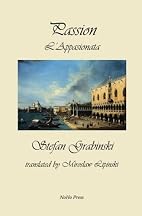
Below is an extract from my review:
“L’Appassionata” is a sixty page story of a romantic encounter in Venice which begins to have eerie undertones and which gradually builds dread at a pace that draws the reader into mystery, intrigue, and, ultimately, surprise.
Grabinski’s descriptions of Venice bring the city to life and portray not just the glossed tourist image but also the backstreets and filthy water canals of the areas inhabited by the Venetians who do not own palaces.
It is a story that fans of premonitions, spirits and unfettered love will enjoy. It certainly has the hallmarks of a good Gothic tale.
Below is an extract from my review:
“L’Appassionata” is a sixty page story of a romantic encounter in Venice which begins to have eerie undertones and which gradually builds dread at a pace that draws the reader into mystery, intrigue, and, ultimately, surprise.
Grabinski’s descriptions of Venice bring the city to life and portray not just the glossed tourist image but also the backstreets and filthy water canals of the areas inhabited by the Venetians who do not own palaces.
It is a story that fans of premonitions, spirits and unfettered love will enjoy. It certainly has the hallmarks of a good Gothic tale.
52pgmcc
I am reading Don't Look Now and agree that it is quite spooky.
I am at the point where John is explaining his concerns about the disappearance of his wife. My thoughts at the moment are that he did not see her on the other boat or that if he did he saw her spirit.
The only thing I find irritating about the story is John's insensitivity. I think Du Maurier did not write the character very well but I accept that if she had not made him so prone to insensitivity it would have taken a lot longer to reach the point where he is so annoyed about the twines and Laura's gullibility.
The only thing I find irritating about the story is John's insensitivity. I think Du Maurier did not write the character very well but I accept that if she had not made him so prone to insensitivity it would have taken a lot longer to reach the point where he is so annoyed about the twines and Laura's gullibility.
53pgmcc
@MrsLee, I finished Don't Look Now. Interesting tale. It has that horror quality where one sees what is going to happen, cannot avoid it, and the reader just has to stick it out to see how it will happen.
Spoiler screens can be so much fun.
Spoiler screens can be so much fun.
54MrsLee
>53 pgmcc: :) Glad you enjoyed it.
55suitable1
>53 pgmcc:
You do know that there is a limit on how many spoiler codes can be used in a group each week?
You do know that there is a limit on how many spoiler codes can be used in a group each week?

