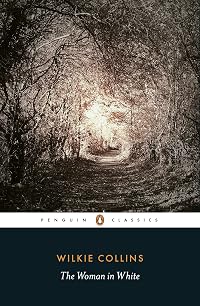
The Woman in White
by Wilkie Collins
On This Page
Description
The Woman in White is credited with being the first of the sensation novels, and one of the finest examples of the genre. A young woman's husband defrauds her of her fortune, her identity and eventually her sanity. She is saved by her sister and a loyal man who loves her, and her two rescuers attempt to expose her husband. They meet a woman dressed all in white whose fate seems curiously intertwined with that of the young woman. In the tradition of the sensation novel, the story contravenes show more boundaries of class, identity and the private and public spheres.. show less
Tags
Recommendations
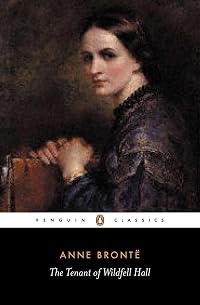
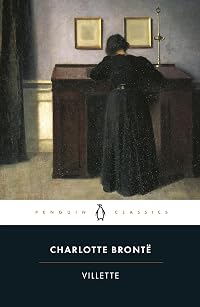
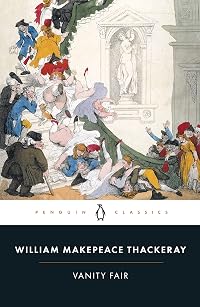
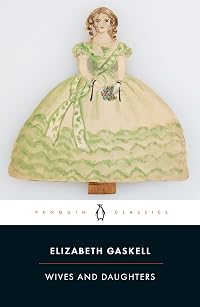
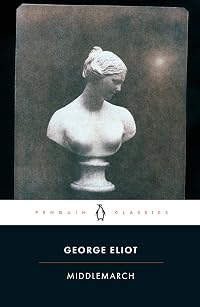
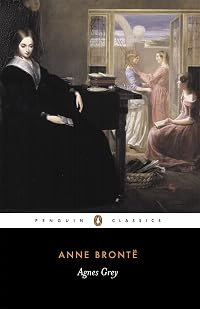
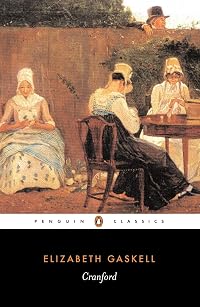
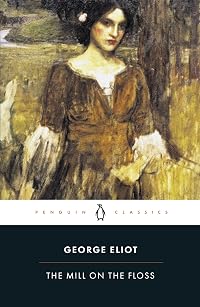




Member Recommendations
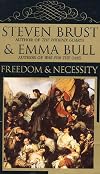
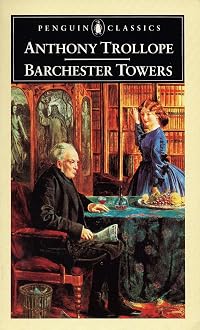
aulsmith Both novels take place in Victorian England. They have convoluted plots, many surprises and a whiff of the occult. Although Freedom and Necessity was not a Victorian novel, it reads like one, complementing the style of Collins.
30
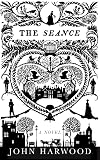
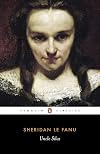

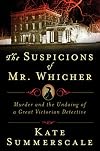
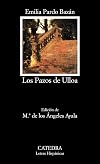
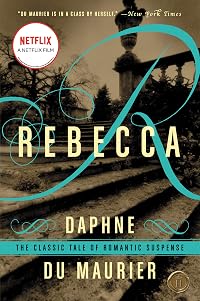
cammykitty Spanish *gothic* from about the same time period.
11
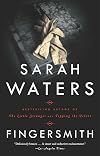
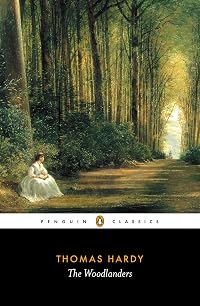
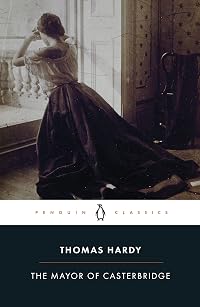
teelgee Definitely see where Sarah Waters got her inspiration!
Also recommended by wonderlake
54

Member Reviews
I'd heard good things about this book for years and now I've read it I know exactly why it's never been out of print; it's a superb, ground-breaking work. Like any novel written 150 years ago, it takes some getting used to; the writing style, the characterizations, the plot points themselves, but once you acclimate, this novel is truly a thriller worth reading. And it is a taut work despite its length. There is always something going on and the little hints and contradictions between accounts from each narrator keep you engaged.
I admit that it was hard sometimes to keep my 21st century sensibilities to myself. Honestly, I couldn't see what was so attractive about Laura that kept Marian and Walter her devoted slaves. I guess being a show more limpid, fainting female so compliant as to have no personality of her own was the epitome of female attractions back then. Maybe both Walter and Marian just needed someone to mother, protect and control to feel like they had any value in life. The lengths they went to keep Laura completely sheltered from any whiff of reality was absurd to me and a few times I wanted to smack all three of them. But only a few times. Overall, Collins did a good job of reaching through the decades and making me feel sympathy for Laura and her plight. Then again, she was so insensible to most of it that there wasn't a lot to feel sorry for. I mean, doesn't a person have to feel the pain of her situation before anyone else can feel bad about it? Of all the players involved, we never hear from her directly so can't get a good grip on what this whole experience did to her. She was so thoroughly insulated that it probably wasn't much, like a bird that has its cage changed from one to another doesn't comprehend what's been done. I felt slightly insulted by this treatment on Laura's behalf. Hell, at least she didn't whine, I guess that's something.
As far as characters went, this novel is loaded with outstanding examples. First of all the villains; Count Fosco and Sir Glyde were deliciously wicked and underhanded. Fosco is the orchestrator of all their shenanigans and must leash his friend's more overt and violent impulses. I never did understand what bound the two together in the first place, maybe just a mutual interest in decadent living and swindling folks to acquire it. Glyde's initial scam in claiming an inheritance that didn't belong to him might have been planned by Fosco himself since he seems to have gained his titles the same way, but we don't really know. Glyde is vicious, but not in the same way Fosco is vicious. Fosco maintains an air of moral superiority that is downright nauseating. And his slave wife is the same way. I wished a worse end on both of them than they received, but perhaps Collins felt he needed to pull his punch to keep his readers from having an attack of the vapors. Glyde's end, though horrifying in the extreme, lacks personalization and therefore is somewhat unsatisfying as well.
Another character I quite loved was Uncle Fairlie. What a righteous old queen he was. His fussing, flightiness and willful obstinacy was a wonder to behold. Yeah, he was annoying, but provided a much needed uplift to the grinding dread and tension of the novel. It was also great to see how easily manipulated he was by everyone who came in contact with him. I did feel sorry for his valet, though. Leaving the estate to the kid in the end was a bit of a stretch given the fact that he was so uncaring about inheritance in the past. I mean, he knew that Laura's marriage settlement was a screwed up thing, but didn't care, so why should he care about some brat he'd never seen? I can't picture him bothering. It is out of character.
And Marian is a mystery to me as well. Sure, Walter is smitten by a pretty, empty-headed girl as men have been for all of time and can't help slaving away over Laura, but what of Marian? Despite her outward appearance of self-assurance, she must really feel she has no chance of marriage. Or maybe the state doesn't appeal to her independent demeanor. I never got a handle on why she's content to be unofficial nanny and governess for the rest of her life. Surely if Count Fosco could find her fascinating other men could as well. Marian is a mystery to me that endures even more than Anne Catherick herself.
Anne is another helpless female who engenders unchecked devotion and sacrifice by a relative stranger; a popular motif in 19th century literature. Basically cast out by her mother, Anne is repeatedly told that she's weak-minded and stupid and thus becomes those things. She's manipulated and controlled by everyone around her. When she accidentally appears to have purpose, the asylum is the best way to get rid of her inconvenient presence. Mom and Glyde can sigh with relief. I had more sympathy for Anne than for Laura because Anne seems to have known how ill-treated and manipulated she was and at least tried to get out from under. I'm glad they let her stay in her burial plot next to the only person she felt had any love for her.
The plot is stunning, revealed tactically and really pulled me along through the story. A conspiracy so foul and amoral that it was staggering even in this day of heinous crime TV. To deliberately go through life making one's way by cheating, lying and stealing is pretty startling when presented so baldly. And it seems that neither Glyde nor Fosco had any real obstacles along their nefarious way. The way the scheme is revealed, first by its fact then by its repercussions is a neat device. Having each player tell his or her own piece was effective as well since not all of them knew everything everyone else knew. I liked, for example, the heated indignation of the family lawyer (I forget his name) in the face of Laura's unjust marriage settlement; he only knew the events surrounding this, but it was fascinating all the same and made the heroes seem less friendless. I also liked the housekeeper's testimony; her warped view of Fosco was wonderful and showed exactly what a crafty actor he was and how much the veneer of titles and position affected the opinions of the lower classes. Everyone seemed to be more trusting than they are now and so it's no wonder that people were taken in and conspiracies like these actually worked…at least in fiction. show less
I admit that it was hard sometimes to keep my 21st century sensibilities to myself. Honestly, I couldn't see what was so attractive about Laura that kept Marian and Walter her devoted slaves. I guess being a show more limpid, fainting female so compliant as to have no personality of her own was the epitome of female attractions back then. Maybe both Walter and Marian just needed someone to mother, protect and control to feel like they had any value in life. The lengths they went to keep Laura completely sheltered from any whiff of reality was absurd to me and a few times I wanted to smack all three of them. But only a few times. Overall, Collins did a good job of reaching through the decades and making me feel sympathy for Laura and her plight. Then again, she was so insensible to most of it that there wasn't a lot to feel sorry for. I mean, doesn't a person have to feel the pain of her situation before anyone else can feel bad about it? Of all the players involved, we never hear from her directly so can't get a good grip on what this whole experience did to her. She was so thoroughly insulated that it probably wasn't much, like a bird that has its cage changed from one to another doesn't comprehend what's been done. I felt slightly insulted by this treatment on Laura's behalf. Hell, at least she didn't whine, I guess that's something.
As far as characters went, this novel is loaded with outstanding examples. First of all the villains; Count Fosco and Sir Glyde were deliciously wicked and underhanded. Fosco is the orchestrator of all their shenanigans and must leash his friend's more overt and violent impulses. I never did understand what bound the two together in the first place, maybe just a mutual interest in decadent living and swindling folks to acquire it. Glyde's initial scam in claiming an inheritance that didn't belong to him might have been planned by Fosco himself since he seems to have gained his titles the same way, but we don't really know. Glyde is vicious, but not in the same way Fosco is vicious. Fosco maintains an air of moral superiority that is downright nauseating. And his slave wife is the same way. I wished a worse end on both of them than they received, but perhaps Collins felt he needed to pull his punch to keep his readers from having an attack of the vapors. Glyde's end, though horrifying in the extreme, lacks personalization and therefore is somewhat unsatisfying as well.
Another character I quite loved was Uncle Fairlie. What a righteous old queen he was. His fussing, flightiness and willful obstinacy was a wonder to behold. Yeah, he was annoying, but provided a much needed uplift to the grinding dread and tension of the novel. It was also great to see how easily manipulated he was by everyone who came in contact with him. I did feel sorry for his valet, though. Leaving the estate to the kid in the end was a bit of a stretch given the fact that he was so uncaring about inheritance in the past. I mean, he knew that Laura's marriage settlement was a screwed up thing, but didn't care, so why should he care about some brat he'd never seen? I can't picture him bothering. It is out of character.
And Marian is a mystery to me as well. Sure, Walter is smitten by a pretty, empty-headed girl as men have been for all of time and can't help slaving away over Laura, but what of Marian? Despite her outward appearance of self-assurance, she must really feel she has no chance of marriage. Or maybe the state doesn't appeal to her independent demeanor. I never got a handle on why she's content to be unofficial nanny and governess for the rest of her life. Surely if Count Fosco could find her fascinating other men could as well. Marian is a mystery to me that endures even more than Anne Catherick herself.
Anne is another helpless female who engenders unchecked devotion and sacrifice by a relative stranger; a popular motif in 19th century literature. Basically cast out by her mother, Anne is repeatedly told that she's weak-minded and stupid and thus becomes those things. She's manipulated and controlled by everyone around her. When she accidentally appears to have purpose, the asylum is the best way to get rid of her inconvenient presence. Mom and Glyde can sigh with relief. I had more sympathy for Anne than for Laura because Anne seems to have known how ill-treated and manipulated she was and at least tried to get out from under. I'm glad they let her stay in her burial plot next to the only person she felt had any love for her.
The plot is stunning, revealed tactically and really pulled me along through the story. A conspiracy so foul and amoral that it was staggering even in this day of heinous crime TV. To deliberately go through life making one's way by cheating, lying and stealing is pretty startling when presented so baldly. And it seems that neither Glyde nor Fosco had any real obstacles along their nefarious way. The way the scheme is revealed, first by its fact then by its repercussions is a neat device. Having each player tell his or her own piece was effective as well since not all of them knew everything everyone else knew. I liked, for example, the heated indignation of the family lawyer (I forget his name) in the face of Laura's unjust marriage settlement; he only knew the events surrounding this, but it was fascinating all the same and made the heroes seem less friendless. I also liked the housekeeper's testimony; her warped view of Fosco was wonderful and showed exactly what a crafty actor he was and how much the veneer of titles and position affected the opinions of the lower classes. Everyone seemed to be more trusting than they are now and so it's no wonder that people were taken in and conspiracies like these actually worked…at least in fiction. show less
I am very glad I read this book and it has immediately propelled Wilkie Collins to a high position in my reading plans. Although I read English literature at university, and have been buying books in antiquarian bookstore since I was 14 or 15, I had never heard of or any clear idea of this Victorian author. I suppose in the 1980s this author was of less interest. The cover page of this edition suggest that The woman in white wasn't included in the Penguin Classics series until 1999. In 2004, I skim read The Moonstone for a publishing project, but the author did not register much in my consciousness, and I did not count The Moonstone as a have-read.
Two years ago, I had a failed attempt at reading The woman in white. I enjoyed it show more tremendously, but got lost after about 130 pages, that is shortly after the end of the first narrative. The introduction already had me confused about the characters. Mistaken identity, and character likeness are important parts of the story and bringing all those names together in such a short space, the introduction was more confusing than clarifying. The woman in white also has a very unusual narrative structure, unlike any other novels, except some other works by Collins. The narrative consists in successive witness depositions, sometimes letters or fragments of diaries that together, more or less chronologically, and with minimal interruption present a flowing narrative. Although the introduction talked about it, I wasn't fully prepared and with the switch of the narrative, I got lost. I couldn't follow it because it did not answer to my expectations, so I abandoned it. Picking it up again two years later, merited a full re-read from the beginning.
I do not fear spoilers, so usually read the introduction to novels before reading the book. However, in this case the introduction worked counterproductive, confusing me. It would have been better not to have read the introduction first. Obviously, the novel itself can perfectly well be read and understood without academic introduction.
The woman in white is a very big, and also a great novel. I am not particularly interested in detective stories. The woman in white is characterized as a forerunner of the genre. Besides, the story contains so many other highlights and is of such psychological depth that it need not be categorized as a detective novel. Although the novel has more than 600 pages, it is an enticing read, and the narrative structure invigorates the plot compelling the reader on. The story is full of action, particularly in the last part of the novel, where an increase of plot events help propel the story.
The woman in white presents the reader with great prose, wonderful descriptions. Apart from a compelling plot, the novel presents a number of unforgettable characters. Some characters have all the sense and sensibility of Jane Austen's characters, while other characters are as peculiar as some of Charles Dickens's characters. The evil characters are Faustian and Falstaffian, and the novel might as well be characterized as high Gothic fiction.
This was my first novel by Wilkie Collins and deemed a five-star read. show less
Two years ago, I had a failed attempt at reading The woman in white. I enjoyed it show more tremendously, but got lost after about 130 pages, that is shortly after the end of the first narrative. The introduction already had me confused about the characters. Mistaken identity, and character likeness are important parts of the story and bringing all those names together in such a short space, the introduction was more confusing than clarifying. The woman in white also has a very unusual narrative structure, unlike any other novels, except some other works by Collins. The narrative consists in successive witness depositions, sometimes letters or fragments of diaries that together, more or less chronologically, and with minimal interruption present a flowing narrative. Although the introduction talked about it, I wasn't fully prepared and with the switch of the narrative, I got lost. I couldn't follow it because it did not answer to my expectations, so I abandoned it. Picking it up again two years later, merited a full re-read from the beginning.
I do not fear spoilers, so usually read the introduction to novels before reading the book. However, in this case the introduction worked counterproductive, confusing me. It would have been better not to have read the introduction first. Obviously, the novel itself can perfectly well be read and understood without academic introduction.
The woman in white is a very big, and also a great novel. I am not particularly interested in detective stories. The woman in white is characterized as a forerunner of the genre. Besides, the story contains so many other highlights and is of such psychological depth that it need not be categorized as a detective novel. Although the novel has more than 600 pages, it is an enticing read, and the narrative structure invigorates the plot compelling the reader on. The story is full of action, particularly in the last part of the novel, where an increase of plot events help propel the story.
The woman in white presents the reader with great prose, wonderful descriptions. Apart from a compelling plot, the novel presents a number of unforgettable characters. Some characters have all the sense and sensibility of Jane Austen's characters, while other characters are as peculiar as some of Charles Dickens's characters. The evil characters are Faustian and Falstaffian, and the novel might as well be characterized as high Gothic fiction.
This was my first novel by Wilkie Collins and deemed a five-star read. show less
What an immense joy to read. In a bid to read a bit more thoughtfully (contrary to belief, reading 100+ a year does not make one happy), I started on this 150 year suspense novel I had wasting on my shelf. I decided to read it in the original serial context as well, tracking each of the forty instalments alongside their original dates of publication. It's even inspired me begin a Victorian Serial Bookclub with my lovely partner as well--you can tell I loved this thing!
Taking a little over a week to read, The Woman in White was one of the most riveting reads I'd had since Rebecca. Following an intricate web of players and the central mystery of the "woman in white", the novel is a perfect mix of suspense, drama, characterization and show more social critique. Despite the novel's age, it reads easily, and Collins' is simply a master at creating unbearable tension. One of the central issues I saw play out in the pages was the reality of the lack of rights of women. Anyone who has lived their life as a woman can feel alongside Laura and Miriam's slow and horrific realization that they are trapped: physically, emotionally, and even legally. That psychological element was stunning; I can't think of another Victorian novel I've read that does that. I NEED to find more.
Anyways, I can't wait to get my hands on more of Wilkie Collins' work. I'm honestly blown away. I cannot recommend this more!!! show less
Taking a little over a week to read, The Woman in White was one of the most riveting reads I'd had since Rebecca. Following an intricate web of players and the central mystery of the "woman in white", the novel is a perfect mix of suspense, drama, characterization and show more social critique. Despite the novel's age, it reads easily, and Collins' is simply a master at creating unbearable tension. One of the central issues I saw play out in the pages was the reality of the lack of rights of women. Anyone who has lived their life as a woman can feel alongside Laura and Miriam's slow and horrific realization that they are trapped: physically, emotionally, and even legally. That psychological element was stunning; I can't think of another Victorian novel I've read that does that. I NEED to find more.
Anyways, I can't wait to get my hands on more of Wilkie Collins' work. I'm honestly blown away. I cannot recommend this more!!! show less
I have spent the past week with this wonderful wordy trip back in time. The book created quite a sensation when it was released in serialization (hence the wordiness) both in England and the U.S. in 1859. It grabbed my attention with the first line: "This is the story of what a woman's patience can endure, and what a man's resolution can achieve."
I find it interesting that Collins begins with the characteristics of women and men because I have a bone to pick with Mr. C. Why on earth does he have to portray Laura Fairlie as beautiful, though spineless and witless in contrast to her half-sister Marian Halcombe who is homely while being spunky, engaging, and bright? Or as Walter Hartright noted to himself at their first meeting: the lady show more is dark, the lady is young, "the lady is ugly."
Now I really liked this book, just did not care for the way the women were denigrated. Other than the brilliant Marian, the only intelligent female in the book was Nina the Greyhound who uncharacteristically growled at Sir Percival. Well, maybe I can forgive the treatment of women because of the smattering of humor. Uncle Fairlie's exaggerated pomposity and drama had me laughing out loud.
As to plot, let's just say that it is a dark tale of thwarted love, greed, and suspense. I loved the eerieness of the ghost-like Woman In White, and was almost disappointed when her identity was revealed. It seemed like the details of the conspiracy and the mystery of the Secret was too contrived and plodding. Hint: any time the word "secret" is capitalized in a book, its revelation will be a let-down.
My edition of this book is 617 pages. Now if that is all the fault I can find with it, you can see that 95% of this book was totally engaging. I have The Moonstone queued up to read later this year. show less
I find it interesting that Collins begins with the characteristics of women and men because I have a bone to pick with Mr. C. Why on earth does he have to portray Laura Fairlie as beautiful, though spineless and witless in contrast to her half-sister Marian Halcombe who is homely while being spunky, engaging, and bright? Or as Walter Hartright noted to himself at their first meeting: the lady show more is dark, the lady is young, "the lady is ugly."
Now I really liked this book, just did not care for the way the women were denigrated. Other than the brilliant Marian, the only intelligent female in the book was Nina the Greyhound who uncharacteristically growled at Sir Percival. Well, maybe I can forgive the treatment of women because of the smattering of humor. Uncle Fairlie's exaggerated pomposity and drama had me laughing out loud.
As to plot, let's just say that it is a dark tale of thwarted love, greed, and suspense. I loved the eerieness of the ghost-like Woman In White, and was almost disappointed when her identity was revealed. It seemed like the details of the conspiracy and the mystery of the Secret was too contrived and plodding. Hint: any time the word "secret" is capitalized in a book, its revelation will be a let-down.
My edition of this book is 617 pages. Now if that is all the fault I can find with it, you can see that 95% of this book was totally engaging. I have The Moonstone queued up to read later this year. show less
A novel in three parts. The first part reads especially dull, and a third of the way in it still doesn't appear as though anything of consequence is happening. This is because Collins is masterfully telling his reader a story while concealing it from his narrators, and without making them look like idiots for not seeing it. If you're not watching the clues and merely taking what the narrators say at face value, you could be hoodwinked too. So far, so good. The second part brings a strong element of suspense into play; there's a clear sense that something is happening, or could happen, or is about to happen, but there's no telling exactly what until it's sprung. A bit frustrating. The third part is devoted to seeing whether the trap can show more be unsprung, or is it already too late?
A hundred and fifty years ago, this literary slight-of-hand wasn't considered too much to ask of the general reading population. Now there's the added advantage of being able to trust in this novel's well-regarded reputation and receiving what's in store. You'll have to deal with an author who wants to play games with you, exacerbated by the extraordinarily high degree of telling rather than showing, so that what we are not told affects our understanding all the more. Collins only occasionally tips his hand, as when Marian carefully destroys dangerous letters but only after recording their contents in her diary, which she does not destroy. This nonsense is only done for the purpose of sharing the letters with the reader. Collins also employs the weak women motif for plot convenience, having them slip into a faint or fugue, suffer from amnesia, etc. for the least cause and whenever it suits his needs. Or is even that more suspicious than it appears?
This novel's cloak-and-dagger narration was regarded as a creative and effective means of generating suspense. It made Collins' name famous and spawned a host of imitators, with examples continuing to this day. Either you appreciate all of the tricks Collins employs, or you resent it at least a little. I like a surprise as much as the next person, but if I were manipulated to this degree in any modern work I'd find it frustrating. Fortunately I approach the classics with more patience and earned this one's rewards. show less
A hundred and fifty years ago, this literary slight-of-hand wasn't considered too much to ask of the general reading population. Now there's the added advantage of being able to trust in this novel's well-regarded reputation and receiving what's in store. You'll have to deal with an author who wants to play games with you, exacerbated by the extraordinarily high degree of telling rather than showing, so that what we are not told affects our understanding all the more. Collins only occasionally tips his hand, as when Marian carefully destroys dangerous letters but only after recording their contents in her diary, which she does not destroy. This nonsense is only done for the purpose of sharing the letters with the reader. Collins also employs the weak women motif for plot convenience, having them slip into a faint or fugue, suffer from amnesia, etc. for the least cause and whenever it suits his needs. Or is even that more suspicious than it appears?
This novel's cloak-and-dagger narration was regarded as a creative and effective means of generating suspense. It made Collins' name famous and spawned a host of imitators, with examples continuing to this day. Either you appreciate all of the tricks Collins employs, or you resent it at least a little. I like a surprise as much as the next person, but if I were manipulated to this degree in any modern work I'd find it frustrating. Fortunately I approach the classics with more patience and earned this one's rewards. show less
*
I can review this only in relation to its precursor, The Rainbow (review here).
My Journey
I went straight from the flames of floral, rural passion in The Rainbow, to this often brittle discussion of the abstract, set in a more mechanical age, where animals - metaphorical and literal - are key, and death’s shadow hovers hungrily. It's beautiful, entrancing, but also opaque and frustrating.
I travelled with Ursula from her teenage years in the balmy countryside, where people act on their desires, to her earnest twenties: first in a grimy northern mining town, then in the frigid, glistening ice of the Tyrollean Alps. It’s not such a linear narrative as The Rainbow; more a series of episodes (chapter lengths vary hugely - between 3 and show more 50 pages).
It seems to ask:
• Must the rainbow hues leach out of life (Gudrun’s ever-colourful stocking notwithstanding)?
• Must passion end in death (not necessarily the little one)?
This is a novel of ideas, but I often felt unequal to them. There was so much to wrestle with, I was stripped bare by the dizzying mix of themes, language, passions, lives - and deaths. I had to submit to the experience, though in a rather different way to The Rainbow.
My status on finishing was a single word, “Eviscerated”. Ruminating further, a conversation towards the end is pertinent. One character tells their partner “It’s over”, and the reply is “But it isn’t finished… There must be finality”. In writing this, I think I have found finality. (I will return to Lawrence, though!)
Lawrence wrote this after Wilde, during a war (WW1), and before Waugh. It has the self-consciously clever dialogue of the first and last, in the context of warring relationships: all conflicted between love and hate, artifice and instinct, life and death - murderous desire, even.
The intellectual sparring matches have a theatrical quality, as if the protagonists are speaking for posterity. Then the audience departs, the mask falls, and naturalistic passion, action and imagery blossoms, such as the blissful release for Birkin, rolling naked in the primroses. “He wanted to touch them all… to saturate himself with the touch of them all… It was such a fine, cool, subtle touch all over him, he seemed to saturate himself with their contact.” The rarer physical assaults (lapis, wrestling, and in the snow) have greater visceral power as a result.
It seems to say that whatever persona we try to present, however much we try to assert our will (a recurring theme), we’re all animals underneath.
Animals
What a carnal carnival of animals this is. People are likened to, amongst other things: smiling wolf, hermit crab, pouncing hound, octopus, restless bird, “slithering sea-lion”, “funeral bird, feeding on the miseries of the people”, small cat, dog, cockerel, bird of paradise, rabbit, wild animal, shrew, stallion, “hopping flea”, fish, weasel, voice like a gull, water-spiders, horses, python, “eyes as keen as a hawk”, water-rat, “elegant beetle”, seal, “eyes blazed like a tiger’s”, bat, amphibious beast, eagle, “humble maggot”, wearing “startling colours, like a macaw”, eels, various insects, and “strange moths”!
Gudrun’s art typically features animals and birds, her friendship with Loerke is kindled by a picture of his statue of a naked girl on a horse, and there are actual animals at key points in the story:
• Ursula and Gudrun watch Gerald violently beat his horse to submission, when it is terrified by a train.
• Gudrun confronts an alarming herd of cattle, but finds inner strength (and euythmics).
• A chapter is devoted to Birkin’s cat - given to him by Hermione, and still part of the power she wields over him.
• Another chapter is about a vicious pet rabbit (called Bismarck) that draws blood from Gerald and Gudrun.
Plot
There are four main characters: Ursula Brangwen and her sister Gudrun, only a year younger. They are very close, but it’s also fiery relationship. Both teach at the grammar school: Ursula as a general teacher and Gudrun just art (she is really a sculptor, has travelled abroad, and lived in Bohemian London).
They become involved with Rupert Birkin, a school inspector, and Gerald Crich, eldest son of a wealthy colliery owner. Birkin and Gerald have a deep and conflicted relationship with each other. Women in Love - or Men in Love? The Crich family is large, the mother mentally unstable, and the father physically declining. We know nothing of Birkin’s family.
The four go to Innsbruck, where Loerke, a German artist, is added to the increasingly toxic mix of relationships.
Ursula and Gudrun are fiercely independent women, in thought and deed, including their relationships. They are not afraid of what other people think. The problem is that that often can’t decide what they think and so cannot decide what they should do and not do: “His licentiousness was repulsively attractive” and “she was far, far from being at ease with him”. And yet…
The men’s attitudes to women are not as positive or equal. At times, they’re exploitative, at other times, women are considered second best, albeit decorative and convenient.
Towards the end, I feared Lawrence was going to quash all that and have them either settle for conventionality, or suffer for not doing so...
Recurring Themes
Is it better to look at things as a whole, or take them to pieces? “I really don’t want to be forced into all this criticism and analysis of life. I really do want to see things in their entirety, with their beauty left in them.” In this review, I've opted for the former.
It is set in age of change: mechanisation, social mobility, equality, and philanthropy. To the father, “in Christ, he was one with his workmen”, but to his son, they “were his instruments” and “What mattered was the great social productive machine.”
Primarily though, this is about relationships:
The types of love, relationships, and marriage considered and entered into is very broad-minded for the time, such as “a mutual union in separateness”. It also explores how/if sex and friendship relate. “She had had lovers, she had known passion. But this was neither love nor passion. It was the daughters of men coming back to the sons of God, the strange inhuman sons of God.”
Homosexuality, bisexuality, and non-monogamous relationships suffuse the story. It’s not just the famous naked wrestling: is far less ambiguous than I expected. “I believe in the additional perfect relationship between a man and a man.” Later, "You are enough for me, as far as a woman is concerned. You are all women to me. But I wanted a man friend, as eternal as you and I are eternal... to make it complete, really happy, I wanted eternal union with a man too: another kind of love."
Conflict and duality are present in all the main relationships (love, hate, and whose will will triumph), violence and coercion too. “Always it was this eternal see-saw, one destroyed that the other might exist, one ratified because the other was nulled.” Ultimately, “One of them must triumph over the other”.
There is no escape, “It was a fight to the death between them - or to new life: though in what the conflict lay, no one could say” and "She felt an approaching release, a new fountain of life rising up in her... Yet underneath was death itself."
Quotes
• “A strange enmity… very near to love.”
• “I hate subtleties. I always think they are a sign of weakness.”
• “The lake lay all grey and visionary, stretching into the moist, translucent vista of trees and meadow.”
• “It was rather delicious to feel her drawing his self-revelation from him… And her dark eyes seemed to be looking through into his naked organism… She wanted the secret of him, the experience of his male being.”
• “She seemed to become soft, subtly to infuse herself into his bones, as if she were passing into him in a black, electric flow. Her being suffused into his veins like a magnetic darkness.”
• “They always kept a gap, a distance between them, they wanted always to be free of each other. Yet there was a curious heart-straining towards each other.”
• “She seemed to grip the hours by the throat, to force her life from them.”
• “It was a sunny, soft morning in early summer, when life ran in the world subtly like a reminiscence.”
• “The heavy gold glamour of approaching sunset lay over all the colliery district, and the ugliness overlaid with beauty was like a narcotic to the senses… over all the amorphous squalor a kind of magic was cast.”
• “The broad dialect was curiously caressing to the blood… In their voices she could hear the voluptuous resonance of darkness, the strong, dangerous underworld, mindless, inhuman. They sounded also like strange machines heavily oiled.”
• “Why should you always be doing?” Often, I wanted the characters to do more doing (and less talking).
• “He saw her face strangely enkindled, as if suffused from within by a powerful sweet fire. His soul was arrested in wonder. She was enkindled in her own living fire. Arrested in wonder and in pure, perfect attraction, he moved towards her.”
• “On the water, lanterns were coming alight, faint ghosts of warm flame floating in the pallor of the first twilight. The earth was spread with darkness, like lacquer, overhead was a pale sky, all primrose, and the lake was pale as milk in one part. Away at the landing stage, tiniest points of coloured rays were stringing themselves in the dusk... All round, shadow was gathering from the trees.”
• Pain “gradually absorbed hi life. Gradually it drew away all his potentiality, it bled him into the dark, it weaned him of life.”
• “The men were satisfied to belong to the great and wonderful machine, even whilst it destroyed them...Their hearts died within them, but their souls were satisfied.”
• “I want you to drop your assertive will… I want you to trust yourself so implicitly, that you can let yourself go.”
• “He kissed her softly… like dew falling.”
• “Her father was not a coherent human being, he was a roomful of old echoes.”
• Wrestling, “They became accustomed to each other, to each other's rhythm, they got a kind of mutual physical understanding...as if they would break into a oneness… working into a tighter closer oneness of struggle, with a strange, octopus-like knotting and flashing of limbs in the subdued light of the room… the strange sound of flesh escaping under flesh. Often, in the white interlaced knot of violent living being that swayed silently, there was no head to be seen, only the swift, tight limbs, the solid white backs, the physical junction of two bodies clinched into oneness… The earth seemed to tilt and sway, and a complete darkness was coming over his mind. He did not know what happened.”
• “The talk went on like a rattle of small artillery... the continual splatter of verbal jest, designed to give a tone of flippancy to a stream of conversation that was all critical and general, a canal of conversation rather than a stream. The attitude was mental and very wearying.”
• H's face: “There was something of the stupidity and the unenlightened self-esteem of a horse in it.”
• “Her pity for him was as cold as stone, its deepest motive was hate of him, and fear of his power over her, which she must always counterfoil.”
• “She was like a flower just opened in the rain, the heart of the blossom just newly visible, seeming to emit a warmth of retained sunshine.”
• “And now, behold, from the smitten rock of the man's body, from the strange marvellous flanks and thighs, deeper, further in mystery than the phallic source, came the floods of ineffable darkness and ineffable riches.”
• “She had her desire of him, she touched, she received the maximum of unspeakable communication in touch, dark, subtle, positively silent, a magnificent gift and give again, a perfect acceptance and yielding, a mystery... the immemorial magnificence of mystic, palpable, real otherness.”
• “He seemed to be gathering her into himself, her warmth, her softness, her adorable weight, drinking in the suffusion of her physical being, avidly. He lifted her, and seemed to pour her into himself, like wine into a cup… So she relaxed, and seemed to melt, to flow into him, as if she were some infinitely warm and precious suffusion filling into his veins, like an intoxicant.
• “She reached up, like Eve reaching to the apples on the tree of knowledge… touching his face with her infinitely delicate, encroaching wondering fingers… Her soul thrilled with complete knowledge. This was the glistening, forbidden apple, this face of a man.”
• “To know him, to gather him in by touch... She wanted to touch him and touch him and touch him.”
• “It was a rather stiff, sad meeting, more like a verification of separateness than a reunion.”
• “There they sat down, folded together, folded round with the same rug, creeping in nearer and ever nearer to one another, till it seemed they had crept right into each other, and become one substance.”
• “His heart went up like a flame of ice.”
• They “found themselves in a vague, unsubstantial outdoors of dim snow and ghosts of an upper-world, that made strange shadows before the stars... It seemed conscious, malevolent, purposive in its intense murderous coldness.”
• “The first days passed in an ecstasy of physical motion, sleighing, skiing, skating, moving in an intensity of speed and white light that surpassed life itself, and carried the souls of the human beings beyond into an inhuman abstraction of velocity and weight and eternal, frozen snow.”
• “It was a fight to the death, she knew it now.”
• “Either the heart would break, or cease to care.”
Moony
One of my favourite passages, from the chapter titled "Moony":
Throwing stones at the moon’s reflection: “Darts of bright light shot asunder, darkness swept over the centre. There was no moon, only a battlefield of broken lights and shadows, running close together. Shadows, dark and heavy, struck again and again across the place where the heart of the moon had been, obliterating it altogether. The white fragments pulsed up and down, and could not find where to go, apart and brilliant on the water like the petals of a rose that a wind has blown far and wide… He saw the moon regathering itself insidiously, saw the heart of the rose intertwining vigorously and blindly, calling back the scattered fragments, winning home the fragments, in a pulse and in effort of return.” Throw another stone: “Flakes of light appeared here and there, glittering tormented among the shadows, far off, in strange places; among the dripping shadow of the willow on the island.”
Amusing Bafflement
• Chapter VI has three references to “inchoate eyes”, whatever that means.
• “He rocked on the water perfectly, like the rocking of phosphorescence.” Yes, he’s in a boat, but even so…
• “Her soul was destroyed with the exquisite shock of his invisible fluid lightning… Ah much, much, many days harvesting for her large, yet perfectly subtle and intelligent hands upon the field of his living, radio-active body.” Ugh - or LOL?
*Picture sources
Carpet of primroses: https://s-media-cache-ak0.pinimg.com/236x/a7/47/85/a74785badd6c50182276add86e2e2....
Brinsley colliery: http://www.healeyhero.co.uk/rescue/eastwood.htm
Alpine peak: http://il1.picdn.net/shutterstock/videos/12292205/thumb/1.jpg?i10c=img.resize(he.... show less
I can review this only in relation to its precursor, The Rainbow (review here).
My Journey
I went straight from the flames of floral, rural passion in The Rainbow, to this often brittle discussion of the abstract, set in a more mechanical age, where animals - metaphorical and literal - are key, and death’s shadow hovers hungrily. It's beautiful, entrancing, but also opaque and frustrating.
I travelled with Ursula from her teenage years in the balmy countryside, where people act on their desires, to her earnest twenties: first in a grimy northern mining town, then in the frigid, glistening ice of the Tyrollean Alps. It’s not such a linear narrative as The Rainbow; more a series of episodes (chapter lengths vary hugely - between 3 and show more 50 pages).
It seems to ask:
• Must the rainbow hues leach out of life (Gudrun’s ever-colourful stocking notwithstanding)?
• Must passion end in death (not necessarily the little one)?
This is a novel of ideas, but I often felt unequal to them. There was so much to wrestle with, I was stripped bare by the dizzying mix of themes, language, passions, lives - and deaths. I had to submit to the experience, though in a rather different way to The Rainbow.
My status on finishing was a single word, “Eviscerated”. Ruminating further, a conversation towards the end is pertinent. One character tells their partner “It’s over”, and the reply is “But it isn’t finished… There must be finality”. In writing this, I think I have found finality. (I will return to Lawrence, though!)
Lawrence wrote this after Wilde, during a war (WW1), and before Waugh. It has the self-consciously clever dialogue of the first and last, in the context of warring relationships: all conflicted between love and hate, artifice and instinct, life and death - murderous desire, even.
The intellectual sparring matches have a theatrical quality, as if the protagonists are speaking for posterity. Then the audience departs, the mask falls, and naturalistic passion, action and imagery blossoms, such as the blissful release for Birkin, rolling naked in the primroses. “He wanted to touch them all… to saturate himself with the touch of them all… It was such a fine, cool, subtle touch all over him, he seemed to saturate himself with their contact.” The rarer physical assaults (lapis, wrestling, and in the snow) have greater visceral power as a result.
It seems to say that whatever persona we try to present, however much we try to assert our will (a recurring theme), we’re all animals underneath.
Animals
What a carnal carnival of animals this is. People are likened to, amongst other things: smiling wolf, hermit crab, pouncing hound, octopus, restless bird, “slithering sea-lion”, “funeral bird, feeding on the miseries of the people”, small cat, dog, cockerel, bird of paradise, rabbit, wild animal, shrew, stallion, “hopping flea”, fish, weasel, voice like a gull, water-spiders, horses, python, “eyes as keen as a hawk”, water-rat, “elegant beetle”, seal, “eyes blazed like a tiger’s”, bat, amphibious beast, eagle, “humble maggot”, wearing “startling colours, like a macaw”, eels, various insects, and “strange moths”!
Gudrun’s art typically features animals and birds, her friendship with Loerke is kindled by a picture of his statue of a naked girl on a horse, and there are actual animals at key points in the story:
• Ursula and Gudrun watch Gerald violently beat his horse to submission, when it is terrified by a train.
• Gudrun confronts an alarming herd of cattle, but finds inner strength (and euythmics).
• A chapter is devoted to Birkin’s cat - given to him by Hermione, and still part of the power she wields over him.
• Another chapter is about a vicious pet rabbit (called Bismarck) that draws blood from Gerald and Gudrun.
Plot
There are four main characters: Ursula Brangwen and her sister Gudrun, only a year younger. They are very close, but it’s also fiery relationship. Both teach at the grammar school: Ursula as a general teacher and Gudrun just art (she is really a sculptor, has travelled abroad, and lived in Bohemian London).
They become involved with Rupert Birkin, a school inspector, and Gerald Crich, eldest son of a wealthy colliery owner. Birkin and Gerald have a deep and conflicted relationship with each other. Women in Love - or Men in Love? The Crich family is large, the mother mentally unstable, and the father physically declining. We know nothing of Birkin’s family.
The four go to Innsbruck, where Loerke, a German artist, is added to the increasingly toxic mix of relationships.
Ursula and Gudrun are fiercely independent women, in thought and deed, including their relationships. They are not afraid of what other people think. The problem is that that often can’t decide what they think and so cannot decide what they should do and not do: “His licentiousness was repulsively attractive” and “she was far, far from being at ease with him”. And yet…
The men’s attitudes to women are not as positive or equal. At times, they’re exploitative, at other times, women are considered second best, albeit decorative and convenient.
Towards the end, I feared Lawrence was going to quash all that and have them either settle for conventionality, or suffer for not doing so...
Recurring Themes
Is it better to look at things as a whole, or take them to pieces? “I really don’t want to be forced into all this criticism and analysis of life. I really do want to see things in their entirety, with their beauty left in them.” In this review, I've opted for the former.
It is set in age of change: mechanisation, social mobility, equality, and philanthropy. To the father, “in Christ, he was one with his workmen”, but to his son, they “were his instruments” and “What mattered was the great social productive machine.”
Primarily though, this is about relationships:
The types of love, relationships, and marriage considered and entered into is very broad-minded for the time, such as “a mutual union in separateness”. It also explores how/if sex and friendship relate. “She had had lovers, she had known passion. But this was neither love nor passion. It was the daughters of men coming back to the sons of God, the strange inhuman sons of God.”
Homosexuality, bisexuality, and non-monogamous relationships suffuse the story. It’s not just the famous naked wrestling: is far less ambiguous than I expected. “I believe in the additional perfect relationship between a man and a man.” Later, "You are enough for me, as far as a woman is concerned. You are all women to me. But I wanted a man friend, as eternal as you and I are eternal... to make it complete, really happy, I wanted eternal union with a man too: another kind of love."
Conflict and duality are present in all the main relationships (love, hate, and whose will will triumph), violence and coercion too. “Always it was this eternal see-saw, one destroyed that the other might exist, one ratified because the other was nulled.” Ultimately, “One of them must triumph over the other”.
There is no escape, “It was a fight to the death between them - or to new life: though in what the conflict lay, no one could say” and "She felt an approaching release, a new fountain of life rising up in her... Yet underneath was death itself."
Quotes
• “A strange enmity… very near to love.”
• “I hate subtleties. I always think they are a sign of weakness.”
• “The lake lay all grey and visionary, stretching into the moist, translucent vista of trees and meadow.”
• “It was rather delicious to feel her drawing his self-revelation from him… And her dark eyes seemed to be looking through into his naked organism… She wanted the secret of him, the experience of his male being.”
• “She seemed to become soft, subtly to infuse herself into his bones, as if she were passing into him in a black, electric flow. Her being suffused into his veins like a magnetic darkness.”
• “They always kept a gap, a distance between them, they wanted always to be free of each other. Yet there was a curious heart-straining towards each other.”
• “She seemed to grip the hours by the throat, to force her life from them.”
• “It was a sunny, soft morning in early summer, when life ran in the world subtly like a reminiscence.”
• “The heavy gold glamour of approaching sunset lay over all the colliery district, and the ugliness overlaid with beauty was like a narcotic to the senses… over all the amorphous squalor a kind of magic was cast.”
• “The broad dialect was curiously caressing to the blood… In their voices she could hear the voluptuous resonance of darkness, the strong, dangerous underworld, mindless, inhuman. They sounded also like strange machines heavily oiled.”
• “Why should you always be doing?” Often, I wanted the characters to do more doing (and less talking).
• “He saw her face strangely enkindled, as if suffused from within by a powerful sweet fire. His soul was arrested in wonder. She was enkindled in her own living fire. Arrested in wonder and in pure, perfect attraction, he moved towards her.”
• “On the water, lanterns were coming alight, faint ghosts of warm flame floating in the pallor of the first twilight. The earth was spread with darkness, like lacquer, overhead was a pale sky, all primrose, and the lake was pale as milk in one part. Away at the landing stage, tiniest points of coloured rays were stringing themselves in the dusk... All round, shadow was gathering from the trees.”
• Pain “gradually absorbed hi life. Gradually it drew away all his potentiality, it bled him into the dark, it weaned him of life.”
• “The men were satisfied to belong to the great and wonderful machine, even whilst it destroyed them...Their hearts died within them, but their souls were satisfied.”
• “I want you to drop your assertive will… I want you to trust yourself so implicitly, that you can let yourself go.”
• “He kissed her softly… like dew falling.”
• “Her father was not a coherent human being, he was a roomful of old echoes.”
• Wrestling, “They became accustomed to each other, to each other's rhythm, they got a kind of mutual physical understanding...as if they would break into a oneness… working into a tighter closer oneness of struggle, with a strange, octopus-like knotting and flashing of limbs in the subdued light of the room… the strange sound of flesh escaping under flesh. Often, in the white interlaced knot of violent living being that swayed silently, there was no head to be seen, only the swift, tight limbs, the solid white backs, the physical junction of two bodies clinched into oneness… The earth seemed to tilt and sway, and a complete darkness was coming over his mind. He did not know what happened.”
• “The talk went on like a rattle of small artillery... the continual splatter of verbal jest, designed to give a tone of flippancy to a stream of conversation that was all critical and general, a canal of conversation rather than a stream. The attitude was mental and very wearying.”
• H's face: “There was something of the stupidity and the unenlightened self-esteem of a horse in it.”
• “Her pity for him was as cold as stone, its deepest motive was hate of him, and fear of his power over her, which she must always counterfoil.”
• “She was like a flower just opened in the rain, the heart of the blossom just newly visible, seeming to emit a warmth of retained sunshine.”
• “And now, behold, from the smitten rock of the man's body, from the strange marvellous flanks and thighs, deeper, further in mystery than the phallic source, came the floods of ineffable darkness and ineffable riches.”
• “She had her desire of him, she touched, she received the maximum of unspeakable communication in touch, dark, subtle, positively silent, a magnificent gift and give again, a perfect acceptance and yielding, a mystery... the immemorial magnificence of mystic, palpable, real otherness.”
• “He seemed to be gathering her into himself, her warmth, her softness, her adorable weight, drinking in the suffusion of her physical being, avidly. He lifted her, and seemed to pour her into himself, like wine into a cup… So she relaxed, and seemed to melt, to flow into him, as if she were some infinitely warm and precious suffusion filling into his veins, like an intoxicant.
• “She reached up, like Eve reaching to the apples on the tree of knowledge… touching his face with her infinitely delicate, encroaching wondering fingers… Her soul thrilled with complete knowledge. This was the glistening, forbidden apple, this face of a man.”
• “To know him, to gather him in by touch... She wanted to touch him and touch him and touch him.”
• “It was a rather stiff, sad meeting, more like a verification of separateness than a reunion.”
• “There they sat down, folded together, folded round with the same rug, creeping in nearer and ever nearer to one another, till it seemed they had crept right into each other, and become one substance.”
• “His heart went up like a flame of ice.”
• They “found themselves in a vague, unsubstantial outdoors of dim snow and ghosts of an upper-world, that made strange shadows before the stars... It seemed conscious, malevolent, purposive in its intense murderous coldness.”
• “The first days passed in an ecstasy of physical motion, sleighing, skiing, skating, moving in an intensity of speed and white light that surpassed life itself, and carried the souls of the human beings beyond into an inhuman abstraction of velocity and weight and eternal, frozen snow.”
• “It was a fight to the death, she knew it now.”
• “Either the heart would break, or cease to care.”
Moony
One of my favourite passages, from the chapter titled "Moony":
Throwing stones at the moon’s reflection: “Darts of bright light shot asunder, darkness swept over the centre. There was no moon, only a battlefield of broken lights and shadows, running close together. Shadows, dark and heavy, struck again and again across the place where the heart of the moon had been, obliterating it altogether. The white fragments pulsed up and down, and could not find where to go, apart and brilliant on the water like the petals of a rose that a wind has blown far and wide… He saw the moon regathering itself insidiously, saw the heart of the rose intertwining vigorously and blindly, calling back the scattered fragments, winning home the fragments, in a pulse and in effort of return.” Throw another stone: “Flakes of light appeared here and there, glittering tormented among the shadows, far off, in strange places; among the dripping shadow of the willow on the island.”
Amusing Bafflement
• Chapter VI has three references to “inchoate eyes”, whatever that means.
• “He rocked on the water perfectly, like the rocking of phosphorescence.” Yes, he’s in a boat, but even so…
• “Her soul was destroyed with the exquisite shock of his invisible fluid lightning… Ah much, much, many days harvesting for her large, yet perfectly subtle and intelligent hands upon the field of his living, radio-active body.” Ugh - or LOL?
*Picture sources
Carpet of primroses: https://s-media-cache-ak0.pinimg.com/236x/a7/47/85/a74785badd6c50182276add86e2e2....
Brinsley colliery: http://www.healeyhero.co.uk/rescue/eastwood.htm
Alpine peak: http://il1.picdn.net/shutterstock/videos/12292205/thumb/1.jpg?i10c=img.resize(he.... show less
Apparently, while this book was being serialized back in the day, male readers would write to Wilkie Collins asking who the character of the female protagonist, Marian Halcombe, was based on-- so they could propose to her. And I believe it. She's a great protagonist-- spirited but not improperly so, resourceful and clever but not overly so, sympathetic but not pathetically so. This is one of those books that grabs you from around the beginning and just never lets go. Even when you think you've got it all figured out, you feel the need to keep on reading. And Count Fosco is one of the greatest villains ever created, I'm sure; he's no brute like Sir Percival, he's just a little bit off. (But even Sir Percival is ultimately sympathetic.) show more The male protagonist, Walter Hartright, is a bit boring, but I suppose you can't have everything. And he's boring in a forthright, Victorian way, so that's all right. But God, there's some genuinely chilling sequences in this book-- Walter finding the grave of Laura, yes, but even more so, the sequence where Count Fosco gains hold of Marian's journal. Oh wow. I was frightened for her at that point. How could you not be? My friend Christiana is fond of pointing out how this book shows the powerlessness of Victorian women, and by God is she right. It feels almost churlish of me to point out that the ending's a tad too convenient, so enjoyable is the road to getting there. (Oh, and Matthew Sweet's notes in the Penguin Classics edition are some of the best explanatory notes I've ever read; they're entertaining and not condescending, for once. But he did write Year of the Pig after all.) show less
Members
- Recently Added By
Lists

The Guardian's 1000 Novels Everyone Must Read
1,005 works; 550 members

1001 Books You Must Read Before You Die
1,448 works; 1,133 members
BBC Big Read
191 works; 46 members

1898 C.K. Shorter List of Best 100 Novels
100 works; 34 members
501 Must-Read Books
529 works; 72 members

Classics you know you should have read but probably haven't
421 works; 408 members

Recommend the 20 best books you've read in the last five years
2,168 works; 602 members

Favourite 19th century fiction
257 works; 60 members
Best of British Literature
226 works; 40 members

Best Gothic Fiction
110 works; 29 members

Favourite Books
1,819 works; 316 members

Favorite Long Books
330 works; 41 members
The Telegraph's 110 Best Books: The Perfect Library
101 works; 18 members

Top Five Books of 2013
1,562 works; 715 members

100 Mysteries and Thrillers to Read in a Lifetime
99 works; 22 members

The Guardian's 100 greatest novels of all time
100 works; 16 members

Best Psychological Fiction
81 works; 16 members

Pleasant Surprises: Books That Exceeded Our Expectations
418 works; 143 members

The Top 100 Crime Novels of All Time
100 works; 15 members

Survey of Classic Fantastic Fiction
36 works; 9 members
Scary Stories for the Season
160 works; 94 members

Western World's Greatest Books - Project Gutenberg
295 works; 15 members

Best Spy Fiction
153 works; 102 members
150 Best Novels Selected by Brander Matthews (1883)
150 works; 7 members
BBC Big Read
100 works; 10 members

Unread books
1,063 works; 87 members
Folio Society
831 works; 53 members
Top 100 Mystery Novels of All Time
98 works; 9 members

Crime and Mysteries to Read
746 works; 31 members
Female Protagonist
1,056 works; 57 members

Blue Pyramid 1,276 Best Books of All Time
1,248 works; 32 members
Harold Bloom - The Western Canon: C. The Democratic Age
336 works; 15 members

NPRs your picks: top 100 Killer Thrillers
100 works; 17 members

Epistolary Books
105 works; 27 members
Houses and Buildings as Characters in Fiction
182 works; 28 members
LibraryThingers' 1001 Books You Must Read Before You Die
442 works; 30 members
British Mystery
469 works; 14 members

100 Best Thrillers of All Time
100 works; 6 members

Newark Public Library's 1904 List of a Thousand of the Best Novels
95 works; 5 members

Global Reads: Books Set in the United Kingdom and Ireland
109 works; 5 members

1,001 BYMRBYD Concensus
723 works; 27 members

Murder Mysteries
57 works; 11 members

Top Five Books of 2014
1,064 works; 398 members
A Novel Cure
742 works; 23 members

Top Five Books of 2022
736 works; 272 members
Victorian Period
113 works; 10 members

Lovecraft's 'Supernatural Horror in Literature' Reading List
216 works; 8 members

Allie's Favourite 150 Books
145 works; 3 members

Out of Copyright
244 works; 14 members
The Greatest Books
99 works; 5 members
Books Read in 2015
3,299 works; 126 members

Haycraft Queen Cornerstones
181 works; 3 members

Authors from England
147 works; 4 members
Books Read in 2016
4,666 works; 199 members

Carole's List
445 works; 13 members
Books tagged favorites
390 works; 30 members

Books with Colourful Titles
171 works; 8 members

Books About Murder
313 works; 7 members
Good, Smart, Clean Fiction
46 works; 4 members

Books Read in 2023
5,547 works; 145 members
F. B. Perkins' List of 100 Best Fiction
100 works; 5 members
Five star books
1,755 works; 107 members

A's favorite novels
100 works; 3 members
1860s
25 works; 4 members
Ghosts
278 works; 18 members

Detective Stories
343 works; 5 members

Teresa's favorite mystery series and authors
55 works; 2 members

Books mentioned in Julian Symons’ Bloody Murder
438 works; 6 members

Books Read in 2022
5,166 works; 112 members

Secrets Books
94 works; 3 members

Books Read in 2020
4,379 works; 124 members

mstrust's scary list
34 works; 1 member

Fiction: Crime, Detective, Mystery
350 works; 3 members
Queen Camilla's Reading Room
65 works; 6 members
The 150 Greatest Novels of All Time
150 works; 6 members
Art Bourgeau's Favorites [Mystery Lovers Companion, 1986]
124 works; 2 members

DigitalDreamDoor top 300
300 works; 4 members
.
396 works; 1 member

Best Mysteries With a Historical Setting
292 works; 160 members
'Books You Can't Live Without: The Top 100', The Guardian, 2007
156 works; 7 members
Reading LIst
648 works; 1 member

Las 10 mejores novelas policiacas clásicas (cicutadry)
10 works; 1 member
Kate & Cheyanne's Horror Extravaganza
144 works; 6 members

.
194 works; 2 members

Books to Read
95 works; 2 members

Haunted Britain and Ireland
51 works; 7 members

Favorite Epistolary Fiction
143 works; 144 members

A Rainbow of Books: Colors in the Title
570 works; 24 members
Most Popular Penguins
70 works; 5 members

Edward Gorey Covers
150 works; 8 members

Books Read in 2013
1,630 works; 51 members

Ambleside Books
459 works; 18 members

Tagged 19th Century
104 works; 7 members
Inheritance and Succession Literature
24 works; 5 members

Used books to buy next
565 works; 1 member
Jones & Newman: Best Horror Books Further Recommended Reading
577 works; 4 members

thinking of reading in 2016
99 works; 1 member

Books Read in 2018
4,360 works; 110 members
My TBR
371 works; 3 members
Books available on Open Library
171 works; 4 members
Fave Books
27 works; 1 member

Books Read in 2012
816 works; 31 members
Goalhanger Book Club
18 works; 1 member
Talk Discussions
Past Discussions
Group Read, November 2013: The Woman in White in 1001 Books to read before you die (November 2013)
October Group Read - The Woman in White Discussion on Finishing in The 11 in 11 Category Challenge (November 2011)
October Read: The Woman in White - The Second Epoch (1st-4th) in The 11 in 11 Category Challenge (October 2011)
October Group Read: The Woman in White - The First Epoch in The 11 in 11 Category Challenge (October 2011)
October Read: The Woman in White - The Second Epoch 6th to End in The 11 in 11 Category Challenge (October 2011)
October Group Read - The Woman in White in The 11 in 11 Category Challenge (October 2011)
The Woman In White / The Dark Clue in Historical Mysteries (August 2006)
Author Information

396+ Works 40,015 Members
Wilkie Collins was born in London, England on January 8, 1824. He worked first in business and then law, but eventually turned to literature. During his lifetime, he wrote 30 novels, more than 60 short stories, at least 14 plays, and more than 100 non-fiction pieces. His works include Antonia, The Woman in White, The Moonstone, The Haunted Hotel, show more and Heart and Science. He was a close friend of Charles Dickens and collaborated with him. He died on September 23, 1889. (Bowker Author Biography) show less
Some Editions
Awards and Honors
Series
Belongs to Publisher Series
Columna (75)
Collins Classics (18)
Work Relationships
Is contained in
Is retold in
Has the (non-series) sequel
Has the adaptation
Is abridged in
One hundred best novels condensed: 3 of 4 see note: Adam Bede; Tess of the D'Urbervilles; Don Quixote; East Lynne; Count of Monte Cristo; Paul and Virginia; Tom Brown's School Days; Waverley; Dombey and Son; Romola; Legend of Sleepy Hollow; Last of the Mohicans; Wreck of the "Grosvenor"; Right of Way; Coniston; Far from the Madding Crowd; Woman in White; Deemster; Waterloo; Hypatia; Kidnapped; Oliver Twist; Gil Blas; Peg Woffington; Virginians by Edwin Atkins Grozier
Inspired
Has as a study
Has as a student's study guide
Common Knowledge
- Canonical title
- The Woman in White
- Original title
- The Woman in White
- Alternate titles*
- La signora in bianco
- Original publication date
- 1859
- People/Characters
- Count Fosco; Marian Halcombe; Laura Fairlie Glyde; Sir Percival Glyde; Anne Catherick; Walter Hartright (show all 14); Frederick Fairlie; Countess Fosco; Mrs Clements; Vincent Gilmore; Eliza Michelson; Mrs Catherick; Pesca; Mr. Kyrle
- Important places
- London, England, UK; Cumberland, England, UK; Hampshire, England, UK
- Important events
- Victorian Era (1850s)
- Related movies
- The Woman in White (1997 | IMDb); The Woman in White (1982 | IMDb); The Woman in White (1948 | IMDb); The Woman in White (1912/I | IMDb); The Woman in White (1912/II | IMDb); The Woman in White (1917 | IMDb) (show all 11); The Woman in White (1929 | IMDb); The Woman in White (1966 | IMDb); Zhenshchina v belom (1982 | IMDb); Die Frau in Weiß (1971 | IMDb); Crimes at the Dark House (1940 | IMDb)
- Epigraph
- Everyman, I will go with thee, and be thy guide, in thy most need to go by thy sided
- First words
- This is the story of what a Woman's patience can endure, and what a Man's resolution can achieve.
T. S. Eliot, in seeking to express his admiration for Wilkie Collins's The Woman in White, together with Armadale and The Moonstone, regretted that there was no aesthetic of melodrama, a genuine art form.... (show all) (Introduction)
An experiment is attempted in this novel, which has not (so far as I know) been hitherto tried in fiction. (Preface 1860)
'The Woman in White' has been received with such marked favour by a very large circle of readers, that this volume scarcely stands in need of any prefatory introduction on my part. (Preface 1861)
The Woman in White is generally regarded as the first sensation novel, an enormously influential branch of Victorian fiction which fused the apprehensive thrills of Gothic literature with the psychological realism of t... (show all)he domestic novel. Using a high-impact style of narrative that put its characters through a series of extreme mental experiences, Collins and his imitators (writers such as Mary Elizabeth Braddon, Charles Reade, Ellen Wood and Rhoda Broughton) brought the terrors of the Gothic novel down from mouldering Italian castles and into back parlours and drawing-rooms of a recognizably modern, middle-class Victorian England. -Introduction, Nicolas Rance - Quotations
- The soft hazy twilight was just shading leaf and blossom alike into harmony with its own sober hues as we entered the room, and the sweet evening scent of the flowers met us with its fragrant welcome through the open glass do... (show all)ors.
There are three things that none of the young men of the present generation can do. They can't sit over their wine, they can't play at whist, and they can't pay a lady a compliment.
Any woman who is sure of her own wits, is a match, at any time, for a man who is not sure of his own temper. - Last words
- (Click to show. Warning: May contain spoilers.)Marian was the good angel of our lives—let Marian end our Story.
(Click to show. Warning: May contain spoilers.)It is also a novel of very high order which chooses the world of crime and mystery as its legitimate domain. (Introduction)
(Click to show. Warning: May contain spoilers.)And lastly, if he tells it at all, in any way whatever, is he doing a service to the reader, by destroying, beforehand, two main elements of all stories - the interest of curiosity, and the excitement of surprise? (Preface 1860)
(Click to show. Warning: May contain spoilers.)I hope the time is not far distant when I may meet those friends again, and when I may try, through the medium of new characters, to awaken their interest in another story. (Preface 1861) - Publisher's editor*
- Alfred A. Knopf
- Blurbers
- Symonds, Julian; Sayers, Dorothy L.
- Original language
- English
- Canonical DDC/MDS
- 823.8
- Canonical LCC
- PR4494 .W5 1999
*Some information comes from Common Knowledge in other languages. Click "Edit" for more information.
Classifications
Statistics
- Members
- 14,563
- Popularity
- 498
- Reviews
- 374
- Rating
- (4.05)
- Languages
- 25 — Catalan, Chinese, Czech, Danish, Dutch, English, Estonian, Finnish, French, German, Galician, Greek, Hebrew, Hungarian, Italian, Latvian, Lithuanian, Polish, Romanian, Russian, Spanish, Swedish, Thai, Turkish, Portuguese (Portugal)
- Media
- Paper, Audiobook, Ebook
- ISBNs
- 449
- ASINs
- 236